Organic traffic comes from unpaid search results, while paid traffic comes from ads. Paid channels deliver instant visibility, but diminish once spending stops. Organic traffic grows more slowly but compounds over time, often producing higher long-term ROI.
If you want traffic, you have two choices:
You can earn it: through SEO, content, and organic discovery.
Or you can buy it: through ads, sponsored placements, and paid campaigns.
Both work. Both drive results. But they behave very differently.
In 2026, rising ad costs, AI search experiences, and changing user trust signals have reshaped how each channel performs. What worked five years ago doesn’t guarantee results today.
So, which one actually wins now, organic traffic or paid traffic? This guide breaks down the strengths, weaknesses, and best-fit use cases for each framework, helping you decide which one suits your needs.
Let’s start by defining both traffic types.
What is paid traffic?
Paid traffic is when you place ads to gain visibility for your brand. Here, visitors arrive after clicking an advertisement or sponsored placement you pay for. That might be a Google Ads search campaign, a promoted post on LinkedIn, or a YouTube pre-roll ad.
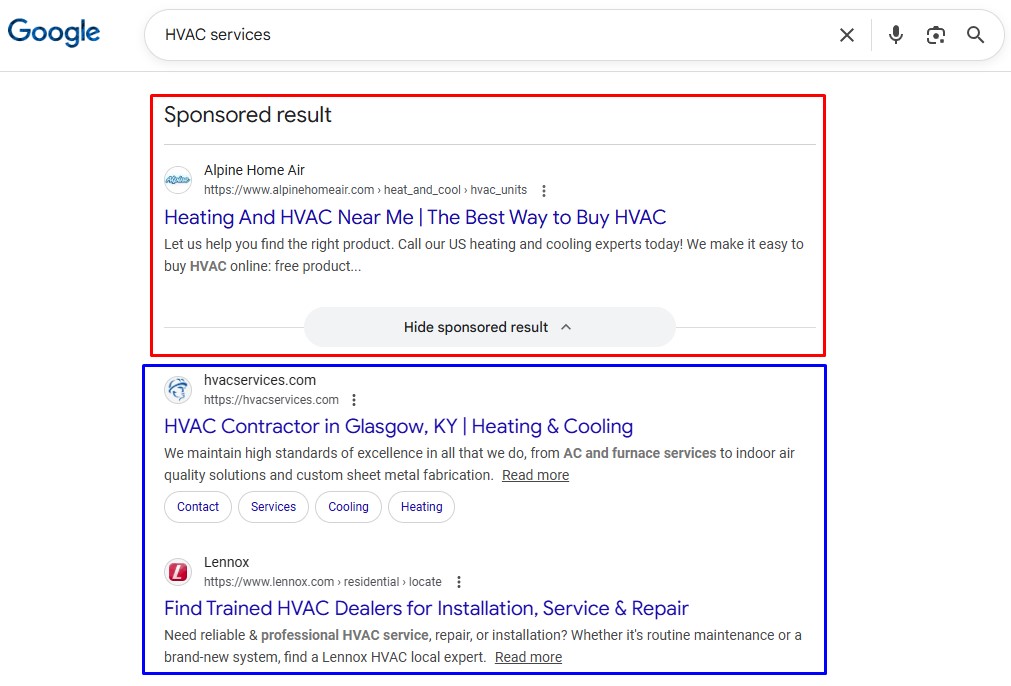
This is what marketers typically mean by paid traffic in digital marketing.
Classic paid traffic examples include:
- Search engine marketing on Google Ads and Microsoft Ads
- Paid social on platforms like Facebook, Instagram, LinkedIn, and X
- Display ads and native ads on publisher sites
- Video ads on YouTube and streaming platforms
- CPA / CPL networks that charge per lead or per sale
Benefits of paid traffic
Paid traffic wins on speed. You can launch a Google Ads or Meta campaign and see clicks the same day. Within weeks, you have data to refine your paid media strategy, A/B test landing pages, and adjust bids accordingly.
For product launches, short-term promotions, and rapid market tests, this speed is hard to beat.
Although cost is a major concern for small businesses and agencies, paid ads can fit within all types of marketing budgets.
What is organic traffic?
Organic traffic comes from unpaid search results. When someone types a query into Google and clicks a regular result instead of an ad, that visit counts as organic. This is the heart of SEO in practice. You earn that click with relevant content and a site that search engines trust.
The main drivers are:
- Consistent, high-quality content publishing (blogs, articles, etc.)
- On-page SEO optimization (titles, headings, internal links, schema)
- Off-page SEO to get votes of trust from high-authority pages.
- Brand-building and social media activity that spark more branded searches
Benefits of organic traffic
The biggest advantage of organic traffic is the conversion rate. Organic search vs paid search statistics show that:
- Organic visitors convert around 2.4% on average.
- Paid visitors convert at most 1.3%.
These numbers reflect that paid campaigns (pay-per-click) attract a broad audience, but most of them are not ready to buy. But since organic traffic is built over time through trustworthy content and considerate brand-building, the users who reach your platform are ready to decide.
Another benefit of organic traffic is sustainability. You need a budget to consistently run paid ads and PPC campaigns, which may not be suitable for many startups, freelancers, or small agencies.
On the other hand, organic traffic magnets, such as evergreen blog posts, articles, and how-to guides, attract visitors month after month without requiring any monetary investment.
Organic traffic vs paid traffic: Comparison explained
Below is a detailed comparison breakdown between organic traffic vs paid traffic:
| Factor | Organic Traffic | Paid Traffic |
| Definition | Visits from unpaid search engine results | Visits generated through paid ads |
| Speed of results | Slow build (3–9+ months) | Immediate (same day to weeks) |
| Cost model | No cost per click (content + SEO investment) | Pay per clicks/impressions/ conversion |
| Long-term ROI | Very high due to compounding traffic | Moderate. Stops when spending stops |
| Sustainability | Long-lasting, evergreen traffic | Short-term, budget-dependent |
| Trust & credibility | Higher user trust | Lower trust vs organic listings |
| Targeting precision | Intent-based (keywords/search queries) | Advanced demographic + behavioral targeting |
| Scalability | Slower but exponential over time | Fast but linear to the budget |
| Click-through rates | Higher on informational queries | Higher on commercial queries |
| Conversion quality | Often, higher intent visitors | Mixed, depends on audience targeting |
| Testing capability | Slow testing cycles | Rapid A/B testing is possible |
| Best use cases | Brand building, thought leadership, and evergreen leads | Launches, promotions, rapid lead generation |
Organic listings benefit from perceived third-party validation, while ads rely solely on brand messaging.
Organic traffic vs paid traffic: Cost comparison
Cost is where the gap between organic and paid traffic becomes most visible.
Paid traffic operates on a direct spend model. You pay for every click, impression, or conversion. In competitive industries, cost per click can rise significantly, making customer acquisition expensive at scale.
Organic traffic works differently. Instead of paying per visitor, you invest upfront in content, SEO tools, and production. Once pages rank, they can generate traffic for months or even years without additional spend.
A simplified comparison looks like this:
- Paid traffic → predictable but recurring cost
- Organic traffic → upfront investment, long-term payoff
Over time, organic acquisition costs typically decrease for organic channels, while paid acquisition costs often rise as you scale campaigns.
Organic traffic vs paid traffic: Growth timeline
The difference between organic and paid traffic becomes clearer when viewed over time.
In the early months, paid campaigns dominate because they drive immediate clicks. Organic traffic starts slowly as content gets indexed and rankings build.
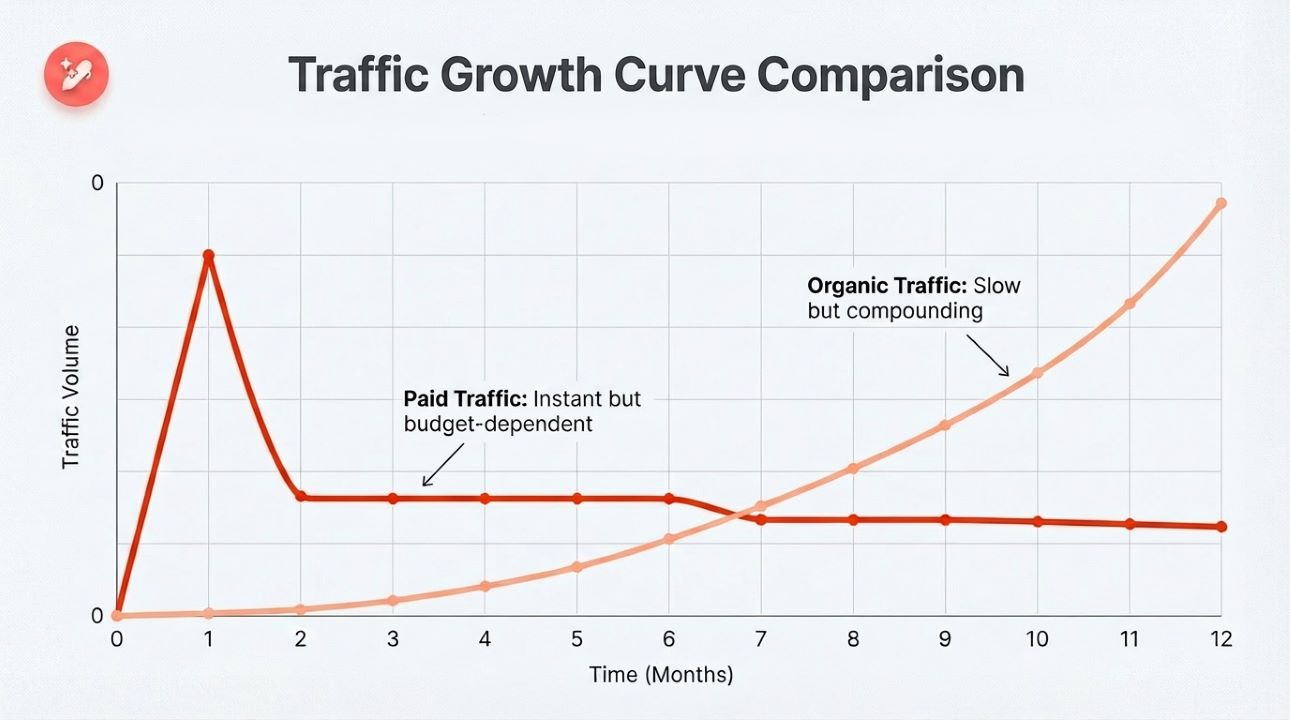
By the 6–12 month mark, strong SEO campaigns begin compounding. Traffic from multiple articles and pages stacks together, often reducing reliance on paid spend.
To see how the two channels play out in real search environments, consider the following example.
Organic traffic vs paid traffic: A real-life example
Puma, an athletic apparel and footwear brand, might not use PPC for the search query ‘PUMA.’ Why? Because they’ve already established themselves in the market and will probably top the SERPs on their brand name. So, they’ll stick to organic search.
But, Puma will definitely consider paid traffic routes for a general, broad search term, such as ‘men’s footwear’ or ‘women’s running shoes.’ Why? Because plenty of other companies will now be competing for visibility and traffic for this specific term.
Paid and organic routes often work together in a brand strategy. While organic routes dominate branded searches, paid campaigns protect competitor bidding and capture broader commercial keywords.
Risks and limitations of each channel
While both channels drive growth, each carries its own set of risks.
Organic traffic depends heavily on search engine algorithms and ranking shifts. Here, content decay can occur due to technical SEO issues and underlying problems with the website.
Paid traffic risks are driven by budget and platform. Rising CPCs, ad fatigue, or platform policy changes can quickly reduce performance.
In short:
- Organic risk → algorithm volatility
- Paid risk → cost volatility
A balanced strategy reduces dependence on either one.
The reality of traffic composition for successful businesses
So, how does the organic traffic vs paid traffic split look for companies that invest in both? Data from many sites shows a pattern once SEO and paid campaigns mature over 1-3 years.
A healthy mix often looks like this:
- Organic search: About 62% of overall visits
- Paid search and other ads: Around 21%
- Email and social media: About 13%
- Direct, referrals, and other: 4%
In other words, even with strong paid investment, organic search remains a top method for brands to build trust, increase visibility, and convert visitors into buyers.
For younger sites, the picture is different, especially since organic search traffic is down year over year in some sectors. This makes the early stages of building organic presence more challenging than in previous years.
A very high share of paid traffic, about 40–50%, can be a warning sign. It shows that growth depends heavily on ad budgets and auction rules. If costs rise or a platform changes its policies, performance can drop quickly.
That is why many teams treat organic campaigns as the base layer of marketing and use paid channels as a sharp tool only to achieve specific goals.
Choosing the right strategy for your business
At this point, it should be clear that there is no single winner in the organic traffic vs. paid traffic debate. The better question is which mix fits your goals, budget, and current stage of growth.
Start with money. Paid traffic demands a steady monthly spend. Organic traffic requires investment in content creation and SEO skills. That can feel heavy early on, but once content ranks, it brings in visits at no extra cost per click.
If your budget is stretched thin but you can put in consistent time and effort, building organic assets may be more realistic than committing to a big ad spend.
Timeline comes next. If you need leads this month for a webinar, launch, or sales target, then paid PPC campaigns are the right move.
If your main aim is long-term brand building, thought leadership, and lower customer acquisition cost (CAC) over the next few years, then organic traffic wins.
Industry and competition also matter:
- In crowded niches, bidding on core keywords can be very expensive. Paid ads help you appear on page one while your SEO strategy takes care of long-term benefits.
- In less competitive niches, a focused organic push can reach top positions faster and at a lower total cost, especially when you use AI tools to publish valuable content at scale.
Think about audience behavior as well. Some B2B buyers rely heavily on in-depth articles, case studies, and guides. They often trust organic content more than ads during their research process.
Other groups, especially in consumer markets, respond well to highly targeted social ads and remarketing. Your search traffic strategies should reflect how your ideal buyers prefer to discover and compare options.
Integrating organic and paid strategies for maximum impact
The smartest move in 2026 is usually not picking organic traffic vs paid traffic, but building a plan where they work together. An integrated approach lets you enjoy the speed of paid channels and the sustainability of organic traffic at the same time.
Funnel role of organic vs paid traffic
Each channel plays a different role across the marketing funnel.
| Funnel stage | Organic traffic role | Paid traffic role |
| Awareness | Blogs, guides, SEO pages | Display and social ads |
| Consideration | Comparison pages, case studies | Search ads, retargeting |
| Conversion | Product pages, branded search | PPC, remarketing |
In short, organic builds demand, and paid channels capture and accelerate it.
Organic and paid channel integration example
You might promote an ebook, checklist, or webinar with search ads and paid social, bringing in a steady stream of leads. Meanwhile, you can create deeper organic content around the same topics to ensure that you maintain the top SERP spots in the future.
Over a few months, those articles, guides, and landing pages begin to rank, and you can shift some budget from always-on ads into other parts of your paid media strategy.
Seeing your brand in both paid and organic spots on the same page also builds extra trust and boosts total share of voice. That kind of soft dominance is hard to match with ads or organic channels alone.
How Contentpen changes organic content strategy
While paid traffic scales with budget, organic traffic scales with content capacity.
Organic growth has huge upside, but it often stalls because content production is slow, expensive, and hard to manage. This is where Contentpen steps in for teams trying to win the organic traffic vs paid traffic race over the long term.
Contentpen is an AI-powered blog creation platform built for SEO and GEO-optimized content. It helps you move from blank page to full, rank-ready article faster than traditional workflows.
Instead of spending hours on each draft, your team can generate comprehensive posts, refine them, and ship them on a steady schedule without getting overloaded.
Our AI blog writing tool makes an organic content campaign realistic with its integrated publishing and bulk creation.
The platform does more than write. Built-in competitor analysis and content gap research show which topics and keywords can actually move the needle. You are not guessing which articles to publish; you focus on what helps you outrank competitors and capture the right search demand.
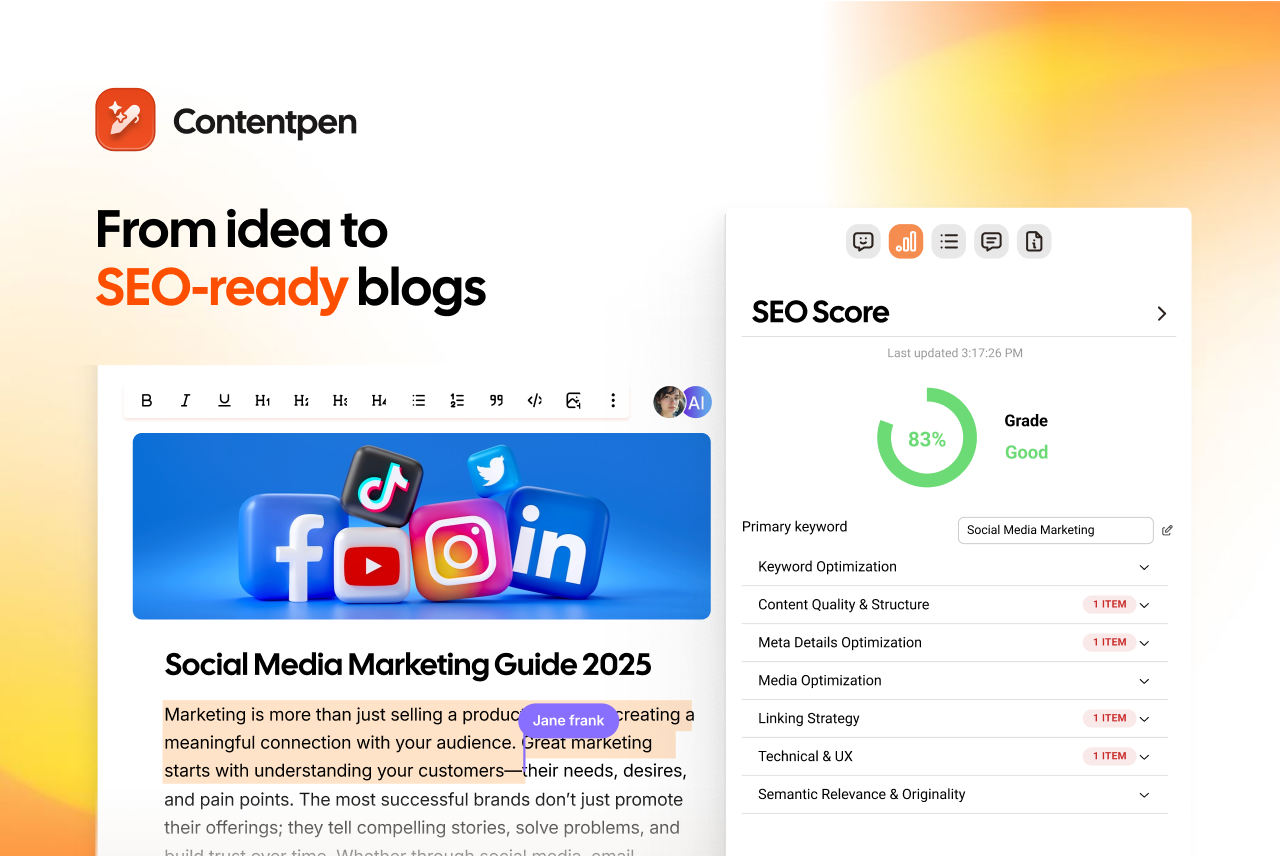
Each piece of content also receives an SEO score, along with clear suggestions to improve rankings. That means titles, headings, internal links, and structure match what search engines expect before you hit publish.
Summing it up
The organic traffic vs paid traffic comparison has no clear winner. Each channel does a different job. Paid traffic brings speed and precise targeting for short-term campaigns. Meanwhile, organic traffic provides sustainable growth, greater trust, and higher conversion rates.
The winning pattern in 2026 is clear. The leaders who mix both channels win. They pursue paid, time-sensitive goals and bottom-of-funnel conversions while building an organic base that lowers acquisition costs month after month.
AI platforms like Contentpen help change the scenario, especially for many small teams. The tool removes many of the old barriers to organic growth by reducing production time, guiding SEO decisions, and maintaining high content quality.
Frequently asked questions
Organic reach comes from unpaid search results, where people click your page because it ranks well for their search. Paid reach comes from ads you fund on search engines or social platforms.
Organic traffic is not truly free. You do not pay per click, but you invest in people, tools, and time. You may need SEO specialists, writers, developers, and editors to build a steady flow of content.
Organic traffic comes from people who find your website through search engines after clicking a non-paid result. Direct traffic comes from users who visit your site by typing your URL, using a bookmark, or accessing it without a tracked source.
Leave a Reply