We tested 10 AirOps alternatives to see which AI writing tool delivers publishable content the quickest without the unnecessary complexities. Our rigorous testing revealed that Contentpen delivers SEO and GEO-optimized blogs 6x faster than AirOps.
Don’t get us wrong; AirOps is a powerful tool for content automation. However, it handles content workflows like an engineering project: too much to do and process, defeating the whole purpose of AI.
Due to such reasons, it is imperative to look for some solid AirOps alternatives that can handle content, media creation, SEO scoring, and publishing more efficiently.
In 2026, we have selected 10 alternatives to AirOps that you must try to boost productivity and simplify content workflows.
So, let’s get to them, shall we?
Top 10 AirOps alternatives at a glance
Below is a comparison table showing all the alternatives to AirOps, along with their top strengths, best use cases, and starting price.
| Tool | Best For | Ease of Use (1–5) | Starting Price | Avg. Production Time | Top Strength | Biggest Weakness |
| AirOps | Technical teams, heavy workflows | 2.5 | $199/mo | 2–3 hrs | Workflow flexibility | Complex, pricey |
| Contentpen | Practical content teams | 4.8 | $39/mo | 15–30 min | Simple, results‑driven | Limited trial period |
| ContentMonk | High‑quality long‑form content | 4.5 | $49/mo | <1 hr | Output quality | Limited deep workflows |
| Jasper | Brand voice at scale | 4.4 | $69/seat/mo | 45–90 min | Tone consistency | Team cost adds up |
| Copy.ai | Sales and GTM workflows | 4.5 | $29/mo | 1–2 hrs | CRM integrations | Strong features on high tiers |
| Hypotenuse AI | E‑commerce catalogs | 4.2 | $29/mo | 1–1.5 hrs | Batch product content | Weak long‑form content |
| Writesonic | GEO and AI search tracking | 3.5 | $249/mo | Varies | AI search visibility | GEO plans expensive |
| Averi | Startup content engines | 4.0 | $99/mo | <1 hr | End-to-end workflow | Not for larger campaigns |
| Surfer SEO | On‑page SEO depth | 4.0 | $119/mo | Varies | Data‑driven guidance | Not a full content stack |
| WRITER | Regulated enterprises | 3.0 | $39/mo | <1 hr | Governance and security | High budget required |
| Relevance AI | Custom AI agents | 3.0 | $29/mo | Varies | Flexibility | Needs technical skills |
Problems with AirOps
While AirOps is a powerful content automation platform, it has three major drawbacks that we need to talk about.
#1: Workflows are too complicated
The first time we tested AirOps, we ended up spending more than 2 hours trying to create a publish-ready piece. Why? Because everything about AirOps screams, “I need a prompt engineer/content automation expert to operate.”
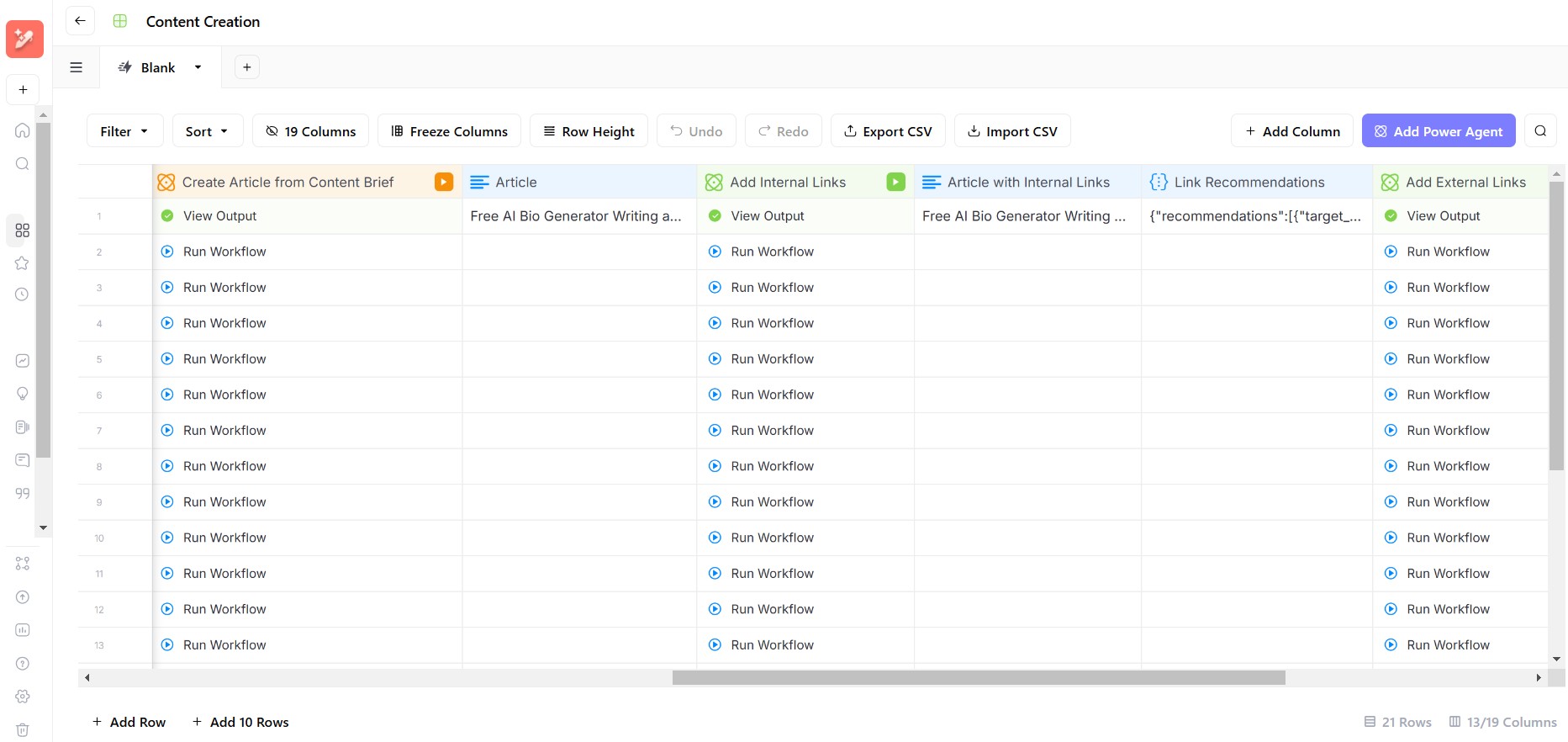
After going through dozens of G2 reviews, we concluded that this problem wasn’t just for us. AirOps IS too complicated for many content marketers, agencies, and freelancers to operate.
In our testing, a simple blog post workflow with AirOps required 8 steps: keyword research -> brief generation -> article creation -> internal links -> external links -> media inclusion -> SEO optimization -> final article.
Whereas Contentpen only requires 3 steps: Input instructions -> article generation (using the one-shot mode) -> final output. The result is a 6x faster content production workflow than AirOps.
The blog creation process is further simplified if you have your Contentpen presets set up for the preliminary settings, such as tone, audience, target country, formatting, structure, and media. At the end, you can create a blog post in less than 10 minutes.
#2: Repetitive, generic AI writing
Another problem that we faced with AirOps is its AI generic slop. The content was mediocre at best, with phrases like ‘Here’s the thing’ and ‘Let’s be honest’ repeated very often, making the analysis shallow.
The content also had some quality gaps that we noticed:
- Weaker transitions from one section to another
- Vague CTAs for product placement
- Weird selection of anchor texts for internal and external linking
Now, to be fair, AirOps’ custom content Ops setup does allow you to eliminate a lot of these content problems. But it would require immense time and resources to do so.
#3: Prices can scale too fast, too quickly
One of the biggest frustrations with tools like AirOps isn’t just the price; it’s the uncertainty behind it.
AirOps uses a task-based pricing model, where every action (research, prompting, generation, refinement) consumes credits.
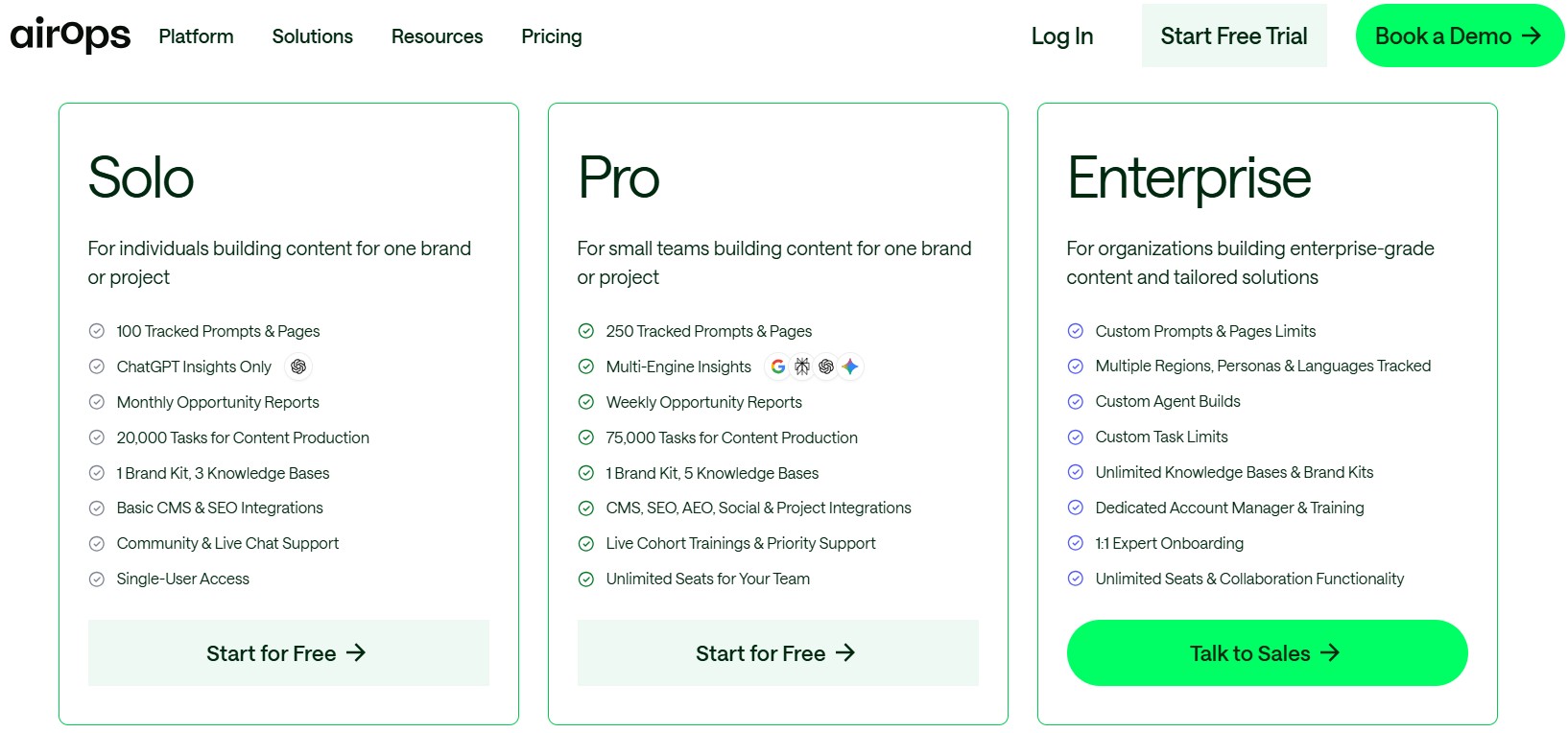
In practice, this quickly becomes hard to track and even harder to control. Based on real-world usage, generating a single 2,000-word article can consume anywhere from 2,500 to 4,000+ tasks, often resulting in content that still needs significant manual editing.
That creates two problems:
- Unpredictable costs (you don’t know how many articles you’ll actually get)
- Inefficient output (more time spent editing than expected)
Contentpen takes a fundamentally different approach: clear, output-based pricing instead of task-based consumption. You can either get 10 articles/month for $39, 30 articles/month for $79, or 100 articles/month for $199 in the ‘Agency’ plan.
This gives you something AirOps doesn’t: predictability. You know exactly how many articles you can produce each month, with no hidden credit drain or unexpected limits mid-workflow.
How we selected our AirOps alternatives
Every tool on our list of AirOps alternatives went through the same rigorous hands-on testing process, so the comparison you’re reading is based on actual usage.
Here’s exactly how we evaluated each tool:
Ease of use and setup time
The first thing we timed was how long it took to go from a blank screen to a publish-ready draft. AirOps took us over two hours for a single article. Every alternative was benchmarked against that baseline.
If a tool still required heavy configuration, prompt engineering, or multiple platform switches to get a usable output, it scored lower, regardless of how impressive its feature list looked.
Content quality out of the box
We ran each tool on the same brief and compared outputs. We weren’t just looking for grammatically correct content. We were looking for coherent arguments, smooth transitions, natural keyword usage, and CTAs that actually made sense in context.
During our testing, we also looked out for generic AI tells, such as repetitive phrasing or buzzwords (landscape, supercharge, etc).
SEO and GEO capability
Given that this is fundamentally a content production comparison, we paid close attention to how each tool handled search optimization.
Did the tool do keyword research natively? Did it score content against SERP data? Did it think beyond Google toward AI search visibility? These were the questions that we had in our minds when evaluating each tool.
Pricing transparency and predictability
AirOps’ task-based credit model is one of the most common complaints we found across G2 reviews, and we experienced it firsthand.
So we specifically looked at whether each alternative gave you a clear, predictable sense of what you’d actually produce each month for a given budget. Tools with opaque credit systems or aggressive tier jumps were flagged accordingly.
Publishing and workflow integration
We checked whether each tool could connect to the CMS and platforms that real content teams actually use. These include WordPress, Webflow, Shopify, HubSpot, Salesforce, and others.
Actual use cases
Some tools on this list are purpose-built for e-commerce teams, some for enterprise compliance, while some are more suited for GTM and sales workflows.
Therefore, we considered each tool’s use cases along with their features and functionalities so that you have a clear framework to apply each AirOps alternative in real life.
The result is the list you’re reading: 10 AirOps tools that each solve a real problem, ranked and described honestly based on what we actually experienced using them.
1. Contentpen: The best AirOps alternatives
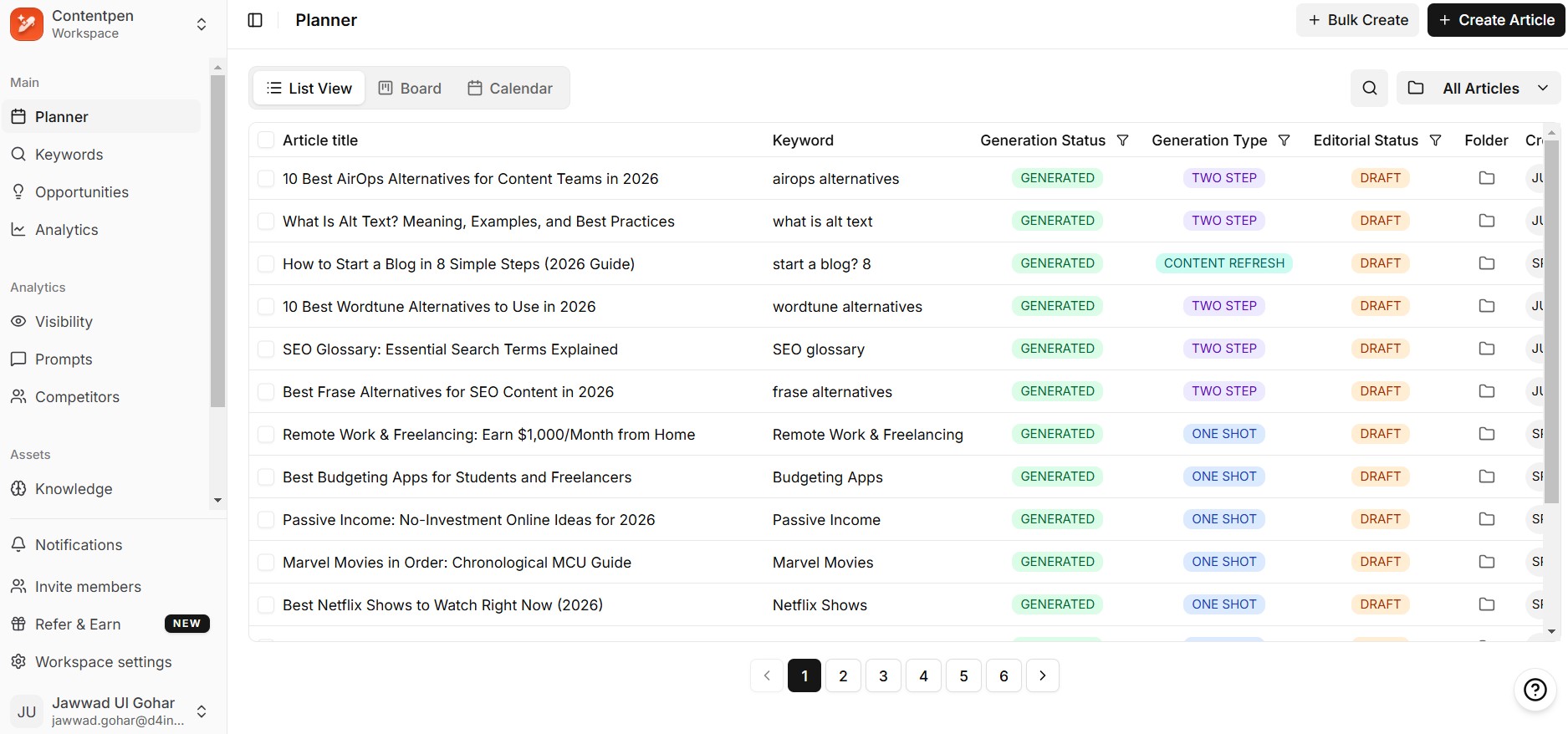
While AirOps is difficult to operate, Contentpen takes a different route. It is an AI writing tool that requires minimal human input and generates pieces that truly rank in search engines and SERPs.
The biggest upside with Contentpen is its automated search engine optimization: from keyword research to SEO scoring, SERP analysis, and web analytics, all in one place.
From outline to publish-ready content that fills them

Structured
Consistent
SEO-aligned
Fast
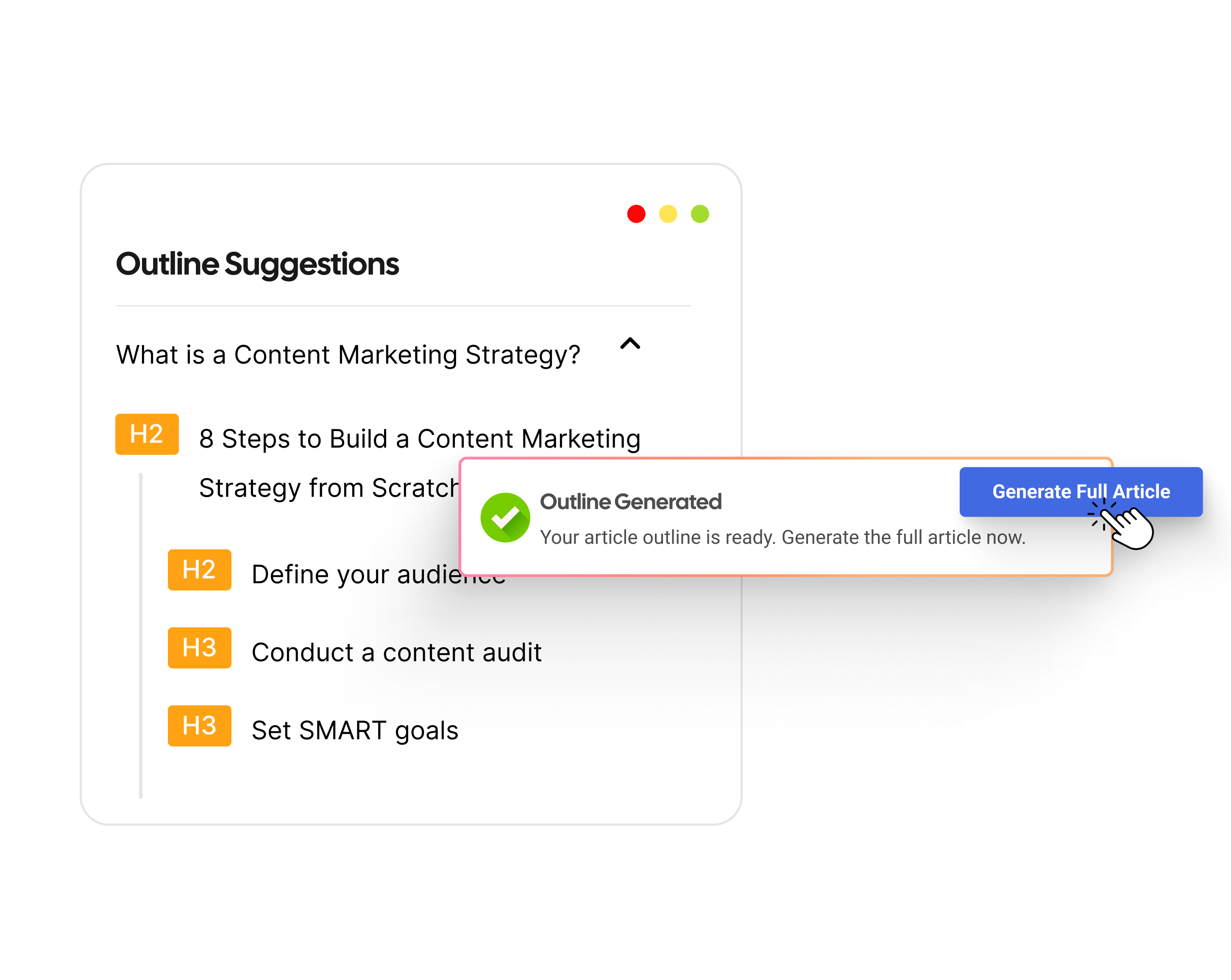
Its automated linking assistant, media generation, and alt text creation show that it takes care of every single aspect of on-page SEO. The types of keywords it utilizes in the content flow naturally without the AI buzzwords that many AI writers fail to replicate in their output.
Notable features
- Custom brand voice setting: With this AI SEO writer, you get the ability to set up your own brand knowledge and brand voice. The blog outputs follow your tone consistently, helping you establish yourself in the niche.
- Ask AI assistant: Haven’t got the output you hoped for? No problem. Contentpen provides you with its ‘Ask AI’ assistant to help rephrase existing text, shorten, or expand some portions to your liking with custom prompts that you can set up in the workspace.
- Direct publishing: The biggest pain point for any user is to publish their blogs directly to their webpage. Contentpen solves this by integrating directly with Ghost, Wix, Webflow, Shopify, and WordPress, ensuring one-click multi-platform publishing.
Pros
- Helps scale content production with ease.
- Robust customer support that actually listens and solves problems.
- Assists in improving share of voice in your niche with consistent, high-quality, SEO- and GEO-optimized content.
- SEO opportunities allow quick wins, identifying decaying pages, and fixing problems with AI-powered suggestions.
Cons
- The trial period expires after only 7-days.
- No backlink data directory available.
Pricing
- Starter: $39/month
- Pro: $79/month
- Agency: $199/month
2. ContentMonk – Best for long-form content with less hassle
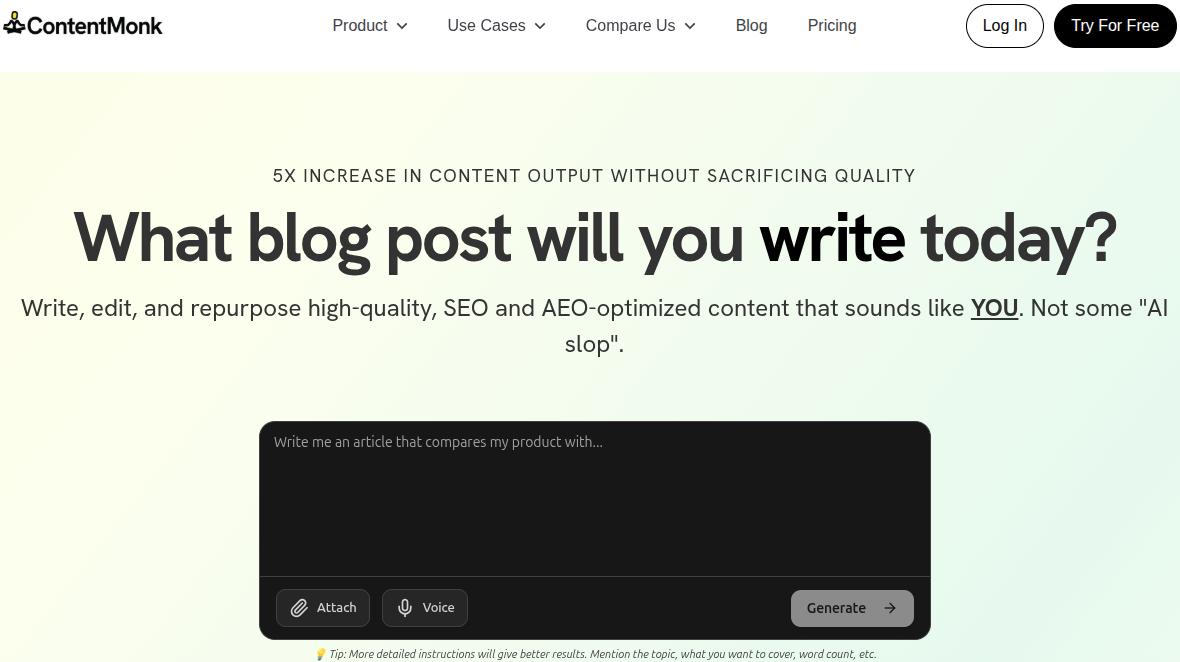
ContentMonk simplifies the problem with AirOps: no more complex workflows. You can get a publish-ready article with 3-clicks, which saves a considerable time and effort for your content teams trying to meet tight deadlines.
In our testing of AirOps alternatives, what we liked about ContentMonk is that you don’t have to leave your editor to do any tasks. You can create a brief, edit as you want, and finalize the content in one place.
Notable features
- AI-editing power-ups: The tool makes it very easy to optimize content for clarity, style, and tone. The AI agents speed up this process immensely, enabling you to get to the final content draft quickly and effectively.
- Efficient content repurposing: ContentMonk truly shines when it comes to content repurposing. It is quite easy to convert a long-form blog to a LinkedIn post or a leadership piece to gain more authority in your niche.
- Customizable knowledge base: With ContentMonk, you can easily create and edit your knowledge base. The tool will use the insights from this database in your writing to give you that topical expertise you desire.
Pros
- Significantly cuts down content production with an easier interface.
- Supports different content types.
- Can retain context and writing tone in long-form content.
- Useful and affordable for individuals, small businesses, and enterprises.
Cons
- Lacks the ability to create complex, customized workflows like AirOps.
- No extended SEO or analytical features that other tools, such as Contentpen, offer.
Pricing
- Free: $0/month (1 article free)
- Starter: $79/month
- Pro: $199/month
3. Jasper – Best for maintaining brand voice at scale

Unless you’ve been living under a rock, you’ve almost certainly heard of Jasper. It’s arguably the most recognized name in AI writing, and there’s a reason for that: Jasper doesn’t just write content; it learns how you write and replicates it across everything.
Also read: Jasper vs. Contentpen.
The idea is simple. You train Jasper on your existing content, including blog posts, ad copy, emails, etc., and it absorbs your brand voice. From that point on, every piece of content it generates sounds exactly like you.
Notable features
- Surfer SEO integration: Jasper utilizes Surfer’s Content Score directly into your editor so you can track keyword coverage and NLP-driven optimization without leaving the platform. You’ll still need a separate Surfer subscription for it, though.
- 50+ content templates: Unlike AirOps, Jasper isn’t trying to be a content automation engine. Instead, it provides users with 50+ marketing templates to allow flexibility and efficiency while generating different types of content.
- Multi-model routing: Rather than relying on a single LLM, Jasper automatically picks between GPT-4, Claude, and Gemini based on the task. This adds a layer of output reliability, though you don’t control which model fires when.
Pros
- It produces a more consistent tone than AirOps, with minimal setup.
- Strong for multi-channel content (not just blogs or articles).
- Saves time on rewriting and tone adjustments.
Cons
- Lacks the affordability of other AirOps alternatives, therefore not too suitable for small businesses.
- Long-form output still needs a meaningful editing pass before it’s publish-ready.
Pricing
- Pro: $69/seat/month
- Business: Custom
4. Copy.ai – Best for sales and GTM workflows
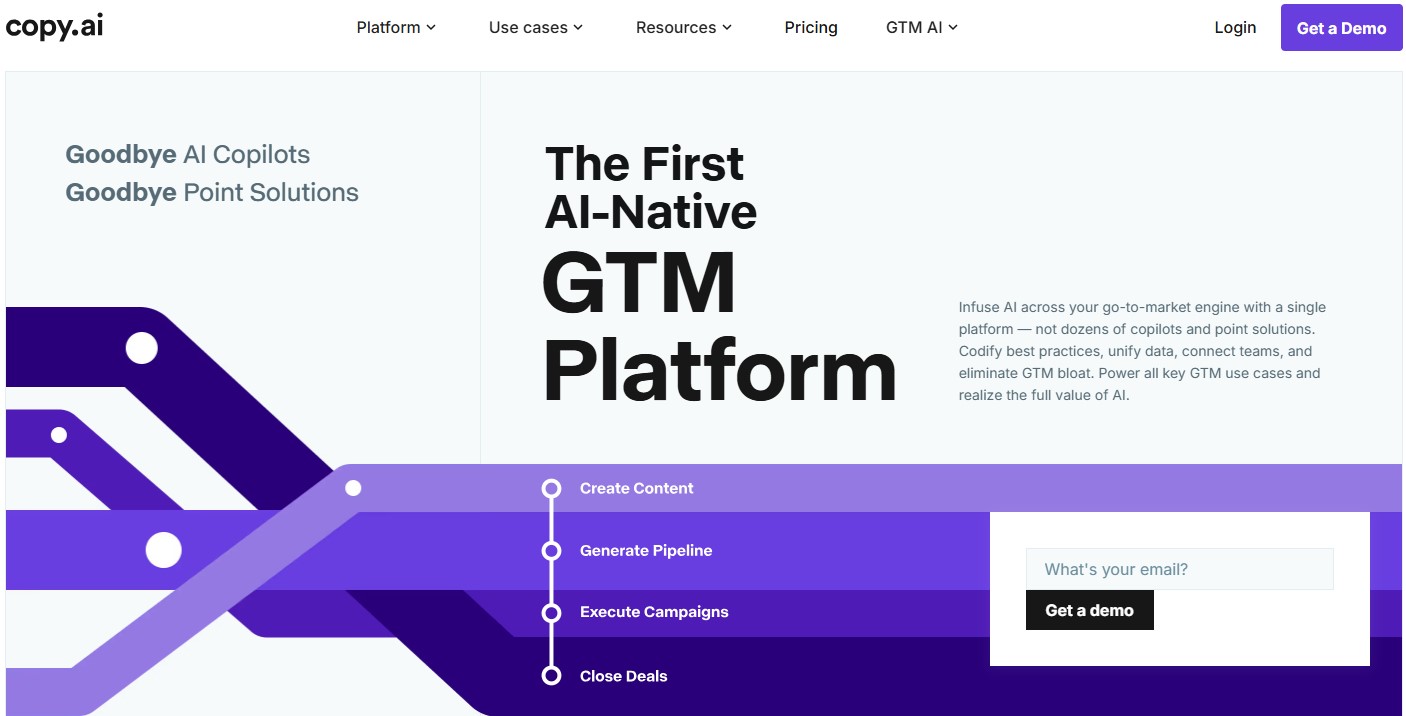
Copy.ai has evolved from a basic copy generator into a go-to-market (GTM) workbench where content, sales automation, and CRM data operate in the same workflow.
The native Salesforce and HubSpot integrations set it apart from most AirOps alternatives, so you can pull live prospect data into copy and push outputs back into your sales pipeline without leaving the platform.
Notable features
- Workflow automation: The tool supports multi-step automated sequences for outbound email, lead research, and sales follow-ups. It has that ‘content-meets-sales’ capability that most pure AI writing tools don’t touch.
- Multi-LLM access: Copy.ai pulls from OpenAI, Anthropic, and Gemini without you managing API keys, giving you model variety across paid plans without added friction.
- Copies that convert: Unlike AirOps, Copy.ai provides its users with web copies that actually help them convert visitors to prospects and eventually, buyers. Its generated outputs are very convincing, which is something that other AI writers miss.
Pros
- Great for connecting content with revenue workflows.
- Saves time on outreach and email sequences.
- Easier to set up than AirOps for GTM use cases.
- Flexible for marketing and sales teams working together.
Cons
- Long-form content often feels stitched together.
- Advanced automation features are locked behind higher plans.
Pricing
- Chat: $29/month (5 seats)
5. Hypotenuse AI – Best for e-commerce content at scale

Hypotenuse AI is one of the few tools that doesn’t try to compete with AirOps head-on. Instead, it dominates a specific use case: bulk product content generation.
If you’re running an e-commerce store with hundreds (or thousands) of SKUs, this tool can save an enormous amount of time. You can upload a spreadsheet and generate descriptions, meta tags, and even images in bulk.
Compared to AirOps, it skips the complexity entirely. No workflows, no pipelines, just straight outputs that you can use for your online stores.
Notable features
- Bulk generation via CSV: Hypotenuse AI allows you to upload a product catalog as a CSV file. The tool then generates content for every row in the CSV, which helps e-commerce store owners set up their pages with confidence.
- AI image generation: The tool produces product-aligned images alongside the said copy in the same workflow, which is useful for supplemental visuals without jumping to a separate tool.
- Brand voice customization: Hypotenuse AI allows you to set a brand voice according to your needs. The AI writer strictly obeys this tone in its writing, showcasing a high level of consistency.
Pros
- Removes a genuinely painful bottleneck for e-commerce teams wanting content without any complex workflow setup.
- Reduces your tool stack meaningfully compared to an AirOps-based setup.
- Pricing is straightforward and predictable.
Cons
- The tool may lag a bit when generating content.
- Limited depth and variety of ideas in copies make it a less viable option for creative agencies.
Pricing
The following pricing plans are for the ‘Marketing & SEO’ category:
- Entry: $29/month
- Essential: $87/month
- Blog Pro: $230/month
- Blog Custom: Custom
6. Writesonic – Best for GEO and AI search visibility
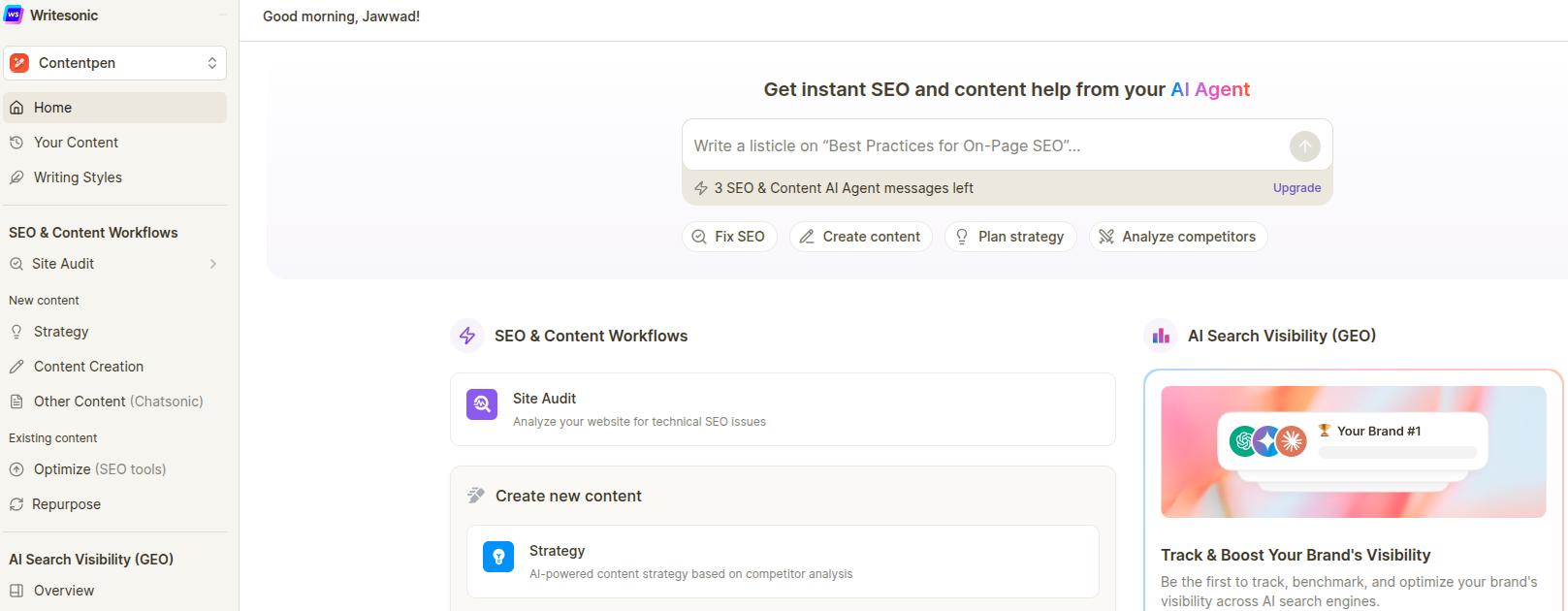
Like Contentpen, Writesonic is one of the more forward-looking AirOps alternatives, especially if you care about AI search visibility (GEO).
While AirOps focuses on workflows, Writesonic focuses on where your content shows up in AI-driven search engines like ChatGPT, Perplexity, and Google AI results.
Also read: Writesonic vs. Contentpen.
During testing, its GEO features felt genuinely useful for understanding visibility beyond traditional SEO.
Notable features
- Chatsonic with real-time web access: Unlike assistants relying on static training data, Chatsonic pulls live information from the web, reducing hallucination risk meaningfully for time-sensitive content.
- SEO AI agent: The tool automates the process of keyword research and content planning, allowing you to reach the top of SERPs with ease.
- Prompt Explorer: With Writesonic, you can discover real user queries tied to your niche, which enables you to create relevant, engaging content for your audience.
Pros
- Helpful insights into AI-driven traffic sources.
- More strategic than AirOps for search visibility.
- Real-time data access improves content relevance.
- More than 50+ content templates available for users.
Cons
- The tool is expensive for small teams and SMBs.
- The interface can feel busy and less intuitive for beginners.
Pricing
- Basic: $249/month
- Growth: $499/month
- Enterprise: Custom Pricing
7. Averi – Best for startups needing a full content engine
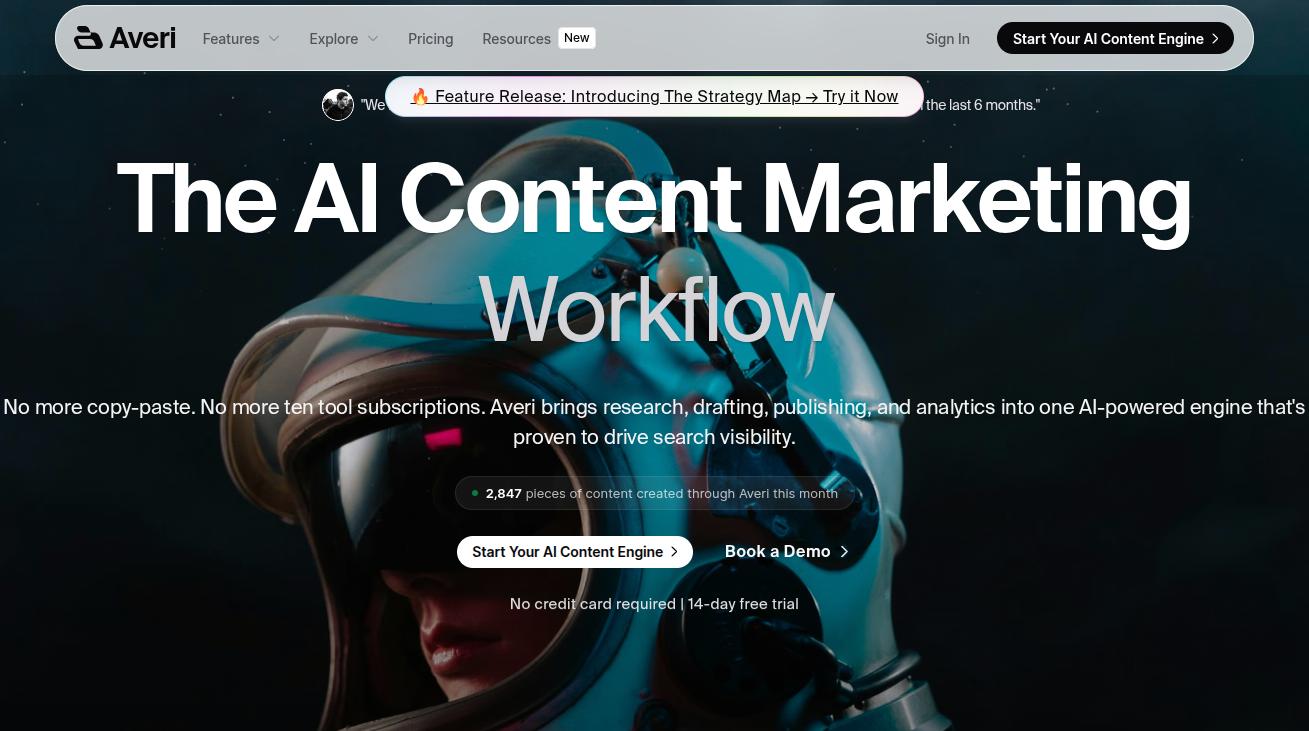
Where AirOps hands you a blank canvas and says, “build your workflow,” Averi builds it for you. Point it at your website, and it reads your brand, generates a content calendar aligned to your growth goals, handles drafting, and tracks performance.
Publishing integrations with WordPress, Webflow, and Framer mean you can go from idea to live post without touching a separate CMS.
Notable features
- Brand-aware content generation: Averi ingests your website and existing content to build a working brand model that carries into every topic suggestion, outline, and draft, without re-prompting your brand context every session.
- Performance tracking: The tool tracks how published content performs and feeds that data back into future recommendations. Over time, the suggestions sharpen rather than staying static, which is rare at this price point.
- Automated topic suggestions: Averi suggests topics relevant to your niche and plans your content calendar accordingly.
Pros
- Great for lean teams with limited resources.
- Feels more intuitive to use than AirOps.
- Provides a powerful performance-feedback loop to create high-ranking pieces.
Cons
- Less granular editorial control than most other AirOps alternatives.
- Not ideal for large-scale or programmatic workflows.
Pricing
- Solo Plan: $99/month (1 article free)
- Team Plan: $199/month
- Agency Plan: $399/month
8. Surfer SEO – Best for on-page optimization depth

Surfer SEO isn’t trying to replace AirOps or be your primary AI writer. What it does, and does better than AirOps, is tell you exactly what a piece of content needs to rank while you’re still writing it.
The tool comes with a Content Editor that scores your draft in real time based on what’s actually ranking for your target keyword.
Notable features
- Topical map builder: The tool helps you plan content clusters around a core topic, identifying authority gaps and suggesting supporting posts for teams building long-term SEO campaigns.
- SERP Analyzer: Surfer provides deep competitive analysis showing exactly what top-ranking pages for any keyword are doing structurally. This includes their word counts, headings, and keyword usage, so you know how to write a competitive piece.
- Real-time Content Score: Surfer scores your draft continuously as you edit, showing exactly where you’re hitting and missing keyword targets, heading structure, and NLP term coverage.
Pros
- Improves the ranking potential of AI content.
- Clear, data-driven guidance.
- Works well alongside tools like Contentpen.
- Helps reduce guesswork in SEO.
Cons
- Not a complete content workflow tool.
- Prices can scale steeply with heavy usage.
Pricing
- Standard: $119/month
- Pro: $219/month
- Peace of Mind: $359/month
9. WRITER – Best for content in regulated enterprise environments
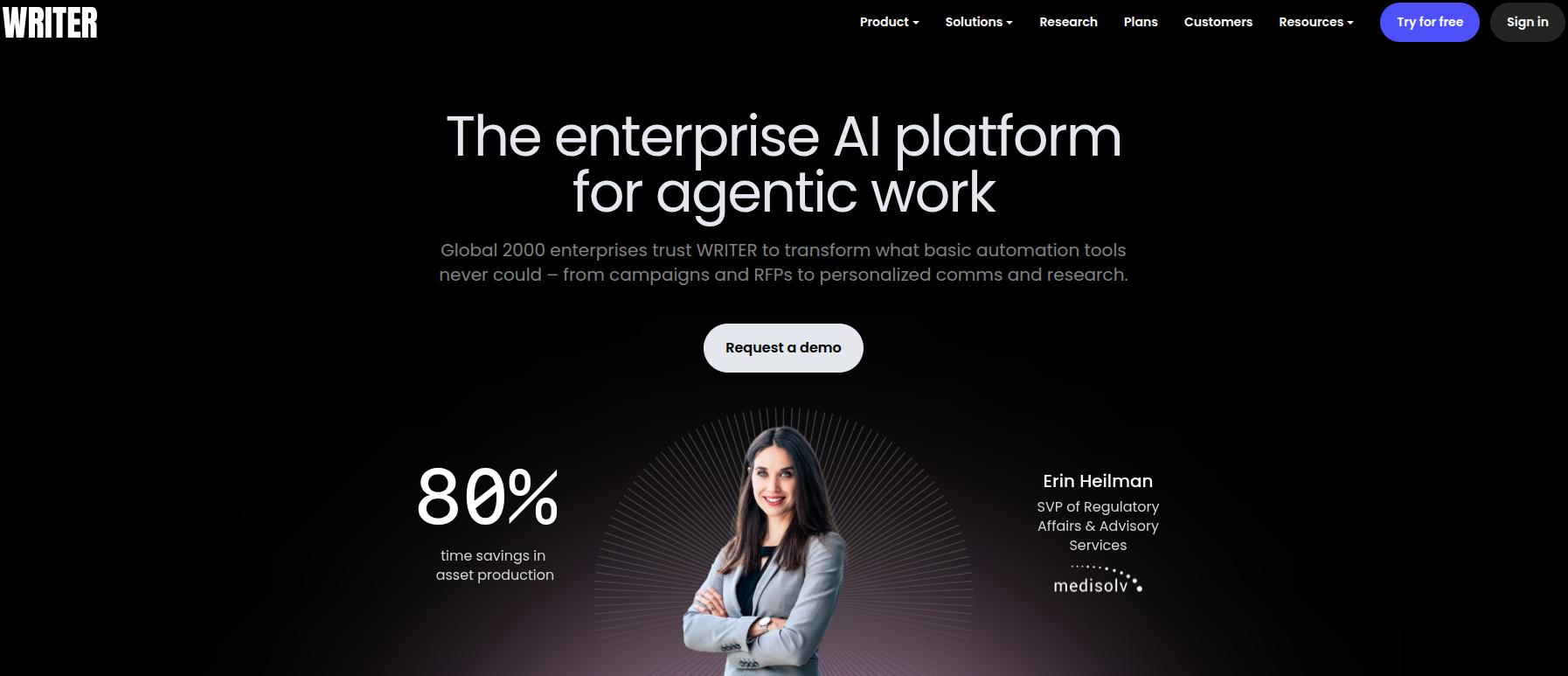
WRITER runs on proprietary Palmyra LLMs, which means your content isn’t processed through public OpenAI or Google endpoints. This is a critical distinction needed for healthcare, finance, and other industries where data handling isn’t negotiable.
The platform also offers SOC 2, HIPAA, GDPR compliance, and audit trails for every output, which makes it a very unique AirOps alternative.
Notable features
- Custom LLM for business writing: WRITER’s proprietary models process content on isolated infrastructure, keeping your data out of public model training pipelines.
- Governance and compliance layer: Style guides, terminology enforcement, claim detection, and content audit trails are built into the platform. Every output is checked before it leaves the system, which provides a critical level of oversight on the content.
- Connection to data sources: WRITER connects to your internal data sources, such as documents, databases, and CRM records, and grounds AI outputs in accurate, current business information rather than general training data to avoid hallucinations.
Pros
- Ideal for regulated industries (finance, healthcare, legal).
- Ensures consistent and compliant content.
- Strong security and audit capabilities.
- Integrates well with enterprise workflows.
Cons
- Expensive and not beginner-friendly.
- Not optimized for fast content production.
Pricing
- Starter: ~$39/month (14-day free trial)
- Enterprise: Custom
10. Relevance AI – Best for building custom AI agents for content workflows
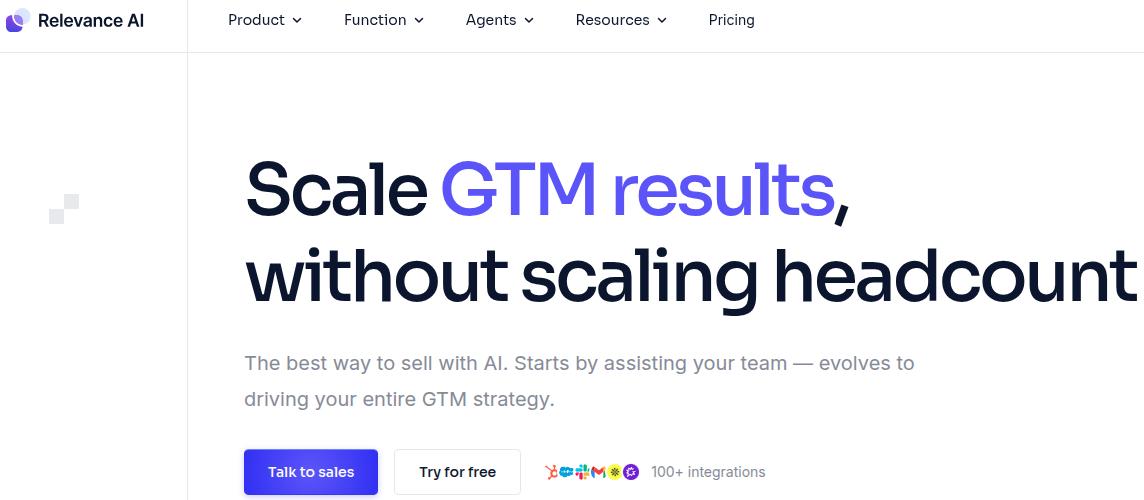
Relevance AI is the closest competitor to AirOps in terms of technical flexibility, but it goes even deeper.
Instead of giving you a pre-built system, it lets you create custom AI agents and pipelines from scratch. You can connect APIs, route tasks between models, and automate internal processes. That makes it powerful, but also difficult to use for non-technical teams.
Notable features
- Custom AI agent builder: The tool facilitates its users with a visual, no-code interface for designing multi-step agents that go well beyond content, from research automation and lead enrichment to internal QnA bots, and more.
- Pre-build agent marketplace: Relevance AI provides 400+ agents to clone and customize operations across sales and marketing.
- Bring-your-own API key: Connect your own OpenAI, Anthropic, or other model keys on paid plans, bypassing Relevance AI’s vendor credits entirely. For teams with existing API relationships, this significantly stabilizes your cost.
Pros
- Extremely flexible for custom workflows.
- Suitable for technical teams and developers.
- Can automate complex internal processes.
- More customizable than AirOps in some cases.
Cons
- Steep learning curve for non-technical users
- The split pricing model (actions + vendor credits) can produce unpredictable monthly bills at volume.
Pricing
- Free: $0/month (200 actions)
- Pro: $29/month (2500 actions)
- Team: $349/month (7000 actions)
- Enterprise: Custom
When to choose each AirOps alternative?
After testing and reviewing all the AirOps alternatives, it becomes clear to us that no AI writer is necessarily “bad.” You just have to choose which one suits you the best.
Choose Contentpen if you want the best AirOps alternatives for SEO and GEO-optimized content with no quality compromises. It is also a suitable tool for you if you need predictable per-article pricing instead of AirOps-style credit guesswork.
Choose ContentMonk if your priority is long-form quality content with minimal effort, and you want to repurpose content into LinkedIn or other formats easily.
Choose Jasper if brand voice is your biggest concern, you manage content across multiple channels (blogs, emails, ads, social), and want consistency without constantly refining prompts.
Choose Copy.ai if your focus is not just on content but on revenue workflows, such as outbound emails, lead nurturing, and CRM-driven campaigns. If your team lives inside tools like Salesforce or HubSpot and needs AI to support GTM execution, then Copy.ai is a good fit.
Choose Hypotenuse AI if you run an e-commerce business and need to generate product descriptions at scale or need quick turnaround for large catalogs without building complex systems.
Choose Writesonic if your strategy involves SEO and GEO. It’s a good pick if you want to understand how your brand shows up in tools like ChatGPT or Perplexity and optimize content accordingly.
Choose Averi if you’re a startup or small team that doesn’t want to manage content manually. If you prefer a tool that suggests ideas, creates drafts, and tracks performance with minimal input, then Averi can be your pick.
Choose Surfer SEO if your main gap isn’t content generation but ranking performance. It’s best used alongside another writing tool to refine and optimize content based on real SERP data.
Choose WRITER if you operate in a regulated industry and need strict compliance, governance, and brand control. It’s built for enterprises where security and consistency matter more than speed.
Choose Relevance AI if you have a technical team and want to build custom AI agents and workflows from scratch. It’s powerful, but only worth it if you actually plan to use that level of flexibility.
If you’ve made it this far, the pattern is pretty clear: most AirOps alternatives either simplify content creation or specialize in one part of the workflow.
Contentpen is one of the few that actually does both, without adding more complexity.
Write content that’s built to rank, not just read
Create search-optimized blogs aligned with SEO and GEO signals, so your content performs well across search and AI-driven discovery.
Try SEO Blogging FREE →
If you’re tired of juggling workflows, tracking credits, and fixing AI output, try Contentpen and go from keyword to publish-ready article within minutes.
Frequently asked questions
Contentpen handles keyword research, internal linking, media, and SEO scoring all in one place. It also provides the opportunity to build custom workflows with a webhook.
Yes, you can use ChatGPT in place of AirOps for content generation and SEO optimization. However, AI chatbots, such as ChatGPT, Gemini, and others, are not too effective for managing automated content workflows, which AirOps and other alternatives, like Relevance AI, do.
Yes. AirOps is beneficial for in-house teams as it helps with repetitive content workflows, bulk content generation, and content editing.
Yes. AirOps does offer a built-in content editor that you can use to modify the generated output according to your needs. The editor is not as advanced as the other tools on the list, but it’s good enough to perform basic functionality.