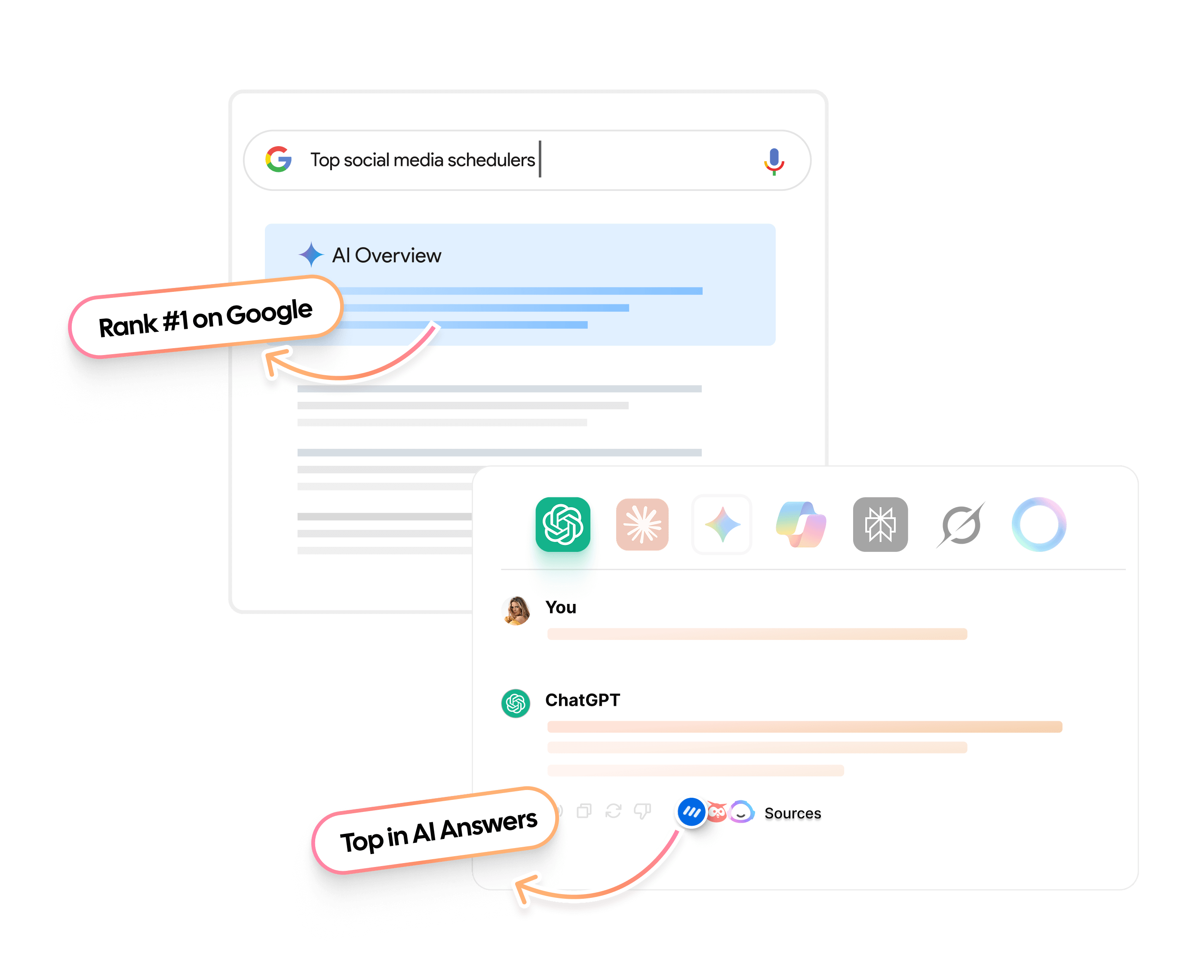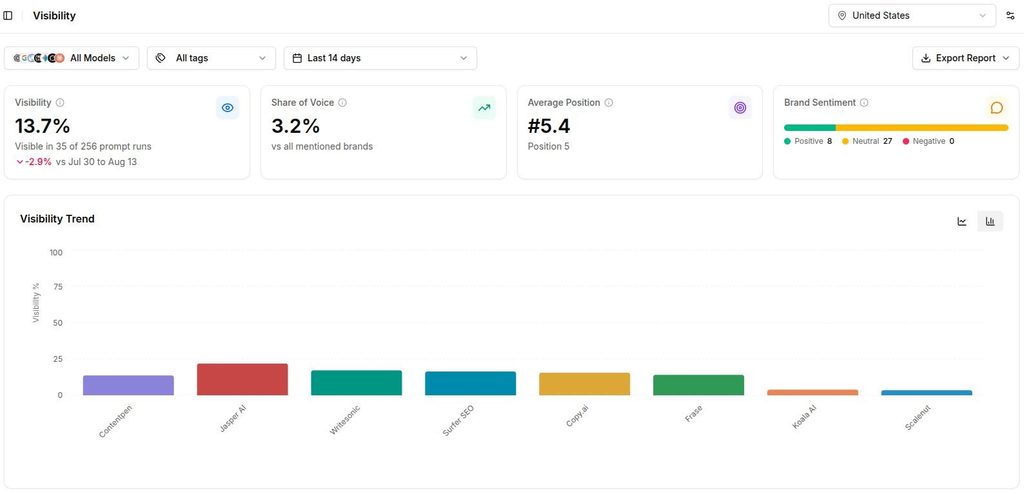
Google just launched preferred sources for its AI search experience, and bloggers, news journalists, and writers are losing their minds.
This is the first time a user can flag your website as a preferred source from their end. So, instead of trying to win AI citations with SEO and AEO-optimized content, you can now request users to do it on your behalf.
In this post, we’ll explore everything about Google Preferred Sources and see what it means for your website in the context of current search and AI modes. We’ll also go through the steps to enable it on your platform.
So, let’s get started.
What is Google’s Preferred Sources, and why is it important for you?
‘Google Preferred Sources’ updateadds a ‘Preferred’ label to your website that can appear when a user searches for something online. It is an effort from Google to make the search experience more personalized for users and for site owners to improve their search visibility.
However, please note that you can only add domain-level and subdomain-level sites in the Google Preferred Sources. This means that a subdirectory like /blog is not eligible.
The update helps people see your content more often amongst other results, leading to 2x the click-through rate. Google is also working toward using ‘Preferred Sources’ as a ranking signal across AI features so that selected sources appear more often.
The idea is an extension of an earlier update Google rolled out in 2022, called the ‘Highly Cited’ update. Back then, it was only available for US-based and English-language searchers.
Now the ‘Highly Cited’ feature is available for everyone worldwide, along with Google Preferred Sources. People can find web articles that have been cited the most for proprietary data or resources directly through the SERPs.
As of 27th May, 2026, Google officially launched preferred sources in AI mode and AI Overviews in all languages. They shared that people have already selected 345,000 unique sources online in multiple languages and regions.
While this feature was initially important for digital media outlets and news organizations, it is quickly going to affect how people find, interact, and purchase in the SaaS industry.
How to manually add a site as a Google preferred source?
Follow the given guide by Google to find preferred sources in Top Stories:
Click on your profile picture or name initials in the top-right corner
Open the ‘Search Personalization’ option
Make sure to enable the ‘Personalize Search’ toggle and scroll down to select the ‘Source preferences’ button.
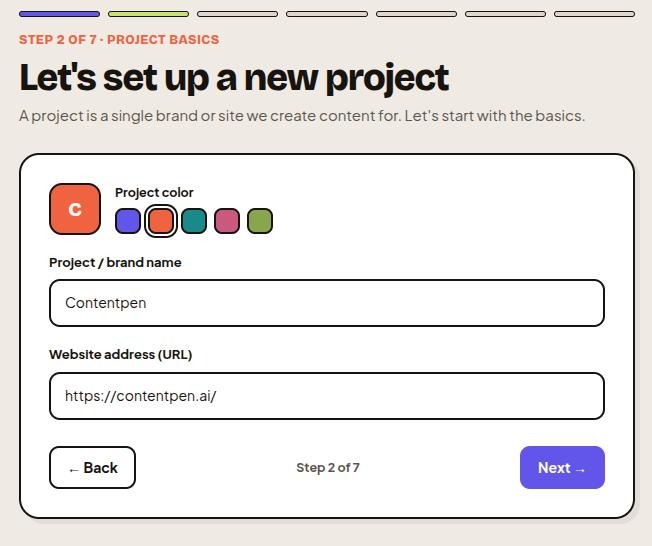
In this menu, search for and add the site you wish to see more often in Google Search. We’ll add Contentpen for now.
Now, you can return to Google Search and type any query related to what you want to see. For example, we’ll search ‘types of keywords in SEO’ in Google to see Contentpen shown with a ‘Preferred’ badge in Top Stories.
How can you help users add preferred sources in Google Search?
Of course, the manual method of adding preferred sources isn’t going to cut it for busy entrepreneurs, company executives, and business owners.
Thankfully, for site owners, Google has already provided some sample CTA buttons in multiple languages that you can add to your blogs and article pages right now.
If you link this button up with a custom code, such as:
You can input your website, configure its placement as an inline or floating button, and change the background and size accordingly.
The free button maker also provides you with an option to change the language and button text that suits your site preferences.
After you are done with the settings, you can copy the direct URL and use it on your blogs or embed the HTML code on your site for your visitors.
Will Google still show other sources?
Yes. Your site being added as a preferred source in Google doesn’t mean that the user can’t find insights from others online.
Searchers will most likely get an AI Overview carousel like the one shown below to help them get fresh takes from other content creators on a trending topic.
However, your preferred source will still show up in the carousel alongside links to other pages and platforms.
How are top publishers responding to Google Preferred Sources?
Top publishers like The Cut, Business Insider, Grub Street, and others have already published their HowTo guides and articles on how to choose them as a Google Preferred Sources news source.
These publication giants placed their links and CTAs mid-article to help users easily make them their prioritized source of news online. You can replicate their strategy and implement it for your blogs and articles.
How can you take advantage of Google’s new update?
To fully capitalize on this latest Google update, you need to do the following.
Keep writing content consistently that people genuinely want to read
Keep the basics the same. Write content people are truly interested in with high readability, proper structuring, and internal links where necessary to support context. Keep a regular posting schedule so the users know when to expect your content.
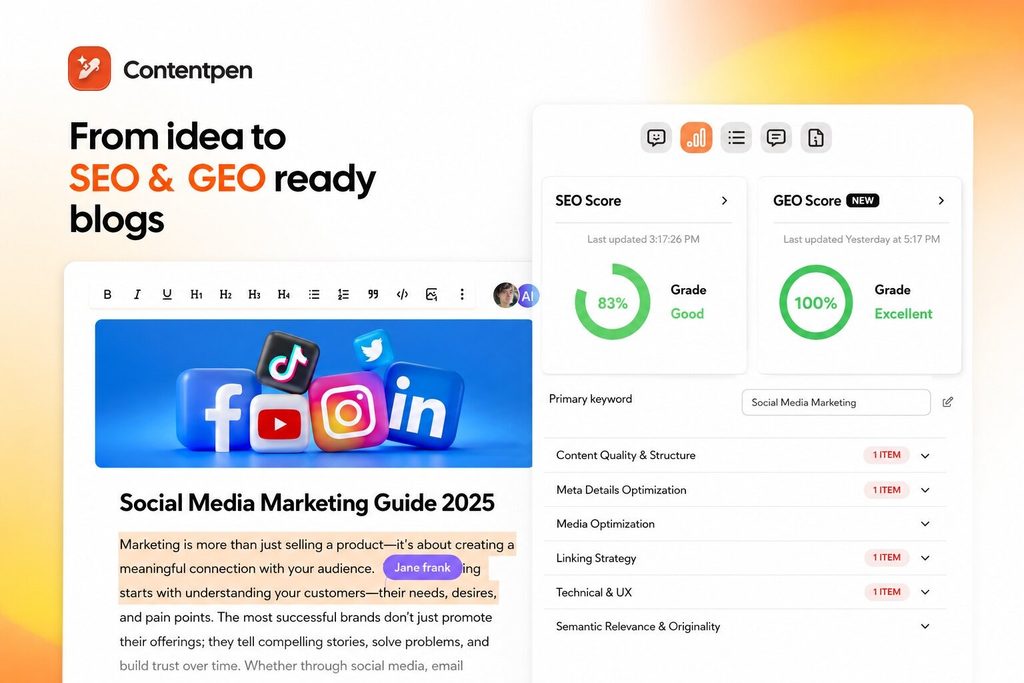
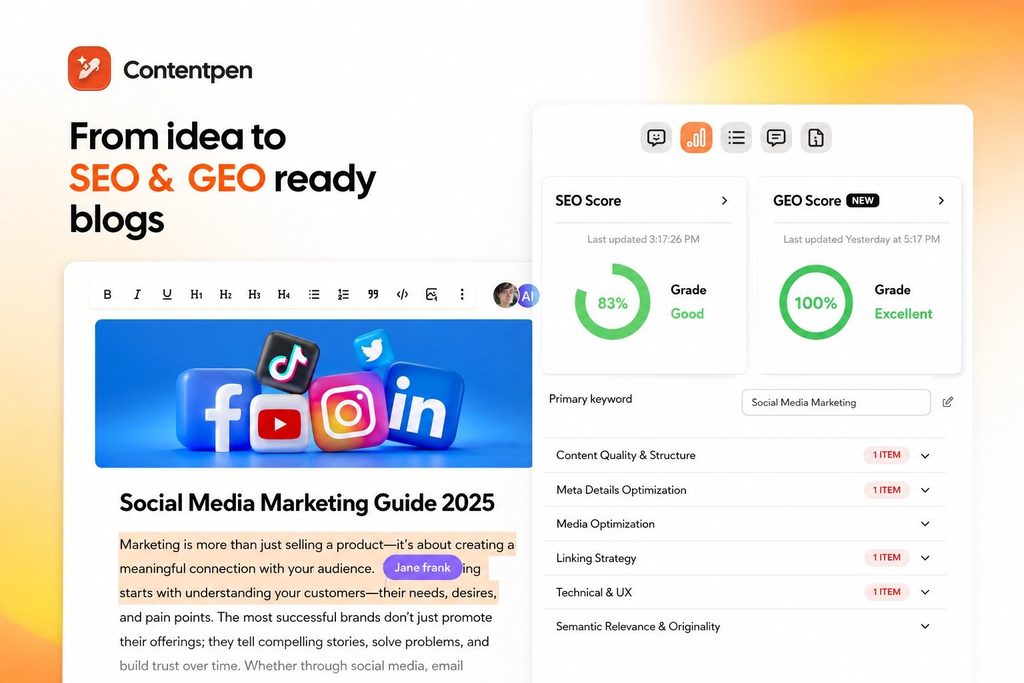
Also, write fresh content on trending topics, especially if you are a news website. Get ideas from Google Trends, AnswerThePublic, or any other tool that you’re comfortable using. Then use Contentpen to create, edit, optimize, and publish your drafts in one place.
From outline to publish-ready content
that fills them
Remember, the bare bones of E-E-A-T content are still valid. You’d want to continue building on that to get marked as a preferred source in Google Search.
Make your site technically-ready for Top Stories
You might publish timely content, but that won’t be too much of a help if your site isn’t technically ready.
To make sure you’re not overlooked in Top Stories and AI Overviews, you need to take care of the following things:
Focus on providing fresh, credible data in your content with external links to ensure transparent reporting.
Remember, Google rewards authenticity, freshness, and credibility more than anything.
Measure and track your performance
KPIs like clicks and impressions are still valid, but Google’s preferred sources feature is more about AI visibility and customer loyalty.
Therefore, instead of tracking standard KPIs, you need to watch for repeat referrals from search when your site is starred by users.
You also need to track how many users clicked on your ‘Add as a preferred source on Google’ button to help you see your CTA performance.
Slowly, but surely, when users keep adding you as their go-to site for knowledge, you will get better AI citations and search performance for your organic keywords. Then, you can track and attribute these increasing numbers to different channels using tools like Usermaven.
Usermaven’s journey tracking lets you attribute repeat search referrals to specific content pieces without much hassle.
Once you understand what methods of writing and distributing content are working, you can adjust and apply your marketing strategies accordingly.
Final thoughts
The Google Preferred Sources feature news might be shocking to a few, but it was a long time coming. Since the ‘Highly cited’ update, SEO gurus have been predicting this change and the significant impact it can have for businesses.
Even though the preferred sources update is still fresh, it is clear that it can improve your search engine and AI visibility. But the decision to select you as a primary source of their information is in the users’ hands.
The shift from algorithm-dependent visibility to reader-relationship-driven visibility is real. An AI SEO content writer like Contentpen is here to help to make content that people still want to read and set as a preferred source in their personalization tab.
Write better blogs in less time, without sacrificing quality.
Let AI handle structure, clarity, and flow while you stay in control of the message.
Does my website automatically appear in the Google Preferred Sources?
Yes. Any website that publishes fresh content is automatically eligible to appear in AI Overviews preferred sources. You can verify your site’s eligibility by entering your URL directly into google.com/preferences/source.
Is the “Preferred” badge a guaranteed ranking signal?
No, it’s not a guaranteed ranking signal yet. The ‘Preferred’ sources badge appears only when your site already surfaces in AI Overviews or AI Mode. Google has confirmed it’s working toward making preferred source selections a direct ranking signal, but that’s not fully live yet.
Does a user need a Google account to add preferred sources?
Yes. Since the feature lives inside Search Personalization settings, users need to be signed in to their Google account for selections to be saved and applied.
How many sources can a user add?
Google hasn’t published a hard cap publicly. Users can add multiple sources across different categories, and their selections apply across standard Search, Top Stories, AI Overviews, and AI Mode.
Article Forge has been a lifesaver for affiliate bloggers and SEO agencies who need to fill hundreds of pages quickly. But this pitch made sense in 2021, not in 2026.
Today, search engines have raised the bar on content quality, and with the increase of AI Overviews, readers bounce quicker than ever from thin, templated writing.
The gaps Article Forge leaves open, such as brand voice training, GEO optimization, integrated SEO data, and native analytics, are now the exact things a serious content team needs.
This guide covers the best Article Forge alternatives worth switching to in 2026. We tested each tool hands-on in detail, so you can easily choose the right option for your needs.
So, let’s get started.
What is Article Forge, and what does it do?
Article Forge is an AI content generation tool that provides you with an SEO-optimized article with a target keyword and article length input in 60 seconds.
It does not require any detailed prompting or templates to function, which is why it was so popular with affiliate marketers and niche site operators. However, there are a lot of caveats with Article Forge’s fast content generation approach, which we’ll see later in the post.
The platform researches topics in real time and stitches together original articles from what it finds across the web.
Out of the box, it handles multi-level sub-topic generation, basic video embedding, and direct scheduling to WordPress. There is also an API for integrating with other tools and for scaling content production.
Pricing starts at $13 per month, billed annually for the Standard plan, which includes up to 25,000 words and bulk generation. A Business plan is also available with 500,000+ words, custom user accounts, and a dedicated account manager, along with a 5-day free trial.
For the right use case, a high-volume niche site operation where speed and scale matter more than tone or depth, Article Forge has historically been a workable choice. But that use case has narrowed considerably as content has evolved.
Why are users looking for Article Forge alternatives?
There are many reasons why people are searching for Article Forge alternatives. Some of them are mentioned below, compiled from consistent complaints across G2, Capterra, and other marketing forums:
Content quality that limits publishability: Article Forge generates content by processing and rewriting existing web content around a keyword. The output is often coherent on the surface but shallow underneath.
No brand voice or tone control: Since Article Forge focuses on speed, it does not provide its users with any brand voice training or knowledge base settings. There is no way to train the AI on your writing tone or style, which is a huge downside for brands.
No SEO or GEO optimization built in: AF tool does not do live SERP analysis, competitor benchmarking, or content scoring. It does not suggest semantically relevant keywords, flag content gaps, or optimize for AI visibility.
Limited CMS integrations: The tool only publishes natively to WordPress and Shopify. Teams using Ghost, Wix, or Webflow need to export and manually upload content, which adds friction that defeats the purpose of an automated content system.
No website analytics or content performance data: Once content is published, Article Forge has no way to show you how it is performing. There is no rank tracking, CTR visibility, impressions data, and no way to identify which pages need refreshing. You need a completely separate tool stack to close that loop.
No visual content creation: Unlike Contentpen and many other alternatives on this list, Article Forge will simply not provide you with featured or in-article images for your blogs and articles. It is just an AI text generator.
Other than these obvious caveats, the recent reviews from G2 and Capterra also highlight a lot of problems for Article Forge.
For instance, a reviewer on G2 highlighted that Article Forge does not provide a very readable or understandable output. The content isn’t organized, and there’s no way to traverse through the text.
Another reviewer highlighted that even after repeated attempts, they weren’t able to get quality, publish-ready output from Article Forge.
Although the reviewer’s tone is a bit harsh, what they highlighted is a recurring theme with Article Forge. The content is generated quickly, but it is not SEO/GEO-optimized or fun to read for the audience.
How we tested and selected the alternatives
Our team ran each tool against a defined evaluation framework before including it on this list. Here is how we approached it:
Content quality and depth: We tested each platform on identical content briefs across multiple topics. We looked at sentence-level coherence, factual accuracy, structure quality, and how much editing was required before the output could be published.
SEO and GEO capability: Our team checked if the tool analyzes live SERPs. We also noticed whether the AI writer in question surfaces semantically relevant keywords and optimizes content for SEO and AEO.
Brand voice and customization: We checked whether each tool supports custom knowledge bases, tone settings, or prompt-level customization. Tools that generate the same voice regardless of the input received lower marks here.
Workflow completeness: Can you go from keyword research to published content without leaving the platform, or does the tool cover only one piece of the workflow and send you elsewhere for everything else?
Publishing and integrations: We looked at which CMS platforms each tool publishes to natively and checked whether webhook vs API support extends that capability further.
Pricing transparency: All pricing in this article reflects monthly billing, not annual. We confirmed figures directly from vendor websites or from verified G2/Capterra listings at the time of writing.
A tool was only included if it genuinely filled a gap that Article Forge leaves open, not just because of the buzz it has in the market.
Quick comparison: Top Article Forge competitors worth considering in 2026
Before we move on to the detailed list of Article Forge alternatives, let’s take a look at their summary below:
Guided keyword-to-article workflow + Social Upreach
Strong
Limited
WordPress
$59/month
Jasper AI
Brand-aligned marketing copy at scale
Moderate
Strong
WordPress (via integration)
$69/seat/month
Byword AI
Programmatic SEO and bulk article generation
Basic
Limited
WordPress, Webflow
$99/month
Autoblogging.ai
Fully automated bulk content publishing
Moderate
Moderate
WordPress, Ghost, Shopify, Wix, Webflow
$19/month
Agility Writer
Long-form SEO articles with topical mapping
Moderate
Limited
WordPress, Shopify
$25/month
SEOwriting.ai
One-click SEO articles at scale
Strong
Moderate
WordPress
$19/month
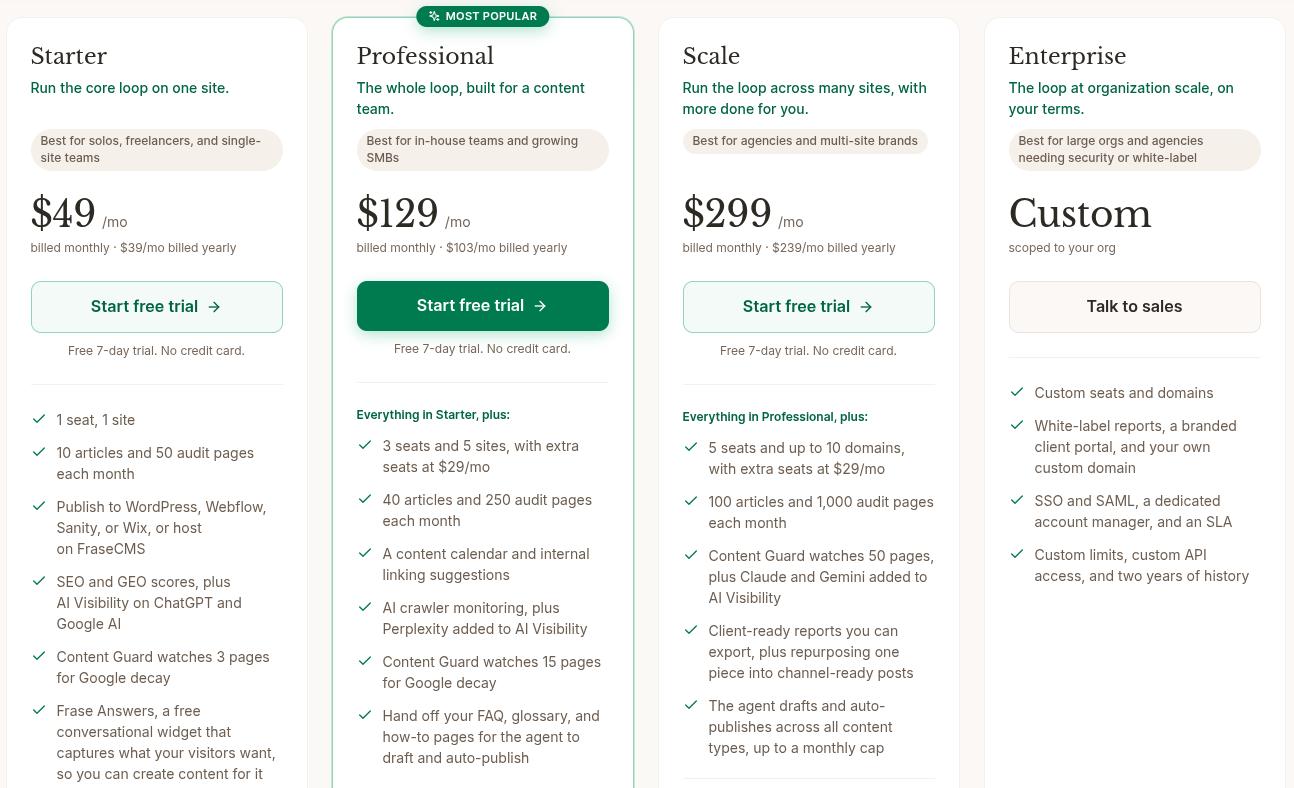
Frase
SEO briefs from competitor analysis
Strong
Limited
Google Docs, WordPress
$49/month
Surfer SEO
Real-time content optimization and SERP scoring
Strong
Limited
Google Docs, WordPress
$119/month
Now, let’s see each tool entry in detail.
1. Contentpen – Best Article Forge alternative for SEO and GEO-optimized content
Contentpen is the best Article Forge replacement if you want distinct, consistent, brand-aligned content at scale with performance data built-in.
The AI writer starts with a live SERP and gap analysis, pulling real competitor data before a single word is written. That difference shapes everything about the output quality.
Contentpen’s custom knowledge base lets you train the platform on your existing content, brand guidelines, and terminology. Combined with AI prompt targeting and a custom prompt layer for each article, the output reflects your actual tone rather than a generic editorial voice.
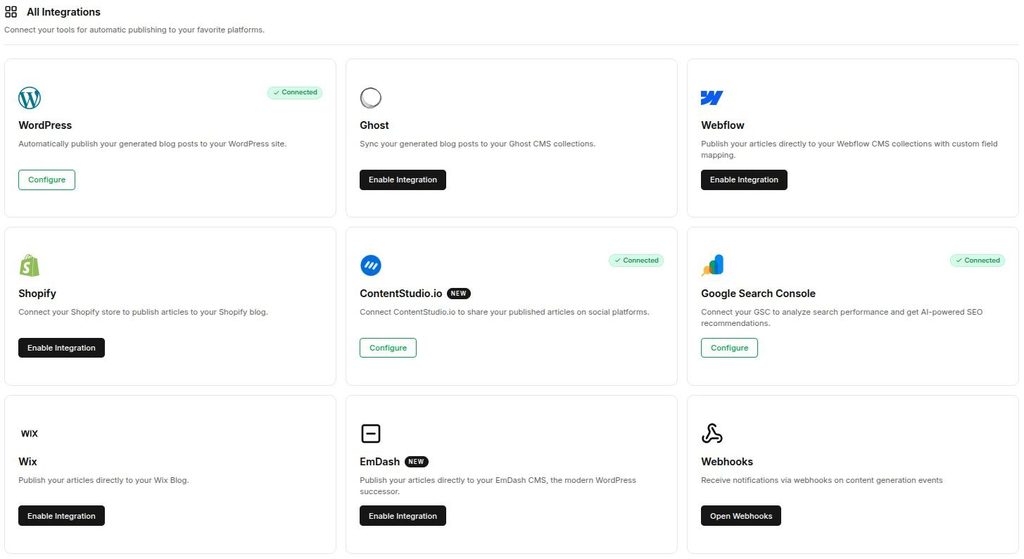
On the publishing side, Contentpen covers WordPress, Ghost, Wix, Webflow, Shopify, Google Search Console, and ContentStudio out of the box. It also includes webhooks for custom workflow notifications, which extend the productivity for teams.
The web analytics layer is where the gap becomes most visible for teams managing live sites. Contentpen connects to Google Search Console and surfaces average position, CTR, clicks, and impressions data directly inside the platform.
That means you can see which pages are decaying and what SEO opportunities already exist across your site, without leaving the content editor. These are all the features that Article Forge does not provide to its users.
At a glance, here’s how Contentpen compares with AF 4.5:
Other than these features, you get bulk creation with content presets, so that your article is always according to your needs.
Pricing:
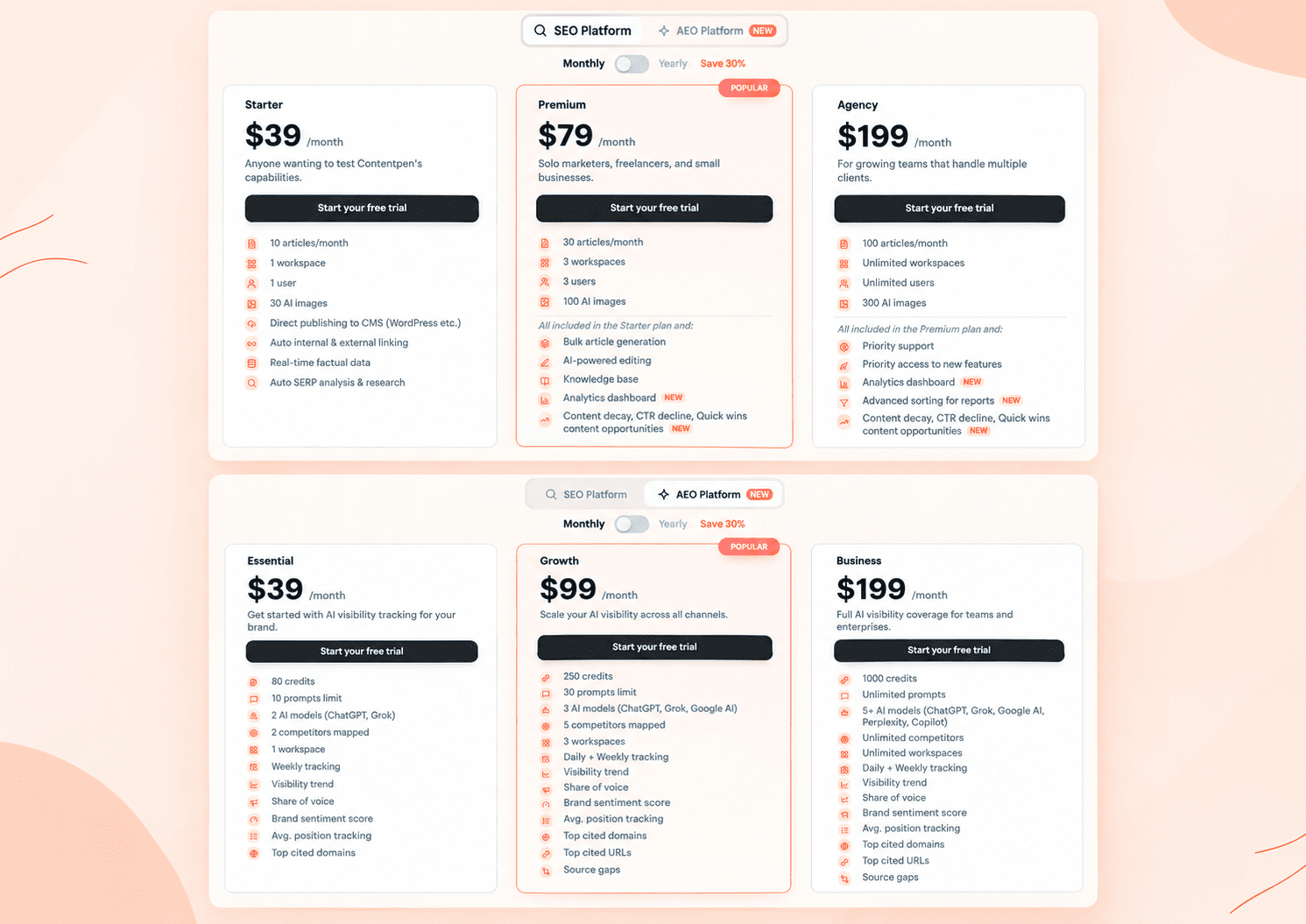
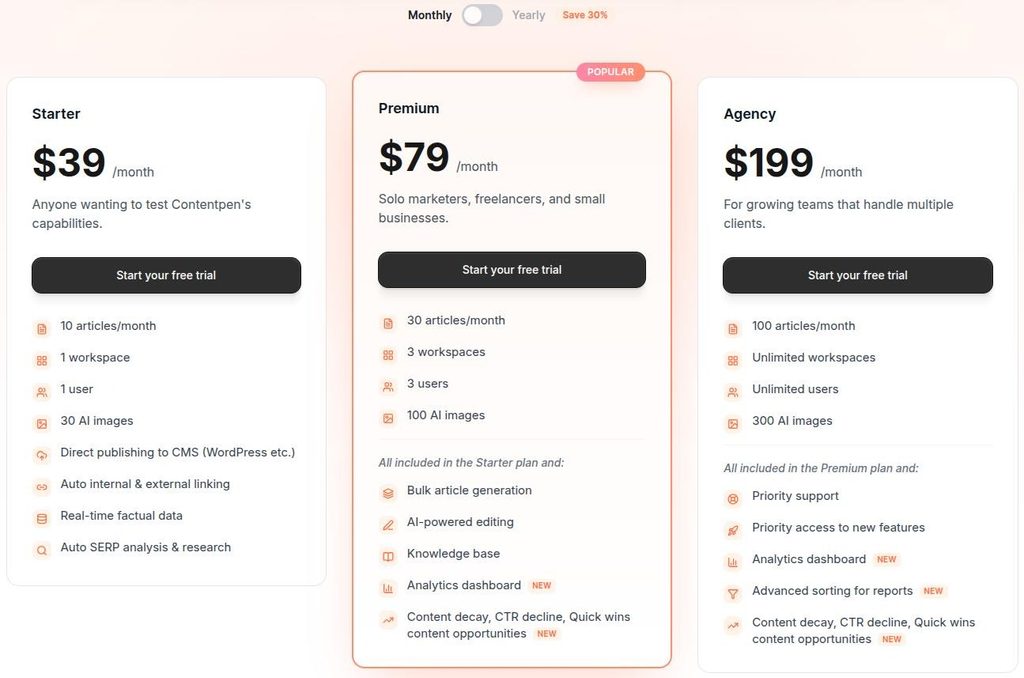
$39/month (Starter, 10 articles), $79/month (Premium, 30 articles), and $199/month (Agency, 100 articles). A 7-day free trial is also available.
2. Writesonic – Best for long-form content with GEO tracking
Writesonic is a powerful SEO and GEO-friendly AI content generator with AI visibility and tracking features.
When comparing Writesonic vs. Article Forge 4.5, Writesonic’s Article Writer 6.0 includes live web research integration, meaning the content it generates is grounded in current, cited sources.
The GEO tracking layer is the feature that separates Writesonic from most tools in this space. Teams that need to monitor where their brand appears in ChatGPT, Gemini, and Google AI Overviews responses will find this directly relevant.
The SEO audit feature adds technical recommendations alongside content creation, which gives content and SEO teams a shared workspace without needing a separate tool for each layer.
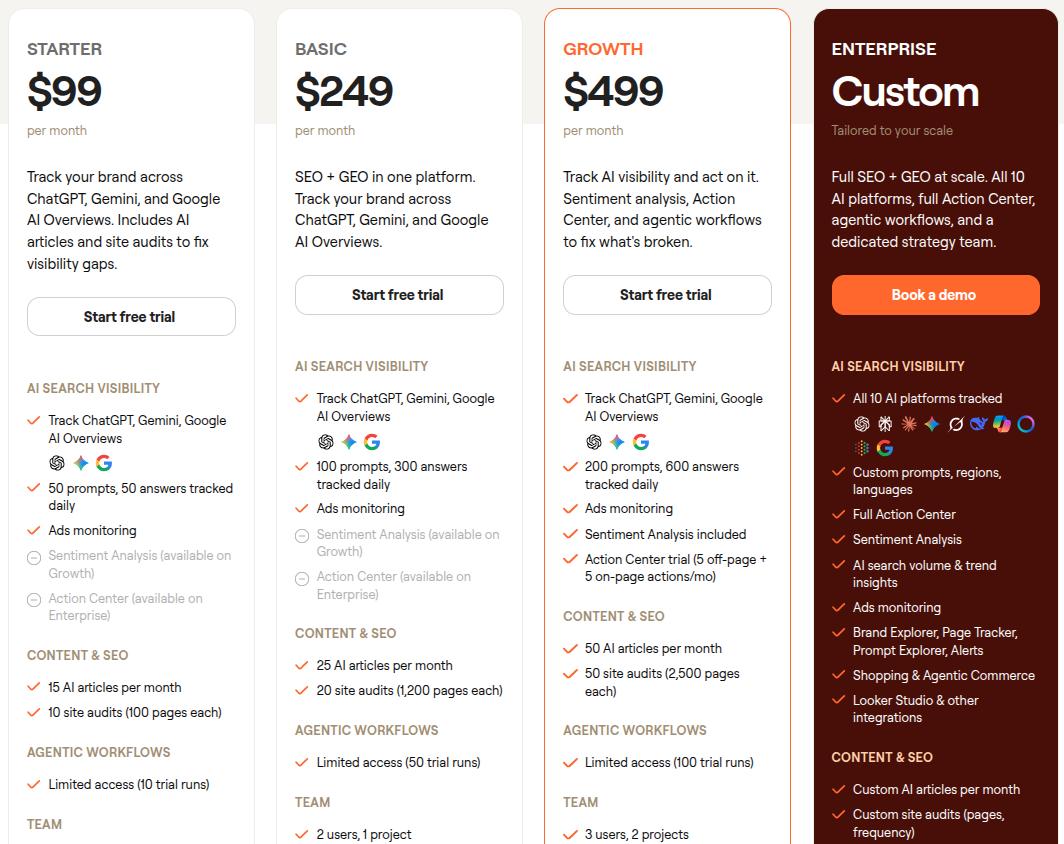
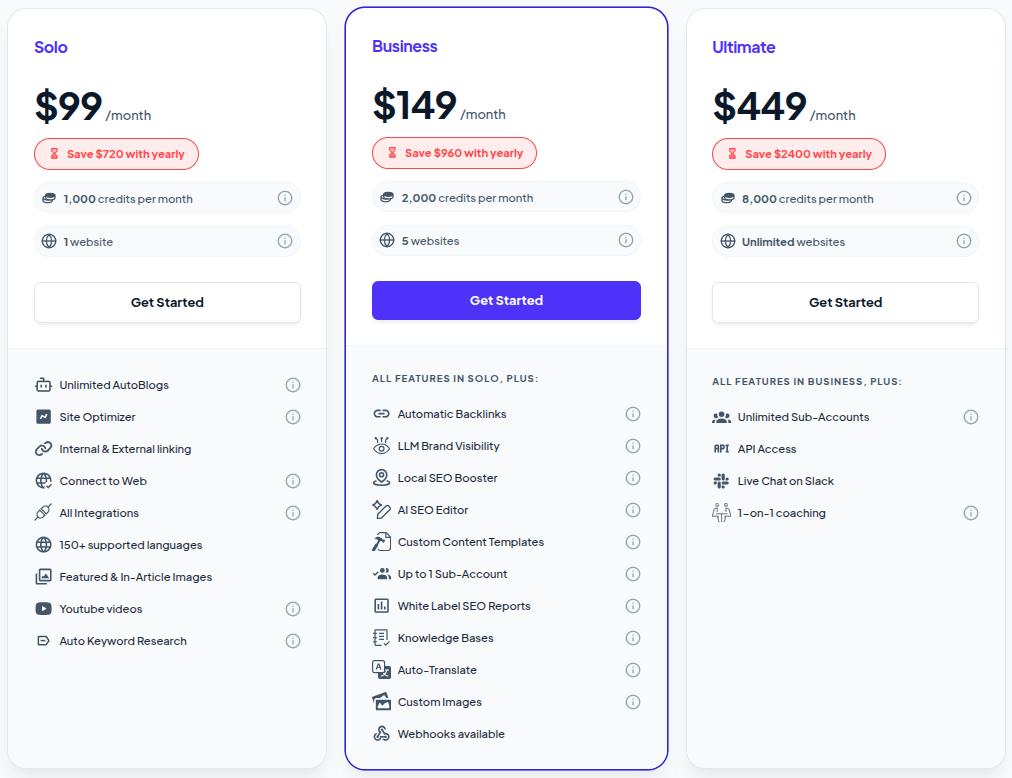
The main friction point with Writesonic is the pricing structure. Plans start at $99/month, which is a significant jump from Article Forge’s entry tier and from most other tools on this list.
Where it works well:
Teams running content and AI search visibility in parallel
Agencies that need to prove GEO performance to clients alongside traditional SEO metrics
Where it falls short:
Expensive entry point
Content requires editing before publishing
A credit-based system can cause confusions
Pricing:
Starts at $99/month, billed monthly. Free plan available with limited access. Enterprise plan at custom pricing.
3. Koala AI – Best budget-friendly Article Forge alternative for SEO articles
Koala AI sits closest to Article Forge in terms of workflow philosophy: enter a keyword, get a structured article. The key upgrade is that Koala does this with real-time SERP data.
Before generating a draft, KoalaWriter pulls the top-ranking pages for your keyword and uses that data to inform article structure, heading coverage, and semantic depth.
The result is content that is more aligned with what actually ranks compared to Article Forge’s internally trained generation, which does not check live results during writing.
The platform bundles 5 tools under one subscription:
KoalaMagnets for building custom GPTs as lead magnets on your site
For affiliate marketers and niche site operators, the Amazon affiliate article format is a notable specific feature. Koala pulls live product data to generate review and comparison content structured specifically for affiliate monetization.
Brand voice customization is limited compared to tools like Jasper or Contentpen. You can configure writing style and point of view, but there is no knowledge base system or prompt-level control per article. GEO optimization for AI answer engines is also not focused on by Koala AI.
Where it works well:
Affiliate marketers who need a dedicated format for writing articles
Content teams that need an upgrade from AF but at a low price
Where it falls short:
Limited brand voice training
No GEO scoring
Customer support response times are slower
Content quality does not match Writesonic or Contentpen on complex topics
Pricing:
Essentials plan starts at $9/month (15,000 words). Professional plan at $49/month (100,000 words).
4. Scalenut – Best for a guided SEO content workflow with Social Upreach
Scalenut packages keyword research, AI content briefs, long-form article generation, real-time content optimization, and Social Upreach into one subscription.
For content marketers who want to replace Article Forge with a tool that guides the entire process from keyword to published article, Scalenut is worth considering.
The standout feature is Cruise Mode. You enter a target keyword, Scalenut pulls data from the top-ranking pages, generates a structured brief with NLP terms, and produces a full draft in one guided flow.
Compared to Article Forge’s keyword-in, article-out approach, Cruise Mode gives you visibility into the process and lets you make decisions at each stage before committing to a full draft.
Social Upreach is the feature that makes Scalenut distinct from most SEO content tools. It monitors off-page mentions, tracks user sentiment, and flags relevant social conversations around your brand and topics.
Where it works well:
Content marketers who want SEO planning, writing, and optimization in one subscription
Teams that want to monitor their broader content footprint beyond just page rankings
Where it falls short:
Individual features are less specialized than dedicated tools
Brand voice training is basic
Steeper learning curve for beginners
Pricing:
Essential plan starts at $59/month, Growth plan at $89/month. A 7-day free trial is also available.
5. Jasper AI – Best for brand voice consistency across content teams
Jasper is the right Article Forge alternative for teams where the primary problem is not volume or SEO data but tonal consistency. When you need to align multiple writers, clients, or content formats, Jasper is the tool to consider.
The brand voice training system lets you feed Jasper your existing content, style guides, and approved messaging.
Knowledge assets store product positioning, approved terminology, and brand rules. Every piece of content generated from that point reflects those inputs.
Compared to Article Forge, Jasper produces measurably better prose quality with fewer grammatical issues and more natural sentence variation. The trade-off is that Jasper is not a one-click system. It requires input, iteration, and editorial judgment to produce the best output.
Expensive relative to most Article Forge alternatives
No native SEO or GEO scoring
AI image generation offers limited creative control
Requires more human input to get good output.
Pricing:
Pro plan starts at $69/seat/month, billed monthly. The business plan is custom pricing.
6. Byword AI – Best for programmatic SEO and large-scale article generation
Byword AI is purpose-built for teams running programmatic SEO campaigns at scale. If Article Forge appeals to you for its bulk generation capability but falls short on output quality, Byword is a meaningful upgrade in that specific lane.
The core workflow is simple. Upload a list of keywords or titles in bulk, configure your article settings (tone, length, language), and Byword generates SEO-optimized articles across the entire list in one batch.
The Campaign Builder feature also helps structure large rollouts by grouping related articles into organized production runs.
Byword AI provides articles with proper heading hierarchies, logical section flow, and readable prose that requires less editing. In this aspect, Byword is a meaningful upgrade over Article Forge.
Where it works well:
Teams running programmatic SEO campaigns
Agencies managing large batches of product pages
Teams that need Article Forge-style volume with better output quality
Where it falls short:
Expensive per-article compared to other Article Forge alternatives
No AI visibility or brand sentiment tracking
Pricing:
Starter at $99/month for 25 articles. Standard at $299/month for 80 articles. Scale at $999/month for 300 articles.
7. Autoblogging.ai – Best for fully automated bulk content publishing
Autoblogging.ai is one of the few tools on this list that genuinely competes with Article Forge on its home turf: automated, hands-off content generation at scale. The core pitch is similar. Give it a keyword, and it produces full articles without requiring you to guide the process step by step.
Where it pulls ahead of Article Forge is in output structure and CMS publishing depth. Autoblogging.ai generates articles with proper sections, meta descriptions, and schema-ready formatting.
The Amazon Reviews and News features are what make it genuinely useful beyond the basics. Amazon mode pulls live product data to generate affiliate-ready comparison and review articles. News mode generates timely articles from current events and trending topics.
The Godlike quality setting, available on higher plans, runs the content through additional passes to reduce AI detection signals and improve coherence. Autoblogging.ai also supports internal linking and other SEO-optimization tools for better SERP rankings.
Where it works well:
Affiliate site operators who need automated review and comparison content at volume
News and topical content publishers who want to automate first drafts from trending stories
Teams migrating from Article Forge who want a structurally similar workflow but better output quality
Where it falls short:
Quick Mode can have quality consistency issues
No brand voice training or knowledge base
AI infographics are basic in aesthetic presentation
Pricing:
Starter plan at $19/month (40 credits). The Regular plan is $49/month (120 credits). A free trial is available with 10 credits renewed each month.
8. Agility Writer – Best for long-form SEO articles with topical mapping
Agility Writer is a solid mid-range Article Forge alternative for content creators and bloggers who want more structured, research-aware long-form articles without jumping to a premium-priced platform.
The 1-Click Mode generates a full article from a keyword with HTML tags, heading structure, FAQ sections, and list formatting already in place. This is similar to Article Forge’s core workflow but with noticeably better structural coherence in the output.
The Advanced Writing mode gives you more control over the article structure before generation, letting you review and adjust the outline in detail.
That said, brand voice customization is quite basic with Agility Writer. There is no knowledge base system or prompt-level tone control for users.
Where it works well:
Bloggers who require consistent, coherent outputs
Affiliate marketers who want large-scale content creation
Content teams that want structured long-form articles with better SEO
Where it falls short:
No real-time SERP scoring
Brand voice training is limited
No GEO or AI search visibility features
Pricing:
Basic plan at $28/month (40 credits). Pro plan at $98/month (150 credits). All plans are billed monthly with no free trial, though individual features are available to test for $1.
9. SEOwriting.ai – Best for one-click SEO articles with built-in brand voice
SEOwriting.ai occupies the same one-click generation lane as Article Forge but with a layer of SEO structure and brand voice control that AF simply does not offer.
The workflow is fast. Enter a keyword, configure your tone, target audience, and brand voice settings, and the tool produces a full SEO-optimized article with headings, metadata, and internal links.
Therefore, with SEOwriting.ai, the outputs are much closer to publish-ready than what Article Forge generates.
The brand voice feature is where SEOwriting.ai separates itself most clearly from Article Forge. You can create custom brand voice profiles that the AI applies consistently across articles, which is something Article Forge does not offer.
Where it works well:
Solo bloggers and small content teams who want tonally consistent content without a complex setup
Content teams that need bulk articles without sacrificing quality
Copywriters who want to create landing pages with high-converting CTAs
Output still requires editing on complex or nuanced topics
Less suited for agencies managing multiple distinct brand voices
Pricing:
Starts at $19/month. You can get 3 free articles before you decide to purchase. However, pricing plans are credit-based, so keep that in mind.
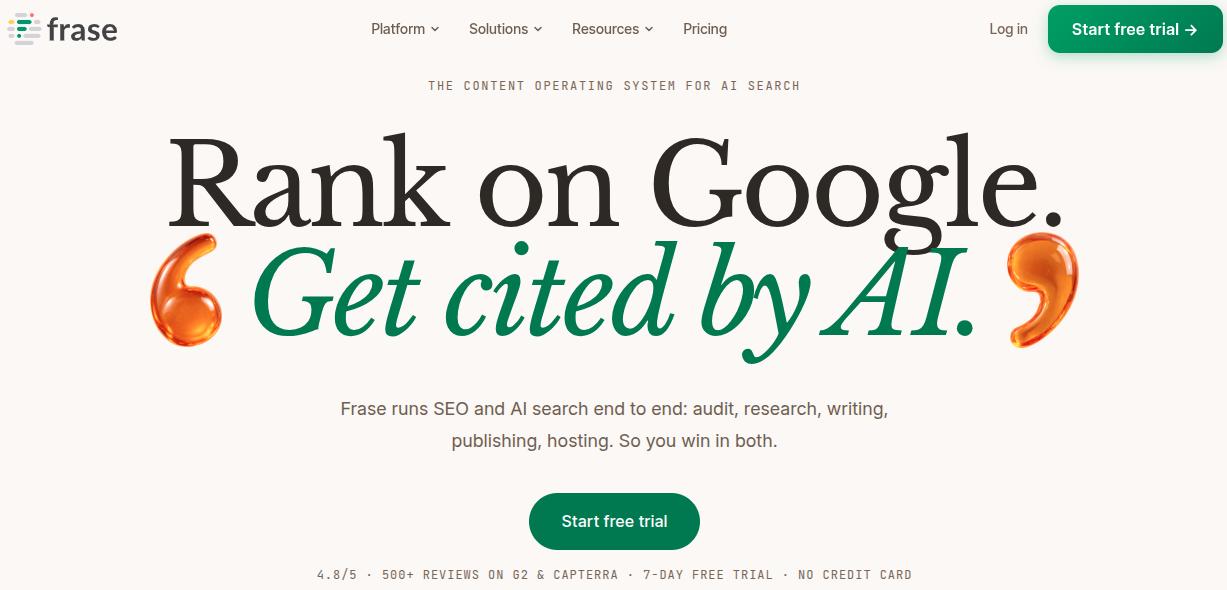
10. Frase – Best for SEO content briefs and competitor analysis
Frase takes a brief-first approach to content creation. Where Article Forge skips the strategy part, Frase starts by analyzing the top 20 ranking pages for your keyword and building a detailed content brief from what it finds.
The brief includes competitor headings, common questions from PAA and forums, semantic keywords, and suggested article length, all pulled from live SERP data.
From there, you can write manually in the editor, use the AI writing assistant to draft separate sections, or generate a full first draft with ease.
The real-time content score updates as you write, showing how your article’s topical coverage and keyword usage compare to the competing pages. This is a fundamentally different feedback loop from Article Forge, where you receive a finished article and have no scoring signals.
However, Frase’s AI writer does not provide you with the best content quality. The platform shines in the brief and optimization stages more than in pure generation.
Where it works well:
Content strategists who brief writers
SEO teams that need data-driven content planning
Editorial operations where brief quality directly affects output quality
Where it falls short:
AI writing quality requires significant editing for publish-ready output
Image generation is limited to basic featured images
Pricing:
Paid plans start at $49/month, billed monthly. A 7-day free trial is available.
11. Surfer SEO (Surfer AI) – Best for real-time content optimization and SERP-based scoring
Surfer SEO is the most established content optimization platform in this category and the most different from Article Forge in what it actually does.
Article Forge automates content generation. Surfer optimizes content for ranking, whether that content was written by a human, generated by another AI tool, or produced by Surfer’s own AI writer.
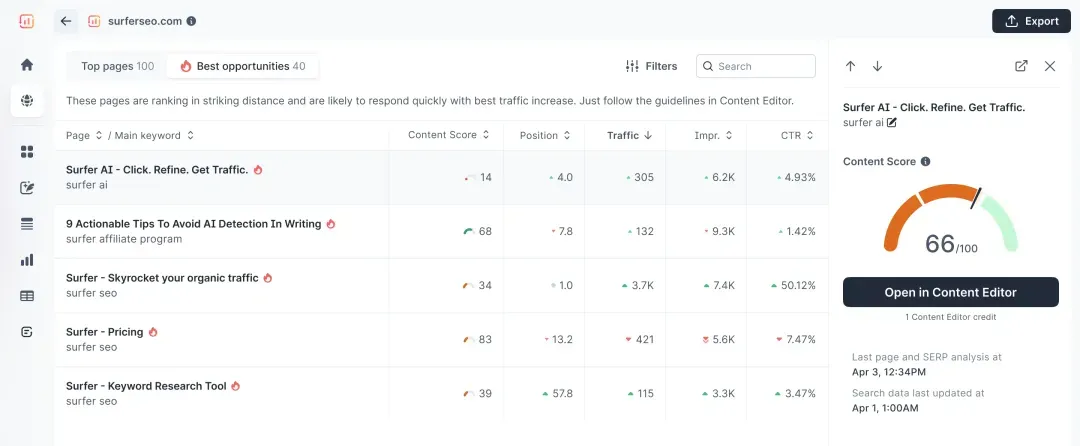
The Content Score is Surfer’s core output: a real-time metric that tells you how well your article matches the structure, keyword coverage, topical depth, and semantic patterns of the top-ranking pages.
Surfer AI generates full first drafts optimized for the Content Score from the start, compressing the manual optimization step into the generation process.
Where it works well:
Editorial teams optimizing human-written drafts
Content marketers who want to ensure every published piece meets a competitive quality threshold
Agencies that need a quantifiable optimization signal for clients.
Where it falls short:
Most expensive entry point on this list
Focused on optimization rather than end-to-end content creation
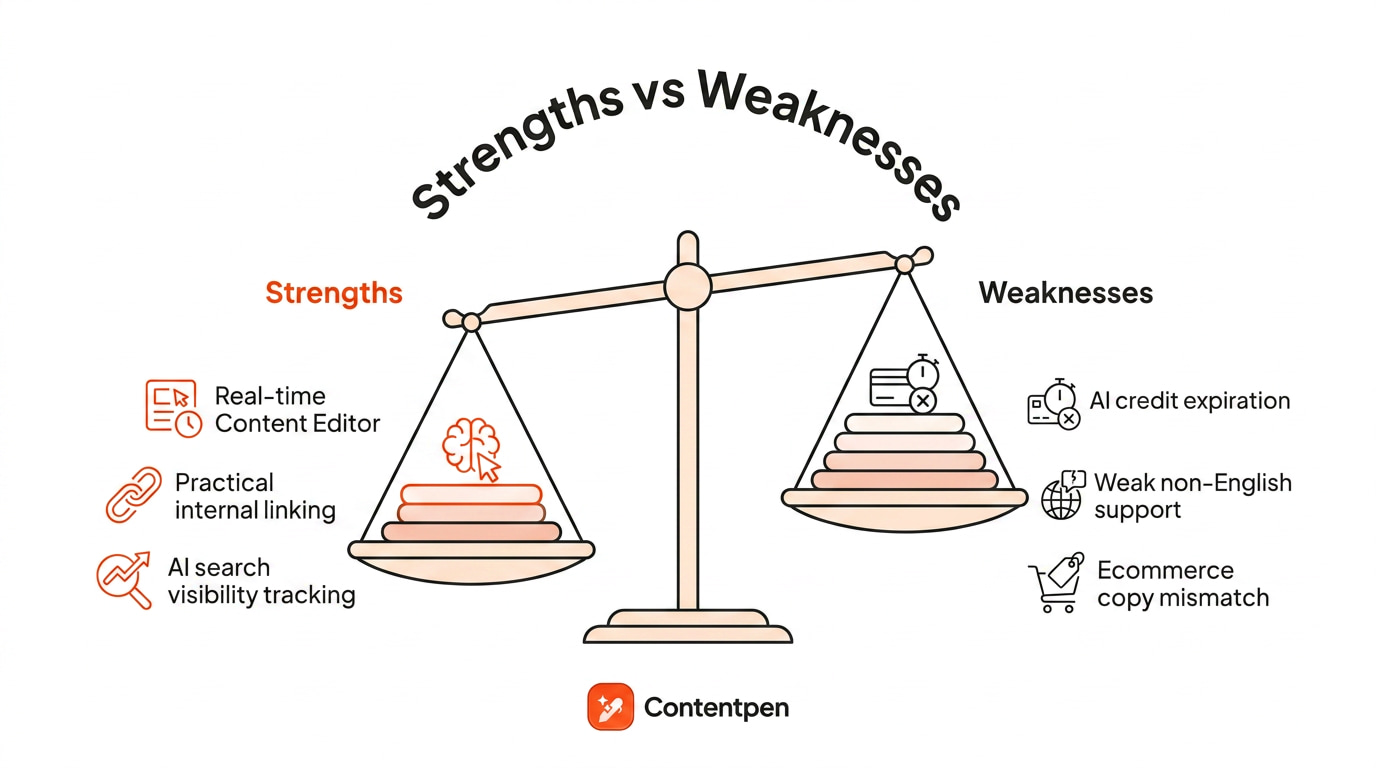
No native website analytics feature
Pricing:
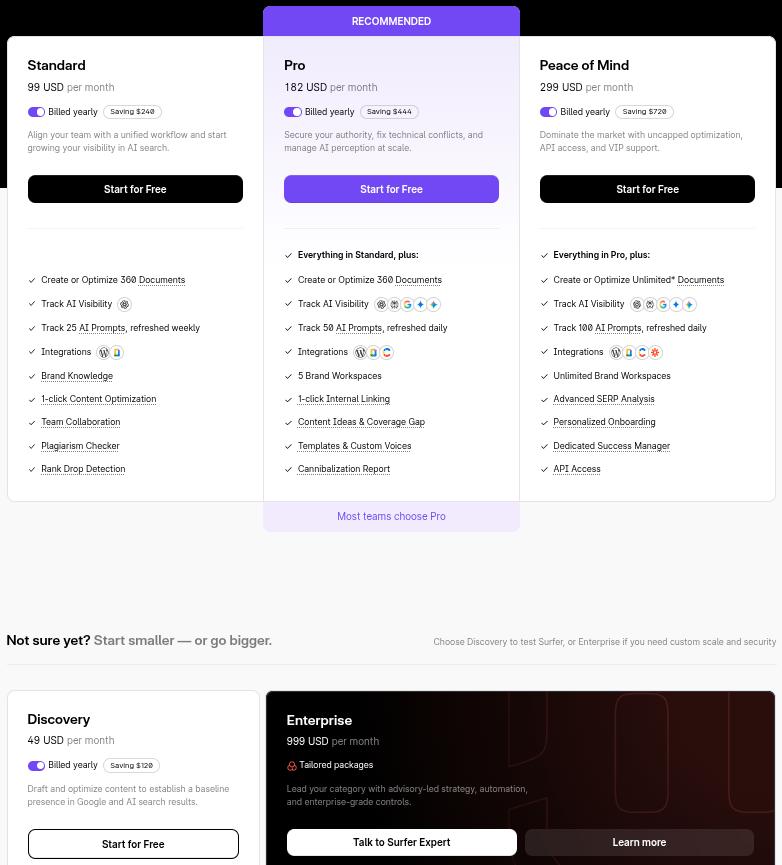
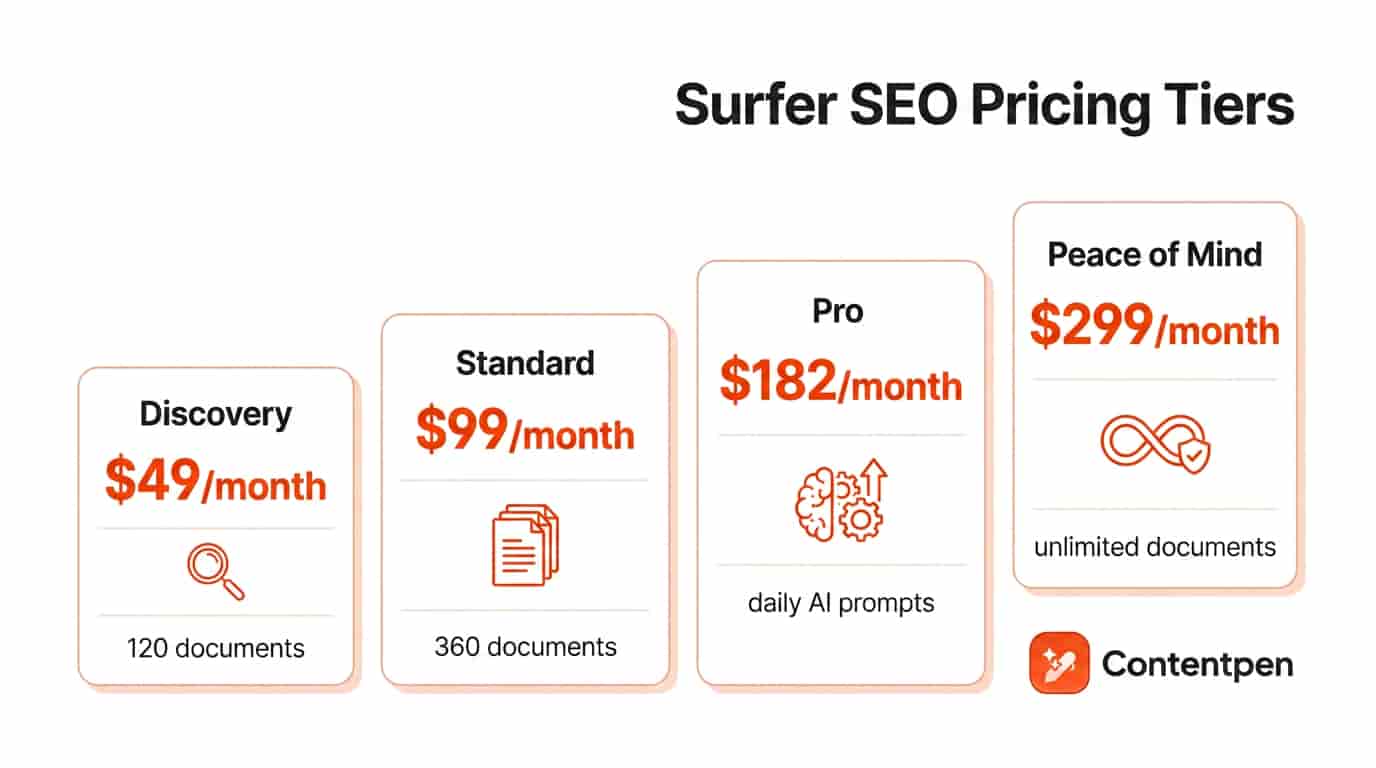
Essential plan at $89/month, Scale plan at $129/month, Scale AI plan at $219/month. All billed monthly. A 7-day free trial is available.
Which Article Forge alternative should you choose?
Most people searching for Article Forge alternatives are solving one of three problems:
The content does not rank
Articles or blogs do not sound like them
The workflow stops at content generation, with nothing connecting to performance or SEO data
The right pick depends on which of those is costing you the most.
You want the best blogging experience end-to-end
For the majority of content teams, Contentpen is the answer.
It is the only tool on this list that supports end-to-end content creation, optimization, publishing, and post-publishing features.
From outline to publish-ready content
that fills them
The tool performs live SERP analysis before writing, SEO and GEO scoring, one-click publishing, and website analytics. That said, you may choose other tools for some specific use cases. These are mentioned below in more detail to help you make the right choice.
You need AI search tracking on top of content creation
For this purpose, Writesonic is the pick. It is the most complete option for monitoring brand presence across ChatGPT, Gemini, and Google AI Overviews while generating content from the same dashboard. That said, Writesonic does come with a hefty price tag.
You want Article Forge’s speed with slightly better SEO data
Koala AI at $9/month is the most direct replacement of Article Forge, in terms of its ease of use and price. Koala’s one-click generation, real-time SERP data scraping, and a similar AF workflow feel familiar to Article Forge users, making the shift easier for them to consider.
You are running programmatic SEO at volume
Byword AI or Autoblogging.ai are the primary choices for programmatic SEO at volume, depending on budget. Byword is more structured for large keyword-list campaigns with its Campaign Builder. Autoblogging.ai costs less and adds Amazon affiliate and news modes.
Brand voice consistency is the core problem
For this purpose, we recommend Jasper AI. If you are managing multiple writers or client accounts and consistency is breaking down, then Jasper’s knowledge assets and brand voice training handle this much better than Article Forge 4.5.
Frequently asked questions
Is Article Forge still worth using in 2026?
Short answer: no. In 2026, you need a content generator that handles SEO and GEO-optimization natively alongside AI visibility features, which AF doesn’t provide. That said, Article Forge can be a viable option if you only need it for content ideation and rough first drafts.
What is the cheapest Article Forge alternative?
Koala AI starts at $9/month, making it the most affordable paid alternative on this list. It is a better option than Article Forge because it uses real-time SERP data and doesn’t just scrap and stitch information found from its training dataset like AF 4.5.
Does Article Forge support languages other than English?
Article Forge supports seven languages: English, Dutch, French, German, Italian, Portuguese, and Spanish. Most alternatives on this list also support multiple languages, though the depth of support varies by platform.
What is the best Article Forge alternative for agencies?
Contentpen’s Agency plan at $199/month supports 100 articles per month across unlimited workspaces with priority support. The brand voice and knowledge base system can also be configured per client.
Anyword is a popular copywriting platform that focuses on predicting how well your copy performs using AI. For performance marketers, that is genuinely useful. But for content teams that need long-form, SEO and GEO-optimized blogs, Anyword starts to show its limits.
These are some of the reasons why users look for Anyword alternatives. Brands and agencies want to create a complete content automation workflow that helps them boost productivity and conversions with ease.
This guide covers the best Anyword alternatives in 2026 that are worth your attention. We will also share our criteria for adding these tools to the list and an honest breakdown of what works well for each option and what doesn’t.
So, let’s get started.
What is Anyword, and what does it do?
Anyword is an AI copywriting platform built specifically for ad teams. Its core differentiator is the predictive performance score, which assigns a conversion likelihood rating to every piece of copy it generates.
Instead of guessing which ad headline, product description, email subject line, or web copy will work, Anyword gives you data-informed guidance before you hit publish.
At a glance, these are the features you will find in Anyword:
100+ marketing templates: The tool supports over 100 marketing templates covering ads, emails, landing pages, product descriptions, and social posts.
Brand voice: The brand voice feature lets you train the AI on your existing content so outputs stay consistent.
Browser extension: Anyword offers a built-in browser extension that lets you use its AI directly in other tools. It provides a guided content workflow that helps less experienced users generate content step-by-step.
Wide array of integrations: The platform also integrates with a wide range of tools, including Google Ads, Meta platforms, HubSpot, Salesforce, and others.
SEO keywords: You can manually add SEO keywords to the tool, though there is no dedicated AI keyword research, live SERP analysis, or gap analysis built into the platform.
The price starts at $49/month, with the Data-Driven plan at $99/month. Business and Enterprise plans are available at custom pricing, and a 7-day free trial is included (with limited functionality).
Why do users look for Anyword alternatives?
Even among its fans, a few consistent limitations come up repeatedly in reviews on G2 and Capterra.
Writing quality issues at scale
Anyword’s output tends toward long paragraphs, lengthy sentences, and repetitive structure. The writing leans on AI-typical patterns such as overuse of transitional words like “additionally,” heavy em-dash usage, and words like “hones” that signal AI.
Limited long-form content capability
Anyword is built around short-form copy: ads, subject lines, product descriptions. Teams that need to produce 2,000+ word SEO blogs or pillar pages will find the blog wizard underwhelming and the output thin without significant manual editing.
No SEO or GEO optimization
Anyword does not perform live SERP analysis, competitor benchmarking, or GEO scoring for AI answer engines like ChatGPT or Perplexity. You can feed it keywords, but there is no AI-driven keyword research or gap analysis to inform what you should actually be targeting.
Poor linking capabilities
Internal linking requires a significant knowledge base setup with no guarantee that links will appear correctly in the output. External link anchor text selection is also weak, which matters for teams trying to build topical authority and a proper site hierarchical structure.
No website analytics or content performance tracking
You can score copy inside Anyword, but there is no way to connect that data to your live site traffic, identify decaying pages, or find near-ranking pages.
In comparison, tools like Contentpen provide you with average position, CTR, clicks, and impressions data directly where you write and publish.
Limited free plan and content predictions
The 2,500-word limit on the free plan means you cannot generate a single complete, comprehensive blog post before hitting the cap. Also, Anyword’s content predictions can run out quickly, making it difficult for small businesses to keep track of their credits.
For teams trying to evaluate the tool, the limited free trial and credit-based systems can feel more restrictive than other platforms.
How we tested and selected these alternatives
Our team evaluated each tool hands-on against a defined set of criteria. The details are listed below:
Content quality and depth: The first criterion is to check if the tool produces long-form output that reads naturally, holds a brand voice, and requires minimal editing, or not. We tested each platform on identical briefs across blog, ad, and email formats.
SEO and GEO capability: Does the tool analyze live SERPs, suggest semantically relevant keywords, and optimize for AI answer engine visibility? These two signals are increasingly inseparable in 2026.
Workflow completeness: Can you plan, create, publish, and track content performance from a single platform, or do you need to stitch together five tools to complete the loop?
Brand voice and customization: Does the tool maintain a consistent tone across long documents, multiple content types, and team members? We looked at knowledge base support, custom prompt targeting, and voice training depth.
Value for money: We compared the starting price against what you actually get on entry-level plans, including seat limits, word caps, and feature gating.
All the Anyword alternatives on this list were only included if they were genuinely functional and offered something that Anyword doesn’t.
Quick comparison: Top alternatives to Anyword at a glance
Before we move on to each tool entry in detail, below is a quick peek at all the options we’ll cover in this post:
Tool
Best for
Long-form content
SEO/GEO
Brand voice
Starting price
Contentpen
SEO + GEO blog content at scale
Yes
Strong
Yes, with a custom knowledge base
$39/month
Jasper AI
Brand-aligned marketing copy
Yes
Moderate
Yes
$69/seat/month
Copy.ai
Short-form copy and GTM workflows
Limited
None
Yes
$29/month
Writesonic
Long-form SEO content with GEO tracking
Yes
Strong
Yes
$99/month
Narrato
Agency content workflows and client management
Yes
Moderate
Yes
$48/month
Frase
SEO content briefs and optimization
Yes
Strong
Limited
$49/month
Scalenut
SEO- and GEO-optimized content with Social Upreach
Yes
Strong
Limited
$59/month
Surfer SEO
Content optimization and SERP analysis
Yes (with Surfer AI)
Strong
Limited
$119/month
Rytr
Budget short-form copy
Limited
Basic
Yes
$9/month
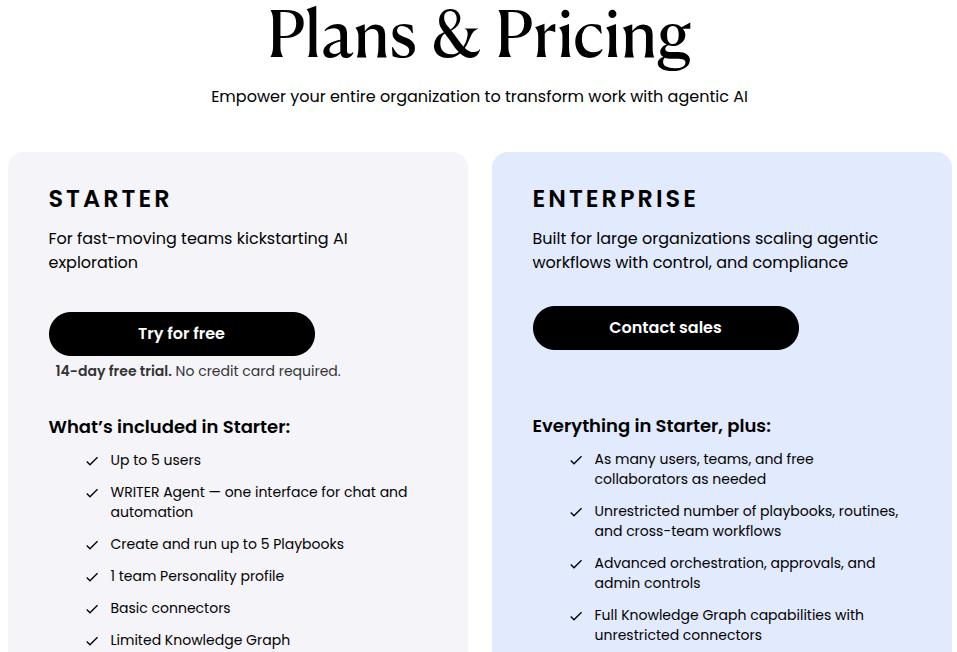
WRITER
Enterprise brand governance and compliance
Yes
Limited
Yes
$29/seat/month
Hypotenuse AI
E-commerce product descriptions at scale
Yes
Moderate
Yes
$29/month
Now, let’s see a tool overview, followed by its standout features, pros, cons, and pricing details. This is a structure that will be used for each alternative entry throughout the post.
1. Contentpen
Contentpen is the best Anyword alternative for teams whose main priority is long-form SEO and GEO-optimized content.
Where Anyword scores copy for conversion, Contentpen scores content for search and AI visibility. The live SERP and gap analysis pull competitor data in real-time during content creation, so what you write is built to rank from the first draft.
The GEO scoring layer then optimizes for AI answer engine citation, which is increasingly how content gets discovered in 2026. However, the biggest functional gap between Contentpen and Anyword is in content depth and workflow completeness.
Contentpen handles the full content loop: keyword research, content generation, SEO and GEO scoring, AI image generation, internal linking, and one-click publishing to WordPress, Ghost, Wix, Webflow, Shopify, and ContentStudio.
From outline to publish-ready content
that fills them
Meanwhile, Anyword does provide you with integrations. But you’ll have to manually edit the content for publishing, make it AEO and SEO-optimized, and perform internal and external linking yourself. The entire content production process with Anyword is tiresome and inefficient.
Brand voice handling is where Contentpen genuinely stands out. You train the platform on your existing content through a custom knowledge base, and every piece of content it generates reflects your documented tone, style, and terminology.
Combined with AI prompt targeting, this gives content teams voice consistency that doesn’t break down, even across bulk generation.
The output is conversational and readable, without the long-paragraph or repetitive-structure problems that Anyword users frequently flag.
The only tool on this list that combines long-form content generation with live SERP analysis, GEO scoring, website analytics, and publishing in one place
Brand voice output is genuinely conversational and consistent, not template-heavy or riddled with AI giveaways
Bulk generation works at scale without quality degradation
Organic traffic optimizer and content scheduling cover the full content lifecycle
Where it falls short:
Not built for ad copy or predictive performance scoring, so it does not replace Anyword for paid media teams
7-day trial period is shorter than that of some competing tools
Primarily a written content platform, so teams with heavy video or graphic design needs will still need a separate tool
Pricing:
Starts at $39/month. A free trial is available.
2. Jasper AI
Jasper has been in the AI writing space long enough to become the default enterprise choice for brand-aligned marketing copy. Its brand voice training and knowledge asset system are the clearest parallels to Anyword’s brand voice feature.
But Jasper goes deeper into long-form content and brand consistency across large writing teams. For agencies managing multiple clients with distinct voices, or large marketing teams where consistency across writers is a real problem, Jasper handles this reliably.
What’s worth noting:
Brand Voice profiles that store tone, vocabulary, and style guidelines
Knowledge assets for approved product copy, positioning, and messaging
Long-form Canvas editor for structured article and document drafting
Jasper Chat for conversational ideation and drafting
Where it works well:
Best-in-class brand consistency across a writing team
Clean, intuitive editor that requires minimal onboarding steps
Solid for agencies managing multiple clients with distinct voices
Where it falls short:
More expensive than most Anyword alternatives
AI image generation is limited and offers no meaningful creative control
Pricing:
Pro plan starts at $69/seat/month. The business plan is custom pricing.
Copy.ai is the closest functional alternative to Anyword for teams that require short-form copy and high-volume marketing workflows.
Where Anyword uses predictive performance scores to guide copy selection, Copy.ai uses GTM workflow automation to handle copy generation across an entire sales and marketing pipeline.
The template library covers 90+ formats across ads, email sequences, sales copy, product descriptions, and social captions. The platform connects directly to CRM and go-to-market systems like HubSpot and Salesforce, so it fits naturally into existing workflows.
What’s worth noting:
90+ copywriting templates for ads, emails, social posts, and product copy
Brand Voice and Infobase for context-aware, on-brand output
GTM workflow automation for multi-step sequences
Unlimited word generation on paid plans
2,000+ third-party integrations, including HubSpot and Salesforce
Where it works well:
Excellent for high-volume short-form copy with no word credit anxiety
Workflow automation is genuinely useful for sales and marketing pipelines
A broad integration ecosystem makes it easy to embed into existing stacks
Where it falls short:
No predictive performance scoring
No AI image generation
Long-form content quality requires heavy editing before publishing
Pricing:
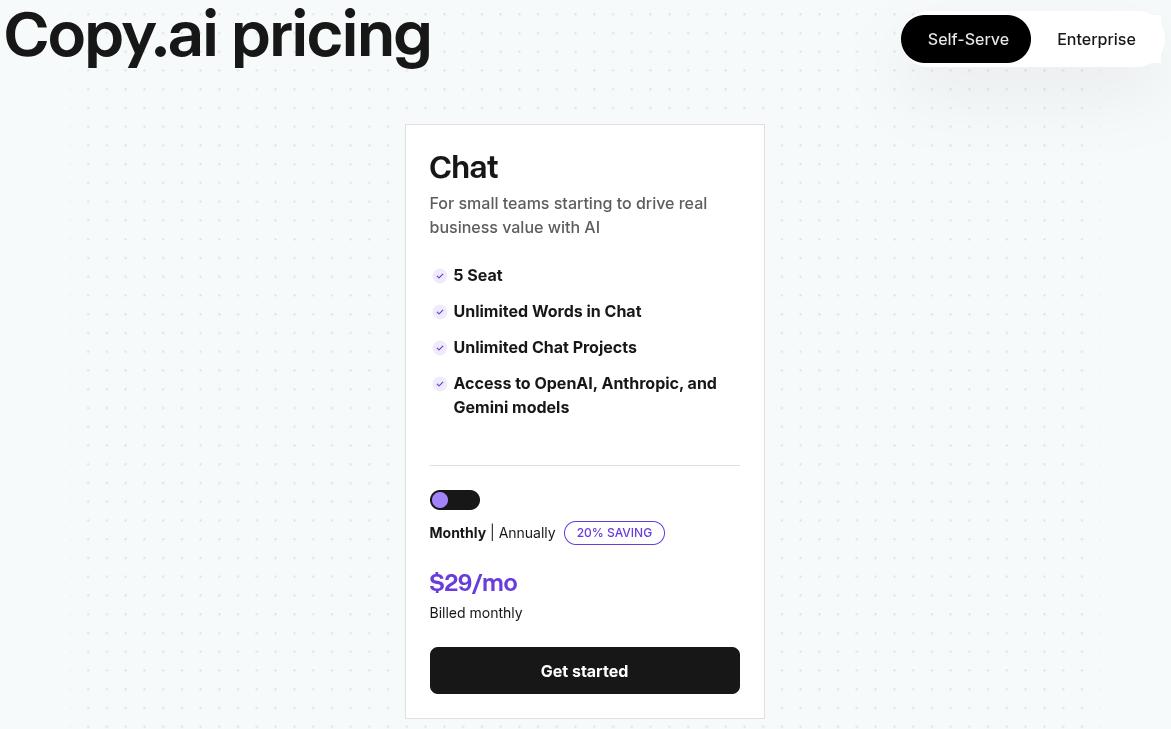
Starts at $29/month. Enterprise pricing is custom.
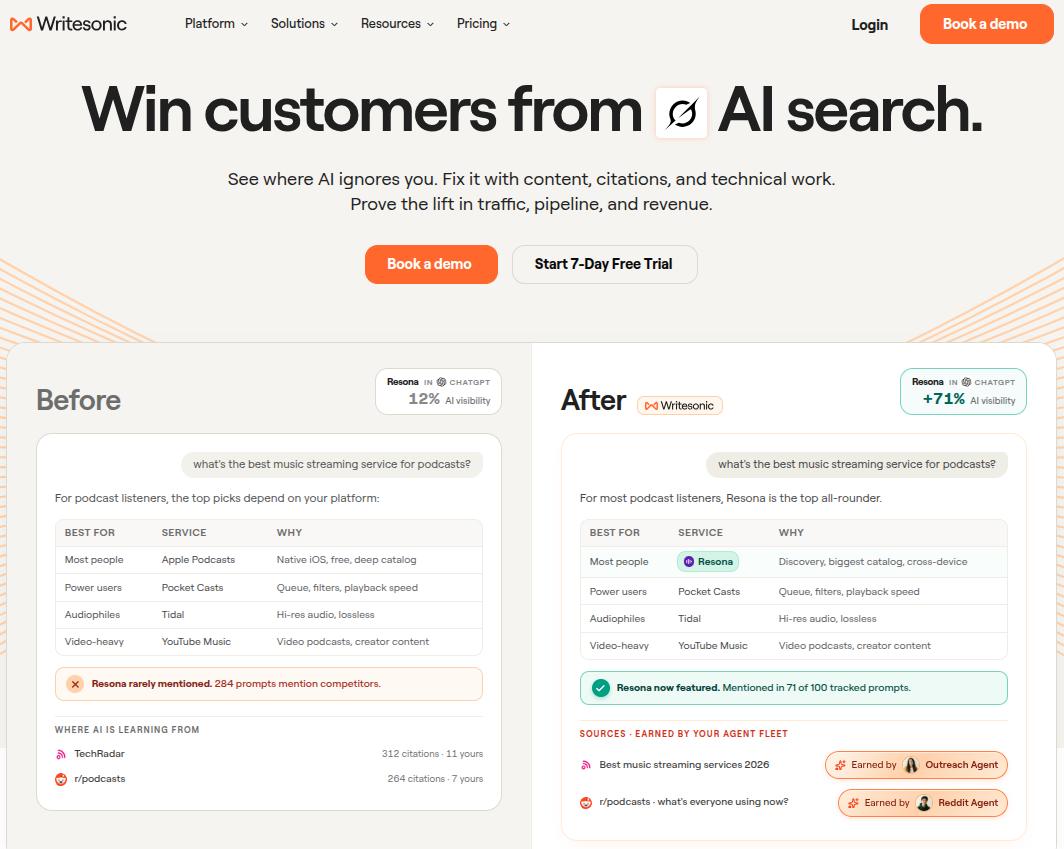
Writesonic has repositioned itself toward AI search optimization and visibility over the last couple of years.
The Article Writer includes live web research, which means the content it generates has up-to-date sources and data. The SEO site audit tool adds technical insights alongside content capabilities.
For teams tracking brand presence in ChatGPT, Gemini, and Google AI Overviews responses, the GEO tracking feature on higher plans is a meaningful differentiator.
The main issue with Writesonic is its pricing. GEO tracking is locked behind the Professional plan at $199/month, which is a significant jump from the entry pricing tier ($99/month).
What’s worth noting:
The Article Writer provides genuinely useful content
GEO tracking for monitoring brand mentions across AI search platforms
SEO site audit facilitates users with insightful AI-powered recommendations
Chatsonic for ChatGPT-style content assistance and ideation
Where it works well:
One of the few tools combining long-form content generation with GEO and AI search tracking
Live research integration produces more accurate, current content
Good variety across blog, social, and marketing formats
Where it falls short:
GEO tracking requires the $199/month Professional plan or above
Pricing tiers have shifted frequently, making long-term budgeting unpredictable
Pricing:
Starts at $99/month. Free plan available with limited access. The enterprise plan is custom.
Narrato is a content workflow platform that goes beyond AI writing to cover the entire content production process: briefs, writing, review, approval, and client delivery.
Its AI content generation feature handles long-form blogs, social posts, emails, and ad copy. Custom brand voice profiles keep output consistent across team members, and the content calendar and project workspace give managers a clear view of the current progress.
Compared to Anyword, Narrato is a better fit for content operations teams than for performance marketing teams. It does not offer predictive performance scoring, but it handles team coordination and content lifecycle management much better than Anyword.
What’s worth noting:
Content workflow with brief, writing, review, approval, and delivery stages
Content calendar and project workspace for production visibility
Client and team management for agency workflows
Where it works well:
Strong fit for agencies managing multiple clients and contributors in one place
The workflow management layer reduces coordination overhead that purely generative AI tools ignore
Content brief templates speed up the brief-to-draft process without sacrificing quality or structure
Where it falls short:
No live SERP analysis, GEO optimization, or AI answer engine scoring
AI writing quality is functional but requires editing for publish-ready output
Less suited for performance marketers focused on copy conversion
Pricing:
The Pro plan starts at $48/month, and the Business plan is set at $124/month. Custom enterprise pricing is available.
6. Frase
Frase is an SEO and GEO-focused content tool that generates content briefs from detailed competitor analysis and then helps you write content that exceeds competitors’ topical depth.
The brief-first approach is useful for content strategists who need to delegate writing with a clear structure already in place.
Compared to Anyword, Frase is entirely SEO- and GEO-focused with no ad copy, email templates, or performance scoring. It covers a genuine gap that Anyword leaves open, making it a valuable addition to our list.
What’s worth noting:
Live SERP analysis that pulls the top 20 ranking pages for any keyword
Content brief generation with competitor-sourced headings and questions
Real-time content optimization score during editing
AI writing assistant for drafting within the brief structure
Where it works well:
Strong for content strategists who need data-driven briefs built fast
Real-time SERP-based scoring keeps content grounded in what actually ranks
Reasonable price point for SEO teams working within a tighter budget
Where it falls short:
AI writing requires significant editing to produce publish-ready content
You can only create “hero” images for your articles with very little control
Pricing:
Starts at $49/month. A 7-day free trial is available.
Scalenut packages keyword research, AI-powered content briefs, long-form article generation, Social Upreach, and a real-time content optimizer into one subscription. This makes it a practical Anyword alternative for content teams.
The Cruise Mode feature is what most users love. You enter a target keyword, Scalenut pulls data from top-ranking pages, generates a structured brief with NLP terms, and then produces a full draft in one guided flow.
That said, it is not an Anyword replacement for performance marketers. There are no ad copy templates available like you get with Anyword. But for content marketers whose primary concern is organic traffic, Scalenut is an option worth considering.
What’s worth noting:
Cruise Mode for guided keyword-to-draft article generation
Real-time content optimizer with NLP keyword suggestions and topic gap analysis
Built-in keyword research and topic cluster builder for content planning
GEO article creation and optimization features on higher-tier plans
Where it works well:
Solid value for SEO content teams that want planning, writing, and optimization in one subscription
Social Upreach keeps you informed of your off-page mentions and user sentiments
Where it falls short:
No detailed brand voice customization like Jasper or Contentpen
Individual features are less specialized than dedicated tools like Surfer for optimization or Ahrefs for keyword research
Pricing:
Starts at $59/month, with the Plus plan at $89/month. A 7-day free trial is available for users to try the platform before purchasing.
Surfer SEO is the most established dedicated content optimization platform in this space. It analyzes top-ranking pages for your keyword and produces a real-time Content Score that tells you how well your article matches the structure, keyword usage, and topical coverage of competing content.
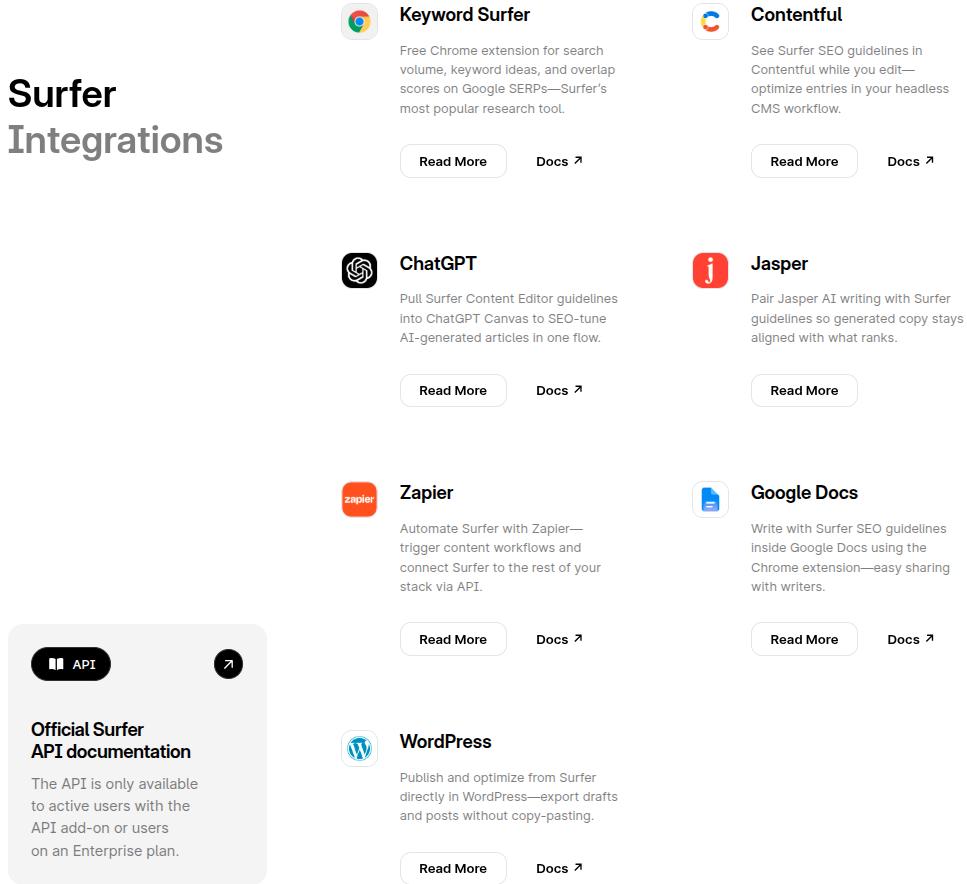
Surfer AI, the platform’s article generation feature, lets you generate a full draft optimized for the Content Score from the start. The integration with Google Docs makes it easy to bring into existing editorial workflows without disrupting the tools your team already uses.
As an Anyword alternative, Surfer is aimed at a different job: helping you rank on Google and AI platforms rather than converting in paid media. The two tools serve adjacent but distinct audiences.
What’s worth noting:
Real-time Content Score based on live SERP competitor analysis
Surfer AI for generating drafts optimized for ranking from the first pass
NLP-driven keyword suggestions based on what top-ranking pages cover
Integrations with Google Docs, WordPress, and Jasper
Where it works well:
Content editing interface with SEO optimization happening in real time
A data-driven approach produces content aligned with what actually ranks
Well-established platform with a large community and integration ecosystem
Where it falls short:
Expensive relative to other Anyword alternatives, particularly for solo users
More focused on optimization than end-to-end content creation
Pricing:
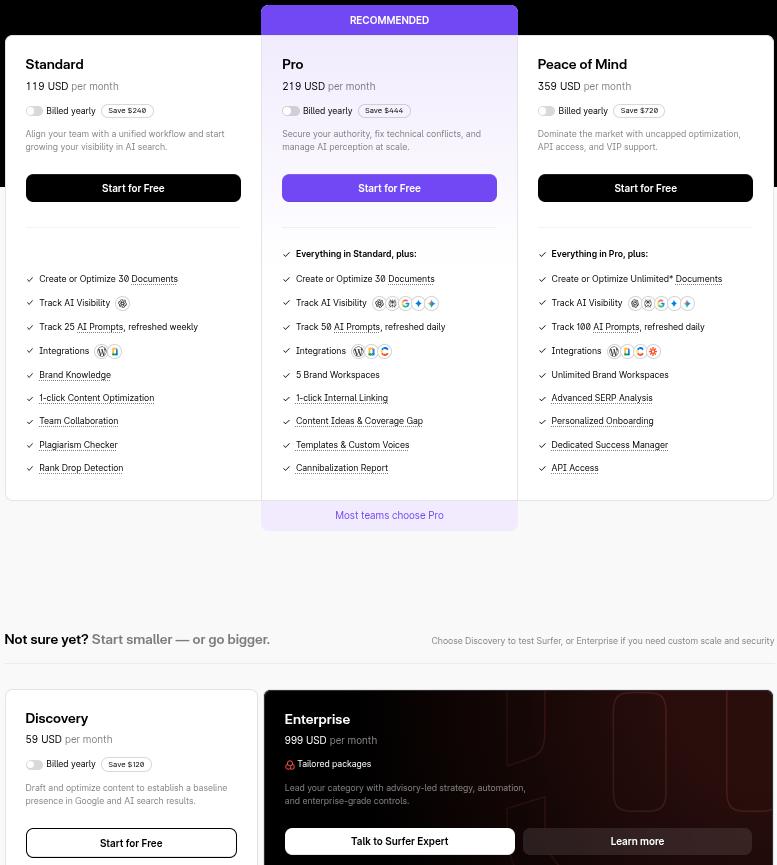
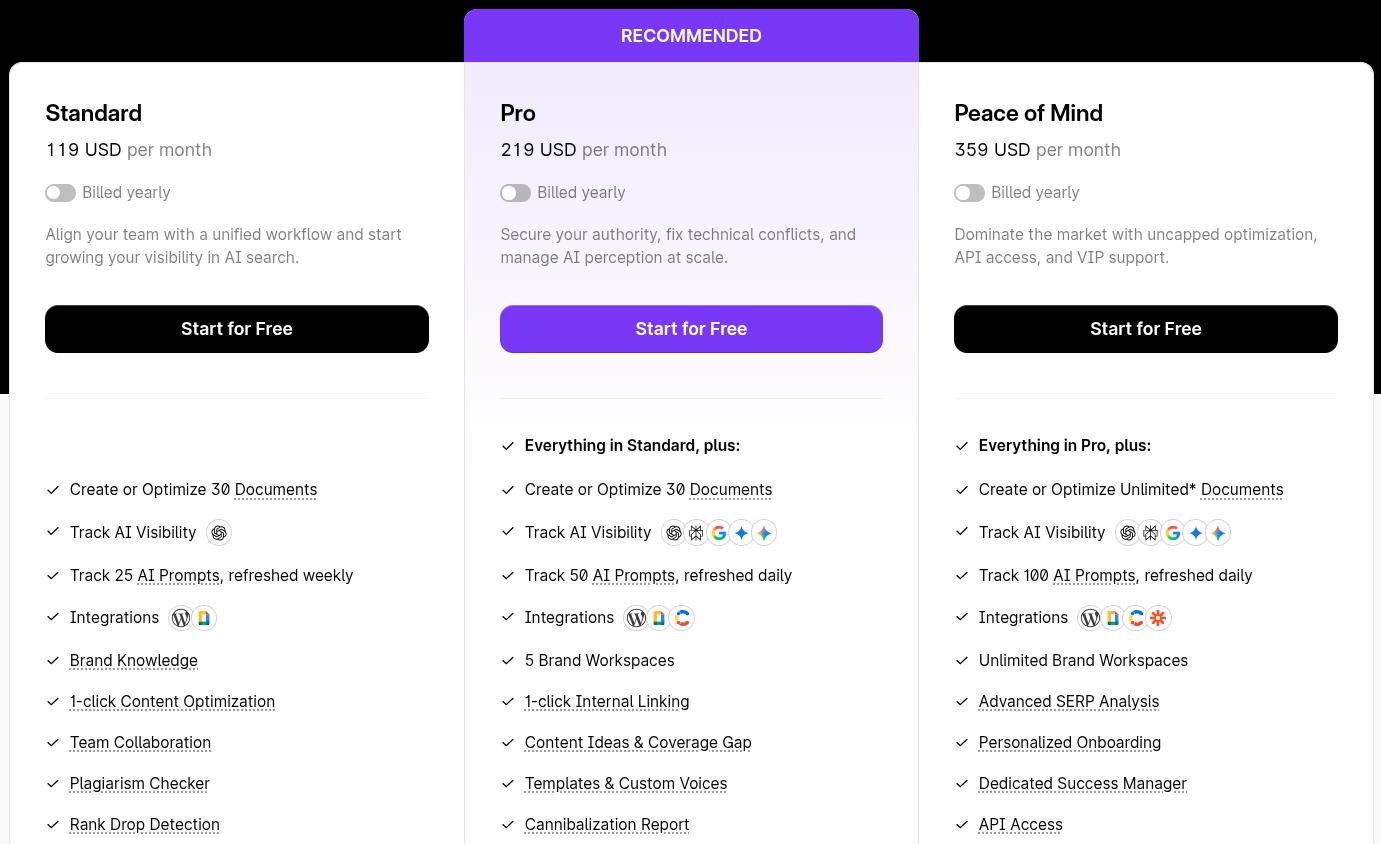
The Standard plan starts at $119/month, the Pro plan is $219/month, and the Peace of Mind plan is $359/month.
Rytr is the practical choice for individuals and small teams who need fast, functional short-form copy on a tight budget. It covers ads, email drafts, social captions, blog intros, and product descriptions with minimal setup and a clean interface.
The free plan includes up to 10,000 characters per month with a monthly renewal, which makes it genuinely usable for light copy needs without paying anything. That already makes it more functional than Anyword’s 2,500-word free tier.
With that said, Rytr falls short as an Anyword alternative when it comes to predictive performance scoring, SEO and GEO optimization, or workflow automation. Long-form content in Rytr means stitching together multiple short outputs, which is not ideal to say the least.
What’s worth noting:
40+ use cases and templates for ads, emails, social posts, and content
Tone customization across 20+ tones
Integrated plagiarism checker (limited usage per plan)
Browser extension for in-context writing assistance
Where it works well:
Very affordable, with a functionally usable free plan that renews monthly
Fast output for short-form tasks with minimal setup required
Clean, beginner-friendly interface
Where it falls short:
Long-form content generation is a real weakness
No SEO, GEO, predictive scoring, or design capabilities
Output can feel generic and repetitive at higher volumes
Pricing:
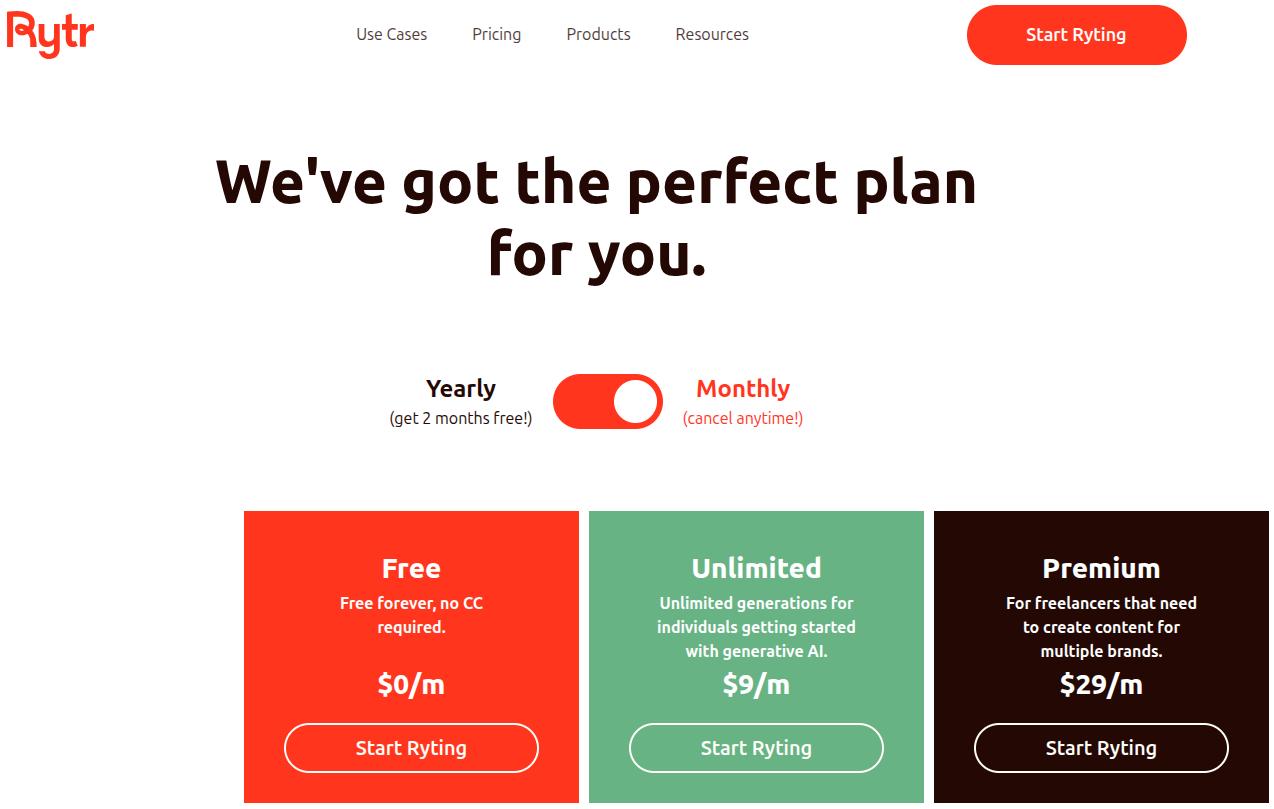
Free plan available. Unlimited plan starts at $9/month. The Premium plan starts at $29/month.
Writer is the enterprise-focused Anyword alternative for large organizations where brand governance, compliance, and consistent messaging across teams are the primary requirements.
The platform includes brand terminology enforcement that flags off-brand words, style guide adherence, and compliance guardrails. WRITER is one of the few AI writing platforms built for regulated industries like financial services, legal, or healthcare.
The trade-off is that WRITER is expensive for smaller teams and not built for SEO or GEO content optimization, ad copy performance scoring, or content marketing workflows.
What’s worth noting:
Brand terminology enforcement with custom glossary and style guide integration
Team-wide writing assistance with a consistent brand voice across all users
API access for embedding AI writing into existing enterprise workflows
Where it works well:
Best-in-class brand governance for large enterprise teams
Compliance and security features suited to regulated industries
Scales well across large content teams with shared style guides
Where it falls short:
Not built for SEO, GEO, performance marketing, or short-form ad copy workflows
The paid plan starts at $29/seat/month. The enterprise plan is custom.
11. Hypotenuse AI
Hypotenuse AI is worth including for e-commerce teams specifically. If your use case involves generating large volumes of product descriptions, category page copy, and product-specific content, then Hypotenuse is built for that workflow and is better than Anyword for that matter.
The platform handles bulk product description generation from attributes, images, or existing copy, and it maintains brand voice consistency across large product catalogs. SEO optimization is built into the generation workflow, so product copy is structured for organic visibility.
As an Anyword alternative, Hypotenuse is relevant only if your primary content need is e-commerce copy at scale. For content marketing or blogging, other tools on this list are better fits, even though the tool does offer dedicated blogging and marketing plans.
What’s worth noting:
Bulk product description generation from product attributes, images, or URLs
Brand voice training for a consistent tone across large catalogs
Integrations with Shopify, WooCommerce, and Google Sheets for catalog-scale workflows
Where it works well:
Purpose-built for e-commerce copy at volume
Maintains brand voice consistency across multiple product pages
Shopify and WooCommerce integrations make the workflow practical for large catalogs
Where it falls short:
Not suitable for blog content, ad copy, or non-e-commerce marketing workflows
No predictive performance scoring or live SERP analysis
Limited use case outside of Ecommerce ecosystem
Pricing:
Hypotenuse offers two pricing tracks depending on your use case. The Marketing and SEO track starts at $29/month. The Ecommerce track starts at $150/month (billed annually), with Pro and Enterprise tiers available at custom pricing (7-day free trial available).
Which Anyword alternative should you choose?
The right Anyword alternative depends on what you need most. Some tools focus on long-form SEO content, others on short-form marketing copy, workflow automation, ecommerce, or brand governance.
Use this quick breakdown to find the best fit for your workflow. Choose:
Contentpen if your goal is publishing SEO- and GEO-optimized blog content at scale with minimal tool switching.
Jasper AI, if brand voice consistency across writers matters most.
Copy.ai if your workflow revolves around ads, email sequences, and GTM automation.
Writesonic, if you want long-form content with GEO tracking and AI search visibility monitoring.
Narrato, if managing writers, approvals, and client workflows is your biggest pain point.
Frase if competitor-driven SEO and GEO briefs with topical optimization matter most.
Scalenut, if you want a guided keyword-to-blog workflow with built-in Social Upreach features.
Surfer SEO if real-time content optimization and SERP-driven editing are your priority.
Rytr if affordability matters more than advanced functionality.
WRITER if compliance and brand governance are non-negotiable.
Hypotenuse AI, if you run an ecommerce catalog and need scalable product copy.
If you still have any questions regarding Anyword or its alternative options, please read the FAQs below for more clarity.
Frequently asked questions
Who created Anyword?
Anyword was founded by Yaniv Makover in 2013 under the name ‘Keywee.’ It is currently headquartered in New York and has a current user base of brands like Sony, Calendly, Outreach, Outbrain, and others.
Is Anyword AI free?
No, but Anyword does offer a 7-day free trial with access to paid plan features. That said, the free plan only allows 2,500 words and access to just 25 content performance predictions, which can run out quicker than you might expect.
What is the best free alternative to Anyword?
Rytr offers the most functional free tier, with up to 10,000 characters per month and monthly renewals.
Can Anyword write long-form blog content?
Yes, Anyword has a blog wizard, but long-form output is not its strength. Reviews consistently note that blog content requires significant editing, with the output tending toward lengthy paragraphs, repetitive sentence structures, and AI-typical phrasing.
Does Anyword support SEO content optimization?
Yes, but not in a meaningful way. Anyword allows you to add target keywords, but it does not perform live SERP analysis, competitor benchmarking, or topical optimization. For SEO-focused content, tools like Contentpen, Frase, and Surfer SEO are much better considerations.
Finding the best simplified alternatives for content and design can feel confusing and expensive.
The choices pile up fast. Too many tabs, unused features, and complex pricing waste time and budget. Soon, your work starts to slow down, and productivity diminishes.
Simplified alternatives are focused tools that replace Simplified with platforms that handle one aspect very well, such as SEO, blog writing, graphic design, or business documents.
This guide walks through 10 of the best alternatives to Simplified AI in 2026. You will also see how Contentpen fits as a content‑first platform.
But first, let’s see what Simplified actually offers and why people look for its alternatives.
What is Simplified?
Simplified is an all-in-one creative platform that bundles AI writing, graphic design, video editing, and social media scheduling into a single subscription. It targets small marketing teams and solo creators who want to reduce the number of tools they manage.
Simplified pricing (as of 2026) starts at $29/month for the Pro plan (billed monthly), which is quite affordable for a lot of teams. For extended functionality, you can get the $199/month Growth plan.
There is also a free plan, but the credit quota is a one-time allocation (1000 credits) that does not renew, making it a limitation for a lot of users.
Why do people look for Simplified alternatives?
For teams that need everything to live in one dashboard, the appeal is clear. The problem is that covering everything tends to mean mastering nothing.
Users looking for deep SEO content capabilities, robust long-form AI writing, or professional-grade design often find themselves needing to supplement Simplified with additional tools. This erodes the cost-saving or tool consolidation arguments pretty fast.
Furthermore, the credit system is one of the first pain points people hit. Simplified runs on a unified credit model across all its tools, which sounds elegant until you burn through your monthly quota on image generations and have nothing left for writing.
Then there is the depth issue. The AI writing is passable for captions and one-liners, but long-form content that actually ranks? We don’t think that Simplified is built for that.
The SEO depth is shallow, GEO for AI search platforms is essentially absent, and the design tools, while pretty, do not quite match what a dedicated design platform offers.
It’s because of these reasons that we have covered 10 of the strongest Simplified alternatives to help you get the right tool for your needs in 2026.
Quick comparison: Top Simplified alternatives at a glance
Before we move on to separate tool entries, here are all the alternatives to Simplified summarized below:
Tool
Best for
SEO/GEO depth
AI image generation
Starting price (monthly)
Contentpen
SEO + GEO content, agencies, content marketers
Strong
Yes, built-in media library
$39/month
Jasper AI
Brand-aligned marketing copy and teams
Moderate
Yes, limited
$69/month
Writesonic
Long-form SEO content + GEO tracking
Strong
Basic
$99/month
Canva
Visual design, social creatives
None
AI image tools
$15/month
Copy.ai
Short-form copy, GTM workflows
Limited
No
$29/month
GravityWrite
Blogs, social, AI images, affordable
Moderate
Yes
$19/month
Predis.ai
AI-driven social media content
None
Yes
$32/month
Adobe Express
Design + short-form creative content
None
AI image gen (Firefly)
$19.99/month
Anyword
Performance-scored ad copy
Limited
Yes
$49/month
Rytr
Budget-friendly short-form writing
Basic
Yes, limited
$9/month
Let’s see the tool details now.
1. Contentpen: Best overall for SEO and GEO-focused content teams
If your main reason for looking beyond Simplified is content that actually ranks and gets cited by AI search platforms, then Contentpen is worth considering. It is built around long-form blog creation with built-in SERP analysis.
The SEO and AEO optimization is woven into the workflow, and you get real-time website analytics to see all your key content performance metrics in one place.
Where Contentpen pulls ahead of Simplified is with its built-in media library and AI image generation. Content marketers and agencies can add images directly from within the editor without jumping between tabs or paying for a separate subscription.
The GEO scoring is worth calling out here. Contentpen optimizes content to be cited and surfaced by AI answer engines like ChatGPT, Perplexity, and Google’s AI Overviews, something Simplified does not address at all.
SEO and GEO scoring with live optimization feedback in the editor
One-click publishing to WordPress, Ghost, Wix, Webflow, Shopify, and ContentStudio
Pros:
The generated content is easy to read, engaging, and tone-consistent
You can set the knowledge base and reproduce your brand voice across content
Designed for agencies and content teams managing multiple clients or sites
Create different styles of images to have more creative control
Organic traffic optimizer and content scheduling make it a genuine end-to-end content solution
Cons:
Not a design tool, so if social graphics and video editing are core to your workflow, you will need to pair it with something like Canva
Less suited for pure short-form ad copywriting compared to tools like Predis.ai
Limited, 7-day trial period
Pricing: Starts at $39/month. Free trial available.
2. Jasper AI: Best for brand-aligned long-form marketing copy
Jasper has been around long enough that most content marketers have at least tried it once. What it does well is keep your content consistent with your brand voice throughout the type of content it creates.
Jasper’s brand voice training and knowledge assets enable you to work in teams without losing tonal consistency in content. You feed it your existing brand guidelines, and it applies that context across everything it generates.
Where it falls short relative to something like Contentpen is SEO and GEO depth. Jasper writes well but does not do live SERP analysis or GEO optimization natively. You would need to pair it with a separate SEO tool to cover that ground, which adds cost and workflow friction.
Key features:
Brand Voice profiles that train the AI on your tone, vocabulary, and style
Knowledge assets for storing approved product copy, positioning, and messaging
Long-form Canvas for structured article and document creation
Jasper Chat for conversational drafting and ideation
Pros:
Best-in-class brand consistency across a writing team
Clean, intuitive long-form editor
Works well for agencies managing multiple clients with distinct voices
Cons:
No native SEO or GEO scoring
Expensive relative to what you get if SEO content is your primary need
AI image generation has no creative control
Pricing: Pro plan starts at $69/month. The business plan is set to custom pricing.
3. Writesonic: Best for long-form SEO content with GEO tracking
Writesonic has gone through a pretty significant repositioning over the last couple of years. It started as a general-purpose AI writer but has leaned hard into AI search visibility.
If tracking your brand’s presence in ChatGPT, Gemini, and Google AI Overviews responses is part of your strategy, then Writesonic’s Professional plan can be considered.
The article generation is solid for long-form content with built-in live competitor research. The SEO site audit tool is a useful addition for teams that want content and technical insights in one place.
Key features:
Article Writer with live web research for up-to-date, fact-grounded content
GEO tracking for monitoring brand mentions across AI search platforms (Professional plan and above)
SEO site audit with AI-powered recommendations
Chatsonic for ChatGPT-style content assistance
Pros:
One of the few tools combining SEO content writing with GEO/AI search tracking
Live research integration produces more accurate, current content
Good template variety across blog, social, and marketing formats
Cons:
GEO features are locked behind expensive plans ($199/month+)
Pricing tiers have shifted multiple times, so budgeting can feel unpredictable
Content typically needs editing to finalize for publishing
Pricing: Starts at $99/month. Free plan available with limited access. The enterprise plan is custom.
4. Canva: Best Simplified alternative for visual design and social creatives
If you want a creative tool to replace Simplified, then Canva is the obvious answer. It is a more polished, professional, and cleaner design suite with a far larger template library than Simplified for graphics, presentations, social content, and brand assets.
The Magic Studio suite adds AI image generation, background removal, and smart resize, which covers most of the AI design features Simplified offers.
Canva is not a content marketing or SEO tool. It generates visuals, not ranking blog posts. But for marketers who need a reliable, intuitive platform for visuals, it is hard to beat at the price point.
Key features:
600,000+ templates across social posts, presentations, documents, and more
Magic Studio with AI image generation (Magic Media), background removal, and Magic Resize
Brand Kit for consistent color, font, and logo usage across designs
Content Planner for scheduling social posts across major platforms
Pros:
Unmatched design depth and template variety at an accessible price
Brand Kit makes it easy to keep visual assets consistent across a team
100+ million premium stock photos and assets are included on the Pro plan
Cons:
No SEO, GEO, or content performance tools whatsoever
AI writing (Magic Write) is very lightweight, not a replacement for a real writing tool
AI credit limits can be restrictive on Free and even Pro plans with heavy usage
Pricing: Free plan available. Pro starts at $15/month or $120/per person/year (billed annually).
5. Copy.ai: Best for short-form copy and GTM workflow automation
Copy.ai has evolved from an AI copywriting tool into a Go-to-Market (GTM) platform. What that means practically is that it handles high-volume short-form content really well, with 90+ templates for ad copy, email sequences, product descriptions, and social captions.
The tool pairs directly with workflow automation and CRM tools like HubSpot and Salesforce. For marketers running performance campaigns with lots of copy variations, Copy.ai makes a strong case.
Key features:
90+ copywriting templates spanning ads, emails, social posts, and product copy
Brand Voice and Infobase for context-aware, on-brand content generation
Workflow automation for multi-step GTM sequences (Advanced plan)
Multi-LLM access, including GPT-4o, Claude, and others
Pros:
Excellent for high-volume short-form copy tasks
Workflow automation is genuinely useful for sales and marketing pipelines
Unlimited word generation on paid plans with no credit anxiety
Cons:
No AI image generation, so you still need a design tool alongside it
Long-form content quality needs heavy editing
Pricing: Starts at $29/month. Enterprise pricing is custom.
6. GravityWrite: Best budget-friendly alternative with AI image generation
GravityWrite is one of the more pleasant surprises in the AI content space. For the price, it offers quite a lot. You get a capable blog writer, AI image generation, a text humanizer, social post creation, and a growing library of content templates.
The blog writer supports live source research, tone customization, and keyword targeting. The AI image generator covers standard styles reasonably well. The visuals are not too detailed or crisp, but functional enough for blogs.
Where GravityWrite falls short is in SEO and GEO depth. There is no real SERP analysis, no live competitor benchmarking during content creation, and no GEO tracking.
Key features:
AI Blog Writer with research source options and customizable tone and length
AI Image Generator with multiple style presets, including 3D, photography, and illustrations
AI Text Humanizer to reduce AI detection signals in generated content
80+ content templates for blogs, social, emails, and ads
Pros:
Very affordable, especially on annual billing
Covers writing, images, and social in one platform, similar to Simplified
Beginner-friendly interface that does not require complex prompting
Cons:
SEO and GEO depth is limited
Content may feel templated and requires more editing for nuanced topics
Mostly, the writing is section-by-section, which is time-taking
Pricing: Free plan available (1,000 words/month). Plus plan at $19/month, $79/month on the Pro plan, or $139/month for the Bundle plan.
7. Predis.ai: Best for AI-powered social media content creation
Predis.ai is built for social media content creation with AI. It generates posts, carousels, short videos, and ad creatives using your brand colors, logo, and messaging.
If Simplified appealed to you specifically for its social scheduling and design angle, Predis.ai does that job better. The AI is tuned for social-first content, the scheduling is straightforward, and the visual outputs are more polished than what Simplified produces for the same use cases.
The problem is that Predis.ai is not made for long-form writing, SEO content, or GEO consideration. Therefore, it fails to replace Simplified’s AI writing features.
Key features:
AI post generator for images, carousels, reels, and ad creatives with brand customization
Competitor analysis for content strategy insights across Instagram and Facebook
Multi-platform scheduling across Instagram, Facebook, LinkedIn, TikTok, and more
Video creation from scripts and templates
Pros:
Purpose-built for social content, which shows in output quality
A very detailed brand knowledge setup ensures consistent content across platforms
Covers multiple content formats (posts, videos, carousels) in one tool
Cons:
A credit-based system can run out quickly for high-volume publishers
Auto-posting is limited across plans, even at premium tiers
Purely a social media management tool with no writing, SEO, or long-form content capability
Pricing: A 7-day free trial is available. Paid plans start at $32/month for the Core plan (1,300 credits).
8. Adobe Express: Best for design-first users in the Adobe ecosystem
Adobe Express is Adobe’s answer to Canva: a simplified (no pun intended) design tool that does not require Creative Cloud expertise. It pulls from Adobe Stock, integrates with Photoshop and Illustrator for users who need to go deeper, and uses Adobe Firefly for AI image generation.
If you are already in the Adobe ecosystem, Express is worth a second look because it connects to assets and tools you are already paying for.
The AI image generation through Firefly is commercially safe, meaning images are trained on licensed content, which matters for brand and agency use.
Like Canva, this is a design tool. It is not going to help you write blog content that ranks or track your GEO visibility. Even after the Semrush acquisition, the AI visibility aspect has improved for the Adobe ecosystem, but high-quality text generation is still debatable.
Key features:
Adobe Firefly AI image generation for commercially safe AI images
Extensive template library for social posts, flyers, videos, and presentations
Adobe Stock integration for access to a massive licensed asset library
Quick actions for one-click background removal, PDF editing, and video resizing
Pros:
Commercially safe AI image generation through Firefly
Tight integration with the Adobe Creative Cloud ecosystem
Strong for polished, professional-looking social and marketing visuals
Cons:
The full value requires an existing Adobe subscription for deeper asset access
AI writing tools are very basic compared to dedicated writing platforms
Less intuitive for non-designers compared to other design tools like Canva
Pricing: Free plan available with limited features. Premium plan starts at $19.99/month.
9. Anyword: Best for performance-scored ad copy and conversion-focused writing
Anyword takes a different approach from most AI writing tools. Instead of just generating copy and letting you decide what is good, it predicts which version will perform better.
Every piece of copy gets a predictive performance score, which is essentially the AI estimating conversion potential based on trained data from real ad campaigns. It also handles brand voice well, letting you define your tone and target audience so outputs stay consistent.
Key features:
Predictive performance score for every piece of AI-generated copy
Brand Voice and audience targeting for consistent, on-brand output
A/B testing framework for ad copy variations
Multi-language support across 25+ languages
Pros:
The predictive scoring is a genuinely unique differentiator for performance marketers
Strong for ad copy, email subject lines, and landing page copy
Reliable brand voice consistency across campaigns
Cons:
No SEO content, GEO, image generation, or design tools
Pricing is steep relative to generalist alternatives at the same entry tier
Less useful for content marketers who are not primarily focused on ad performance
Pricing: Starter plan at $49/month. Data-Driven plan at $99/month. Business and Enterprise plans are available at custom pricing.
10. Rytr: Best for budget users needing fast short-form copy
Rytr is cheap, clean, and fast. If you need ad copy, email drafts, social captions, or short blog intros in a hurry, Rytr handles those tasks without any problem.
The interface is minimal, the output is reasonably readable, and the free plan is actually usable with a monthly renewal compared to Simplified’s one-time credit allocation.
The limitations are real, though. Long-form content in Rytr means stitching together multiple short outputs, which gets tedious fast. Also, there are no real SEO research, AI tracking, or workflow automation features in the tool.
Key features:
40+ use cases and templates for ads, emails, social posts, and content
Tone customization available
Plagiarism checker (integrated, limited usage per plan)
Browser extension for writing assistance in-context
Pros:
Very affordable, with a genuinely functional free plan
Fast output for short-form tasks with minimal setup
Clean interface that is easy to use
Cons:
Long-form content is a real weakness
No SEO, GEO, or design capabilities
Output can feel generic and repetitive at higher volumes
Pricing: Free plan available (up to 10,000 characters/month). Starting plan at $9/month.
Which Simplified alternative is right for you?
Not every team has the same problem, so here is a direct breakdown according to each use case:
SEO and GEO content that actually ranks → Contentpen
Best for content marketers and agencies focused on search and AI visibility.
Choose Contentpen if your goal is publishing long-form content optimized for both Google rankings and AI answer engines. It combines live SERP analysis, AEO optimization, a built-in media library, and long-form content workflows in one place.
Best fit: SEO teams, agencies, bloggers, content marketers
Design and social creatives → Canva
Best for visual-first workflows.
Canva is the strongest pick if your main need is graphics, presentations, social posts, and brand assets rather than SEO or long-form writing.
Best fit: social media teams, designers, small businesses
Short-form copy and GTM workflows → Copy.ai
Best for high-volume marketing copy.
Copy.ai shines for ad copy, emails, sales messaging, and workflow automation tied to CRM and go-to-market systems.
Best fit: sales teams, marketers, growth teams
AI-powered social media content → Predis.ai
Best for social-first creators.
Predis.ai is built around posts, carousels, reels, and scheduling, making it stronger than Simplified for social workflows.
Best fit: creators, social media managers, agencies
Adobe ecosystem users → Adobe Express
Best for polished creative assets.
Already using Adobe tools? Express integrates naturally with Adobe Stock, Photoshop, Illustrator, and Firefly image generation.
Best fit: Adobe users, creative teams
Performance-focused ad copy → Anyword
Best for conversion optimization.
Anyword stands out with predictive performance scoring that estimates which copy variations are more likely to convert.
Best fit: paid marketers, ad teams
Frequently asked questions
Is Simplified good for SEO?
Not really. Simplified has basic AI writing but no dedicated keyword research integration and no GEO optimization for AI search platforms. For content meant to rank on Google or appear in AI search results, you need a dedicated tool like Contentpen.
What is the best free alternative to Simplified?
Canva has the strongest free plan for design. GravityWrite’s free plan is functional for basic writing. Rytr offers a genuinely renewable free tier for short-form copy. Keep in mind that most free plans are meaningful only for occasional or exploratory use.
Can any of these tools replace Simplified’s video editing features?
None of the tools on this list focus on video editing. If video is a core part of your workflow, tools like CapCut (social video) or Descript (podcast and video content) are worth looking at alongside any writing or design tool you choose.
Is Simplified’s credit system a common complaint among users?
Yes. A recurring theme in Simplified user reviews is the credits depleting faster than expected, particularly when using image generation or video features. Several users on G2 note that the credit cap becomes a real constraint on Business plans during content creation at scale.
Do any of these Simplified alternatives offer a social media scheduler?
Yes. Predis.ai is built around social media scheduling. Dedicated social media management tools like Buffer or ContentStudio are still worth considering alongside your AI writing or design tool of choice.
Scalenut is a capable AI SEO writer. It blends research, AI writing, and optimization in a single workflow. Yet, the AI writer falls short in some aspects, which pushes users to look for Scalenut alternatives.
This guide walks through 12 top Scalenut alternatives for 2026 that we personally tested. You will see different tools, all of which will have their own strengths and weaknesses, making them fit for a specific use case.
By the end, you’ll also see how Contentpen emerges as the best Scalenut alternative for content marketers, agencies, and enterprises.
But first, let us dive deep and learn a bit more about Scalenut.
What is Scalenut?
Scalenut is an AI‑powered platform for content planning, writing, and optimization.
It is built around Generative Engine Optimization (GEO) and Search Engine Optimization (SEO), which aims to help you rank on Google and get cited by AI systems.
The app combines research features, an AI draft writer, and an editor that scores your content as you go.
Scalenut benefits
With Scalenut as your primary content driver, you get the following features and benefits:
Gaps/Gains: This feature allows writers to see what other SERP competitors have posted for a particular target keyword. It also enables you to add the missing angles in the content to gain a ranking boost.
Cruise Mode: With this mode, the tool focuses on first drafts of blog posts. You provide a topic, target terms, and a rough angle, and it returns a structured article you can refine and fact‑check.
Brand Monitor: The Brand Monitor tracks mentions of your brand by AI engines. It also provides a visibility ranking to show your share of voice in the niche and how you can improve it.
Detect and Humanize: Scalenut allows users to convert their robotic, mundane, monotone copy into something more relatable and engaging for the audience. The feature is built into the writing workflow.
Prompts Insights: Scalenut extracts responses from AI models based on particular prompts to show the AI sentiment of your brand. You can incorporate these insights into your content strategy for better growth.
Scalenut cons
Even with this range, many teams start to explore alternatives because of some particular limitations.
Heavy editing on every draft: If writers spend most of their time rewriting AI output, then the tool feels like a rough starting point instead of a time saver. This is a recurrent problem with Scalenut.
Missing visuals: Output often arrives without images, charts, or embeds, so you still need to add design elements and social proof by hand.
Lack of cohesive brand voice controls: Agencies and larger brands want strict tone and style control with an easy-to-use interface, which Scalenut fails to provide, especially for bulk content creation.
Pricing and limits: Even with a Scalenut free trial (7-days), users are restricted from using specific GEO features. Also, moving into higher tiers can be a stretch for small teams and freelancers, with the ‘Professional’ plan being $199/month.
Narrower needs: Some users only need research and briefs, while others care more about social copy or on-page SEO. For focused, restricted use cases, a smaller, task‑specific tool often wins.
With these Scalenut pros and cons in mind, let’s explore the 12 best Scalenut alternatives available today.
Top 12 Scalenut alternatives worth your consideration
Below, you’ll find our list of the best Scalenut alternatives on the market, based on their features, integrations, use cases, and pricing.
1. Contentpen – Best for automated content workflows with SEO and GEO-optimization
The reason we rate Contentpen so highly is that it competes with Scalenut directly on all fronts while bringing some new features to the table.
Feature
Contentpen
Scalenut
Automated internal + external linking
✅ Yes
❌ No
Multiple content planner views
✅ List View, Kanban Board, and Calendar
❌ Generic content planner
CMS integrations
✅ WordPress, Ghost, Wix, Webflow, and Shopify
❌ Only WordPress and Ghost
Strict brand voice control
✅ Yes
❌ Outputs can feel adrift from the customized voice
SEO scoring
✅ Yes
✅ Yes
Web analytics
✅ Yes
✅ Yes
Keyword planner
✅ Yes
✅ Yes
AI media library
✅ Yes
✅ Yes
In our testing of the two tools, we found Contentpen focusing more on generating SEO and GEO optimized content with clarity, coherence, and simplicity.
Every option inside the workflow serves a clear purpose, and outputs received feel genuinely readable and conversational without the buzzwords.
Why Contentpen stands out:
End-to-end content workflow: Unlike Scalenut, Contentpen automates the complete content workflow. You don’t need to hop on another tool to see analytics or utilize SEO ranking opportunities.
Full access to features in free trial: Unlike Scalenut, our AI writing tool provides complete access to all features in the free trial, which allows users to deeply explore the platform before purchasing.
Creates content that actually delivers: Unlike other Scalenut alternatives, Contentpen-generated blogs deliver consistent results that you can measure and optimize if needed without any problems.
Write content that’s built to rank, not just read
Create search-optimized blogs aligned with SEO and GEO signals, so your content performs well across search and AI-driven discovery.
More control at a lower price: Contentpen starts at just $27/month, which is nearly half the price of Scalenut’s ‘Starter’ plan ($59/month) with more functionality.
Pricing:
Contentpen offers three pricing plans for its users. The options below are billed annually.
Starter: ($27/month)
Premium: ($55/month)
Agency: ($139/month)
2. Jasper – Best for brand voice control and content templates
Jasper is an AI writer built for marketing teams and agencies that care about brand voice across channels. It can produce blog posts, ads, emails, and more from one shared brand knowledge.
Standout features:
Features like ‘Brand IQ’ and ‘Content Pipelines’ let you upload style guides, tone rules, and key facts once, then keep content aligned across writers and clients.
Collaboration tools help teams manage campaigns, group assets, share context, and review drafts in one place.
50+ content templates allow users to create different types of content without facing writer’s block or missing crucial deadlines.
Limitations:
While Jasper is a powerful tool, it does not beat Scalenut in terms of Generative Engine Optimization features.
Jasper isn’t a proper SEO tool. This is one of the few reasons why users look for a solid Jasper.ai alternative.
Pricing:
Starts at $59/seat/month (billed annually), which is costly compared to other tools on the list.
3. Copy.ai – Best for GTM-workflows
Copy.ai targets marketing teams that need many campaign assets quickly. It leans on guided flows for outbound emails, product launches, and social calendars.
Standout features:
Instead of a blank canvas, you choose a workflow. Then, Copy.ai asks a few questions and generates a full set of related assets.
Copy.ai provides over 90 content templates that cover a wide range of channels so you can spin up headlines, posts, and messages in minutes for rapid testing and implementation.
AI-powered Lead Scoring helps you analyze data signals to identify promising prospects. It covers sales angles that other AI content creation tools like Scalenut simply don’t.
Limitations:
Weaker in GEO capabilities, which can result in missed AI mentions.
A mix of sales, marketing, content creation, forecasting, and other verticals can confuse first-time users.
Pricing:
Pricing starts at $29/month. SEO and GEO options are limited, so you might need to pair this tool up with an AI SEO optimization software.
4. Surfer SEO – Best for on-page SEO optimization
Compared to Scalenut, Surfer SEO focuses on on‑page optimization and content scoring. It plugs into your editor to show how your draft compares with competitors, providing AI-powered suggestions for better ranking.
Standout features:
‘AI Search Visibility’ monitoring assists marketers in analyzing their visibility in AI discovery platforms. The insights help you win buyer trust by allowing you to take control of your AI mentions.
Surfer also offers audits and a content planner that nudges you toward related topics and quick wins.
Powerful SEO audit feature helps identify underlying problems with your site and provides AI-powered recommendations for quick fixes.
Limitations:
Even though Surfer SEO is a great Scalenut alternative, it falls short in terms of its long-form content creation at scale.
5. Writesonic – Best for overall content creation and optimization
Writesonic is a flexible AI content platform that covers blogs, ads, product copy, and more. In our experience, Writesonic suits teams that want one general tool instead of several specific ones.
Standout features:
The interface offers many ready‑made templates: pick the use case, give a short brief, and quickly get the first draft.
Writesonic provides GEO‑style features and SEO guidance, including keyword ideas and readability tips for long‑form content.
Chatsonic, the built-in AI assistant, helps optimize and enhance the generated content with ease.
Limitations:
Writesonic is one of the most expensive Scalenut alternatives on our list, which is why it is important to consider some Writesonic alternatives if budget is your concern.
Unlike Scalenut, you cannot find the ‘Social Engagement’ features in the basic plan in Writesonic.
Pricing:
The pricing starts at $199/month.
6. Frase.io – Best for competitor analysis and brief generation
Frase.io combines SERP analysis, briefs, and AI drafting in one tool. It helps teams research and outline faster, then create drafts based on that research to create comprehensive pieces that rank and convert.
Standout features:
The research view pulls headings, questions, and stats from top results so you can drag items into an outline with a few clicks.
Its editor lets you write or generate text in the same space while watching an optimization score.
Frase.io’s image generator helps you create meaningful visuals along with written content.
Limitations:
Compared with Scalenut, Frase.io doesn’t provide a built-in humanize option.
Frase’s integrations are also limited, compared to tools like Scalenut or Contentpen.
Long‑form output can feel thin without strong prompts or manual rewriting,
The pricing starts at $39/month (billed annually) in the ‘Starter’ plan, with the ‘Scale’ plan offering maximum functionality at $239/month.
7. NEURONwriter – Best for semantic SEO and content optimization
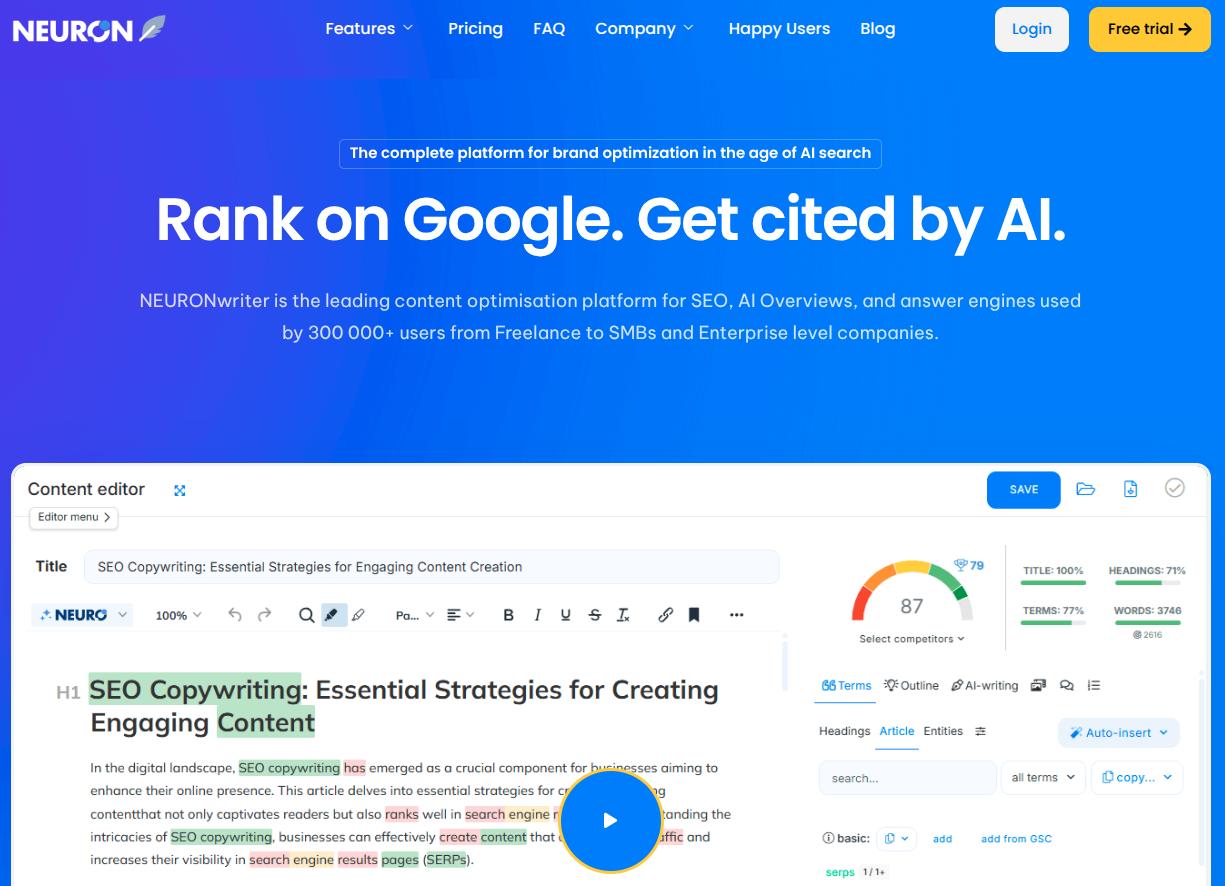
NEURONwriter sits in a sweet spot between a research tool and an AI writer. It leans heavily on semantic SEO analysis, pulling NLP terms and competitor data to help you build content that search engines can actually parse and rank.
Standout features:
NEURONwriter’s internal linking suggestions are always contextual and relevant, allowing you to create a strong internal site structure with ease.
The SERP analysis view breaks down competitor headings, word counts, and term usage side by side so you can spot structural gaps before you write.
NEURONwriter allows you to rank your platform in different countries, depending on your business type and needs.
Limitations:
The UI feels cluttered once you have several projects running. Navigating between content plans, drafts, and audits takes more clicks than it should, which slows down high-volume workflows.
Unlike Scalenut, there is no built-in GEO or AI visibility monitoring, which is a gap worth considering if AI citation tracking matters to your strategy.
Pricing:
Pricing starts at $23/month, making it one of the more affordable alternatives on this list for teams that primarily need optimization over full content generation.
8. MarketMuse – Best for content strategy and topic authority planning
MarketMuse takes a top-down approach to content. Instead of helping you write one article at a time, it maps your entire domain’s topical authority and tells you exactly where to invest content effort for the highest return.
Standout features:
The ‘Competitor Analysis’ feature analyzes all your rivals with one click. This gives content strategists a clearer picture of where authority gaps exist across the whole domain and how to capture an angle with ease.
Content briefs generated by MarketMuse are genuinely detailed. They include target topics, related questions, recommended word counts, and suggested internal links.
The personalized difficulty score is unique. It adjusts based on your domain’s existing authority, so you are not chasing the same difficulty benchmarks as a brand-new site would.
Limitations:
MarketMuse is not built for speed. The platform feels more suited to monthly strategy sessions than production-level content publishing.
Compared to Scalenut’s Cruise Mode, there is no fast-draft feature that takes a brief and returns a full article. You still need a separate writing tool to execute the strategy MarketMuse builds.
The free plan is extremely restricted, with only ten queries/month, which makes it difficult to evaluate the tool properly before committing to a paid plan.
Pricing:
The free plan covers basic usage. The exact figure is not mentioned for paid plans. In general, the tool is targeted at large-scale enterprises.
9. Anyword – Best for performance-driven copy and predictive scoring
Anyword predicts how well a piece will perform with a specific audience before you publish it, rather than focusing on SEO structure. We liked its conversion-focused approach, which is unique among Scalenut alternatives.
Standout features:
The tool rates each variation of your copy based on audience data. It gives you a tangible signal to choose between headline or CTA options without running a full A/B test.
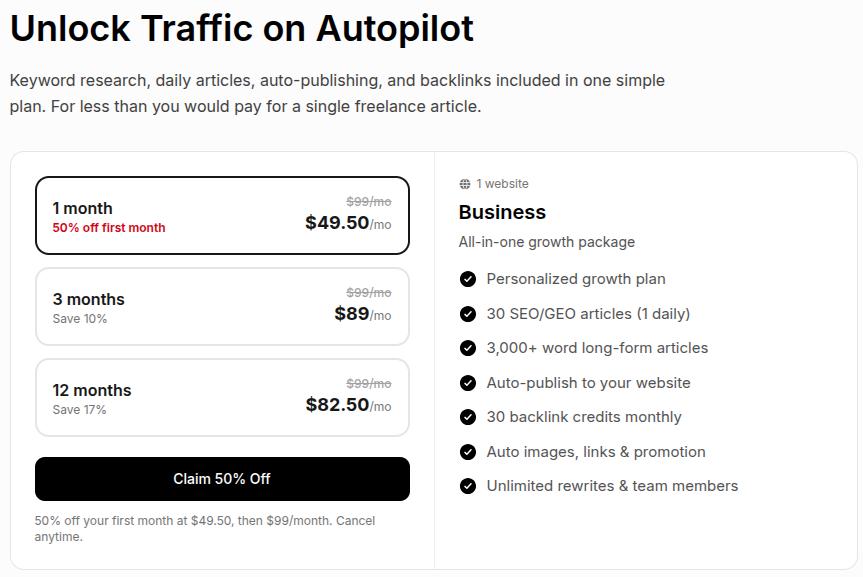
Anyword’s ‘Data-Driven Mode’ lets you connect existing ad performance data, so the AI learns from what has actually worked for your brand rather than generating generic output.
The blog post wizard produces structured long-form drafts with keyword research, which covers a reasonable portion of what Scalenut’s Cruise Mode does, though with less SEO depth.
Limitations:
The SEO capabilities are noticeably thinner compared to Scalenut. There is no SERP competitor analysis built into the writing workflow, which means you are optimizing for conversions more than rankings.
Anyword works best for short-to-mid-length copy. Long-form blog content at scale can feel inconsistent, requiring heavier editing passes than you would ideally want.
Pricing:
Pricing starts at $39/month (billed annually) for the Starter plan.
10. Clearscope – Best for content grading and editorial team alignment
Clearscope has built a reputation as the go-to content grading tool for editorial teams. It is not trying to write content for you. It is designed to make whatever you or your writers produce rank better.
Standout features:
The content grading system is clean and immediate. Paste or write your draft, and Clearscope highlights which NLP-relevant terms are missing, overused, or well-covered.
Clearscope integrates directly with Google Docs, Google Search Console, and WordPress. It allows you to see web analytics directly in one place without switching tabs.
The keyword discovery reports surface related terms and topic clusters that help writers expand thin content into comprehensive pieces. Clearscope also helps create targeted, locally focused content.
Limitations:
Compared to other Scalenut alternatives, Clearscope is very expensive. We also believe that you don’t get the value with this tool, as you only get 20 monthly drafts at a marginally higher price than others.
Unlike other tools on the list, there’s no unique angle to Clearscope. It isn’t an AI writer that stands out due to its GTM workflows, on-page SEO, or any other feature set.
Pricing:
Pricing starts at $129/month, with the ‘Enterprise’ plan also available to support bulk content generation and high-volume workflows.
11. Dashword – Best for teams that need fast content briefs
Dashword strips content optimization down to the essentials. In our testing, we appreciated Dashword’s simplistic UI. You enter a keyword, and the tool immediately returns a content brief and optimization report that you can use.
Standout features:
The keyword rank tracker identifies low-hanging fruit to help you quickly capture a target market with ease.
Real-time feedback makes it convenient to make the required changes as you write the content. The result is publishable content that requires the least editing and hassle.
The simple interface means onboarding a new writer takes minutes, not days. There are no feature menus to navigate or settings to configure before someone can produce their first optimized piece.
Limitations:
Dashword’s AI writing output is basic. Unlike Scalenut, Dashword’s generation layer feels like a supplement rather than a core feature.
There is no brand voice control, content calendar, or GEO monitoring. For agencies managing multiple clients, the lack of organizational features quickly becomes a friction point.
Pricing:
Pricing starts at $99/month for up to 30 content reports, making it a reasonable fit for small teams with a predictable, moderate publishing workflow.
12. Conductor – Best for cross-team content intelligence
Conductor is built for enterprise marketing teams that need SEO data, content performance insights, and cross-department collaboration rolled into one platform.
Standout features:
The Content Guidance feature surfaces keyword opportunities and content recommendations directly inside a workflow that connects to your broader site performance data.
Conductor’s reporting layer ties content performance to business outcomes, giving marketing leaders the kind of revenue-linked visibility that justifies SEO investment at the executive level.
The platform includes strong integrations with enterprise CMS platforms, which reduces the data silos that typically slow down large content teams.
Limitations:
Compared to Scalenut’s self-serve setup, Conductor requires a significant onboarding investment. The platform is not something a solo marketer or small team can pick up and run.
Pricing is not publicly listed, which is a common friction point for teams trying to evaluate it against more transparent competitors.
Pricing:
Conductor does not publish pricing publicly. You will need to contact their sales team for a custom quote.
The comparison table for the 12 best Scalenut alternatives
Below is a table for all the details we’ve discovered and discussed so far for the Scalenut alternatives.
Tool
Ideal Use Case
Key Limitation
Starting Price
G2 Rating
Contentpen
Content marketers and agencies that want end-to-end automation from keyword to publication
Limited 7-day trial period
$27/month
4.9/5
Jasper
Marketing teams that need consistent, on-brand output across blogs, ads, and emails
No native SEO or GEO features without third-party integrations
$59/seat/month
4.7/5
Copy.ai
Sales and marketing teams that need multiple campaign assets generated from a single workflow
Weaker GEO capabilities
$29/month
4.7/5
Surfer SEO
Writers who want real-time feedback on drafts against competitor benchmarks
Expensive for small teams
$99/month
4.8/5
Writesonic
Teams that want one platform for blogs, ads, product copy, and basic content optimization
One of the most expensive options on the list
$199/month
4.7/5
Frase.io
Researchers and writers who need fast, data-backed outlines before drafting
No humanize feature and limited third-party integrations
$39/month
4.6/5
NEURONwriter
Freelancers and small teams that need solid on-page optimization without the enterprise price tag
Cluttered UI at scale
$23/month
4.9/5
MarketMuse
Enterprise teams building long-term authority across large content libraries
No fast-draft feature
Custom pricing
4.6/5
Anyword
Conversion-focused marketers who want data-backed copy decisions
Thin SEO capabilities and no GEO monitoring
$39/month
4.8/5
Clearscope
In-house editorial teams that need precise NLP scoring
Premium price for a tool that covers only the optimization stage of the workflow
$129/month
4.9/5
Dashword
Small teams or solo creators that need quick briefs without a learning curve
Basic AI writing output with no brand voice control
$99/month
4.6/5
Conductor
Enterprise marketing teams that need SEO data tied directly to revenue and business outcomes
Steep onboarding commitment
Custom pricing
4.5/5
How to choose the right Scalenut alternative for your needs
With so many Scalenut alternatives and other SEO writing tools available in 2026, it can become difficult to choose the right tool. Feature lists blur together, and every site promises faster content and higher rankings.
But there’s a better way to select the best AI writer online. That is by matching each option to your biggest bottleneck.
Start with your primary goal: If the top priority is organic traffic at scale, Contentpen is the best option you can choose. When the main need is brand‑consistent copy, then Jasper stands out.
Decide the automation level: Hands‑on strategists often enjoy MarketMuse and similar platforms, whereas most content marketers enjoy Contentpen, Writesonic, and Frase.io for complete automation.
Consider who will use the tool: Non‑technical freelancers and solo founders often do well with Copy.ai. Experienced SEO specialists may care more about Surfer SEO, Clearscope, or Contentpen.
Set a firm budget: Always have a clear budget in your mind when evaluating tools. If budget is a concern, you can consider cost-effective options, including NEURONwriter, Anyword, and Contentpen.
Pro tip: Do not choose a tool based on features alone. Choose the one that fixes the workflow problem that hurts your results the most.
Similar to Scalenut’s free trial, most tools offer their demo versions for testing. Utilize the free versions to get a better idea of how the AI writer behaves in day-to-day writing workflows before making the final decision.
Final thoughts
Scalenut remains a solid choice for many content teams, but it is far from the best option available on the market. This is why it is necessary to review some Scalenut alternatives.
In this post, we saw the 12 best Scalenut alternatives in 2026. We learned that some tools focused on automation, while others prioritized brand voice control, research depth, or maximizing price-to-performance ratio.
Although each tool on the list had something unique to offer. Still, Contentpen emerged as the best Scalenut alternative due to its ability to match Scalenut on all fronts while also providing some additional features.
Frequently asked questions
Is there a Scalenut alternative that is better for SEO professionals specifically?
Surfer SEO and Clearscope are the strongest picks for pure SEO professionals. Surfer SEO plugs directly into your writing workflow and scores your draft against live competitor data in real time, while Clearscope goes deeper on NLP term coverage and editorial alignment.
Which Scalenut alternatives are best for generating complete blog posts automatically?
Contentpen, Writesonic, and Frase.io are the strongest options for fully automated blog post generation. Contentpen handles the entire workflow from keyword research to a publish-ready draft, including internal linking and SEO scoring.
Can I replace Scalenut with a free tool?
There is no free tool that replicates Scalenut’s full feature set. However, several alternatives, such as NEURONwriter and Contentpen, cover the most functionality compared to Scalenut while being cost-effective.
Which Scalenut alternative is best for agencies managing multiple clients?
Jasper and Contentpen are the two strongest choices for agency use. Jasper handles brand voice management, while Contentpen goes further by combining brand voice controls with a full content calendar, multiple CMS integrations, and built-in analytics.
Rytr is a smart starting point as an AI writer. It is affordable, easy to use, and helpful for creating short-form content like ads, emails, and blog snippets. The only problem with it is long-form content.
If you want lengthy, detailed articles that rank, a consistent brand voice across channels, and smoother workflows, then it is time to consider some Rytr alternatives.
This guide breaks down 12 alternative options across multiple use cases. You will see enterprise AI platforms, SEO-focused tools, affordable AI text generators, and editing assistants. By the end, it will be much easier for you to choose the right tool that fits your workflows.
So, let’s get started.
Why look for a Rytr alternative in 2026?
Rytr does a solid job for quick tasks, and many writers discover AI writing through Rytr.me. Though as demands grow, some limits with the tool start to slow teams down. That is the point where a more advanced AI writing assistant starts to make sense.
Several pain points come up again and again when people move from Rytr to other tools:
Generic output is the first issue many notice as they move into serious content work. The copy can feel surface-level and similar from draft to draft. Extra editing is needed to add voice, depth, and real insight.
Long-form content is another weak spot. Rytr is aimed at short pieces, so long blog posts or guides often mean stitching together many small outputs. Writers spend time fixing structure, repeating ideas, and building smooth transitions by hand.
SEO and AEO need to keep growing in 2026. Rytr has only basic SEO help and no deep SERP research or Answer Engine Optimization for tools like ChatGPT, Perplexity, or Gemini.
Workflow and collaboration features are limited. Agencies and content teams want content pipelines, approvals, and better integrations with tools such as WordPress, Google Docs, and SEO platforms. Rytr was not built for those bigger processes.
Output consistency can feel shaky on high-volume work. Some drafts come out strong while others miss the brief or drift off topic. That makes it risky as the main content engine for agencies or brands with tight quality standards.
Seeing these limits does not mean Rytr is a bad tool. It just means that the content scene has evolved significantly in the past few years. You now need better Rytr alternatives to stay competitive in your niche and receive the returns you anticipate.
What to look for in an AI writing tool? (Our Rytr alternative evaluation)
Before jumping to the next shiny AI text generator, you need to know what actually matters for your team or business. A clear checklist saves money and avoids bouncing between tools every few months.
Below, we have shared our criteria for evaluating the Rytr alternatives in our list and how you can select the right tool for yourself.
1.Content quality
First, take a look at what type of AI models are being used by the AI writer and if the outputs are genuinely readable and enjoyable or not.
Also, understand that some tools shine as an AI blog post generator or long-form AI writer, while others are better for ad copy, emails, or product pages.
So, it is important that you look at real samples for the exact formats your team needs before making the tool decision.
2.Customization and brand voice
Customization starts to matter as soon as content goes beyond quick drafts. The best AI content tools let writers steer style, tone, and structure so every article still sounds like the same brand but with more creative juices flowing around.
Having the liberty of deep customization and brand voice consistency keeps editing time low and trust with readers high.
3. SEO and AEO features
In 2026, search engine optimization alone isn’t enough. You need AEO (Answer Engine Optimization) as well to be able to appear in AI Overviews and mentions to instill brand trust and improve share of voice in a niche.
Strong Rytr alternatives often include SERP research, on-page SEO scoring, topic suggestions, and Answer Engine tracking for AI search engines. This turns a plain AI article writer into a real content creation partner.
Since Rytr’s API connections are limited and difficult to manage, integrations are a big concern for us when evaluating Rytr alternatives.
We checked the AI writing platforms to see if they work with WordPress, Shopify, Webflow, Google Docs, Slack, or your favorite SEO tools. Fewer copy-paste steps mean more time spent on strategy and less on wondering how you’ll publish your next piece.
5. Scalability and collaboration
Collaboration matters the most for agencies and in-house teams. Shared workspaces, version history, comments, and roles keep everyone on the same page.
In our testing, we specifically looked for scalability and collaboration features to promote productivity and enable smoother workflows.
6. Ease of use and depth
Our biggest concern was to get a smart AI writing software in 2026 that should feel simple on day one but still offer advanced controls for power users. Most importantly, it should at least be parallel to Rytr in terms of usability and user experience.
Amongst many Rytr alternatives that we reviewed, some did fulfil this criterion, while others were accepted only due to their ability to perform other tasks well.
7. Pricing
Pricing is a big concern when it comes to AI writing tools, especially for small businesses and freelancers.
A slightly higher-priced tool can still be a viable Rytr replacement if it cuts editing time in half and eases content production workflows.
Quick summary of the top Rytr alternatives
Tool
Best for
Key advantage
Contentpen
Content teams & agencies
Strategy + high-quality long-form content
Jasper
Enterprise teams
Strong brand voice + content workflows
Copy.ai
Marketing & sales teams
GTM automation workflows
Writesonic
SEO & AEO
AI search visibility + fast content
Frase
SEO professionals
SERP-driven content briefs
Anyword
Paid ads & conversion
Predictive performance scoring
Hypotenuse AI
E-commerce
Bulk product content generation
AirOps
Advanced teams
Custom AI workflows & integrations
Wordtune
Editing & rewriting
Sentence-level improvements
Grammarly
Everyday writing
Grammar + tone + clarity
GrowthBar
SEO writers
SEO data + writing in one place
Eesel AI
Bloggers
Near publish-ready blog posts
The 12 best Rytr alternatives for smarter AI writing in 2026
The tools below cover a wide mix of needs, from full AI content generators to SEO research helpers and editing assistants. Some work best as a direct Jasper AI alternative, Copy.ai alternative, or Writesonic alternative, while others sit alongside those tools.
1. Contentpen – Best for content-first teams and agencies
Contentpen leads this list because not only does it provide users with high-quality, SEO- and GEO-optimized content, but it also comes with a built-in AI Assistant, image generator, linking automation, and bulk content creation.
Compared to Rytr, this AI SEO writer also performs one-click publishing by connecting directly to Ghost, Wix, Webflow, WordPress, and Shopify. It also connects with Google Search Console to bring you all the website analytics in one place.
Contentpen is much more than Rytr. It is a complete, end-to-end content automation platform that helps content-first teams and agencies dominate a niche to reap greater returns.
Price starts at $27/month (billed annually) with 10 articles per month and 30 AI images. You can also get 100 articles per month and 300 AI images in the ‘Agency’ plan.
2. Jasper – Best for enterprise content pipelines
Jasper has grown from a basic AI writer into a serious content system for large teams. Many companies now treat it as their central AI writing hub.
The tool stands out with its brand voice settings, content pipelines, AI agents, and a Surfer SEO integration inside a familiar editor. It suits enterprise teams and agencies that run big campaigns and want strong control in every draft.
Even though Jasper is a staple in the AI writing niche, the price point is too high for small businesses and individuals. This is one aspect where we feel that Rytr, at just $9/month, takes the edge.
Prices start at $59/seat/month, and Jasper also offers a custom plan for businesses and enterprises.
3. Copy.ai – Best for GTM workflow automation
Copy.ai shifted from simple copywriting to a broad Go-to-Market (GTM) platform. Instead of only writing, it now helps connect sales, marketing, and operations tasks in one place.
The tool uses a workflow builder, an Infobase for company data, and brand voice settings to create repeatable GTM flows. Copy.ai works best for teams that want AI to help with lead handling, account-based content, and similar projects instead of only singular blog posts.
Compared to Rytr, Copy.ai is also useful for short-form content. However, Copy.ai’s outputs are slightly more polished, consistent, and controllable for bulk creation.
Pricing starts at $24/month (billed annually), which is a fairly decent point for both SMBs and large enterprises to consider this Rytr alternative.
4. Writesonic – Best for AEO and AI search visibility
Writesonic positions itself as an AI search visibility tool with content generation on top. For many teams, it is the first step toward Answer Engine Optimization (AEO).
The platform offers AEO tracking for ChatGPT, Gemini, and Perplexity, plus AI visibility analytics and the Photosonic image generator.
Writesonic is suitable for SEO specialists and marketers who want both an AI content generator and clear data on how often their brand appears in AI answers. This is one angle where it completely takes the edge on Rytr, making it a strong Rytr alternative.
You can try Writesonic for free or buy the ‘Basic’ plan for $199/month. You can also get the ‘Growth’ plan at $399/month for more articles per month.
5. Frase – Best for SEO-driven content research
Frase is built first as an SEO research tool and then as an AI assistant. It starts with SERP data and competitor pages before any writing happens, which is the right approach to head with in 2026.
In our testing, Frase consistently produced better content than Rytr due to its ability to pull topics, headings, and questions from top-ranking pages to build detailed content briefs.
Similar to the case of Writesonic vs. Rytr, Frase also makes it easy for you to appear in search results and AI discovery platforms and offers features that Rytr simply doesn’t.
It is a strong fit for content marketers and SEO pros who want to base every article on clear data instead of guessing.
Frase offers a free trial, after which you can either pay $49/month, $129/month, or $299/month for the ‘Scale’ plan.
6. Anyword – Best for high-converting ad copy
Anyword focuses on performance marketing rather than general content. Its big promise is predicting how well a line of copy will work before launch.
Similar to Rytr, Anyword is useful for short-form content, but it edges Rytr when it comes to providing copy intelligence reports on existing assets.
That makes it a smart pick for paid media teams, growth marketers, and direct response writers who live and die by click and conversion rates.
A 7-day free trial covers light use to get used to the platform, and the starter plan sits at $49/month.
7. Hypotenuse AI – Best for e-commerce content at scale
Hypotenuse AI is built around the needs of online stores. Instead of one-off blog posts, it shines when a catalog has numerous items or SKUs, and you need a fitting product description or page copy for each.
The tool is a serious Rytr alternative as it helps e-commerce marketers and retailers keep descriptions fresh while staying on brand and avoiding copy clashes across large catalogs.
The starter plan, ‘Entry’, is $19/month, which is a fairly decent pricing point for small businesses and agencies.
8. AirOps – Best for custom AI content workflows
AirOps is a flexible system for teams that want to design their own AI flows. It connects many models, SEO tools, and content systems under one roof, allowing endless content workflow possibilities.
With its drag-and-drop builder, knowledge bases, and links to tools such as Semrush, DataForSEO, and common CMS platforms, AirOps can support very specific content and SEO processes that others on the list don’t.
It is best for growth and marketing teams that treat AI as part of a larger data stack instead of a stand-alone writer.
That said, if we look at AirOps vs. Rytr, we can see that AirOps is a much better option for customizability, but poor when it comes to quick AI text generation. Therefore, you must understand the pros and cons of AirOps before making the switch from Rytr.me.
AirOps offers a free 14-day trial and three custom pricing plans: ‘Solo’, ‘Pro’, and ‘Enterprise’.
9. Wordtune – Best for rewriting and refining existing content
Wordtune is primarily not an AI content generator. It acts more like a smart editor that sits beside a draft and helps polish every sentence.
The tool suggests fresh rewrites, shifts tone between casual and formal, and lets writers shorten or expand sentences with a click.
Out of all the Rytr alternatives on the list, Wordtune is the closest to Rytr in terms of its functionalities and pricing point. Neither tool is able to write complete, long-form content effectively, but they enhance, expand, shorten, or refine content in their own ways.
Wordtune is ideal for freelancers, editors, and in-house writers who prefer to draft themselves but want help making text sharper and clearer.
The tool provides a free plan that grants 10 rewrites and 3 AI summaries. Paid plans start at $6.99/month (billed annually).
10. Grammarly – Best for AI-powered grammar and communication
Grammarly began as a grammar checker and has grown into a wider writing assistant. It now supports teams as well as individual users.
The app checks spelling and grammar, suggests better phrasing, tracks tone, and offers shared style guides for teams that care about brand voice.
It works well for anyone who writes often, from students to content teams, and helps keep Slack messages, emails, and articles clear and on point. Grammarly also offers plagiarism and AI checks to its users to ensure that every piece is fresh, unique, and ready to publish.
As a Rytr alternative, Grammarly does well to solidify its position in the market with reasonable pricing and high value to the users.
The core product is free, while premium plans start at $12/month with extended grammar support and access to 2000 AI prompts.
11. GrowthBar – Best for SEO professionals who write
GrowthBar by SEOptimer blends SEO data with AI writing in a single place. Many SEOs use it inside their browser while building content in their favorite editor.
It offers a Chrome extension, GPT4-based content generation, and a dashboard for keyword research, rank tracking, and backlink checks.
That mix helps SEO specialists who write their own content stay focused instead of switching between many tools.
Plans start at $36/month, with the ‘Agency’ plan offering 300 AI content outlines, 25 keyword roadmaps, and 25 blog to audio/video conversions at $149.25/month.
12. eesel AI Blog Writer – Best for publish-ready long-form blog posts
Eesel AI Blog Writer is a tool used to create full, media-rich blog posts from a simple keyword. The tool pulls in images, infographics, YouTube clips, and quotes from trusted sources while keeping SEO and AEO needs in mind.
In terms of the Rytr alternatives landscape, eesel is a much newer entry, but a powerful tool, nevertheless. If we talk about long-form content generation, eesel is much better than Rytr, along with the 100+ integrations it offers.
However, Rytr’s large library of content templates does make it a viable option, especially with a much lower entry price.
Eesel works well for content teams and bloggers who want near publish-ready drafts instead of starting from a blank page every time.
When it comes to pricing, eesel AI blog writer offers two plans: Early Bird ($99/month) and Standard ($299/month).
A detailed comparison table of Rytr alternatives
Below, you’ll find all the details of Rytr alternatives that we’ve discussed so far.
Tool
Best for
Starting price*
Standout feature or focus
Contentpen
Content-first teams and agencies
$27/month
End-to-end content creation workflow
Jasper
Enterprise content pipelines
$59/seat/month
Brand voice and multi-step content pipelines
Copy.ai
GTM workflow automation
$24/month (billed annually)
Workflow builder tied to sales and marketing tasks
Writesonic
AEO and AI search visibility
$199/month
Answer Engine tracking and AI visibility analytics
Frase
SEO research and content briefs
$49/month
SERP-based briefs and live SEO scoring
Anyword
High-converting ads and landing pages
$49/month
Predictive performance scores for copy
Hypotenuse AI
E-commerce content at scale
$19/month
Bulk product descriptions with Shopify integration
AirOps
Custom AI and SEO workflows
Varies (usage-based)
Drag-and-drop builder across many AI models
Wordtune
Rewriting and editing existing drafts
$6.99/month
High-quality sentence rewrites and tone control
Grammarly
Every day writing and team communication
$12/month
Cross-platform assistant with team style guides
GrowthBar
SEO pros who also write content
$36/month
SEO data plus AI writing in one place
eesel AI Blog Writer
Publish-ready long-form blog posts
$99/month
Keyword to media-rich, SEO-aware blog posts
*Prices can change, so always confirm on each product site.
How to choose the right Rytr alternative for your needs
With so many AI writing tools and content creation options, it is easy to feel stuck. The good news is that the right pick depends more on role and workflow than on tiny feature differences.
For bloggers and content strategists, it makes sense to focus on long-form quality and SEO help. Contentpen sits at the center of all the content processes, so it becomes our hot pick for this category. It keeps strategy, outlines, writing, and publishing together.
For marketing and sales teams, conversion and repeatable processes matter most. Copy.ai, Anyword, and Jasper support GTM flows, ad testing, and brand-safe copy across emails and landing pages.
For e-commerce businesses, scale is the main issue. Hypotenuse AI and Writesonic can handle bulk product descriptions, social posts, and promotions, often with direct store integrations, making them a pick for this use case.
For enterprise teams, security, scale, and integrations are key. Jasper, Contentpen.ai, Copy.ai, and AirOps support multiple users, access controls, and links to tools such as CRMs and CMS platforms, making them ideal for this category.
For freelancers and solo creators, an affordable AI writing tool with a short learning curve is more helpful than a large, complex platform. This is where tools like Wordtune, Writesonic, and Grammarly shine as they offer quick wins in writing speed and polish.
For SEO specialists, research and visibility matter more than raw word count. Frase and GrowthBar both offer SERP data, topic ideas, and AEO tracking alongside writing support, making them suitable for this use case.
To narrow choices without wasting days in trials, you can:
Shortlist three tools that match your main use case.
Run the same small project through each one, such as a 1,000-word blog post or email sequence.
Compare first drafts, editing time, and how natural the workflow feels for your team.
Whenever possible, start with a free trial or free plan before moving a whole team to the next tool. The best Rytr alternatives are the ones that slide into daily work without adding friction.
Concluding thoughts
Rytr helped many writers and teams take their first steps with AI copywriting tools. For quick emails and short ads, it still does a fair job.
Though in 2026, content often needs more depth, better SEO help, stronger brand control, and smoother collaboration than Rytr can offer on its own.
The good news is that there are Rytr alternatives for nearly every need and budget. Enterprise groups lean toward Jasper, Copy.ai, or AirOps, while SEO-minded teams and individuals can choose between Frase, Writesonic, GrowthBar, and eesel AI Blog Writer as their go-to option.
However, with considerations to integrations, pricing, features, and usability, Contentpen comes out as one of the best Rytr alternatives online. It offers long-form content creation that beats other tools in terms of quality, coherence, and SEO+GEO optimization.
From outline to publish-ready content
that fills them
Several tools offer strong options, such as Wordtune, Grammarly, Copy.ai, and Anyword. However, Contentpen stands out as the best Rytr alternative due to its high-quality first drafts and quick time to publish.
Is Rytr better than ChatGPT for content writing?
Rytr and ChatGPT serve slightly different roles. Rytr offers preset templates that push writers toward certain marketing formats, while ChatGPT is solid for everyday usage. In recent user reviews, people highlight that they prefer ChatGPT over Rytr due to its more flexibility and solid first drafts, given that the AI chatbot is properly prompted to do so.
Which are the top 5 AI writing tools in 2026?
For many teams, the top five right now are Contentpen, Jasper, Writesonic, Copy.ai, and Frase. All of these tools offer some features that Rytr isn’t able to provide, filling the content gap needed to rank in SERPs and AI Overviews today.
Are there any affordable Rytr alternatives for small teams?
Yes, several options work well as affordable AI writing tools for smaller businesses. Wordtune, Grammarly, and Hypotenuse AI all offer better features than Rytr at around the same pricing point. For a slightly higher price, you get premium options such as Contentpen and Copy.ai.
We tested 10 AirOps alternatives to see which AI writing tool delivers publishable content the quickest without the unnecessary complexities. Our rigorous testing revealed that Contentpen delivers SEO and GEO-optimized blogs 6x faster than AirOps.
Don’t get us wrong; AirOps is a powerful tool for content automation. However, it handles content workflows like an engineering project: too much to do and process, defeating the whole purpose of AI.
Due to such reasons, it is imperative to look for some solid AirOps alternatives that can handle content, media creation, SEO scoring, and publishing more efficiently.
In 2026, we have selected 10 alternatives to AirOps that you must try to boost productivity and simplify content workflows.
So, let’s get to them, shall we?
Top 10 AirOps alternatives at a glance
Below is a comparison table showing all the alternatives to AirOps, along with their top strengths, best use cases, and starting price.
Tool
Best For
Ease of Use (1–5)
Starting Price
Avg. Production Time
Top Strength
Biggest Weakness
AirOps
Technical teams, heavy workflows
2.5
$199/mo
2–3 hrs
Workflow flexibility
Complex, pricey
Contentpen
Practical content teams
4.8
$39/mo
15–30 min
Simple, results‑driven
Limited trial period
ContentMonk
High‑quality long‑form content
4.5
$49/mo
<1 hr
Output quality
Limited deep workflows
Jasper
Brand voice at scale
4.4
$69/seat/mo
45–90 min
Tone consistency
Team cost adds up
Copy.ai
Sales and GTM workflows
4.5
$29/mo
1–2 hrs
CRM integrations
Strong features on high tiers
Hypotenuse AI
E‑commerce catalogs
4.2
$29/mo
1–1.5 hrs
Batch product content
Weak long‑form content
Writesonic
GEO and AI search tracking
3.5
$249/mo
Varies
AI search visibility
GEO plans expensive
Averi
Startup content engines
4.0
$99/mo
<1 hr
End-to-end workflow
Not for larger campaigns
Surfer SEO
On‑page SEO depth
4.0
$119/mo
Varies
Data‑driven guidance
Not a full content stack
WRITER
Regulated enterprises
3.0
$39/mo
<1 hr
Governance and security
High budget required
Relevance AI
Custom AI agents
3.0
$29/mo
Varies
Flexibility
Needs technical skills
Problems with AirOps
While AirOps is a powerful content automation platform, it has three major drawbacks that we need to talk about.
#1: Workflows are too complicated
The first time we tested AirOps, we ended up spending more than 2 hours trying to create a publish-ready piece. Why? Because everything about AirOps screams, “I need a prompt engineer/content automation expert to operate.”
After going through dozens of G2 reviews, we concluded that this problem wasn’t just for us. AirOps IS too complicated for many content marketers, agencies, and freelancers to operate.
In our testing, a simple blog post workflow with AirOps required 8 steps: keyword research -> brief generation -> article creation -> internal links -> external links -> media inclusion -> SEO optimization -> final article.
Whereas Contentpen only requires 3 steps: Input instructions -> article generation (using the one-shot mode) -> final output. The result is a 6x faster content production workflow than AirOps.
The blog creation process is further simplified if you have your Contentpen presets set up for the preliminary settings, such as tone, audience, target country, formatting, structure, and media. At the end, you can create a blog post in less than 10 minutes.
#2: Repetitive, generic AI writing
Another problem that we faced with AirOps is its AI generic slop. The content was mediocre at best, with phrases like ‘Here’s the thing’ and ‘Let’s be honest’ repeated very often, making the analysis shallow.
The content also had some quality gaps that we noticed:
Weaker transitions from one section to another
Vague CTAs for product placement
Weird selection of anchor texts for internal and external linking
Now, to be fair, AirOps’ custom content Ops setup does allow you to eliminate a lot of these content problems. But it would require immense time and resources to do so.
#3: Prices can scale too fast, too quickly
One of the biggest frustrations with tools like AirOps isn’t just the price; it’s the uncertainty behind it.
AirOps uses a task-based pricing model, where every action (research, prompting, generation, refinement) consumes credits.
In practice, this quickly becomes hard to track and even harder to control. Based on real-world usage, generating a single 2,000-word article can consume anywhere from 2,500 to 4,000+ tasks, often resulting in content that still needs significant manual editing.
That creates two problems:
Unpredictable costs (you don’t know how many articles you’ll actually get)
Inefficient output (more time spent editing than expected)
Contentpen takes a fundamentally different approach: clear, output-based pricing instead of task-based consumption. You can either get 10 articles/month for $39, 30 articles/month for $79, or 100 articles/month for $199 in the ‘Agency’ plan.
This gives you something AirOps doesn’t: predictability. You know exactly how many articles you can produce each month, with no hidden credit drain or unexpected limits mid-workflow.
How we selected our AirOps alternatives
Every tool on our list of AirOps alternatives went through the same rigorous hands-on testing process, so the comparison you’re reading is based on actual usage.
Here’s exactly how we evaluated each tool:
Ease of use and setup time
The first thing we timed was how long it took to go from a blank screen to a publish-ready draft. AirOps took us over two hours for a single article. Every alternative was benchmarked against that baseline.
If a tool still required heavy configuration, prompt engineering, or multiple platform switches to get a usable output, it scored lower, regardless of how impressive its feature list looked.
Content quality out of the box
We ran each tool on the same brief and compared outputs. We weren’t just looking for grammatically correct content. We were looking for coherent arguments, smooth transitions, natural keyword usage, and CTAs that actually made sense in context.
During our testing, we also looked out for generic AI tells, such as repetitive phrasing or buzzwords (landscape, supercharge, etc).
SEO and GEO capability
Given that this is fundamentally a content production comparison, we paid close attention to how each tool handled search optimization.
Did the tool do keyword research natively? Did it score content against SERP data? Did it think beyond Google toward AI search visibility? These were the questions that we had in our minds when evaluating each tool.
Pricing transparency and predictability
AirOps’ task-based credit model is one of the most common complaints we found across G2 reviews, and we experienced it firsthand.
So we specifically looked at whether each alternative gave you a clear, predictable sense of what you’d actually produce each month for a given budget. Tools with opaque credit systems or aggressive tier jumps were flagged accordingly.
Publishing and workflow integration
We checked whether each tool could connect to the CMS and platforms that real content teams actually use. These include WordPress, Webflow, Shopify, HubSpot, Salesforce, and others.
Actual use cases
Some tools on this list are purpose-built for e-commerce teams, some for enterprise compliance, while some are more suited for GTM and sales workflows.
Therefore, we considered each tool’s use cases along with their features and functionalities so that you have a clear framework to apply each AirOps alternative in real life.
The result is the list you’re reading: 10 AirOps tools that each solve a real problem, ranked and described honestly based on what we actually experienced using them.
1. Contentpen: The best AirOps alternatives
While AirOps is difficult to operate, Contentpen takes a different route. It is an AI writing tool that requires minimal human input and generates pieces that truly rank in search engines and SERPs.
Its automated linking assistant, media generation, and alt text creation show that it takes care of every single aspect of on-page SEO. The types of keywords it utilizes in the content flow naturally without the AI buzzwords that many AI writers fail to replicate in their output.
Notable features
Custom brand voice setting: With this AI SEO writer, you get the ability to set up your own brand knowledge and brand voice. The blog outputs follow your tone consistently, helping you establish yourself in the niche.
Ask AI assistant: Haven’t got the output you hoped for? No problem. Contentpen provides you with its ‘Ask AI’ assistant to help rephrase existing text, shorten, or expand some portions to your liking with custom prompts that you can set up in the workspace.
Direct publishing: The biggest pain point for any user is to publish their blogs directly to their webpage. Contentpen solves this by integrating directly with Ghost, Wix, Webflow, Shopify, and WordPress, ensuring one-click multi-platform publishing.
Pros
Helps scale content production with ease.
Robust customer support that actually listens and solves problems.
Assists in improving share of voice in your niche with consistent, high-quality, SEO- and GEO-optimized content.
SEO opportunities allow quick wins, identifying decaying pages, and fixing problems with AI-powered suggestions.
Cons
The trial period expires after only 7-days.
No backlink data directory available.
Pricing
Starter: $39/month
Pro: $79/month
Agency: $199/month
2. ContentMonk – Best for long-form content with less hassle
ContentMonk simplifies the problem with AirOps: no more complex workflows. You can get a publish-ready article with 3-clicks, which saves a considerable time and effort for your content teams trying to meet tight deadlines.
In our testing of AirOps alternatives, what we liked about ContentMonk is that you don’t have to leave your editor to do any tasks. You can create a brief, edit as you want, and finalize the content in one place.
Notable features
AI-editing power-ups: The tool makes it very easy to optimize content for clarity, style, and tone. The AI agents speed up this process immensely, enabling you to get to the final content draft quickly and effectively.
Efficient content repurposing: ContentMonk truly shines when it comes to content repurposing. It is quite easy to convert a long-form blog to a LinkedIn post or a leadership piece to gain more authority in your niche.
Customizable knowledge base: With ContentMonk, you can easily create and edit your knowledge base. The tool will use the insights from this database in your writing to give you that topical expertise you desire.
Pros
Significantly cuts down content production with an easier interface.
Supports different content types.
Can retain context and writing tone in long-form content.
Useful and affordable for individuals, small businesses, and enterprises.
Cons
Lacks the ability to create complex, customized workflows like AirOps.
No extended SEO or analytical features that other tools, such as Contentpen, offer.
Pricing
Free: $0/month (1 article free)
Starter: $79/month
Pro: $199/month
3. Jasper – Best for maintaining brand voice at scale
Unless you’ve been living under a rock, you’ve almost certainly heard of Jasper. It’s arguably the most recognized name in AI writing, and there’s a reason for that: Jasper doesn’t just write content; it learns how you write and replicates it across everything.
The idea is simple. You train Jasper on your existing content, including blog posts, ad copy, emails, etc., and it absorbs your brand voice. From that point on, every piece of content it generates sounds exactly like you.
Notable features
Surfer SEO integration: Jasper utilizes Surfer’s Content Score directly into your editor so you can track keyword coverage and NLP-driven optimization without leaving the platform. You’ll still need a separate Surfer subscription for it, though.
50+ content templates: Unlike AirOps, Jasper isn’t trying to be a content automation engine. Instead, it provides users with 50+ marketing templates to allow flexibility and efficiency while generating different types of content.
Multi-model routing: Rather than relying on a single LLM, Jasper automatically picks between GPT-4, Claude, and Gemini based on the task. This adds a layer of output reliability, though you don’t control which model fires when.
Pros
It produces a more consistent tone than AirOps, with minimal setup.
Strong for multi-channel content (not just blogs or articles).
Saves time on rewriting and tone adjustments.
Cons
Lacks the affordability of other AirOps alternatives, therefore not too suitable for small businesses.
Long-form output still needs a meaningful editing pass before it’s publish-ready.
Pricing
Pro: $69/seat/month
Business: Custom
4. Copy.ai – Best for sales and GTM workflows
Copy.ai has evolved from a basic copy generator into a go-to-market (GTM) workbench where content, sales automation, and CRM data operate in the same workflow.
The native Salesforce and HubSpot integrations set it apart from most AirOps alternatives, so you can pull live prospect data into copy and push outputs back into your sales pipeline without leaving the platform.
Notable features
Workflow automation: The tool supportsmulti-step automated sequences for outbound email, lead research, and sales follow-ups. It has that ‘content-meets-sales’ capability that most pure AI writing tools don’t touch.
Multi-LLM access: Copy.ai pulls from OpenAI, Anthropic, and Gemini without you managing API keys, giving you model variety across paid plans without added friction.
Copies that convert: Unlike AirOps, Copy.ai provides its users with web copies that actually help them convert visitors to prospects and eventually, buyers. Its generated outputs are very convincing, which is something that other AI writers miss.
Pros
Great for connecting content with revenue workflows.
Saves time on outreach and email sequences.
Easier to set up than AirOps for GTM use cases.
Flexible for marketing and sales teams working together.
Cons
Long-form content often feels stitched together.
Advanced automation features are locked behind higher plans.
Pricing
Chat: $29/month (5 seats)
5. Hypotenuse AI – Best for e-commerce content at scale
Hypotenuse AI is one of the few tools that doesn’t try to compete with AirOps head-on. Instead, it dominates a specific use case: bulk product content generation.
If you’re running an e-commerce store with hundreds (or thousands) of SKUs, this tool can save an enormous amount of time. You can upload a spreadsheet and generate descriptions, meta tags, and even images in bulk.
Compared to AirOps, it skips the complexity entirely. No workflows, no pipelines, just straight outputs that you can use for your online stores.
Notable features
Bulk generation via CSV: Hypotenuse AI allows you to upload a product catalog as a CSV file. The tool then generates content for every row in the CSV, which helps e-commerce store owners set up their pages with confidence.
AI image generation: The tool produces product-aligned images alongside the said copy in the same workflow, which is useful for supplemental visuals without jumping to a separate tool.
Brand voice customization: Hypotenuse AI allows you to set a brand voice according to your needs. The AI writer strictly obeys this tone in its writing, showcasing a high level of consistency.
Pros
Removes a genuinely painful bottleneck for e-commerce teams wanting content without any complex workflow setup.
Reduces your tool stack meaningfully compared to an AirOps-based setup.
Pricing is straightforward and predictable.
Cons
The tool may lag a bit when generating content.
Limited depth and variety of ideas in copies make it a less viable option for creative agencies.
Pricing
The following pricing plans are for the ‘Marketing & SEO’ category:
Entry: $29/month
Essential: $87/month
Blog Pro: $230/month
Blog Custom: Custom
6. Writesonic – Best for GEO and AI search visibility
Like Contentpen, Writesonic is one of the more forward-looking AirOps alternatives, especially if you care about AI search visibility (GEO).
While AirOps focuses on workflows, Writesonic focuses on where your content shows up in AI-driven search engines like ChatGPT, Perplexity, and Google AI results.
During testing, its GEO features felt genuinely useful for understanding visibility beyond traditional SEO.
Notable features
Chatsonic with real-time web access: Unlike assistants relying on static training data, Chatsonic pulls live information from the web, reducing hallucination risk meaningfully for time-sensitive content.
SEO AI agent: The tool automates the process of keyword research and content planning, allowing you to reach the top of SERPs with ease.
Prompt Explorer: With Writesonic, you can discover real user queries tied to your niche, which enables you to create relevant, engaging content for your audience.
Pros
Helpful insights into AI-driven traffic sources.
More strategic than AirOps for search visibility.
Real-time data access improves content relevance.
More than 50+ content templates available for users.
Cons
The tool is expensive for small teams and SMBs.
The interface can feel busy and less intuitive for beginners.
Pricing
Basic: $249/month
Growth: $499/month
Enterprise: Custom Pricing
7. Averi – Best for startups needing a full content engine
Where AirOps hands you a blank canvas and says, “build your workflow,” Averi builds it for you. Point it at your website, and it reads your brand, generates a content calendar aligned to your growth goals, handles drafting, and tracks performance.
Publishing integrations with WordPress, Webflow, and Framer mean you can go from idea to live post without touching a separate CMS.
Notable features
Brand-aware content generation: Averi ingests your website and existing content to build a working brand model that carries into every topic suggestion, outline, and draft, without re-prompting your brand context every session.
Performance tracking: The tool tracks how published content performs and feeds that data back into future recommendations. Over time, the suggestions sharpen rather than staying static, which is rare at this price point.
Automated topic suggestions: Averi suggests topics relevant to your niche and plans your content calendar accordingly.
Pros
Great for lean teams with limited resources.
Feels more intuitive to use than AirOps.
Provides a powerful performance-feedback loop to create high-ranking pieces.
Cons
Less granular editorial control than most other AirOps alternatives.
Not ideal for large-scale or programmatic workflows.
Pricing
Solo Plan: $99/month (1 article free)
Team Plan: $199/month
Agency Plan: $399/month
8. Surfer SEO – Best for on-page optimization depth
Surfer SEO isn’t trying to replace AirOps or be your primary AI writer. What it does, and does better than AirOps, is tell you exactly what a piece of content needs to rank while you’re still writing it.
The tool comes with a Content Editor that scores your draft in real time based on what’s actually ranking for your target keyword.
Notable features
Topical map builder: The tool helps you plan content clusters around a core topic, identifying authority gaps and suggesting supporting posts for teams building long-term SEO campaigns.
SERP Analyzer: Surfer provides deep competitive analysis showing exactly what top-ranking pages for any keyword are doing structurally. This includes their word counts, headings, and keyword usage, so you know how to write a competitive piece.
Real-time Content Score: Surfer scores your draft continuously as you edit, showing exactly where you’re hitting and missing keyword targets, heading structure, and NLP term coverage.
Pros
Improves the ranking potential of AI content.
Clear, data-driven guidance.
Works well alongside tools like Contentpen.
Helps reduce guesswork in SEO.
Cons
Not a complete content workflow tool.
Prices can scale steeply with heavy usage.
Pricing
Standard: $119/month
Pro: $219/month
Peace of Mind: $359/month
9. WRITER – Best for content in regulated enterprise environments
WRITER runs on proprietary Palmyra LLMs, which means your content isn’t processed through public OpenAI or Google endpoints. This is a critical distinction needed for healthcare, finance, and other industries where data handling isn’t negotiable.
The platform also offers SOC 2, HIPAA, GDPR compliance, and audit trails for every output, which makes it a very unique AirOps alternative.
Notable features
Custom LLM for business writing: WRITER’s proprietary models process content on isolated infrastructure, keeping your data out of public model training pipelines.
Governance and compliance layer: Style guides, terminology enforcement, claim detection, and content audit trails are built into the platform. Every output is checked before it leaves the system, which provides a critical level of oversight on the content.
Connection to data sources: WRITER connects to your internal data sources, such as documents, databases, and CRM records, and grounds AI outputs in accurate, current business information rather than general training data to avoid hallucinations.
Pros
Ideal for regulated industries (finance, healthcare, legal).
Ensures consistent and compliant content.
Strong security and audit capabilities.
Integrates well with enterprise workflows.
Cons
Expensive and not beginner-friendly.
Not optimized for fast content production.
Pricing
Starter: ~$39/month (14-day free trial)
Enterprise: Custom
10. Relevance AI – Best for building custom AI agents for content workflows
Relevance AI is the closest competitor to AirOps in terms of technical flexibility, but it goes even deeper.
Instead of giving you a pre-built system, it lets you create custom AI agents and pipelines from scratch. You can connect APIs, route tasks between models, and automate internal processes. That makes it powerful, but also difficult to use for non-technical teams.
Notable features
Custom AI agent builder: The tool facilitates its users with a visual, no-code interface for designing multi-step agents that go well beyond content, from research automation and lead enrichment to internal QnA bots, and more.
Pre-build agent marketplace: Relevance AI provides 400+ agents to clone and customize operations across sales and marketing.
Bring-your-own API key: Connect your own OpenAI, Anthropic, or other model keys on paid plans, bypassing Relevance AI’s vendor credits entirely. For teams with existing API relationships, this significantly stabilizes your cost.
Pros
Extremely flexible for custom workflows.
Suitable for technical teams and developers.
Can automate complex internal processes.
More customizable than AirOps in some cases.
Cons
Steep learning curve for non-technical users
The split pricing model (actions + vendor credits) can produce unpredictable monthly bills at volume.
Pricing
Free: $0/month (200 actions)
Pro: $29/month (2500 actions)
Team: $349/month (7000 actions)
Enterprise: Custom
When to choose each AirOps alternative?
After testing and reviewing all the AirOps alternatives, it becomes clear to us that no AI writer is necessarily “bad.” You just have to choose which one suits you the best.
Choose Contentpen if you want the best AirOps alternatives for SEO and GEO-optimized content with no quality compromises. It is also a suitable tool for you if you need predictable per-article pricing instead of AirOps-style credit guesswork.
ChooseContentMonk if your priority is long-form quality content with minimal effort, and you want to repurpose content into LinkedIn or other formats easily.
ChooseJasper if brand voice is your biggest concern, you manage content across multiple channels (blogs, emails, ads, social), and want consistency without constantly refining prompts.
ChooseCopy.ai if your focus is not just on content but on revenue workflows, such as outbound emails, lead nurturing, and CRM-driven campaigns. If your team lives inside tools like Salesforce or HubSpot and needs AI to support GTM execution, then Copy.ai is a good fit.
ChooseHypotenuse AI if you run an e-commerce business and need to generate product descriptions at scale or need quick turnaround for large catalogs without building complex systems.
ChooseWritesonic if your strategy involves SEO and GEO. It’s a good pick if you want to understand how your brand shows up in tools like ChatGPT or Perplexity and optimize content accordingly.
ChooseAveri if you’re a startup or small team that doesn’t want to manage content manually. If you prefer a tool that suggests ideas, creates drafts, and tracks performance with minimal input, then Averi can be your pick.
Choose Surfer SEO if your main gap isn’t content generation but ranking performance. It’s best used alongside another writing tool to refine and optimize content based on real SERP data.
Choose WRITER if you operate in a regulated industry and need strict compliance, governance, and brand control. It’s built for enterprises where security and consistency matter more than speed.
ChooseRelevance AI if you have a technical team and want to build custom AI agents and workflows from scratch. It’s powerful, but only worth it if you actually plan to use that level of flexibility.
If you’ve made it this far, the pattern is pretty clear: most AirOps alternatives either simplify content creation or specialize in one part of the workflow.
Contentpen is one of the few that actually does both, without adding more complexity.
Write content that’s built to rank, not just read
Create search-optimized blogs aligned with SEO and GEO signals, so your content performs well across search and AI-driven discovery.
If you’re tired of juggling workflows, tracking credits, and fixing AI output, try Contentpen and go from keyword to publish-ready article within minutes.
Frequently asked questions
Why is Contentpen considered to be the best AirOps alternative?
Contentpen handles keyword research, internal linking, media, and SEO scoring all in one place. It also provides the opportunity to build custom workflows with a webhook.
Can I use ChatGPT instead of AirOps?
Yes, you can use ChatGPT in place of AirOps for content generation and SEO optimization. However, AI chatbots, such as ChatGPT, Gemini, and others, are not too effective for managing automated content workflows, which AirOps and other alternatives, like Relevance AI, do.
Is AirOps useful for in-house teams?
Yes. AirOps is beneficial for in-house teams as it helps with repetitive content workflows, bulk content generation, and content editing.
Can I edit content on AirOps itself?
Yes. AirOps does offer a built-in content editor that you can use to modify the generated output according to your needs. The editor is not as advanced as the other tools on the list, but it’s good enough to perform basic functionality.
Wordtune is a great AI writing tool, but it’s not for everyone.
While it does have its upsides, such as Chrome extension availability and direct integrations with platforms like Notion, Slack, WhatsApp, and others, it also has a few problems.
We love tools that can help us write better. Wordtune does that, but you may need a tool that is cheaper, faster, and overall better suited to your unique needs.
In today’s post, we will help you look at the 10 best Wordtune alternatives to help you get your tech stack sorted. We will cover all tools in detail: their key strengths, limitations, pricing, and why you should choose them over Wordtune.
So, let’s get started.
What is Wordtune, and what is it used for?
First, let’s understand what Wordtune is and why people love using it as their daily driver.
Wordtune is simply an AI rewriting tool equipped with a grammar checker, a text proofreader, and, to some extent, an AI humanizer.
Key features
Its key features include:
Shorten/Expand modes: By default, you get ‘Shorten’ and ‘Expand’ modes in Wordtune, allowing you to modify your text according to the need at hand.
Tone changer: You can change the tone of your content to formal, casual, academic, and more.
AI-powered contextual suggestions: AI suggestions can help improve your clarity, fluency, and style. You can also ask the built-in AI to add examples suited to the scenario, counterarguments, emphasis, and more.
Grammar checker: The tool will help you fix your grammatical errors, including typographical, punctuation, tense usage, and word choice anomalies.
AI text detector: Wordtune also detects AI-written text and suggests changes to make it sound more human, conversational, and natural for the audience.
While these are strong features for an AI tool, Wordtune does come with its own set of limitations:
Limitations
Below are some of the limitations that we found with Wordtune:
No content templates: Unlike Jasper, which offers more than 50 ready-made templates, Wordtune does not provide users with any content-generation presets.
Not suited for long-form content: Wordtune is merely an AI rewriting tool and not a full-fledged AI text generator like Contentpen. Users will have to write between lines to complete a document, which is not 100% content automation.
No SEO features: If you compare Wordtune with Contentpen, Surfer, or other tools in the space, you will be highly disappointed to find little to no SEO support. This means it has no topical clustering, SEO scoring, web analytics, or any other feature of the sort.
No automated publishing pipelines: Unlike Contentpen, Wordtune does not provide you with any API connectivity with famous CMS platforms, such as WordPress, Ghost, Webflow, etc., which means you will not get one-click publishing with it.
Although Wordtune does have the AI text translator, paraphraser, proofreader, and other features (as discussed earlier), the limitations are resounding.
Pricing
Finally, let’s discuss pricing.
Wordtune provides its users with three different pricing plans:
Basic: $0.00/month
Advanced: $13.99/month
Unlimited: $19.99/month
On paper, Wordtune is one of the cheapest options on the market, with Rytr being the closest one in pricing (starting at $9/month). However, this figure does not mean that it provides you with the most value as well.
You need something better to rank in SERPs and AI Overviews, which is why, in 2026, it has become necessary to look for Wordtune alternatives.
Comparison table: Best Wordtune alternatives at a glance
Below are the top 10 best Wordtune alternatives that we think you should use in 2026.
Tool
Best For
Starting Price
G2 Rating
Contentpen
SEO and GEO optimized blogging and content optimization
$39/month
4.9
Grammarly
Grammar and style correction
$12/month
4.7
Jasper
Content templates and long-form content
$69/seat/month
4.7
Surfer SEO
SEO and GEO-optimized content optimization
$119/month
4.8
Rytr
Budget-friendly AI writing
$9/month
4.7
QuillBot
Text paraphrasing and grammar correction
$9.95/month
4.4
Frase.io
SEO content workflows
$49/month
4.8
Writesonic
Quick and efficient AI content generation
$249/month
4.7
WordAi
AI-powered text paraphrasing and rewriting
$57/month
3.8
Copy.ai
Short-form marketing copy creation
$29/month
4.5
Now, let’s discuss how we considered these Wordtune alternatives in more detail.
How we evaluated each Wordtune alternative
Wordtune is a solid AI rewriting tool, but it was never designed to be a full content production platform. As we discussed earlier, the tool mainly focuses on sentence-level improvements such as rewriting, tone adjustment, grammar correction, and clarity suggestions.
That approach works well if your goal is to polish existing text. However, once you move into more demanding content workflows, like SEO blogging, long-form content generation, or automated publishing pipelines, you quickly start to notice the gaps.
These limitations make it difficult to use Wordtune as a primary content creation tool, especially for marketers, agencies, or businesses trying to scale content production.
Because of that, we evaluated each Wordtune alternative based on the features that modern content teams actually need in 2026.
Rewriting quality
Since Wordtune’s core strength lies in rewriting and improving sentence clarity, the first thing we evaluated was how well each alternative tool performs at paraphrasing or rewriting text.
Some tools in this list, such as Quillbot and WordAi, focus heavily on rewriting, while others like Jasper and Contentpen generate content from scratch but still provide strong editing capabilities.
Ease of use
AI writing tools should simplify the writing process, not complicate it.
We looked at how intuitive each platform feels when generating or editing content. Tools with clean interfaces, simple prompts, and structured workflows ranked higher in our evaluation.
Content automation
One of the biggest limitations of Wordtune is the lack of content automation.
Many modern AI platforms now support full workflows, including topic ideation, content generation, editing, optimization, and publishing. We prioritized tools that support these end-to-end workflows.
Integrations
Content rarely lives in isolation. Writers often need to move between tools such as Google Docs, CMS platforms, SEO software, or marketing automation platforms.
We evaluated how well each Wordtune alternative integrates with existing workflows, including browser extensions, document editors, CMS platforms, and automation tools.
Pricing and overall value
Finally, we compared the pricing structures of each tool relative to the value they provide.
Some tools are designed for enterprise teams with larger budgets, while others focus on affordability for freelancers and small businesses. Our goal was to include a balanced mix of both so readers can find a tool that fits their needs and budget.
With these criteria in mind, let’s take a closer look at the best Wordtune alternatives available today.
1. Contentpen
Best overall Wordtune alternative
Contentpen is the best AI writing tool on the market. It is a powerful and the most viable Wordtune alternative as it covers the entire content pipeline: from keyword research, ideation, to content creation, publishing, and optimization.
The tool performs in-depth SERP analysis to provide you with SEO opportunities to overtake your competitors. It also boasts GEO-optimization to help increase your share of voice in a niche without too much hassle.
Key features
Besides the features we’ve already mentioned, Contentpen also comes with the following upgrades over Wordtune:
Built-in media library: Unlike Wordtune, our tool provides you with a built-in media library that categorizes and manages all your AI-created assets. This includes the images that the tool creates for you and the ones you upload to the platform.
Keyword research: The tool is capable of conducting a thorough keyword research on its own. It will help you make topical clusters that you can target for easy traffic gain and identification of keywords that bring the most benefit.
Automated linking: Contentpen automatically places internal links and external links in your content. This feature helps you make a proper site hierarchy, which helps increase the dwell time of your platform and SERP rankings.
Automated publishing: Unlike Wordtune, this tool connects with famous CMS platforms and also supports Webhooks to create custom automated content workflows.
Built-in AI assistant: Not happy with a generated blog section or a generated infographic? Simply use the ‘Ask AI’ feature to help you rephrase, rewrite, summarize, or emphasize a certain angle for better clarity in content.
Although Contentpen is a potent Wordtune alternative, it also has some limitations.
Limitations
The following are the Contentpen limitations:
Limited trial period: Contentpen only offers a 7-day free trial period, which might not be enough for a lot of users to test the tool completely.
Learning curve: Because the SEO content writer generates comprehensive drafts, it works with a multi-stage input process, which can be confusing for beginners to understand.
Contentpen offers the following monthly pricing plans to its users:
Starter: $39/month
Premium: $79/month
Agency: $199/month
Your plan choice depends on the flexibility and the number of options you need to fulfill your content needs. For instance, the ‘Starter’ plan has 10 articles/month and 30 AI images, whereas the ‘Agency’ plan contains 100 articles/month and 300 AI images.
2. Grammarly
Best for: Grammar, style, and readability enhancement
In recent years, Grammarly has become synonymous with grammar-checking and content refinement. The biggest attraction of this tool is its ability to integrate within existing workflows through a Chrome extension or as a plugin to Microsoft Word, making work easy for users.
Key features
Accurate grammar correction: Grammarly is a very accurate grammar checker. It is a much better alternative to Wordtune since the suggestions are on point and according to the type of English dialect (American, British, Australian, Canadian, Indian) you choose.
Strong clarity improvements: The grammar-checking and AI rewriting tool provides contextually relevant clarity suggestions in your writing. It also learns as you write and allows you to create a style knowledge base so that you can create content as you like.
AI rewriting suggestions: Grammarly’s text rewriter enables users to convey the same thought more convincingly. Compared to Wordtune, its rewriting suggestions sound more fluent and effective in the greater scheme of things.
Plagiarism and AI checks: The tool innately offers a plagiarism and AI content checker that can help you recognize the portions in your content that need more work for originality.
Limitations
The free version is error-prone: Compared to its premium, the free version is ‘average’ at best. Just like other AI tools, it can hallucinate and bug the users for corrections, even if the content is pristine.
Limited integration options: Other than a browser extension and Microsoft Word integration, there is not much that you can do in terms of automating the publishing of the content.
Pricing
The following are the pricing plans Grammarly offers to its users:
Free: $0/month
Pro: $12/month
Enterprise: Custom
3. Jasper
Best for: Scalable long-form AI content creation with structured templates
Jasper is one of the most famous AI writing platforms and a solid alternative to Wordtune if you want something that goes beyond simple rewriting.
While Wordtune focuses on polishing existing text, Jasper is built to generate content from scratch using structured workflows and templates.
Key features
Brand voice control: You can train Jasper on your brand voice so that it writes consistently across different formats. This feature is particularly useful for teams managing multiple writers or content contributors.
Long-form content editor: The document editor allows you to generate long sections of content with commands and prompts. Compared to Wordtune’s sentence-level editing, Jasper enables full article creation.
Marketing workflow integrations: Jasper integrates with tools like Google Docs, Surfer SEO, and Zapier, making it easier to plug AI writing into existing marketing workflows.
Vast template library: Jasper offers more than 50 templates for common content types such as blog posts, product descriptions, email campaigns, and landing pages. These templates significantly reduce the time needed to create structured drafts.
Limitations
Higher pricing: Compared to Wordtune and other lightweight tools, Jasper’s pricing can feel expensive, especially for individual creators or small teams.
Requires prompt optimization: Jasper works best when you know how to guide the AI properly. Poor prompts can lead to generic outputs, which means there is still a learning curve involved.
Best for: Data-driven SEO content that is built to rank
Surfer SEO is not a writing assistant in the traditional sense; it is more of a content strategist baked into a writing editor. We included it here because if your main frustration with Wordtune is that it does nothing for your rankings, Surfer is the most direct answer to that problem.
Surfer analyzes the top-ranking pages for your target keyword and tells you exactly what your content needs to compete with other pages: word count, NLP terms, heading structure, internal links, and more.
Key features
Content editor with real-time SEO scoring: Surfer scores your content as you write against top-ranking competitors. You can see exactly which terms you are missing, where your structure is weak, and how close you are to a publishable score.
Keyword research and topical clustering: Surfer helps you build topic clusters by grouping keywords that belong together. This is especially useful if you are trying to build topical authority in a niche rather than chasing one-off rankings.
SERP analyzer: The tool gives you a breakdown of what is already ranking and why. You see average word counts, backlink profiles, and content structures of competitors, all at a glance.
Content auditing: You can run audits on existing pages to identify missing keywords, weak headings, or structural gaps that may be hurting rankings. The tool helps you maximize your ranking potential for better visibility and organic traffic.
Limitations
Not a full AI writer: Surfer is best used alongside a proper writing environment like Google Docs or a CMS. On its own, it does not replace a content creation workflow; it just enhances one to a certain degree.
Steep pricing: With a higher entry bracket, this tool is not made for solo users or small businesses.
Pricing
The following are the pricing plans Surfer SEO offers to its users:
Standard: $119/month
Pro: $219/month
Peace of Mind: $359/month
5. Rytr
Best for: Budget-friendly AI writing for simple content tasks
Not everyone needs a $69/month seat. If you are a freelancer, a student, or a small business owner who just wants decent AI writing help without spending a fortune, then Rytr is worth a serious look. It is fast, clean, and genuinely capable for the price it charges.
Wordtune’s free plan runs out quickly and nudges you toward upgrades constantly. Rytr, even on its free tier, gives you more room to actually get work done.
Key features
40+ use case templates: Rytr covers blog ideas, product descriptions, email outreach, interview questions, SEO meta descriptions, and more. The breadth of templates means you are not locked into one type of content as you would be with Wordtune.
Tone options: The tool lets you pick from 20+ writing tones, including convincing, inspirational, humble, and formal. For marketers managing multiple brand voices, this level of control is genuinely useful.
Built-in plagiarism checker: Rytr includes a plagiarism check inside the editor, which saves you from jumping to a separate tool every time you want to verify content originality.
Multi-language support: Rytr supports over 30 languages, which makes it a practical option for teams writing content for international audiences.
Limitations
Struggles with long-form content: Rytr works well for short to mid-length pieces, but when you push it toward 2,000+ word articles, the quality starts to dip. You will often find repetition, thin paragraphs, and a lack of depth in longer outputs.
Limited voice customization: You cannot train Rytr on your brand voice the way you can with Jasper or Contentpen. The content it produces is decent, but it can feel generic if you have a distinct tone you are trying to preserve.
Pricing
Rytr does provide a free plan to its users. The paid plans are also quite affordable for everyone:
Best for: Paraphrasing, summarizing, and polishing existing text
QuillBot is probably the closest direct competitor to Wordtune on this list. It does one thing really well: rewriting. Whether you are paraphrasing a dense paragraph, summarizing a lengthy report, or cleaning up a rough draft, QuillBot handles it smoothly without any fuss.
We picked it over Wordtune here because it gives you more control over how your text is rewritten, and the free plan is actually usable, unlike other options on the market. It is still technically an AI text generator as it provides a text-expanding feature like Wordtune.
Key features
Multiple paraphrasing modes: QuillBot offers modes like Standard, Fluency, Formal, Creative, Shorten, Expand, and Academic. You can switch the mode you like, which gives you a level of nuance in content that Wordtune’s basic tone slider does not match.
Synonym suggestions: This is a small but powerful feature. You control how aggressively QuillBot swaps out words and uses synonyms in content. This controlled approach helps you keep your original voice in content while trying creative rewrites.
Summarizer tool: QuillBot can condense long articles, research papers, or documents into key takeaways in seconds. If you regularly digest a lot of reading material, this alone makes the tool worth having.
Grammar checker integration: The built-in grammar checker runs alongside the paraphraser, so you are not just rewriting; you are also cleaning up errors in the same workflow.
Limitations
Limited content generation capabilities: Like Wordtune, QuillBot cannot draft content from scratch with just a prompt or some parameters. It only works with text you have already created and want polished.
Free version restrictions: The free plan limits the number of words you can paraphrase at once and restricts advanced modes.
Pricing
The following are the pricing plans for QuillBot, besides its free plan:
Pay annually: $4.17/month
Pay quarterly: $6.65/month
Pay monthly: $9.95/month
7. Frase.io
Best for: SEO-first content research and workflow
Frase is designed for marketers who want to streamline the entire content research and writing process. Instead of simply rewriting text like Wordtune, Frase helps you research topics, generate outlines, and optimize content for search engines and AI Overviews.
Key features
AI-powered content briefs: Frase generates detailed content briefs by analyzing the top search results for your target keyword. You get suggested headings, questions people are asking, and key topics to cover, all before you write.
SERP research dashboard: The tool pulls in data from top-ranking pages and organizes it cleanly inside the editor. You can see what competitors are covering, which angles they are missing, and use this information to your benefit.
Answer engine optimization: Just like Contentpen, Frase.io is one of the few tools actively built around optimizing content for AI-driven search results and featured snippets.
Question discovery: Frase pulls common questions from search engines and forums, which helps you create content that matches user intent and drives better organic traffic.
Limitations
Limited content templates: Compared to tools like Jasper, Frase focuses more on research than on pre-built marketing templates.
Interface complexity: The number of research features can make the platform slightly overwhelming for new users.
Pricing
Frase.io provides the following pricing plans for its users:
Best for: Fast, high-volume AI content generation across multiple formats
Writesonic is built for speed. It is the kind of tool you reach for when you need a lot of content produced quickly across different formats, including blogs, landing pages, product descriptions, Google ads, and social posts.
It is a legitimate Wordtune alternative for anyone who has outgrown rewriting and needs to actually produce content at scale.
Key features
Chatsonic (AI assistant): Similar to Jasper Chat or Contentpen’s Ask AI, Chatsonic is Writesonic’s AI interface. It can search the web, generate images, and answer follow-up questions inside a single chat thread with reasonable contextual retention.
Marketing copy templates: The platform offers various templates for ads, landing pages, emails, product descriptions, and social media posts. It covers the marketing verticals to allow content marketers to easily create and distribute content.
Brand voice settings: Similar to Jasper and Contentpen, this tool also allows you to save your brand voice so outputs stay consistent with different writers and content types.
SEO integrations: The platform integrates with SEO tools to improve keyword optimization and content structure.
Limitations
The pricing can scale quickly: Writesonic can become expensive for heavy users, depending on usage and word limits for the content you require.
Occasional repetitive outputs: Some generated content may require editing to avoid repetitive phrasing.
WordAi is one of the older AI rewriting platforms and focuses heavily on transforming existing content into unique variations. Unlike Wordtune’s sentence tweaks, WordAi performs deeper structural rewriting using its NLP algorithms.
From our testing, WordAi works best for repurposing existing articles, breaking writer’s block, or generating alternative versions of content to explore more angles.
Key features
Human-like rewriting model: The tool attempts to maintain context and meaning while restructuring sentences. The outputs sound very human and natural, which makes it a strong alternative to Wordtune.
Bulk rewriting: WordAi allows users to rewrite multiple articles simultaneously, which is helpful for large content workflows.
API access: You can implement WordAi into existing workflows using its API access. This makes it practical for teams with custom content pipelines.
Multiple rewrite variations: With this tool, you can generate several rewritten versions of the same article, giving you creative freedom.
Limitations
Not for original content: We found that WordAi only works with content you already have. There is no blank-page-to-draft functionality here, which means that you will need a separate tool to write your content from scratch.
Lower G2 rating for a reason: At a 3.8 rating on G2, the feedback reflects a common complaint. The outputs can feel mechanical on complex topics, which makes it necessary for a human to perform manual edits in content before publishing.
Pricing
The following are the pricing plans WordAi offers to its users:
Monthly: $57/month
Yearly: $27/month
Enterprise: Custom
10. Copy.ai
Best for: Short-form marketing copy and sales content
Copy.ai excels at short-form marketing copy. Think product descriptions, email subject lines, CTA text, sales pages, Instagram captions, and cold outreach. If that is your primary content concern, then Copy.ai is a far better choice than Wordtune.
Key features
AI brainstorming tools: The platform helps generate ideas for blog topics, product positioning, and marketing angles.
Strong collaboration: With this tool, teams can share projects and collaborate on content within the platform.
Infobase: You can store brand information, product details, tone guidelines, and audience notes in Copy.ai’s Infobase. The AI references this when generating content, which keeps outputs on-brand without constant manual prompting.
Workflow automation: Copy.ai allows you to set up multi-step content pipelines. For example, pulling a product URL, generating descriptions, and formatting for multiple channels, all without writing a single line of code.
Limitations
Weak for long-form content: In our testing, we found that Copy.ai is good for 100–500-word outputs. If you push it toward full blog posts, then you will see the quality of content dropping significantly. Therefore, it is not the tool for long-form SEO content or in-depth editorial writing.
Outputs can feel formulaic: Because the templates are so structured, content can start to have a certain pattern after a while. Heavy users often report that briefs need to be very specific to get outputs that feel fresh and distinct.
Pricing
The following are the pricing plans for Copy.ai:
Chat: $29/month
Final verdict: Which AI tool is the best Wordtune alternative?
At the end of the day, the “best” alternative to Wordtune depends on what you actually need from an AI writing tool.
If your goal is simply to fix grammar and polish your writing, then tools like Grammarly are more than enough. If you mainly rewrite or paraphrase content, then QuillBot gives you more control and flexibility than Wordtune ever did.
But here’s the reality: most writers in 2026 don’t just need rewriting anymore.
They need tools that can help with:
Generating full articles
Optimizing for SEO and AI search
Scaling content production
Automating parts of their workflow
And this is exactly where Contentpen stands out as the strongest overall choice.
It doesn’t just help you rewrite content, it helps you:
Find the right keywords
Build topical authority
Generate long-form content
Optimize for rankings
And even automate publishing
So instead of stacking multiple tools together, you get everything in one place.
Write content that’s built to rank, not just read
Create search-optimized blogs aligned with SEO and GEO signals, so your content performs well across search and AI-driven discovery.
Yes. Tools like Grammarly offer a completely free plan for you to create and optimize content for better clarity, tone, and style, but without any SEO options.
Which is better, QuillBot or Wordtune?
QuillBot is better than Wordtune for paraphrasing because it offers multiple rewriting modes, synonym control, and more flexibility in how content is transformed. However, Wordtune is slightly better for quick sentence-level edits and tone adjustments.
Is Wordtune or Grammarly better?
Grammarly is far better than Wordtune in terms of correcting punctuation problems, typographical errors, and polishing content for excellence.
What are the best Wordtune alternatives for students?
QuillBot and Grammarly are two of the best Wordtune alternatives for students. These tools show you how to write properly and paraphrase or summarize without losing the essence of the original text: a useful skill for students to learn.
Are Wordtune alternatives better for SEO?
Yes. Tools like Contentpen are much more powerful Wordtune alternatives for search engine and AI Overviews. It can help you increase your share of voice in a niche and bring in more visitors on your platforms.
Frase.io has quickly become one of the most significant AI content creation and optimization platforms today. The tool’s affordable pricing, along with its reasonable performance, gives businesses a decent starting point for showcasing themselves online to customers.
However, Frase’s limited content templates, keyword research options, and third-party integrations cause users to naturally look for Frase alternatives.
In today’s post, we will review the 12 best Frase alternatives that you can use to rank higher in SERPs and AI Overviews with the least manual input. By the end, we hope you can choose the right tool for your workflows and easily maximize productivity gains.
So, let’s get started.
Best Frase alternatives at a glance
The table below highlights the best Frase alternatives in 2026 before you dive into the detailed reviews.
Use case
Suited tool
Why it stands out
Best overall Frase alternative
Contentpen
Complete AI SEO workflow with research, writing, optimization, and one-click publishing
Best for on-page SEO optimization
Surfer SEO
Real-time SEO scoring and NLP keyword suggestions
Best for fast blog generation
SEO Writing AI
One-click long-form article generation
Best for marketing teams
Jasper
Advanced brand voice and campaign workflows
Best for content research
Content Harmony
Deep SERP analysis and detailed content briefs
Best for automated SEO workflows
Arvow
Campaign-based article automation and keyword clustering
Best for all-in-one SEO content management
Scalenut
Guided long-form content creation with Cruise Mode
Best budget AI writer
Rytr
Extremely affordable AI writing with many templates
Best AI marketing suite
Writesonic
AI agents for SEO, marketing, and content generation
Best enterprise SEO optimizer
Clearscope
Premium keyword grading and content optimization insights
Best for affiliate bloggers
KoalaWriter
Amazon-powered product article generation
Best for content strategy
MarketMuse
AI topic modeling and content gap analysis
Now, we’ll explain how Frase works and what features matter most when choosing an alternative.
What is Frase.io?
Frase is an AI-powered SEO content platform that helps marketers research topics, generate briefs, write articles, and optimize content for search engines.
The tool handles your ideation, brief generation, and content creation from scratch. It also provides advanced site audit, health, and auto-optimization features to quickly fix issues and surface your pages in SERPs.
Its key features include:
Research and briefs: Analyze top-ranking content, identify gaps, and generate optimized outlines
AI content generation: Write full articles optimized for SEO and GEO (Generative Engine Optimization)
Content optimization: Get competitor-based suggestions to improve existing content for SERP ranking
AI Visibility Tracking: Monitors how ChatGPT, Claude, and Perplexity cite your brand.
Site audits: Find technical issues in your site, halting its growth.
Analytics integration: Connects Google Search Console for performance insights
Brand DNA: Establish detailed brand guidelines to maintain a consistent brand voice.
What to look for in a Frase alternative and why?
If you are trying to switch from Frase.io, you need to focus on the following aspects, as these are the areas where Frase lacks the most:
Content templates: Since Frase AI writer offers limited templates, you should always consider the number of content templates and options you get with Frase alternatives.
Writing quality: Is the Frase alternative writing conversational and engaging? This is crucial to help you expand your share of voice in the niche and gain substantial online traffic on your site.
Integrations: Does the tool easily integrate with your desired tech stack? If not, it is better to choose another Frase alternative.
Keyword management: Most importantly, does the Frase competitor manage keywords natively? Are there any options for targeting low-difficulty, high-volume keywords directly within the same ecosystem without switching tools?
Answering these questions and looking at these aspects is crucial to choosing the right Frase.io competitor as your daily driver.
12 best Frase alternatives in 2026 (compared)
Below are the top 12 Frase alternatives, along with their key advantages, starting prices, and G2 ratings.
Tool
Best for
Key advantage
Why is it a good Frase alternative
Starting price
G2 rating
Contentpen
End-to-end AI blog creation
Full AI SEO workflow from research to publishing
Automates linking, media handling, and publishing better than Frase
$27 per month
4.9/5
Surfer SEO
Content optimization teams
Data-driven keyword recommendations while writing
Provides deeper real-time optimization insights than Frase
$39 per month
4.8 / 5
SEO Writing AI
Fast SEO blog generation
One-click long-form article creation
Generates complete SEO articles faster and at a lower cost
$14 per month
4.6/5
Jasper
Marketing teams managing brand voice
Advanced brand voice and campaign workflows
Supports multi-channel marketing beyond SEO content
$59 per seat each month
4.7 / 5
Content Harmony
SEO strategists and agencies
Deep SERP research with structured briefs
Offers stronger research and content planning capabilities
$99 per month
4.8 / 5
Arvow
Automated SEO blog workflows
AI campaigns with keyword clustering and automation
Simplifies large-scale SEO article generation
$39 per month
4.5/5
Scalenut
Full SEO content lifecycle management
Guided long-form article creation with Cruise Mode
Adds structured workflows and social visibility tracking
$59 per month
4.7 / 5
Rytr
Freelancers and beginners
Extremely affordable AI writing tool
Lower cost and simpler interface for quick content drafts
Free or $7.50 per month
4.7 / 5
Writesonic
AI marketing content creation
AI agents for SEO and marketing automation
Produces multiple marketing formats beyond blog posts
$39 per month
4.8 / 5
Clearscope
Enterprise content optimization
Premium keyword grading and SERP analysis
Provides highly accurate SEO recommendations for large teams
$129 per month
4.9 / 5
KoalaWriter
Affiliate and niche bloggers
Amazon data-driven product article generation
Generates affiliate and review content quickly
$9 per month
4.5/5
MarkeMuse
Enterprise SEO strategy
AI topic modeling and content gap analysis
Helps build topical authority at a large scale
$99 per month
4.6 / 5
Each Frase alternative listed above focuses on different strengths. Some tools specialize in AI writing speed, while others prioritize SEO optimization, content research, or large-scale content strategy.
1. Contentpen – All-in-one content creation, optimization, and publishing solution
Contentpen is a powerful AI writing tool that helps you create SEO- and GEO-optimized content without sacrificing writing quality. Its built-in topical clustering, content scheduling, and one-click multi-platform publishing ensure successful sprints and more output with less effort.
Besides that, the tool also facilitates its users with website analytics and SEO opportunities that allow them to capture quick wins and identify decaying pages to take instant action.
Key features:
Built-in media library: Contentpen provides a built-in media library that contains all uploaded photos and image assets in one place. It also contains the saved visuals that the tool creates for your articles.
Keyword research: The AI writer online automatically researches and finds the most relevant keywords according to your niche. You don’t need to use separate keyword finders like Semrush or Ahrefs, saving hours of hassle and significant resources.
SEO scoring: Contentpen facilitates its users with a constant SEO score and suggestions to improve it for better SERP results.
Bulk content creation: Generate as many blogs as you want to scale your operations and capture your market with confidence.
While Frase.io and Contentpen are quite similar in functionality, Contentpen is a better alternative because it automates internal and external links more effectively and processes media more efficiently than Frase.
Also, Contentpen supports integration with Shopify, Google Search Console, Google Ads, WordPress, Ghost, Wix, Webflow, and other custom interfaces through webhooks. On the other hand, Frase.io only supports a handful of these options, which can limit functionality for users.
Surfer SEO is one of the most popular tools for optimizing content based on real search engine data. Instead of guessing which keywords or headings to include, Surfer analyzes top-ranking pages and gives real-time suggestions to improve your article’s SEO score.
The platform is widely used by SEO teams and agencies that want detailed optimization guidance before publishing content.
Key features:
Content Editor: Real-time SEO scoring with keyword and structure recommendations for the users.
SERP analyzer: Break down top-ranking pages to understand ranking patterns and implement them in your content. Content planner: Generate topic clusters around a core keyword so that your pillar-cluster model can be easily implemented.
Audit tool: Optimize existing pages with highly accurate data-driven suggestions.
Why is it a good alternative to Frase?
Surfer SEO focuses heavily on data-driven on-page optimization, making it ideal for teams that want detailed keyword recommendations and SEO scoring.
While Frase offers strong content briefs, Surfer provides deeper optimization insights and real-time editing suggestions, helping writers refine content while they write.
Pricing:
Plans start at around $39/month (billed annually), which is exactly the same as Frase.io.
3. SEO Writing AI – Fast long-form SEO article generation
SEO Writing is a dedicated AI writing platform designed specifically for generating SEO-optimized articles quickly. The tool focuses on simplicity, allowing users to generate full blog posts with minimal manual setup.
It is particularly popular among bloggers and affiliate marketers who want to scale content production effectively.
Key features:
One-click article generation: Create long-form blog posts instantly by just entering your title and main keyword.
Video embedding: Unlike Frase, SEO Writing automatically surfaces the most suitable YouTube video and embeds it in context to help users understand the content better.
Super Page creation: The tool allows users to create a full CTA page based on SERPs, something not many tools do in this space.
Automatic keyword optimization: SEO Writing offers built-in NLP keyword generation to fully cover the breadth of a topic, providing you with authoritative leverage in your niche.
Why is it a good alternative to Frase?
SEO Writing AI excels at speed and scalability. Users can generate multiple SEO articles in minutes without complex workflows.
Unlike Frase, the platform leans heavily on making content readable and presentable to the audience. The one-click content generation mode boosts productivity for marketers, allowing them to finish their tasks with ease. Plus, it is way cheaper than Frase.io.
Pricing:
Free plan available. Paid plans start at only $14/month (billed annually).
4. Jasper – AI content creation platform for marketing teams
Jasper is a powerful AI writing platform built for marketing teams that need a consistent brand voice across multiple channels.
Unlike many AI writing tools that focus only on blogs, Jasper supports a wide range of content formats, including social media posts, ads, landing pages, email campaigns, ecommerce listings, etc.
Key features:
Brand voice system: The tool maintains multiple brand voices for a single entity, ensuring consistent messaging across marketing channels.
Marketing templates: 50+ content templates available for ads, blogs, emails, and other unique use cases.
Team collaboration: Jasper enables users to share workspaces, work proactively, and achieve results together.
Campaign workflows: The tool allows users to create multi-channel campaigns without any hassle.
Why is it a good alternative to Frase?
Jasper is ideal for organizations that require brand-focused AI content creation across different marketing verticals.
While Frase primarily focuses on SEO content, Jasper provides broader marketing functionality, which is useful for teams managing multiple campaigns.
Pricing:
No free plan. Paid plans start at $59 per seat each month (billed annually).
5. Content Harmony – Advanced content briefs and research
Content Harmony specializes in deep content research and content brief generation. The platform analyzes SERPs and aggregates research data to help writers create comprehensive, well-structured content.
It is often used by SEO strategists and agencies that prioritize keyword strategy and content planning before writing.
Key features:
SERP analysis: Understand ranking patterns and search intent
Automated content briefs: Generate detailed outlines and topic suggestions
Keyword research insights: Identify important semantic terms
Visual research tools: Collect sources and references easily
Why is it a good alternative to Frase?
Content Harmony is particularly strong at content research and brief development. Compared to Frase, it offers deeper research insights and structured planning, helping SEO teams build highly authoritative articles on their own, with strong research already performed through AI.
Furthermore, the visual content analysis is a big win over Frase.io. The tool helps your writing and design teams understand the type of visual content that Google expects to see for a specific search term and add that to your content to give it an edge over competitors.
Pricing:
Paid plans start at 99/month for 12 content workflows (billed annually).
6. Arvow – AI SEO content automation platform
Arvow is an AI-powered SEO content platform that recently entered the AI blog-writing market. It is designed to automate the creation of search-optimized articles with convenience.
It combines keyword research, topic clustering, and AI writing into a single system, making it easier for users to quickly produce optimized blog posts for their websites.
Key features:
LLM brand monitors: The tool helps you understand how LLMs discuss your brand, giving you insight into your company’s online reputation.
Knowledge base creation: You can get your articles generated from your own knowledge base, which you can create by adding documents, videos, and websites.
Automated workflows: Arvow makes it easy to streamline content creation processes. The campaigns automatically generate or publish blogs depending on your input.
AI Assistant: The tool ships with a dedicated AI assistant that helps you remove or rewrite specific portions of your generated blog for better clarity or flow.
Why is it a good alternative to Frase?
Arvow focuses on automation and workflow efficiency, helping users create multiple SEO articles with minimal effort. Compared to Frase, it simplifies building topic clusters and generating optimized articles at scale without the unnecessary complications.
Pricing:
Paid plans start at $39/month (billed annually).
7. Scalenut – All-in-one SEO content management platform
Scalenut is a comprehensive SEO and content marketing platform that helps teams manage the entire content lifecycle, from research to monitoring and optimization.
It’s popular Cruise Mode allows users to generate long-form SEO content in just a few guided steps. The tool also includes backlink suggestions you can follow to boost your brand name in SERPs and AI Overviews, thereby providing search engines with trust signals.
Key features:
Prompts: Scalenut captures the relevant prompts that users ask Google or other search engines. It helps you align the answer with the question and allows you to understand changing user behavior, making your audience targeting precise.
Topic clusters: Plan content strategies around semantic and LSI keywords so that your ranking chances are increased for SERPs and AI mentions.
Brand and traffic monitor: The tool helps brands understand their visibility ranking on AI discovery platforms and their organic traffic to better plan their content marketing strategies.
Social UpReach: Users can select different subreddits, competitors, and secondary keywords for their brand to see their social signals and performance. You can also directly reply to Reddit comments from Scalenut to maintain your brand image.
Why is it a good alternative to Frase.io?
Scalenut offers a complete SEO content workflow, making it useful for marketers who want both strategy and writing tools in one platform.
While Frase focuses primarily on briefs and optimization, Scalenut adds structured workflows and automated article creation. Scalenut also offers social and brand monitoring, which Frase.io does not have entirely.
Pricing:
7-days free trial available. Paid plans start at $59/month (billed annually). Limited-time offers can push the price down to as low as $30/month.
8. Rytr – Budget-friendly AI writing assistant
Rytr is a lightweight AI writing tool that focuses on simplicity and affordability. The platform provides dozens of writing templates for short-form copy, making it easier for beginners to break through writer’s block and get their first drafts in with confidence.
It is particularly popular among freelancers, small businesses, and novice content creators who prefer simplicity over complicated interfaces.
Key features:
Multiple writing templates: Blogs, emails, ads, job and product descriptions, newsletters, and more.
Simple interface: The tool is easy to use, with no complicated options or overlays.
Tone and language selection: With Rytr, you can choose your own writing tone and write in more than 35 global languages.
Context retention: Just like ChatGPT, Gemini, or other AI chatbots, Rytr saves everything you say across all chats so that you can refer to them later.
Why is it a good alternative to Frase?
Rytr is one of the most affordable AI writing tools available. While it lacks the advanced SEO analysis of Frase, it works well for users who need a simple, solution-oriented tool that does the job with less flair but more substance.
Plus, the chat history option makes Rytr far better than Frase, which treats each content creation or refresh command as new and doesn’t take into account your previous actions.
Pricing:
Free plan available. Paid plans start at just $7.50/month.
Writesonic is a versatile AI writing platform designed for marketers who need to produce multiple types of content quickly.
It includes more than 25 project templates, including GEO-specific content brief and strategy, custom blog writing, website optimization, and marketing copy generation.
Key features:
Deep competitor analysis: Writesonic gives you competitor top-traffic page data so you can see what your rivals are winning at and define a better content strategy.
Comprehensive content coverage: The tool lets you create a social media post, write an email series, and generate a Twitter thread, while also allowing you to create articles.
SEO and content AI agent: With Writesonic, you can create automated marketing campaigns using live data from Ahrefs or Google Search Console.
Customized writing style: Similar to Frase.io, Writesonic also lets users customize the writing style and tone to suit varying needs.
Why is it a good alternative to Frase?
Writesonic offers broader content marketing capabilities, making it useful for teams that produce blogs alongside other marketing assets.
Compared to Frase, it offers more content formats and AI tools on a single platform. Its LinkedIn agent is a clear win over Frase.io, as it is designed specifically for professionals who want better reach on the platform.
Pricing:
Free plan available. Paid plans start at just $39/month, the same price as Frase.io.
Clearscope is a high-end SEO content optimization platform trusted by many enterprise teams and large publishers. The tool analyzes top-ranking pages and assigns a content grade based on keyword usage and topical coverage.
Unlike the others on the list, Clearscope has no free plan. You have to subscribe in order to enjoy the tool’s perks.
Key features:
AI and search visibility tracking: Clearscope monitors your AI mentions and search engine citations to help you strategize your next moves with clarity.
Intent-driven recommendations: The tool provides its users with clear guidance based on real user intent and language patterns. This helps you get your message across with conviction, leading to better conversions.
Sharing and collaboration: What we like about Clearscope is that it helps users to share their content with their teams with ease, paving the way for collaborative work.
Query awareness: Similar to tools, such as AnswerThePublic, Clearscope helps you see how topics expand into related questions and prompts. This allows you to write better, more helpful content in line with the EEAT principles.
Why is it a good alternative to Frase?
When we see Clearscope vs. Frase, the main difference is Clearscope’s ability to provide extremely accurate keyword recommendations and optimization insights
Compared to Frase, Clearscope is often preferred by large teams that prioritize high-quality SEO optimization and content performance analysis at scale. However, Clearscope’s premium pricing does not make it a viable option for startups or individual users.
Pricing:
No free plans available. Paid plans start at just $129/month.
11. KoalaWriter – AI blog writer for niche sites
KoalaWriter is a niche-focused AI blog writing tool designed primarily for affiliate and content sites. The platform is transparent about the AI models it uses and allows users to generate articles powered by models such as Claude and ChatGPT.
Key features:
Active Discord community: Unlike other AI writers, Koala AI has an active online community that enables users to get the best AI chat experience possible.
Real-time data access: KoalaWriter creates and optimizes your content for search engines and generative tools based on real-time data from the web. This allows you to write more accurately and precisely for your niche, giving you an edge over other pages.
Automated internal and external linking: Similar to Contentpen, the tool accesses your site and automates internal and external linking. It places your links with the right anchor text so your content is helpful to both search engines and human readers.
Affiliate articles: With KoalaWriter, you can create affiliate articles in minutes by using Amazon data, including user reviews.
Why is it a good alternative to Frase?
KoalaWriter is particularly useful for affiliate marketers and niche website owners who need to produce large volumes of blog content for a targeted audience. Compared to Frase, it focuses more on quick SEO article generation that provides measurable results.
Pricing:
Free plan available. Paid plans start at just $9/month (billed annually).
12. MarketMuse – AI content strategy platform
MarketMuse is an advanced AI platform that helps businesses build strong topical authority by analyzing large sets of content and identifying crucial gaps.
It is often used by enterprise SEO teams to develop long-term content strategies that help them build traffic magnets.
Key features:
Topic modeling: The tool helps you identify the top topics in your niche and write with the search intent in mind to drive more organic clicks.
AI-generated content briefs: MarketMuse generates comprehensive content briefs that allow you to plan and execute your marketing strategies better.
Competitor analysis: Among other content marketing tools, MarketMuse stands out for its detailed competitor analysis. It tells you in which direction you need to focus to capture a niche and your target audience.
Site inventory: With MarketMuse, you can store your pages and their related content. You can evaluate the performance of existing content and improve where decay is occurring.
Why is it a good alternative to Frase?
MarketMuse excels at content strategy and topical authority analysis. While Frase focuses on individual content pieces, MarketMuse helps organizations build large-scale SEO strategies and topic dominance.
Pricing:
Free plan available. Paid plans start at just $99/month ($999 billed annually).
How to choose the right Frase alternative for your workflow
With so many capable tools available, choosing the right Frase alternative comes down to how you create and manage content in your daily workflow.
Some platforms focus heavily on SEO optimization, while others prioritize automation, marketing versatility, or content strategy at scale.
Below are a few practical factors to consider before making your decision.
1. Consider how much content you plan to produce
If your team produces large volumes of blog posts regularly, you need a tool that can handle content creation, optimization, and publishing without requiring multiple platforms.
Tools like Contentpen, Scalenut, and SEO Writing AI focus on fast long-form article generation, allowing marketers and bloggers to scale their content output efficiently.
2. Decide whether you need deep SEO optimization or simple AI writing
Not every user needs the same level of SEO analysis.
For example:
Surfer SEO and Clearscope are excellent choices for teams that want data-driven on-page optimization and detailed keyword recommendations.
Rytr and SEO Writing AI work better for users who want quick drafts and affordable AI writing assistance, without the need for complicated SEO dashboards.
If SEO performance is your primary goal, tools that combine keyword insights with content optimization will give you the best results in the long run.
3. Evaluate your broader marketing needs
Some teams use AI tools for more than just blog posts.
If your workflow involves email campaigns, landing pages, social media posts, and marketing copy, then platforms like Jasper or Writesonic should be your choice.
These tools are especially useful for marketing teams that manage multi-channel campaigns alongside SEO content.
4. Think about long-term content strategy
For organizations that prioritize topical authority and large content ecosystems, strategic tools such as MarketMuse or Content Harmony can be valuable.
They focus heavily on SERP research, topic modeling, and content gap analysis, which helps teams build long-term search visibility rather than simply producing individual articles.
Our final recommendation for choosing the right Frase.io alternative
If you want a tool that fully replaces Frase, choose a platform that combines content research, AI writing, SEO optimization, and publishing in a single workflow.
Best Frase alternatives summarized:
Best overall: Contentpen
Best for on-page optimization: Surfer SEO
Best for fast blog writing: SEO Writing AI
Best for content strategy: MarketMuse
For most teams, Contentpen provides the most balanced solution because it combines keyword research, topical clustering, SEO scoring, and publishing in one place.
Write better blogs in less time, without sacrificing quality.
Let AI handle structure, clarity, and flow while you stay in control of the message.
Competition gets to everyone, us included. The best way to deal with it is to keep tabs on your competitors to see what they’re doing better than you. This includes their ad placements, messaging, audience engagement, and much more.
But surface-level tracking isn’t any good for you. You need specialized tools to benchmark performance, identify gaps in your content strategy, and provide actionable insights. This is why you need SEO competitor analysis tools to simplify the process and help you win the market.
In this post, we tested and ranked the 12 best SEO competitor analysis tools in 2026 to help you outsmart your competition. In the end, we will also provide you with an easy framework to help you choose the right tool for your needs.
So, let’s get started.
What is an SEO competitor analysis tool?
SEO competitor analysis tools help you see what others in your niche are doing to win reach, audience attention, and customer retention.
More specifically, these tools analyze backlink profiles, keyword rankings, domain authority, and organic traffic of your competitors.
Why are SEO competitor analysis tools used? (Their purpose)
SEO competitor analysis tools help you understand why competitors rank higher, which strategies drive their traffic, and where you can outperform them using data-backed decisions.
They eliminate the need to perform manual SEO site audits. Therefore, the tools save time and resources, allowing you to actually implement strategies rather than wasting time on spreadsheets and numbers.
We thoroughly researched all the tools with hands-on trials, user reviews, and featured analysis. Our criteria to select each tool depended upon:
Data accuracy: How accurate is the data provided?
User experience: Is the tool easy enough to use without training?
Key features: What does the tool offer beyond the basics?
Pricing: Does the tool justify its price tag?
Customer support: Will you be able to get some support when things go wrong?
Comparison table: SEO competitor analysis tools at a glance
Let’s see our list of the best SEO competitor analysis tools while considering all the aspects we discussed above.
Tool
Best For
Core Strength
Key Limitation
Starting Price
Contentpen
Content teams and agencies
AI-driven content gap analysis and bulk creation
Free trial only lasts 7 days
$27/month
Ahrefs
SEO professionals
Industry-leading backlink data
Expensive for small teams
$129/month
Semrush
All-in-one marketing teams
SEO, PPC, content, and social analysis
Backlink data is weaker than Ahrefs
$199/month
TapClicks
Agencies and enterprises
PPC competitor intelligence & reporting
Limited organic SEO features
Not disclosed
SpyFu
SMBs and consultants
Affordable keyword and PPC competitor research
Less accurate traffic data
$39/month
Moz Pro
SEO specialists
Domain Authority tracking and clean UI
Smaller link index
$49/month
SE Ranking
Agencies on a budget
White-label SEO competitor tracking
Learning curve
$65/month
Similarweb
Market analysts
Traffic analytics and audience insights
High pricing
$199/month
BuzzSumo
Content marketers
Viral content and influencer tracking
Limited keyword SEO data
$199/month
Serpstat
Growing businesses
Keyword clustering and topical dominance
Higher price for small teams
$199/month
Visualping
Competitive monitoring teams
Website change alerts in real time
No SEO metrics
From $10/month
Whitespark
Local SEO agencies
Citation tracking and local rankings
Not useful for global SEO efforts
From $1/location/month
We’ve selected tools that support a wide range of use cases and industries, so pick whichever one you think suits you best.
1. Contentpen
Best for: Agencies, small businesses, and creators that prioritize content creation and SEO optimization at scale with up-to-date competitor data.
Contentpen is an all-in-one AI blogging platform that helps you identify content gaps and priority actions you can take right now to improve rankings and SERP visibility. It is like your personal writing assistant that allows you to outsmart your rivals with less manual work and hassle.
AI-powered insights provide quick wins and losses to save time while conducting competitor analysis.
Bulk content creation enables small businesses and agencies to stand toe-to-toe with big industry names.
A built-in media library helps users stand out from competitors with high-quality visuals.
Integrations with leading CMS platforms, such as WordPress, Ghost, Wix, and Webflow, enable faster publishing to beat competitors on trending topics.
Cons
No backlink analysis.
Free trial only lasts 7 days.
Pricing
Paid plans start at $27/month.
2. Ahrefs
Best for: SEO professionals who need comprehensive backlink analysis and competitor tracking for effective off-page strategies with one of the largest link databases available.
Ahrefs has earned its reputation as the go-to tool for understanding why a competitor outranks you. Its Site Explorer feature is unmatched for reverse-engineering a rival’s link-building strategy, helping you rank for competitive keywords and in niche markets.
Key features
Up-to-date crawler data
Content gap tool
Rank tracker with SERP feature monitoring
Site audit
Pros
Keyword explorer provides accurate search volume and keyword difficulty scores.
Historical data lets you track competitor trends over months or years.
One of the most extensive and most frequently updated backlink indexes in the industry.
Cons
Premium pricing puts it out of reach for solopreneurs and small teams.
Reporting features feel less intuitive compared to SEMrush.
Pricing
Paid plans start at $129/month.
3. Semrush
Best for: Marketing teams that need an all-in-one platform covering SEO, PPC, content, and social media competitor analysis.
Semrush is known for its usefulness and adaptability when performing competitor analysis. It helps you uncover top SEO keywords and backlinks, and identify gaps in your content strategy. You can also use its AI-powered insights to secure and maintain top search positions.
Key features
Competitor advertising research
Keyword gap analysis
Domain overview
Topic research for content
Pros
Combines SEO, PPC, content, and social media competitor analysis in one dashboard.
Position tracking updates daily and can monitor local rankings across cities for comprehensive competitor analysis.
The content analyzer compares your articles directly with top-ranking competitor pages.
Cons
Report export limits on lower-tier plans can be frustrating for agencies.
Backlink data isn’t as comprehensive as Ahrefs.
Pricing
Paid plans start at $199/month.
4. TapClicks
Best for: Marketing agencies and enterprise teams that need unified PPC competitor intelligence, reporting, and campaign management on a single platform.
TapClicks, formerly known as iSpionage, provides competitive PPC research, along with campaign management, client reporting, and performance analytics. You can research competitor ads, launch your own campaigns, and report on results without switching tools.
Key features
Landing page monitoring
Unified reporting dashboard
Campaign management tools
Keyword competition analysis
Pros
Ad intelligence integrates directly with campaign execution and reporting.
Historical ad data reveals seasonal patterns and long-term strategy shifts.
Automated reporting saves hours every week for agency teams.
Cons
The platform can feel complex with so many modules.
Organic SEO features are less robust than dedicated tools like Ahrefs.
Pricing
Not disclosed on the official site.
5. SpyFu
Best for: Small businesses and consultants who need an affordable, straightforward competitor keyword and PPC research tool.
Just like its name suggests, SpyFu looks through your competitors’ strategies and keeps you informed of all their moves. It doesn’t have the polished SEO competitor analysis capabilities of Semrush or the backlink depth of Ahrefs, but it’s surprisingly powerful for its price.
Key features
Adwords advisor for PPC campaigns
Link-building opportunities
Kombat tool for competitor comparison
Keyword research with historical data
Pros
Unlimited search queries and data exports, even on lower-tier plans.
Custom reporting templates save time for agencies managing multiple clients.
Affordable entry point for freelancers, startups, and small businesses.
Cons
Traffic estimates can be less accurate for smaller websites.
Limited international data compared to Semrush.
Pricing
Paid plans start at $39/month.
6. Moz Pro
Best for: SEO specialists who value clean, user-friendly interfaces and prioritize domain authority tracking.
Moz Pro has been a staple in the SEO community for years, and for good reason. Its Domain Authority (DA) metric is still the industry standard for quickly assessing a competitor’s SEO strength, helping you inform your ranking strategies.
Key features
Link explorer for backlink analysis
Rank tracker with local SEO monitoring
Page optimization recommendations
Site crawl metrics
Pros
A clean, intuitive interface makes onboarding new team members quick and easy.
Custom reports can be white-labeled for agency use.
SEO professionals can quickly find weak spots in their platforms to outrank rivals.
Cons
Smaller link index compared to Ahrefs.
The keyword database is smaller than Semrush.
Pricing
Paid plans start at $49/month.
7. SE Ranking
Best for: Teams that need a full SEO competitor analysis suite with white-label reporting at a mid-tier price point.
SE Ranking is a solid all-rounder with strong competitor tracking, keyword research, and AI-powered insights that agencies love. The platform punches above its weight class, especially given how much it costs compared to the big names.
Key features
Visibility rating
Share of voice with competitors
SERP analysis
Comparing multiple rivals at once
Pros
Page changes monitor alerts you when competitors update key pages.
Free to sign up without excessive screens or pop-ups.
On-page SEO checker compares your content directly to top-ranking pages.
Cons
No social media competitor tracking on the free plan.
There is a slight learning curve compared to other tools, like SpyFu.
Pricing
Paid plans start at $65/month.
8. Similarweb
Best for: Analysts who need detailed traffic analytics and audience insights beyond traditional SEO metrics.
Similarweb is a handy SEO competitor intelligence tool that provides detailed traffic analytics to its users. You can see a rival’s top traffic sources, audience demographics, engagement metrics, and even which apps they’re investing in, allowing you to take the lead.
Audience Insights reveal competitor demographics and interests.
Market share reports help identify who’s winning in your niche and where.
Traffic journey shows how users move between competitor sites.
Cons
The price can be too high for small businesses and teams.
Takes time to learn and implement.
Pricing
Paid plans start at $199/month.
9. BuzzSumo
Best for:Content marketers and social media managers who need to track viral competitor content and influencer engagement.
BuzzSumo is the tool we turn to when we need to see which competitor articles are being shared, linked to, and discussed across social media. Instead of tracking ranking, BuzzSumo shows you what’s resonating with real audiences, helping you quickly and effectively.
Key features
Content analyzer
Influencer search
Competitor alerts
Question analyzer
Pros
Social engagement metrics go beyond SEO to show real audience interest.
Backlink data, when integrated with social shares, provides a full picture of content performance.
Chrome extension lets you analyze any page on the go.
Cons
Less focused on traditional SEO metrics like keyword rankings.
Pricing scales quickly if you need more searches and alerts.
Pricing
Paid plans start at $199/month.
10. Serpstat
Best for: Growing businesses that need an affordable all-in-one SEO platform with strong keyword clustering features.
Serpstat is particularly useful for grouping related keywords into clusters, which makes content planning much more strategic. Serpstat helps you identify the broader topic areas where competitors dominate and provides the data to take them down, improving reach and visibility.
Key features
Missing keywords to find gaps
Batch analysis to compare up to 200 domains
Text analytics to reverse-engineer top-ranking content
Smart keyword profiles
Pros
API access allows for custom integrations and automated reporting.
Supports multiple countries and languages.
Keyword clustering reduces content overlap and improves topical authority.
Cons
Backlink data can be less current for smaller websites.
The user interface feels less polished than that of premium competitors.
Pricing
Paid plans start at $199/month.
11. Visualping
Best for: Marketers and competitive intelligence teams who need real-time alerts when competitors change their websites.
Visualping watches competitor websites like a hawk and alerts you the second something changes. We use it to monitor competitor pricing pages, product launches, and blog post updates to see how others in our space are modifying their web pages and strategies.
Key features
Visual change detection
Selective monitoring
Scheduled checks
Team collaboration
Pros
Simple, focused tool that’s easy to set up and use immediately.
Alerts can be customized by changing the threshold to reduce noise.
API access for integrating alerts into your existing workflow.
Works on any website, including password-protected and JavaScript-heavy pages.
Cons
No SEO metrics or keyword tracking.
Limited analysis features compared to full-suite platforms.
Pricing
Customizable payment plans, starting at $10/month and changing depending on the number of pages you scan.
12. Whitespark
Best for: Local SEO specialists and agencies focused on citation building and local search competitor tracking.
Whitespark is purpose-built for local SEO. If your business depends on local visibility, this tool is essential. It helps you see exactly where your competitors are listed online, which citations they’ve built, and how their local rankings stack up against yours.
Key features
Local citation finder
Google Business Profile rank tracker
Reputation builder for reviews
Local search audit
Pros
Review monitoring shows how competitors manage their online reputation, enabling you to handle reviews as well.
Built-in outreach tools streamline the citation-building process for your business.
Edit locations in bulk to save time and effort while performing local SEO optimization.
Cons
Narrowly focused on local SEO, so it won’t help with broader organic strategies.
Pricing can add up quickly for agencies managing multiple locations.
Pricing
Customizable payment plans, starting at $1/location/month, and change depending on the number of locations you set up or optimize.
Best free SEO competitor analysis tools (what Google offers)
Not every team has the budget for premium platforms. The good news is that you can start competitor website analysis without spending a cent, especially if you know where to look within Google’s own ecosystem.
Google offers a surprising number of free competitor analysis tools that give you genuine insights, even if they lack the polish and depth of paid platforms.
Here’s what actually works:
Google Search
Don’t overlook the simplest Google competitor analysis tool of all: the search bar itself.
Run manual searches for your target keywords and study what ranks on page one.
Look at:
Title tags and meta descriptions of SERP pages
Content length and structure
Multimedia elements (images, videos, infographics)
This hands-on approach to competitor analysis isn’t scalable, but it’s free and fast, and it gives you a gut-level sense of what Google rewards in your niche.
Google Search Console
If you have access to a competitor’s domain (or you’re analyzing your own site against rivals), Google Search Console shows which queries drive impressions and clicks.
While you won’t get direct competitor data, you can reverse-engineer their strategy by analyzing your own Search Console reports and comparing them to what you see ranking in the SERPs.
Google Trends is one of the most underrated free competitor analysis tools. It shows:
Which topics and queries are trending in your industry
Seasonal patterns that affect search volume
Regional interest in specific keywords
Use it to see what competitors are likely targeting based on rising trends, then validate those hunches with your own keyword research.
Google Analytics
If you’re running Google Ads, the Auction Insights report inside Google Analytics and Google Ads reveals how your ad performance stacks up against competitors bidding on the same keywords. You can see:
Price competitiveness report: Shows how your product pricing compares to competitors in Google Shopping.
Best sellers list: Reveals which products in your category are performing best.
These reports help you adjust pricing and product positioning without needing a separate competitor website analysis tool.
Google News and Alerts
Set up Google Alerts to track when competitors publish new content, get mentioned in the press, or rank for priority keywords.
Alerts won’t give you traffic data or backlink profiles, but they keep you informed about competitor activity in real time. This is especially useful if you’re tracking content marketing moves from your rivals, trying to outsmart them quickly and for free.
How to choose the right SEO competitor analysis tool for your needs
Choosing a competitor analysis tool online isn’t about finding the “best” on the market. It is about finding the one that fits your team, your budget, and the type of competitor research you actually need to do.
Some tools are built for agencies running dozens of client campaigns. Others are designed for solo marketers who need quick wins without too much complexity.
Here is a simple framework to help you narrow down your options and pick the right tool for your needs:
Define what you need to track
Start by listing the competitor metrics that matter most to your SEO strategy:
Organic keywords and rankings: Tools like Ahrefs, Semrush, and Contentpen excel in this area.
Backlink profiles: You can use tools such as Ahrefs and Moz Pro to get up-to-date backlink data on your competitors and plan your next move accordingly.
PPC and ad campaigns: For this purpose, you can utilize SEO competitor tools, such as TapClicks and SpyFu, which specialize in paid search intelligence.
Content performance and social shares: BuzzSumo can be your go-to for monitoring competitor social shares and performance.
Local SEO and citations: Tools, like Whitespark, can be used for local SEO and citation monitoring.
Website changes and updates: Visualping is a solid choice for checking competitor site updates in real time, helping you develop new strategies to outsmart your rivals.
Narrowing down which competitive intelligence metrics you want greatly simplifies choosing the right tool.
Not every tool is built for every user. Some platforms assume you already know SEO inside and out. Others are designed to onboard beginners quickly. Therefore, it is crucial to keep your workforce in mind while choosing an SEO competitor analysis tool.
Solo marketers and small teams: Look for simple, affordable tools like Visualping, SpyFu, or Contentpen that do not require much training and are highly affordable.
Agencies managing multiple clients: At this level, you will want white-label reporting, API access, and bulk analysis features, especially if you’re running a SaaS web design agency. These features can be found in tools like SE Ranking, Semrush, or TapClicks.
Enterprise teams: Platforms like Similarweb offer advanced data integrations and custom dashboards for larger teams. If your purpose is to create and optimize content, our AI writing assistant app also offers collaborative and integration capabilities.
As a general rule of thumb, if your team is small, choose a tool with a clean interface and strong support. Do not create extra hurdles in your workflow, as this will defeat the whole purpose of selecting a tool.
As you’ve seen earlier with our list, SEO competitor analysis tools range from $10/month to well over $500/month. However, price does not always equal value, not for all teams, anyway.
Do not overpay for features you will not use. If you only need keyword research and rank tracking, a mid-tier plan from Contentpen or SE Ranking will serve you better than an expensive all-in-one SEO suite, such as Semrush or Ahrefs.
Test before you commit
Most competitor analysis tools online, like Contentpen, offer free trials. Use them.
Spend a week running real competitor website analysis on your actual rivals. Check how accurate the data feels, how easy the interface is to navigate, and whether the insights actually help you make the right decisions or not.
Pay attention to:
Data freshness: Are keyword rankings and backlink profiles updated regularly?
Export and reporting: Can you pull clean reports without hitting frustrating limits?
Customer support: Will you get help when you can’t figure something out?
The best tool is the one you will actually use consistently, not the one with the longest feature list.
Think about workflow integration
If you already use tools for content creation, publishing, or project management, check whether your SEO competitor analysis tool integrates with them.
Contentpen, for example, connects directly to WordPress, Ghost, Wix, Shopify, and Webflow, so you can research, write, and publish without switching platforms. It also offers Webhook integrations so that you can make your own workflows without any hurdles.
Other tools, such as Semrush, integrate with Google Analytics, Google Search Console, and dozens of marketing apps. These integrations save time and reduce the risk of data falling through the cracks.
Prioritize actionable insights
Some tools give you mountains of data but no clear next steps. Others highlight exactly what to do next.
Look for platforms that surface quick wins and content gaps, rather than just showing you charts. Tools like Contentpen excel at this by turning competitor research into actionable items, such as writing an article on a particular keyword or optimizing a specific heading on a blog.
TL;DR: If a tool makes you feel smarter and more focused after using it, that is a good sign. If it leaves you overwhelmed and confused, keep looking.
Summing it up
SEO competitor analysis tools help you surface what your rivals are doing, how they’re doing it, and where you can take the lead. These tools power strategies and decision-making, defining the modern SEO framework.
Choosing a suitable tool for competitor analysis in 2026 can be tricky, especially with so many options on the market. We hope our guide helped you pick the right tool for your needs so you can excel without limits.
If you want to see real ranking keyword opportunities and detailed competitor insights for your content, sign up now at Contentpen.
Frequently asked questions
How often should I run competitor analysis?
Most teams should review competitors monthly, with deeper audits quarterly. Highly competitive niches may require weekly monitoring to stay ahead of ranking shifts and content changes.
Can I use multiple SEO competitor analysis tools at the same time?
Yes, and many teams do. Most businesses layer a backlink-focused tool with a content or keyword tool like Contentpen or Semrush. The key is avoiding overlap that wastes budget. Pick tools that complement each other rather than duplicate the same data.
Do SEO competitor analysis tools show real traffic numbers?
Most tools provide traffic estimates based on models, rather than exact data. While not perfect, these estimates are accurate enough for competitive benchmarking and trend analysis.
Can SEO competitor analysis tools help with content planning?
Yes. Tools, such as Contentpen, reveal content gaps, top-performing competitor pages, keyword clusters, and search intent patterns that directly inform content strategy and topic prioritization.
Do I need coding or technical skills to use SEO competitor analysis tools?
No. Most modern tools are designed for marketers and content teams without requiring coding knowledge. However, some advanced features, such as API integrations or custom reporting, may need technical support.
How long does it take to see results after using competitor analysis insights?
It depends on what changes you make. Quick wins, such as optimizing title tags or targeting low-competition keywords, can show ranking improvements within weeks. Greater efforts, such as publishing content, typically take two to six months to noticeably affect rankings.