Keyword volume is the number of times a phrase is searched in a month on a search engine like Google. It shows the demand for a topic, which drives content strategies for SEO and marketing teams.
When you compare content ideas against real search volume data, you stop guessing and start planning with numbers. This is why considering keyword volume is so necessary.
In this guide, you will see what keyword volume means, how to check it, and how to use those numbers in a simple SEO workflow. By the end, you will know how to find keyword volume, read that data, and turn it into content and campaigns that bring in visitors for your platforms.
So, let’s begin, shall we?
Defining keyword volume
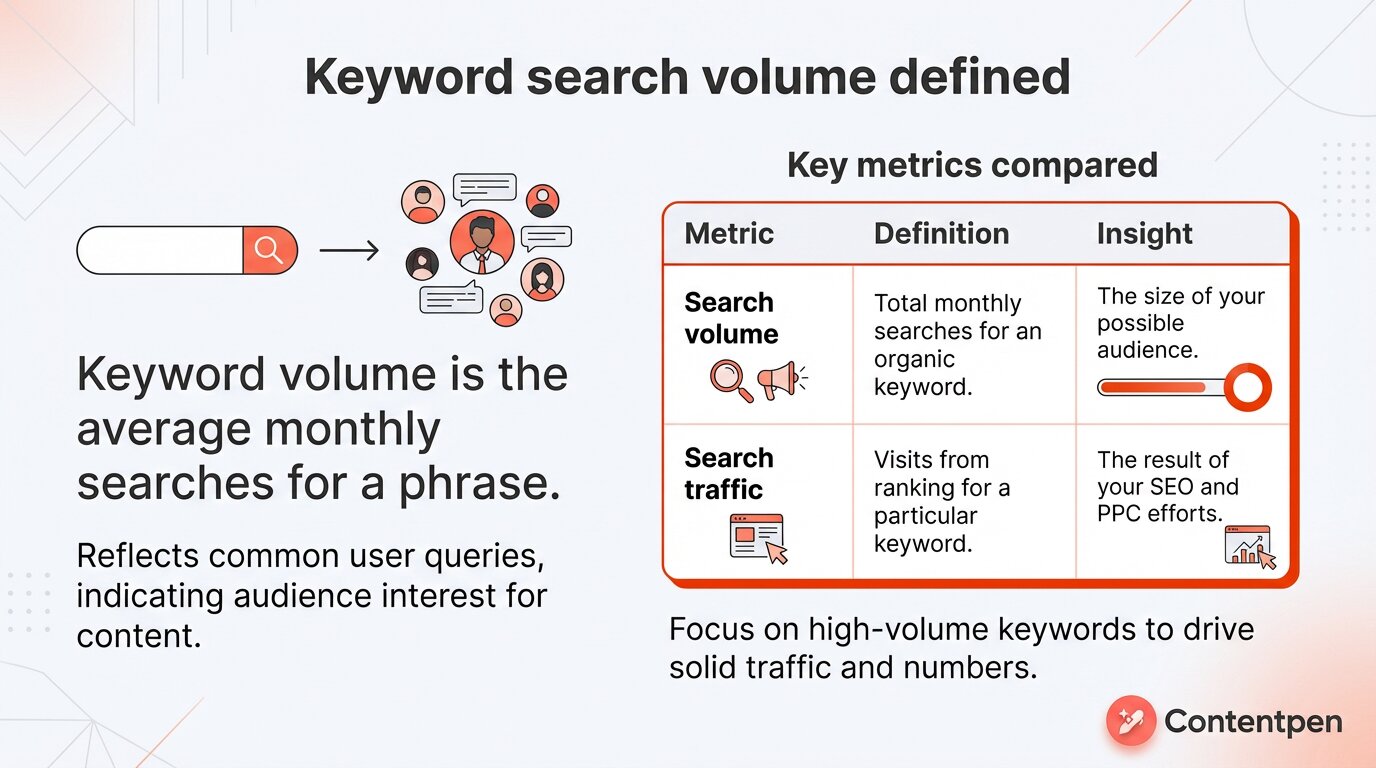
Keyword volume, often called keyword search volume, is the average number of times people search for a word or phrase in a month or a specific time range.
This number reflects the queries people have the most, which you can answer in your content to generate solid traffic and numbers.
That said, search volume and search traffic are two separate metrics. The table below summarizes the differences clearly:
| Metric | Definition | Insight |
| Search volume | Total monthly searches for an organic keyword | The size of your possible audience |
| Search traffic | Visits from ranking for a particular keyword | The result of your SEO and PPC efforts |
Why keyword volume matters for your SEO and content strategy
You have limited time and budget. You cannot write about every topic that crosses your mind. Keyword volume data helps you decide where to focus your content efforts by showing which ideas people already search for or are currently in demand.
For SEO, keyword volume shapes your content roadmap. With keyword volume information, you can:
- Estimate potential organic traffic before you write. When one idea has 2000 searches a month and another has 100, the numbers help you choose where to start.
- Spot seasonal topics. If searches for a term spike every November, you can plan content a few weeks ahead and catch that interest. Then, you can circle back to your core topical clusters to keep that new audience engaged.
- Compare your pages with competitors to find gaps where they rank, and you do not. Search volume around those gaps shows which ones are worth chasing first.
For paid campaigns in Google Ads, search volume guides your ad spend:
- Google Keyword Planner search volume helps you avoid bidding on terms that sound good but have almost no demand, so you do not spread budget across too many weak keywords.
- When you see steady volume plus a reasonable cost per click, you can group related terms into focused ad groups and build campaigns around phrases that matter.
Search volume does not tell you everything, and it never replaces expert judgment. What it does is replace guesswork about demand with real numbers, so you can line up topics, compare volume for each, and back your choices with facts and figures.
High volume vs low volume keywords: Which should you target?
It is easy to assume that more searches always mean a better keyword. In reality, chasing only big numbers can leave smaller sites stuck behind giant brands.
Therefore, the right choice depends on your goals, your site strength, and how quickly you need results from your keyword research.
High‑volume keywords
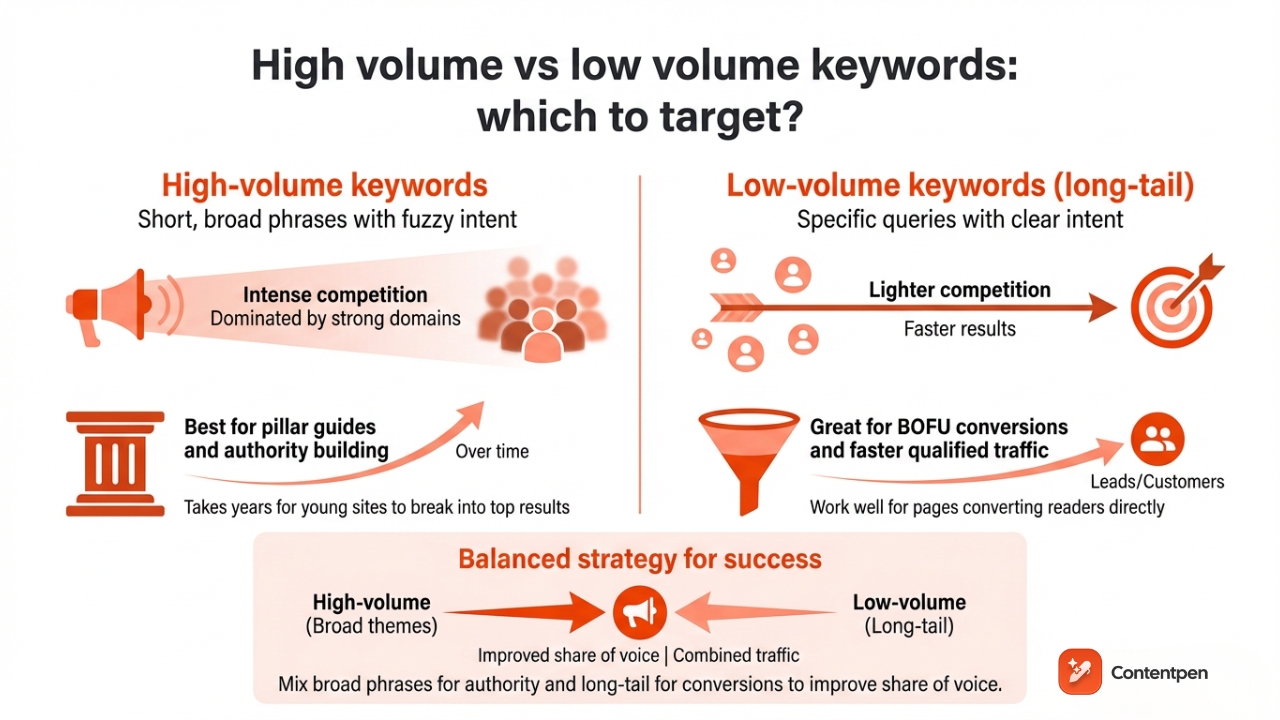
These types of keywords are short and broad. A term like ‘SEO tips’ might show thousands of searches in every keyword tool. These phrases often have fuzzy keyword intent and intense competition.
So, the results for them are usually dominated by strong domains with plenty of SEO backlinks. For a young site, this kind of target can take years to break into the top results.
Low‑volume keywords
Low-volume keywords are often called long‑tail keywords. They do not look suitable at first as they show less search volume, but that is exactly their strength.
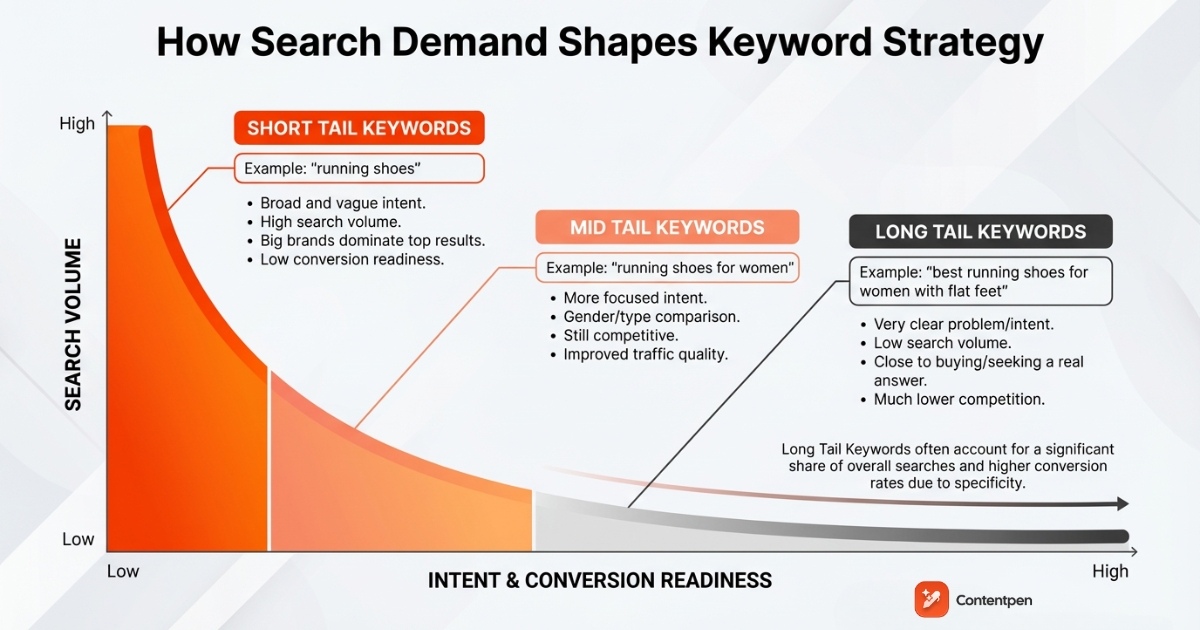
Because these are specified search queries, their intent is very clear, and competition is lighter. So, long-tail keywords work well for pages that aim to turn readers directly into leads or customers without spending too much time in TOFU.
Good keyword research mixes both types:
- A few high‑volume targets help you build authority around broad themes over time. They work well as pillar guides or main category pages that other articles support.
- Many lower‑volume phrases bring in qualified visitors faster from BOFU.
In a nutshell, the combined traffic from broad phrases and long-tail keywords can help you improve your share of voice.
How to check keyword search volume: Tools and methods
Once you know about what search volume is and what it means in SEO, it is time to see some tools to measure it.
| Tool | Best for | Limitation |
| Google Trends | Trend analysis | No exact volume numbers |
| Ahrefs | Detailed SEO metrics | Expensive |
| Semrush | SERP feature insights | Data variation |
| Contentpen | All-in-one keyword research + content creation workflow | Limited free trial |
| WordStream | Free keyword ideas | Not precise keyword volume data |
Let’s review the details of these tools below.
Google Trends
Google Trends is where many people start. It pulls data straight from Google search queries, which makes it a great free search volume tool.
You can enter a list of phrases, see search volume for trending terms, and filter by country or language without setting up any ad campaigns.
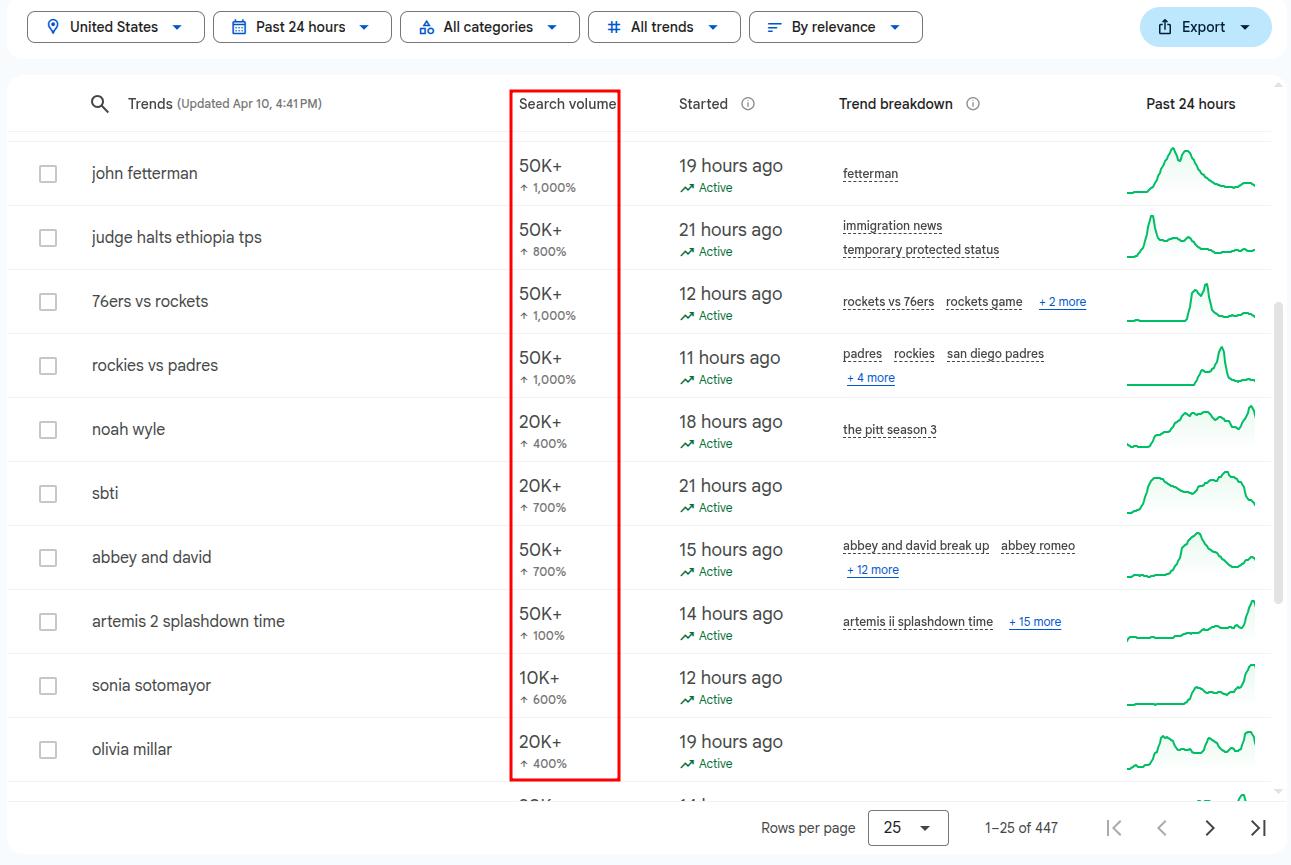
One drawback with Google Trends is that it only offers the increase in search volume for specific terms, but not the average monthly volume like other paid keyword volume tools.
Ahrefs
Third‑party keyword tools like Ahrefs are quite handy as a search volume checker. Go to its Keyword Explorer to get keyword volume (per month) and trends over months.
Instead of a traffic range like Google Keyword Explorer or an increase in search volume like Google Trends, Ahrefs shows you the complete picture for a keyword. Ahrefs also depicts traffic potential, questions related to the main keyword, and the global search volume for your input.
In the following example, we entered the seed phrase ‘URL shortener’ to see its search volume, trend, and other metrics:
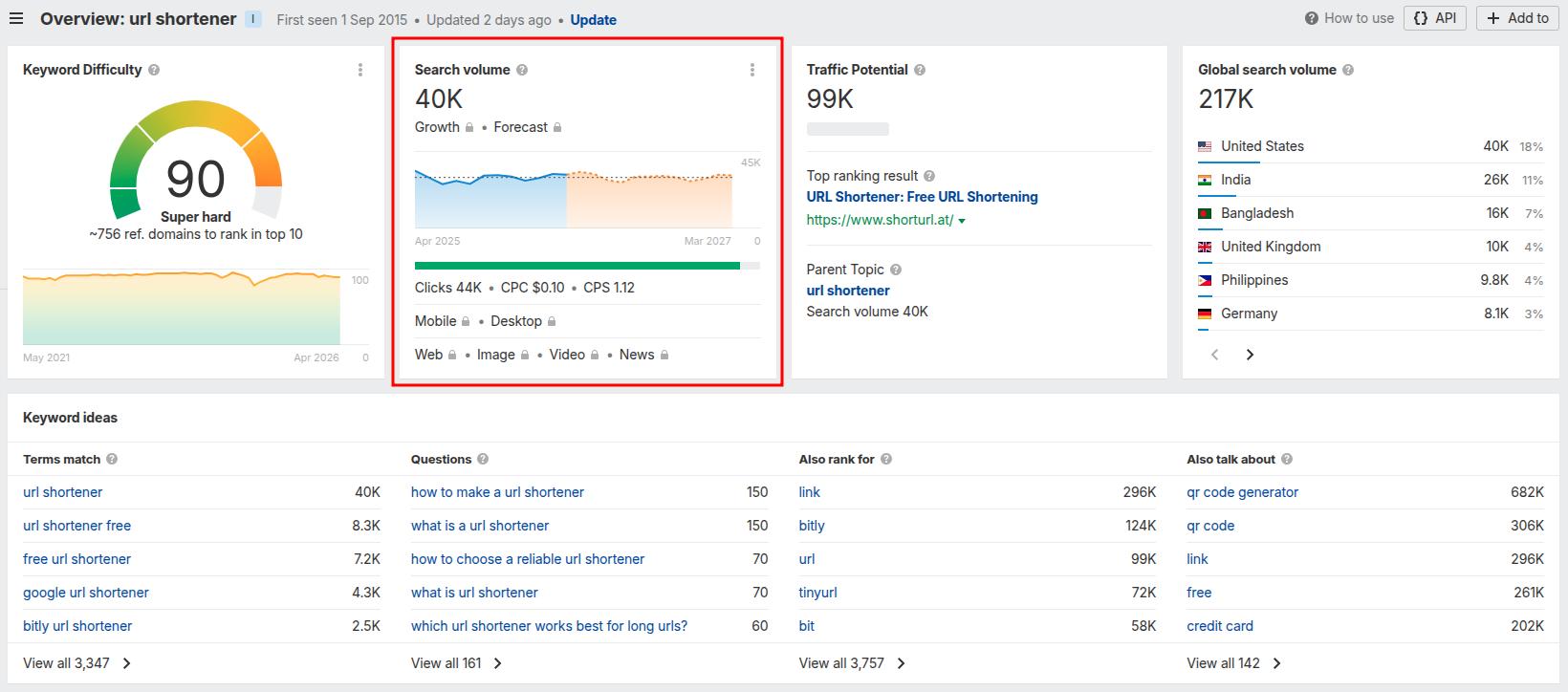
As you can see, the keyword difficulty is extremely high for this seed keyword since the intent is not well defined, and a lot of big brands, like Replug, already occupy the space for it.
Semrush
Similar to Ahrefs, Semrush also provides a powerful keyword research and volume checker tool. Its Keyword Magic Tool delivers search volume, difficulty, CPC, and other details for seed phrases.
Continuing our example from above for the keyword ‘URL Shortener’, let’s see what results Semrush delivers to us:
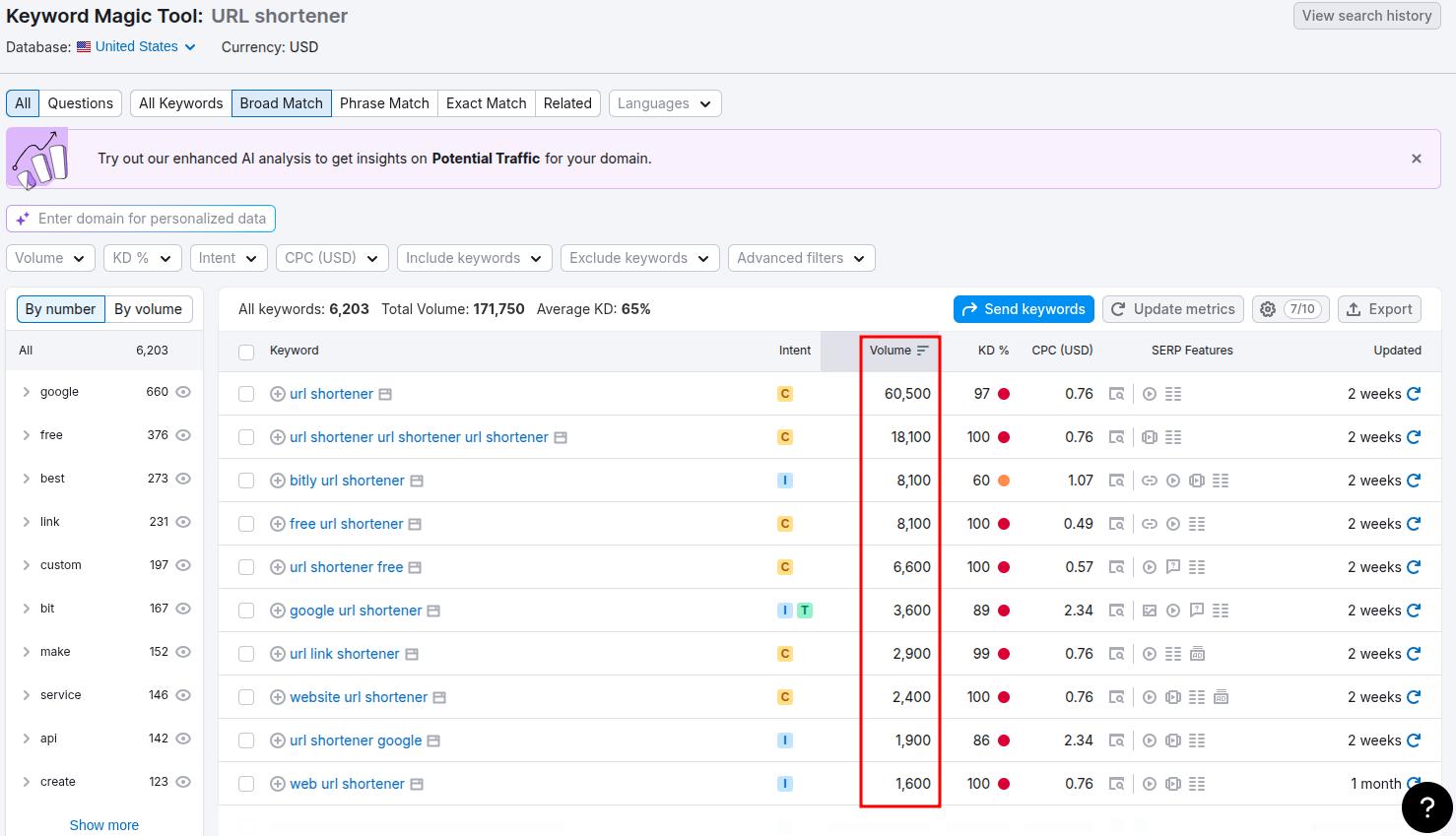
One slight improvement that we can instantly see in Semrush over Ahrefs is that Semrush provides us with SERP features as well. It shows us the type of featured snippets appearing for a specific keyword, like video carousels, PAA boxes, Related searches, etc.
Contentpen
Contentpen is more than just an AI SEO content writer. It also provides and processes your keywords to deliver all the key metrics necessary for a successful content marketing strategy.
We’ll try the same ‘URL shortener’ keyword in this tool and see the results, along with some pre-saved keywords on the platform:
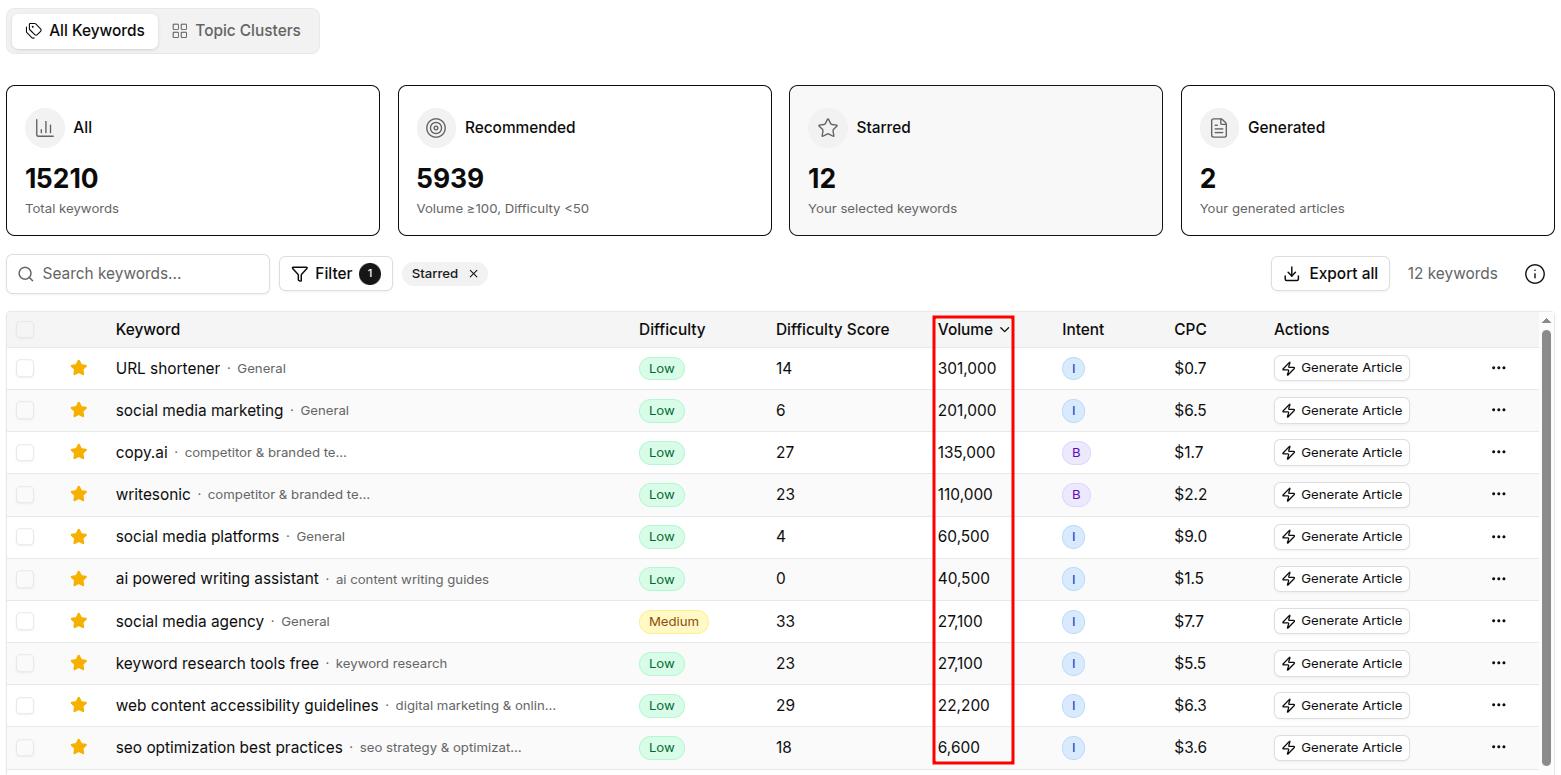
Similar to Ahrefs or Semrush, Contentpen provides keyword volume, difficulty, difficulty score, intent, and CPC, all in one place.
The tool also allows you to quickly create content for a keyword in a single workflow. Simply hit the ‘Generate Article’ button, enter an article title (or use AI for help), and select your content preset to get the content. It’s that simple.

Automated keyword research
Work on keywords worth writing, for
Get search terms with real ranking potential, not just high volume.
Try Keyword Research for FREE →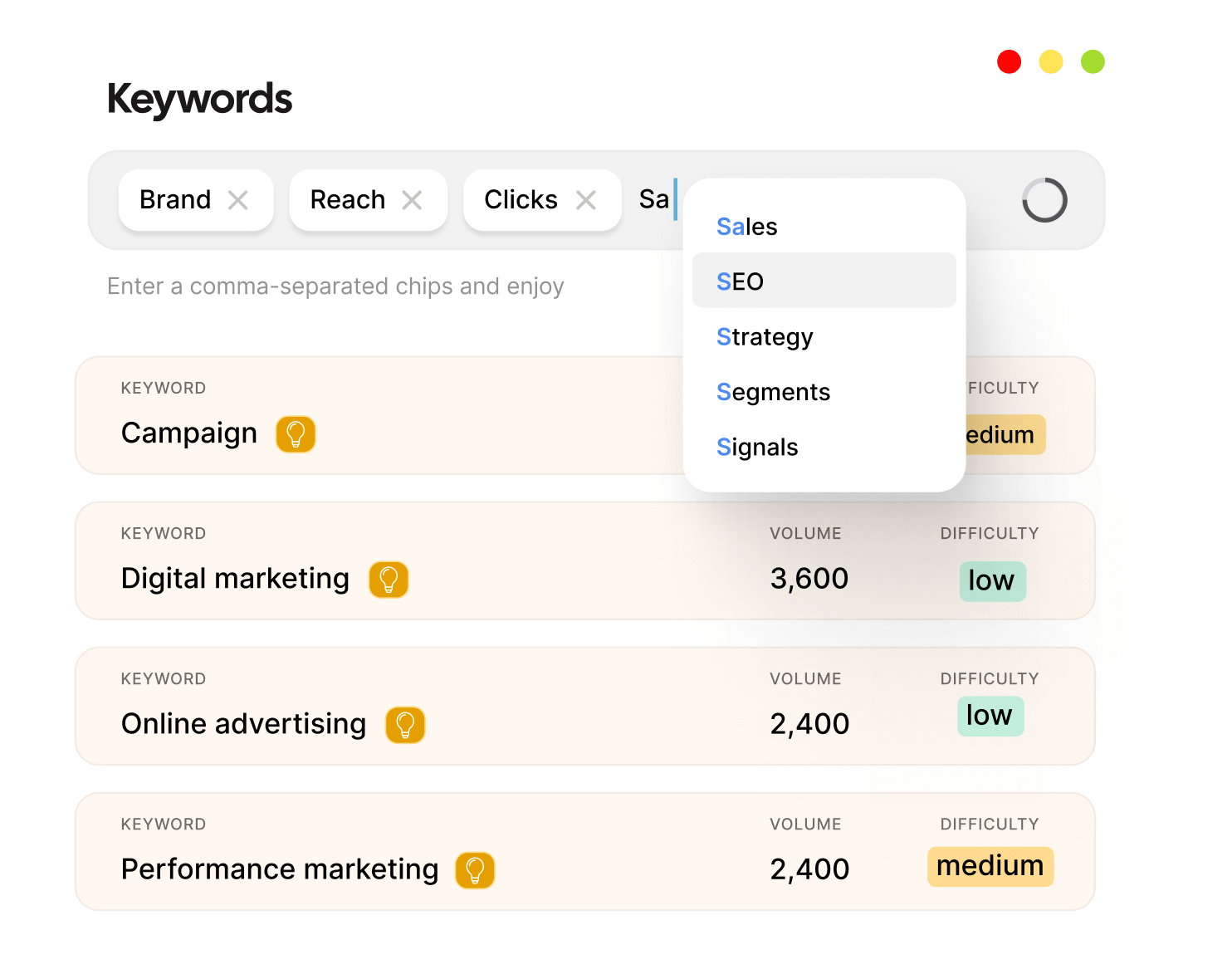
WordStream
Lastly, you can use WordStream’s Free Keyword Tool to get keyword volume and other crucial metrics to inform your content strategy.
If we enter the same core keyword as we did with the previous keyword research tools, then we get the following result:
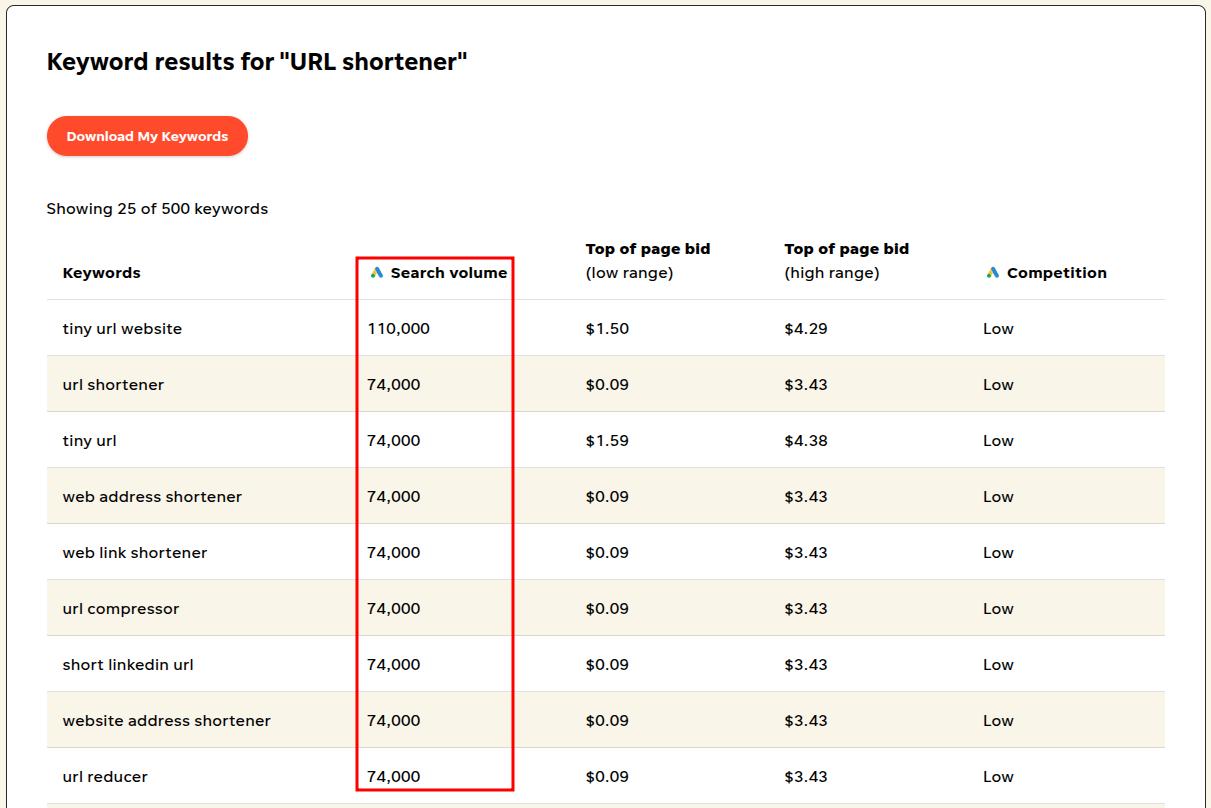
Please note that WordStream uses keyword data directly from Google Ads (Google Keyword Planner), so its values may not be as accurate as other paid options on the list.
In practice, you might:
- Take a short seed list
- Run it through a keyword volume checker
- Confirm the most important terms with a second tool
Data will rarely match perfectly across tools, but if both tools show strong search volume for a keyword, then you can usually trust the hunch.
How to implement keyword volume data in your content and SEO workflow
Knowing the keyword volume numbers is one thing, but putting them into a simple writing and publishing workflow is what grows traffic.
You can use the following keyword volume data in a four‑step process that suits almost all types of content teams:
- Brainstorm seed keywords
Start with words tied to your products, services, and core topics. Add phrases customers use on calls and in emails, plus terms you see on competitor pages. Drop this rough list into a keyword research tool, so you see early demand instead of guessing. - Expand and filter with data
Run your seeds through a keyword volume finder and pull monthly volume and difficulty scores. Look for the sweet spot where volume is meaningful, competition is manageable, and the topic fits what you sell. - Map keywords to search intent
Keyword volume tells you how many people are searching that term; intent tells you why. Group informational searches away from terms that signal buying intent. Address user questions in blogs or articles and use buying terms for landing or product pages. - Publish, measure, and adjust
For SEO, add your chosen terms to titles, headings, meta descriptions, and body copy in a natural way. For paid ads, upload the list into Google Ads, and watch how search trends shift over time. Monitor and adjust actively to avoid losing paid and organic clicks.
If you want help turning raw keyword data into a clear roadmap, use Contentpen. Our tool helps you publish content at scale while implementing the right keywords for a SERP boost and better AI visibility.
Write content that’s built to rank, not just read
Create search-optimized blogs aligned with SEO and GEO signals, so your content performs well across search and AI-driven discovery.
Try SEO Blogging FREE →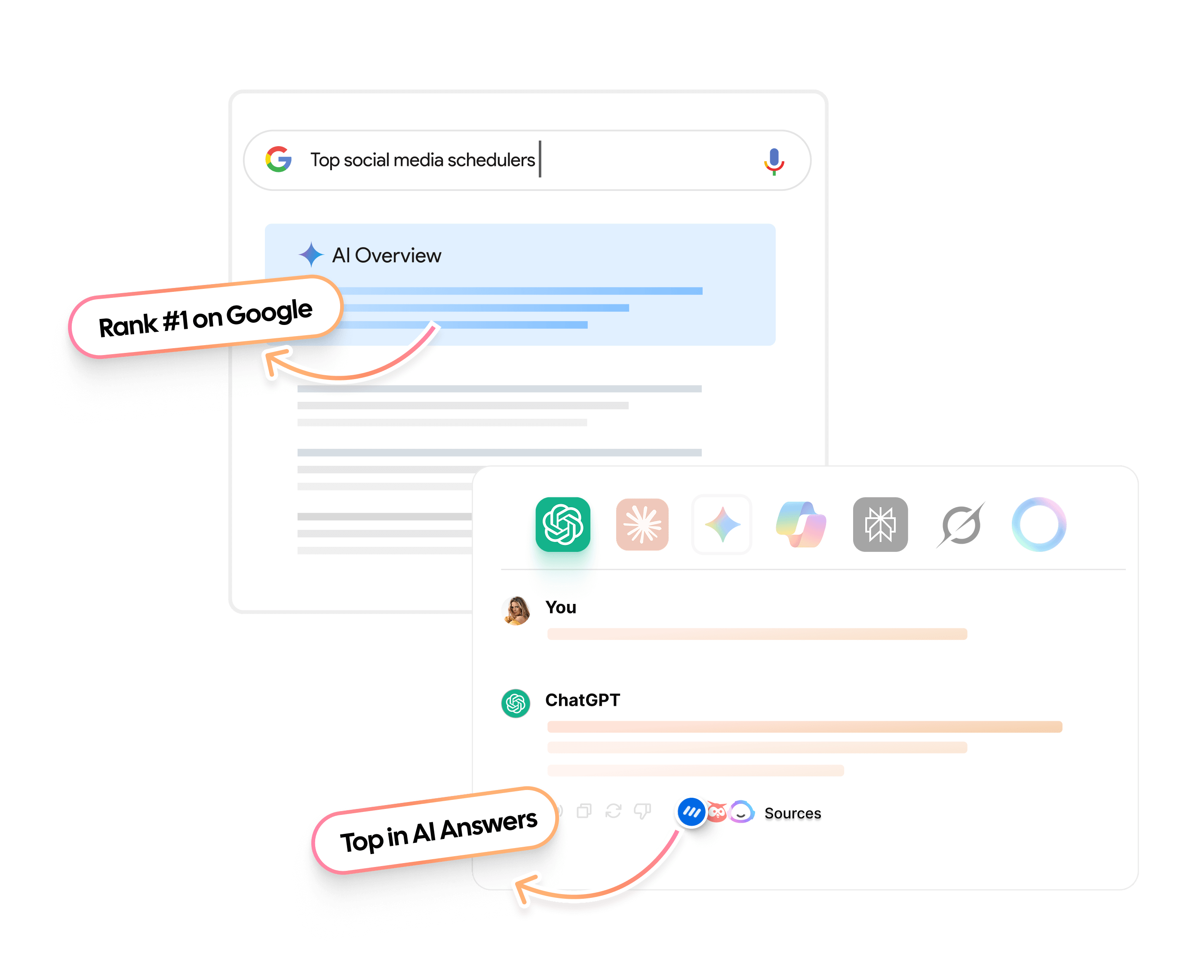
Summing it up
Keyword volume is not just another SEO metric. It is the simple number that shows which ideas people actually type into search and which ones are better left on the whiteboard.
On its own, it shows users’ demand to learn, compare, and buy a certain product or service that addresses their pain points. Paired with keyword difficulty and other key metrics, search volume gives you a clear picture of where to focus your content.
When you know how to check keyword volume, read the patterns, and plug that insight into a repeatable workflow, your content and ad campaigns stop guessing and start aiming.
Frequently asked questions
There is no magic number that works for every site. A good volume is one that fits your niche, matches your offer, and has competition you can beat. For newer sites, terms with roughly 100-1000 monthly searches and low difficulty are often a smart starting point.
Keyword volume itself does not push a page up or down. Google does not rank pages higher just because a phrase has many searches. Volume only helps you pick what to focus on. Rankings depend on content quality, relevance, links, and how well your page serves the intent behind the search query.
Most keyword tools refresh their numbers every month. Google Keyword Planner usually works with rolling twelve‑month averages, while other platforms may smooth or adjust data in their own ways. Therefore, treat search volume as a guide rather than a perfect real‑time count.
Yes. A reported ‘0’ can still hide real searches. Very narrow topics, brand‑new phrases, and local queries often sit below the threshold that keyword tools show. If a term matches your audience and solves a clear problem, it can be worth testing even when tools show no volume.