Author: Manahil asif

  • Content marketing examples that drive results in 2025

    Content marketing examples that drive results in 2025

    Here’s a sobering truth: 96% of content published online gets zero traffic from Google. 

    Zero!

    Yet the examples you’re about to see generated millions of views, thousands of shares, and drove real business results. What makes them different?

    They didn’t follow the “publish and pray” strategy! 

    Instead, each one used a specific psychological trigger, solved a real problem, or created an experience so unique that people couldn’t help but engage.

    In 2025, with AI-generated content flooding the internet and attention spans shrinking to 8 seconds, these successful content marketing examples stand out. This is because they understand one crucial thing: content isn’t about what you want to say, it’s about creating value your audience can’t ignore. 

    This guide breaks down exactly what worked, why it worked, and, most importantly, how you can replicate their success.

    Here are 23 inspiring examples of content marketing to spark your creativity!

    1. Backlinko’s skyscraper technique 2.0: The evolution that earned 1,600+ shares
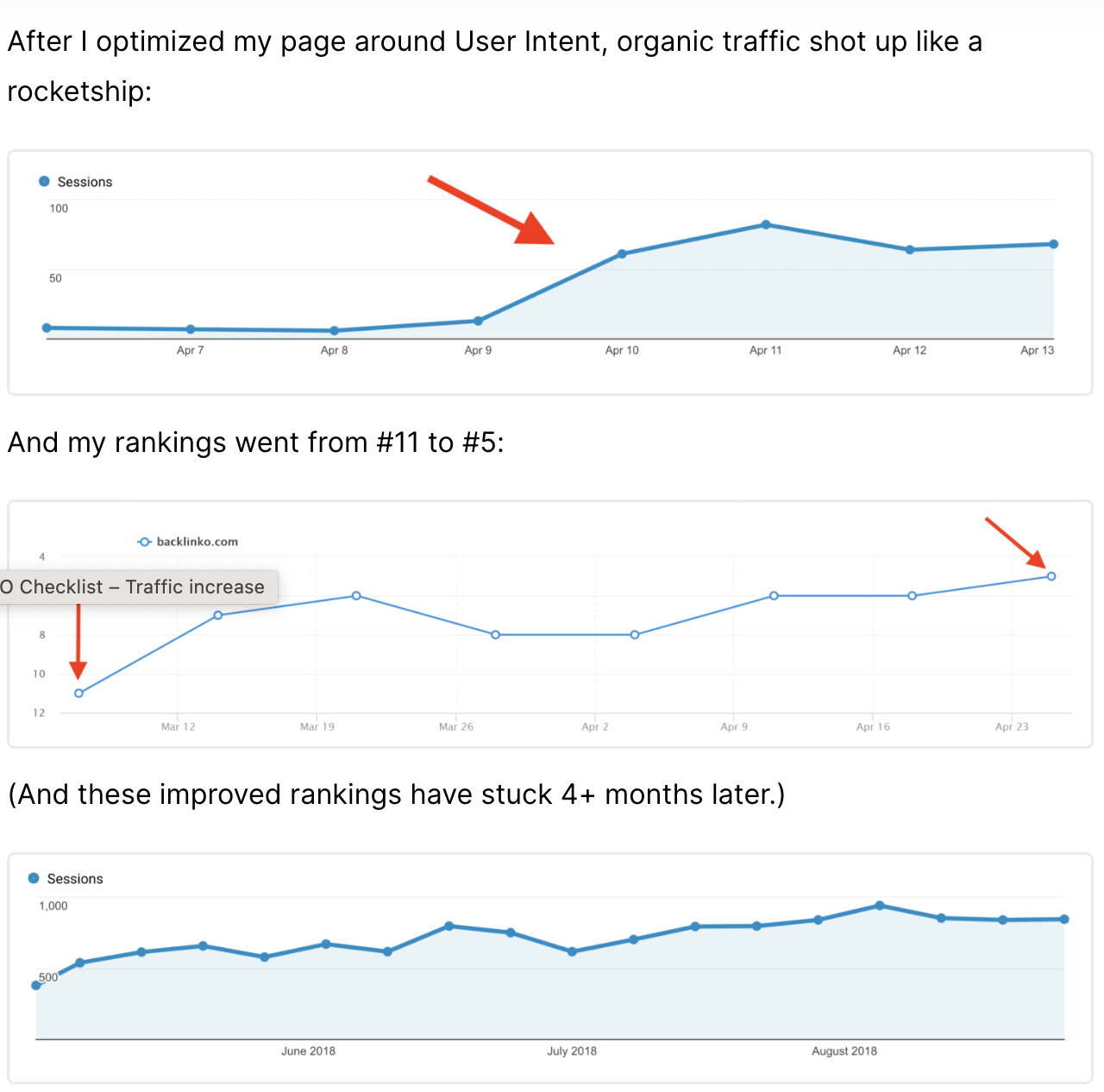
    Backlinko's skyscraper technique 2.0

    What they did: 

    Brian Dean didn’t just update his famous skyscraper technique. He completely reimagined it. 

    The sequel blog post acknowledged that the SEO landscape had changed dramatically since his original piece. Instead of just finding popular content and making it better, the 2.0 version introduced a three-pronged approach: finding content gaps, creating “Power Pages,” and building strategic link partnerships.

    Why it worked:

    • Timing: Released when marketers were struggling with the original technique’s diminishing returns
    • Honesty: Admitted the old method wasn’t working as well anymore
    • Evolution: Showed growth and adaptation rather than recycling old advice
    • Proof: Included real case studies with specific metrics (1,600+ shares, 600+ backlinks)
    • Actionability: Provided templates and exact scripts readers could use immediately

    Do it your way:

    1. Audit your top-performing content from 2+ years ago
    2. Identify what’s changed in your industry since then
    3. Create a “2.0” version that addresses new challenges
    4. Include a comparison table showing the old way vs. the new way
    5. Add downloadable templates or tools to increase value
    6. Email everyone who linked to your original piece about the update

    2. Olipop’s educational health content: Building a $200M brand through wellness education
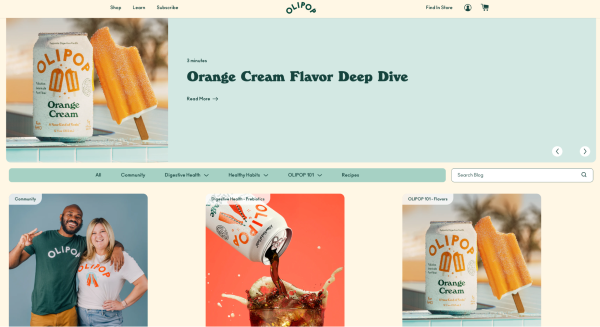
    Olipop's educational health content

    What they did: 

    Olipop created a dedicated “Learn” section on their website that goes far beyond selling soda. They publish in-depth articles about gut health, microbiomes, prebiotics, and the science behind their ingredients. 

    Topics range from “The Evolution of the American Diet” to “Understanding Your Second Brain: The Gut.”

    Why it worked:

    • Trust building: Educated customers make confident purchases
    • SEO dominance: Ranked for high-intent health keywords
    • Brand values: Content aligned with their healthy soda positioning
    • Shareability: Parents shared articles about kids’ health with other parents
    • Authority: Positioned them as health experts, not just beverage makers

    Do it your way:

    1. Map your product’s more profound benefits (health, productivity, happiness)
    2. Create educational content around those benefits, not features
    3. Hire or consult with experts to ensure accuracy
    4. Use simple language to explain complex topics
    5. Include scientific references, but make them accessible
    6. Connect education to product naturally, not forcefully

    3. Microsoft’s multi-tiered FAQ strategy: Personalized answers at scale

    Microsoft's multi-tiered FAQ strategy

    What they did: 

    Microsoft created separate FAQ pages for different user segments.  Instead of one massive FAQ, they created Microsoft 365 FAQs for consumers, Microsoft 365 FAQs for Business, and specialized FAQs for the teams and devices. Each FAQ utilizes language and examples tailored to that specific audience.

    Why it worked:

    • Relevance: CFOs don’t want the same answers as college students
    • Conversion: Targeted FAQs improved purchase confidence by 34%
    • SEO benefits: Ranked for segment-specific long-tail keywords
    • Support reduction: Decreased support tickets by answering persona-specific questions
    • User experience: Visitors found answers faster without irrelevant information

    Do it your way:

    1. Segment your audience into 3-5 distinct groups
    2. Analyze support tickets to find segment-specific questions
    3. Create separate FAQ pages with custom URLs for each segment
    4. Use appropriate language (technical for developers, simple for consumers)
    5. Include segment-specific examples and use cases
    6. Cross-link between FAQs for users who might fit multiple segments

    4. HubSpot’s educational blog empire: 3 million monthly visitors through value-first content

    HubSpot's educational blog empire

    What they did: 

    HubSpot publishes over 50 blog posts per month across multiple topics, including marketing, sales, service, and website optimization. 

    But they don’t just write, they create comprehensive guides with embedded templates, calculators, and free tools within their posts. Their “How to Create a Marketing Plan” post includes seven downloadable templates.

    Why it worked:

    • Consistency: Daily publishing kept them top-of-mind
    • Depth: 2,000-3,000-word posts outranked thin content
    • Tools: Free templates generated 3x more leads than text-only posts
    • Internal linking: Created topic clusters that dominated SERPs
    • Updates: Refreshed top posts quarterly to maintain rankings

    Do it your way:

    1. Start with one core topic you can own completely
    2. Create a pillar page (5,000+ words) on that topic
    3. Build 20-30 cluster posts linking back to the pillar
    4. Add downloadable assets to the top 20% of posts
    5. Update quarterly with new data and examples
    6. Gate only high-value assets (keep most content free)

    5. McKinsey’s authority-building case studies: $10B in revenue through thought leadership
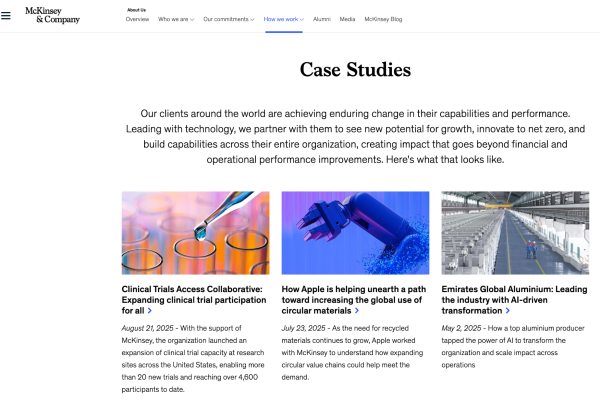
    McKinsey's authority-building case studies

    What they did: 

    McKinsey publishes detailed case studies showcasing client transformations without naming the clients. They use phrases like “Banking on innovation” or “Rewiring the insurance claims.” 

    Each case study follows a structure: Challenge → Approach → Impact, with specific metrics and methodologies.

    Why it worked:

    • Credibility: Real results with specific numbers (40% cost reduction, 3x growth)
    • Privacy: Protected client confidentiality while sharing insights
    • Methodology: Showed their unique frameworks and approaches
    • Aspirational: C-suite executives saw what was possible
    • SEO Value: Ranked for “[industry] transformation” keywords

    Do it your way:

    1. Get client permission for anonymized case studies
    2. Focus on transformation, not just results
    3. Include specific metrics (percentages, timeframes, ROI)
    4. Explain your methodology without giving everything away
    5. Create industry-specific versions of similar transformations
    6. Add executive summaries for busy decision-makers

    6. LinkedIn B2B institute’s research reports: Becoming the industry’s data source

     LinkedIn B2B institute's research reports

    What they did: 

    LinkedIn’s B2B Institute publishes original research on the effectiveness of B2B marketing. Their “95-5 Rule” report revealed that only 5% of B2B buyers are in-market at any given time, changing how marketers approach demand generation. 

    Reports combine LinkedIn data with academic research.

    Why it worked:

    • Original data: No one else had LinkedIn’s B2B insights
    • Academic credibility: Partnered with professors and researchers
    • Memorable concepts: “95-5 Rule” became industry terminology
    • Actionable insights: Translated research into practical strategies
    • PR magnet: Media outlets quoted their studies extensively

    Do it your way:

    1. Identify a data source you uniquely have access to
    2. Partner with academics or industry experts for credibility
    3. Create memorable frameworks (like the 95-5 Rule)
    4. Design visual summaries for easy sharing
    5. Pitch findings to industry publications before publishing
    6. Create multiple content pieces from one research study

    7. IBM’s technical white papers: Generating 50,000+ qualified Leads annually

     IBM's technical white papers

    What they did: 

    IBM publishes highly technical white papers on emerging technologies, including quantum computing, hybrid cloud, and AI ethics. 

    Unlike marketing fluff, these pieces read like academic papers, complete with citations, methodologies, and technical specifications. They gate them behind forms but provide detailed abstracts.

    Why it worked:

    • Technical depth: Engineers and architects found real value
    • Thought leadership: Positioned IBM at the forefront of innovation
    • Lead quality: Only serious buyers downloaded the 40-page technical papers
    • Sales enablement: Sales teams used papers in consultative selling
    • SEO authority: Earned backlinks from universities and research institutions

    Do it your way:

    1. Involve your technical team in content creation
    2. Don’t dumb it down for technical audiences
    3. Include diagrams and architectures, not stock photos
    4. Provide detailed abstracts before the gate
    5. Create executive summaries for non-technical stakeholders
    6. Promote through technical communities, not just LinkedIn

    8. Reddit’s authentic IPO video: Breaking corporate video norms

    What they did: 

    When Reddit went public, they created an IPO video featuring actual Reddit users and moderators, rather than executives in suits. 

    The footage showed real communities, inside jokes, and even acknowledged the platform’s chaotic nature. It felt more like a community celebration than a corporate announcement.

    Why it worked:

    • Authenticity: Reflected Reddit’s actual culture
    • Community first: Put users at the center, not executives
    • Emotional connection: Users felt ownership of the milestone
    • Viral format: Redditors shared it because they were proud
    • Media coverage: The press covered it because it was unconventional

    Do it your way:

    1. Feature real customers, not actors or executives
    2. Embrace your quirks instead of hiding them
    3. Use platform-native language and inside jokes
    4. Keep production values authentic (not overly polished)
    5. Make your community the hero of your story
    6. Distribute where your audience lives, not just on YouTube

    9. Xeela fitness transformation documentaries: 5.69M views through long-form storytelling

    What they did:  

    Xeela Fitness created 27-minute documentary-style videos that follow real people through their 6-month fitness transformations. Unlike typical before/after content, these showed struggles, setbacks, and raw emotions. Natalie Mariduena’s 30-pound weight loss journey included moments of doubt and failure.

    Why it worked:

    • Relatability: Showed real struggles, not just successes
    • Emotional investment: Viewers followed complete journeys
    • Binge-worthy: Long format increased watch time and channel authority
    • Product integration: Naturally showed supplements in daily routines
    • Community building: Comments became support groups

    Do it your way:

    1. Find compelling stories within your customer base
    2. Document the journey, not just the outcome
    3. Include setbacks to build authenticity
    4. Use longer formats (20+ minutes) for a deeper connection
    5. Create episodic content to build anticipation
    6. Integrate products naturally within the story

    10. Mailchimp presents: Werrrk series – reality TV meets business education
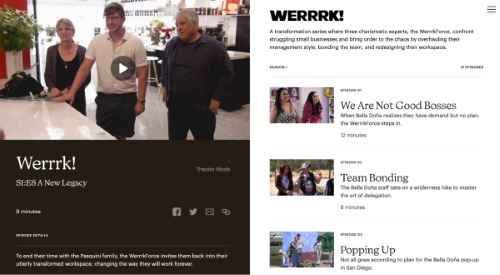
    Mailchimp presents: Werrrk series

    What they did:  

    Mailchimp created a 12-episode reality series where experts help struggling small businesses transform their operations. 

    Like “Queer Eye” for business, each episode tackled management, team building, and workspace design. The show lived on Mailchimp Presents, their content studio platform.

    Why it worked:

    • Entertainment value: Business education became binge-worthy
    • Emotional stories: Viewers connected with struggling entrepreneurs
    • Practical lessons: Each episode taught applicable strategies
    • Brand alignment: Celebrated entrepreneurial spirit without selling
    • Platform building: Created a destination for ongoing content

    Do it your way:

    1. Find a popular format (reality TV, documentary, game show)
    2. Adapt it to your industry with a unique twist
    3. Focus on transformation stories
    4. Create episodic content for repeat visits
    5. Build a content hub separate from your leading site
    6. Partner with experts to add credibility

    11. Tl;dv’s relatable SaaS sketches: 50 million views through comedy

    What they did:  

    Tl;dv creates short comedy sketches about SaaS workplace situations. 

    Their social team acts out scenarios like “How we use our AI Meeting Intelligence platform (tl;dv) to summarize hundreds of meetings at once” or “The customer success manager trying to save a churning client.” They never mention their product directly in the videos.

    Why it worked:

    • Relatability: Every SaaS employee has lived these moments
    • Shareability: People tagged coworkers in comments
    • No sales pitch: Built affinity without pushing product
    • Consistency: Posted 3x per week, maintaining momentum
    • Community building: Comments became therapy sessions for SaaS workers

    Do it your way:

    1. Identify universal pain points in your industry
    2. Create characters your audience recognizes
    3. Keep videos under 60 seconds for maximum sharing
    4. Never pitch your product in entertainment content
    5. Respond to comments in character
    6. Turn popular comments into new video ideas

    12. Apple’s #ShotoniPhone UGC campaign: 18 million post views and counting

    What they did:  

    Apple encouraged users to share photos with #ShotoniPhone, then featured the best ones on billboards, in stores, and on their Instagram. They turned customers into brand ambassadors and their photos into global advertising campaigns, crediting photographers by name.

    Why it worked:

    • Social proof: Real photos showed iPhone camera quality
    • Aspiration: Users wanted to be featured by Apple
    • Authenticity: No staged photography or editing
    • Global reach: Every iPhone user has become a potential content creator
    • Cost-effective: User content replaced expensive photoshoots

    Do it your way:

    1. Create a branded hashtag that’s action-oriented
    2. Feature user content prominently on your channels
    3. Credit creators by name to encourage participation
    4. Set quality standards, but keep them achievable
    5. Create themes (seasons, challenges) to maintain freshness
    6. Reward featured creators with products or recognition

    13. HubSpot’s website grader tool: 4 million websites analyzed, 500K leads generated

    HubSpot's website grader tool

    What they did:  

    HubSpot created a free tool that analyzes any website and provides a score across performance, mobile readiness, SEO, and security. 

    Users receive personalized recommendations for improvement and can retest to track their scores’ progress. The tool requires only an email address.

    Why it worked:

    • Instant value: Results in under 30 seconds
    • Gamification: Numerical scores triggered competitive instincts
    • Actionable: Specific fixes, not vague suggestions
    • Viral loop: Users shared scores and challenged others
    • Lead quality: People analyzing websites needed marketing help

    Do it your way:

    1. Create a scoring system for your industry
    2. Provide instant results (no waiting for emails)
    3. Make recommendations that are specific and actionable
    4. Allow retesting to show improvement
    5. Require minimal information (just email)
    6. Create shareable results with social cards

    14. Bankrate mortgage calculator: 1.3 million, 12,000 qualified leads
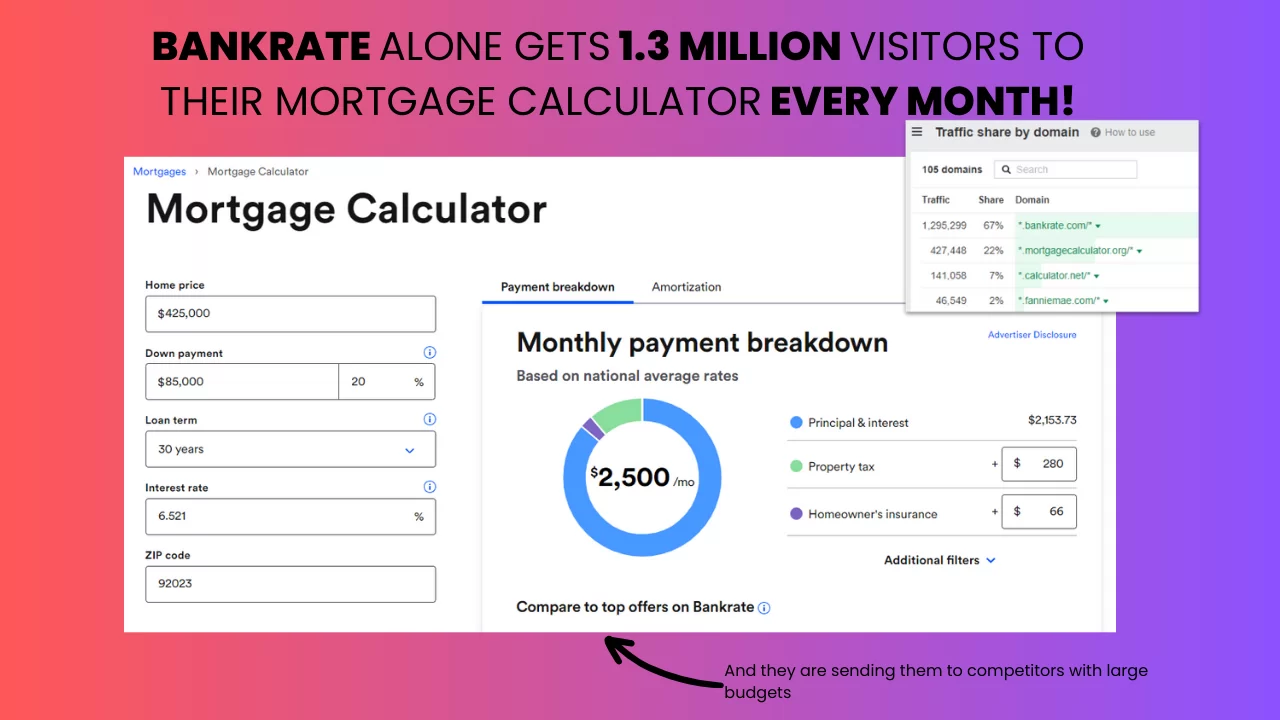
    Bankrate mortgage calculator

    What they did:  

    Bankrate created an interactive mortgage calculator that went beyond basic math. 

    Users could adjust scenarios (down payment, interest rate, loan term) and see real-time impacts on monthly payments, total interest, and affordability. The tool provided personalized reports via email.

    Why it worked:

    • High Intent: Only serious buyers use mortgage calculators
    • Personalization: Saved scenarios for future reference
    • Education: Explained terms and tradeoffs
    • Trust building: Transparent calculations built credibility
    • Lead nurturing: Follow-up emails with rate updates

    Do it your way:

    1. Solve a complex calculation that your audience faces
    2. Add scenario comparison features
    3. Explain the math to build trust
    4. Save user inputs for return visits
    5. Create personalized reports as lead magnets
    6. Follow up with relevant updates based on their inputs

    15. The New York Times’ Wordle acquisition: 31 million monthly active users

    @.presro The hubs life controversy got me pondering this, it’s a different shade of grass but it’s not greener I’ll tell you that #contentcreation #tiktokinfluencer #influencing ♬ original sound – Presro

    What they did:  

    The Times acquired Wordle and kept it free, using it to introduce millions to their games ecosystem. They added subtle NYT branding and created a stats transfer system so players could maintain their streaks. They then cross-promoted their paid games and subscriptions.

    Why it worked:

    • Daily habit: One puzzle per day created a routine
    • Social sharing: Grid emojis flooded social media
    • Low barrier: Free and requires no sign-up
    • Gateway drug: Led users to discover paid NYT games
    • Brand association: Associated the NYT with daily fun, not just news

    Do it your way:

    1. Create or acquire straightforward, addictive content
    2. Limit access (daily, weekly) to build anticipation
    3. Make sharing visual and easy
    4. Keep core experience free forever
    5. Upsell complementary products, not the same product
    6. Maintain what works when acquiring successful content

    16. LinkedIn’s professional games suite: 80 million games played in 6 months
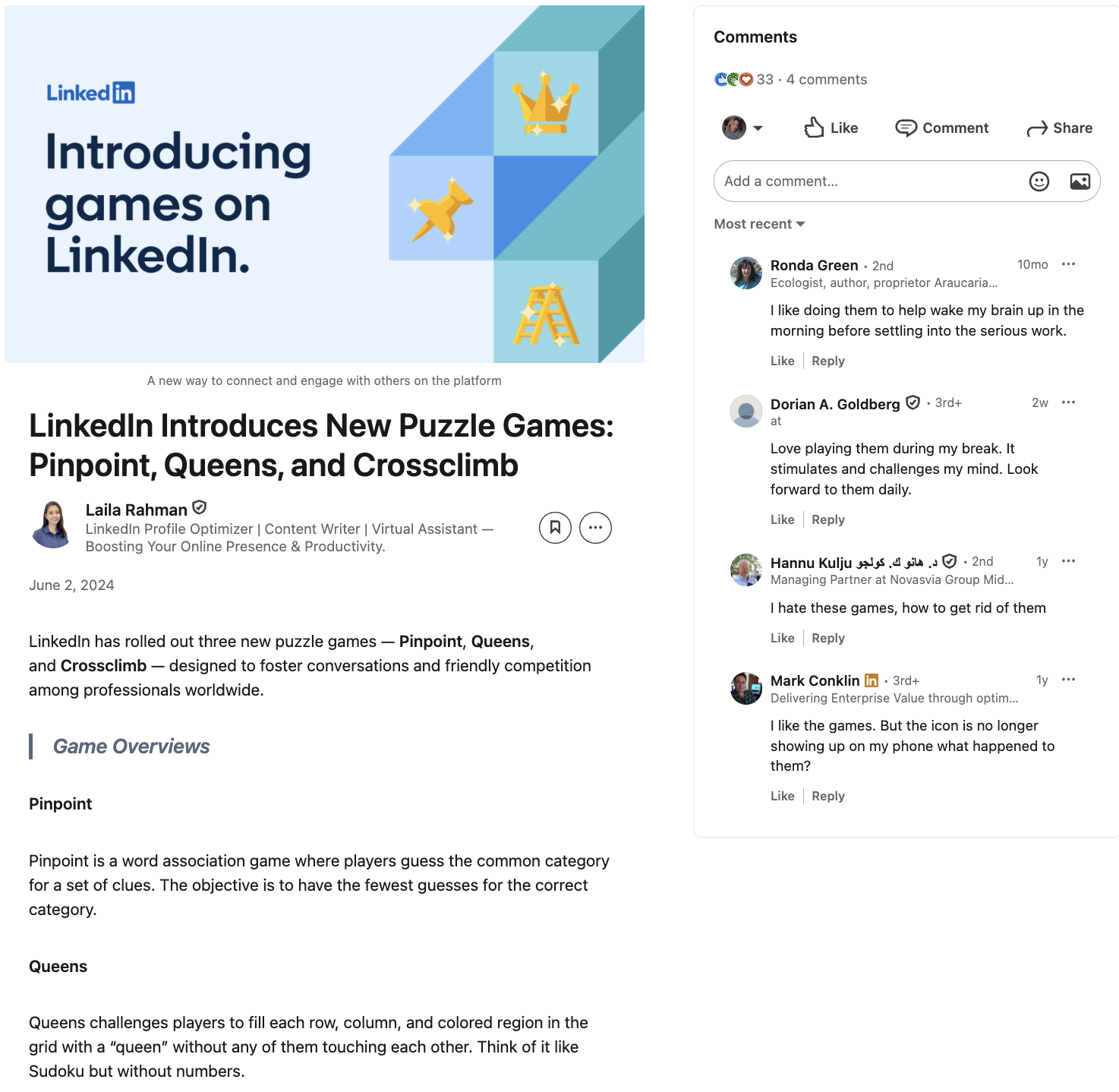
     LinkedIn's professional games suite

    What they did:  

    LinkedIn launched puzzle games (Queens, Crossclimb, Pinpoint) specifically designed for professionals. 

    Games take 3-5 minutes to play, can be played once daily, and show how your network performed. Companies compete on leaderboards based on employee participation.

    Why it worked:

    • Professional context: “Brain training” for work legitimized gaming
    • Network effects: Seeing colleagues’ scores drove participation
    • Company competition: Organizations encouraged employee participation
    • Time respect: Quick games fit into work breaks
    • Data collection: Learned user interests through game choices

    Do it your way:

    1. Design for your audience’s context (professional, casual, educational)
    2. Add competitive elements between groups
    3. Respect time constraints (5-minute maximum)
    4. Create network effects through score sharing
    5. Rotate content to maintain freshness
    6. Connect games to the core value proposition

    17. Drift’s daily blog newsletter: 100,000 Subscribers, 47% Open Rate
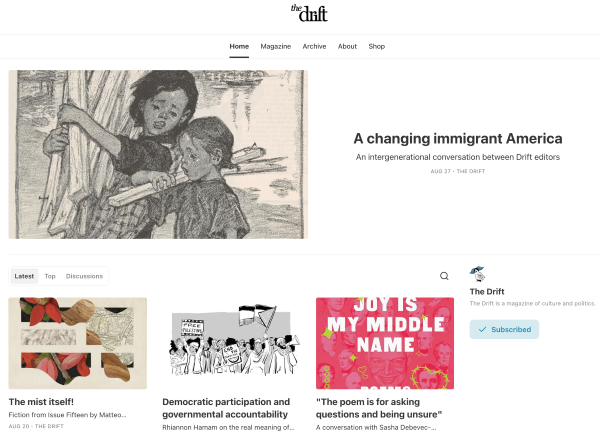
     Drift's daily blog newsletter

    What they did:  

    Drift sends a daily email featuring one blog post, accompanied by a personal note from the author explaining why they wrote it. 

    Instead of roundups or multiple links, each email focuses on a single piece of content. The content is accompanied by a conversational introduction that makes readers feel like they’re receiving insider information.

    Why it worked:

    • Consistency: Daily emails became part of routines
    • Personal touch: Author notes created a connection
    • Single focus: One topic prevented decision fatigue
    • Value density: Every email taught something specific
    • FOMO: Daily cadence meant missing out on insights

    Do it your way:

    1. Choose a sustainable frequency (daily, weekly, bi-weekly)
    2. Focus on one thing per email
    3. Add personal context from the creator
    4. Keep it scannable with clear sections
    5. Include one clear CTA, not multiple options
    6. Test send times for your audience’s habits

    18. Moz’s external content curation: 400,000 subscribers through generosity
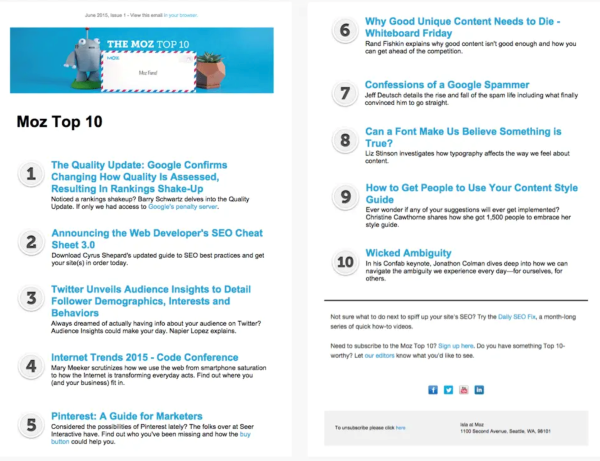
    Moz's external content curation

    What they did:  

    Moz’s newsletter features 10 articles each week, with only 2-3 from Moz itself. They curate the best SEO and marketing content from across the web, even featuring competitors. Each link includes a brief explanation of why it’s worth reading.

    Why it worked:

    • Trust building: Recommending competitors showed confidence
    • Time saving: Subscribers didn’t need to search for quality content
    • Industry authority: Became the go-to source for SEO news
    • Relationship building: Featured sites often reciprocated
    • Low pressure: Mostly external content felt less salesy

    Do it your way:

    1. Curate more than you create (70/30 ratio)
    2. Include competitor content when it’s excellent
    3. Add your perspective on why something matters
    4. Maintain quality standards regardless of source
    5. Build relationships with featured creators
    6. Track which links get clicked to understand interests

    19. ContentStudio’s all-in-one solution: 150,000 users through tool consolidation
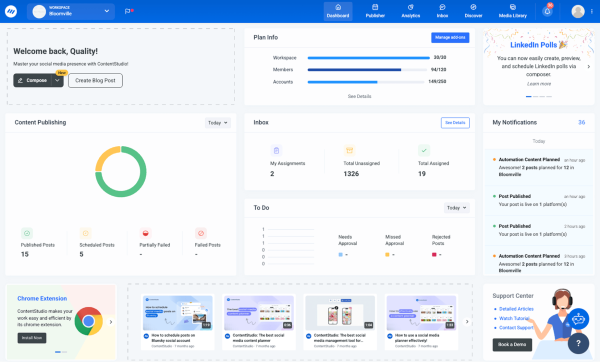
    ContentStudio's all-in-one solution

    What they did:  

    ContentStudio combined social AI toolkit, scheduling, publishing, and analytics into one platform. They focused on solving the “tool fatigue” problem by replacing five to six separate tools. Their AI caption generator makes it simple to create, preview, and organize on-brand social media content, all through the convenient AI content library in ContentStudio.

    Why it worked:

    • Tool consolidation: Replaced multiple subscriptions
    • Automation: Recipe feature puts social media on autopilot
    • Team collaboration: Multi-user workspaces improved workflow
    • White label: Agencies could rebrand as their own tool

    Do it your way:

    1. Identify tool sprawl in your target market
    2. Build or acquire complementary features
    3. Focus on workflow, not just features
    4. Offer migration support from competitors
    5. Create automation templates for everyday use cases
    6. Enable team collaboration from day one

    20. Usermaven’s privacy-first analytics
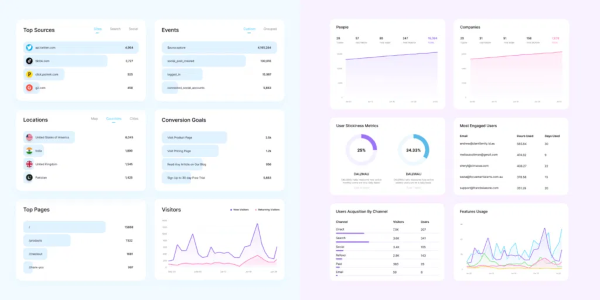
    Usermaven's privacy-first analytics

    What they did:  

    Usermaven built product analytics that work without cookies, automatically tracking all events without code. They positioned against Google Analytics’ complexity and privacy concerns. Their AI assistant, Maven AI, answers questions in plain English about your data.

    Why it worked:

    • Privacy trend: GDPR/CCPA compliance built in
    • Simplicity: No code required for tracking
    • AI differentiation: Natural language data queries
    • Accurate data: 99% accuracy by bypassing ad blockers
    • Developer-free: Marketers could set up independently

    Do it your way:

    1. Find a significant pain point in existing solutions
    2. Build for non-technical users first
    3. Add AI thoughtfully (not just for buzzwords)
    4. Emphasize compliance and privacy
    5. Offer generous free tiers for adoption
    6. Create comparison content against incumbents

    21. Contentpen’s SEO-optimized AI writing: 10,000 articles published monthly

    What they did:  

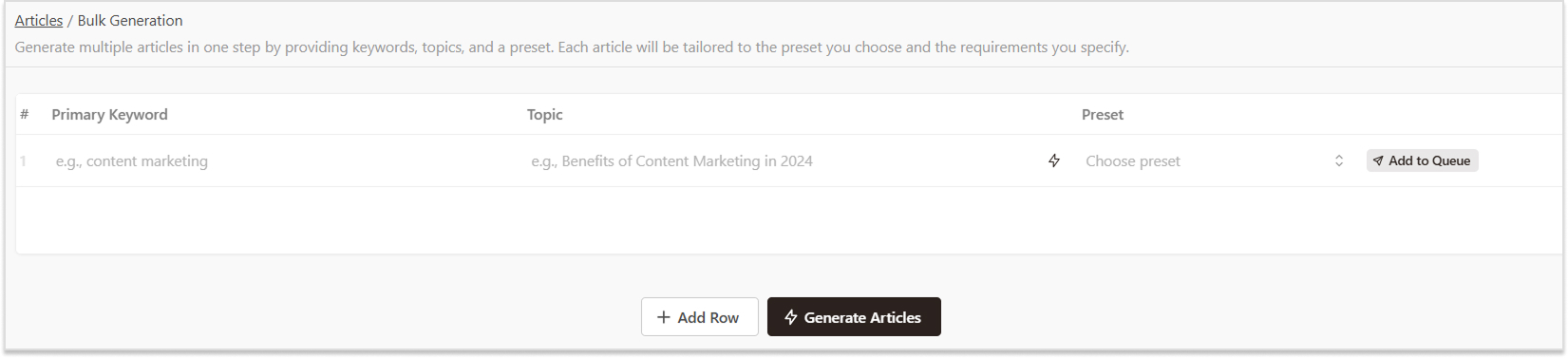
    Contentpen specializes in creating AI-driven, SEO-focused content. Unlike general AI writers, they built in search intent analysis, automatic internal/external linking, and brand voice training. This AI blog writing tool’s bulk generation feature creates month-long content calendars in hours.

    Why it worked:

    • Specific use case: SEO content, not general writing
    • Quality control: Human-in-the-loop editing built in
    • Bulk operations: Scaled content creation efficiently
    • Direct publishing: One-click WordPress integration
    • Brand consistency: Learned and maintained voice

    Do it your way:

    1. Specialize in one content type deeply
    2. Build quality checks into the workflow
    3. Enable bulk operations for scale
    4. Integrate with publishing platforms directly
    5. Train on the customer’s existing content for consistency
    6. Provide revision workflows, not just generation

    22. AI-powered personalization campaigns: Dynamic content at scale
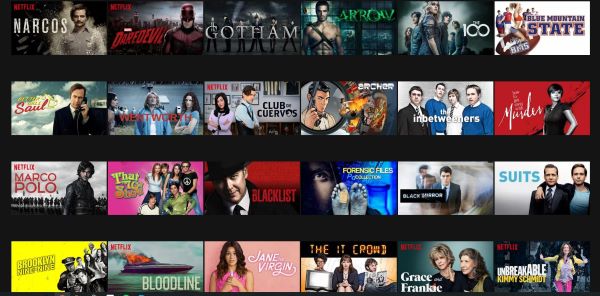
    AI-powered personalization campaigns

    What they did:

    Modern brands are using AI to create thousands of content variations automatically. Netflix’s thumbnail system displays different images based on a user’s viewing history. Spotify’s DJ feature creates personalized radio shows with AI voice commentary about your music taste.

    Why it worked:

    • Individual relevance: Each user sees optimized content
    • Scalability: Impossible to create manually
    • Testing: Continuous optimization through data
    • Engagement: Personalized content increases interaction
    • Retention: Users feel understood and valued

    Do it your way:

    1. Start with one variable (headline, image, or CTA)
    2. Create rules-based variations before full AI
    3. Test with small segments first
    4. Measure engagement differences carefully
    5. Expand gradually to more personalization
    6. Maintain brand consistency across variations

    23. Voice-activated interactive content: The Hands-free future

    What they did:  

    Brands are creating voice-first experiences for smart speakers and voice assistants. Nestle’s GoodNes offers cooking guidance through Sayla Thompson. Users can ask questions while cooking and receive step-by-step instructions without needing to touch a screen.

    Why it worked:

    • Convenience: Hands-free during activities
    • Accessibility: Inclusive for various abilities
    • Novelty: Early adopters love new formats
    • Utility: Solved real problems (messy hands while cooking)
    • Data collection: Learned actual user questions and needs

    Do it your way:

    1. Identify hands-busy moments in the customer journey
    2. Create voice-first content, not voice-added
    3. Design for conversation, not monologue
    4. Keep interactions short and purposeful
    5. Provide visual fallbacks when needed
    6. Test with real users in real contexts

    Conclusion

    These 23 best content marketing examples prove one thing: successful content marketing in 2025 isn’t about creating more content. Instead, it’s about creating content that matters.

    If Backlinko’s evolution inspires you, HubSpot’s educational empire, or LinkedIn’s gaming strategy, the key principles remain the same:

    • Solve real problems for your audience
    • Be consistent in your publishing
    • Measure everything and optimize based on data
    • Don’t be afraid to try new formats
    • Focus on building trust before driving sales

    The digital marketing content examples we’ve explored demonstrate that every business, whether B2B or B2C, large or small, can create content that resonates with its target audience. 

    You don’t need Reddit’s budget or Apple’s brand power. You need to understand your audience, consistently deliver value, and evolve based on what works.

    Frequently asked questions

    What are the best B2B content marketing examples?

    Top B2B examples include 
    – McKinsey’s case studies, which have shown 40% cost reductions; 
    – LinkedIn’s “95-5 Rule” research, which changed industry thinking;
    – IBM’s white papers, which generate over 50,000 leads annually.
    – HubSpot’s educational blog, featuring free templates.
    – Drift’s daily newsletter, which achieves 47% open rates.

    How do I start content marketing with no budget?

    Start with free platforms like Medium or LinkedIn. You can also create user-generated content campaigns using branded hashtags. To keep costs low, try free tools such as Contentpen’s basic plan. Repurpose your existing content into new formats so you get more use out of it. Finally, focus on one content type until you master it, and then expand into others.

    What are interactive content marketing examples?

    Interactive content examples include:
    – HubSpot’s Website Grader (analyzed 4M sites, generated 500K leads)
    – Mortgage calculators (12,000 qualified leads)
    – NYT’s Wordle (31M monthly users)
    – LinkedIn’s professional games (80M plays)
    – AI-powered personalization like Netflix’s dynamic thumbnails.

  • How to start a blog? 8 steps, platforms, and a checklist

    How to start a blog? 8 steps, platforms, and a checklist

    Many people dream of starting a blog, but they never take the first step. The problem is simple: they don’t know where to begin. Should you focus on design first, or content?

    If you don’t have a clear plan, you might waste weeks setting things up the wrong way, choosing the wrong platform, getting stuck with a bad domain name, or writing content that no one reads. 

    That frustration can kill your motivation before your blog has a chance to grow!

    The good news is, blogging doesn’t have to be complicated. With the right steps, you can set up a blog that looks professional, reaches the right audience, and even earns money over time.

    In this guide, I’ll walk you through everything from choosing your niche to publishing your first post, so you can launch your blog with confidence.

    Let’s begin with the steps!

    How to start a blog

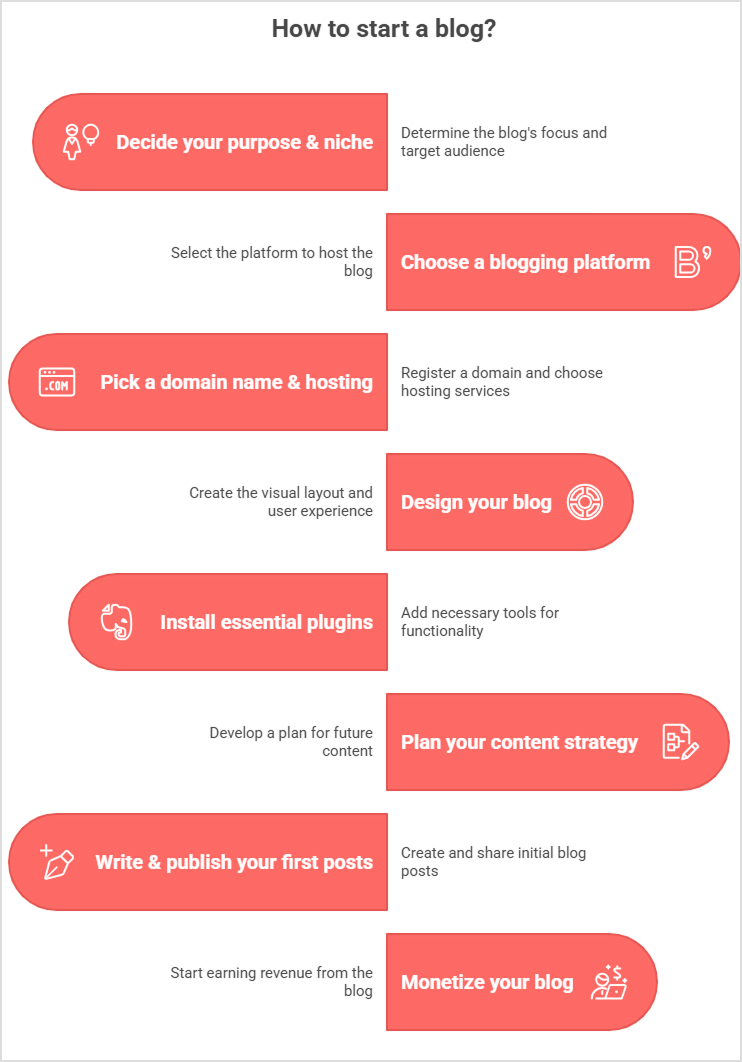
    Step 1: Decide your purpose and niche

    Before getting into the technical setup, it is important to have clarity about your blog’s purpose to build a solid foundation and ensure success. Your purpose acts as your North Star, guiding every decision from content creation to monetization strategies.

    Start by asking yourself: 

    • What do you want to achieve with your blog? 
    • Are you looking to establish yourself as an industry expert, share personal experiences, build a community around shared interests, or generate income? 

    Your primary goal will influence everything from your content strategy to your chosen platform.

    Choose a specific niche

    Once you’ve defined your purpose, narrow down your niche, which is the specific topic or area you’ll focus on. 

    A well-defined niche helps you:

    • Attract a targeted audience more effectively
    • Establish authority faster in your chosen field
    • Compete more effectively against broader, general blogs

    Instead of writing about “health,” consider focusing on “plant-based nutrition for busy professionals” or “mental health strategies for entrepreneurs.”

    Research your chosen niche thoroughly. You can use tools like Google Trends, Reddit, and industry forums to understand what your potential audience discusses, what problems they face, and what content gaps exist. 

    This research will inform your content marketing strategy and help you create valuable, sought-after content from day one.

    Moreover, you should consider the long-term sustainability of your niche. Choose something you’re genuinely passionate about or have expertise in, as you’ll be creating content consistently for months or years to come.

    The intersection of your interests, knowledge, and market demand creates the sweet spot for a successful blog niche.

    Step 2: Choose a blogging platform

    Selecting the right blogging platform is crucial for your blog’s success and growth potential. Your choice affects everything from design flexibility and SEO capabilities to monetization options and long-term scalability.

    Some of the popular options are:

    WordPress.org

    WordPress.org

    WordPress.org stands as the most popular choice, powering over 40% of all websites. It offers complete ownership, unlimited customization through themes and plugins, and effective SEO features. However, it requires separate hosting and has a steeper learning curve than hosted solutions.

    Self-hosted platforms

    For beginners seeking simplicity, hosted platforms like WordPress.com, Wix, or Squarespace provide user-friendly interfaces with built-in hosting. These platforms handle technical maintenance but limit customization and often restrict monetization options on their free plans.

    Medium

    Medium

    Medium offers an excellent platform for writers who prioritize content over customization. It has a built-in audience and an easy-to-use interface, making it great for sharing ideas and networking, but you give up some control over design and monetization.

    Ghost

    Ghost

    Ghost focuses specifically on publishing and offers a clean, distraction-free writing experience. It’s gaining popularity among professional bloggers and publications who want WordPress-level control without the complexity.

    Consider your technical comfort level, budget, growth plans, and monetization goals when making your choice. Most successful long-term bloggers eventually migrate to self-hosted WordPress for maximum control and growth potential.

    Step 3: Pick a domain name and hosting

    Your domain name serves as your blog’s digital address and brand identity, making it one of your most important early decisions. A strong domain name should be memorable, relevant to your niche, and professional in appearance.

    An ideal domain name should be:

    • Short, ideally under 15 characters
    • Avoid hyphens, numbers, or complex spellings that users might forget or mistype.
    • Incorporate your main keyword when possible, but don’t sacrifice memorability for SEO. For example, “healthycookingmom.com” works better than “healthy-cooking-recipes-for-busy-mothers.com.”

    Choose a .com extension whenever possible, as users expect it and it carries the most authority. However, niche-specific extensions like .blog, .tech, or country-specific ones can work if your preferred .com isn’t available.

    You can also use domain name generators like Namecheap, GoDaddy, or Domain.com to check availability and get suggestions. Before finalizing, ensure the corresponding social media handles are available to maintain brand consistency across platforms.

    Hosting

    For hosting, prioritize reliability, speed, and customer support over the cheapest option. Bluehost, SiteGround, and WP Engine offer beginner-friendly WordPress hosting with one-click installations and reliable uptime. Look for features like SSL certificates, daily backups, and staging environments.

    Cost

    Generally, you can expect to spend $10-$15 annually for your domain and $50-$150 annually for quality shared hosting. This investment in reliable infrastructure pays dividends in site performance, user experience, and search engine rankings.

    Step 4: Design your blog

    Your blog’s design creates the first impression visitors have of your brand and content. A clean, professional design builds trust, while a cluttered or outdated appearance drives readers away before they engage with your content.

    Entertainment blogs

    So, you should choose a responsive theme that looks great on all devices, as over 60% of web traffic comes from mobile devices. Free themes from WordPress.org or premium options from ThemeForest provide excellent starting points. Overall, you should prioritize simplicity, fast loading times, and SEO optimization over flashy features.

    Focus on user experience by creating intuitive navigation, clear typography, and logical content hierarchy. Use white space effectively to avoid overwhelming visitors, and ensure your most important content and calls-to-action are prominently displayed.

    Branding

    Customize your theme to reflect your brand personality through color schemes, fonts, and imagery. Create a cohesive visual identity that reinforces your niche and appeals to your target audience. 

    Food blog - Contentpen.ai

    For example, professional food blogs might use warm, appetizing colors, while tech blogs often favor clean, modern designs with cooler tones.

    Remember that good design supports your content rather than overshadowing it. The goal is to create an environment where readers can easily consume and enjoy your writing while developing trust in your expertise and brand.

    Step 5: Install essential plugins (Option step for WordPress users)

    WordPress plugins extend your blog’s functionality without requiring coding knowledge. These plugins are great for creating a professional, feature-rich website. However, too many plugins can slow your site. That’s why it’s smart to focus only on the essentials.

    Here are the must-haves:

    SEO plugins

    • Install Yoast SEO or Rank Math to handle on-page SEO.
    • These tools help with meta descriptions, XML sitemaps, and content analysis.
    • They guide you in structuring posts for maximum visibility.

    Security plugins

    • Add Wordfence or Sucuri to protect against malware, brute-force attacks, and other threats.
    • They provide regular scans and login protection, which are crucial for safeguarding your blog’s reputation.

    Caching plugins

    • Use WP Rocket, W3 Total Cache, or WP Super Cache to speed up your site.
    • Faster loading times improve both user experience and search engine rankings.

    Backup plugins

    • Tools like UpdraftPlus or BackWPup automatically save copies of your site.
    • This protects against server crashes, hacking, or accidental deletions.

    Some of the other useful plugins can be:

    • Social sharing plugins for easy content promotion.
    • Contact form plugins to stay connected with readers.
    • Analytics integrations (like Google Analytics) to track performance.

    Pro tip: Keep your site lean. Regularly update plugins, remove unused ones, and remember that even deactivated plugins can pose security risks.

    Step 6: Plan your content strategy

    A well-planned content strategy turns random blog posts into a cohesive system that builds authority, engages readers, and drives consistent traffic. Your strategy should align with your blog’s purpose while addressing your audience’s needs and pain points.

    This process includes:

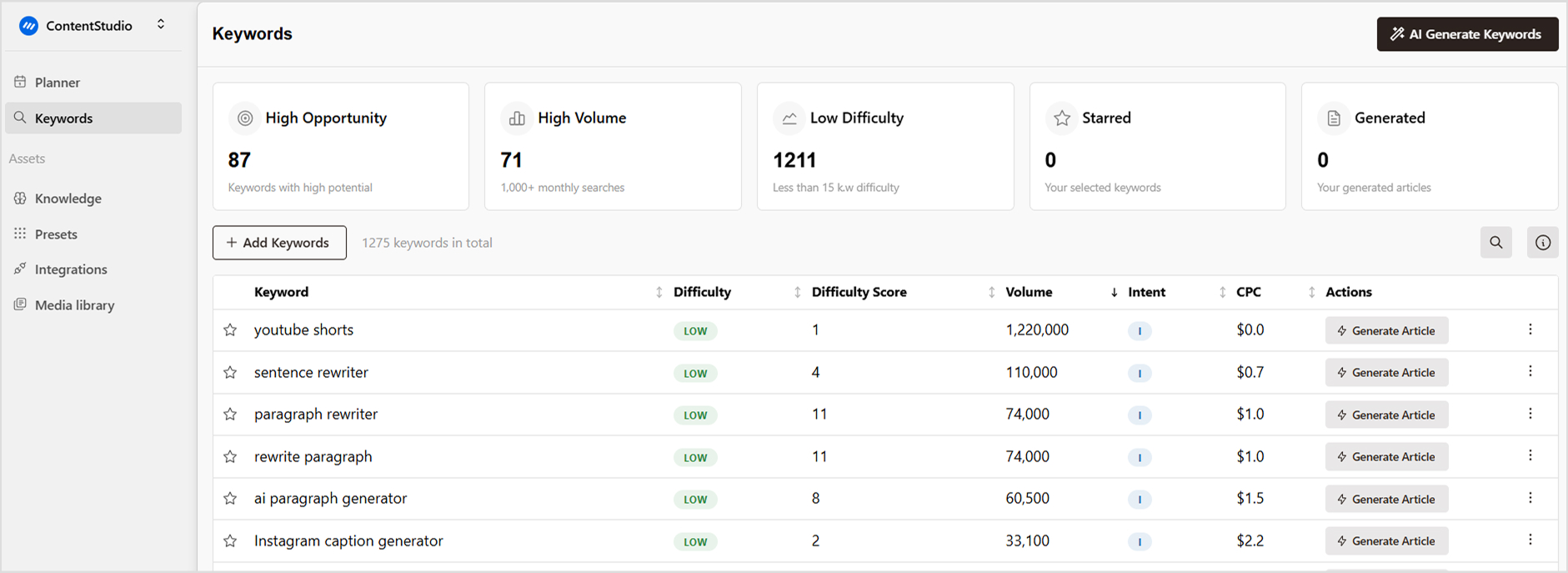
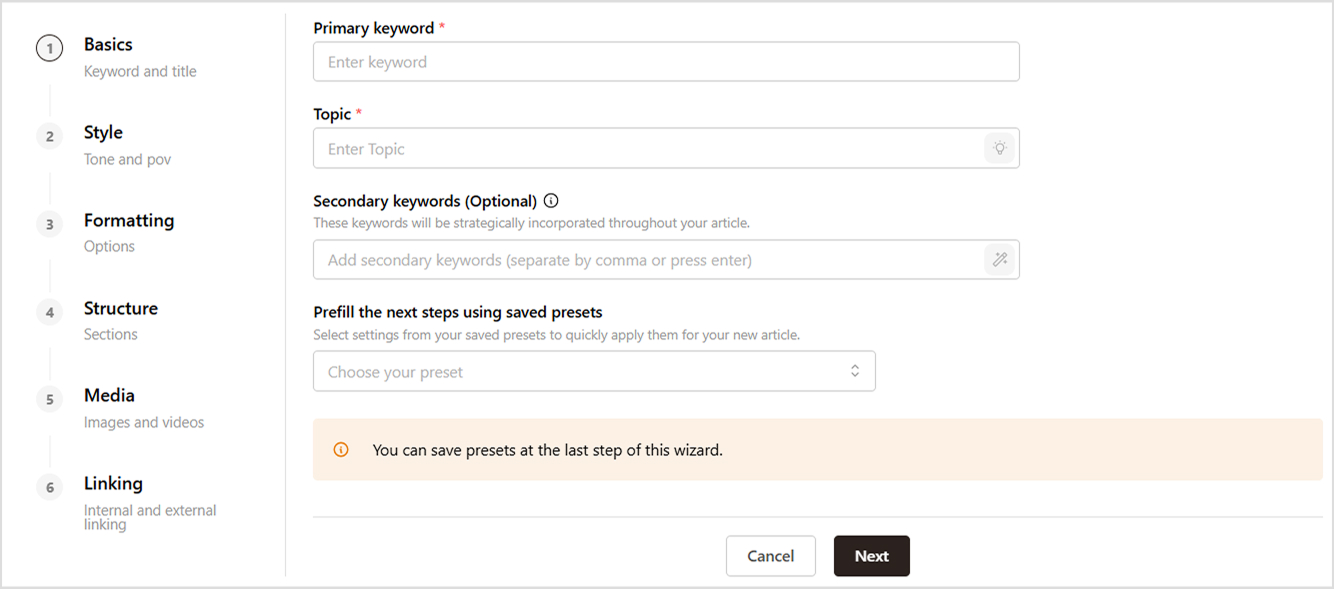
    Conduct keyword research

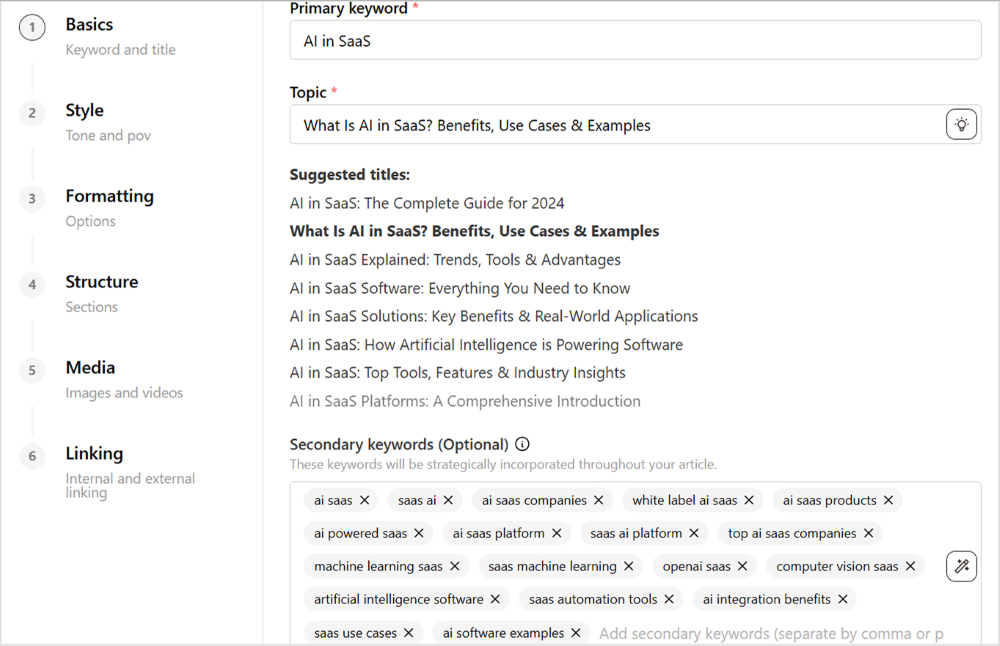
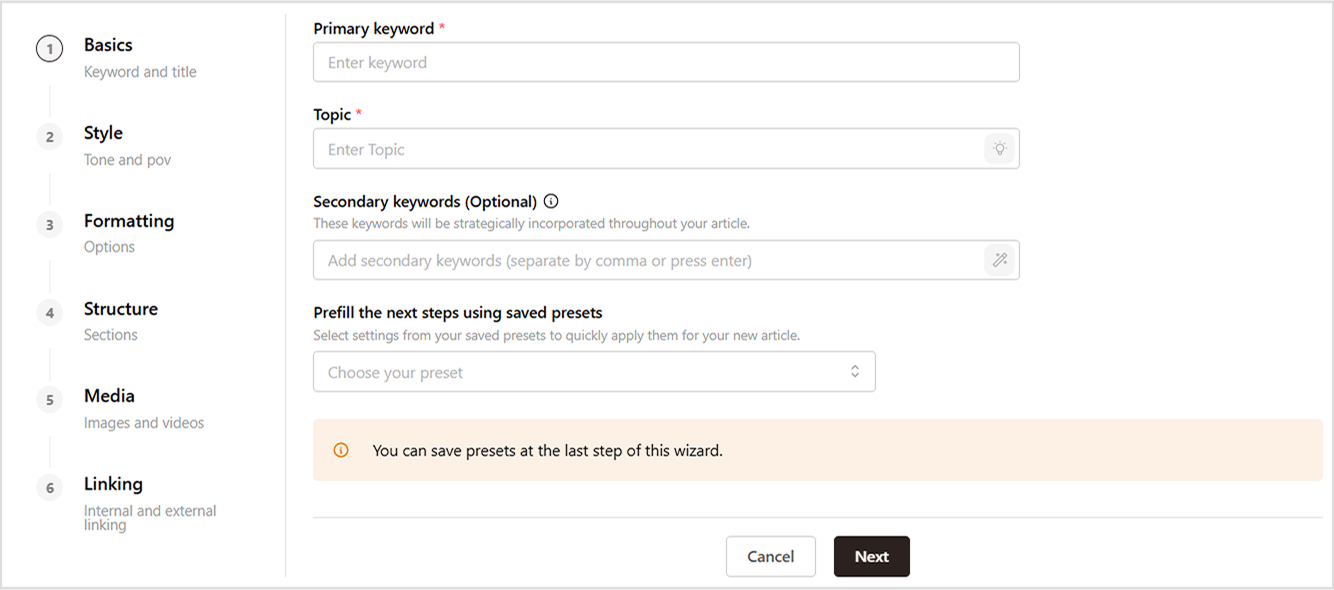
    Start by conducting keyword research to identify topics your audience searches for. Use tools like Google Keyword Planner, Ubersuggest, or Contentpen to find relevant keywords with good search volume and manageable competition. Focus on types of keywords that match your expertise and audience intent.

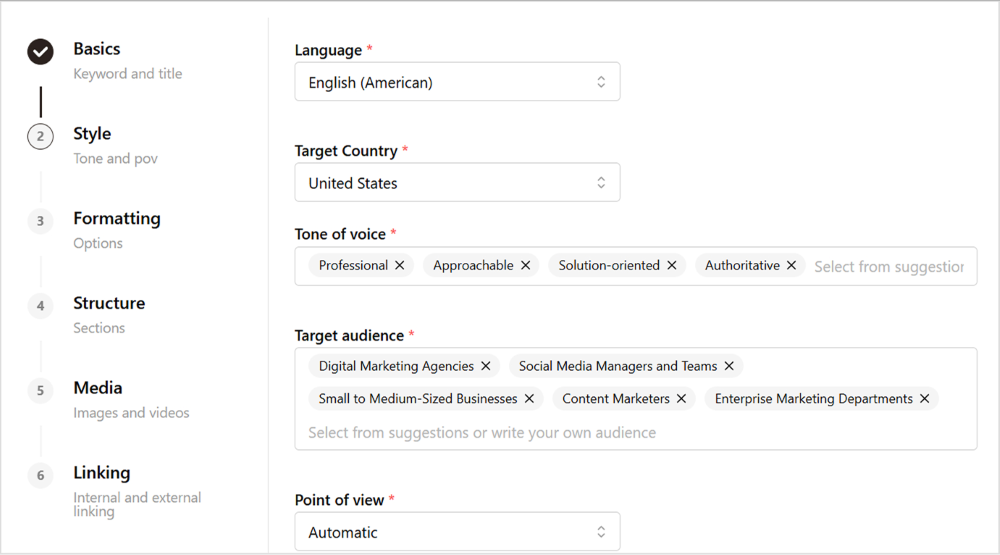
    Select your keyword and title

    Create content pillars

    Create content pillars. These are broad topic categories that involve your niche and serve as the foundation for multiple posts. For a personal finance blog, pillars might include budgeting, investing, debt management, and side hustles. Each pillar should generate dozens of specific post ideas.

    Create a content calendar

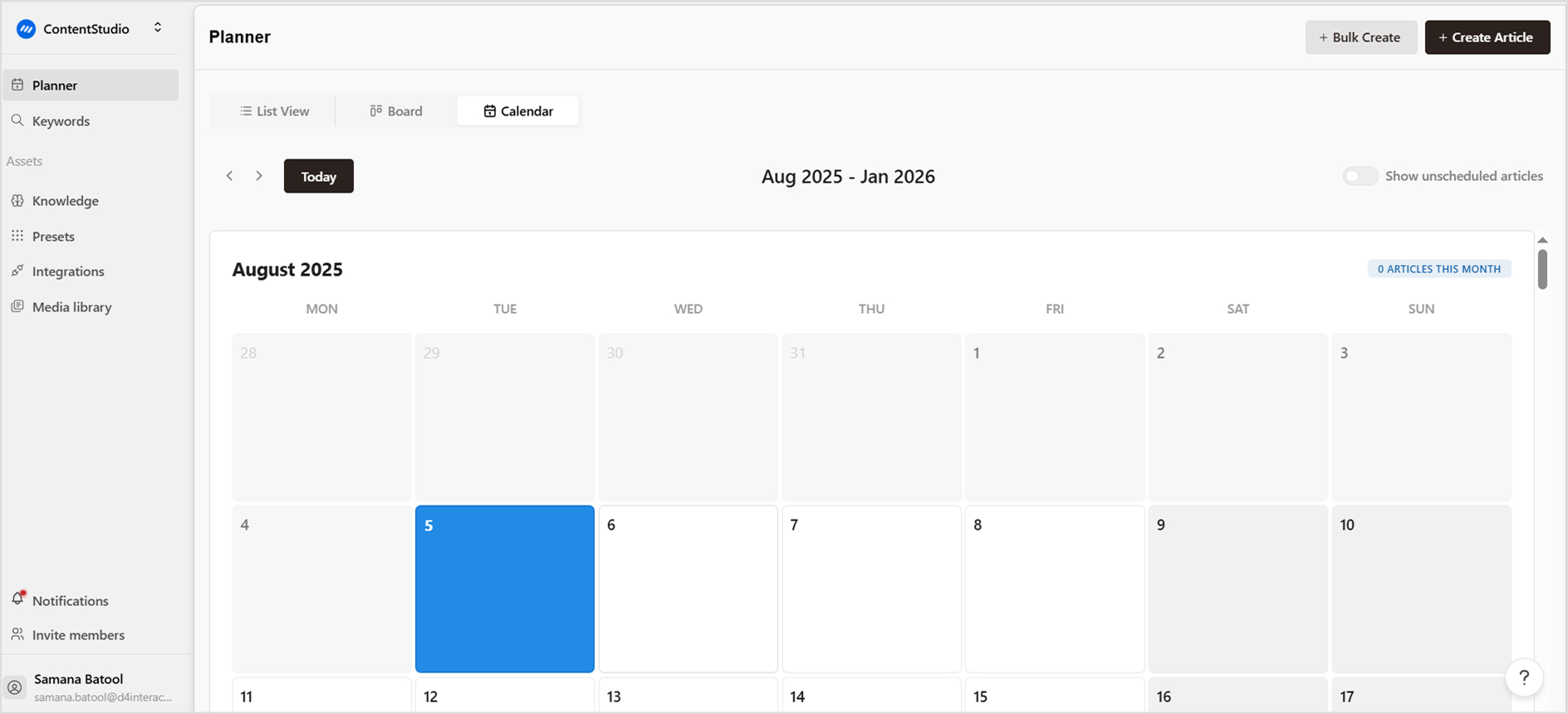
    Develop an editorial calendar to maintain consistency and plan seasonal or trending content. Tools like Trello, Asana, or Contentpen help organize your content pipeline, from initial ideas through publication. Consistency builds reader expectations and improves search engine rankings.

    built-in content calendar

    Plan a mix of content types to keep your blog engaging. Include how-to guides, listicles, case studies, personal stories, and industry news commentary. Different formats appeal to various learning styles and sharing preferences across social media platforms.

    Pro tip: Even the best blog post won’t perform if no one sees it. Treat promotion as part of the content creation process, not an afterthought.

    Step 7: Write and publish your first posts

    Your first blog posts set the tone for your entire blog and provide the foundation for building an audience. Focus on creating high-quality, valuable content that showcases your expertise and helps readers solve real problems.

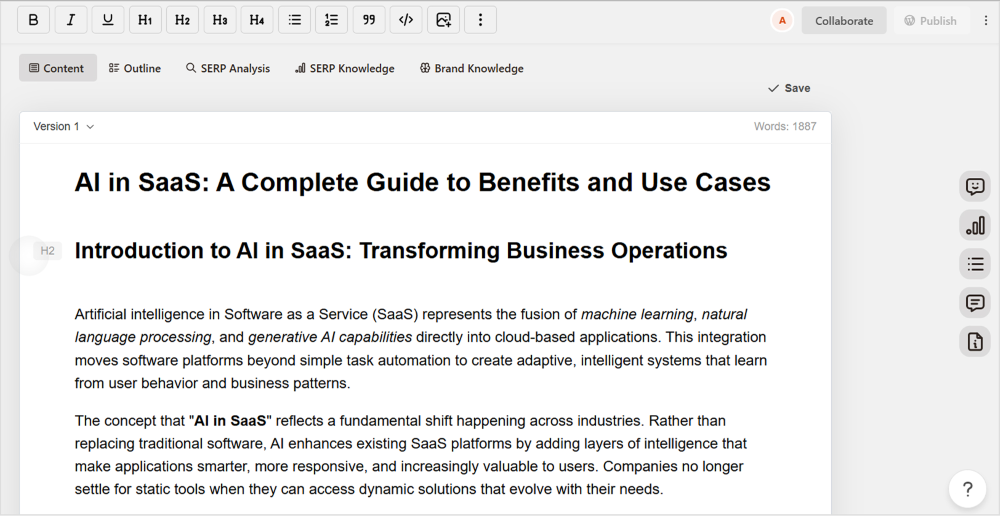
    Refine and finalize your blog post

    The key things to keep in mind while publishing blog posts are:

    • Start with pillar posts as these are comprehensive, authoritative articles on core topics within your niche. These substantial pieces (1,500-3,000+ words) demonstrate your knowledge depth and often become your most-shared and highest-ranking content. 
    • Learn how to format a blog post effectively using headers, bullet points, images, and white space to create scannable, engaging content. 
    • Write compelling headlines that combine curiosity with clear value propositions. Your headline often determines whether someone clicks on your post in search results or social media feeds.
    • Optimize each post for search engines by naturally incorporating your target keywords, writing meta descriptions, and following the on-page SEO checklist.
    • Publish consistently from the start, even if it’s just once per week. Regular publishing builds reader expectations, improves search engine indexing, and gives you practice refining your writing voice and style.

    Overall, you don’t have to aim for perfection with early posts. Instead, your primary focus needs to be on providing value and improving with each publication. 

    Step 8: Monetize your blog (when ready)

    Blog monetization should align with your audience’s needs and your blog’s natural evolution. Rushing into monetization often backfires, but planning for it from the beginning helps you build the right foundation for future income streams.

    Here are some of the popular methods to monetize blogs:

    • Affiliate marketing via Amazon Associates, ShareASale, and niche-specific affiliate programs to earn commissions on sales generated through your recommendations. 
    • Display advertising through Google AdSense provides passive income based on your traffic levels. While earnings start small, they grow substantially with increased page views. 
    • Selling digital products like ebooks, online courses, or templates that directly address your audience’s pain points. 
    • Sponsored content and brand partnerships become viable options once you’ve built a substantial, engaged audience. 
    • Coaching or freelance services use your blog’s content to demonstrate expertise and attract clients. Many bloggers use their platforms as marketing tools for higher-value service offerings.

    Remember that optimized content marketing focused on value creation typically generates more sustainable income than aggressive monetization efforts.

    Pre-blog launch checklist – Things to do before launching your blog

    Before announcing your blog to the world, complete this comprehensive checklist to ensure everything functions properly and creates the best possible first impression for new visitors.

    Technical setup

    First, you need to set up the technical backbone of your blog. Verify that your domain redirects correctly, test all internal links, and check site speed with tools like Google PageSpeed Insights or GTmetrix, aiming for under three seconds. 

    check pagespeed

    Don’t forget to install Google Analytics and Search Console and secure your site with an SSL certificate, and confirm that your blog looks great on mobile devices.

    Design and pages

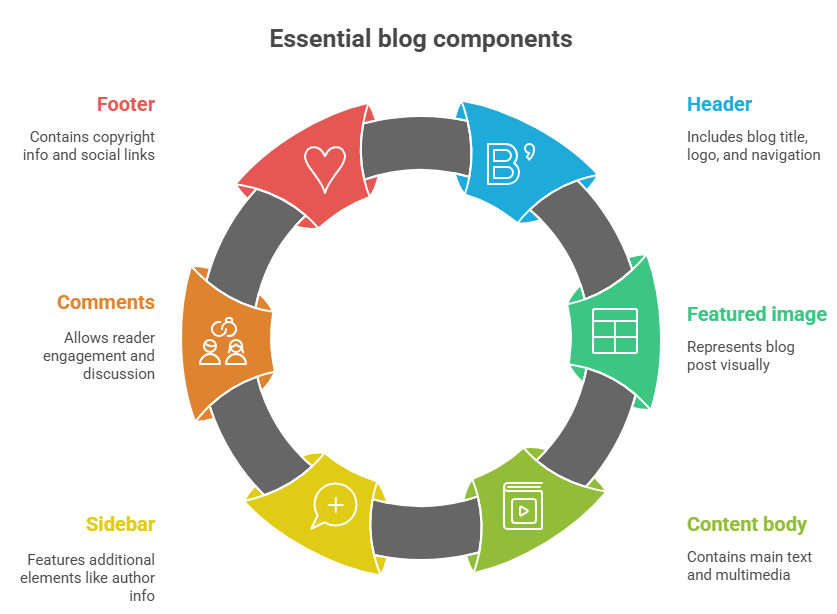
    Next, focus on your design and core pages. Create an About page that tells your story, a Contact page for easy communication, and legal must-haves like Privacy Policy and Terms of Service. Such pages are typically included in the footer section of the blog. 

    Design and pages

    A professional logo or header adds personality, while a clear navigation menu makes browsing intuitive. Finally, integrate social media icons and sharing buttons to make your content easy to spread.

    Niche blogs - Contentpen.ai


    Content preparation

    A blog without content is like a store with empty shelves. Write and publish at least 5–10 quality posts before launch so visitors have plenty to explore. Keep the momentum going with an editorial calendar for your first month, and prepare an email opt-in incentive like a free guide or checklist to start growing your list from day one.

    SEO basics

    seo basics

    If you want readers to find your blog, SEO is non-negotiable. Submit your XML sitemap to Google Search Console, optimize your homepage title and meta description, and research long-tail keywords for each of your first posts. A little SEO prep now pays off in consistent organic traffic later.

    Branding and marketing prep

    Think beyond your blog. Secure your blog name as usernames across major social media platforms, even if you don’t plan to use them immediately. Build simple but professional profiles with consistent branding, and start joining online communities or forums in your niche. This helps you establish credibility and understand your audience better.

    Final testing before launch

    Final testing before launch

    Finally, put your blog through a pre-launch test run. Proofread every post for grammar and accuracy, test all contact and opt-in forms, and check that your blog looks right in Chrome, Firefox, Safari, and Edge. Run a backup test to ensure your site can be restored if needed. 

    What should you blog about?

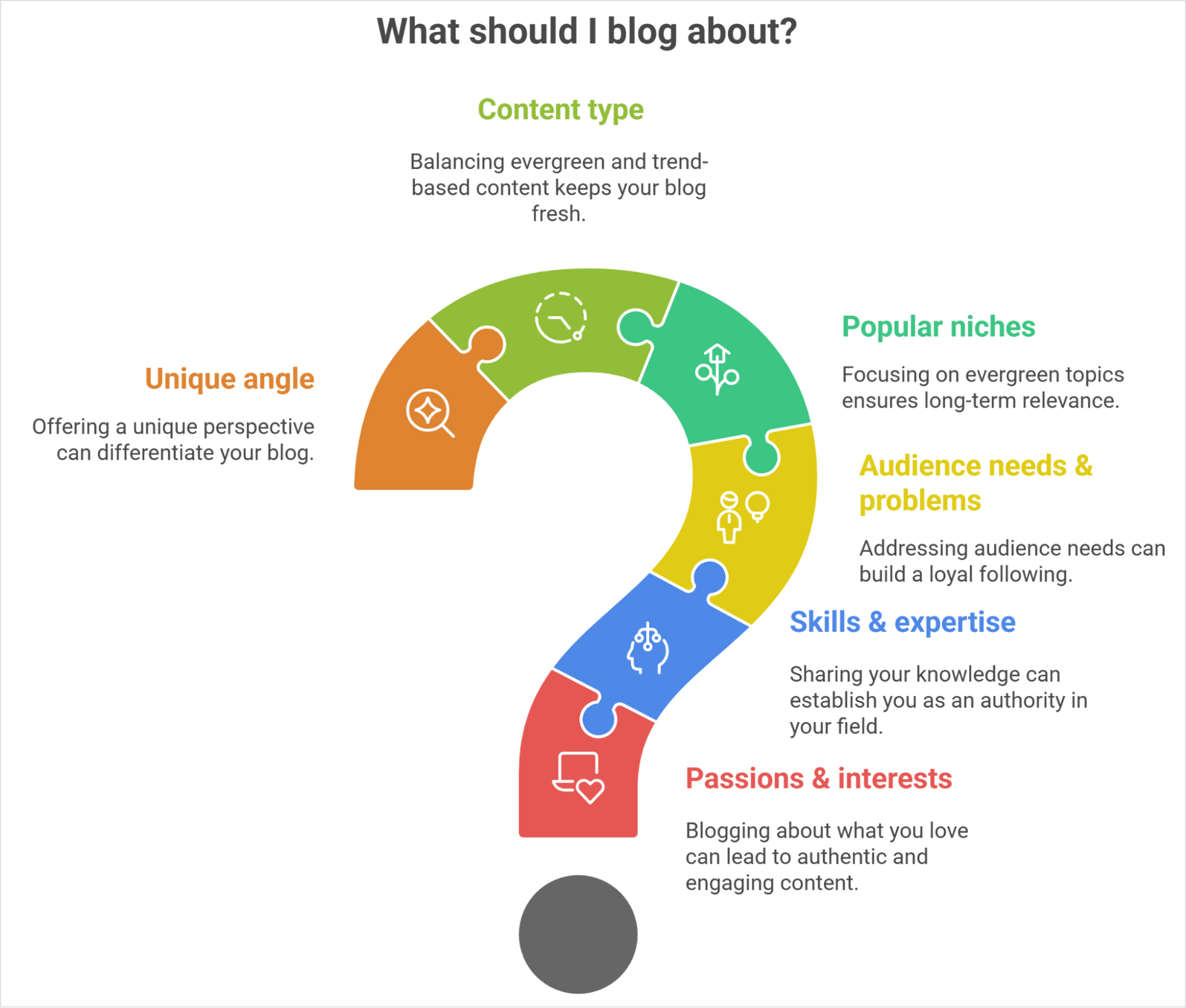
    Choosing the right topics for your blog determines whether you’ll attract engaged readers or struggle to find an audience. The best blog topics are often the combination of the intersection of your passions, expertise, and market demand.

    What should you blog about

    Here are the key aspects you need to consider while deciding on your blog topic:

    Your passions and interests

    Writing about topics you’re genuinely passionate about makes content creation enjoyable and sustainable long-term. Passion shows through in your writing, creating more engaging and authentic content that resonates with readers.

    • Tap into your true interests: Think about hobbies you could discuss for hours, causes you deeply care about, or lifestyle changes that have shaped your life. Enthusiasm draws in like-minded readers.
    • Find in-depth topics: You’ll need enough substance to run a full-fledged blog. Test yourself by brainstorming 50 potential blog topics. If you can’t get past 20, consider broadening your niche.
    • Document your learning journey: You don’t have to be an expert. “Beginner teaching beginners” blogs are often successful because readers appreciate honesty and relatable perspectives over inaccessible, expert-only advice.

    Takeaway: Passion gives your blog heart, but pairing it with depth and consistency ensures it has staying power.

    Your skills and expertise

    Your professional expertise gives you instant credibility and a rich source of content ideas. This includes your career experience, education, and skills that provide genuine value to your readers.

    • Look beyond the obvious: An accountant doesn’t have to stick to taxes. They could write about personal finance, small business management, or productivity systems.
    • Spot trends in your field: Emerging industry changes are perfect topics, such as the impact of AI in your chosen niche. 
    • Value grows with time: You don’t need to be the top expert to add value. Often, someone just a step ahead in the journey explains things more clearly than someone far advanced.

    Takeaway: Your expertise isn’t just knowledge, but a bridge between what you know and what your audience needs.

    Audience needs and problems

    The most successful blogs solve specific problems for clearly defined audiences. To find the right content opportunities, you need to understand your readers’ pain points, questions, and goals.

    • Listen to what people are asking:  Use tools like AnswerThePublic, Reddit, Quora, and niche forums to find real questions in your space. 
    • Survey your network: Ask colleagues, friends, or social media followers about their biggest challenges related to your expertise. 
    • Study your competitors: Look at what’s already working for successful blogs in your niche, then identify what’s missing. Gaps in their content, unanswered questions, or underserved audiences are opportunities for you to stand out.

    Takeaway: When your blog becomes the place that answers real problems, readers keep coming back as they’ll trust you more with each solution.

    Focus on evergreen topics

    Evergreen topics maintain consistent demand because they address fundamental human needs and interests. Choosing one of these niches gives your blog staying power and long-term traffic.

    • Personal finance: Money management never goes out of style. This includes budgeting, debt reduction, investing, or side hustles.
    • Health and wellness: Instead of broad advice, narrow in on niches like workouts for busy professionals, fitness for seniors, or budget-friendly home gyms.
    • Personal development: Topics like productivity, mindfulness, goal-setting, and skill-building stay popular while allowing space for new trends and research.
    • Food and nutrition: Evergreen and highly visual topics, covering keto, vegan, gluten-free, budget-friendly meals, or cultural cuisines that perform well on social media.
    • Career and parenting: Both niches attract consistent demand, from job skills and work-life balance to parenting hacks and family tips.
    • Home and lifestyle: DIY projects, home improvement, and lifestyle upgrades inspire broad audiences while offering practical, evergreen advice.
    • Technology and how-tos: Tech content succeeds when it’s practical, guides, tutorials, and product reviews often outperform general tech news.

    Takeaway: Evergreen niches guarantee consistent demand, but your edge comes from choosing a specific angle or underserved audience within them.

    Evergreen vs. trend-based content

    Not all blog posts serve the same purpose. Some should stand the test of time, while others ride the wave of current events. Striking the right balance between evergreen and trend-based content keeps your blog both relevant and reliable.

    Evergreen contentTrend-based content
    DefinitionStays relevant for years, addressing timeless needs and interests.Focuses on current events, product launches, or seasonal trends.
    ExamplesHow to budget for beginners, comprehensive guides, and tutorials.2025 budgeting apps, new product reviews, seasonal topics.
    Traffic impactProvides steady, long-term traffic and builds authority.Generates quick traffic spikes but fades over time.
    SEO valueOften becomes cornerstone content, ranking well for years.Ranks fast initially but may lose relevance quickly.
    Content roleForms the foundation of your blog and strengthens credibility.Helps you join industry conversations and stay current.
    Best ratioTypically, 70–80% of content is in evergreen niches.Typically 20–30%, higher in news-heavy industries.

    Takeaway: Balance both types by using evergreen posts as your blog’s backbone while sprinkling in trending topics for timely traffic and engagement.

    Your unique angle

    Differentiation is crucial in competitive blog landscapes. Your unique angle might come from your background, perspective, personality, or approach to common topics.

    • Draw from personal experience: Are you giving business advice as an introvert in an extrovert-focused industry? That contrast instantly makes your voice memorable.
    • Turn challenges into strengths: Writing about minimalism as a parent of four shows authenticity that readers in similar situations can connect with.
    • Use your professional lens: Financial independence tips from a teacher’s perspective feel different from a Wall Street analyst. Both are valuable, but one is more relatable to certain audiences.
    • Embrace your quirks: Your life experiences, demographic background, and personality aren’t distractions, but crucial details that attract readers who resonate with your journey.
    • Add your location: Geographic context adds flavor. Sharing local business insights or cultural perspectives turns universal topics into unique, globally relevant stories.

    Takeaway: Ultimately, your voice is your edge, so you must own it, and you’ll naturally attract the right audience.

    How to choose the right blogging platform?

    Selecting the appropriate blogging platform significantly impacts your blog’s functionality, growth potential, and long-term success. Your choice should align with your technical skills, budget, goals, and future plans.

    Define your goals

    Before you pick a blogging platform, get clear on your “why.” Are you trying to build a personal brand, earn income, share expertise, or simply create a portfolio? Your goals shape the platform that fits you best.

    • Prioritize control and monetization: Professional bloggers often choose self-hosted WordPress. With endless plugins and customization options, it supports advanced features and multiple income streams.
    • Keep it simple for hobbies: If blogging is more about passion than profit, platforms like WordPress.com, Blogger, or Medium remove technical hassles and let you focus on writing.
    • Build authority and connections: Medium is ideal for content creators who want exposure. Its built-in distribution helps new writers get discovered, though customization and audience ownership are limited.
    • Think long term: Switching platforms later can cause traffic dips and technical headaches. Choosing one that can grow with you saves time and effort down the road.

    Consider key features and functionalities

    Before choosing a blogging platform, you should consider these essentials:

    • Ease of use: Platforms like WordPress.com and Wix are beginner-friendly with drag-and-drop editors. Self-hosted WordPress gives more control but requires learning management, plugins, and troubleshooting.`
    • Customization: WordPress.org offers unlimited flexibility with themes, plugins, and custom code. Hosted platforms are simpler but more restrictive, and good for beginners learning how to start a blog.
    • Ownership & control: Self-hosted blogs mean full ownership of your content and audience. Hosted platforms retain certain rights, creating dependency risks if policies change.
    • Cost: Free platforms (WordPress.com, Blogger, Medium) limit features until you upgrade. Self-hosted WordPress costs more upfront (domain, hosting, plugins) but provides full control and earning potential.
    • Scalability: Shared hosting may struggle with traffic spikes, while cloud-based solutions grow with you. Choose a platform that supports future needs like memberships or online stores.
    • SEO features: WordPress with plugins like Yoast or Rank Math gives advanced optimization. Many hosted platforms restrict SEO controls, which can hurt long-term discoverability.

    Overall, you should think ahead as ease and low cost may work today, but flexibility, ownership, and SEO strength pay off as your blog grows.

    Compare popular blogging platforms

    Let’s compare some of the most popular blogging platforms:

    PlatformUsability CustomizationOwnershipCostBest for
    WordPress.orgModerateUnlimitedFull$100-300+/yearProfessional bloggers, businesses
    WordPress.comHighLimitedPartialFree-$300+/yearBeginners, simple blogs
    WixVery HighModeratePartialFree-$500+/yearSmall businesses, portfolios
    SquarespaceHighModeratePartial$192-624/yearCreative professionals
    MediumVery HighVery LimitedNoneFree-$50/yearWriters, thought leaders
    GhostModerateHighFull$180-2388+/yearPublishers, professionals
    BloggerHighLowPartialFreeHobby bloggers

    Match platform to your needs

    The right blogging platform depends on your goals, skills, and long-term vision:

    • WordPress.org: Best for professionals serious about blogging as a business. Offers full ownership, unlimited customization, and strong monetization options. Requires some tech skills but pays off with complete control.
    • WordPress.com: A simpler entry point with free plans for testing ideas and paid tiers that unlock more flexibility. Great for beginners who want to start without a heavy setup.
    • Wix & Squarespace: Ideal for creatives and small businesses. They make it easy to build beautiful, professional sites with minimal technical effort.
    • Medium: Perfect for writers who want a built-in community and visibility. Focuses entirely on content, though branding and monetization are limited. Migration is often needed as you grow.
    • Ghost: A sleek, modern alternative for serious bloggers. Provides WordPress-level power with a cleaner, simpler interface, great for those frustrated by WordPress’s complexity.

    Pro tip: Start with a platform that matches your current needs, but keep scalability in mind. Many bloggers begin on simple platforms and later migrate to self-hosted solutions as their audience and ambitions grow.

    Bonus tip: Use a combination of Contentpen and WordPress

    When learning how to start a blog, one of the biggest challenges is balancing consistent publishing with SEO optimization. Many beginners get stuck spending hours on keyword research, writing, editing, and formatting, only to see posts that never rank or bring traffic.

    That’s where Contentpen, our AI blog writer, comes in. It improves your blogging process by helping you:

    • Find the right keywords automatically for your niche.
    • Generate high-quality, SEO and GEO-optimized blogs that are plagiarism-free and ready to rank.
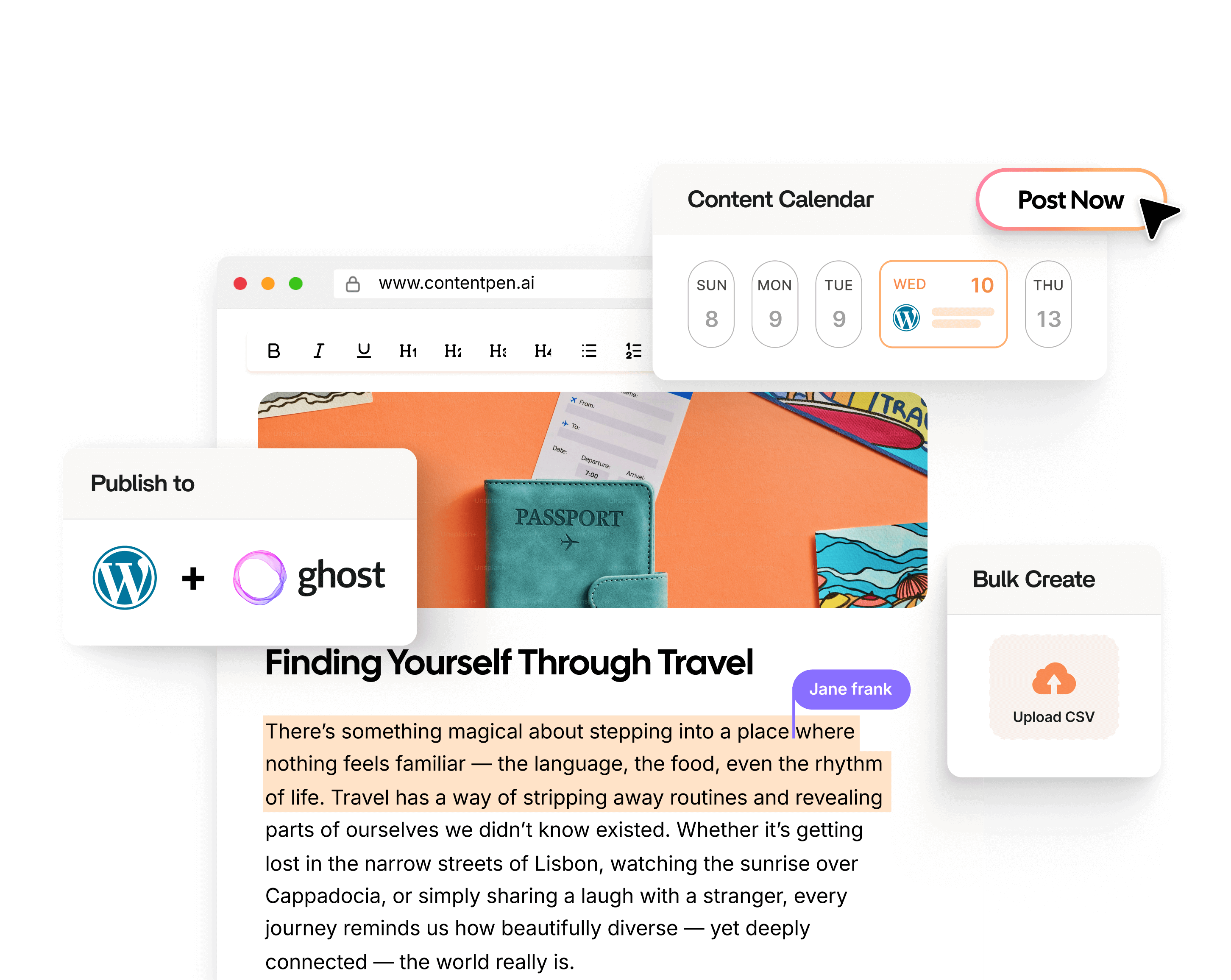
    • Publish directly to WordPress with one click without any copy-pasting or manual formatting.
    • Plan months of content in advance with an AI-driven editorial calendar.
    • Scale effortlessly with bulk blog generation, AI images, and continuous optimization.

    Unlike manual blogging, where you juggle multiple tools and still struggle to grow, Contentpen gives you one streamlined platform to write, rank, and scale. And when combined with WordPress’s flexibility, you get both powerful publishing control and consistent traffic growth on autopilot.

    Conclusion

    In short, learning how to start a blog in 2025 is all about building a strong foundation, making smart choices, and staying consistent. You’ll need to define your purpose and niche, pick the right platform, and secure a domain and hosting. 

    From there, design your blog with user experience in mind, install essential plugins, and create a content strategy that blends keyword research, evergreen topics, and audience-driven posts. Once you’ve built trust and traffic, you can explore monetization methods like affiliate marketing, ads, digital products, or services.

    Before launch, a checklist ensures your blog looks professional and functions smoothly. Moreover, to make blogging easier, try out tools like Contentpen to automate keyword research, content creation, and publishing. 

    With the right balance of planning, creativity, and consistency, starting a blog becomes not just achievable but a rewarding path toward authority, community, and even income.

    Frequently asked questions

    How to start a blog for free?

    Use platforms like WordPress.com, Blogger, or Medium for free blogging. WordPress.com offers basic features with limited customization, while Medium allows immediate publishing without setup. Focus on consistent, quality content before upgrading to paid features.

    How to start a blog for fun?

    Choose topics you’re passionate about and use simple platforms like WordPress.com or Wix. Don’t worry about SEO or monetization, but focus on enjoying the creative process. Set realistic posting schedules and engage with like-minded bloggers.

    How to start a blog on Instagram??

    Create a business account, choose a clear niche, and develop consistent visual aesthetics. Use Stories for real-time content, highlights for evergreen topics, and strategic hashtags. Engage actively through comments and direct messages to build relationships.

    How to start a blog on Reddit?

    Participate in relevant subreddits by providing valuable, helpful content rather than promotional posts. Build credibility through consistent contributions, follow the 9:1 rule (nine helpful posts per promotional post), and consider hosting AMAs to showcase expertise.

    Is blogging dead due to AI?

    Blogging remains alive and valuable. While AI generates content quickly, readers crave authentic human perspectives, personal experiences, and genuine expertise. Smart bloggers use AI as a tool while focusing on uniquely human values like original insights and authentic connections.

    Can you make $1000 a month blogging?

    Yes, but it typically takes 12-24 months of consistent effort. Combine multiple income streams: affiliate marketing ($300-400), display ads ($200-300), and digital products ($300-500). You’ll need approximately 25,000-50,000 monthly page views and an engaged audience.

    What is the easiest blog to make?

    Use hosted platforms like WordPress.com, Wix, or Medium that handle technical aspects automatically. Medium is simplest for immediate publishing, while WordPress.com balances ease with functionality. Choose topics you already know well to minimize research time.

    What is the difference between a blog and a vlog?

    Blogs use written content while vlogs focus on video. Blogs require writing skills and SEO knowledge, are easily searchable and scannable. Vlogs need video production skills and on-camera presence, create personal connections, but are less searchable than text.

    How do I name my blog?

    Balance memorability, relevance, and brandability. Include keywords when possible, but prioritize brand identity. Test names with your target audience, ensure they clearly communicate your niche, and check domain and social media handle availability before finalizing.

    What do you do if your domain name is taken?

    Try different extensions (.blog, .net), modify slightly by adding “blog” or “hub,” or use your name with a niche. Use domain generators for alternatives, check if the current owner will sell, or start with an alternative and rebrand later when successful.

  • What is blogging? The ultimate guide

    What is blogging? The ultimate guide

    Should I start my own blog? Is blogging dead? Can I get paid for blogging? What does blogging even mean in this age of AI? 

    These are some of the most common questions associated with blogging, and we’ll be answering all of them in detail to understand what blogging is.

    Blogging has changed a lot over the years, from simple online diaries to powerful business tools that can transform careers, build communities, and generate substantial income. So, it is common for many people to ask what is a blog or what is blogging and how does it works. These are the core questions that we’ll be discussing in detail in this article. 

    What is blogging?

    Blogging is the practice of creating, publishing, and maintaining a blog, which is a regularly updated website or web page that features content in reverse chronological order. Originally derived from “weblog,” blogging has become one of the most popular forms of content creation on the internet.

    At its core, blogging involves sharing information, opinions, experiences, or expertise through written content, images, videos, and other multimedia elements. 

    It’s a dynamic form of communication that allows individuals and businesses to connect with their audience, share valuable insights, and establish authority in their respective fields.

    What is a blog?

    A blog is a type of website that displays content in a chronological format, with the most recent posts appearing first. Unlike static websites, blogs are dynamic and regularly updated with fresh content. Each piece of content on a blog is called a “post” or “article.”

    Key characteristics of a blog include:

    • Reverse chronological order: Newest content appears at the top
    • Regular updates: Fresh content is published consistently
    • Interactive elements: Comments, social sharing, and engagement features
    • Archive system: Past posts are organized by date, category, or tags
    • RSS feeds: Allow readers to subscribe to updates
    • Personal or editorial voice: Content reflects the blogger’s personality or brand

    Blogs can range from simple personal journals to sophisticated business publications. They can be standalone websites or sections within larger websites. The format and design may vary, but the fundamental structure of time-stamped, regularly updated content remains consistent across all blog types.

    Key components of blogging

    Let’s look at the key components of blogging to understand how blogging actually works:

    • Content management systems (CMS): Most blogs run on platforms like WordPress, Blogger, or specialized blogging software. These systems provide the framework to create, edit, and publish content without requiring extensive technical knowledge.
    • Hosting and domain: Your blog needs a place to live online (hosting) and an address where people can find it (domain name). Some platforms offer free hosting with several limitations, so bloggers typically have to purchase hosting from reputable companies like Hostinger, GoDaddy, or Bluehost. 
    • Content creation workflow: Successful blogging follows a structured approach that includes brainstorming topics and conducting research to writing, editing, and optimizing content for search engines. Using tools for SEO-rich blog content can significantly streamline this process.
    • SEO and visibility: Blogs gain readers through search engines, social media, and direct traffic. SEO has now become a critical part of blogging, as following the SEO best practices, such as an on-page SEO checklist, helps your content reach the right audience.
    • Community building: Successful blogs foster communities through comments, social media engagement, email newsletters, and interactive content. This two-way communication distinguishes blogs from traditional media.

    Related: What is content marketing? A complete guide

    Now that you know about what is blogging and its key components, let’s go through the 8 steps of blogging in detail:

    How does blogging work? 8 simple steps

    Some people, especially beginners, might assume that blogging is only about writing a piece of content. Well, that might have been true long before things like search engine optimization (SEO) and AI overviews became essential parts of logging. 

    Modern-day blogging involves having a strategic plan and following certain steps to create a successful online presence. 

    Let’s discuss all these key steps one by one:

    Step 1: Choosing a purpose & niche

    First, you need to establish a clear purpose for blogging and identify your niche. This foundational step will guide every decision you make throughout your blogging journey.

    Choosing a purpose & niche

    This step involves:

    • Defining your purpose: Ask yourself why you want to blog. Are you looking to share your expertise, build a personal brand, generate income, or simply express your creativity? 
    • Identifying your niche: A niche is a specific topic or area of focus for your blog. Successful blogs often target specific audiences with particular interests or needs. Consider your expertise, passions, and the market demand when choosing your niche.
    • Market research: Before committing to a niche, research your potential competition and audience. Look for gaps in existing content that you could fill with your unique perspective. Tools like Google Trends and keyword research tools can provide useful information about the market trends and demand.
    • Unique value proposition: Determine what makes your blog different from others in your niche. This could be your personal experience, teaching style, visual approach, or specific angle on common topics. 

    Step 2: Setting up the blog

    Once you’ve defined your purpose and niche, it’s time to set up your blog. This technical phase involves several important decisions that will impact your blog’s functionality, appearance, and growth potential.

    Setting up the blog
    • Choose a platform: Select a blogging platform that aligns with your goals and technical comfort level. WordPress.org offers the most flexibility and control but requires more technical knowledge. WordPress.com, Blogger, and other hosted platforms are more beginner-friendly.
    • Domain name selection: Your domain name should be memorable, relevant to your niche, and easy to spell. Avoid hyphens, numbers, and overly complex words. If possible, secure a .com extension as it’s the most trusted and recognized. You can use a free domain or business name generator tool to get interesting ideas.
    • Hosting provider: Choose a reliable hosting provider that offers good performance, customer support, and scalability. Consider factors like loading speed, uptime guarantees, and backup services. 
    • Design and theme: Select a theme that reflects your brand and provides a good user experience. Prioritize mobile responsiveness, fast loading times, and clean design over flashy features. 
    • Essential plugins and tools: Install necessary plugins for SEO, security, backup, and performance optimization. Popular choices include Yoast SEO for search engine optimization, security plugins like Wordfence, and caching plugins to improve site speed.
    • Basic pages setup: Create essential pages like About, Contact, Privacy Policy, and Terms of Service. These pages build trust with visitors and may be required for certain monetization methods or legal compliance.

    Step 3: Create engaging content

    Content creation is the heart of blogging. This is where you transform your ideas into valuable, engaging posts that attract and retain readers. Developing an efficient content creation process is crucial for long-term success.

    Sure, you can write engaging content and optimize it manually. But when it comes to running a blog with consistent output, you should utilize all available tools and technologies like AI to create, optimize, and publish your content. 

    Contentpen is one such AI blog writer online you can use to manage every aspect of your content creation process. Here’s how!

    • Content planning: Develop a content marketing strategy that aligns with your goals and audience needs. Create an editorial calendar to plan topics, keywords, and publishing schedules. This helps maintain consistency and ensures you’re covering relevant topics throughout the year. You can easily create a planner in Contentpen:
    built-in content calendar
    • Research and ideation: Stay informed about trends in your niche and regularly brainstorm new content ideas. Use keyword research tools to identify topics your audience is searching for.  
    Smart keyword suggestions
    • Writing process: Develop a systematic approach to writing. Start with an outline to organize your thoughts, then write your first draft, focusing on getting ideas down without worrying about perfection. 
    • SEO optimization: Use the right type of keywords and implement SEO best practices to help your content rank in search engines. This includes optimizing titles, meta descriptions, headings, and incorporating relevant keywords naturally throughout your content.
    Seo optimization
    • Visual elements: Enhance your posts with images, infographics, videos, or other visual elements. Visual content improves engagement and helps break up text-heavy posts. 
    • Editing and proofreading: Never publish your first draft. Take time to edit for clarity, grammar, and flow. Consider reading your content aloud or using tools like Grammarly to catch errors you might miss during silent reading. You can also edit your content within Contentpen before directly publishing it your connected blog. 
    Refine and finalize your blog post

    Step 4: Publish your optimized content

    Publishing your content effectively involves more than simply hitting the “publish” button. This step requires attention to timing, formatting, and final optimizations to maximize your content’s impact.

    publish your optimized content
    • Optimal publishing times: Research when your audience is most active online and schedule your posts accordingly. While general best practices suggest certain days and times perform better, your specific audience may have different patterns. 
    • Categories and tags: Properly categorize and tag your content to help readers find related posts and improve site navigation. Use categories for broad topics and tags for specific details. Avoid creating too many categories or using irrelevant tags

    • Final SEO check: Before publishing, review your SEO elements, including title tags, meta descriptions, alt text for images, and internal/external links. Ensure your content follow proper blog formatting guidelines for better readability and SEO performance.

    Step 5: Promote and distribute your blogs

    Creating great content is only half the battle, as you need to actively promote your blog posts to reach your intended audience. Some of the effective promotion strategies include:

    • Social media marketing: Share your content across relevant social media platforms where your audience spends time. Each platform requires a different approach, such as LinkedIn for professional content, Instagram for visual posts, and X for quick updates.
    social media marketing
    • Email marketing: Build and nurture an email list by offering valuable content upgrades, newsletters, or exclusive content. Email marketing consistently delivers higher engagement and conversion rates compared to social media promotion.
    • Guest posting: Write guest posts for other blogs in your niche to expand your reach and build backlinks to your site. This strategy helps you tap into established audiences and improve your blog’s SEO through quality backlinks.
    • Influencer outreach: Connect with influencers and other bloggers in your niche. Building relationships can lead to collaboration opportunities, shares, and mentions that expose your content to new audiences.
    • Content repurposing: Transform your blog posts into different formats like videos, podcasts, infographics, or social media carousels. This allows you to reach different audience preferences and extend your content’s lifespan across multiple channels.

    Step 6: Engage your audience

    Building an engaged community around your blog is essential for long-term success. Engaged readers are more likely to return, share your content, and eventually become customers if you’re monetizing your blog.

    Here’s how you can improve audience engagement:

    • Respond to comments: Actively respond to comments on your blog posts. This shows readers that you value their input and encourages further discussion. 
    • Create interactive content: Incorporate polls, quizzes, surveys, and questions in your posts to encourage reader participation. Interactive content generates higher engagement rates.
    • Ensure consistent communication: Maintain regular communication with your audience through multiple channels. This includes consistent blogging schedules, regular email newsletters, and an active social media presence. 
    User generated content
    • User-generated content: Encourage your readers to create content related to your blog or niche. This could include sharing their own experiences, photos, or stories related to your content topics.
    • Feedback implementation: Actively seek and implement feedback from your audience. Conduct surveys, ask for post suggestions, and pay attention to comments and messages. 

    Step 7: Use analytics for consistent growth

    Sustainable blog growth requires consistent effort and strategic thinking. This phase focuses on scaling your content creation, expanding your reach, and building systems that support long-term success.

    Use analytics for conistent growth
    • Analytics and optimization: Regularly review your blog analytics to understand what content performs best, where your traffic comes from, and how visitors behave on your site. 
    • Content consistency: Establish a realistic publishing schedule and stick to it. Whether you post daily, weekly, or monthly, consistency helps build audience expectations and improves your search engine rankings. 
    • Scaling content production: As your blog grows, consider ways to increase content production without sacrificing quality. This might involve using AI for content creation, hiring freelance writers, or creating content in batches during dedicated writing sessions.
    • SEO improvements: Continuously work on improving your blog’s search engine optimization. This includes updating old posts with new information, improving internal linking structures, and targeting new keywords as you identify opportunities.
    • Networking and collaboration: Build relationships with other bloggers, industry experts, and potential collaborators. These connections can lead to guest posting opportunities, joint ventures, and cross-promotion that accelerate your growth.
    • Diversifying content types: Experiment with different content formats to appeal to various learning styles and preferences. This might include video content, podcasts, infographics, or interactive tools related to your niche.

    Step 8: Monetize your blog

    Once you’ve established a consistent readership and built trust with your audience, you can explore various monetization strategies to generate income from your blogging efforts.

    Monetize your blog
    • Advertising revenue: Display ads through platforms like Google AdSense or direct partnerships with relevant brands. While this is often the first monetization method bloggers consider, it typically requires substantial traffic to generate significant income.
    • Affiliate marketing: Promote products or services relevant to your niche and earn commissions on sales generated through your unique affiliate links. Success in affiliate marketing depends on building trust with your audience.
    • Digital products: Create and sell digital products like e-books, online courses, templates, or tools. Digital products often have higher profit margins than physical products and can be sold repeatedly without additional production costs.
    • Sponsored content: Partner with brands to create sponsored posts or reviews. Maintain transparency with your audience by clearly disclosing sponsored relationships, and only work with brands that align with your values and audience interests.
    • Services and consulting: Offer services related to your expertise, such as consulting, coaching, or freelance work. Your blog serves as a portfolio and lead generation tool for your professional services.
    • Membership or subscription models: Create premium content areas, exclusive communities, or subscription-based content for dedicated followers willing to pay for additional value.

    Pros and cons of blogging

    Understanding both the advantages and challenges of blogging helps set realistic expectations and prepare for the journey ahead.

    The following table summarizes the pros and cons of blogging:

    Pros of bloggingCons of blogging
    Starting a blog requires minimal investment compared to traditional businessesRequires significant time investment with slow initial returns
    Complete control over your content, design, and business directionRevenue can be unpredictable, especially early on
    Work from anywhere at any time that suits your lifestyleSaturated markets make it hard to stand out
    Improves writing, marketing, SEO, and technical skillsRequires learning optimization and maintenance skills
    Connects you with like-minded individuals and industry professionalsConstant demand for fresh, valuable content
    Establishes you as an authority in your nicheSearch engine changes can disrupt traffic
    Various monetization options provide income diversificationPressure to stay consistent may cause creative fatigue
    Starting a blog requires minimal investment compared to traditional businessesRequires significant time investment with slow initial returns
    Potential to impact and influence people worldwide
    Blogs can continue generating traffic and income for years
    Unlike social media, your blog is fully yours

    Free blogging platforms

    If you are a complete beginner, you might not want to invest too much into blogging. Therefore, users looking to start blogging without any initial investment can explore several free platforms that offer robust features and user-friendly interfaces, such as:

    WordPress

    WordPress.com is the hosted version of WordPress. It offers a balance between ease of use and functionality. Moreover, it has professional themes, basic customization options, and reliable hosting. 

    Wordpress

    While the free plan includes WordPress branding and limited customization, it’s an excellent starting point for new bloggers who want room to grow.

    Blogger

    Google’s blogging platform integrates easily with other Google services and offers unlimited storage and bandwidth. It’s particularly user-friendly for beginners and provides reliable hosting backed by Google’s infrastructure. 

    Blogger

    However, it has limited design flexibility and fewer advanced features compared to other platforms.

    Medium

    Medium platform focuses on writing quality and community engagement rather than technical setup. 

    Medium

    Medium’s built-in audience and clean, distraction-free interface make it ideal for writers who want to focus purely on content creation. The platform handles all technical aspects, though monetization options are limited, and you don’t own your content’s platform.

    Future of blogging

    Blogging continues to evolve rapidly, driven by technological advances and changing consumer preferences. AI is increasingly becoming the future of blog writing services, transforming how content is created, optimized, and distributed.

    Many people often ask, “Is blogging dead?” The answer is a clear no! 

    However, the way to succeed with blogging has changed dramatically. Simply publishing posts is no longer enough, as factors like SEO have become critical to standing out in an increasingly crowded space.

    Moreover, artificial intelligence is at the center of this transformation. AI-powered tools are revolutionizing content creation by helping bloggers research topics faster, optimize posts automatically, and even generate first drafts. 

    Concepts like AIO (Artificial Intelligence Optimization) and Generative Engine Optimization (GEO) are becoming essential, as search engines and AI-driven platforms increasingly determine how content is discovered. Bloggers who adapt to these trends will have a better chance of reaching and engaging audiences in the age of AI.

    At the same time, the human element remains irreplaceable. Readers still crave authentic perspectives, emotional connections, and creative insights that only real human experiences can provide. AI can speed up the writing process, and you can give it a final look with your human touch. 

    Despite these advances, the core principles remain unchanged: successful blogging will always rely on providing value, building trust, and creating authentic connections with readers.

    Conclusion

    Blogging represents one of the most accessible and powerful ways to build an online presence, share your expertise, and create meaningful connections in this digital world. While it has evolved significantly since the early days of simple web logs, the core principles remain unchanged: provide value, stay consistent, and genuinely connect with your audience.

    The key is to start with choosing a suitable blogging platform, a niche that interests you, and writing engaging content to reach your target audience. Ultimately, by following the 8 steps of blogging discussed in this article and using the right blogging tools, such as a unified AI blog writer, you’ll be on the right track to start your blogging journey. 

    Frequently asked questions

    Do bloggers get paid?

    Yes, bloggers can earn money through various methods. This includes advertising, affiliate marketing, sponsored content, selling digital products, offering services, and creating membership programs.

    Can anyone do blogging?

    Absolutely! Blogging is accessible to anyone with internet access and something valuable to share. While success requires learning specific skills like writing, SEO, and marketing, these can be developed over time. 

    What is the 80/20 rule for blogging?

    The 80/20 rule in blogging suggests that 80% of your results come from 20% of your efforts. This often means 20% of your posts generate 80% of your traffic, or 20% of your marketing activities drive 80% of your growth. 

    How long does it take to make money from blogging?

    Most bloggers don’t see significant income for 6-12 months, and substantial income often takes 1-2 years or more. The timeline depends on factors like niche competition, content quality, marketing efforts, and chosen monetization methods.

  • What is a blog: meaning, elements, types, and more!

    What is a blog: meaning, elements, types, and more!

    Whether you’re completely new to the digital world or looking to expand your online presence, understanding what a blog is is essential in today’s content-driven landscape. 

    A blog serves as your digital voice, allowing you to share ideas, build communities, and even generate income. 

    In this comprehensive guide, we’ll explore everything you need to know about blogs, from their basic definition to how to improve your blogs for engagement and other advanced monetization strategies.

    What is a blog?

    A blog (short for “weblog”) is a regularly updated website or web page that features content presented in reverse chronological order, with the newest posts appearing first. Blogs typically contain informal, conversational content written by an individual or team of contributors who share their thoughts, experiences, expertise, or opinions on specific topics.

    Originally emerging in the late 1990s as online diaries, blogs have evolved into powerful platforms for personal expression, business marketing, education, and community building. 

    Today, blogs serve multiple purposes, from personal storytelling to professional content marketing strategies that drive business growth.

    A blog is never static; it’s always changing and evolving. Fresh posts keep readers coming back for more. Comments and social sharing turn it into an ongoing conversation.

    What is a blog post?

    A blog post is an individual entry or article published on a blog. Each blog post typically focuses on a specific topic, question, or theme and can range from a few hundred to several thousand words.

    Blog posts are the building blocks of any blog, and they’re what readers come to consume, share, and engage with.

    Also read: How to structure a blog? Complete guide for content success

    Who is a blog for?

    Blogs serve virtually everyone in the digital ecosystem:

    • Individuals use blogs for personal expression, sharing hobbies, documenting life experiences, and building personal brands. 
    • Businesses utilize blogs as powerful marketing tools to attract customers, demonstrate expertise, improve search engine rankings, and build trust with their audience. 
    • Professionals utilize blogs to establish thought leadership in their fields, network with peers, and create additional income streams through various monetization methods.
    • Educators and students find blogs invaluable for sharing knowledge, facilitating discussions, and creating collaborative learning environments.

    What is included in a blog?

    Understanding the essential components of a blog helps you create a more professional and user-friendly experience for your readers.

    Essential blog component - Contentpen.ai

    Header

    The header appears at the top of your blog and typically includes your blog’s title, logo, navigation menu, and sometimes a tagline. It’s the first thing visitors see and should clearly communicate your blog’s purpose and brand identity.

    Featured image

    A featured image is the main visual element that represents each blog post. It appears in social media shares, search results, and on your blog’s homepage. High-quality, relevant featured images significantly improve engagement and click-through rates.

    Content body

    The content body contains the main text of your blog post, including headings, paragraphs, images, videos, and other multimedia elements. This is where you deliver value to your readers through informative, entertaining, or inspiring content.

    Sidebar

    The sidebar typically appears alongside the main content and contains additional elements like:

    • About the author section
    • Popular posts
    • Categories and tags
    • Email signup forms
    • Social media links
    • Advertisement spaces

    Comments

    The comments section allows readers to engage with your content, ask questions, share their opinions, and build a community around your blog. Encouraging and moderating comments helps foster meaningful discussions and increases reader engagement. 

    Not every blog contains a comments section, though. It is dependent on the blog niche and the author’s preference about whether they want to open up a blog to public comments. 

    Footer

    The footer appears at the bottom of your blog and usually contains copyright information, additional navigation links, social media icons, and sometimes a brief description of your blog or contact information.

    Types of blogs

    The blogging world offers numerous niches and styles to match different interests, expertise levels, and goals. 

    Personal blogs

    Personal blogs serve as digital diaries where individuals share their thoughts, experiences, and life updates. These blogs often have a casual, conversational tone and cover various topics from daily life to personal growth journeys.

    Perosnal blogs -  Contentpen.ai

    Niche blogs

    Niche blogs focus on specific topics or industries, targeting audiences with particular interests. Examples include parenting blogs, pet care blogs, or tech blogs related to specific niches. These blogs often perform well because they serve dedicated communities with specific needs.

    Niche blogs  - Contentpen.ai

    Business/corporate blogs

    Business blogs help companies connect with customers, share industry expertise, and improve their online visibility. They’re essential components of content marketing strategies and help establish brands as thought leaders in their respective fields.

    Corporate blogs - Contentpen.ai

    Lifestyle blogs

    Lifestyle blogs cover broad topics related to daily living, including home decor, fashion, relationships, wellness, and personal development. They often blend multiple interests to reflect the blogger’s overall lifestyle approach.

    Lifestyle blogs - Contentpen.ai

    Travel blogs

    Travel blogs document journeys, share destination guides, provide travel tips, and inspire others to explore new places. Many travel bloggers monetize through affiliate marketing, sponsored content, and travel partnerships.

    Travel blogs - Contentpen.ai

    Food blogs

    Food blogs feature recipes, restaurant reviews, cooking techniques, and food photography. They’re particularly visual and often include step-by-step instructions, ingredient lists, and nutritional information.

    Food blog  - Contentpen.ai

    Health & fitness blogs

    Health and fitness blogs focus on wellness topics, including workout routines, nutrition advice, mental health, and healthy lifestyle tips. They often combine personal experiences with research-based information.

    Health and fitness blog - Contentpen.ai

    SaaS/technology blogs

    Technology blogs cover software reviews, gadget comparisons, tech news, tutorials, and industry analysis. They serve both consumers looking for purchasing advice and professionals seeking industry insights.

    Niche blogs - Contentpen.ai

    Educational blogs

    Educational blogs provide learning resources, tutorials, academic insights, and skill development content. They’re valuable for students, professionals, and lifelong learners seeking to expand their knowledge.

    Educational blogs  - Contentpen.ai

    News & current affairs blogs

    These blogs focus on breaking news, political commentary, social issues, and current events analysis. They often provide alternative perspectives on mainstream news coverage.

    New and curren affair blogs  - Contentpen.ai

    Fashion & beauty blogs

    Fashion and beauty blogs showcase style inspiration, product reviews, makeup tutorials, and trend analysis. They heavily rely on visual content and often partner with brands for sponsored content.

    Fashion and beauty blogs  - Contentpen.ai

    Entertainment blogs

    Entertainment blogs cover movies, music, television, celebrity news, and pop culture topics. They engage audiences through reviews, interviews, and commentary on entertainment industry developments.

    Entertainment blogs - Contentpen.ai

    Benefits of a blog

    Understanding the advantages of blogging can help you maximize your blog’s potential and achieve your goals quickly and easily.

    Share knowledge & expertise

    Blogging provides an exceptional platform for sharing your knowledge and establishing yourself as an expert in your field. When you consistently publish valuable, well-researched content, you build credibility and trust with your audience. This expertise can lead to speaking opportunities, consulting offers, and professional recognition.

    Moreover, using AI to write blog posts can help you maintain consistency and quality while scaling your content production efforts.

    Build an online presence & personal brand

    A blog serves as the foundation of your digital identity, allowing you to showcase your personality, values, and unique perspective. Through consistent posting and authentic storytelling, you create a memorable brand that distinguishes you from competitors and attracts like-minded individuals.

    Your blog becomes a central hub where people can learn about you, your work, and your expertise, making it an invaluable tool for career advancement and business development.

    Engage with an audience

    Blogs create opportunities for meaningful interactions with your audience through comments, social media shares, and email communications. This engagement builds community around your content and provides valuable feedback that can guide future blog posts and business decisions.

    Understanding how to use tone of voice in writing helps you connect more effectively with your readers and build stronger relationships.

    Monetization opportunities

    Blogging opens multiple revenue streams, including:

    • Affiliate marketing commissions
    • Sponsored content partnerships
    • Digital product sales
    • Online course creation
    • Consulting services
    • Advertisement revenue
    • Membership sites

    Many successful bloggers generate substantial income through diversified monetization strategies, though it typically requires time, consistency, and strategic planning.

    Networking & collaboration

    Blogging connects you with other professionals, industry leaders, and potential collaborators in your field. Guest posting opportunities, podcast interviews, and joint ventures often emerge from blogging relationships.

    These connections can lead to career opportunities, business partnerships, and valuable learning experiences that extend far beyond your blog.

    Long-term results

    Unlike social media posts that quickly disappear from feeds, blog content has lasting value. Well-optimized blog posts can continue attracting readers and generating results for months or years after publication, making blogging an excellent long-term investment in your online presence.

    Uses of blogs

    Blogs serve various practical purposes across different contexts and industries.

    Business

    Businesses use blogs to:

    • Attract potential customers through valuable content
    • Improve search engine rankings and online visibility
    • Demonstrate industry expertise and build trust
    • Generate leads through content marketing
    • Support customer service by answering common questions
    • Share company news and updates
    • Humanize their brand through storytelling

    SEO

    Blogs play a crucial role in search engine optimization by:

    • Providing fresh, regularly updated content that search engines favor
    • Creating opportunities to target long-tail keywords
    • Building internal linking structures that improve site architecture
    • Attracting backlinks from other websites
    • Increasing time spent on the site through engaging content
    • Improving domain authority through consistent publishing

    Related: 12 best AI SEO tools in 2025

    Marketing

    Blogs support marketing efforts through:

    • Content marketing campaigns that educate and engage audiences
    • Lead generation through valuable resources and email capture
    • Social media content creation and sharing
    • Influencer partnerships and guest posting opportunities
    • Brand storytelling and personality development
    • Customer retention through ongoing value delivery

    Blog vs. Website

    While blogs and websites both exist on the internet, they serve different purposes and have distinct characteristics.

    Blogs are dynamic, regularly updated platforms focused on fresh content creation. They feature:

    • Chronological content organization
    • Regular posting schedules
    • Interactive elements like comments
    • Informal, conversational tone
    • RSS feeds for content syndication
    • Author bylines and publication dates

    Websites are typically more static, serving as digital brochures or portfolios. They feature:

    • Fixed navigation and page structure
    • Less frequent updates
    • Formal, professional presentation
    • Service or product focus
    • Contact forms and business information
    • Timeless content that doesn’t require frequent updates

    Many successful online presences combine both approaches, using a website for core business information and a blog for ongoing content marketing and audience engagement.

    Difference between a wiki and a blog

    While both wikis and blogs publish content online, they operate on fundamentally different principles:

    Blogs are usually written by individuals or small teams. They organize content in chronological order and often share personal opinions or brand perspectives. The creators also maintain full control over what gets published and updated.

    Wikis are collaborative platforms where many users can edit and contribute content. They focus on facts instead of personal opinions and organize information by topic rather than by time. The goal is to provide neutral, encyclopedic coverage of each subject.

    The most famous example of a wiki is Wikipedia, while popular blogs include personal lifestyle blogs, company blogs, and niche industry publications.

    How to start a blog?

    Starting a blog involves several key steps that require a lot of discussion in detail. We’ll be discussing all these steps and requirements in a separate article, but for now, let’s go through the key points quickly:

    Step 1: Pick a niche

    Choose a specific topic or area of expertise that you’re passionate about and knowledgeable in. A focused niche helps you:

    • Attract a targeted audience
    • Establish expertise more quickly
    • Create consistent, cohesive content
    • Monetize more effectively
    • Compete in less saturated markets

    Step 2: Choose a platform & domain

    Select a blogging platform that matches your technical skills and goals. Popular options include:

    • WordPress.org (most flexible and professional)
    • WordPress.com (hosted solution)
    • Blogger (simple and free)
    • Medium (built-in audience)
    • Squarespace (design-focused)

    Step 3: Design your blog

    Create an attractive, user-friendly design that reflects your brand and makes navigation easy for readers. Key design elements include:

    • Clean, readable typography
    • Consistent color scheme
    • Intuitive navigation menu
    • Mobile-responsive layout
    • Fast loading times
    • Professional appearance

    Step 4: Create valuable content

    Develop high-quality content that serves your audience’s needs and interests. Focus on:

    • Solving problems or answering questions
    • Providing unique insights or perspectives
    • Using clear, engaging writing
    • Including relevant images and multimedia
    • Optimizing for search engines
    • Maintaining a consistent posting schedule

    Finally, you also need to promote to build an audience through active engagement. Develop strategies for reaching your target readers and encouraging them to return for more content.

    How to promote your blog?

    Effective blog promotion combines multiple strategies to maximize your content’s reach and impact. These key strategies are:

    Share on social media

    Use social media platforms to share your content and engage with your audience:

    • Create platform-specific content for Facebook, Twitter, Instagram, and LinkedIn
    • Join relevant groups and communities
    • Use appropriate hashtags to increase discoverability
    • Engage with other users’ content to build relationships
    • Share behind-the-scenes content to humanize your brand

    Optimize organic traffic via SEO

    Optimize your content for search engines to attract organic traffic:

    • Research and target relevant keywords
    • Create compelling meta titles and descriptions
    • Use header tags to structure your content
    • Build internal and external links
    • Optimize images with alt text
    • Focus on page loading speed
    • Use SEO writing tools to improve your SEO efforts.

    Engage in communities

    Participate in online communities where your target audience is located:

    • Join industry-specific forums and discussion boards
    • Participate in Facebook groups and LinkedIn communities
    • Comment thoughtfully on other blogs in your niche
    • Attend virtual events and webinars
    • Share valuable insights without being overly promotional

    Build an email list

    Email marketing remains one of the most effective ways to nurture relationships with your audience:

    • Offer valuable lead magnets like ebooks or checklists
    • Create compelling email signup forms
    • Send regular newsletters with exclusive content
    • Segment your list based on interests and behaviors
    • Provide consistent value in every email

    Collaborate

    Partner with other bloggers and content creators to expand your reach:

    • Write guest posts for established blogs
    • Invite guest contributors to your blog
    • Participate in podcast interviews
    • Collaborate on joint projects or challenges
    • Cross-promote content with complementary brands

    Summing it up

    Understanding what a blog is opens doors to countless opportunities for personal expression, business growth, and community building. Whether you’re looking to share your passion, establish professional credibility, or build a profitable online business, blogging provides a versatile platform that adapts to your goals and grows with your ambitions.

    So, are you ready to start your blogging journey with professional, SEO-optimized content? Try AI blog writer tool like Contentpen and discover how AI-powered writing can enhance your content creation and blogging process.

    Frequently asked questions

    What is a blog website?

    A blog website is a type of website that regularly publishes new content in a chronological format, typically featuring articles, posts, or entries on specific topics. Unlike static websites, blog websites are dynamic and frequently updated with fresh content to engage readers and improve search engine rankings.

    What is a blog article?

    A blog article is an individual piece of content published on a blog, typically ranging from 500 to 3,000+ words. Blog articles focus on specific topics, provide value to readers through information or entertainment, and are designed to engage audiences and encourage social sharing or comments.

    What is a blog slug?

    A blog slug is the part of a URL that identifies a specific blog post, typically appearing after the domain name. For example, in the URL “example.com/what-is-a-blog,” the slug is “what-is-a-blog.” Good slugs are short, descriptive, and include relevant keywords.

    What is a blog entry?

    A blog entry is another term for a blog post or blog article – it’s an individual piece of content published on a blog. The term “entry” comes from the original concept of blogs as online diaries where people would make daily “entries” about their lives and thoughts.

    What is a blog page?

    A blog page typically refers to either an individual blog post page or a static page within a blog website (like an “About” or “Contact” page). In the context of blog structure, it can also refer to archive pages that display multiple blog posts organized by date, category, or tag.

    Do bloggers make money?

    Yes, many bloggers successfully monetize their blogs through various revenue streams, including affiliate marketing, sponsored content, digital product sales, online courses, advertising revenue, and consulting services. However, generating significant income typically requires time, consistent effort, and strategic planning.

    Who is the highest-paid blogger?

    While specific earnings vary and change over time, some of the highest-earning bloggers include those in finance, lifestyle, and technology niches. Successful bloggers like Michelle Gardner (Making Sense of Cents) and Pat Flynn (Smart Passive Income) have reported earning six to seven figures annually through diversified monetization strategies.

    How long does it take to make $1000 per month blogging?

    The timeline for earning $1,000 per month from blogging varies significantly based on niche, content quality, marketing efforts, and monetization strategies. Most successful bloggers report it takes 6-18 months of consistent effort, though some achieve this milestone sooner, while others take longer.

    What kind of blogs earn the most?

    Blogs in profitable niches typically earn the most, including:
    Personal finance and investing
    Health and wellness
    Business and entrepreneurship
    Technology and software
    Online marketing and SEO
    Lifestyle and fashion
    Food and cooking

  • What is content marketing? A complete guide

    What is content marketing? A complete guide

    Content marketing has emerged as one of the most effective strategies for businesses that want to shift from traditional advertising methods. It helps brands build trust and drive engagement by connecting with the audience in an authentic and organic manner. 

    But don’t worry if you are not familiar with content marketing and its role in modern digital marketing strategies. 

    In this blog, we’ll explore content marketing from the ground up. You’ll learn what content marketing really means and how its key elements and types provide numerous benefits to businesses. We’ll also be breaking dos and don’ts of content marketing to ensure you can optimize its benefits. 

    So, let’s get started and learn how exactly you can create, distribute, and optimize content with a solid content marketing strategy that delivers real results.

    What is content marketing?

    Content marketing is a strategic marketing approach focused on creating, distributing, and sharing valuable, relevant, and consistent content to attract and retain a clearly defined audience. 

    Unlike traditional advertising that interrupts your audience, content marketing provides genuinely useful information that helps solve problems, educates, or entertains your target customers.

    content marketing - contentpen.ai

    In digital marketing, content serves as the foundation that drives all other marketing efforts. Whether you’re running social media campaigns, email marketing, or SEO initiatives, quality content remains the core element that connects with your audience and builds lasting relationships.

    The content marketing meaning extends beyond just creating blog posts or social media updates. It’s about understanding your audience’s pain points, challenges, and interests, then crafting content that addresses these needs while subtly guiding them toward your products or services.

    What is the purpose of content marketing?

    Content marketing serves multiple strategic purposes in modern business:

    • Building trust and credibility with your target audience
    • Establishing thought leadership in your industry
    • Driving organic traffic to your website through search engines
    • Supporting the sales funnel by nurturing leads at different stages
    • Creating brand voice and improving brand recall
    • Generating qualified leads who are genuinely interested in your solutions
    • Reducing customer acquisition costs compared to traditional advertising methods

    3 main elements of content marketing

    Successful content marketing relies on three fundamental pillars that work together to create meaningful connections with your audience.

    Content creation

    This involves developing high-quality, valuable content that resonates with your target audience. Effective content creation requires understanding your audience’s needs, preferences, and challenges. Using AI to write blog posts has made this process faster and smoother, allowing businesses to create more content efficiently while maintaining quality standards.

    The creation process includes:

    Content distribution

    Creating excellent content is only half the battle. You need strategic distribution to reach your intended audience. This involves sharing your content across multiple channels, including your website, social media platforms, email newsletters, and third-party publications.

    Distribution also includes:

    • Optimizing content for different platforms
    • Timing your posts strategically
    • Using both organic and paid promotion methods to maximize reach and engagement.

    Content engagement

    The final element focuses on fostering meaningful interactions with your audience. This includes responding to comments, encouraging discussions, asking questions, and creating content that naturally invites participation.

    Engagement helps build community around your brand and provides valuable feedback that can form future content creation efforts.

    Types of content marketing

    Content marketing involves various formats, each serving different purposes and appealing to different audience preferences.

    Blogging

    Blog posts remain one of the most effective content marketing strategies. They provide opportunities to target specific keywords, share detailed insights, and establish expertise. 

    Bloggig - contentpen.ai

    Knowing how to create a blog in 10 minutes demonstrates how modern tools can accelerate the blogging process without sacrificing quality. Successful blogging requires consistency, valuable insights, and proper SEO optimization. 

    Videos and reels

    Video content captures attention effectively and can explain complex concepts in digestible formats. From educational tutorials to behind-the-scenes glimpses, videos create personal connections with your audience.

    Videos and Reels- contentpen.ai

    Short-form videos like reels and TikToks are particularly effective for reaching younger demographics and can significantly boost engagement rates across social media platforms.

    Social media content

    Platform-specific content tailored to each social media channel’s unique characteristics and audience expectations. This includes everything from Instagram stories to LinkedIn articles, each requiring different approaches and tone.

    Social media content - contentpen.ai

    Podcasts

    Audio content allows audiences to consume information while multitasking, making it incredibly convenient. Podcasts build deeper relationships through the intimate nature of voice communication and can establish strong personal brands. 

    Podcast - contentpen.ai

    The growing popularity of podcasts creates opportunities for thought leadership, guest appearances, and niche audience targeting. Regular podcast episodes help maintain consistent touchpoints with your audience, while the conversational format makes complex topics more accessible and engaging than traditional written content.

    Infographics

    Visual content that simplifies complex information into easily digestible formats. Infographics are highly shareable and can effectively communicate data, processes, or comparisons. They perform exceptionally well on social media platforms and can significantly boost engagement rates. 

    Infographics - contentpen.ai

    Well-designed infographics combine compelling visuals with clear data storytelling, making them valuable for link-building efforts. They’re particularly effective for explaining step-by-step processes, statistical findings, or industry trends in formats that audiences can quickly understand and share.

    Email marketing

    Direct communication with subscribers who have explicitly shown interest in your content. Email marketing provides opportunities for personalized content delivery and nurturing leads through targeted campaigns. 

    Email marketing - contentpen.ai

    With impressive ROI rates and the ability to segment audiences based on behavior and preferences, email remains one of the most effective marketing channels. 

    Automated email sequences can guide subscribers through customer journeys, while regular newsletters keep your brand top-of-mind. Strategic email content builds trust and drives conversions more effectively than most other marketing methods.

    White papers

    In-depth, authoritative content that demonstrates expertise and provides comprehensive solutions to specific industry challenges. White papers are particularly effective for B2B marketing and lead generation. 

    White paper - contentpen.ai

    These detailed reports establish credibility by presenting original research, case studies, or industry analysis that competitors cannot easily replicate. They serve as powerful lead magnets, often requiring contact information for downloads, making them valuable for building email lists. 

    Do’s and don’ts of content marketing

    Understanding what works and what doesn’t can save you time and resources while maximizing your content marketing effectiveness.

    Do’s of content marketing

    Apply these content marketing strategies:

    Know your audience

    Successful content marketing starts with deep audience understanding. Research your target customers’ demographics, interests, challenges, and content preferences. Create buyer personas that guide your content creation decisions and ensure every piece of content serves your audience’s needs.

    Create valuable content

    Focus on providing genuine value rather than promotional messages. Your content should educate, entertain, or solve problems for your audience.

    Be consistent

    Consistency builds trust and keeps your audience engaged. Develop a content calendar and stick to regular publishing schedules. Moreover, you should use AI to cut blogging time as part of your content marketing strategies to maintain consistency without overwhelming your resources.

    Optimize for SEO

    Ensure your content is discoverable through search engines by incorporating relevant keywords naturally, optimizing meta descriptions, and following SEO best practices. You should explore the top AI content SEO content marketing tools to streamline your efforts.

    Repurpose content

    Maximize your content investment by adapting it for multiple formats and platforms. Transform blog posts into videos, infographics, or social media series to reach different audience segments effectively.

    Track performance

    Use analytics to understand what resonates with your audience. Monitor metrics like engagement rates, time on page, conversion rates, and social shares to refine your content marketing strategies continuously.

    Tell stories

    Storytelling makes your content more memorable and emotionally engaging. Use narratives, case studies, and personal experiences to connect with your audience on a deeper level.

    Encourage engagement

    Ask questions, respond to comments, and create content that invites participation. Building a community around your content increases loyalty and extends your reach through word-of-mouth marketing.

    Don’ts of content marketing

    You can get the best results through your content marketing strategies by avoiding these don’ts:

    • Don’t focus only on sales: Constantly pushing products alienates audiences who seek valuable information.
    • Don’t ignore quality: Poor content damages your brand reputation and credibility.
    • Don’t publish without a strategy: Random content creation wastes resources and confuses your audience.
    • Don’t neglect visuals: Text-only content is less engaging and shareable than visual content.
    • Don’t forget mobile users: Ensure all content is optimized for mobile consumption.
    • Don’t ignore your audience’s voice: Listen to feedback and adapt your content accordingly.
    • Don’t copy competitors blindly: Develop your unique voice and perspective.
    • Don’t stop after publishing: Promote your content actively and engage with your audience.

    Benefits of content marketing

    Content marketing offers numerous advantages that make it an essential component of modern digital marketing strategies.

    Business growth and visibility

    The primary benefits of content marketing are in the form of greater business growth and visibility:

    • Boosts brand awareness: Quality content increases your brand’s visibility across multiple channels. This organic brand building is more sustainable and cost-effective than traditional advertising.
    • Drive organic traffic: Search engines favor websites with fresh, relevant content. By consistently publishing optimized content, you improve your search rankings and attract visitors.
    • Supports lead generation: As per a survey, content marketing generates three times more leads than traditional marketing methods. By providing valuable information, you attract qualified prospects who are more likely to convert into customers.

    Sales and conversions

    Using the right content marketing tools and strategies can also help you improve sales:

    • Improves conversion rates: Content-driven marketing campaigns typically see conversion rates six times higher than other methods. By educating prospects and building trust, content marketing creates more qualified leads.
    • Supports the buyer’s journey: Different types of content serve prospects at various stages of their purchasing journey. Awareness-stage content attracts new prospects, consideration-stage content helps evaluate options, and decision-stage content facilitates final purchasing decisions.
    • Cost-effective marketing: Content marketing costs 62% less than traditional marketing while generating more leads. Once created, quality content continues providing value for months or years, making it an excellent long-term investment.

    Trust and relationships

    You can build long-term relationships with your customers via content marketing:

    • Builds credibility: Consistently sharing valuable, accurate information establishes your business as a trusted authority in your industry. This credibility translates into customer confidence and increased sales opportunities.
    • Nurtures relationships: Content marketing facilitates ongoing communication with your audience, building relationships that extend beyond single transactions.
    • Increase trust: Transparent, helpful content builds trust with your audience. When prospects trust your expertise, they’re more likely to choose your solutions over competitors’ offerings.

    How Contentpen transforms content marketing?

    Contentpen revolutionizes content marketing by combining the power of multiple AI agents with deep brand intelligence to create high-quality, SEO-optimized content at scale. 

    As an AI content writer, Contentpen addresses one of content marketing’s biggest challenges: consistently producing valuable content that ranks well and resonates with your audience.

    The platform’s multi-agent system handles everything from competitor research and SEO optimization to brand voice consistency and content distribution. This means businesses can maintain regular publishing schedules, improve search rankings, and build stronger audience relationships without the traditional time and resource constraints.

    Here’s how you can Contentpen to create articles:

    Content marketing and SEO

    Content marketing and SEO work together to improve your online visibility and drive organic traffic. Quality content provides the foundation for effective SEO strategies, while SEO techniques help your content reach larger audiences through improved search rankings.

    Search engines prioritize websites that consistently publish valuable, relevant content. By incorporating targeted keywords naturally, optimizing meta tags, and following SEO best practices, your content becomes more discoverable.

    Moreover, well-optimized content earns backlinks from other websites, further boosting your search authority. The combination of valuable content and proper SEO creates a powerful engine for sustainable organic growth that benefits your business long-term.

    Future of content marketing

    Content marketing continues evolving with technological advances and changing consumer behaviors. Artificial intelligence is revolutionizing content creation, with tools enabling faster, more personalized content production. 

    Interactive content, voice search optimization, and video-first strategies are becoming increasingly important. Personalization at scale, powered by AI and data analytics, allows businesses to create more relevant experiences for individual users. 

    The future belongs to brands that can balance content automation with authentic human connection.

    Bottom line

    Content marketing is more than a trend! It’s a value-driven way to connect authentically with your audience. If you focus on creating, distributing, engaging, and using formats like blogs, videos, and social media, you can build trust, generate leads, and drive growth. 

    By consistently creating helpful, relevant, and optimized content, you not only attract qualified leads but also build lasting relationships with your audience. As AI tools continue to reshape the content creation and marketing industry, the winning brands will be those that strike the perfect balance between efficiency and authentic human connection.

    Frequently asked questions

    What are the 4 Ps of content?

    The 4 Ps of content are Plan, Produce, Publish, and Promote. It is a comprehensive framework that ensures content is well-structured, created effectively, shared across the right channels, and amplified for maximum reach.

    What are the 3 E’s of content marketing?

    The 3 E’s are Educate, Entertain, and Engage. In other words, great content should teach something useful, capture attention, and build interaction with the audience.

    What is content marketing vs social media marketing?

    Content marketing is the strategy of creating valuable content to reach and convert audiences, while social media marketing focuses on distributing and promoting that content on social media platforms like Facebook, Instagram, or LinkedIn.

    What’s the difference between content marketing and traditional advertising?

    Content marketing focuses on providing value and building relationships through helpful information, while traditional advertising directly promotes products or services. Content marketing attracts audiences naturally, creating trust and authority that leads to better conversion rates and customer loyalty.

    How often should I publish content for effective content marketing?

    Consistency matters more than frequency. Whether you publish daily, weekly, or monthly, maintain a regular schedule that your audience can expect. Most successful businesses publish 1-4 blog posts per week, but quality should never be sacrificed for quantity.

    How long does it take to see results from content marketing?

    Content marketing is a long-term strategy that typically shows initial results within 3-6 months, with significant growth occurring after 6-12 months. Results depend on content quality, publishing consistency, SEO optimization, and promotion efforts across multiple channels.

    What does a content marketer do?

    A content marketer plans, creates, distributes, and optimizes content. They ensure the content aligns with brand goals, resonates with the target audience, and drives measurable results such as traffic, leads, or sales.

  • Content marketing strategy – meaning, elements, steps to build

    Content marketing strategy – meaning, elements, steps to build

    Content marketing has evolved into one of the most powerful ways for businesses to attract, engage, and convert their audiences. Yet, many brands still fall into the trap of creating random content without a clear plan. 

    The result? Blog posts and social media updates that don’t connect, drive traffic, or generate revenue.

    A content marketing strategy solves this problem by giving your brand a structured roadmap, one that aligns with business goals, speaks directly to your audience, and ensures every piece of content works harder for growth.

    In this comprehensive guide, we’ll explain what a content marketing strategy is, why it matters in 2025, and how to build one step by step. We’ll also show how Contentpen supercharges the process, helping you scale content marketing without compromising on quality.

    What is a content marketing strategy?

    A content marketing strategy is more than a to-do list of blog topics. It’s the master plan that connects your business objectives to your content efforts. Think of it as a bridge between your brand and your audience.

    At its core, it answers five essential questions:

    1. What content will we create? Blogs, videos, eBooks, infographics, case studies, whitepapers.
    2. Who are we creating it for? Define buyer personas with demographics, goals, and pain points.
    3. Where will we publish it? Website blog, LinkedIn, YouTube, newsletters, and industry forums.
    4. Why are we creating it? Educate, generate leads, nurture trust, boost sales.
    5. How will we measure success? KPIs like organic traffic, lead conversions, bounce rates, and time on page.

    For instance, a SaaS startup offering project management tools shouldn’t just “write about productivity.” Its strategy would target specific personas (like marketing managers or IT leads), publish content that solves their workflow challenges, and measure conversions through free trial sign-ups.

    Why do you need a content marketing strategy in 2025?

    The digital content landscape is crowded, and only those with a structured strategy rise above the noise. 

    Here’s why your brand can’t afford to skip it:

    Build brand authority

    Audiences don’t trust ads; they trust expertise. When your content consistently educates, you position your brand as an industry leader.

    For example, the blog on “Will AI replace writers?” builds authority by tackling a controversial topic with insights that show expertise.

    Generate organic traffic

    Search engines reward quality, consistent content. By targeting the right keywords and publishing regularly, your blogs attract organic traffic that compounds over time. 

    Increase conversions

    Content written with intent guides readers from awareness to action. For instance, the blog about “how to cut blogging time using AI” educates readers about a challenge, then subtly positions Contentpen as the solution, driving conversions without being “salesy.”

    Improve ROI

    Without a strategy, content efforts are scattered. With one, every article, video, or case study ties back to measurable ROI. Pair this with automation like, ( how to automate internal and external linking), and you save resources while improving results.

    Key elements of a successful content marketing strategy

    A strategy must be comprehensive yet flexible. The following pillars ensure success:

    Content marketing strategy - contentpen.ai

    Audience research

    The foundation of strategy is knowing your audience inside out. This means building personas based on real data, not assumptions. What questions are they asking? what platforms do they use? And what formats do they prefer?

    Clear goals & KPIs

    If you don’t measure, you can’t improve. Goals like “increase awareness” should be translated into KPIs, traffic, newsletter sign-ups, or demo requests.

    Content calendar

    A calendar brings consistency, avoids duplication, and ensures balanced coverage across buyer journey stages.

    SEO optimization

    SEO is non-negotiable. Using frameworks like the on-page SEO checklist, you ensure blogs are discoverable and rank for target keywords.

    Content distribution

    Publishing is only half the battle. A strategy includes promotion plans: email blasts, LinkedIn posts, influencer collaborations, or syndication.

    Steps to build a winning content marketing strategy

    Here’s the proven roadmap for creating a strategy that scales:

    Steps to build a winning content marketing strategy  - contentpen.ai

    Step 1: Define your audience

    Take a closer look using surveys, forums, and analytics. Build personas with clear demographics, pain points, and buying behaviors.

    Step 2: Conduct a content audit

    Review existing assets to identify strengths and gaps. Maybe you already have a strong SEO blog but lack middle-funnel case studies. A post like how to edit AI content could inspire similar improvements.

    Step 3: Set SMART goals

    Be specific: “Grow organic blog traffic by 40% in six months” is actionable and trackable.

    Step 4: Research keywords & topics

    Use SEO tools to identify topics that match buyer intent. Long-tail keywords bring in more qualified traffic. For example, the blog “best AI SEO tools,” targets a niche audience actively searching for solutions.

    Step 5: Plan your content calendar

    Organize content by funnel stage (awareness, consideration, decision). Map formats how-to blogs, videos, or case studies to each stage.

    Step 6: Create high-quality content

    Your content must balance depth with clarity. Avoid fluff, focus on actionable value. Create content that is useful, engaging, and trustworthy for your audience. It should provide real value, be easy to understand, and stand out from competitors.

    Step 7: Optimize for SEO

    Strategically place keywords, optimize images, and interlink. Always connect blogs to related resources, e.g., linking a blog on keyword research to types of keywords.

    Step 8: Promote across channels

    Don’t wait for Google alone. Repurpose blogs into LinkedIn carousels, newsletters, and podcasts.

    Step 9: Track and adjust

    Measure against KPIs. If blogs drive traffic but not conversions, tweak CTAs or add middle-funnel assets like whitepapers.

    Common content marketing mistakes to avoid

    Even the best businesses make errors when creating content , but the cost of these mistakes is wasted time, money, and missed opportunities. By recognizing them early, you can refine your approach and ensure your content marketing strategy delivers results.

    Publishing content without aligning it to goals

    One of the biggest mistakes is creating content just for the sake of it. Without aligning blog posts, videos, or guides to business objectives , such as lead generation, awareness, or conversions , you risk producing content that doesn’t serve a purpose. 

    Ignoring keyword research

    Many brands still publish blogs without proper keyword targeting. This is like building a store in the desert , no matter how great it looks, no one will find it. 

    Keywords connect your content to what your audience is actually searching for. By skipping this step, you miss out on organic traffic and search visibility. 

    Writing for algorithms instead of humans

    In an attempt to “hack” SEO, some marketers overload their content with keywords, making it unreadable. The result? Search engines may rank it lower, and readers won’t stay on the page. 

    Instead, focus on clarity, storytelling, and problem-solving while integrating keywords naturally. 

    Failing to promote beyond the website

    Publishing content is just the beginning. If you’re not promoting it through social media, email marketing, LinkedIn posts, or newsletters, you’re leaving visibility on the table. 

    Relying solely on organic search means your content may take months to gain traction. 

    Neglecting to refresh or repurpose old content

    Many businesses forget that content isn’t “one and done.” Over time, statistics, tools, and best practices change, leaving your content outdated. 

    Search engines also reward freshness. So, revisiting, updating, and repurposing older blogs can significantly boost rankings. 

    How Contentpen makes building a content marketing strategy easier and more effective?

    Crafting a strong content marketing strategy is complex. It requires aligning business goals, audience insights, keyword research, and SEO best practices while keeping content consistent and engaging. 

    Contentpen simplifies this process tremendously. It combines advanced AI, SEO intelligence, and brand personalization to help businesses design and execute strategies that actually drive results.

    Here’s how it helps:

    AI-powered built-in content calendar 

    Contentpen helps you plan and schedule your entire content plan. With integrated calendar features and AI-suggested publishing times, you can keep your content engine running smoothly, without spreadsheets or separate tools.

    built-in content calendar  - contentpen.ai

    AI-powered outlines

    Instead of starting from scratch, Contentpen generates research-backed outlines tailored to your niche, audience, and goals. 

    Whether you need a thought leadership piece, a product comparison, or an awareness-stage blog, Contentpen has you covered. It structures your content strategy so every piece fits into the bigger picture.

    Blog outline generation - contentpen.ai

    Customizable presets for strategy-driven content

    Consistency across blogs, case studies, and newsletters is essential for a brand-led content marketing strategy. 

    With Contentpen’s presets, you can set formatting and tone guidelines once and apply them across all content types. From how-to guides and listicles to in-depth strategy explainers, your brand voice stays unified and scalable.

    custom presets - contentpen.ai

    Brand knowledge integration

    Every brand has its unique messaging and audience-specific language. Contentpen’s brand knowledge system learns from your existing content, ensuring all new blogs reflect your positioning, tone, and values. 

    This guarantees that your content marketing strategy doesn’t just look professional, it also feels authentically yours.

    Add knowledge base - contentpen.ai

    Smart keyword & topic suggestions

    Successful strategies require covering more than just target keywords; you need topical authority. Contentpen analyzes competitor content and search intent to recommend primary and semantic keywords. This makes your content strategy SEO-driven without losing readability.

    find high-opportunity keywords in Contentpen - contentpen.ai

    Automated internal and external linking

    Linking is one of the most overlooked parts of strategy execution. Contentpen automates the linking process by identifying opportunities to connect to both internal blogs and trusted external sources, strengthening SEO and providing readers with a seamless experience. 

    For example, if your blog covers keyword research, it can automatically link to types of keywords for deeper context.

    Automate external and internal linking - contentpen.ai

    Bulk content creation for scaling strategy

    For brands producing content at scale, strategy execution can feel overwhelming. 

    Contentpen’s bulk article generation feature allows you to create dozens of blogs in one go , each aligned with your chosen themes, SEO framework, and brand guidelines. This makes scaling your strategy fast, cost-effective, and stress-free.

    Advanced editing and optimization

    Even strong strategies fall short without fine-tuning. Contentpen’s editorial tools enhance your drafts by boosting readability, optimizing for featured snippets, and creating a smooth flow. 

    With the right mix of depth and clarity, your content doesn’t just get published, it delivers results.

    Through these features, Contentpen turns content marketing strategy from a time-intensive process into a streamlined growth engine. 

    Instead of struggling with planning, formatting, or SEO, your team can focus on what matters most. That means creating meaningful content that builds trust, drives traffic, and turns readers into customers.

    Conclusion 

    A content marketing strategy isn’t optional in 2025; it’s the engine of growth. It helps brands build trust, increase traffic, and convert readers into customers. By combining clear planning with AI blog writer like Contentpen, you not only save time but also create a scalable system for long-term growth.

    The brands that thrive in 2025 will be those with a well-documented, data-driven content marketing strategy and the tools to execute it at scale.

  • How to write short blog posts that still deliver value?

    How to write short blog posts that still deliver value?

    The demand for a variety of content remains high, even though human attention spans are rapidly shrinking. In such a scenario, short blog posts have emerged as a powerful solution to reach busy readers who want quick, actionable insights without the commitment of going through lengthy articles. 

    Whether you’re an experienced content creator or just starting your blogging journey, you should master the art of optimizing content marketing strategies to boost your search rankings.

    Why short blog posts are more relevant than ever?

    Innovations like social media and AI have fundamentally changed how people consume content. Modern readers are bombarded with information from every direction, including social media feeds, news alerts, emails, and countless blog posts competing for their attention.

    Short blog posts offer a refreshing alternative that respects your audience’s time while delivering genuine value.

    Statistics show that an average person spends only 37 to 60 seconds reading a blog post. This reality doesn’t mean your content needs to be superficial; instead, it challenges you to be more strategic and intentional with every word you write.

    Why short doesn’t mean less impactful

    The misconception that longer automatically means better has been thoroughly debunked in the content marketing world. Short blog posts can be incredibly powerful when executed correctly. They force you to distill complex ideas into their most essential components, often resulting in clearer, more actionable content than their lengthy counterparts.

    Consider some of the most viral content on social media, including tweets that spark conversations, Instagram captions that drive engagement, or LinkedIn posts that generate thousands of shares. 

    These examples prove that impact isn’t measured in word count but in clarity, relevance, and value delivery.

    Benefits of brevity for modern readers

    Today’s readers appreciate content that gets straight to the point. Short blog posts offer several advantages that make them particularly appealing:

    • Faster consumption: Readers can digest the entire piece in one sitting without feeling overwhelmed
    • Higher completion rates: People are more likely to read a short post from start to finish
    • Better mobile experience: Shorter content is easier to read on smartphones and tablets
    • Increased sharing potential: Concise, valuable content is more likely to be shared across social platforms
    • Reduced bounce rates: Readers who can quickly find what they’re looking for are less likely to leave your site immediately

    The key is understanding that brevity doesn’t mean sacrificing depth. It means being selective about what depth to include. When you focus on delivering one key insight exceptionally well, you often create more value than attempting to cover everything superficially.

    How concise posts can still perform well in search

    Search engines have evolved beyond simply rewarding long-form content. Google’s algorithm now prioritizes content that best satisfies search intent, regardless of length. Short blog posts can rank extremely well when they:

    • Answer specific questions directly and comprehensively
    • Target long-tail keywords with clear search intent
    • Provide exactly what searchers are looking for without unnecessary filler
    • Load quickly and offer an excellent user experience
    • Generate high engagement metrics like low bounce rates and social shares

    Does Google penalize AI content is a common concern, but the reality is that search engines care more about quality and relevance than word count. A well-optimized 500-word post that perfectly answers a searcher’s question will often outperform a 2,000-word post that meanders without focus.

    1. Plan before you write for maximum clarity

    The foundation of any successful short blog post lies in meticulous planning. When you have limited space to work with, every element must serve a purpose. This constraint actually becomes an advantage, forcing you to think critically about what your readers truly need to know.

    Effective planning for short content requires a different mindset than planning for long-form articles. Instead of trying to cover a topic comprehensively, you need to identify the single most valuable angle and pursue it relentlessly. This approach often results in more focused, actionable content that readers can immediately implement.

    Here’s how you can plan your blog posts more strategically:

    Define the single goal of your post

    Before writing a single word, you must crystallize exactly what you want your short blog post to achieve. This goal should be specific, measurable, and directly tied to your reader’s needs. Ask yourself:

    • What specific problem am I solving for my reader?
    • What action do I want them to take after reading?
    • What one insight or skill should they walk away with?

    For example, instead of writing about “social media marketing” (too broad), focus on “how to write Instagram captions that drive engagement” (specific and actionable). This focused approach ensures every paragraph, sentence, and word contributes to your singular objective.

    Your goal should be narrow enough to cover thoroughly in your chosen word count, yet valuable enough to justify your reader’s time investment. This balance is what separates effective short content from superficial listicles that provide little real value.

    Choose a focused topic that fits the short format

    Not every topic is suitable for short blog posts. The most successful concise content typically falls into these categories:

    • How-to guides for specific, achievable tasks
    • Quick tips that readers can implement immediately
    • Tool reviews focusing on key features and benefits
    • Problem-solution posts addressing common pain points
    • Industry updates with clear implications and takeaways

    Topics that require extensive background explanation, complex multi-step processes, or comprehensive analysis are better suited for longer formats. The key is recognizing when a topic can be covered effectively within your constraints and when it needs more space to breathe.

    When selecting topics, consider your audience’s context and needs. Use AI to overcome writer’s block by brainstorming multiple angles for your chosen subject, then selecting the one that offers the most immediate value in the shortest space.

    Use Contentpen to create an outline instantly

    Creating an effective outline is crucial for short blog posts, and Contentpen’s AI-powered research feature can dramatically streamline this process. The platform’s specialized agents analyze your topic, competitors, and target audience to suggest optimized structures that maximize impact within your word limit.

    When using Contentpen for outline creation:

    • Input your focused topic and primary keyword
    • Review the AI-generated structure for logical flow and completeness
    • Customize sections to match your specific angle and goals
    • Verify each heading serves your single post objective
    • Eliminate any sections that don’t directly support your main message
    Blog outline generation

    The platform’s ability to analyze top-ranking content for your keywords helps ensure your outline covers the essential points readers expect while maintaining the focus necessary for short-form success.

    This research-backed approach gives you confidence that your structure will both satisfy search intent and deliver genuine value.

    Here’s how you can create an article using Contentpen:

    2. Structure your short post for readability

    The structure of your short blog post can make or break its effectiveness. With limited space, every element must work harder to engage readers and guide them smoothly through your content. The best short posts feel effortless to read, creating a smooth experience that keeps readers engaged from the first sentence to your final call-to-action.

    The effective structure for short content differs significantly from long-form articles. You can’t rely on multiple sections to build momentum or gradually introduce concepts. Instead, you need to capture attention immediately and maintain it throughout with clear organization and strategic formatting choices.

    Start with a hook and get to the main point fast

    Your opening paragraph is critical real estate in any short blog post. Unlike longer articles, where you might spend several paragraphs setting context, short posts demand immediate value delivery. Your hook should simultaneously grab attention and signal what readers will gain by continuing.

    Effective opening strategies for short posts include:

    • Start with a surprising statistic that highlights the problem you’re solving
    • Pose a question that your readers are actively asking themselves
    • Make a bold statement that challenges conventional thinking
    • Share a brief anecdote that illustrates your main point

    After your hook, immediately transition to your main point. Avoid lengthy introductions or excessive background information. Your readers came for specific information, and they want it quickly. 

    Related: Best AI tool for writing SEO-rich blog content

    Use bullet points and numbered lists for clarity

    Visual formatting becomes even more important in short blog posts because it helps readers process information quickly and efficiently. Strategic use of lists, bullet points, and other formatting elements can make your content feel more digestible and actionable.

    Numbered lists work best when presenting:

    • Step-by-step processes or procedures
    • Ranked items or prioritized recommendations
    • Sequential actions readers should take
    • Timeline-based information

    Bullet points excel for:

    • Features, benefits, or characteristics
    • Non-sequential tips or strategies
    • Examples or case studies
    • Key takeaways or summary points

    Remember that formatting choices should enhance comprehension, not just break up text. Each list should serve a specific purpose in helping readers understand and apply your content. The goal is to make complex information feel simple and approachable.

    Keep paragraphs and sentences short

    In short blog posts, paragraph and sentence length directly impact readability and engagement. Long paragraphs can feel overwhelming on mobile devices, while complex sentences slow down comprehension and create friction in the reading experience.

    Aim for paragraphs of 2-4 sentences maximum, with each sentence focusing on a single idea. This approach creates natural breathing room and makes your content feel more conversational and accessible. Short sentences also tend to be more powerful and memorable, helping key points stick with readers long after they finish reading.

    Consider the visual impact of your text formatting. Large blocks of text can intimidate readers before they even start reading, while well-spaced, shorter paragraphs invite engagement and feel more manageable to consume.

    3. Write fast without losing quality

    Speed and quality might seem mutually exclusive, but when writing short blog posts, focused writing sessions often produce better results than lengthy, drawn-out processes. The key is developing systems and techniques that help you write efficiently while maintaining the high standards your audience expects.

    Fast writing for short content requires a different approach than traditional blog writing. You need to embrace constraints as creative catalysts, using your limited word count to force clarity and precision in your messaging. This approach often results in stronger, more impactful content than you might achieve with unlimited space.

    Work in short, timed writing sessions

    Time constraints can be incredibly powerful for creating short blog posts. When you know you have limited time, you naturally focus on essential information and eliminate unnecessary tangents. This approach mirrors the reading experience you want to create for your audience – focused, efficient, and valuable.

    Try these time-based writing techniques:

    • 25-minute focused sprints using the pomodoro technique.
    • 15-minute outline sessions to plan structure and key points.
    • 10-minute writing bursts for individual sections.
    • 5-minute editing passes to tighten language and improve flow.

    During these sessions, resist the urge to edit as you write. Let your ideas flow freely, knowing you’ll refine them in dedicated editing time. This separation of creation and refinement often leads to more natural, engaging content that connects better with readers.

    Also read: How to create a blog in less than 10 minutes using content presets

    Stick to the essentials without over-explaining

    One of the biggest challenges in writing short blog posts is determining what to include and what to cut. The temptation to over-explain concepts can quickly inflate your word count without adding proportional value. Instead, trust your readers’ intelligence and focus on providing the most crucial information clearly and concisely.

    Before including any explanation or example, ask yourself:

    • Does this directly support my main goal?
    • Will removing this confuse my target reader?
    • Can I convey this information more efficiently?
    • Is this essential for taking action on my advice?

    Remember that you can always link to more comprehensive resources for readers who want deeper information.

    Use Contentpen to draft ideas quickly

    Contentpen’s AI-powered writing features can dramatically accelerate your drafting process for short blog posts. The platform’s multiple AI agents work together to research, structure, and draft content that aligns with your brand voice while incorporating proven SEO strategies.

    Using Contentpen for rapid drafting:

    • Generate multiple angle ideas for your chosen topic
    • Create research-backed outlines in minutes rather than hours
    • Draft individual sections with AI assistance while maintaining your voice
    • Optimize content structure based on competitor analysis
    • Ensure keyword integration happens naturally throughout your writing
    Custom presets

    The key is using AI as a collaborative partner rather than a replacement for your expertise. Let Contentpen handle the heavy lifting of research and initial drafting, then apply your unique insights and brand perspective to create truly valuable content.

    4. Edit and optimize efficiently

    Editing short blog posts requires surgical precision. Every word must earn its place, and every sentence should move your reader closer to your intended goal. The editing process becomes more critical when working with constraints because you can’t afford to waste space on unclear or redundant content.

    Effective editing for short content involves multiple passes, each with a specific focus. This systematic approach ensures you catch different types of issues while maintaining the overall flow and impact of your piece. 

    The goal is to create content that feels polished and professional while retaining the authentic voice that connects with readers.

    Remove fluff and tighten language

    Ruthless editing separates good short blog posts from great ones. Look for common areas where unnecessary words typically hide:

    • Redundant phrases like “in order to” (use “to”) or “the fact that” (often removable)
    • Weak qualifiers such as “somewhat,” “rather,” or “quite” dilute your message
    • Excessive adverbs that can usually be replaced with stronger verbs
    • Filler transitions that don’t add meaning or improve flow
    • Repetitive information that restates previous points without adding value

    Use AI to rewrite or replace weak paragraphs with stronger alternatives. Instead of “There are many benefits to using short posts,” write “Short blog posts offer multiple benefits.” This approach eliminates unnecessary words while making your writing more direct and engaging.

    Check grammar, flow, and formatting

    Technical accuracy becomes more noticeable in short blog posts because errors have nowhere to hide. A single grammar mistake or awkward sentence can disrupt the entire reading experience when you only have a few hundred words to work with.

    Focus your proofreading efforts on:

    • Sentence variety to maintain reader interest and improve flow
    • Transition quality between paragraphs and sections
    • Formatting consistency in headings, lists, and emphasis
    • Grammar and spelling accuracy throughout
    • Voice consistency that aligns with your brand

    Read your post aloud or use text-to-speech software to catch awkward phrasing that might not be obvious when reading silently. This technique is particularly effective for identifying sentences that are too long or complex for your target format.

    Add keywords and links without overloading

    SEO optimization for short blog posts requires finesse. You have fewer opportunities to naturally incorporate keywords and internal links, making each instance more important. The goal is seamless integration that enhances rather than disrupts the reading experience.

    Strategic keyword placement for short content:

    • Include your primary keyword in the title, first paragraph, and at least one subheading
    • Distribute secondary keywords naturally throughout the body content
    • Use keyword variations to avoid repetition while maintaining relevance
    • Bold key terms strategically to improve scannability and SEO signals

    For internal linking, focus on resources that genuinely add value for readers wanting to explore related topics. 

    Also read: How to automate internal and external linking using Contentpen

    Conclusion

    Writing effective short blog posts is both an art and a science. Success comes from careful planning that defines clear goals, efficient writing that eliminates unnecessary elements, and strategic editing that optimizes every word for maximum impact. Remember: plan with purpose, write with focus, edit ruthlessly, and optimize thoughtfully.

    The beauty of short-form content lies in its accessibility, both for writers and readers. You can create valuable content more quickly, and your audience can consume it more easily. This efficiency doesn’t compromise quality; instead, it demands higher standards for clarity and relevance.

    Ready to streamline your content creation process? Start your free trial with Contentpen, and discover how AI-powered writing tools can help you create compelling short blog posts faster than ever before. 

    With features like automated research, brand voice integration, and SEO optimization, you’ll wonder how you ever managed content creation without it.

    FAQs about short blog posts

    How short should a blog post be?

    Short blog posts typically range from 300 to 800 words, though the ideal length depends on your topic and audience needs. The key is including enough information to provide genuine value while respecting your readers’ time constraints. Focus on completeness rather than hitting a specific word count; some topics require 300 words, others need 600.

    Can short blog posts rank on Google?

    Absolutely. Short blog posts can rank exceptionally well when they target specific keywords and satisfy search intent effectively. Google’s algorithm prioritizes content that best answers users’ questions, regardless of length. 

    How often should I publish short content?

    Short content allows for more frequent publishing because it requires less time to create. Many successful blogs publish short blog posts 2-3 times per week, using the efficiency gains to maintain consistent output.

    Should I use AI tools like Contentpen for short posts?

    AI tools like Contentpen excel at creating short blog posts because they can quickly research topics, generate focused outlines, and draft concise content that maintains quality and relevance. You should learn how to use AI for content creation effectively to significantly reduce the time investment while improving consistency and SEO optimization.

  • How technical blog writing helps brands educate and convert?

    How technical blog writing helps brands educate and convert?

    Technical blog writing has become one of the most effective ways for brands, especially in SaaS, AI, cybersecurity, and other complex industries, to build credibility, engage their audiences, and drive conversions.

    Unlike traditional blog writing that may focus on storytelling or light commentary, technical blog writing goes deep. It simplifies difficult concepts, educates readers about processes or tools, and offers practical solutions backed by expertise.

    The true value lies in its dual role: it educates first and converts second. Brands that master technical blog writing not only rank higher on search engines but also win customer trust.

    In this guide, we’ll explore how technical blog writing helps brands stand out, build trust, and turn readers into loyal customers. We’ll also look at how Contentpen’s AI blog writer can help simplify and scale the process.

    What is technical blog writing?

    Technical blog writing1

    Technical blog writing is the practice of creating blog content that explains specialized or complex topics in a clear, engaging, and actionable way. Instead of being conversational or anecdotal, it focuses on accuracy, depth, and clarity.

    For example, an AI company might publish a blog explaining how natural language processing works, while a SaaS brand could write about optimizing workflows using automation. These are not simple topics, but when explained with the right structure, they can make a brand the go-to resource in its niche.

    Tech blogs often include:

    • Step-by-step tutorials and walkthroughs.
    • Data, charts, and code snippets.
    • In-depth comparisons between tools or methods.
    • Best practices drawn from research and expertise.

    For instance, how to connect your WordPress with Contentpen is a technical blog that takes a complex integration process and makes it simple for users to follow. Similarly, how to add a sitemap in Contentpen provides a hands-on tutorial that teaches while positioning the product as the solution.

    Why technical blog writing is critical for brands

    • Educating the audience

    Today’s audiences, particularly in B2B and technology-driven industries, don’t want sales pitches; they want knowledge. A well-written technical blog allows brands to educate potential customers, breaking down challenges and offering insights that help them make informed decisions.

    Consider the blog on AI-generated content. It takes a highly technical topic and translates it into simple explanations. By doing so, it doesn’t just educate readers but also builds trust in Contentpen as a credible authority.

    Educate the audience
    • Building authority and trust

    Brands that regularly publish high-quality technical blogs establish themselves as industry experts. Each article becomes a proof point of their knowledge. Over time, this positions the brand as a thought leader and makes potential customers more likely to choose their solutions.

    A great example is the blog on the future of blog writing services, which provides in-depth analysis of AI trends. By addressing emerging technologies confidently, Contentpen establishes credibility in a competitive market.

    • Driving organic traffic

    Technical blogs are SEO-friendly by nature. They cover long-tail, niche-specific keywords that attract highly targeted audiences. Unlike generic content, technical posts bring in readers who are actively searching for solutions, comparisons, or how-to guides.

    For instance, the best AI SEO tools target decision-makers searching for optimization tools. Each visitor is already a potential lead because they’re looking for actionable answers.

    • Converting readers into customers

    While technical blogs educate, their ultimate goal is to convert readers into users or buyers. This is done subtly, by showing the reader not just why a solution matters, but how the brand’s product or service delivers that solution best.

    For example, how to cut blogging time using AI educates readers about productivity challenges, then introduces Contentpen as the solution, seamlessly blending education with conversion.

    Convert readers into customers

    Characteristics of effective technical blog writing

    Not all technical blogs succeed. To truly educate and convert, they must balance depth with readability.

    • Clarity: Even if the topic is complex, the writing should be accessible. Avoid jargon overload.
    • Depth: Don’t oversimplify show expertise by covering details.

    • Structure: Use headings, visuals, and examples to organize information logically.
    • Credibility: Support claims with evidence, data, or references.
    • Actionability: End with takeaways or steps readers can apply.

    How technical blog writing fits into the buyer journey?

    Technical blogs are powerful because they align with every stage of the buyer journey:

    • Awareness stage: Readers discover your content while looking for answers to challenges. Example: Will AI replace writers? addresses a trending question that sparks initial interest.
    • Consideration stage: Blogs help readers evaluate possible solutions. For instance, Best ChatGPT alternatives doesn’t just share options, it positions Contentpen in the mix.
    • Decision stage: Deep-dive technical tutorials, like how to build a brand voice for Contentpen, show how to implement solutions, nudging readers toward conversion.

    By addressing each stage, technical blogs function as a bridge from awareness to purchase.

    SEO and technical blog writing

    Search engines reward well-structured, in-depth blogs. Formatting your technical content with SEO in mind ensures that your posts not only educate but also reach more readers.

    Keyword placement

    Your main keyword here, “technical blog writing” should appear in the title, introduction, subheadings, and naturally throughout the text. Strategic keyword use signals relevance to search engines. See types of keywords for guidance on targeting the right keyword mix.

    Meta descriptions

    A clear, compelling snippet of 150–160 characters encourages clicks from search results. Check the on-page SEO checklist for step-by-step optimization practices.

    Linking strategy

    Internal links improve dwell time and connect readers to related resources, while external links add authority. Blogs like SEO writing tools, and optimized content marketing are great to interlink with technical SEO content.

    For automation tips, see how to automate internal and external linking using Contentpen.

    Image optimization

    Tech blogs often include charts, diagrams, and screenshots. Naming images descriptively (e.g., technical-blog-writing-example.jpg) and adding keyword-rich alt text improves visibility. 

    How Contentpen makes technical blog writing easier and more effective?

    Writing technical blogs is often challenging; it requires accuracy, structure, and SEO precision, while still keeping content accessible to readers. Contentpen simplifies this process by combining advanced AI systems with brand customization, ensuring your technical blogs are well-researched, reader-friendly, and optimized for conversions.

    AI-powered outlines for technical content

    Technical blogs demand a clear structure to explain complex ideas. With Contentpen’s AI-powered outline generator, you can create research-backed frameworks for tutorials, comparisons, or deep-dive articles in minutes. The tool organizes your blog into logical sections, making it easier to cover technical details step by step without overwhelming the reader.

    Blog outline generation

    Also read: Use AI to write blog posts

    Customizable presets for technical writing styles

    Maintaining consistency across technical blogs is critical for building authority. Contentpen’s customizable presets allow you to set rules for headings, code blocks, numbered steps, and formatting preferences. Whether you’re writing how-to guides, product integrations, or thought leadership posts, presets ensure every technical article feels polished and on-brand.

    Custom presets

    Explore: How to use Contentpen presets

    Brand knowledge integration

    Technical writing often needs to reflect a company’s unique terminology, tone, and expertise. Contentpen’s brand knowledge system learns from your existing content and adapts to your preferred writing style. This ensures that technical blogs align with your company’s voice while presenting complex details clearly and consistently.

    Brand knowledge

    Check out: How to build a brand voice for Contentpen

    Smart keyword and topic suggestions

    Ranking with technical content means covering both primary keywords and related terms that build topical authority. Contentpen analyzes competitor blogs and search intent to suggest smart keywords tailored for technical topics. These recommendations are integrated naturally into your headings, body content, and subtopics, helping you rank for broader semantic clusters.

    Smart keyword suggestions

    Learn more: SEO writing tools

    Automated internal and external linking

    Technical blogs thrive on credibility, but manually linking to related resources can be time-consuming. Contentpen’s automated linking system identifies opportunities for both internal blogs and authoritative external sources. For example, if you’re writing about SEO automation, it can link directly to how to automate internal and external linking using Contentpen. This strengthens SEO and enhances reader experience without disrupting the content’s flow.

    Add external or internal links

    Bulk content creation for scaling technical blogs

    For brands that need to publish multiple technical blogs each month, Contentpen’s bulk creation feature is a game-changer. It allows you to generate dozens of technical articles at once while ensuring each follows your chosen presets, structure, and brand guidelines. This makes scaling easier without sacrificing depth or quality.

    2 Step article generation

    Also read: How to create articles in bulk using Contentpen

    Advanced editing and optimization

    Technical blogs often need fine-tuning to balance depth with readability. Contentpen provides editing tools that can rewrite sections for clarity, improve flow, and optimize for featured snippets. This ensures your technical content isn’t just accurate, it’s engaging and SEO-ready.

    With these advanced features, Contentpen turns technical blog writing into a streamlined, scalable process. Instead of worrying about formatting, linking, or SEO, your team can focus on delivering valuable insights that educate readers and convert them into customers.

    Conclusion 

    Technical blog writing is not just another form of content marketing; it’s a long-term growth strategy. By explaining complex topics, building authority, and integrating SEO best practices, technical blogs turn readers into loyal customers.

    Brands that invest in technical writing see higher search rankings, better-qualified leads, and stronger conversion rates. And with Contentpen, the process becomes faster, easier, and more effective, helping you consistently deliver technical content that educates your audience while driving measurable business growth.

    If you’re ready to scale your technical blog writing, now’s the time to leverage AI-driven tools like Contentpen. Your audience is searching for clarity; make sure you’re the brand that provides it.

    Frequently Asked Questions

    What is technical blog writing?

    Technical blog writing is the process of creating in-depth, solution-focused content that explains complex topics in simple, actionable language. It’s designed to educate readers, establish brand authority, and guide audiences toward conversions.

    How does technical blog writing benefit brands?

    It helps brands educate their audience, build credibility, improve SEO visibility, and generate high-quality leads. By addressing customer pain points with clear, technical explanations, brands can convert readers into paying customers.

    Is technical blog writing only for tech companies?

    Not at all. While it’s popular in SaaS, AI, and IT industries, any business with complex products or services can benefit. For example, financial firms, healthcare providers, and e-commerce platforms use technical blogs to simplify information for their audiences.

  • Best AI tool for writing SEO-rich blog content

    Best AI tool for writing SEO-rich blog content

    Artificial intelligence (AI) is quickly becoming the backbone of successful SEO strategies. A large majority of companies and marketers are already using AI. But the real challenge isn’t adoption. Instead, it is choosing the be st AI tool for writing SEO-rich blog content.

    Among the long list of AI writing tools, Contentpen emerges as the definitive solution for creating SEO-rich blog content that ranks higher, engages readers, and drives meaningful business results.

    This comprehensive guide explores what makes an AI tool truly exceptional for SEO content creation, why Contentpen stands above the competition, and how you can use its capabilities to transform your content marketing strategy. 

    Whether you’re a solo blogger learning how to write blogs faster using AI or managing content for a large enterprise, understanding these principles will help you create content that both search engines and human readers absolutely love.

    Contentpen

    What makes an AI tool ideal for SEO‑rich blog content?

    The best AI tool for writing SEO-rich blog content must excel in three fundamental areas that separate professional-grade platforms from basic text generators. 

    These capabilities determine whether your content will rank on page one or get lost in the digital noise.

    1. Understanding search intent and keyword placement

    Modern SEO success depends on matching content to user intent, not just cramming keywords into paragraphs. The most effective AI tools analyze SERP features to understand what searchers actually want when they type specific queries.

    How advanced AI tools analyze search intent

    Professional platforms examine multiple data sources to understand user needs:

    • “People Also Ask” questions: Reveals related concerns and subtopics users want covered
    • Related search suggestions: Shows semantic variations and related queries
    • Current ranking content types: Identifies whether users prefer guides, comparisons, or quick answers
    • SERP features present: Indicates if Google expects videos, images, or specific content formats

    Four types of search intent

    Search intent analysis

    Source

    Search intent analysis has become the most critical differentiator among AI SEO tools. Advanced platforms categorize queries into four distinct types:
    1. Informational: Users seeking knowledge or answers to questions
    2. Navigational: Users looking for specific websites or brands
    3. Transactional: Users ready to make purchases or take action
    4. Commercial investigation: Users comparing options before buying

    For instance, when someone searches for “best AI tool for writing SEO rich blog content,” they want comparative analysis and actionable recommendations, which is exactly what this article provides.

    Smart keyword integration techniques

    Professional AI tools understand semantic density and keyword relationships within context:

    • Natural keyword weaving: Incorporates target terms organically within sentences
    • Optimal density maintenance: Maintains the recommended 2-3% keyword density
    • Semantic variations: Uses related terms to strengthen topical relevance
    • Contextual placement: Positions keywords where they feel natural and valuable

    This approach helps writers avoid AI detection in writing while maintaining SEO effectiveness.

    2. Ensuring readability and engagement for humans and search engines

    The dual challenge of SEO content lies in satisfying both algorithmic requirements and human preferences. Google’s algorithms increasingly prioritize user engagement metrics like time on page, bounce rate, and social shares. These are all indicators that real people find your content valuable.

    Content structure optimization

    Exceptional AI tools structure content for maximum readability using proven formatting techniques:

    Heading hierarchies:

    • H1 for main title with primary keyword
    • H2 for major sections with secondary keywords
    • H3 for subsections and detailed points
    • H4-H6 for additional organization as needed

    Scannable formatting elements:

    • Strategic bullet points that highlight key information
    • Natural paragraph breaks every 2-3 sentences
    • Bold text for important concepts and keywords
    • Tables and lists for complex data presentation

    Also read: How to structure a blog?

    Technical SEO optimization features

    Content optimization extends beyond basic formatting to include essential technical elements:

    SEO elementOptimal lengthPurpose
    Meta descriptions155 charactersImprove click-through rates
    Title tagsUnder 60 charactersCompelling headlines that rank
    Internal links3-5 per articleKeep readers engaged longer
    Schema markupAs neededEnhanced SERP appearance

    3. Streamlining your workflow for consistency

    Enterprise-level content production requires systematic processes that maintain quality while scaling output. The most valuable AI tools integrate into existing workflows, providing collaborative features that support team-based content creation without sacrificing brand consistency.

    Team collaboration features

    Modern platforms offer comprehensive collaboration capabilities:

    • Multi-user editing like Google Docs
    • Live cursor tracking and user presence
    • Instant save and sync across devices
    • Version history and change tracking
    • Comment systems for feedback and suggestions
    • Approval workflows for quality control
    • Task assignment and deadline tracking
    • Role-based permission management

    Brand consistency maintenance

    Professional AI tools ensure every piece of content reflects your unique brand personality:

    • Customizable style guides: Define tone, brand voice, and messaging parameters
    • Brand voice learning: AI adapts to your preferred communication style
    • Terminology management: Consistent use of industry-specific language
    • Template creation: Standardized formats for different content types

    Workflow automation benefits

    Workflow optimization includes advanced features that transform content marketing into a data-driven process:

    1. Content calendar integration: Schedule and plan content strategically
    2. Automated publishing: Direct posting to CMS platforms
    3. Performance tracking: Connect content creation to business outcomes
    4. Analytics integration: Monitor engagement and optimization opportunities

    This systematic approach transforms content marketing from a creative guessing game into a predictable growth engine.

    Why Contentpen is the best AI tool for writing SEO-rich blog content?

    After extensive analysis of the available AI writing tools, Contentpen consistently outperforms alternatives in the specific areas that matter most for SEO content success. 

    Here’s why it’s become the preferred choice for businesses serious about organic search dominance.

    Many organizations struggle with the dos and don’ts of using AI to generate blog content, but Contentpen addresses these challenges through its specialized approach.

    SEO‑driven outline and structure generator

    Contentpen’s outline generation feature represents a quantum leap beyond basic content planning tools. It analyzes top-ranking competitors for your target keywords, identifies content gaps in the current SERP landscape, and creates comprehensive article structures that position your content for search success.

    SEO‑driven outline and structure generator

    The platform’s deep topic research capabilities include automated SERP analysis of top-ranking pages, helping you understand exactly what type of content Google rewards for your specific keywords. 

    This research-driven approach ensures your content covers all the subtopics and semantic keywords that search engines expect, while identifying opportunities to provide unique value that competitors miss.

    Use Contentpen to generate an optimized outline

    Each outline includes optimized heading structures that improve both SEO performance and user experience. The system suggests H1, H2, and H3 tags that create logical information hierarchies while incorporating your target keywords naturally. This strategic approach to content architecture often determines the difference between page one rankings and digital obscurity.

    Built‑in keyword optimization guidance

    Unlike generic AI writing tools that treat keywords as afterthoughts, Contentpen integrates keyword optimization throughout the entire content creation process. The platform provides real-time guidance on keyword density, semantic variations, and strategic placement that maximizes SEO impact without compromising readability.

    Built‑in keyword optimization guidance

    The system’s semantic analysis goes far beyond simple keyword matching. It understands the relationships between related terms and suggests contextually relevant variations that strengthen your content’s topical authority. This sophisticated approach helps your articles rank for dozens of related keywords beyond your primary target.

    Linking automation

    Linking automation represents another significant advantage of using Contentpen. It analyzes your existing content library and suggests strategic internal links that boost page authority and improve user engagement. This feature alone can dramatically improve your site’s overall SEO performance by creating stronger topical clusters and keeping readers engaged longer.

    Linking automation

    Related: What is content automation: Key benefits, tools and tips

    Natural, human‑like tone and style options

    One of the biggest challenges with AI-generated content is overcoming the robotic, formulaic tone that immediately signals artificial origin to readers. Contentpen addresses this through advanced natural language processing that produces genuinely engaging, conversational content.

    The platform offers multiple tone options that can be fine-tuned to match your brand voice perfectly. Whether you need authoritative expertise for B2B audiences or friendly accessibility for consumer content, the system adapts its writing style while maintaining SEO optimization throughout.

    tone and style options

    Brand voice consistency becomes effortless through Contentpen’s learning capabilities. The more you use the platform, the better it understands your preferred style, terminology, and messaging approach. This creates a feedback loop that continuously improves content quality while reducing the time needed for editing and revision.

    Also read: How to build a brand voice for Contentpen?

    Collaboration and publishing ease

    Content marketing success requires seamless collaboration between writers, editors, SEO specialists, and marketing managers. Contentpen facilitates this through intuitive collaboration features that eliminate the friction typically associated with team-based content production.

    The platform’s approval workflow system ensures quality control while maintaining publication schedules. Team members can provide feedback, suggest revisions, and approve content through a streamlined process that prevents bottlenecks and miscommunication.

    Direct publishing integration with WordPress eliminates the tedious copy-paste process that wastes time and introduces formatting errors. Content flows seamlessly from creation to publication, complete with optimized meta tags, structured data, and internal links that maximize SEO impact from day one.

    Related: How to connect your WordPress with Contentpen?

    Contentpen

    How to create SEO‑optimized blogs with Contentpen?

    Maximizing Contentpen’s capabilities requires a systematic approach that uses each feature strategically. This step-by-step process ensures consistently excellent results while minimizing the time investment required.

    Many users find that following a structured approach helps them create blog content in 10 minutes while maintaining quality standards.

    Step 1: Select your keyword and target audience

    Begin every content project by clearly defining your primary keyword and target audience demographics. Contentpen’s keyword research tools help identify high-opportunity terms with reasonable competition levels and strong commercial intent.

    Primary keyword selection should balance search volume with ranking difficulty based on your domain authority. The platform provides keyword difficulty scores that help you choose targets you can realistically rank for within your timeline and resource constraints.

    Select your keyword and title

    Step 2: Use Contentpen to generate an optimized outline

    The outline generation phase sets the foundation for SEO success. Input your target keyword and audience parameters, then allow Contentpen’s AI agents to analyze competitor content, identify semantic keywords, and create a comprehensive content structure.

    Outline optimization includes strategic heading placement that incorporates target keywords naturally while maintaining logical information flow. The system suggests subtopics that comprehensive coverage requires, helping you create pillar content that establishes topical authority.

    Review and customize the generated outline to ensure it aligns with your unique value proposition and brand messaging. While the AI provides excellent structural foundations, your industry expertise and brand personality should guide the final content direction.

    SEO optimized outline

    Step 3: Draft the blog with AI suggestions

    Contentpen’s writing phase combines artificial intelligence efficiency with strategic SEO integration. The platform generates comprehensive content for each outline section while maintaining a consistent tone and incorporating semantic keywords naturally throughout.

    The AI writing suggestions adapt to your brand voice and industry terminology, creating content that sounds authentically human while meeting all SEO criteria. This balance between optimization and authenticity is crucial for content that performs well in both search rankings and user engagement.

    Draft the blog with AI suggestions

    Related: How to create articles in bulk using Contentpen?

    Step 4: Refine and finalize your blog post

    The refinement phase transforms good AI-generated content into exceptional, publish-ready material. Review each section for accuracy, brand alignment, and value proposition clarity while ensuring all SEO elements are properly optimized.

    Refine and finalize your blog post

    Content enhancement includes fact-checking statistics and claims, adding personal insights that differentiate your content from competitors, and ensuring smooth transitions between sections that improve readability and user experience.

    Optimize meta elements, including title tags, meta descriptions, and image alt text, to maximize SERP performance. Contentpen provides suggestions for these elements, but manual review ensures they align perfectly with your content and brand messaging.

    Step 5: Export and publish

    The final step involves Contentpen’s publishing integrations to streamline content deployment across your digital platforms. The platform maintains formatting, internal links, and SEO elements during the export process, eliminating common technical issues.

    Post-publication monitoring through integrated analytics helps track performance metrics and identify opportunities for content updates or promotion strategies that maximize long-term SEO value.

    Also read: How to fact-check AI-generated content in 7 steps?

    Tips for maximizing SEO results with Contentpen

    Advanced users can unlock even greater value from Contentpen through strategic optimization techniques that compound SEO benefits over time. These approaches transform individual articles into comprehensive content strategies.

    Use the tone options to match your brand voice

    Brand voice consistency across all content creates stronger brand recognition and improves user engagement metrics that influence search rankings. Contentpen’s tone customization features should be calibrated to match your existing successful content and audience preferences.

    Experiment with different tone settings for various content types and audience segments. B2B technical content might require authoritative expertise, while consumer-focused articles benefit from conversational accessibility. The platform’s flexibility accommodates these variations while maintaining overall brand coherence.

    Document your preferred tone settings and style guidelines to ensure consistency across team members and content types. This systematic approach creates a distinctive brand voice that readers recognize and trust, improving both direct engagement and SEO performance.

    Related: How to use tone of voice in writing?

    Experiment with different outlines to suit your audience

    Content structure optimization significantly impacts both user experience and search engine evaluation. Use Contentpen’s outline generator to test different approaches for similar topics, identifying structures that resonate most effectively with your specific audience.

    Analyze performance data from different outline styles to understand what formats drive the best engagement metrics. Some audiences prefer comprehensive, encyclopedia-style coverage, while others respond better to practical, step-by-step guides or comparative analyses.

    Teams can use Contentpen presets to standardize their most effective content formats and maintain consistency across all publications.

    Create personalized content

    Always add your personal touch before publishing

    While Contentpen produces excellent foundational content, human enhancement remains crucial for creating truly exceptional material that stands out in competitive markets. Your unique insights, experiences, and expertise transform good AI content into remarkable thought leadership.

    Add personal anecdotes, case studies, and industry observations that demonstrate authentic expertise and provide value unavailable elsewhere. These human elements create the unique value proposition that search engines increasingly prioritize in their ranking algorithms.

    Conclusion

    Contentpen represents the evolution of AI-powered content creation, specifically engineered for businesses that refuse to compromise between SEO performance and content quality. It’s a comprehensive approach to SEO-rich blog content creation that includes everything from research and outlining through optimization and publishing. 

    eliminates the fragmented workflow that hampers most content marketing efforts.

    Unlike generic AI writing tools that require extensive manual optimization, Contentpen integrates SEO best practices throughout the entire content creation process.

    So, are you ready to transform your content marketing strategy? Start your journey with Contentpen’s AI blog writer today and discover why leading businesses choose it as their best AI tool for writing SEO-rich blog content. Your future search rankings will thank you!

    Frequently asked questions

    How does Contentpen differ from other AI writing tools for SEO?

    Contentpen is specifically built for SEO-rich content creation, featuring integrated keyword research, competitor analysis, automated internal linking, and real-time optimization guidance. Unlike generic AI writers, it understands search intent and structures content for both user engagement and search engine performance.

    Can beginners use Contentpen effectively for SEO content?

    Absolutely! Contentpen’s guided workflow and real-time SEO suggestions make it accessible for beginners while providing advanced features for experienced marketers. The platform includes educational tooltips and best practice recommendations that help users learn SEO principles while creating content.

    How much time can I save using Contentpen for blog creation?

    Most users report 60-80% time savings compared to traditional content creation. The platform handles research, outline generation, initial drafts, and SEO optimization automatically, allowing you to focus on adding unique insights and brand-specific elements.

    Can Contentpen help with content for different industries and niches?

    Yes, Contentpen adapts to various industries through its brand voice learning capabilities and semantic understanding. The platform works effectively for B2B, e-commerce, technology, healthcare, finance, and other sectors by customizing tone, terminology, and content structure for specific audiences.

  • How to format a blog post? Complete guide for 2025

    How to format a blog post? Complete guide for 2025

    You can spend hours crafting the most insightful, well-researched blog post, but if it isn’t formatted correctly, many readers won’t make it past the first paragraph. In today’s digital landscape, attention spans are short, competition is high, and blog post formatting is your first line of defense against losing a reader.

    Formatting is the invisible force that shapes your reader’s experience. It determines whether your content feels inviting or overwhelming, and it plays a direct role in SEO, engagement, and conversions. Without proper formatting, even the best-written content can be skipped over, misunderstood, or abandoned.

    Good blog formatting isn’t just about aesthetics; it’s about readability, accessibility, and retention. A well-structured post makes it easier for readers to scan, digest, and act on your ideas. It also signals to search engines that your content is high-quality and organized.

    In this guide, we’ll walk you step-by-step through how to format a blog for maximum impact. You’ll also learn how Contentpen, an AI-powered writing assistant, can help you format blogs faster, smarter, and more effectively.

    Why does blog post formatting matter?

    blog formatting

    Imagine opening a blog post and being greeted by:

    • Giant paragraphs with no breaks.
    • No clear headings.
    • Tiny, hard-to-read fonts.
    • Images that don’t align properly.

    Most readers will simply hit the back button. Formatting is the bridge between your ideas and your audience’s attention span.

    Poor blog post format can cause reader fatigue. Large chunks of unbroken text, no clear headings, and a lack of visual balance will push even interested readers away.

    Good formatting:

    • Makes content easy to scan.
    • Helps search engines understand your structure.
    • Guides readers toward CTAs naturally.
    • Improves time-on-page, a key SEO metric.

    If you want to cut formatting time while improving quality, check out how to create a blog in 10 minutes.

    Why formatting is non-negotiable in 2025:

    1. User behavior has changed: Mobile-first browsing means your formatting must look good on small screens.
    2. SEO is structure-aware: Search engines analyze heading hierarchy, lists, and internal linking.
    3. Visual literacy is rising: People expect images, charts, and quick-scan elements.
    4. Conversion paths depend on flow: Poorly placed CTAs get ignored.

    However, if you want a practical example of how structure impacts performance, check out AI blogs vs human blogs for side-by-side formatting comparisons.

    Contentpen

    Understanding the basic blog post format

    Every well-formatted blog post follows a basic structure. Think of it like building a house; you need a solid foundation before you can add the details. Without a structure, your blog can feel disorganized, making it harder for readers to follow and less likely for search engines to index it effectively.

    blog post structure

    1. Title (H1)

    Your title is your blog’s handshake. It’s the first thing people see on search engines and social media, and it determines whether they click through. A good title:

    • Includes your focus keyword 
    • Is clear, benefit-driven, and not overly complicated
    • May include numbers or emotional triggers
    • Matches the intent of your audience

    Your title is both a hook for humans and a signal for search engines. It should be:

    • Should be descriptive, compelling, and keyword-rich.
    • Keep it under 60 characters for search visibility.
    • Avoid clickbait; readers bounce if you overpromise.

    Example:
    How to Format a Blog Post : Complete Guide for 2025
    Blog Formatting Secrets They Don’t Want You to Know!

    For tips on headline creation, see top AI writing tools for generating title ideas.

    2. Introduction

    Your introduction should hook the reader and clearly state what they’ll learn. Avoid fluff, get to the point quickly. Some effective techniques include:

    • Opening with a relatable problem or question
    • Using a compelling statistic
    • Highlighting the benefits of reading the post

    A compelling intro hooks with a stat or story, defines the reader’s pain point and provides the solution.

    3. Body

    This is the bulk of your blog. Break it into H2 sections with H3 subpoints. A logical structure helps both readers and search engines understand your main points. Keep paragraphs short and ensure each section flows logically.

    Example:

    • H2: How to Format a Blog for Readability
            – H3: Short Paragraphs and Sentences

                       – H3: Visual Breaks and Lists

    4. Conclusion & CTA

    Wrap up your blog with a concise summary of the key points and a clear next step, whether that’s signing up for a newsletter, downloading a resource, or reading another blog post such as ‘SEO Blog Writing Tips’.

    A good conclusion:

    • Summarizes key points in 3–5 lines.
    • Invites action, reading another post, signing up, or trying a tool.

    Example CTA:

    Formatting is the difference between content that’s read and content that’s ignored. Try Contentpen to build perfectly formatted, SEO-friendly blogs in minutes.

    Types of blog formats you can use

    Different blog post formats serve different purposes. Choosing the right one depends on your content goals, audience needs, and industry trends.

    How-to guides

    These are instructional in nature and perfect for teaching your readers something new. They follow a step-by-step flow and include:

    • Numbered steps
    • Screenshots or images
    • Expert tips for each stage
    • Links to related resources, such as “How to write a blog post

    Listicles

    List-based articles are inherently scannable and popular on social media. They’re great for:

    • Tips and tricks
    • Best-of lists
    • Resource roundups

    Example: “15 Ways to Improve Blog Readability”

    Case studies

    Best for showcasing your expertise and results. They typically follow:

    • The problem
    • The solution
    • The outcome
    • Lessons learned

    Opinion pieces

    These allow you to share your perspective on industry topics. They benefit from:

    • Clear sub-arguments
    • Supporting evidence
    • Strong, confident tone

    News & updates

    Best for covering timely industry developments. They require:

    • Concise writing
    • Quick publication turnaround
    • Clear takeaways for the reader

    Key elements of a perfect blog post format

    A blog post is more than words; it’s a reader experience. These are the elements that make your blog inviting and effective.

    1. Compelling headlines

    Break up content with descriptive headings that guide the reader. Headings should be both SEO-friendly and reader-friendly.
    Example:

    • H2: How to Format a Blog for SEO
    • H3: Using Keywords in Headings

    2. Engaging openings

    Each section should start with a hook, something that pulls the reader in and keeps them scrolling. This could be:

    • A surprising fact
    • A relatable question
    • A quick anecdote

    3. Logical flow of ideas

    Your blog should read like a smooth conversation. Use transition phrases to guide the reader from one section to another:

    • “Building on this…”
    • “On the other hand…”
    • “Next, let’s explore…”

    4. Visual breaks

    Walls of text can overwhelm readers. Use:

    • Images and graphics
    • Infographics
    • Pull quotes
    • Embedded videos

    5. SEO optimization

    Formatting is not just for humans, search engines notice it too. More on this in the next section. Add keywords, internal links, and meta descriptions. If you’re new to SEO formatting, On-page SEO checklist is a must-read.

    How Contentpen can help you create a perect blog post format

    Contentpen is an AI blog writing tool that revolutionizes the process of automating and enhancing blog formatting without sacrificing quality. The platform combines multiple AI agents to handle everything from structure to styling, allowing you to focus on creating great content rather than wrestling with technical formatting details.

    Contentpen

    Customized presets

    With Contentpen’s customizable preset system, formatting consistency becomes effortless. You can define your preferred formatting styles once and apply them automatically across all your content; no need to repeat manual adjustments every time.

    Create dedicated presets for different content types, whether it’s how-to guides, listicles, or thought leadership articles. Each preset can store specific formatting rules, including heading styles, paragraph structures, list formatting, and even image placement. This is especially valuable when producing content in bulk while maintaining a polished, on-brand appearance.

    Add presets

    Content appearance customization includes:

    • Style
    • Formatting
    • Structure
    • Linking
    Customized preset

    Brand knowledge integration

    Contentpen’s brand knowledge system ensures every piece of content maintains your unique voice and formatting style. When you set up your Contentpen workspace, the AI blog writer tool analyzes your existing content to understand your preferred formatting patterns, tone, and structural elements.

    Add knowledge base

    This intelligent system learns your brand voice and applies consistent formatting across all your content. Whether you prefer shorter paragraphs for readability or specific heading structures for your industry, Contentpen adapts to your style. The brand knowledge feature ensures every article feels authentically yours while maintaining professional formatting standards.

    Smart keyword suggestions

    Beyond basic keyword research, Contentpen provides intelligent keyword suggestions that enhance your content’s formatting and structure. The platform analyzes search intent and competitor content to recommend not just primary keywords but also semantic variations that improve your content’s topical authority.

    Smart keyword suggestions

    These keyword suggestions are seamlessly integrated into your content’s formatting structure. Contentpen suggests optimal keyword placement in headings, subheadings, and throughout your content without compromising readability. This approach helps you use AI to write blog posts that rank higher while maintaining natural, engaging formatting.

    2-step blog generator

    Contentpen’s 2-step blog generator simplifies the entire content creation and formatting process. First, it creates a research-backed outline that structures your content for maximum impact. Then, it generates comprehensive content for each section while maintaining consistent formatting throughout.

    2 Step article generation

    This systematic approach ensures your blogs post format follows proven formatting principles like proper heading hierarchy, optimal paragraph length, and strategic use of formatting elements like bullet points and numbered lists. The 2-step process eliminates guesswork and delivers professionally formatted content every time.

    Automated internal and external linking

    Strategic linking is crucial for SEO success, but manually adding links while maintaining proper formatting can be overwhelming. Contentpen’s automated linking feature intelligently identifies opportunities for both internal and external links while preserving your content’s formatting flow.

    Add internal and external links

    The system automates internal and external linking by analyzing your content and suggesting relevant links from your existing articles or authoritative external sources. Links are naturally integrated into your content without disrupting readability or formatting consistency, helping boost your content authority and search rankings.

    Comprehensive content planner

    Content planner

    Managing multiple pieces of content while maintaining consistent formatting becomes seamless with Contentpen’s content planner. This feature helps you organize and automate your content creation process, ensuring every piece follows your established formatting guidelines.

    The content planner integrates with your formatting presets and brand knowledge to maintain consistency across your entire content calendar. You can plan, track, and manage content formatting requirements in one centralized location, making it easier to scale your content production without sacrificing quality.

    Advanced features

    Beyond basic structure, Contentpen includes advanced blog post formatting capabilities that enhance your content’s visual appeal and readability. The platform can rewrite sections for better readability, optimize content for featured snippets, and ensure proper formatting for different content types.

    Whether you’re refreshing existing articles or creating new content from scratch, Contentpen handles technical formatting details automatically. The platform even supports WordPress integration for seamless publishing with preserved formatting.

    With Contentpen, you get perfectly formatted, SEO-optimized content that engages readers and drives results,  all while saving hours of manual formatting work.

    Conclusion 

    Mastering blog post formatting is one of the most impactful skills you can develop as a content creator. From improving reader engagement to boosting your SEO performance, proper formatting touches every aspect of your blogging success.

    Remember that great blog formatting serves your readers first. When you make content easy to scan, understand, and navigate, you create value that keeps people coming back for more. The techniques covered in this guide will help you create professional, engaging blog posts that stand out in today’s competitive content landscape.

     Formatting isn’t just about aesthetics; it’s about usability, discoverability, and conversion.

    A well-formatted blog:

    • Retains readers longer.
    • Signals quality to search engines.
    • Boosts engagement and leads.

    If you want to save hours per blog while improving quality, sign up for Contentpen and let AI handle formatting, linking, and optimization, so you can focus on strategy and creativity.

    Frequently Asked Questions

    Can I customize formatting styles for different types of content?

    Yes, Contentpen’s preset system allows you to create custom blog post formatting templates for different content types. You can set up specific formatting rules for blog posts, how-to guides, listicles, and more. Each preset maintains your brand’s visual consistency while adapting to different content formats.

    Does Contentpen maintain formatting when publishing to WordPress?

    Absolutely. Contentpen’s WordPress integration preserves all formatting elements including headings, lists, bold text, italics, and tables when publishing directly to your site. The platform ensures your carefully crafted formatting translates perfectly to your live website.

    Can I change formatting options after content is generated?

    Yes, you have full control over formatting even after content creation. You can edit AI content and adjust formatting elements like heading styles, list types, and text emphasis. You can also refresh existing articles with updated formatting standards.

    How does Contentpen ensure consistent formatting across bulk content creation?

    When you create articles in bulk, Contentpen applies your selected presets and formatting rules to maintain consistency. The platform uses your brand knowledge and formatting preferences to ensure every piece follows the same professional standards, regardless of volume.