A blog is a series of posts made around a particular topic or theme. Many people dream of starting a blog, but they never take the first step. The problem is simple: they don’t know where to begin. Should you focus on design first, or content?
If you don’t have a clear plan, you might waste weeks setting things up the wrong way, choosing the wrong platform or writing content that no one reads.
That frustration can kill your motivation before your blog has a chance to grow!
The good news is, blogging doesn’t have to be complicated. With the right steps, you can set up a blog that looks professional, reaches the right audience, and even earns money over time.
In this guide, we’ll walk you through everything from choosing your niche to publishing your first post, so you can launch your blog with confidence.
So, let’s begin with the steps.
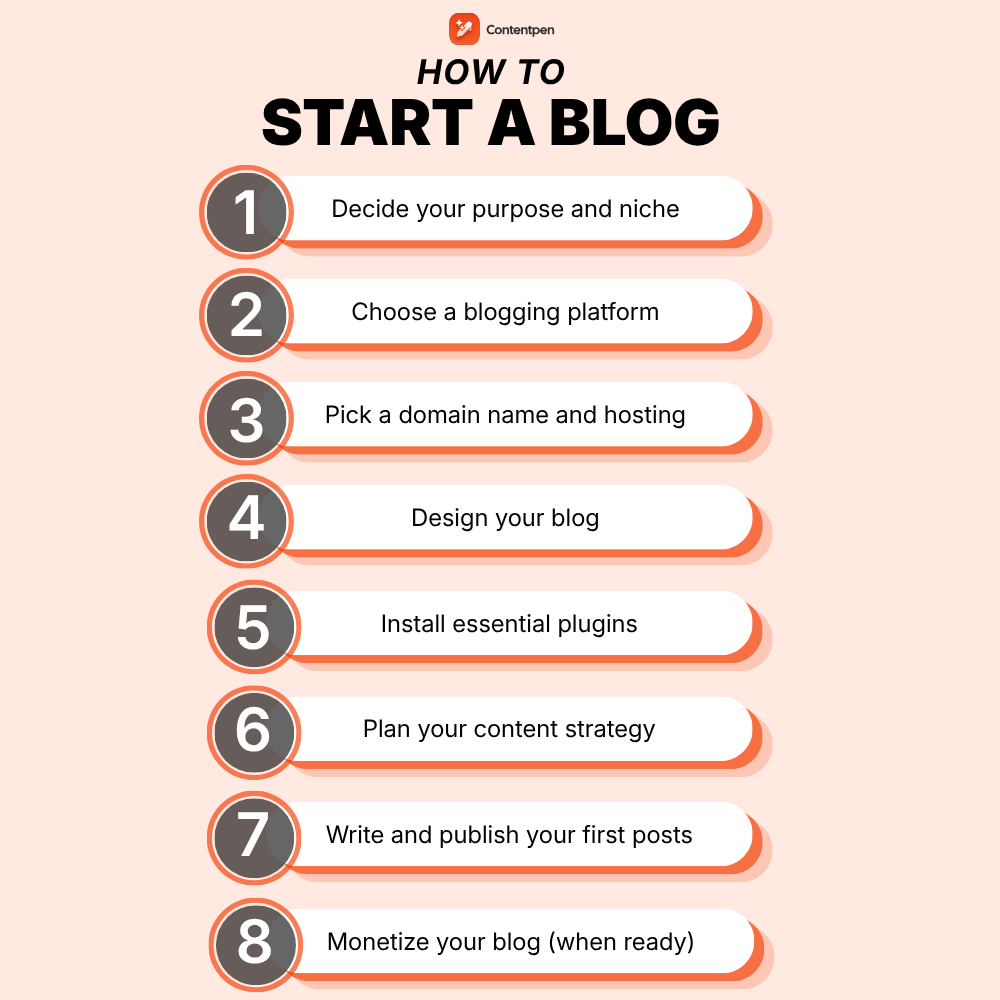
Step 1: Decide your purpose and niche
Before getting into the technical setup, it is important to have clarity about your blog’s purpose to build a solid foundation and ensure success. Your purpose acts as your North Star, guiding every decision from content creation to monetization strategies.
Start by asking yourself:
- What do you want to achieve with your blog?
- Are you looking to establish yourself as an industry expert, share personal experiences, build a community around shared interests, or generate income?
Your primary goal will influence everything from your content strategy to your chosen platform.
Choose a specific niche
Once you’ve defined your purpose, narrow down your niche, which is the specific topic or area you’ll focus on.
A well-defined niche helps you:
- Attract a targeted audience more effectively
- Establish authority faster in your chosen field
- Compete more effectively against broader, general blogs
Instead of writing about “health,” consider focusing on “plant-based nutrition for busy professionals” or “mental health strategies for entrepreneurs.”
Research your chosen niche thoroughly. You can use tools like Google Trends, Reddit, and industry forums to understand what your potential audience discusses right now, what problems they face, and what content gaps exist.
This research will inform your content marketing strategy and help you create valuable, sought-after content from day one.
Moreover, you should consider the long-term sustainability of your niche. Choose something you’re genuinely passionate about or have expertise in, as you’ll be creating content consistently for months or years to come.
The intersection of your interests, knowledge, and market demand creates the sweet spot for a successful blog niche.
Step 2: Choose a blogging platform
Selecting the right blogging platform is crucial for your blog’s success and growth potential. Your choice affects everything from design flexibility and SEO capabilities to monetization options and long-term scalability.
Some of the popular options are:
#1: WordPress.org
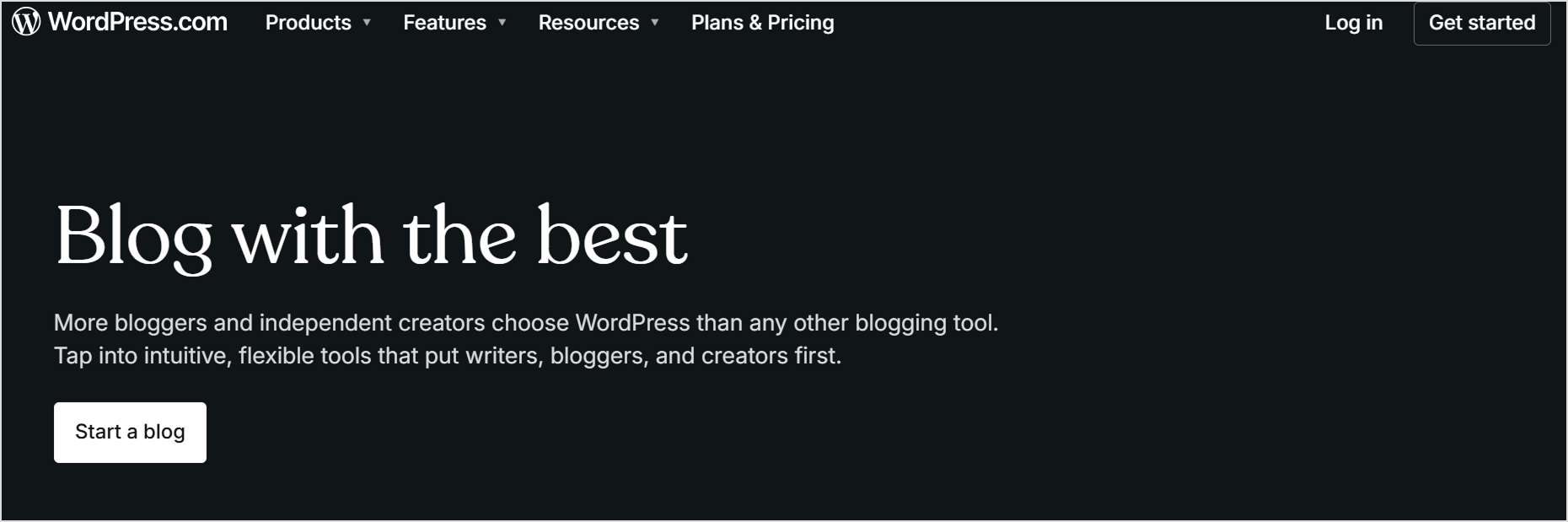
WordPress.org stands as the most popular choice, powering over 40% of all websites.
It offers complete ownership, various customizations through themes and plugins, and effective SEO features. However, it requires separate hosting and has a steeper learning curve than other solutions on our list.
#2: Medium

Medium offers an excellent platform for writers who prioritize content over customization. It has a built-in audience and an easy-to-use interface, making it great for sharing ideas and networking, but you give up some control over design and monetization.
#3: Ghost
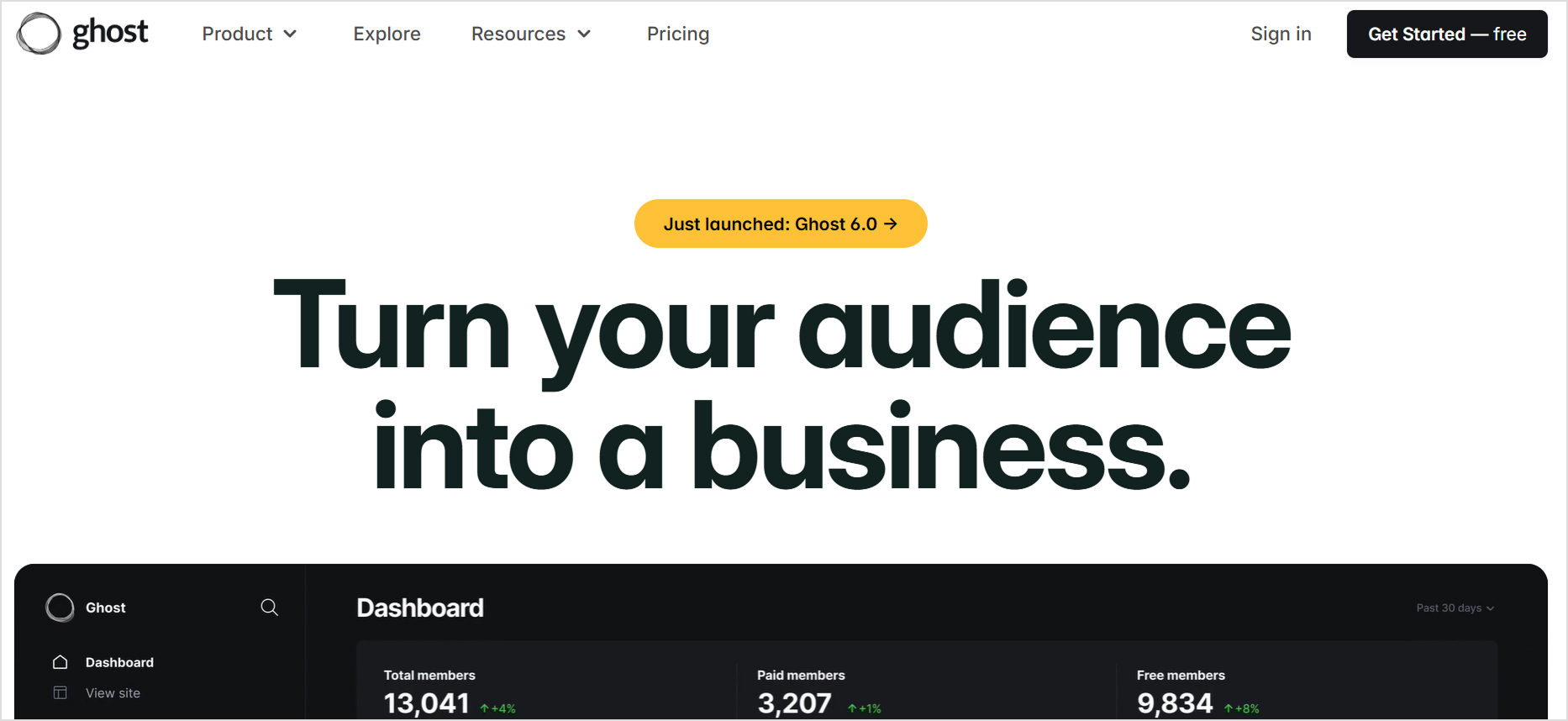
Ghost focuses specifically on publishing and offers a clean, distraction-free writing experience. It has gained popularity among professional bloggers and publications who want WordPress-level control without the complexity.
#4: Wix
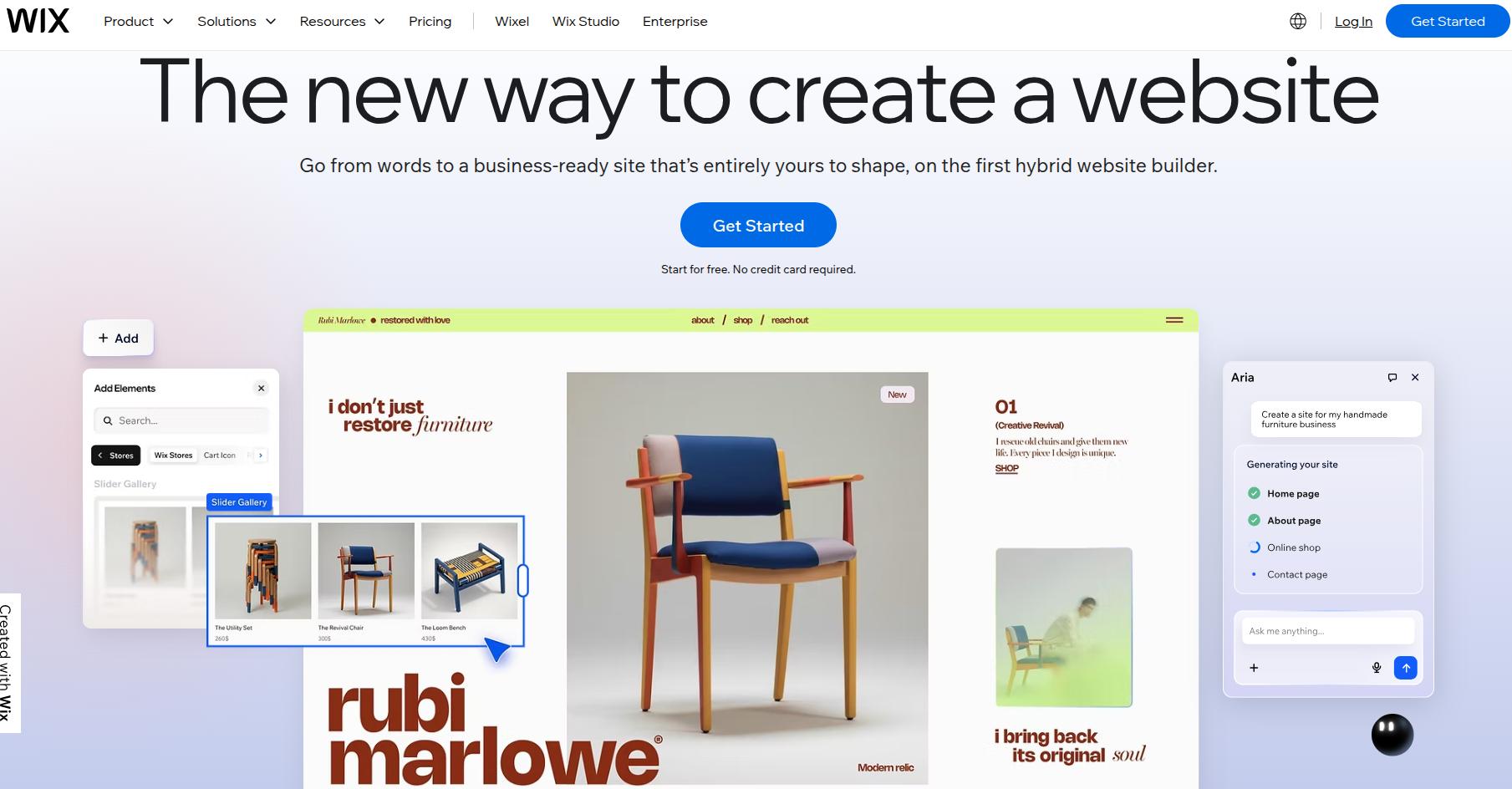
Wix is ideal for beginners who want a visually polished blog without touching a single line of code.
Its drag-and-drop editor and hundreds of templates make setup quick and intuitive, but the ease of use comes at a cost. Migrating your content away from Wix later is notoriously difficult.
#5: Webflow
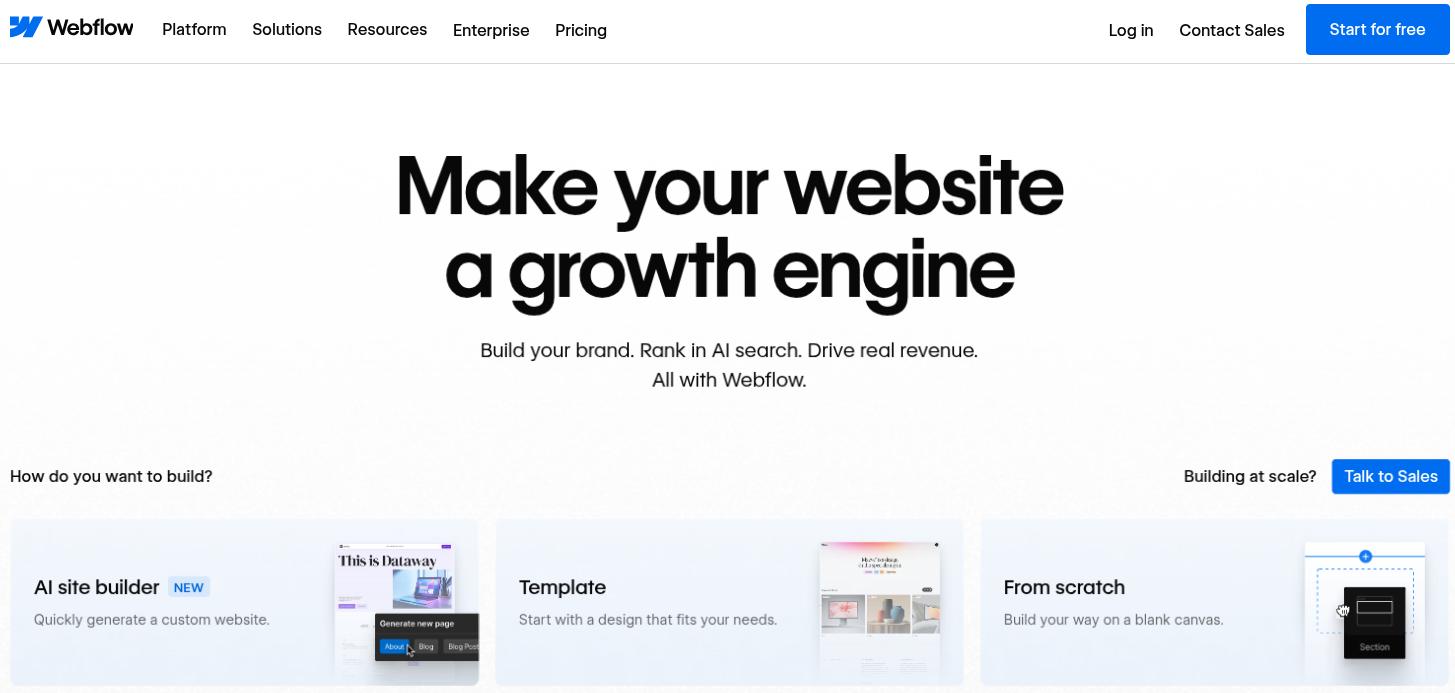
Webflow bridges the gap between a website builder and a full development environment, making it a strong choice for designers who want pixel-level control without relying on developers.
It offers clean code output and solid CMS capabilities, though its pricing and learning curve can be steep for pure writers with no design background.
When choosing your CMS, consider your technical comfort level, budget, growth plans, and monetization goals. Most successful long-term bloggers eventually migrate to self-hosted WordPress for maximum control and growth potential.
Step 3: Pick a domain name and hosting
Your domain name serves as your blog’s digital address and brand identity, making it one of your most important early decisions. A strong domain name should be memorable, relevant to your niche, and professional in appearance.
Domain
An ideal domain name should be:
- Short, ideally under 15 characters (e.g., Contentpen.ai)
- Avoid hyphens, numbers, or complex spellings that users might forget or mistype.
- Incorporate your main keyword when possible, but don’t sacrifice memorability for SEO. For example, “healthycookingmom.com” works better than “healthy-cooking-recipes-for-busy-mothers.com.”
Choose a .com extension whenever possible, as users expect it, and it carries the most authority. However, niche-specific extensions like .tech or country-specific ones can work if your preferred .com isn’t available.
You can also use domain name generators like Atom, Namecheap, GoDaddy, or Domain.com to check availability and get suggestions. Before finalizing, ensure the corresponding social media handles are available to maintain brand consistency across platforms.
Hosting
For hosting, prioritize reliability, speed, and customer support over the cheapest option. Bluehost, SiteGround, and WP Engine offer beginner-friendly WordPress hosting with one-click installations and reliable uptime.
When looking for reliable hosting, check features like SSL certificates, daily backups, and staging environments. These will help you later on when you’ve started your blog.
Cost
Generally, you can expect to spend $10-$15 annually for your domain and $50-$150 annually for quality shared hosting. This investment in reliable infrastructure pays dividends in site performance, user experience, and search engine rankings.
Step 4: Design your blog
Your blog’s design creates the first impression visitors have of your brand and content. A clean, professional design builds trust, while a cluttered or outdated appearance drives readers away before they engage with your content.

Take this blog example from Cup of Jo. The theme is simple but visually appealing, ideal for a lifestyle blog.
So, you should choose a responsive theme that looks great on all devices, as over 60% of web traffic comes from mobile devices. Free themes from WordPress.org or premium options from ThemeForest provide excellent starting points.
Overall, you should prioritize simplicity, fast loading times, and SEO optimization over flashy features.
Focus on user experience by creating intuitive navigation, clear typography, and logical content hierarchy. Use white space effectively to avoid overwhelming visitors, and ensure your most important content and calls-to-action are prominently displayed.
Branding
Customize your theme to reflect your brand personality through color schemes, fonts, and imagery. Create a cohesive visual identity that reinforces your niche and appeals to your target audience.

For example, professional food blogs like Pinch of Yum might use warm, appetizing colors, while tech blogs often favor clean, modern designs with cooler tones.
Remember that good design supports your content rather than overshadowing it. The goal is to create an environment where readers can easily consume and enjoy your writing while developing trust in your expertise and brand.
Step 5: Install essential plugins (Optional step for WordPress users)
WordPress plugins extend your blog’s functionality without requiring coding knowledge. These plugins are great for creating a professional, feature-rich website. However, too many plugins can slow your site. That’s why it’s smart to focus only on the essentials.
Here are some of the must-haves that we recommend for a blog:
SEO plugins
- Install Yoast SEO or Rank Math to handle on-page SEO.
- These tools help with meta descriptions, XML sitemaps, and content analysis.
- They guide you in structuring posts for maximum readability and visibility.
Security plugins
- Add Wordfence or Sucuri to protect against malware, brute-force attacks, and other threats.
- They provide regular scans and login protection, which are crucial for safeguarding your blog’s reputation.
Caching plugins
- Use WP Rocket, W3 Total Cache, or WP Super Cache to speed up your site.
- Faster loading times improve both user experience and search engine rankings.
Backup plugins
- Tools like UpdraftPlus or BackWPup automatically save copies of your site.
- This protects against server crashes, hacking, or accidental deletions.
Some of the other useful plugins can be:
- Social sharing plugins (like ContentStudio) for easy content promotion.
- Contact form plugins to stay connected with readers.
- Analytics integrations (like Google Analytics) to track performance.
Pro tip: Keep your site lean. Regularly update plugins and remove unused ones, as even deactivated plugins can pose security risks.
Step 6: Plan your content strategy
A well-planned content strategy turns random blog writing examples into a cohesive system that builds authority, engages readers, and drives consistent traffic. Your strategy should align with your blog’s purpose while addressing your audience’s needs and pain points.
This process includes:
Conduct keyword research
Start by conducting keyword research to identify topics your audience searches for. Use tools like Google Keyword Planner, Ubersuggest, or Contentpen to find relevant keywords with good search volume and manageable competition.

Automated keyword research
Work on keywords worth writing for
Get search terms with real ranking potential, not just high volume.
Try Keyword Research for FREE →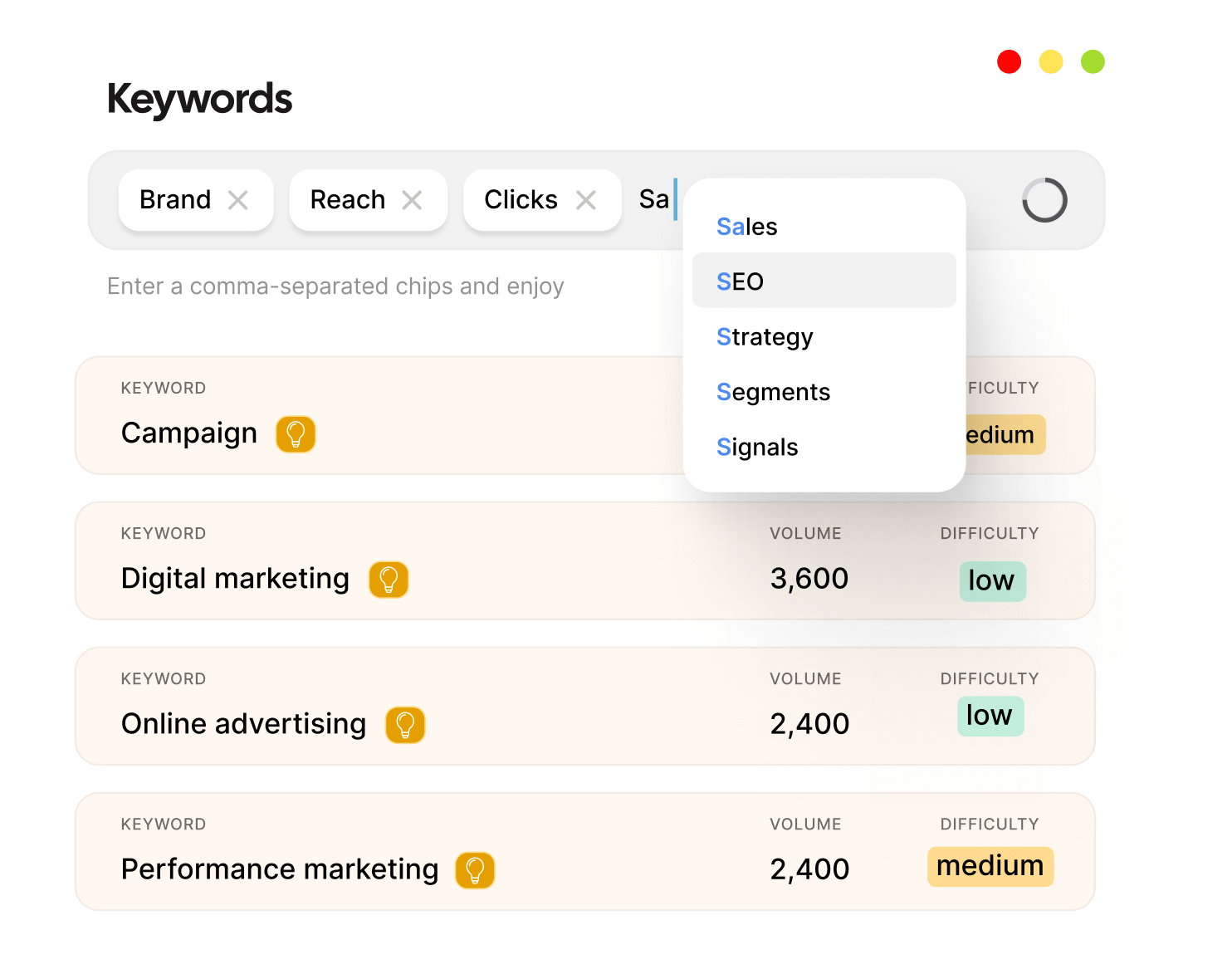
Focus on types of keywords that match your expertise and audience intent, without overdoing them.
Create content pillars
Create content pillars. These are broad topic categories that involve your niche and serve as the foundation for multiple posts.
For a personal finance blog, pillars might include budgeting, investing, debt management, and side hustles.
Each pillar should generate dozens of specific post ideas, creating a content system that you can use for steady organic traffic growth.
Contentpen helps here by categorizing your content pillars or topical clusters automatically using the keywords provided.
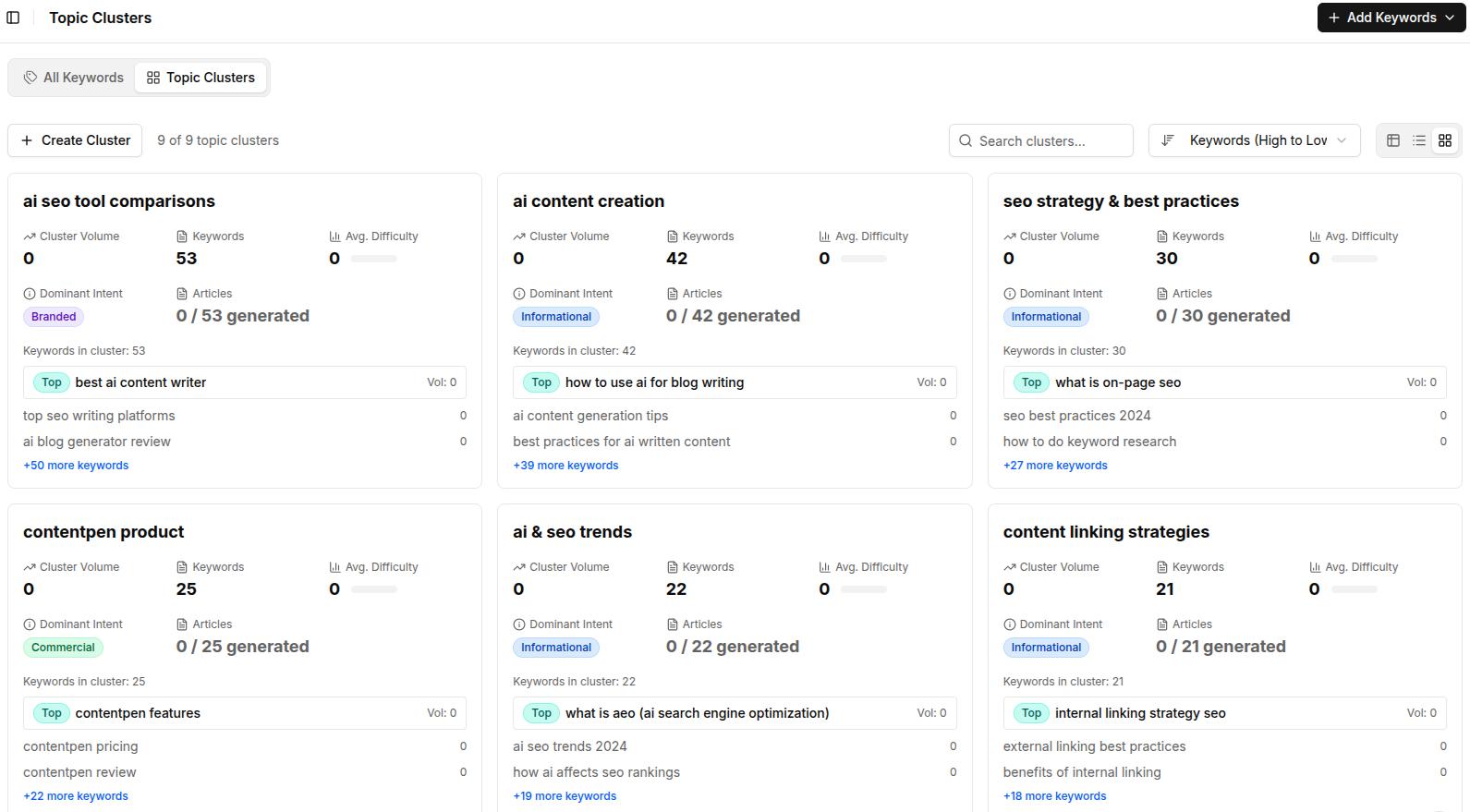
You can also ask our built-in AI to generate keywords, create topical clusters, and generate relevant articles for your blog.
Create a content calendar
Develop an editorial calendar to maintain consistency and plan seasonal or trending content. Tools like Trello, Jira, or Asana can help organize your content pipeline, from initial ideas through publication.
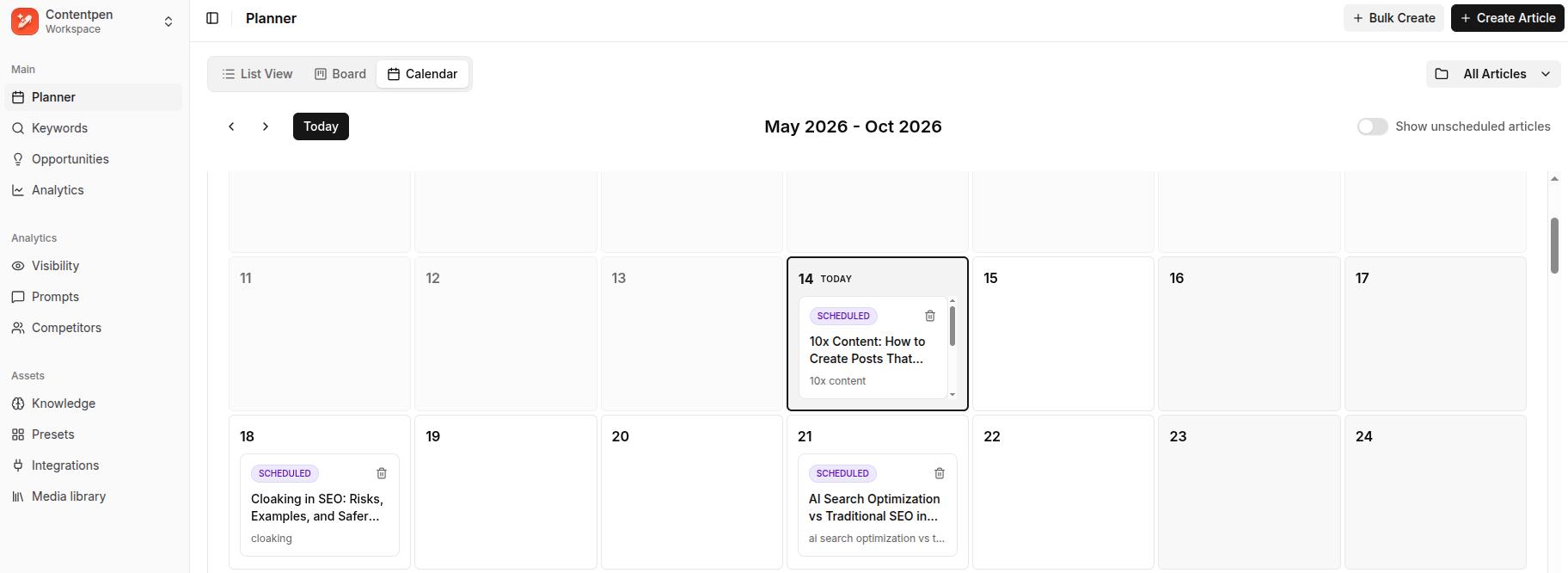
You can also use Contentpen’s powerful content management and one-click publishing features to post directly to your favorite CMS platform. These include Ghost, WordPress, Wix, Webflow, and Shopify, to simplify your blogging experience and enhance productivity.
Keep your blogs engaging by planning different types of content. Include how-to guides, listicles, case studies, personal stories, and industry news commentary. Different formats appeal to various learning styles and sharing preferences across platforms.
Pro tip: Even the best blog post won’t perform if no one sees it. Treat promotion as part of the content creation process, not an afterthought.
Step 7: Write and publish your first posts
Your first blog posts set the tone for your entire blog and provide the foundation for building an audience. Focus on creating high-quality, valuable content that showcases your expertise and helps readers solve real problems.
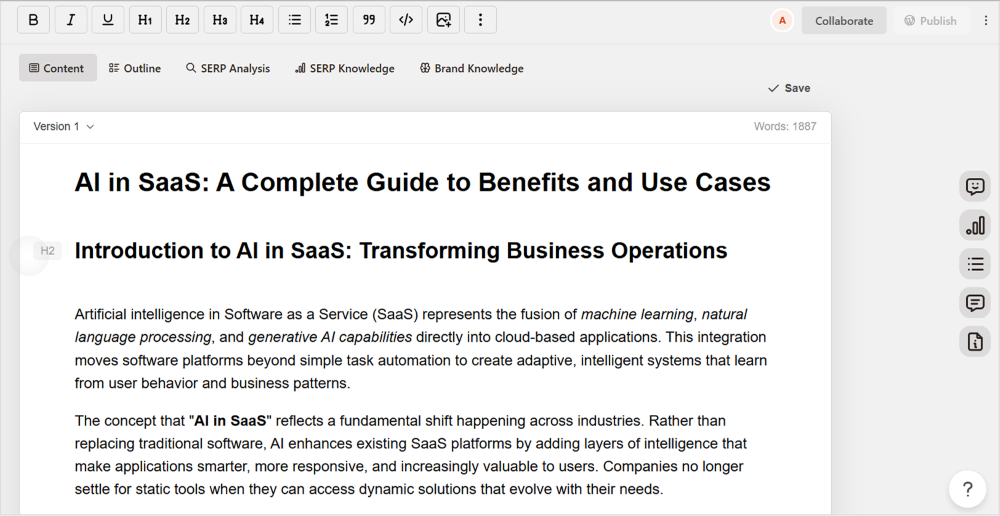
The key things to keep in mind while publishing blog posts are:
- Start with pillar posts, as these are comprehensive, authoritative articles on core topics within your niche. These substantial pieces (2000-3,000+ words) demonstrate your knowledge depth and often become your most-shared and highest-ranking content.
- Learn how to format a blog post effectively using headers, bullet points, images, and white space to create scannable, engaging content.
- Write compelling headlines that combine curiosity with clear value propositions. Your headline often determines whether someone clicks on your post in search results or social media feeds.
- Optimize each post for search engines by naturally incorporating your target keywords, writing meta descriptions, and following the on-page SEO checklist.
- Publish consistently from the start, even if it’s just once per week. Regular publishing builds reader expectations, improves search engine indexing, and gives you practice refining your writing tone and style.
Overall, you don’t have to aim for perfection with early posts. Instead, your primary focus needs to be on providing value and improving with each publication.
Step 8: Monetize your blog (when ready)
Blog monetization should align with your audience’s needs and your blog’s natural evolution.
But before you rush into learning ‘how to start a blog and make money’, here are a few things to keep in mind.
Rushing into monetization often backfires since you may not have developed enough traffic yet, or you could annoy your audiences with too many ads early on. Neither is good for your reputation.
That said, there are still ways to earn money from blogging from day one by placing affiliate links or reviews in your blogs, but we don’t recommend doing that.
The reason being if, later, you decide to change your monetization strategy, you’ll have to edit hundreds of pages to edit or remove those affiliate links. That’s a lot of wasted time and effort.
Therefore, planning for blog monetization from the start always helps you build the right foundation for future income streams.
Here are some of the popular methods to monetize blogs:
- Affiliate marketing: As discussed earlier, you can earn via Amazon Associates, ShareASale, and niche-specific affiliate programs through commissions on sales generated through your recommendations.
- Display advertising: Google AdSense provides passive income based on your traffic levels. While earnings start small, they grow substantially with increased page views. 100% recommended.
- Selling digital products: If you’ve built a good reputation online with your skills and expertise, you can encourage visitors to buy your books, online courses, or templates that directly address your audience’s pain points.
- Sponsored content and brand partnerships: These become viable options once you’ve built a substantial, engaged audience and start to receive enough online traction and traffic.
- Coaching or freelance services: Use your blog’s content to demonstrate expertise and attract clients. Many bloggers use their platforms as marketing tools for higher-value service offerings, such as SEO services, AI search optimization, and so on.
Remember that optimized content marketing focused on value creation typically generates more sustainable income than aggressive monetization efforts.
Pre-blog launch checklist – Things to do before launching your blog
Before announcing your blog to the world, complete this comprehensive checklist to ensure everything functions properly and creates the best possible first impression for new visitors.
Technical setup
First, you need to set up the technical backbone of your blog. Verify that your domain redirects correctly, test all internal links, and check site speed with tools like Google PageSpeed Insights or GTmetrix, aiming for a good, solid score.
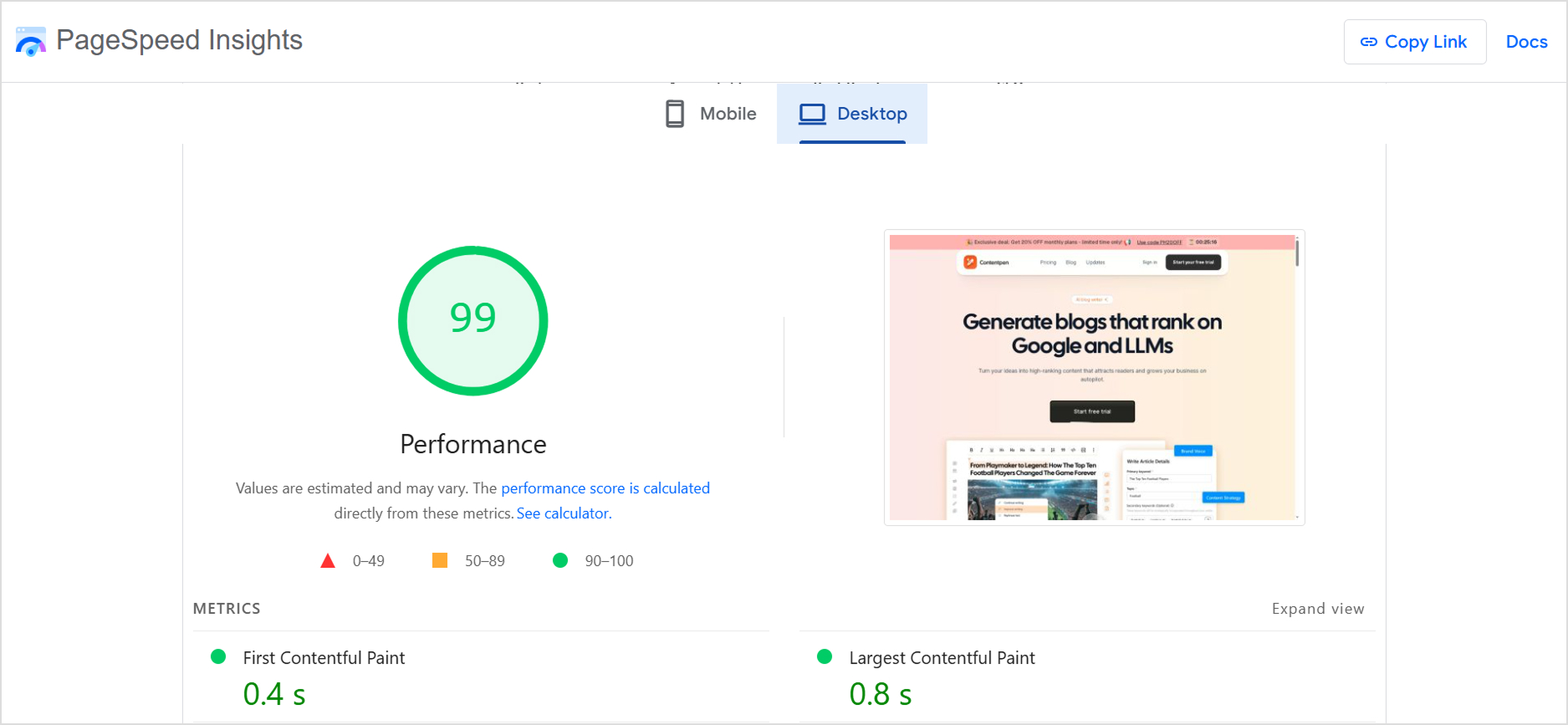
Don’t forget to install Google Analytics and Google Search Console, secure your site with an SSL certificate, and confirm that your blog looks great on mobile devices.
Design and pages
Next, focus on your design and core pages. Create an ‘About’ page that tells your story, a ‘Contact’ page for easy communication, and legal must-haves like ‘Privacy Policy’ and ‘Terms of Service’. Such pages are typically included in the footer section of the blog.
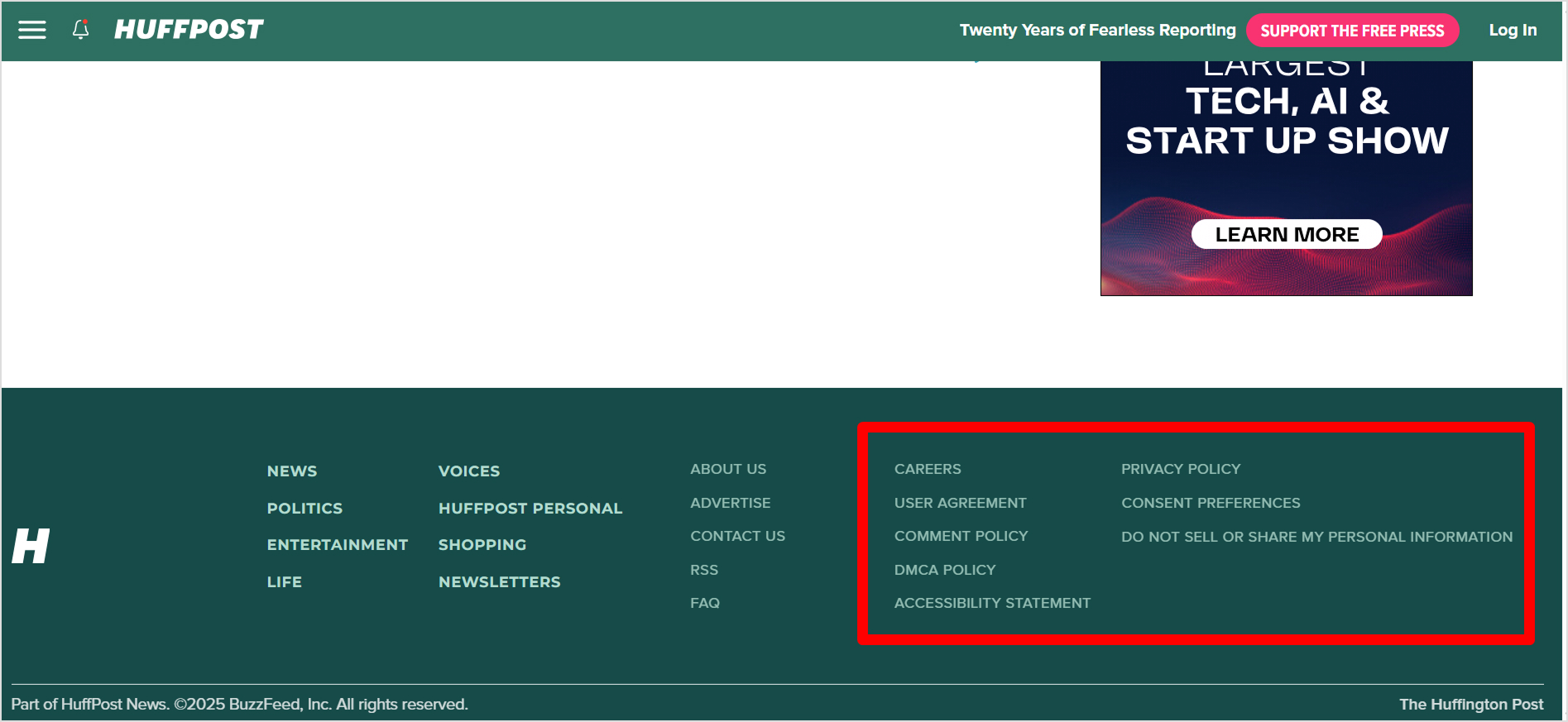
A professional logo or header adds personality, while a clear navigation menu makes browsing intuitive. Finally, integrate social media icons and sharing buttons to make your content easy to spread, just like we’ve done on our blogs for Contentpen:

Content preparation
A blog without content is like a store with empty shelves. Write and publish at least 5–10 quality posts before launch, so visitors have plenty to explore.
Keep the momentum going with a consistent posting schedule, at least for your first month. Prepare an email opt-in incentive like a free guide or checklist to start growing your contacts and audience from day one.
SEO and GEO basics
If you want readers to find your blog, SEO and now, AEO, or GEO is non-negotiable.
Submit your XML sitemap to Google Search Console, optimize your homepage title and meta description, and research long-tail keywords for each of your first posts.
With AI chatbot answers on the rise, it is also equally important to structure your content for AI visibility. Start with definitions first, use proper tables and formatting, provide real insights or internal case studies, and be genuinely helpful to the readers.
To make sure your blogs are SEO and GEO-friendly with the least amount of time and effort, pass the content through Contentpen.
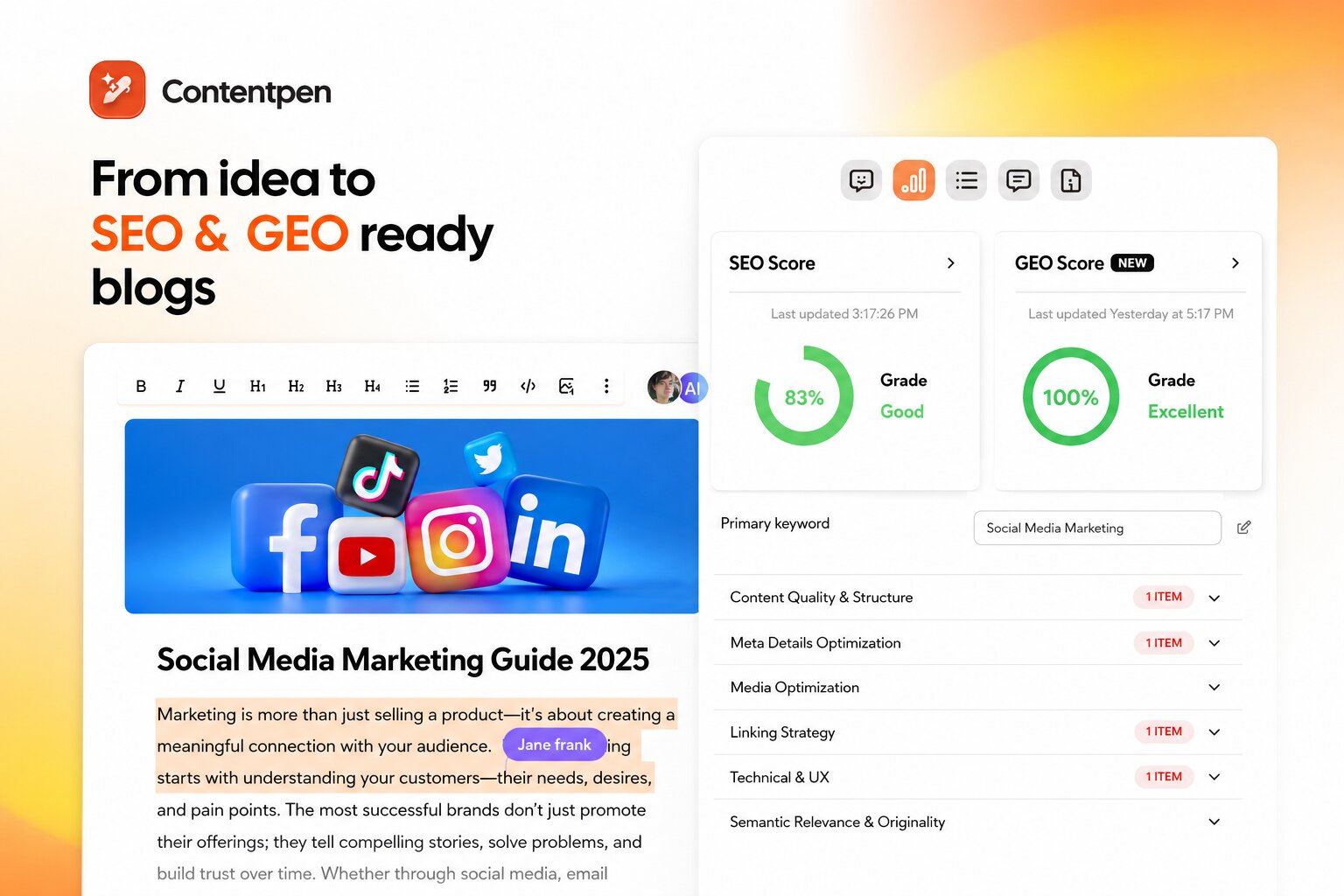
The tool will automatically surface content structure issues, meta details, and internal and external linking opportunities at a glance. Use the GEO and SEO score to optimize content before publishing.
Know exactly what to fix, before publishing to get it ranked!
Get real-time SEO feedback while writing, no guesswork, no plugins.
Try SEO Scoring →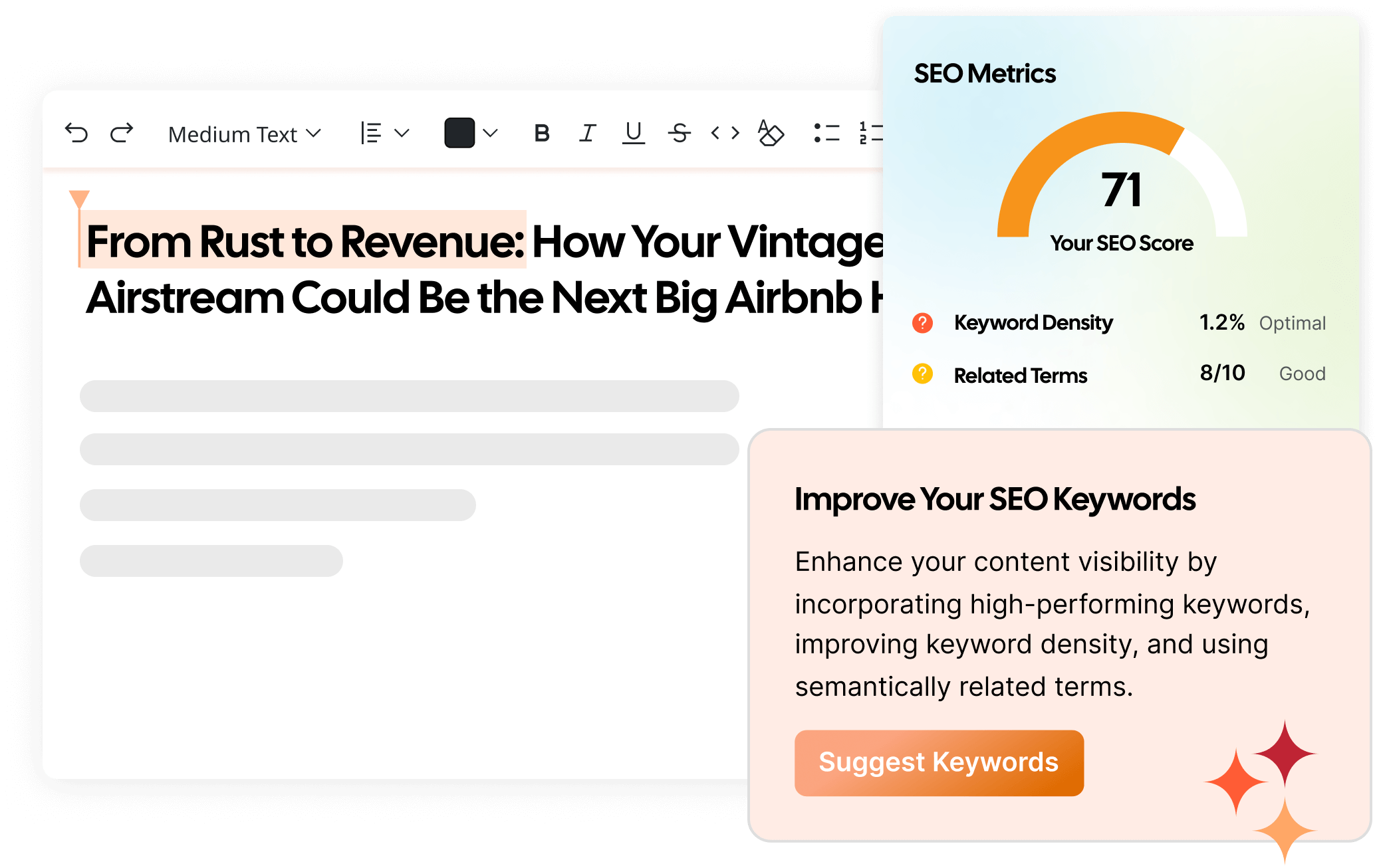
Branding and marketing prep
Think beyond your blog. Secure your blog name as usernames across major social media platforms, even if you don’t plan to use them immediately.
Build simple but professional profiles with consistent branding and start joining online communities or forums in your niche. This helps you establish credibility and understand your audience better.
Final testing before launch
Finally, put your blog through a pre-launch test run. Proofread every post for grammar and accuracy, test all contact and opt-in forms, and check that your blog looks right in Chrome, Firefox, Safari, and Edge browsers. Run a backup test to ensure your site can be restored if needed.
What should you blog about?
Choosing the right topics for your blog determines whether you’ll attract engaged readers or struggle to find an audience. The best blog topics are often the combination of the intersection of your passions, expertise, and market demand.
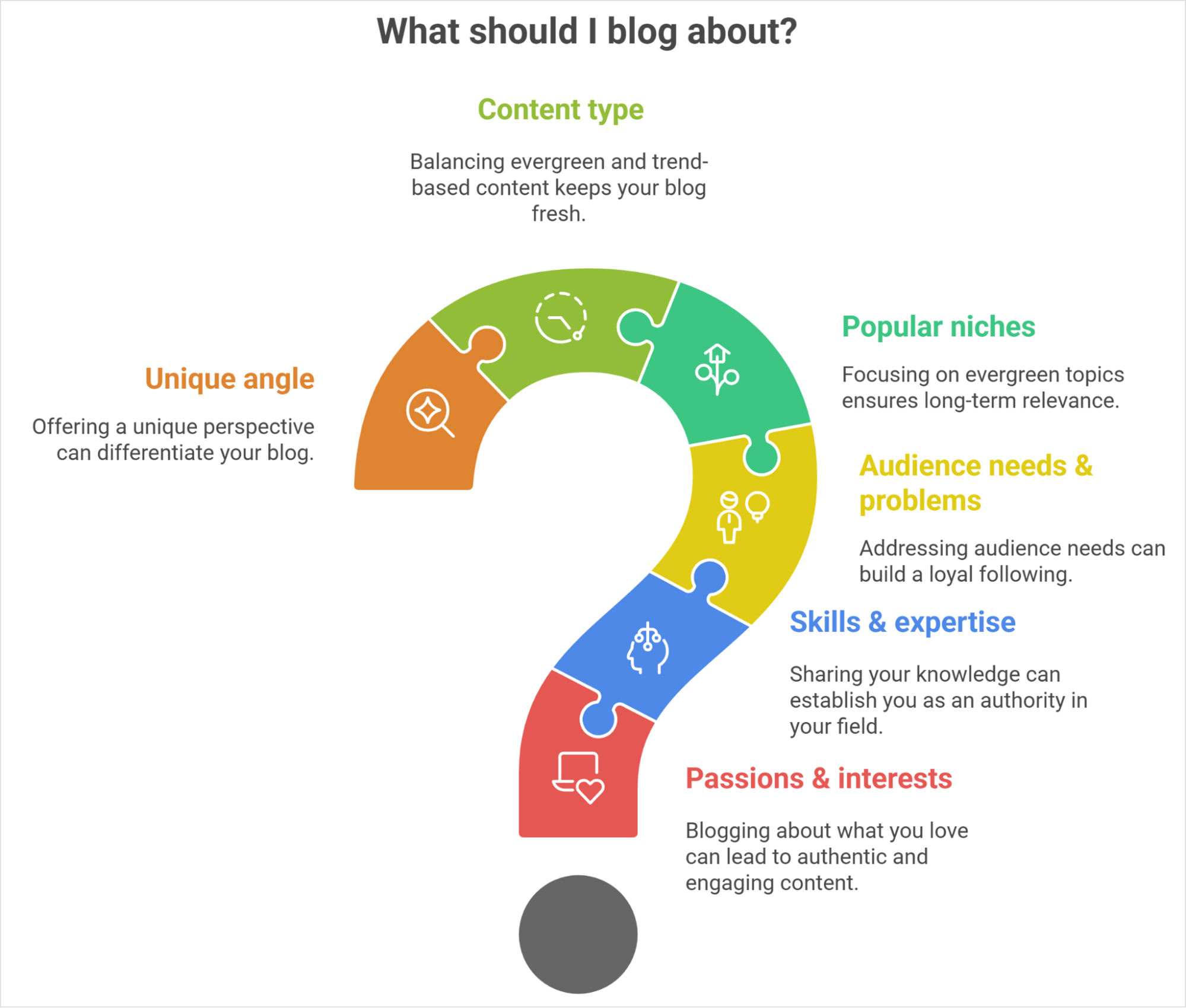
Here are the key aspects you need to consider while deciding on your blog topic:
Your passions and interests
Writing about topics you’re genuinely passionate about makes content creation enjoyable and sustainable long-term. Passion shows through in your writing, creating more engaging and authentic content that resonates with readers.
- Tap into your true interests: Think about hobbies you could discuss for hours, causes you deeply care about, or lifestyle changes that have shaped your life. Enthusiasm draws in like-minded readers.
- Find in-depth topics: You’ll need enough substance to run a full-fledged blog. Test yourself by brainstorming 50 potential blog topics. If you can’t get past 20, consider broadening your niche.
- Document your learning journey: You don’t have to be an expert. “Beginner teaching beginners” blogs are often successful because readers appreciate honesty and relatable perspectives over inaccessible, expert-only advice.
Takeaway: Passion gives your blog heart, but pairing it with depth and consistency ensures it has true substance and value.
Your skills and expertise
Your professional expertise gives you instant credibility and a rich source of content ideas. This includes your career experience, education, and skills that provide genuine value to your readers.
- Look beyond the obvious: An accountant doesn’t have to stick to taxes. They could write about personal finance, small business management, or productivity systems.
- Spot trends in your field: Emerging industry changes are perfect topics, such as the impact of AI in your chosen niche.
- Value grows with time: You don’t need to be the top expert to add value. Often, someone just a step ahead in the journey explains things more clearly than someone far advanced.
Takeaway: Your expertise isn’t just knowledge but a bridge between what you know and what your audience needs.
Audience needs and problems
The most successful blogs solve specific problems for clearly defined audiences. To find the right content opportunities, you need to understand your readers’ pain points, questions, and goals.

- Listen to what people are asking: Use platforms like AnswerThePublic, Reddit, Quora, and niche forums to find real questions in your space.
- Research through AI tools: Prompt AI chatbots like ChatGPT and Gemini to tell you about topics people are searching for often in your niche. This technique can provide some undiscovered ideas for your blogs.
- Survey your network: Ask colleagues, friends, or social media followers about their biggest challenges related to your expertise.
- Study your competitors: Look at what’s already working for successful blogs in your niche, then identify what’s missing. Gaps in their content, unanswered questions, or underserved audiences are opportunities for you to stand out.
Takeaway: When your blog becomes the place that answers real problems, readers keep coming back as they’ll trust you more with each solution.
Focus on evergreen topics
Evergreen topics maintain consistent demand because they address fundamental human needs and interests. Choosing one of these niches gives your blog staying power and long-term traffic.
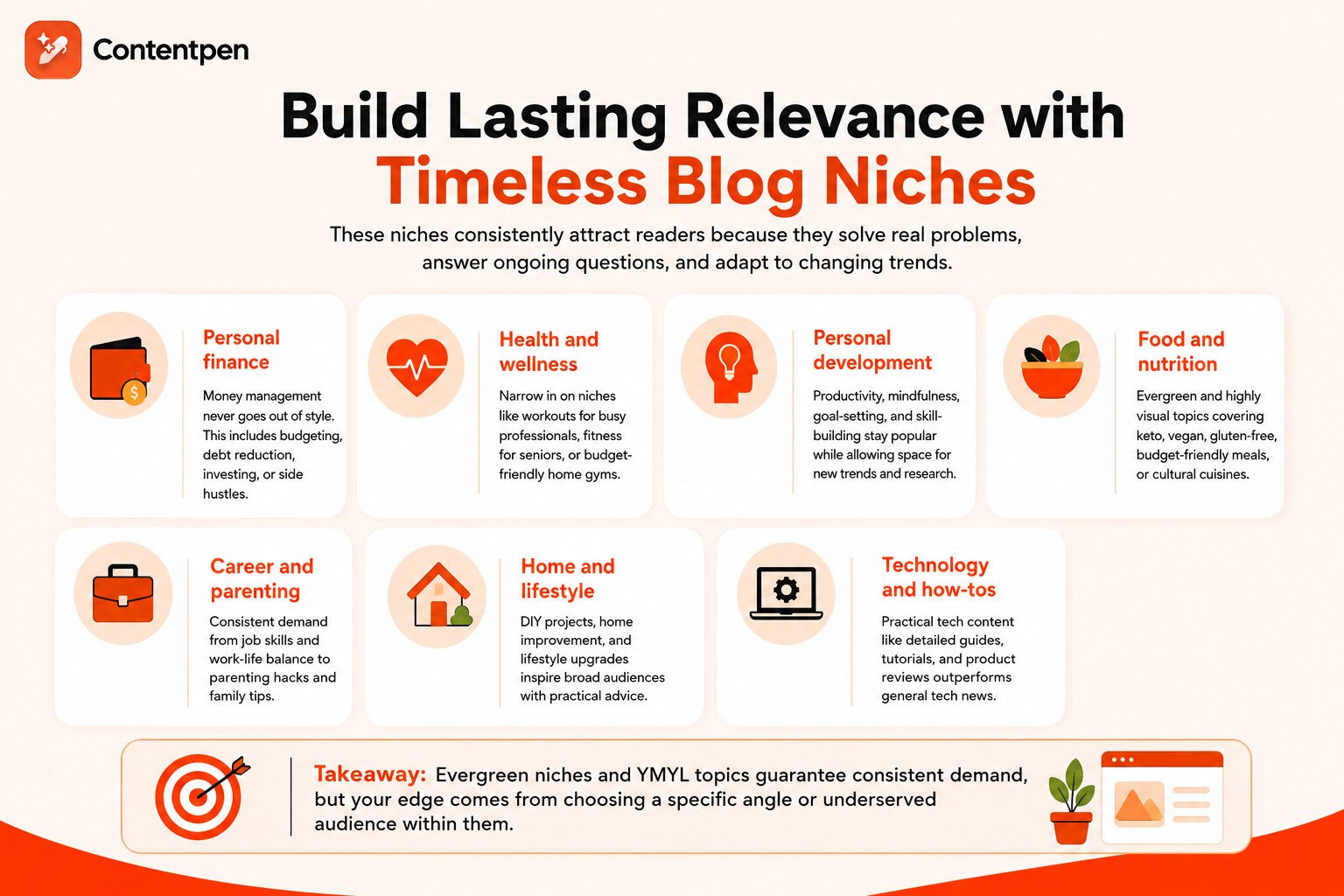
- Personal finance: Money management never goes out of style. This includes budgeting, debt reduction, investing, or side hustles.
- Health and wellness: Instead of broad advice, narrow in on niches like workouts for busy professionals, fitness for seniors, or budget-friendly home gyms.
- Personal development: Topics such as productivity, mindfulness, goal-setting, and skill-building remain popular while also making room for new trends and research.
- Food and nutrition: Evergreen and highly visual topics, covering keto, vegan, gluten-free, budget-friendly meals, or cultural cuisines, perform well online.
- Career and parenting: Both niches attract consistent demand, from job skills and work-life balance to parenting hacks and family tips.
- Home and lifestyle: DIY projects, home improvement, and lifestyle upgrades inspire broad audiences while offering practical, evergreen advice.
- Technology and how-tos: Tech content succeeds when it’s practical. Write detailed guides, tutorials, and product reviews that often outperform general tech news.
Takeaway: Evergreen niches and YMYL topics guarantee consistent demand, but your edge comes from choosing a specific angle or underserved audience within them.
Evergreen vs. trend-based content
Not all blog posts serve the same purpose. Some should stand the test of time, while others ride the wave of current events. Striking the right balance between evergreen and trend-based content keeps your blog both relevant and reliable.
| Evergreen content | Trend-based content | |
| Definition | Stays relevant for years, addressing timeless needs and interests. | Focuses on current events, product launches, or seasonal trends. |
| Examples | How to budget for beginners, comprehensive guides, and tutorials. | 2026 budgeting apps, iPhone 17 reviews, and other seasonal topics. |
| Traffic impact | Provides steady, long-term traffic and builds authority. | Generates quick traffic spikes but fades over time. |
| SEO value | Often becomes cornerstone content, ranking well for years. | Ranks fast initially but may lose relevance quickly. |
| Content role | Forms the foundation of your blog and strengthens credibility. | Helps you join industry conversations and stay current. |
| Best ratio | Typically, 70–80% of content is in evergreen niches. | Typically 20–30%, higher in news-heavy industries. |
Takeaway: Balance both types by using evergreen posts as your blog’s backbone while sprinkling in trending topics for timely traffic and engagement.
Your unique angle
Differentiation is crucial in competitive blog landscapes. Your unique angle might come from your background, perspective, personality, or approach to common topics.
- Draw from personal experience: If you’ve been in social and personal circles that have taught you some unique perspectives about a niche, share them with your audience.
- Turn challenges into strengths: Writing about minimalism as a parent of four shows authenticity that readers in similar situations can connect with.
- Use your professional lens: You can write about something you don’t know, but the readers will know. That’s why it is better to invoke your professional experience while writing an article to showcase proper E-E-A-T signals to Google and AI engines.
- Embrace your quirks: Your life experiences, demographic background, and personality aren’t distractions, but crucial details that attract readers who resonate with your journey.
- Add your location: Geographic context adds flavor. Sharing local business insights or cultural perspectives turns universal topics into unique, globally relevant stories.
Takeaway: Ultimately, your voice is your edge, so you must own it. When your writing is fresh and unique, you stand out and naturally attract the right audience.
Use Contentpen to start, optimize, and rank blogs
When learning how to start a blog, one of the biggest challenges is balancing consistent publishing with SEO optimization. Many beginners get stuck spending hours on keyword research, writing, editing, and formatting, only to see posts that never rank or bring traffic.
That’s where Contentpen, our AI SEO content writer for bloggers, comes in. It improves your blogging process by helping you:
- Find the right keywords automatically for your niche.
- Generate high-quality, SEO and GEO-optimized blogs that are plagiarism-free and ready to rank.
- Publish directly to WordPress with one click without any copy-pasting or manual formatting.
- View website analytics and important metrics to help you grow organically without much hassle.
- See SEO opportunities to identify quick-win blogs and implement the suggested changes easily with our built-in AI.
- Scale effortlessly with bulk blog generation, AI images, and tonally consistent content.
Unlike manual blogging, where you juggle multiple tools and struggle to grow, Contentpen gives you one streamlined platform to write, optimize, rank, and scale. See the video below to learn how you can start and publish a blog, all in one place.
Final thoughts
Learning how to start a blog in 2026 is all about building a strong foundation, making smart choices, and staying consistent. You’ll need to define your purpose and niche, pick the right platform, and secure a domain and hosting.
From there, design your blog with user experience in mind, install essential plugins, and create a content strategy that blends keyword research, evergreen topics, and audience-driven posts.
Once you’ve built trust and traffic, you can explore monetization methods like ads, digital products, or services.
Before launch, a checklist ensures your blog looks professional and functions smoothly. Moreover, to make blogging easier, try Contentpen to automate keyword research, content creation, publishing, and post-publish improvements.
Frequently asked questions
Use platforms like WordPress.com, Blogger, or Medium for free blogging. WordPress.com offers basic features with limited customization, while Medium allows immediate publishing without setup. Focus on consistent, quality content before upgrading to paid features.
Choose topics you’re passionate about and use simple platforms like WordPress.com or Wix. Don’t worry about SEO or monetization, but focus on enjoying the creative process. Set realistic posting schedules and engage with like-minded bloggers.
You don’t need technical skills or writing credentials to start a blog. Pick a topic you know well, choose a beginner-friendly platform like WordPress.com, and focus your first month on publishing consistently. Your first posts won’t be perfect, but you can get better with time.
Blogging remains alive and valuable. While AI generates content quickly, readers crave authentic human perspectives, personal experiences, and genuine expertise. Smart bloggers use AI as a tool while focusing on uniquely human values like original insights and authentic connections.
Yes, but it typically takes 12-24 months of consistent effort. Combine multiple income streams: affiliate marketing ($300-400), display ads ($200-300), and digital products ($300-500). You’ll need approximately 25,000-50,000 monthly page views and an engaged audience.
Yes, Kajabi includes a built-in blogging feature, making it a viable option if you’re already using it to sell courses or memberships. However, it’s not designed for SEO-driven blogging the way WordPress or Ghost are. Kajabi makes more sense when your blog supports an existing digital product business rather than being the product itself.
Try different extensions (.blog, .net), modify slightly by adding “blog” or “hub,” or use your name with a niche. Use domain generators for alternatives, check if the current owner will sell, or start with an alternative and rebrand later when successful.
Start with a solid outline before writing. Then, batch similar tasks together, such as research in one session, writing in another, and editing last. Use Contentpen to handle the time-intensive parts, like keyword research, structure suggestions, and first-draft generation, so your energy goes into adding the insights that only you can provide.