Category: AI guides

Explore AI guides, tools, and insights to leverage artificial intelligence for content creation, productivity, and digital innovation.

  • 15 best AI search optimization tools for 2026

    15 best AI search optimization tools for 2026

    AI search optimization tools now influence whether your brand shows up inside ChatGPT or gets skipped in AI answers. When people ask Perplexity, Gemini, or Google AI Overviews for advice, those instant summaries can replace a click to your site.

    That is the real problem. Your organic traffic can slide even while your classic rankings look fine in your old dashboards. This is where AI search optimization tools become crucial. These platforms help your content appear in those AI summaries, and not just SERP results.

    In this guide, you will see 15 of the best options tested and ranked for 2026 across different categories. You will also see how Contentpen fits into a modern stack, especially if you care about long-form blog posts that attract links.

    Ready to pick tools that work with AI instead of fighting it? Let us start with what these tools actually are and why they matter now.

    What are AI search optimization tools, and why do you need them in 2026?

    AI search optimization tools are platforms that help your site appear in answers from AI systems like ChatGPT, Perplexity, Claude, Gemini, and Google AI Overviews. They focus on how large language models read, summarize, and cite your content. Instead of only tracking rankings, they look at prompts, entities, and citations for your brand.

    Traditional SEO chases positions on classic SERPs with blue links. That still matters, but more people now type full questions into AI chatbots when they want fast guidance.

    Research from Similarweb shows the average monthly visits for AI tools grew 76% year over year (YOY). This stat and a lot of AEO examples tell us that if your brand is not mentioned or cited in those AI answers, a growing audience never hears about you. 

    AI search optimization tools measure when you are mentioned, which sources those systems lean on, and how you compare to competitors. They are a necessity for brands in 2026 looking to improve share of voice in a niche and establish themselves in an industry.

    You also need practical help turning insights into content. Many modern AI SEO tools now combine AEO/GEO tracking with AI content optimization, on-page optimization, and automated SEO workflows for internal links, schema, and indexing. 

    These tools also help you write content that satisfies people first approach while still being easy for AI systems to parse and trust.

    How we tested and ranked these tools

    This list of AI search optimization tools ranks each product on real-world usefulness for content marketers, agencies, and individuals. We focused on how much each tool helps you show up in AI answers and how easily a busy team can put the insights into action.

    We tested tools against several core criteria:

    • Prompt-level tracking across ChatGPT, Perplexity, Gemini, Claude, and Google AI Overviews
    • Multi-engine coverage for both classic and AI search
    • Citation and source intelligence for AI answers
    • Competitor benchmarking and share-of-voice views
    • Actionable recommendations instead of raw numbers and charts
    • Ease of use, setup time, and learning curve
    • Pricing and integrations with GA4, Google Search Console, and major CMS platforms

    We also favored products that support answer-first intros, clear headings, and FAQ blocks that AI platforms can easily reuse and cite in their answers.

    Note: The pricing values stated in this article are accurate as of writing this article, but may vary. Always refer to the vendor website for the latest pricing updates before making a decision.

    15 best AI search optimization tools in 2026

    The 15 best AI search optimization tools in 2026 cover every part of the modern SEO + GEO stack. You get tools that provide content creation, GEO tracking, AI SEO audit workflows, technical indexing help, outreach, and reporting. 

    ToolBest forStarting priceFree plan?
    ContentpenAI-powered long-form blogs and SEO + GEO content$27/monthYes, 7-day free trial (complete access)
    AIclicks.ioAll-in-one GEO and AI visibility tracking$59/monthYes, 3-day free trial
    OtterlyAIGEO audit workflows$29/monthYes
    ProfoundEnterprise-grade AI visibility analytics$99/monthYes, limited
    ClearscopePrecision editorial optimization$129/monthNo
    RankabilityAgencies needing NLP and expert coaching$199/monthNo
    MarketMuseBuilding topical authority and content strategy$99/feature/monthYes, limited
    FraseAffordable briefs and AI drafting$49/monthYes, 7-day free trial
    AirOpsCustom AI workflows at scaleCustom pricingLimited
    WritesonicAI article writing with live SEO data$79/monthLimited
    SE RankingGoogle AI Overview monitoring$129/monthYes, 14-day free trial (complete access)
    GaugeAgentic AI marketing intelligence$99/monthYes, free trial
    Search AtlasAutomated AI SEO execution$99/monthYes, 7-day free trial
    IndexlyAutomated indexing and AI crawler access$99/monthYes
    WhatagraphAI-powered SEO and GEO reporting$229/monthYes

    Each detailed tool entry explains what the AI search optimization tool does, standout features, who it suits, and how pricing starts. Use this section as a starting line and then mix tools into your own stack to receive maximum gains.

    1. Contentpen — Best for AI-powered blog creation and SEO + GEO content

    Contentpen for AI and SEO optimized content.

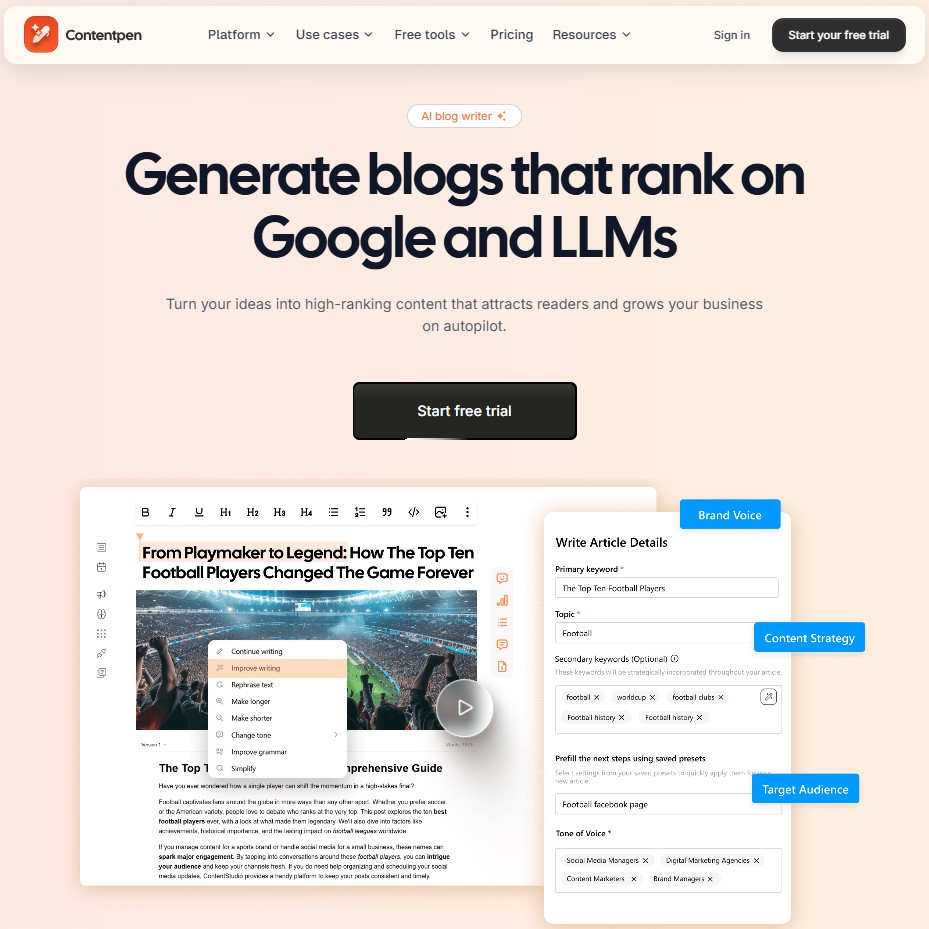
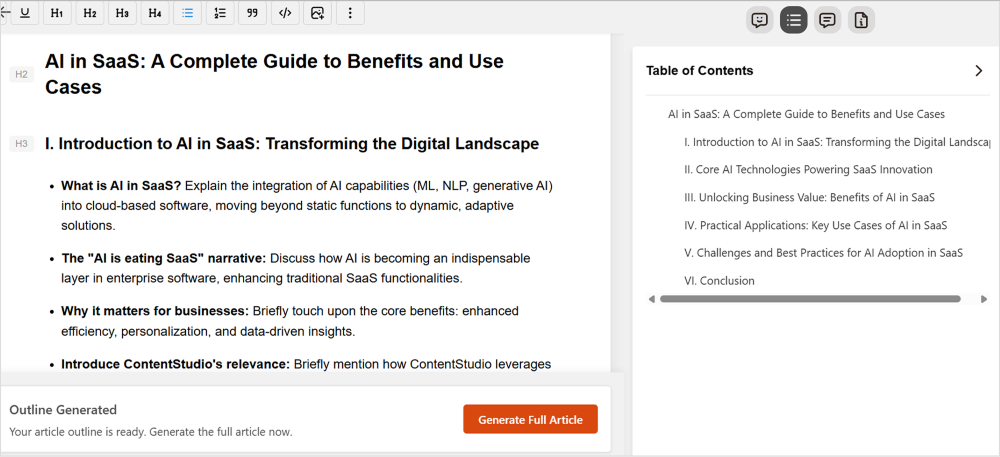
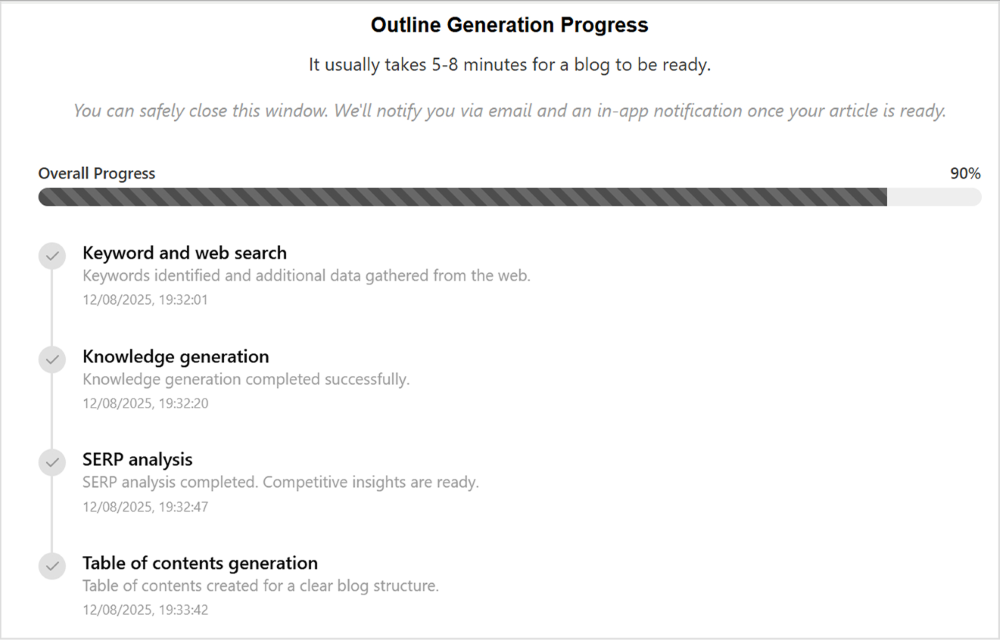
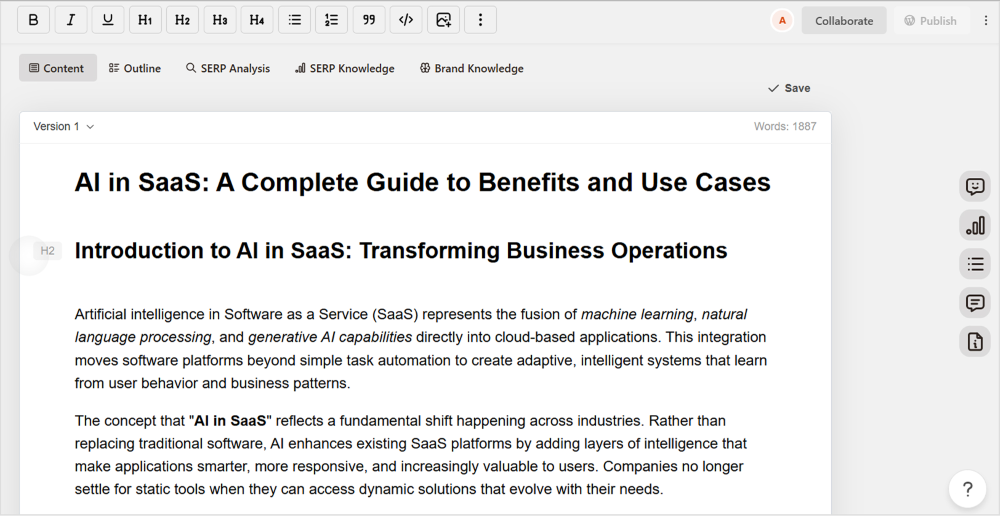
    Contentpen is built for one clear job: creating long-form blog content that actually ranks and earns links. Instead of dropping a rough draft in your lap, it guides you from topic idea through to a polished, SEO- and GEO-focused article. That makes it a natural starting point if you want to rank on Google as well as get cited in AI systems.

    Standout features:

    • Powerful keyword research based on real search intent
    • Detailed outlines so your output does not feel generic
    • Answer-first intros, strong headings, and FAQs that work well for GEO and AI search
    • Automated internal and external linking that ties new posts into your site architecture and wider backlink strategy
    • Built-in media library and an AI image generator for better Google Images visibility

    Use cases: 

    Small businesses, freelancers, marketing teams, and agencies that want to ship more high-quality articles without losing control of tone. 

    Worth knowing:

    Contentpen only offers a 7-day free trial, which can be enough in many cases. But new users might take a while to grasp all the features and how to use them properly.

    Pricing: 

    Contentpen pricing details.

    Starts at $27/month (annual plan) that provides 1 workspace, 10 articles, and 30 AI images per month. It is one of the most affordable AI search optimization and creation tools on the market right now.

    2. AIclicks.io — Best all-in-one GEO tracking platform

    AIclicks.io landing page.

    AIclicks.io shows you exactly how AI engines talk about your brand. Instead of guessing, you see real prompts users type into ChatGPT, Perplexity, Gemini, Claude, Grok, and Google AI Overviews for your brand, plus whether your site appears in those answers. That makes it one of the most focused AI search optimization tools for GEO.

    Standout features:

    • Tracking of brand mentions across major AI assistants
    • Lists of external domains that AI engines cite, such as Reddit threads, directories, and listicles
    • Competitor benchmarking for prompts and citations
    • An AI-optimized content drafting module that turns visibility gaps into answer-ready briefs

    Use cases: 

    Brands and agencies that want a complete AI visibility command center instead of scattered data. It suits teams that already run classic SEO and now need SEO for AI search as a connected but distinct track. 

    Worth knowing:

    The content drafting module is a supporting feature, not the core strength. If your primary need is producing high volumes of polished, long-form articles, AIclicks will feel limited on that side.

    Pricing: 

    AIclicks pricing plans.

    Pricing starts at $59/month, with yearly discounts and a refund guarantee that lowers risk while you test.

    3. OtterlyAI — Best for GEO audit workflows and agency reporting

    Otterly.AI landing page.

    OtterlyAI was built from the ground up for one job: showing you exactly where your brand appears inside AI-generated answers and giving you a structured path to improve it. Unlike tools that bolt GEO tracking onto a traditional SEO dashboard, Otterly treats prompt monitoring, citation analysis, and brand visibility as the core product. That focus shows in the depth of its audit capabilities.

    Standout features:

    • A GEO Audit that runs a full SWOT-style breakdown of your AI visibility
    • A Brand Visibility Index that combines mentions, coverage, and citation signals into one KPI
    • Prompt Research that converts your seed keywords into the natural-language questions people actually type into AI systems
    • Domain and URL citation tracking that shows which pages on your site get referenced most often by AI engines

    Use cases:

    Agencies that need a clean, repeatable GEO workflow for multiple clients. It is also a strong fit for content strategists who want to move beyond raw visibility data and understand why certain pages get cited while others get skipped.

    Worth knowing:

    Otterly’s pricing scales steeply with prompt volume. The Lite plan at $29/month covers only 15 tracked prompts, which runs out fast for brands monitoring multiple product lines or markets.

    Pricing:

    OtterlyAI pricing details.

    The ‘Lite’ plan starts at $29/month with 15 search prompts and tracking of ChatGPT, Google AI Overviews, Perplexity, and Copilot.

    4. Profound — Best for enterprise-grade AI visibility analytics

    Profound GEO visibility tool.

    Profound is built for teams that need serious depth behind their AI visibility data. It covers the major AI search platforms and focuses on connecting prompt-level tracking with competitive and citation intelligence to build a modern GEO strategy.

    Standout features:

    • Keyword and prompt-level tracking across ChatGPT, Perplexity, Google AI Overviews, and other AI platforms
    • Competitor benchmarking that shows how often rival brands appear for the same prompts, so you can see share-of-voice gaps at a glance
    • Content optimization recommendations tied directly to the visibility gaps

    Use cases:

    Enterprise marketing teams and in-house strategists who run AI visibility as a distinct channel alongside classic SEO. It suits brands that already have content and tracking infrastructure in place and now want deeper intelligence behind what AI systems say about them.

    Worth knowing:

    Profound is priced and built for enterprise teams, which means solo creators, freelancers, and small businesses will likely find it overkill for their needs.

    Pricing:

    Profound pricing plans.

    The starting price is $99/month, which provides 50 prompts tracked with email support.

    5. Clearscope — Best for precision-driven editorial teams

    Clearscope landing page.

    Clearscope is a favorite among editorial teams that want clean, data-backed guidance without noisy dashboards. It scores each article on an A to F scale while suggesting related phrases and entities that top-ranking pages already use. The focus stays on human-written quality, not only AI SEO tools and automation.

    Standout features:

    • Content Reports that surface recommended terms and coverage gaps
    • Content Inventory views that show which pages need updates
    • Topic Research modules that help editors map out new articles
    • A Google Docs add-on that brings optimization into your normal writing workflow

    Use cases: 

    Enterprise content teams, publishers, and agencies that manage multiple writers and editors. It fits nicely in a stack where Contentpen drafts articles and Clearscope refines word choice and coverage. 

    Worth knowing:

    Clearscope focuses on refining content for search engines rather than tracking AI visibility directly. It does not tell you whether your pages are being cited in ChatGPT or Perplexity answers, so teams that need GEO tracking will still need a separate platform alongside it.

    Pricing: 

    Clearscope pricing plans.

    Pricing begins around $129/month for the ‘Essentials’ plan that provides 20 tracked topics and 20 monthly drafts, plus topic explorations.

    6. Rankability — Best for agencies needing NLP + expert coaching

    Rankability main landing page.

    Rankability leans hard into advanced NLP and education, which makes it a strong pick for agencies learning GEO. By blending IBM Watson and Google NLU, it suggests entities and topics that matter in your niche. That means the AI SEO analyzer keeps your content strategies up-to-date according to the changing industry standards.

    Standout features:

    • Real-time content scoring with NLP-backed term suggestions
    • AI-generated briefs to guide writers
    • A built-in AI writer for generating useful first drafts
    • Weekly expert coaching calls that explain why the recommendations matter

    Use cases: 

    SEO and digital marketing agencies that want both tech and coaching in the same place. It works especially well for teams that handle many clients and need repeatable workflows. 

    Worth knowing:

    Rankability is one of the pricier content optimization tools on this list. The weekly coaching calls that justify part of that cost may not suit teams that prefer self-serve workflows or already have strong in-house SEO knowledge. 

    Pricing: 

    Rankability pricing plans.

    Plans start at $199/month. You can also get annual plans with higher credit limits and save 17% overall.

    7. MarketMuse — Best for building topical authority and content strategy

    MarketMuse landing page.

    MarketMuse focuses on building deep topical authority for your niche instead of singular, isolated pages. It scans your entire site to spot coverage gaps, then suggests which themes to expand next. If you manage a big content library, it feels more like a strategy partner than another AI content optimization tool.

    Standout features:

    • SERP X-ray and Heatmap views that show how competitors cover a topic
    • Detailed content briefs with headings, questions, and related ideas
    • Inventory and strategy documents that guide which pages to update, redirect, or expand

    Use cases: 

    Enterprise strategists and large teams that manage a large number of URLs. It pairs well with Contentpen when you want to fill gaps with new long-form posts that AI engines like to cite.

    Worth knowing:

    MarketMuse does not publish its paid plan pricing openly, which makes it harder to evaluate before purchasing the tool. The platform is also better suited to managing and auditing a large existing content library rather than helping you produce new articles quickly from scratch.

    Pricing:

    MarketMuse pricing plans.

    There’s a free plan for MarketMuse with limited applications. No pricing figure is quoted on MarketMuse’s official website for the paid plans. However, MarketMuse’s Capterra page reveals a starting price of $99/feature/month.

    8. Frase — Best affordable all-in-one AI SEO tool for solo creators

    Frase AI SEO writer.

    Frase helps you move from keyword idea to solid draft without too much hassle. It pulls headings, stats, and questions from the top SERP results, then turns them into an outline. That makes it a friendly entry point for solo creators trying AI keyword research tools and AI SEO content generators for the first time.

    Standout features:

    • Automated brief creation from current search results
    • A built-in AI writer for drafts and rewrites
    • A compact research view that highlights the questions competitors answer, and the ones they miss
    • An AI image generator that creates relevant visuals for the content

    You can then add helpful FAQs and answer-first intros that AI tools like to quote.

    Use cases: 

    Freelancers, small businesses, and startups that want one tab for research and drafting. Frase is strong when you need speed more than deep GEO tracking.

    Worth knowing: 

    Frase is built for speed and simplicity, which means it trades depth for ease of use. It pulls data from current SERP results rather than tracking AI engine citations directly, so it works best as a drafting and brief tool rather than a full GEO or AEO platform.

    Pricing: 

    Frase pricing.

    Paid plans start at $49/month with 10 AI-optimized articles and 50 audits per month. The platform also offers a free trial to test the software before purchasing.

    Also read: Frase vs. Contentpen.

    9. AirOps — Best for custom AI content workflows at scale

    AirOps landing page.

    AirOps helps you design custom AI workflows instead of relying on fixed templates. You can pull in GPT-5.2, GPT-4.1, Claude, Gemini, and other models, then chain them together for programmatic SEO tasks. That flexibility turns it into more than just another SEO content optimization tool, making it a complete content system.

    Standout features:

    • An automatic Brand Kit built from your URL, which captures tone and messaging
    • Connections to Webflow, WordPress, and 7 major CMS platforms to ensure seamless publishing
    • Bulk generate content to scale your platform without sacrificing quality

    Use cases: 

    In-house teams and agencies that are running high-volume campaigns, such as location pages or product descriptions.

    Worth knowing:

    The task-based pricing model is genuinely confusing for new users, and costs can climb quickly on high-volume campaigns before you realize it. Teams without a clear content workflow already in place may also find the flexibility of AirOps more overwhelming than helpful at first.

    Pricing:

    AirOps pricing plans.

    The AI search optimization and content creation tool provides custom pricing plans on its website.

    Related read: 10 best AirOps alternatives in 2026.

    10. Writesonic — Best for AI article writing with real-time SEO data

    Writesonic landing page.

    Writesonic combines multi-model AI writing with live SEO insights. Its Chatsonic agent pulls data from Semrush, Ahrefs, Google Search Console, and other sources to guide drafts. That makes it one of the more data-aware AI SEO tools for general content.

    Standout features:

    • A structured 10-step article writer where you pick audience, tone, competitors, and other parameters to create SEO and GEO-friendly content
    • You can upload internal knowledge guidelines as PDFs so the AI SEO content generator sticks to your brand voice
    • One-click WordPress publishing and built-in fact-checking with citations

    Use cases: 

    Bloggers, content marketers, and small teams that want flexible AI writing backed by real search data. 

    Worth knowing:

    The entry price listed does not reflect the plan most content teams will actually need. Meaningful SEO data integrations and GEO features sit at higher tiers, so the real cost for a serious content operation lands closer to the $199 to $399 range.

    Pricing:

    Writesonic pricing details.

    Pricing starts at $79/month for the ‘Starter’ package and reaches $399/month for the ‘Growth’ package.

    11. SE Ranking — Best for Google AI Overview monitoring

    SE Ranking AI Overview monitoring.

    SE Ranking is a dedicated Google AI Overviews and ChatGPT tracker. It shows which keywords trigger an Overview and whether your site is cited in it or not. That helps you shape your content for SEO and AI search, which is the growing requirement for many brands in 2026.

    Standout features:

    • An Organic AI Overlap metric that compares classic top 20 results for a particular query with AI summary links
    • Historical SERP snapshots so you can see how Overviews and ChatGPT citations change over time for a topic
    • Estimates of potential traffic you might gain or lose as Overviews appear for the organic keywords

    Use cases: 

    Teams that are looking for a tool that specializes in AI tracking and audits. It is especially useful for brands in niches where Google AI Overviews are often shown. 

    Worth knowing:

    SE Ranking’s AI tracking features are centered on Google AI Overviews and ChatGPT. So, teams that need broader coverage across Perplexity, Gemini, or Claude will find the monitoring scope narrower than dedicated GEO platforms like AIclicks or Otterly.

    Pricing:

    SE Ranking 'Core' and 'Growth' pricing plans.

    Paid plans start at $129/month, with 10 projects, 1 manager seat, 2000 keywords, and 100 prompts to track daily.

    12. Gauge — Best for agentic AI marketing intelligence

    Gauge - Best agentic AI marketing intelligence tool.

    Gauge behaves like an AI-powered marketing analyst that watches your AI visibility and website data at the same time. It tracks daily prompts and citations across ChatGPT, Perplexity, Google AI Mode, and AI Overviews. Then it answers simple questions about what to do next for your content.

    Standout features:

    • Direct connections to GA4, Google Search Console, and Semrush, plus its own prompt logs
    • Slack integration so you can ask which pages get the most AI-referred traffic and receive answers with data and suggestions in one place
    • Content briefs aimed at prompts where your brand is currently missing

    Use cases:

    Tech-forward startups and agile teams that like conversational workflows. It suits marketers who want AI search optimization tools that can think along with them, not just report what’s happening. 

    Worth knowing:

    Gauge is strongest when you already have GA4, Search Console, and Semrush connected and active. Teams without that existing data infrastructure in place will get significantly less value from the agentic features, since the agent relies on those sources to generate meaningful recommendations.

    Pricing: 

    Gauge pricing plans.

    According to the official WithGauge website, the Starter plan is $99/month, which provides 100 prompts daily and 3 articles.

    13. Search Atlas — Best for automated AI SEO execution

    Search Atlas  - Agentic SEO and AI visibility tool.

    Most AI search optimization tools tell you what to fix and leave the rest to you. Search Atlas is different because its OTTO SEO agent can actually deploy those fixes to your site once you approve them. That makes it less of a reporting tool and more of an execution platform.

    Standout features:

    • OTTO SEO identifies technical issues such as broken links, missing schema, and poor meta tags, then applies approved fixes directly to your site
    • A QUEST tab that tracks how your brand and content appear across ChatGPT, Gemini, and Perplexity
    • An AI content editor that scores drafts against top-performing competitors in real time and supports topical cluster planning
    • Atlas Brain, a conversational SEO assistant that can run keyword research, analyze competitors, and generate topical maps from a single prompt

    Use cases:

    Agencies and in-house teams that are tired of tools that generate recommendations but require a separate tool to implement them. It also works well for content-heavy sites that need both LLM visibility tracking and technical SEO automation without switching tabs.

    Worth knowing:

    The platform’s breadth is also its main risk. With 30-plus features across SEO, content, local, ads, and LLM visibility, some modules are more polished than others. In our testing, we found occasional instability and slower load times, so teams that need rock-solid reliability on every feature may want to run a thorough trial before committing.

    Pricing:

    Search Atlas pricing details.

    Plans start at $99/month with a 7-day free trial that includes full access to OTTO SEO, Content Genius, and the LLM visibility tools. Higher tiers at $199/month and above add more AI credits, deeper crawl analysis, and white-label reporting for agencies.

    14. Indexly — Best for automated indexing and improving AI visibility

    Indexly landing page.

    Indexly solves a simple but painful problem: getting new and updated pages indexed fast. If Google and Bing do not see your content, neither will AI Overviews or any other chat-based tools. Indexly automates submissions so you do not have to fiddle with Search Console every day.

    Standout features:

    • Daily sitemap scans with automatic submission of unindexed URLs to Google, Bing, Yandex, and Naver through APIs
    • A Bing integration that helps feed content toward ChatGPT and Perplexity
    • Basic impressions, clicks, and ranking data so you can spot indexing issues early
    • AI-optimized content creation that drives qualified leads and visitors

    Use cases: 

    Technical SEO professionals, publishers, and content managers who handle multiple pages each week. 

    Worth knowing:

    Indexly solves one specific problem and does not go much further than that. It is not a content, GEO tracking, or competitive intelligence tool. So it should be treated as a supporting layer in a broader stack rather than a standalone AI search optimization solution.

    Pricing: 

    Indexly pricing plans.

    Pricing for Indexly starts at $99/month, which provides 50 prompts to track for ChatGPT, AI brand sentiment detection, and an SEO + AI technical audit.

    15. Whatagraph — Best for AI-powered SEO + GEO reporting

    Whatagraph SEO and GEO reporting tool.

    Whatagraph pulls data from dozens of platforms into clean, client-ready dashboards. It turns raw numbers from GA4, Google Search Console, Ahrefs, SE Ranking, and other tools into simple visuals. AI features then write easy-to-read summaries so non-technical stakeholders can also follow along and keep up with the data provided.

    Standout features:

    • Whatagraph IQ, which lets you type a prompt to generate a full SEO report
    • IQ Summary that writes narrative recaps in multiple languages
    • IQ Chat helps clients ask questions inside the dashboard regarding key figures and statistics
    • Auto-branding from a logo upload, so reports look on-brand with minimal setup

    Use cases:

    Agencies and performance marketers who spend too much time building custom reports. It is also helpful for professionals who want an AI rank tracking tool, an AI SEO audit tool, and a GEO platform in one place. 

    Worth knowing:

    Whatagraph is the most expensive tool on this list and is priced squarely at agencies billing clients for reporting time. Solo marketers or small in-house teams with simpler reporting needs will likely find the cost hard to justify compared to other alternatives.

    Pricing: 

    Whatagraph pricing.

    Whatagraph pricing starts at $229/month on annual billing for the ‘Start’ plan, which includes Whatagraph IQ, live chat support, and 20 source credits.

    6 bonus tools worth exploring for AI search optimization

    The 15 tools above cover the core of what most teams need. But the AI search optimization space is moving fast, and several other platforms are worth knowing, depending on your specific situation.

    1. Peec AI tracks brand visibility across ChatGPT, Gemini, Perplexity, and Copilot with a particular strength in multi-country reporting. If you manage a brand across several markets and need to see how AI visibility differs by region, Peec AI fills that gap.
    2. RankPrompt is built for franchises and multi-location businesses that need to track AI visibility across different cities or service areas. It converts visibility gaps into location-specific content, making it one of the more practical tools for local SEO teams.
    3. Scrunch AI adds bot traffic monitoring. It also shows how AI crawlers are actually interacting with your site, which pages they access, and whether your content is being read before it gets cited.
    4. Goodie focuses on commercial AI visibility, including how your brand and products appear inside AI agent environments like ChatGPT shopping and Google AI Mode. Its Agentic Commerce Optimizer is a genuinely distinct feature for e-commerce brands.
    5. Respona focuses on outreach and link-building for AI search optimization. Since AI engines pull citations from trusted external sources like directories, listicles, and editorial sites, earning those placements matters for GEO just as much as for classic SEO.
    6. Pitchbox covers similar ground to Respona but with a longer track record and deeper integrations with major SEO platforms. The tool pulls live details from target pages to personalize outreach automatically, which keeps reply rates higher without manual work.

    If you’re interested in analytics and user behavior, you can check out our detailed SEO analytics tool guide for more information. 

    How to choose the right AI SEO tool for your needs

    Choosing the right AI SEO tool for your needs starts with one simple question: what do you want to improve first? 

    When you match each tool to a clear job, picking a stack feels far less confusing. Most teams do best with two or three AI search optimization tools that cover content, tracking, and technical basics.

    Begin by mapping tools to goals:

    • Content creation tools such as Contentpen, Writesonic, and Frase help you ship more long-form articles and landing pages.
    • GEO tracking tools like AIclicks.io, OtterlyAI, Gauge, and SE Ranking’s AI overview tracker tell you how AI engines already talk about your brand.
    • Technical helpers, such as Indexly, handle indexing and raw data.
    • Outreach platforms like Pitchbox secure third-party mentions and backlinks.

    Budget and team size matter as much as feature lists. 

    Solo creators and freelancers usually start with one AI SEO content generator or SEO-optimized AI content generator plus a light AI SEO audit tool. 

    Small teams can add GEO tracking once content volume grows. Larger agencies and in-house teams tend to layer in reporting platforms and outreach tools so they can show impact across the whole funnel.

    Here is a simple way to think about it:

    • Focus on content first. Without consistent, high-quality articles, even the best AI SEO tools have nothing meaningful to optimize.
    • Add AI tools once you see traffic from content. When you know where AI agents already mention you, you can sharpen future posts and landing pages. Over time, this feedback loop makes your content calendar far more targeted.
    • Layer in technical and outreach support as you scale. Raw SERP data and link building matter most when you run multiple pages. These tools keep your AI SEO optimization efforts from stalling because of crawl delays or weak authority.
    • Match pricing tiers to revenue impact. Use early wins from content and GEO tracking to justify higher-tier plans later. That way, your AI SEO platform costs grow with the value you actually see, not based on fear of missing out (FOMO).

    The right tools won’t matter if your content isn’t built to rank

    The right AI search optimization tools only work when your content itself deserves attention. If posts are shallow, poorly structured, or copied, no dashboard can fix that. AI systems favor pages that clearly answer questions and earn trust from other sites.

    Start by focusing on quality and intent. According to Google Search Central, helpful, people-first content is what earns lasting visibility, regardless of whether AI helped write it. That means you need:

    • Clear intros that answer questions fast
    • Scannable headings and short paragraphs
    • Examples grounded in real user problems

    The tool that helps you do all three consistently is Contentpen. By guiding you through keyword and topic selection, outline creation, and headline optimization, it helps you publish link-worthy posts on a steady schedule

    Write content that’s built to rank, not just read

    Create search-optimized blogs aligned with SEO and GEO signals, so your content performs well across search and AI-driven discovery.

    Try SEO Blogging FREE
    AI SEO Interface

    Once that foundation is in place, GEO trackers, AI website optimization tools, and outreach platforms have something strong to amplify.

    In short, tools help you measure, refine, and distribute. Content still wins the click, the mention, and the sale. Brands that succeed in 2026 will invest in both smart AI search optimization tools and smarter, more helpful content.

    Frequently asked questions

    What is the best AI tool for SEO in 2026?

    There is no single best AI tool for SEO in 2026 because needs differ. For blog-heavy strategies, Contentpen is a strong choice. AIclicks.io shines when you care about GEO. Indexly helps with indexing automation for your platform.

    Are there free AI tools for SEO optimization?

    Yes, there are several free or low-cost AI tools for SEO optimization. AirOps offers a free Solo plan with a monthly task limit. Indexly provides a free tier for basic indexing, and MarketMuse has a limited exploration plan. Free plans are great for testing, but serious campaigns usually need paid tiers for deeper data and features.

    Can I use just one AI search optimization tool, or do I need a stack?

    One tool is fine to start. If content is your gap, begin with a creation tool like Contentpen. If you’re already publishing consistently but not showing up in AI answers, start with a GEO tracker like AIclicks or Otterly. Add a second tool only once you’ve exhausted what the first one tells you to do.

    Do I need a separate tool for GEO if I already use an SEO platform like Semrush or Ahrefs?

    Most legacy SEO platforms have added AI visibility features, but they are bolt-ons rather than core products. They track a narrow slice of prompts and rarely give you citation-level detail or actionable GEO recommendations. If AI search visibility is a priority, a dedicated GEO tool gives you meaningfully better data than a tab inside a traditional SEO suite.

    What content changes actually improve AI citation rates?

    The highest-impact changes are structural: answer the main question in the first two sentences, use clear, conversational style H2s and H3s, and add FAQ blocks with direct answers. AI systems also favor content that cites sources, includes specific data points, and covers a topic without gaps.

    Is AI search optimization worth the cost for small businesses?

    It depends on whether your customers are already using AI to find solutions in your category. If they are using AI, not showing up in AI answers is a real revenue problem regardless of your size. Several tools on this list start at around $30 to $60 per month, which is low enough to justify testing before committing to anything bigger.

  • Perplexity vs Claude: Which AI is better for blog writing?

    Perplexity vs Claude: Which AI is better for blog writing?

    Are you looking for a tool that can help you create publish-ready blogs without the extra hassle? Keep reading on to find out the best AI solution for blog writing.

    Perplexity and Claude represent two distinct workflows for AI assistance. One prioritizes research and sourced information, while the other focuses on thoughtful and nuanced writing. 

    If you are a writer or blogger trying to choose between them, you should understand the Perplexity vs Claude differences in detail to determine which tool actually helps you create better blog content.

    This comparison examines Perplexity vs Claude specifically for content writing and blogging tasks. We’ll look at how each handles research, writing quality, content depth, and the practical realities of using them for regular content production. 

    General overview of Claude’s capabilities

    Claude is Anthropic’s AI assistant. It is designed with a focus on being helpful, harmless, and honest. Content writers can use Claude’s features that center on content creation to handle nuanced, complex tasks.
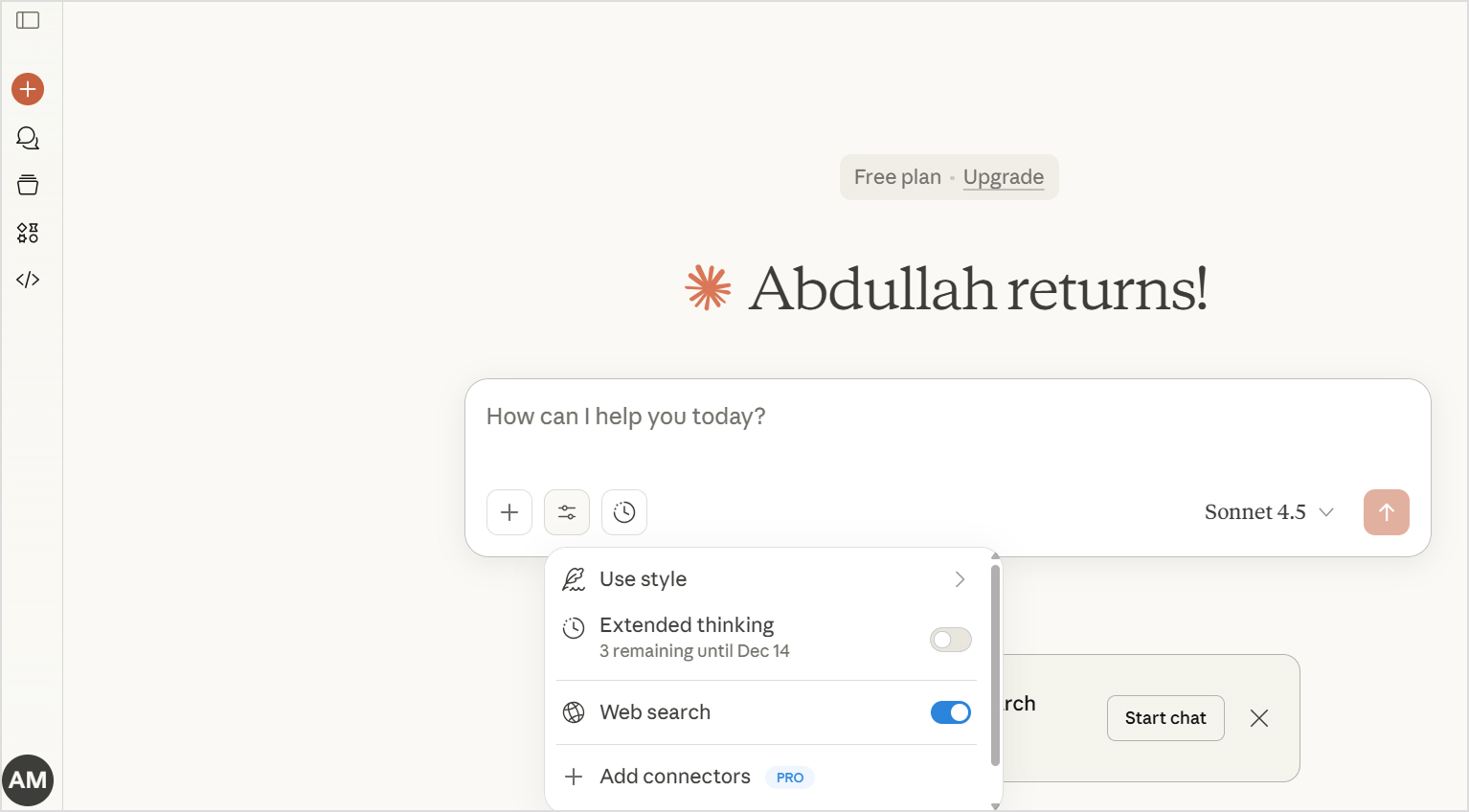
    Claude main interface

    The platform offers multiple model tiers. Claude 4.5 Sonnet handles most tasks efficiently, while Claude 4.5 Opus provides more sophisticated reasoning for complex work. 

    Key capabilities relevant to bloggers:

    • Extended context window. Claude can process up to 200,000 tokens in a single conversation, allowing it to work with lengthy documents, maintain context across long writing sessions, and reference substantial source material while writing.
    • Writing style range. Claude adapts to different tones and formats, from technical documentation to conversational blog posts. It can match provided examples and adjust formality levels based on guidance.
    • Nuanced instruction following. Claude handles complex, multi-part prompts reasonably well. You can provide detailed briefs with specific requirements, and you can generally expect the output to address most of your criteria.
    • Artifacts for longer content. The artifacts feature lets Claude create standalone documents, code, and other outputs that you can iterate on separately from the main conversation.

    Claude performs well for blogging at different stages, including drafting, expanding outlines, rewriting for clarity, and adapting content for different audiences. The writing tends toward thorough and considered rather than punchy and brief.

    Also read: Claude vs ChatGPT.

    General overview of Perplexity’s capabilities

    Perplexity AI positions itself as a research-first tool. Unlike traditional chatbots that generate responses from training data alone, Perplexity searches the web and synthesizes information from multiple sources.
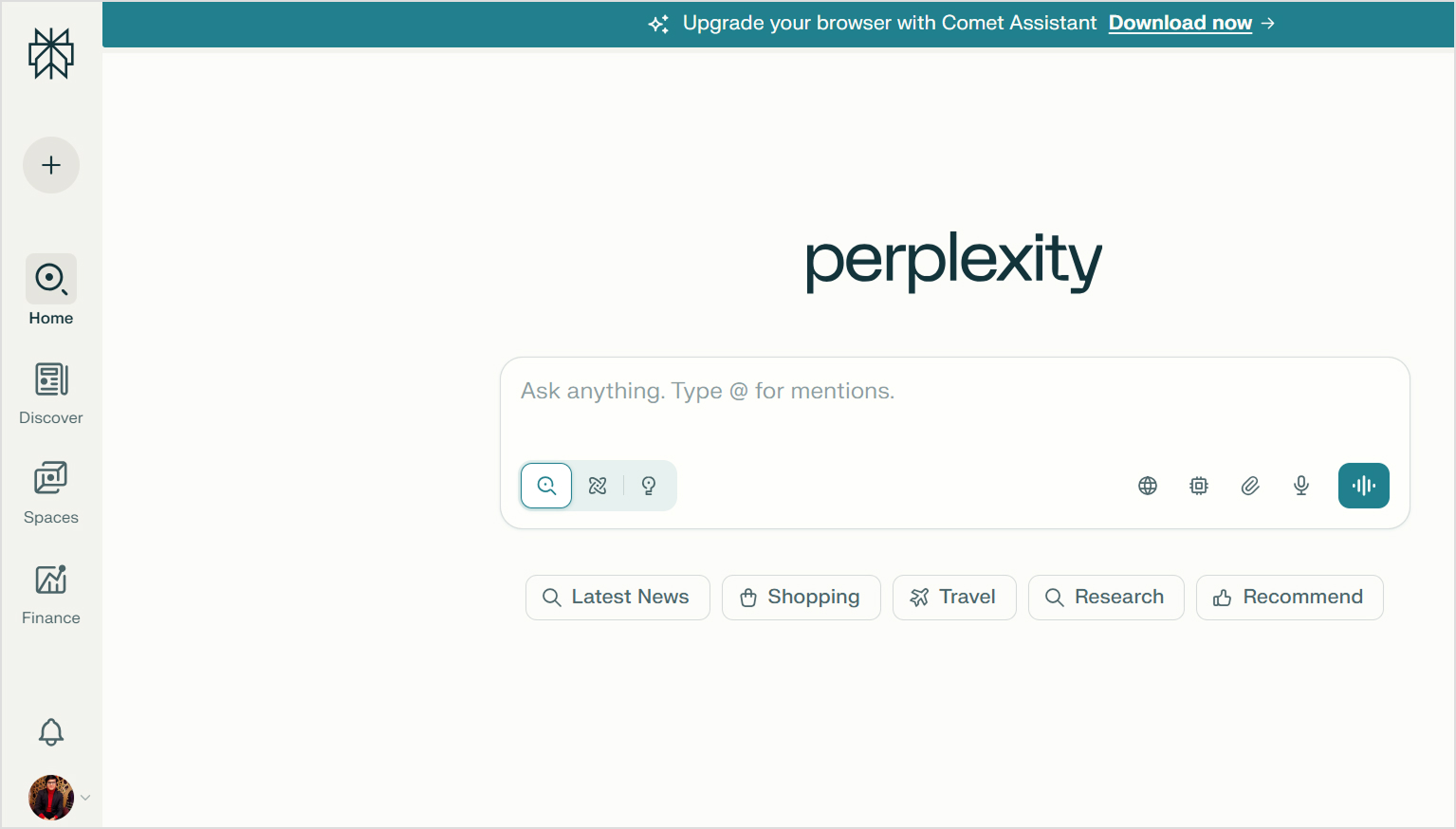
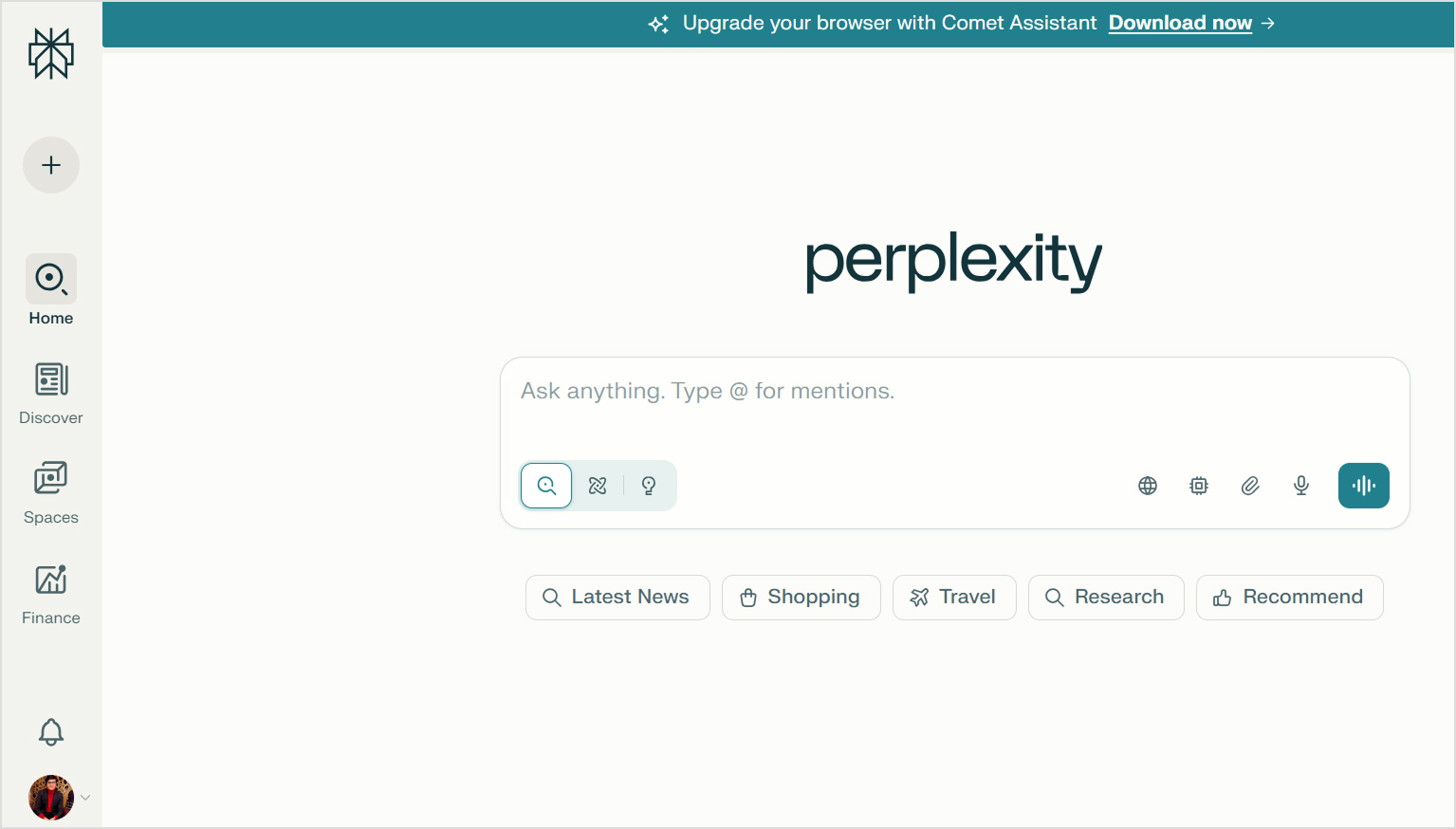
    Perplexity main interface

    This research-centric approach has specific implications for content creators. When you ask Perplexity about a topic, it doesn’t just give you an answer; it shows you where that answer came from. Every response includes numbered citations linking to source material.

    Core features for bloggers:

    • Automatic source citation. Each claim connects to its origin, making fact-checking straightforward and helping you build credibility when you need to reference information in your content.
    • Focus modes. Perplexity lets you limit searches to specific source types: academic papers, Reddit discussions, YouTube videos, or general web results. This targeting helps when you need specific types of research.
    • Pro Search. The premium feature conducts more thorough research, asks clarifying questions, and provides deeper analysis for complex queries.
    • Collections. You can organize research by topic, building reference libraries for ongoing content projects.
    • Multi-model access. Perplexity Pro subscribers can choose from different AI models (including Claude and GPT-4) to generate responses, offering flexibility in how information is synthesized.

    The tradeoff is clear: Perplexity prioritizes verifiable accuracy over polished writing. If you need to fact-check AI-generated content, Perplexity’s citation-forward approach makes that easier than with most other AI tools.

    Also read: Perplexity vs ChatGPT.

    Comparing Perplexity vs Claude

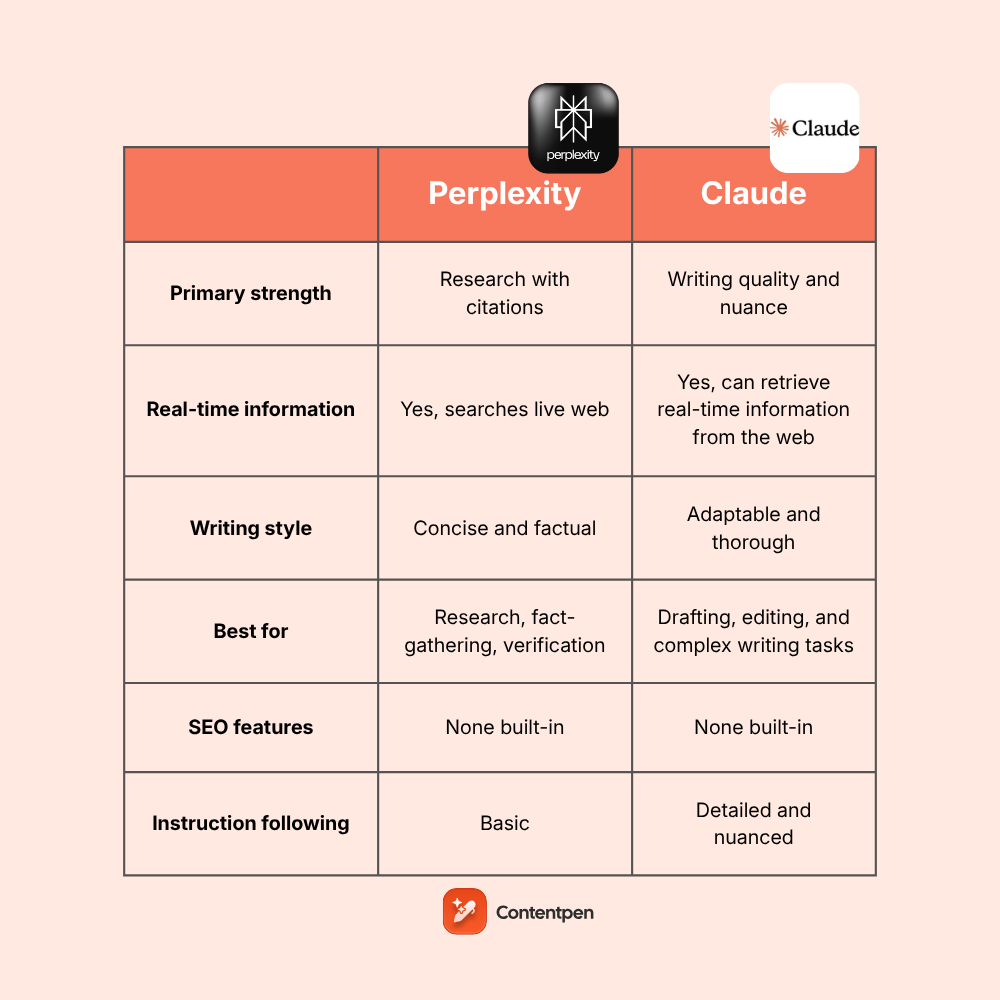
    Here’s how Perplexity vs Claude compare across key factors for blog content creation:

    FeaturePerplexity AIClaude
    Primary strengthResearch with citationsWriting quality and nuance
    Citation qualityExcellent. Every claim is citedNone. No built-in source linking
    Real-time informationYes, searches live webYes, can retrieve real-time information from the web
    Writing styleConcise and factualAdaptable and thorough
    Best forResearch, fact-gathering, verificationDrafting, editing, and complex writing tasks
    Free tierGenerous with core featuresLimited daily messages
    Premium cost$20/month (Pro)$17/month (Pro)
    Context windowModerateVery large (200K tokens)
    SEO featuresNone built-inNone built-in
    Long-form contentLimited. Outputs are briefStrong. Maintains coherence
    Instruction followingBasicDetailed and nuanced
    Image generationAvailable in ProNot available

    Perplexity vs Claude for research

    Perplexity was built for research. Every query triggers a web search and provides inline citations you can verify. Focus mode lets you target academic papers, Reddit discussions, or general web results. 

    So, bloggers who gather facts, statistics, and current information can find this automated research with built-in verification vital for saving time.
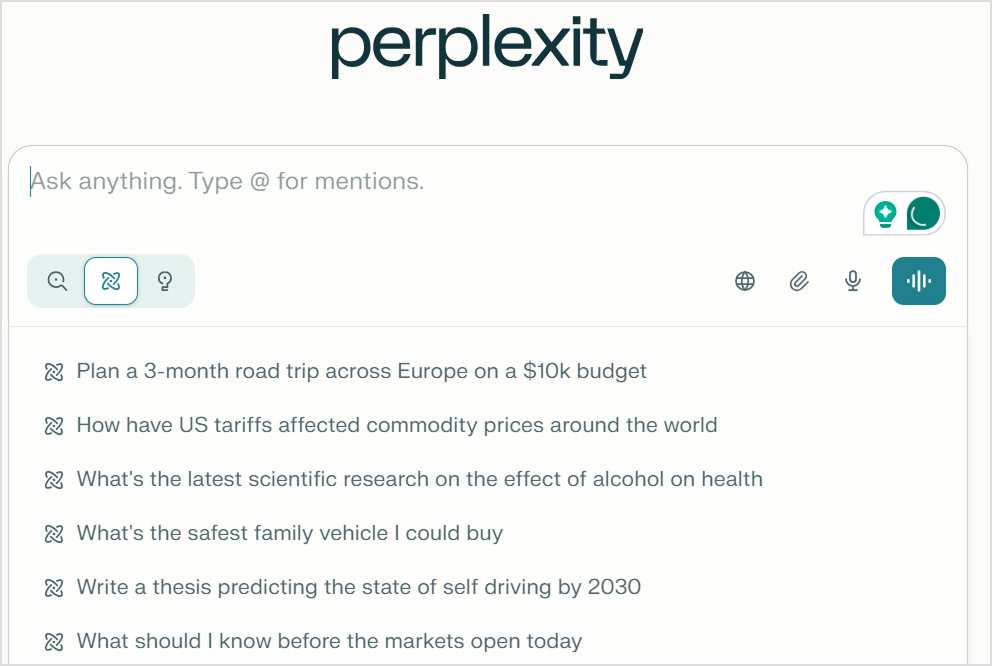
    Perplexity web search functionality

    Claude works primarily from training data with a knowledge cutoff, meaning it can’t access current information unless you enable the web search option. What Claude does well is synthesize the information you provide, analyzing multiple sources and extracting insights.

    Verdict

    Perplexity wins for research as automatic web search with source citations beats relying on potentially outdated training data. 

    Also read: Claude vs Gemini.

    Perplexity vs Claude for reasoning

    Perplexity reasons well within its research framework, processing information across sources and identifying patterns. Pro Search considers multiple angles and provides nuanced responses.

    However, Perplexity stays close to its sources and rarely makes creative leaps or generates insights beyond what it finds online. This is intentional because of its accuracy-first approach.

    Claude shows stronger general reasoning abilities, particularly for abstract thinking, argument construction, and analysis that doesn’t require source backing. It explores implications, anticipates counterarguments, and works through complex topics systematically. 

    Claude on a phone image

    Verdict

    Claude wins for reasoning. Stronger analytical depth and creative thinking outweigh Perplexity’s source-anchored but more limited reasoning.

    Perplexity vs Claude for writing

    Perplexity generates text as an extension of its answer function. The output is competent but concise, prioritizing clarity and accuracy over style. Responses are well-organized but not distinctive or engaging.

    Claude was designed for sustained writing tasks. The output reads naturally, adapts to different styles, and maintains coherence across longer pieces. It handles shifts between formal and casual, technical and accessible, and can approximate specific brand voices with proper examples. 

    Verdict

    Claude wins for writing. It provides more natural content, a better style range, and stronger long-form capability for actual content creation.

    Also read: How to use AI for content creation.

    Perplexity vs Claude for content depth

    Perplexity achieves depth through the breadth of sources. It pulls information from multiple sites, surfacing details and perspectives you wouldn’t find in a single search. The citation system lets you follow any thread deeper by checking original sources.

    Claude handles depth through reasoning and elaboration. Give it a topic, and it explores implications, considers edge cases, and builds comprehensive arguments from its knowledge.

    Verdict

    It depends. Perplexity offers source-verified breadth, while Claude offers reasoning-driven analytical depth. Choose based on whether you need aggregated facts or developed analysis.

    Perplexity vs Claude for image generation

    Perplexity includes image generation through DALL-E integration. You can create images directly within your research workflow, which streamlines content creation when you need both information and visuals. On the other hand, Claude doesn’t generate images. 

    Perplexity image creation functionality

    Verdict

    Perplexity wins by default. Claude simply doesn’t offer image generation, leaving Perplexity as the only option between the two if you need visuals.

    Also read: Perplexity vs Gemini.

    Perplexity vs Claude in SEO understanding

    Perplexity has no built-in SEO features but researches SEO topics effectively. Ask about current best practices, search intent, or what’s ranking for target keywords, and it finds relevant, cited information. 

    Claude also doesn’t have any built-in SEO features, but it understands SEO concepts well and can discuss optimization principles knowledgeably. It analyzes content you paste in, suggesting improvements for headings, structure, and keyword variations.

    Verdict

    We’ll give a slight edge here to Claude. It provides better SEO assistance and more natural keyword incorporation, though neither of the tools replaces dedicated SEO writing tools.

    Creating a real blog with Perplexity and Claude

    To see how these tools perform in practice, we gave both the same prompt:

    “Write a short and SEO-optimized blog post about Human vs AI-Powered Blog Writing.”
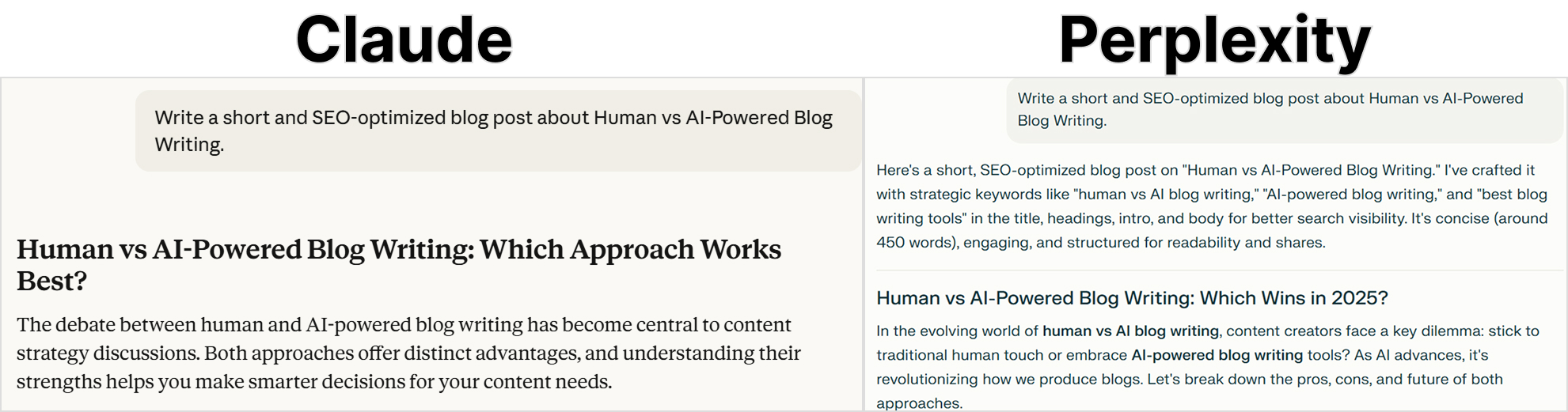
    Perplexity vs Claude blog writing comparison

    The results reveal apparent differences in how each tool approaches content creation.

    Claude’s output

    Claude produced a structured article with clear sections, totaling 328 words. The content takes a balanced, analytical approach. Claude explores the nuances of when each approach works best and concludes that the hybrid model is the practical solution. The content reads like something a human editor would produce with minimal revision needed.

    Perplexity’s output

    Perplexity delivered a more explicitly SEO-optimized piece with bullet points, a numbered structure, and direct keyword inclusion, totaling 340 words. 

    The approach is more promotional in tone, ending with a direct call-to-action: “Ready to try? Test free AI tools and compare your results!” 

    Perplexity also personalized the content, and the overall writing leans heavily on lists and short paragraphs, making it scannable but less cohesive as prose. It reads more like a marketing blog than an editorial piece.

    What this comparison reveals

    The outputs reflect each tool’s core philosophy. 

    Claude prioritized writing quality, producing prose that flows naturally and makes a coherent argument. Perplexity prioritized SEO signals, producing content structured for search visibility with explicit keywords, bullet points, and actionable formatting.

    Neither output was perfect. Claude could have included more concrete examples and data points. Perplexity’s aggressive keyword insertion (“human vs AI blog writing” appears four times in 340 words) appears as over-optimization. Both would benefit from human editing before publication.

    Also read: 12 best SEO competitor analysis tools.

    Claude’s strengths

    Based on the real test and regular usage, here’s where Claude consistently delivers:

    • Natural prose quality. Claude’s output reads like polished editorial writing. Sentences flow into each other, paragraphs build logically, and the overall piece feels cohesive. You’re getting quality content that needs minimal structural editing.
    • Balanced, nuanced analysis. Rather than taking a simplistic stance, Claude explored the complexity of human vs AI writing and arrived at a reasoned conclusion. For content that requires weighing multiple perspectives, this analytical depth adds value.
    • Appropriate restraint. Claude didn’t over-optimize with keyword stuffing or aggressive formatting. The term “human vs AI” appeared naturally rather than being forced into every paragraph.
    • Professional tone without being sterile. The writing is authoritative but accessible. It sounds like a knowledgeable person explaining something rather than a textbook or a marketing pitch.
    • Complete argumentation. Claude built toward a conclusion (the hybrid approach) and supported it with reasoning throughout. Readers finish with a clear takeaway and understand why that conclusion makes sense.

    Claude’s weaknesses

    The test also revealed genuine limitations:

    • Light on specific data. Claude’s output included no statistics, percentages, or concrete numbers. Claims like “AI handles the heavy lifting” lack the supporting evidence that builds credibility. For data-driven content, you’d need to add specifics yourself.
    • Conservative formatting. While the restraint on bullet points produced better prose, some readers prefer scannable content. Claude’s wall-of-text approach may not perform as well for audiences who skim rather than read.
    • Generic examples. The piece discussed human and AI writing in abstract terms without naming specific tools, real companies, or concrete scenarios.
    • Missed explicit SEO signals. Claude doesn’t automatically provide keyword density, meta description suggestions, or structured SEO data.

    Also read: 12 best AI SEO tools.

    Perplexity’s strengths

    Perplexity on a phone image

    Perplexity showed clear advantages in several areas:

    • Explicit SEO optimization. Perplexity interpreted “SEO-optimized” literally, including the target keyword phrase multiple times, using scannable bullet points, and structuring content for search visibility.
    • Specific data and claims. The output included concrete numbers (“30-50% time savings,” “5x productivity boost”) and named actual tools (Grok, Jasper, ChatGPT, SEMrush) for readers.
    • Scannable formatting. Bullet points, short paragraphs, and clear section breaks make Perplexity’s content easy to skim. For audiences who scan before reading, this structure improves engagement.
    • Action-oriented conclusion. The piece ended with a clear call to action, encouraging readers to test AI tools. For content designed to drive specific behaviors, this direct approach is more effective than Claude’s conclusion.

    Perplexity’s weaknesses

    The test revealed significant limitations for blog writing:

    • Choppy prose flow. Individual points are clear, but the piece lacks the cohesive narrative that keeps readers engaged through longer content.
    • Promotional tone. Phrases like “Lightning-Fast Output” sound like marketing copy rather than editorial content. For blogs aiming to inform rather than sell, this tone may feel off-putting to readers.
    • Less analytical depth. Perplexity presented information in parallel lists without deeply analyzing the tradeoffs or building a sophisticated argument. The hybrid recommendation appears, but it isn’t as developed as Claude’s.
    • Inconsistent quality within sections. Some bullet points are insightful while others feel like filler. The quality varies more than Claude’s consistently polished output, requiring more editing to achieve uniform quality.

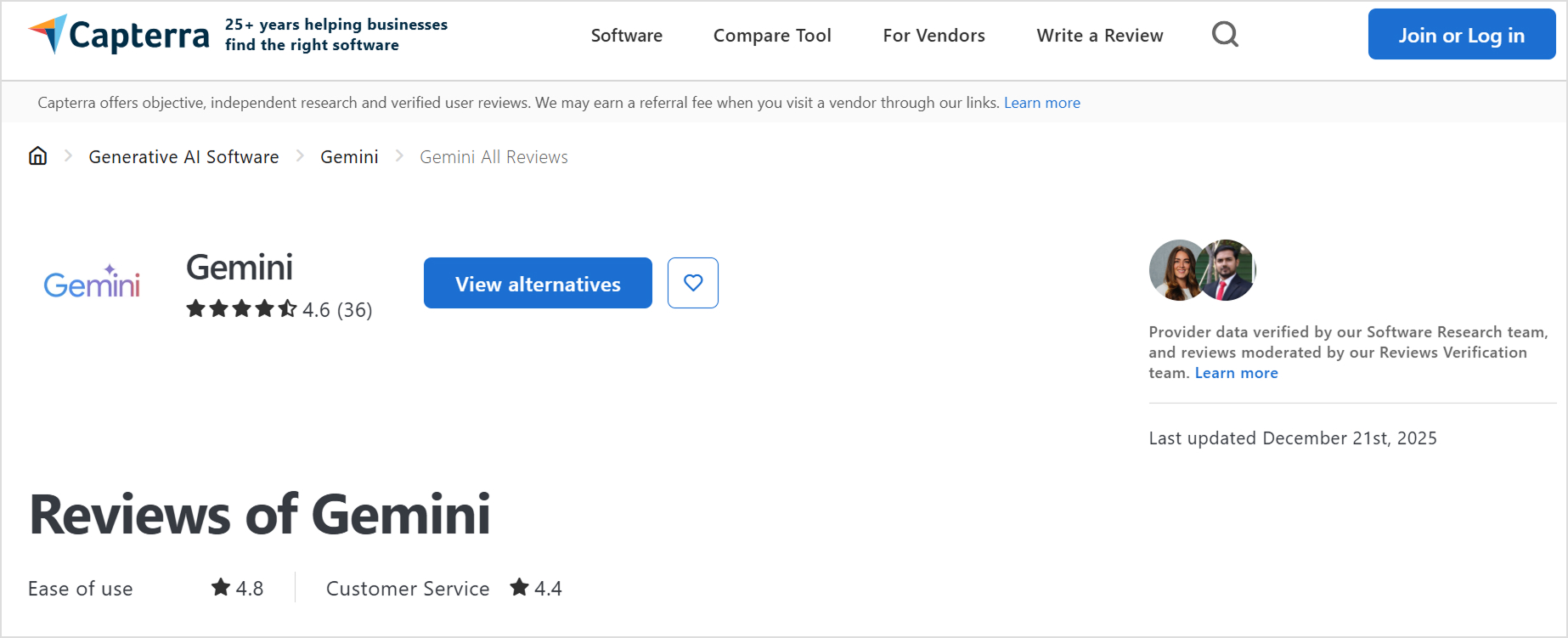
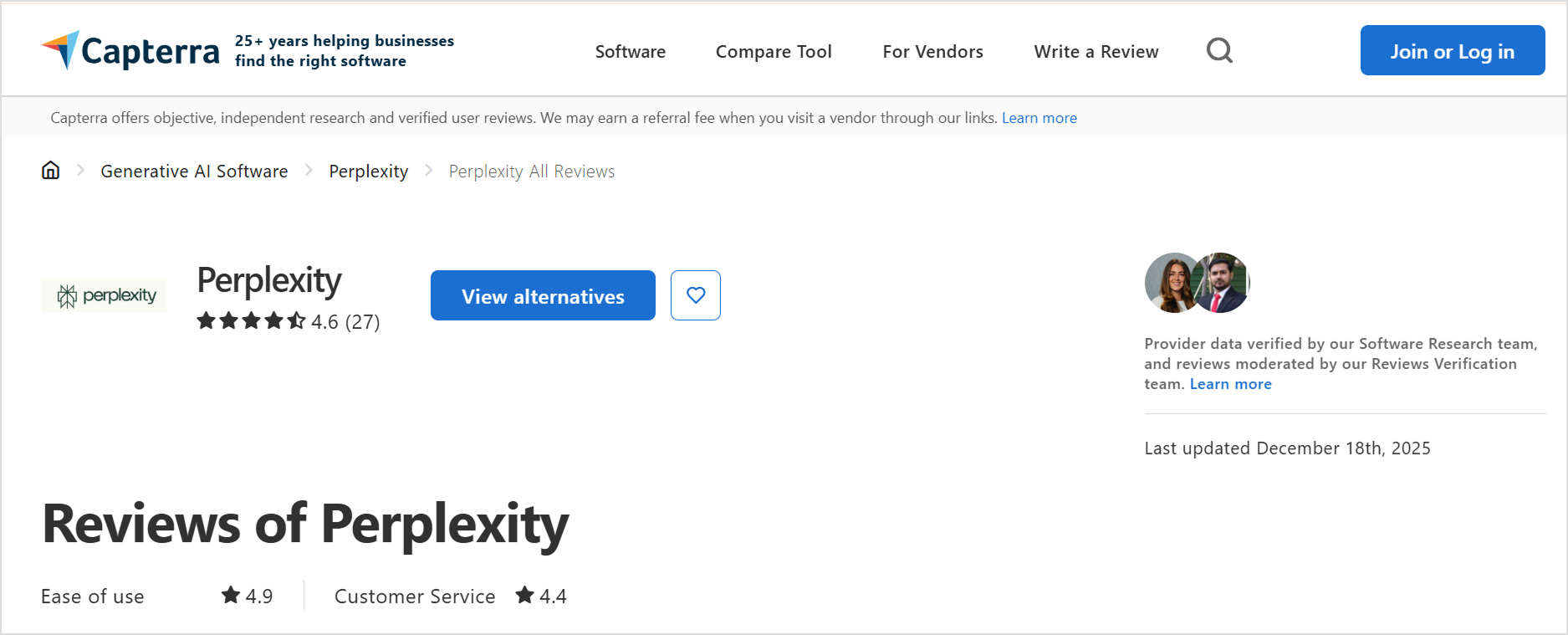
    User reviews for Perplexity and Claude

    Real user feedback reveals what marketing pages won’t tell you. Here’s what actual users say about both tools on G2, a software review platform.

    Claude user reviews
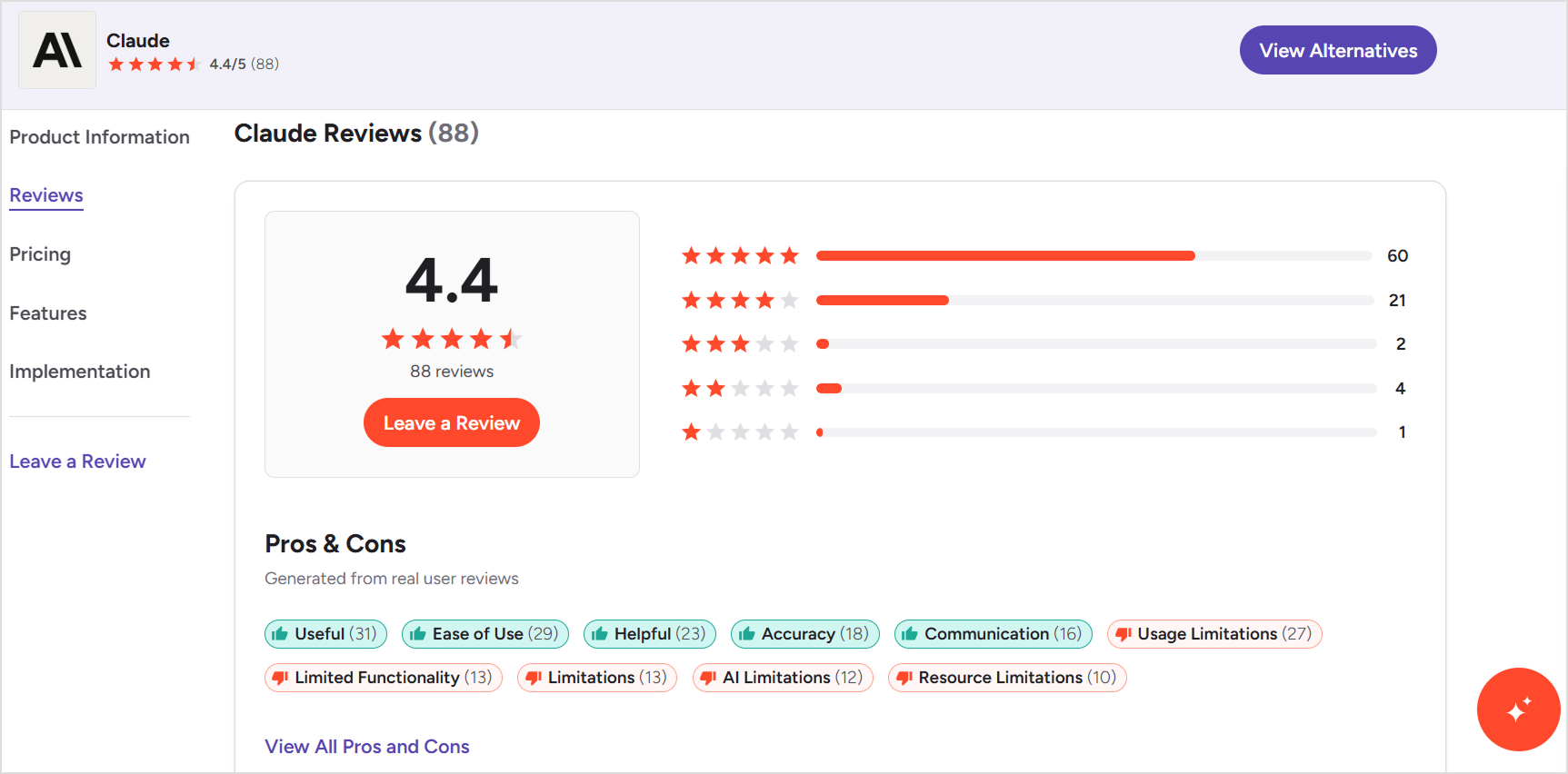
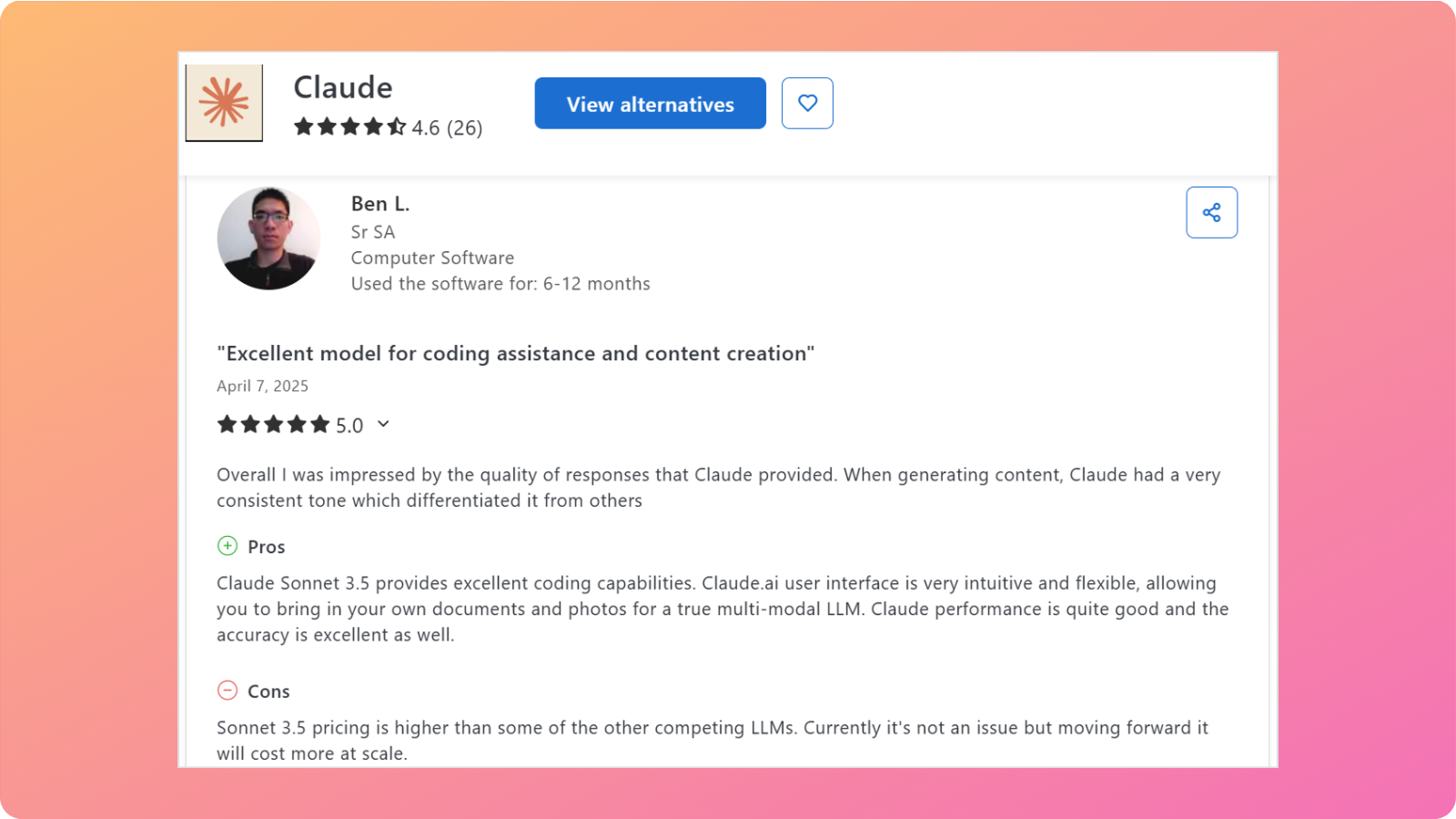
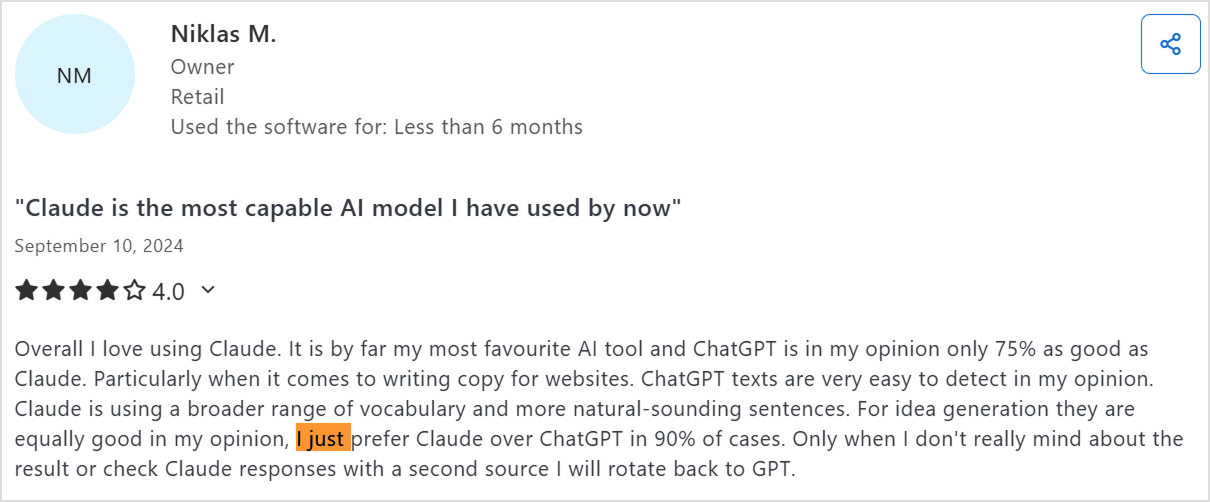
    Claude user reviews

    Users consistently praise Claude for depth and nuanced thinking. One writer noted that Claude “organized a discussion with counterarguments to develop the subject” for their novel, highlighting its strength in complex, analytical conversations.

    Technical users appreciate the model architecture. One reviewer highlighted the practical distinction between Opus 4 for “long-running, multi-step reasoning, codebase-scale refactors, and research-style synthesis” and Sonnet 4 for “daily coding, support, and agent sub-tasks”.

    The criticisms center on cost and complexity. Technical users note that “Opus 4’s higher output costs and extended thinking can increase spend and latency on verbose sessions,” requiring careful token management.

    Also read: Perplexity vs Gemini: An honest comparison for content writers

    Perplexity user reviews
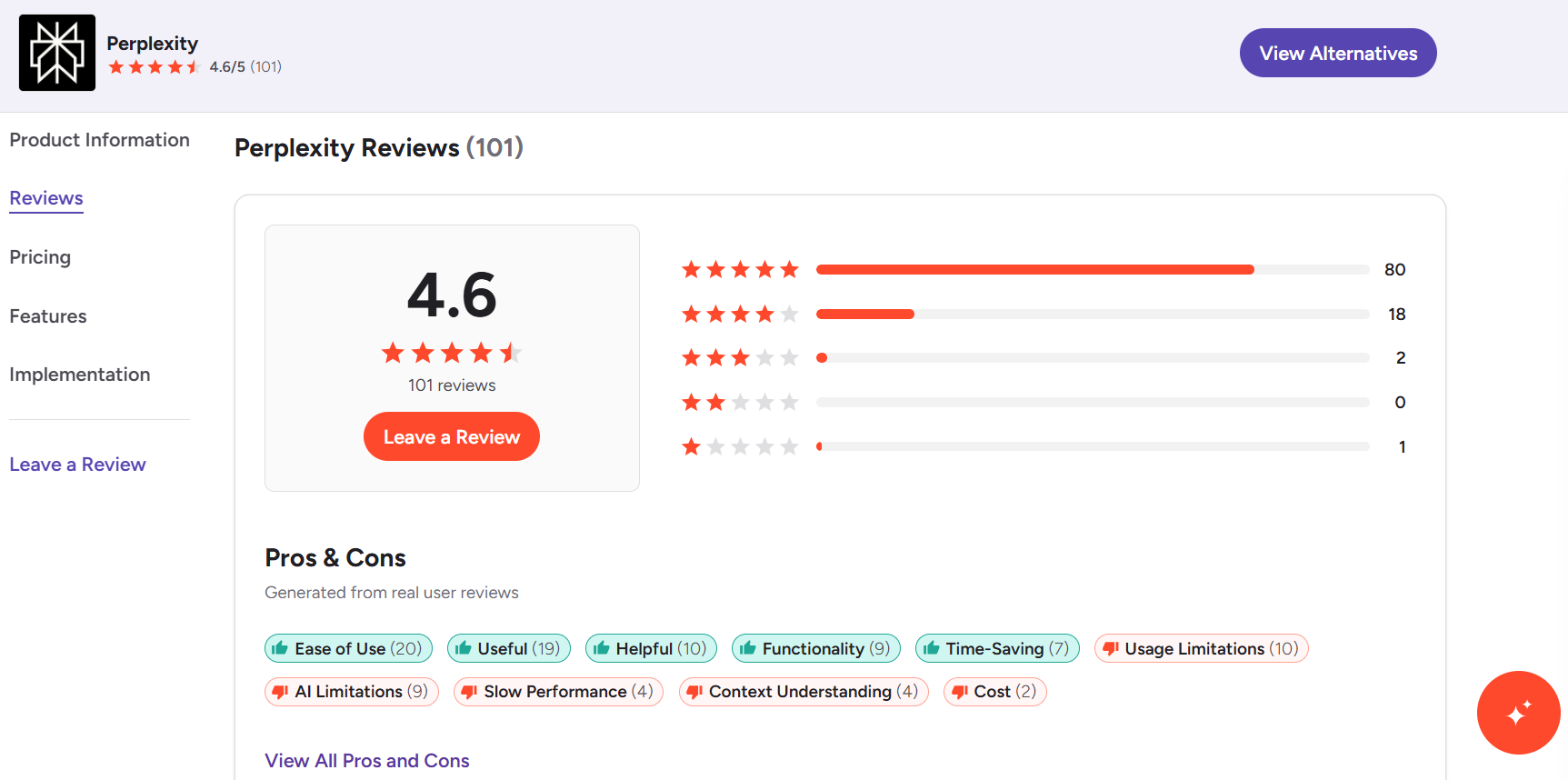
    Perplexity user reviews

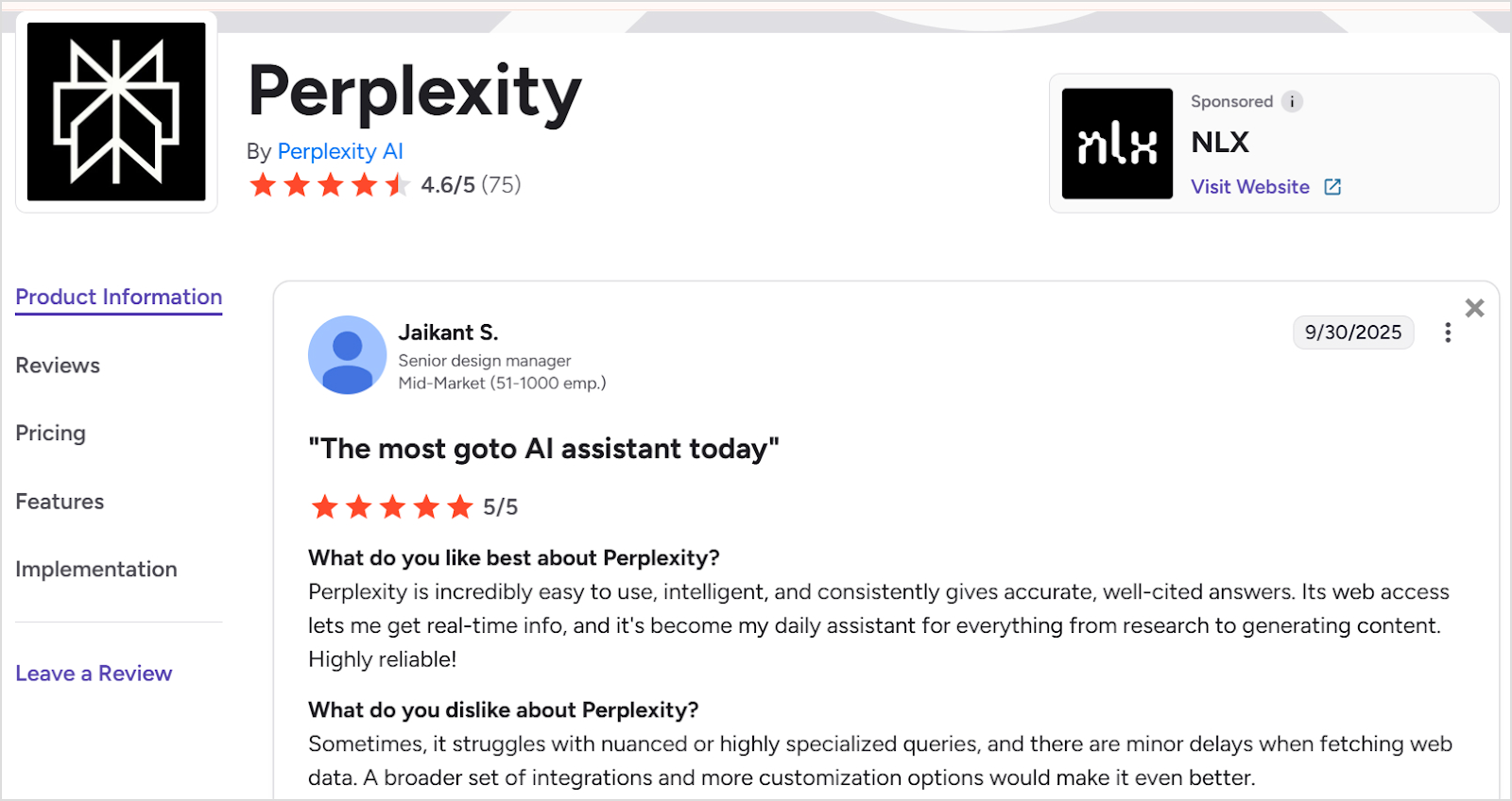
    Perplexity users emphasize speed and research efficiency. One reviewer praised its ability to combine “the power of an AI language model with real-time web search” for “up-to-date, sourced answers almost instantly.” The transparent source citations and clean interface came up repeatedly as standout features.

    For workplace use, Perplexity shines in specific scenarios. A marketing professional uses it “daily at work for quick research, getting summaries, and checking facts when preparing marketing or partner reports.”

    The limitations users identify align with our testing. Multiple reviewers note that “depth of answers can feel a bit limited compared to GPT-4” and that it’s “less helpful for creative writing or brainstorming.”

    Summary of user reviews of Perplexity vs Claude

    The rating difference is marginal, but the feedback patterns differ meaningfully. Claude users value depth, reasoning, and the ability to handle complex tasks. Perplexity users value speed, sources, and research efficiency.

    For blogging specifically, the reviews suggest Claude fits better when you need analytical depth and polished writing. Perplexity fits better when you need fast, verified research.

    Contentpen: A better alternative to Perplexity and Claude for blog writing

    Both Perplexity and Claude offer valuable capabilities, but neither is designed specifically for blog content creation. Perplexity excels at research. Claude excels at writing. 

    But bloggers need a tool to handle the complete content workflow: researching, writing, optimization, and publishing in one focused solution.
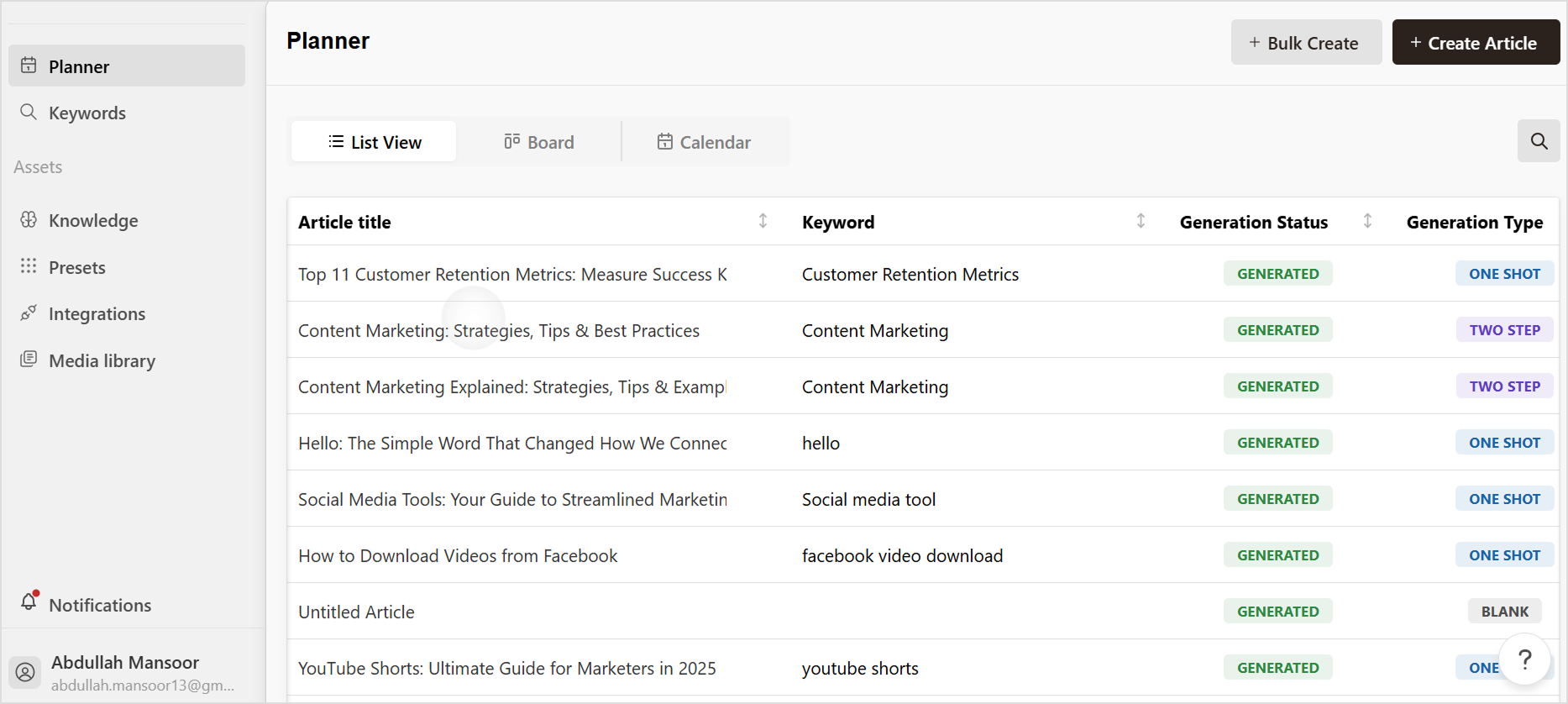
    Contentpen main tool interface

    Contentpen addresses this gap. Rather than adapting general-purpose AI to blogging, it’s built around what content creators actually need.

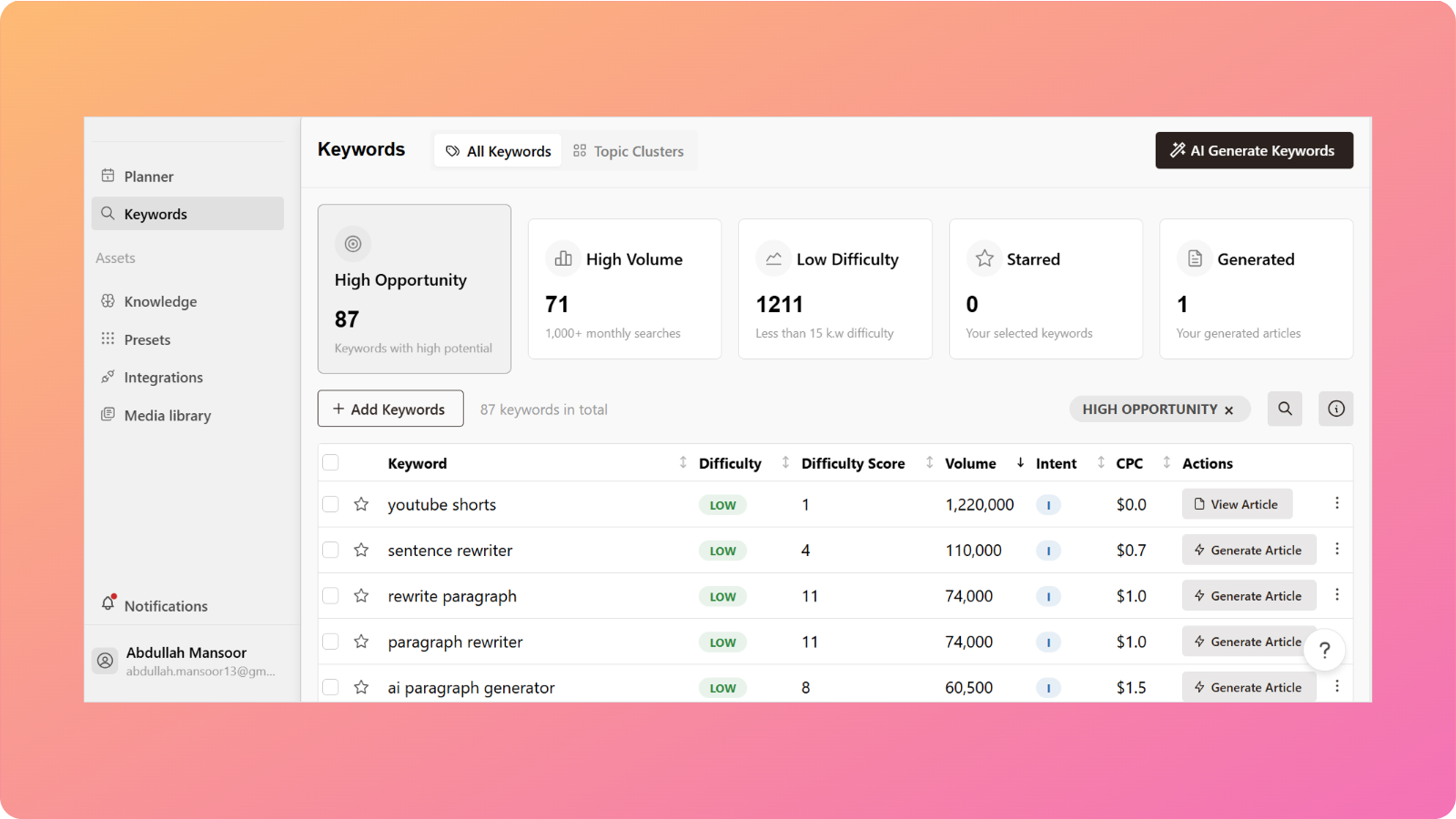
    • Research and writing together. Contentpen handles keyword research natively, helping identify high-opportunity keywords to improve SERP rankings. The writing process incorporates this research, so the content is optimized from the start.
    • SEO is built into the workflow. Where Perplexity and Claude require separate SEO tools, Contentpen includes SEO scoring that evaluates content as you create it. You see optimization opportunities in real time, along with article meta titles and descriptions.
    • Complete blog creation. Contentpen generates full, publish-ready blog posts through its blog creation feature. Also, the writing style adapts to your required brand voice, and the flow is much more natural and human-like than other AI tools on the market.
    • Direct publishing integration. Through integrations and publishing features, Contentpen connects directly to WordPress, Ghost, Wix, and other CMS platforms. This eliminates the copy-paste workflow that general AI tools require.
    • Scale when you need it. For content teams or bloggers managing multiple sites, bulk content creation lets you produce multiple optimized posts efficiently.

    The comparison isn’t entirely fair. Perplexity and Claude serve broader purposes beyond blogging, and they’re valuable for many tasks. 

    But, for bloggers and content creators specifically seeking tools to improve their content workflow, a purpose-built solution like Contentpen outperforms adapted general-purpose AI.

    Also read: Use AI to write blog posts.

    Final verdict: Which AI is better for blog writing?

    After comparing both tools across research, reasoning, writing quality, content depth, and SEO understanding, here’s the straightforward assessment of Perplexity vs Claude:

    Choose Perplexity if:

    • You write fact-heavy content requiring citations
    • You need current information and real-time web access
    • You’ll handle the polished writing yourself or with another tool
    • You want image generation capabilities

    Choose Claude if:

    • Writing quality and style matter most
    • You produce long-form content requiring sustained coherence
    • You need help with analysis, arguments, and nuanced thinking

    In practice, most bloggers find that these tools serve different functions. You might find that our AI writer for blogs serves you better than juggling multiple AI assistants. However, you are free to test each tool and let the results guide your choice.

    Frequently asked questions

    Is Perplexity better than Anthropic?

    Not entirely. Perplexity and Anthropic serve different purposes. Perplexity is a research tool with web search and citations, while Anthropic’s Claude AI excels at writing and reasoning.

    Which AI is better than Claude AI?

    It depends on the task. Perplexity beats Claude for research with real-time web access. GPT-5 offers similar writing quality with more integrations. For specific blogging needs, purpose-built tools like Contentpen outperform general AI assistants.

    Which is better than Perplexity?

    For research with citations, Perplexity remains top-tier. For writing quality, Claude and GPT-5 produce better prose. For complete blog creation with SEO optimization, dedicated platforms like our AI blog writing tool offer more comprehensive solutions than any general-purpose AI.

    Is Claude under Perplexity?

    No. Claude is developed by Anthropic, while Perplexity is a separate company that offers access to multiple AI models within its platform.

    Who are the Big 4 of AI?

    The major AI players are OpenAI (ChatGPT), Google (Gemini), Anthropic (Claude), and Meta (Llama). Microsoft is often included due to its OpenAI partnership and Copilot products. Perplexity, while smaller, has carved out a significant niche in AI-powered research.

    Who controls Perplexity?

    Perplexity AI is an independent company founded in 2022 by Aravind Srinivas (CEO), Denis Yarats, Johnny Ho, and Andy Konwinski. It’s backed by investors, including Jeff Bezos and Nvidia, but operates independently from major tech companies.

    Are Claude and Perplexity free?

    Both offer free tiers with limitations. Claude’s free version has daily message caps. Perplexity’s free tier limits Pro Searches but offers unlimited basic queries. Both charge a premium to provide users with higher limits and advanced features.
  • Perplexity vs Gemini: An honest comparison for content writers

    Perplexity vs Gemini: An honest comparison for content writers

    Looking for the best AI assistant for blog writing? Struggling to simplify your workflow and meet publishing deadlines? Worry not, we’ve got you covered with the solution!

    With so many options promising to transform your content workflow, two tools always stand out: Perplexity AI and Google’s Gemini.

    These platforms have varying working processes for using AI for content creation. Perplexity positions itself as an “answer engine” that prioritizes research and cited information. Gemini offers a more traditional chatbot experience with multimodal capabilities.

    But here’s the real question: which one actually helps you write better and SEO-optimized blog posts? Both of them or maybe neither? 

    This comparison breaks down Perplexity vs Gemini specifically for content writing and blogging. You’ll see how each tool handles research, reasoning, SEO understanding, and the actual writing process. 

    So, let’s get started.

    General overview of Gemini’s capabilities

    Gemini represents Google’s flagship AI mode. It is designed to compete directly with ChatGPT and other leading conversational AI systems. 

    What makes Gemini notable for content writers is its deep integration with Google’s ecosystem and its multimodal architecture.

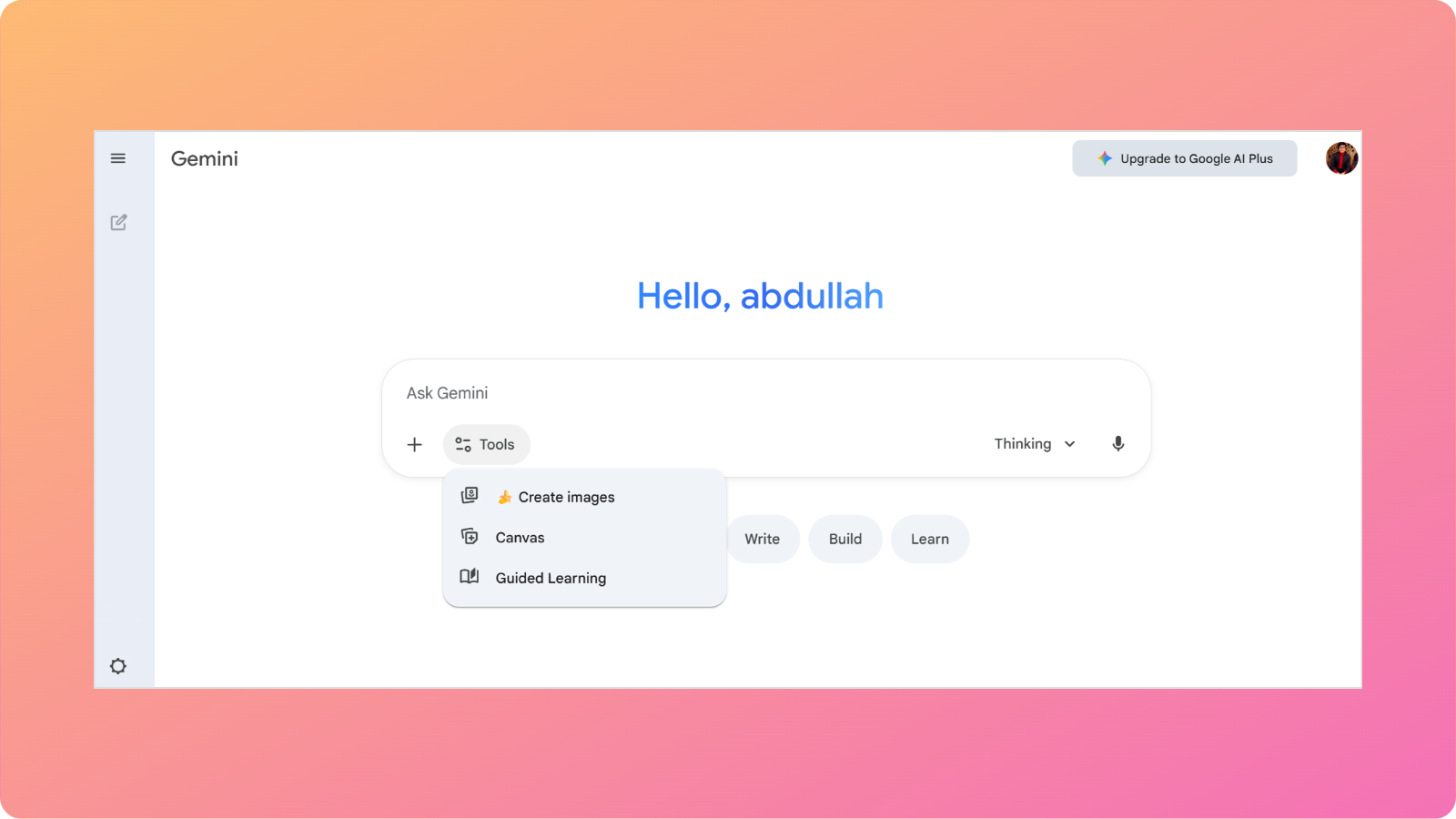
    Gemini main interface

    The platform comes in several tiers. Gemini (formerly Bard) offers free access with solid capabilities, while Gemini Advanced provides access to the more powerful Gemini 3 Pro model through a Google One AI Premium subscription. 

    Gemini’s core strengths for content creation include:

    • Real-time information access. Unlike some AI models with fixed knowledge cutoffs, Gemini can pull current information from the web. This proves valuable when writing about trending topics or recent developments.
    • Google Workspace integration. If you’re already using Google Docs, Gmail, or Drive, Gemini can work directly within these tools. You can draft blog content in Docs with AI assistance built in.
    • Multimodal understanding. Gemini can analyze images, which helps when you need to describe visuals, create alt text, or generate content based on reference materials.
    • Long context window. Gemini 3.0 Pro offers an impressive context window (up to 1 million tokens in some configurations), allowing it to process and reference lengthy documents, research papers, or existing content libraries.

    Bloggers can use Gemini to handle tasks like generating outlines, expanding on ideas, rewriting sections for clarity, and adapting content for different audiences. 

    The writing style tends toward conversational and accessible, though it sometimes requires prompting to achieve a specific tone of voice.

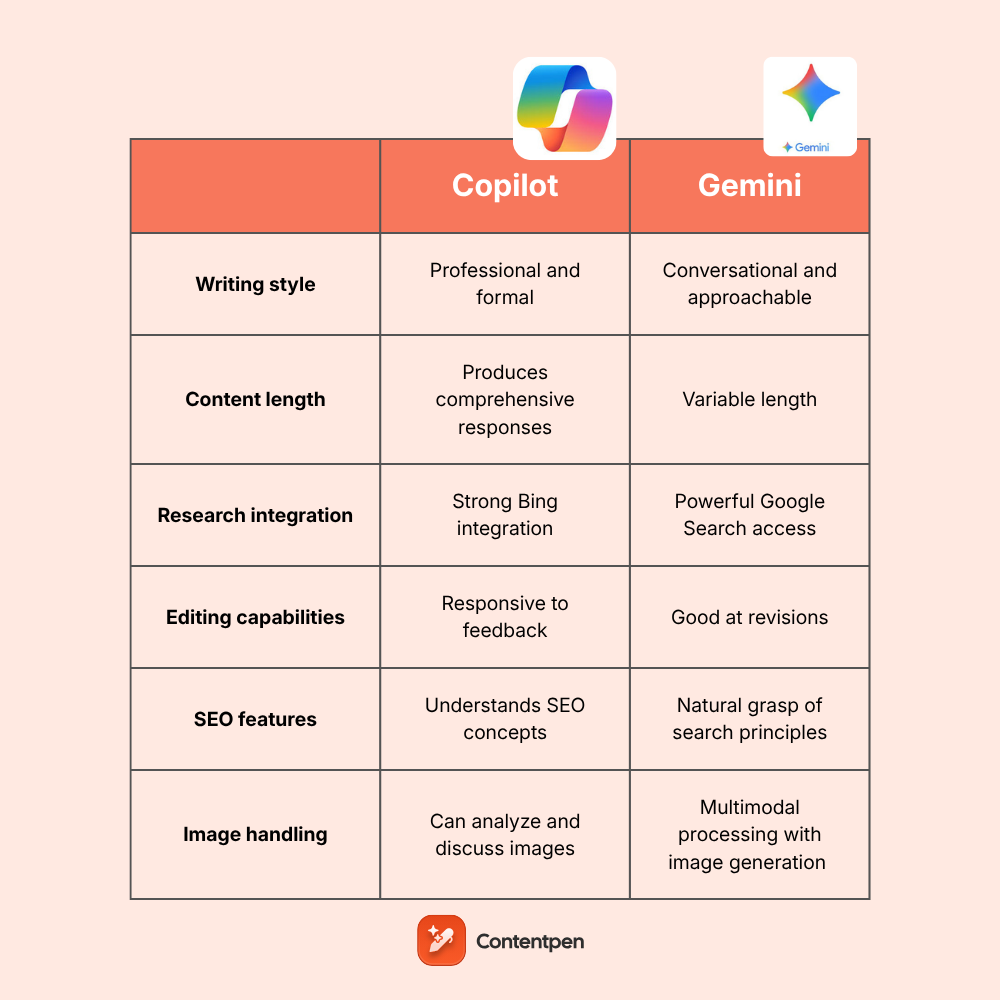
    Also read: Copilot vs Gemini: The ultimate 2026 showdown

    One thing to note: Gemini’s responses often feel “safe” and generic without careful prompting. It’s designed to be helpful to a broad audience, which can work against bloggers seeking distinctive, opinionated content.

    General overview of Perplexity’s capabilities

    Perplexity AI takes a fundamentally different approach to AI assistance. Rather than positioning itself as a general-purpose chatbot, Perplexity focuses on being a research and answer engine. Every response includes citations to its sources, making it a hybrid between a search engine and a conversational AI.

    Perplexity AI main interface

    This research-first philosophy has significant implications for content writers. When you ask Perplexity a question, it doesn’t just generate an answer from its training data. Instead, it searches the web, synthesizes information from multiple sources, and presents findings with numbered citations you can verify.

    Key features that matter for bloggers:

    • Source citations on every response. Each claim links back to its origin, making fact-checking straightforward and helping you build credibility in your content.
    • Focus mode options. Perplexity lets you limit searches to specific source types, including academic papers, YouTube videos, Reddit discussions, or general web results. This helps when you need specific types of research for different content.
    • Pro Search for complex queries. The premium feature asks clarifying questions and conducts more thorough research, useful for comprehensive blog topics that require depth.
    • Collections for organizing research. You can save and organize conversations by topic, building a reference library for ongoing content projects.

    Perplexity operates on a freemium model. The free tier offers substantial functionality, while Perplexity Pro ($20/month) provides more Pro Searches.

    Also read: Perplexity vs ChatGPT: Which AI helps you write better blogs?

    The tradeoff is clear: Perplexity prioritizes accuracy and verifiability over creative content generation. It answers questions rather than writing prose, which affects how you’d integrate it into a blogging workflow.

    Comparing Perplexity vs Gemini

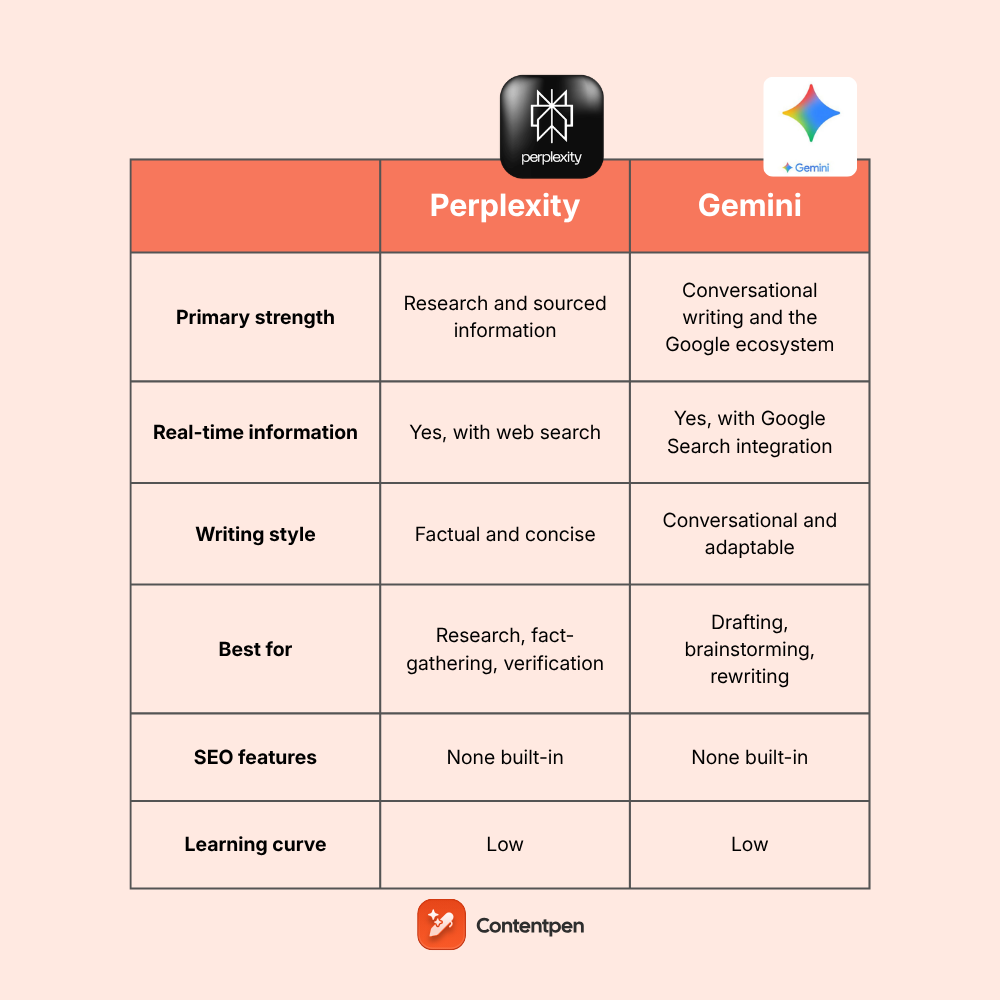
    Before exploring specific capabilities, here’s a quick comparison of how these tools stack up for blogging and content writing:

    FeaturePerplexity AIGoogle Gemini
    Primary strengthResearch and sourced informationConversational writing and the Google ecosystem
    Citation qualityExcellent. Every claim is citedLimited. Sources are not consistently shown
    Real-time informationYes, with web searchYes, with Google Search integration
    Writing styleFactual and conciseConversational and adaptable
    Best forResearch, fact-gathering, verificationDrafting, brainstorming, rewriting
    Free tierGenerous with core featuresFull access to the base Gemini model
    Premium cost$20/month$19.99/month
    SEO featuresNone built-inNone built-in.
    Content length handlingGood for short-to-medium contentExcellent with a long context window
    Integration optionsAPI, browser extensionDeep Google Workspace integration
    Image analysisAvailable in ProBuilt into all tiers
    Learning curveLowLow

    Now, let’s get to the details of this comparison by reviewing each tool one by one in each feature and aspect.

    Perplexity vs Gemini in research

    Research forms the foundation of quality blog content. Both tools approach this task differently, and understanding these differences helps you choose the right one for your workflow.

    Perplexity’s research approach

    Perplexity treats every query as a research opportunity. When you ask about a topic, it searches multiple sources, synthesizes the information, and presents findings with numbered citations. This happens automatically, without you needing to request sources.

    For example, if you’re researching statistics for a blog post about email marketing trends, Perplexity would pull data from recent studies, industry reports, and authoritative sources in a blink. Each statistic links back to its origin, so you can verify accuracy and cite properly in your content. 

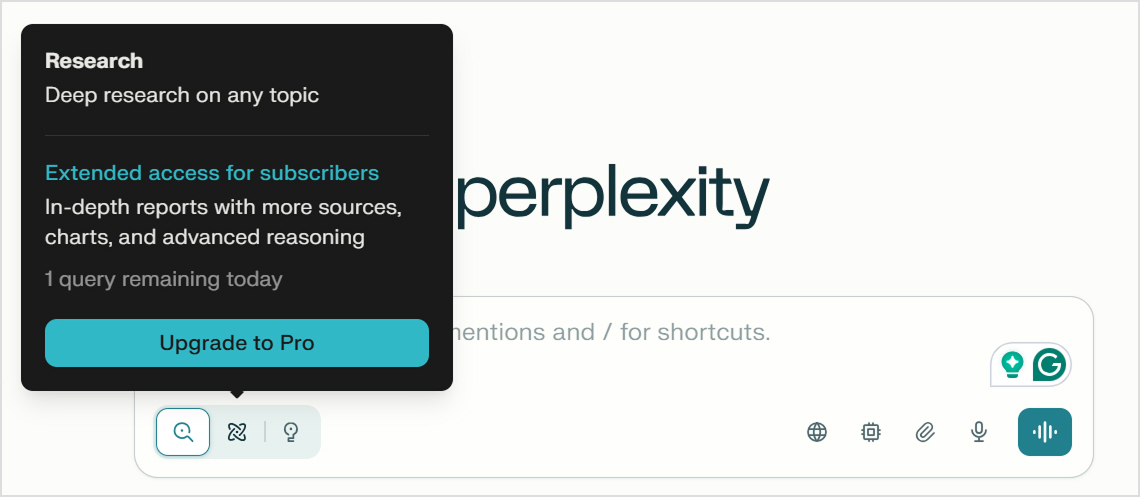
    Free users, however, have limited access to Pro research capabilities. 

    Perplexity upgrade to pro screen

    Gemini’s research approach

    Gemini integrates Google Search capabilities, giving it access to current information. However, the experience differs significantly from Perplexity. Gemini synthesizes information more invisibly, often presenting conclusions without clear source attribution.

    When Gemini does cite sources, it typically shows them at the end of a response rather than in-text like Perplexity. This makes verification more cumbersome.

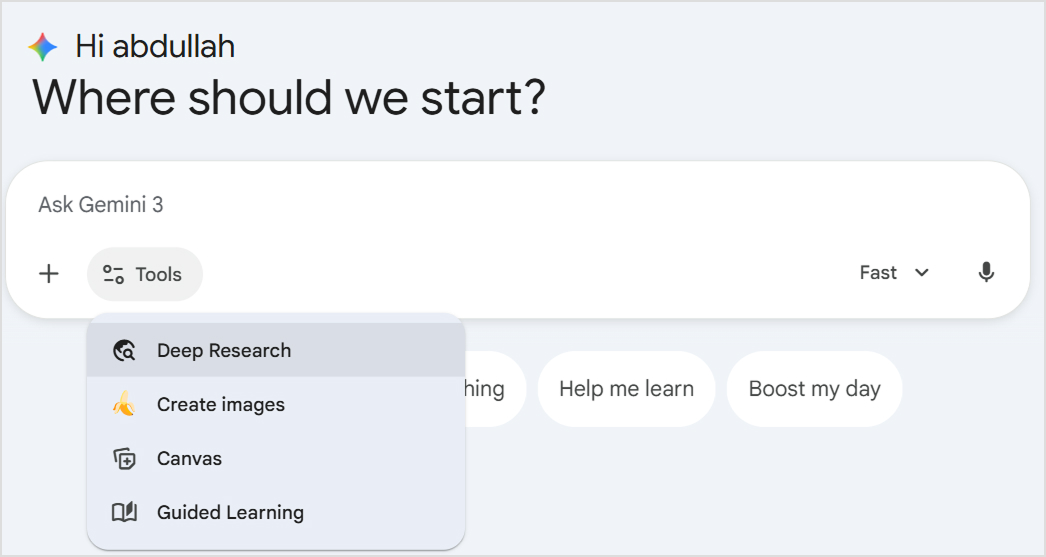
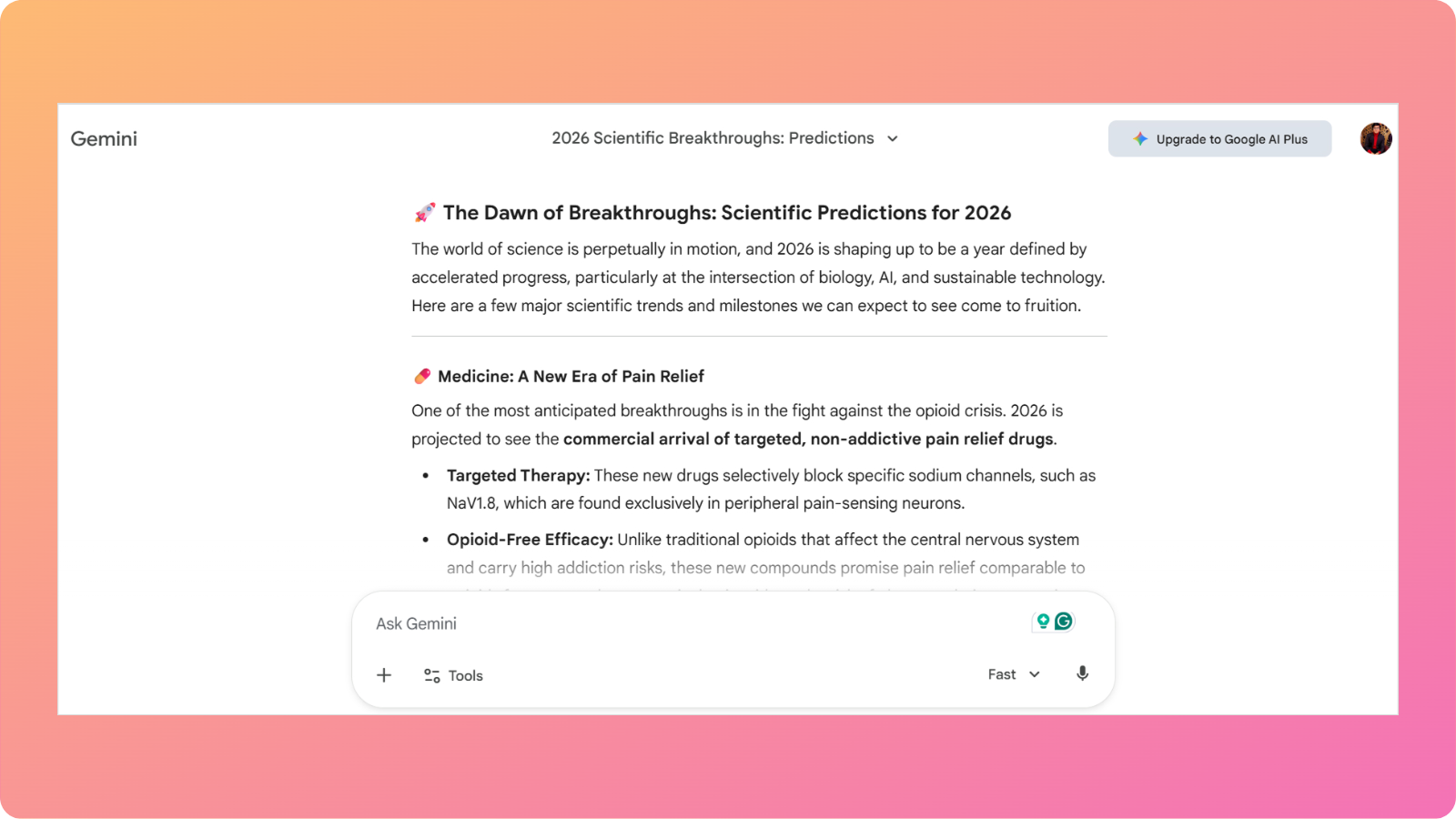
    Gemini main interface

    Verdict

    For research-heavy blog writing, Perplexity wins clearly. The automatic citations, source filtering, and verification-focused design make it significantly more practical for gathering accurate information. 

    That said, Gemini’s connection to Google’s knowledge graph gives it a strong contextual understanding. Gemini can research, but it requires more prompting and manual verification.

    Perplexity vs Gemini in reasoning

    Blogging isn’t just about collecting facts. You need to synthesize information, draw connections, build arguments, and guide readers to conclusions. Reasoning capability determines how well an AI can help with these higher-order tasks, streamlining your workflows for success.

    Perplexity’s reasoning capability

    Perplexity’s reasoning operates within its research-focused framework. It’s good at synthesizing multiple sources into coherent answers and identifying patterns across different pieces of information. When sources conflict, they will often acknowledge the disagreement rather than arbitrarily choosing one position.

    Perplexity main image

    However, Perplexity’s reasoning stays close to its sources. It’s less likely to make creative leaps or generate novel insights that go beyond the information it finds. 

    This is by design (the tool prioritizes accuracy), but it can limit its usefulness for opinion pieces or thought leadership content.

    Gemini’s reasoning capability

    Gemini shows stronger general reasoning abilities, particularly for abstract or creative thinking tasks. It handles hypotheticals well, can construct arguments from first principles, and generates insights that don’t require direct source backing.

    Gemini 3 image

    For blog writing, this translates to better brainstorming sessions. 

    Ask Gemini to explore the implications of a trend, and it will generate multiple angles and perspectives. It’s more comfortable making the kinds of logical leaps that make content interesting rather than just informative.

    Also read: Gemini vs ChatGPT: The ultimate comparison for blog writers.

    Verdict

    Gemini edges ahead for reasoning tasks, especially those involving creative thinking, argument construction, or synthesis beyond available sources. Perplexity offers more reliable reasoning when accuracy matters more than insight.

    Perplexity vs Gemini in content writing

    Both tools can generate text, but they approach the writing process quite differently.

    Perplexity’s writing capability

    Perplexity generates writing primarily as an extension of its answer functionality. When you ask it to write something, it approaches the task like it’s answering a question about how that content should be written, then provides the result.

    The writing quality is competent but not exceptional. Responses tend to be factual, well-organized, and concise. Perplexity won’t give you florid prose, and it typically prioritizes clarity over style.

    Gemini’s writing capability

    Gemini was designed more explicitly as a conversational AI, and this shows in its writing output. It handles different tones and styles more fluidly, adapts to examples you provide, and produces prose that reads more naturally.

    Ask Gemini to write a blog post in a casual, conversational tone, and it genuinely sounds casual and conversational. Request something more formal, and the shift is noticeable. This stylistic flexibility matters for bloggers who need to match specific brand voice guidelines.

    Verdict

    Gemini is the stronger pure writing tool, offering more stylistic range and better long-form capabilities. Perplexity’s writing serves its research function well, but won’t replace a dedicated writing-focused AI for most blogging needs.

    We’ll explore the writing capabilities of both of these tools in the later section as well. 

    Perplexity vs Gemini in content depth

    Content depth refers to how thoroughly a tool can explore a topic, whether it provides comprehensive coverage or only covers it at a surface level.

    Perplexity’s approach to depth

    Perplexity’s depth comes from its multi-source research capability. When exploring a topic, it pulls information from numerous sources, often surfacing details, perspectives, or data you wouldn’t find in a single search.

    The limitation is that Perplexity’s depth stays within what’s already written and indexed. It won’t generate novel analysis or fill gaps where information doesn’t exist online.

    Gemini’s approach to depth

    Gemini handles depth differently. It can go deep on topics through sustained conversation, building on previous exchanges to explore subtopics and nuances. The long context window means you can have extended discussions without the AI losing track of earlier points.

    However, Gemini’s depth comes at the cost of less verification. You’ll get detailed responses, but confirming accuracy requires more effort. The tool also sometimes generates confident-sounding information that turns out to be incorrect or slightly off.

    Verdict

    Perplexity offers verifiable depth through sourced research. Gemini offers conversational depth through sustained exploration. For factual blog content, Perplexity’s approach is safer. For conceptual or analytical pieces, Gemini’s extended thinking capability can be more useful.

    Also read: Claude vs Gemini: The ultimate showdown for content creators in 2026.

    Perplexity vs Gemini for image generation

    Blog content increasingly relies on visuals, so image generation capability matters for content creators. Both Perplexity and Gemini offer AI image generation, but the results differ noticeably in style and execution.

    To test this, we gave both tools the same prompt: 

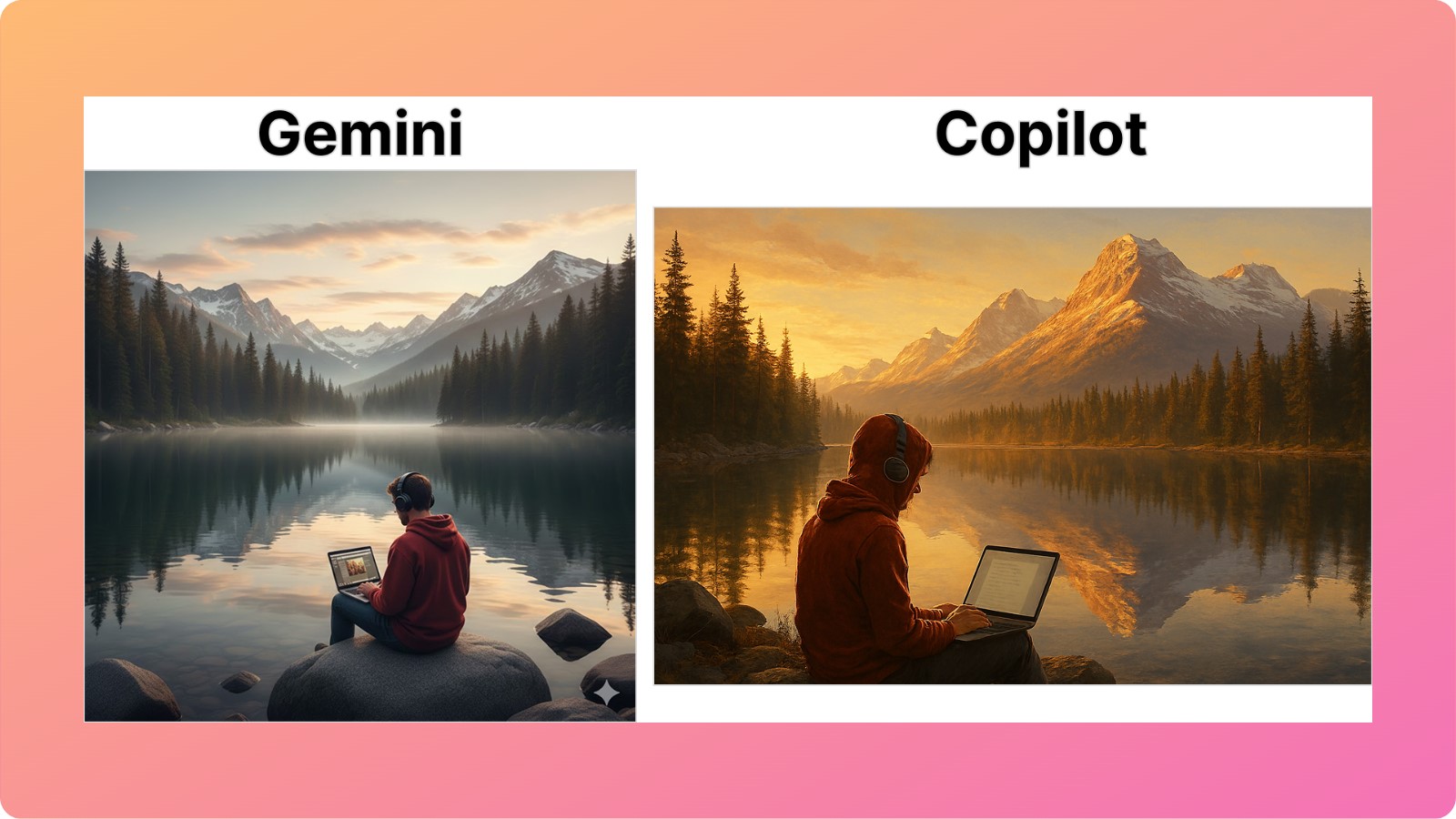
    “Generate a realistic image of an overworked blog writer.”

    Image creation comparison: Perplexity vs Gemini

    Let’s discuss their results in detail.

    Perplexity’s image generation result

    The result shows that Perplexity leans heavily into visual storytelling. Every element reinforces the “overworked” theme. 

    The multiple screens suggest constant work, the junk food implies skipped meals, and the crumpled papers show failed attempts at creating a solid piece of content. It’s almost theatrical in how deliberately it communicates exhaustion.

    Gemini’s image generation result

    Gemini’s approach feels more understated and naturalistic. Rather than piling on visual cues for exhaustion, Gemini captured a quieter moment of late-night work. The sleeping cat adds a relatable, lived-in quality, making the scene feel less staged.

    Verdict

    Both tools produced usable images from the same prompt, but they interpreted being “overworked” differently. Perplexity went for dramatic and obvious. Gemini opted for subtle and authentic. 

    If you are creating images to be used as a blog featured image, Gemini’s output would likely work better because it feels more like a genuine photograph and less like a stock image designed to illustrate a concept. 

    Perplexity vs Gemini in SEO understanding

    Neither Perplexity nor Gemini is designed specifically for AI SEO, but understanding how they handle search engine optimization concepts matters for bloggers focused on organic traffic.

    Perplexity for SEO

    Perplexity doesn’t have built-in SEO features. It won’t analyze keyword density, suggest meta descriptions based on SERP analysis, or evaluate your content against ranking competitors. What it can do is research SEO topics effectively. 
    Ask about keyword trends, search intent for specific queries, or current best practices, and Perplexity will find and cite relevant information. It can help you understand what’s ranking for target keywords by searching and synthesizing that content.

    Gemini for SEO

    Gemini has a slight edge here due to its Google connection. It understands search concepts well and can discuss SEO principles knowledgeably. Ask about on-page SEO best practices, and you’ll get solid, up-to-date guidance.

    Gemini can also analyze content from an SEO perspective if you paste it in. It will identify potential improvements, suggest keyword variations, and help optimize headings and structure. This is basic compared to dedicated SEO tools but better than Perplexity’s approach.

    Verdict

    Neither tool replaces proper SEO writing tools or dedicated optimization platforms. Gemini offers marginally better assistance for SEO thinking, while Perplexity helps more with research about SEO topics. Bloggers serious about search rankings and positions in AI overviews need specialized tools in addition to these chatbots.

    Also read: Top SEO competitor analysis tools.

    Creating a real blog with Gemini and Perplexity

    Theory only gets you so far. To see Perplexity vs Gemini actually perform for blogging, we gave both the same prompt: 

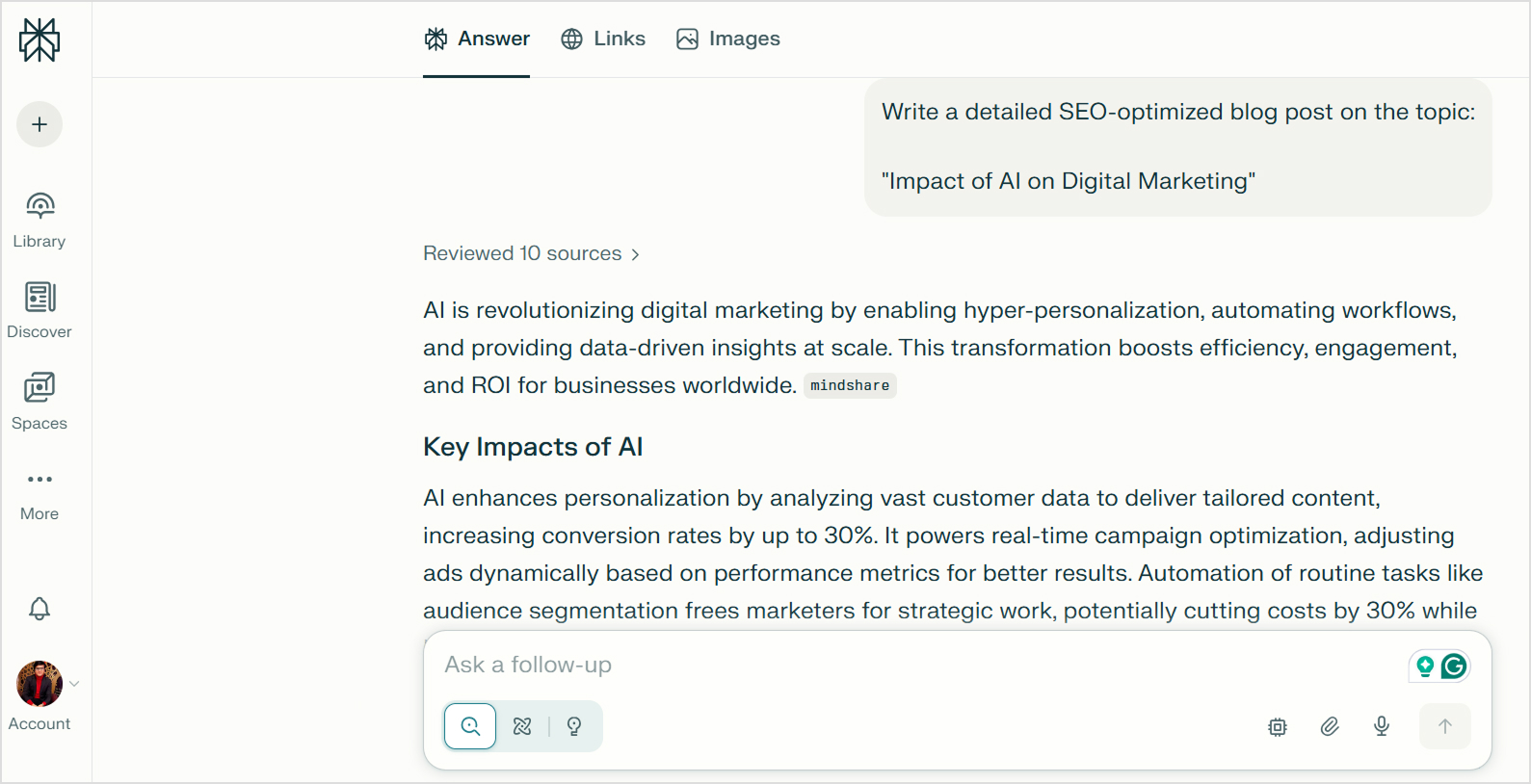
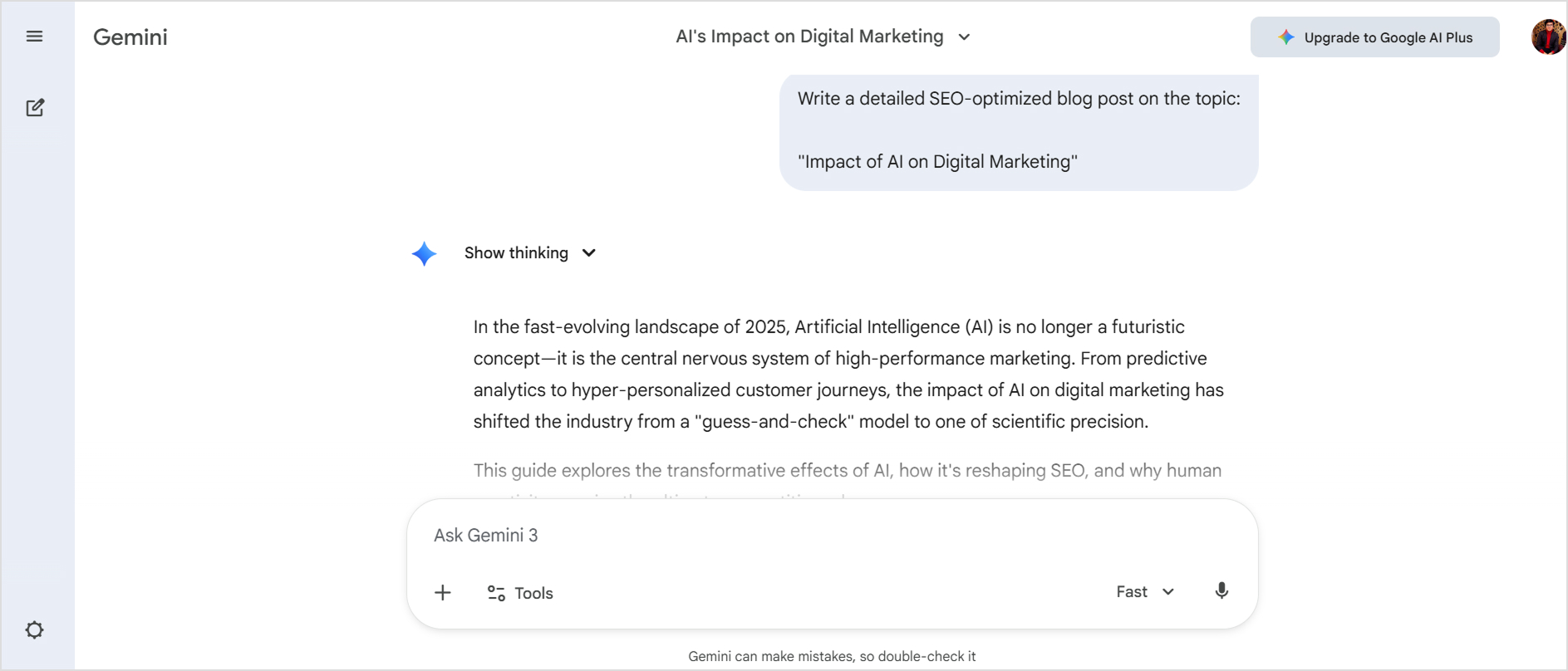
    “Write a detailed SEO-optimized blog post on the topic: Impact of AI on Digital Marketing.”

    The results revealed fundamental differences in how each tool approaches content creation.

    Analysis of Perplexity’s output

    Perplexity AI blog output

    Perplexity produced a concise, structured response of about 264 words, organized into clear sections. The content leaned heavily on bullet points and specific statistics (like “conversion rates by up to 30%” and “147% improved segmentation”).

    The tool list was particularly detailed, naming specific platforms like ChatGPT, Albert.ai, Optimove, Tidio, Jasper AI, and Copy.ai with brief explanations of each. The writing was functional and information-dense, but read more like a summary or research brief.

    Analysis of Gemini’s output

    Google Gemini blog output

    Gemini delivered a substantially longer piece of about 609 words with a more editorial structure. It opened with context about AI becoming “the central nervous system of high-performance marketing” and organized content into narrative sections covering personalization, SEO changes, content creation tradeoffs, predictive analytics, and ethical considerations.

    The writing included more nuanced takes, like distinguishing between “AI Shovelware” and quality content, and concluded with a “Future is Hybrid” thesis about human-AI collaboration.

    What this comparison reveals

    The difference is stark. Perplexity answered the prompt like a research question, providing factual information in a condensed format. Gemini treated it as an actual blog-writing task, producing content with narrative flow, clear section transitions, and a point of view.

    Overall, Gemini’s output is closer to a usable first draft for bloggers. You would need to edit for voice and add your own insights, but the structure and flow are there.

    That said, neither output was publish-ready. Both lacked the depth, originality, and specific expertise that quality blog content requires.

    Gemini’s strengths

    Gemini on a smartphone

    Based on our real-world test and general blogging usage, here’s where Gemini consistently delivers:

    • Substantial content output. Gemini produced 609 words compared to Perplexity’s 264, more than double the length of the same prompt. Bloggers usually need comprehensive content, which Gemini can generate, especially for the first draft.
    • Editorial structure and flow. The AI marketing blog included proper sections with transitions, a clear thesis, and narrative progression from problem to solution.
    • Nuanced perspectives. Gemini introduced concepts like “AI Shovelware” to describe low-quality automated content and included a comparison table weighing traditional versus AI-augmented approaches.
    • Adaptable style. The output demonstrated range, from data-driven sections on predictive analytics to more philosophical conclusions about human creativity.
    • Practical frameworks. The “2025 Rule” Gemini proposed (use AI for the skeleton, humans for the soul) gives readers an actionable takeaway. This kind of synthesized advice is exactly what blog readers want.
    • Google ecosystem integration. For writers already in Google Docs, Gmail, and Drive, having AI assistance built into those tools streamlines workflow. You don’t need to copy and paste between applications.

    Gemini’s weaknesses

    Our test and regular usage reveal these limitations:

    • Source verification challenges. Gemini’s AI marketing blog included statistics and claims without citations. Statements like “conversion rates by up to 30%” appeared without sources.
    • Generic phrasing creeps in. Despite the strong structure, Gemini’s output included phrases like “central nervous system of high-performance marketing” and “scientific precision” that lack substance.
    • Confident presentation of potentially outdated information. Gemini wrote authoritatively about “2025” trends and specific AI capabilities that would need fact-checking. The confident tone can mask uncertainty about accuracy.
    • Limited specialized optimization. Gemini doesn’t offer SEO scoring, keyword optimization tools, or content performance predictions. You’re getting a writing assistant, not a comprehensive content platform.
    • Still requires significant human editing. While Gemini produced more blog-ready content than Perplexity, it was still not publishable without substantial revision for voice, accuracy, and originality.

    Perplexity’s strengths

    Perplexity AI logo on a mobile screen

    Our test and regular usage highlight these advantages of using Perplexity for blog writing:

    • Information density. Despite being less than half Gemini’s length, Perplexity’s output packed in specific tool names, concrete statistics, and actionable information.
    • Specific, verifiable claims. Perplexity included statistics like “cutting costs by 30% while lifting sales by 50%” and “147% improved segmentation.” While these still need verification, the tool’s specificity gives you concrete data points to work with.
    • Practical tool recommendations. Rather than speaking abstractly about AI in marketing, Perplexity named actual platforms and explained what each does. This gives readers immediate next steps, which is valuable for how-to content.
    • Built-in citation habits. Even in this test where full citations weren’t displayed, Perplexity’s research-first approach means it draws from real sources.
    • Structured information delivery. The clear sections made information easy to scan and extract. If you’re using AI output as research rather than a draft, this organization helps.

    Also read: Perplexity vs Claude: Which AI is better for blog writing.

    Perplexity’s weaknesses

    Our test revealed these significant Perplexity limitations for blogging:

    • Insufficient length for blog content. At 264 words, Perplexity’s output wouldn’t meet minimum standards for most blog posts. It answered the prompt, but didn’t write a detailed blog.
    • Heavy reliance on bullet points. The output was predominantly lists and bullets with minimal connecting prose. This format works for reference material, but doesn’t create the reading experience blog audiences expect.
    • No narrative or editorial voice. Perplexity’s response lacked a thesis, point of view, or narrative arc. It presented information without synthesizing it into an argument or story that would engage readers.
    • Missing transitions and flow. Each section felt disconnected from the others. There was no introduction framing the topic’s importance, and no conclusion tying insights together. The content would need substantial writing to function as a complete blog post.

    User reviews for Perplexity and Gemini

    Real user feedback often reveals what marketing pages won’t tell you. Here’s what actual users say about both tools on Capterra.

    Gemini user reviews

    Gemini user reviews Capterra

    Users consistently praise Gemini’s versatility across professional and creative tasks. One reviewer working in legal drafting noted that Gemini “saves significant time on legal research and document preparation, while also being creative enough for image tasks.”

    Image generation receives particular enthusiasm. One user called Gemini’s image capabilities a “killer” feature that made them consider switching to a Gemini-powered smartphone. For bloggers who need occasional visuals alongside their writing, this multimodal strength matters.

    The criticisms center on consistency. Users report “occasional output inconsistencies when handling complex or multi-step requests” and note that “some advanced features require manual fine-tuning.” For blog writing, this can lead to frustration when working on longer, more nuanced pieces that require sustained coherence.

    Perplexity user reviews

    Perplexity AI user reviews Capterra

    Perplexity users emphasize productivity gains, with one reviewer claiming it “lets me do 5 hours of work in 15 minutes” for document review and drafting. The Spaces feature, which lets users create topic-specific AI workspaces, received praise for helping users build expertise in specific fields over time.

    The ability to access multiple AI models from one interface stands out as a differentiator. One user appreciated that Perplexity automatically detects “which model is best for a specific question,” removing the guesswork of choosing between different AI engines.

    However, users flag concerns about source depth and accuracy. One user noted that “Perplexity uses fewer sources than others for a Search” and that they encountered hallucinations.

    Contentpen: A better alternative to Perplexity and Gemini for blogging

    Contentpen main landing page - Contentpen.ai

    Perplexity vs Gemini reveal significant differences and valuable capabilities of these AI tools for blogging. However, neither is designed specifically for blog content creation and content marketing

    Perplexity excels at research, Gemini at conversational writing, but bloggers often need something that combines research, writing, optimization, and publishing in one interface.

    Contentpen was built specifically for this purpose. Rather than adapting a general-purpose AI to blogging, Contentpen approaches the problem from the blogger’s perspective.

    • Integrated research and writing. Contentpen handles keyword research natively, helping you identify topics with search potential before you start writing.
    • Built-in SEO options. Where Perplexity and Gemini require separate SEO tools, Contentpen includes SEO scoring and SERP analysis that evaluates content as you create it. You see optimization opportunities in real time rather than after the post goes live.
    • Full blog creation capability. Contentpen generates complete, publish-ready blog posts. You’re not getting answers to questions or general writing assistance, but rather actual articles formatted and structured for web publication.
    • Direct publishing integration. Once content is ready, Contentpen connects directly to WordPress and other CMS platforms for integrated publishing. This eliminates the copy-paste workflow that general AI tools require.
    • Bulk content creation. For content teams or bloggers managing multiple sites, Contentpen scales efficiently. With our AI writer for blogs, you can create multiple optimized posts without any hurdles.

    Overall, bloggers specifically looking for tools to improve their content workflow will find Contentpen as their ideal blogging partner.

    Final verdict: Which AI is better for blog writing?

    After examining both tools across research, reasoning, writing, depth, and SEO understanding, here’s the straightforward assessment:

    Choose Perplexity if:

    • Research accuracy is your top priority
    • You write fact-heavy content that requires verification
    • You want citations built into your workflow
    • You’ll handle the actual writing yourself or with another tool

    Choose Gemini if:

    • You need help with the actual writing process
    • Your brand needs stylistic flexibility
    • You work primarily in Google’s ecosystem
    • You produce long-form content requiring sustained coherence

    Consider Contentpen if:

    • You need an end-to-end blog creation capability
    • SEO optimization is central to your strategy
    • You want publishing integration built in
    • You’re producing content at scale

    We hope this analysis helps you choose the right tool for your needs to streamline workflows and boost productivity.

    Frequently asked questions

    What’s better, Gemini or Perplexity?

    Neither is universally better. Perplexity is better for research and fact-checking, while Gemini is better for drafting and long-form writing.

    Is Perplexity AI good for content creation?

    Perplexity is best for research, sourcing, and data gathering. It’s not ideal for writing full blog posts without heavy editing.

    Which AI is better than Perplexity?

    Perplexity remains one of the strongest options available for pure research with citations. However, for blog writing specifically, purpose-built tools like Contentpen offer advantages that general AI assistants don’t.

    Which AI is better than Gemini?

    For blog writing, purpose-built tools like Contentpen often outperform Gemini because they offer built-in SEO and publishing features.
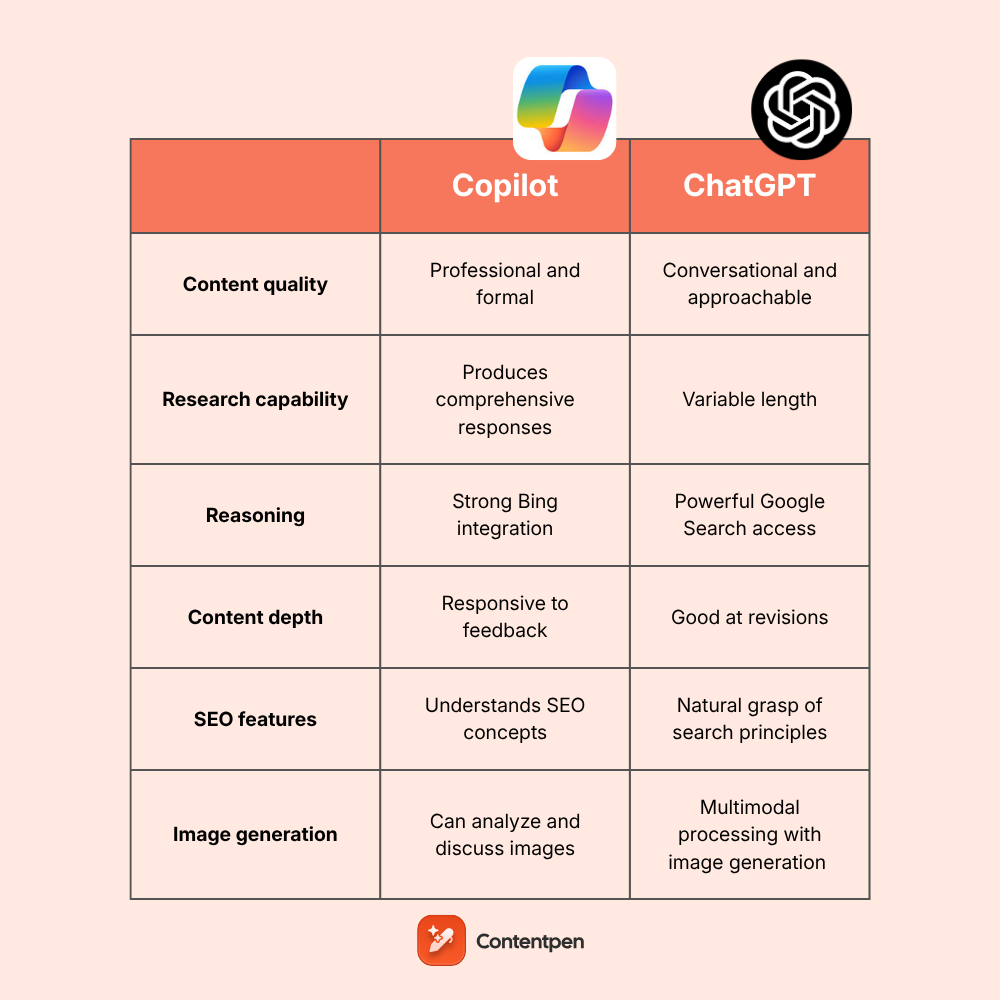
    Can you trust Perplexity AI?

    Perplexity is more trustworthy than many AI research tools, specifically because it shows its sources. You can verify each claim by clicking the cited reference. That said, you should always fact-check AI-generated content, no matter which tool you use.

  • Copilot vs Gemini for content creators: The ultimate 2026 showdown

    Copilot vs Gemini for content creators: The ultimate 2026 showdown

    The AI assistant marketplace is becoming competitive, with Microsoft Copilot and Google Gemini emerging as two prominent contenders for content creators. 

    Both platforms promise to help you use AI to write blog posts efficiently, enhance productivity, and deliver quality content, but they take different approaches to achieve these goals.

    If you’re a blogger, content marketer, or business owner trying to choose between these AI tools, the decision matters more than you might think.

    This comprehensive analysis examines Copilot and Gemini specifically through the lens of content creation. We’ll explore their writing capabilities, research strengths, reasoning abilities, and practical performance across different tasks to help you decide the right tool for your needs.

    So, let’s begin, shall we?

    General overview of Gemini’s capabilities

    Google Gemini is the next-generation AI platform, succeeding Bard and built from the ground up as a multimodal system. This means it understands text, images, code, audio, and video simultaneously.

    Gemini main interface

    Gemini’s architecture is divided into different models, including:

    • Gemini Fast for everyday tasks
    • Gemini Nano Banana for visual creation
    • Gemini Thinking for complex reasoning
    • Gemini Pro for advanced math and coding tasks
    • Gemini Plus for deep, logical explanations

    This allows Google to optimize performance based on task complexity and resource requirements.  Content creators get faster responses for simple queries and more thorough analysis when needed.

    One of Gemini’s standout features is its native integration with Google’s ecosystem. You can quickly pull information from Gmail, Google Drive, Google Docs, and other services, making research and content organization considerably more efficient.

    General overview of Copilot’s capabilities

    Microsoft Copilot represents the company’s ambitious entry into the AI assistant space, built on OpenAI’s GPT technology.

    Launched initially as Bing Chat, Copilot has evolved into a multifaceted tool that aims to be your comprehensive digital assistant for both work and personal tasks.

    Copilot main interface

    The platform offers several distinct advantages for content creators. First, it’s deeply integrated with Microsoft 365 applications, which allows quick workflows for those already invested in Microsoft’s productivity suite.

    Copilot also uses Bing’s search infrastructure to access current web information, making it particularly strong when you need up-to-date facts, recent statistics, or breaking news for your content. 

    The AI can cite sources directly, providing transparency about where information comes from. It is a valuable feature for fact-checking and building credible content.

    Also read: How to fact-check AI-generated content in 7 steps?

    Comparison table: Copilot vs Gemini at a glance

    Understanding how these platforms compare across specific dimensions helps clarify which might serve your content needs better:

    FeatureMicrosoft CopilotGoogle Gemini
    Writing styleProfessional and formal; excellent for business contentConversational and approachable; adapts well to casual tones
    Content lengthProduces comprehensive responses; good for long-form contentVariable length; sometimes brief unless prompted for detail
    Research integrationStrong Bing integration; excellent source citationPowerful Google Search access; fast information retrieval
    Editing capabilitiesResponsive to feedback; iterates wellGood at revisions but may need explicit direction
    Ecosystem advantageMicrosoft 365 deep integrationGoogle Workspace seamless connectivity
    Image handlingCan analyze and discuss images; limited generationMultimodal processing with image generation capabilities
    SEO awarenessUnderstands SEO concepts; requires prompting for optimizationNatural grasp of search principles; Google Search insights
    Pricing (paid plans)Starts from $19.99/monthStarts from $19.99/month

    Now, let’s see the comparison of Copilot vs Gemini in more detail.

    Copilot vs Gemini for research

    Research forms the foundation of quality content, and both platforms approach information gathering differently. 

    Copilot’s connection to Bing provides robust search capabilities with transparent source citation. When you ask Copilot to research a topic, it returns information with clear references, making it straightforward to verify claims and add proper citations to your content.

    Gemini uses Google’s search dominance and knowledge graph, typically finding information faster and with greater breadth. 

    The platform can access a broader range of sources and often surfaces niche information that other AI assistants might miss. However, source attribution can be less explicit than Copilot’s numbered citation system.

    Verdict

    Both Gemini and Copilot perform excellently for research-intensive content such as industry reports, data-driven articles, and comprehensive guides. Copilot edges ahead when you need explicit citations, while Gemini wins on speed and information diversity.

    Also read: Copilot vs ChatGPT: Which AI wins?

    Copilot vs Gemini in reasoning

    When your content requires persuasive arguments, complex explanations, or logical progression through difficult concepts, reasoning capability becomes crucial. 

    Copilot, powered by GPT technology, demonstrates strong logical consistency and can construct sophisticated arguments that build methodically toward conclusions.

    Gemini shows impressive contextual reasoning, particularly excelling at understanding nuance and subtext within prompts. 

    The platform can grasp what you’re implying even when you don’t state it explicitly, and it adapts its reasoning to match your apparent intent. This intuitive understanding can save time in back-and-forth clarifications.

    Verdict

    Copilot’s systematic approach is more structured, while Gemini’s flexibility can seem more natural.

    Also read: Gemini vs ChatGPT.

    Microsoft Copilot opened on a mobile phone

    Copilot vs Gemini in content writing

    The actual prose these AI assistants generate often determines whether you’re spending 20 minutes or two hours editing. 

    Copilot tends toward polished, professional writing that works exceptionally well for business blogs, technical documentation, and formal content. The tone can sound a bit conservative, which helps avoid awkward phrasing but can sometimes feel slightly restricted in expression.

    Gemini shows greater tonal flexibility, easily shifting from formal to conversational in response to your prompts. 

    For lifestyle blogs, casual brand voices, or content targeting younger demographics, Gemini often produces writing that feels more relatable and less stiff. This tool demonstrates personality in its responses without sacrificing clarity.

    Verdict

    Content creators working on corporate blogs may prefer Copilot’s polish, while those targeting consumer audiences might appreciate Gemini’s conversational content.

    Solving content overload - Contentpen.ai

    Copilot vs Gemini in content depth

    Superficial content rarely ranks well or engages readers meaningfully. How deeply these AI assistants explore topics significantly impacts content value. 

    Copilot generally provides thorough coverage when prompted, exploring topics from multiple angles and including supporting details that add substance.

    Gemini’s depth varies more depending on how you frame requests. With specific prompting, it can deliver extensive coverage, but initial responses sometimes provide overview-level information that requires follow-up questions to expand. 

    Verdict

    Overall, the blog posts generated by both Copilot and Gemini need substantial development. Copilot may require fewer prompts to achieve the target depth. 

    However, Gemini’s approach is a little more flexible, allowing you to control which areas receive detailed treatment. Keep in mind that both platforms generate much shorter content and blog posts than dedicated AI writing tools do.

    Gemini on a mobile phone

    Copilot vs Gemini in SEO understanding

    Creating content that ranks requires more than good writing. It demands strategic optimization. Both Copilot and Gemini understand fundamental SEO principles when prompted, but they apply this knowledge differently.

    Copilot can structure content with SEO in mind, incorporating keywords naturally, suggesting meta descriptions, and organizing information with header hierarchies that search engines appreciate.

    Gemini’s connection to Google Search provides it with theoretical insight into ranking factors, though this doesn’t always translate into noticeably superior SEO performance in practice. 

    The AI can help with different types of keyword research by suggesting related terms, understanding search intent, and optimizing content for featured snippets.

    Verdict

    Both assistants work best when you provide explicit SEO parameters rather than expecting them to optimize on their own. Neither should be a part of your complete SEO content marketing strategy, but both can help implement SEO best practices efficiently when directed.

    Also read: Best AI tool for writing SEO-rich blog content.

    Copilot vs Gemini in image generation

    Visual elements enhance blog posts significantly, and the ability to generate images within your writing workflow matters. 

    Copilot offers DALL-E integration for image generation, enabling you to create custom visuals from text descriptions. The image quality is generally good, though style consistency across multiple images can vary.

    Gemini includes Nano Banana for image generation, producing high-quality visuals with strong adherence to prompts. The multimodal architecture means Gemini can reference images you upload, analyze their content, and generate related visuals more cohesively.

    The following are the images generated by Copilot and Gemini using the same prompt:

    Gemini vs Copilot image comparison

    Verdict

    Neither platform replaces professional design tools for polished marketing materials. Still, they have significantly improved in a short time and can be used for blog illustrations, concept visuals, and draft imagery. 

    That said, Gemini’s multimodal foundation gives it a slight edge in understanding visual context over Copilot.

    Related: Perplexity vs Gemini: An honest comparison for content writers.

    Creating a real blog with Gemini and Copilot

    To understand how these platforms perform beyond theoretical comparisons, we conducted an identical test with both AI assistants using the prompt: 

    “Write a short blog post about the expected scientific breakthroughs in 2026.”

    Here’s what each platform delivered:

    AspectGeminiMicrosoft Copilot
    Word count~530 words~290 words
    Structure4 distinct breakthrough areas with detailed explanations5 broader category overviews with less depth per topic
    Specific detailsIncluded precise data (34% efficiency for solar cells, NaV1.8 sodium channels, Artemis II 10-day duration)General concepts without specific metrics or technical details
    FormattingHeavy use of emojis, bullet points, and mathematical notation; visually engagingClean professional headers with emojis; more subdued formatting
    ToneEnthusiastic and accessible; consumer-friendly science writingProfessional and measured; business-oriented presentation
    Engagement elementsEnded with direct reader questions to encourage interactionConcluded with the “Why It Matters” section explaining broader implications
    Technical accuracySpecific mechanisms explained (e.g., how targeted pain drugs work)Broader concepts without deep technical mechanisms

    Now, let’s discuss each AI chatbot’s approach.

    Gemini’s approach

    The output read like a science enthusiast blog. It was detailed, specific, and visually dynamic. Gemini provided concrete examples, such as “power conversion efficiencies exceeding 34%,” and explained the mechanism behind non-addictive pain-relief drugs. 

    The emoji-heavy formatting and bullet points created an engaging, scannable reading experience suited for general audiences interested in science news.

    Gemini blog output

    The content felt complete and ready for publication on a lifestyle or general interest blog. However, the informal styling (emojis, casual language) might not suit corporate or academic contexts without modification.

    Also read: Claude vs Gemini: The ultimate showdown for content creators in 2026.

    Copilot’s approach

    The response felt more like an executive briefing or professional overview. Copilot covered more categories than Gemini, but with less depth per topic. The writing maintained professionalism throughout, making it immediately appropriate for business blogs or formal publications.

    Copilot writing output

    While technically sound, Copilot’s output lacked the specific data points and technical details that establish deep expertise. 

    Phrases like “next-generation batteries” remained vague, whereas Gemini specified “hybrid perovskite-silicon tandem solar cells.” The content would require additional research to add the concrete details that make scientific writing authoritative.

    Verdict

    Gemini provided more substance and engagement for general audiences, while Copilot offered cleaner professional framing with less technical depth. 

    If publishing to a consumer science blog, Gemini’s output would likely perform better. For a corporate technology blog or business publication, Copilot’s tone would require less editing. However, the length of both blogs was insufficient.

    User reviews for Copilot and Gemini

    Real user experiences from G2 and Capterra reveal how these platforms perform in actual content workflows, highlighting strengths and weaknesses that spec sheets don’t capture.

    Gemini users report mixed experiences

    Gemini user reviews

    A senior customer support executive gives Gemini a perfect 5/5 rating, praising how “fast and responsive it is, especially for everyday writing and research tasks.” He particularly values the integration with the Google ecosystem.

    However, another reviewer gave a much harsher assessment, rating it 2.5/5 stars. While acknowledging that “Google Gemini gives valuable information with brilliant formatting,” the user finds the content “very basic and repetitive.”

    This split in reviews reveals a pattern that Gemini works well for quick, everyday content tasks and general business communication. But professional writers creating specialized content often find it lacking in depth and accuracy.

    Copilot users highlight integration benefits and limitations

    Copilot user reviews

    A customer experience manager awarded Copilot 5/5 stars. He appreciates that Copilot allows him to “create content directly within Outlook or Word, quickly summarize discussions, and draft messages efficiently without constantly switching between different platforms.”

    On the contrary, a verified enterprise user provides a sobering perspective, rating Copilot 2/5 stars and calling it “too costly for the features.” 

    The user said that the tool “can’t work on long documents. Cannot index full large PDFs. Copilot in Excel works only if data is in a table and makes basic functions only.”

    Key insights from user feedback

    Both platforms show clear ecosystem advantages. Users already invested in Microsoft 365 or Google Workspace appreciate the integration that keeps workflows within familiar environments.

    However, both tools also face criticism for depth and sophistication when handling complex content tasks.

    The choice often comes down to what you value more: quick, integrated workflows for routine content (where both excel) or sophisticated, nuanced writing for specialized topics (where both receive criticism, though for different reasons).

    Contentpen – A better alternative to Copilot and Gemini

    Contentpen main interface - Contentpen.ai

    While Copilot and Gemini are powerful general AI assistants, specialized tools designed specifically for content creation offer distinct advantages. 

    Contentpen represents this category of purpose-built blogging solutions that address limitations found in general-purpose platforms.

    Unlike general AI chatbots, Contentpen focuses exclusively on producing high-quality blog posts and articles. The platform combines AI generation with SEO and GEO optimization, making it very useful for digital marketers and content teams.

    Key advantages include 

    The system understands content marketing strategy beyond just generating text, as it helps with topic clustering, internal linking suggestions, and content calendar planning.

    Teams managing multiple blogs or agencies handling various clients will find Contentpen’s features efficient for streamlining collaboration, approval processes, and bulk content generation.

    Final verdict – Which AI is better for blog writing?

    After extensive comparison through real testing and user feedback analysis, the answer depends heavily on your specific content-creation context and priorities.

    Choose Gemini if you need engaging content with specific data points and technical depth.

    Choose Copilot if your priority is professional polish and business-appropriate tone. 

    The nuanced reality is that neither platform is universally better for blogging and will require significantly more research and manual edits. 

    So, serious content creators who view blogging as a primary business function can either use both platforms for research and writing, or rely on a unified writing platform like our best AI writing assistant to handle the entire content production workflow.

    Frequently asked questions

    Is Gemini better than Copilot?

    Neither AI is universally better. It really depends on what you need. Gemini shines at creating engaging content, while Copilot delivers reliable, consistent, professional-quality writing, though it may be shorter.

    Which is better, ChatGPT or Gemini or Copilot or Perplexity?

    Each AI serves a different purpose. ChatGPT stands out for overall writing quality, flexibility, and natural tone, while Gemini excels at visually aligned consumer content. Copilot is ideal for business-focused blogging, while Perplexity excels at providing in-text citations.

    Can I replace Copilot with Gemini?

    Yes, you can replace Copilot with Gemini, especially if you work in Google Workspace and are deeply tied to Microsoft 365 tools like Word, Outlook, and Teams.

    Which AI is better than Gemini?

    No single AI is objectively better in every scenario. For content writing specifically, many creators find ChatGPT stronger than Gemini due to its more consistent long-form depth. However, Gemini can outperform others for fast research and visually engaging content.

    Can I use ChatGPT instead of Copilot?

    Yes, ChatGPT can easily replace Copilot for most writing and blogging tasks. Many users prefer ChatGPT for its more natural, creative, and adaptable output. However, switching means giving up Copilot’s tight integration with Microsoft 365 and its enterprise features.
  • Claude vs Gemini: The ultimate showdown for content creators in 2026

    Claude vs Gemini: The ultimate showdown for content creators in 2026

    If you’re a content creator, blogger, or digital marketer trying to decide between Claude and Gemini, you’re not alone. Both AI assistants have carved out impressive niches in the content creation space, but which one actually delivers better results?

    In this comprehensive comparison, we’ll put Claude and Gemini head-to-head across multiple aspects that matter most to content creators, writers, bloggers, and editors. We’ll look at their writing outputs, research capabilities, reasoning skills, and much more.

    By the end of this guide, you’ll have a clear understanding of which AI assistant aligns best with your content marketing strategy.

    Let’s begin, shall we?

    General overview of Gemini’s capabilities

    Gemini main interface

    Google’s Gemini has positioned itself as a versatile AI assistant with deep integration into the Google ecosystem. Built on advanced language models, Gemini 3 excels at understanding context and generating responses that feel conversational and natural.

    One of Gemini’s standout features is its multimodal capabilities, which allow it to process text, images, and other data types simultaneously. 

    The AI also benefits from Google’s vast knowledge base, which can be particularly useful when you need accurate, up-to-date information.

    Also read: Perplexity vs Gemini comparison.

    General overview of Claude’s capabilities

    Claude main interface

    Claude, developed by Anthropic, has earned a reputation for producing nuanced, thoughtful content that often reads more naturally than typical AI output. 

    The latest versions, especially Claude Sonnet 4.5, represent significant advances in understanding context, maintaining consistency across long documents, and following complex instructions.

    What sets Claude apart is its attention to detail and its ability to adopt different writing styles. Whether you need formal technical documentation or casual, conversational blog posts, Claude adapts remarkably well.

    Also read: Perplexity vs Claude comparison.

    Comparison table: Claude vs Gemini at a glance

    Let’s break down how these two AI assistants stack up across key dimensions that matter for content creation.

    FeatureClaudeGemini
    Writing qualityHighly nuanced, natural-sounding prose with excellent tone controlClear and conversational, though occasionally generic
    Research capabilitiesStrong reasoning with web search; good at synthesizing informationDirect Google integration; fast access to current information
    Content depthExcellent for long-form, detailed analysis and comprehensive coverageGood for straightforward topics; can sometimes lack depth
    ReasoningSuperior logical flow and argument constructionSolid reasoning with occasional inconsistencies
    Style flexibilityHighly adaptable; excels at matching different voicesConsistent style but less range in tone variation
    SEO understandingGood grasp of SEO principles when promptedUnderstands SEO basics; benefits from Google’s search knowledge
    Context retentionExcellent at maintaining consistency in long documentsGenerally good, but may lose context in very long documents
    PricingStarts at $17/month Starts at $19.99/month

    We will evaluate the two tools fairly to help you choose the best AI chatbot for content creation.

    Claude vs Gemini for research

    When it comes to research capabilities, both platforms bring different strengths to the table. 

    Claude’s web search functionality allows it to pull in current information and synthesize findings from multiple sources. The AI excels at analyzing complex topics and presenting information in a structured, logical manner that builds toward clear conclusions.

    Gemini, on the other hand, benefits from its deep integration with Google’s knowledge graph and search infrastructure. This gives it an edge when you need quick facts, statistics, or current events. 

    Verdict

    Use Claude for research-heavy content that requires critical thinking and synthesis, but if you need rapid fact-checking or access to the latest news, Gemini’s Google connection gives it an edge.

    Related: Copilot vs Gemini for content creators.

    Claude vs Gemini in reasoning

    Reasoning ability separates good AI from great AI, especially when you’re creating content that needs to persuade, explain, or argue a point. 

    Claude demonstrates exceptional logical consistency, building arguments step by step and maintaining coherence even when dealing with complex, multi-faceted topics. 

    It is also a great AI tool for content creation because it can anticipate counterarguments and address potential reader objections. It also structures content very well, guiding readers through complex ideas. 

    Gemini handles reasoning well for simple topics but can sometimes struggle with highly abstract or nuanced arguments. It performs admirably when the reasoning path is relatively direct.

    However, Gemini may need more guidance when you’re exploring complex philosophical questions or building specific business cases.

    Gemini on mobile

    Verdict

    Claude’s reasoning capabilities are better than Gemini’s in complex scenarios. 

    Claude vs Gemini for writing content

    The differences between Claude and Gemini become clearer when it comes to content writing and blogging

    In pure writing capability, Claude often produces content that feels more human and less formulaic. The prose flows naturally, transitions feel organic, and the overall reading experience is smooth. 

    Claude rarely falls into the repetitive patterns or generic phrasing that are common in AI-generated content.

    Claude image on a mobile screen

    Gemini produces clean, readable content that gets the job done. It’s suitable for basic blogging needs and straightforward explanatory content. However, experienced readers might occasionally detect an AI quality to the writing with specific phrases that feel slightly mechanical.

    Verdict

    Claude really shines in maintaining a consistent brand voice throughout longer pieces. If you’re writing a 3,000-word comprehensive guide, Claude will keep the same energy and tone from the introduction to the conclusion.

    Also read: Gemini vs ChatGPT: The ultimate comparison for blog writers.

    Claude vs Gemini in content depth

    Content depth separates superficial blog posts from truly valuable resources. Let’s compare the two AI tools in terms of this parameter.

    Claude excels at exploring subjects deeply, exploring angles that might not be immediately obvious, and providing comprehensive coverage that leaves readers feeling truly informed.

    Gemini tends to provide solid coverage of the main points but sometimes stops short of the deeper insights that make content truly exceptional. 

    Verdict

    Gemini is efficient at quickly establishing a good baseline, but you might need to prompt it multiple times to achieve the same depth as Claude. So, Claude is much better than Gemini in terms of content depth. 

    Related: Claude vs ChatGPT for blog writing.

    Claude vs Gemini in image generation

    The image generation feature is a significant differentiator. 

    Claude does not generate images, whereas Gemini can create pictures through its integration with Google’s image-generation capabilities. So, for content creators who need visual elements alongside their written content, this is an important consideration.

    On the other hand, Gemini allows you to request custom images, diagrams, and visual content within the same interface you’re using for writing. This streamlined workflow can be particularly valuable when creating blog posts that require accompanying visuals.

    Gemini image output

    Verdict

    Gemini is the clear winner here because Claude does not currently support image generation, as it is only a text-based model.

    Claude vs Gemini in SEO understanding

    Both AI assistants understand fundamental SEO principles when properly prompted, but they apply this knowledge differently. 

    Claude can incorporate SEO best practices naturally into content without making it feel forced or keyword-stuffed. It understands how to write for both search engines and humans, which is crucial for modern SEO.

    Gemini’s connection to Google provides it with theoretical SEO insights, though this doesn’t always translate into noticeable improvements in practice. It can help with keyword integration, meta descriptions, and header structure when asked with detailed prompts.

    Verdict

    The reality is that neither AI should be your sole SEO strategy. Both work best when you provide clear SEO parameters and goals, then let them handle the writing within those constraints. 

    Solving content overload - Contentpen.ai

    Creating a real blog with Gemini and Claude

    Now that we’ve discussed Gemini vs Claude for writing, research, and SEO applications, it is time to put them to a real-world test.

    We’ve used both extensively for various blogging projects, and the experience differs in notable ways.

    The prompt we’re using for this test is:

    ‘Write an SEO-optimized blog post about the Upcoming AI Trends in 2026.’

    The web search functionality is enabled in Claude and Gemini to get the latest results. 

    Here is the outcome explained:

    AspectClaudeGemini
    Word count1,738 words695 words
    Content depthComprehensive coverage with 12 distinct trends, each explained with context and implicationsSurface-level overview with 5 trends, minimal explanation of real-world impact
    StructureWell-organized with clear sections, actionable takeaways, and a compelling conclusionBasic structure with emoji headers, lacking detailed segmentation
    Research qualityIntegrated current data, statistics, and industry predictions throughoutGeneric statements with fewer specific data points or sources
    SEO elementsNatural keyword integration, proper header hierarchy, and includes a call-to-actionBasic SEO structure, but less comprehensive optimization
    Tone & engagementProfessional yet accessible, maintained reader engagementConversational but rushed, felt incomplete
    Practical valueIncluded actionable steps for businesses and professionalsPrimarily informational without clear action items

    Overall, the difference was striking. Claude delivered a publication-ready article that could serve as pillar content because it was comprehensive, well-researched, and thoroughly covered the topic. 

    It included specific examples like “generating a five-second AI video requires approximately 3.4 million joules of energy,” concrete market projections, and organized recommendations for different audiences.

    Gemini’s output, while functional, reads more like a quick overview or summary. At less than 700 words, it touched on key trends but didn’t explore them deeply enough to establish authority.

    Related: Best AI tool for writing SEO-rich blog content.

    Gemini’s strengths

    Gemini writing output

    Based on real-world testing and practical use, Gemini offers several advantages for specific content scenarios:

    • Lightning-fast generation: Gemini produces content significantly faster than Claude, making it ideal when you need quick drafts or are working under extreme time pressure.
    • Perfect for short-form content: The shorter output (695 words in our test) actually works well for quick blog updates, social media posts, or content briefs where brevity is the goal.
    • Google ecosystem integration: If you’re already living in Google Docs, Drive, and other Workspace tools, Gemini’s integration makes workflows smoother and more efficient.
    • Lower barrier to entry: Generous free tiers and a straightforward interface make Gemini accessible for bloggers just starting out or testing AI-assisted writing.

    Now, let’s review some shortcomings that we noticed for Gemini.

    Gemini’s weaknesses

    Our head-to-head test revealed several clear limitations, especially when creating comprehensive blog content:

    • Significantly shorter output: Gemini often underdelivers on content length, requiring multiple prompts to reach target word counts for long-form content.
    • Surface-level analysis: The AI trends test covered only 5 trends, with minimal depth, versus Claude’s 12, with detailed explanations and real-world implications.
    • Missing actionable elements: Gemini’s output lacked the practical takeaways and action steps that make content truly valuable to readers.
    • Requires significant expansion: For comprehensive blog posts, you’ll need multiple iterations to build out the depth and detail necessary for quality content.

    Even though it has its drawbacks, Gemini isn’t necessarily a poor tool. It is just better suited to short-form content.

    Claude’s strengths

    Claude writing output

    The AI trends test demonstrated why Claude has become the preferred choice for serious content creators:

    • Exceptional content depth: Claude delivered 1,738 words covering 12 distinct AI trends with detailed explanations, versus Gemini’s 695 words covering just 5 trends. This depth establishes genuine authority.
    • Rich with specifics: The output included concrete data points and market projections that add credibility and substance.
    • Natural SEO optimization: Keywords and on-page SEO elements were integrated organically without forced placement or awkward phrasing.
    • Comprehensive research synthesis: Successfully pulled together current information, statistics, and industry predictions into a cohesive narrative.

    These are the reasons why you should consider Claude over Gemini for a daily writing workflow.

    Claude’s weaknesses

    Despite its strong performance, Claude shows some areas for consideration:

    • Over-detailed for simple topics: Claude’s thoroughness can feel excessive when you just need a quick, straightforward explanation rather than comprehensive coverage.
    • No visual content generation: Lacks image creation capabilities, meaning you’ll need separate tools for visual elements to accompany your blog posts.
    • Higher cost for volume production: For teams producing dozens of articles weekly, Claude’s pricing structure may be a consideration compared to Gemini’s free tiers.
    • Occasional verbosity: Sometimes, the tool uses more words than necessary to convey points, requiring editorial tightening for more concise content styles.

    Working with Claude means you must be willing to sacrifice free model access and manage content without visual overlays in blogs.

    User reviews for Claude and Gemini

    Real user feedback from Capterra reveals distinct patterns in how content creators experience these platforms day to day.

    Claude user review

    A user who switched from ChatGPT notes that “Claude delivers much better quality content without the surrounding fluff.” 

    He particularly appreciates that Claude “writes in a style that is similar to how I write, “eliminating the generic introductions and conclusions that plagued his ChatGPT experience.

    The common thread in Claude reviews centers on output quality as users report spending less time curating and editing because the initial results are closer to what they need.

    Gemini user review

    One reviewer called Gemini “probably the best LLM model on the market,” particularly praising its image generation capabilities. They note that “Gemini’s initial response to my first prompt was usually exactly what I needed” and appreciate not having to draft lengthy prompts.

    However, other users express concerns about reliability. A business owner gives Google Gemini 3/5 stars, stating: “I find when I use it, I have suggested content that is blatantly untrue, which makes me question the integrity of the AI.”

    Key takeaway from user reviews

    Claude users prioritize writing quality and consistency, often accepting higher costs for better output that requires less editing. Gemini users value accessibility, speed, and ecosystem integration, though some question its content accuracy for professional use.

    The choice often comes down to whether you’re willing to pay more for polished content (Claude) or prefer free access with solid but sometimes unreliable results (Gemini).

    Contentpen – A better alternative to Claude and Gemini for content creation

    While Claude and Gemini are powerful general-purpose AI assistants, specialized tools designed specifically for content creation offer distinct advantages.

    This is where Contentpen comes in. It is a purpose-built blogging solution with automated internal and external linking, as well as SEO and GEO optimization.

    Contenpen main screen - Contentpen.ai

    Unlike general AI chatbots, our tool offers automated keyword research, SERP and gap analysis, and bulk content creation.

    The platform combines AI generation with content structuring and provides integrated publishing workflows designed specifically for digital marketers and content teams.

    Key features in Contentpen

    Below are some of the features that set Contentpen apart from others.

    Teams managing multiple blogs or agencies handling various clients can benefit from Contentpen’s streamlined collaboration and approval processes in ways that general-purpose AI tools don’t address. 

    The platform also maintains a consistent brand voice across articles more reliably than manually prompting general AI assistants for each piece.

    Final verdict – Which AI is better for blog writing?

    After extensive comparison, the answer between Claude vs Gemini depends significantly on what type of content you’re creating and your specific priorities.

    Choose Claude if you’re creating long-form, detailed content where quality is paramount. This includes leadership pieces, comprehensive guides, analytical articles, or any content where you want to establish authority and expertise. 

    Choose Gemini if you need to produce high volumes of short content quickly, want quick integration with Google’s ecosystem, or require image generation capabilities.

    A better option in this regard is our AI writing assistant online, which handles everything from keyword research to content generation and publishing. Try out Contentpen for free and compare it with different AI tools yourself to see how it can help you take your blog writing to the next level. 

    Frequently asked questions

    Which is better, Claude, ChatGPT, or Gemini?

    Each AI assistant brings different strengths to content creation. Claude generally produces the most detailed responses. Gemini provides fast responses. ChatGPT offers a middle ground with strong conversational ability and good plugin ecosystem integration.

    Who are the Big 4 of AI?

    “Big Four AI” primarily refers to the 4 largest professional services firms (Deloitte, PwC, EY, and KPMG) that are rapidly integrating AI to transform their operations.

    Which AI is better than Gemini?

    For content writing specifically, Claude typically outperforms Gemini in writing quality, depth, reasoning, and tone control. ChatGPT also competes effectively with Gemini, particularly the GPT-5 versions.

    What are the limitations of Claude?

    Claude has several limitations worth noting. It cannot generate images natively, so it requires separate tools for visual content creation. The AI can sometimes be overly verbose, providing more detail than necessary for simple requests.

    Is Gemini AI Pro better than Claude 4?

    Based on benchmark data, Claude Opus 4 generally outperforms Gemini 2.5 Pro across most tasks, including text generation, reasoning, and coding.

  • Copilot vs ChatGPT: Which AI wins for blog writing, research, and content depth?

    Copilot vs ChatGPT: Which AI wins for blog writing, research, and content depth?

    With so many AI tools and chatbots available today, users often feel confused about which ones to use. 

    Among all these options, two popular tools stand out: Copilot and ChatGPT, which make them worth comparing.

    ChatGPT operates as a standalone writing companion, while Copilot embeds itself directly into your existing Microsoft ecosystem, aiming to make your entire workflow smarter.

    This creates an interesting situation for bloggers and content marketers. Do they want an AI that lives inside their productivity tools, or one that excels purely at generating content?

    In this detailed comparison of Copilot vs ChatGPT, we’ll examine real-world tool performance and help you determine which tool deserves a permanent spot in your blog creation workflow.

    So, let’s start, shall we?

    General overview of ChatGPT’s capabilities

    ChatGPT is OpenAI’s flagship conversational AI. It is undoubtedly the most recognized name in artificial intelligence. The platform focuses entirely on text generation, creative problem-solving, and interactive dialogue.

    An image showing ChatGPT interface

    Content creators love ChatGPT for several reasons.

    • Powerful creative writing engine: ChatGPT adapts its output to match virtually any writing style you need. From casual social media posts to formal white papers, it shifts tone naturally to match your instructions.
    • Exceptional conversational ability: The platform remembers context throughout extended conversations, allowing you to refine ideas iteratively without repeating information or starting over.
    • Versatile content structuring: ChatGPT handles everything from brainstorming initial concepts to creating detailed outlines, expanding them into complete drafts.
    • Strong SEO implementation: The tool understands search optimization principles and incorporates keywords strategically while maintaining natural readability.
    • Iterative refinement support: You can request multiple revisions with different approaches, ask for tone adjustments, or completely restructure content without creating new drafts.

    ChatGPT works best as a dedicated writing assistant, giving you full control over the creative process. It’s reliable when you need substantial content produced quickly without switching between multiple tabs.

    General overview of Microsoft Copilot’s capabilities

    Microsoft Copilot takes a fundamentally different approach by integrating AI assistance directly into tools millions already use daily. These include Word, Outlook, Edge, and the entire Microsoft 365 suite. 

    Hence, instead of functioning as a separate application, Copilot becomes part of your existing workflow. You can also access the standalone tool on its official website.

    An image showing Microsoft Copilot interface

    Here are some of the key features of Copilot:

    • Quick Microsoft 365 integration. Copilot works inside Word to draft documents, inside Outlook to compose emails, and across Teams to summarize meetings. This eliminates constant copy-pasting between applications.
    • Context from your workspace. Because it accesses your existing documents, emails, and files, Copilot can reference your own content when generating new material.
    • Real-time web search included. Copilot searches the web by default, providing up-to-date facts and recent developments without additional configuration.
    • Professional workflow optimization. The tool excels at business-focused tasks such as summarizing lengthy email threads, creating presentations from documents, and drafting professional communications that match the corporate tone.
    • Multi-modal capabilities. Copilot handles text, images, and data visualization within the same interface, allowing you to create more comprehensive content without switching tools.

    Essentially, Copilot functions as an AI layer that makes Microsoft’s productivity suite smarter. It shines when you’re already invested in the Microsoft ecosystem and want AI assistance without disrupting established flows.

    Comparison table: Copilot vs ChatGPT at a glance

    Analyzing Copilot vs ChatGPT requires understanding that they’re optimized for different scenarios. ChatGPT prioritizes pure content creation quality, while Copilot prioritizes workflow integration and productivity enhancement.

    The following table provides a quick overview comparing Copilot vs ChatGPT:

    FeatureMicrosoft CopilotChatGPT
    Content qualityProfessional and competent. Tends toward a formal business toneHighly versatile and creative. Adapts easily to different styles
    Research capabilityBuilt-in web search with current informationWeb browsing available (Plus tier) with an extensive knowledge base
    ReasoningStrong for business logic and data synthesisExcellent for creative problem-solving and argumentation
    Content depthSuitable for business documents, less for creative narrativesExcellent for both creative and informational depth
    Tone consistencyReliable but skews formalHighly adaptable across tone ranges
    SEO understandingBasic awareness, not optimized for content marketingStrong SEO implementation and keyword strategy
    Image generationDALL-E 3 integration available (Limited in free plan)DALL-E 3 integration available (Plus/Pro/Limited in free plan)
    IntegrationDeep Microsoft 365 integrationStandalone platform
    SpeedFast, especially within Microsoft appsGenerally fast for content generation
    Fact accuracyHigh accuracy with real-time web dataRequires web browsing for current information
    Pricing (Paid plan)Starts from $19.99/monthStarts from $4/month
    Best forBusiness documents, Microsoft 365 users, enterprise workflowsBlog writing, creative content, and versatile text generation

    Let’s examine each tool in more detail.

    Copilot vs ChatGPT in research

    Microsoft Copilot includes web search functionality as a standard feature. It automatically retrieves current information, making it reliable for topics that require up-to-date facts or recent developments.

    A laptop showing Microsoft Copilot logo

    ChatGPT approaches research differently depending on your subscription level. The base model relies on training data with a knowledge cutoff. 

    The free plan now includes a web search option, but it offers only a limited number of messages, while Go, Plus, and Pro subscribers can enable web browsing across the entire chat. 

    Verdict

    Copilot edges ahead for research convenience, since web searches are always active. ChatGPT matches the capability but requires conscious activation of web browsing mode.

    Also read: ChatGPT vs Gemini 2026 comparison.

    Copilot vs ChatGPT in reasoning

    Both platforms demonstrate strong reasoning capabilities applied toward different objectives.

    ChatGPT is excellent for building logical arguments, structuring persuasive narratives, and connecting abstract concepts in creative ways. This makes it valuable for opinion pieces, thought leadership content, and articles that require compelling logic.

    Copilot focuses on reasoning for productivity tasks and data synthesis. It analyzes information from multiple documents, identifies patterns in your existing content, and creates structured summaries that support decision-making.

    Also read: Copilot vs Gemini comparison.

    Verdict

    Choose ChatGPT for reasoning that builds creative arguments or explores ideas deeply. Select Copilot when you need reasoning applied to business analysis or synthesizing information from existing documents.

    Copilot vs ChatGPT in content writing

    This is where the Copilot vs ChatGPT comparison reveals the most apparent distinction.

    ChatGPT was purpose-built for content generation. It creates compelling introductions, develops ideas with appropriate elaboration, and maintains narrative momentum throughout long pieces. It also adapts to virtually any brand voice or style guide you provide it.

    Copilot generates content competently but with a narrower range. The output tends toward professional business communication, which is crisp, clear, and effective, but less dynamic. 

    It works well for straightforward blog posts, business updates, or informational content that prioritizes clarity over creativity.

    Verdict

    ChatGPT wins decisively for blog writing that requires creativity, engagement, and versatility in style. Copilot handles professional content adequately but lacks the creative range that content marketers typically need.

    Solving content overload - Contentpen.ai

    Copilot vs ChatGPT in content depth

    Content depth can be divided into two aspects: factual comprehensiveness and narrative development.

    For factual depth, Copilot performs well by accessing both web information and your existing Microsoft 365 documents. This contextual awareness allows it to create content that aligns with your previous work and incorporates current data.

    For narrative depth, ChatGPT provides superior results. It develops ideas thoroughly, explores implications, provides relevant examples, and creates content that feels substantive rather than merely informative.

    Verdict

    Copilot offers deeper contextualization by referencing your existing content. ChatGPT delivers better narrative depth through creative development and exploration.

    Also read: Best AI tool for writing SEO-rich blog content.

    Copilot vs ChatGPT in image generation

    Both platforms offer image generation through DALL-E integration, creating a rare area of functional parity.

    ChatGPT can generate custom images directly within conversations. The quality is excellent for blog featured images, social media graphics, and visual content that accompanies written material.

    Copilot provides similar DALL-E access, allowing image creation within Microsoft applications or through the standalone Copilot interface. The functionality is comparable to ChatGPT’s offering.

    Here’s the comparison of Copilot and ChatGPT image generation capabilities using the same prompt: “Create an image of a futuristic blog writer.”

    Copilot vs ChatGPT image creation comparison

    Verdict

    Both tools provide effective image generation capabilities, but Copilot’s output seems of higher quality, with improved contrast and more detailed character rendering.

    Also read: Claude vs ChatGPT for blog writing.

    Copilot vs ChatGPT in SEO understanding

    ChatGPT demonstrates stronger SEO awareness and implementation capability. It understands keyword placement strategies, header optimization, meta description creation, internal linking concepts, and how to balance search optimization with natural readability.

    Copilot recognizes SEO principles at a basic level but doesn’t implement them as strategically. The tool focuses more on clear business communication than search engine optimization.

    Verdict

    ChatGPT significantly outperforms Copilot for SEO-optimized blog content. If search visibility is essential to your content marketing strategy, then ChatGPT offers stronger optimization capabilities.

    Also read: Best SEO competitor analysis tools in 2026.

    Copilot vs ChatGPT in workflow integration

    This represents Copilot’s defining advantage. The platform integrates directly with Microsoft Word, Outlook, Teams, PowerPoint, and Excel, eliminating the need to switch applications during content creation.

    You can draft blog posts directly in Word with AI assistance, pull information from emails and documents automatically, and maintain your entire workflow within familiar interfaces. For Microsoft 365 users, this integration removes significant friction.

    ChatGPT operates as a standalone platform. While the tool does provide an API, the integrations are not as seamless to set up as Copilot.

    Verdict

    Copilot dominates in workflow integration for Microsoft 365 users. ChatGPT’s standalone approach offers flexibility but introduces extra steps in the content production process.

    Also read: ChatGPT vs Gemini.

    Copilot vs ChatGPT for writing blogs

    To evaluate Copilot vs ChatGPT practically, we’ll generate the same blog post using both platforms and analyze the results.

    Both tools will receive identical parameters to ensure fair comparison.

    Prompt used: “Write a short and engaging blog post about the Best Productivity Hacks for Remote Workers. Use a conversational and practical tone that makes the content actionable.”

    This setup reveals not just writing quality but also how each platform approaches practical content, structures advice, and maintains the requested tone.

    Analysis of ChatGPT’s writing output

    ChatGPT writing output

    ChatGPT delivered an energetic piece with a relatable opening that immediately connected with remote workers. The title included ‘(That Actually Work!)’ which added personality and credibility from the start.

    The introduction used vivid, specific imagery: “until the laundry, notifications, and random kitchen trips team up to destroy your focus.” This specificity made the problem feel real and understood rather than abstract.

    The content organized eight productivity hacks using numbered formatting with descriptive headings. Each section began with a clear recommendation, followed by an explanation of why it works and how to implement it. 

    That said, the tool often repeats its listicle structure and makes claims without providing specific examples.

    Analysis of Copilot’s writing output

    Copilot writing output

    Microsoft Copilot generated a noticeably more concise approach to the same topic. The introduction used similar relatable framing with “no commute, comfy clothes” before acknowledging challenges like Netflix temptation.

    The content covered six productivity hacks with emojis in the headings. This formatting choice added visual interest but gave the content a slightly less professional appearance.

    Each section was briefer than ChatGPT’s version, typically 2-3 sentences of explanation, compared with ChatGPT’s more detailed paragraphs. 

    The Pomodoro Technique appeared explicitly named, while ChatGPT presented the same concept as “50-10 Focus Rule” without attribution. 

    Having said that, the tone remained friendly but slightly more measured. The writing felt more restrained than ChatGPT’s energetic personality.

    Summary of Copilot vs ChatGPT for blog writing

    This real-world test clearly demonstrates the difference in writing quality between Copilot and ChatGPT for blog content. Let’s break it down with the following table:

    AspectChatGPTMicrosoft Copilot
    Overall writing qualityHighly engaging, energetic, and reader-focusedPrecise, competent, but more restrained
    Tone and personalityStrong conversational voice with memorable phrasingFriendly but neutral
    Reader engagementHooks readers early and encourages interactionInformative, but fewer engagement triggers
    Structure and formattingWell-balanced sections with varied formattingConcise sections with emoji-based formatting
    Creativity and framingCreative hack names and relatable metaphorsStraightforward, descriptive headings
    Depth of explanationThorough explanations that build understandingBrief explanations that prioritize speed

    Both chatbots also come with their own limitations. ChatGPT relies on familiar concepts to generate content, whereas Copilot lacks the tonal variations of its counterpart.

    Verdict

    The test reinforces that ChatGPT remains the stronger choice for writing a blog post that aims to attract, engage, and retain readers. 

    Also read: Top 10 best writing tools compared.

    Copilot’s efficiency and integration benefits don’t compensate for its weaker creative execution and less developed content when the goal is audience-building through compelling blog posts.

    User reviews for Copilot and ChatGPT

    Real user experiences from verified G2 reviewers provide a valuable perspective when evaluating Copilot vs ChatGPT. These reviews come from professionals and everyday users who utilize these tools in their actual workflows.

    Overall G2 ratings

    Both AI chatbots are highly ranked on G2 and have the following ratings (as of writing this article).

    • ChatGPT: 4.7/5 (1,298 reviews) – Higher user satisfaction with larger sample size
    • Microsoft Copilot: 4.4/5 (156 reviews) – Solid rating from growing user base

    ChatGPT’s higher rating and significantly larger review count suggest broader adoption and generally positive user experiences, while Copilot shows strong performance with a smaller but engaged community.

    ChatGPT pros

    An image showing a ChatGPT user review

    The tool is praised for:

    • Instant response time: Delivers answers immediately for efficient content creation.
    • Versatile writing assistance: Handles emails, academic work, proposals, and blog drafts effectively.
    • Tone adaptability: Successfully mimics different writing styles and maintains conversational flow.
    • Complex topic breakdown: Excels at simplifying difficult concepts into digestible content.
    • All-in-one solution: Functions as both a personal tutor and a writing assistant.
    • File handling: Better upload and output capabilities compared to competitors.

    These were some of the strengths that we could include from the user reviews.

    ChatGPT cons

    Common complaints for ChatGPT included:

    • Generic responses: Free version produces repetitive or bland content.
    • Missing sources: Lacks citations and links unless specifically requested.
    • Specialized topic limitations: Provides inaccurate information for financial, taxation, and niche subjects.
    • Peak-time limitations: Strict message caps and slow image generation during peak usage.
    • Technical inconsistencies: Makes grammatical errors and provides misinformation.
    • Obviously AI-generated: Content clearly identifiable as machine-written without human refinement.

    Most drawbacks for ChatGPT revolved around its free version restrictions.

    Microsoft Copilot pros

    Microsoft Copilot user review

    Copilot is praised for:

    • Source integration: Provides statistics and examples with direct links to sources.
    • Research efficiency: Eliminates the need to scroll through multiple websites for updated data.
    • Email composition: Strong performance in writing professional correspondence.
    • Content variety: Effective for blog ideas, captions, and diverse writing tasks.
    • Tone control: Offers reasonable control over paragraph length and writing style.
    • Document integration: Seamlessly summarizes websites and documents for quick insights.

    Although the volume of reviews for Copilot was much lower than for ChatGPT, it still has a loyal fanbase due to its MS 365 integration.

    Microsoft Copilot cons

    According to users, the following were the drawbacks of using Microsoft Copilot:

    • Overly restrictive policies: Blocks content related to specific topics unnecessarily.
    • Age verification issues: Doesn’t verify user age before applying content restrictions.
    • Repetitive output: Messages sometimes sound vague and formulaic.
    • Limited customer support: Difficult to find help when issues arise.
    • Human supervision required: Cannot be fully automated and still needs human input to ensure accurate outputs in Microsoft 365 apps.
    • Document restrictions: Does not fully index large PDFs or lengthy documents.

    Copilot performed way less efficiently than ChatGPT at contextual understanding and processing long documents.

    Contentpen – A better alternative to Copilot and ChatGPT for blog writing

    Contentpen landing page - Contentpen.ai

    Both Microsoft Copilot and ChatGPT offer valuable capabilities, but neither was explicitly designed to completely automate the blog creation process from concept to publication.

    Copilot excels at Microsoft 365 integration but falls short in creative blog writing. ChatGPT produces engaging content but operates as a standalone tool requiring manual workflows for research, optimization, and publishing.

    Contentpen eliminates this fragmentation by providing an all-in-one platform built specifically for content creation at scale. It combines AI writing quality with automated SEO, research integration, and direct publishing capabilities.

    The following table shows why Contentpen surpasses both Copilot and ChatGPT for blog creation:

    FeatureMicrosoft CopilotChatGPTContentpen
    AI writing quality⚪ Professional but formal✅ Creative and versatile✅ SEO-optimized, brand-aligned, one-click generation
    Keyword research❌ Manual process❌ Manual process✅ Automatic and intelligent
    SEO & GEO optimization❌ Basic awareness⚪ Strong when prompted✅ Advanced, automated optimization
    Images & media✅ DALL-E 3 integration✅ DALL-E 3 integration✅ AI-generated visuals included
    Content calendar❌ None❌ None✅ Auto-created and scheduled
    Workflow integration✅ Excellent for Microsoft 365❌ Standalone only✅ Direct CMS integration
    Scalability⚪ Moderate volume⚪ High writing volume✅ Unlimited bulk content automation

    Contentpen doesn’t force you to choose between integration convenience and writing quality. It combines Copilot’s workflow efficiency with ChatGPT’s content generation strength, then adds comprehensive SEO capabilities and publishing automation that neither platform provides.

    Our best AI text generator automates keyword research, internal and external linking, creates accompanying visuals, and publishes directly to WordPress, Ghost, Wix, and Webflow.

    The following video explains how exactly you can use Contentpen to create an SEO-optimized article:

    Copilot vs ChatGPT: The bottom line

    The Copilot vs ChatGPT comparison tells us that the two tools are optimized for fundamentally different purposes.

    Microsoft Copilot excels as an integrated productivity assistant, while ChatGPT operates as a dedicated content-generation platform optimized for creative writing, conversational engagement, and versatile text production. 

    For blog writing, ChatGPT delivers significantly better results. The content feels more natural, engages readers more effectively, and adapts to different brand voices and styles with greater flexibility.

    However, bloggers and marketers serious about systematically scaling blog production will find Contentpen to be the perfect purpose-built alternative.

    Frequently asked questions

    Is Microsoft Copilot worth it?

    Yes, if you frequently use Microsoft 365 apps and want faster, automated workflows. Otherwise, ChatGPT may offer more flexibility.

    Can Copilot do coding?

    Yes, Copilot can turn high-level requirements into working code. However, you must check its accuracy manually.

    Is Copilot based on ChatGPT 5?

    Yes, Copilot runs on the GPT-5 model from OpenAI. This gives it similar reasoning abilities to ChatGPT, but with deeper Microsoft integration.

    What are the 5 applications of AI?

    AI can be used for text generation, content analysis, visual generation, predictive modeling using data points, and reasoning for advanced problems. These are just some of the applications of artificial intelligence.

    Is Copilot the most powerful AI?

    No, it’s powerful for productivity, but not the most powerful overall. Different AIs excel at different tasks.

  • Gemini vs ChatGPT: The ultimate comparison for blog writers

    Gemini vs ChatGPT: The ultimate comparison for blog writers

    Google’s Gemini and OpenAI’s ChatGPT are two of the most popular AI tools. But when it comes to choosing between Gemini vs ChatGPT, the choice is not easy for content creators, bloggers, and digital marketers. 

    Both platforms offer advanced features to help you create engaging content, but they approach the task with varying capabilities. ChatGPT has built a massive user base through its conversational fluency and creative output, while Gemini is backed by Google’s vast search and technical infrastructure.

    In this article, we’ll cut through the noise to examine what really matters for writers. We will see which tool produces better content, conducts more effective research, and helps you create blog posts that engage readers and rank well in search results. 

    General overview of ChatGPT’s capabilities

    ChatGPT interface

    ChatGPT has established itself as the leading conversational AI because it feels remarkably human in its interactions. 

    Built on OpenAI’s GPT architecture, it excels at understanding context and maintaining coherent multi-turn conversations. It also adapts its tone to match your needs, whether you’re drafting a technical blog post or a casual article.

    The platform’s writing capabilities extend far beyond simple text generation. ChatGPT has strong creative abilities, crafting compelling narratives, generating metaphors, and varying sentence structure to keep readers engaged. 

    It handles everything from technical documentation to storytelling and media generation with impressive versatility, making it a must-have tool for content creators.

    One of ChatGPT’s standout features is its ability to refine and iterate. 

    You can ask it to make content more concise, restructure arguments, or adjust the tone to align with your brand voice.

    However, ChatGPT’s knowledge is limited by its training data cutoff, though the addition of web search capabilities in newer versions helps bridge this gap. 

    Content creators can make the best use of ChatGPT when they can provide current information or verify facts independently, rather than relying solely on its baseline knowledge.

    General overview of Gemini’s capabilities

    Gemini interface

    Gemini arrives on the scene with the full weight of Google’s technological ecosystem behind it. 

    Unlike ChatGPT, which was developed primarily as a conversational AI, Gemini was designed from the ground up as a multimodal model, meaning it processes and understands text, images, and other data types simultaneously rather than treating them as separate inputs.

    The most significant advantage Gemini brings to content creation is its quick integration with Google’s search infrastructure. 

    When you ask Gemini to research a topic, it doesn’t rely solely on training data, but it actively searches the web. It can cite specific sources, providing a level of factual grounding that’s particularly valuable for blog writers who need accurate, up-to-date information.

    Gemini’s approach to writing tends toward precision and structure. The tool demonstrates strong analytical capabilities, breaking down complex topics into logical frameworks and organizing information hierarchically. 

    Content creators working on informative blog posts, tutorials, or research-heavy articles will find this systematic approach a solid foundation to build on.

    That said, some users find Gemini’s responses can occasionally feel more clinical or algorithmic than ChatGPT’s conversational flow. 

    Comparison Table: Gemini vs ChatGPT at a glance

    The following table summarizes the key differences between ChatGPT and Gemini:

    FeatureChatGPTGemini
    Content creativityHighly creative with natural, flowing proseMore structured and analytical in approach
    Research capabilitiesLimited to training dataNative integration with Google Search for real-time information
    Source citationCitations can be genericBuilt-in citation with specific source links
    Tone adaptabilityExcellent at matching diverse tones and stylesGood, but sometimes defaults to a formal academic tone
    Long-form coherenceStrong contextual memory across conversationsSolid but may require more explicit reminders
    SEO understandingGeneral SEO knowledgeBetter grasp of current search trends
    Content depthExcels at explanatory depth with examplesStrong at comprehensive, fact-based depth

    Let’s compare Gemini vs ChatGPT in detail in terms of their core capabilities:

    Gemini vs ChatGPT in research

    Research capabilities are key to creating high-quality content, code, and other projects. This is where the differences between these AI tools become most apparent. 

    Gemini and ChatGPT image

    ChatGPT relies primarily on its training data, which means its research draws on a vast but static knowledge base. When you ask it to research a topic, it synthesizes information it already “knows” rather than seeking out new sources, except when the web search is enabled. 

    Gemini takes a fundamentally different approach. Its integration with Google Search means it actively retrieves current information from the web, providing citations and links to source material. 

    Verdict

    If we’re strictly talking about blog posts on emerging technologies, recent industry developments, or any time-sensitive topic, Gemini’s research capabilities are far better than ChatGPT’s. 

    Many professional writers find themselves using both Gemini for initial research and fact-checking, and ChatGPT for actually drafting the content.

    Also read: Copilot vs Gemini for content creators.

    Gemini vs ChatGPT in reasoning

    Reasoning ability determines how well an AI can construct logical arguments, identify flaws in reasoning, and build coherent narratives throughout long blog posts.

    ChatGPT vs Gemini side-by-side

    This makes it excellent for opinion pieces, persuasive blog posts, and content that requires building a case through accumulated evidence and examples.

    Gemini demonstrates more methodical, step-by-step reasoning, reflecting its Google origins. When presented with complex problems, it tends to break them down into parts, address each systematically, and then synthesize conclusions. 

    This analytical approach works beautifully for how-to guides, technical tutorials, and educational content.

    Verdict

    ChatGPT often feels more natural when you’re exploring ideas and need the AI to make intuitive recommendations. Meanwhile, Gemini excels when you need structured analysis and want the reasoning process to be transparent and verifiable.

    Also read: Copilot vs ChatGPT comparison.

    Gemini vs ChatGPT in content writing

    Content writing involves everything from blog posts to social media captions, and both AI tools bring distinct writing personalities to the task. 

    ChatGPT’s writing style tends toward fluency and readability. Its sentences flow naturally, transitions feel organic, and the overall reading experience resembles human-written content.

    The tool is effective for narrative blog posts, storytelling, and content where engagement depends on maintaining a conversational connection with readers.

    Gemini’s writing is more uniform in quality but less personal by default. Its content tends to be well-structured and information-dense, prioritizing clarity and completeness over stylistic flair.

    For certain types of blog content, particularly informational articles, guides, and reference material, this straightforward approach serves readers well.

    Also read: Perplexity vs ChatGPT.

    Verdict

    ChatGPT typically requires fewer prompts to capture and maintain a brand voice across multiple pieces. Gemini can certainly adapt to style requirements, but you may need to be more explicit and provide examples of the tone you want to achieve repeatedly.

    Solving content overload - Contentpen.ai

    Gemini vs ChatGPT in media generation

    Visuals are the heart of any type of content. These include compelling images or engaging short videos, depending on the type and nature of your work.

    ChatGPT integrates with DALL-E, OpenAI’s image-generation model, allowing you to create custom illustrations, blog header images, and other visual content directly within the same interface.

    Gemini also offers the newly introduced Nano Banana Pro, which can thoroughly analyze your prompts and create high-quality visuals. 

    Verdict

    We tested the image-generation capabilities of both Gemini and ChatGPT using the same prompt. The result is as follows:

    Gemini vs ChatGPT image comparison

    Both tools generated high-quality images as per the prompt. But the image generated by Gemini seems far more realistic than ChatGPT in this instance. 

    Also read: Perplexity vs Gemini: An honest comparison for content writers.

    Gemini vs ChatGPT in SEO understanding

    Search engine optimization remains vital for blog success, and an AI tool’s SEO understanding directly impacts how well it can help you create discoverable content. 

    ChatGPT has general SEO knowledge drawn from its training data, understanding concepts like keyword optimization, meta descriptions, internal linking strategies, and content structure for search engines.

    Gemini’s advantage here stems from its Google heritage and search integration. The tool has a more intuitive understanding of what search engines value because it can reference current search results and trending queries.

    Verdict

    The caveat is that neither tool replaces dedicated SEO writing tools that provide keyword research data, backlink analysis, and technical SEO audits. 

    Both tools are better viewed as content optimization assistants that help you apply SEO principles during the writing process rather than comprehensive SEO platforms.

    Creating a real blog with ChatGPT and Gemini

    Theory only gets you so far when evaluating AI writing tools. To understand how ChatGPT and Gemini actually perform for blog writing, we gave both platforms an identical prompt: 

    “Write an SEO-optimized blog post on the topic: Top Digital Marketing Best Practices.”

    The results reveal fundamental differences in how these AI assistants approach content creation.

    Gemini vs ChatGPT blog comparison

    ChatGPT’s approach and output

    ChatGPT immediately structured the post around practical, actionable advice with a clear 2025 timeframe in the title: “Top Digital Marketing Best Practices: What Brands Must Follow in 2025.” 

    The article opened with an engaging hook about the fast-evolving nature of digital marketing, establishing relevance and urgency right away. The content flowed conversationally, using contractions, varied sentence lengths, and direct address to readers. 

    ChatGPT organized the post into ten distinct sections, each covering a specific aspect of digital marketing, from content quality to mobile optimization to analytics. The structure felt intuitive, with each section building logically on the previous one.

    The tool included practical tips for each section, specific examples of content types that perform well, and recommended SEO tools readers could implement immediately.

    However, the piece lacked citations or specific data points to support its claims. When ChatGPT mentioned that “more than 60% of online traffic comes from mobile devices,” it provided no source to prove that statistic.

    Gemini’s approach and output

    Gemini took a markedly different approach, beginning with a structured SEO data section that outlined the target keyword, secondary keywords, and a meta description. This metadata-first approach immediately signaled a more technical, optimization-focused mindset.

    Gemini’s introduction explicitly positioned against common mistakes (“winging it is no longer an option”), establishing the content as corrective guidance for businesses making strategic errors.

    The article organized content into seven core sections rather than ten, suggesting a more distilled approach to the topic. 

    Each section began with a “Why it matters” subsection that provided explicit reasoning before diving into best practices. This structure created a more argumentative, persuasive framework.

    The tool demonstrated more substantial conceptual depth in certain areas. The SEO section didn’t just mention keywords, but it also distinguished between search intent categories (buy, learn, navigate) and emphasized matching content to each. 

    However, Gemini’s prose occasionally felt heavier and less inviting. Sentences like “algorithms favor video content across almost all platforms” conveyed information accurately but lacked the conversational warmth that makes blog content engaging.

    Also read: 12 SEO competitor analysis tools to outsmart your competition.

    User reviews for Gemini and ChatGPT

    Real user experiences often reveal insights that specifications and feature lists can’t capture. According to G2, ChatGPT has a rating of 4.7/5 based on 1,244 reviews, while Gemini has a rating of 4.4/5 based on 324 reviews (as of the time of writing).

    The difference in review volume stems from ChatGPT’s longer market presence and broader adoption.

    ChatGPT pros

    ChatGPT user review

    Users consistently praise ChatGPT as a collaborative writing tool. One user describes it as a “great sparring partner for writing,” noting that it “regularly saves me time” when reviewing blog posts and emails. 

    This collaborative aspect of using ChatGPT to refine specific lines rather than generate everything represents how many professionals actually use the tool.

    ChatGPT cons

    The most common complaint centers on ChatGPT’s tendency to confidently present incorrect information. One user shared an example of when he asked about flight destinations from his local airport, “it claimed that I could fly to several places that I in fact could not. Only when I challenged it did it correct itself.”

    Multiple reviewers emphasize that ChatGPT should NOT be used to replace an actual person.

    Gemini pros

    Gemini user review

    Gemini’s access to current information stands out as its most substantial advantage in user reviews.

    Users who rely on Gemini for emails and blog articles highlight that “it gives accurate results and the content is also not copied from anywhere else. It creates unique content.” For users concerned about plagiarism or duplicate content, this assurance matters significantly.

    Gemini cons

    Many users have identified this problem with Gemini, which tends to struggle with maintaining consistency in conversations. 

    This is a similar problem we encountered in our analysis: you’d have to remind Gemini of the context consistently. Otherwise, it loses all the value in the generated content.

    Overall, the review patterns reveal a clear divide. ChatGPT users appreciate its writing quality and collaborative editing capabilities, but warn about factual accuracy and the need for human oversight. 

    On the other hand, Gemini users value its access to current information and research capabilities but find it lacking for actual content creation, particularly long-form writing.

    Contentpen: A better alternative to Gemini and ChatGPT for blog writing

    Main screen interface - Contentpen.ai

    While Gemini and ChatGPT are powerful AI assistants, they were never designed to manage end-to-end blogging workflows.

    This is where Contentpen comes in. It represents a different approach entirely, as it is a specialized platform designed specifically for bloggers and content marketers who need to produce high-quality content at scale.

    Here are the key features of Contentpen that make it a better alternative to both Gemini and ChatGPT for content creation and scheduling.

    • Comprehensive keyword research: The tool uses AI to find the best keywords for your niche and brand, increasing your blog’s chances of ranking on Google and other AI search engines.
    • Pre-planned content calendar: With Contentpen, you can plan months of content automatically, eliminating guesswork and keeping your publishing schedule flowing without manual effort.
    • One-click publishing: Our AI text generator online lets you publish posts directly to CMS platforms like WordPress, Ghost, Shopify, and Webflow, with complete control over formatting, scheduling, and approvals.
    • Bulk content creation: With this feature, you can generate dozens of SEO and GEO-ready blogs at once, scaling your content production effortlessly without sacrificing quality.
    • Automated SERP analysis: Contentpen analyzes SERP gaps in competitor content and identifies opportunities for your blog to rank and stand out.
    • Consistent brand voice: Contentpen helps you maintain a consistent brand voice, tone, and style. All you have to do is upload your brand guidelines once.
    • Media generation and control: Each blog post includes high-quality images. You can also control all your visuals in a built-in media library, eliminating the need for separate image creation tools or switching tabs.

    Although ChatGPT and Gemini are both great at conducting regular tasks and audits, Contentpen is simply a better choice for complete content automation.

    Final verdict: Which AI is better for blog writing?

    Choosing between Gemini and ChatGPT isn’t about finding a universal winner, but about matching the tool to your specific blogging needs. 

    ChatGPT excels at creative, engaging prose with natural flow, making it ideal for personality-driven blogs and content that prioritizes reader connection. Gemini shines in research-heavy, factual content where current information and citations matter most.

    The smartest approach is to combine both: use Gemini for research and fact-gathering, then ChatGPT to craft engaging narratives. 

    Alternatively, you can try Contentpen for content creation and build an efficient workflow that serves your audience and content goals. 

    Frequently asked questions

    Can Gemini overtake ChatGPT?

    It’s uncertain. ChatGPT currently leads in adoption and user satisfaction for content writing, but Gemini’s Google integration gives it advantages in research.

    Is Gemini more censored than ChatGPT?

    Both platforms have censorship policies and safety measures. However, they do allow the creation of standard business and marketing content without significant restrictions.

    What is the 30% rule in AI?

    The rule suggests that AI should handle 30% of a repetitive task, while humans should perform the remaining 70%, focusing on critical thinking, judgment, and creativity.

    What is the knowledge cutoff for Gemini?

    Gemini 3 Pro is the latest Gemini model, with a knowledge cutoff of January 2025. With web search enabled, Gemini can access the latest information in real time.

    What is the knowledge cutoff for ChatGPT?

    ChatGPT’s knowledge cutoff for the GPT 5.2 model is August 2025. However, with web search capabilities, you can access current information.

  • Best AI chatbot for business in 2026

    Best AI chatbot for business in 2026

    The rush toward AI tools has been so rapid that choosing among the many options available on the market has become quite challenging.

    The all-important question, ‘which is the best AI chatbot for coding, creating content, or performing other types of tasks?’ keeps haunting businesses and enterprises.

    The answer to this can be a bit more complicated.

    Now, it is no longer about finding an AI assistant; it is about choosing the right mix from dozens of top AI chatbots to perfectly fulfill your needs.

    In this post, we will provide you with an honest breakdown of the best AI chatbots in 2026, highlighting their strengths and weaknesses. By the end, you will be able to make the right decision to automate your workflows and boost productivity across departments.

    So, without further ado, let’s get started.

    What are AI chatbots and how do they work?

    Neural network functionality - Contentpen.ai

    In simpler terms, AI chatbots are software that can hold human-like conversations, either in text or voice, and carry out tasks using artificial intelligence.

    These tools use natural language processing (NLP) and machine learning (ML) algorithms to understand context and provide personalized responses to users.

    On a deeper level, chatbots use neural networks, where each layer serves a purpose. 

    The input layer receives raw, unstructured data from the user and attempts to make sense of it.

    For example: ‘Write me an email explaining to HR why I cannot join the office due to a family emergency.”

    Then, the multiple hidden layers break down this text into tokens or word embeddings for the neurons to process.

    After each node or point in the hidden layer has understood the intent and context of the input, the output layer readies the response and delivers it to the user in a human-readable form.

    Where are chatbots used today?

    Today, modern chatbots are used in many walks of life. These tools are now going beyond scripted, generic responses to provide personalized results for the users.

    Using a similar neural network architecture, these chatbots are trained on millions, and even billions, of parameters, ready to assist users in the best way possible.

    Most AI chatbots can remember past conversations to handle voice calls, book meetings, and trigger workflows intelligently for customer support professionals and other users.

    While tools like ChatGPT are suitable for general use, other chatbots like Perplexity AI can comb through online sources and help users craft an informed academic thesis.

    Related: Gemini vs ChatGPT comparison.

    Therefore, AI chatbots assist marketers, freelancers, business professionals, and everyday users by automating repetitive, mundane workflows.

    What is our criteria to test these AI chatbots?

    Our criteria for evaluating the best AI chatbot in 2026 are as follows.

    • Accuracy: How well does the tool understand and respond to the requests?
    • Knowledge retrieval: Is the chatbot able to extract information accurately from your documents?
    • Agentic capabilities: Can the tool take actions or only answer questions?
    • Integrations: Does the tool integrate with existing systems, calendars, or other tools in the tech stack?
    • Collaboration features: Will your team be able to work together on projects using these tools?

    Choosing the most suitable tool comes down to your niche and the nature of work you want to perform.

    Also read: 12 best SEO competitive analysis tools in 2026.

    Quick Comparison: Top AI chatbots at a glance

    Below are the top 10 chatbots for businesses that we selected today for our run-up:

    ToolBest forStarting priceKey strengthWhy businesses choose it
    ChatGPTGeneral-purpose AI$4/monthMultimodal input processingHandles the majority of tasks with precision
    Google GeminiGoogle Workspace integration$20/monthGeneration of apps via the Gemini APIWorks with commonly used tools like Gmail and Google Drive
    Perplexity AIResearch and competitive intelligence$20/monthDeep internet research with accurate citationsDelivers detailed research reports and documents
    Microsoft CopilotIntegration with Microsoft products$20/monthCopilot visionWorks well with Microsoft 365 tools
    ClaudeDocument analysis and content generation$17/monthClaude codeLong-term contextual retention
    Meta AISocial media marketingFreeUnified chat, image, and short video generationCreates engaging content for Meta platforms
    DeepSeekDeep reasoning and computational thinkingFreeFree deep thinking capabilitiesExcellent for mathematical or logical problem-solving
    Pi AIPersonal useFreeHaving short, meaningful conversationHelpful in answering everyday questions
    Zapier AgentsBuilding and sharing custom chatbots$20/monthNo-code chatbot creation and automationsWorks across multiple apps with automated loops
    Grok AIX integration$30/monthReal-time access to X firehose plusGenerates enhanced lifelike motion and characters

    These chatbots will be evaluated fairly solely on the grounds of their functionality and how they can help modern businesses automate and scale efficiently.

    Let’s review all the top 10 chatbot options you can use today for completing various types of tasks.

    1. ChatGPT – Best overall AI assistant

    ChatGPT interface

    OpenAI’s ChatGPT is one of the most famous and versatile tools for businesses and professionals.

    What does it do?

    ChatGPT helps teams write code, analyze data from documents, create content, and organize projects into steps or agendas.

    Who is it for?

    The tool has become a default AI assistant for business tasks across writing, planning, research, and coding.

    If a team from marketing and sales to development and support can pick only one general‑purpose tool, then ChatGPT would be their usual bet.

    (Also read: Best AI SEO tools in 2026 – tested and ranked).

    Key features

    Amongst many functionalities that ChatGPT can perform, the ones that make it stand out from others are:

    • Creation and refinement of content: With ChatGPT, you can create blog posts, draft emails, shape social calendars, and rewrite copies in different tones.
    • Writing and debugging code: The tool explains errors, proposes fixes, and writes small scripts to help automate internal tasks.
    • Research support: This chatbot can summarize long reports, compare product categories, and surface key trends for competitor analysis.
    • Work organization: ChatGPT helps break big projects into steps, write meeting agendas, and draft surveys with ease.

    With its newer models like GPT-5.2, GPT-5 mini, and GPT-5 nano, the tool keeps on breaching boundaries of what is possible. It also provides its latest DALL-E 3 image-generation model to create visually compelling images and other media.

    Limitations

    While ChatGPT is excellent at handling multimodal inputs (text, voice, and structured data), it does have its limitations.

    • Results can vary depending on the prompt provided
    • Limited direct integrations compared to other chatbots
    • Free usage has restrictions

    Pricing

    OpenAI offers three different pricing plans for individuals and businesses:

    • Free: Limited access to the GPT-5.2 model
    • Go: $4/month
    • Business: $25/month

    2. Google Gemini – Best for Google Workspace users

    Google Gemini interface

    Google Gemini, previously known as Google Bard, is another helpful tool with various applications for business-related tasks.

    What does it do?

    Gemini helps you write code, analyze structured or raw data, and uncover trends and insights to future-proof your business.

    Who is it for?

    This AI chatbot is designed for those who work intensively in Google Workspace and are long-time users of products like Gmail, Google Docs, Sheets, and Calendar.

    It is built for productivity-conscious professionals, such as developers, marketers, and sales personnel.

    Key features

    While Google Gemini has many features to discuss, some of the highlighted ones are discussed below:

    • Dynamic app builder: With Gemini’s ‘dynamic view’, you can create apps and see how they look in real-time.
    • Deep thinking: The tool delves into computational thinking and logical reasoning to help solve complex problems.
    • Information analysis: Similar to ChatGPT, this tool also reads PDFs, image files, and other document types to analyze data trends and uncover meaningful insights.
    • Canvas creation: Gemini can turn your textual ideas into publish-ready infographics, charts, and more.

    Currently, the latest model, Gemini 3, is well integrated with Google applications like Drive and Calendar, helping you stay organized and productive during your shift.

    Limitations

    Like all the other tools, Google Gemini also has some limitations that need to be mentioned.

    • Limited integration outside of Google Workspace
    • Little cross-platform flexibility
    • Can feel less steady or reliable in nuanced writing as compared to other chatbots

    Pricing

    Google Gemini offers three different pricing plans:

    • Free: Limited access
    • Google AI pro: $19.99/month
    • Google AI ultra: $249.99 for 3 months

    3. Perplexity AI – Best for deep research

    Perplexity AI interface

    Perplexity AI is a widely used AI chatbot for market research and competitive intelligence reports.

    What does it do?

    This chatbot understands your input and dives deep into the internet to surface trusted, reliable information with citations to back up that research.

    Who is it for?

    Perplexity is designed for resolving complex research problems. It provides cited responses for marketers and agencies, serving as a data trail or references in reports and documents.

    (Also read: Perplexity vs ChatGPT – which AI tool is better for blogging).

    Key features

    The notable Perplexity AI features are as follows:

    • Deep research: Utilizes advanced reasoning to create a detailed synopsis for a given material, craft a competitive intelligence report, or accomplish similar tasks.
    • Collaborative spaces: Perplexity creates workspaces where you can share ideas and function together as a team.
    • Perplexity labs: The tool turns research results into documents, slide outlines, and other formats.
    • Document processing: Perplexity AI can read and understand extensive PDFs, notes, and other document types to provide detailed analysis.

    Perplexity doesn’t provide a proprietary AI model; instead, it combines a wide range of AI models for deep research.

    Limitations

    This AI chatbot has its own limitations.

    • Limited integration options
    • Shorter memory compared to other chatbots
    • Fewer personality customization options to adjust the tone or style of content

    Pricing

    Perplexity AI offers three different pricing plans:

    • Perplexity pro: $20/month
    • Enterprise pro: $40/seat/month
    • Enterprise max: $325/seat/month
    Solving content overload - Contentpen.ai

    4. Microsoft Copilot – Best for Microsoft ecosystem users

    Microsoft Copilot interface

    Microsoft Copilot is a powerful AI chatbot designed to work seamlessly across Microsoft’s suite of products.

    What does it do?

    Copilot assists users with writing, data analysis, presentations, and task automation directly within Microsoft tools such as Word, Excel, Outlook, Teams, and PowerPoint. 

    Who is it for?

    This chatbot is ideal for businesses and professionals deeply embedded in the Microsoft 365 ecosystem.

    Finance teams, corporate marketers, operations managers, and enterprise users benefit the most from Copilot’s native integrations.

    Key features

    Some of Microsoft Copilot’s most notable capabilities include:

    • Copilot vision: Understands on-screen content to guide users through tasks in real time.
    • Excel intelligence: Builds formulas, analyzes datasets, and generates charts using natural language prompts.
    • Email and meeting assistance: The tool drafts emails, summarizes inboxes, and automatically recaps team meetings.
    • Enterprise-grade security: Copilot inherits Microsoft’s data protection and compliance standards to keep your data safe and secure from threats.

    Copilot works quietly in the background, reducing context switching and helping teams stay focused on execution.

    Limitations

    Just like other tools on our list, this AI chatbot also comes with its own set of caveats.

    • Limited usefulness outside Microsoft products
    • Less flexible for creative or open-ended tasks
    • Advanced features are locked behind higher-tier plans

    Pricing

    Microsoft Copilot offers the following plans:

    • Microsoft 365 premium monthly: $19.99/month
    • Microsoft 365 premium yearly: $199.99/year

    5. Claude – Best for coding and long-form content creation

    Anthropic Claude landing page

    Claude, developed by Anthropic, is known for its thoughtful responses, context-aware writing, and ability to process long, complex documents with ease.

    What does it do?

    Claude helps users analyze contracts, summarize lengthy reports, generate structured content, and reason through nuanced topics. 

    Who is it for?

    The tool is best suited for writers, legal professionals, and teams that work with extensive documentation. It is beneficial when accuracy, clarity, and context retention matter the most.

    (Also read: Claude vs ChatGPT – which AI tool is better for content writing).

    Key features

    Claude offers several standout features for business and professional use:

    • Large context window: Claude processes long documents without losing coherence or clarity.
    • Claude code: The tool assists developers with code understanding, refactoring, and explanations.
    • Clear writing style: Claude produces calm, well-structured responses ideal for formal communication.
    • Strong safety alignment: This AI chatbot is designed to reduce hallucinations and risky outputs.

    Claude’s Opus, Sonnet, and Haiku models can remember and reason over lengthy user inputs. This functionality makes it a dependable tool for producing comprehensive copies or writing effective code.

    Limitations

    While Claude does have a large contextual window, it also has some downsides.

    • No customer-facing deployment
    • Less suited for fast-paced brainstorming
    • Limited options to build shared knowledge bases

    Pricing

    Anthropic’s Claude offers the following pricing plans:

    • Free: Limited access to the latest models
    • Pro: $20/month
    • Max: Starting from $1000/person/month

    6. Meta AI – Best for social media and creative marketing

    Meta AI interface

    Meta AI focuses on helping creators and businesses produce engaging content across Meta’s platforms, including Facebook, Instagram, and WhatsApp.

    What does it do?

    Meta AI generates text, images, and visually appealing short videos for brands and businesses operating on Meta platforms.

    Who is it for?

    This AI chatbot is ideal for social media managers, content creators, and brands that rely heavily on visual storytelling and short-form engagement.

    Key features

    The tool stands out with the following strengths:

    • Unified creative tools: Combines chat, image generation, and short video creation in one place.
    • Platform-native optimization: The tool produces content tailored for Meta’s social networks.
    • Fast ideation: Meta AI generates captions, hooks, and creative prompts quickly and efficiently.
    • Seamless social media insights: Offers suggestions based on trending topics to help optimize post performance.

    Meta AI simplifies the content creation process for brands and agencies through its custom-built Llama models.

    Limitations

    Although Meta AI is a powerful tool for social media content creation and marketing, it still comes with a few caveats.

    • Limited business workflow automation
    • Minimal document analysis features
    • Best suited only for Meta platforms

    Pricing

    Meta AI is free to use.

    7. DeepSeek – Best for reasoning and problem-solving

    DeepSeek landing page

    DeepSeek is a rising AI chatbot known for its strong analytical and reasoning capabilities for technical problem-solving.

    What does it do?

    The chatbot focuses on mathematical reasoning, logic-based problem solving, and step-by-step explanations for complex queries.

    Who is it for?

    This AI chatbot is well-suited for engineers, data scientists, and professionals who need help breaking down detailed, real-life scenarios for advanced applications.

    Key features

    DeepSeek stands out with the following strengths:

    • ‘DeepThink’ reasoning engine: The tool excels at tasks that require multi-step logical reasoning.
    • Clear explanations: DeepSeek breaks complex answers into steps or chunks, allowing you to follow its transparent thinking algorithm and understand the solution with ease.
    • Strong mathematical accuracy: The tool is reliable for mathematical calculations and detailed proofs.
    • High context precision: Maintains accuracy when handling long, technical inputs such as formulas, algorithms, or structured problem statements without drifting off-topic.

    DeepSeek-V3.2 is especially useful for businesses and professionals when precision matters more than creativity.

    Limitations

    Even though DeepSeek is exceptional at reasoning and calculation tasks, it falls short in the following aspects:

    • Limited creative writing abilities
    • Fewer collaboration features
    • Smaller app ecosystem compared to other major platforms

    Pricing

    DeepSeek is free to use.

    Pi AI – Best for personal conversations and guidance

    Pi AI interface

    Pi AI is designed to feel more like a thoughtful companion for personal and professional use than a traditional chatbot.

    What does it do?

    Pi AI engages users in short, meaningful conversations to provide advice, explanations, and support.

    Who is it for?

    This AI chatbot works best for individuals, such as entrepreneurs, leaders, and managers, seeking clarity, reflection, or help with everyday questions.

    Key features

    DeepSeek stands out with the following strengths:

    • Conversational depth: The tool focuses on empathy and clarity in its generated content.
    • Discover mode: Pi AI helps users explore ideas and thoughts through guided dialogue.
    • Minimal interface: Helps reduce distraction and encourages focus.
    • Context-aware follow-ups: The tool remembers the direction of the conversation within a session and asks relevant follow-up questions to keep the discussion meaningful and coherent.

    Pi AI prioritizes human-like interaction over productivity automation or complex content creation, like other chatbots on the list.

    Limitations

    The constraints of using Pi AI are as follows:

    • Not designed for business workflows
    • Limited scalability for teams
    • Unable to carry out intensive document handling

    Pricing

    Pi AI is free to use.

    9. Zapier Agents – Best for workflow automation

    Zapier Agents interface

    Zapier Agents brings chatbot intelligence into automated business workflows for busy professionals.

    What does it do?

    This innovative AI chatbot allows users to build custom chatbots that trigger actions across thousands of connected apps.

    Who is it for?

    This tool is ideal for operations teams, no-code builders, and businesses looking to automate repetitive tasks without writing any code.

    Key features

    Below are the standout features for Zapier Agents explained.

    • No-code agent builder: The tool creates custom AI chatbots without requiring any technical expertise.
    • Extensive app integrations: It works with tools like Slack, Notion, HubSpot, Gmail, and many others.
    • Automated loops: Zapier Agents execute multi-step workflows autonomously without needing any extra effort.
    • Team sharing: The tool allows you to deploy agents across departments with ease.

    Zapier Agents bridges the gap between conversation and action by converting your textual input into streamlined workflows.

    Limitations

    Here are some of the downsides that we discovered with Zapier Agents:

    • Requires ample setup time for enterprise teams
    • Less useful for tasks that require creative input
    • The performance of the workflows depends on the connected apps

    Pricing

    Zapier Agents offers three pricing plans for varying business needs:

    • Free: Limited access to agentic AI capabilities
    • Pro: $50/month
    • Enterprise: Custom pricing

    10. Grok AI – Best for extracting real-time insights from X

    Grok AI interface

    Grok AI is built for users who want instant access to live conversations and trends on X (formerly Twitter). It is also a powerful AI chatbot in 2026 for sophisticated media creation.

    What does it do?

    This AI chatbot assistant analyzes real-time data from X to answer questions, track trends, and generate up-to-date insights. It can also process documents and show fairly adequate reasoning for the majority of the daily tasks.

    Who is it for?

    This tool is best suited for news agencies, analysts, and marketers who rely on real-time public sentiment to cover the latest events and trends.

    Key features

    Here are some of the key features for Grok AI that we believe should be highlighted:

    • Live data access: Unlike other tools that are trained on datasets with certain temporal limits, Grok AI pulls information directly from X’s firehose.
    • Trend analysis: Grok AI easily identifies emerging topics for you to leverage in your posts.
    • Personality-driven responses: The tool offers a more expressive tone in its responses, maintaining that human-like feel in the generated content.
    • Multimedia generation: Grok supports long-form visual outputs that are detailed and character consistent.

    Grok AI’s latest 4.1 model shines when the freshness and accuracy of information are most important.

    Limitations

    Even though Grok is an exceptional tool for media creation and uncovering the latest trends, there are still some limitations worth considering.

    • It is heavily dependent on X data for functionality
    • Limited enterprise integrations
    • Struggles with extended document analysis

    Pricing

    Grok AI offers three pricing plans for users:

    • Free: Limited access to the latest AI model
    • SuperGrok: $30/month
    • SuperGrok Heavy: $300/month

    Which AI chatbot is the best in 2026? [Verdict]

    No chatbot is “best” – it all comes down to your use case, preference, and business application.

    If you want an all-in-one chatbot that handles all your tasks efficiently and you don’t mind heavy prompting, then ChatGPT is a strong consideration.

    But if social media is more your thing and you want a tool that can quickly handle such tasks, then look no further than Meta AI.

    Similarly, tools like Perplexity, DeepSeek, and Grok AI are most suited for businesses and professionals who are more research and detail-oriented.

    However, if you work with restricted ecosystems, such as Microsoft or Google, then offerings like Microsoft Copilot and Google Gemini may be more to your liking.

    Summing it up

    The ‘best AI chatbot ranking’ might not be the most suitable indicator for you to decide on the right tool.

    The decision to choose an AI chatbot for business depends on many factors, including its suitability for your specific application.

    In this post, we highlighted each chatbot’s key features, limitations, and pricing to help you understand all the ins and outs of using them for your needs.

    Now, we hope you can select the appropriate chatbot to accomplish your tasks without any second thoughts or doubts.

    Frequently Asked Questions

    How do I choose the best AI chatbot for my team?

    You should evaluate chatbots based on task fit, data handling, integrations, and scalability rather than popularity alone.

    Can AI chatbots replace human support teams?

    No. While AI chatbots can handle repetitive queries and first-level support, they work best alongside human teams for complex decision-making and relationship-driven tasks.

    What is the difference between an AI chatbot and an AI agent?

    An AI chatbot primarily answers questions, while an AI agent can take actions such as triggering workflows, updating tools, or completing tasks autonomously.

    How often do AI chatbot models improve?

    AI chatbot models evolve rapidly, with frequent updates that improve reasoning, speed, and accuracy. Choosing a tool with active development ensures long-term value.

    Are AI chatbots suitable for small businesses and startups?

    Yes, AI chatbots are especially valuable for small teams because they reduce workload, speed up execution, and provide capabilities that would otherwise require multiple hires.

  • Perplexity vs ChatGPT: Which AI actually helps you write better blogs?

    Perplexity vs ChatGPT: Which AI actually helps you write better blogs?

    Should you use an AI that writes beautifully but might get facts wrong, or one that nails the research but writes like a Wikipedia entry?

    That’s essentially the Perplexity vs ChatGPT debate in a nutshell.

    ChatGPT is definitely the most popular tool in the AI space. It writes engaging content, adapts to your voice, and can turn a boring topic into something people actually want to read. The catch? It sometimes sounds confident about things that aren’t quite accurate.

    Perplexity took a different route entirely. Instead of trying to be the best writer, it became the best researcher. Every answer comes with receipts in the form of cited sources. It searches the web in real-time and tells you exactly where it found each piece of information.

    So which one should you use for blog writing

    The honest answer is more nuanced than you might expect. This guide breaks down the Perplexity vs ChatGPT comparison from every angle that matters to bloggers and content marketers.

    We’ll look at real writing samples, compare their actual capabilities, user reviews, and show you exactly where each tool shines or falls short.

    General overview of ChatGPT’s capabilities

    ChatGPT, developed by OpenAI, has become synonymous with AI writing assistance. It is built on the GPT (Generative Pre-trained Transformer) architecture and excels at producing human-like text across virtually any topic you can imagine.

    Chatgpt interface

    ChatGPT offers several compelling advantages to bloggers and content creators:

    • ChatGPT can adapt its style to match your brand voice, whether you need casual blog posts.
    • The tool understands how to incorporate keywords into content without making it sound forced.
    • From outlining entire blog posts to expanding bullet points into full paragraphs, ChatGPT manages the structural elements of writing efficiently. 
    • You can prompt ChatGPT to adjust tone, fix grammar issues, or completely rewrite sections.

    Overall, ChatGPT works best as a versatile writing partner that can produce polished, publication-ready content quickly.

    General overview of Perplexity’s capabilities

    Perplexity takes a different approach to AI assistance. Instead of focusing purely on content creation, it functions as an AI-powered answer engine that searches the web in real-time and provides cited responses.

    Perplexity interface

    This fundamental difference shapes how Perplexity serves content creators through these key features:

    • Unlike ChatGPT’s static knowledge base, Perplexity searches current information from across the internet.
    • Every response from Perplexity includes links to the sources it used. This transparency makes fact-checking easier and adds credibility to your research process.
    • Perplexity excels at gathering information from multiple sources and synthesizing it into coherent summaries. 
    • The platform allows conversational follow-ups that refine your research. You can dig deeper into specific aspects without starting new searches from scratch.
    • Perplexity offers specialized search modes (Academic, Writing, Video, etc.) that tailor results to specific content types and quality standards.

    Overall, Perplexity functions as an intelligent research assistant. It is great in situations when you need accurate, current information with verifiable sources rather than creative content generation.

    Also read: Perplexity vs Claude: Which AI is better for blog writing.

    Comparing Perplexity vs ChatGPT

    The comparison of Perplexity vs ChatGPT shows several key differences between them.

    ChatGPT is built for generation, while Perplexity is built for research. However, both can contribute to the blog writing process in different ways.

    The following table provides a quick side-by-side comparison of ChatGPT vs Perplexity:

    FeaturePerplexityChatGPT
    Content qualityInformational and fact-focused. Less engaging proseFluent and versatile. Can feel formulaic at times
    Research capabilityExcellent real-time web search with source citationsWeb browsing available (Plus), but less research-focused
    ReasoningStrong analytical synthesis from multiple sourcesExcellent reasoning and logic structuring
    Content depthGreat for research depth, weaker for narrative depthGood depth for creative content, can lose focus in very long pieces
    Tone consistencyNeutral and informational toneHighly adaptable to different tones and styles
    SEO understandingLimited SEO optimization featuresExcellent SEO awareness and keyword integration
    Image generationYes. Perplexity Pro users can generate imagesDALL-E integration available (Plus/Pro)
    Source citationsAutomatic citation with every responseNo built-in citation. Manual fact-checking required
    SpeedFast for research, slower for writingGenerally faster for content generation
    Fact accuracyVery high accuracy with real-time web dataCan provide outdated or incorrect facts without web browsing
    Pricing (Paid plan)Pro: $20/month, Max: $200/monthPlus: $20/month, Pro: $200/month
    Best forResearch, fact-gathering, and current informationCreative writing, blog drafting, brand content, social media

    Let’s examine each comparison point in detail.

    Perplexity vs ChatGPT in research

    Perplexity dominates in research capabilities. Its real-time web search pulls current information from across the internet and presents it with source citations. This makes verifying facts straightforward and ensures your content is based on the latest data.

    Perplexity research

    ChatGPT approaches research differently. It relies primarily on its training data, which has a knowledge cutoff (October 2024 for GPT-5). While ChatGPT also includes web browsing capabilities, it’s not as well integrated as Perplexity’s core search functionality.

    ChatGPT research

    Blog writers often need to reference recent statistics, current events, or emerging trends. Perplexity provides a clear advantage here. The cited sources also help build credibility when you’re writing authoritative content.

    Winner: In terms of Perplexity vs ChatGPT for research, Perplexity is the clear winner. It is best for research-heavy content that requires current information and verifiable sources. ChatGPT works better when you’re writing about established topics (evergreen content) that don’t change frequently.

    Also read: Perplexity vs Gemini 2026 comparison.

    Perplexity vs ChatGPT in reasoning

    Both tools demonstrate strong reasoning capabilities, but they apply them differently.

    ChatGPT excels at structuring logical arguments and creating coherent narratives. It can build persuasive frameworks, organize information hierarchically, and connect ideas in ways that support specific conclusions. This makes it valuable for opinion pieces, thought leadership, and argumentative content.

    Perplexity’s reasoning shines in synthesis. It analyzes information from multiple sources and identifies patterns, contradictions, and consensus views. This analytical approach helps you understand complex topics from multiple perspectives before writing about them.

    Winner: Use ChatGPT when you need to construct arguments or create logical content structures. Choose Perplexity when you need to analyze diverse viewpoints and turn comprehensive research into actionable insights.

    Perplexity vs ChatGPT in content writing

    A lot of you are likely to be reading this article to understand the role of Perplexity vs ChatGPT for writing. The comparison becomes the most distinct in this area.

    ChatGPT is purpose-built for content generation. It creates engaging introductions, develops ideas with appropriate detail, maintains consistent tone throughout long pieces, and produces content that feels conversational and human. The tool adapts to brand voices, handles creative challenges, and delivers polished drafts that need relatively minor editing.

    Perplexity generates content more as a byproduct of its research function. The writing tends to be informational and straightforward, prioritizing accuracy over engagement. While it can produce text, the output often lacks the narrative flow and stylistic polish that make blog content compelling.

    Winner: ChatGPT is the clear winner for actual content writing. Perplexity is better used as a research tool that sets the foundation of your writing instead of generating the content directly.

    Related: Claude vs ChatGPT for blog writing.

    Note: We’ll compare the blog writing results of both Perplexity and ChatGPT in detail later with a real example.

    Perplexity vs ChatGPT in content depth

    Content depth has two dimensions: factual depth and narrative depth.

    Perplexity is best for factual depth. It pulls information from multiple authoritative sources and presents comprehensive overviews of complex topics. The cited sources allow you to dive even deeper into specific aspects that interest you.

    ChatGPT takes the lead for narrative depth. It develops ideas thoroughly, provides relevant examples, and explores implications in ways that create engaging reading experiences. The content feels developed rather than merely informative.
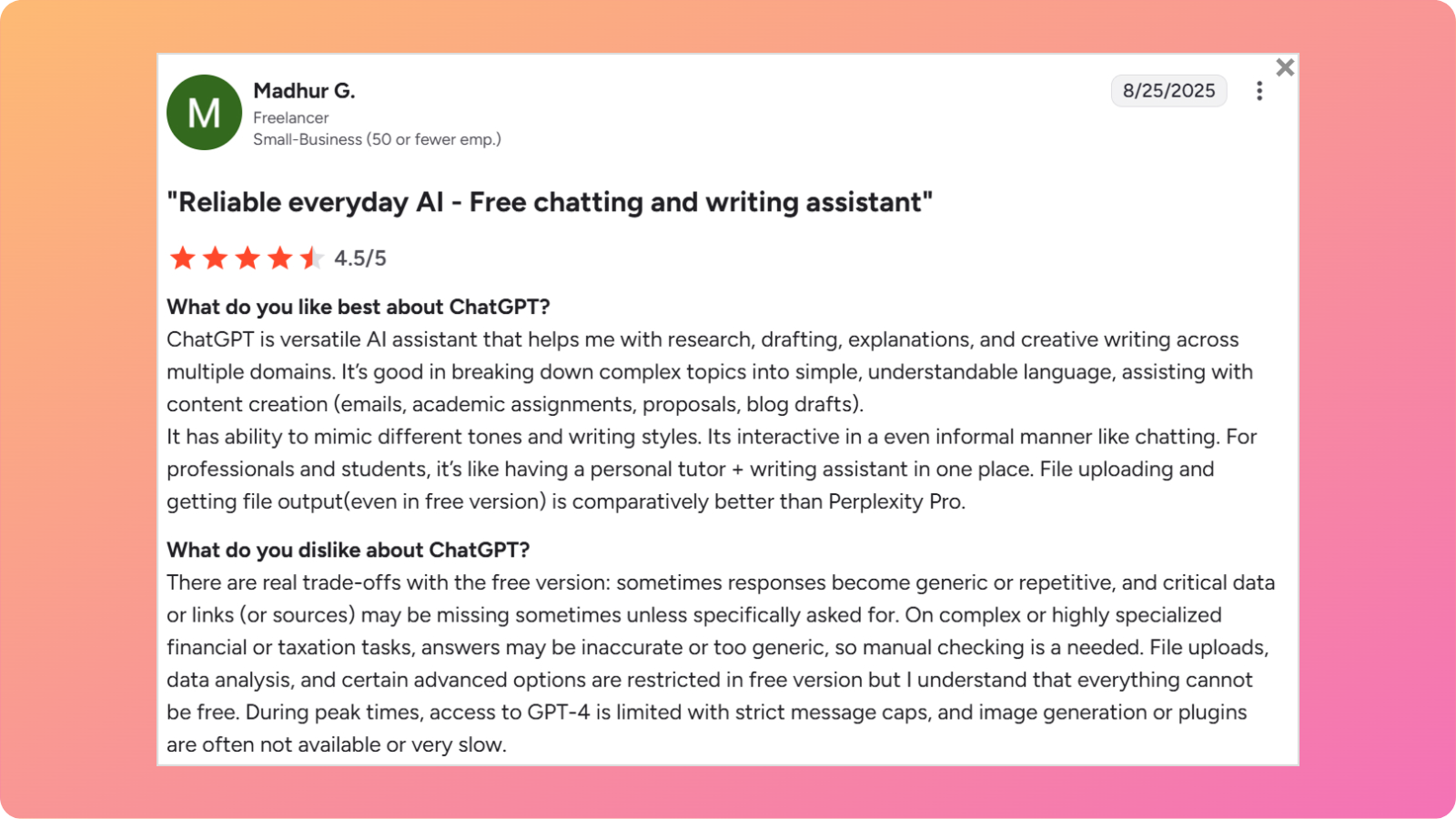
    Winner: Perplexity offers better factual and research depth. ChatGPT delivers better narrative and creative depth.

    Also read: Copilot vs ChatGPT: Which AI wins for blog writing, research, and content depth?

    Perplexity vs ChatGPT in image generation

    Perplexity can generate images using multiple integrated engines (such as FLUX, DALL·E, Seedream, and Gemini). However, the results vary significantly depending on the model selected, and users often report inconsistent quality and a less polished UI experience.

    perplexity image generation

    ChatGPT, on the other hand, offers more stable, high-quality image generation through its multimodal GPT-4o system. It produces more coherent, detailed visuals and provides a smoother prompting, refinement, and regeneration workflow.

    Chatgpt image generation

    Winner: ChatGPT is the better choice for creating high-quality, consistent visual assets directly alongside written content.

    Related: Gemini vs ChatGPT comparison.

    Perplexity vs ChatGPT in SEO understanding

    ChatGPT has a stronger grasp of SEO principles and practical implementation. It understands keyword placement, meta descriptions, header structure, internal linking concepts, and how to balance optimization with readability. The tool can write content that targets specific search intent while maintaining natural language flow.

    Perplexity approaches SEO more indirectly. While it can research SEO best practices and provide information about optimization strategies, it’s not designed to implement these strategies in the content it generates. The platform is more useful for researching keywords and understanding search landscapes than for creating SEO-optimized articles.
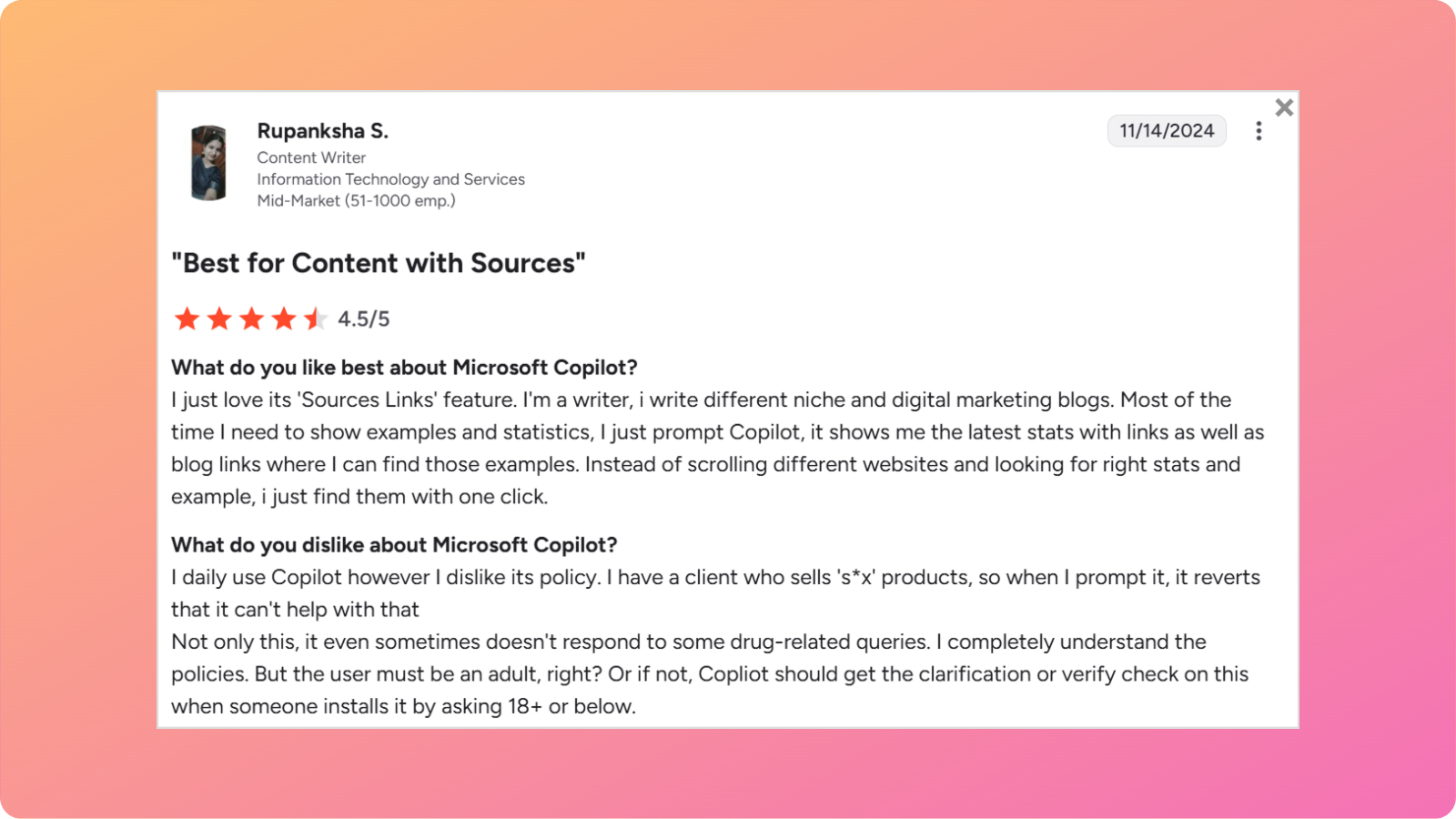
    Winner: ChatGPT is significantly better for creating SEO-optimized blog content. Perplexity is useful for SEO research but not for implementation.

    Related: 12 SEO competitor analysis tools in 2026.

    Creating a real blog with ChatGPT and Perplexity

    To provide a practical comparison of Perplexity vs ChatGPT, we’ll create the same blog post using both platforms. This hands-on test reveals how each tool performs in a real content creation scenario.

    We’ll use an identical prompt for both tools to ensure a fair comparison:

    “Write a short and engaging blog post about the Best Technological Advancements of the 21st Century. Use an engaging and conversational tone to make the content sound interesting.”

    Cahtgpt vs perplexity

    Analysis of ChatGPT’s writing output

    ChatGPT delivered an energetic, well-organized piece that immediately grabbed attention. The title was straightforward and clear, setting expectations perfectly for what followed.

    Chatgpt article generated

    The introduction opened with vivid imagery: “The 21st century has been nothing short of a tech roller coaster — fast, exciting, and full of jaw-dropping innovation.” This metaphor establishes tone and energy from the first sentence.

    The body used a numbered list format covering ten distinct technological advancements. Each section included a catchy subheading with a descriptive tagline (“Smartphones: The Pocket-Sized Revolution”). 

    The writing maintained consistent energy with phrases like “hands down,” “love them or not,” and “guess what?” that created conversational momentum.

    ChatGPT included rhetorical questions and direct reader engagement throughout. The conclusion tied everything together with forward-looking enthusiasm: “Buckle up — the tech ride is far from over.”

    Also read: The ultimate list of SEO writing tools that actually improve rankings.

    ChatGPT’s strengths for writing

    ChatGPT’s output shows why it’s become the go-to tool for content creators who need publish-ready blog posts.

    • Highly scannable structure. The numbered list format with bold subheadings made it effortless to skim and find specific topics of interest.
    • Consistent conversational energy. Every section maintained the same engaging, enthusiastic tone without dropping into formal or academic language.
    • Comprehensive coverage. Ten different technologies provided breadth that made the piece feel authoritative and complete.
    • Reader engagement techniques. Rhetorical questions, direct address (“Remember when…”), and casual phrases kept readers involved throughout.

    • Strong opening and closing. Both the introduction and conclusion used memorable imagery and calls to action that bookended the content effectively.
    • Natural keyword integration. Terms like “technological advancements” and “21st century” appeared organically without feeling forced.

    ChatGPT’s weaknesses for writing

    Despite its polished appearance, several telltale signs revealed the content’s AI origins.

    • Predictable structure. The numbered list format, while effective, feels like a template used across millions of AI-generated articles.
    • Generic enthusiasm. Phrases like “game-changing,” “nothing short of,” and “jaw-dropping” are AI writing markers that signal machine-generated content.
    • Surface-level explanations. Each technology got a brief treatment without deep insights or unexpected perspectives that would demonstrate genuine expertise.
    • No sources or data. The content made broad claims about impact without statistics, studies, or citations to back them up.
    • Repetitive transitions. Similar sentence structures and transition patterns appeared throughout, creating a rhythmic predictability.
    • Missing a unique voice. The content could belong to any tech blog, lacking a distinctive personality or perspective that builds brand identity.

    Analysis of Perplexity’s writing output

    Perplexity took a noticeably more condensed approach to the same prompt. The content focused on five key technologies rather than attempting comprehensive coverage.

    Perplexity article generated

    The introduction used similar engaging language: “The 21st century has been a whirlwind of incredible technological breakthroughs.” However, it moved quickly into substance rather than extending the setup.

    The body organized information by technology, but without numbered formatting. Each paragraph flowed into the next, creating a more essay-like reading experience. The writing included specific examples like “Siri and Alexa” and mentioned concrete technologies like “CRISPR gene editing” and “5G.”

    The conclusion posed a direct question to readers: “What tech advancement has wowed you the most this century?” This engagement technique invited reflection and potential discussion.

    Perplexity’s strengths for writing

    Perplexity brought a more refined approach to the content, even if it fell short on comprehensiveness.

    • More focused coverage. By covering five technologies instead of ten, each got slightly more thoughtful treatment and context.
    • Specific examples and terminology. Mentioning CRISPR, 5G, and telemedicine added technical credibility that generic descriptions lack.
    • Cleaner prose. The writing avoided some of the more obvious AI clichés that ChatGPT included, creating slightly more natural-sounding content.
    • Thematic organization. Technologies were grouped logically (connectivity, AI, medical, energy) rather than just listed.
    • Reader question ending. The concluding question created an opening for engagement that felt less formulaic than ChatGPT’s metaphorical closing.
    • Varied sentence structure. The content mixed short and long sentences more effectively, improving natural reading rhythm.

    Perplexity’s weaknesses in writing

    Where Perplexity typically shines in research, this output revealed unexpected limitations in content generation.

    • Less comprehensive coverage. Only five technologies meant significant omissions like blockchain, wearables, and 3D printing that readers might expect.
    • Shorter overall length. The content felt somewhat abbreviated compared to what the prompt requested, potentially leaving readers wanting more substance.
    • Limited engagement techniques. Fewer conversational hooks and less personality throughout made it feel more informational than entertaining.
    • No citations despite research focus. Surprisingly, Perplexity didn’t include its characteristic source citations even when making factual claims about technologies.
    • Weaker structural hierarchy. Without numbered lists or bold subheadings, the content was less scannable and harder to navigate quickly.
    • Generic opening. The “whirlwind” metaphor in the introduction felt just as template-driven as ChatGPT’s “roller coaster,” showing both tools rely on similar imagery.

    Summary of Perplexity vs ChatGPT for blog writing

    This practical test reinforces the fundamental difference between Perplexity vs ChatGPT for content creation.

    • ChatGPT excelled at creating engaging, structured blog content that readers can easily scan and enjoy. The numbered format, consistent tone, and comprehensive coverage made it feel like a complete, polished blog post ready for publication with minor edits.
    • Perplexity produced more concise, slightly more sophisticated prose with better specificity in examples. The content felt less template-driven in places, though still generic overall.

    Users’ reviews for Perplexity & ChatGPT

    Real user experiences provide important details when evaluating Perplexity vs ChatGPT. These reviews come from verified users on G2 who use these tools daily in their content workflows, research tasks, and creative projects.

    Overall ratings from G2

    ChatGPT: 4.7/5 based on 1,068 reviews and Perplexity: 4.6/5 based on 75 reviews

    Both platforms maintain strong ratings, with ChatGPT having significantly more extensive review coverage due to its longer market presence and larger user base. The close ratings suggest both tools deliver substantial value, though they serve different primary purposes.

    Perplexity and chatgpt rating

    What users say about Perplexity

    Perplexity reviews

    Praised for:

    • Accuracy with source citations. Users consistently highlight Perplexity’s reliable, verified answers that come with proper citations. One marketing consultant noted it provides “reliable and verified answers, providing me with enhanced efficiency and time-saving capabilities for diverse tasks like video editing, content writing, and academic processes.”
    • Real-time web access. The ability to fetch current information is a major selling point. A user emphasized that “its web access lets me get real-time info, and it’s become my daily assistant for everything from research to generating content.”
    • Contextual conversation flow. Perplexity maintains context effectively throughout conversations, preventing repetitive mistakes and allowing for deeper exploration of topics without starting over.
    • Easy setup and usability. Multiple reviewers mentioned the smooth onboarding experience with “just a few clicks to get started” and appreciated features like “spaces” that organize research projects.
    • Complex query handling. Users value Perplexity’s “ability to handle complex multi-step tasks swiftly compared to human efforts,” making it particularly useful for in-depth research.

    Common complaints:

    • Inconsistent performance. Some users report that “randomly it will stop understanding basic tasks” and that “language output prompts definitely don’t work right,” requiring frequent verification.
    • Limited language support. The lack of support for certain languages, like Sanskrit, limits their usefulness for some user segments working with specialized linguistic content.
    • Struggles with specialized queries. Users note it “sometimes struggles with nuanced or highly specialized queries” and experiences “minor delays when fetching web data.”
    • Needs more integrations. Several reviewers requested “a broader set of integrations and more customization options” to enhance workflow efficiency.
    • Verification is still required. Despite its citation features, users emphasize that “sometimes you really have to verify everything,” suggesting the citations don’t completely eliminate fact-checking needs.

    What users say about ChatGPT

    Chatgpt reviews

    Praised for:

    • Exceptional versatility. Users love ChatGPT’s ability to handle diverse tasks from research to creative writing. One reviewer called it “a versatile AI assistant that helps me with research, drafting, explanations, and creative writing across multiple domains.”
    • Excellent at simplification. ChatGPT excels at “breaking down complex topics into simple, understandable language,” making it valuable for both professionals and students.
    • Tone and style adaptation. The “ability to mimic different tones and writing styles” allows users to match brand voices and adjust content for different audiences effortlessly.
    • Conversational interaction. Users appreciate that it’s “interactive in an even informal manner like chatting,” making the experience feel natural rather than robotic.
    • Time-saving efficiency. Many reviewers mention how ChatGPT “regularly saves me time” by helping with editing, reviewing lines, and speeding up the writing process.
    • Coding assistance. Several users specifically praised its JavaScript and general coding capabilities for development work.
    • File handling capabilities. The ability to upload files and receive file outputs, “even in the free version,” compares favorably to competitors.

    Common complaints:

    • Hallucinations and inaccuracies. The most frequent criticism is that ChatGPT “can hallucinate” and provide confidently incorrect information. One user described asking about flights from their local airport and receiving completely wrong information that was only corrected when challenged.
    • Generic and repetitive responses. Free version users note that “sometimes responses become generic or repetitive” and lack the depth available in paid tiers.
    • Missing sources and citations. Users complain that “critical data or links (or sources) may be missing sometimes unless specifically asked for,” requiring manual verification.
    • Inaccurate on specialized topics. For “complex or highly specialized financial or taxation tasks, answers may be inaccurate or too generic, so manual checking is needed.”
    • Free version limitations. Many features like advanced data analysis, certain file types, and consistent GPT-4 access are restricted, with “strict message caps” during peak times.
    • Slow image generation. Users report that “image generation or plugins are often not available or very slow,” impacting workflow efficiency.

    Overall, the reviews reveal a clear usage pattern when comparing Perplexity vs ChatGPT. Users turn to Perplexity when they need accurate, cited information for research-heavy tasks and real-time data. ChatGPT dominates as a “personal tutor + writing assistant in one place” for users who prioritize content creation, creative writing, and conversational interaction.

    Contentpen – A better alternative to Perplexity & ChatGPT

    While both Perplexity and ChatGPT offer valuable features for content creators, neither was specifically designed to handle the complete blog creation process from start to finish.Perplexity excels at research but falls short in content generation. ChatGPT produces engaging writing but requires manual fact-checking and research. Both leave significant gaps in a comprehensive content workflow that includes keyword research, SEO optimization, publishing, and performance tracking.

    This AI blog writing tool bridges these gaps by functioning as an all-in-one content platform rather than just an AI writing assistant. It’s specifically built for bloggers, marketers, and businesses who need to create, optimize, and scale blog content systematically.

    The following table explains why Contentpen is better than both Perplexity and ChatGPT for blog creation:

    FeaturePerplexityChatGPTContentpen
    AI writing quality⚪ Research-focused, less engaging✅ Creative and versatile✅ SEO-focused, brand-aligned, one-click generation
    Keyword research❌ Manual process❌ Manual process✅ Automatic and intelligent
    Research capability✅ Excellent with citations⚪ Good with web browsing✅ Built-in research integration
    SEO & GEO optimization❌ Minimal⚪ Strong when prompted✅ Advanced, automated optimization
    Publishing❌ Manual export and upload❌ Manual export and upload✅ One-click WordPress publishing
    Images & media❌ No visual generation✅ Limited DALL-E access✅ AI-generated visuals included
    Content calendar❌ None❌ None✅ Auto-created and scheduled
    SEO insights❌ None⚪ Limited via plugins✅ Built-in performance tracking
    Source citations✅ Automatic⚪ Limited with web search✅ Optional citation integration
    Scalability⚪ Moderate research volume⚪ High writing volume✅ Unlimited bulk content automation
    Fact-checking✅ Built-in through citations❌ Fully manual✅ Automated verification options

    With Contentpen, you don’t have to choose between research accuracy and writing quality. It combines the research capabilities that make Perplexity valuable with the content generation strengths that make ChatGPT useful, then adds comprehensive SEO and publishing features that neither platform offers.

    The platform handles keyword research automatically, generates optimized content that aligns with your brand voice, creates accompanying visuals, and publishes directly to WordPress. This eliminates the fragmented workflow of using multiple tools and manual processes that slow down content production.

    Similarly, teams and businesses scaling content can enjoy Contentpen’s bulk generation capabilities and built-in content calendar transform content marketing from a tactical challenge into a strategic advantage.

    Final Verdict – Which is better for blog writing?

    The Perplexity vs ChatGPT comparison ultimately comes down to understanding what each tool was built to do.

    Perplexity is an AI-powered research engine that excels at gathering current information, synthesizing multiple sources, and providing cited facts. On the other hand, ChatGPT is a generative AI assistant optimized for content creation, creative writing, and conversational engagement. 

    Neither tool alone provides the complete solution modern content creators actually need. So, if you’re looking to scale content production systematically rather than piecing together workflows from multiple tools, Contentpen offers a more comprehensive solution. It integrates research, writing, SEO optimization, and publishing into a single platform designed specifically for blog content creation.

    Start your free trial of Contentpen today and experience how streamlined content creation can transform your blogging process.

    Frequently asked questions

    When to use Perplexity vs ChatGPT?

    Use Perplexity when you need to research current information, gather facts from multiple sources, or verify claims with citations. It’s ideal for fact-checking, staying updated on recent developments, and building research foundations for content. 
    Choose ChatGPT when you need to write blog posts, create engaging content, generate creative material, or adapt content to specific brand voices. ChatGPT excels at the actual writing process, while Perplexity excels at the research process.

    Is Perplexity AI better than ChatGPT?

    Not necessarily, as they serve different primary purposes. Perplexity is better for research tasks that require current information, source citations, and fact verification. ChatGPT is better for creative writing, content generation, and producing engaging blog posts.
    The “better” tool depends entirely on whether you need research capabilities or content creation capabilities. For comprehensive blog writing workflows, many creators use both tools together.

    Is Perplexity the most powerful AI?

    Perplexity is not the most powerful AI overall, but it’s one of the most powerful AI research tools available. Its strength lies specifically in real-time web search, source synthesis, and information retrieval with citations. Other AI models like ChatGPT, Claude, or specialized AI systems may be more powerful for tasks like creative writing, coding, image generation, or complex reasoning.

    What is the 30% rule in AI?

    The 30% rule in AI suggests that AI should handle approximately 70% of repetitive, routine, and time-consuming tasks, while humans focus on the remaining 30% that requires creativity, strategic thinking, ethical judgment, and critical decision-making.

    What is the knowledge cutoff for Perplexity?

    Perplexity doesn’t have a traditional knowledge cutoff because it performs real-time web searches for each query. It accesses current information from the internet up to the present moment, which means it can provide information about events happening today.

    What is the knowledge cutoff for ChatGPT?

    ChatGPT’s knowledge cutoff depends on the specific version. GPT-5’s training data extends through October 2024, which means its core knowledge stops at that point. However, users can also enable the web search option to search for and incorporate more current information when needed.

  • Claude vs ChatGPT for blog writing: Which AI tool wins?

    Claude vs ChatGPT for blog writing: Which AI tool wins?

    The artificial intelligence (AI) industry is rapidly expanding with more and more Large Language Models (LLMs) like OpenAI’s ChatGPT and Anthropic’s Claude being introduced. Content creation and blog writing are two of the many key areas where AI is changing the workflow, so it is important to choose the right platform to get the best results. 

    While there are many different AI systems and platforms, we’ll be focusing on Claude vs ChatGPT in this article. We’ll determine which of them actually delivers better articles, more engaging blog posts, and content that resonates with readers.

    Let’s start with the basics. 

    Pro Tip: Don’t want to go through the entire debate of Claude vs ChatGPT? Skip to the end to see why Contentpen is the perfect alternative to both of them!

    General overview of ChatGPT’s capabilities

    ChatGPT, developed by OpenAI, is one of the most widely used AI writing tools today. It’s built on an advanced GPT (Generative Pre-trained Transformer) architecture, which is known for producing coherent, engaging, and human-like text across a wide range of topics.

    ChatGPT

    When it comes to content writing and blogging, ChatGPT stands out for its:

    • Strong storytelling and creativity: It can write in diverse tones and styles, ranging from casual blog posts to professional articles. The key thing is to give it the right prompt.
    • SEO and keyword integration: ChatGPT easily incorporates different types of keywords naturally, making it effective for search-optimized content.
    • Research and structure handling: It can outline blog posts, write introductions, expand points with logical flow, and summarize complex topics clearly.
    • Editing and rewriting support: Users can give different prompts to refine tone, grammar, and structure. You can also request rewrites.

    Overall, ChatGPT is a versatile, reliable assistant for anyone looking to generate polished, ready-to-publish written content quickly and efficiently.

    Related: Gemini vs ChatGPT: The ultimate comparison

    Limitations

    While ChatGPT produces fluent text, its content can sometimes feel formulaic, particularly in introductions and conclusions.

    Writers often notice repetitive phrases like “in today’s digital landscape” or the excessive use of dashes that require editing. The model occasionally prioritizes sounding confident over accuracy, which means fact-checking remains essential for published content.

    General overview of Claude’s capabilities

    Claude, developed by Anthropic, is another leading AI writing model known for its natural tone and context-aware writing. Inspired by principles of “Constitutional AI,” Claude is designed to be helpful, honest, and harmless, which makes it a reliable AI tool for long-form writing and editorial work.

    Claude

    Some of the key areas where Claude excels are:

    • Contextual depth: It understands and maintains context over long pieces of text, making it ideal for detailed blogs or guides.
    • Clarity and factual accuracy: Claude focuses on producing content that’s well-reasoned and accurate, minimizing filler or vague statements.
    • Human-like tone: Its writing often feels smooth and conversational, which is suitable for lifestyle or thought-leadership blogs.
    • Summarization and research synthesis: Claude can summarize lengthy research or merge multiple data points into cohesive sections.
    • Ethical and transparent writing: It tends to avoid exaggeration, offering more neutral and trustworthy content.

    In short, Claude’s strength lies in crafting insightful, clear, and well-structured long-form content, which is perfect for writers who prioritize accuracy and depth over flashy language.

    Related: Claude vs Gemini 2026 comparison.

    Limitations

    Claude can sometimes be overly cautious, occasionally declining to write content on sensitive topics where other AI models might proceed. For content creators, this means you might occasionally need to rephrase requests. Moreover, some writers find Claude to be slightly slower at generating quick, punchy content compared to ChatGPT’s rapid-fire output.

    Comparing Claude vs ChatGPT

    When it comes to AI-assisted writing, both Claude and ChatGPT deliver impressive results. However, we get to see a real difference between them by comparing their output in terms of research, reasoning, content writing, image generation, and SEO optimization. These are the key areas that matter the most to bloggers and marketers.

    claude vs chatgpt

    The following table shows a quick side-by-side comparison of Claude vs ChatGPT:

    FeatureClaudeChatGPT
    Content qualityNatural, less AI-sounding. Excellent for long-formFluent and versatile. Can feel formulaic at times
    Research capabilityStrong web search integration and takes caution with factsWeb browsing is available (Plus) with an extensive knowledge base
    ReasoningExcellent analytical thinkingStrong reasoning
    Content depthIdeal choice for in-depth articlesGood depth, but can lose focus in very long pieces
    Tone consistencyHighly consistent across long contentGenerally consistent
    SEO understandingUnderstands SEO principles, but requires prompts for implementationExcellent SEO awareness and  keyword integration
    Image generationNot availableDALL-E integration available (Plus/Pro)
    SpeedThoughtful but slightly slowerGenerally faster output
    Fact accuracyAcknowledges uncertainty to ensure maximum accuracyCan give wrong or outdated facts, so manual fact-checking is necessary
    Pricing (Paid plan)Pro: $17/month Max: $100/person/monthPlus: $20/month Pro: $200/month
    Best forLong-form blogs, thought leadership, research articlesVersatile content, quick posts, social media, visuals

    Let’s compare Claude vs ChatGPT in detail:

    Claude vs ChatGPT in research

    ChatGPT excels at collecting information, summarizing data, and organizing research-based content into digestible blog formats. So, it is effective for writers who need fast, structured overviews or topic summaries.

    Claude, on the other hand, prioritizes accuracy and context. It tends to rephrase or validate information in a more natural, fact-driven tone. It is suitable for writers who value reliability and balanced explanations over speed.

    Also read: Perplexity vs Claude: Which AI is better for blog writing?

    Verdict

    In terms of Claude vs ChatGPT for research, ChatGPT wins for quick and SEO-ready research summaries. If you have access to ChatGPT Plus, you can expect even more accurate results. However, for more detailed explanations, Claude takes the lead.

    Claude vs ChatGPT in reasoning

    Reasoning plays a big role in long-form writing. ChatGPT is excellent for structuring arguments and generating logical outlines. It can also mimic reasoning patterns that suit marketing, product comparisons, or educational blogs.

    Claude, however, has a more analytical reasoning process. It doesn’t just list ideas, but also connects them with deeper insights or cause-and-effect explanations. This is why Claude’s writing is more thoughtful.

    Verdict

    Use ChatGPT for concise and structured reasoning. But if you want deeper and layered logic, you can use Claude.

    Claude vs ChatGPT in content writing

    We’ll be discussing Claude vs ChatGPT for writing in detail later in this article with a blog example. But overall, ChatGPT shines in content writing due to its versatility, as it can easily adapt tone and voice to fit a brand’s identity. 

    You can use ChatGPT to produce everything from catchy blog introductions to detailed how-to guides. Its fluency and creativity make it ideal for marketing and storytelling.

    Claude, meanwhile, delivers editorial-quality writing that feels human and deliberate. It prioritizes flow and readability. It is more suitable for thought leadership, journalism, and reflective blogs.

    Verdict

    ChatGPT performs better for brand-driven and SEO-optimized blogs, while Claude is ideal for long-form writing.

    Claude vs ChatGPT in content depth

    ChatGPT can generate comprehensive outlines and expand sections efficiently. It is an ideal choice when you can write an article section-by-section instead of a one-click article generation.

    On the other hand, Claude emphasizes depth over volume. It dives deep into nuances, examples, and reasoning that make content feel more researched and detailed. Plus, you can expect Claude to write a comprehensive blog post through a single well-designed prompt.

    Verdict

    Claude is better than ChatGPT for nuanced and in-depth writing.

    Also read: Best AI tool for writing SEO-rich blog content.

    Claude vs ChatGPT in image generation

    Image generation is one area where ChatGPT is the clear winner because Claude does not support visual generation at all.

    Through integrations like DALL·E, ChatGPT can generate images, illustrations, and visuals directly within the writing process. Claude, however, is text-only, which focuses solely on writing and editing tasks. It can describe visuals effectively, but cannot generate them.

    Verdict

    Use ChatGPT to create visual assets along with written content.

    Claude vs ChatGPT in SEO understanding

    When comparing Claude vs ChatGPT in SEO understanding, the difference is in practical implementation.

    ChatGPT has a strong grasp of on-page SEO elements, including keyword placement, meta descriptions, subheadings, and content flow. It can write optimized blogs that balance readability with search intent.

    Claude, while aware of SEO best practices, leans toward natural readability and human tone over keyword optimization. You have to give it detailed prompts to ensure Claude follows SEO best practices in its writing. 

    Verdict

    ChatGPT is an effective AI tool for SEO-heavy content, while Claude performs better for organic readability.

    Related: Best SEO competitor analysis tools in 2026.

    Creating a real blog with ChatGPT and Claude

    By now, we’ve compared ChatGPT vs Claude in terms of many different factors. But when it comes to writing, the best way to compare them is to create a real blog. So, in this section, we’ll create a blog post using the same prompt and then compare the writing process, structure, and overall quality.

    This hands-on comparison will help you see how each tool performs when faced with an actual content writing task, from research to final output. 

    Setting up the test

    To make the comparison fair and focused, both Claude and ChatGPT are given the same prompt, tone requirements, and structure expectations.

    Prompt used:

    “Write a 600-word blog post on ‘The Benefits of Using AI in Blog Writing.’ Make it engaging, well-structured, and SEO-friendly. Include subheadings, a short intro, and a conclusion.”

    Both AIs are expected to:

    • Use a friendly yet professional tone
    • Include keyword integration naturally
    • Maintain clarity and readability
    • Follow a logical blog structure
    claude vs chatgpt toc creation

    This setup allows us to observe not only the quality of their writing but also how they handle organization, SEO intent, and voice.

    Analysis of ChatGPT’s writing output

    Chatgpt output

    ChatGPT delivered a comprehensively structured post with clear organization. The title and meta description came automatically, which is great for SEO workflows. The introduction opened with a relatable pain point: “Creating high-quality blog content consistently can be challenging — especially when deadlines are tight, and creativity feels low.”

    The structure followed a classic listicle format with numbered benefits. Moreover, each section included bullet-pointed sub-benefits, making the content scannable and easy to digest. 

    Overall, the writing was clear and functional, using straightforward language like “AI tools streamline these steps by…” and “Here’s how AI enhances content quality…”

    ChatGPT’s strengths for writing

    • Immediate SEO readiness: Automatically generated an optimized title and meta description without additional prompting, saving time in the content workflow.
    • Superior formatting structure: Used numbered lists, bullet points, and clear hierarchies that make content highly scannable.
    • Consistent organization: Each benefit section followed the same predictable pattern (introduction → bullet points → explanation), creating a familiar structure that readers expect.
    • Action-oriented language: Phrased benefits as concrete outcomes (“Saves Time,” “Improves Quality”) rather than abstract concepts.
    • Quick reference value: The listicle format makes it easy for readers to extract specific information without reading the entire article.
    • Beginner-friendly: Simple, direct language accessible to all reading levels without sacrificing information density.

    ChatGPT’s weaknesses for writing

    • Generic AI phrases: Included clichés like “in a fraction of the time” and “speaks directly to their interests” that immediately signal AI-generated content.
    • Lacks a distinctive voice: The writing feels template-driven, making it difficult to differentiate from thousands of other AI-written articles on the same topic.
    • Surface-level explanations: Covered breadth effectively but didn’t explore why benefits matter or provide a deeper context that demonstrates expertise.
    • Forced transitions: Phrases like “it complements it beautifully” felt unnatural and overly enthusiastic in ways human writers rarely express.
    • Predictable structure: The rigid numbered format, while scannable, can feel formulaic and reduce engagement for readers seeking more nuanced discussion.
    • Requires significant editing: To make this publication-ready for a brand-building strategy, you’d need to inject personality, remove AI tells, and add unique insight.

    Analysis of Claude’s writing output

    Claude output

    Claude opened with a more narrative introduction: “In today’s fast-paced digital landscape, content creators are constantly seeking ways to produce high-quality blog posts.” Such an introduction, while engaging, is common in all types of AI-generated blog posts.

    The structure used descriptive H2 headings rather than numbers. Moreover, Claude wrote in flowing paragraphs without bullet points, creating a more article-like reading experience. Each section explored concepts more deeply with explanations of why benefits matter, not just what they are. 

    For example, rather than listing ways AI helps with SEO, Claude explained: “By leveraging AI in blog writing, you can ensure your content is discoverable by your target audience.”

    Claude’s strengths for writing

    • Deeper conceptual explanations: Doesn’t just list benefits but explains the underlying reasoning, helping readers truly understand concepts rather than just memorize tips.
    • Variation in sentence structure: Uses varied sentence structures and more nuanced language to improve the content’s authority.
    • Narrative coherence: Each section builds on previous ideas, creating a cohesive article rather than disconnected tips.
    • Authentic tone: The voice feels like a knowledgeable person sharing insights rather than a bot assembling information.
    • Thoughtful conclusions: Ties concepts together meaningfully instead of generic wrap-ups.
    • Less editing required: Typically needs only 15-20% editing to add brand-specific elements and personal touches.

    Claude’s weaknesses in writing

    • Missing SEO elements: Didn’t automatically provide title tags or meta descriptions, requiring follow-up prompts for complete SEO optimization.
    • Less scannable format: Paragraph-heavy structure makes it harder for skimmers to extract key information quickly, which can reduce engagement for casual readers.
    • Occasional AI clichés: Started with “In today’s fast-paced digital landscape”, which is one of the most overused phrases in both Claude and ChatGPT.
    • Requires formatting work: To match modern blog standards, you’d need to add bullet points, callout boxes, or other visual breaks for better readability.
    • No built-in visual generation: Must use separate tools for images, while ChatGPT offers integrated DALL-E access.
    • Slightly longer generation time: Takes 30-60 seconds more than ChatGPT for equivalent content length.
    • May exceed word counts: Tends to write longer than requested because it develops ideas thoroughly rather than hitting arbitrary targets. It increases the chances of fluff. 

    Also read: The ultimate list of SEO writing tools.

    Summary of Claude vs ChatGPT for blog writing

    When it comes to creating a real blog, both tools perform impressively, but they cater to different goals.

    • ChatGPT feels like a creative content partner, ideal for marketers, bloggers, and SEO writers who want speed, variety, and adaptability.
    • Claude feels more like a skilled editor, ideal for writers who prioritize accuracy, flow, and brand tone consistency over flashy language.

    For this test, ChatGPT delivered more immediately usable content for quick publication. Claude produced higher-quality writing that would perform better for building authority and engaging serious readers, but required additional prompts for SEO elements and formatting optimization.

    The choice between them depends on your content goals and whether you prefer efficiency and flair (ChatGPT) or depth and refinement (Claude).

    Related: Does Google penalize AI content?

    ChatGPT vs Claude: Strengths and weaknesses for content writing

    The following table summarizes the strengths and weaknesses of Claude and ChatGPT:

    AspectChatGPTClaude
    Writing quality✅ Clear, functional, well-organized❌ Generic, template-driven, lacks personality, unless specific prompts are given✅ Natural, human-like prose❌ Occasionally uses AI clichés, especially in intros
    Content structure✅ Excellent formatting with lists and bullets✅ Highly scannable❌ Predictable, formulaic patterns✅ Cohesive narrative flow❌ Paragraph-heavy, less scannable❌ Requires formatting work
    Content depth✅ Covers breadth effectively❌ Surface-level explanations✅ Deeper conceptual explanations❌ May exceed word count targets and add fluff
    SEO readiness✅ Auto-generates titles and meta descriptions✅ Immediate SEO optimization❌ Requires separate prompts for SEO elements✅ Natural keyword integration
    Voice & authenticity✅  Follows brand voice on specific prompts❌ Forced transitions and phrases✅ Harder to identify as AI-written✅ Sophisticated, varied language
    Editing required❌ 30-40% rewrite needed✅ Only 15-20% editing needed
    Speed✅ Faster generation (1-2 min for 1,500 words)❌ Slightly slower (2-3 min for 1,500 words)
    Visual content✅ Integrated DALL-E image generation❌ No built-in image creation
    Best forQuick, scannable blog posts and listicles and how-tosLong-form thought leadership and authority-building content

    Users’ reviews for Claude & ChatGPT

    Real user experiences provide valuable insights beyond technical specifications when evaluating Claude vs ChatGPT for writing.

    G2 and Capterra are two of the most trusted software review platforms where verified users share honest feedback about tools they use daily. These reviews come from actual content creators, marketers, and businesses who rely on these AI assistants in their workflows.

    Overall ratings

    G2 reviews

    • ChatGPT: 4.7/5 – Higher overall satisfaction score
    • Claude: 4.4/5 – Strong rating with room for growth
    G2 reviews

    Capterra reviews

    • Claude: 4.6/5 – Leading in user satisfaction
    • ChatGPT: 4.5/5 – Closely competitive rating
    Capterra reviews

    Interestingly, Claude scores higher on Capterra while ChatGPT leads on G2, suggesting both platforms have devoted user bases with different priorities and use cases.

    What users say about ChatGPT

    ChatGPT review

    Praised for:

    • Speed and efficiency: Provides answers instantly, making content creation significantly faster.
    • Ease of use: Intuitive interface that feels like “having a buddy” available 24/7.
    • Overcoming writer’s block: Excellent for getting initial drafts started and eliminating blank page syndrome.
    • Versatility: Handles diverse content types from emails to blog posts, social media captions to academic assignments.
    • Time-saving capabilities: Summarizes long documents quickly and assists with research across multiple domains.
    • Creative collaboration: Acts as a brainstorming partner that provides thoughtful suggestions and fresh perspectives.
    • Breaking down complexity: Excels at simplifying complex topics into understandable language.

    Common complaints:

    • Confidence despite inaccuracy: Often presents wrong or outdated information with complete confidence, requiring rigorous fact-checking.
    • Obviously AI-generated: Content is easily identifiable as machine-written, sounding overly formal and lacking authenticity.
    • Technical glitches: Makes grammatical errors and provides misinformation that undermines reliability.
    • Not a human replacement: Clearly needs human oversight to verify validity, adjust tone, and provide proper context for target audiences.
    • Struggles with niche topics: Limited effectiveness for specialized subjects or recent events.
    • Overly restrictive filters: Safety features sometimes prevent getting the desired responses.
    • Limited image generation: Frustrating restrictions on the number of images that can be created.
    • Free version limitations: Performance constraints affect user experience.

    What users say about Claude

    Claude reviews

    Praised for:

    • Superior to ChatGPT for copywriting: “By far my most favourite AI tool and ChatGPT is in my opinion only 75% as good as Claude” for website copy.
    • Natural-sounding content: Uses broader vocabulary and more natural sentence structures that are harder to detect as AI-generated.
    • Better context retention: Remembers past conversations more effectively and pulls more context from background information.
    • File upload capability: Can upload and summarize documents directly within the platform.
    • Precise information delivery: Provides condensed, well-organized information that simplifies research.
    • Excellent for marketing content: Highly effective for blog articles, brainstorming topics and titles, and business idea development.

    Common complaints:

    • Still reads as AI-generated: Text requires reworking to sound fully authentic despite being better than ChatGPT.
    • Poor link handling: Doesn’t summarize URLs well and sometimes fabricates information when processing links.
    • Usage limitations: Recent implementations of capacity restrictions that convert to shorter responses unless users upgrade (described as “bait and switch”).
    • Needs question rephrasing: Sometimes requires reformulating prompts to get accurate answers.
    • Smaller feature set: Lacks some of the integrated tools available in ChatGPT.

    User Preference Patterns

    One Claude user summarized the comparison perfectly: “I just prefer Claude over ChatGPT in 90% of cases. Only when I don’t really mind about the result or check Claude responses with a second source I will rotate back to GPT.”

    Overall, the reviews confirm what our testing showed that both AI tools excel in different scenarios. Your choice should align with your specific content priorities: ChatGPT for versatility and speed, Claude for natural-sounding, quality-focused content.

    Contentpen – A better alternative to Claude & ChatGPT

    While Claude and ChatGPT are powerful AI writing assistants, they weren’t specifically built to manage the entire blogging process. Both tools can generate quality drafts, but you still need to handle keyword research, SEO optimization, publishing, and performance tracking manually.

    That’s where Contentpen stands out. It’s not just an AI writer, but an all-in-one platform designed to help you write, rank, and scale blogs effortlessly. It is a modern AI writing assistant that helps everyone from solo bloggers to enterprises in bulk content creation. 

    Contentpen interface

    The following table explains why Contentpen is better than both Claude and ChatGPT:

    FeatureClaudeChatGPTContentpen
    AI writing quality✅ Excellent clarity✅ Creative and versatile✅ SEO-focused, brand-aligned. One-click option available.
    Keyword research❌ Manual❌ Manual✅ Automatic and smart
    SEO & GEO optimization⚪ Basic⚪ Strong✅ Advanced, built-in
    Publishing❌ Manual❌ Manual✅ 1-click to WordPress
    Images & media❌ No✅ Limited✅ AI-generated visuals included
    Content calendar❌ None❌ None✅ Auto-created and scheduled
    SEO insights❌ None⚪ Limited via plugins✅ Built-in SEO insights
    Scalability⚪ Moderate⚪ High✅ Unlimited content automation

    Overall, Claude and ChatGPT are great writing assistants, but Contentpen is the entire content department. It helps you go from idea to traffic-generating blog automatically, ensuring that every post is optimized, engaging, and aligned with your brand.

    Final Verdict – Which is better for blog writing?

    So, which AI wins the Claude vs ChatGPT debate for content writing? The honest answer is it is dependent depends on your priorities. ChatGPT excels at speed, versatility, and immediate SEO optimization, while Claude dominates in content quality, natural language flow, and analytical depth.

    However, if you’re looking beyond individual AI assistants to scale your content marketing systematically, neither ChatGPT nor Claude offers the complete solution content-driven businesses actually need. You need Contentpen to get the combined benefits of AI writing and automated keyword research, bulk content generation, direct WordPress publishing, SEO tracking, and performance optimization in one integrated platform.

    Start your free trial today and see how Contentpen can transform your blogging process.

    Frequently asked questions

    When to use Claude vs ChatGPT?

    Use Claude when you need long-form, factual, and context-rich content — like thought-leadership blogs or editorial pieces. Choose ChatGPT for fast, SEO-focused, and creative content such as blog posts, ad copy, or social media articles.

    Is Claude AI better than ChatGPT?

    Not necessarily, as both of these LLMs excel in different areas. Claude offers clearer reasoning and consistency, while ChatGPT delivers stronger SEO awareness, creativity, and tool integration.

    Is Claude the most powerful AI?

    Claude is one of the most advanced writing models, but not the absolute most powerful. Its strength lies in thoughtful reasoning and context handling, not necessarily in versatility or integrations.

    Is there any AI stronger than ChatGPT?

    It depends on the task. Some AIs like Claude 4.5 or Gemini 2.5 may outperform ChatGPT in reasoning or document analysis, but ChatGPT remains unmatched in creativity and general prompts.

    What is the 30% rule in AI?

    The 30% rule suggests that AI should handle around 70% of repetitive, low-value tasks, allowing humans to focus on the remaining 30% work that requires creativity, ethical judgment, and critical thinking. It ensures AI improves human productivity, instead of replacing it.

    What is the knowledge cutoff for Claude?

    The knowledge cutoff for Claude 4.5 is January 2025. It means Claude can only get knowledge of events from February through November 2025 by using web search to find current information.

    What is the knowledge cutoff for ChatGPT?

    For GPT-5 (ChatGPT’s latest version), the knowledge cutoff is October 2025, though it can access the web for updated, real-time information when browsing is enabled.