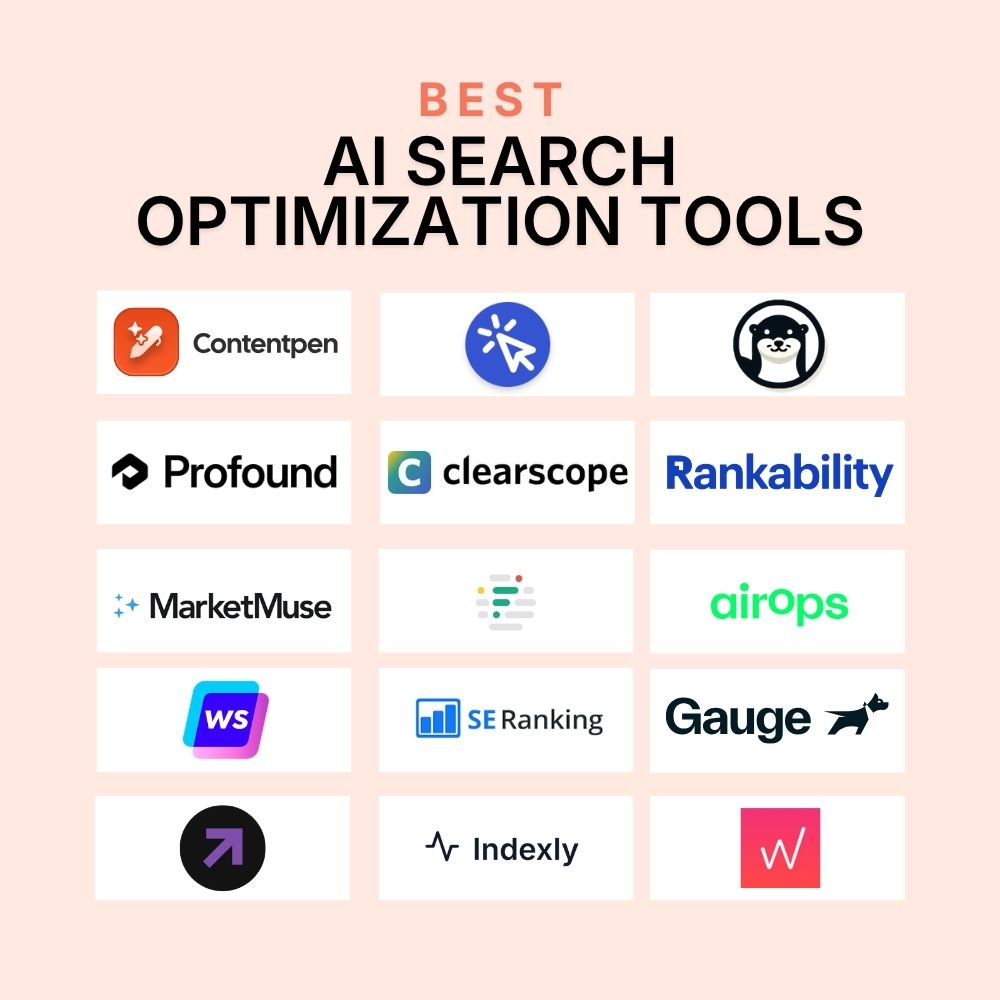
AI search optimization tools now influence whether your brand shows up inside ChatGPT or gets skipped in AI answers. When people ask Perplexity, Gemini, or Google AI Overviews for advice, those instant summaries can replace a click to your site.
That is the real problem. Your organic traffic can slide even while your classic rankings look fine in your old dashboards. This is where AI search optimization tools become crucial. These platforms help your content appear in those AI summaries, and not just in SERP results.
In this guide, you will see 16+ of the best options tested and ranked for 2026 across different categories. You will also see how Contentpen fits into a modern stack, especially if you care about long-form blog posts that attract links.
Ready to pick tools that work with AI instead of fighting it? Let us start with what these tools actually are and why they matter now.
What are AI search optimization tools, and why do you need them in 2026?
AI search optimization tools are platforms that help your site appear in answers from AI systems like ChatGPT, Perplexity, Claude, Gemini, and Google AI Overviews. They focus on how large language models read, summarize, and cite your content. Instead of only tracking rankings, they look at prompts, entities, and citations for your brand.
Traditional SEO chases positions on classic SERPs with blue links. That still matters, but more people now type full questions into AI chatbots when they want fast guidance, prompting the need for AEO.
Research from Similarweb shows the average monthly visits for AI tools grew 76% year over year (YOY). This stat and a lot of AEO examples tell us that if your brand is not mentioned or cited in those AI answers, a growing audience never hears about you.
AI search optimization tools measure when you are mentioned, which sources those systems lean on, and how you compare to competitors. They are a necessity for brands in 2026 looking to improve share of voice in a niche and establish themselves in an industry.
Also read: AI search optimization vs. traditional SEO.
You also need practical help turning insights into content. Many modern AI SEO tools now combine AEO/GEO tracking with AI content optimization, on-page optimization, and automated SEO workflows for internal links, schema, and indexing.
These tools also help you write content that satisfies a people-first approach while still being easy for AI systems to parse and trust.
How we tested and ranked these tools
This list of AI search optimization tools ranks each product on real-world usefulness for content marketers, agencies, and individuals.
We focused on how much each tool helps you show up in AI answers and how a busy team can put the insights into action.
The tools were tested against several core criteria:
- Prompt-level tracking across ChatGPT, Perplexity, Gemini, Claude, and Google AI Overviews
- Multi-engine coverage for both classic and AI search
- Citation and source intelligence for AI answers
- Competitor benchmarking and share-of-voice views
- Actionable recommendations instead of raw numbers and charts
- Ease of use, setup time, and learning curve
- Pricing and integrations with GA4, Google Search Console, and major CMS platforms
We also favored products that support answer-first intros, clear headings, and FAQ blocks that AI platforms can easily reuse and cite in their answers.
Note: The pricing values stated in this article are accurate as of the date of writing this article, but may vary. Always refer to the vendor website for the latest pricing updates before making a decision.
16+ best AI search optimization tools in 2026
The 16+ best AI search optimization tools in 2026 cover every part of the modern SEO + GEO stack. You get tools that provide content creation, GEO tracking, AEO audit workflows, technical indexing help, outreach, and reporting.
| Tool | Best for | Starting price | Free plan? |
| Contentpen | GEO-friendly long-form content and AI visibility tracking | $39/month | Yes, 7-day free trial |
| AIclicks.io | All-in-one GEO and AI visibility tracking | $59/month | Yes, 3-day free trial |
| OtterlyAI | GEO audit workflows | $29/month | Yes |
| Profound | Enterprise-grade AI visibility analytics | $99/month | Yes, limited |
| Clearscope | Precision editorial optimization | $129/month | Yes, 14-day free trial |
| Rankability | Agencies needing NLP and expert coaching | $199/month | No |
| MarketMuse | Building topical authority and content strategy | $99/feature/month | Yes, limited |
| HubSpot AEO | AI visibility insights and marketing workflows | $45/month | Yes, 28-day free trial |
| Frase | Affordable briefs and AI drafting | $49/month | Yes, 7-day free trial |
| AirOps | Custom AI workflows at scale | Custom pricing | Limited |
| Writesonic | AI article writing with live SEO data | $79/month | Limited |
| SE Ranking | Google AI Overview monitoring | $129/month | Yes, 14-day free trial (complete access) |
| Gauge | Agentic AI marketing intelligence | $99/month | Yes, free trial |
| Search Atlas | Automated AI SEO execution | $99/month | Yes, 7-day free trial |
| Indexly | Automated indexing and AI crawler access | $99/month | Yes |
| Whatagraph | AI-powered SEO and GEO reporting | $229/month | Yes |
| GrackerAI | AEO/GEO for cybersecurity brands | $99/month | Yes, 7-day free trial |
Each detailed tool entry explains what the AI search optimization tool does, standout features, who it suits, and how pricing starts.
Use this section as a starting line and then mix tools into your own stack to receive maximum gains.
1. Contentpen — Best for AI-powered blog creation and SEO + GEO content
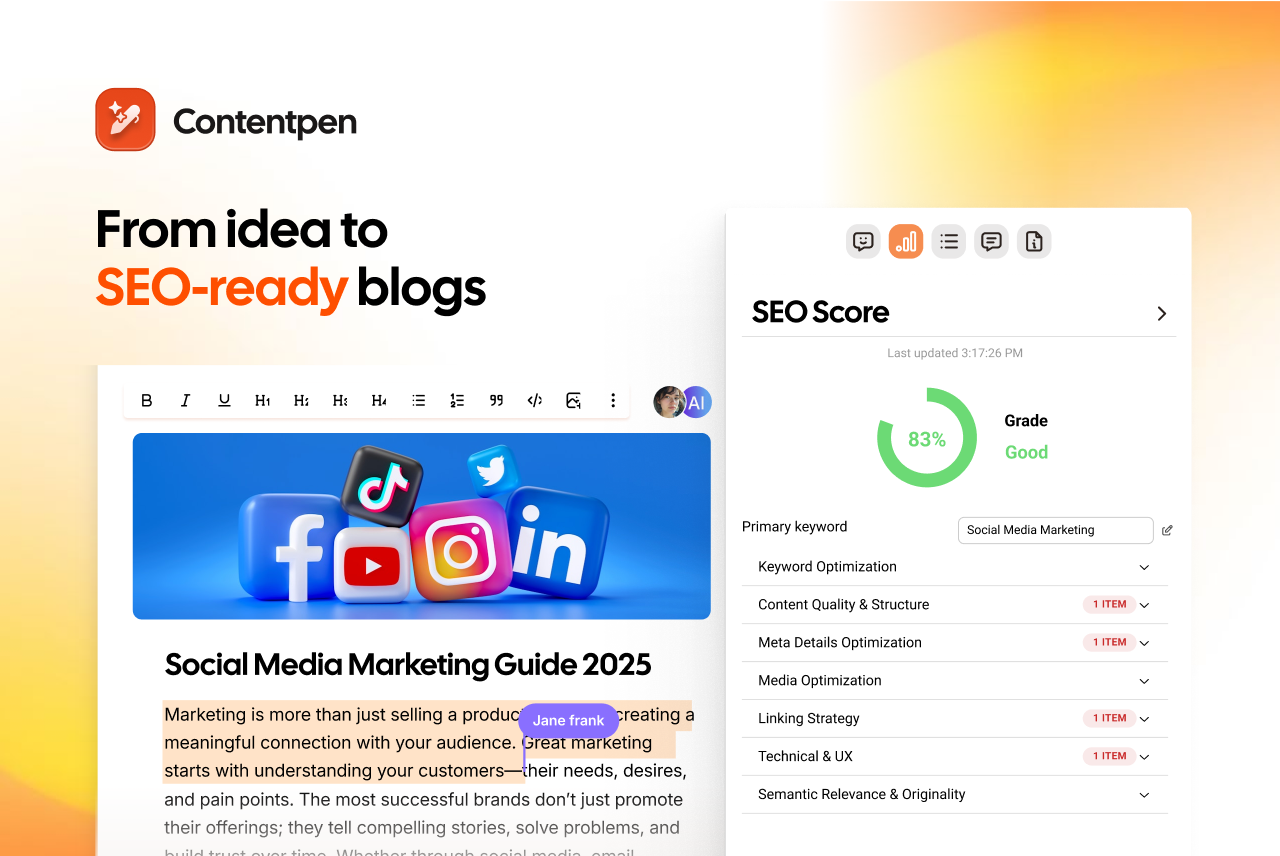
Contentpen is built for one clear job: creating long-form blog content that actually ranks and earns links. Instead of dropping a rough draft in your lap, it guides you from topic idea through to a polished, SEO- and GEO-focused article.
That makes it a natural starting point if you want to rank on Google as well as get cited in AI systems.
Standout features:
- Powerful keyword research based on real search intent
- Detailed outlines so your output does not feel generic
- Answer-first intros, strong headings, and FAQs that work well for GEO and AI search
- AI visibility tracking to overview your citations from top sources
- Automated internal and external linking that ties new posts into your site architecture and wider backlink strategy
- Built-in media library and an AI image generator for better Google Images visibility
Use cases:
Small businesses, freelancers, marketing teams, and agencies that want to ship more high-quality articles without losing control of tone.
Worth knowing:
Contentpen only offers a 7-day free trial, which can be enough in many cases. But new users might take a while to grasp all the features and how to use them properly.
Pricing:
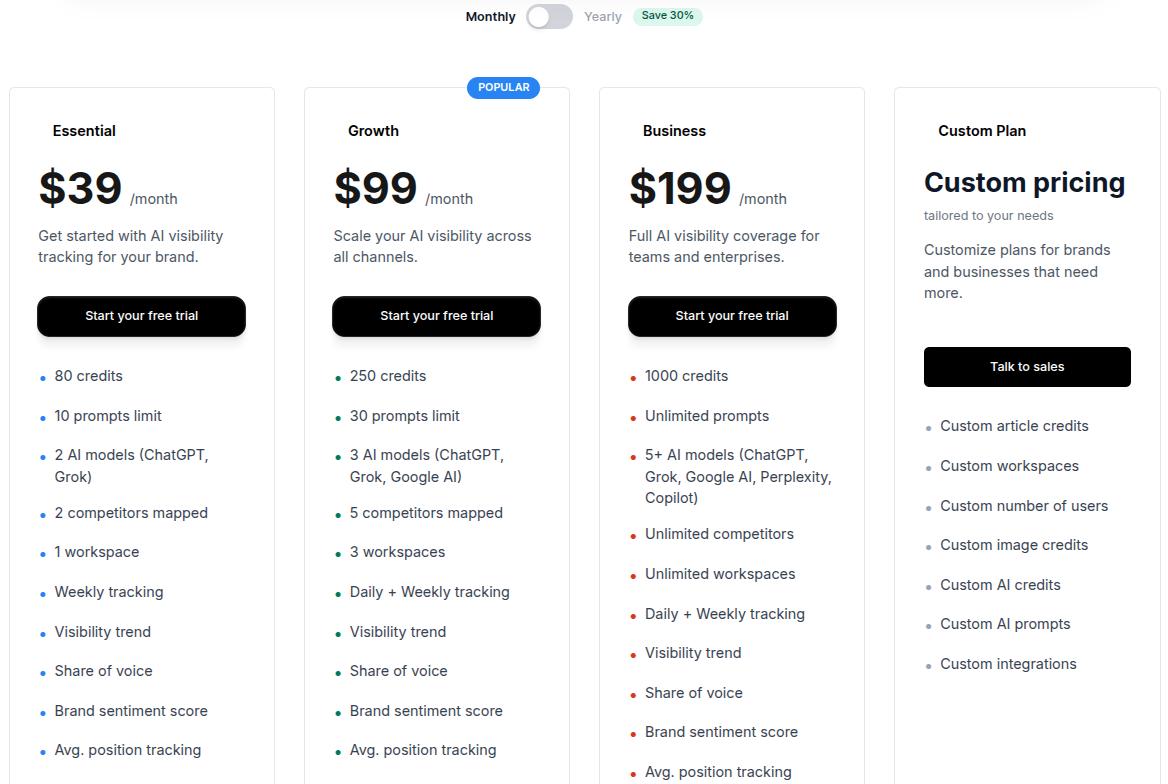
Starts at $39/month, which provides 10 search prompts, 80 credits, and 2 AI model tracking. It is one of the most affordable AI search optimization and creation tools on the market right now.
2. AIclicks.io — Best all-in-one GEO tracking platform
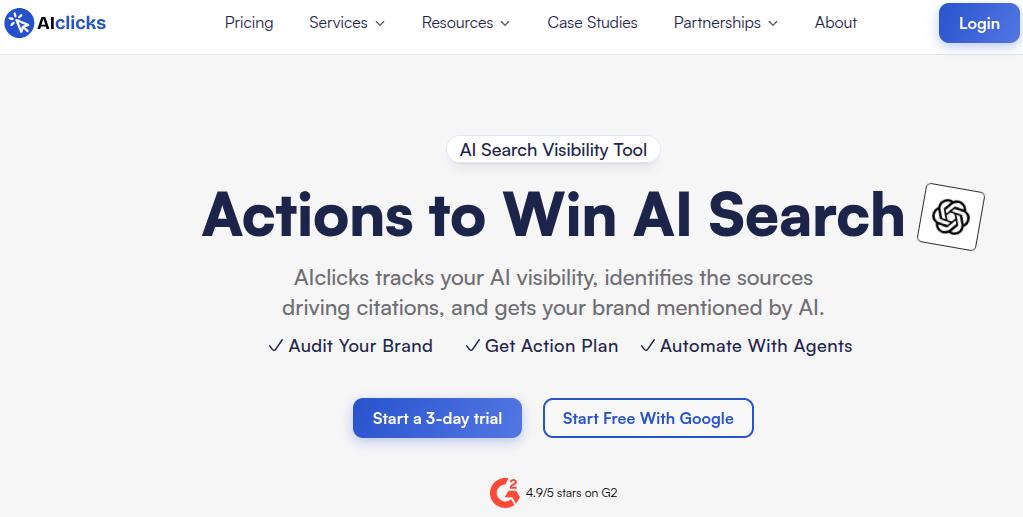
AIclicks.io shows you exactly how AI engines talk about your brand. Instead of guessing, you see real prompts users type into ChatGPT, Perplexity, Gemini, Claude, Grok, and Google AI Overviews for your brand, plus whether your site appears in those answers. That makes it one of the most focused AI search optimization tools for GEO.
Standout features:
- Tracking of brand mentions across major AI assistants
- Lists of external domains that AI engines cite, such as Reddit threads, directories, and listicles
- Competitor benchmarking for prompts and citations
- An AI-optimized content drafting module that turns visibility gaps into answer-ready briefs
Use cases:
Brands and agencies that want a complete AI visibility command center instead of scattered data. It suits teams that already run classic SEO and now need SEO for AI search as a connected but distinct track.
Worth knowing:
The content drafting module is a supporting feature, not the core strength. If your primary need is producing high volumes of polished, long-form articles, AIclicks will feel limited on that side.
Pricing:
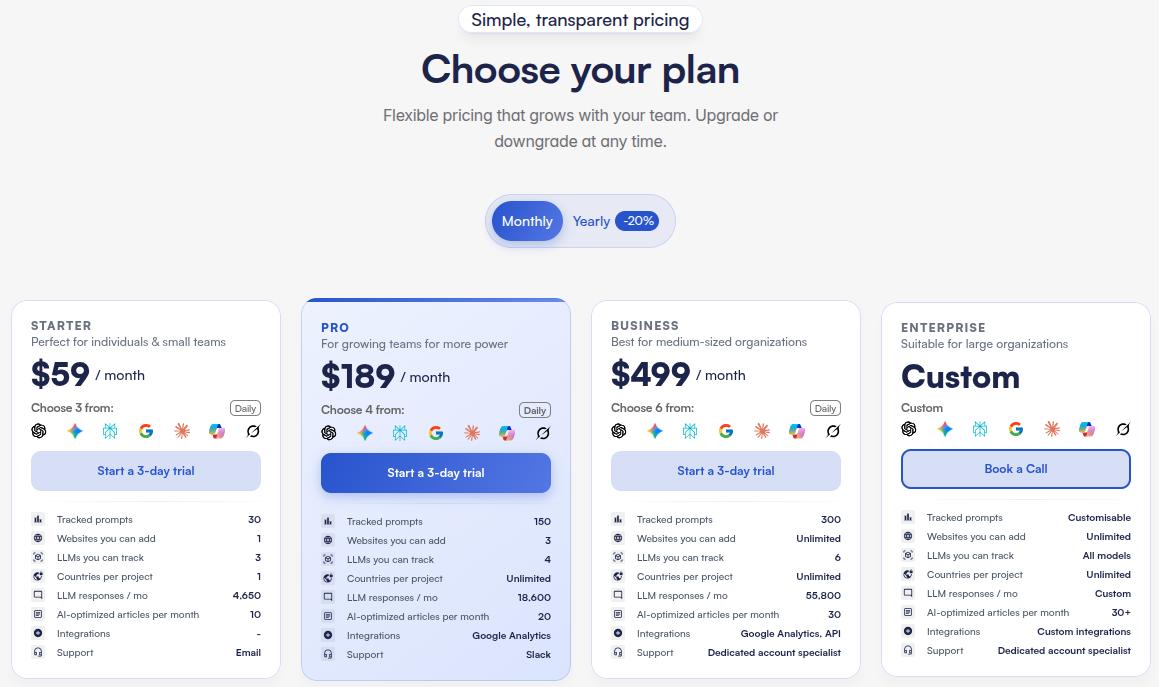
Pricing starts at $59/month, with yearly discounts and a refund guarantee that lowers risk while you test.
3. OtterlyAI — Best for GEO audit workflows and agency reporting
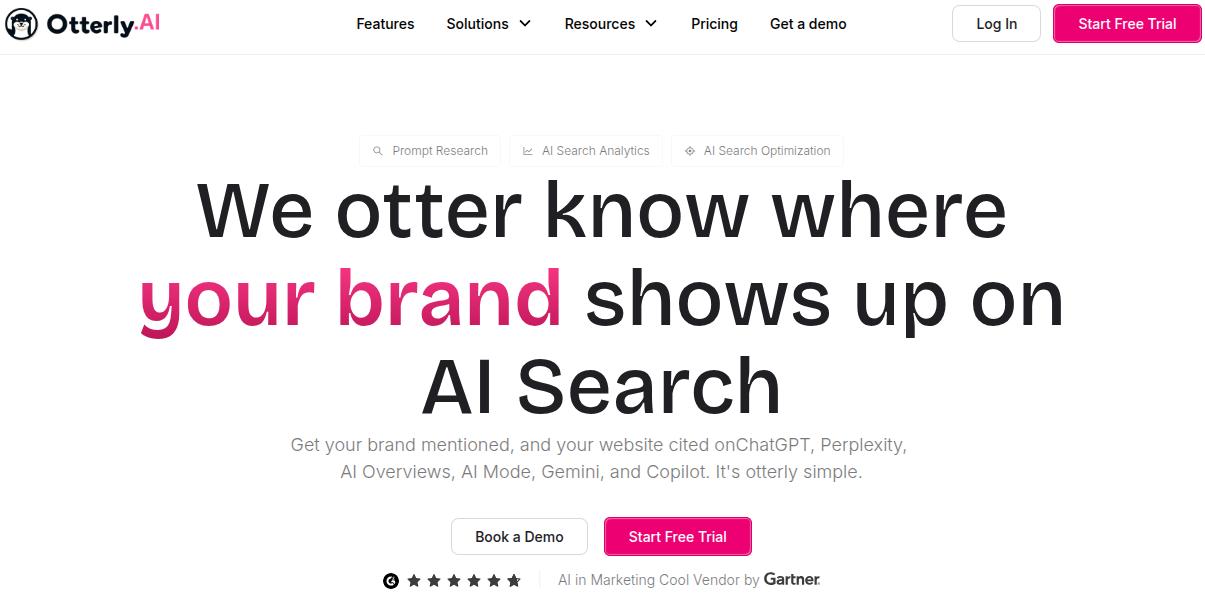
OtterlyAI was built from the ground up for one job: showing you exactly where your brand appears inside AI-generated answers and giving you a structured path to improve it. Unlike tools that bolt GEO tracking onto a traditional SEO dashboard, Otterly treats prompt monitoring, citation analysis, and brand visibility as the core product. That focus shows in the depth of its audit capabilities.
Standout features:
- A GEO Audit that runs a full SWOT-style breakdown of your AI visibility
- A Brand Visibility Index that combines mentions, coverage, and citation signals into one KPI
- Prompt Research that converts your seed keywords into the natural-language questions people actually type into AI systems
- Domain and URL citation tracking that shows which pages on your site get referenced most often by AI engines
Use cases:
Agencies that need a clean, repeatable GEO workflow for multiple clients. It is also a strong fit for content strategists who want to move beyond raw visibility data and understand why certain pages get cited while others get skipped.
Worth knowing:
Otterly’s pricing scales steeply with prompt volume. The Lite plan at $29/month covers only 15 tracked prompts, which run out fast for brands monitoring multiple product lines or markets.
Pricing:
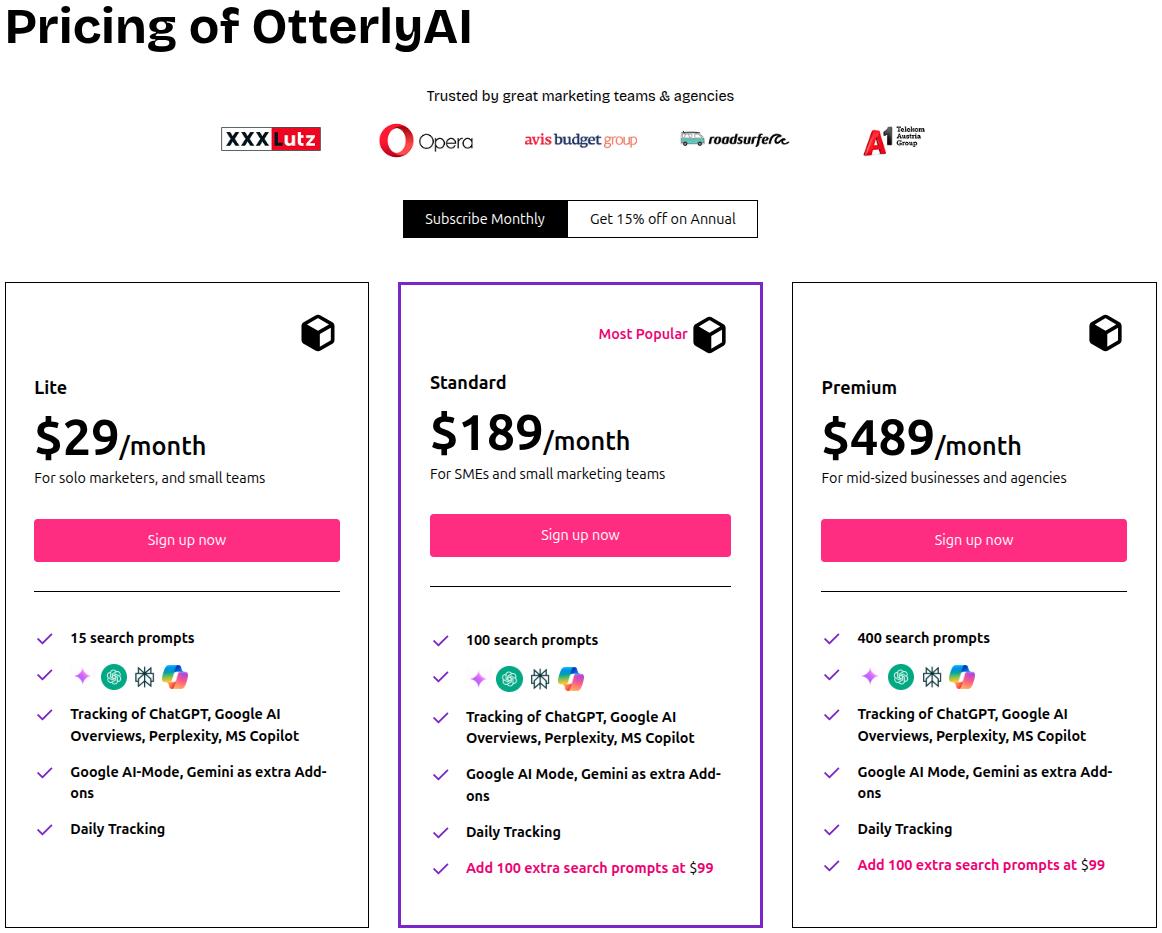
The ‘Lite’ plan starts at $29/month with 15 search prompts and tracking of ChatGPT, Google AI Overviews, Perplexity, and Copilot.
4. Profound — Best for enterprise-grade AI visibility analytics
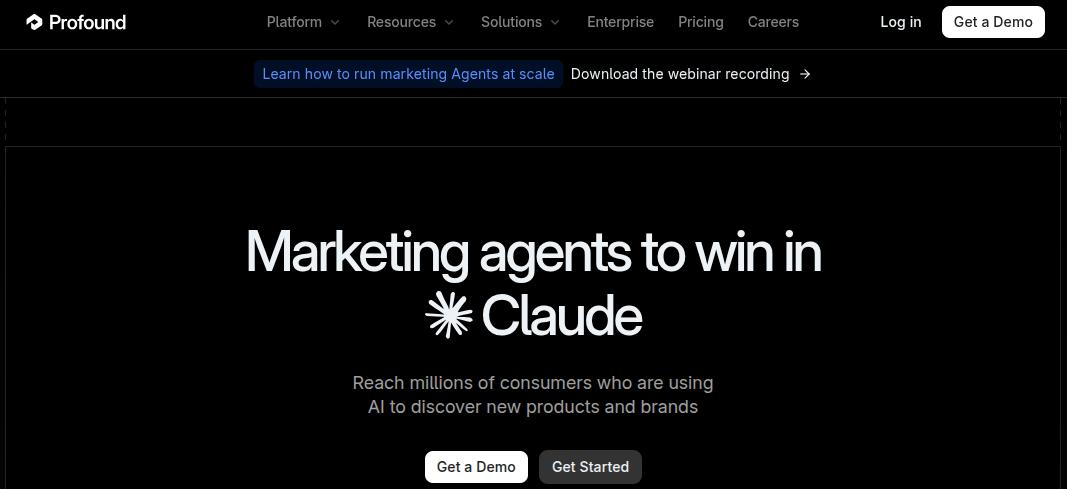
Profound is built for teams that need serious depth behind their AI visibility data. It covers the major AI search platforms and focuses on connecting prompt-level tracking with competitive and citation intelligence to build a modern GEO strategy.
Standout features:
- Keyword and prompt-level tracking across ChatGPT, Perplexity, Google AI Overviews, and other AI platforms
- Competitor benchmarking that shows how often rival brands appear for the same prompts, so you can see share-of-voice gaps at a glance
- Content optimization recommendations tied directly to the visibility gaps
Use cases:
Enterprise marketing teams and in-house strategists who run AI visibility as a distinct channel alongside classic SEO. It suits brands that already have content and tracking infrastructure in place and now want deeper intelligence behind what AI systems say about them.
Worth knowing:
Profound is priced and built for enterprise teams, which means solo creators, freelancers, and small businesses will likely find it overkill for their needs.
Pricing:
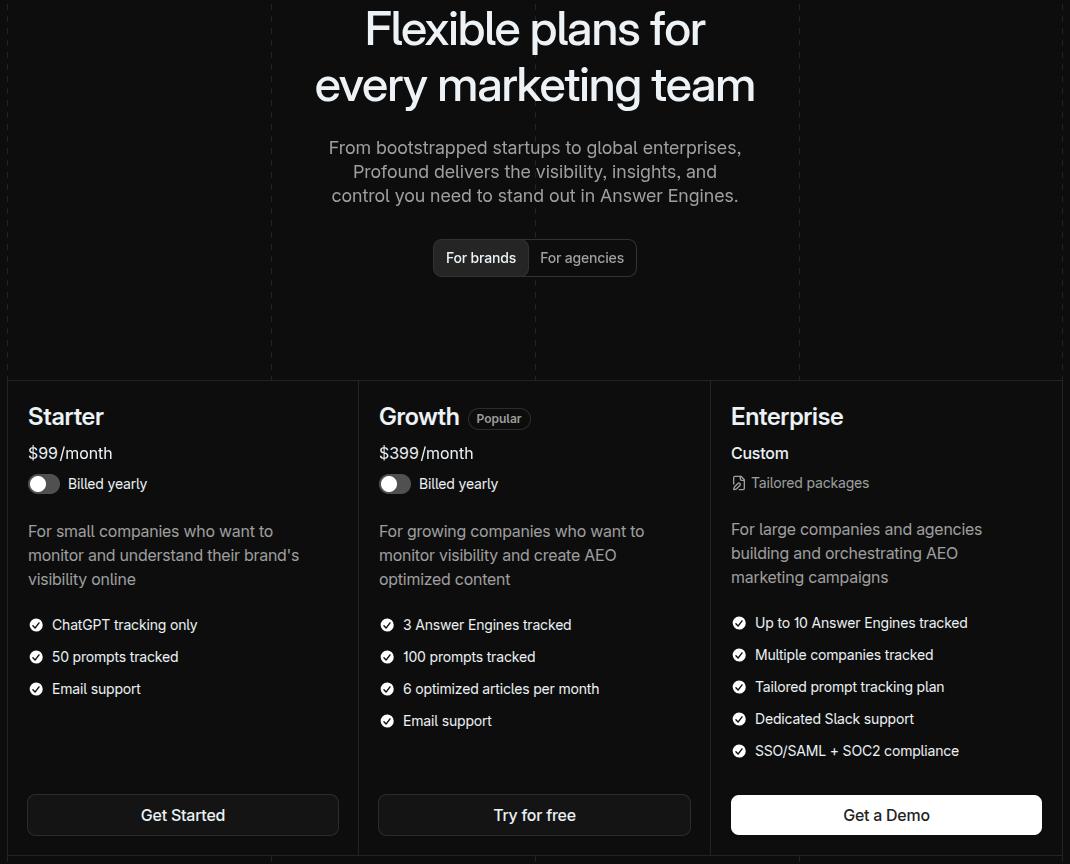
The starting price is $99/month, which provides 50 prompts tracked with email support.
5. Clearscope — Best for precision-driven editorial teams
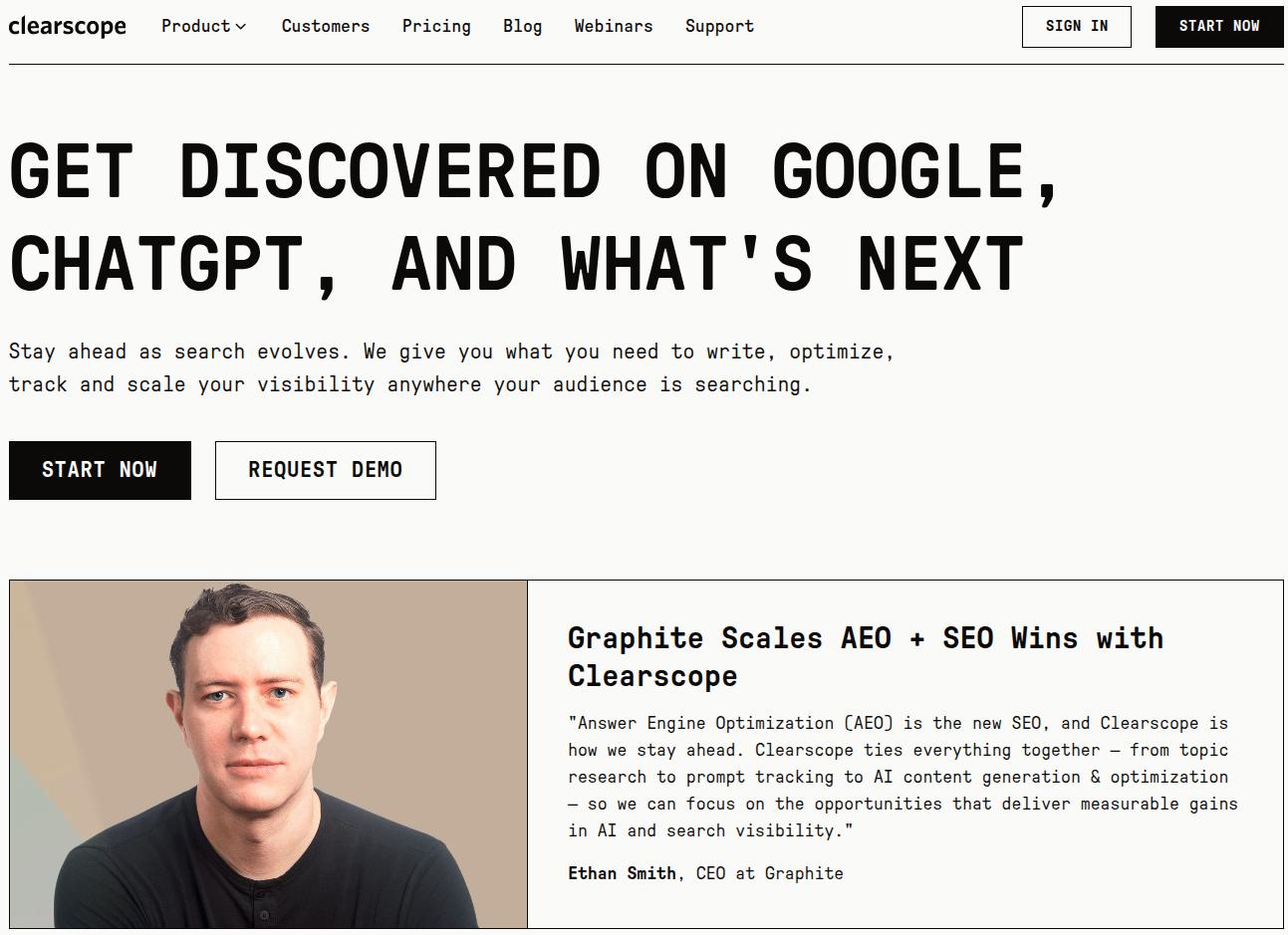
Clearscope is a favorite among editorial teams that want clean, data-backed guidance without noisy dashboards. It scores each article on an A-to-F scale while suggesting related phrases and entities that top-ranking pages already use. The focus stays on human-written quality, not only on AI SEO tools and automation.
Standout features:
- Content Reports that surface recommended terms and coverage gaps
- Content Inventory views that show which pages need updates
- Topic Research modules that help editors map out new articles
- A Google Docs add-on that brings optimization into your normal writing workflow
Use cases:
Enterprise content teams, publishers, and agencies that manage multiple writers and editors. It fits nicely in a stack where Contentpen drafts articles and Clearscope refines word choice and coverage.
Worth knowing:
Clearscope focuses on refining content for search engines rather than tracking AI visibility directly. It does not tell you whether your pages are being cited in ChatGPT or Perplexity answers, so teams that need GEO tracking will still need a separate platform alongside it.
Pricing:
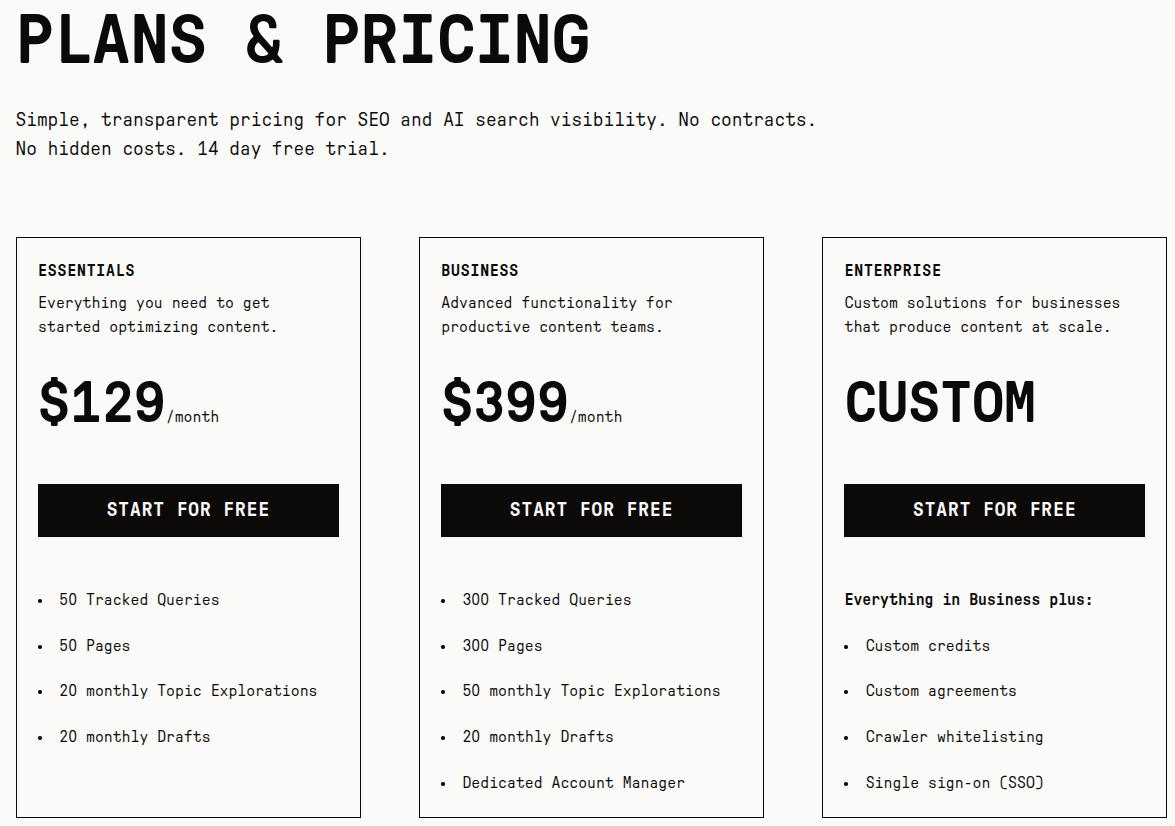
Clearscope pricing begins at around $129/month for the ‘Essentials’ plan that provides 50 tracked queries and 20 monthly topic explorations.
6. Rankability — Best for agencies needing NLP + expert coaching
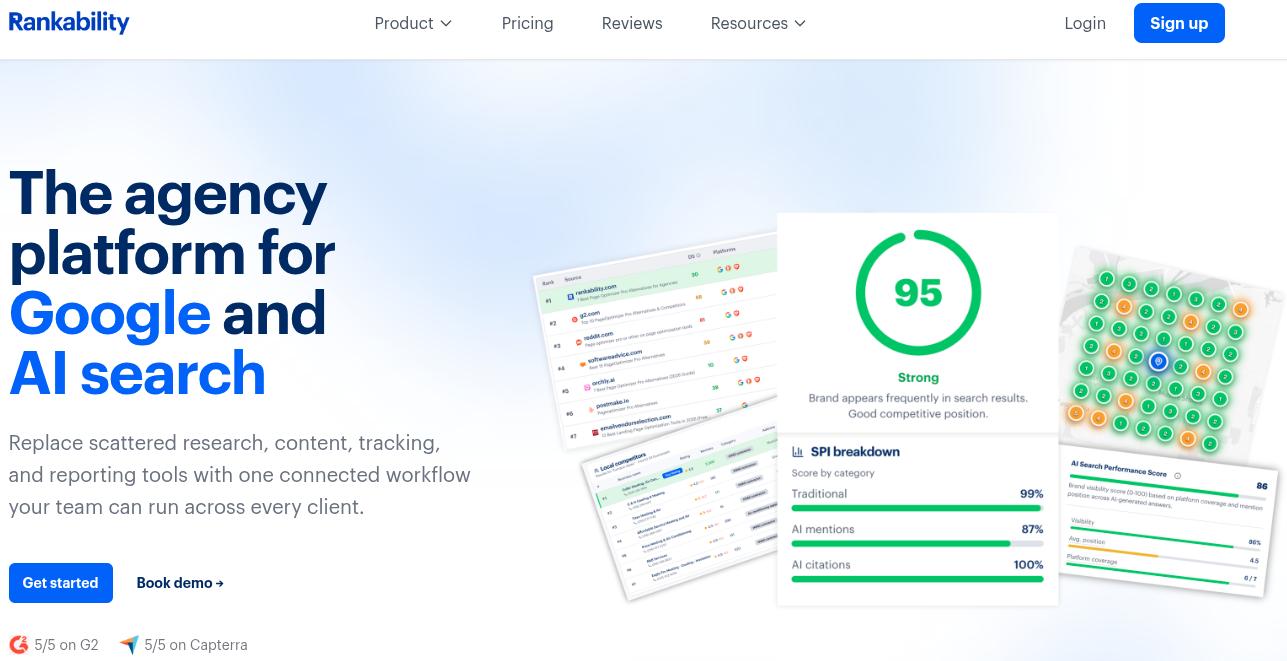
Rankability leans hard into advanced NLP and education, which makes it a strong pick for agencies learning GEO. By blending IBM Watson and Google NLU, it suggests entities and topics that matter in your niche. That means the AI SEO analyzer keeps your content strategies up-to-date according to the changing industry standards.
Standout features:
- Real-time content scoring with NLP-backed term suggestions
- AI-generated briefs to guide writers
- A built-in AI writer for generating useful first drafts
- Weekly expert coaching calls that explain why the recommendations matter
Use cases:
SEO and digital marketing agencies that want both tech and coaching in the same place. It works especially well for teams that handle many clients and need repeatable workflows.
Worth knowing:
Rankability is one of the pricier content optimization tools on this list. The weekly coaching calls that justify part of that cost may not suit teams that prefer self-serve workflows or already have strong in-house SEO knowledge.
Pricing:
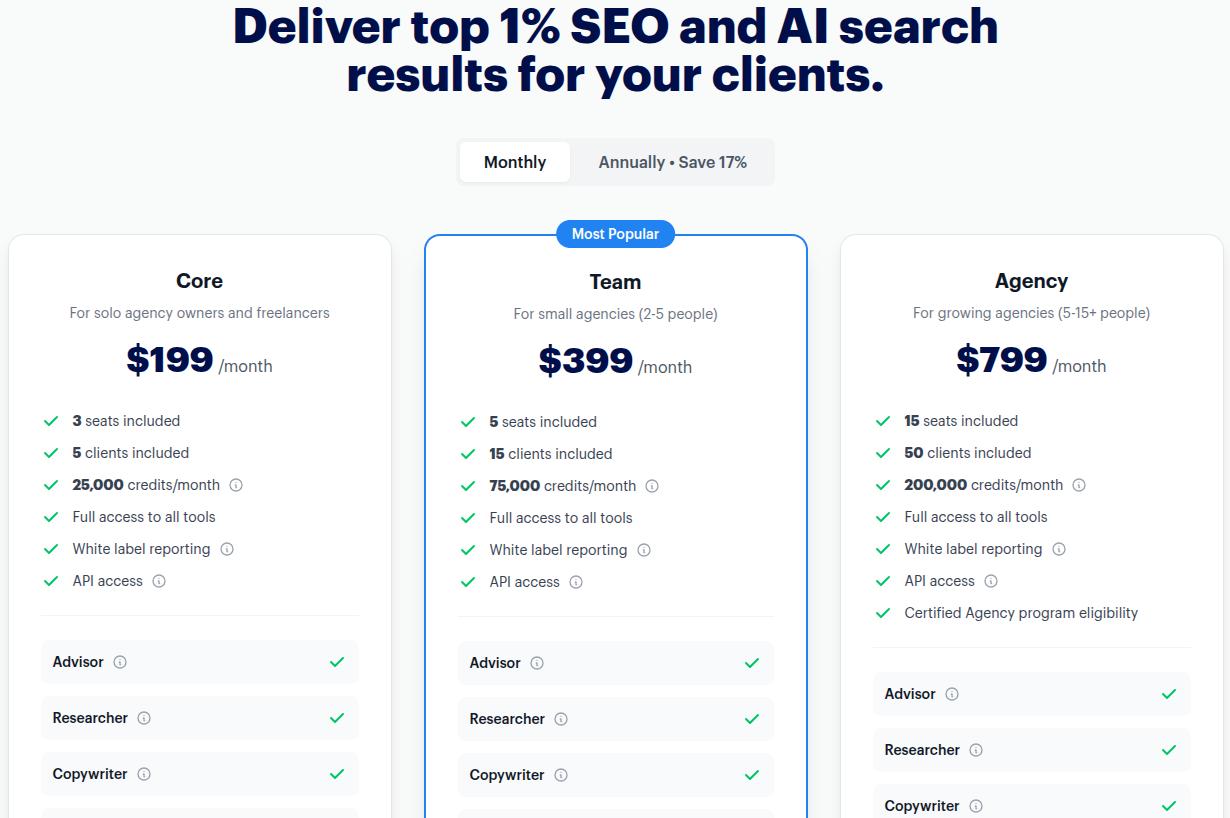
Plans start at $199/month. You can also get annual plans with higher credit limits and save 17% overall.
7. MarketMuse — Best for building topical authority and content strategy
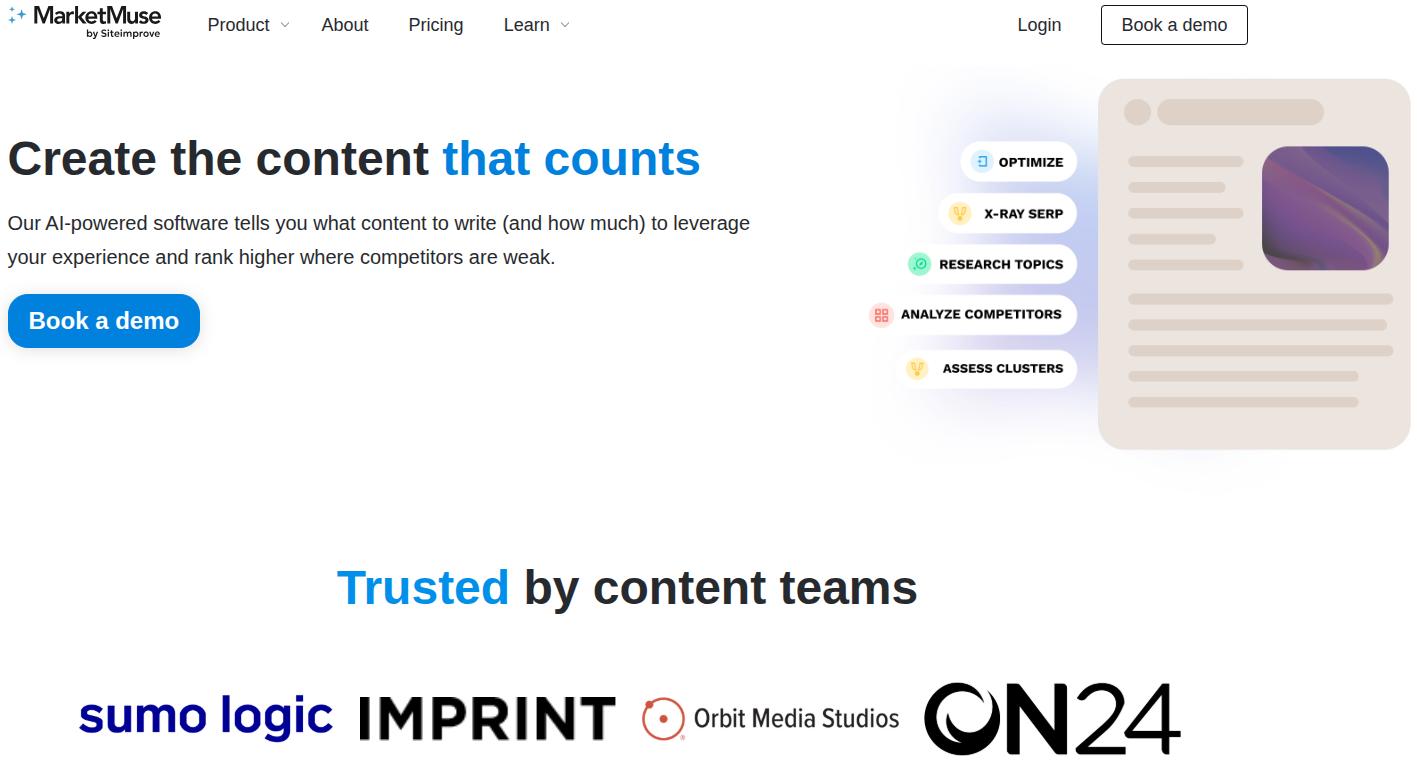
MarketMuse focuses on building deep topical authority for your niche instead of singular, isolated pages. It scans your entire site to spot coverage gaps, then suggests which themes to expand next. If you manage a big content library, it feels more like a strategy partner than another AI content optimization tool.
Standout features:
- SERP X-ray and Heatmap views that show how competitors cover a topic
- Detailed content briefs with headings, questions, and related ideas
- Inventory and strategy documents that guide which pages to update, redirect, or expand
Use cases:
Enterprise strategists and large teams that manage a large number of URLs. It pairs well with Contentpen when you want to fill gaps with new long-form posts that AI engines like to cite.
Worth knowing:
MarketMuse does not publish its paid plan pricing openly, which makes it harder to evaluate before purchasing the tool. The platform is also better suited to managing and auditing a large existing content library rather than helping you produce new articles quickly from scratch.
Pricing:
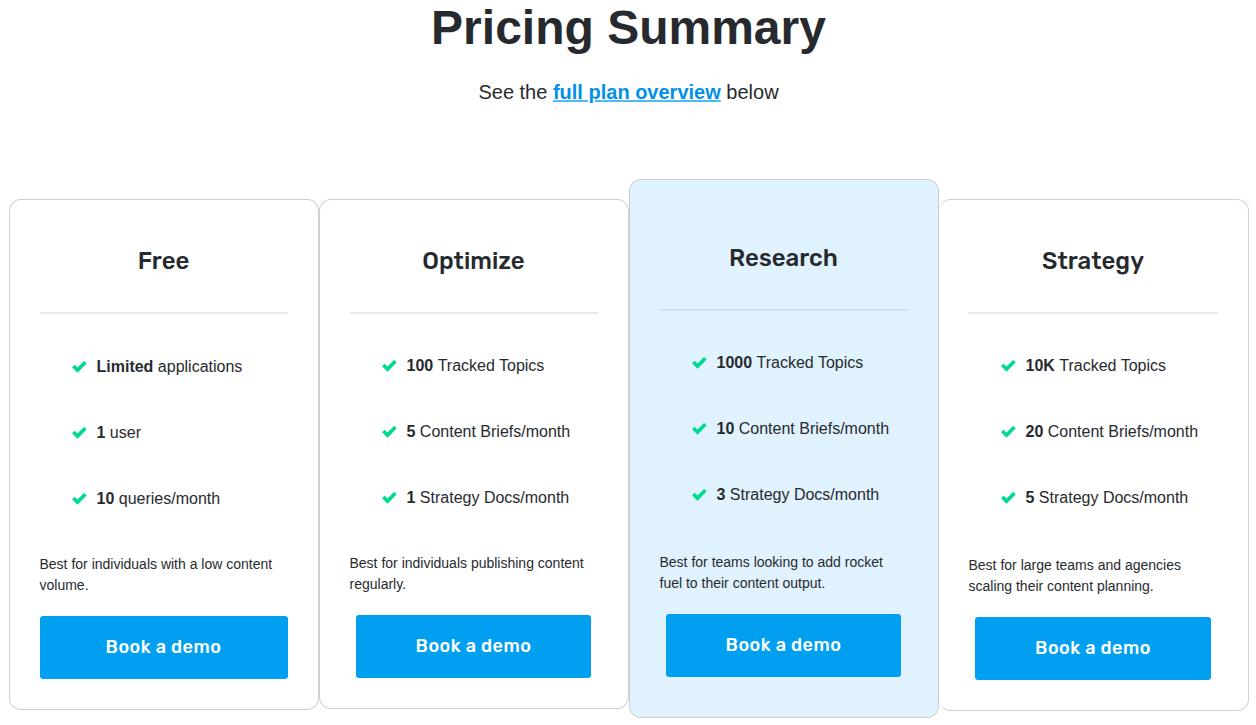
There’s a free plan for MarketMuse with limited applications. No pricing figure is quoted on MarketMuse’s official website for the paid plans. However, MarketMuse’s Capterra page reveals a starting price of $99/feature/month.
8. HubSpot AEO — Best for AI visibility insights and marketing workflows
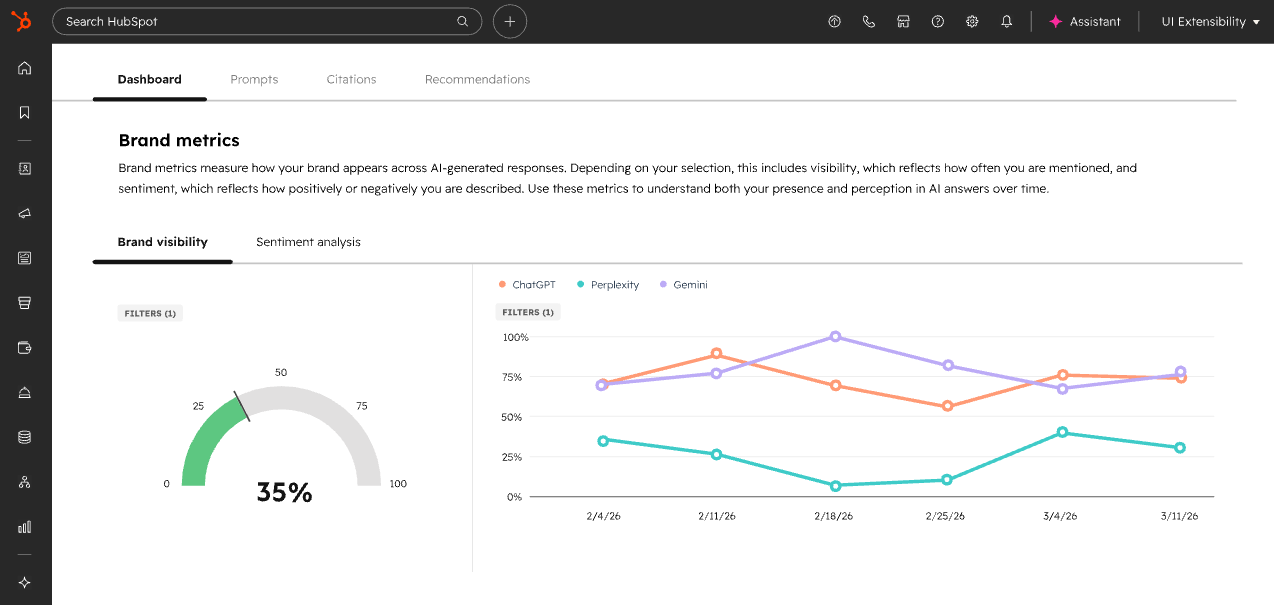
HubSpot AEO helps brands understand how they appear across AI-powered search platforms like ChatGPT, Gemini, and Perplexity. Instead of focusing only on rankings, the platform tracks prompt-level visibility, brand mentions, competitor presence, and sentiment across AI-generated answers, making it a practical tool for teams adapting to generative search.
Standout features:
- AI visibility tracking across ChatGPT, Gemini, and Perplexity
- Prompt-level monitoring for real user queries
- Competitor benchmarking and share-of-voice insights
- Content recommendations to improve AI citations and mentions
- Integration with HubSpot CRM and marketing workflows
Use cases:
Marketing teams and brands that want to operationalize answer engine optimization without adding a separate enterprise SEO stack. It’s especially useful for businesses already using HubSpot for content, automation, and campaign management.
Worth knowing:
HubSpot AEO focuses more on visibility tracking and optimization strategy than on high-volume AI content generation. Teams looking for large-scale content production may still want dedicated writing tools alongside it.
Pricing:
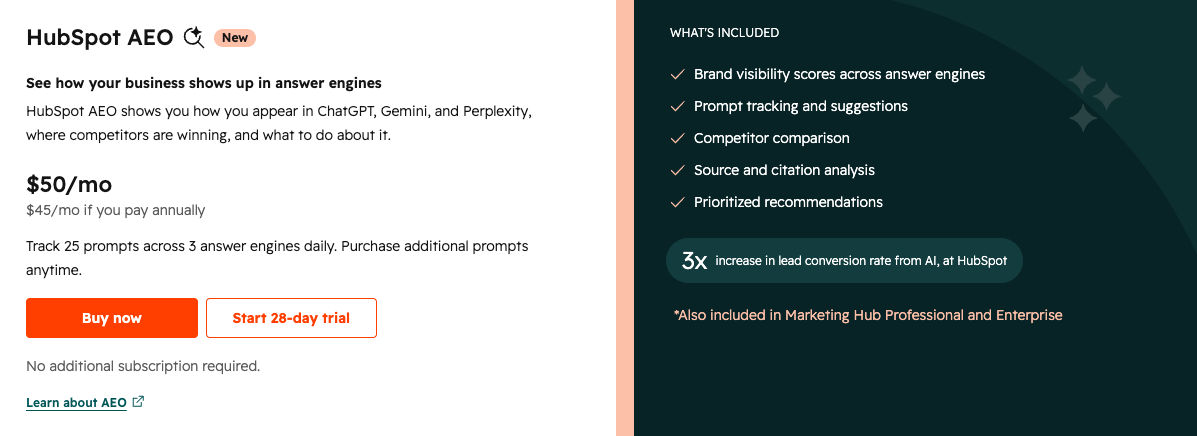
Pricing starts at $45/month, with a 28-day free trial available.
9. Frase — Best affordable all-in-one AI SEO tool for solo creators
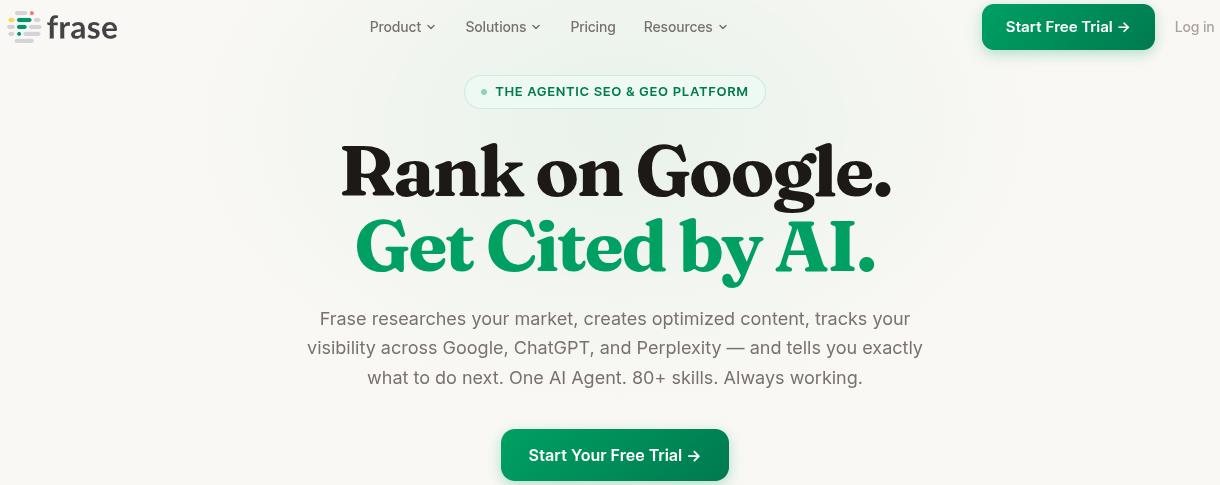
Frase helps you move from a keyword idea to a solid draft without too much hassle. It pulls headings, stats, and questions from the top SERP results, then turns them into an outline. That makes it a friendly entry point for solo creators trying AI keyword research tools and AI SEO content generators for the first time.
Standout features:
- Automated brief creation from current search results
- A built-in AI writer for drafts and rewrites
- A compact research view that highlights the questions competitors answer and the ones they miss
- An AI image generator that creates relevant visuals for the content
You can then add helpful FAQs and answer-first intros that AI tools like to quote.
Use cases:
Freelancers, small businesses, and startups that want one tab for research and drafting. Frase is strong when you need speed more than deep GEO tracking.
Worth knowing:
Frase is built for speed and simplicity, which means it trades depth for ease of use. It pulls data from current SERP results rather than tracking AI engine citations directly, so it works best as a drafting and brief tool rather than a full GEO or AEO platform.
Pricing:
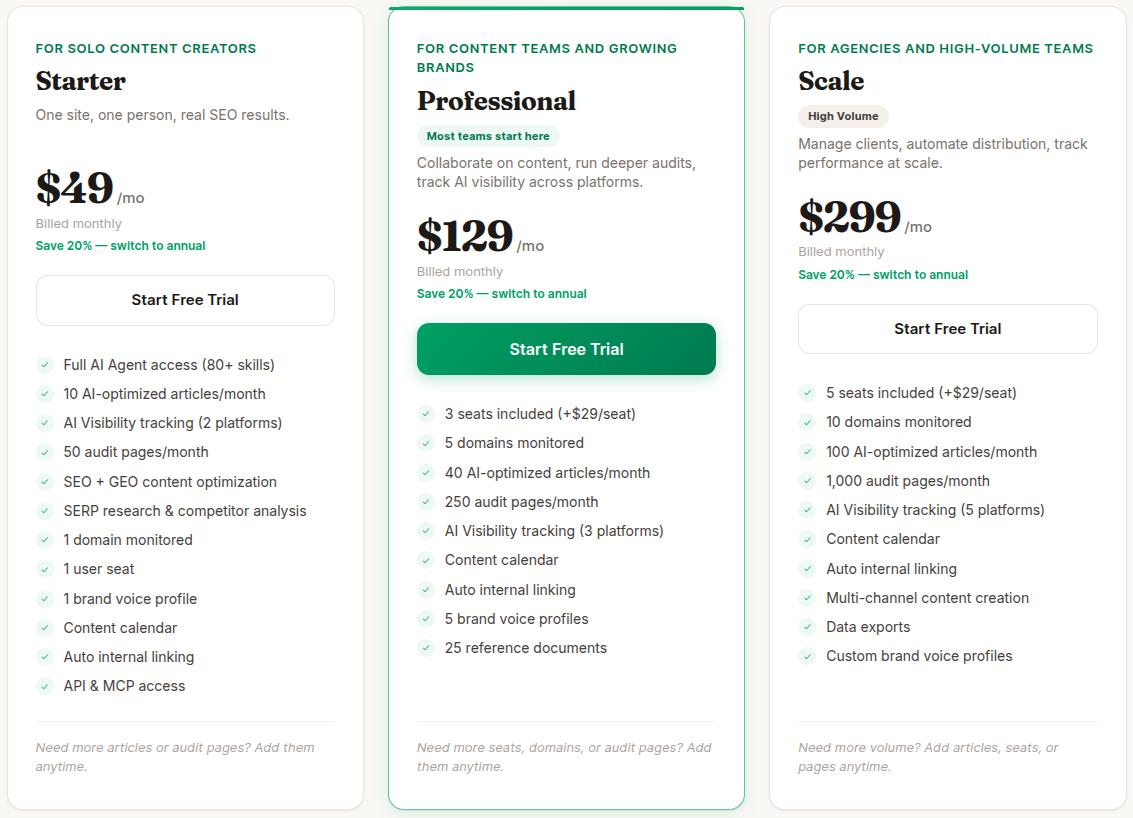
Paid plans start at $49/month with 10 AI-optimized articles and 50 audits per month. The platform also offers a free trial to test the software before purchasing.
Also read: Frase vs. Contentpen.
10. AirOps — Best for custom AI content workflows at scale
AirOps helps you design custom AI workflows instead of relying on fixed templates. You can pull in GPT-5.2, GPT-4.1, Claude, Gemini, and other models, then chain them together for programmatic SEO tasks. That flexibility turns it into more than just another SEO content optimization tool, making it a complete content system.
Standout features:
- An automatic Brand Kit built from your URL, which captures tone and messaging
- Connections to Webflow, WordPress, and 7 major CMS platforms to ensure seamless publishing
- Bulk generate content to scale your platform without sacrificing quality
Use cases:
In-house teams and agencies that are running high-volume campaigns, such as location pages or product descriptions.
Worth knowing:
The task-based pricing model is genuinely confusing for new users, and costs can climb quickly on high-volume campaigns before you realize it. Teams without a clear content workflow already in place may also find the flexibility of AirOps more overwhelming than helpful at first.
Pricing:
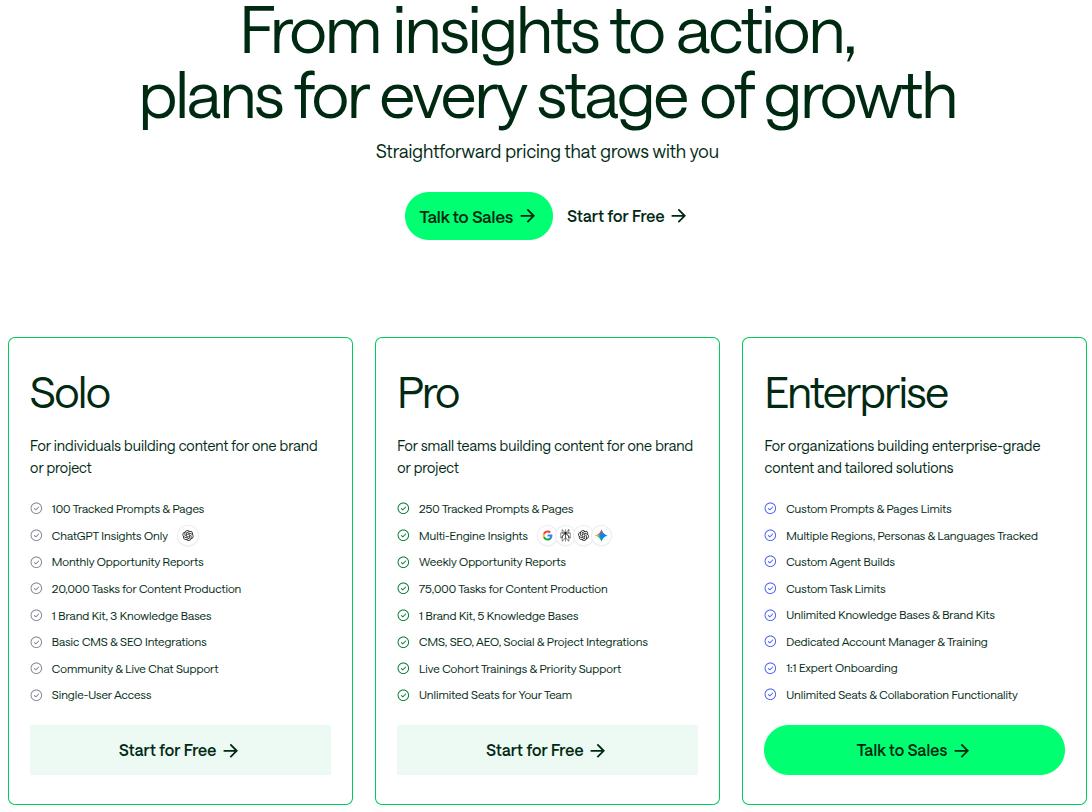
The AI search optimization and content creation tool provides custom pricing plans on its website.
Related read: 10 best AirOps alternatives in 2026.
11. Writesonic — Best for AI article writing with real-time SEO data
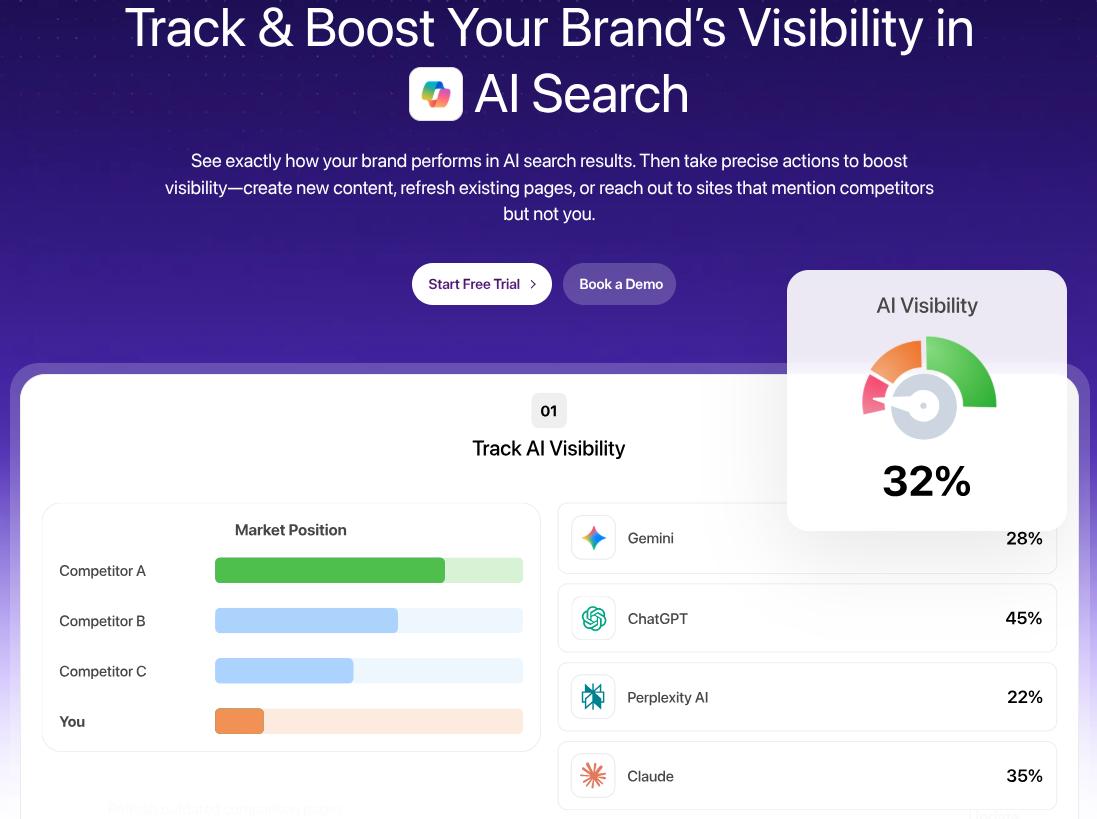
Writesonic combines multi-model AI writing with live SEO insights. Its Chatsonic agent pulls data from Semrush, Ahrefs, Google Search Console, and other sources to guide drafts. That makes it one of the more data-aware AI SEO tools for general content.
Standout features:
- A structured 10-step article writer where you pick audience, tone, competitors, and other parameters to create SEO and GEO-friendly content
- You can upload internal knowledge guidelines as PDFs so the AI SEO content generator sticks to your brand voice
- One-click WordPress publishing and built-in fact-checking with citations
Use cases:
Bloggers, content marketers, and small teams that want flexible AI writing backed by real search data.
Worth knowing:
The entry price listed does not reflect the plan most content teams will actually need. Meaningful SEO data integrations and GEO features sit at higher tiers, so the real cost for a serious content operation lands closer to the $199 to $399 range.
Pricing:
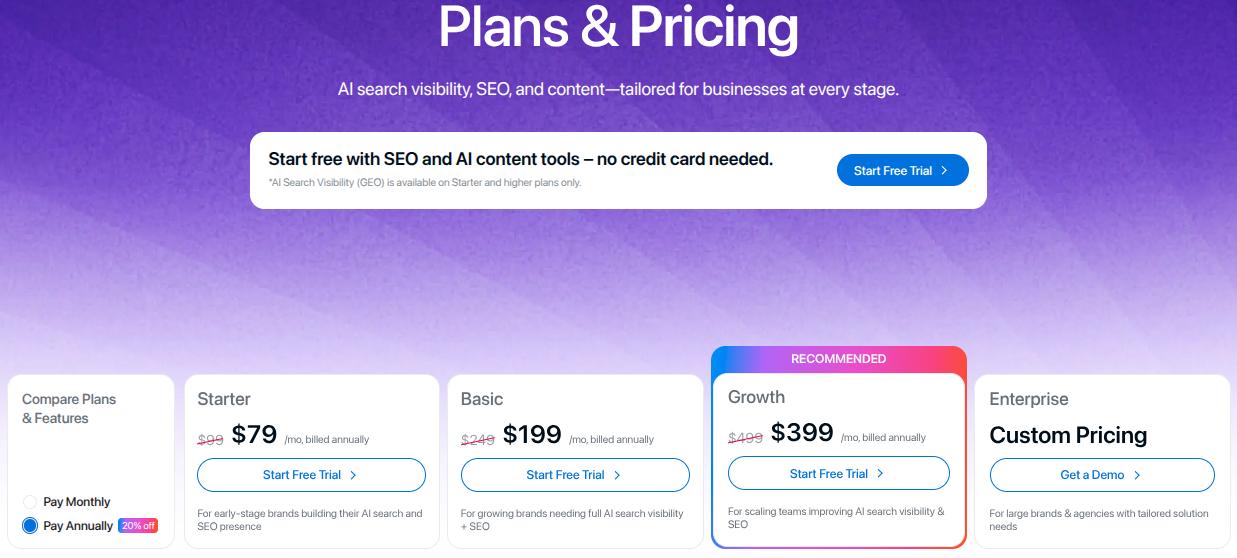
Pricing starts at $79/month for the ‘Starter’ package and reaches $399/month for the ‘Growth’ package.
Also read: Writesonic vs. Contentpen.
12. SE Ranking — Best for Google AI Overview monitoring
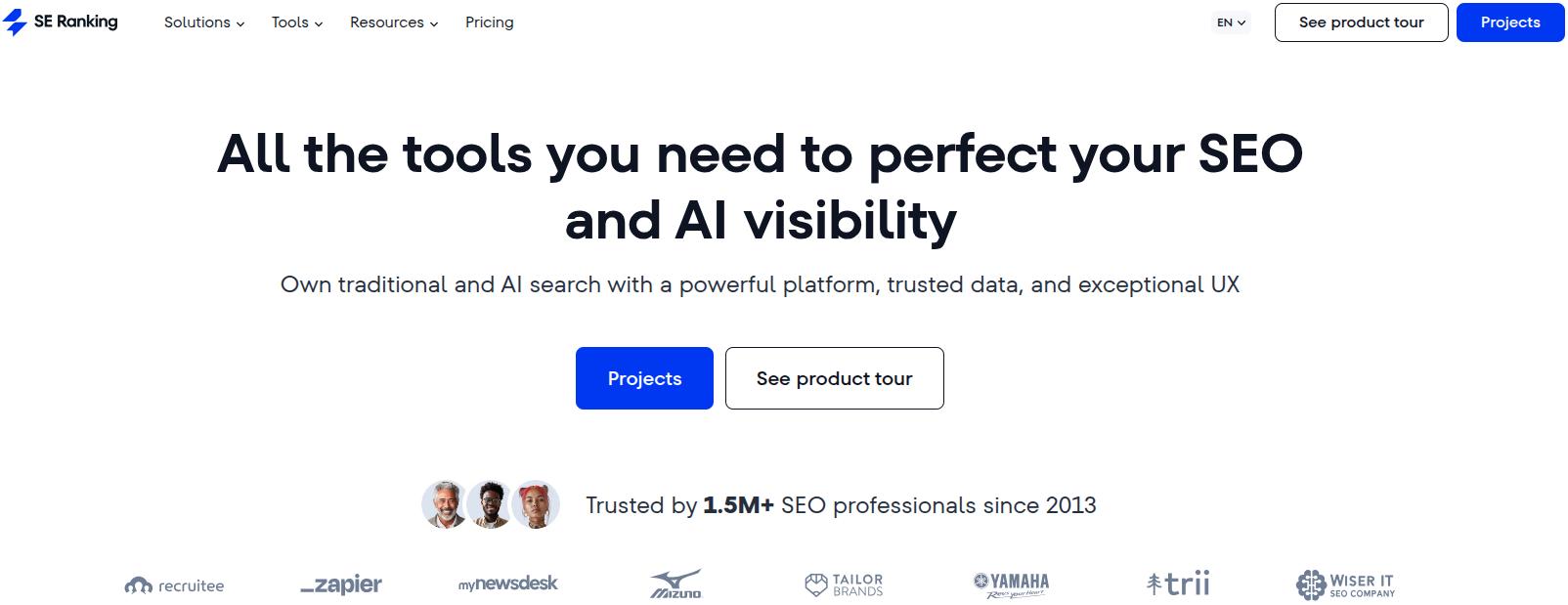
SE Ranking is a dedicated Google AI Overviews and ChatGPT tracker. It shows which keywords trigger an Overview and whether your site is cited in it or not. That helps you shape your content for SEO and AI search, which is a growing requirement for many brands in 2026.
Standout features:
- An Organic AI Overlap metric that compares classic top 20 results for a particular query with AI summary links
- Historical SERP snapshots so you can see how Overviews and ChatGPT citations change over time for a topic
- Estimates of potential traffic you might gain or lose as Overviews appear for the organic keywords
Use cases:
Teams that are looking for a tool that specializes in AI tracking and audits. It is especially useful for brands in niches where Google AI Overviews are often shown.
Worth knowing:
SE Ranking’s AI tracking features are centered on Google AI Overviews and ChatGPT. So, teams that need broader coverage across Perplexity, Gemini, or Claude will find the monitoring scope narrower than that of dedicated GEO platforms like AIclicks or Otterly.
Pricing:
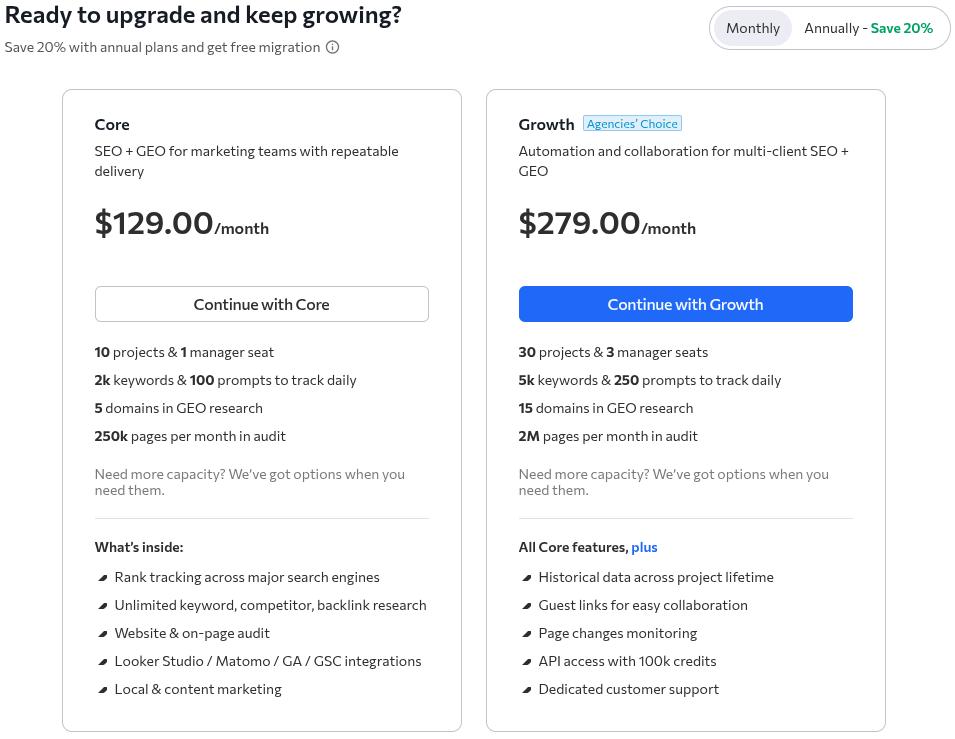
Paid plans start at $129/month, with 10 projects, 1 manager seat, 2000 keywords, and 100 prompts to track daily.
13. Gauge — Best for agentic AI marketing intelligence
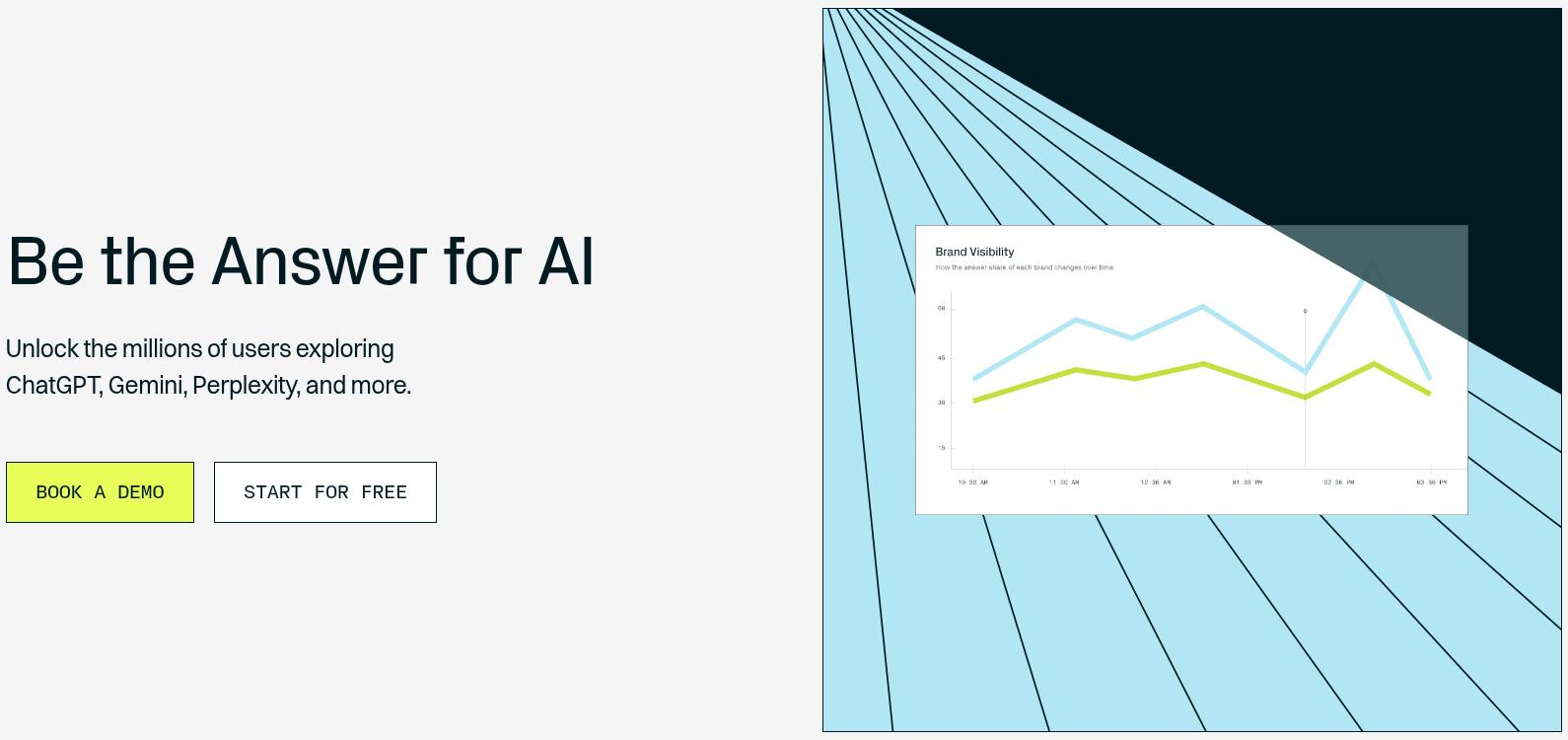
Gauge behaves like an AI-powered marketing analyst that watches your AI visibility and website data at the same time. It tracks daily prompts and citations across ChatGPT, Perplexity, Google AI Mode, and AI Overviews. Then it answers simple questions about what to do next for your content.
Standout features:
- Direct connections to GA4, Google Search Console, and Semrush, plus its own prompt logs
- Slack integration so you can ask which pages get the most AI-referred traffic and receive answers with data and suggestions in one place
- Content briefs aimed at prompts where your brand is currently missing
Use cases:
Tech-forward startups and agile teams that like conversational workflows. It suits marketers who want AI search optimization tools that can think along with them, not just report what’s happening.
Worth knowing:
Gauge is strongest when you already have GA4, Search Console, and Semrush connected and active. Teams without that existing data infrastructure in place will get significantly less value from the agentic features, since the agent relies on those sources to generate meaningful recommendations.
Pricing:
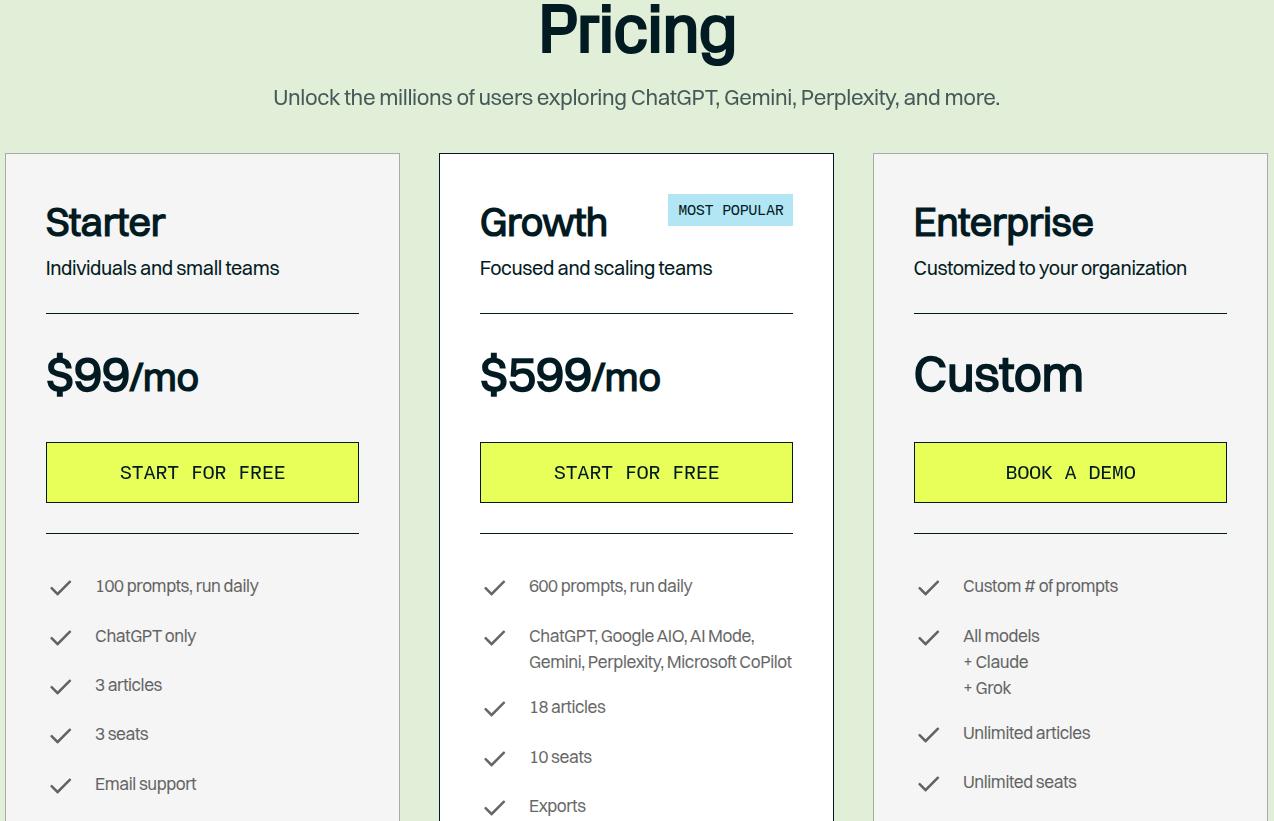
According to the official WithGauge website, the Starter plan is $99/month, which provides 100 prompts daily and 3 articles.
14. Search Atlas — Best for automated AI SEO execution
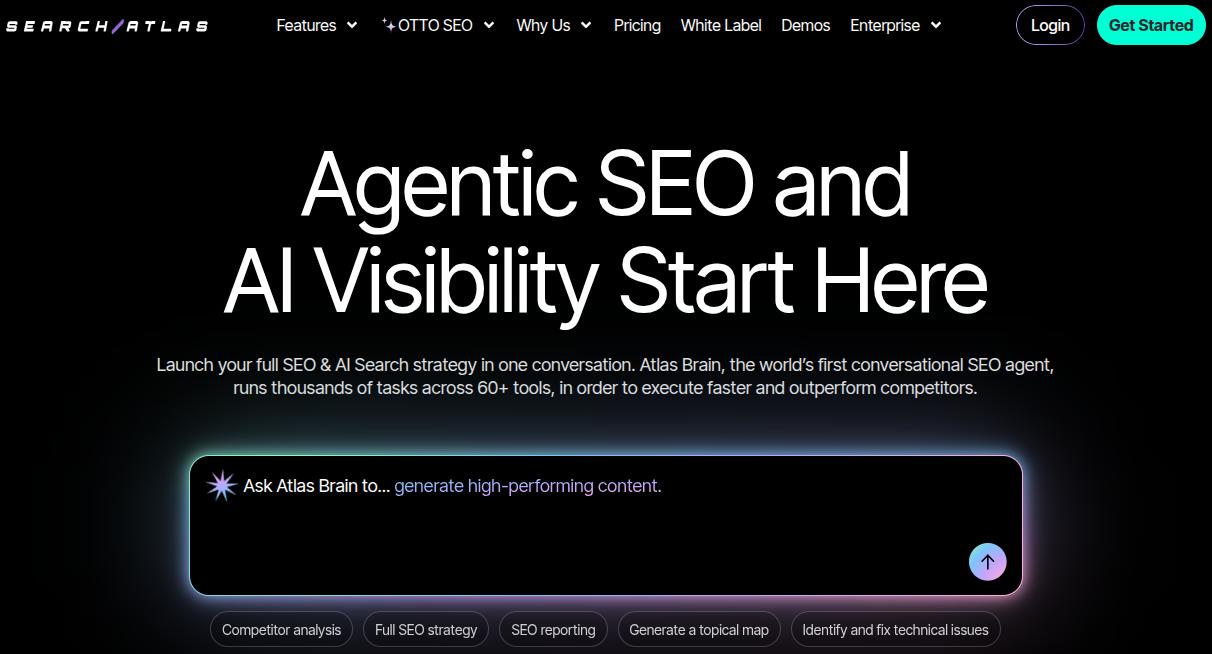
Most AI search optimization tools tell you what to fix and leave the rest to you. Search Atlas is different because its OTTO SEO agent can actually deploy those fixes to your site once you approve them. That makes it less of a reporting tool and more of an execution platform.
Standout features:
- OTTO SEO identifies technical issues such as broken links, missing schema, and poor meta tags, then applies approved fixes directly to your site
- A QUEST tab that tracks how your brand and content appear across ChatGPT, Gemini, and Perplexity
- An AI content editor that scores drafts against top-performing competitors in real time and supports topical cluster planning
- Atlas Brain, a conversational SEO assistant that can run keyword research, analyze competitors, and generate topical maps from a single prompt
Use cases:
Agencies and in-house teams that are tired of tools that generate recommendations but require a separate tool to implement them. It also works well for content-heavy sites that need both LLM visibility tracking and technical SEO automation without switching tabs.
Worth knowing:
The platform’s breadth is also its main risk. With 30-plus features across SEO, content, local, ads, and LLM visibility, some modules are more polished than others. In our testing, we found occasional instability and slower load times, so teams that need rock-solid reliability on every feature may want to run a thorough trial before committing.
Pricing:
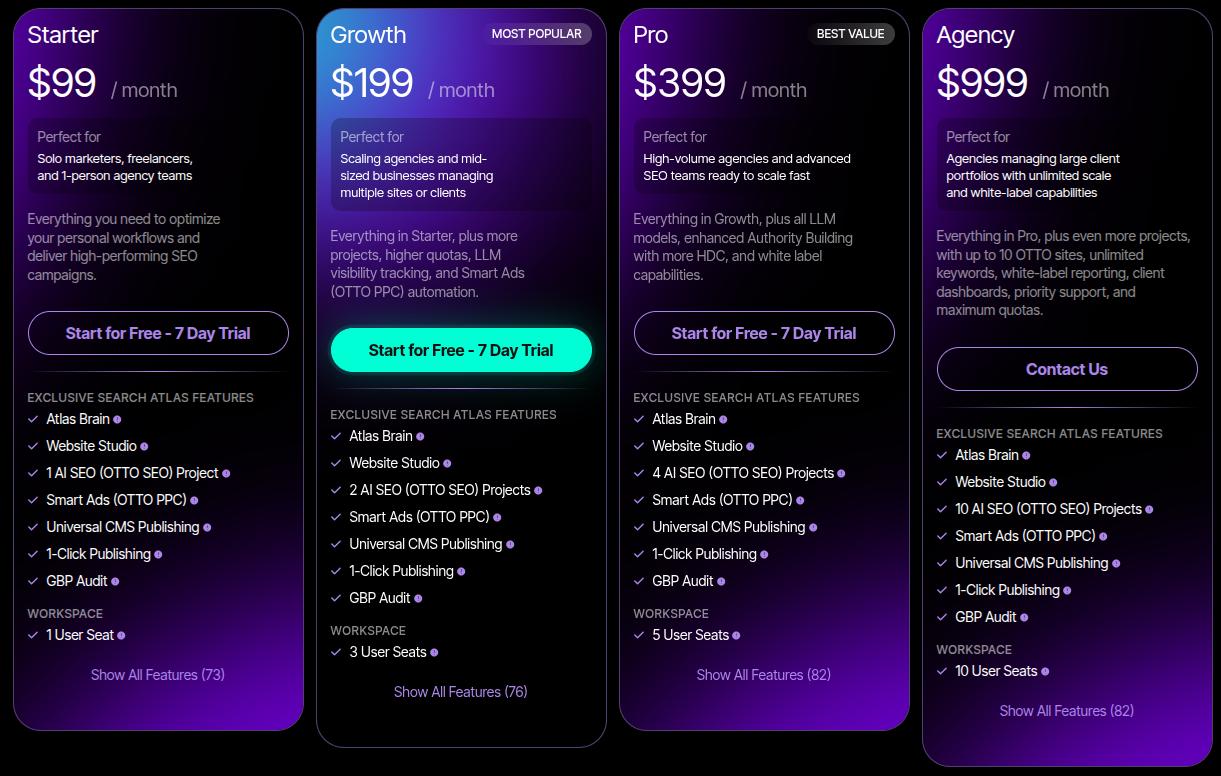
Plans start at $99/month with a 7-day free trial that includes full access to OTTO SEO, Content Genius, and the LLM visibility tools. Higher tiers at $199/month and above add more AI credits, deeper crawl analysis, and white-label reporting for agencies.
15. Indexly — Best for automated indexing and improving AI visibility
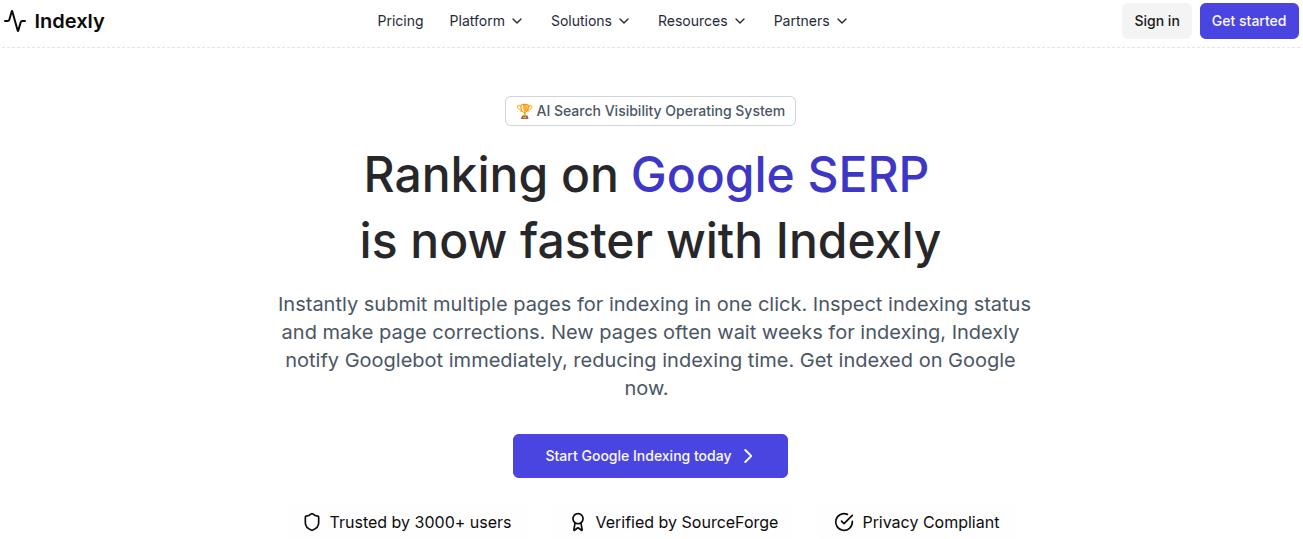
Indexly solves a simple but painful problem: getting new and updated pages indexed fast. If Google and Bing do not see your content, neither will AI Overviews or any other chat-based tools. Indexly automates submissions so you do not have to fiddle with Search Console every day.
Standout features:
- Daily sitemap scans with automatic submission of unindexed URLs to Google, Bing, Yandex, and Naver through APIs
- A Bing integration that helps feed content toward ChatGPT and Perplexity
- Basic impressions, clicks, and ranking data so you can spot indexing issues early
- AI-optimized content creation that drives qualified leads and visitors
Use cases:
Technical SEO professionals, publishers, and content managers who handle multiple pages each week.
Worth knowing:
Indexly solves one specific problem and does not go much further than that. It is not a content, GEO tracking, or competitive intelligence tool. So it should be treated as a supporting layer in a broader stack rather than a standalone AI search optimization solution.
Pricing:
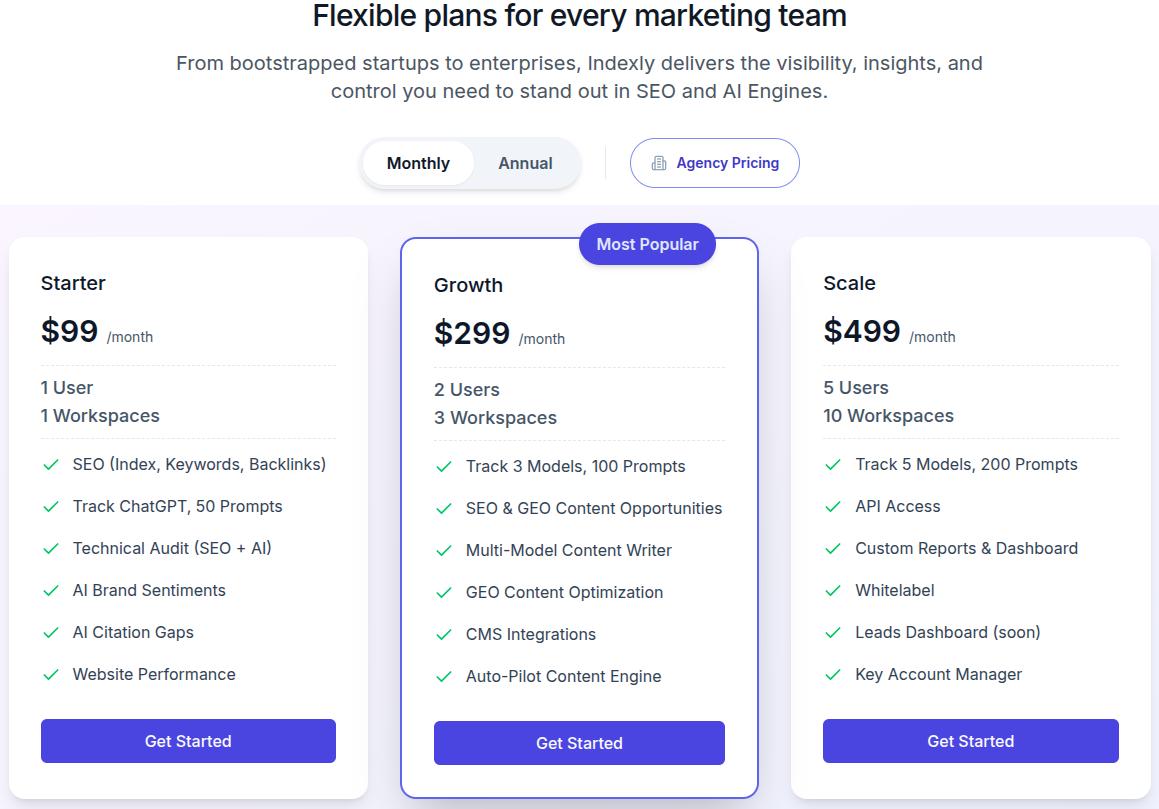
Pricing for Indexly starts at $99/month, which provides 50 prompts to track for ChatGPT, AI brand sentiment detection, and an SEO + AI technical audit.
16. Whatagraph — Best for AI-powered SEO + GEO reporting
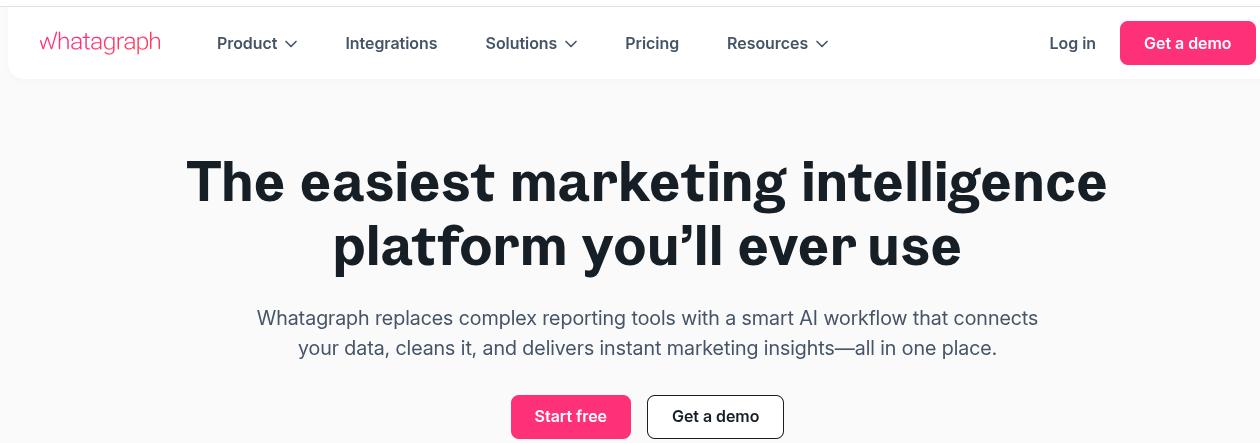
Whatagraph pulls data from dozens of platforms into clean, client-ready dashboards. It turns raw numbers from GA4, Google Search Console, Ahrefs, SE Ranking, and other tools into simple visuals. AI features then write easy-to-read summaries so non-technical stakeholders can also follow along and keep up with the data provided.
Standout features:
- Whatagraph IQ, which lets you type a prompt to generate a full SEO report
- IQ Summary that writes narrative recaps in multiple languages
- IQ Chat helps clients ask questions inside the dashboard regarding key figures and statistics
- Auto-branding from a logo upload, so reports look on-brand with minimal setup
Use cases:
Agencies and performance marketers who spend too much time building custom reports. It is also helpful for professionals who want an AI rank tracking tool, an AI SEO audit tool, and a GEO platform in one place.
Worth knowing:
Whatagraph is the most expensive tool on this list and is priced squarely at agencies billing clients for reporting time. Solo marketers or small in-house teams with simpler reporting needs will likely find the cost hard to justify compared to other alternatives.
Pricing:
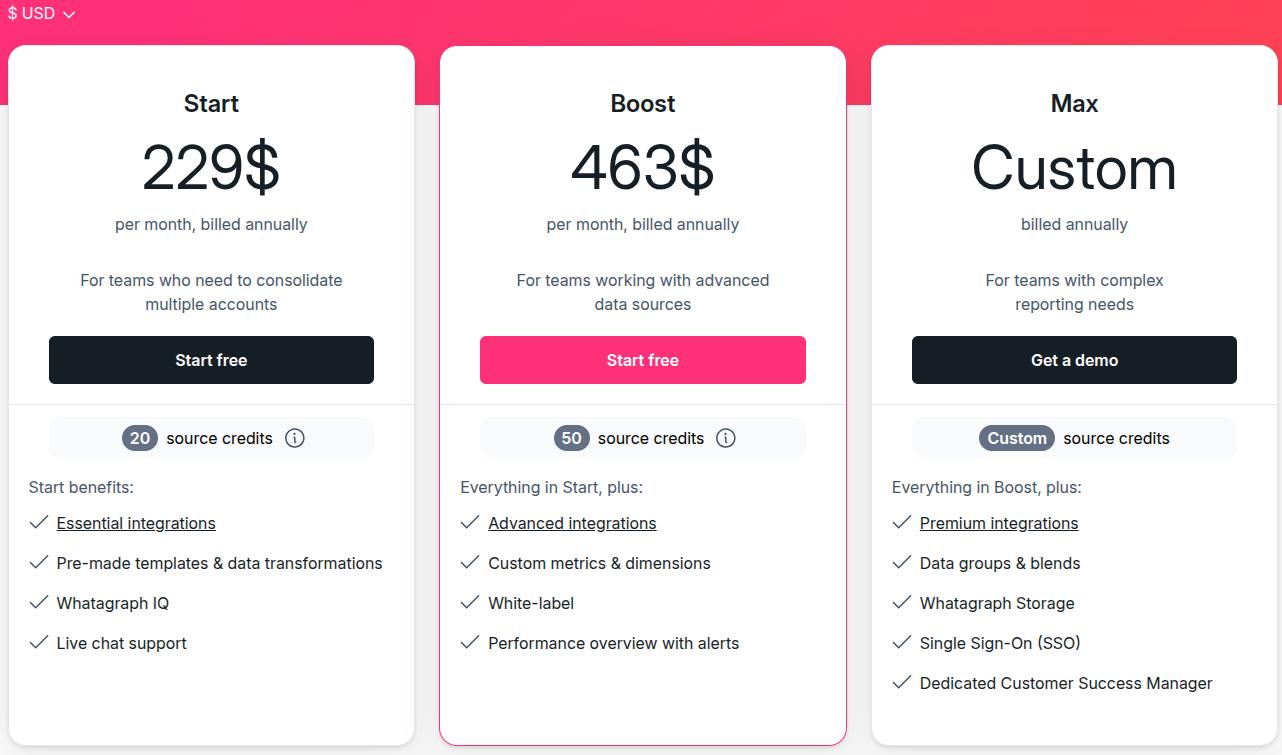
Whatagraph pricing starts at $229/month on annual billing for the ‘Start’ plan, which includes Whatagraph IQ, live chat support, and 20 source credits.
17. GrackerAI — Best for AEO/GEO for cybersecurity companies
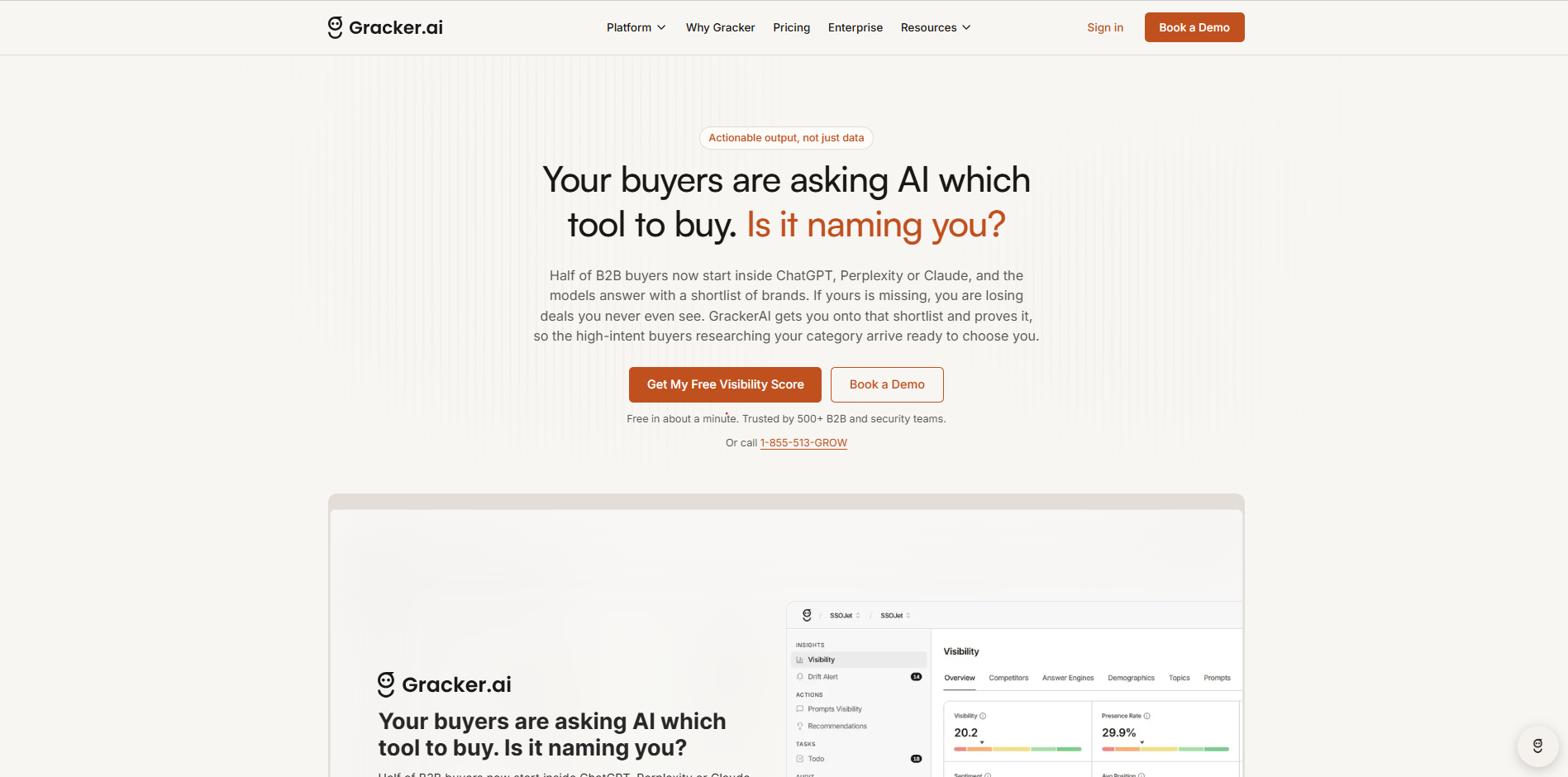
GrackerAI is an AI visibility platform built exclusively for cybersecurity vendors. It tracks brand mentions across ten engines, including ChatGPT, Perplexity, Claude, Gemini, Copilot, Google AI Overviews, Google AI Mode, DeepSeek, Llama, and Grok.
The tool pairs that monitoring with diagnostic agents and an article engine that fixes the gaps it finds. Most GEO tools stop at reporting. Gracker closes the loop from “why aren’t we cited” to a published fix.
Standout features:
- Per-engine breakdown across all 10 tracked engines with citation frequency, sentiment, average position, and share of voice
- A Visibility Diagnosis agent that checks any prompt you’re missing, scores your existing page against it, and returns a content brief or a gap report
- An AEO Audit that crawls the full site and grades every page on AEO Health and Technical Health
- A Prompt Generator grounded in Google Search Console and Bing Webmaster data, so tracked prompts reflect real buyer queries
Use cases:
Cybersecurity marketing teams and founders who need to know if they show up when a buyer asks an AI assistant for a SIEM, IAM, or endpoint security recommendation.
Worth knowing:
It takes a while to learn all the capabilities of GrackerAI. Also, just like any other cybersecurity diagnosis tool, you can expect some entity resolution errors for businesses sharing common personal names that require human oversight to resolve.
Pricing:
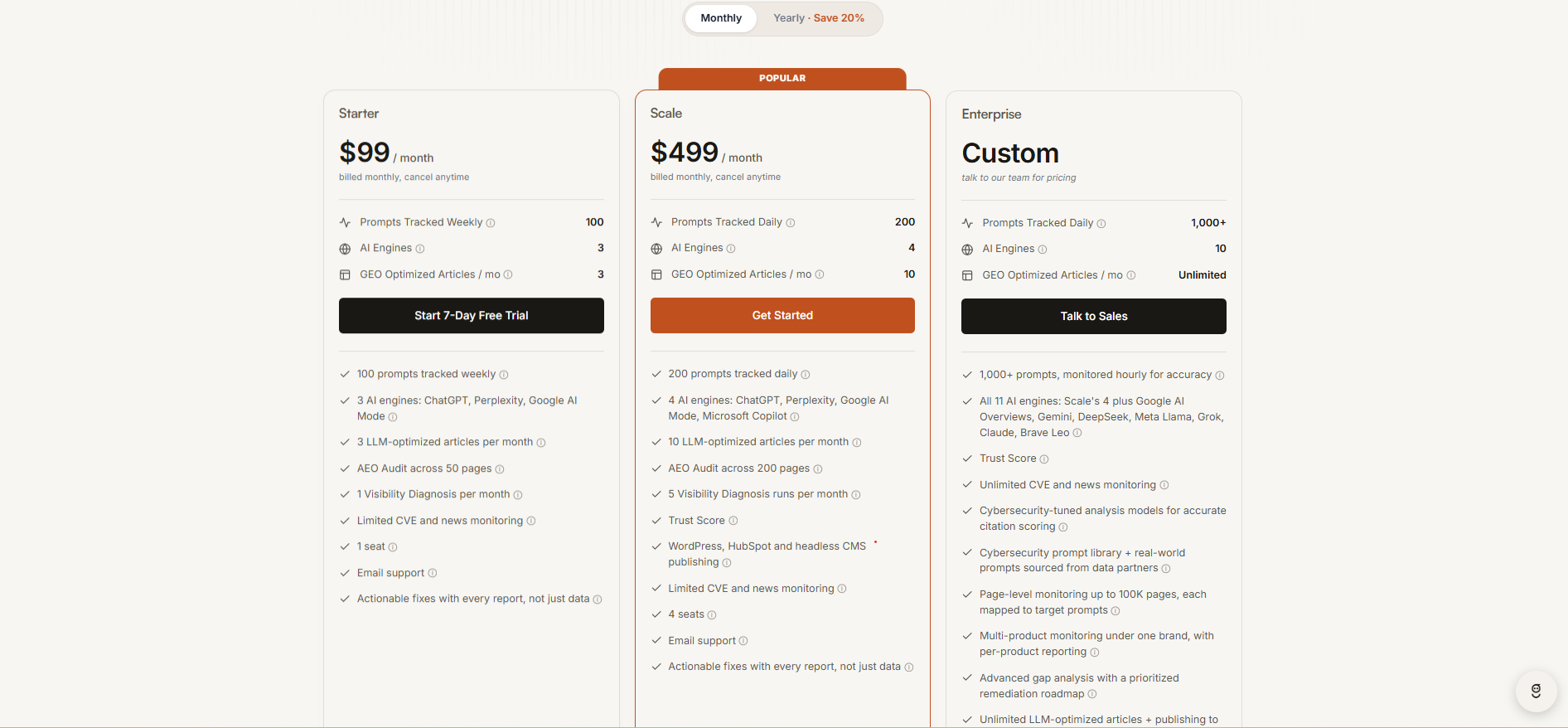
GrackerAI pricing starts at $99/month with the Starter plan that provides access to 3 LLMs, 3 articles, and 50 AEO audits. A 7-day free trial is available on the Starter and Scale plans.
6 bonus tools worth exploring for AI search optimization
The 16+ tools above cover the core of what most teams need. But the AI search optimization space is moving fast, and several other platforms are worth knowing, depending on your specific situation.
- Peec AI tracks brand visibility across ChatGPT, Gemini, Perplexity, and Copilot, with a particular strength in multi-country reporting. If you manage a brand across several markets and need to see how AI visibility differs by region, Peec AI fills that gap.
- RankPrompt is built for franchises and multi-location businesses that need to track AI visibility across different cities or service areas. It converts visibility gaps into location-specific content, making it one of the more practical tools for local SEO teams.
- Scrunch AI adds bot traffic monitoring. It also shows how AI crawlers are actually interacting with your site, which pages they access, and whether your content is being read before it gets cited.
- Goodie focuses on commercial AI visibility, including how your brand and products appear inside AI agent environments like ChatGPT shopping and Google AI Mode. Its Agentic Commerce Optimizer is a genuinely distinct feature for e-commerce brands.
- Respona focuses on outreach and link-building for AI search optimization. Since AI engines pull citations from trusted external sources like directories, listicles, and editorial sites, earning those placements matters for GEO just as much as for classic SEO.
- Pitchbox covers similar ground to Respona but with a longer track record and deeper integrations with major SEO platforms. The tool pulls live details from target pages to personalize outreach automatically, which keeps reply rates higher without manual work.
If you’re interested in analytics and user behavior, you can check out our detailed SEO analytics tool guide for more information.
How to choose the right AI SEO tool for your needs
Choosing the right AI SEO tool for your needs starts with one simple question: what do you want to improve first?
When you match each tool to a clear job, picking a stack feels far less confusing. Most teams do best with two or three AI search optimization tools that cover content, tracking, and technical basics.
Begin by mapping tools to goals:
- Content creation tools such as Contentpen, Writesonic, and Frase help you ship more long-form articles and landing pages.
- GEO tracking tools like AIclicks.io, OtterlyAI, Gauge, and SE Ranking’s AI overview tracker tell you how AI engines already talk about your brand.
- Technical helpers, such as Indexly, handle indexing and raw data.
- Outreach platforms like Pitchbox secure third-party mentions and backlinks.
Budget and team size matter as much as feature lists.
Solo creators and freelancers usually start with one AI SEO content generator or SEO-optimized AI content generator plus a light AI SEO audit tool.
Small teams can add GEO tracking once content volume grows. Larger agencies and in-house teams tend to layer in reporting platforms and outreach tools so they can show impact across the whole funnel.
Here is a simple way to think about it:
- Focus on content first. Without consistent, high-quality articles, even the best AI SEO tools have nothing meaningful to optimize.
- Add AI tools once you see traffic from content. When you know where AI agents already mention you, you can sharpen future posts and landing pages. Over time, this feedback loop makes your content calendar far more targeted.
- Layer in technical and outreach support as you scale. Raw SERP data and link building matter most when you run multiple pages. These tools keep your AI SEO optimization efforts from stalling because of crawl delays or weak authority.
- Match pricing tiers to revenue impact. Use early wins from content and GEO tracking to justify higher-tier plans later. That way, your AI SEO platform costs grow with the value you actually see, not based on fear of missing out (FOMO).
The right tools won’t matter if your content isn’t built to rank
The right AI search optimization tools only work when your content itself deserves attention. If posts are shallow, poorly structured, or copied, no dashboard can fix that. AI systems favor pages that clearly answer questions and earn trust from other sites.
Start by focusing on quality and intent. According to Google Search Central, helpful, people-first content is what earns lasting visibility, regardless of whether AI helped write it. That means you need:
- Clear intros that answer questions fast
- Scannable headings and short paragraphs
- Examples grounded in real user problems
The tool that helps you do all three consistently is Contentpen. By guiding you through keyword and topic selection, outline creation, and headline optimization, it helps you publish link-worthy posts on a steady schedule.
Write content that’s built to rank, not just read
Create search-optimized blogs aligned with SEO and GEO signals, so your content performs well across search and AI-driven discovery.
Try SEO Blogging FREE →
Once that foundation is in place, GEO trackers, AI website optimization tools, and outreach platforms have something strong to amplify.
In short, tools help you measure, refine, and distribute. Content still wins the click, the mention, and the sale. Brands that succeed in 2026 will invest in both smart AI search optimization tools and smarter, more helpful content.
Frequently asked questions
There is no single best AI tool for SEO in 2026 because needs differ. For blog-heavy strategies, Contentpen is a strong choice. AIclicks.io shines when you care about GEO. Indexly helps with indexing automation for your platform.
Yes, there are several free or low-cost AI tools for SEO optimization. AirOps offers a free Solo plan with a monthly task limit. Indexly provides a free tier for basic indexing, and MarketMuse has a limited exploration plan. Free plans are great for testing, but serious campaigns usually need paid tiers for deeper data and features.
One tool is fine to start. If content is your gap, begin with a creation tool like Contentpen. If you’re already publishing consistently but not showing up in AI answers, start with a GEO tracker like AIclicks or Otterly. Add a second tool only once you’ve exhausted what the first one tells you to do.
Most legacy SEO platforms have added AI visibility features, but they are bolt-ons rather than core products. They track a narrow slice of prompts and rarely give you citation-level detail or actionable GEO recommendations. If AI search visibility is a priority, a dedicated GEO tool gives you meaningfully better data than a tab inside a traditional SEO suite.
The highest-impact changes are structural: answer the main question in the first two sentences, use clear, conversational-style H2s and H3s, and add FAQ blocks with direct answers. AI systems also favor content that cites sources, includes specific data points, and covers a topic without gaps.
It depends on whether your customers are already using AI to find solutions in your category. If they are using AI, not showing up in AI answers is a real revenue problem regardless of your size. Several tools on this list start at around $30 to $60 per month, which is low enough to justify testing before committing to anything bigger.