Category: AI guides

Explore AI guides, tools, and insights to leverage artificial intelligence for content creation, productivity, and digital innovation.

  • What is AI generated content?

    What is AI generated content?

    AI-generated content quickly transforms how individuals and businesses create written, visual, and audio material. From blog posts and product descriptions to social media captions and marketing videos, artificial intelligence is now capable of producing content that closely mimics human creativity.

    This shift isn’t just a passing trend it’s becoming an essential tool in modern content strategies, offering speed, efficiency, and scalability like never before. 

    But what exactly is AI-generated content, and how does it work? In this article, we’ll explore the fundamentals of AI-driven content creation, the tools behind it, its benefits and limitations, and how it compares to traditional human-made content.

    Whether you’re a marketer, writer, or curious reader, understanding AI-generated content is key to staying ahead in the evolving digital landscape.

    What is AI-generated content?

    AI-generated content refers to any type of media; text, images, video, or audio created with artificial intelligence. Instead of relying solely on human input, this content is produced using machine learning models that can understand context, patterns, and language structures to generate human-like results.

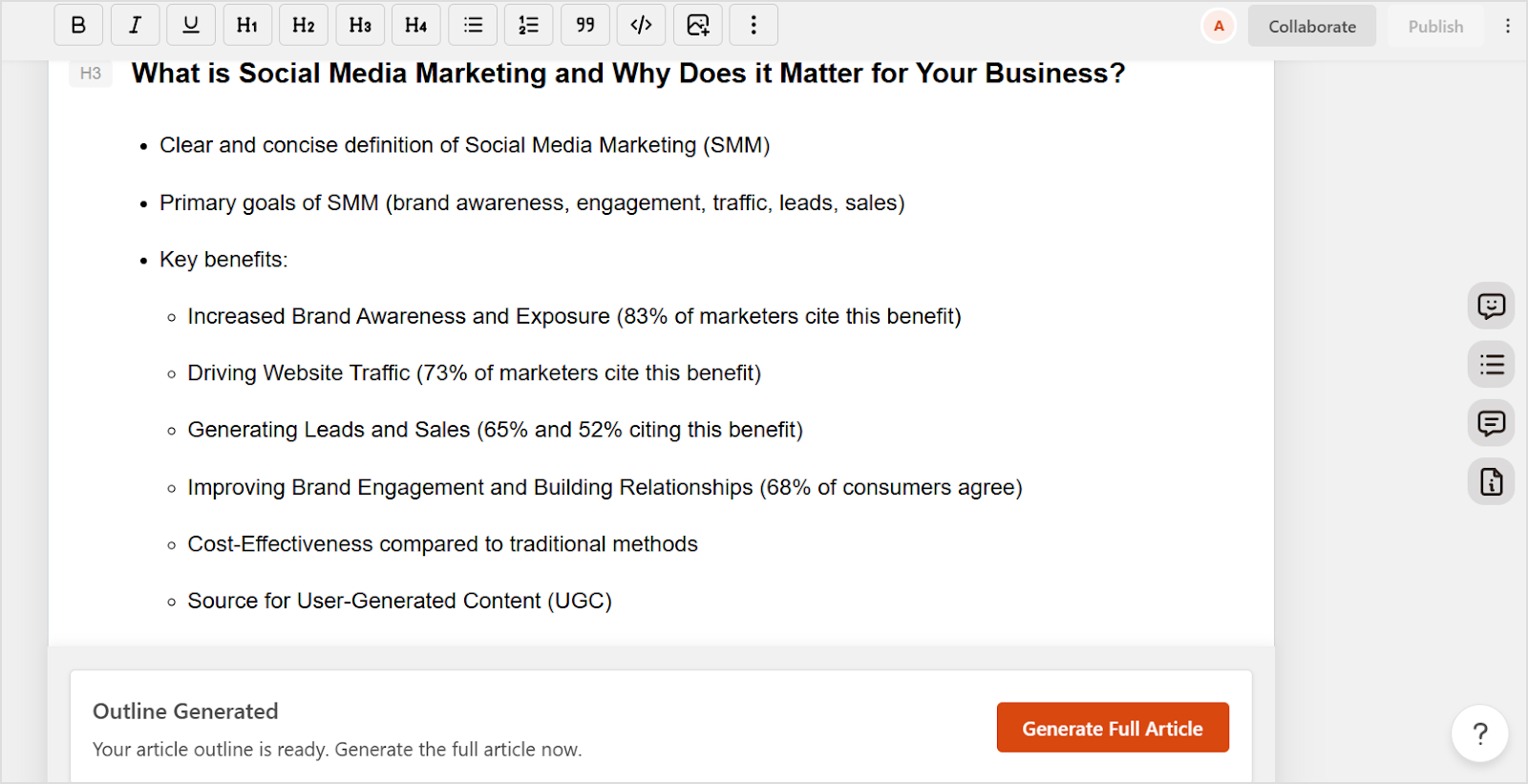
    For example, a marketer might use an AI writing tool like Contentpen to generate a blog post outline or a complete article based on a short prompt such as “Top 5 social media trends for 2025.” The AI will analyze the prompt, draw from its training data, and produce coherent and relevant content within seconds.

    AI-generated content can range from social media captions and product descriptions to music tracks and digital artwork, making it a powerful resource for creators and businesses looking to scale content production quickly and efficiently.

    Types of AI-generated content

    AI can produce various content formats depending on the purpose and platform. Here are the most common types:

    • Text-based content: Blog posts, articles, social media captions, emails, product descriptions, ad copy.
    • Visual content: AI-generated images, infographics, and designs.
    • Audio content: Voiceovers, podcast scripts, and AI-cloned voices for narration or interactive media.
    • Video content: Scriptwriting, subtitles, and even fully AI-generated video clips or avatars.
    • Interactive content: Chatbot conversations, quizzes, personalized recommendations, and customer support flows.

    Each type uniquely serves in modern marketing and communication, helping creators and teams scale content faster than ever.

    How does AI generate content?

    AspectDescription

    Core technologies

    Uses Natural Language Processing (NLP) and Machine Learning (ML) to understand and generate text.

    Training data

    Trained on vast datasets like books, websites, articles, and more to learn structure, grammar, and tone.

    Language models

    Models like Contentpen predict words and generate coherent content based on the input.

    Visual content creation

    Tools like DALL·E and Midjourney turn text prompts into images using AI-based image generation models.

    Audio and music

    AI can clone voices or compose music by identifying and mimicking patterns in sound data.

    Human vs. AI creation

    Humans use intuition and experience; AI relies on data and algorithms to simulate creativity.

    In short, AI mimics how humans create content but instead of intuition and experience, it relies on data and algorithms.

    Uses of AI-generated content

    AI-generated content is transforming how individuals and businesses create, scale, and manage content. Here are some of the most common and impactful use cases:

    Blog writing & SEO

    AI tools help generate keyword-optimized articles, meta descriptions, and blog outlines—making it easier to maintain content consistency and improve search rankings.

    Social media content

    Platforms like ContentStudio and Contentpen- AI blog writer online use AI to create engaging captions, hashtags, and platform-specific posts, saving time and boosting engagement.

    Email marketing

    AI assists in writing personalized subject lines, email bodies, and product recommendations—improving open and conversion rates.

    E-commerce product descriptions

    Retailers use AI to automatically generate thousands of product descriptions while maintaining tone and structure across listings.

    Customer support & chatbots

    AI powers chatbots, auto-replies, and help center content, offering 24/7 support and reducing the need for manual intervention.

    Video scripts & podcast outlines

    Creators use AI to draft scripts, show notes, and episode summaries for YouTube, TikTok, and podcasts.

    Internal reports & summaries

    AI helps teams generate meeting notes, executive summaries, and status updates quickly and consistently.

    Benefits of using AI for content creation

    AI is reshaping content creation by offering practical advantages that help creators, marketers, and businesses work faster and smarter. Here are the key benefits explained:

    1. Speed and efficiency

    AI can produce content in seconds that might take human hours or even days to create. Whether generating an article outline, writing a product description, or designing a social media post, AI helps streamline repetitive tasks and accelerates content workflows. This allows teams to focus more on strategy and creativity.

    2. Scalability

    One of AI’s biggest advantages is its ability to consistently create a large volume of content. Brands managing multiple platforms or targeting global audiences can use AI to generate variations of content quickly, making it easier to scale campaigns without burning out internal teams.

    3. Cost-effectiveness

    Hiring writers, designers, or video editors for every piece of content can be expensive. AI reduces this burden by automating parts of the process, lowering production costs. While it may not replace human expertise in all areas, it can handle simpler, high-volume tasks at a fraction of the cost.

    4. Multilingual capabilities

    Many AI tools support content generation in multiple languages. This helps businesses reach international audiences without needing a separate translator or writer for each market. AI can localize content while maintaining tone and context, speeding up global content strategies.

    5. Consistency and personalization

    AI can consistently follow brand guidelines, tone, and messaging across all pieces of content. At the same time, it can personalize messages at scale, for example, by creating customized email subject lines or ad copy based on user behavior or preferences.

    When used strategically, AI boosts productivity and enhances brands’ communication with their audiences, making it a valuable asset in today’s content-driven world.

    Popular tools for AI content generation

    With the rise of AI in content creation, a wide range of tools have emerged each offering unique features to help writers, marketers, and businesses scale their efforts. Below are some of the most widely used and trusted AI content generation tools:

    1. Contentpen

    Contentpen is a powerful AI content generation tool designed to help businesses scale their content output efficiently without sacrificing quality or SEO performance. Built for growth-driven teams, it blends speed, creativity, and optimization to simplify content production across the board.

    Key features:

    • Bulk content generation 
    • Automated keyword suggestions 
    • Built-in SEO optimization tools
    • Deep brand voice analysis and integration
    • Built-in content approval workflow
    • Multiple specialized AI agents 
    • Direct WordPress publishing integration

    Pricing:

    • Starter: $27/month
    • Premium: $55/month
    • Agency: $139/month
    Contentpen

    2. ContentStudio’s AI Assistant 

    ContentStudio’s AI Assistant is designed to help marketers, content creators, and businesses generate high-quality, engaging content faster and more efficiently.

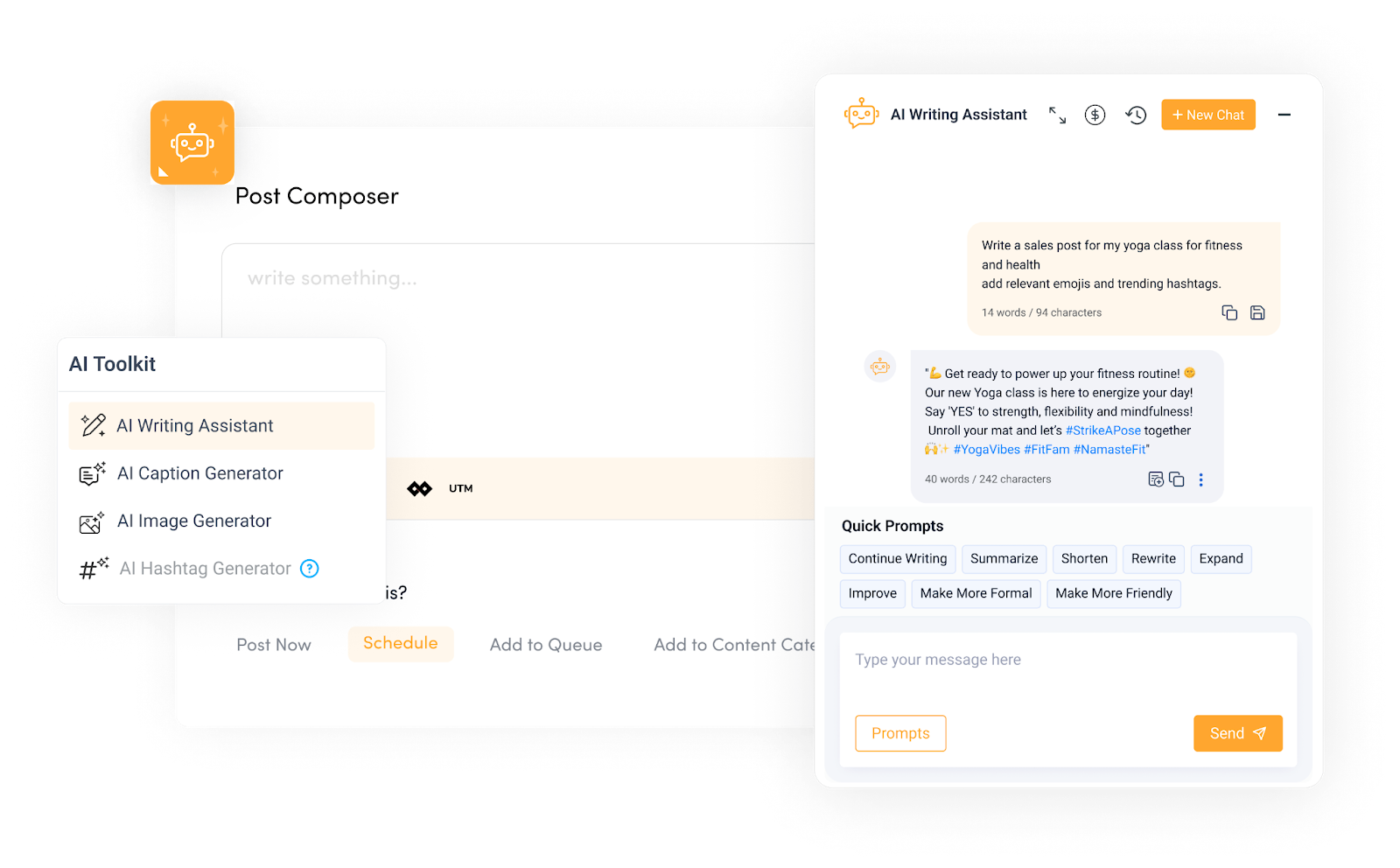
    Its customizable writing tones, text enhancement, and a predefined prompt library make the job easy. The AI assists in creating social media captions, generating images, generating text from images, hashtags, and more, all tailored to your brand voice and audience. 

    Best for: Generating and editing short-form social media content and images. 

    3. Canva & Canva Magic Write

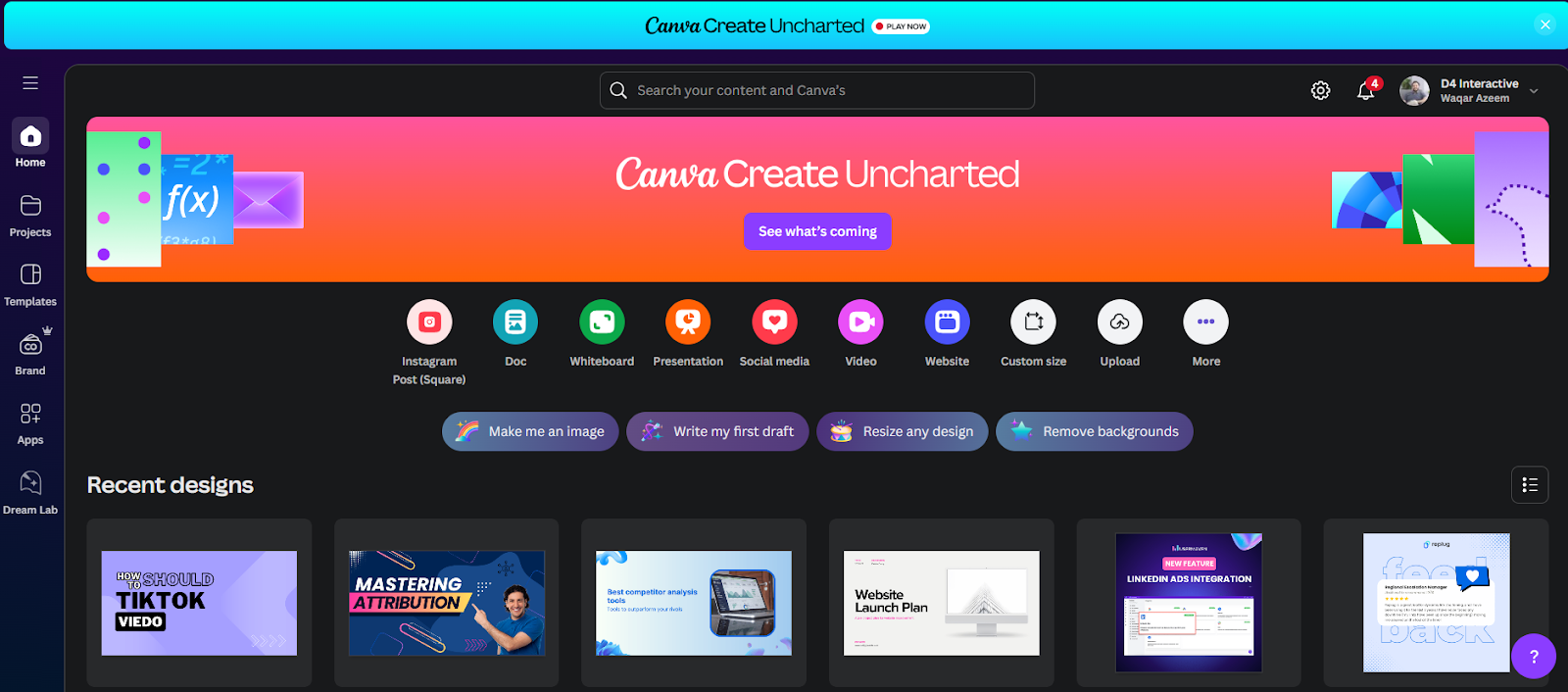
    Canva is no longer a simple graphic design tool but an efficient AI-driven content creation platform. Its user-friendly drag-and-drop interface makes designing social media posts, presentations, and videos accessible to everyone without any pro-level design skills.

    Canva Write Magic is an AI writing tool built into Canva that assists in generating short-form content for presentations, social posts, and designs. It pairs well with Canva’s visual editing features.

    Best for: Designers and marketers who want quick, AI-powered copy for visual content.

    Choosing the right AI tool depends on your specific content goals, whether you need fast output, tailored copy, or polished language. Many professionals use a combination of tools to generate, refine, and scale content efficiently.

    AI-Generated content vs human-written content

    As AI becomes more prevalent in content creation, it’s important to understand how it compares to traditional human writing. Each approach has its strengths and weaknesses, and the best results often come from knowing when to use one over the other or how to combine both.

    The table below will provide a quick glance:

    AspectAI-generated contentHuman-written content
    Speed & volumeExtremely fast; can create high volumes of content in secondsSlower, but allows for thoughtful, deliberate writing
    CreativityMimics patterns, limited originality, lacks true ideationHighly creative; draws on unique experiences, emotions, and storytelling
    AccuracyCan generate factual errors; does not verify informationCan research and fact-check for reliable, up-to-date content
    Tone & voiceCan imitate tone styles but may lack brand consistency or nuanceCaptures subtle tone variations and maintains consistent brand voice
    Cost & EfficiencyLow cost, high efficiency for repetitive tasksHigher cost, but with greater attention to detail and quality
    Emotional connectionLacks emotional depth; harder to build authentic audience relationshipsConnects with readers on a deeper, emotional level
    Best used forProduct descriptions, social media posts, drafts, bulk contentStorytelling, opinion pieces, thought leadership, sensitive or in-depth topics

    AI-generated content is a powerful tool for fast, scalable content production, but it can’t fully replace human insight, creativity, and emotional intelligence. The most effective content strategies often combine both, letting AI handle the heavy lifting while humans polish, guide, and elevate the final output.

    Is AI content ethical and legal?

    As AI-generated content becomes more widespread, important ethical and legal questions arise. Understanding these concerns is critical for creators and businesses to use AI responsibly and avoid pitfalls.

    1. Copyright and intellectual property

    One of the most significant legal questions around AI content is ownership. Since AI models learn from vast amounts of existing work, there’s debate over whether AI-generated content infringes on copyright. For example, in 2023, the U.S. Copyright Office clarified that works created entirely by AI without human authorship may not qualify for copyright protection. However, copyright can be claimed if a human edits or guides the AI output.

    Example: OpenAI’s content is governed by usage policies that clarify user ownership of AI-generated content, but creators must ensure that they do not infringe on copyrighted material used in training.

    2. Transparency and disclosure

    Ethical use of AI content often involves disclosing when AI generates or assists content. This transparency builds trust with audiences and avoids misleading readers who might assume all content is human-created.

    Example: The Associated Press openly stated it uses AI to generate earnings reports and weather updates but clarifies when content is AI-assisted to maintain credibility.

    3. Bias and fairness

    AI models can inherit biases from the data they were trained on, leading to discriminatory or unfair content. For example, facial recognition AI and language models have shown biases against minority groups due to unbalanced datasets.

    Example: IBM’s AI Fairness 360 toolkit helps developers detect and mitigate bias in AI models.

    Also read: 9 best ChatGPT alternatives in 2025

    4. Misinformation and accountability

    AI-generated content can unintentionally spread false or misleading information because AI doesn’t verify facts. For example, during the COVID-19 pandemic, some AI-generated content circulated misinformation, highlighting the need for human review.

    Example: Fact-checking organizations like Snopes emphasize the importance of human oversight for AI content.

    5. Job displacement concerns

    The rise of AI in content creation has sparked debates about potential job losses among writers, editors, and creatives. However, AI is also seen as a tool to augment human work rather than replace it entirely.

    Example: The World Economic Forum reports that while AI may displace some jobs, it will also create new roles focused on managing and enhancing AI technology.

    6. Compromised SEO rankings 

    Although AI can help optimize content for search engines, overreliance on it can lead to keyword stuffing or content that lacks true value, both of which can hurt SEO rankings. Additionally, since AI draws from large datasets, there’s a possibility of unintentionally reproducing phrases that are too similar to existing content, raising plagiarism concerns.

    7. Lack of human emotion and creativity

    AI struggles to replicate human nuance, emotional intelligence, and storytelling ability. It can’t truly empathize with readers or deliver content with a unique voice or flair. This can be a disadvantage in content where tone, emotional resonance, or originality is key such as brand campaigns or opinion pieces.

    AI-generated content offers incredible possibilities, but ethical and legal considerations must guide its use. Transparency, accountability, and human involvement are key to ensuring AI supports creativity without compromising trust or integrity. Staying informed about evolving laws and best practices will help users navigate this complex landscape responsibly.

    Contentpen

    Wrapping up: The future of AI in content generation

    AI is not just a trend it’s reshaping how content is ideated, created, distributed, and optimized. As the technology advances, its role in content creation will continue to evolve, moving beyond assistance into true collaboration with human writers.

    In the near future, we can expect AI tools to become more context-aware, better at understanding nuance, and more integrated across creative workflows. Personalized content at scale, real-time language translation, and predictive content strategies will become the norm.

    Also read: What is content automation: Key benefits, tools and tips

    Writers and marketers will work alongside AI as co-creators using it to speed up production, test variations, and unlock deeper insights from data.

    However, human creativity, emotion, and storytelling will remain irreplaceable. The future lies in striking the right balance: letting AI handle repetitive tasks while humans lead with originality, empathy, and ethical judgment.

    In essence, AI won’t replace content creators it will empower them to do more, faster, and smarter.

    FAQs on AI-generated content

    What is AI-generated content?

    AI-generated content refers to text, images, audio, or video created by artificial intelligence tools or algorithms, often trained on large datasets. These tools can produce blog posts, product descriptions, social media content, and more with minimal human input.

    How does AI create content?

    AI uses natural language processing (NLP) and machine learning to understand patterns in data. It analyzes existing content and then generates new material based on prompts or instructions given by the user.

    What types of content can AI generate?

    AI can create a wide range of content, including articles, marketing copy, social media posts, emails, poetry, code, images, and even videos. The quality and accuracy depend on the tool and the input provided.

    Is AI-generated content original?

    Yes, AI-generated content is typically original in the sense that it produces unique outputs based on training data. However, it’s essential to review for accuracy, tone, and potential plagiarism—especially for sensitive or factual content.

    Can AI-generated content replace human writers?

    AI can assist or speed up content creation, but it’s not a full replacement for human creativity, critical thinking, or emotional nuance. The best results often come from combining AI with human editing and oversight.

  • How to rewrite a paragraph using AI?

    How to rewrite a paragraph using AI?

    Rewriting content is a super important part of the writing process, it helps you fine-tune your tone, make things easier to understand, and keep your readers hooked.    

    But doing it manually can be time-consuming and often overwhelming, especially when you’re short on time or creativity. That’s where AI tools come in handy.

    AI-powered writing assistants help you rewrite paragraphs quickly while maintaining the original meaning. 

    One such easy-to-use tool is Contentpen,

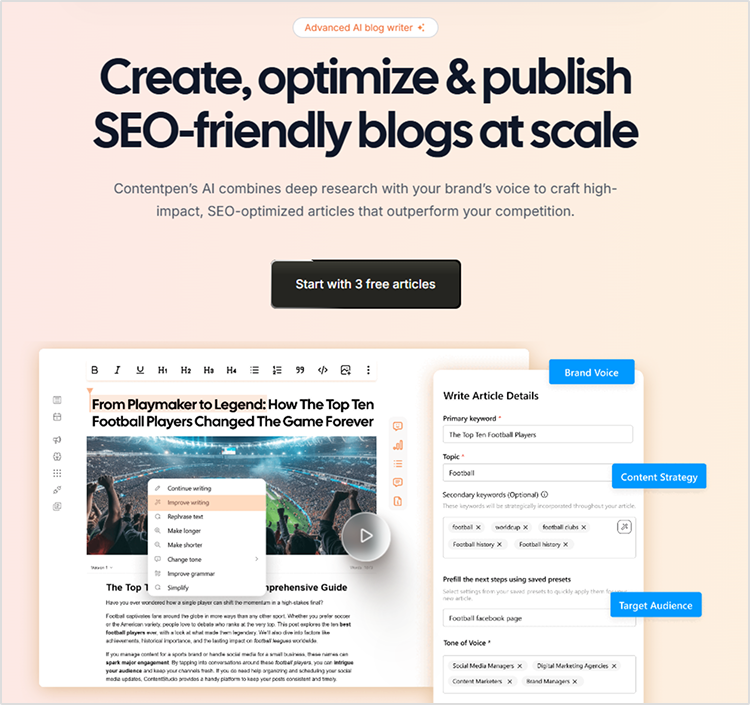
    An ultimate AI blog generator that combines deep research with your brand’s voice to craft high-impact, SEO-optimized articles that outperform your competition.

    Let’s walk through how you can use Contentpen to rewrite a paragraph in just a few clicks.

    Step 01: Access your dashboard

    • Go to your Contentpen dashboard and click on “Create Article”
    • Choose the “Start blank” option to begin a new article from scratch.
    start blank

    Step 02: Add your content

    • You’ll be redirected to the editor window, where you can paste or write your content.
    add content you wnat to rewrite

    Step 03: Select the paragraph

    • Highlight the paragraph you want to rewrite. Once selected, a small “Ask AI to edit or rephrase” bar will appear above it.
    Ask AI

    Step 04: Choose the rephrase option

    • Click on the bar and select “Rephrase text” from the available options, such as “Improve writing,” “Make longer,” “Simplify,” or “Change tone.”
    rephrase text
    • Press Enter, and the AI will rewrite the selected paragraph.
    replace text

    Step 05: Apply the new version

    You can click “Replace section” to update the original or choose to add it below the existing paragraph, whichever suits your workflow.

    rephrased text

    Also read: How to write an article using Contentpen?

    Conclusion

    Rewriting pragraphs doesn’t have to be time-consuming. With Contentpen’s AI-powered editor, you can enhance your writing instantly. Whether you’re editing for clarity, tone, or variety, the rephrase tool helps you polish your content with just a few clicks.

    Frequently asked questions

    Can Contentpen rewrite entire articles or just paragraphs?

    Yes, Contentpen can help you rewrite entire articles or specific paragraphs, highlight the text you want to improve, and let the AI handle the rest.

    Does the rewrite tool change the meaning of my content?

    No, the tool is designed to maintain the original intent while improving wording, tone, and clarity.

    Can I choose different tones when rewriting a paragraph?

    Absolutely! Alongside the rephrase option, you can select different tones like formal, casual, or persuasive to match your content’s purpose.

    Is Contentpen beginner-friendly?

    Yes, the interface is intuitive and easy to use, even if you’ve never worked with AI writing tools before.

  • What is brand voice? Definition, importance, and examples

    What is brand voice? Definition, importance, and examples

    As the name suggests, your brand voice is the unique expression of your brand’s personality, vision, and custom preferences.

    It’s the distinctive character that comes through in all your brand’s communications – whether written, spoken, or visual.

    Your brand voice is a unique blend of your USPs (Unique Selling Propositions), ICPs (Ideal Customer Profiles), and overall brand persona tailored to your target audience.

    It defines how your brand communicates – through word choice, tone, rhythm, and style – and serves as the verbal reflection of your identity and core values.

    In today’s blog, we’ll see why brand voice matters, explore its key components, and share tips to help you develop one that resonates.

    So, without any further ado – let’s get started!

    Why brand voice matters?

    When consumers encounter thousands of marketing messages daily, brands with inconsistent or generic voices simply fade into the background.

    1. Brand recognition and recall

    Just as we recognize friends by their speech patterns without seeing them, consumers can recognize brands through their distinctive communication style. A consistent voice creates memorable impressions that stick with customers even when they’re not actively engaging with your content.

    2. Trust and authenticity

    When your voice remains consistent across all touchpoints, it signals reliability and authenticity to your audience. Conversely, an inconsistent voice creates cognitive dissonance and can undermine trust, imagine if your bank suddenly started using slang-filled, casual messaging after years of formal communication.

    3. Differentiation in crowded markets

    In industries where product differentiation is challenging, a distinctive brand voice can provide a competitive edge. Consider how brands like Dollar Shave Club disrupted the razor industry not through revolutionary products but through a fresh, irreverent voice that stood apart from established competitors.

    4. Emotional connection

    The right brand voice can forge emotional bonds with audiences by reflecting shared values, aspirations, or worldviews. This emotional connection goes beyond functional benefits, creating a deeper brand loyalty.

    5. Consistency across teams and channels

    A documented brand voice provides guidelines for everyone creating content for your brand, from in-house teams to external agencies ensuring consistency even as your communication channels multiply.

    Components of brand voice

    ComponentWhat it meansWhy it matters
    ToneThe emotional flavor or attitude in your messaging (e.g., friendly, professional)Sets the mood and helps match your brand’s vibe to your audience’s expectations.
    Unique Selling Proposition (USP)The distinctive feature or benefit that makes the brand stand out from competitors.It helps to clearly define the brand’s niche and sets it apart in the marketplace, making it memorable to the audience.
    Brand persona The core goal behind your communication (e.g., to inspire, to inform, to sell)Ensures your messaging stays focused and consistent across channels.
    Key themesThe beliefs and principles that guide your brand voiceBuilds trust and helps connect with like-minded audiences.
    Targeted audience How well your voice aligns with your target audience’s preferencesMakes your messaging feel relevant and relatable, boosting engagement.

    How to use AI to create your brand voice?

    With the rise of AI, developing that unique voice is no longer reserved for big teams or agencies. Today, smart tools can help you define how your brand sounds and ensure that tone stays consistent across every piece of content.

    Introducing Contentpen – The ultimate AI writing tool

    ​Contentpen is an AI-powered content creation platform that helps you establish a distinct tone of voice. And keep it consistent across every channel with ease. With customizable content presets, you can define your brand personality once and apply it to everything from blog posts to ad copy. Need to scale? 

    Contentpen’s bulk article generation lets you produce high-quality, on-brand content in minutes – not days. Plus, built-in SEO optimization ensures your content doesn’t just sound great, it performs too. 

    Whether you’re managing one brand or juggling several, Contentpen makes it effortless to stay true to your voice while expanding your online presence.

    Brand voice in action: Examples

    Looking at successful brands can provide inspiration for developing your own voice:

    The New York Times: Authoritative and thoughtful

    The Times maintains a voice of reasoned authority – formal without being stuffy, intelligent without being pretentious, and serious without being devoid of humanity.

    new york times

    ContentStudio: Professional and action-oriented 

    ContentStudio talks with you in crisp, action-driven language, powerful enough to fuel complex campaigns but approachable enough for every team member. Its clear, step-by-step prompts guide you from ideation through scheduling to performance insights, so you can craft, publish, and optimize social content that truly connects and converts with ease.

    Contentstudio -the social media management tool

    Wendy’s: Irreverent and bold

    Particularly on social media, Wendy’s has cultivated a sassy, irreverent voice that’s unafraid to challenge competitors directly and use humor to connect with younger audiences. Just like this

    wendys social post

    Common challenges business face when setting a brand voice 

    Developing and maintaining a consistent brand voice often involves navigating several challenges:

    1. Scaling across large organizations

    As companies grow, maintaining voice consistency becomes more complex. Creating clear guidelines, providing ongoing training, and establishing content review processes can help address this challenge.

    2. Adapting to new platforms

    Each new communication channel may require adaptations of your voice while maintaining its core elements. For example, your LinkedIn content might use a more professional tone than your TikTok content, but both should still be recognizably your brand.

    3. Balancing global consistency with local relevance

    International brands must consider how their voice translates across cultures and languages, often requiring flexibility to respect local communication norms while maintaining global brand cohesion.

    4. Managing voice during crises

    Difficult situations may require temporary adjustments to your typical voice, showing appropriate sensitivity while remaining authentic to your brand identity.

    Measuring brand voice effectiveness

    While somewhat subjective, several approaches can help evaluate your brand voice:

    • Audience perception surveys: Ask customers to describe your brand’s personality based on your communications
    • Content engagement metrics: Monitor how audiences respond to content that exemplifies your voice
    • Brand recognition tests: See if audiences can identify your brand from unbranded content samples
    • Consistency audits: Regularly review content across channels for voice alignment
    • Team adoption measurement: Assess how consistently team members apply voice guidelines

    Conclusion

    Brand voice is far more than a marketing nicety – it’s a strategic asset that shapes how audiences perceive, remember, and connect with your brand.

    In an increasingly digital marketplace where consumers encounter countless messages daily, a distinctive, consistent, and authentic voice helps your brand cut through the noise and build meaningful relationships with your audience.

    By thoughtfully developing your brand voice based on your fundamental values and audience needs, then systematically implementing it across all communications, you create a powerful tool for brand recognition, differentiation, and emotional connection that delivers measurable business benefits.

    FAQs on brand voice

    What is a brand voice?

    A brand voice is the unique personality and tone a company uses in its communications, reflecting its values and connecting with its audience.​

    Why is a consistent brand voice important?

    Consistency builds trust and recognition, ensuring all brand messages align and resonate with the target audience.​

    How can AI assist in developing a brand voice?

    AI tools can analyze existing content to identify tone patterns and help generate new content that maintains a consistent brand voice.​

    What challenges do businesses face in establishing a brand voice?

    Challenges include maintaining consistency across platforms, adapting to different audiences, and ensuring all team members adhere to the established voice.

  • 9 best AI tools for content creation

    9 best AI tools for content creation

    Creating high-quality content consistently is tough, especially when you’re racing against deadlines, out of ideas, or short on resources. That’s where AI tools for content creation like Contentpen step in to transform the game. 

    From generating blog topics and social captions to designing visuals and optimizing for SEO, AI-powered platforms are helping marketers, creators, and teams produce content faster, smarter, and with less stress.

    With the right AI blog writer online in your stack, you can save hours of manual effort, streamline your content workflow, and focus more on strategy and creativity rather than repetitive tasks. But with so many tools available, finding the best ones for your needs can be overwhelming.

    That’s why we’ve handpicked nine of the best AI tools for content creation, each offering unique features to help you write, design, plan, and publish content more efficiently. 

    Whether you’re a solo creator, part of a marketing team, or running an agency, these tools are designed to supercharge your content process and deliver better results. Let’s explore!

    05 benefits of AI content creation tools

    AI content creation tools are transforming how businesses and creators approach content marketing. Here are five key benefits of using these tools:

    • Speedy content production: AI generates ideas, outlines, and drafts in minutes – cutting down hours of work and freeing you up for strategy and fine-tuning.
    • Boosted creativity: Stuck in a creative rut? AI offers fresh angles, catchy headlines, and unique suggestions to keep your content sharp and inspired.
    • Cost-efficient output: Skip the high costs of hiring multiple creators. AI tools handle repetitive tasks, helping you produce quality content on a leaner budget.
    • Better SEO performance: With built-in optimization features, AI tools suggest keywords, structure, and metadata to improve search rankings and drive traffic.
    • Consistent brand messaging: AI helps maintain a unified voice across all platforms  – from blogs and emails to social media, and keeps your content on-brand every time.

    9 best AI tools for content creation

    1. Contentpen

    Contentpen is a game-changing AI content creation tool built to help businesses scale their content production effortlessly without compromising on quality or SEO performance. Designed with growth-focused teams in mind, it combines speed, creativity, and optimization to streamline content creation at every level.

    Key features:

    • Specialized AI agents working in coherence
    • Deep brand voice analysis and integration
    • Automated keyword suggestions and research 
    • Built-in SEO optimization tools
    • Built-in content approval workflow
    • Direct WordPress publishing integration
    • Bulk content generation 
    • Content pipeline management with Kanban board

    Key steps to create high-quality content using Contentpen’s AI writer  

    • Define your topic and keywords (include primary and secondary keywords)
    • Select a tone of voice (e.g., professional, conversational, authoritative).
    • Define your target audience (marketers, business owners, developers, etc.).
    • Choose your point of view (first-person, second-person, or third-person).
    • Set formatting preferences for better readability
    • Define the article length (short, medium, or long-form).
    • Select a featured image and in-article images that align with your article (realistic, abstract, cartoon).
    • Review, refine, and optimize your article

    Pros:

    • Multiple specialized AI agents instead of one 
    • Produces large volumes of SEO-optimized content quickly
    • Highly customizable output based on features 
    • Simplified team collaboration
    • Content produced to increase organic visibility 
    • Consistent content due to unique brand voice 

    Cons:

    • Best suited for SEO-focused blog content creation only
    • Premium features restricted to higher-tier plans
    • Learning curve for new users given the step-wise process

    Pricing:

    • Starter: $27/month
    • Premium: $55/month
    • Agency: $139/month

    2. ContentStudio’s AI Assistant 

    ContentStudio’s AI Writing Assistant

    ContentStudio’s AI Writing Assistant is designed to help marketers, content creators, and businesses generate high-quality, engaging content faster and more efficiently. Powered by advanced natural language processing, it assists in creating blog posts, social media captions, product descriptions, emails, and more — all tailored to your brand voice and audience. 

    Key features:

    • Customizable writing tones
    • Quick prompts and predefined prompts library
    • Chat history 
    • Text enhancement 
    • Relevant hashtag suggestions 
    • Social caption generator 
    • Unique content variations 
    • Text to image and image to text

    Pros:

    • Smart content suggestions
    • SEO-friendly keyword recommendations
    • Simplified photo creation
    • Enhanced impressions with targeted hashtags 
    • Tailored AI social content 

    Cons:

    • Dependency on input quality
    • AI performs best for short-form content

    Pricing:

    • Standard: $19/month
    • Advanced: $49/month
    • Agency Unlimited: $99/month

    3. Jasper.AI

    Jasper.AI

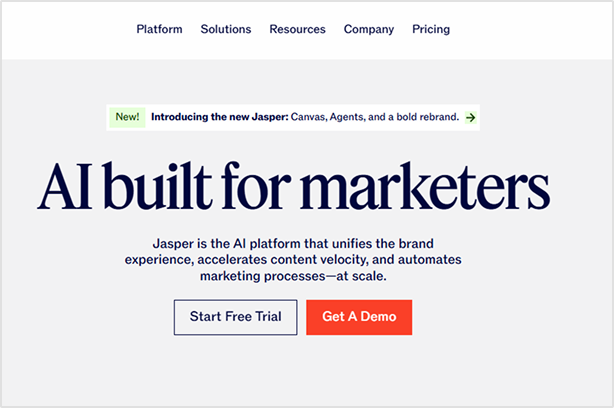
    Jasper, formerly known as Jarvis, was one of the first AI writing tools to hit the market, giving it a head start in refining its UI and features. It offers AI text generation for a wide range of content types, from landing pages to full marketing campaigns. Key tools include Remix for reworking existing content, an interactive Chat for brainstorming, and a handy Chrome extension.

    Key features:

    • Real-time collaboration with Kanban
    • Calendar views for managing projects
    • Smart suggestions
    • Offers chrome extension

    Pros:

    • 50 content templates
    • Integration with third-party tools
    • Supports content ideation

    Cons:

    • Enterprise pricing varies
    • Cost for third-party integrations 
    • Higher pricing compared to alternatives
    • Best for marketing content only

    Pricing:

    • Creator: $39/month
    • Pro: $59/month
    • Business: Custom pricing 

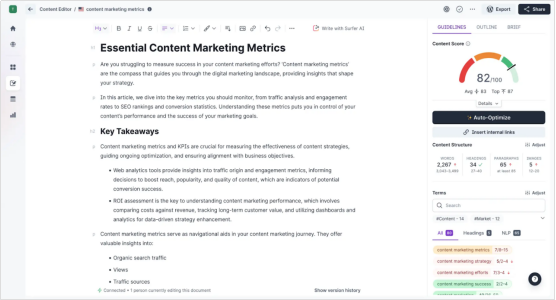
    4. Surfer SEO

    Surfer SEO

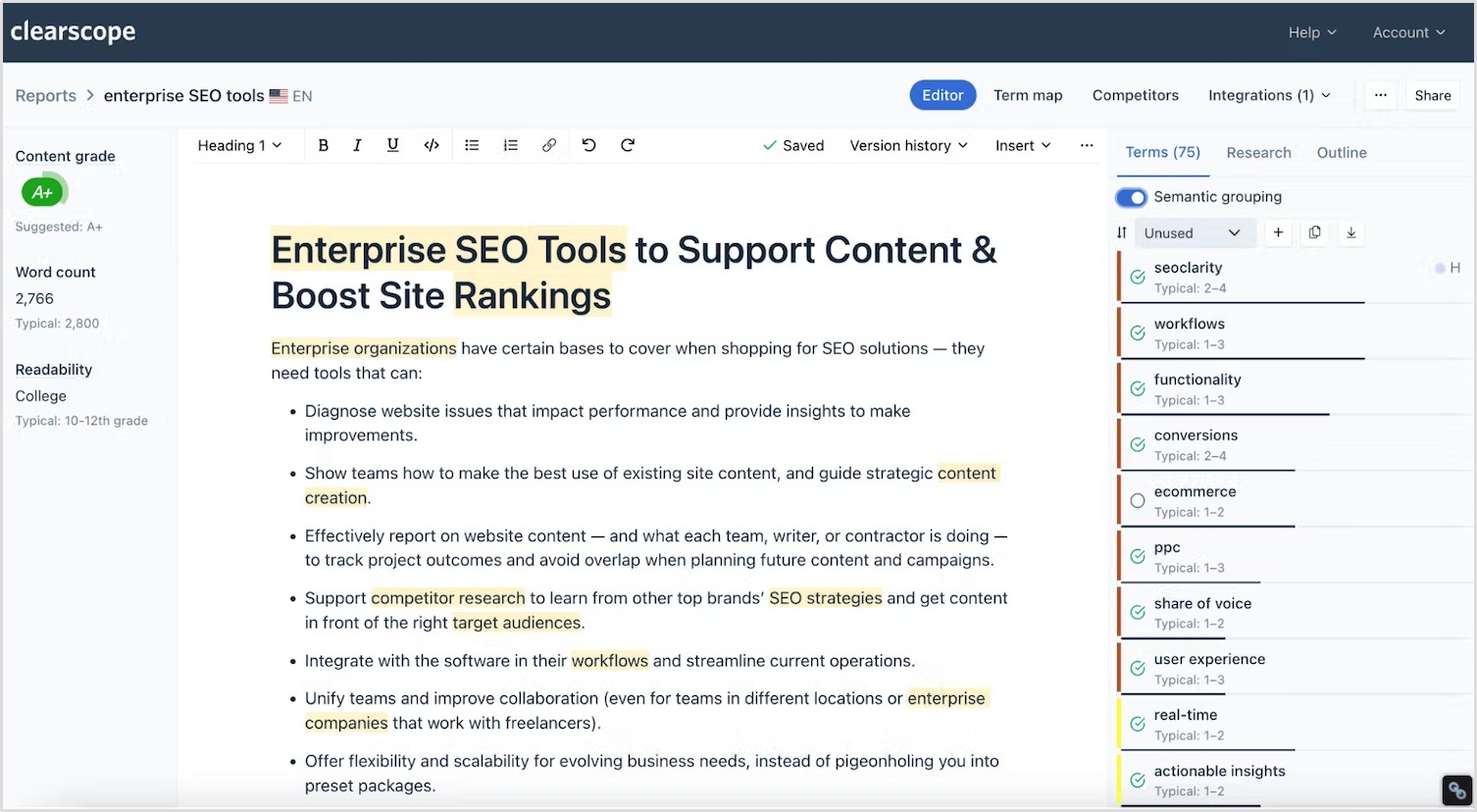
    Surfer SEO is a powerful content optimization tool designed to help marketers, content creators, and SEO professionals create high-ranking content with ease. It analyzes top-performing pages for your target keyword and provides actionable recommendations to improve your content’s structure, keyword usage, and on-page SEO elements.

    Key features:

    • Content scoring
    • Keyword density checks
    • Internal linking suggestions
    • AI-driven content outlines
    • Third party integrations

    Pros:

    • Content editing interface with SEO optimization
    • Data driven customization options
    • Third-party integrations with Google Docs and more

    Cons:

    • Steep learning curve
    • Focused more on optimization
    • Higher cost for solo creators 
    • Keyword stuffing risk

    Pricing:

    • Essential: $79/month
    • Scale: $175/month
    • Enterprise: Custom pricing 

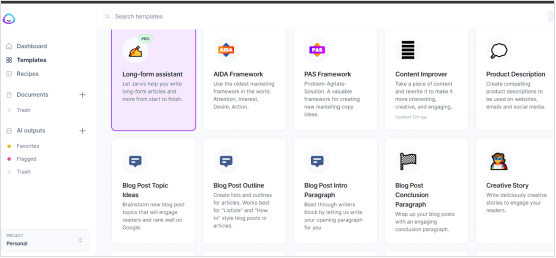
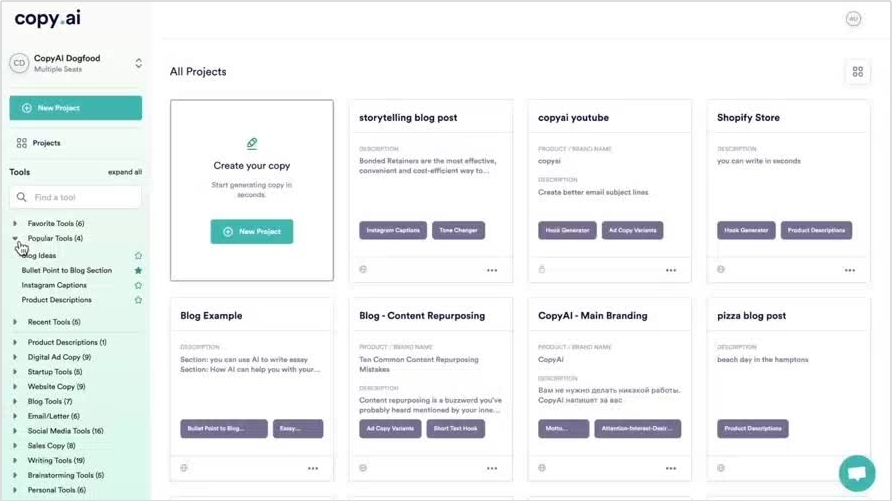
    5. Copy.AI

    Copy.AI

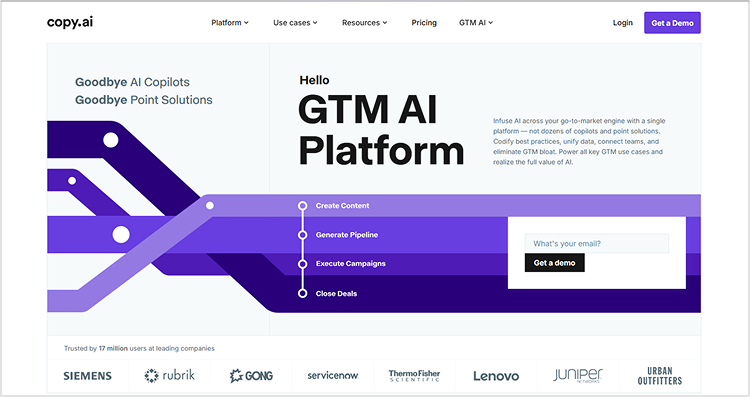
    Copy.ai is an AI-powered writing tool designed to help marketers, entrepreneurs, and content creators generate engaging copy in seconds. It offers a wide range of templates for social media captions, blog ideas, product descriptions, email copy, and more, making it a versatile option for both short-form and long-form content needs.

    Copy.ai is particularly useful for brainstorming ideas, overcoming writer’s block, and generating drafts quickly without starting from scratch. 

    Key features:

    • Blog post wizard quickly generates full-length blog posts 
    • AI-Powered copy templates
    • Brand voice customization
    • Workflow automation
    • Multi-language support in 25+ languages

    Pros:

    • Fast content generation
    • Wide range of templates
    • Third-party integrations 

    Cons:

    • Limited long-form content control
    • Repetitive output
    • No built-in SEO optimization
    • Dependence on prompt quality

    Pricing:

    • Free
    • Starter: $49/month
    • Advanced:  $249/month

    6. Canva

    Canva

    Canva has evolved from a simple graphic design tool into a powerful AI-driven content creation platform. It’s best known for its user-friendly drag-and-drop interface that makes designing social media posts, presentations, marketing materials, and videos accessible to everyone — no design skills required.

    Key features:

    • Canva’s content planner
    • Brand kits
    • Magic Write (AI writing assistant)
    • Magic Design (instant design generation)
    • Magic Edit (AI-powered image editing)
    • Team collaboration

    Pros:

    • Combines visual design and AI writing in one tool
    • Extremely beginner-friendly with pre-made templates
    • Great for social media, marketing visuals, and quick content generation
    • Affordable pricing for individuals and small teams

    Cons:

    • Limited control over long-form content generation
    • AI writing features are basic compared to specialized tools
    • Some advanced features are locked behind paid plans
    • Not ideal for in-depth SEO-focused content creation
    • Requires manual input for brand voice customization

    Pricing:

    • Free
    • Canva Pro: $55/month
    • Canva Teams: $50/month
    • Enterprise: Custom pricing 

    7. InVideo

     InVideo

    InVideo is an AI-driven video creation platform designed to simplify the video production process for marketers, content creators, and businesses. It allows users to create high-quality videos quickly with minimal effort, even if they have no prior video editing experience. Whether you’re producing promotional videos, social media content, or explainer videos, InVideo offers a range of templates and tools to help you bring your vision to life.

    Key features:

    • Automatic scene generation
    • Text-to-video capabilities
    • Smart video editing
    • Extensive media library
    • Ready to use templates 
    • Voiceover and audio integration 

    Pros:

    • Easy-to-use interface
    • Time-saving AI tools that automate video creation tasks
    • Large selection of templates and stock media 
    • Affordable pricing, with both free and premium options

    Cons:

    • Limited advanced editing features 
    • AI-generated scripts and videos may lack creativity or nuance
    • Export quality is limited on free plans
    • May require additional manual editing to perfect the final video
    • Not as suitable for complex, high-budget video projects

    Pricing:

    • Free
    • Plus: $28/month
    • Max: $48/month
    • Generative: $96/month

    8. Murf

    Murf

    Murf is an advanced AI tool designed for creating realistic voiceovers, podcasts, and audio content without the need for professional voice actors or audio engineers. The platform uses AI to convert text into natural-sounding speech, making it perfect for a wide range of applications, from explainer videos and presentations to audiobooks and podcasts.

    Murf offers a collection of lifelike voices, which can be customized by adjusting pitch, tone, and speed, ensuring that the generated voiceover aligns with your brand and content style.

    Key features:

    • Text-to-speech conversion
    • Voice customization
    • Wide range of voices
    • Audio syncing
    • Real-time Collaboration
    • Supports multiple languages

    Pros:

    • High-quality, lifelike voiceovers
    • Easy-to-use interface suitable for beginners
    • Customizable voices to suit various content styles and tones
    • Reduces the need for professional voice actors
    • Supports a wide range of languages

    Cons:

    • Limited creative control
    • Voices may sound robotic or unnatural in certain contexts
    • Higher-tier plans are required for full access to premium features and voices
    • No video editing features
    • Output quality can vary depending on the clarity and complexity of the original text

    Pricing:

    • Creator: $19/month
    • Growth: $66/month
    • Business: $199/month
    • Enterprise: Custom

    9. Grammarly

    Grammarly

    Grammarly is one of the most popular AI writing tools, designed to help users write clear, mistake-free, and impactful content across multiple platforms.

    Beyond basic proofreading, Grammarly offers advanced features like tone detection, style suggestions, and clarity improvements, ensuring your writing matches your intent and audience. Its plagiarism checker is especially useful for content creators aiming to produce original content.

    Key features:

    • Real-time grammar, spelling, and punctuation checks
    • Tone and clarity suggestions 
    • Plagiarism checker 
    • AI-powered rewrite and improvement suggestions
    • Cross-platform compatibility (browser extension, desktop app, integrations)
    • Style guide and brand tone consistency tools for teams

    Pros:

    • Easy-to-use interface with real-time writing suggestions
    • Enhanced content clarity, engagement, and correctnes
    • Helpful tone detector and rewrite suggestions
    • Works across multiple tools and platforms
    • Useful plagiarism checker

    Cons:

    • Limited features in the free version
    • May over-correct or suggest unnecessary changes for creative writing
    • Plagiarism checker only available in premium plans
    • Not a content generation tool 
    • Requires internet access for real-time suggestions and checks

    Pricing:

    • Free
    • Premium: $12/month
    • Business: $15/month

    Which is the best AI tool for content creators?

    If you’re looking for the best AI tool for content creators, Contentpen stands out as the top choice. 

    Here’s why Contentpen leads the pack:

    • Specialized AI agents collaborate behind the scenes to generate strategic, brand-aligned content.
    • Deep brand voice integration ensures every piece of content sounds like you.
    • Built-in SEO optimization drives more organic visibility with zero manual effort.
    • Content workflows, pipelines, and publishing tools keep teams in sync and scale production easily.

    Whether you’re a solo creator or part of a growing team, Contentpen doesn’t just help you create content; it helps you create better, faster, and with intent.

    Final words

    AI tools have transformed the way content is created, helping marketers, creators, and businesses produce high-quality content faster and more efficiently than ever before. From generating blog posts and social media captions to designing visuals and optimizing for SEO, these AI-powered tools offer smart solutions for every stage of content creation.

    AI is not here to replace creativity; it’s here to enhance it. Let these tools handle the heavy lifting so you can focus on what matters most: crafting content that connects and converts.

    FAQs on best AI tools

    What are AI content creation tools?

    AI content creation tools use artificial intelligence to help generate, optimize, and edit different types of content like blog posts, social media captions, videos, and graphics with minimal manual effort.

    Are AI writing tools good for SEO?

    Yes, many AI writing tools come with built-in SEO optimization features such as keyword suggestions, content scoring, and optimization tips to help your content rank better on search engines.

    Can AI tools create visual content too?

    Absolutely! Tools like Canva and InVideo use AI to generate visuals, videos, social media graphics, and even automate design suggestions for faster content creation.

    Are AI content tools suitable for beginners?

    Most AI content creation tools are user-friendly and designed for beginners. They offer templates, guided workflows, and automation features to make the process easy, even for non-experts.

  • How to use AI to write blog posts efficiently in 2025

    How to use AI to write blog posts efficiently in 2025

    These days, almost everyone has access to AI tools or AI blog writers. But having AI at your fingertips doesn’t automatically make you a better writer.

    The real advantage comes from knowing how to use AI the right way – choosing the best tools, applying the right techniques, and blending AI’s efficiency with your unique voice.

    While AI can speed up the writing process, relying on it without a clear strategy often leads to content that feels generic or lacks personality.

    That’s why it’s essential to know which AI tools are best for blog writing, how to guide them with clear prompts, and when to refine the output to make it your own.

    Today, we’ll cover practical strategies to help you understand how to use AI to write blog posts- from selecting the right platform to using techniques that make your content engaging, authentic, and SEO-friendly. 

    Let’s dive in and see how you can create blog posts that capture attention and deliver value – without losing the personal touch that makes your writing unique.

    Key takeaways

    • Efficiency & scalability: AI significantly reduces the time and cost associated with blog post creation, allowing for increased content output.
    • Quality & consistency: With proper prompt engineering and human editing, AI can produce high-quality, consistent content that aligns with your brand voice.
    • SEO optimization: AI tools assist in keyword optimization, headline generation, and image optimization, enhancing your blog’s search engine visibility.
    • Content authenticity: While AI is a powerful tool, maintaining originality and authenticity requires human oversight, including fact-checking and personalization.
    • Strategic implementation: Successful AI blog writer tool involves a clear content strategy, effective prompt creation, and a thorough editing process.
    • Tool selection: Choosing the right AI tool is vital, Contentpen provides many features that assist greatly in the creation of AI blog posts.
    • Human touch is vital: AI is a tool, not a replacement. Human editing and brand voice implementation is critical.

    Why you need to use AI to write blog posts in 2025?

    The demand for fresh, engaging content is higher than ever. According to a 2023 report by HubSpot, businesses that publish 16+ blog posts per month generate 3.5x more traffic than those that publish fewer than four. However, creating this volume of content manually is time-consuming and expensive.

    AI writing assistants like Contentpen are designed to streamline the process, enabling you to produce high-quality blogs in a fraction of the time. By 2025, it’s estimated that most businesses will use AI tools for content creation, making it essential to adopt this technology now to stay competitive.

    The evolution of blog content creation

    Gone are the days when blog writing was solely a manual process. With advancements in natural language processing (NLP) and machine learning, AI tools can now generate coherent, engaging, and SEO-friendly content.

    For example, Contentpen uses cutting-edge AI to assist with everything from brainstorming ideas to crafting full-length articles. This evolution has not only made content creation faster but also more accessible to non-writers.

    Time and cost analysis: Traditional vs. AI-assisted writing

    Creating blog posts can be both time-consuming and costly, especially when relying on traditional methods. With AI-assisted tools like Contentpen, businesses can streamline the writing process without sacrificing quality. Here’s a quick comparison:

    AspectTraditional writingAI-assisted writing
    Time per blog postApproximately 4-6 hours. A study by MIT researchers found that professionals using traditional methods took longer to complete writing tasks. SourceApproximately 1-2 hours. The same MIT study reported that participants using AI tools completed tasks 40% faster.
    Source
    Cost per post (freelance)$500 – $5,000. According to a Deloitte report, the average cost for producing a single piece of high-quality content using traditional methods can range significantly based on complexity and requirements. SourceUp to 60% reduction in costs. A 2021 report by Market Research Future estimates that businesses utilizing AI for content creation can reduce costs by up to 60%. Source
    ConsistencyVaries by the writer. Traditional methods rely heavily on individual writer’s style and consistency.High consistency with proper prompts. AI tools can maintain a consistent tone and style across content pieces when guided effectively.
    ScalabilityLimited scalability due to human resource constraints.Highly scalable. AI tools can generate large volumes of content quickly, facilitating rapid scaling.

    These findings suggest that AI-assisted writing tools can significantly enhance productivity and reduce costs while maintaining or improving content quality.

    On the other hand, AI-assisted writing speeds up the process, reducing the time needed to produce an AI blog post to just 1-2 hours. With tools like Contentpen, the cost per post also drops significantly, making it a cost-effective solution for businesses looking to scale their content production.

    Plus, with the right prompts, AI can maintain a consistent tone and style across all your content, ensuring a cohesive brand voice.

    08 essential steps to write blog posts with AI

    Writing blog posts with AI involves a series of essential steps to ensure the content is engaging, SEO-friendly, and aligned with your brand voice.

    AI-assisted blogs can save time, reduce costs, and improve productivity while maintaining high quality. The following steps outline how to effectively leverage AI tools like Contentpen for blog writing.

    Steps to use AI to write blog posts

    1. Select the right AI tool

    Choosing the right AI writing tool is essential for creating high-quality content that meets your goals. Look for a platform that offers robust features such as SEO optimization, tone customization and versatile content generation such as Contentpen.

    Contentpen is a great choice, known for its user-friendly interface, advanced AI capabilities, and ability to produce engaging, well-structured content quickly.

    It integrates seamlessly with your workflow, supports collaboration if needed, and enhances productivity by automating time-consuming writing tasks.

    2. Conduct research and prepare key details

    Thorough research is crucial for creating relevant and engaging content. Start by identifying your target audience and understanding their preferences, pain points, and interests. Gather essential keywords to optimize your content for search engines and align with your SEO strategy.

    Clearly define your content objectives – whether it’s to inform, persuade, or drive conversions – to ensure the AI generates content that meets your goals.

    Outline the main points, structure, and tone of your blog post to provide the AI with a clear framework. This includes defining the introduction, key sections, and conclusion to maintain coherence and readability.

    3. Craft clear and detailed AI prompts

    The quality of AI-generated content depends on the prompts you provide. Be specific and include key details such as:

    • Target audience: Define who the content is for.
    • Tone and style: Specify if the tone should be professional, conversational, or playful.
    • Main points: Highlight essential topics to cover.

    For example, instead of saying, “Write a blog about AI,” use a detailed prompt like:
    “Write a 1,000-word blog post for small business owners on how AI can improve productivity. Focus on cost-effective tools like Contentpen, with practical examples and tips.”

    4. Edit and refine AI-generated content

    While AI-generated drafts provide a solid foundation, refining them ensures your content resonates with your audience and aligns with your brand identity. Use Contentpen’s editing features to enhance and personalize the content:

    • Adjust tone and style: Tailor the language, tone, and style to match your brand’s voice, whether it’s professional, conversational, or authoritative.
    • Add personalization and examples: Strengthen engagement by incorporating personal anecdotes, real-life case studies, or industry-specific examples that showcase expertise and credibility.
    • Ensure accuracy and credibility: Verify facts, statistics, and references to maintain reliability and build trust with your readers.

    This combination of AI efficiency and human creativity results in high-quality content that is both engaging and authentic.

    5. Optimize keywords naturally

    Effective keyword integration is crucial for both search engine visibility and reader engagement. AI tools like Contentpen analyze your content to identify keywords that align with user intent and search engine algorithms.

    Unlike traditional manual research, AI ensures that keywords are seamlessly woven into your text without overstuffing – enhancing readability while improving search rankings.

    For example, if your blog focuses on “AI productivity tools,” You can provide Contentpen related long-tail keywords such as “affordable AI tools for small businesses” or “boost productivity with AI automation.” This strategic use of keywords not only attracts search traffic but also ensures your content remains natural, engaging, and valuable to readers.

    automated keywords with Contentpen

    6. Write click-worthy headlines and meta descriptions

    Headlines and meta descriptions are essential for attracting clicks from search results, so they must be both compelling and clear. AI tools can generate multiple headline variations, allowing you to choose the most attention-grabbing option while ensuring it aligns with your content’s purpose.

    For example, if you’re writing about “AI productivity tools,” AI might suggest headlines like “Boost Your Productivity with AI Tools: Top Picks for 2024” and meta descriptions like “Discover the best AI productivity tools to streamline your workflow, save time, and boost efficiency for your business.” This combination enhances both search visibility and user engagement.

    7. Optimize images for SEO and speed

    Visual elements not only enhance user engagement but also play a vital role in SEO. AI tools like Contentpen help optimize your images by:

    • Generating descriptive alt text: AI suggests alt text that accurately describes your images, improving accessibility and making your visuals more discoverable in search engine image results. For example, instead of “AI tool screenshot,” AI might recommend “Dashboard of AI productivity tool showcasing automated task management.”
    customer journey

    By combining engaging visuals with optimized SEO practices, you can boost both user engagement and search engine performance.

    8. Build a strong internal linking structure

    Internal linking is essential for both SEO and user engagement. It helps search engines crawl your site more efficiently while encouraging readers to explore related content. AI tools like Contentpen can scan your content and automatically add relevant internal links that align with your topic and keywords.

    For example, if you’re writing about “AI content creation,” AI might recommend linking to posts such as “AI productivity hacks” or “Choosing the Right AI Writing Tool.”

    By strategically linking to blog posts, landing pages, or product pages, you not only improve your site’s SEO performance but also guide readers through your content ecosystem, increasing time spent on your website.

    Transform your content creation with Contentpen

    Creating high-quality content consistently can be challenging, but Contentpen makes the process faster and more efficient. Whether you’re drafting blog posts, social media captions, or website copy, this AI-powered tool streamlines your workflow, saving you time while maintaining quality.

    How Contentpen streamlines the writing process

    From brainstorming ideas to hitting publish, Contentpen simplifies every step of content creation. Its intuitive interface is easy to navigate, making it perfect for beginners, while its advanced features cater to the needs of seasoned writers. With AI-driven suggestions and real-time feedback, you can focus more on creativity and less on tedious tasks.

    Smart features that set Contentpen apart

    Contentpen offers a suite of powerful features designed to elevate your writing:

    • AI article generation: Quickly create SEO-optimized articles using AI. Simply provide a primary keyword, topic, and choose from preset templates to generate engaging content.
    • Bulk article generation: Save time by generating multiple articles at once. Add multiple rows with different keywords and topics, then generate them in a single click.
    generate article with AI
    • Internal & external link suggestions: Automatically add relevant internal and external links to improve both SEO and user experience.
    • Image generation with alt text: Generate and insert images complete with alt texts, enhancing both visual appeal and accessibility.
    • Feature image addition: Automatically add feature images to make your content visually engaging from the start.
    • Brand voice customization: Ensure consistency in your content by aligning with your brand’s unique tone of voice. Adjust the writing style to match your desired formal, conversational, or playful tone.
    Brand voice customization:
    • Content presets: Choose from various presets to generate content tailored to specific needs, ensuring each article fits the intended purpose and platform.
    • Knowledge base integration: Incorporate information from your knowledge base to generate accurate and contextually relevant content.
    • Planner: Stay organized with a built-in content planner that helps you schedule and manage your content pipeline efficiently.
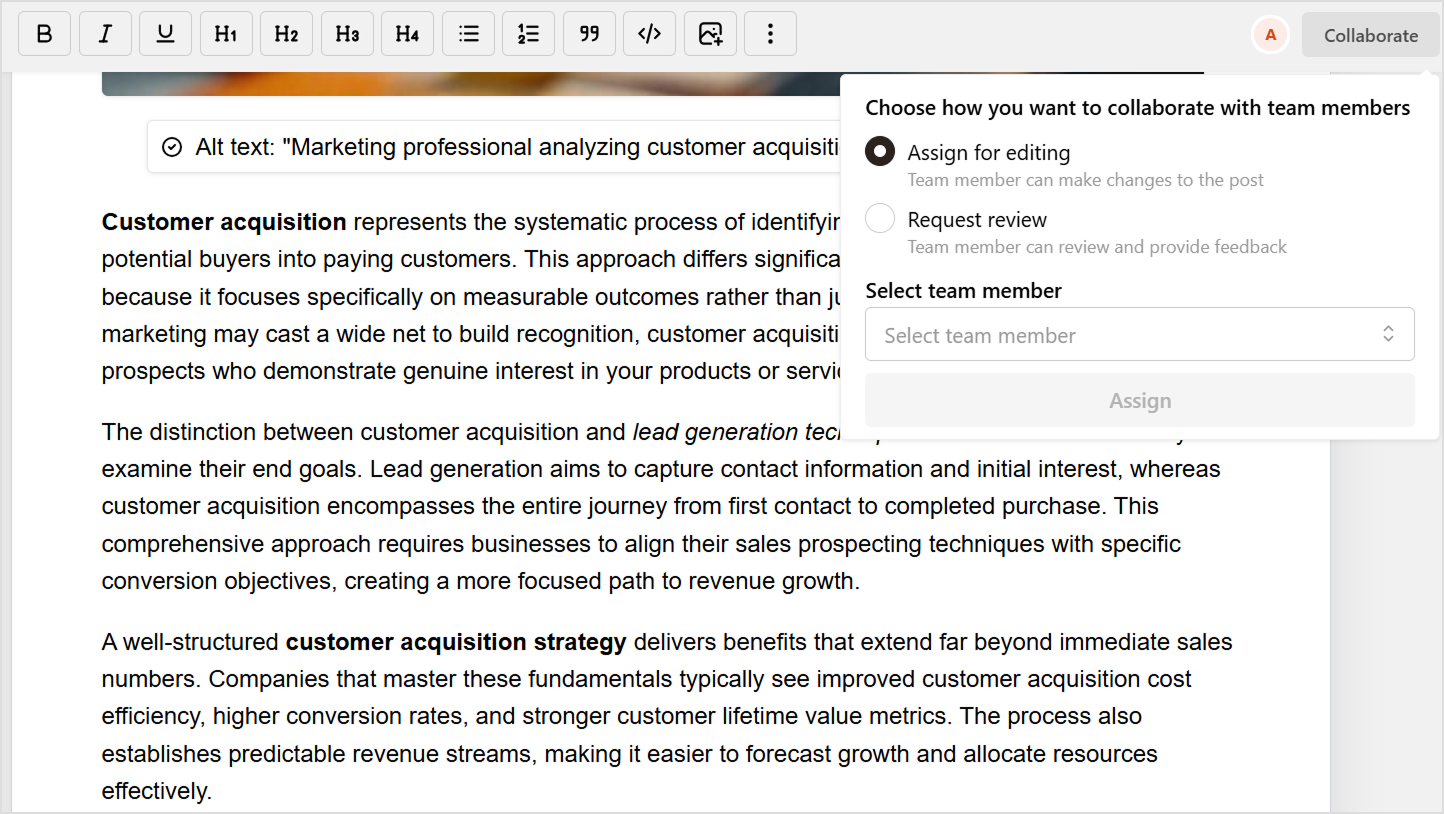
    • Collaboration tools: Easily collaborate with team members by inviting them to the platform, streamlining the review and editing process.
    • “Ask AI” feature: Add AI-generated prompts directly within your draft, allowing quick additions or modifications wherever needed.

    Additionally, Contentpen includes SEO optimization features such as:

    • SEO score tracking: Monitor your content’s SEO score with a visual grade indicator to ensure it’s optimized for search engines.
    • Keyword optimization: Ensure primary and secondary keywords are used effectively.
    • Meta details optimization: Optimize meta titles and descriptions to improve search visibility.
    • Technical SEO factors: Ensure your content meets technical SEO best practices.
    • User engagement elements: Enhance the user experience by adding engaging elements like CTAs, interactive content, and visuals.
    SEO score tracking

    Starting with Contentpen is quick and straightforward:

    1. Select the Generate Article with AI template.
    2. Enter your primary keyword and topic.
    3. Choose a preset that suits your content style.
    4. Click Generate Articles and let AI do the work.

    Within seconds, you’ll have a draft ready for review. Enhance it with internal and external links, adjust the tone to match your brand voice, and add media assets for a polished, professional post.

    Easily share your draft with your team by adding members to collaborate in real-time. Whether you need a single blog or multiple articles in bulk, Contentpen helps you deliver engaging content with ease.

    Quality assurance for AI-written content

    Ensuring the quality of AI-generated content is crucial for maintaining credibility, readability, and engagement. While AI tools can streamline the writing process, human oversight is essential to ensure accuracy, originality, and alignment with your brand voice. Let’s explore key techniques to maintain high-quality content.

    Quality assurance for AI-written content

    Ensuring authenticity and compliance

    • Use AI detection tools like Originality.ai to verify content doesn’t appear automated
    • Incorporate unique insights and personal examples to enhance readability
    • Maintain a natural flow with diverse sentence structures

    Refining content with human expertise

    • Verify facts and statistics for accuracy
    • Simplify complex sentences and remove jargon
    • Add personality with unique voice and conversational elements
    • Integrate keywords naturally for SEO integrity

    Maintaining consistency

    • Use tools like Google Docs or Notion to organize and label drafts
    • Document major edits and feedback
    • Analyze engagement metrics to refine future content

    Content authenticity checklist

    1. Fact-check all information using reliable sources
    2. Ensure originality with plagiarism checkers (Grammarly, Copyscape)
    3. Add unique insights and personal experiences to differentiate your content

    Common mistakes to avoid

    • Over-relying on AI without human refinement
    • Using vague prompts instead of specific, detailed ones
    • Neglecting to add personal judgment and creativity

    By combining AI efficiency with human creativity, you’ll create content that’s both engaging and credible.

    Conclusion

    Using AI to write blog posts is no longer a futuristic concept – it’s a game-changing reality that’s transforming content creation. By integrating tools like Contentpen into your workflow, you can streamline the writing process, reduce costs, and consistently produce high-quality, SEO-optimized content that resonates with your audience.

    Ready to elevate your blogging experience? Sign up for Contentpen today and experience the future of content creation!

    FAQs on AI blog writing

    What is AI blog writing, and how does it work?

    AI blog writing uses machine learning algorithms to generate content based on user inputs. Tools like Contentpen analyze prompts and produce coherent, engaging articles.

    How much does it cost to write blog posts with AI?

    Costs vary, but AI tools like Contentpen are significantly more affordable than hiring freelance writers.

    Will AI replace human writers completely?

    No, AI is a tool to assist writers, not replace them. Human creativity and oversight remain essential.

    Can search engines detect AI-written content?

    Search engines focus on content quality, not its origin. Ensure your content is valuable and well-optimized.

    How long does it take to write a blog post with AI?

    With tools like Contentpen, you can create a blog post in 1-2 hours, including editing.

    Do I need writing experience to use AI writing tools?

    No, AI tools are designed to be user-friendly for both beginners and experts.

    How does Contentpen help in creating better blog posts?

    Contentpen offers SEO optimization, tone customization, and smart editing features to enhance content quality.

    What types of blog posts can I create with AI?

    You can create a wide range of content, including how-to guides, listicles, case studies, and more.

  • How to avoid AI detection in writing: Guide to humanizing AI content

    How to avoid AI detection in writing: Guide to humanizing AI content

    AI-generated content is everywhere now—blog posts, essays, marketing copy, social media captions, product descriptions, and even professional reports.

    Tools like ChatGPT and Jasper make writing easier, but they also come with a challenge: AI detection systems are getting smarter.

    If you’re a writer, student, or professional, knowing how to avoid AI detection in writing is key to keeping your work authentic.

    The good news? You can humanize AI-generated content with the right techniques, making it sound natural and uniquely yours.

    This guide will show you exactly how to tweak AI-written text so it feels like something only a human could create. Let’s dive in!

    What is AI detection?

    AI detection is the process of identifying whether a piece of content – text, images, audio, or video – has been created by artificial intelligence instead of a human.

    At its core, AI detection works by comparing a given piece of content against known human-created content and identifying inconsistencies.

    These inconsistencies arise because AI models generate text using probability-based predictions rather than organic thought processes.

    As a result, AI-generated content often exhibits patterns that are more structured, repetitive, and predictable compared to human writing.

    AI detection is widely used in various fields, including:

    • Academia – To detect AI-assisted assignments and prevent academic dishonesty.
    • Publishing & journalism – To ensure articles are written by humans and maintain editorial integrity.
    • Marketing & SEO – To assess content originality and authenticity for search engines and readers.
    • Legal & compliance – To verify authorship and ensure transparency in official documents.

    How does AI detection work?

    AI detection algorithms examine multiple characteristics of a text to determine whether it was likely generated by an AI. These include:

    CharacteristicsDescription
    Statistical analysisAI-generated text often follows predictable structures and word choices, distinguishing it from human writing.
    Perplexity & burstinessHuman writing has natural variations in sentence length and complexity, whereas AI text is more uniform and structured.
    Linguistic cuesAI-generated content lacks emotional depth, inconsistencies, and contextual adaptability, common in human writing.
    Metadata & hidden markersSome AI-generated text includes invisible markers or metadata that indicate AI authorship, making detection easier.

    By analyzing these elements, AI detection models can identify AI-generated content with increasing accuracy.

    Strategies to avoid AI detection in writing

    To effectively avoid AI detection, it’s important to understand how AI-generated content is identified. AI detection tools analyze patterns, sentence structures, and predictability in writing. 

    Strategies to avoid AI detection in writing

    1. Humanize the text

    One of the most effective ways to avoid AI detection is to humanize the text. This involves making the content sound more natural and less robotic. Here are some tips to achieve this:

    • Vary sentence structure: AI-generated content often has a uniform sentence structure. Mix short and long sentences to create a more natural flow. This mimics human writing patterns and reduces predictability.
    • Use idioms and colloquialisms: Incorporate idiomatic expressions and colloquial language that are less likely to be used by AI. Phrases like “a blessing in disguise” or “hit the nail on the head” add a conversational tone.
    • Add personal anecdotes: Including personal stories or experiences can make the content feel more authentic and human. A brief personal insight or a relatable scenario enhances engagement.
    • Use active voice: AI-generated content often relies on passive voice. Switching to active voice can make the text more engaging and human-like. For example, “The team completed the project” sounds more natural than “The project was completed by the team.”
    • Introduce emotion: Adding emotional elements such as humor, excitement, or empathy makes the content feel more personal and human-written.

    2. Edit and revise

    Editing is crucial when it comes to avoiding AI detection. Even the best AI-generated content can benefit from a human touch. Here’s how to edit effectively:

    • Rephrase sentences: Rewrite sentences to make them less predictable and more unique. Avoid formulaic structures that AI tends to follow.
    • Add nuance: Introduce subtle nuances and variations in tone that are difficult for AI to replicate. This could include rhetorical questions or varied pacing in writing.
    • Check for consistency: Ensure that the content is consistent in style and tone throughout. Inconsistencies can be a red flag for AI detection tools.
    • Read aloud: Reading the content aloud can help identify unnatural phrasing and robotic patterns.
    • Use a second pair of eyes: Having someone else review the content can help pinpoint areas that sound overly mechanical or structured.

    3. Use AI writing tools wisely

    While AI writing tools are incredibly useful, they should be used as a starting point rather than the final product. Here’s how to use them wisely:

    • Combine multiple tools: Different AI writing tools are used to generate content, and then the outputs are blended to create a more diverse and less detectable text.
    • Customize outputs: Most AI tools allow you to customize the output by adjusting parameters like tone, style, and complexity. Experiment with these settings to produce more human-like content.
    • Avoid over-reliance: Don’t rely solely on AI-generated content. Use it as a foundation and build upon it with your own insights and creativity.
    • Infuse unique perspectives: AI-generated content often lacks originality. Adding fresh viewpoints, unique examples, and personal insights can enhance authenticity.

    4. Incorporate human elements

    Adding human elements to your content can significantly reduce the chances of it being flagged as AI-generated.

    Here’s how to do it:

    • Include opinions and perspectives: Share your own opinions, perspectives, and insights to make the content more personal and less generic.
    • Use real-world examples: Incorporate real-world examples and case studies that are relevant to the topic. This adds depth and authenticity to the content.
    • Engage with the audience: Write in a conversational tone and engage with the reader by asking questions or encouraging them to think critically.
    • Break the rules occasionally: AI tends to follow strict grammatical rules. Humans, on the other hand, sometimes break grammar conventions for emphasis or effect, making writing feel more natural.

    5. Leverage paraphrasing tools

    Paraphrasing tools can be a valuable asset in avoiding AI detection. These tools can help you rephrase AI-generated content to make it less detectable.

    Here’s how to use them effectively:

    • Choose the right tool: Select a paraphrasing tool that offers advanced options for rephrasing, such as changing sentence structure and word choice.
    • Rephrase strategically: Focus on rephrasing key sections of the content, especially those that are more likely to be flagged by AI detection tools.
    • Review the output: Always review the paraphrased content to ensure it maintains the original meaning and flows naturally.
    • Manually adjust where needed: Automated paraphrasing may sometimes produce awkward phrasing. Tweaking the output manually enhances readability.

    6. Use plagiarism checkers

    Plagiarism checkers can help you identify and eliminate any content that may be flagged as AI-generated.

    Here’s how to use them:

    • Run a plagiarism check: Use a plagiarism checker to scan your content for any similarities with existing AI-generated text.
    • Make necessary adjustments: If the plagiarism checker flags any content, make the necessary adjustments to ensure it’s unique and original.
    • Cross-check with AI detection tools: After making adjustments, cross-check the content with AI detection tools to ensure it’s no longer detectable.
    • Rewrite high-risk sections: AI-generated content often appears similar across different pieces. Identifying and reworking these sections enhances uniqueness.

    7. Focus on quality and depth

    High-quality, in-depth content is less likely to be flagged as AI-generated.

    Here’s how to achieve this:

    • Research thoroughly: Conduct thorough research on the topic to ensure your content is accurate and well-informed.
    • Provide detailed insights: Offer detailed insights, analysis, and explanations that go beyond surface-level information.
    • Use credible sources: Cite credible sources and references to add authority and credibility to your content.
    • Avoid generic content: AI-generated text often lacks depth. Adding substantial analysis and expert opinions improves authenticity.

    8. Experiment with different writing styles

    Experimenting with different writing styles can help you create content that is less predictable and more human-like.

    Here’s how to do it:

    • Try different tones: Experiment with different tones, such as formal, informal, persuasive, or informative, to see which one works best for your content.
    • Mix writing styles: Combine different writing styles, such as narrative, descriptive, and expository, to create a more diverse and engaging piece.
    • Adapt to the audience: Tailor your writing style to the target audience, taking into account their preferences, interests, and level of expertise.
    • Switch perspectives: Writing in first-person, second-person, or third-person voice can create variation and make the content less robotic.

    9. Use AI detection tools to your advantage

    Ironically, AI detection tools can be used to your advantage when trying to avoid AI detection.

    Here’s how:

    • Test your content: Run your content through AI detection tools to see if it gets flagged. Use the feedback to make necessary adjustments.
    • Analyze the results: Analyze the results from the AI detection tools to identify patterns or characteristics that may be giving away the AI-generated nature of your content.
    • Iterate and improve: Continuously iterate and improve your content based on the feedback from AI detection tools until it passes as human-written.
    • Identify common AI pitfalls: Understanding what triggers AI detection helps refine content accordingly.

    10. Stay updated on AI detection trends

    AI detection technology is constantly evolving, so it’s essential to stay updated on the latest trends and developments.

    Here’s how:

    • Follow industry news: Keep an eye on industry news and updates related to AI detection technology.
    • Join online communities: Join online communities and forums where professionals discuss AI detection and share tips and strategies.
    • Experiment with new tools: Experiment with new AI writing and detection tools to stay ahead of the curve and adapt your strategies accordingly.
    • Monitor detection algorithms: Understanding how AI detection tools evolve can help you refine your approach continuously.

    By implementing these strategies, you can create content that appears more organic, engaging, and human-like. Avoiding AI detection isn’t just about tricking algorithms; it’s about producing high-quality, authentic writing that resonates with readers.

    As AI detection tools evolve, staying adaptable and refining your approach will help maintain the natural flow and originality of your content.

    Ethical considerations in AI-generated content

    While knowing how to avoid AI detection is useful, it’s equally important to consider the ethical implications of AI-generated content.

    Misuse can lead to trust issues, legal concerns, and reputational damage. Here are key ethical considerations to keep in mind:

    Ethical considerations in AI-generated content

    1. Transparency: Disclose AI usage

    Being transparent about AI-generated content helps maintain trust with your audience. If AI is used to assist in content creation, consider disclosing it. For example:

    • Ethical approach: “This article was created with AI assistance and edited by a human for accuracy.”
    • Unethical approach: Passing off AI-generated content as entirely human-written without any modifications.

    2. Originality: Avoid plagiarism

    AI tools should be used to enhance creativity, not replace it. Always ensure your content is original and not copied from other sources. Ways to maintain originality include:

    • Paraphrasing thoughtfully: Instead of copy-pasting AI outputs, rewrite them in your own words.
    • Adding unique insights: Infuse personal experiences, opinions, or industry-specific expertise.
    • Using plagiarism checkers: Tools like Copyscape or Grammarly can help ensure content remains unique.

    3. Quality: Prioritize value over automation

    AI-generated content should not compromise quality. Instead of mass-producing low-quality articles, focus on creating high-value content that benefits the reader. Consider:

    • Fact-checking AI outputs: Verify AI-generated data to prevent misinformation.
    • Enhancing readability: Edit AI-generated text to improve clarity and engagement.
    • Avoiding keyword stuffing: AI may overuse keywords for SEO, but natural integration improves readability and ranking.

    4. Compliance: Follow legal and ethical guidelines

    AI content should align with ethical and legal standards to prevent misleading or deceptive practices. Ensure:

    • Adherence to regulations: Content should comply with copyright laws and data privacy regulations like GDPR.
    • Avoiding manipulation: AI should not be used to create false narratives, deepfakes, or misleading product claims.
    • Respect for cultural sensitivities: AI might lack cultural awareness, so reviewing content for appropriateness is crucial.

    By considering these ethical guidelines, you can use AI content writer responsibly while maintaining credibility and trust with your audience.

    Conclusion

    As AI technology continues to evolve, staying updated on the latest trends and developments is crucial. By following the strategies outlined in this guide and considering the ethical implications, you can create high-quality, undetectable content that resonates with your audience and stands the test of time.

    Remember, the goal is not to deceive but to enhance your writing with the help of AI while maintaining authenticity and originality. With the right approach, you can harness the power of AI to create compelling, human-like content that avoids detection and delivers value to your readers.

    FAQs on AI-generated content

    How can I make AI-generated content more original?

    To make AI-generated content more original:
    – Add your own insights, opinions, and expertise.
    – Conduct additional research to include unique data or examples.
    – Blend content from multiple AI tools to create a diverse output.
    – Use plagiarism checkers to ensure the content is unique.

    How can I stay updated on AI detection trends?

    To stay updated on AI detection trends:
    – Follow industry blogs and news outlets covering AI and content creation.
    – Join online communities or forums focused on AI writing tools and detection.
    – Experiment with new AI writing and detection tools as they are released.
    – Attend webinars or conferences on AI and content creation.

    Is it ethical to use AI-generated content without disclosure?

    The ethics of using AI-generated content depends on the context. In most cases, it’s best to be transparent about using AI tools, especially in academic or professional settings. However, using AI as a tool (without misrepresentation) is generally acceptable if the goal is to enhance creativity and productivity.

    Can AI-generated content rank well on search engines?

    Yes, AI-generated content can rank well on search engines if it is high-quality, original, and optimized for SEO. However, search engines like Google prioritize content that demonstrates expertise, authoritativeness, and trustworthiness (E-A-T), so human input is often necessary to achieve these qualities.

    What should I do if my content is flagged as AI-generated?

    If your content is flagged as AI-generated:
    – Review the flagged sections and rephrase them to sound more human-like.
    – Add personal insights, examples, or anecdotes to enhance authenticity.
    – Test the revised content using AI detection tools to ensure it passes.

  • How to use AI for content creation?

    How to use AI for content creation?

    AI-powered content creation is changing the way businesses, marketers, and writers produce high-quality content.

    By automating research, structuring, and optimization, AI-driven content creation tools help streamline the writing process while maintaining relevance and engagement.

    This guide will walk you through how to use AI for content creation, covering essential steps, best practices, and optimization techniques.

    How does AI work for content creation?

    Content creation has traditionally been a manual process requiring extensive research, writing, and editing. However, AI has transformed this landscape by automating content generation, from ideation to final drafts. By leveraging advanced algorithms, AI-powered content creation tools can analyze vast amounts of data, understand context, and generate human-like text efficiently.

    How AI analyzes data, understands context, and generates text?

    At its core, AI for content creation relies on natural language processing (NLP) and machine learning to interpret text patterns and produce coherent content. These systems are trained on extensive datasets, enabling them to:

    • Extract relevant information by scanning sources such as articles, reports, and search trends.
    • Understand language structure and intent to create contextually accurate responses.
    • Generate well-structured content that aligns with the tone and style required for different formats.

    AI-powered content creation tools can analyze input prompts to produce original text that mimics human writing while maintaining clarity and relevance.

    The role of AI-powered content creation in automating writing

    One of the biggest advantages of AI-powered content creation is its ability to streamline writing tasks. AI can assist with:

    • Generating blog posts and articles based on specific topics and keywords.
    • Rewriting existing content to improve readability and engagement.
    • Enhancing consistency in tone and messaging across multiple platforms.

    This automation reduces the time and effort needed to create high-quality content, allowing marketers and businesses to scale their content strategies more efficiently. Modern AI blog writer goes beyond simple text generation.

    Platforms like Contentpen AI integrate AI-driven capabilities to:

    • Assist with SEO optimization by suggesting relevant keywords and readability improvements.
    • Improve writing quality through grammar and style enhancements.
    • Enable bulk content production without sacrificing consistency or engagement.

    By incorporating AI content creation software into their workflows, content creators can produce high-performing content faster while maintaining accuracy and relevance.

    How to use AI for content ideation and research?

    Finding relevant content topics is one of the biggest challenges in content marketing. Traditional brainstorming often leads to repetitive ideas, missed opportunities, or content that doesn’t align with audience search intent.

    AI content creation tools solve this problem by analyzing vast amounts of data, identifying trending topics, and suggesting content ideas that are optimized for SEO and engagement.

    Businesses can streamline ideation, improve research efficiency, and develop content that resonates with their audience by using AI content creation software. 

    Content ideas strategies

    Here’s how to leverage AI for better content ideation and research.

    1. Analyze trends using AI content creation software

    Before selecting a topic, it’s essential to validate demand by analyzing real-time trends and audience interests. AI content creation software scans search engines, social media, and competitor content to uncover topics with high engagement potential.

    • Identifies emerging trends by analyzing recent search behavior.
    • Tracks competitor performance to detect content gaps.
    • Monitors audience engagement to align content with what users care about.

    Instead of relying on intuition, AI ensures every topic is backed by data, making content more relevant and impactful.

    2. Generate high-impact topic ideas with AI

    Once AI identifies trending topics, it generates content ideas that align with search intent and audience demand. This prevents businesses from creating outdated or low-performing content.

    • Creates SEO-driven content topics based on keyword and search trend analysis.
    • Structure topic ideas into detailed outlines for easier content creation.
    • Suggests multiple content angles to differentiate from existing articles.

    For example, instead of “AI content creation tools”, AI might suggest:

    • “Best AI content creation tools for businesses in 2024”
    • “How AI content creation software can improve content marketing results”

    These AI-generated ideas ensure your content stands out and addresses specific audience needs.
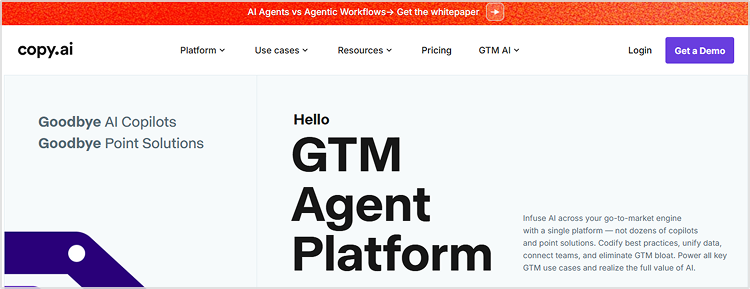
    3. Refine and personalize topics using an AI writer

    Not all content topics are one-size-fits-all. An AI writer helps refine topic ideas by adjusting them based on audience preferences, content formats, and engagement goals.

    • Optimizes headlines for higher engagement and SEO rankings.
    • Recommends content formats (guides, comparisons, or listicles) based on user intent.
    • Align tone and structure to match your brand voice and target audience.

    For example, if AI suggests “AI writing tools”, an AI writer can refine it into:

    • “Top 5 AI writing tools to streamline your content workflow” (List format)
    • “How AI writing tools can help marketers improve content quality” (Educational tone)

    This ensures content ideas are structured for maximum impact and user engagement.

    4. Use AI-driven keyword research to validate topic potential

    A great topic isn’t enough—it must be backed by strong keyword research to ensure high search visibility. AI-driven keyword research helps businesses target the right audience with minimal competition.

    • Identifies high-volume, low-competition keywords to improve rankings.
    • Analyzes search intent to match content with what users are looking for.
    • Uncovers long-tail keyword opportunities to reach niche audiences.

    For example, instead of “AI content creation tools”, AI might suggest:

    • “Best AI content creation tools for small businesses” (Less competitive)
    • “AI content writing tools that improve SEO rankings” (High-intent, targeted search query)

    How to create high-quality content using Contentpen’s AI writer?

    Creating high-quality content efficiently requires a structured approach. Contentpen’s AI-powered writing tools help you generate, refine, and optimize content that is SEO-friendly, engaging, and aligned with your brand’s voice. Whether you’re writing blog posts, articles, or marketing content, this step-by-step guide will show you how to use Contentpen to streamline your content creation process.

    Step 1: Define your topic and keywords

    The foundation of any great piece of content starts with a well-defined topic and the right keywords. Contentpen helps streamline this process by allowing you to:

    • Enter a primary keyword to establish the main focus of your content.
    • Add secondary keywords to ensure broader coverage and context.
    • Use saved presets to maintain a consistent format and structure.

    By providing clear input, you ensure that AI generates content that is relevant, targeted, and optimized for search rankings.

    Contentpen-Set your keywords

    Step 2: Customize tone and writing style

    Your content should align with your brand voice and audience expectations. Contentpen allows you to:

    • Select a tone of voice (e.g., professional, conversational, authoritative).
    • Define your target audience (marketers, business owners, developers, etc.).
    • Choose the point of view (first-person, second-person, or third-person).

    These settings guide the AI writer, ensuring the output is tailored for your audience and engages them in the right way.

    Contentpen- Set your brand voice

    Step 3: Set formatting preferences for better readability

    Well-structured content improves readability and engagement. Contentpen gives you control over how your content is presented by allowing you to:

    • Bold key phrases to highlight important points.
    • Italicize text for emphasis or stylistic preference.
    • Use tables for structured data and clear comparisons.
    • Include quotes for expert insights and authoritative references.
    • Organize content with bullet points and numbered lists.
    • Set heading styles to ensure consistency across your content.

    With these customization options, your AI-generated content will not only be informative but also visually appealing and easy to scan.

    Contentpen- Formatting

    Step 4: Generate content with structured sections and media

    Before finalizing content creation, Contentpen allows you to enhance your article’s structure and visual appeal. You can:

    • Define the article length (short, medium, or long-form).
    • Add extra sections such as key takeaways, FAQs, and conclusions.
    Contentpen -AI structure
    • Select a featured image that aligns with your article.
    • Choose in-article images with different styles (realistic, abstract, cartoon).
    Contentpen- AI images

    By incorporating well-structured sections and visuals, your content becomes more engaging, informative, and easy to digest.

    Step 5: Automate internal and external linking

    Effective linking improves SEO, content navigation, and authority, making it a crucial step in AI-powered content creation. Contentpen simplifies this by offering both internal linking suggestions and external linking automation to enhance the content structure and discoverability.

    Internal linking for better content navigation

    Adding relevant internal links helps connect different pieces of content, improving user experience and SEO. Contentpen allows users to:

    • Find and add a sitemap to ensure seamless internal linking.
    • Automatically detect related content to strengthen topic clusters.
    • Improve content engagement by guiding readers to relevant pages.

    External linking for authority and credibility

    Quality outbound links enhance content depth and credibility. Contentpen’s AI ensures:

    • Relevant, high-quality external links are suggested based on niche and language preferences.
    • Competitor pages are excluded, keeping your strategy focused on growth.
    • SEO benefits are maximized by linking to authoritative sources without keyword dilution.

    By leveraging AI-driven internal and external linking, businesses can enhance content visibility, engagement, and search rankings while keeping content strategy streamlined and effective.

    Contentpen Internal linking

    Step 6: Click ‘Create’ to generate your article

    Once all preferences are set, click the “Create” button, and Contentpen’s AI content creation software will generate a fully structured article within seconds.

    During this process, the AI:

    • Develops content based on your selected keywords and tone.
    • Structure headings, subheadings, and paragraphs logically.
    • Applies formatting, readability, and SEO best practices.

    In just a few moments, you’ll have a fully written draft, significantly reducing the time and effort spent on manual writing.

    Step 7: Review, refine, and optimize your article

    AI-generated content provides a strong foundation, but the final touch ensures it meets quality, accuracy, and engagement standards. Contentpen offers advanced editing and collaboration features so you can:

    • Manually refine sections for improved clarity and flow.
    • Regenerate specific sections by giving AI new prompts inside the article.
    • Find internal linking opportunities to connect related content.
    • Discover external linking suggestions to add authoritative references.
    • Use comments and collaboration tools to work with your team on final edits.

    This step ensures that your content is polished, optimized, and ready for publication, giving you complete control over the final quality and brand alignment.

    How to train AI to improve content quality over time?

    AI is more than just a tool for content generation—it is a system that learns and improves over time. By leveraging AI-driven content creation, businesses can refine AI models to match their brand voice, enhance content quality, and align with audience preferences.

    When properly trained, AI content creation software becomes more effective at producing high-value, engaging, and optimized content with each use.

    AI learns from feedback and iterations

    AI continuously adapts based on user inputs, edits, and refinements, ensuring that content evolves to meet quality standards. Every time AI-generated content is reviewed, AI analyzes those changes to make better decisions in the future.

    • AI tracks user modifications to improve tone, structure, and accuracy.
    • Feedback loops refine AI-generated outputs, ensuring consistency and alignment with brand messaging.
    • Pattern recognition helps AI adapt to common content structures and industry-specific writing styles.

    By consistently reviewing and fine-tuning AI-generated drafts, businesses can train AI to produce content that requires less editing over time.

    How AI-driven content creation adapts based on user input?

    Unlike static content templates, AI-driven content creation allows for real-time adaptability. AI refines its outputs by analyzing how users interact with content, making adjustments based on:

    • Keyword placement and optimization to enhance SEO performance.
    • Content structure modifications based on formatting and readability preferences.
    • Tone and messaging refinements that align with audience expectations.

    For example, if users frequently adjust AI-generated introductions to include data-driven insights, AI will start prioritizing industry statistics and authoritative references in future drafts. This iterative learning process ensures continuous improvement and brand consistency.

    Customizing AI for your brand’s content needs

    To maximize AI’s potential, businesses need to train AI to align with their brand identity and audience preferences. This can be done by:

    • Providing sample articles as a reference for tone, style, and structure.
    • Defining brand-specific terminology and preferred phrases.
    • Guiding AI with structured prompts to generate content that fits specific brand guidelines.

    By fine-tuning AI’s understanding of brand voice and messaging, businesses can eliminate generic outputs and ensure content uniqueness.

    What are the best AI content creation tools?

    Choosing the best AI tools for content creation can significantly improve efficiency, quality, and SEO performance. With advanced AI content creation tools, businesses can generate blog posts, social media content, and marketing copy faster while maintaining accuracy and engagement.

    Here are some of the best AI tools for content creation:

    • Contentpen – A powerful AI writing assistant that generates high-quality, SEO-optimized content tailored to brand voice.
    • Jasper AI – Ideal for long-form content creation with various templates and tone customization.
    • Copy.ai – Best for short-form content like social media captions and ad copy.
    • Writesonic – A great tool for AI-generated blogs, product descriptions, and landing pages.
    • Grammarly – Enhances AI-generated content with grammar, tone, and readability improvements.

    Why Contentpen AI stands out for SEO and content quality?

    Among the best AI tools for content creation, Contentpen AI stands out due to its SEO-driven approach, customizable content generation, and brand consistency features.

    Integrated SEO optimizer

    Unlike generic AI writing tools, Contentpen is built to optimize content for search rankings while maintaining high readability and engagement.

    SEO-optimized content generation

    • Keyword integration – Automatically suggests and incorporates high-ranking keywords for better visibility.
    • Internal and external linking recommendations – Helps improve on-page SEO and authority.
    • Structured content – Generates SEO-friendly headings, meta descriptions, and optimized formatting to rank higher on search engines.

    High-quality, brand-aligned content

    • Customizable tone and style – Ensures consistency across all content formats.
    • Advanced formatting controls – Allows users to fine-tune structure, readability, and engagement.
    • AI-driven content refinement – Users can regenerate, edit, and collaborate to ensure accuracy and brand alignment.

    With Contentpen AI, businesses can create well-structured, engaging, and SEO-optimized content that not only ranks well but also resonates with their target audience. 

    FAQs about using AI for content creation

    How does AI help overcome writer’s block?

    AI helps overcome writer’s block by generating topic ideas, outlines, and content drafts instantly. When struggling with ideas, AI can provide structured suggestions to kickstart the writing process.

    Can AI assist in repurposing existing content?

    Yes, AI can assist in repurposing existing content by transforming blog posts into social media captions, email newsletters, or video scripts. Repurposing content with AI allows businesses to maximize content value across multiple platforms.

    How does AI personalize content for different audiences?

    AI personalizes content by analyzing audience preferences, tone, and language style. By using AI, businesses can generate customized messaging tailored to specific reader demographics.

    Can AI help in creating long-form content?

    Yes, AI can help in creating long-form content by structuring articles, expanding sections, and ensuring a logical flow. AI-generated long-form content maintains consistency while improving readability.

    How do AI tools handle industry-specific content?

    AI tools handle industry-specific content by adapting to niche topics and technical language. With proper training, AI can generate detailed and relevant content that aligns with industry standards.

  • 9 best ChatGPT alternatives in 2025

    9 best ChatGPT alternatives in 2025

    As content creators, we’ve tested numerous alternatives searching for tools offering better customization and more natural-sounding output.

    Among the promising contenders is Contentpen, which we’ve recently incorporated into our workflow with impressive results.

    Whether you’re frustrated by ChatGPT’s downtime, knowledge limitations, or simply need something better tailored to your industry, this guide explores ten alternatives that could transform your content strategy.

    Tool Key featureLimitation 
    ContentpenSpecializes in creating highly customizable content with built-in SEO optimization toolsLimited integration options with third-party applications
    Google GeminiSeamless multimodal capabilities combining text, image, and data analysis in one promptInconsistent performance across creative writing tasks
    ClaudeProcesses and references extremely long documents up to 200,000 tokensFewer specialized tools and plugins than competing platforms
    Perplexity AIReal-time web search with cited sources for up-to-date, verifiable informationLess effective for creative content than fact-based research
    Jasper AIComprehensive content marketing suite with business-specific templatesHigher pricing tiers for advanced features that small teams need
    Meta AIExceptional handling of cultural references and conversational languageLimited customization for business-specific content requirements
    ChatsonicVoice-enabled content creation with multiple brand persona optionsInconsistent persona maintenance throughout longer content pieces
    WritesonicLong-form content toolkit with integrated plagiarism-checkingSteep learning curve to master all available features
    Microsoft CopilotSeamless integration with Microsoft 365 productivity applicationsLess versatile for content creation outside the Microsoft ecosystem
    ClickUpAI writing capabilities within a complete project management systemLimited advanced writing features like tone adjustment or content optimization

    What is ChatGPT, and what can it be used for?

    ChatGPT is an advanced language model developed by OpenAI that has revolutionized how we interact with artificial intelligence. Released in late 2022, it quickly became the fastest-growing consumer application in history, reaching 100 million users within just two months of its launch.

    At its core, ChatGPT is a large language model trained on vast amounts of text data, enabling it to engage in human-like conversations, answer questions, and assist with various tasks. The model has seen several iterations, with GPT-4 and its subsequent updates bringing significant improvements in reasoning, creativity, and technical capabilities.

    Why look for ChatGPT alternatives?

    While ChatGPT remains a powerful and widely used AI tool, several significant limitations might lead users to seek alternatives. Let’s explore these limitations with specific examples:

    1. Knowledge cutoff and outdated information

    ChatGPT’s knowledge is limited to its training cutoff date, which can be problematic for users needing current information. 

    Example:

    • A financial analyst needs real-time market data analysis, but ChatGPT can’t access current stock prices or market trends
    • A researcher looking for the latest scientific publications finds that ChatGPT’s knowledge doesn’t include recent breakthroughs
    • A journalist writing about current events can’t get accurate information about ongoing developments

    2. Inconsistent response quality

    ChatGPT’s outputs can vary significantly in quality, especially for complex tasks:

    Example:

    • A programmer might receive different solutions to the same coding problem across multiple attempts
    • A content creator might notice varying quality in writing style and tone of voice within the same session
    • A business analyst might get inconsistent interpretations of the same data set

    3. Limited specialized knowledge

    Despite its broad knowledge base, ChatGPT may struggle with deep domain expertise:

    Example:

    • A medical researcher needs a detailed analysis of specific protein interactions, but ChatGPT provides only surface-level information
    • An aerospace engineer requires specialized calculations that ChatGPT can’t perform accurately
    • A legal professional needs jurisdiction-specific legal interpretations that ChatGPT isn’t qualified to provide

    4. Context window limitations

    ChatGPT’s context window restricts its ability to handle long conversations or extensive documents:

    Example:

    • A writer working on a novel can’t maintain consistency across multiple chapters due to context limitations
    • A data analyst can’t process and analyze large datasets in a single conversation
    • A researcher can’t maintain context when reviewing a lengthy academic paper

    5. Creative limitations and repetitive patterns

    While capable of creative tasks, ChatGPT can fall into predictable patterns:

    • A marketing team notices similar phrasings across multiple generated ad copies
    • A content creator observes repetitive story structures in generated content
    • A songwriter finds that generated lyrics follow too-similar patterns

    6. Potential for generating incorrect or biased information

    While ChatGPT provides informative responses based on its training data, it is not infallible. Some key concerns include:

    • Factual inaccuracies: Since the AI does not verify information in real-time, it may generate outdated or incorrect answers, especially for rapidly evolving topics like scientific discoveries, medical research, or current events.
    • Bias in responses: ChatGPT’s responses can reflect biases in its training data. This may result in skewed perspectives on certain social, political, or cultural issues.
    • Lack of real-time fact-checking: Unlike AI models with internet access, ChatGPT does not cross-check sources, making it less reliable for fact-sensitive applications like journalism, legal research, or academic work.

    7. Limited ability to understand context without explicit explanation

    While ChatGPT can follow a conversation, it does not always fully grasp nuances, implied meanings, or deep contextual dependencies. Key challenges include:

    • Loss of context in long conversations: As a session extends, earlier parts of the discussion may become less relevant, requiring users to restate information frequently.
    • Difficulty understanding sarcasm, humor, or cultural references: AI models still struggle with figurative language, making them less effective for specific creative writing tasks or casual conversations.
    • Ambiguity in instructions: ChatGPT may misinterpret user intent if prompts are vague, leading to irrelevant or generic responses.

    8. No direct internet access in its base form

    One of ChatGPT’s most significant drawbacks is its lack of real-time internet browsing capabilities, leading to the following issues:

    • Inability to fetch live data: ChatGPT cannot provide stock market updates, sports scores, breaking news, or live weather reports unless integrated with external tools.
    • No verification of information: Since it relies on pre-existing data, it cannot verify the latest trends, regulations, or business strategies.
    • Dependency on external plugins: While there are ways to integrate ChatGPT with the internet, this feature is not available by default in its base form, making it less convenient than AI tools with built-in browsing.

    11. No ability to generate, edit, or manipulate images directly

    ChatGPT is a text-based AI, meaning it lacks built-in capabilities for image processing, which presents limitations such as:

    • No image generation: Unlike tools such as MidJourney or DALL·E, ChatGPT cannot create visuals from text prompts.
    • No editing or enhancement features: Users looking for AI-driven photo editing, design, or video manipulation must rely on external tools.
    • Not suitable for graphic design needs: ChatGPT is not an alternative to design-focused AI platforms like Canva AI or Adobe Firefly.

    Read-up: Does Google penalize AI content?

    Understanding these limitations helps users choose the right tool for their specific needs, so we’ll now explore the top alternatives available in 2025.

    9 alternatives of ChatGPT that are worth using

    1. Contentpen: The all-in-one content powerhouse

    content AI - content generation tool

    Contentpen represents a revolutionary approach to AI-powered content creation, specifically designed for businesses seeking to scale their content production while maintaining quality and SEO effectiveness.

    Key features:

    • Team of specialized AI agents working in coherence
    • Deep brand voice analysis and integration
    • Automated SEO optimization and keyword research
    • Built-in content approval workflow
    • Direct WordPress publishing integration
    • Bulk content generation capabilities
    • Content refresh and update tools

    Best used for:

    • Creating SEO-optimized blog content at scale
    • Managing comprehensive content marketing campaigns
    • Automating content research and optimization
    • Maintaining brand consistency across content
    • Streamlining team collaboration and approval processes

    Unique advantages:

    • Multiple AI agents working together instead of a single model
    • Integrated brand knowledge management
    • Automated title and keyword suggestions based on search intent
    • Built-in SEO optimization tools
    • Visual content pipeline management with Kanban board

    Limitations:

    • Primarily focused on blog content creation
    • May require initial setup time for brand voice training
    • Premium features restricted to higher-tier plans

    2. Google Gemini: Advanced multimodal capabilities

    Gemini

    Google’s Gemini Ultra represents the tech giant’s most advanced AI model, combining multimodal capabilities with powerful reasoning abilities. This model has particularly distinguished itself in scientific and technical applications.

    Key features:

    • Multimodal processing (text, images, code, and audio)
    • Real-time internet access for up-to-date information
    • Advanced mathematical and scientific reasoning
    • Seamless integration with Google’s ecosystem
    • Strong performance in multilingual tasks

    Limitations:

    • Some features are restricted to enterprise customers
    • Requires Google account for access
    • Variable performance across different languages

    3. Claude 

    Claude

    While sharing the same foundational technology, Claude distinguishes itself through its enhanced capabilities in handling complex, long-form content and creative tasks. It’s particularly valued for its ability to maintain context over extended conversations.

    Key features:

    • Extended context window for longer conversations
    • Superior creative writing capabilities
    • Advanced document analysis and summarization
    • Improved memory management across conversations
    • Enhanced emotional intelligence in responses

    Limitations:

    • Higher cost compared to other alternatives
    • More resource-intensive
    • May be overpowered for simple tasks

    4. Perplexity AI: Real-time intelligence with internet access

    Perplexity

    Perplexity AI revolutionizes the AI assistant landscape by offering real-time information access and sophisticated analysis capabilities. It stands out for its ability to provide up-to-date, cited information online.

    Key features:

    • Real-time internet access and search
    • Source citation for information
    • Interactive search refinement
    • Visual information processing
    • Academic paper analysis
    • News summarization
    • Multi-turn conversations with context
    • Academic literature review

    Limitations:

    • Limited creative content capabilities compared to dedicated writing assistants.
    • Inconsistent source quality when pulling from real-time web searches.
    • Minimal personalization options for output format, tone, or style.

    5. Jasper AI: Creative content mastery

    JAsper

    Jasper AI specializes in creative content generation, offering a suite of tools designed specifically for marketing professionals, content creators, and business communicators.

    Key features:

    • Brand voice customization
    • Multiple content templates
    • SEO optimization tools
    • Team collaboration features
    • Multi-language support
    • Art generation capabilities
    • Campaign management tools
    • Extensive template library

    Limitations:

    • Steep pricing structure that puts advanced features out of reach for individual users
    • Requires significant prompt engineering skills to achieve consistent quality outputs
    • Lacks the depth of specialized industry knowledge for highly technical content creation

    6. Meta AI: Open innovation and accessibility

    Meta ai

    Meta AI represents Meta’s commitment to open-source AI development, offering powerful language models and tools that can be customized and deployed for various applications.

    Key features:

    • Open-source architecture
    • Customizable model training
    • Multiple model sizes available
    • Research-focused development
    • Community-driven improvements
    • Multimodal capabilities
    • Low resource requirements
    • Transparent development
    • Regular updates and improvements

    Limitations:

    • Lacks dedicated business content templates for marketing and sales materials
    • Limited customization options for controlling output length and formatting
    • Restricted integration capabilities with third-party productivity tools

    7. Writesonic: Efficiency in content creation

    Writesonic

    Writesonic focuses on streamlining the content creation process with its comprehensive suite of writing and optimization tools, particularly valuable for marketing and business content. It particularly helps in creating engaging content and interactive experiences.

    Key features:

    • AI article writer
    • Landing page generator
    • Product description creator
    • SEO optimization tools
    • Multilingual content support
    • A/B testing capabilities
    • Automated content scheduling

    Limitations:

    • Inconsistent quality when generating content outside standard marketing formats
    • Limited capabilities for editing and refining already-generated content

    8. Microsoft Copilot: Enterprise integration champion

    Copilot

    Microsoft Copilot (formerly Bing Chat Enterprise) represents Microsoft’s comprehensive approach to AI assistance, deeply integrated with the Microsoft 365 ecosystem and enterprise workflows.

    Key features:

    • Seamless Microsoft 365 integration
    • Enterprise-grade security
    • Document analysis and creation
    • Code generation and analysis
    • Real-time collaboration tools
    • Data visualization capabilities
    • Natural language querying

    Limitations:

    • Limited effectiveness when used outside the Microsoft ecosystem of applications
    • Struggles with highly specialized industry content requiring deep domain expertise
    • Lacks advanced customization options for controlling content tone and style

    9. ClickUp: AI-powered productivity suite

    Click up

    ClickUp combines project management with AI capabilities, offering a unique blend of productivity tools and intelligent assistance for teams and individuals.

    Key features:

    • AI-powered task management
    • Smart document creation
    • Automated workflow generation
    • Project timeline optimization
    • Meeting summary generation
    • Natural language processing
    • Custom automation builder
    • All-in-one productivity solution
    • Customizable workspace views

    Limitations:

    • Writing tools secondary to project management features, resulting in less robust content capabilities
    • Limited advanced writing features like tone adjustment or content optimization
    • Fewer content templates compared to dedicated AI writing platforms

    Conclusion

    When looking for ChatGPT alternatives, focus on what matters in your workflow: current information, specialized content creation, or integration with existing tools? The right choice varies by individual requirements.

    Among the ChatGPT competitors we’ve covered, Contentpen distinguishes itself with industry-specific optimization that understands niche terminology. While not universal, it strikes a balance between customization and performance that many AI content creation tools miss.

    Truth is, the best AI content writer tool depends entirely on your specific needs. We suggest test-driving several options to discover which alternative truly enhances your creative process.
    FAQs on ChatGPT alternatives

    What AI tool is best for marketing content?

    Contentpen is a top choice for marketers, as it offers brand voice customization, SEO tools, and much more.

    Why should I consider alternatives to ChatGPT?

    While ChatGPT is powerful, it has limitations such as outdated knowledge, inconsistent responses, and lack of real-time internet access. Alternatives may offer better customization, industry-specific knowledge, or enhanced features.

    What is ChatGPT, and why has it gained popularity?

    ChatGPT is an AI language model developed by OpenAI, known for its human-like text generation. It became widely popular due to its ability to assist with tasks like writing, coding, and answering queries.

    Can any of these alternatives generate images?

    Yes, Contentpen and Google Gemini have image-generation capabilities, unlike ChatGPT, which is limited to text-based outputs.

  • Does Google penalize AI content?

    Does Google penalize AI content?

    The short answer is No!

    “No, Google doesn’t penalize AI-generated content if it’s used appropriately”, says Google.

    The widespread adoption of AI in content creation has sparked considerable debate about its potential impact on search engine rankings, particularly whether Google penalizes AI-generated content.

    This overview explores the potential implications of AI on rankings, factors Google may consider when evaluating such content, and how creators can use AI blog writer tools responsibly to produce high-quality content that meets Google’s standards.

    Key takeaways

    • No, Google does not punishes AI-genereated content.
    • Yes, Google can detect AI-generated content.
    • Adhere to the Google guidelines related to the helpful content and EEAT.
    • AI content can rank on Google. However, humanize and edit where necessary.
    • Contentpen, the best content generation tool to look for in 2025

    1.0 Understanding AI generated content:

    AI-generated content refers to text, images, videos, or any other forms of media created by artificial intelligence algorithms without direct human input or creativity. These algorithms, often driven by machine learning and natural language processing, can produce content that mimics human writing styles, facts, and structure.

    At the core of many AI content creation tools are technologies like machine learning and natural language processing (NLP). Machine learning allows these systems to analyze and learn from large volumes of data, improving their ability to generate relevant and coherent content over time. Meanwhile, NLP enables the AI to understand and produce human-like language, allowing it to craft narratives that closely resemble those written by people.

    The capabilities of AI-generated content have evolved significantly. For instance, AI can now create articles that range from simple reports to complex blogs, mimicking various writing styles and tones depending on the intended audience. Additionally, it can generate visual content, such as images and graphics, that meets specific themes or design requirements. In the realm of videos, AI can even assist in editing and producing films or promotional content based on predefined scripts or concepts.
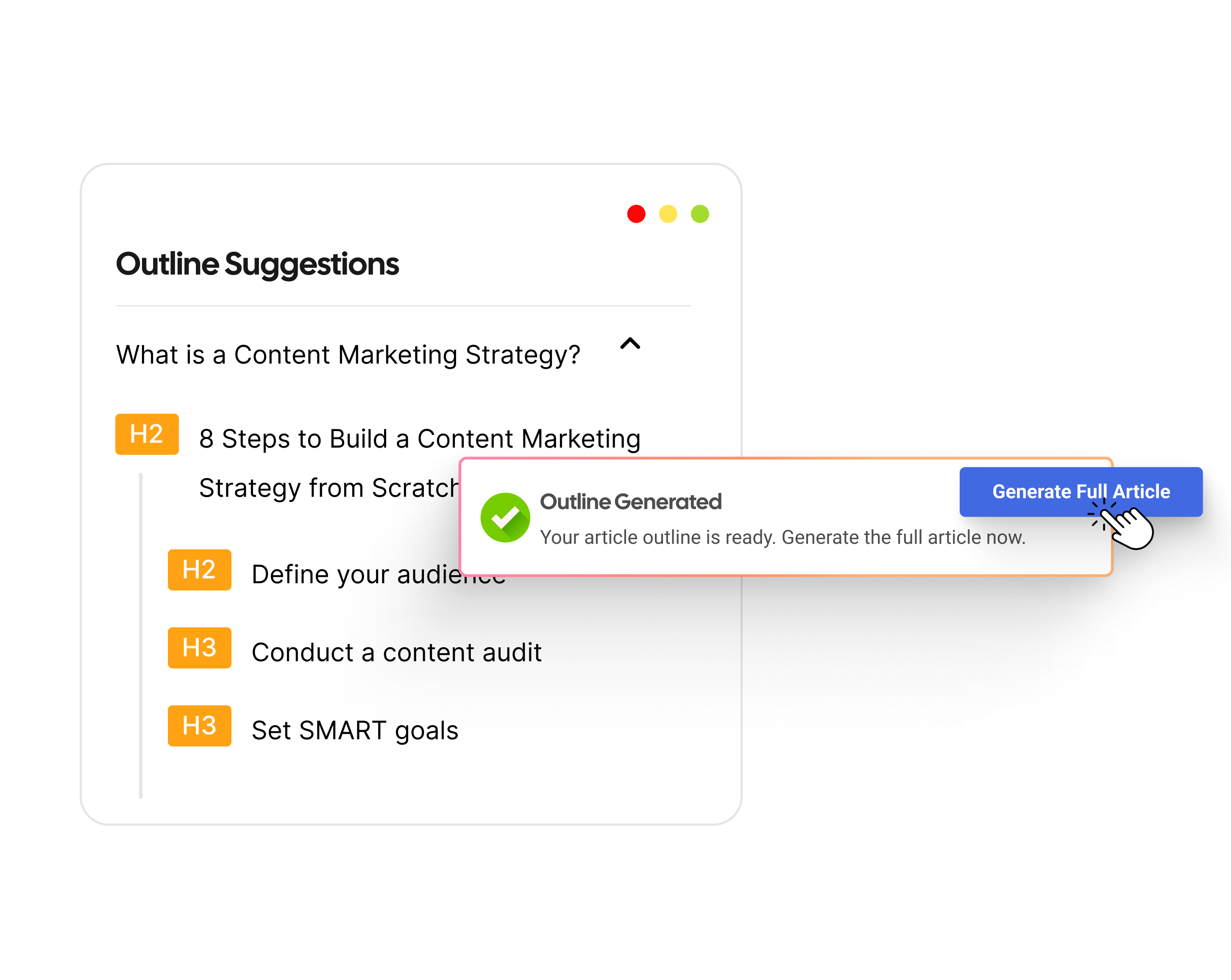
    The million-dollar question is whether Google can detect and truly rank AI-generated content or not.

    Let’s take a deep dive into it.

    2.0 Can Google detect and penalize AI content?

    Yes, Google can detect AI-generated content to some extent. While, Google’s algorithms do not explicitly penalize AI-generated content merely for being AI-generated and it does not specifically target AI-generated content. Its algorithms are designed to assess content quality, relevance, and adherence to Google’s guidelines.

    Google’s algorithms use various signals to identify content that may be generated by AI. This includes examining writing styles, structure, coherence, and even specific patterns that are more prevalent in AI-generated texts compared to human-written content.

    2.1 So, is AI content good or bad for SEO?

    AI-generated content can be a bit of a double-edged sword for SEO, right? On one hand, it’s super efficient for cranking out lots of content that’s optimized for specific keywords.

    But here’s the catch: if that content lacks a personal touch or feels too generic, it’s probably not going to resonate with your audience. Nobody wants to read something that sounds robotic or offers no real insights. Think of it this way: it’s like bland food that no one actually enjoys it!

    So, the secret sauce? Pairing AI with that all-important human touch. It’s all about making sure your content not only checks the SEO boxes, but also connects with readers in a meaningful way. So, while AI can be a great tool, don’t forget to sprinkle in that personal touch to truly engage your audience!

    Danny Sullivan, Google’s Search Liaison, clarified this in 2022, stating:

    “Using AI doesn’t make content inherently against our guidelines. If content is helpful and created for people first, it will do well regardless of how it was produced.”

    The myth that AI-generated content can get penalized by search engines has been debunked. Let’s further support this with relevant data and insights.

    2.2 Semrush analysis shows Google can successfully rank AI-generated content

    Semrush took a deep dive into the actual search engine results pages (SERPs) by picking 20,000 random keywords and examining the top 20 results on Google for each one. They compared how AI-generated content stacks up against human-written content in those top search positions. 

    So, what did they find? Let’s take a look at the results!

    While it’s true that human-written content often has a bit of an edge over AI-generated pieces, the difference isn’t as big as you might think.

    Take a look at the numbers: 57% of AI-generated content and 58% of content created by humans made it into the top 10. In fact, lots of people have found that AI-assisted writing can perform just as well as, or even better than, what humans come up with. So, it’s pretty clear that AI is making some impressive strides!

    You can find the detailed Semrush study here.

    3.0 How to create AI generated content that ranks on Google?

    Getting the most out of AI in content creation involves:

    • Using top-quality AI tools
    • Following Google Search’s guidelines

    3.1 Use the best content creation tools

    Using the right tools to create AI-generated content can significantly enhance the quality and effectiveness of your output. These advanced tools not only streamline the writing process but also help in generating ideas, improving grammar, and ensuring content relevance. 

    With various tools available in the market today, each offering unique features tailored to different aspects of content creation, it can be overwhelming to choose the best one. However, one tool that has truly blown me away is Contentpen.

    Contentpen is an AI content generation tool that combines deep research with your brand’s voice to craft high-impact, SEO-optimized articles that outperform your competition and help it rank on SERPs. 

    3.1.1 Multiple AI-powered brand agents

    Contentpen AI is a comprehensive writing tool that utilizes multiple specialized agents to streamline and enhance the content creation process, leveraging advanced artificial intelligence technology to ensure every piece of writing aligns with your brand’s identity and meets high-quality standards.

    • Brand Knowledge agent: An AI that learns and understands your brand’s voice, unique selling points, target audience, and competitors to tailor content effectively.
    • SERP Analysis agent: An AI that conducts in-depth research to analyze search engine results, identifying top-ranking pages and strategies that resonate with your audience.
    SERP analysis agent to avoid Google penalties-Contentpen
    • Copywriter agent: An AI that drafts engaging content based on selected keywords and SEO practices, creating compelling articles that align with your brand’s narrative.
    Copywriting agent
    • Reviewer agent: An AI that meticulously reviews and refines the draft, ensuring it meets quality standards and adheres to proven SEO guidelines for optimal performance.
    Internal linking
    • Optimization agent: An AI that enhances the article by adding strategic internal and external links, relevant images, and other elements to ensure comprehensive SEO optimization.
    Optimization agent

    3.1.2 Automate your blog publishing direct to your CMS

    Publish to CMS

    Contentpen is designed to seamlessly integrate with WordPress, eliminating the frustrations of manual uploads and tedious formatting. With just a simple click, you can publish your posts directly to your site or even schedule them for a later date. This means you can spend less time on administrative tasks and more time focusing on what truly matters: creating incredible, engaging content that captivates your audience.

    3.1.3 Generate blogs in bulk for content publishing at scale

    Contentpen has introduced a game-changer with its bulk generation feature, designed specifically for content creators looking to amplify their efforts.Contentpen’s bulk generation capability streamlines the content creation process, allowing you to generate multiple pieces of content effortlessly.

    3.1.3 Streamline your task with approval workflow

    Contentpen- AI content generation tool

    The approval workflow transforms the way teams collaborate. The approval workflow allows for real-time feedback, making it easy for team members to voice their opinions and for clients to provide their insights instantly. This transparency fosters a collaborative environment where ideas can be shared freely, and adjustments can be made promptly, ensuring that each piece of content is polished to perfection before it goes live.

    3.1.4 Ask AI

    The magic of Contentpen lies not only in its efficiency but also in its ability to optimize and improve any content piece through its Ask AI feature.

    Contentpen vs others

    FeaturesContentpenOthers
    (GPT+Deepseek+Gemini+Claude+Perplexity etc.) 
    Direct publishing to WordPressYesNo
    Tailored for high-quality blog contentYesNo
    Integrated SEO optimizerYesNo
    Understands search intent and toneYesNo
    Kanban board for task managementYesNo
    All-in-one blog creation toolYesNo
    Brand-specific content creationYesNo
    Multiple AI agents for superior contentYesNo
    Collaboration-friendly designYesNo

    3.2 Follow Google Search’s guideline to generate AI content

    3.2.1 Automation can create helpful content

    While content automation, including AI, is allowed for content generation, using it primarily to manipulate search rankings violates Google’s spam policies. This means that content created solely to exploit search ranking loopholes risks being flagged as spam. Google employs sophisticated algorithms, like SpamBrain, to detect such practices, which can lead to penalties such as lower rankings or removal from search results. Therefore, content creators should prioritize delivering genuine value, ensuring that AI is used to enhance content quality rather than deceive search engines.

    3.2.2 Focus on E-A-T: 

    Create content that is well-researched and informative. Make sure it meets the needs of your audience. Google prioritizes content that demonstrates E-E-A-T. AI-generated content that lacks credible sources or authorial expertise could be penalized. Strive to create original and unique content that offers a fresh perspective or valuable insights.

    3.2.3 User intent and relevance: 

    Google rewards high-quality content, however it is produced. So create content that satisfies user intent and is relevant to the search query. AI-generated content that fails to address user needs or is irrelevant to the query could be ranked lower.

    3.2.4 Human oversight and editing: 

    Human involvement is crucial to ensure AI-generated content meets quality standards and aligns with brand voice and messaging. Adding personal insights and examples can make the content more engaging and relevant.

    3.2.5 Technical quality: 

    Google expects content to be well-written, formatted, and free of errors. AI-generated content that is poorly written or contains technical errors could be penalized.

    3.2.6 Avoid deceptive practices:

    Don’t create content just to trick search engines into ranking higher. Focus on providing real value to users. Ensure your content reflects its true purpose. Avoid clickbait or misleading headlines that can annoy users.

    3.2.7 Regularly update content:

    Keep your content current and relevant. Regular updates help reflect new information and meet user needs effectively.

    Conclusion

    AI has the potential to revolutionize content creation and significantly impact search engine rankings. By understanding the factors Google considers when evaluating AI-generated content and following responsible AI use guidelines, creators can leverage AI’s power to produce high-quality content that meets Google’s standards and achieves high search rankings.

    Potential implications of AI on search engine rankings

    • Quality and relevance: AI has the potential to generate high-quality, relevant content at scale, which could positively impact search rankings. However, if AI-generated content lacks originality, depth, or accuracy, it could negatively affect rankings.
    • Efficiency and speed: AI can automate repetitive content creation tasks, enabling faster content production and potentially improving rankings by increasing content freshness and frequency. However, overreliance on AI without human oversight could lead to low-quality content and harm rankings.
    • User experience: AI can personalize content and enhance user experience, which could indirectly improve rankings by increasing engagement and reducing bounce rates. Conversely, poorly executed AI-generated content could lead to a negative user experience and lower rankings.

    Frequently asked questions

    Does Google rank AI content?

    Yes, Google ranks AI-generated content, but it applies the same criteria it uses for all content. The content must be valuable, relevant, original, and created with user experience in mind. If AI-generated content fulfills these criteria and is well-optimized, it can rank effectively.Add image

    Will AI replace SEO?

    AI is unlikely to replace SEO but will transform how SEO is practiced. AI can enhance tasks such as keyword research, content creation, and data analysis, allowing SEO professionals to focus more on strategy and creativity. Rather than replacing, AI will serve as a tool to improve efficiency and effectiveness in SEO.

    How much AI content is acceptable by Google?

    There isn’t a specific threshold for “acceptable” AI content, but it should meet quality standards set by Google. The focus should be on providing valuable, relevant content that engages users. A best practice is to view AI as an assistant for generating drafts and ideas rather than a replacement for human creativity and oversight.

    What factors Google may consider when evaluating AI-generated content?

    Google evaluates AI-generated content based on several key factors:
    Quality and relevance: Content must provide real value to users, answering their queries effectively.
    E-A-T (expertise, authoritativeness, trustworthiness): Google looks for content created by experts in the field, with authoritative sources and accuracy.
    Originality: Avoidance of plagiarism and ensuring the content adds unique perspectives or information.
    User engagement: Metrics such as click-through rates, time spent on the page, and bounce rates can indicate how useful the content is to users.
    Adherence to guidelines: Content must adhere to Google’s guidelines against spammy behavior and manipulation.

    How can I get started with using AI for SEO?

    To start using AI for SEO:
    Identify tools:
     Research and select AI-powered tools such as content generators, keyword research tools, and analytics platforms.
    Keyword optimization: Use AI to generate keyword ideas by inputting topics relevant to your niche.
    Content creation: Utilize AI writers to draft content, ensuring to edit and enhance it for quality and relevance.
    Data analysis: Employ AI for analyzing performance metrics, understanding user behavior, and optimizing your website accordingly.
    Stay updated: Follow industry trends on AI developments and adapt your strategy based on new features and best practices.