Category: Content marketing

Discover content marketing guides, strategies, and tips to grow your audience, boost engagement, and improve campaign results.

  • The complete B2B content marketing guide: Strategy, funnel & examples

    The complete B2B content marketing guide: Strategy, funnel & examples

    B2B content marketing is something that can make or break your business. You might already be familiar with its basics, but it is important to discuss it in detail in terms of types, benefits, examples, and strategies to implement a successful B2B content marketing strategy.

    And if you are wondering why you need B2B content marketing, you should be familiar with these key statistics:

    • 50% of B2B buyers view at least eight pieces of content before making a buying decision.
    • More than 80% of B2B buyers view at least five articles before purchasing.
    • 6 out of 10 B2B buyers are likely to make the final purchase decision based only on digital content.

    The purpose of stating these stats right off the bat is to let you know that “B2B content marketing” is not a buzzword. In fact, it is a whole mechanism that can help you get more clients and make more revenue. 

    This comprehensive guide walks you through everything you need to know about B2B content marketing. It starts with foundational concepts and progresses to advanced strategies. 

    You will learn how leading companies generate qualified leads and establish market authority.

    What is B2B content marketing?

    B2B content marketing is the strategic approach that involves creating and distributing valuable, relevant content to attract and engage business customers.

    Rather than directly pitching products or services, companies provide helpful information. This information addresses specific business challenges, educates stakeholders, and builds trust. It is especially effective throughout lengthy sales cycles.

    The goal of effective B2B content marketing is much more than just creating brand awareness. Instead, it includes:

    • Nurturing relationships with potential clients
    • Positioning your company as an industry authority
    • Guiding prospects through complex buying journeys that often involve multiple decision-makers and extended evaluation periods.

    Related: What is content marketing? A complete guide

    B2B content marketing vs B2C content marketing

    While both approaches aim to attract and convert customers through valuable content, several key differences distinguish B2B from B2C strategies:

    AspectB2B Content MarketingB2C Content Marketing
    Decision-making complexityInvolves multiple stakeholders, committees, and approval processesUsually, individual and immediate decisions
    Content depthRequires detailed, technical information, including whitepapers, case studies, and ROI calculatorsOften focuses on entertainment value and emotional connection
    Sales cycle lengthSpans weeks or months, requiring ongoing nurturing contentTransactions often happen within minutes or days
    Relationship focusEmphasizes long-term partnerships and ongoing value deliveryOften focuses on one-time transactions
    Content toneMaintains professional, educational tone with industry-specific terminologyCan be more casual and lifestyle-oriented
    Measurement metricsTracks lead quality, pipeline influence, and deal sizeFocuses more on conversion rates and transaction volume

    Why is content marketing important to B2B?

    Modern B2B buyers conduct extensive independent research before ever contacting a sales representative. Studies consistently show that decision-makers are already 60-70% through their buying journey before engaging with sellers directly.

    So, content marketing is vital for B2B because:

    • Builds credibility and trust: Thoughtful, expert content demonstrates your company’s knowledge and reliability before prospects even speak with your team
    • Educate your audience: Complex B2B solutions require explanation, and content helps prospects understand problems they didn’t know they had and solutions they hadn’t considered.
    • Generates qualified leads: Strategic content attracts prospects actively searching for solutions, delivering higher-quality leads than interruptive advertising
    • Supports sales enablement: Sales teams use content to address objections, demonstrate value, and move deals forward more efficiently
    • Establishes thought leadership: Consistent, insightful content positions your company as an industry authority, making you the go-to resource in your field
    • Improves SEO visibility: Quality content helps your website rank for valuable search terms, capturing organic traffic from prospects actively researching solutions.

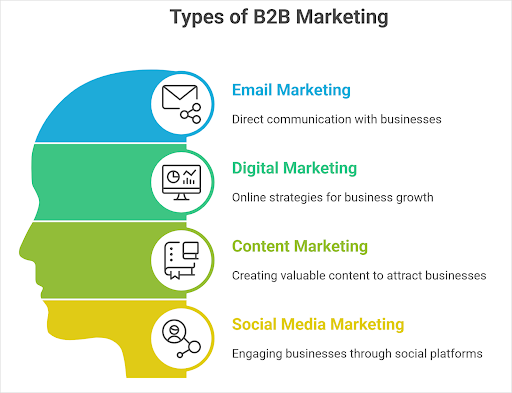
    What are the 4 types of B2B marketing?

    B2B marketing itself is an umbrella term that has different types based on numerous marketing channels. 

    Types of b2b marketing

    Each type serves distinct purposes and works best when integrated into a cohesive marketing ecosystem.

    Email marketing

    Email remains one of the most effective B2B channels. It delivers personalized messages directly to decision-makers’ inboxes. 

    Successful email marketing in B2B contexts includes:

    • Nurture campaigns: Automated sequences that guide prospects through the buyer’s journey with progressive content
    • Newsletter communications: Regular updates sharing industry insights, company news, and valuable resources
    • Event invitations: Targeted outreach for webinars, conferences, and product launches
    • Account-based campaigns: Highly personalized messages for specific high-value accounts
    • Re-engagement sequences: Win-back campaigns for dormant leads or inactive customers

    Digital marketing

    Digital marketing includes paid and organic tactics that drive online visibility and engagement. Core components include:

    • Search engine marketing (SEM): Paid search campaigns targeting high-intent keywords
    • Display advertising: Banner ads and retargeting campaigns that maintain brand presence
    • Programmatic advertising: Automated ad buying that targets specific audiences across multiple platforms
    • Paid social campaigns: LinkedIn ads, Twitter campaigns, and other platform-specific initiatives
    • Website optimization: Conversion rate optimization and user experience improvements

    Content marketing

    As discussed throughout this guide, content marketing strategies involve creating valuable resources that attract and engage target audiences. This includes:

    • Blog content: Regular articles addressing industry challenges and providing actionable solutions
    • Long-form resources: Whitepapers, ebooks, and guides that demonstrate deep expertise
    • Video content: Explainer videos, product demonstrations, and customer testimonials
    • Podcasts: Audio content featuring industry experts and thought leadership discussions
    • Interactive tools: Calculators, assessments, and configurators that provide personalized value

    Content marketing serves as the fuel for other marketing channels. Email campaigns share content, digital ads promote gated resources, and social media amplifies your best pieces. Tools like ContentPen can help streamline your content creation process, making it easier to maintain consistent publication schedules.

    Social media marketing

    Social platforms have evolved beyond consumer spaces to become crucial B2B channels, particularly LinkedIn, which is the most popular channel for B2B marketing.

    Effective B2B social media strategies include:

    • LinkedIn engagement: Sharing insights, participating in industry discussions, and building professional networks
    • Twitter thought leadership: Quick insights, industry commentary, and real-time engagement
    • YouTube education: Video tutorials, product demos, and customer success stories
    • Community building: Creating and nurturing groups where prospects and customers connect
    • Employee advocacy: Empowering team members to share company content and amplify reach

    How to create and implement an effective B2B content marketing strategy?

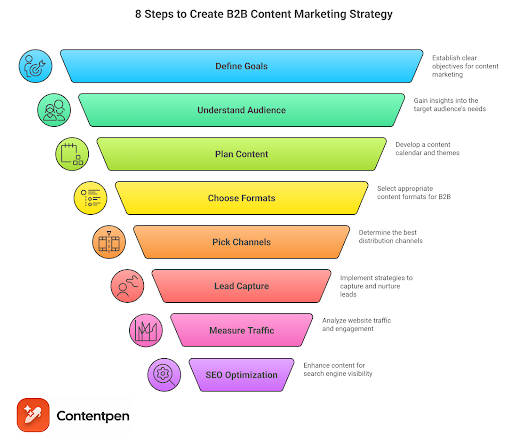
    Now that you know all about the basics of B2B content marketing, let’s discuss the top 8 steps to create and implement an effective B2B content marketing strategy.

    steps of b2b content marketing

    By following these steps, you will have a structured strategy to ensure every piece serves specific business objectives and guides prospects toward conversion.

    Step #1: Define goals

    Start by establishing clear, measurable objectives that align with broader business goals. Effective content marketing goals might include:

    • Lead generation targets: Specific numbers of marketing qualified leads (MQLs) per month
    • Pipeline influence: Percentage of opportunities that engaged with content before converting
    • Brand awareness metrics: Increases in organic traffic, search rankings, and social following
    • Engagement benchmarks: Time on site, pages per session, and content download rates
    • Customer retention goals: Reduced churn through ongoing education and value delivery

    You should avoid vague aspirations like “increase brand awareness.” Instead, define specific metrics like “increase organic traffic by 40% in six months” or “generate 200 qualified leads per month from content.”

    Step #2: Understand your target audience

    Deep audience research separates effective content from wasted effort. You should develop detailed buyer personas that include:

    • Demographics: Job titles, seniority levels, industries, and company sizes
    • Challenges and pain points: Specific problems your prospects face daily
    • Goals and aspirations: What success looks like for them professionally
    • Information preferences: How they consume content—long-form reading, video, audio, etc.
    • Buying journey stage: What information do they need at the awareness, consideration, and decision phases
    • Objections and concerns: Common hesitations that prevent purchase decisions

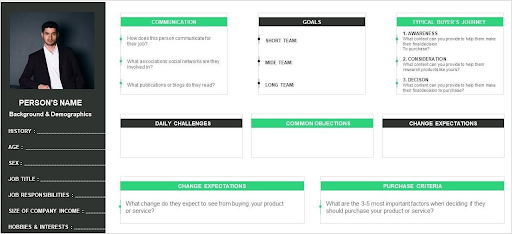
    Interview existing customers, survey prospects, and analyze support tickets to gather authentic insights. Here’s a generic template for a B2B buyer persona:

    b2b buyer persona

    Step #3: Plan your content

    Strategic content planning ensures consistent publication and comprehensive topic coverage. Your plan should include:

    • Content themes: Core topics that align with audience needs and business expertise
    • Publishing calendar: Scheduled publication dates that maintain a consistent presence. 
    • Format variety: Mix of blog posts, videos, infographics, and long-form resources
    • Topic clusters: Related content pieces that establish topical authority for SEO
    • Seasonal considerations: Content timed around industry events, fiscal calendars, and buying seasons

    Many successful B2B companies plan content quarterly, allowing flexibility for timely topics while maintaining strategic focus. Consider using content creation tools like Contentpen to organize your editorial calendar and write content from the same tool. 

    Contentpen content calendar

    Step #4: Choose from the content formats that work in B2B

    Different formats serve different purposes throughout the buyer’s journey. An effective B2B content marketing is one that uses multiple formats, including:

    • Blog posts: Regular articles that drive organic traffic and establish expertise on specific topics
    • Whitepapers and ebooks: In-depth resources that generate leads through gated downloads
    • Case studies: Proof of results that help prospects envision success with your solution
    • Webinars: Interactive sessions that educate audiences while demonstrating expertise
    • Video content: Engaging explanations of complex concepts or product demonstrations
    • Infographics: Visual representations of data and processes that simplify complex information
    • Podcasts: Convenient audio content for busy executives consuming information during commutes
    • Templates and tools: Practical resources that provide immediate value while demonstrating capability

    Choose formats based on audience preferences and content goals. For example, a technical blog post might work well for SEO, while a case study better supports late-stage sales conversations.

    Step #5: Pick the distribution channels

    Creating great content is only half the battle, as you also have to focus on getting it in front of your audience via strategic distribution. Some of the most effective content distribution channels include:

    • Organic search: Optimize content for search engines to capture prospects actively researching solutions
    • Email campaigns: Share new content with segmented lists based on interests and behavior
    • Social media: Promote content on LinkedIn, Twitter, and industry-specific platforms
    • Paid promotion: Amplify top-performing content through targeted ads
    • Industry publications: Contribute guest posts to established platforms in your space
    • Partner networks: Collaborate with complementary companies to expand reach
    • Sales enablement: Equip sales teams with content for direct sharing with prospects

    Different content types work better on specific channels. Short insights perform well on LinkedIn, while comprehensive guides drive more value through email campaigns to existing subscribers.

    Step #6: Focus on lead capture & nurturing

    Converting anonymous visitors into known prospects is essential for measuring content ROI. Implement capture mechanisms throughout your content:

    • Gated resources: Require email addresses for high-value content downloads
    • Newsletter subscriptions: Offer ongoing value in exchange for contact information
    • Webinar registrations: Capture details when prospects sign up for live events
    • Tool access: Provide calculators or assessments in exchange for information
    • Exit-intent popups: Capture leaving visitors with compelling last-minute offers

    Once captured, nurture leads through automated email sequences that provide progressive value and guide prospects toward sales conversations. The goal is staying top-of-mind throughout lengthy buying cycles.

    Step #7: Measure the traffic

    Analytics reveal which content drives results and where to invest additional resources. Key metrics include:

    • Traffic metrics: Page views, unique visitors, and traffic sources
    • Engagement metrics: Time on page, bounce rate, and scroll depth
    • Conversion metrics: Form submissions, download rates, and demo requests
    • SEO metrics: Keyword rankings, organic traffic growth, and backlink acquisition
    • Pipeline influence: Opportunities that engaged with content before converting
    • Revenue attribution: Closed deals influenced by specific content pieces

    Use tools like Google Analytics, marketing automation platforms, and CRM systems to track performance. Review metrics monthly to identify trends and optimization opportunities.

    Related: How to find high opportunity keywords in Contentpen?

    Step #8: Ensure SEO optimization

    Search visibility drives consistent, qualified traffic to your content. Optimize every piece for search engines by:

    • Keyword research: Identify search terms your prospects use when researching solutions
    • On-page optimization: Include target keywords in titles, headers, and throughout content naturally
    • Technical SEO: Ensure fast load times, mobile responsiveness, and proper site structure
    • Internal linking: Connect related content to establish topical authority and improve navigation
    • Meta descriptions: Write compelling summaries that encourage click-throughs from search results
    • Image optimization: Use descriptive file names and alt text for visual content

    You should consider using SEO writing tools to streamline optimization and identify opportunities.

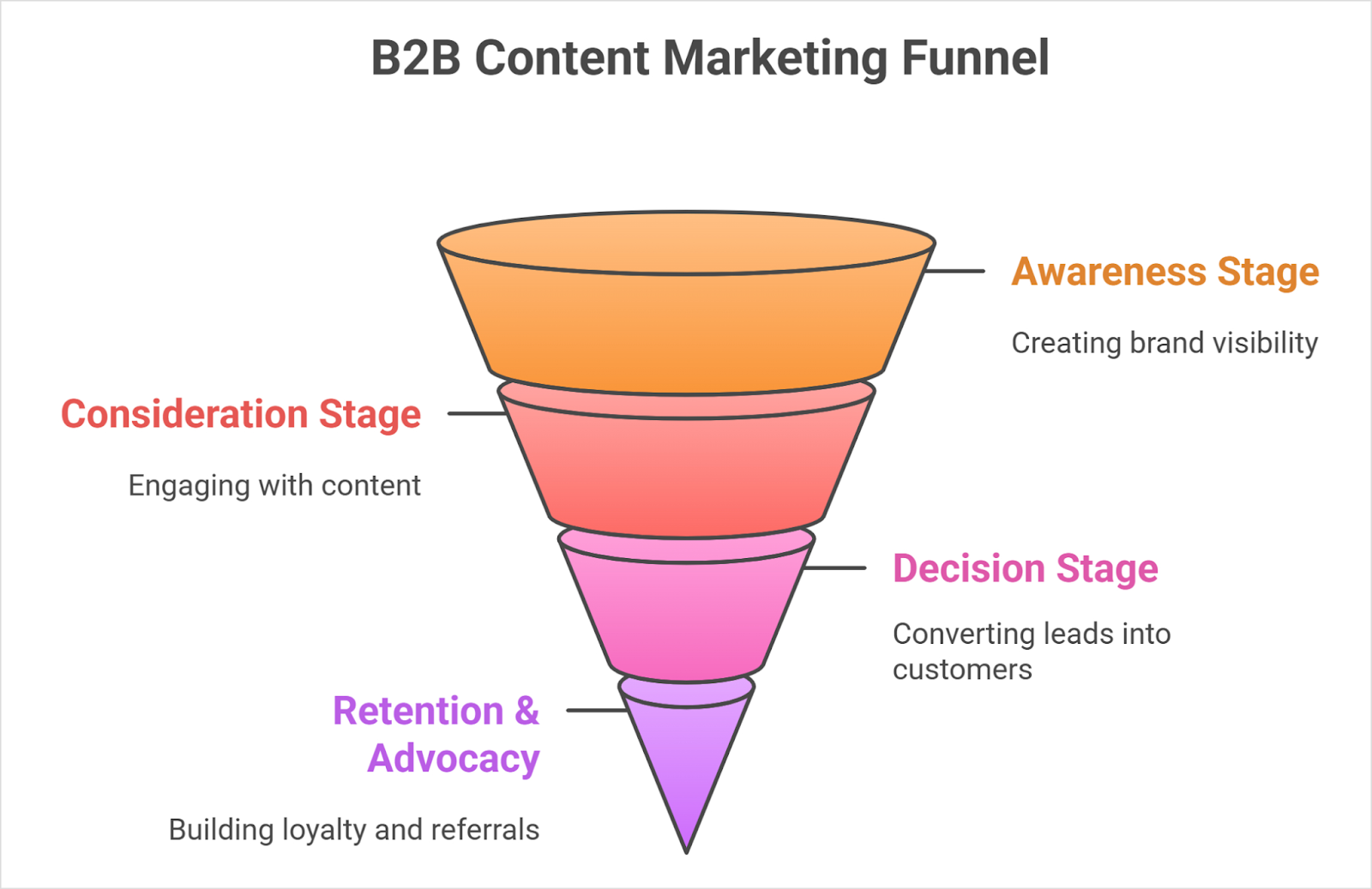
    4 stages of the B2B content marketing funnel

    b2b content marketing funnel

    The content funnel maps different content types to specific stages of the buyer’s journey. Understanding this framework helps you create the right content for each phase of the decision-making process.

    1. Awareness stage (top of funnel – TOFU)

    Prospects at the top of the funnel are just beginning to recognize they have a problem or opportunity. They’re conducting broad research and seeking educational content rather than product information.

    Content for awareness stage:

    • Educational blog posts: Articles explaining common challenges and industry trends
    • Infographics: Visual content simplifying complex topics
    • Social media content: Short insights and observations that spark interest
    • Videos: Explainer content that introduces concepts and frameworks
    • Podcasts: Discussions about industry trends and emerging challenges

    The goal at this stage is to attract attention and establish credibility. So, you should focus on being helpful rather than promotional.

    Also read: How to structure a blog? Complete guide for content success

    1. Consideration stage (middle of funnel – MOFU)

    Middle-funnel prospects understand their problem and are actively researching potential solutions. They’re comparing approaches and evaluating different vendors.

    Content for the consideration stage:

    • Comparison guides: Objective evaluations of different solution approaches
    • Webinars: Deep dives into specific topics with expert insights
    • Ebooks and whitepapers: Comprehensive resources exploring solutions in detail
    • Product videos: Demonstrations showing how your solution works
    • Templates and worksheets: Practical tools prospects can use immediately

    This stage requires more detailed, solution-oriented content that positions your approach favorably without being overtly salesy. The focus shifts from education to evaluation support.

    1. Decision stage (bottom of funnel – BOFU)

    Bottom-funnel prospects are ready to make a purchase decision. They’re comparing specific vendors and need concrete proof that your solution delivers results.

    Content for the decision stage:

    • Case studies: Detailed stories showing results achieved for similar companies
    • ROI calculators: Tools demonstrating potential return on investment
    • Product comparisons: Direct comparisons between your solution and competitors
    • Demo videos: Detailed walkthroughs of features and capabilities
    • Customer testimonials: Social proof from satisfied clients
    • Free trials or assessments: Low-risk ways to experience your solution

    Content at this stage should remove final objections and provide the evidence decision-makers need to choose your solution confidently.

    1. Retention & advocacy (post-purchase)

    The funnel doesn’t end at purchase. Post-sale content reduces churn and transforms customers into advocates who generate referrals and case study opportunities.

    Content for retention and advocacy:

    • Onboarding resources: Guides and videos helping customers achieve early success
    • Best practice content: Advanced tips maximizing value from your solution
    • Customer newsletters: Regular updates about new features and success stories
    • Community content: Forums and user groups facilitating peer learning
    • Success stories: Highlighting customer achievements with your solution

    Investing in post-purchase content increases customer lifetime value and creates advocates who refer new business and participate in marketing initiatives.

    Examples of B2B content marketing funnel

    Here are two examples of a B2B content marketing funnel:

    SaaS Company Funnel Example

    • Awareness: A blog post titled “5 Common Data Security Mistakes Businesses Make” educates readers on risks.
    • Consideration: A downloadable whitepaper compares different cloud security approaches.
    • Decision: A case study shows how a client reduced data breaches by 40% using the company’s software.
    • Retention & Advocacy: A monthly customer newsletter shares advanced security configuration tips and success stories.

    B2B Marketing Agency Funnel Example

    • Awareness: A LinkedIn post series breaking down trends in B2B lead generation.
    • Consideration: A live webinar discussing how inbound marketing outperforms traditional outreach.
    • Decision: A client testimonial video highlighting ROI from a recent campaign.
    • Retention & Advocacy: A “Client Spotlight” blog showcasing long-term partners and the results achieved together.

    B2B content marketing examples

    Studying successful B2B content marketing provides inspiration and practical lessons to implement in your own strategy. 

    The following companies demonstrate different approaches that drive measurable business results.

    HubSpot – Educational content hub

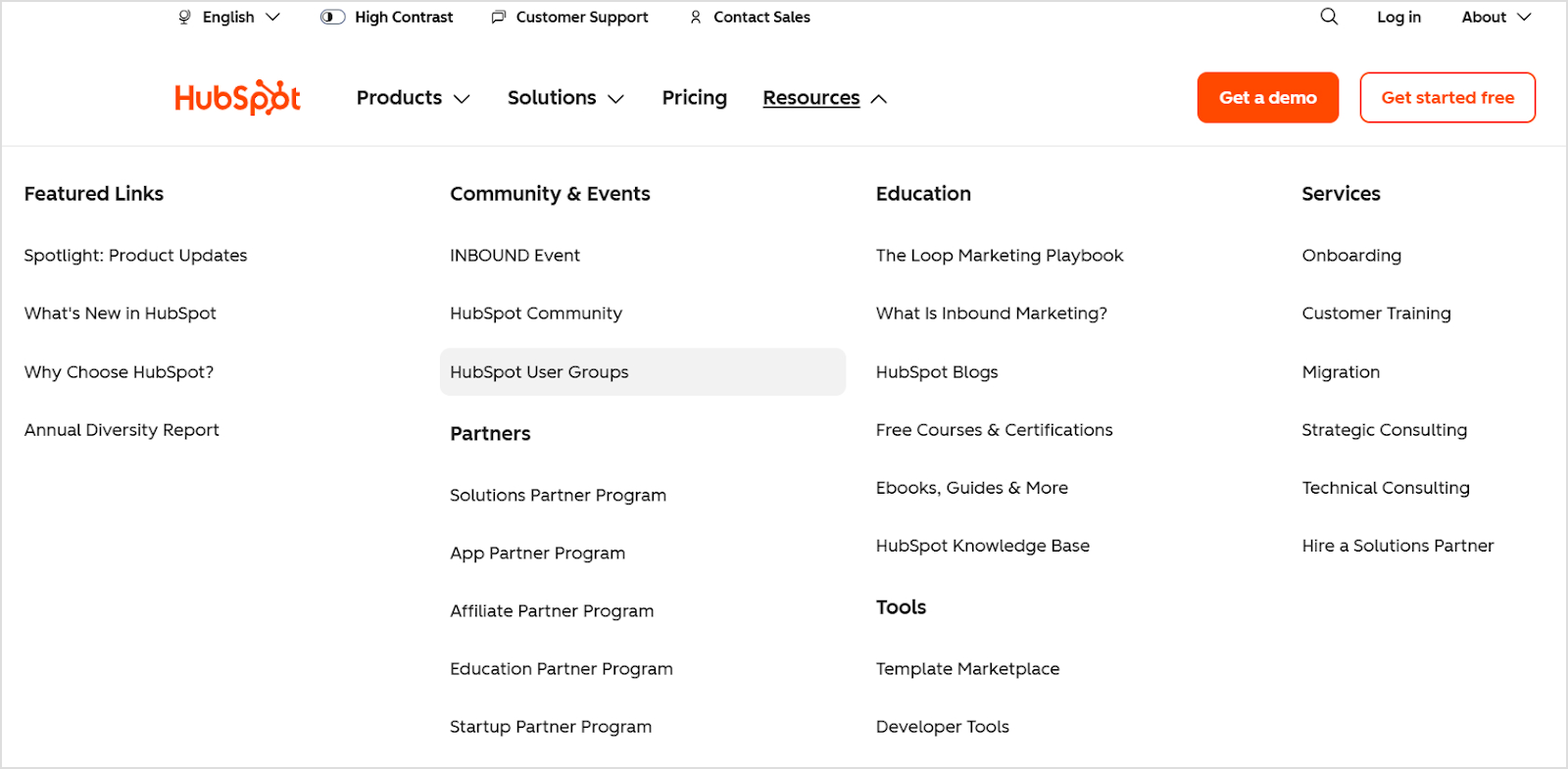
    Hubspot

    HubSpot built a massive audience by creating comprehensive educational resources before aggressively promoting its software. Their blog, academy, and resource library attract millions of visitors seeking marketing, sales, and service advice.

    Key lessons:

    • Invest in genuinely helpful content that addresses audience needs
    • Create comprehensive topic coverage that establishes topical authority
    • Use content to demonstrate expertise before asking for the sale

    Salesforce – Thought leadership

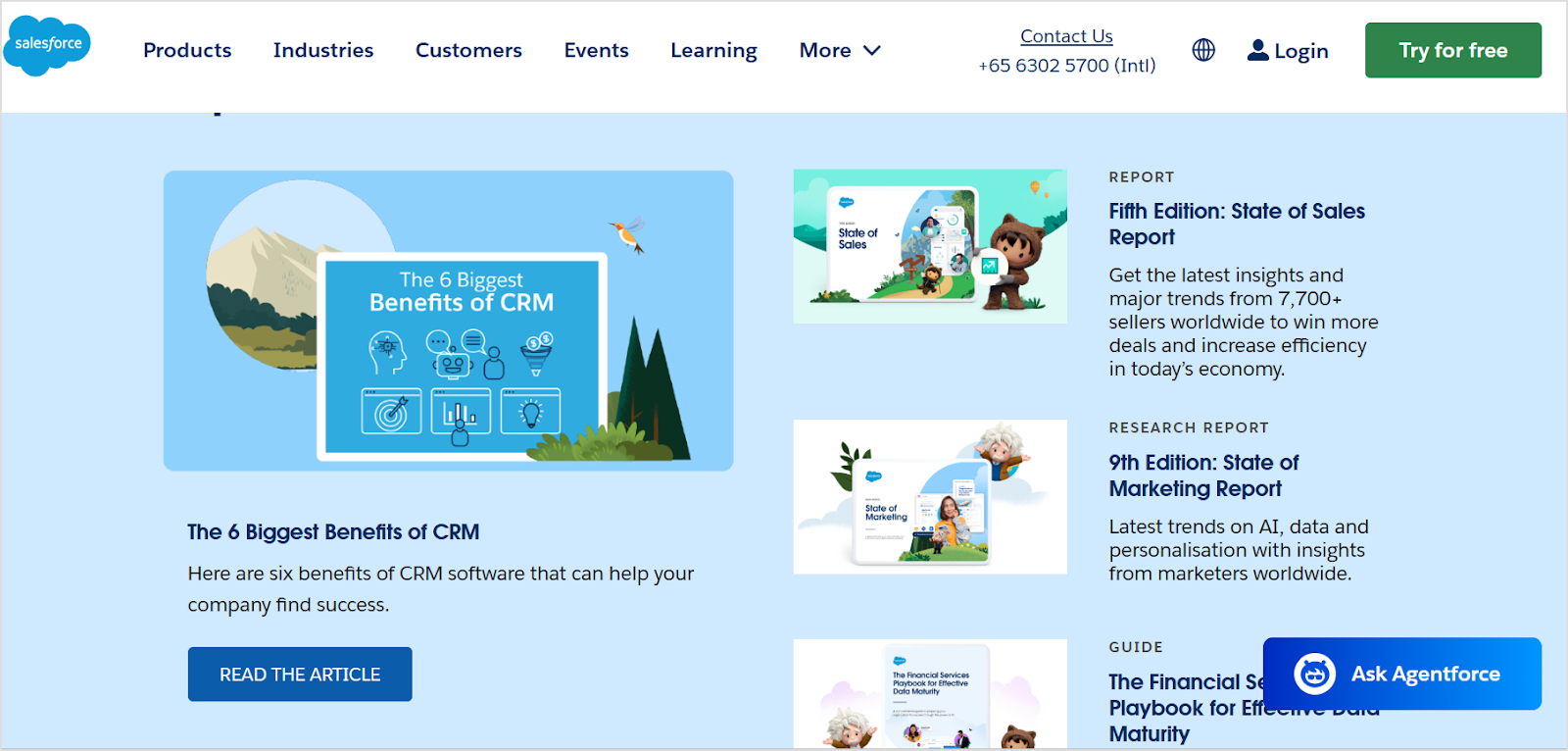
    salesforce

    Salesforce publishes extensive thought leadership content exploring the future of business technology, customer experience, and digital transformation. Their content positions them as visionaries rather than just software vendors.

    Key lessons:

    • Address big-picture industry trends, not just product features
    • Feature executive voices and company perspectives on industry evolution
    • Use content to shape conversations rather than just participate in them

    IBM – Case studies

    IBM case studies

    IBM excels at creating detailed case studies showcasing client success across industries and use cases. These stories provide concrete proof of capability and help prospects envision similar results.

    Key lessons:

    • Document specific results with quantifiable metrics
    • Create case studies across different industries and company sizes
    • Use customer voices to tell authentic stories

    LinkedIn – Sales Navigator

    LinkedIn - Sales Navigator

    LinkedIn offers powerful B2B content marketing features through Sales Navigator, an AI-powered B2B sales tool. They create comprehensive educational resources, including customer success stories, industry-specific use cases, and best practice guides that showcase real results.

    Key lessons:

    • Use concrete data and third-party validation to build trust (like Forrester study results)
    • Feature real customer testimonials that address specific pain points
    • Demonstrate ROI clearly with quantifiable benefits before requesting paid commitment

    Adobe – Webinars & virtual events

    Adobe – Webinars & virtual events

    Adobe hosts extensive webinar programming featuring product tutorials, creative inspiration, and industry expert discussions. These live events create community while educating prospects.

    Key lessons:

    • Use live formats to create urgency and drive registration
    • Feature external experts alongside internal voices for credibility
    • Record and repurpose webinar content for ongoing value

    Slack – Blog & customer stories

    Slack – Blog & customer stories

    Slack combines practical productivity advice with inspiring customer stories on its blog. The mix of educational content and social proof supports both awareness and conversion.

    Key lessons:

    • Balance educational content with promotional material
    • Let customers tell their own success stories authentically
    • Address productivity and workplace challenges beyond your specific product

    Deloitte – Long-form reports

    Deloitte – Long-form reports

    Deloitte publishes extensive research reports analyzing industry trends, economic forecasts, and business challenges. These substantial resources establish unquestionable authority and generate media coverage.

    Key lessons:

    • Invest in original research that provides unique insights
    • Create content substantial enough to be newsworthy
    • Use premium content to reach enterprise decision-makers

    B2B content marketing trends in 2025

    The content marketing trends and strategies tend to change from time to time due to the evolution of digital marketing, SEO, blog writing, and AI. It is vital to stay current with emerging trends to maintain a competitive advantage and reach audiences effectively.

    AI-powered content creation, optimization & personalization

    Artificial intelligence is transforming content production. It enables teams to create more content faster while maintaining quality. AI-powered tools now assist with research, drafting, optimization, and personalization at scale.

    Key applications:

    • Automated content generation for routine topics
    • SEO optimization and keyword integration
    • Personalized content variations for different audience segments
    • Performance prediction and topic recommendations

    The question is no longer whether to use AI, but how to use it effectively while maintaining authenticity.

    Also read: Does Google penalize AI content?

    Hyper-personalization & micro-targeted content

    Generic content no longer cuts through the noise. Advanced segmentation enables creating highly specific content for narrow audience segments based on industry, role, company size, and behavior.

    Implementation strategies:

    • Industry-specific versions of core content
    • Role-based content addressing different stakeholder concerns
    • Dynamic website content adapts to visitor characteristics
    • Personalized email campaigns using behavioral triggers

    Video & live/interactive formats

    Video consumption continues growing, with B2B buyers increasingly preferring visual content over text. Live formats create urgency and authenticity that recorded content can’t match.

    Emerging formats:

    • Live Q&A sessions with industry experts
    • Interactive product demonstrations
    • Virtual events and conferences
    • Short-form video for social platforms
    • Shoppable video content

    Thought leadership, trust & authority content

    In an era of information overload and declining trust, establishing genuine authority becomes more valuable. Companies investing in deep, insightful thought leadership stand out from competitors recycling surface-level content.

    Focus areas:

    • Original research and data-driven insights
    • Executive visibility and perspective sharing
    • Position papers on industry issues
    • Bold predictions and provocative viewpoints

    Interactive & immersive content experiences

    Static content competes with increasingly sophisticated digital experiences. Interactive elements boost engagement and provide personalized value that passive content cannot.

    Interactive formats:

    • Calculators and ROI tools
    • Assessments and maturity models
    • Configurators and product builders
    • Interactive infographics and data visualizations
    • Augmented reality product experiences

    Data-driven strategy & analytics

    Sophisticated analytics enable optimizing content performance with great precision. Data-driven approaches ensure resources focus on the highest-impact content.

    Key metrics and approaches:

    • Content attribution throughout the customer journey
    • Topic and format performance analysis
    • Predictive analytics for content planning
    • Real-time optimization based on engagement signals

    Omnichannel & content syndication for reach

    Single-channel strategies limit reach and miss audiences consuming content across multiple platforms. Omnichannel approaches ensure a consistent presence wherever prospects engage.

    Distribution strategies:

    • Cross-platform content adaptation
    • Syndication partnerships with industry publications
    • Community participation and guest contributions
    • Platform-specific content variations

    Emphasis on sustainability, values & authenticity

    B2B buyers increasingly evaluate vendors based on values, sustainability commitments, and authentic communication. Purpose-driven content resonates with modern decision-makers.

    Content themes:

    • Corporate social responsibility initiatives
    • Sustainability efforts and environmental impact
    • Diversity, equity, and inclusion commitments
    • Ethical business practices and transparency

    Employee advocacy & UGC in B2B

    Empowering employees to share company content amplifies reach and adds authenticity. User-generated content from customers provides social proof that marketing claims cannot match.

    Implementation tactics:

    • Employee advocacy platforms and training
    • Customer content creation programs
    • Social media amplification initiatives
    • Community-generated resources and discussions

    Shift towards owned media & cost efficiency

    Rising advertising costs and privacy changes reduce paid media effectiveness. Companies are investing more in owned channels, including websites, email lists, and communities, to have optimum control.

    Owned media strategies:

    • Building engaged email subscriber lists
    • Creating proprietary communities and forums
    • Developing direct relationship channels
    • Reducing dependence on paid distribution

    How can Contentpen help you create a profitable B2B blog?

    Creating consistent, high-quality B2B content requires significant resources and expertise. Our AI blog writer streamlines the content creation process, enabling B2B companies to publish SEO-optimized content at scale without sacrificing quality.

    Here are the key features of Contentpen that make it perfect to create a profitable B2B blog:

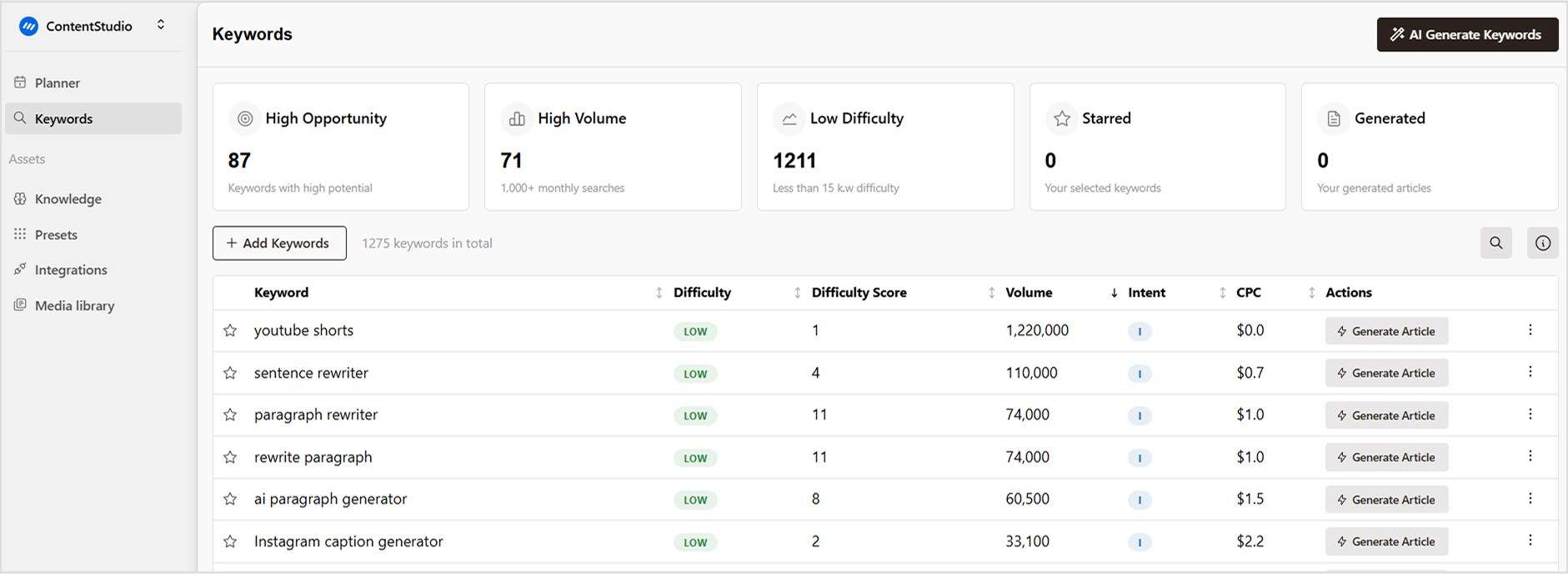
    • Strategic content planning: ContentPen helps identify high-opportunity keywords in your niche, ensuring every article targets terms your prospects actually search for.
    • Brand voice consistency: Use ContentPen’s brand voice features to maintain consistent tone across all content, ensuring your B2B brand identity remains strong regardless of who creates content.
    • Automated optimization: Built-in SEO optimization ensures every piece follows best practices for search visibility, from keyword placement to internal linking strategies.
    • Bulk content creation: Generate multiple articles simultaneously when scaling your content operation, perfect for covering comprehensive topic clusters or launching new content initiatives.
    • Content refreshing: Update existing articles to maintain freshness and improve rankings, extending the value of previously published content.
    • WordPress integration: Connect directly to WordPress for seamless publishing, eliminating manual content transfer steps.
    • Custom presets: Save content templates and configurations for different content types, ensuring consistency and speeding up production.

    Whether you’re publishing your first B2B blog or scaling an established content operation, ContentPen provides the infrastructure to create professional content efficiently. The platform handles technical optimization while you focus on strategy and audience engagement.

    The following video summarizes the article creation process with Contentpen:

    Conclusion

    B2B content marketing has certainly evolved from a nice-to-have into an essential growth driver for modern businesses. A successful B2B content marketing strategy requires understanding your audience deeply, creating valuable content across the entire buyer’s journey, and maintaining consistency through strategic planning. 

    The four core marketing types, email, digital, content, and social media, ultimately work together to reach decision-makers wherever they consume information.

    Implementing the eight-step strategy discussed in this article ensures your content serves specific business objectives. It covers everything from goal-setting and audience research to SEO optimization and performance measurement.

    As we move into an AI-powered future, companies should invest in thought leadership, embrace data-driven strategies. You can also use tools like ContentPen to maintain quality at scale and build lasting customer relationships.

    Frequently asked questions

    Which platform is most suitable for B2B content marketing?

    LinkedIn dominates B2B content marketing due to its professional user base and targeting capabilities. The platform helps reach decision-makers by job title, industry, and company size while facilitating thought leadership and engagement.

    What is the 3 2 1 rule on LinkedIn?

    The 3-2-1 rule suggests posting three pieces of curated content from others, two pieces of original content, and one promotional post. This ratio maintains audience engagement by providing value before asking for anything in return, preventing feeds from becoming overly promotional.

    What is the rule of 7 in B2B marketing?

    The rule of 7 states that prospects need to encounter your brand seven times before taking action. This principle emphasizes consistent presence across multiple touchpoints, including blog posts, social media, email, and ads, throughout the extended B2B buying cycle.

    What is the biggest B2B example?

    Amazon Business represents one of the largest B2B operations globally, serving millions of business customers with procurement solutions, bulk purchasing, and business-only pricing. The platform demonstrates how consumer-focused companies can successfully expand into business markets with adapted experiences and value propositions.

    What is the most valuable B2B brand?

    Microsoft consistently ranks as the most valuable B2B brand globally. Its value is estimated to be $3.34 trillion due to Microsoft’s numerous solutions, including AI, cloud computing, productivity software, and enterprise software serving businesses worldwide. 

    What is a real-life example of B2B marketing?

    Salesforce’s content marketing demonstrates an effective B2B strategy in practice. The company publishes extensive educational resources, hosts the Dreamforce conference, maintains an active social presence, and creates customer success stories. All of these efforts are to attract business customers, demonstrate value, and support lengthy enterprise sales cycles.

  • Content marketing examples that drive results in 2025

    Content marketing examples that drive results in 2025

    Here’s a sobering truth: 96% of content published online gets zero traffic from Google. 

    Zero!

    Yet the examples you’re about to see generated millions of views, thousands of shares, and drove real business results. What makes them different?

    They didn’t follow the “publish and pray” strategy! 

    Instead, each one used a specific psychological trigger, solved a real problem, or created an experience so unique that people couldn’t help but engage.

    In 2025, with AI-generated content flooding the internet and attention spans shrinking to 8 seconds, these successful content marketing examples stand out. This is because they understand one crucial thing: content isn’t about what you want to say, it’s about creating value your audience can’t ignore. 

    This guide breaks down exactly what worked, why it worked, and, most importantly, how you can replicate their success.

    Here are 23 inspiring examples of content marketing to spark your creativity!

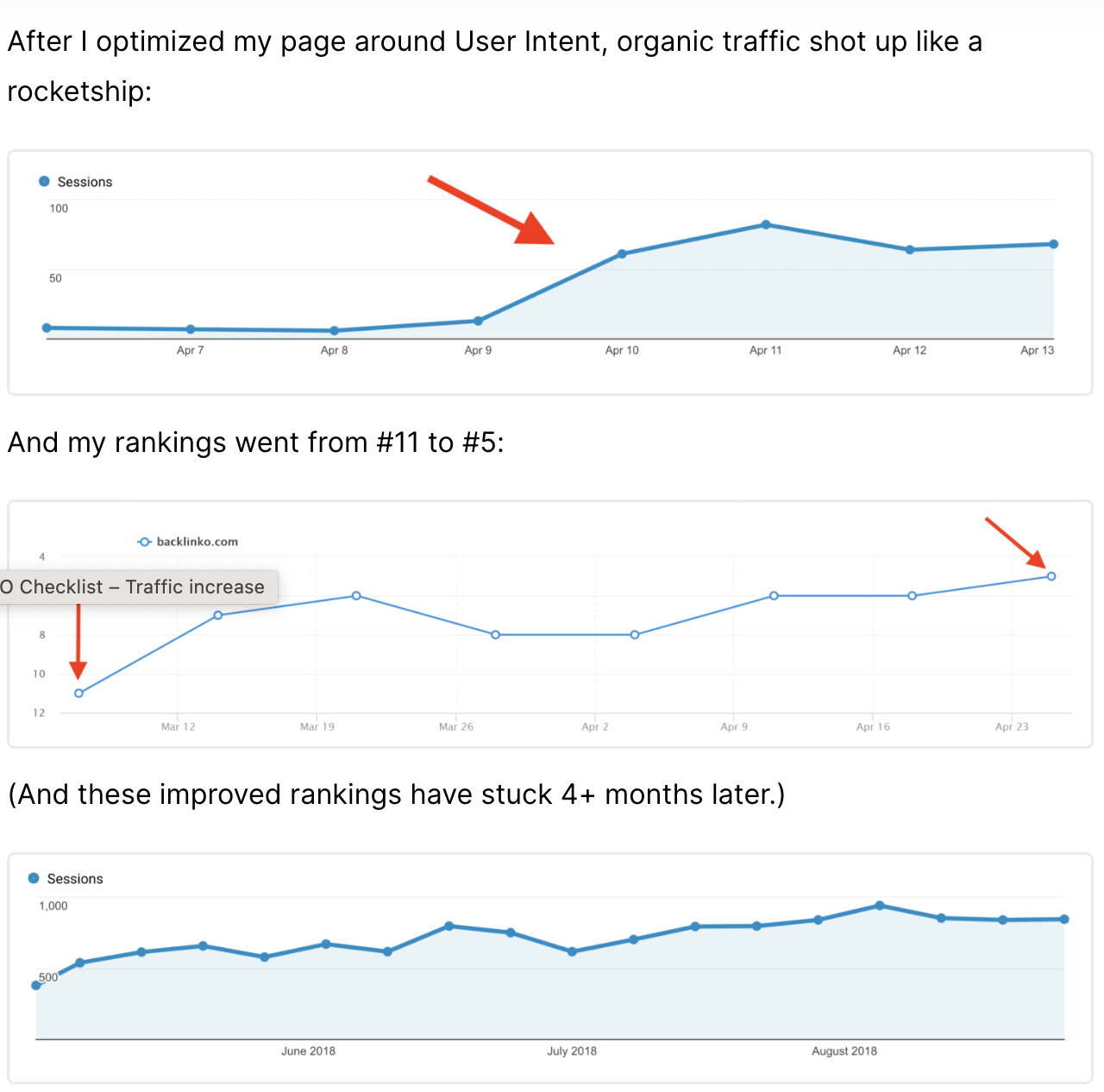
    1. Backlinko’s skyscraper technique 2.0: The evolution that earned 1,600+ shares

    Backlinko's skyscraper technique 2.0

    What they did: 

    Brian Dean didn’t just update his famous skyscraper technique. He completely reimagined it. 

    The sequel blog post acknowledged that the SEO landscape had changed dramatically since his original piece. Instead of just finding popular content and making it better, the 2.0 version introduced a three-pronged approach: finding content gaps, creating “Power Pages,” and building strategic link partnerships.

    Why it worked:

    • Timing: Released when marketers were struggling with the original technique’s diminishing returns
    • Honesty: Admitted the old method wasn’t working as well anymore
    • Evolution: Showed growth and adaptation rather than recycling old advice
    • Proof: Included real case studies with specific metrics (1,600+ shares, 600+ backlinks)
    • Actionability: Provided templates and exact scripts readers could use immediately

    Do it your way:

    1. Audit your top-performing content from 2+ years ago
    2. Identify what’s changed in your industry since then
    3. Create a “2.0” version that addresses new challenges
    4. Include a comparison table showing the old way vs. the new way
    5. Add downloadable templates or tools to increase value
    6. Email everyone who linked to your original piece about the update

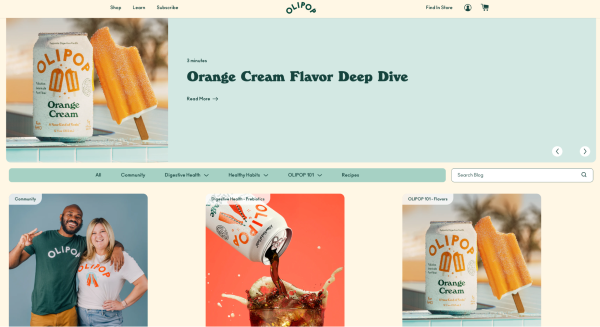
    2. Olipop’s educational health content: Building a $200M brand through wellness education

    Olipop's educational health content

    What they did: 

    Olipop created a dedicated “Learn” section on their website that goes far beyond selling soda. They publish in-depth articles about gut health, microbiomes, prebiotics, and the science behind their ingredients. 

    Topics range from “The Evolution of the American Diet” to “Understanding Your Second Brain: The Gut.”

    Why it worked:

    • Trust building: Educated customers make confident purchases
    • SEO dominance: Ranked for high-intent health keywords
    • Brand values: Content aligned with their healthy soda positioning
    • Shareability: Parents shared articles about kids’ health with other parents
    • Authority: Positioned them as health experts, not just beverage makers

    Do it your way:

    1. Map your product’s more profound benefits (health, productivity, happiness)
    2. Create educational content around those benefits, not features
    3. Hire or consult with experts to ensure accuracy
    4. Use simple language to explain complex topics
    5. Include scientific references, but make them accessible
    6. Connect education to product naturally, not forcefully

    3. Microsoft’s multi-tiered FAQ strategy: Personalized answers at scale

    Microsoft's multi-tiered FAQ strategy

    What they did: 

    Microsoft created separate FAQ pages for different user segments.  Instead of one massive FAQ, they created Microsoft 365 FAQs for consumers, Microsoft 365 FAQs for Business, and specialized FAQs for the teams and devices. Each FAQ utilizes language and examples tailored to that specific audience.

    Why it worked:

    • Relevance: CFOs don’t want the same answers as college students
    • Conversion: Targeted FAQs improved purchase confidence by 34%
    • SEO benefits: Ranked for segment-specific long-tail keywords
    • Support reduction: Decreased support tickets by answering persona-specific questions
    • User experience: Visitors found answers faster without irrelevant information

    Do it your way:

    1. Segment your audience into 3-5 distinct groups
    2. Analyze support tickets to find segment-specific questions
    3. Create separate FAQ pages with custom URLs for each segment
    4. Use appropriate language (technical for developers, simple for consumers)
    5. Include segment-specific examples and use cases
    6. Cross-link between FAQs for users who might fit multiple segments

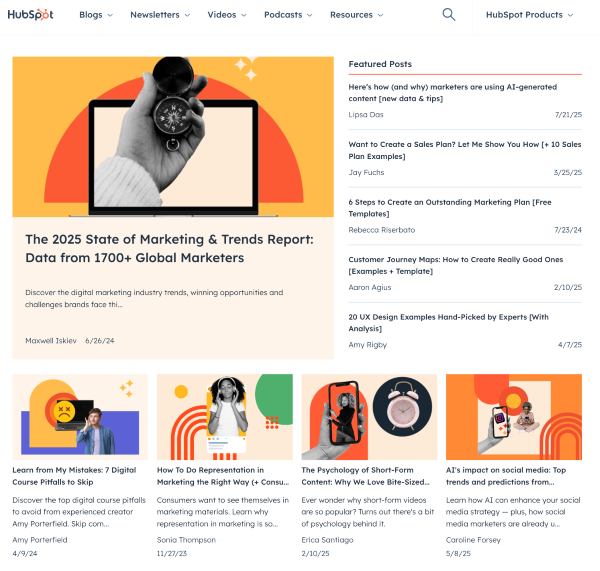
    4. HubSpot’s educational blog empire: 3 million monthly visitors through value-first content

    HubSpot's educational blog empire

    What they did: 

    HubSpot publishes over 50 blog posts per month across multiple topics, including marketing, sales, service, and website optimization. 

    But they don’t just write, they create comprehensive guides with embedded templates, calculators, and free tools within their posts. Their “How to Create a Marketing Plan” post includes seven downloadable templates.

    Why it worked:

    • Consistency: Daily publishing kept them top-of-mind
    • Depth: 2,000-3,000-word posts outranked thin content
    • Tools: Free templates generated 3x more leads than text-only posts
    • Internal linking: Created topic clusters that dominated SERPs
    • Updates: Refreshed top posts quarterly to maintain rankings

    Do it your way:

    1. Start with one core topic you can own completely
    2. Create a pillar page (5,000+ words) on that topic
    3. Build 20-30 cluster posts linking back to the pillar
    4. Add downloadable assets to the top 20% of posts
    5. Update quarterly with new data and examples
    6. Gate only high-value assets (keep most content free)

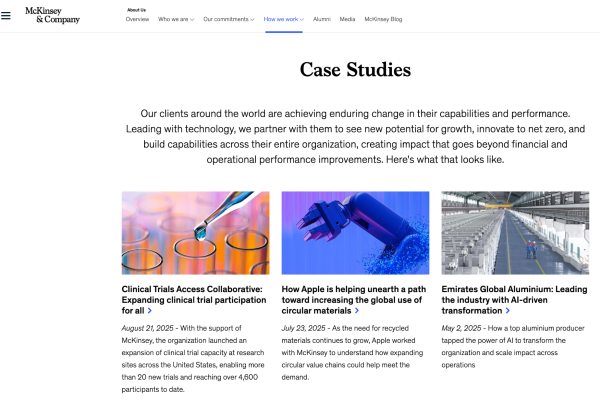
    5. McKinsey’s authority-building case studies: $10B in revenue through thought leadership

    McKinsey's authority-building case studies

    What they did: 

    McKinsey publishes detailed case studies showcasing client transformations without naming the clients. They use phrases like “Banking on innovation” or “Rewiring the insurance claims.” 

    Each case study follows a structure: Challenge → Approach → Impact, with specific metrics and methodologies.

    Why it worked:

    • Credibility: Real results with specific numbers (40% cost reduction, 3x growth)
    • Privacy: Protected client confidentiality while sharing insights
    • Methodology: Showed their unique frameworks and approaches
    • Aspirational: C-suite executives saw what was possible
    • SEO Value: Ranked for “[industry] transformation” keywords

    Do it your way:

    1. Get client permission for anonymized case studies
    2. Focus on transformation, not just results
    3. Include specific metrics (percentages, timeframes, ROI)
    4. Explain your methodology without giving everything away
    5. Create industry-specific versions of similar transformations
    6. Add executive summaries for busy decision-makers

    6. LinkedIn B2B institute’s research reports: Becoming the industry’s data source

     LinkedIn B2B institute's research reports

    What they did: 

    LinkedIn’s B2B Institute publishes original research on the effectiveness of B2B marketing. Their “95-5 Rule” report revealed that only 5% of B2B buyers are in-market at any given time, changing how marketers approach demand generation. 

    Reports combine LinkedIn data with academic research.

    Why it worked:

    • Original data: No one else had LinkedIn’s B2B insights
    • Academic credibility: Partnered with professors and researchers
    • Memorable concepts: “95-5 Rule” became industry terminology
    • Actionable insights: Translated research into practical strategies
    • PR magnet: Media outlets quoted their studies extensively

    Do it your way:

    1. Identify a data source you uniquely have access to
    2. Partner with academics or industry experts for credibility
    3. Create memorable frameworks (like the 95-5 Rule)
    4. Design visual summaries for easy sharing
    5. Pitch findings to industry publications before publishing
    6. Create multiple content pieces from one research study

    7. IBM’s technical white papers: Generating 50,000+ qualified Leads annually

     IBM's technical white papers

    What they did: 

    IBM publishes highly technical white papers on emerging technologies, including quantum computing, hybrid cloud, and AI ethics. 

    Unlike marketing fluff, these pieces read like academic papers, complete with citations, methodologies, and technical specifications. They gate them behind forms but provide detailed abstracts.

    Why it worked:

    • Technical depth: Engineers and architects found real value
    • Thought leadership: Positioned IBM at the forefront of innovation
    • Lead quality: Only serious buyers downloaded the 40-page technical papers
    • Sales enablement: Sales teams used papers in consultative selling
    • SEO authority: Earned backlinks from universities and research institutions

    Do it your way:

    1. Involve your technical team in content creation
    2. Don’t dumb it down for technical audiences
    3. Include diagrams and architectures, not stock photos
    4. Provide detailed abstracts before the gate
    5. Create executive summaries for non-technical stakeholders
    6. Promote through technical communities, not just LinkedIn

    8. Reddit’s authentic IPO video: Breaking corporate video norms

    What they did: 

    When Reddit went public, they created an IPO video featuring actual Reddit users and moderators, rather than executives in suits. 

    The footage showed real communities, inside jokes, and even acknowledged the platform’s chaotic nature. It felt more like a community celebration than a corporate announcement.

    Why it worked:

    • Authenticity: Reflected Reddit’s actual culture
    • Community first: Put users at the center, not executives
    • Emotional connection: Users felt ownership of the milestone
    • Viral format: Redditors shared it because they were proud
    • Media coverage: The press covered it because it was unconventional

    Do it your way:

    1. Feature real customers, not actors or executives
    2. Embrace your quirks instead of hiding them
    3. Use platform-native language and inside jokes
    4. Keep production values authentic (not overly polished)
    5. Make your community the hero of your story
    6. Distribute where your audience lives, not just on YouTube

    9. Xeela fitness transformation documentaries: 5.69M views through long-form storytelling

    What they did:  

    Xeela Fitness created 27-minute documentary-style videos that follow real people through their 6-month fitness transformations. Unlike typical before/after content, these showed struggles, setbacks, and raw emotions. Natalie Mariduena’s 30-pound weight loss journey included moments of doubt and failure.

    Why it worked:

    • Relatability: Showed real struggles, not just successes
    • Emotional investment: Viewers followed complete journeys
    • Binge-worthy: Long format increased watch time and channel authority
    • Product integration: Naturally showed supplements in daily routines
    • Community building: Comments became support groups

    Do it your way:

    1. Find compelling stories within your customer base
    2. Document the journey, not just the outcome
    3. Include setbacks to build authenticity
    4. Use longer formats (20+ minutes) for a deeper connection
    5. Create episodic content to build anticipation
    6. Integrate products naturally within the story

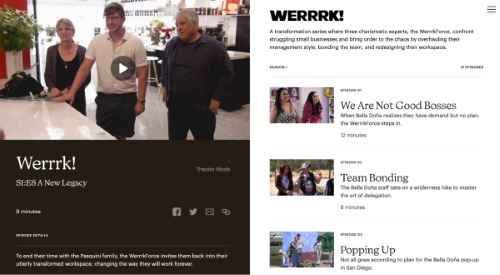
    10. Mailchimp presents: Werrrk series – reality TV meets business education

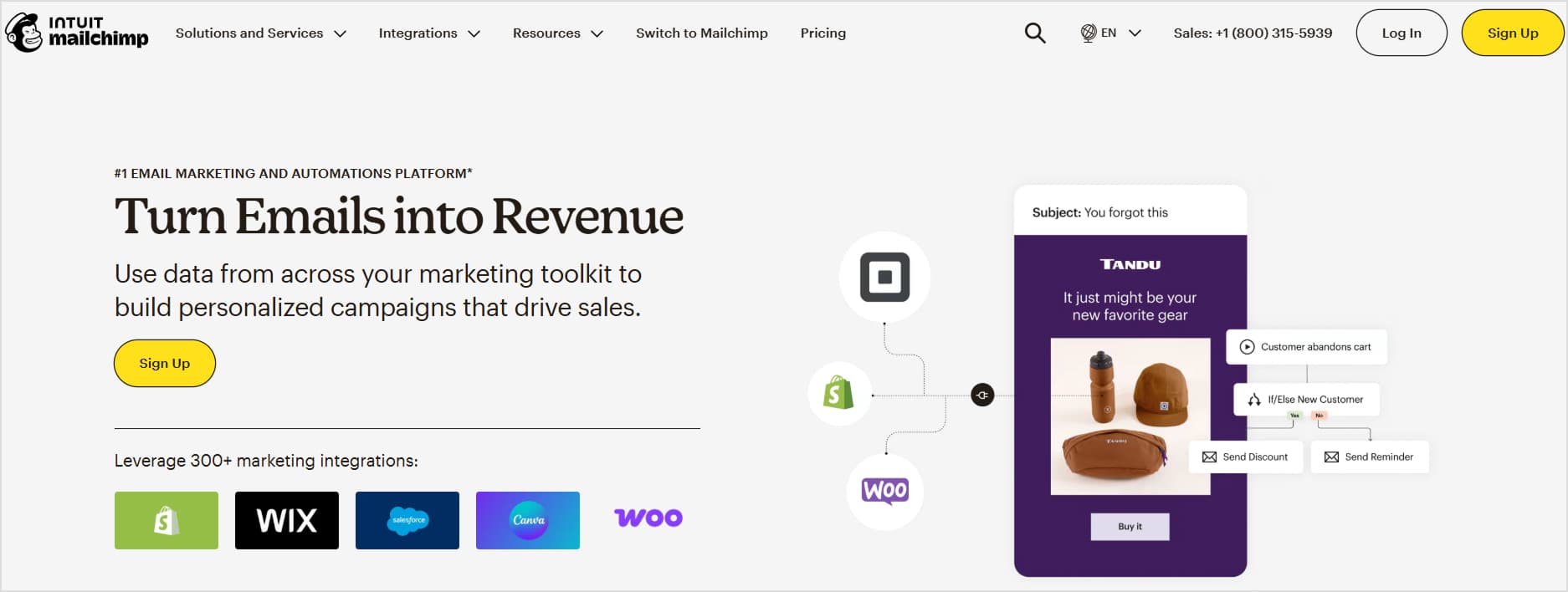
    Mailchimp presents: Werrrk series

    What they did:  

    Mailchimp created a 12-episode reality series where experts help struggling small businesses transform their operations. 

    Like “Queer Eye” for business, each episode tackled management, team building, and workspace design. The show lived on Mailchimp Presents, their content studio platform.

    Why it worked:

    • Entertainment value: Business education became binge-worthy
    • Emotional stories: Viewers connected with struggling entrepreneurs
    • Practical lessons: Each episode taught applicable strategies
    • Brand alignment: Celebrated entrepreneurial spirit without selling
    • Platform building: Created a destination for ongoing content

    Do it your way:

    1. Find a popular format (reality TV, documentary, game show)
    2. Adapt it to your industry with a unique twist
    3. Focus on transformation stories
    4. Create episodic content for repeat visits
    5. Build a content hub separate from your leading site
    6. Partner with experts to add credibility

    11. Tl;dv’s relatable SaaS sketches: 50 million views through comedy

    What they did:  

    Tl;dv creates short comedy sketches about SaaS workplace situations. 

    Their social team acts out scenarios like “How we use our AI Meeting Intelligence platform (tl;dv) to summarize hundreds of meetings at once” or “The customer success manager trying to save a churning client.” They never mention their product directly in the videos.

    Why it worked:

    • Relatability: Every SaaS employee has lived these moments
    • Shareability: People tagged coworkers in comments
    • No sales pitch: Built affinity without pushing product
    • Consistency: Posted 3x per week, maintaining momentum
    • Community building: Comments became therapy sessions for SaaS workers

    Do it your way:

    1. Identify universal pain points in your industry
    2. Create characters your audience recognizes
    3. Keep videos under 60 seconds for maximum sharing
    4. Never pitch your product in entertainment content
    5. Respond to comments in character
    6. Turn popular comments into new video ideas

    12. Apple’s #ShotoniPhone UGC campaign: 18 million post views and counting

    What they did:  

    Apple encouraged users to share photos with #ShotoniPhone, then featured the best ones on billboards, in stores, and on their Instagram. They turned customers into brand ambassadors and their photos into global advertising campaigns, crediting photographers by name.

    Why it worked:

    • Social proof: Real photos showed iPhone camera quality
    • Aspiration: Users wanted to be featured by Apple
    • Authenticity: No staged photography or editing
    • Global reach: Every iPhone user has become a potential content creator
    • Cost-effective: User content replaced expensive photoshoots

    Do it your way:

    1. Create a branded hashtag that’s action-oriented
    2. Feature user content prominently on your channels
    3. Credit creators by name to encourage participation
    4. Set quality standards, but keep them achievable
    5. Create themes (seasons, challenges) to maintain freshness
    6. Reward featured creators with products or recognition

    13. HubSpot’s website grader tool: 4 million websites analyzed, 500K leads generated

    HubSpot's website grader tool

    What they did:  

    HubSpot created a free tool that analyzes any website and provides a score across performance, mobile readiness, SEO, and security. 

    Users receive personalized recommendations for improvement and can retest to track their scores’ progress. The tool requires only an email address.

    Why it worked:

    • Instant value: Results in under 30 seconds
    • Gamification: Numerical scores triggered competitive instincts
    • Actionable: Specific fixes, not vague suggestions
    • Viral loop: Users shared scores and challenged others
    • Lead quality: People analyzing websites needed marketing help

    Do it your way:

    1. Create a scoring system for your industry
    2. Provide instant results (no waiting for emails)
    3. Make recommendations that are specific and actionable
    4. Allow retesting to show improvement
    5. Require minimal information (just email)
    6. Create shareable results with social cards

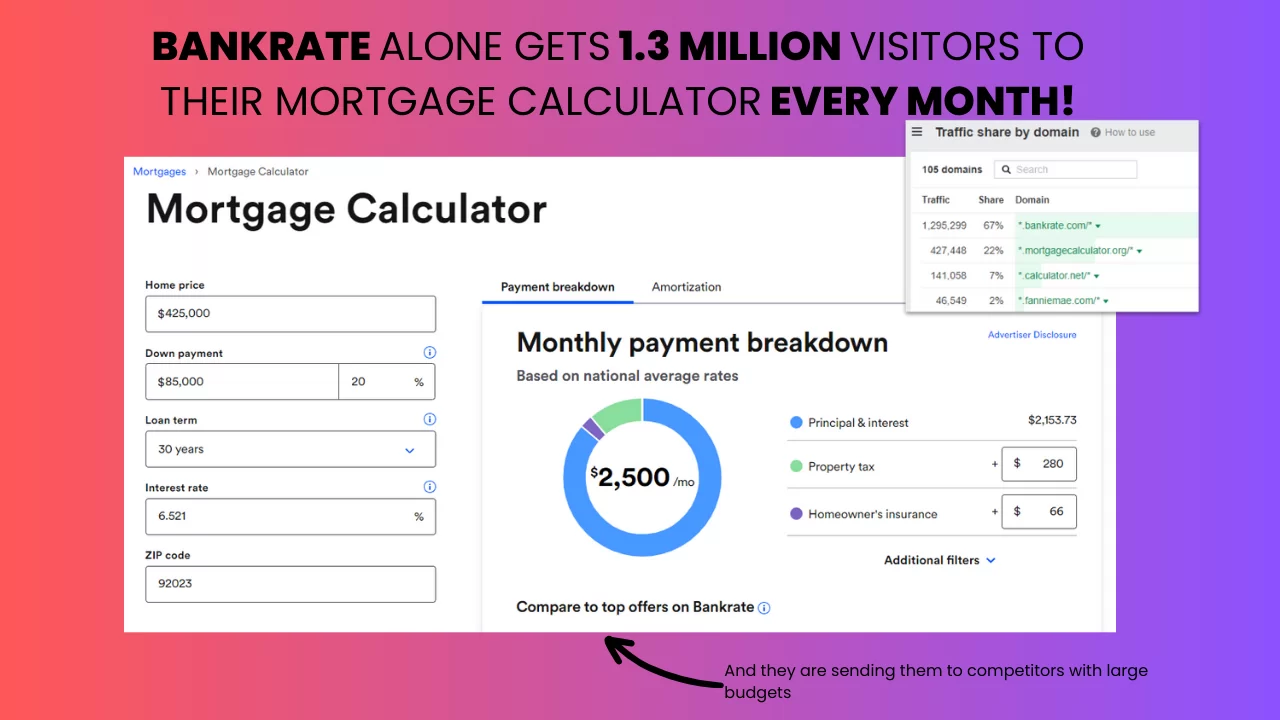
    14. Bankrate mortgage calculator: 1.3 million, 12,000 qualified leads

    Bankrate mortgage calculator

    What they did:  

    Bankrate created an interactive mortgage calculator that went beyond basic math. 

    Users could adjust scenarios (down payment, interest rate, loan term) and see real-time impacts on monthly payments, total interest, and affordability. The tool provided personalized reports via email.

    Why it worked:

    • High Intent: Only serious buyers use mortgage calculators
    • Personalization: Saved scenarios for future reference
    • Education: Explained terms and tradeoffs
    • Trust building: Transparent calculations built credibility
    • Lead nurturing: Follow-up emails with rate updates

    Do it your way:

    1. Solve a complex calculation that your audience faces
    2. Add scenario comparison features
    3. Explain the math to build trust
    4. Save user inputs for return visits
    5. Create personalized reports as lead magnets
    6. Follow up with relevant updates based on their inputs

    15. The New York Times’ Wordle acquisition: 31 million monthly active users

    @.presro The hubs life controversy got me pondering this, it’s a different shade of grass but it’s not greener I’ll tell you that #contentcreation #tiktokinfluencer #influencing ♬ original sound – Presro

    What they did:  

    The Times acquired Wordle and kept it free, using it to introduce millions to their games ecosystem. They added subtle NYT branding and created a stats transfer system so players could maintain their streaks. They then cross-promoted their paid games and subscriptions.

    Why it worked:

    • Daily habit: One puzzle per day created a routine
    • Social sharing: Grid emojis flooded social media
    • Low barrier: Free and requires no sign-up
    • Gateway drug: Led users to discover paid NYT games
    • Brand association: Associated the NYT with daily fun, not just news

    Do it your way:

    1. Create or acquire straightforward, addictive content
    2. Limit access (daily, weekly) to build anticipation
    3. Make sharing visual and easy
    4. Keep core experience free forever
    5. Upsell complementary products, not the same product
    6. Maintain what works when acquiring successful content

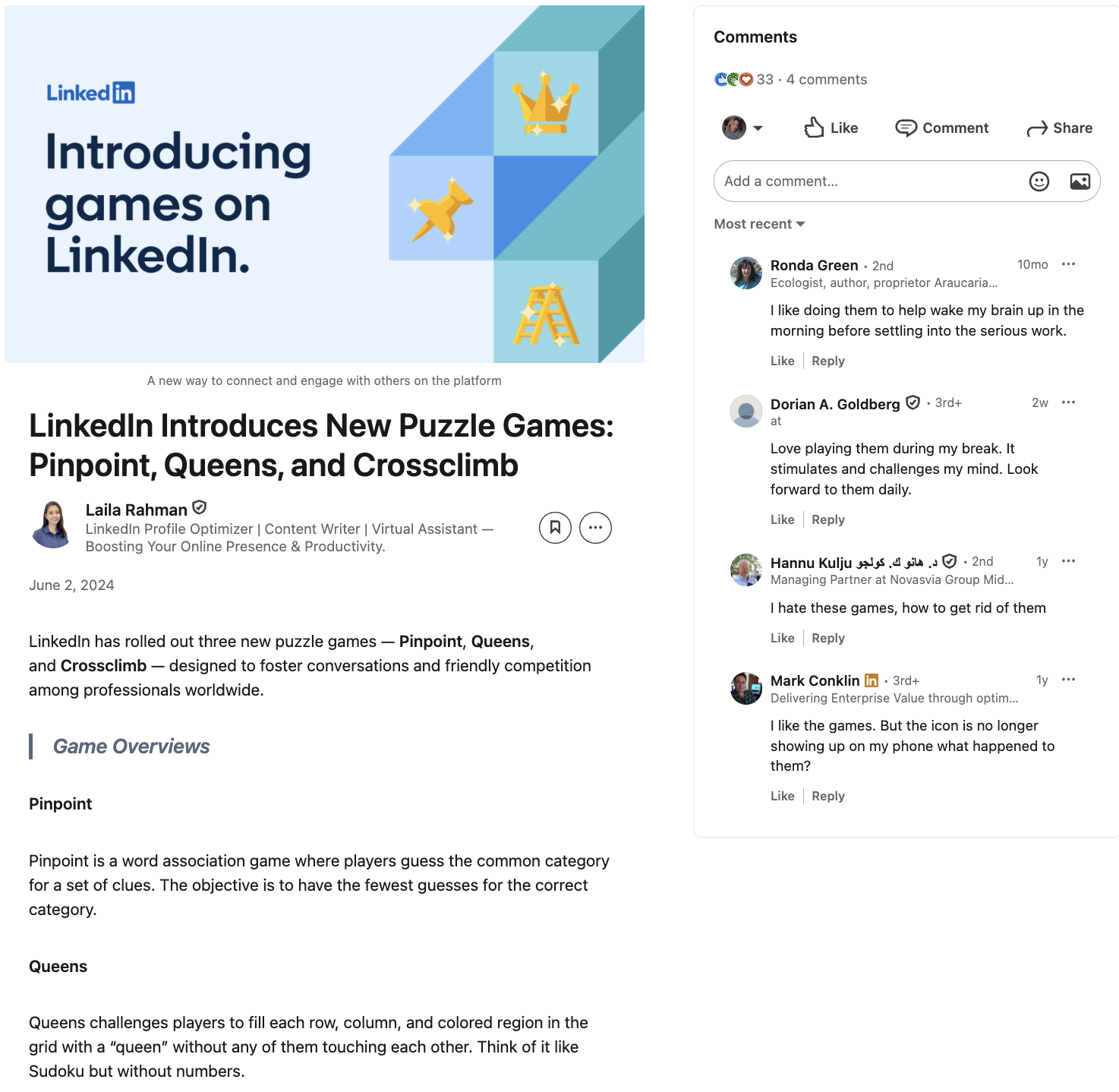
    16. LinkedIn’s professional games suite: 80 million games played in 6 months

     LinkedIn's professional games suite

    What they did:  

    LinkedIn launched puzzle games (Queens, Crossclimb, Pinpoint) specifically designed for professionals. 

    Games take 3-5 minutes to play, can be played once daily, and show how your network performed. Companies compete on leaderboards based on employee participation.

    Why it worked:

    • Professional context: “Brain training” for work legitimized gaming
    • Network effects: Seeing colleagues’ scores drove participation
    • Company competition: Organizations encouraged employee participation
    • Time respect: Quick games fit into work breaks
    • Data collection: Learned user interests through game choices

    Do it your way:

    1. Design for your audience’s context (professional, casual, educational)
    2. Add competitive elements between groups
    3. Respect time constraints (5-minute maximum)
    4. Create network effects through score sharing
    5. Rotate content to maintain freshness
    6. Connect games to the core value proposition

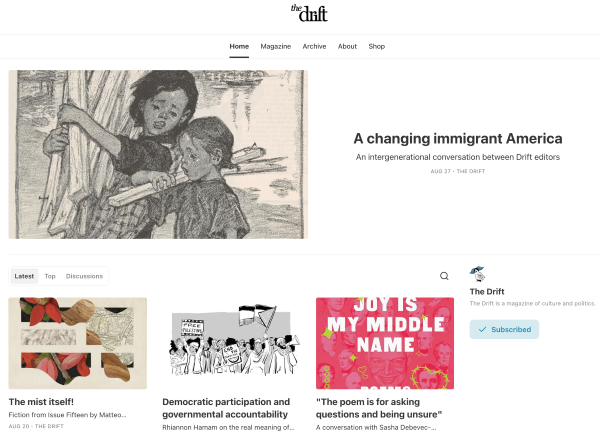
    17. Drift’s daily blog newsletter: 100,000 Subscribers, 47% Open Rate

     Drift's daily blog newsletter

    What they did:  

    Drift sends a daily email featuring one blog post, accompanied by a personal note from the author explaining why they wrote it. 

    Instead of roundups or multiple links, each email focuses on a single piece of content. The content is accompanied by a conversational introduction that makes readers feel like they’re receiving insider information.

    Why it worked:

    • Consistency: Daily emails became part of routines
    • Personal touch: Author notes created a connection
    • Single focus: One topic prevented decision fatigue
    • Value density: Every email taught something specific
    • FOMO: Daily cadence meant missing out on insights

    Do it your way:

    1. Choose a sustainable frequency (daily, weekly, bi-weekly)
    2. Focus on one thing per email
    3. Add personal context from the creator
    4. Keep it scannable with clear sections
    5. Include one clear CTA, not multiple options
    6. Test send times for your audience’s habits

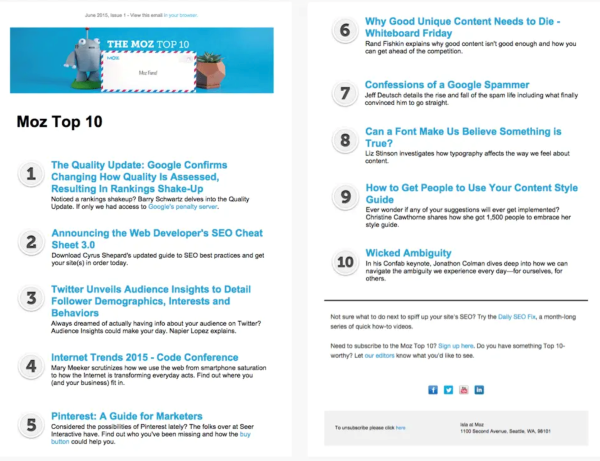
    18. Moz’s external content curation: 400,000 subscribers through generosity

    Moz's external content curation

    What they did:  

    Moz’s newsletter features 10 articles each week, with only 2-3 from Moz itself. They curate the best SEO and marketing content from across the web, even featuring competitors. Each link includes a brief explanation of why it’s worth reading.

    Why it worked:

    • Trust building: Recommending competitors showed confidence
    • Time saving: Subscribers didn’t need to search for quality content
    • Industry authority: Became the go-to source for SEO news
    • Relationship building: Featured sites often reciprocated
    • Low pressure: Mostly external content felt less salesy

    Do it your way:

    1. Curate more than you create (70/30 ratio)
    2. Include competitor content when it’s excellent
    3. Add your perspective on why something matters
    4. Maintain quality standards regardless of source
    5. Build relationships with featured creators
    6. Track which links get clicked to understand interests

    19. ContentStudio’s all-in-one solution: 150,000 users through tool consolidation

    ContentStudio's all-in-one solution

    What they did:  

    ContentStudio combined social AI toolkit, scheduling, publishing, and analytics into one platform. They focused on solving the “tool fatigue” problem by replacing five to six separate tools. Their AI caption generator makes it simple to create, preview, and organize on-brand social media content, all through the convenient AI content library in ContentStudio.

    Why it worked:

    • Tool consolidation: Replaced multiple subscriptions
    • Automation: Recipe feature puts social media on autopilot
    • Team collaboration: Multi-user workspaces improved workflow
    • White label: Agencies could rebrand as their own tool

    Do it your way:

    1. Identify tool sprawl in your target market
    2. Build or acquire complementary features
    3. Focus on workflow, not just features
    4. Offer migration support from competitors
    5. Create automation templates for everyday use cases
    6. Enable team collaboration from day one

    20. Usermaven’s privacy-first analytics

    Usermaven's privacy-first analytics

    What they did:  

    Usermaven built product analytics that work without cookies, automatically tracking all events without code. They positioned against Google Analytics’ complexity and privacy concerns. Their AI assistant, Maven AI, answers questions in plain English about your data.

    Why it worked:

    • Privacy trend: GDPR/CCPA compliance built in
    • Simplicity: No code required for tracking
    • AI differentiation: Natural language data queries
    • Accurate data: 99% accuracy by bypassing ad blockers
    • Developer-free: Marketers could set up independently

    Do it your way:

    1. Find a significant pain point in existing solutions
    2. Build for non-technical users first
    3. Add AI thoughtfully (not just for buzzwords)
    4. Emphasize compliance and privacy
    5. Offer generous free tiers for adoption
    6. Create comparison content against incumbents

    21. Contentpen’s SEO-optimized AI writing: 10,000 articles published monthly

    What they did:  

    Contentpen specializes in creating AI-driven, SEO-focused content. Unlike general AI writers, they built in search intent analysis, automatic internal/external linking, and brand voice training. This AI blog writing tool’s bulk generation feature creates month-long content calendars in hours.

    Why it worked:

    • Specific use case: SEO content, not general writing
    • Quality control: Human-in-the-loop editing built in
    • Bulk operations: Scaled content creation efficiently
    • Direct publishing: One-click WordPress integration
    • Brand consistency: Learned and maintained voice

    Do it your way:

    1. Specialize in one content type deeply
    2. Build quality checks into the workflow
    3. Enable bulk operations for scale
    4. Integrate with publishing platforms directly
    5. Train on the customer’s existing content for consistency
    6. Provide revision workflows, not just generation

    22. AI-powered personalization campaigns: Dynamic content at scale

    AI-powered personalization campaigns

    What they did:

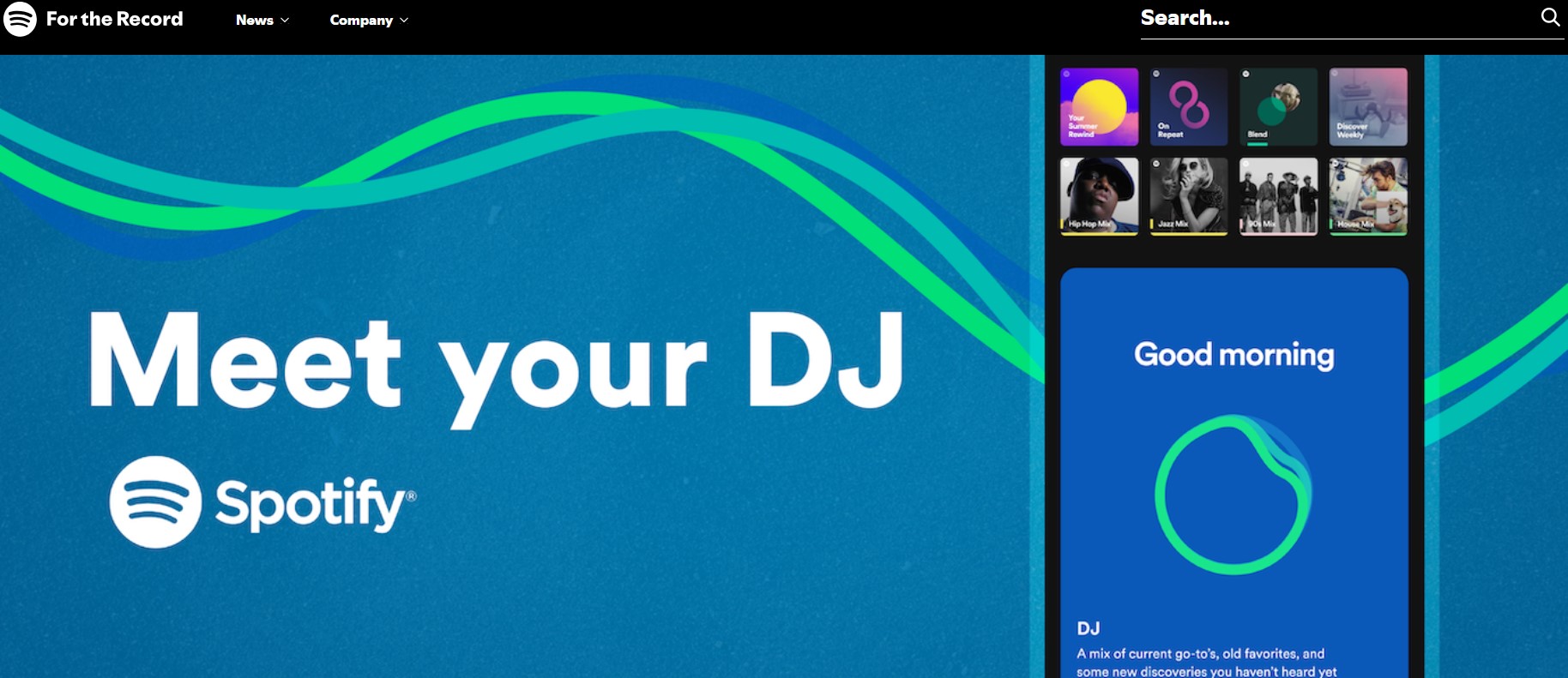
    Modern brands are using AI to create thousands of content variations automatically. Netflix’s thumbnail system displays different images based on a user’s viewing history. Spotify’s DJ feature creates personalized radio shows with AI voice commentary about your music taste.

    Why it worked:

    • Individual relevance: Each user sees optimized content
    • Scalability: Impossible to create manually
    • Testing: Continuous optimization through data
    • Engagement: Personalized content increases interaction
    • Retention: Users feel understood and valued

    Do it your way:

    1. Start with one variable (headline, image, or CTA)
    2. Create rules-based variations before full AI
    3. Test with small segments first
    4. Measure engagement differences carefully
    5. Expand gradually to more personalization
    6. Maintain brand consistency across variations

    23. Voice-activated interactive content: The Hands-free future

    What they did:  

    Brands are creating voice-first experiences for smart speakers and voice assistants. Nestle’s GoodNes offers cooking guidance through Sayla Thompson. Users can ask questions while cooking and receive step-by-step instructions without needing to touch a screen.

    Why it worked:

    • Convenience: Hands-free during activities
    • Accessibility: Inclusive for various abilities
    • Novelty: Early adopters love new formats
    • Utility: Solved real problems (messy hands while cooking)
    • Data collection: Learned actual user questions and needs

    Do it your way:

    1. Identify hands-busy moments in the customer journey
    2. Create voice-first content, not voice-added
    3. Design for conversation, not monologue
    4. Keep interactions short and purposeful
    5. Provide visual fallbacks when needed
    6. Test with real users in real contexts

    Conclusion

    These 23 best content marketing examples prove one thing: successful content marketing in 2025 isn’t about creating more content. Instead, it’s about creating content that matters.

    If Backlinko’s evolution inspires you, HubSpot’s educational empire, or LinkedIn’s gaming strategy, the key principles remain the same:

    • Solve real problems for your audience
    • Be consistent in your publishing
    • Measure everything and optimize based on data
    • Don’t be afraid to try new formats
    • Focus on building trust before driving sales

    The digital marketing content examples we’ve explored demonstrate that every business, whether B2B or B2C, large or small, can create content that resonates with its target audience. 

    You don’t need Reddit’s budget or Apple’s brand power. You need to understand your audience, consistently deliver value, and evolve based on what works.

    Frequently asked questions

    What are the best B2B content marketing examples?

    Top B2B examples include 
    – McKinsey’s case studies, which have shown 40% cost reductions; 
    – LinkedIn’s “95-5 Rule” research, which changed industry thinking;
    – IBM’s white papers, which generate over 50,000 leads annually.
    – HubSpot’s educational blog, featuring free templates.
    – Drift’s daily newsletter, which achieves 47% open rates.

    How do I start content marketing with no budget?

    Start with free platforms like Medium or LinkedIn. You can also create user-generated content campaigns using branded hashtags. To keep costs low, try free tools such as Contentpen’s basic plan. Repurpose your existing content into new formats so you get more use out of it. Finally, focus on one content type until you master it, and then expand into others.

    What are interactive content marketing examples?

    Interactive content examples include:
    – HubSpot’s Website Grader (analyzed 4M sites, generated 500K leads)
    – Mortgage calculators (12,000 qualified leads)
    – NYT’s Wordle (31M monthly users)
    – LinkedIn’s professional games (80M plays)
    – AI-powered personalization like Netflix’s dynamic thumbnails.

  • What is content marketing? A complete guide

    What is content marketing? A complete guide

    Content marketing has emerged as one of the most effective strategies for businesses that want to shift from traditional advertising methods. It helps brands build trust and drive engagement by connecting with the audience in an authentic and organic manner. 

    But don’t worry if you are not familiar with content marketing and its role in modern digital marketing strategies. 

    In this blog, we’ll explore content marketing from the ground up. You’ll learn what content marketing really means and how its key elements and types provide numerous benefits to businesses. We’ll also be breaking dos and don’ts of content marketing to ensure you can optimize its benefits. 

    So, let’s get started and learn how exactly you can create, distribute, and optimize content with a solid content marketing strategy that delivers real results.

    What is content marketing?

    Content marketing is a strategic marketing approach focused on creating, distributing, and sharing valuable, relevant, and consistent content to attract and retain a clearly defined audience. 

    Unlike traditional advertising that interrupts your audience, content marketing provides genuinely useful information that helps solve problems, educates, or entertains your target customers.

    content marketing - contentpen.ai

    In digital marketing, content serves as the foundation that drives all other marketing efforts. Whether you’re running social media campaigns, email marketing, or SEO initiatives, quality content remains the core element that connects with your audience and builds lasting relationships.

    The content marketing meaning extends beyond just creating blog posts or social media updates. It’s about understanding your audience’s pain points, challenges, and interests, then crafting content that addresses these needs while subtly guiding them toward your products or services.

    What is the purpose of content marketing?

    Content marketing serves multiple strategic purposes in modern business:

    • Building trust and credibility with your target audience
    • Establishing thought leadership in your industry
    • Driving organic traffic to your website through search engines
    • Supporting the sales funnel by nurturing leads at different stages
    • Creating brand voice and improving brand recall
    • Generating qualified leads who are genuinely interested in your solutions
    • Reducing customer acquisition costs compared to traditional advertising methods

    3 main elements of content marketing

    Successful content marketing relies on three fundamental pillars that work together to create meaningful connections with your audience.

    Content creation

    This involves developing high-quality, valuable content that resonates with your target audience. Effective content creation requires understanding your audience’s needs, preferences, and challenges. Using AI to write blog posts has made this process faster and smoother, allowing businesses to create more content efficiently while maintaining quality standards.

    The creation process includes:

    Content distribution

    Creating excellent content is only half the battle. You need strategic distribution to reach your intended audience. This involves sharing your content across multiple channels, including your website, social media platforms, email newsletters, and third-party publications.

    Distribution also includes:

    • Optimizing content for different platforms
    • Timing your posts strategically
    • Using both organic and paid promotion methods to maximize reach and engagement.

    Content engagement

    The final element focuses on fostering meaningful interactions with your audience. This includes responding to comments, encouraging discussions, asking questions, and creating content that naturally invites participation.

    Engagement helps build community around your brand and provides valuable feedback that can form future content creation efforts.

    Types of content marketing

    Content marketing involves various formats, each serving different purposes and appealing to different audience preferences.

    Blogging

    Blog posts remain one of the most effective content marketing strategies. They provide opportunities to target specific keywords, share detailed insights, and establish expertise. 

    Bloggig - contentpen.ai

    Knowing how to create a blog in 10 minutes demonstrates how modern tools can accelerate the blogging process without sacrificing quality. Successful blogging requires consistency, valuable insights, and proper SEO optimization. 

    Videos and reels

    Video content captures attention effectively and can explain complex concepts in digestible formats. From educational tutorials to behind-the-scenes glimpses, videos create personal connections with your audience.

    Videos and Reels- contentpen.ai

    Short-form videos like reels and TikToks are particularly effective for reaching younger demographics and can significantly boost engagement rates across social media platforms.

    Social media content

    Platform-specific content tailored to each social media channel’s unique characteristics and audience expectations. This includes everything from Instagram stories to LinkedIn articles, each requiring different approaches and tone.

    Social media content - contentpen.ai

    Podcasts

    Audio content allows audiences to consume information while multitasking, making it incredibly convenient. Podcasts build deeper relationships through the intimate nature of voice communication and can establish strong personal brands. 

    Podcast - contentpen.ai

    The growing popularity of podcasts creates opportunities for thought leadership, guest appearances, and niche audience targeting. Regular podcast episodes help maintain consistent touchpoints with your audience, while the conversational format makes complex topics more accessible and engaging than traditional written content.

    Infographics

    Visual content that simplifies complex information into easily digestible formats. Infographics are highly shareable and can effectively communicate data, processes, or comparisons. They perform exceptionally well on social media platforms and can significantly boost engagement rates. 

    Infographics - contentpen.ai

    Well-designed infographics combine compelling visuals with clear data storytelling, making them valuable for link-building efforts. They’re particularly effective for explaining step-by-step processes, statistical findings, or industry trends in formats that audiences can quickly understand and share.

    Email marketing

    Direct communication with subscribers who have explicitly shown interest in your content. Email marketing provides opportunities for personalized content delivery and nurturing leads through targeted campaigns. 

    Email marketing - contentpen.ai

    With impressive ROI rates and the ability to segment audiences based on behavior and preferences, email remains one of the most effective marketing channels. 

    Automated email sequences can guide subscribers through customer journeys, while regular newsletters keep your brand top-of-mind. Strategic email content builds trust and drives conversions more effectively than most other marketing methods.

    White papers

    In-depth, authoritative content that demonstrates expertise and provides comprehensive solutions to specific industry challenges. White papers are particularly effective for B2B marketing and lead generation. 

    White paper - contentpen.ai

    These detailed reports establish credibility by presenting original research, case studies, or industry analysis that competitors cannot easily replicate. They serve as powerful lead magnets, often requiring contact information for downloads, making them valuable for building email lists. 
    Do’s and don’ts of content marketing

    Understanding what works and what doesn’t can save you time and resources while maximizing your content marketing effectiveness.

    Do’s of content marketing

    Apply these content marketing strategies:

    Know your audience

    Successful content marketing starts with deep audience understanding. Research your target customers’ demographics, interests, challenges, and content preferences. Create buyer personas that guide your content creation decisions and ensure every piece of content serves your audience’s needs.

    Create valuable content

    Focus on providing genuine value rather than promotional messages. Your content should educate, entertain, or solve problems for your audience.

    Be consistent

    Consistency builds trust and keeps your audience engaged. Develop a content calendar and stick to regular publishing schedules. Moreover, you should use AI to cut blogging time as part of your content marketing strategies to maintain consistency without overwhelming your resources.

    Optimize for SEO

    Ensure your content is discoverable through search engines by incorporating relevant keywords naturally, optimizing meta descriptions, and following SEO best practices. You should explore the top AI content SEO content marketing tools to streamline your efforts.

    Repurpose content

    Maximize your content investment by adapting it for multiple formats and platforms. Transform blog posts into videos, infographics, or social media series to reach different audience segments effectively.

    Track performance

    Use analytics to understand what resonates with your audience. Monitor metrics like engagement rates, time on page, conversion rates, and social shares to refine your content marketing strategies continuously.

    Tell stories

    Storytelling makes your content more memorable and emotionally engaging. Use narratives, case studies, and personal experiences to connect with your audience on a deeper level.

    Encourage engagement

    Ask questions, respond to comments, and create content that invites participation. Building a community around your content increases loyalty and extends your reach through word-of-mouth marketing.

    Don’ts of content marketing

    You can get the best results through your content marketing strategies by avoiding these don’ts:

    • Don’t focus only on sales: Constantly pushing products alienates audiences who seek valuable information.
    • Don’t ignore quality: Poor content damages your brand reputation and credibility.
    • Don’t publish without a strategy: Random content creation wastes resources and confuses your audience.
    • Don’t neglect visuals: Text-only content is less engaging and shareable than visual content.
    • Don’t forget mobile users: Ensure all content is optimized for mobile consumption.
    • Don’t ignore your audience’s voice: Listen to feedback and adapt your content accordingly.
    • Don’t copy competitors blindly: Develop your unique voice and perspective.
    • Don’t stop after publishing: Promote your content actively and engage with your audience.

    Benefits of content marketing

    Content marketing offers numerous advantages that make it an essential component of modern digital marketing strategies.

    Business growth and visibility

    The primary benefits of content marketing are in the form of greater business growth and visibility:

    • Boosts brand awareness: Quality content increases your brand’s visibility across multiple channels. This organic brand building is more sustainable and cost-effective than traditional advertising.
    • Drive organic traffic: Search engines favor websites with fresh, relevant content. By consistently publishing optimized content, you improve your search rankings and attract visitors.
    • Supports lead generation: As per a survey, content marketing generates three times more leads than traditional marketing methods. By providing valuable information, you attract qualified prospects who are more likely to convert into customers.

    Sales and conversions

    Using the right content marketing tools and strategies can also help you improve sales:

    • Improves conversion rates: Content-driven marketing campaigns typically see conversion rates six times higher than other methods. By educating prospects and building trust, content marketing creates more qualified leads.
    • Supports the buyer’s journey: Different types of content serve prospects at various stages of their purchasing journey. Awareness-stage content attracts new prospects, consideration-stage content helps evaluate options, and decision-stage content facilitates final purchasing decisions.
    • Cost-effective marketing: Content marketing costs 62% less than traditional marketing while generating more leads. Once created, quality content continues providing value for months or years, making it an excellent long-term investment.

    Trust and relationships

    You can build long-term relationships with your customers via content marketing:

    • Builds credibility: Consistently sharing valuable, accurate information establishes your business as a trusted authority in your industry. This credibility translates into customer confidence and increased sales opportunities.
    • Nurtures relationships: Content marketing facilitates ongoing communication with your audience, building relationships that extend beyond single transactions.
    • Increase trust: Transparent, helpful content builds trust with your audience. When prospects trust your expertise, they’re more likely to choose your solutions over competitors’ offerings.

    How Contentpen transforms content marketing?

    Contentpen revolutionizes content marketing by combining the power of multiple AI agents with deep brand intelligence to create high-quality, SEO-optimized content at scale. 

    As an AI content writer, Contentpen addresses one of content marketing’s biggest challenges: consistently producing valuable content that ranks well and resonates with your audience.

    The platform’s multi-agent system handles everything from competitor research and SEO optimization to brand voice consistency and content distribution. This means businesses can maintain regular publishing schedules, improve search rankings, and build stronger audience relationships without the traditional time and resource constraints.

    Here’s how you can Contentpen to create articles:

    Content marketing and SEO

    Content marketing and SEO work together to improve your online visibility and drive organic traffic. Quality content provides the foundation for effective SEO strategies, while SEO techniques help your content reach larger audiences through improved search rankings.

    Search engines prioritize websites that consistently publish valuable, relevant content. By incorporating targeted keywords naturally, optimizing meta tags, and following SEO best practices, your content becomes more discoverable.

    Moreover, well-optimized content earns backlinks from other websites, further boosting your search authority. The combination of valuable content and proper SEO creates a powerful engine for sustainable organic growth that benefits your business long-term.

    Future of content marketing

    Content marketing continues evolving with technological advances and changing consumer behaviors. Artificial intelligence is revolutionizing content creation, with tools enabling faster, more personalized content production. 

    Interactive content, voice search optimization, and video-first strategies are becoming increasingly important. Personalization at scale, powered by AI and data analytics, allows businesses to create more relevant experiences for individual users. 

    The future belongs to brands that can balance content automation with authentic human connection.

    Bottom line

    Content marketing is more than a trend! It’s a value-driven way to connect authentically with your audience. If you focus on creating, distributing, engaging, and using formats like blogs, videos, and social media, you can build trust, generate leads, and drive growth. 

    By consistently creating helpful, relevant, and optimized content, you not only attract qualified leads but also build lasting relationships with your audience. As AI tools continue to reshape the content creation and marketing industry, the winning brands will be those that strike the perfect balance between efficiency and authentic human connection.

    Frequently asked questions

    What are the 4 Ps of content?

    The 4 Ps of content are Plan, Produce, Publish, and Promote. It is a comprehensive framework that ensures content is well-structured, created effectively, shared across the right channels, and amplified for maximum reach.
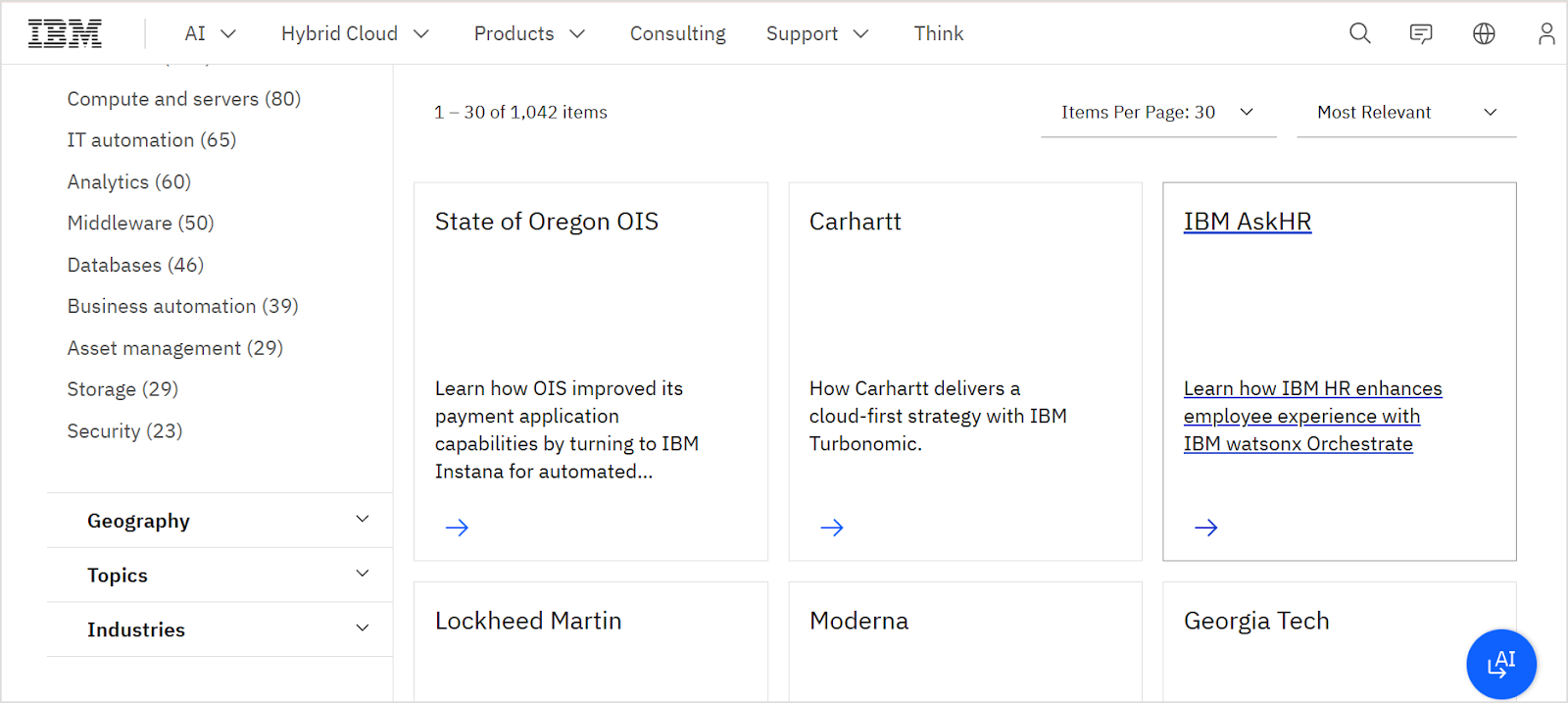
    What are the 3 E’s of content marketing?

    The 3 E’s are Educate, Entertain, and Engage. In other words, great content should teach something useful, capture attention, and build interaction with the audience.

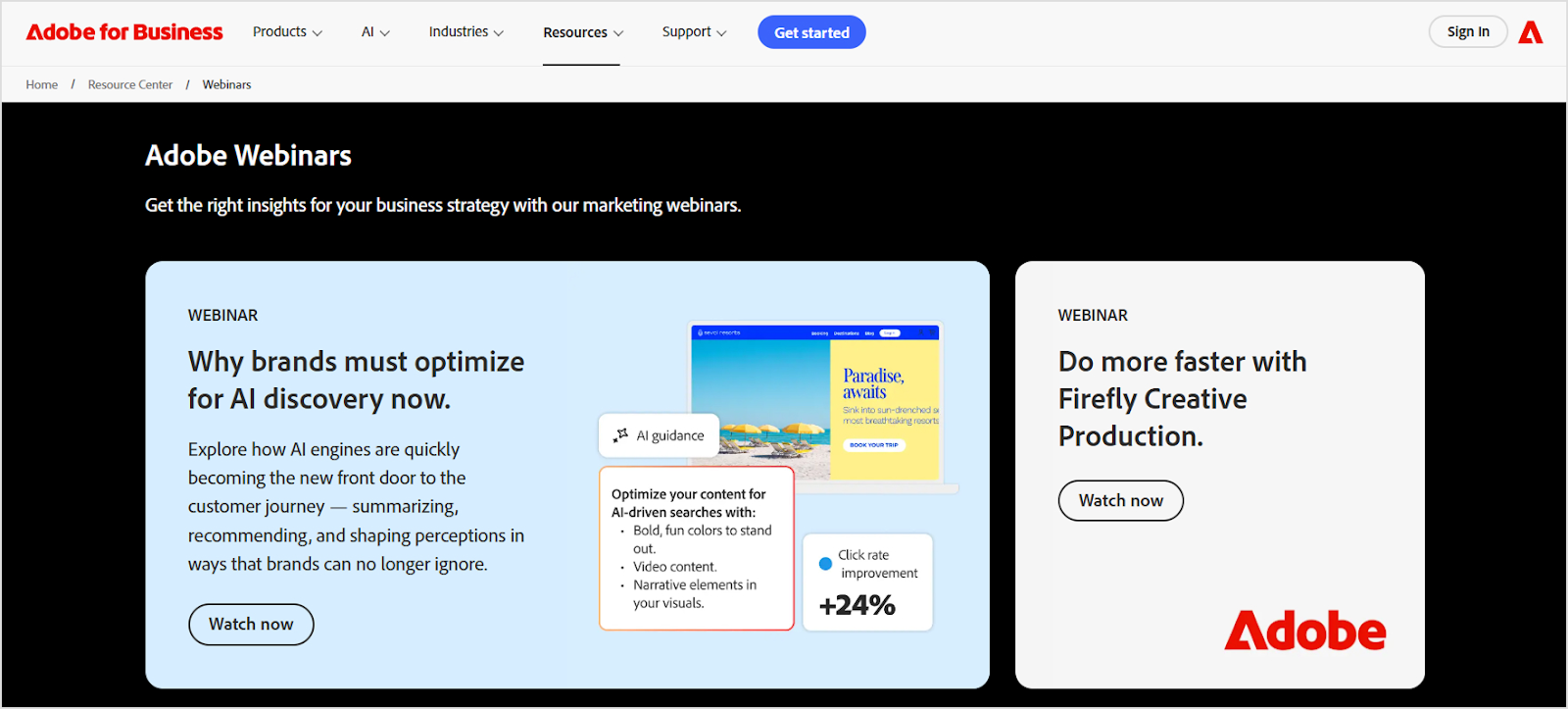
    What is content marketing vs social media marketing?

    Content marketing is the strategy of creating valuable content to reach and convert audiences, while social media marketing focuses on distributing and promoting that content on social media platforms like Facebook, Instagram, or LinkedIn.

    What’s the difference between content marketing and traditional advertising?

    Content marketing focuses on providing value and building relationships through helpful information, while traditional advertising directly promotes products or services. Content marketing attracts audiences naturally, creating trust and authority that leads to better conversion rates and customer loyalty.

    How often should I publish content for effective content marketing?

    Consistency matters more than frequency. Whether you publish daily, weekly, or monthly, maintain a regular schedule that your audience can expect. Most successful businesses publish 1-4 blog posts per week, but quality should never be sacrificed for quantity.

    How long does it take to see results from content marketing?

    Content marketing is a long-term strategy that typically shows initial results within 3-6 months, with significant growth occurring after 6-12 months. Results depend on content quality, publishing consistency, SEO optimization, and promotion efforts across multiple channels.

    What does a content marketer do?

    A content marketer plans, creates, distributes, and optimizes content. They ensure the content aligns with brand goals, resonates with the target audience, and drives measurable results such as traffic, leads, or sales.

  • Content marketing strategy – meaning, elements, steps to build

    Content marketing strategy – meaning, elements, steps to build

    Content marketing has evolved into one of the most powerful ways for businesses to attract, engage, and convert their audiences. Yet, many brands still fall into the trap of creating random content without a clear plan. 

    The result? Blog posts and social media updates that don’t connect, drive traffic, or generate revenue.

    A content marketing strategy solves this problem by giving your brand a structured roadmap, one that aligns with business goals, speaks directly to your audience, and ensures every piece of content works harder for growth.

    In this comprehensive guide, we’ll explain what a content marketing strategy is, why it matters in 2025, and how to build one step by step. We’ll also show how Contentpen supercharges the process, helping you scale content marketing without compromising on quality.

    What is a content marketing strategy?

    A content marketing strategy is more than a to-do list of blog topics. It’s the master plan that connects your business objectives to your content efforts. Think of it as a bridge between your brand and your audience.

    At its core, it answers five essential questions:

    1. What content will we create? Blogs, videos, eBooks, infographics, case studies, whitepapers.
    2. Who are we creating it for? Define buyer personas with demographics, goals, and pain points.
    3. Where will we publish it? Website blog, LinkedIn, YouTube, newsletters, and industry forums.
    4. Why are we creating it? Educate, generate leads, nurture trust, boost sales.
    5. How will we measure success? KPIs like organic traffic, lead conversions, bounce rates, and time on page.

    For instance, a SaaS startup offering project management tools shouldn’t just “write about productivity.” Its strategy would target specific personas (like marketing managers or IT leads), publish content that solves their workflow challenges, and measure conversions through free trial sign-ups.

    Why do you need a content marketing strategy in 2025?

    The digital content landscape is crowded, and only those with a structured strategy rise above the noise. 

    Here’s why your brand can’t afford to skip it:

    Build brand authority

    Audiences don’t trust ads; they trust expertise. When your content consistently educates, you position your brand as an industry leader.

    For example, the blog on “Will AI replace writers?” builds authority by tackling a controversial topic with insights that show expertise.

    Generate organic traffic

    Search engines reward quality, consistent content. By targeting the right keywords and publishing regularly, your blogs attract organic traffic that compounds over time. 

    Increase conversions

    Content written with intent guides readers from awareness to action. For instance, the blog about “how to cut blogging time using AI” educates readers about a challenge, then subtly positions Contentpen as the solution, driving conversions without being “salesy.”

    Improve ROI

    Without a strategy, content efforts are scattered. With one, every article, video, or case study ties back to measurable ROI. Pair this with automation like, ( how to automate internal and external linking), and you save resources while improving results.

    Key elements of a successful content marketing strategy

    A strategy must be comprehensive yet flexible. The following pillars ensure success:

    Content marketing strategy - contentpen.ai

    Audience research

    The foundation of strategy is knowing your audience inside out. This means building personas based on real data, not assumptions. What questions are they asking? what platforms do they use? And what formats do they prefer?

    Clear goals & KPIs

    If you don’t measure, you can’t improve. Goals like “increase awareness” should be translated into KPIs, traffic, newsletter sign-ups, or demo requests.

    Content calendar

    A calendar brings consistency, avoids duplication, and ensures balanced coverage across buyer journey stages.

    SEO optimization

    SEO is non-negotiable. Using frameworks like the on-page SEO checklist, you ensure blogs are discoverable and rank for target keywords.

    Content distribution

    Publishing is only half the battle. A strategy includes promotion plans: email blasts, LinkedIn posts, influencer collaborations, or syndication.

    Steps to build a winning content marketing strategy

    Here’s the proven roadmap for creating a strategy that scales:

    Steps to build a winning content marketing strategy  - contentpen.ai

    Step 1: Define your audience

    Take a closer look using surveys, forums, and analytics. Build personas with clear demographics, pain points, and buying behaviors.

    Step 2: Conduct a content audit

    Review existing assets to identify strengths and gaps. Maybe you already have a strong SEO blog but lack middle-funnel case studies. A post like how to edit AI content could inspire similar improvements.

    Step 3: Set SMART goals

    Be specific: “Grow organic blog traffic by 40% in six months” is actionable and trackable.

    Step 4: Research keywords & topics

    Use SEO tools to identify topics that match buyer intent. Long-tail keywords bring in more qualified traffic. For example, the blog “best AI SEO tools,” targets a niche audience actively searching for solutions.

    Step 5: Plan your content calendar

    Organize content by funnel stage (awareness, consideration, decision). Map formats how-to blogs, videos, or case studies to each stage.

    Step 6: Create high-quality content

    Your content must balance depth with clarity. Avoid fluff, focus on actionable value. Create content that is useful, engaging, and trustworthy for your audience. It should provide real value, be easy to understand, and stand out from competitors.

    Step 7: Optimize for SEO

    Strategically place keywords, optimize images, and interlink. Always connect blogs to related resources, e.g., linking a blog on keyword research to types of keywords.

    Step 8: Promote across channels

    Don’t wait for Google alone. Repurpose blogs into LinkedIn carousels, newsletters, and podcasts.

    Step 9: Track and adjust

    Measure against KPIs. If blogs drive traffic but not conversions, tweak CTAs or add middle-funnel assets like whitepapers.

    Common content marketing mistakes to avoid

    Even the best businesses make errors when creating content , but the cost of these mistakes is wasted time, money, and missed opportunities. By recognizing them early, you can refine your approach and ensure your content marketing strategy delivers results.

    Publishing content without aligning it to goals

    One of the biggest mistakes is creating content just for the sake of it. Without aligning blog posts, videos, or guides to business objectives , such as lead generation, awareness, or conversions , you risk producing content that doesn’t serve a purpose. 

    Ignoring keyword research

    Many brands still publish blogs without proper keyword targeting. This is like building a store in the desert , no matter how great it looks, no one will find it. 

    Keywords connect your content to what your audience is actually searching for. By skipping this step, you miss out on organic traffic and search visibility. 

    Writing for algorithms instead of humans

    In an attempt to “hack” SEO, some marketers overload their content with keywords, making it unreadable. The result? Search engines may rank it lower, and readers won’t stay on the page. 

    Instead, focus on clarity, storytelling, and problem-solving while integrating keywords naturally. 

    Failing to promote beyond the website

    Publishing content is just the beginning. If you’re not promoting it through social media, email marketing, LinkedIn posts, or newsletters, you’re leaving visibility on the table. 

    Relying solely on organic search means your content may take months to gain traction. 

    Neglecting to refresh or repurpose old content

    Many businesses forget that content isn’t “one and done.” Over time, statistics, tools, and best practices change, leaving your content outdated. 

    Search engines also reward freshness. So, revisiting, updating, and repurposing older blogs can significantly boost rankings. 

    How Contentpen makes building a content marketing strategy easier and more effective?

    Crafting a strong content marketing strategy is complex. It requires aligning business goals, audience insights, keyword research, and SEO best practices while keeping content consistent and engaging. 

    Contentpen simplifies this process tremendously. It combines advanced AI, SEO intelligence, and brand personalization to help businesses design and execute strategies that actually drive results.

    Here’s how it helps:

    AI-powered built-in content calendar 

    Contentpen helps you plan and schedule your entire content plan. With integrated calendar features and AI-suggested publishing times, you can keep your content engine running smoothly, without spreadsheets or separate tools.

    built-in content calendar  - contentpen.ai

    AI-powered outlines

    Instead of starting from scratch, Contentpen generates research-backed outlines tailored to your niche, audience, and goals. 

    Whether you need a thought leadership piece, a product comparison, or an awareness-stage blog, Contentpen has you covered. It structures your content strategy so every piece fits into the bigger picture.

    Blog outline generation - contentpen.ai

    Customizable presets for strategy-driven content

    Consistency across blogs, case studies, and newsletters is essential for a brand-led content marketing strategy. 

    With Contentpen’s presets, you can set formatting and tone guidelines once and apply them across all content types. From how-to guides and listicles to in-depth strategy explainers, your brand voice stays unified and scalable.

    custom presets - contentpen.ai

    Brand knowledge integration

    Every brand has its unique messaging and audience-specific language. Contentpen’s brand knowledge system learns from your existing content, ensuring all new blogs reflect your positioning, tone, and values. 

    This guarantees that your content marketing strategy doesn’t just look professional, it also feels authentically yours.

    Add knowledge base - contentpen.ai

    Smart keyword & topic suggestions

    Successful strategies require covering more than just target keywords; you need topical authority. Contentpen analyzes competitor content and search intent to recommend primary and semantic keywords. This makes your content strategy SEO-driven without losing readability.

    find high-opportunity keywords in Contentpen - contentpen.ai

    Automated internal and external linking

    Linking is one of the most overlooked parts of strategy execution. Contentpen automates the linking process by identifying opportunities to connect to both internal blogs and trusted external sources, strengthening SEO and providing readers with a seamless experience. 

    For example, if your blog covers keyword research, it can automatically link to types of keywords for deeper context.

    Automate external and internal linking - contentpen.ai

    Bulk content creation for scaling strategy

    For brands producing content at scale, strategy execution can feel overwhelming. 

    Contentpen’s bulk article generation feature allows you to create dozens of blogs in one go , each aligned with your chosen themes, SEO framework, and brand guidelines. This makes scaling your strategy fast, cost-effective, and stress-free.

    Advanced editing and optimization

    Even strong strategies fall short without fine-tuning. Contentpen’s editorial tools enhance your drafts by boosting readability, optimizing for featured snippets, and creating a smooth flow. 

    With the right mix of depth and clarity, your content doesn’t just get published, it delivers results.

    Through these features, Contentpen turns content marketing strategy from a time-intensive process into a streamlined growth engine. 

    Instead of struggling with planning, formatting, or SEO, your team can focus on what matters most. That means creating meaningful content that builds trust, drives traffic, and turns readers into customers.

    Conclusion 

    A content marketing strategy isn’t optional in 2025; it’s the engine of growth. It helps brands build trust, increase traffic, and convert readers into customers. By combining clear planning with AI blog writer like Contentpen, you not only save time but also create a scalable system for long-term growth.

    The brands that thrive in 2025 will be those with a well-documented, data-driven content marketing strategy and the tools to execute it at scale.

  • How to write short blog posts that still deliver value?

    How to write short blog posts that still deliver value?

    The demand for a variety of content remains high, even though human attention spans are rapidly shrinking. In such a scenario, short blog posts have emerged as a powerful solution to reach busy readers who want quick, actionable insights without the commitment of going through lengthy articles. 

    Whether you’re an experienced content creator or just starting your blogging journey, you should master the art of optimizing content marketing strategies to boost your search rankings.

    Why short blog posts are more relevant than ever?

    Innovations like social media and AI have fundamentally changed how people consume content. Modern readers are bombarded with information from every direction, including social media feeds, news alerts, emails, and countless blog posts competing for their attention.

    Short blog posts offer a refreshing alternative that respects your audience’s time while delivering genuine value.

    Statistics show that an average person spends only 37 to 60 seconds reading a blog post. This reality doesn’t mean your content needs to be superficial; instead, it challenges you to be more strategic and intentional with every word you write.

    Why short doesn’t mean less impactful

    The misconception that longer automatically means better has been thoroughly debunked in the content marketing world. Short blog posts can be incredibly powerful when executed correctly. They force you to distill complex ideas into their most essential components, often resulting in clearer, more actionable content than their lengthy counterparts.

    Consider some of the most viral content on social media, including tweets that spark conversations, Instagram captions that drive engagement, or LinkedIn posts that generate thousands of shares. 

    These examples prove that impact isn’t measured in word count but in clarity, relevance, and value delivery.

    Benefits of brevity for modern readers

    Today’s readers appreciate content that gets straight to the point. Short blog posts offer several advantages that make them particularly appealing:

    • Faster consumption: Readers can digest the entire piece in one sitting without feeling overwhelmed
    • Higher completion rates: People are more likely to read a short post from start to finish
    • Better mobile experience: Shorter content is easier to read on smartphones and tablets
    • Increased sharing potential: Concise, valuable content is more likely to be shared across social platforms
    • Reduced bounce rates: Readers who can quickly find what they’re looking for are less likely to leave your site immediately

    The key is understanding that brevity doesn’t mean sacrificing depth. It means being selective about what depth to include. When you focus on delivering one key insight exceptionally well, you often create more value than attempting to cover everything superficially.

    How concise posts can still perform well in search

    Search engines have evolved beyond simply rewarding long-form content. Google’s algorithm now prioritizes content that best satisfies search intent, regardless of length. Short blog posts can rank extremely well when they:

    • Answer specific questions directly and comprehensively
    • Target long-tail keywords with clear search intent
    • Provide exactly what searchers are looking for without unnecessary filler
    • Load quickly and offer an excellent user experience
    • Generate high engagement metrics like low bounce rates and social shares

    Does Google penalize AI content is a common concern, but the reality is that search engines care more about quality and relevance than word count. A well-optimized 500-word post that perfectly answers a searcher’s question will often outperform a 2,000-word post that meanders without focus.

    1. Plan before you write for maximum clarity

    The foundation of any successful short blog post lies in meticulous planning. When you have limited space to work with, every element must serve a purpose. This constraint actually becomes an advantage, forcing you to think critically about what your readers truly need to know.

    Effective planning for short content requires a different mindset than planning for long-form articles. Instead of trying to cover a topic comprehensively, you need to identify the single most valuable angle and pursue it relentlessly. This approach often results in more focused, actionable content that readers can immediately implement.

    Here’s how you can plan your blog posts more strategically:

    Define the single goal of your post

    Before writing a single word, you must crystallize exactly what you want your short blog post to achieve. This goal should be specific, measurable, and directly tied to your reader’s needs. Ask yourself:

    • What specific problem am I solving for my reader?
    • What action do I want them to take after reading?
    • What one insight or skill should they walk away with?

    For example, instead of writing about “social media marketing” (too broad), focus on “how to write Instagram captions that drive engagement” (specific and actionable). This focused approach ensures every paragraph, sentence, and word contributes to your singular objective.

    Your goal should be narrow enough to cover thoroughly in your chosen word count, yet valuable enough to justify your reader’s time investment. This balance is what separates effective short content from superficial listicles that provide little real value.

    Choose a focused topic that fits the short format

    Not every topic is suitable for short blog posts. The most successful concise content typically falls into these categories:

    • How-to guides for specific, achievable tasks
    • Quick tips that readers can implement immediately
    • Tool reviews focusing on key features and benefits
    • Problem-solution posts addressing common pain points
    • Industry updates with clear implications and takeaways

    Topics that require extensive background explanation, complex multi-step processes, or comprehensive analysis are better suited for longer formats. The key is recognizing when a topic can be covered effectively within your constraints and when it needs more space to breathe.

    When selecting topics, consider your audience’s context and needs. Use AI to overcome writer’s block by brainstorming multiple angles for your chosen subject, then selecting the one that offers the most immediate value in the shortest space.

    Use Contentpen to create an outline instantly

    Creating an effective outline is crucial for short blog posts, and Contentpen’s AI-powered research feature can dramatically streamline this process. The platform’s specialized agents analyze your topic, competitors, and target audience to suggest optimized structures that maximize impact within your word limit.

    When using Contentpen for outline creation:

    • Input your focused topic and primary keyword
    • Review the AI-generated structure for logical flow and completeness
    • Customize sections to match your specific angle and goals
    • Verify each heading serves your single post objective
    • Eliminate any sections that don’t directly support your main message
    Blog outline generation

    The platform’s ability to analyze top-ranking content for your keywords helps ensure your outline covers the essential points readers expect while maintaining the focus necessary for short-form success.

    This research-backed approach gives you confidence that your structure will both satisfy search intent and deliver genuine value.

    Here’s how you can create an article using Contentpen:

    2. Structure your short post for readability

    The structure of your short blog post can make or break its effectiveness. With limited space, every element must work harder to engage readers and guide them smoothly through your content. The best short posts feel effortless to read, creating a smooth experience that keeps readers engaged from the first sentence to your final call-to-action.

    The effective structure for short content differs significantly from long-form articles. You can’t rely on multiple sections to build momentum or gradually introduce concepts. Instead, you need to capture attention immediately and maintain it throughout with clear organization and strategic formatting choices.

    Start with a hook and get to the main point fast

    Your opening paragraph is critical real estate in any short blog post. Unlike longer articles, where you might spend several paragraphs setting context, short posts demand immediate value delivery. Your hook should simultaneously grab attention and signal what readers will gain by continuing.

    Effective opening strategies for short posts include:

    • Start with a surprising statistic that highlights the problem you’re solving
    • Pose a question that your readers are actively asking themselves
    • Make a bold statement that challenges conventional thinking
    • Share a brief anecdote that illustrates your main point

    After your hook, immediately transition to your main point. Avoid lengthy introductions or excessive background information. Your readers came for specific information, and they want it quickly. 

    Related: Best AI tool for writing SEO-rich blog content

    Use bullet points and numbered lists for clarity

    Visual formatting becomes even more important in short blog posts because it helps readers process information quickly and efficiently. Strategic use of lists, bullet points, and other formatting elements can make your content feel more digestible and actionable.

    Numbered lists work best when presenting:

    • Step-by-step processes or procedures
    • Ranked items or prioritized recommendations
    • Sequential actions readers should take
    • Timeline-based information

    Bullet points excel for:

    • Features, benefits, or characteristics
    • Non-sequential tips or strategies
    • Examples or case studies
    • Key takeaways or summary points

    Remember that formatting choices should enhance comprehension, not just break up text. Each list should serve a specific purpose in helping readers understand and apply your content. The goal is to make complex information feel simple and approachable.

    Keep paragraphs and sentences short

    In short blog posts, paragraph and sentence length directly impact readability and engagement. Long paragraphs can feel overwhelming on mobile devices, while complex sentences slow down comprehension and create friction in the reading experience.

    Aim for paragraphs of 2-4 sentences maximum, with each sentence focusing on a single idea. This approach creates natural breathing room and makes your content feel more conversational and accessible. Short sentences also tend to be more powerful and memorable, helping key points stick with readers long after they finish reading.

    Consider the visual impact of your text formatting. Large blocks of text can intimidate readers before they even start reading, while well-spaced, shorter paragraphs invite engagement and feel more manageable to consume.

    3. Write fast without losing quality

    Speed and quality might seem mutually exclusive, but when writing short blog posts, focused writing sessions often produce better results than lengthy, drawn-out processes. The key is developing systems and techniques that help you write efficiently while maintaining the high standards your audience expects.

    Fast writing for short content requires a different approach than traditional blog writing. You need to embrace constraints as creative catalysts, using your limited word count to force clarity and precision in your messaging. This approach often results in stronger, more impactful content than you might achieve with unlimited space.

    Work in short, timed writing sessions

    Time constraints can be incredibly powerful for creating short blog posts. When you know you have limited time, you naturally focus on essential information and eliminate unnecessary tangents. This approach mirrors the reading experience you want to create for your audience – focused, efficient, and valuable.

    Try these time-based writing techniques:

    • 25-minute focused sprints using the pomodoro technique.
    • 15-minute outline sessions to plan structure and key points.
    • 10-minute writing bursts for individual sections.
    • 5-minute editing passes to tighten language and improve flow.

    During these sessions, resist the urge to edit as you write. Let your ideas flow freely, knowing you’ll refine them in dedicated editing time. This separation of creation and refinement often leads to more natural, engaging content that connects better with readers.

    Also read: How to create a blog in less than 10 minutes using content presets

    Stick to the essentials without over-explaining

    One of the biggest challenges in writing short blog posts is determining what to include and what to cut. The temptation to over-explain concepts can quickly inflate your word count without adding proportional value. Instead, trust your readers’ intelligence and focus on providing the most crucial information clearly and concisely.

    Before including any explanation or example, ask yourself:

    • Does this directly support my main goal?
    • Will removing this confuse my target reader?
    • Can I convey this information more efficiently?
    • Is this essential for taking action on my advice?

    Remember that you can always link to more comprehensive resources for readers who want deeper information.

    Use Contentpen to draft ideas quickly

    Contentpen’s AI-powered writing features can dramatically accelerate your drafting process for short blog posts. The platform’s multiple AI agents work together to research, structure, and draft content that aligns with your brand voice while incorporating proven SEO strategies.

    Using Contentpen for rapid drafting:

    • Generate multiple angle ideas for your chosen topic
    • Create research-backed outlines in minutes rather than hours
    • Draft individual sections with AI assistance while maintaining your voice
    • Optimize content structure based on competitor analysis
    • Ensure keyword integration happens naturally throughout your writing
    Custom presets

    The key is using AI as a collaborative partner rather than a replacement for your expertise. Let Contentpen handle the heavy lifting of research and initial drafting, then apply your unique insights and brand perspective to create truly valuable content.

    4. Edit and optimize efficiently

    Editing short blog posts requires surgical precision. Every word must earn its place, and every sentence should move your reader closer to your intended goal. The editing process becomes more critical when working with constraints because you can’t afford to waste space on unclear or redundant content.

    Effective editing for short content involves multiple passes, each with a specific focus. This systematic approach ensures you catch different types of issues while maintaining the overall flow and impact of your piece. 

    The goal is to create content that feels polished and professional while retaining the authentic voice that connects with readers.

    Remove fluff and tighten language

    Ruthless editing separates good short blog posts from great ones. Look for common areas where unnecessary words typically hide:

    • Redundant phrases like “in order to” (use “to”) or “the fact that” (often removable)
    • Weak qualifiers such as “somewhat,” “rather,” or “quite” dilute your message
    • Excessive adverbs that can usually be replaced with stronger verbs
    • Filler transitions that don’t add meaning or improve flow
    • Repetitive information that restates previous points without adding value

    Use AI to rewrite or replace weak paragraphs with stronger alternatives. Instead of “There are many benefits to using short posts,” write “Short blog posts offer multiple benefits.” This approach eliminates unnecessary words while making your writing more direct and engaging.

    Check grammar, flow, and formatting

    Technical accuracy becomes more noticeable in short blog posts because errors have nowhere to hide. A single grammar mistake or awkward sentence can disrupt the entire reading experience when you only have a few hundred words to work with.

    Focus your proofreading efforts on:

    • Sentence variety to maintain reader interest and improve flow
    • Transition quality between paragraphs and sections
    • Formatting consistency in headings, lists, and emphasis
    • Grammar and spelling accuracy throughout
    • Voice consistency that aligns with your brand

    Read your post aloud or use text-to-speech software to catch awkward phrasing that might not be obvious when reading silently. This technique is particularly effective for identifying sentences that are too long or complex for your target format.

    Add keywords and links without overloading

    SEO optimization for short blog posts requires finesse. You have fewer opportunities to naturally incorporate keywords and internal links, making each instance more important. The goal is seamless integration that enhances rather than disrupts the reading experience.

    Strategic keyword placement for short content:

    • Include your primary keyword in the title, first paragraph, and at least one subheading
    • Distribute secondary keywords naturally throughout the body content
    • Use keyword variations to avoid repetition while maintaining relevance
    • Bold key terms strategically to improve scannability and SEO signals

    For internal linking, focus on resources that genuinely add value for readers wanting to explore related topics. 

    Also read: How to automate internal and external linking using Contentpen

    Conclusion

    Writing effective short blog posts is both an art and a science. Success comes from careful planning that defines clear goals, efficient writing that eliminates unnecessary elements, and strategic editing that optimizes every word for maximum impact. Remember: plan with purpose, write with focus, edit ruthlessly, and optimize thoughtfully.

    The beauty of short-form content lies in its accessibility, both for writers and readers. You can create valuable content more quickly, and your audience can consume it more easily. This efficiency doesn’t compromise quality; instead, it demands higher standards for clarity and relevance.

    Ready to streamline your content creation process? Start your free trial with Contentpen, and discover how AI-powered writing tools can help you create compelling short blog posts faster than ever before. 

    With features like automated research, brand voice integration, and SEO optimization, you’ll wonder how you ever managed content creation without it.

    FAQs about short blog posts

    How short should a blog post be?

    Short blog posts typically range from 300 to 800 words, though the ideal length depends on your topic and audience needs. The key is including enough information to provide genuine value while respecting your readers’ time constraints. Focus on completeness rather than hitting a specific word count; some topics require 300 words, others need 600.

    Can short blog posts rank on Google?

    Absolutely. Short blog posts can rank exceptionally well when they target specific keywords and satisfy search intent effectively. Google’s algorithm prioritizes content that best answers users’ questions, regardless of length. 

    How often should I publish short content?

    Short content allows for more frequent publishing because it requires less time to create. Many successful blogs publish short blog posts 2-3 times per week, using the efficiency gains to maintain consistent output.
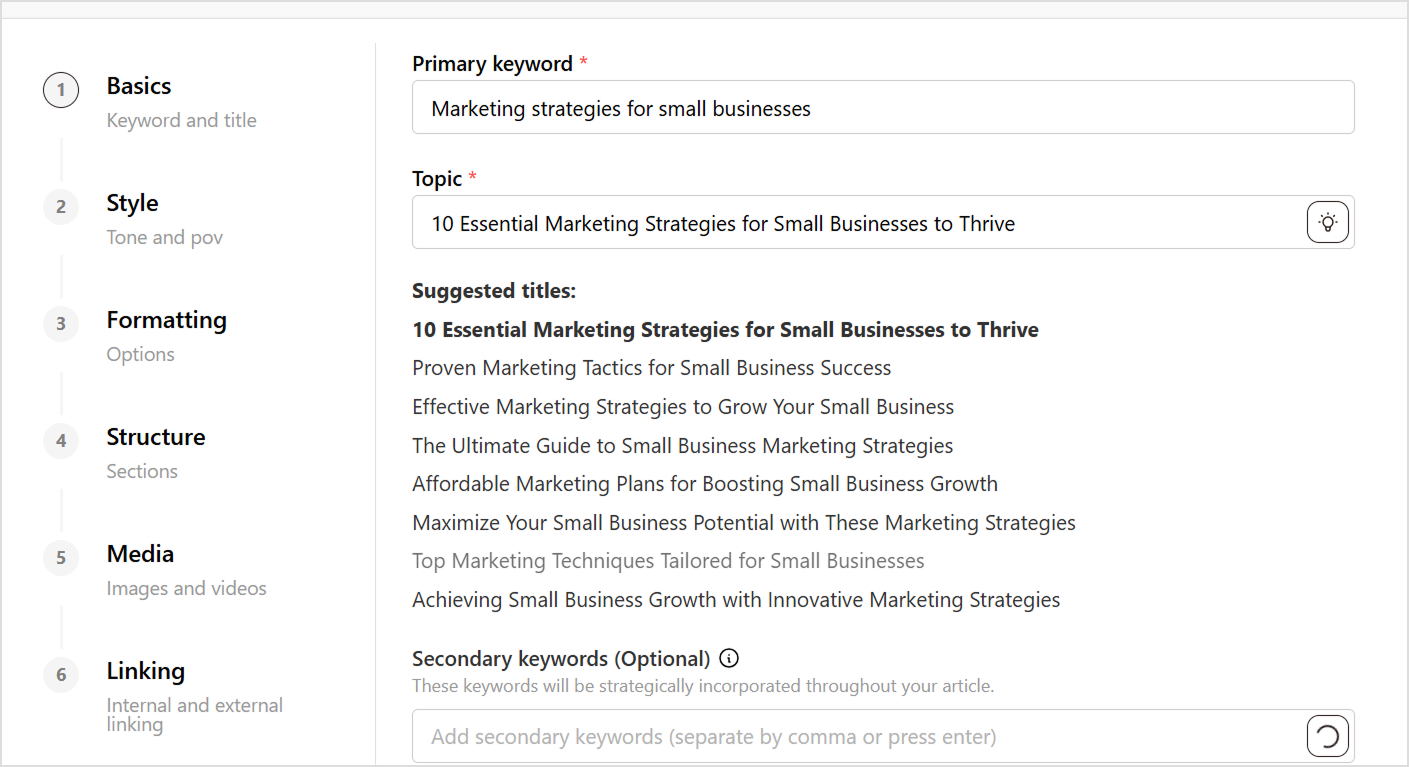
    Should I use AI tools like Contentpen for short posts?

    AI tools like Contentpen excel at creating short blog posts because they can quickly research topics, generate focused outlines, and draft concise content that maintains quality and relevance. You should learn how to use AI for content creation effectively to significantly reduce the time investment while improving consistency and SEO optimization.

  • The ultimate guide to optimized content marketing for SEO success

    The ultimate guide to optimized content marketing for SEO success

    Digital marketers explore every possible route to connect with their target audience and drive more leads. Their efforts usually include a mix of SEO strategies, content marketing, and improving the design and usability of their websites. The goal? To attract, engage, and convert more users.

    But achieving real growth with SEO isn’t something that happens by luck. It requires consistent effort, strategic planning, and a lot of patience. From keyword research and high-quality content creation to technical optimization, every element on the SEO checklist plays a role in improving search visibility.

    Before we dive deeper into how content marketing supports SEO growth, let’s start by understanding the basics.

    What is optimized content marketing?

    Brands and influencers aim to capture as much attention as possible through various content channels, including blogs, newsletters, and social media. However, the attention is the result of a highly effective marketing campaign that creates waves in the industry.

    To get that sort of attention, one needs hyper-targeted, value-driven content. This is where the optimized content marketing comes in. What is optimized content marketing? You might be wondering now!

    Let’s get right into it.

    Definition and importance of optimized content marketing

    Optimized content marketing refers to the process of strategically enhancing the quality of content to increase its reach, visibility, and ranking, thereby achieving specific goals with precision and effectiveness.

    For instance, a software company might want to bring new customers on board by offering the prospects a 30-day free trial with no strings attached. This company may need to position its software as a must-have tool to accomplish the task. Therefore, this company needs to optimize its content marketing strategy accordingly.

    Here’s why optimized content marketing is important for any marketing campaign:

    1. Laser-focused consumer targeting

    The approach of “throwing it at the wall and seeing what sticks” doesn’t always work in content marketing. The laser-sharp targeting enhances your content marketing efforts, enabling brands or individuals to produce highly optimized, effective content that consistently hits the mark.

    2. Content gaps identification

    One of the reasons optimized content marketing is crucial to your digital marketing campaign is that it encourages you to identify content gaps in the space. It lays a strong foundation for your content marketing strategy, which ensures a competitive edge and market dominance.

    Also read: Top 10 AI writing tools to speed up your content creation

    3. Problem-solving content distribution

    Optimized content marketing requires a strategic approach to creating and distributing value-driven content that solves real-life issues faced by the prospective audience. When such high-quality, targeted content gets published, it’s most likely to bring better ranking, more social reach, and increased conversion rate.
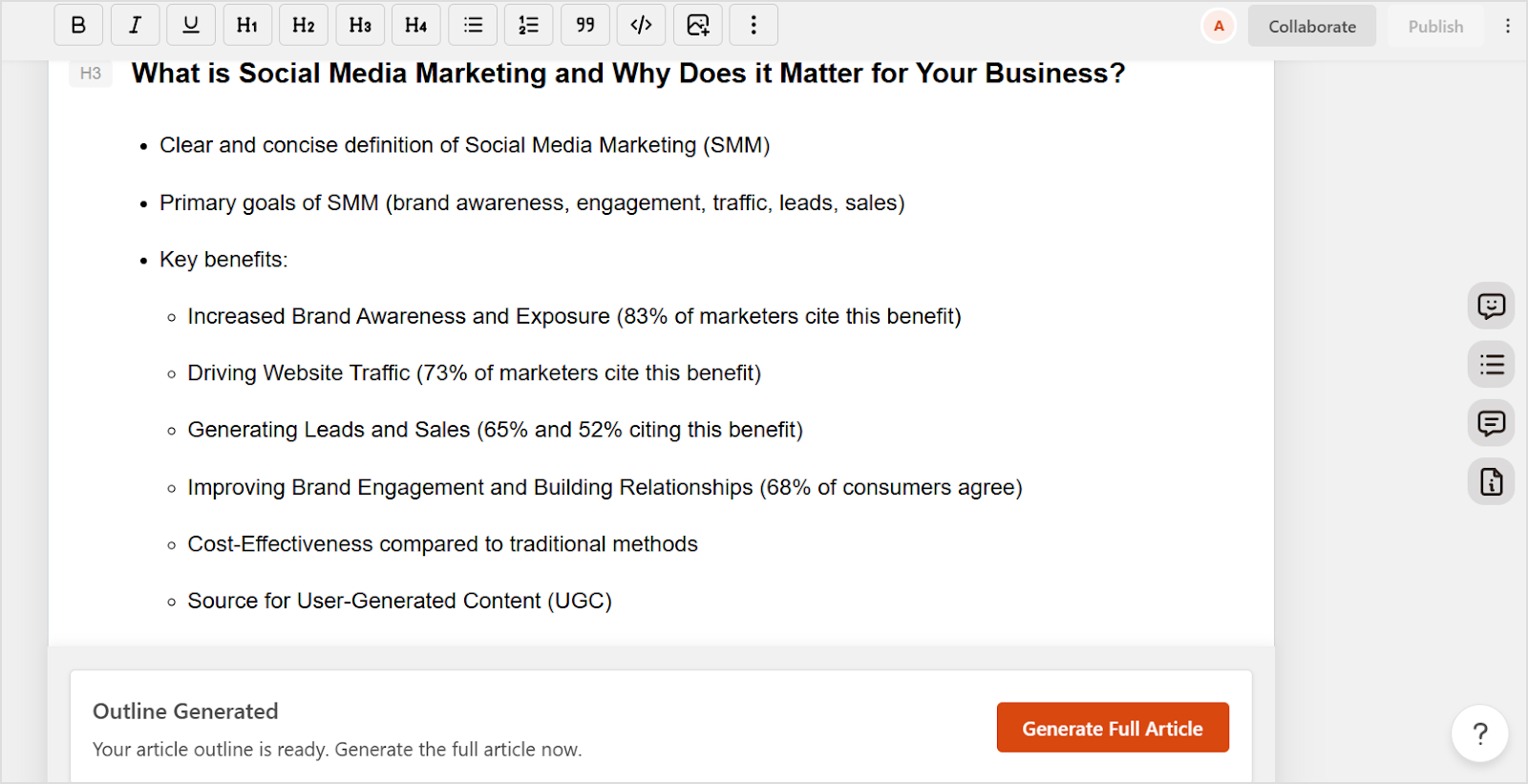
    4. Analyzing marketing content performance

    An optimized content marketing campaign can’t be completed without proper monitoring and analysis of the process. It allows marketers or brands to identify weaknesses, ensuring they are addressed next time.
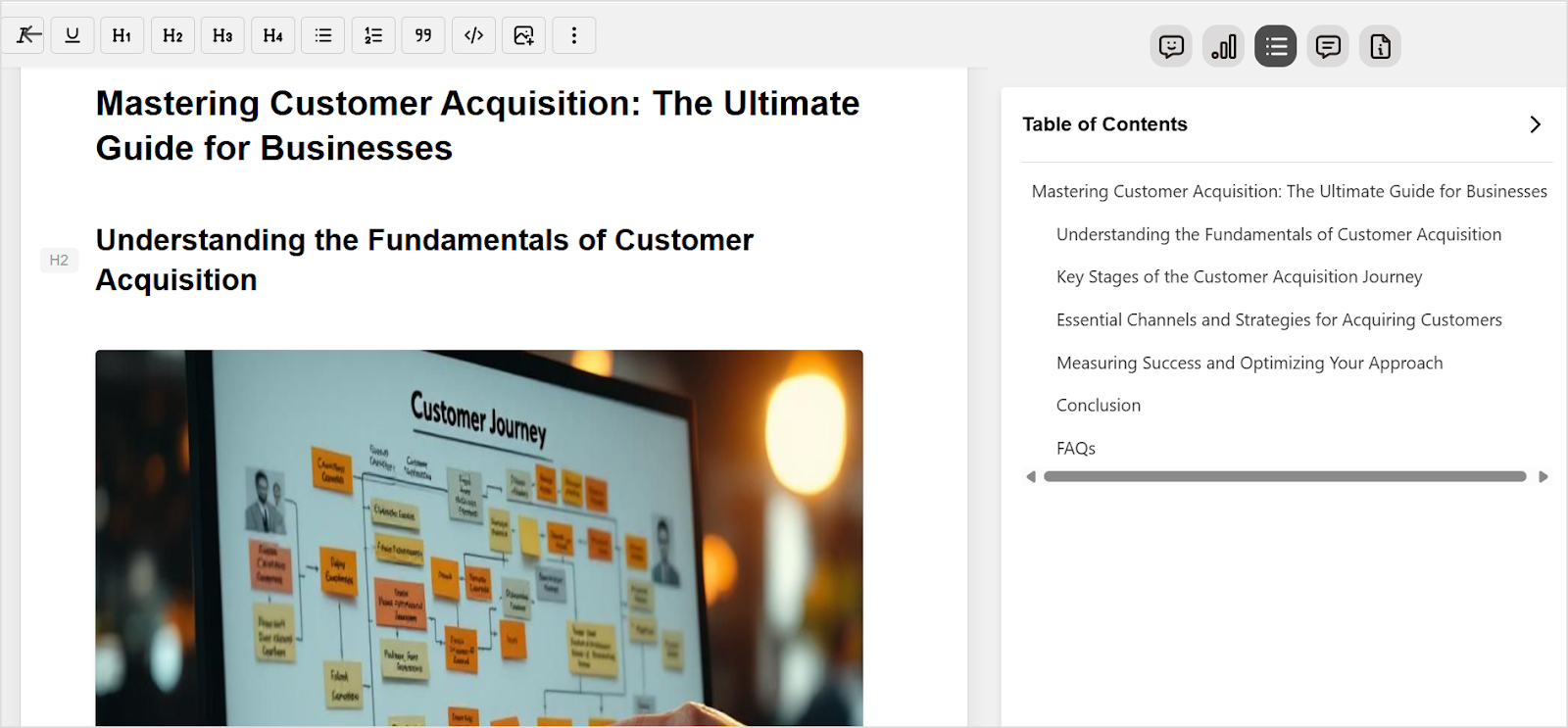
    Why optimized content matters for SEO and conversions

    A website or blog doesn’t stand a chance in the SERP if its content isn’t optimized for SEO, and the same goes for conversion. Let’s shed some light on the role of content optimization in SEO and how it impacts conversion rate.
    Role of content optimization in SEO

    A common perception about SEO is that backlinks, meta tags, and keyword selection are the most important aspects of SEO, which is correct to some extent. However, SEO isn’t complete without content optimization.

    Content optimization encapsulates keyword selection, sentence structuring, on-page optimization, content scanability, and problem-solving ability.

    Therefore, content optimization plays a pivotal role in the SEO growth of a website or blog, which makes it almost irreplaceable in the SEO game.

    Driving conversions with optimized content

    A misconception about high-quality content is that it drives conversion just because it’s well-crafted, grammatically correct, and easy to read. However, it’s not necessarily true that high-quality content would also be optimized for conversion.

    The point is that optimized content is fine-tuned for conversion. Not only is it well-written, but it is also written with a goal in mind. Usually, optimized content pushes the readers to take some action, such as sign up for a trial, fill out the form for a demo, access the downloadable file, or buy the product.

    It’s safe to say that optimized content is crucial for driving conversions, no matter what your niche is.

    It’s quite evident that SEOs and conversion optimization experts heavily rely on content optimization to not just grow organic traffic but also to drive conversions.

    How Contentpen supports optimized content marketing

    The outcome of an optimized content marketing campaign isn’t a fluke. It requires a plan of action that translates the content marketing strategy into a high-performance marketing campaign.

    The infusion of AI and automation in content marketing works as an icing on the cake. Let’s discuss how automation and AI-powered tools can help shape an optimized content marketing strategy.

    Here’s the breakdown of how to automate your content optimization workflow:

    1. Keywords hunting

    First things first, your keyword targeting needs to be spot on. The only caveat is that SEO analysis and keyword tracking tools are too expensive for most users. Therefore, everyone needs an affordable and effective solution to this problem.

    Contentpen is an advanced AI blog writer tool that generates high-quality, optimized articles in minutes. The best part about Contentpen is that it has a built-in keywords tracking tool, which works like an alternative to Google Keyword Planner.

    Add keywords

    All users need to do is plug in some keywords in it, and it will automatically start tracking those keywords and report back on various metrics, such as search volume, CPC rate, competition, etc.

    2. Create optimized content using AI

    Once the keywords have been identified, the next step is to create optimized content using AI. Contentpen offers an excellent AI-based article writer. Head over to the Planner tab and click on the “Create Article” button.

    create article

    A pop-up window would appear asking for the type of article to generate. 

    Choose the “Generate article with AI” option to proceed.

    Generate article with AI

    Add article details, such as title, keyword, formatting, structure, and media, to generate an optimized article. 

    Create your preset

    Once all the details have been added, proceed to the next step. 

    Double-check all the data and click on the “Create” button to generate the article.

    Create your article

    3. Automate internal and external links

    Manual internal linking is hard and time-consuming. It may take hours and hours to find the relevant articles and add internal links to a handful of articles. When it comes to optimized content marketing, everyone needs a faster, reliable tool that does internal linking rapidly and accurately.

    This is where Contentpen comes in, as it allows users to generate both internal and external links with a press of a button. Adding internal and external links to an article has never been easier. 

    To add both types of links, go to the “Create Article” section and choose the “Add internal and external links” option.

    Add external or internal links

    Now provide the keyword, topic, and URLs to let the Contentpen process all the details. 

    Add keyword and topic

    At the next stage, Contentpen would ask you to paste the content. So, go ahead and paste the article. 

    Paste your Article

    It will automatically process the internal and external links and include them in your article. Furthermore, Contentpen is intelligently developed to avoid linking to your competitors. 

    Add sitemap

    Add your sitemaps for internal linking. Plus, this is where you can include and exclude websites for external links. 

    Finalize your links

    Once your links are finalized, click on the “Create” button to add links to your article. 

    This is yet another important aspect of automating the content optimization workflow. 

    How Contentpen ensures SEO-friendly content every time

    Contentpen is no ordinary AI-writer that just spits out articles on the given topic. It uses technology to learn and train its system to create SEO-friendly, effective content every time the user hits the “Create Article” button.

    Behind its cutting-edge software technology, it utilizes multiple knowledge assets, such as brand voice, website details, and other text-based information about the client’s brand to keep its memory updated.

    Brand voice

    It ensures that the content it produces is SEO-friendly, value-driven, and keyword-oriented, so that every piece of content is aligned with the client’s brand.

    How to optimize content for SEO: Step-by-step checklist

    To understand content optimization, you must start with the basics. These key elements form the foundation of the entire process. Once you’re familiar with them, implementing a structured checklist becomes much easier. Let’s break it down:

    1. Understand keywords and search intent

    Content optimization starts with identifying the right keywords and aligning them with user intent. Keyword research helps uncover niche-relevant terms that guide your content strategy. Understanding search intent ensures you’re targeting the topics your audience is actively searching for. Both are vital for ranking and relevance.

    Best practice: Use your target keywords naturally within your content.

    Common mistake: Avoid keyword stuffing, as it harms readability and makes your content look spammy in the eyes of search engines.

    2. On-page and technical optimization

    Optimization goes beyond the surface. On-page SEO includes placing keywords in the title, subheadings, and early in the content. It also involves internal linking and adding relevant alt texts to images. Technical optimization includes improving page speed, mobile responsiveness, and structured data to ensure search engines can crawl and understand your site effectively.

    Best practice: Always optimize meta titles and descriptions to improve click-through rates.

    Common mistake: Avoid using misleading or clickbait headlines that don’t reflect your content. They can drive visitors away quickly.

    3. Improve user experience and readability

    A key aspect of content optimization is ensuring your content is easy to consume. This includes short paragraphs, clear subheadings, and using bullet points where necessary. These formatting choices help guide the reader’s eye and improve readability.

    Best practice: Always check the mobile version of your content after publishing.

    Common mistake: Ignoring mobile formatting can damage user experience and hurt your rankings.

    Also read: How to avoid AI detection in writing

    4. Add multimedia for engagement

    Adding visuals like images, infographics, or videos increases engagement and adds value to your content.

    Best practice: Use high-quality media to enhance understanding.

    Common mistake: Don’t overlook page speed. Heavy media files can slow down your site if not optimized.

    5. Audit your existing content

    Begin by reviewing your current content. Identify what performs well, what needs improvement, and what should be removed. Old content often holds SEO potential. You just need to refresh and optimize it.

    Best practice: Regularly update outdated content to keep it relevant.

    Common mistake: Never change URLs without proper redirects. This can cause SEO losses.

    6. Optimize for keywords and topics

    Ensure each piece of content targets a specific topic and includes relevant keywords naturally throughout the text. Don’t forget to update your image alt tags and use keywords in headings where appropriate.

    Best practice: Cover as many niche-related subtopics as possible to improve topical authority.

    Common mistake: Ignoring keyword placement in meta tags, headers, or image alt texts reduces SEO effectiveness.

    7. Refine structure and internal linking

    A clean, logical content structure enhances user experience. Use subheadings and anchor links to guide the reader. Internal links help distribute page authority and keep visitors exploring your site.

    Best practice: Use clear, descriptive anchor texts (ideally 3 to 4 words) for linking.

    Common mistake: Avoid over-linking, especially to irrelevant sources, as it can dilute SEO value.

    8. Track and measure performance

    Once your content is optimized, monitor its performance using SEO analytics tools like Google Analytics or Usermaven. Measure user behavior, traffic, bounce rate, and conversions to evaluate success.

    Best practice: Wait 2 to 3 months after optimization to assess results accurately.

    Common mistake: Neglecting performance tracking can lead to missed opportunities for improvement.

    Examples of optimized content that work

    Take a quick look at some of the examples of optimized content that work:

    Ahrefs blog keeps on pushing their conference

    There is nothing wrong with pushing your product sales or event in your content unless it starts irritating the readers. Ahrefs is doing a decent job here:

    Ahrefs blog

    They have been covering digital marketing conference topics to mention their conference in every piece – that’s basic content marketing.

    However, what they have smartly done is that they’re strategically optimizing their recent articles to get maximum attention for their conference. Not too shabby!

    ContentStudio integrates videos into its blog

    ContentStudio is a sister-concern company of Contentpen. The digital marketing team at ContentStudio has done a pretty good job of optimizing the company’s blog for maximum exposure and search ranking.

    ContentStudio blog

    They have introduced a video section called Video Vault on the official blog and inserted the most relevant and useful videos in it. So, this integration basically optimizes their blog content and increases user engagement. Kudos to that!

    Duolingo uses its branding across its featured images

    Duolingo is a popular language learning platform that helps students learn new languages in a fun way. The language-learning app has an excellent content marketing strategy in place.

    Duolingo blog

    Besides publishing relevant articles on the blog, they utilize their branding, meaning logo, sign, and color scheme, throughout their blog featured images. It optimizes their blog from visual appearance and branding standpoints. It’s a good one!

    Strategies for digital and product content optimization

    Digital and product content optimization needs a systemic approach. Apply the following strategies to establish an empowering digital and product content plan:

    Digital content optimization for web and social media

    Digital content optimization caters to both search engine bots and human audiences. For websites, focus on keyword integration, fast loading speeds, mobile-friendliness, internal linking, and clear structure.

    For social media, use platform-specific content formats, engaging captions, strong visuals, and relevant hashtags. Monitor performance metrics like CTR, engagement rate, and shares to refine your content strategy.

    Product content optimization for e-commerce

    Product content optimization involves creating accurate, detailed, and persuasive content for e-commerce product pages. The purpose is to engage, attract, and convert the audience. Use high-quality images, keyword-rich titles, bullet points, and value-oriented descriptions.

    Include product specs, FAQs, and user reviews to build trust. Moreover, structured data also helps search engines display your product better in search results, increasing visibility and conversions.

    Building a sustainable content optimization strategy

    A long-term content optimization strategy comprises several elements. Start by auditing your existing content, setting performance goals, and using analytics to track results. Then, head over to create content guidelines, templates, and workflows to maintain consistency – whatever works for you.

    Automate routine tasks such as keyword tracking or content rescheduling with AI-integrated tools. Pay attention to regularly updating top-performing content to keep it fresh and relevant. This will allow you to build a strong, sustainable content optimization strategy.

    Leveraging AI for digital and product content optimization

    Brands and influencers heavily rely on AI to create, optimize, and analyze their content. Let’s dig deeper and understand how to leverage AI for product content optimization:

    Improving SEO and visibility

    AI can assist users by suggesting better keywords, writing optimized meta tags, and recommending content structure based on what ranks well. Tools like Contentpen, SurferSEO, and Semrush use AI to improve your SEO automatically.

    Enhancing product descriptions

    AI-based tools can generate compelling, keyword-rich product descriptions at scale to boost e-commerce sales. Not only does it help maintain consistency across listings while saving time, but it also improves conversion rates.

    Personalizing content with minimum effort

    AI can effortlessly tailor content for different user segments based on behavior, location, or preferences. As a result, companies can see higher engagement and better user experience across websites and email campaigns.

    Streamlining content creation

    Content creation has never been this easy. AI can speed up content creation and improve digital marketing campaigns without sacrificing quality. From writing article outlines to generating full social media posts, AI assists at every stage, allowing your team to focus on strategy and creativity.

    Analyzing performance and feedback

    One of the best use cases of AI in digital marketing is content performance analysis. AI-based analysis tools track how your content performs and provide suggestions for updates. Moreover, such tools identify which product pages need improvement or which blog posts can be refreshed for better results.

    FAQs about optimized content marketing

    Addressing frequently asked questions helps bring a brand and its prospective customers closer. So, let’s answer some of those questions:

    What is optimized content?

    Optimized content is a bit of a polished version of an article or website copy. It can be optimized for keywords, readability, SEO score, or internal links.

    How to optimize content for SEO?

    To optimize content for SEO, one must go through all the basic and technical aspects of SEO to improve the overall content performance. It includes improving structure, readability, meta tags, headings, paragraphing, images, internal links, external links, page speed, etc.

    What are the keys to content optimization?

    The keys to content optimization include fixing the structure, improving readability, increasing keyword score, updating the meta tags, and internally linking relevant pages.

    What is the difference between content optimization and digital content optimization?

    Content optimization is the overall process of improving any type of content, such as written, visual, or other, for better performance, readability, SEO, and engagement. However, digital content optimization specifically focuses on optimizing content for digital platforms like websites, social media, and apps, ensuring it meets platform-specific requirements and performs well online.

    Why is product content optimization important?

    The reason why product content optimization is important for the business is that it brings clarity to the brand’s message. The search engines understand the business better, resulting in the influx of organic traffic toward the site. Plus, the website reaches the right audience through SEO sources, making it easier to generate more sales.

    How does Contentpen.ai help with content optimization?

    Contentpen is an excellent AI-powered writing tool for generating fast, effective articles for brands, marketers, influencers, and bloggers. The Planner section helps in crafting AI writing, and the Keywords section keeps on tracking the given keywords, eliminating the need for a third-party keyword research tool.

  • AI blogs vs human blogs: Which creates better content in 2025?

    AI blogs vs human blogs: Which creates better content in 2025?

    The debate between AI blogs vs human blogs has reached a tipping point. With AI tools for content creation becoming more popular and advanced, businesses are questioning whether they should stick with human writers or embrace artificial intelligence for their content strategy.

    Studies indicate that 88% of marketers are already relying on AI to handle day-to-day tasks. Moreover, it is noted that most people are unable to differentiate between AI-generated and human-written content. 

    This raises an important question: Which approach between AI writing vs human writing actually delivers better results for your blog?

    In this comprehensive comparison, we’ll explore the key differences between AI-written content quality and human blog writing to examine their strengths and weaknesses. It will help you determine the best approach for your content strategy in 2025.

    Contentpen

    What is an AI-generated blog?

    An AI-generated blog is content created using artificial intelligence tools that can research, write, and optimize articles with minimal human intervention. These tools use advanced language models to understand context, analyze search intent, and produce coherent, engaging content.

    The concept of AI blog writing became streamlined with ChatGPT, where users can just enter a few prompts and get a complete AI-generated blog. However, now specialized AI blog writers online like Contentpen are also available that go much beyond simple text generation. 

    They can conduct SERP analysis, understand brand voice, and create content that is specifically optimized for search engines while maintaining readability and engagement.

    Interesting fact: According to Ahrefs’ study, 74% of new webpages include AI content. It means a massive majority of content writers, marketers, and website owners are already using AI to generate website copy and blog posts.

    What is a human-written blog?

    A human-written blog is content created entirely by human writers who bring personal experience, creativity, and emotional intelligence to their work. These writers conduct research, develop unique perspectives, and craft content based on their understanding of the audience and subject matter.

    Human writers excel at storytelling, injecting personality into content, and creating emotional connections with readers. They can draw from personal experiences and adapt their writing style based on feedback and changing trends.

    AI blogs vs human blogs: Key differences

    The following table summarizes the key differences between AI blogs vs human blogs

    AspectAI-generated blogsHuman-written blogs
    SpeedCan create 4,000+ word articles in 10-15 minutesTakes 6-12 hours for detailed articles
    ConsistencyMaintains consistent quality and tone across all contentQuality can vary based on the writer’s mood, experience, and workload
    SEO optimizationBuilt-in SEO features with automatic keyword integrationRequires manual SEO optimization and keyword research
    Cost$10-50 per article, depending on the tool Tip: You can get an article for $2.7 only with Contentpen’s annual plan.$100-500+ per article for quality writers
    ScalabilityCan produce unlimited content simultaneouslyLimited by human capacity and availability
    Research depthInstant access to vast information databasesDeep, nuanced research with critical thinking
    Factual accuracyRequires fact-checking for current eventsBetter at contextual accuracy and real-world validation
    Brand voiceConsistent brand voice once trainedMay require ongoing guidance for brand alignment
    Editing requiredMinimal editing for grammar, moderate for styleExtensive editing for structure, flow, and optimization

    Choosing an advanced AI blog generation tool

    When evaluating AI writing tools for your content strategy, certain features separate basic text generators from sophisticated AI blog writing platforms. 

    Here are the key capabilities that define next-generation AI content creation:

    Multi-agent architecture for superior quality

    The most advanced AI writing platforms don’t rely on a single AI model. Instead, they deploy multiple specialized AI agents working in coordination. The goal of these AI agents is to handle multiple tasks like research, outline creation, writing, SEO optimization, and quality review. This collaborative approach produces significantly higher quality output than traditional single-model tools.

    Intelligent brand voice integration

    Generic AI content often sounds robotic because it lacks brand context. Advanced tools analyze your existing content, website, and competitors to understand your unique voice and audience. This brand knowledge system ensures every piece of content aligns with your brand identity rather than producing disconnected, generic text.

    Complete SEO automation

    Modern AI writing tools go beyond basic keyword stuffing. They automatically integrate keywords naturally, generate optimized meta descriptions, structure content for featured snippets, and even handle internal and external linking strategies. This automation saves hours of manual SEO work while ensuring better search performance.

    End-to-end workflow automation

    The best AI platforms streamline your entire content process. Features like bulk content generation, editorial workflows, and direct publishing capabilities allow you to create a blog in 10 minutes from initial keyword research to a published article.

    Human-level content quality

    Advanced AI tools incorporate sophisticated review systems that check for coherence, factual accuracy, and editorial standards. The output often requires minimal editing and can match the quality of professional human writers, making it difficult for readers to distinguish between AI and human-generated content.

    These features represent the current state-of-the-art in AI content generation. Contentpen is the leading AI writing tool that has successfully integrated all these capabilities into a unified platform that addresses the real challenges businesses face when scaling their content strategies.

    Here’s a complete tutorial on how you can generate a complete blog post using AI:

    How to choose between AI vs human writers for your blog strategy?

    The choice between AI and human writers isn’t always binary. Here are key factors to consider:

    Choose AI writing when:

    • You need to scale content production quickly
    • Budget constraints limit hiring multiple writers
    • You’re targeting competitive keywords requiring frequent content updates
    • Your content strategy focuses on informational rather than highly creative topics
    • You need a consistent brand voice across large volumes of content

    Choose human writers when:

    • Creating thought leadership content requires unique perspectives
    • Writing about sensitive topics that require emotional intelligence
    • Crafting content for high-stakes campaigns or major announcements

    The hybrid approach: Many successful businesses combine both approaches. Use AI for foundational content creation and human writers for refinement, fact-checking, and adding personal touches. This approach can significantly cut your blogging time while maintaining quality.

    Can AI and human writers work together?

    Absolutely. The most effective content strategies in 2025 use both AI efficiency and human creativity. Here’s how this AI blogs vs human blogs collaboration works:

    AI handles the heavy lifting:

    • Initial research and data gathering
    • First draft creation and structure
    • SEO optimization and keyword integration
    • Fact compilation and source identification

    Humans add the finishing touches:

    • Personal anecdotes and unique insights
    • Emotional resonance and storytelling
    • Final quality review and brand alignment
    • Strategic positioning and thought leadership

    Step-by-step AI-human collaboration workflow using Contentpen

    Let’s take a closer look at how you can establish a perfect AI-human content collaboration workflow with Contentpen:

    Step 1: AI-powered research and planning

    Start by letting AI analyze your target keywords, competitors, and audience intent. Contentpen can conduct a comprehensive SERP analysis to identify content gaps and opportunities. This research phase, which traditionally takes hours, can be completed in minutes while providing deeper insights than manual research.

    AI-powered research and planning

    Step 2: Intelligent outline generation

    AI creates a data-driven outline based on what’s currently ranking, user search intent, and your brand positioning. The outline includes optimal heading structures, keyword placement strategies, and content flow recommendations. This ensures your content addresses all relevant subtopics while maintaining logical progression.

    You can edit the AI-generated outline as per your own understanding before creating the actual article. This is a crucial stage where you can add your own creativity through human intervention. 

     outline generation

    Step 3: Content creation with specific brand voice

    The AI generates a comprehensive draft that incorporates your brand voice, integrates keywords naturally, and follows SEO best practices. You don’t have to treat this draft as the final product. Instead, it is recommended that you further enhance it. 

    Step 4: Human enhancement and collaboration

    This is where human creativity shines. Writers add personal experiences, industry insights, and emotional elements. Moreover, you can refine the tone, add storytelling elements, and ensure the content resonates with the target audience on a deeper level.

    enhancement and collaboration

    You can also use the platform’s built-in collaboration features, so teams can review, edit, and optimize content in real-time. The AI continuously suggests improvements for SEO, readability, and structure while humans focus on strategic messaging and brand alignment.

    Step 5: Quality assurance and publishing

    Final review combines AI-powered fact-checking and SEO optimization with human editorial judgment. The content is then published directly through integrated CMS connections, with performance tracking beginning immediately.

    Real-world implementation example

    Consider how a SaaS company might use the AI blogs vs human blogs workflow for a competitive analysis article:

    1. AI research: Analyzes top 20 competitors, identifies 50+ comparison points, and creates feature matrices
    2. Human insight: Adds strategic perspective on market positioning and customer pain points
    3. AI writing: Generates structured comparison tables, feature descriptions, and SEO-optimized sections
    4. Human enhancement: Adds case studies, personal recommendations, and industry commentary
    5. Collaborative editing: Team refines messaging while AI optimizes for search performance

    This approach allows the company to produce detailed and authoritative content in 1-3 hours instead of the 8-12 hours required for fully manual creation, while maintaining the strategic depth and personal touch that drives conversions.

    The key to success is choosing platforms that support this collaborative workflow seamlessly. Tools like Contentpen offer integrated environments where AI generation, human editing, team collaboration, and publishing all happen within the same dashboard, eliminating the friction that often derails hybrid content strategies.

    Final thoughts: AI blogs vs human blogs

    The future of blogging isn’t about choosing between AI blogs vs human blogs, it’s all about finding the right balance for your specific needs and goals. AI writing assistant tools like Contentpen are rapidly closing the quality gap while offering unprecedented efficiency and scalability.

    As we move forward, the most successful content strategies will be those that use AI’s efficiency while preserving the creativity and emotional intelligence that only humans can provide. The key is choosing the right tools and approach for your unique situation.

    So, are you ready to experience the power of advanced AI blog writing? Start your free trial with Contentpen and discover how multiple AI agents can transform your content strategy while maintaining the quality your audience expects.

    Frequently asked questions

    Will Google penalize AI-generated content?

    No, Google doesn’t penalize AI content specifically. Google’s focus is on content quality, not the method of creation. Well-crafted AI-written content quality that provides value to readers and follows SEO best practices performs just as well as human-written content.

    What’s the difference between AI blog writers and AI writing assistants?

    AI blog writers are platforms designed specifically for creating complete blog posts from research to publishing. AI writing assistants are broader tools that help with various writing tasks like editing, brainstorming, and content improvement. Blog writers focus on end-to-end content creation with AI, while assistants support existing human writing processes.

    How do AI writing vs human writing blog content quality comparisons typically turn out?

    Modern AI blog vs human blog writing comparisons show that advanced AI tools can match human quality for informational content, while humans still excel at creative storytelling and emotional connection. The quality gap is narrowing rapidly, with AI often producing more consistent, SEO-optimized content, while humans bring unique perspectives and industry expertise.

    Can AI writing tools understand my brand voice?

    Advanced AI blog writers can learn and replicate your brand voice by analyzing your existing content, style guides, and preferences. The brand voice feature in sophisticated tools ensures consistency across all generated content, moving beyond generic AI output to brand-specific writing.

    How much editing do AI-generated blogs require?

    This varies significantly by tool quality. Premium AI writing tools typically require minimal editing, usually just final review and any brand-specific adjustments. Properly editing AI content can be done in 15-20 minutes versus hours for human-written first drafts.

    Are AI blog writers effective for overcoming writer’s block?

    Absolutely. AI writing tools excel at overcoming writer’s block by providing outlines, generating ideas, and creating first drafts. They’re particularly effective as AI writing assistants that help break through creative barriers and provide structure for human writers to build upon.

    Can AI writing tools help with SEO optimization?

    Yes, modern SEO-friendly blog writing tools automatically optimize for keywords, create meta descriptions, and structure content for search engines. They can analyze SERP data, identify content gaps, and optimize for featured snippets. You can also enhance results with dedicated SEO writing tools for complete optimization.

  • What is AI generated content?

    What is AI generated content?

    AI-generated content quickly transforms how individuals and businesses create written, visual, and audio material. From blog posts and product descriptions to social media captions and marketing videos, artificial intelligence is now capable of producing content that closely mimics human creativity.

    This shift isn’t just a passing trend it’s becoming an essential tool in modern content strategies, offering speed, efficiency, and scalability like never before. 

    But what exactly is AI-generated content, and how does it work? In this article, we’ll explore the fundamentals of AI-driven content creation, the tools behind it, its benefits and limitations, and how it compares to traditional human-made content.

    Whether you’re a marketer, writer, or curious reader, understanding AI-generated content is key to staying ahead in the evolving digital landscape.

    What is AI-generated content?

    AI-generated content refers to any type of media; text, images, video, or audio created with artificial intelligence. Instead of relying solely on human input, this content is produced using machine learning models that can understand context, patterns, and language structures to generate human-like results.

    For example, a marketer might use an AI writing tool like Contentpen to generate a blog post outline or a complete article based on a short prompt such as “Top 5 social media trends for 2025.” The AI will analyze the prompt, draw from its training data, and produce coherent and relevant content within seconds.

    AI-generated content can range from social media captions and product descriptions to music tracks and digital artwork, making it a powerful resource for creators and businesses looking to scale content production quickly and efficiently.

    Types of AI-generated content

    AI can produce various content formats depending on the purpose and platform. Here are the most common types:

    • Text-based content: Blog posts, articles, social media captions, emails, product descriptions, ad copy.
    • Visual content: AI-generated images, infographics, and designs.
    • Audio content: Voiceovers, podcast scripts, and AI-cloned voices for narration or interactive media.
    • Video content: Scriptwriting, subtitles, and even fully AI-generated video clips or avatars.
    • Interactive content: Chatbot conversations, quizzes, personalized recommendations, and customer support flows.

    Each type uniquely serves in modern marketing and communication, helping creators and teams scale content faster than ever.

    How does AI generate content?

    AspectDescription

    Core technologies

    Uses Natural Language Processing (NLP) and Machine Learning (ML) to understand and generate text.

    Training data

    Trained on vast datasets like books, websites, articles, and more to learn structure, grammar, and tone.

    Language models

    Models like Contentpen predict words and generate coherent content based on the input.

    Visual content creation

    Tools like DALL·E and Midjourney turn text prompts into images using AI-based image generation models.

    Audio and music

    AI can clone voices or compose music by identifying and mimicking patterns in sound data.

    Human vs. AI creation

    Humans use intuition and experience; AI relies on data and algorithms to simulate creativity.

    In short, AI mimics how humans create content but instead of intuition and experience, it relies on data and algorithms.

    Uses of AI-generated content

    AI-generated content is transforming how individuals and businesses create, scale, and manage content. Here are some of the most common and impactful use cases:

    Blog writing & SEO

    AI tools help generate keyword-optimized articles, meta descriptions, and blog outlines—making it easier to maintain content consistency and improve search rankings.

    Social media content

    Platforms like ContentStudio and Contentpen- AI blog writer online use AI to create engaging captions, hashtags, and platform-specific posts, saving time and boosting engagement.

    Email marketing

    AI assists in writing personalized subject lines, email bodies, and product recommendations—improving open and conversion rates.

    E-commerce product descriptions

    Retailers use AI to automatically generate thousands of product descriptions while maintaining tone and structure across listings.

    Customer support & chatbots

    AI powers chatbots, auto-replies, and help center content, offering 24/7 support and reducing the need for manual intervention.

    Video scripts & podcast outlines

    Creators use AI to draft scripts, show notes, and episode summaries for YouTube, TikTok, and podcasts.

    Internal reports & summaries

    AI helps teams generate meeting notes, executive summaries, and status updates quickly and consistently.

    Benefits of using AI for content creation

    AI is reshaping content creation by offering practical advantages that help creators, marketers, and businesses work faster and smarter. Here are the key benefits explained:

    1. Speed and efficiency

    AI can produce content in seconds that might take human hours or even days to create. Whether generating an article outline, writing a product description, or designing a social media post, AI helps streamline repetitive tasks and accelerates content workflows. This allows teams to focus more on strategy and creativity.

    2. Scalability

    One of AI’s biggest advantages is its ability to consistently create a large volume of content. Brands managing multiple platforms or targeting global audiences can use AI to generate variations of content quickly, making it easier to scale campaigns without burning out internal teams.

    3. Cost-effectiveness

    Hiring writers, designers, or video editors for every piece of content can be expensive. AI reduces this burden by automating parts of the process, lowering production costs. While it may not replace human expertise in all areas, it can handle simpler, high-volume tasks at a fraction of the cost.

    4. Multilingual capabilities

    Many AI tools support content generation in multiple languages. This helps businesses reach international audiences without needing a separate translator or writer for each market. AI can localize content while maintaining tone and context, speeding up global content strategies.

    5. Consistency and personalization

    AI can consistently follow brand guidelines, tone, and messaging across all pieces of content. At the same time, it can personalize messages at scale, for example, by creating customized email subject lines or ad copy based on user behavior or preferences.

    When used strategically, AI boosts productivity and enhances brands’ communication with their audiences, making it a valuable asset in today’s content-driven world.

    Popular tools for AI content generation

    With the rise of AI in content creation, a wide range of tools have emerged each offering unique features to help writers, marketers, and businesses scale their efforts. Below are some of the most widely used and trusted AI content generation tools:

    1. Contentpen

    Contentpen is a powerful AI content generation tool designed to help businesses scale their content output efficiently without sacrificing quality or SEO performance. Built for growth-driven teams, it blends speed, creativity, and optimization to simplify content production across the board.

    Key features:

    • Bulk content generation 
    • Automated keyword suggestions 
    • Built-in SEO optimization tools
    • Deep brand voice analysis and integration
    • Built-in content approval workflow
    • Multiple specialized AI agents 
    • Direct WordPress publishing integration

    Pricing:

    • Starter: $27/month
    • Premium: $55/month
    • Agency: $139/month
    Contentpen

    2. ContentStudio’s AI Assistant 

    ContentStudio’s AI Assistant is designed to help marketers, content creators, and businesses generate high-quality, engaging content faster and more efficiently.

    Its customizable writing tones, text enhancement, and a predefined prompt library make the job easy. The AI assists in creating social media captions, generating images, generating text from images, hashtags, and more, all tailored to your brand voice and audience. 

    Best for: Generating and editing short-form social media content and images. 

    3. Canva & Canva Magic Write

    Canva is no longer a simple graphic design tool but an efficient AI-driven content creation platform. Its user-friendly drag-and-drop interface makes designing social media posts, presentations, and videos accessible to everyone without any pro-level design skills.

    Canva Write Magic is an AI writing tool built into Canva that assists in generating short-form content for presentations, social posts, and designs. It pairs well with Canva’s visual editing features.

    Best for: Designers and marketers who want quick, AI-powered copy for visual content.

    Choosing the right AI tool depends on your specific content goals, whether you need fast output, tailored copy, or polished language. Many professionals use a combination of tools to generate, refine, and scale content efficiently.

    AI-Generated content vs human-written content

    As AI becomes more prevalent in content creation, it’s important to understand how it compares to traditional human writing. Each approach has its strengths and weaknesses, and the best results often come from knowing when to use one over the other or how to combine both.

    The table below will provide a quick glance:

    AspectAI-generated contentHuman-written content
    Speed & volumeExtremely fast; can create high volumes of content in secondsSlower, but allows for thoughtful, deliberate writing
    CreativityMimics patterns, limited originality, lacks true ideationHighly creative; draws on unique experiences, emotions, and storytelling
    AccuracyCan generate factual errors; does not verify informationCan research and fact-check for reliable, up-to-date content
    Tone & voiceCan imitate tone styles but may lack brand consistency or nuanceCaptures subtle tone variations and maintains consistent brand voice
    Cost & EfficiencyLow cost, high efficiency for repetitive tasksHigher cost, but with greater attention to detail and quality
    Emotional connectionLacks emotional depth; harder to build authentic audience relationshipsConnects with readers on a deeper, emotional level
    Best used forProduct descriptions, social media posts, drafts, bulk contentStorytelling, opinion pieces, thought leadership, sensitive or in-depth topics

    AI-generated content is a powerful tool for fast, scalable content production, but it can’t fully replace human insight, creativity, and emotional intelligence. The most effective content strategies often combine both, letting AI handle the heavy lifting while humans polish, guide, and elevate the final output.

    Is AI content ethical and legal?

    As AI-generated content becomes more widespread, important ethical and legal questions arise. Understanding these concerns is critical for creators and businesses to use AI responsibly and avoid pitfalls.

    1. Copyright and intellectual property

    One of the most significant legal questions around AI content is ownership. Since AI models learn from vast amounts of existing work, there’s debate over whether AI-generated content infringes on copyright. For example, in 2023, the U.S. Copyright Office clarified that works created entirely by AI without human authorship may not qualify for copyright protection. However, copyright can be claimed if a human edits or guides the AI output.

    Example: OpenAI’s content is governed by usage policies that clarify user ownership of AI-generated content, but creators must ensure that they do not infringe on copyrighted material used in training.

    2. Transparency and disclosure

    Ethical use of AI content often involves disclosing when AI generates or assists content. This transparency builds trust with audiences and avoids misleading readers who might assume all content is human-created.

    Example: The Associated Press openly stated it uses AI to generate earnings reports and weather updates but clarifies when content is AI-assisted to maintain credibility.

    3. Bias and fairness

    AI models can inherit biases from the data they were trained on, leading to discriminatory or unfair content. For example, facial recognition AI and language models have shown biases against minority groups due to unbalanced datasets.

    Example: IBM’s AI Fairness 360 toolkit helps developers detect and mitigate bias in AI models.

    Also read: 9 best ChatGPT alternatives in 2025

    4. Misinformation and accountability

    AI-generated content can unintentionally spread false or misleading information because AI doesn’t verify facts. For example, during the COVID-19 pandemic, some AI-generated content circulated misinformation, highlighting the need for human review.

    Example: Fact-checking organizations like Snopes emphasize the importance of human oversight for AI content.

    5. Job displacement concerns

    The rise of AI in content creation has sparked debates about potential job losses among writers, editors, and creatives. However, AI is also seen as a tool to augment human work rather than replace it entirely.

    Example: The World Economic Forum reports that while AI may displace some jobs, it will also create new roles focused on managing and enhancing AI technology.

    6. Compromised SEO rankings 

    Although AI can help optimize content for search engines, overreliance on it can lead to keyword stuffing or content that lacks true value, both of which can hurt SEO rankings. Additionally, since AI draws from large datasets, there’s a possibility of unintentionally reproducing phrases that are too similar to existing content, raising plagiarism concerns.

    7. Lack of human emotion and creativity

    AI struggles to replicate human nuance, emotional intelligence, and storytelling ability. It can’t truly empathize with readers or deliver content with a unique voice or flair. This can be a disadvantage in content where tone, emotional resonance, or originality is key such as brand campaigns or opinion pieces.

    AI-generated content offers incredible possibilities, but ethical and legal considerations must guide its use. Transparency, accountability, and human involvement are key to ensuring AI supports creativity without compromising trust or integrity. Staying informed about evolving laws and best practices will help users navigate this complex landscape responsibly.

    Contentpen

    Wrapping up: The future of AI in content generation

    AI is not just a trend it’s reshaping how content is ideated, created, distributed, and optimized. As the technology advances, its role in content creation will continue to evolve, moving beyond assistance into true collaboration with human writers.

    In the near future, we can expect AI tools to become more context-aware, better at understanding nuance, and more integrated across creative workflows. Personalized content at scale, real-time language translation, and predictive content strategies will become the norm.

    Also read: What is content automation: Key benefits, tools and tips

    Writers and marketers will work alongside AI as co-creators using it to speed up production, test variations, and unlock deeper insights from data.

    However, human creativity, emotion, and storytelling will remain irreplaceable. The future lies in striking the right balance: letting AI handle repetitive tasks while humans lead with originality, empathy, and ethical judgment.

    In essence, AI won’t replace content creators it will empower them to do more, faster, and smarter.

    FAQs on AI-generated content

    What is AI-generated content?

    AI-generated content refers to text, images, audio, or video created by artificial intelligence tools or algorithms, often trained on large datasets. These tools can produce blog posts, product descriptions, social media content, and more with minimal human input.

    How does AI create content?

    AI uses natural language processing (NLP) and machine learning to understand patterns in data. It analyzes existing content and then generates new material based on prompts or instructions given by the user.

    What types of content can AI generate?

    AI can create a wide range of content, including articles, marketing copy, social media posts, emails, poetry, code, images, and even videos. The quality and accuracy depend on the tool and the input provided.

    Is AI-generated content original?

    Yes, AI-generated content is typically original in the sense that it produces unique outputs based on training data. However, it’s essential to review for accuracy, tone, and potential plagiarism—especially for sensitive or factual content.

    Can AI-generated content replace human writers?

    AI can assist or speed up content creation, but it’s not a full replacement for human creativity, critical thinking, or emotional nuance. The best results often come from combining AI with human editing and oversight.

  • What is content automation: Key benefits, tools and tips

    What is content automation: Key benefits, tools and tips

    Content creation isn’t just about producing high-quality posts anymore – it’s about efficiency, scalability, and maximizing impact. That’s where content automation comes in. 

    By automating the time-consuming tasks of brainstorming ideas, writing, designing visuals, and scheduling posts across multiple platforms, marketers can streamline their workflow and boost productivity.

    With the right AI blog writer and best content marketing practices, businesses can curate and distribute content at an unprecedented scale. 

    While some believe automation tools are costly, the reality is that organizations see a $5.44 return for every dollar spent on marketing automation. This proves that automation isn’t just a convenience—it’s a powerful investment for businesses looking to scale efficiently.

    But how does content marketing automation actually work? What tools and strategies can help you maximize results?

    In this blog post, we’ll break down everything you need to know—from how content automation works to the best tools and strategies for implementing it successfully.

    Let’s start with the basics.

    What is content automation?

    Content automation

    Content automation refers to the use of technology and software tools to streamline, optimize, and partially automate the processes involved in content marketing. 

    It includes everything from content planning and creation to distribution and performance tracking, utilizing artificial intelligence, machine learning, and other advanced technologies to reduce manual intervention while maintaining content quality.

    At its core, content automation is about working smarter, not harder. Think of it as having a digital assistant that handles repetitive tasks while you focus on strategy and creativity. 

    With content automation, businesses can:

    • Generate high-quality blog posts, social media captions, and ad copy automatically.
    • Schedule and distribute content across multiple channels with minimal effort.
    • Optimize content performance through AI-driven insights and analytics.
    • Maintain brand consistency while scaling content production.

    How does content automation work?

    Content automation leverages AI, NLP, ML, and workflow automation to streamline content creation, optimization, and distribution. Instead of manually managing content, businesses use automation tools to generate, schedule, and optimize with minimal effort.

    Core technologies behind content automation:

    • Artificial intelligence (AI): AI analyzes data to suggest topics, keywords, and formats. Tools like Contentpen generate optimized blog posts in clicks.
    • Natural language processing (NLP): NLP enhances content quality, making it more readable and SEO-friendly.
    • Machine learning (ML): ML learns from interactions, optimizing strategies and automating A/B testing. Tools like Grammarly and SEMrush provide personalized recommendations.
    • Workflow automation: Automates tasks like content research, scheduling, multi-channel distribution, and performance analysis.

    Also read: Does Google ranks AI content?

    How to use content marketing automation?

    Content marketing automation streamlines your workflow, saving time and effort while maintaining consistency and quality. 

    However, to make the most of automation, you need the right strategies and tools. Here’s how to effectively use content marketing automation for maximum impact.

    1. Define your content marketing goals

    Before implementing automation, clearly define your objectives. Ask yourself:

    • Do you want to generate more leads?
    • Are you aiming to improve engagement on your blog?
    • Do you need to boost website traffic?

    By setting specific goals, you can choose the right automation tools and strategies to align with your business needs.

    1. Identify the right tasks to automate

    Not every part of content marketing should be automated. The key is to automate repetitive tasks while maintaining a human touch where needed. 

    Here are some key areas where automation works best:

    a. Content research

    • Use AI-powered tools to analyze trending topics, keywords, and competitors.
    • Automate search intent analysis to create content that aligns with user needs.

    b. Content creation

    • AI writing assistants can help generate blog drafts, captions, and ad copies.
    • Automated content outlines ensure better structure and SEO optimization.

    c. Social media scheduling

    • Schedule posts in advance across multiple platforms.
    • Use AI to determine the best times to post based on audience behavior.

    d. Email marketing

    • Set up automated email sequences for welcome messages, follow-ups, and promotions.
    • Personalize emails with AI-driven recommendations.

    e. Performance tracking & reporting

    • Automate analytics reports to measure content effectiveness.
    • Get insights on engagement, conversions, and areas for improvement.
    1. Choose the right content automation tools

    To successfully automate your content marketing efforts, you need the right tools. Different tools serve different purposes, so make sure you are choosing the ones that fit your specific needs. We will be discussing the usage of some of the top content automation tools in detail in the later section. 

    1. Maintain a balance between automation and human touch

    While automation improves efficiency, content marketing still requires creativity and authenticity. To maintain a human touch:

    • Personalize AI-generated content before publishing.
    • Use automation for efficiency but keep storytelling and branding elements human-driven.
    • Engage directly with your audience by responding to comments and messages manually.
    1. Monitor and optimize your automation strategy

    Automation is not a set-it-and-forget-it solution. Regularly analyze your content’s performance and make adjustments as needed.

    • Track key metrics like engagement, CTR, and conversion rates.
    • Test different content formats and posting schedules.
    • Continuously refine automated processes to improve results.

    Top content automation tools

    Content automation is only as effective as the tools you use. Whether you’re looking to streamline content creation, social media management, email marketing, or ad campaigns, choosing the right automation tools can save time, improve efficiency, and maximize results.

    Here’s a list of the top content automation tools categorized by their purpose:

    1. Contentpen: SEO-optimized content generation

    Contentpen 

    Contentpen is a next-generation AI-driven content automation tool designed to create high-impact, SEO-optimized blogs.

    Unlike generic AI writing tools, Contentpen is powered by multiple AI agents that work collaboratively to research, create, and refine content that aligns perfectly with your brand’s voice.

    The key features of ContentPen that make it one of the best content automation tools are:

    • AI-powered brand learning: Contentpen’s AI deeply analyzes your brand, audience, and competitors to generate relevant and engaging content.
    • Automated keyword & title selection: Get high-CTR title suggestions based on search intent.
    • Deep topic research: Conducts SERP analysis and content gap analysis to create data-driven content.
    • Optimized blog outline: Generates a structured, research-backed outline for SEO-friendly articles.
    • High-quality first draft: AI agents collaborate to generate authoritative, engaging content.
    • SEO optimization & quality review: The tool refines content based on the latest SEO guidelines.
    • Final enhancements: Adds strategic internal and external links, relevant images, and other SEO elements.
    • Easy publishing: Contentpen can integrate with WordPress and other CMS platforms for quick and easy publishing.
    • Bulk content generation: Scale content creation without sacrificing quality.
    • Article refreshing: Update and optimize existing blogs for continued relevance.
    • Approval workflow for teams & clients: Supports collaboration and content approval processes.

    With Contentpen, businesses can automate and scale content production while maintaining quality and brand consistency.

    Also read: How to write an article using Contentpen?

    2. Canva: Visual content and design automation

    Creating high-quality images, graphics, and videos is essential for content marketing. Visual content automation tools streamline design, editing, and branding with minimal effort.

    Canva is one of the most popular design tools for automating visual content creation. It offers a vast collection of templates, drag-and-drop functionality, and AI-powered design suggestions.

    Canva Interface

    Whether you need social media graphics, presentations, infographics, or marketing materials, Canva simplifies the design process without requiring advanced skills.

    Some of the key features of Canva are:

    • Pre-designed templates: Thousands of customizable templates for social media, blogs, ads, and more.
    • Brand kit: Ensures consistency by allowing you to save logos, fonts, and colors.
    • AI-powered magic resize: Instantly resizes designs for different platforms.
    • AI text-to-image tool: Generates unique visuals based on descriptions.
    • Video editing & animation: Automates video creation with transitions, music, and text overlays.

    Canva’s automation features make it an excellent tool for marketers looking to streamline content production without compromising quality.

    Other notable visual content automation tools

    While Canva is a leading choice, several other tools offer automation for visual content:

    • Adobe Express: AI-powered image editing and branding tool with quick design templates.
    • DALL·E (by OpenAI): Generates high-quality AI-created images from text prompts.
    • Lumen5 & Pictory: Converts blog posts into engaging video content using AI.
    • Postnitro: An AI-driven carousel creator for Instagram, LinkedIn, and other platforms.

    Each tool brings unique features to the table, allowing marketers to automate and enhance their visual content creation process efficiently.

    3. ContentStudio: Manage and automate your social media presence

    Managing multiple social media accounts manually is exhausting. Social media automation tools streamline scheduling, posting, and engagement tracking, helping businesses maintain a consistent online presence.

    ContentStudio is a comprehensive social media management tool that simplifies content creation, scheduling, and publishing while providing valuable analytics.

    ContentStudio Calendar

    It helps businesses and marketers automate workflows, ensuring efficiency and consistency across multiple social media platforms. The key features that make ContentStudio the best way to manage your social media presence are:

    • Post scheduling and publishing: Plan and schedule posts across multiple social media platforms from a single dashboard.
    • AI-generated captions and hashtags: Get smart suggestions to improve engagement and reach.
    • Content discovery and curation: Find trending topics and relevant articles to share with your audience.
    • Social inbox management: Monitor and respond to messages, comments, and mentions in one place.
    • Collaboration and approval workflow: Work with teams, set roles, and get approvals before publishing.
    • Performance analytics: Track engagement, reach, and audience behavior with detailed insights.

    Other notable social media automation tools

    While ContentStudio is a leading choice, other tools offer automation capabilities for social media management:

    • Zapier: Connects social media apps, automating cross-platform posting.
    • Buffer: Schedules and publishes content while providing analytics on engagement.
    • Hootsuite: Manages multiple accounts and tracks audience interactions.
    • Sprout Social: Combines publishing, engagement, and analytics in one platform.

    Each of these tools helps streamline social media marketing, making it easier to maintain a strong and active online presence.

    4. Mailchimp: Email marketing & ad automation

    Email and ad automation tools personalize campaigns, optimize budgets, and track performance in real time. They streamline email marketing workflows, enable personalized outreach, optimize ad spending with AI-driven insights, and improve ROI through automated A/B testing and audience segmentation.

    Mailchimp is one of the most powerful email marketing platforms, offering automation features that help businesses send personalized and targeted emails at scale. Its AI-driven insights optimize email performance and audience engagement.

    Mailchimp Website

    You can automate your email marketing with Mailchimp through these features:

    • Automated email sequences: Set up drip campaigns, welcome emails, and follow-up messages with ease.
    • Audience segmentation: Categorize subscribers based on behavior, demographics, and preferences for better targeting.
    • AI-powered recommendations: Get smart content suggestions and send-time optimization for higher engagement.
    • A/B testing: Test different subject lines, content, and send times to improve campaign effectiveness.
    • E-commerce integration: Connect with Shopify, WooCommerce, and other platforms to send abandoned cart emails and product recommendations.
    • Performance analytics: Track email open rates, click-through rates, and conversions with real-time insights.

    Other notable email and ad automation tools

    While Mailchimp is a leading email automation platform, other tools excel in ad and campaign automation:

    • HubSpot: A complete marketing automation tool with email, CRM, and sales integration.
    • Google Ads automation: Uses AI-powered smart bidding and audience targeting to optimize ad spend.
    • Meta (Facebook) Ads Manager: Automates ad campaigns with AI-driven audience insights and bidding strategies.
    • Adzooma & Smartly.io: AI-powered platforms for automating and optimizing ad campaigns across multiple channels.

    These tools help businesses enhance their email and advertising strategies, ensuring better reach, engagement, and return on investment.

    5. AI-powered chatbots & customer support tools

    AI-powered chatbots handle customer queries, FAQs, and lead generation, enhancing customer support and engagement. They automate responses, reduce wait times, improve lead generation with AI-driven interactions, and free up human teams for higher-value tasks.

    Intercom is a powerful AI chatbot and customer support tool that helps businesses provide instant, personalized responses to customer inquiries. It automates conversations while allowing seamless handoff to human agents when needed.

    Intercom Dashboard

    The key features of Intercom are:

    • AI-powered chatbots: Automate customer support, lead qualification, and FAQs.
    • Proactive messaging: Engage visitors with targeted messages based on behavior.
    • Workflow automation: Automate ticket routing and customer support workflows.
    • Omnichannel support: Manage conversations across websites, apps, and social media.

    Other notable chatbot & customer support tools

    While Intercom is a leading chatbot solution, other tools offer powerful automation features:

    • ManyChat & MobileMonkey: AI chatbots for social media and website engagement.
    • Drift: Conversational marketing chatbot focused on lead generation.
    • ChatGPT (API Integration): Custom AI chatbot integration for businesses.

    These AI-powered tools enhance customer interactions, improve response times, and help businesses scale customer support without increasing overhead costs.

    Also read: Best ChatGPT alternatives

    6. Usermaven: AI-powered analytics & reporting

    Tracking content performance is critical for continuous improvement. AI-powered analytics tools collect data, generate reports, and offer actionable insights automatically, helping businesses refine their content strategies.

    Usermaven is a simple yet powerful AI-driven analytics tool that provides real-time insights without requiring coding or developer involvement.

    Usermaven Dashboard

    It is an excellent alternative to GA4, offering accurate event tracking, AI-powered reporting, and privacy-friendly analytics.

    • No-code event tracking: Automatically tracks key user actions without developer dependency.
    • AI-powered funnel analysis: Identifies optimization opportunities in customer journeys.
    • AI-powered attribution: Accurately links conversions to their source channels.
    • User journey insights: AI-driven analytics to understand behavior and improve engagement.
    • Real-time data & segmentation: Provides instant insights to optimize content and marketing strategies.
    • Privacy-friendly & GDPR-compliant: Ensures data security and compliance with global privacy regulations.

    Other notable AI analytics & reporting tools

    While Usermaven is an excellent choice, other tools also offer powerful AI-driven insights:

    • Google Analytics: AI-powered website performance tracking.
    • HubSpot & Marketo: AI-driven marketing analytics for campaign performance.

    By using Usermaven, businesses can gain deeper insights, make data-driven decisions, and optimize their strategies with AI-powered automation.

    08 benefits of content automation

    Benefits of content automation

    Content automation is much more than a simple, time-saving strategy. It is, in fact, a powerful marketing approach that helps you increase efficiency, consistency, and ROI.

    These tools allow businesses to streamline content ideas production, increase engagement, and scale content marketing efforts without any significant increase in the workload. 

    The following are the key benefits of content automation:

    1. Saves time & increases productivity: Creating, managing, and distributing content manually can be overwhelming. Content automation eliminates repetitive tasks like writing posts, designing visuals, and scheduling updates – allowing marketers to focus on strategy and creativity.
    2. Ensures consistency across platforms: A strong brand presence requires consistent messaging, tone, and posting frequency. Content automation tools ensure your blogs, social media updates, and emails are published on time and in sync across all platforms.
    3. Improves content quality & optimization: AI-powered automation tools analyze SEO trends, readability, and engagement metrics to optimize content for better reach and performance. This results in higher search rankings and improved audience engagement.
    4. Boosts engagement & personalization: Content automation allows brands to deliver personalized content based on user behavior, demographics, and preferences—enhancing engagement and conversions.
    5. Maximizes ROI & marketing efficiency: With content automation, businesses can reach larger audiences, generate leads, and drive conversions more effectively.
    6. Reduces errors & improves workflow: Manual content creation and scheduling often lead to errors, inconsistencies, and missed deadlines. Automation minimizes mistakes by streamlining processes and ensuring accuracy.
    7. Helps scale content marketing efforts: As businesses grow, handling content manually becomes unsustainable. Automation enables brands to scale content marketing efficiently—producing more content without requiring additional resources.
    8. Enhances content repurposing: Automation makes it easy to repurpose existing content across different formats, extending its reach and lifespan.

    Best practices for automating content marketing

    Successfully automating content marketing requires a strategic approach to ensure efficiency without compromising quality. 

    Here are some best practices to follow:

    Best practice Description
    Set clear goalsDefine specific objectives, such as lead generation, engagement, or brand awareness, to guide your automation strategy.
    Use the right toolsChoose automation platforms that fit your needs, such as AI content generators, social media schedulers, and email automation tools.
    Segment your audienceUse automation to deliver personalized content based on user behavior, preferences, and past interactions.
    Maintain content qualityAutomation speeds up processes, but human oversight is essential to ensure accuracy, relevance, and brand consistency.
    Schedule content strategicallyAutomate content distribution at optimal times to maximize reach and engagement using data-driven insights.
    Use AI for content personalizationUse AI-powered tools to tailor content recommendations, product suggestions, and messaging for different audience segments.
    Monitor performance metricsRegularly track key performance indicators (KPIs) such as engagement rates, conversions, and ROI to refine your strategy.
    Avoid over-automationBalance automation with a human touch to keep interactions genuine and maintain strong audience relationships.
    Repurpose content efficientlyUse automation to transform long-form content into multiple formats (e.g., blogs into social posts, videos, or newsletters) to extend its reach.
    Keep testing and optimizingContinuously experiment with different automation techniques, content formats, and posting times to improve results.

    Real-life examples of content automation

    In 2025, content automation is no longer a futuristic concept—it’s already shaping how leading brands create, distribute, and personalize content at scale. 

    By using AI, machine learning, and automation tools, companies across various industries are improving efficiency, enhancing customer experiences, and driving engagement. 

    Here are some real-world examples of content automation in action.

    1. Content creation: The Washington Post
      Heliograf, The Washington Post’s internal AI tool, generates news reports on sports, finance, and politics. This allows journalists to focus on in-depth reporting while ensuring speed and accuracy.
    2. Dynamic content: Amazon
      Amazon uses AI to personalize product recommendations and homepage content to boost conversion rates.
    3. Customer engagement: Coca-Cola
      The Share a Coke campaign replaced the logo with names, driving massive engagement. AI-powered data analysis helped optimize messaging and distribution strategies.
    4. AI-powered chatbots: Sephora
      Sephora’s chatbots provide beauty recommendations and customer support on digital platforms. They analyze user preferences to offer personalized product suggestions.
    5. Automated video creation: Bloomberg
      Cyborg AI automates financial news summaries by processing earnings reports. This ensures Bloomberg publishes breaking news faster than traditional analysts.
    6. AI-driven content recommendations: Spotify
      Spotify’s AI curates playlists like Discover Weekly by analyzing listening habits. This personalization enhances user experience and increases engagement.

    Conclusion

    Content automation is revolutionizing the way businesses create and distribute content. By leveraging AI-driven tools and best practices, marketers can improve efficiency, maintain consistency, and drive better results. Platforms like Contentpen make it easier than ever to scale content production while ensuring quality and SEO optimization.

    However, automation should complement—not replace—human creativity. The key to success lies in finding the right balance between technology and strategic oversight.

    By continuously refining automation workflows and monitoring performance, businesses can build a sustainable, high-impact content marketing strategy that delivers long-term success.

    FAQs on content automation

    What is an example of content automation?

    An example of content automation is Contentpen, which generates SEO-optimized blog posts at a scale of a few minutes. 

    What are the four types of automation?

    The four main types are fixed automation (pre-set processes), programmable automation (adjustable sequences), flexible automation (AI-driven adaptability), and intelligent automation (AI and machine learning-based decision-making).

    How does content automation work?

    Content automation uses AI, machine learning, and data analysis to generate, personalize, and distribute content efficiently, reducing manual effort and increasing productivity.

    How to use AI to automate content?

    AI can be used for content automation by using tools like Contentpen to choose a relevant blog title, incorporate keywords, and generate SEO-friendly content.

  • How to use tone of voice in writing?

    How to use tone of voice in writing?

    Ever read something that felt cold and robotic,

    when it should’ve been warm and engaging?  

    Or maybe a message that sounded too casual when it needed authority? 

    That’s where tone of voice comes in – it shapes how your words connect with readers. Whether you’re crafting blog posts, sales copy, or emails, getting the right tone is crucial.

    With tools like Contentpen’s AI blog writer, you don’t have to guess. This powerful tool helps you adjust your writing tone effortlessly, ensuring your content sounds exactly how you want – professional, friendly, persuasive, or anything in between. 

    In this guide, we’ll explore how to use tone effectively and how Contentpen makes it easier than ever.

    What is tone of voice in writing?
    Tone of voice in writing refers to the way your words express emotions, personality, and intent. It’s how your content “sounds” to the reader – whether formal, casual, enthusiastic, or authoritative.

    Different types of tone of voice in writing with examples

    The tone of voice in writing defines how your message is perceived. It influences emotions, engagement, and brand identity.

    Here are some common types of tones, along with examples:

    1. Formal tone

    Used in professional, academic, or business settings where clarity and respect are essential.

    Example:

    “We appreciate your inquiry and will review your request shortly. Please expect a response within 24 hours.”

    2. Informal tone

    Conversational, friendly, and relaxed – often used in blogs, social media, or casual emails.

    Example:

    “Hey there! Just letting you know we got your request. We’ll get back to you ASAP!”

    3. Persuasive tone

    Encourages action, often seen in marketing, sales, or opinion pieces.

    Example:

    “Don’t miss out on this exclusive deal – sign up today and save 30%!”

    4. Authoritative tone

    Establishes credibility and expertise, commonly used in thought leadership and industry-specific content.

    Example:

    “Based on extensive research, our latest report outlines the key strategies for business growth in 2024.”

    5. Empathetic tone

    Shows understanding and compassion, often used in customer support, healthcare, or sensitive communications.

    Example:

    “We understand that delays can be frustrating. Our team is actively working to resolve the issue, and we appreciate your patience.”

    6. Humorous tone

    Lighthearted and entertaining, used to engage audiences and make content more relatable.

    Example:

    “Mondays are tough, but at least there’s coffee. And if that’s not enough, we’ve got a 20% discount to brighten your day!”

    7. Inspirational tone

    Encourages and motivates, commonly seen in personal development, fitness, or leadership content.

    Example:

    “Your dreams are within reach – take the first step today, and success will follow!”

    8. Storytelling tone

    Engages readers through narratives and experiences, often used in branding and content marketing.

    Example:

    “Five years ago, we started in a small garage with one vision – to revolutionize the way businesses grow online. Today, we’re helping thousands achieve that goal.”

    9. Sarcastic/Ironic tone

    Adds humor with a playful or exaggerated twist, often used for entertainment or social media.

    Example:

    “Oh great, another Monday! Just what we needed – more emails and less sleep.”

    10. Urgent tone

    Creates a sense of immediacy to drive action, often used in sales and promotions.

    Example:

    “Only a few hours left! Grab your deal before it’s gone forever!”

    How to control and adapt your tone easily?

    Maintaining a consistent brand voice in writing is key to building trust. Fortunately, with advancements in AI technology, managing your brand voice has never been easier.

    One of the most effective ways to achieve this is using an AI-powered writing assistant like Contentpen.

    Meet Contentpen – Your AI-powered writing assistant

    Brand voice generators, such as Contentpen, take the stress out of content automation, helping you automate, simplify, and scale your workflow effortlessly. With AI-driven precision, your brand voice stays consistent while you focus on crafting impactful blogs.

    Upon setting up a workspace, a powerful AI agent meticulously studies your website, grasping everything from your brand identity and key differentiators to your audience and competition. You can also supplement its learning by providing PDFs, help guides, or additional reference materials.

    tone of voice

    What can Contentpen do for you?

    Optimized blog outlines

    • Research-backed structure for better readability
    • Semantic SEO approach for strong on-page optimization

    High-quality first drafts

    • Multiple AI agents working in sync for precision
    • Blends brand research with engaging storytelling

    Seamless quality review & publishing

    • AI-powered optimization for tone, clarity, and impact
    • Direct publishing to WordPress and other CMS platforms
    quick content publishing

    Keyword & title optimization

    • AI-powered title suggestions to boost CTR
    • Aligns with search intent for better rankings
    • Keyword clustering for a strategic content plan

    Deep research & SERP analysis

    • Advanced AI bot for competitive analysis
    • Identifies content gaps to help you rank higher

    Besides that, Contentpen can add relevant images, videos, and internal and external links to make your blog posts more engaging and informative.

    Learn more: How to write an article using Contentpen?

    05 tips for controlling the tone of voice effectively

    Here are five essential tips to help you refine your tone and ensure it aligns with your intended communication style.

    1. Choose the right words

    The words you choose greatly influence the tone of your writing. In informal settings, swapping complex jargon for simpler words makes your content more approachable and easier to understand. 

    When writing persuasively, using powerful verbs can strengthen your message and make it more compelling. In professional or technical writing, keeping terminology precise ensures clarity and maintains credibility.

    2. Adjust sentence structure

    Sentence structure impacts how your message is perceived. Short, direct sentences create a sense of urgency and make information more digestible. 

    In contrast, longer and more descriptive sentences are ideal for storytelling or formal writing, as they provide depth and context while maintaining a sophisticated tone.

    3. Mind the punctuation

    Punctuation adds subtle cues that shape the tone of your writing. Exclamation marks (!) convey excitement or enthusiasm, making statements feel more lively. Ellipses (…) can introduce suspense or a casual, conversational tone. 

    Meanwhile, periods (.) maintain a neutral or professional tone, ensuring clarity and formality where needed. Choosing the right punctuation helps set the mood and intent of your message.

    4. Adapt based on medium

    The medium you’re writing for also affects tone. Emails, blog posts, and social media content each require a different approach. 

    An email to a colleague may be professional yet friendly, while a blog post can be conversational and informative. Understanding the expectations of different platforms helps you adjust your tone accordingly.

    5. Read aloud & edit

    Reading your content aloud is a simple yet effective way to fine-tune your tone. It helps you catch inconsistencies, awkward phrasing, or unintended shifts in mood.

    Once you’ve identified areas for improvement, careful editing ensures your tone aligns with your intended audience and purpose, making your message clearer and more impactful.

    Final thoughts

    Getting the tone of voice right isn’t just about sounding good – it’s about making real connections with your audience. Whether you’re writing a blog, sales pitch, or social post, the way your words “feel” can make all the difference. 

    By choosing the right words, structuring sentences effectively, and using tools brand voice generators like Contentpen, you can refine your tone and write blogs effortlessly.

    So, instead of second-guessing, let AI help you craft messages that are clear, engaging, and true to your brand voice.

    FAQs on tone of voice

    How to identify the right tone?

    To identify the right tone, consider your audience, purpose, and platform. Match formality to the context, ensuring clarity, engagement, and consistency.Add image

    How can I maintain a consistent tone in my writing?

    Define your tone beforehand and stick to a structured style. Regular editing and reading aloud help ensure consistency.

    What are common mistakes to avoid when setting the tone?

    Avoid sudden shifts in tone, excessive formality or informality, and overuse of punctuation. Always align tone with audience and purpose.

    Why use an AI-powered writing assistant?

    AI-powered writing assistants, such as Contentpen, are designed to streamline the content creation process while ensuring your brand voice remains consistent across all platforms.

    Why is tone important?

    Your brand voice tone is important because it helps you build connections, strengthens brand identity, enhances clarity, and drives action.