Category: Digital marketing

Explore in-depth digital marketing guides covering social media, email, content, and growth strategies for businesses and creators.

  • 10 types of digital marketing that actually work in 2026

    10 types of digital marketing that actually work in 2026

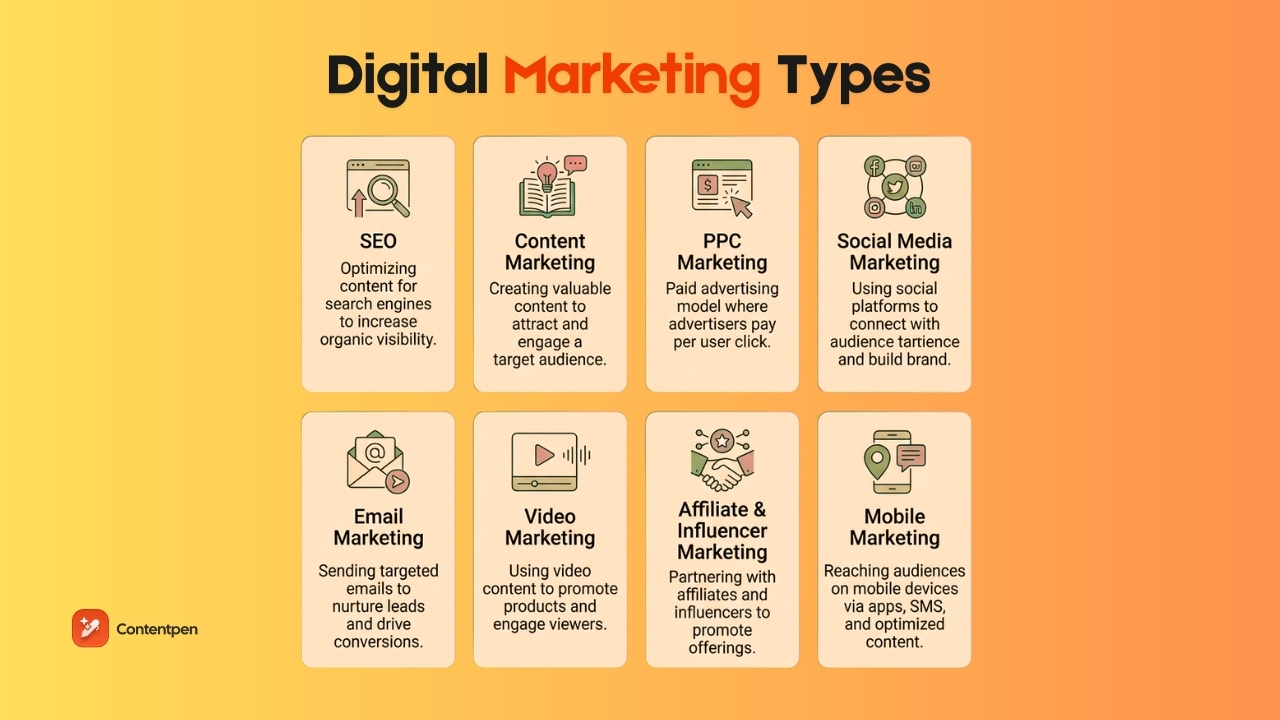
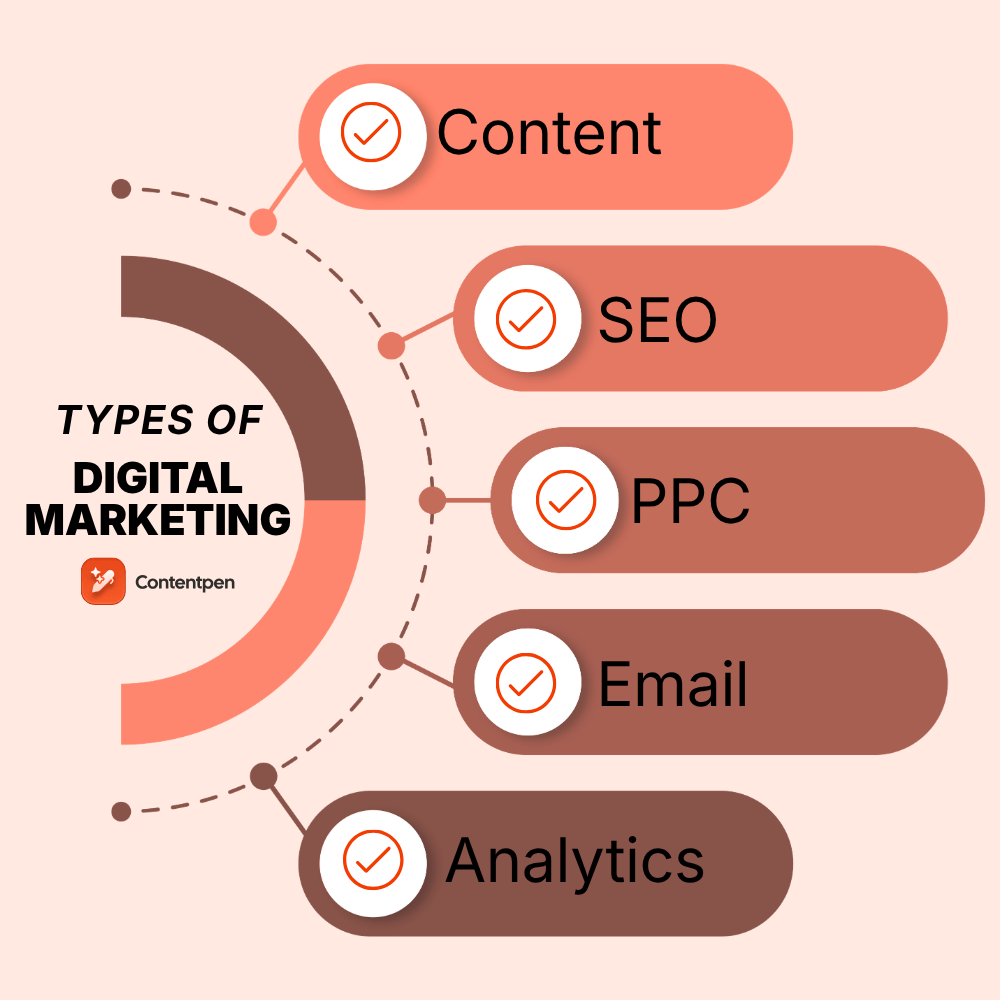
    The main types of digital marketing are content marketing, SEO, PPC, social media, email, affiliate, influencer, video, mobile, and analytics.

    These 10 distinct types of digital marketing channels reach audiences differently and serve various business goals. Knowing what each one does best lets you align your goals instead of guessing where to spend.

    This guide walks through 10 types of digital marketing that still drive results in 2026, from content and SEO to mobile, video, and analytics. You will see how each channel works, when to use it, and how it pairs with the others. 

    By the end, you can sketch a simple mix that fits your budget and stage instead of copying random playbooks. 

    So let us get into the practical side of your digital marketing choices.

    Why is digital marketing important in 2026?

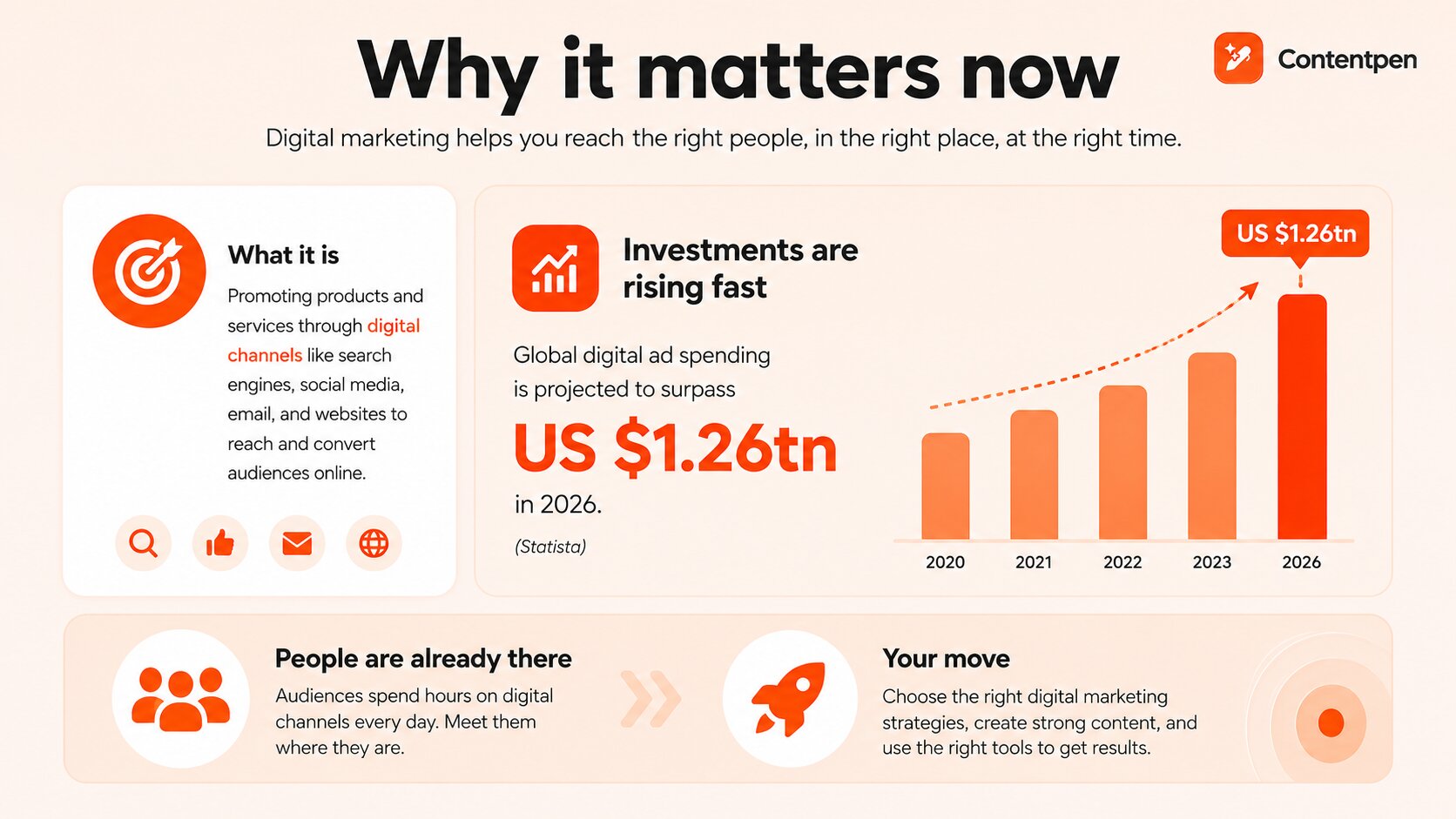
    Digital marketing is the practice of promoting products and services through digital channels, including search engines, social media, email, and websites, to reach and convert target audiences online.
    Understanding digital marketing and its importance.

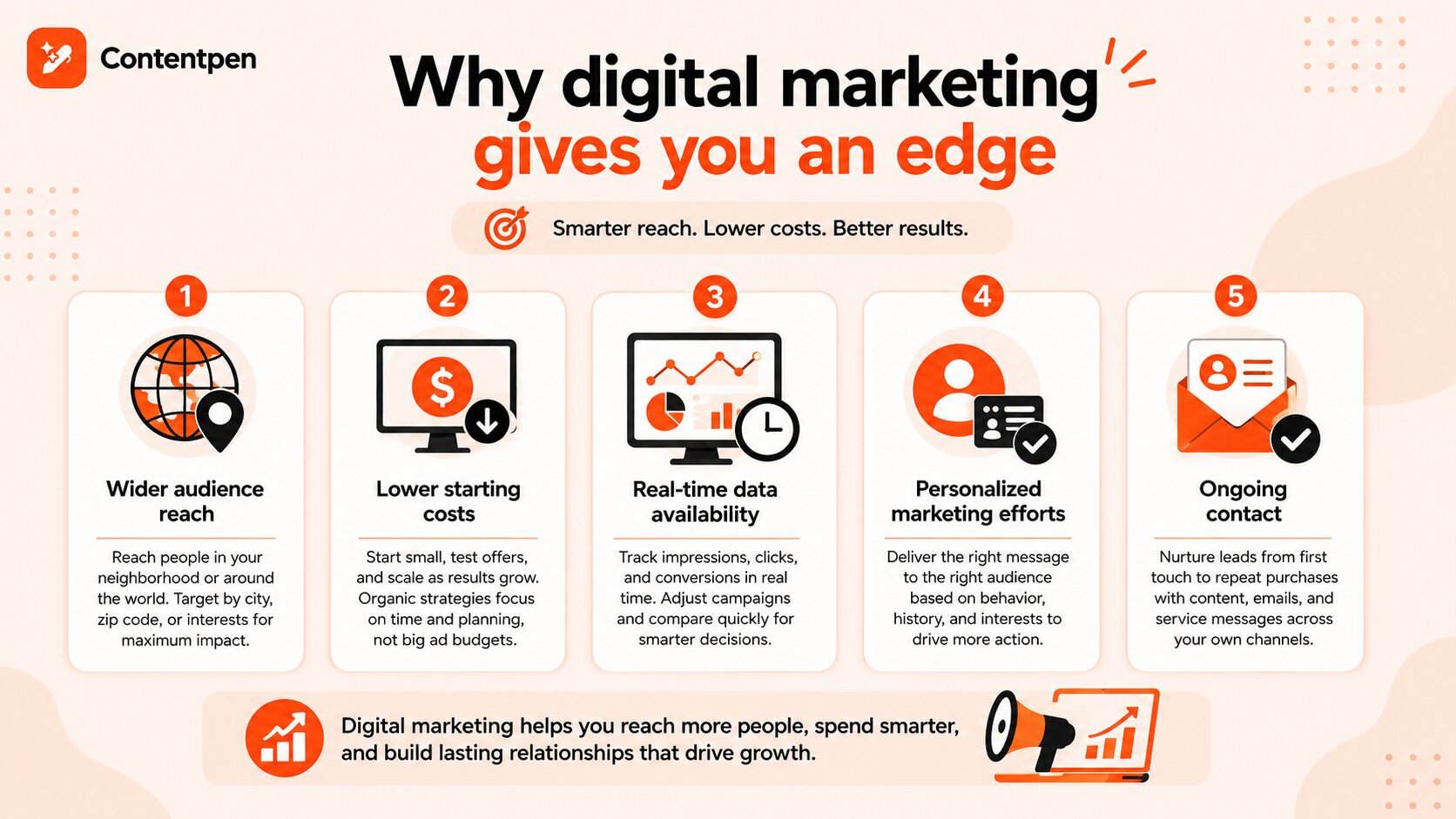
    In 2026, digital marketing is no longer optional. Global digital ad spending is projected to surpass US $1.26tn in 2026. There is a consistent rise in this number from 2020, which shows that brands are actively targeting and spending resources in digital channels.

    The reason? Because the audiences already spend hours on digital channels every day. Therefore, it is easier for businesses to meet their customers where they already are. 

    Your job is just to pick the right forms of digital marketing that fit your message, product, and time frame, then connect them with strong content and digital marketing tools.

    If you want to learn types of digital marketing with examples and current trends, check out our posts on digital marketing trends 2026 and marketing fundamentals 101.

    The POEM framework that defines digital marketing categories

    Most digital marketing activity falls into one of three categories: paid, owned, and earned, often called the POEM framework.

    Owned media is everything your brand controls directly, including your

    • Website
    • Blog
    • Email list
    • Social profiles

    Earned media is attention you did not pay for, such as organic search rankings, backlinks, press mentions, and user-generated content

    Paid media is any placement you buy, including PPC ads, sponsored posts, display banners, and paid influencer partnerships.

    Each category plays a different role. 

    Owned channels are your long-term foundation. Earned channels build credibility and compound over time. Paid channels accelerate reach when you need faster results or are entering a new market.

    The most resilient digital marketing strategies draw from all three rather than relying on any single source of traffic.

    With this in mind, let’s see the main types of digital marketing in 2026, what each requires for success, and how you can master it.

    1. Content marketing
    Types of digital marketing images: Content marketing explained.

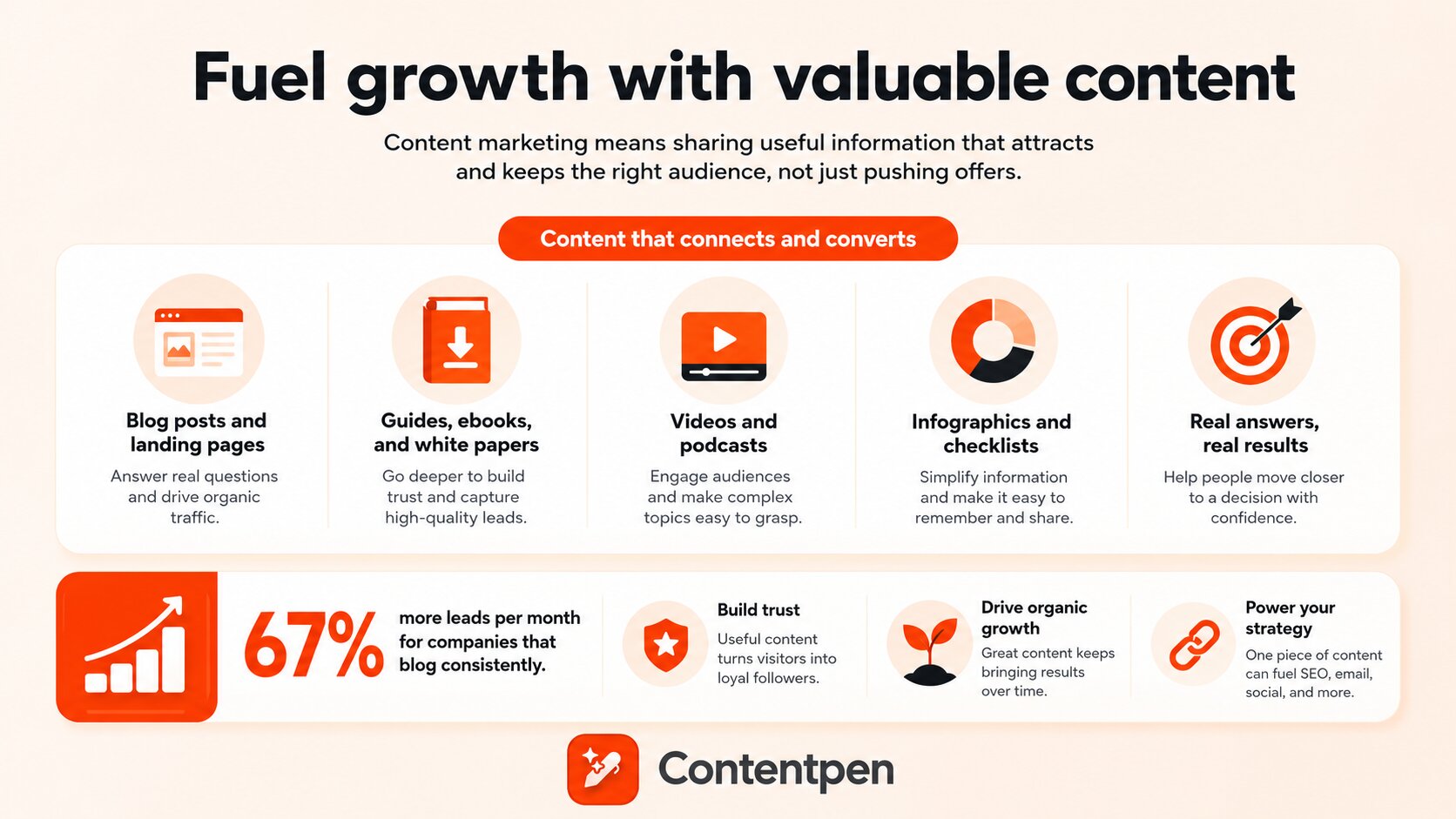
    Content marketing means publishing useful information that attracts and keeps the right audience, instead of only pushing offers. 

    It covers:

    • Blog posts and landing pages
    • Guides, ebooks, and white papers
    • Videos and podcasts
    • Infographics and checklists

    All of these pieces of content answer real user questions and help people move closer to a decision. That can be to purchase a product, compare services, or dive deeper into learning more about the offer you have.

    When you keep publishing useful pieces, your site starts to feel like a library that people and search engines keep returning to. And numbers prove this story.

    Companies that blog consistently generate 67% more leads per month than those that do not.

    Over time, strong content builds trust and steady organic traffic. Useful content can keep bringing visitors long after the publish date, while ads stop the moment you pause spend. 

    Content also feeds other kinds of digital marketing, since one strong article can support SEO, email, social posts, and even video scripts. That is why content sits at the center of many online marketing strategies.

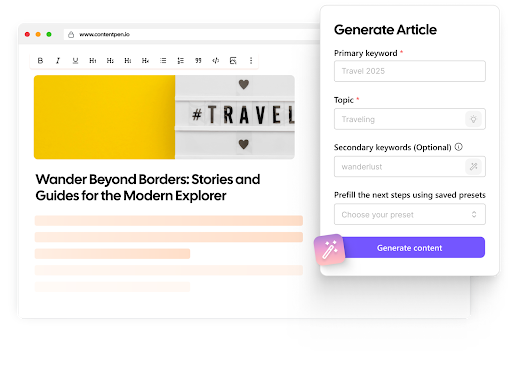
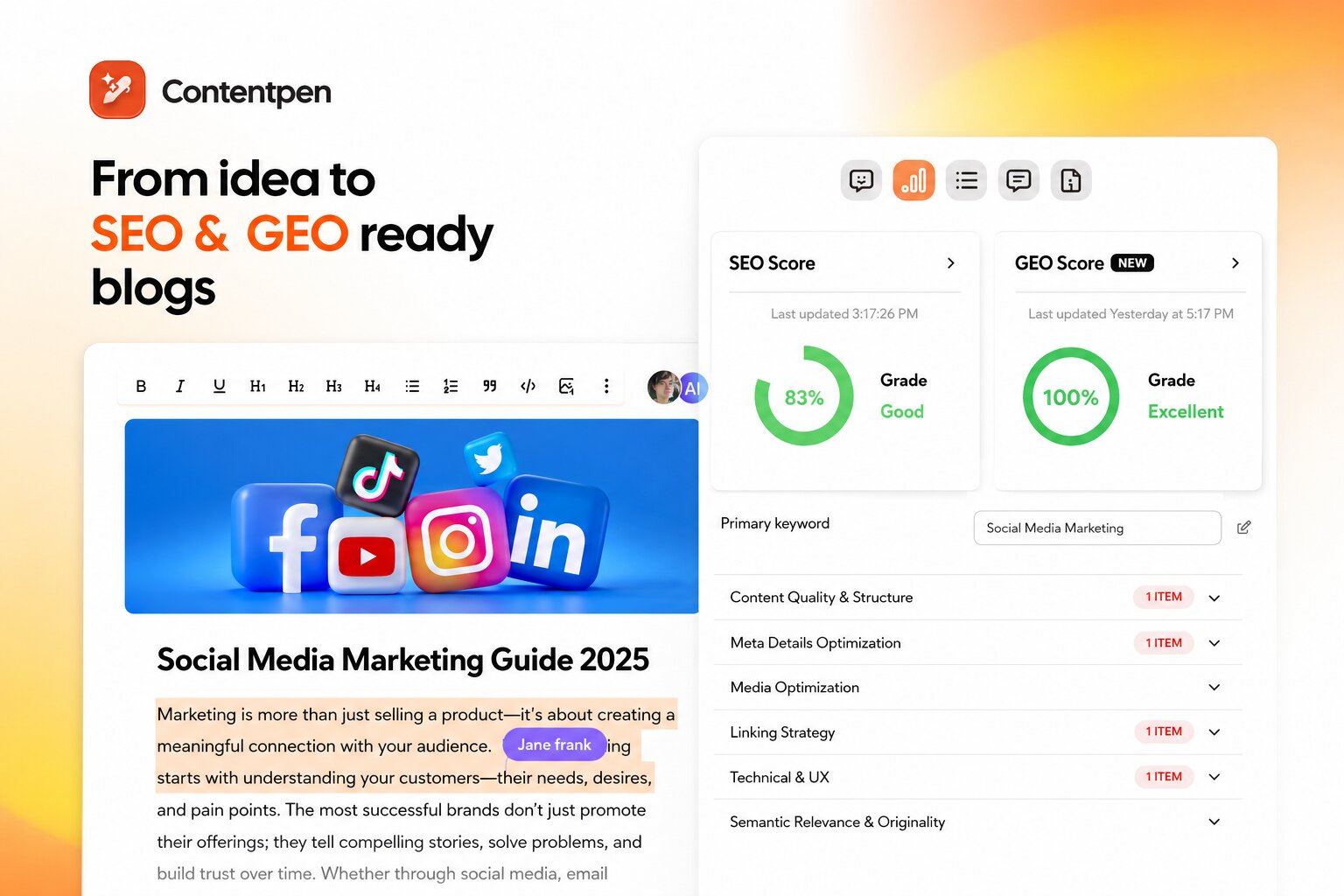
    The hard part is staying consistent without burning out your team. This is where Contentpen fits in. It is an AI-powered blog creation platform that helps you produce high-quality, long-form, SEO- and GEO-focused articles at scale. 

    Through Contentpen, you can move from idea to draft to internal and external linking without juggling several tools or spreadsheets.
    Write better blogs in less time, without sacrificing quality.

    Let AI handle structure, clarity, and flow while you stay in control of the message.

    Try AI blog writing
    AI SEO Interface

    For you, that means less time formatting and fixing links and more time planning topics that match your audience.

    2. Search engine optimization (SEO)
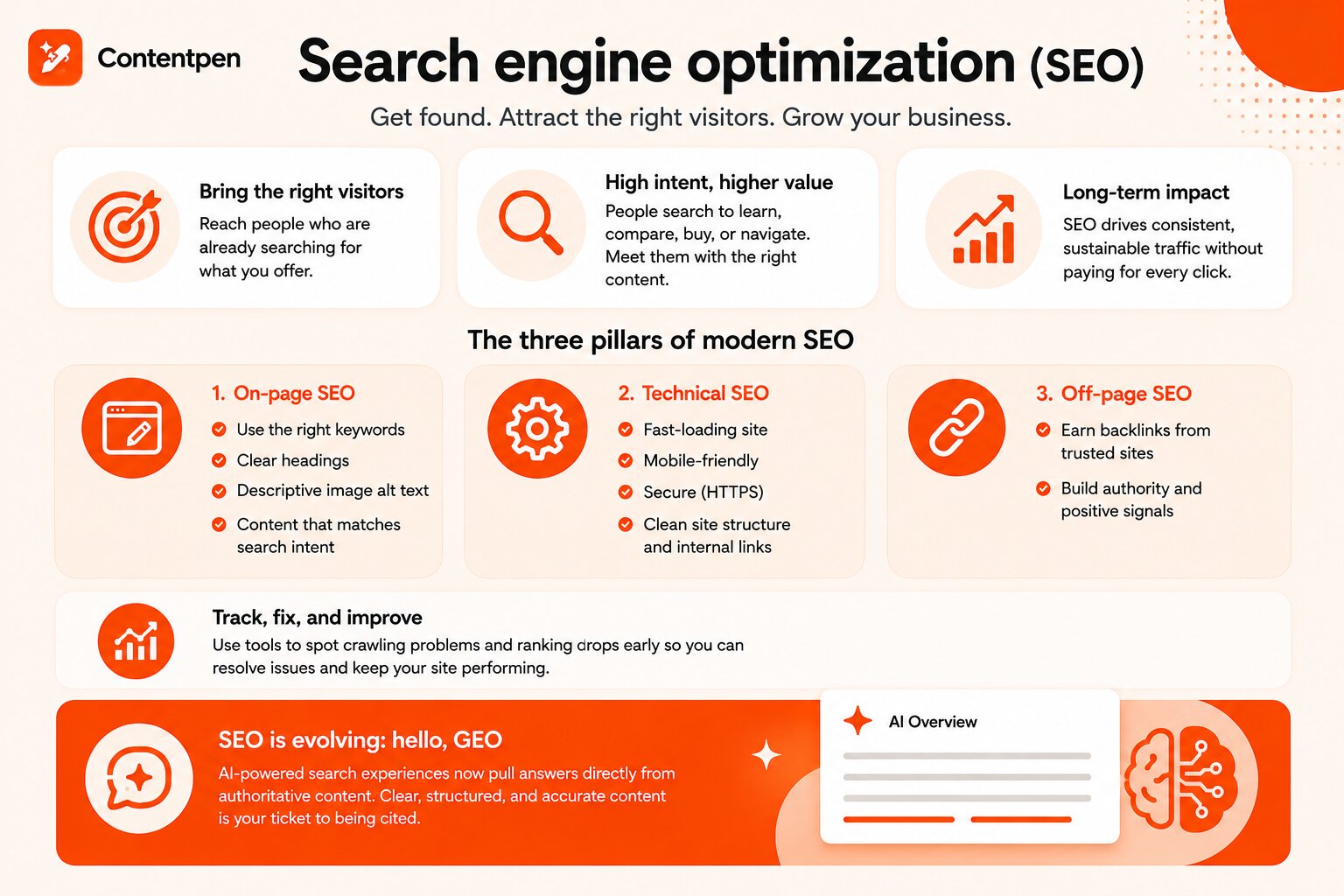
    Explaining SEO as a type of digital marketing channel.

    Search engine optimization (SEO) is the practice of tuning your site and content so it appears higher in search engine results. 

    The aim is simple: bring in visitors who are already searching for what you offer, without paying for every click. 

    SEO is one of the most effective types of digital marketing strategies because search intent is so strong. People are looking to learn, compare, buy, or navigate to a page already. You just need to be clever enough to meet them with your content.

    Modern SEO has a few main pieces that work together. Some of the main types of SEO are listed below:

    • On-page SEO: This is what people see and interact with on your site. On-page requires you to build your content around SEO keywords, write with clear headings, provide descriptive image alt text, and content that matches the search intent.
    • Technical SEO: For good technical SEO, you need to make sure that your site is fast-loading, mobile-friendly, secure, and cleanly interlinked so search engines and humans can browse everything you have to offer. Regularly auditing your site’s infrastructure with tools like a DNS checker can also help identify configuration issues that affect search performance.
    • Off-page SEO: Off-page is about generating positive signals other than your own site. This includes getting backlinks from respected sites, which act like public recommendations for your pages and encourage more users to visit you.

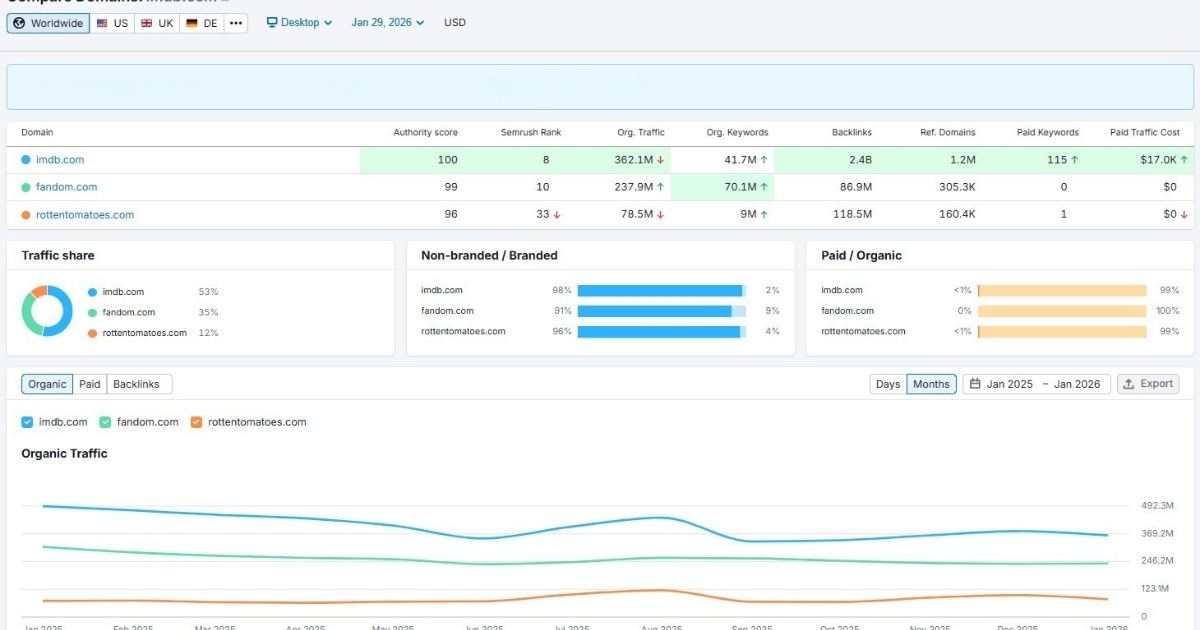
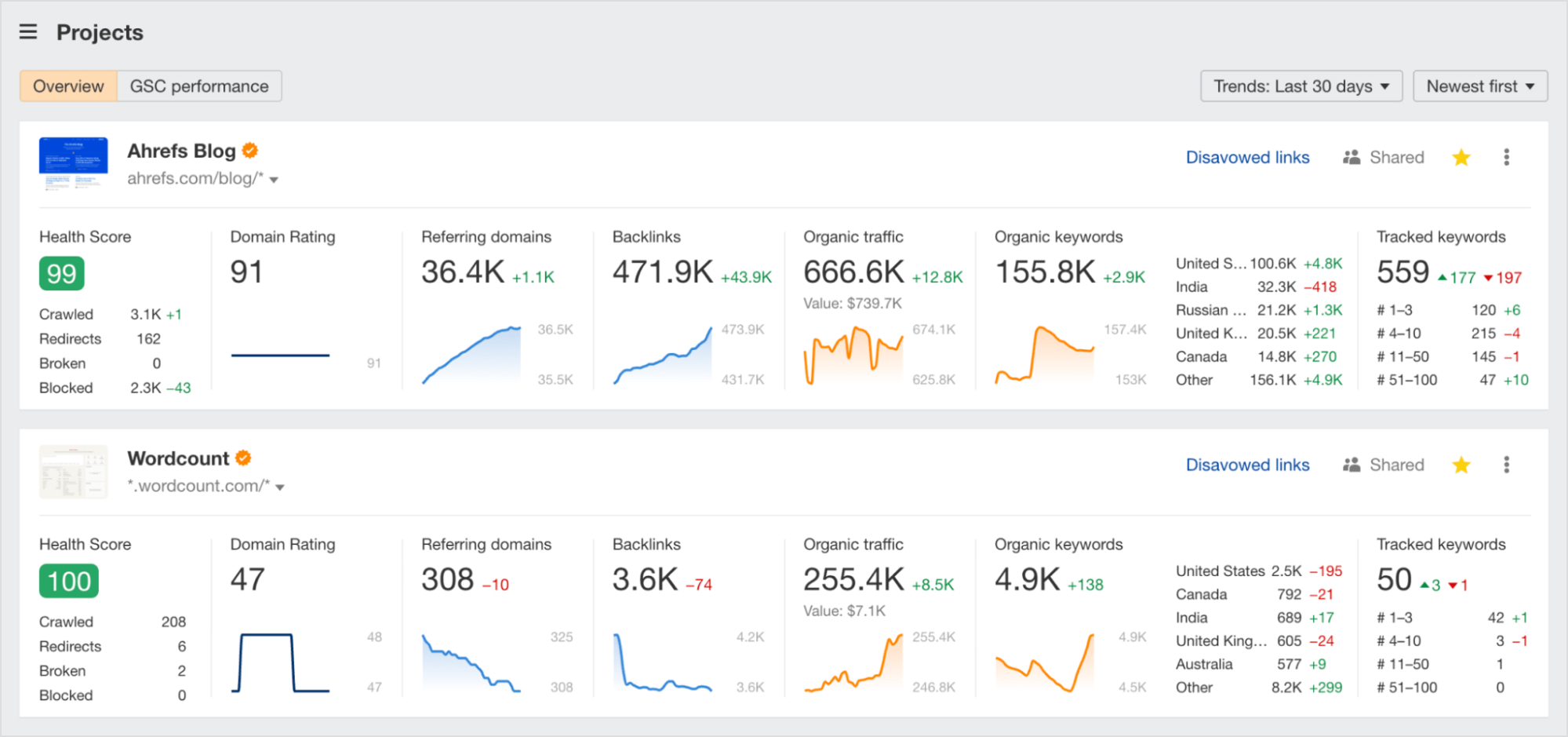
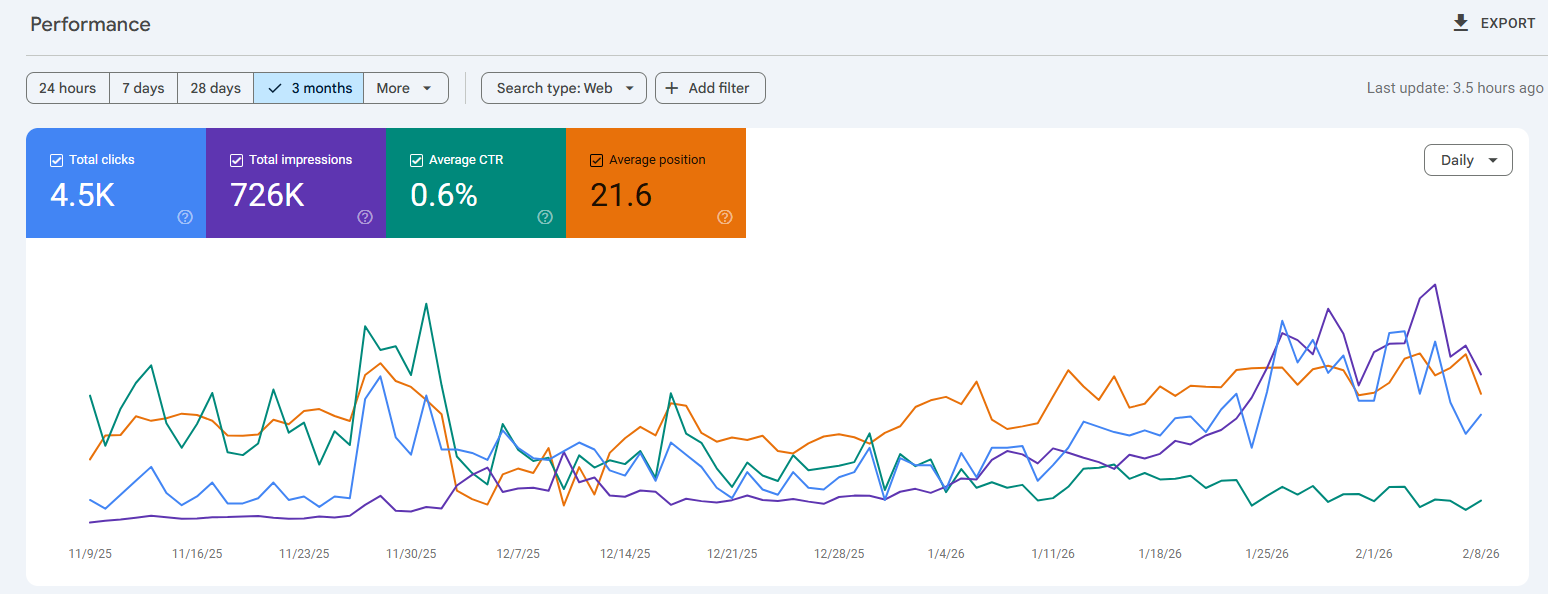
    Tools such as Google Search Console, Moz, and Ahrefs help you spot crawling problems and ranking drops early.

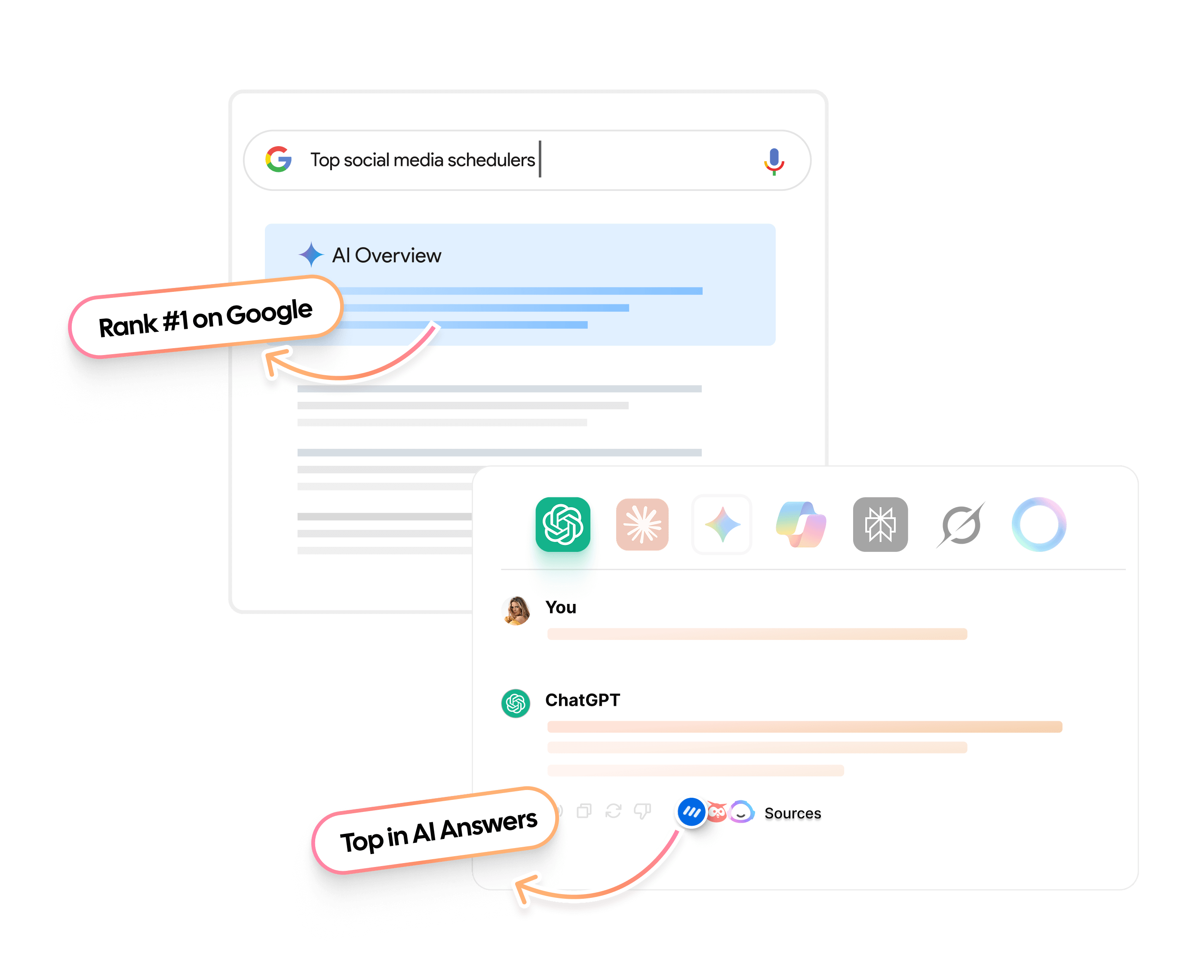
    Beyond traditional search, 2026 has also made generative engine optimization (GEO) a real consideration for content teams. 

    AI-powered search experiences like Google’s AI Overviews and ChatGPT Search pull answers directly from well-structured, authoritative content, bypassing organic clicks entirely. 

    Getting cited in those answers requires the same foundation as good SEO: clear structure, accurate data, and content that directly answers the question being asked.

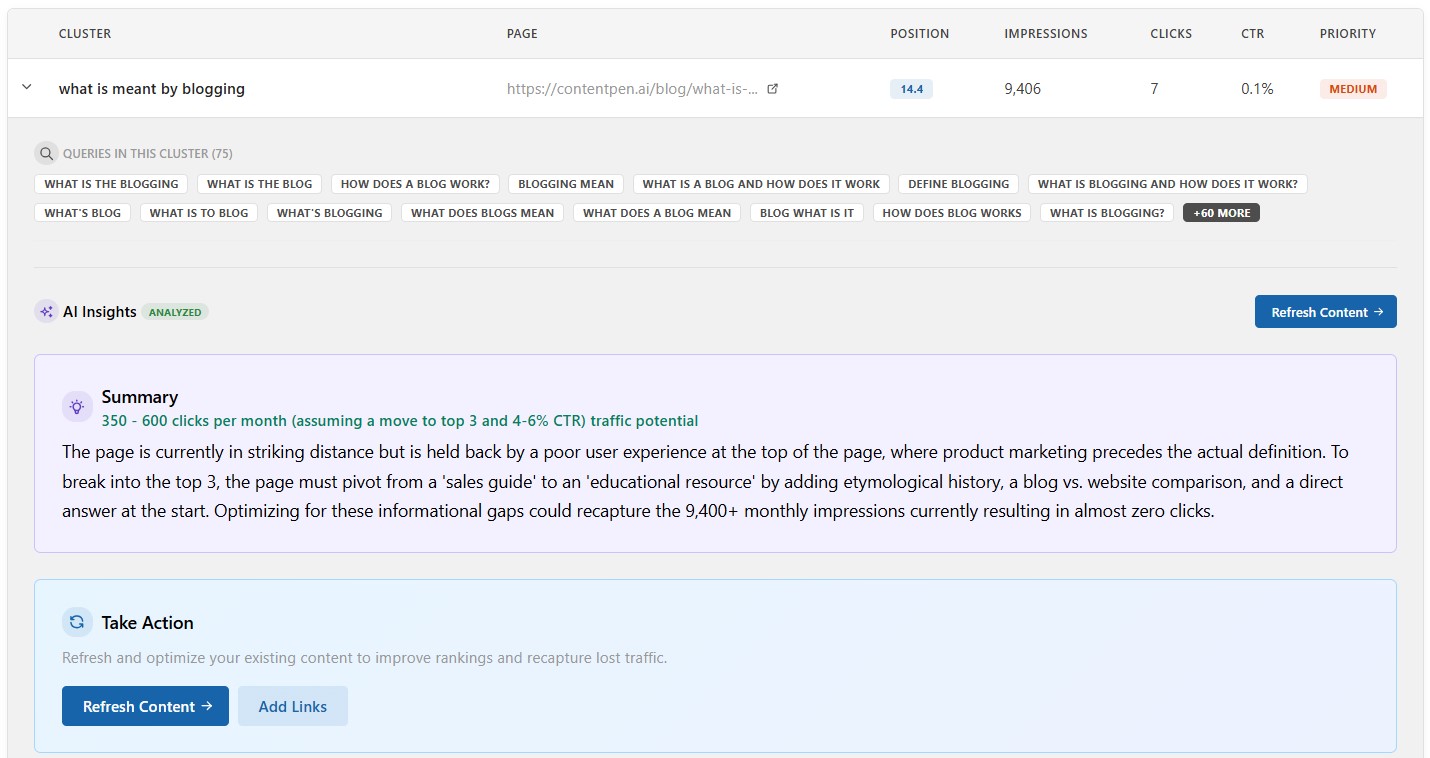
    If you prefer working in a single window without switching tabs, consider Contentpen’s SEO opportunities and web analytics features. The tool helps you know decaying pages, near-ranking ones, and apply the necessary fixes with AI inside a single window.

    Turn existing content into growth opportunities

    check

    Identify pages losing traffic or CTR

    check

    Find quick wins to improve clicks and rankings
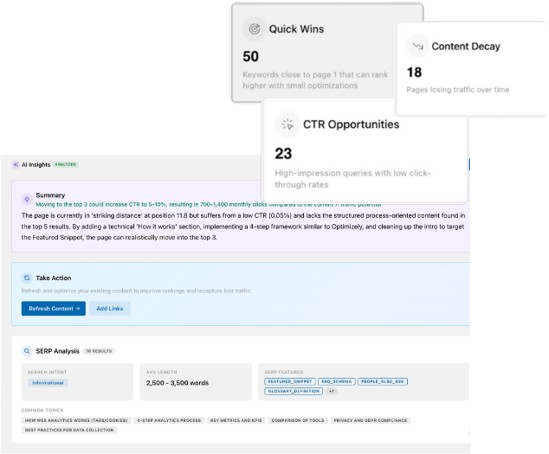
    Find Content Opportunities
    AI SEO Interface

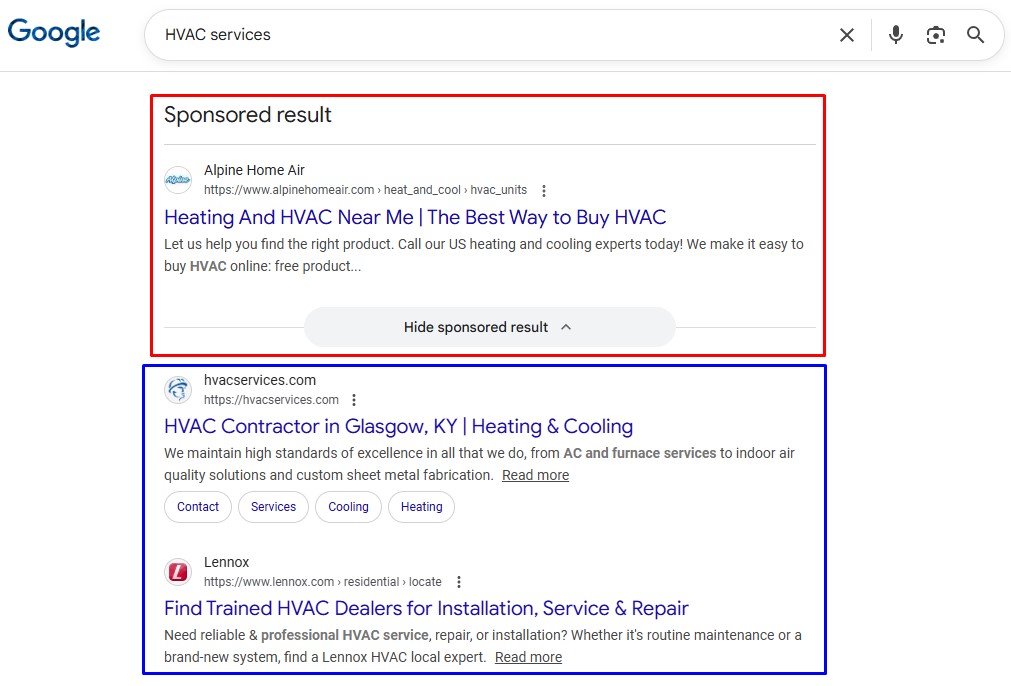
    SEO differs from search engine marketing (SEM), where you pay for ad placements on top of organic results. 

    Paid search can bring instant traffic, but once you stop paying, the visitors also stop. Well-planned SEO is slower to start yet keeps working for months or years to come. This is why many brands invest in organic traffic first before moving on to SEM.

    3. Pay per click advertising (PPC)

    Pay per click (PPC) advertising is a paid model where you pay only when someone clicks your ad. It covers:

    • Search ads on Google and Bing
    • Display banners on partner sites
    • YouTube pre‑roll spots
    • Ads on platforms such as Facebook, Instagram, and LinkedIn

    Among all types of online advertising, PPC is one of the fastest ways to appear in front of high-intent searchers. 
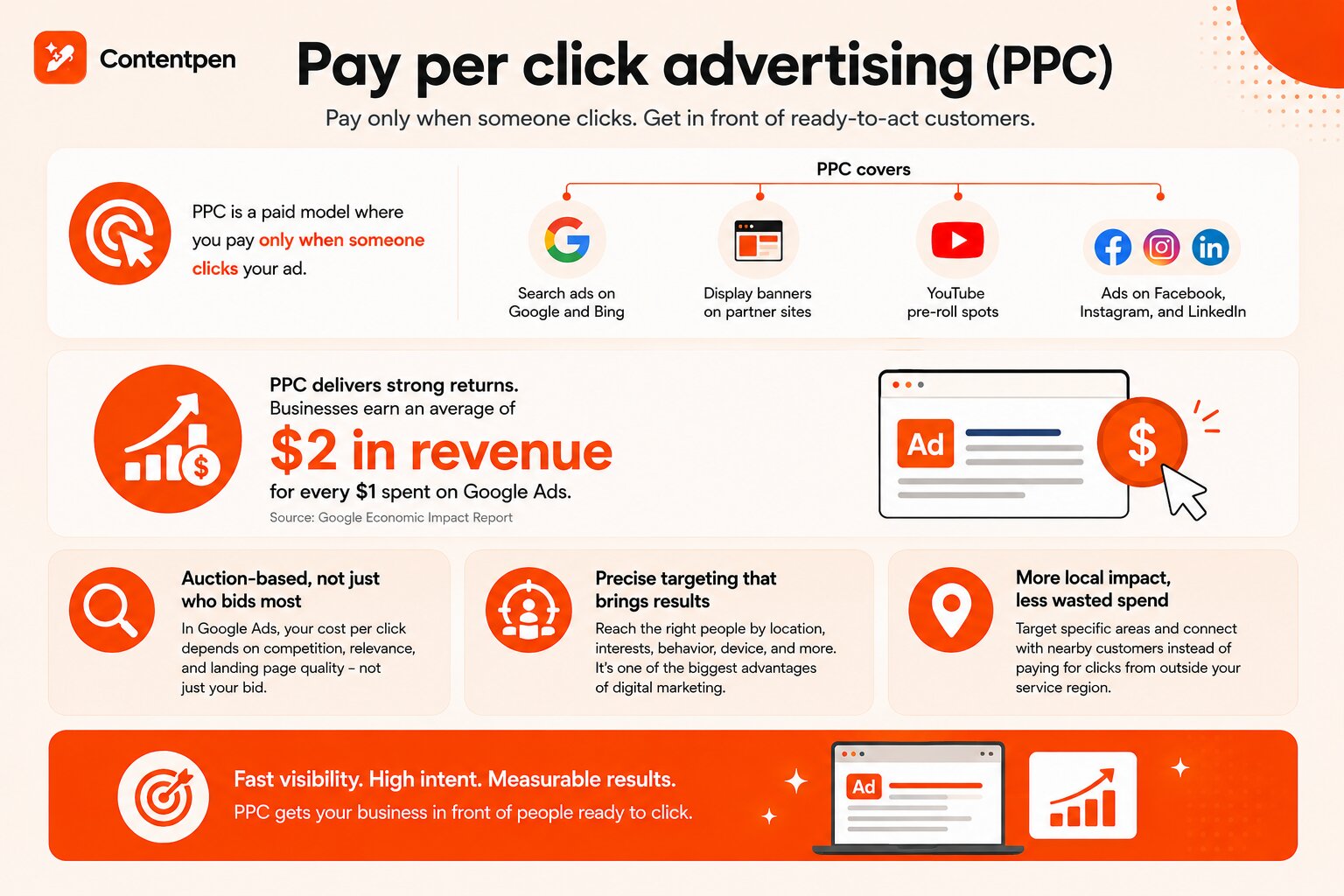
    PPC marketing - Contentpen.ai.

    Businesses earn an average of $2 in revenue for every $1 spent on Google Ads, according to Google’s own economic impact data.

    In Google Ads, you choose keywords and write text ads that enter an auction each time someone searches. Your cost per click rises or falls based on how many other advertisers bid on the same terms. 

    Your ad rank also depends on relevance and landing page quality, not just your bid. This setup pushes you to write helpful ad copy and send people to pages that match the promise.

    With digital marketing, you get a lot of targeting options that help you reach very specific groups. This is one of the clear advantages of digital marketing and why it is more popular than offline marketing channels, such as billboards, TV ads, etc.

    Because of such powerful targeting options, local businesses can enjoy traffic from a certain area instead of wasting spend on clicks from another county or region. 

    With that said, the main problem with PPC is the budget. You can quickly overspend on paid campaigns without even realising.

    4. Social media marketing
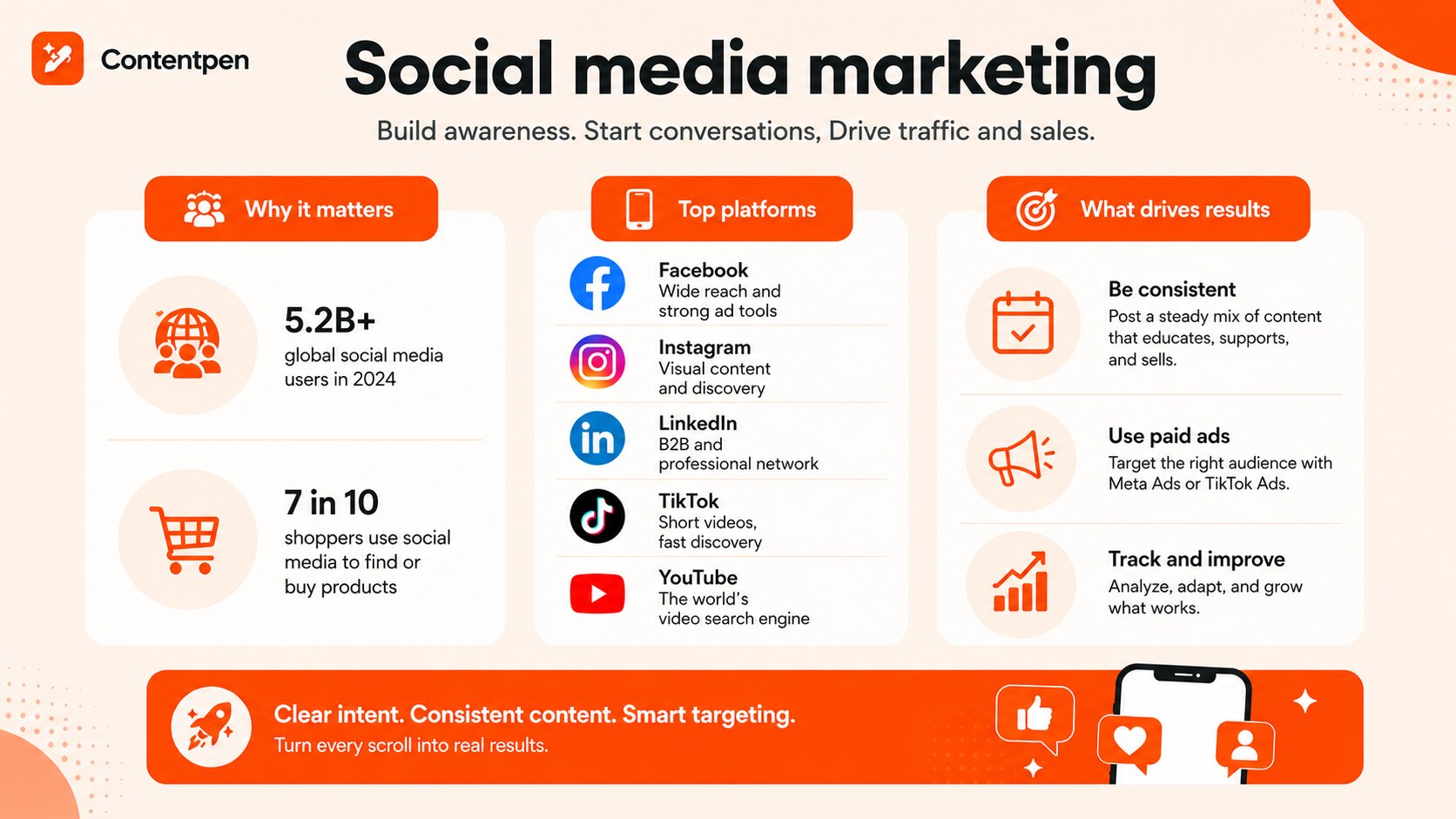
    Social media marketing explained as a form of digital marketing in 2026.

    Social media marketing means using platforms such as Facebook, Instagram, TikTok, LinkedIn, X, Pinterest, and YouTube to build awareness, start conversations, and drive traffic or sales. 

    It sits among the most visible forms of digital marketing because people spend so many hours scrolling feeds each day. According to DataReportal, global social media users surpassed 5.2 billion in 2024, and that audience keeps growing.

    Research cited by Investopedia shows that nearly seven in ten shoppers use social media to find products or complete purchases. That means your profile, content, and replies often shape the first impression of your brand. 

    The main social media platforms we all know of play different roles:

    • Facebook: Wide reach and strong ad tools.
    • Instagram and Pinterest: Great for visual products.
    • LinkedIn: Strong for B2B and professional services.
    • TikTok: Short, creative clips and quick discovery.
    • YouTube: Acts as a video search engine.

    What separates strong social media marketing from random posting is clear intent and consistency. 

    You pick a few platforms where your buyers already spend time. Then you publish a steady mix of posts that educate, support, and occasionally sell, all in a voice that matches your brand. 

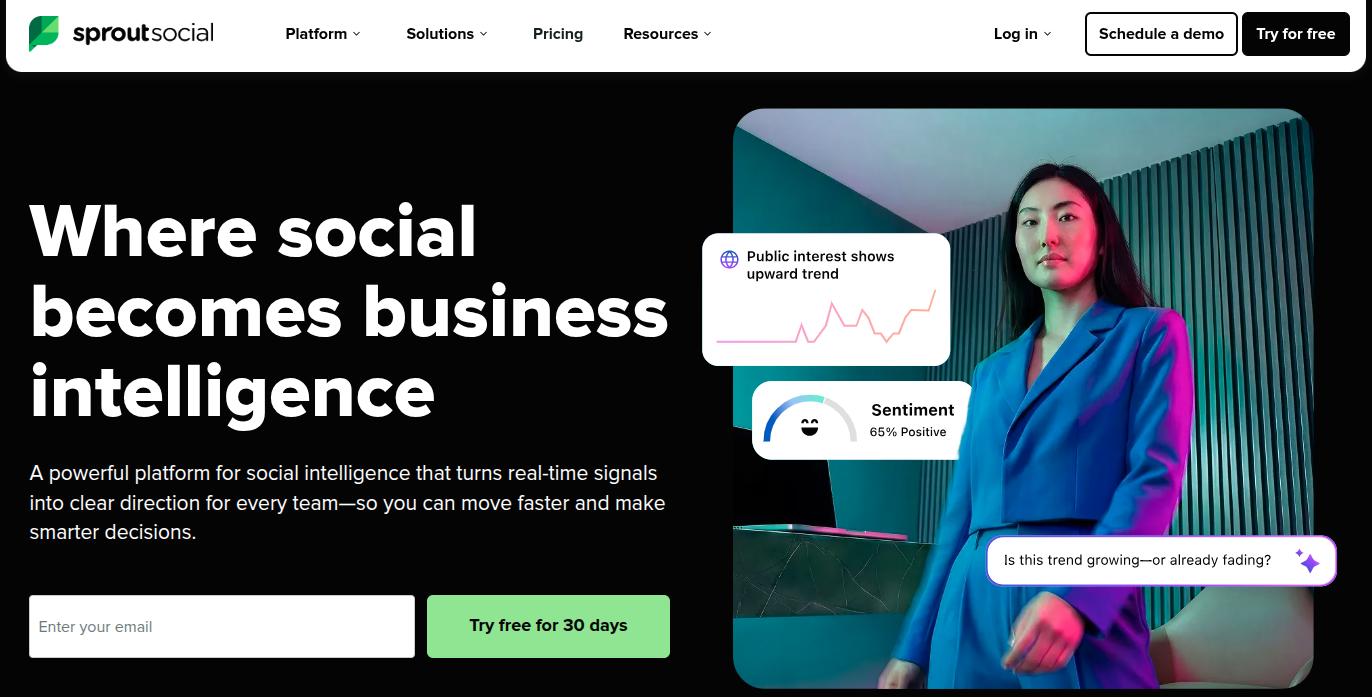
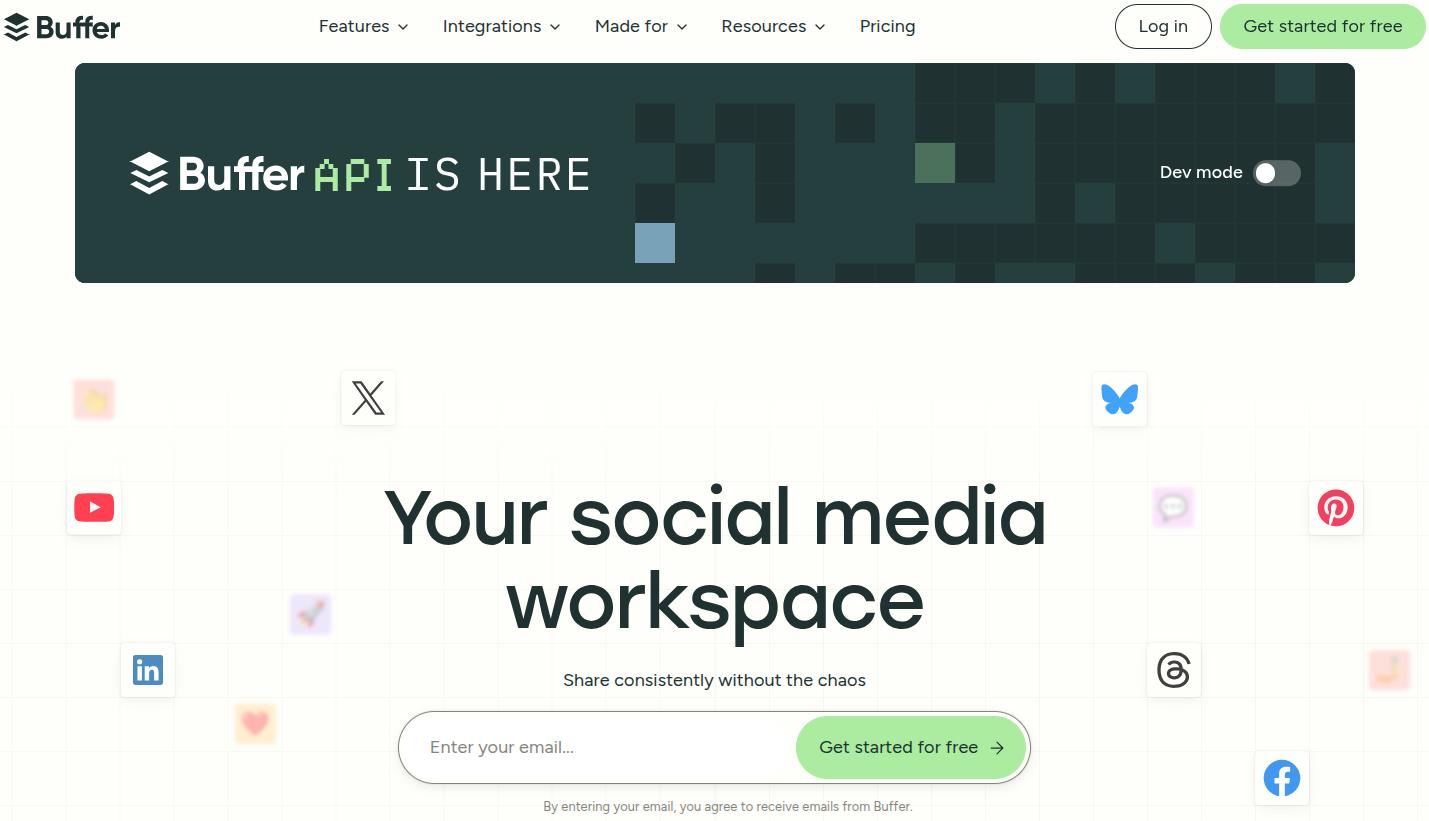
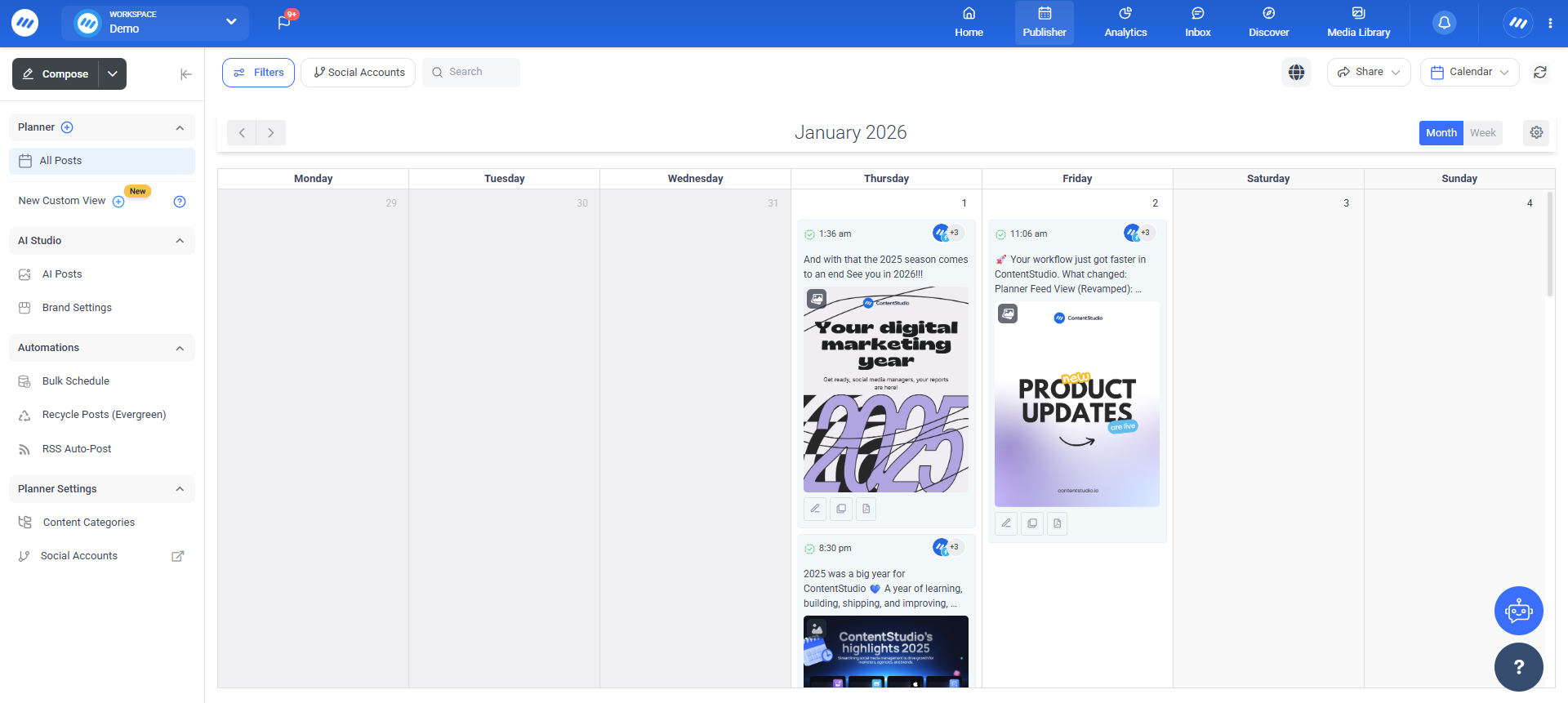
    Tools like Hootsuite, ContentStudio, and Buffer can help you schedule posts, reply to comments, and analyze your social media presence in one place.
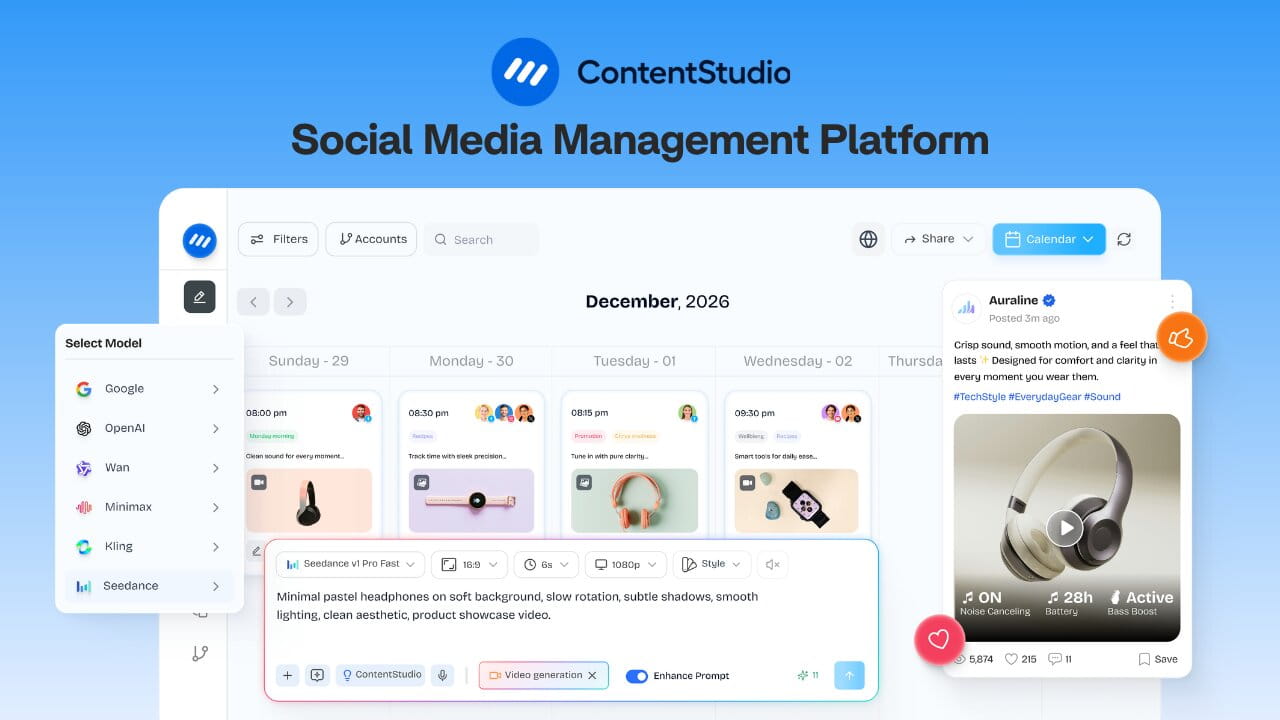
    ContentStudio - AI-powered social media management platform.

    Paid social ads sit beside organic content as part of the same plan. With Meta Ads Manager or TikTok Ads, you can focus on precise interests and behaviors, such as people who visited your site last week or watched a previous video. 

    The risk with paid social traffic is that algorithms change often, which can cut organic reach with little warning. However, high-quality content and a healthy email list still give you a lot of chance to stay stable in such conditions.

    5. Email marketing
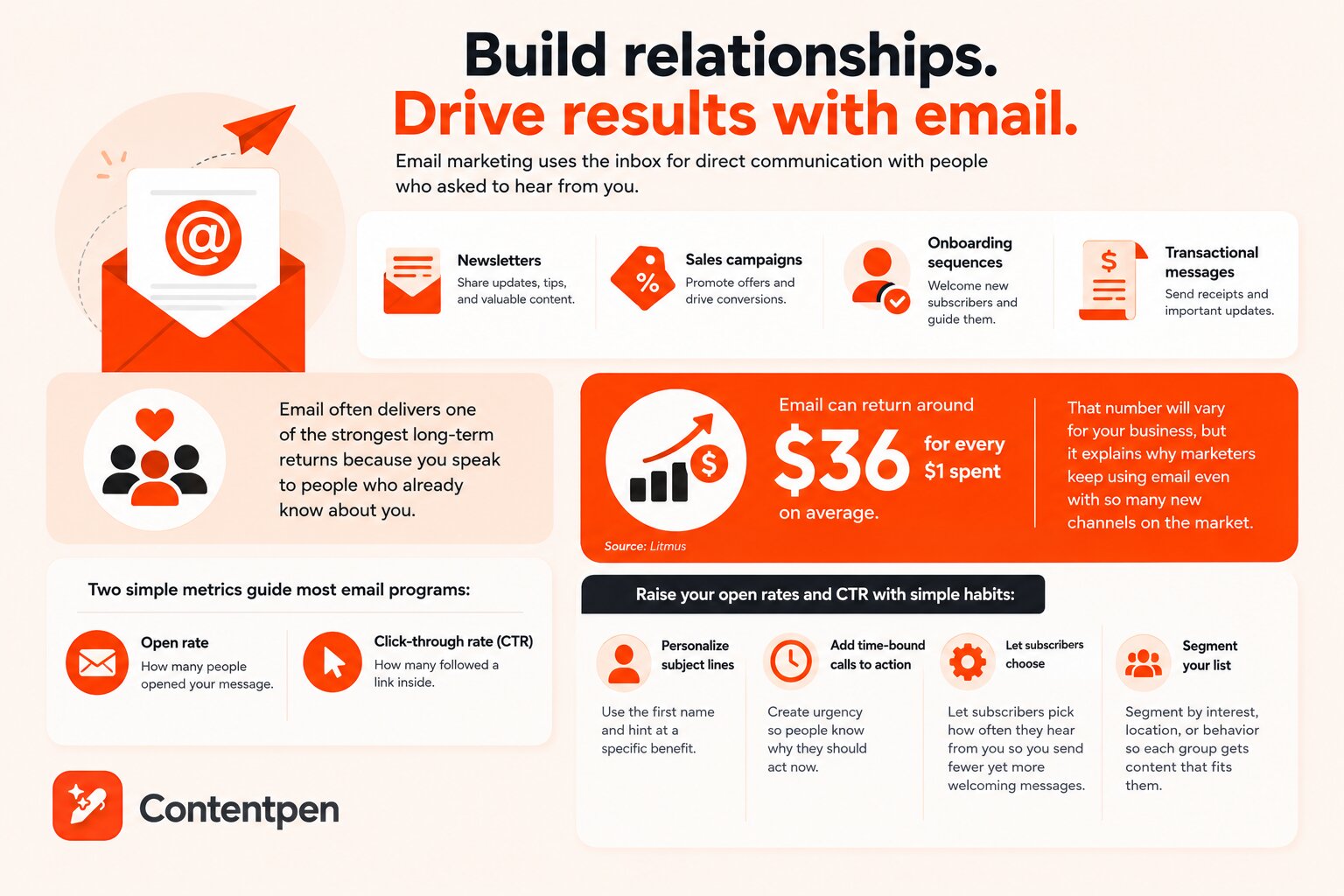
    Driving better ROI with email marketing - Contentpen.ai.

    Email marketing uses the inbox for direct communication with people who asked to hear from you. It includes newsletters, sales campaigns, onboarding sequences, and transactional messages such as receipts of purchase.

    Among all types of internet marketing, email often shows one of the strongest long‑term returns because you speak to people who already know about you.

    Studies from Litmus show that email can return around $36 for every $1 spent on average, making it one of the highest-ROI channels available. 

    That number will vary for your business, but it explains why marketers keep using email even with so many new channels on the market. 

    Two simple metrics guide most email programs:

    You can raise both numbers with a few simple habits:

    • Use subject lines that feel personal and clear, often by adding the first name and hinting at a specific benefit.
    • Add time-bound calls to action when you run a sale, so people know why they should act now.
    • Let subscribers pick how often they hear from you so you send fewer yet more welcoming messages.
    • Segment your list by interest, location, or behavior so each group gets content that fits them.

    Modern tools such as Mailchimp, ConvertKit, HubSpot, and Brevo let you set up automated email flows that run on their own. However, manual oversight is still required to ensure that your emails don’t end up in spam or as promotional content.

    6. Affiliate marketing

    Affiliate marketing is a performance-based model where partners promote your product and receive a commission on each sale or lead they bring. 

    It turns bloggers, YouTubers, newsletter writers, and niche site owners into an external sales force for your brand. 
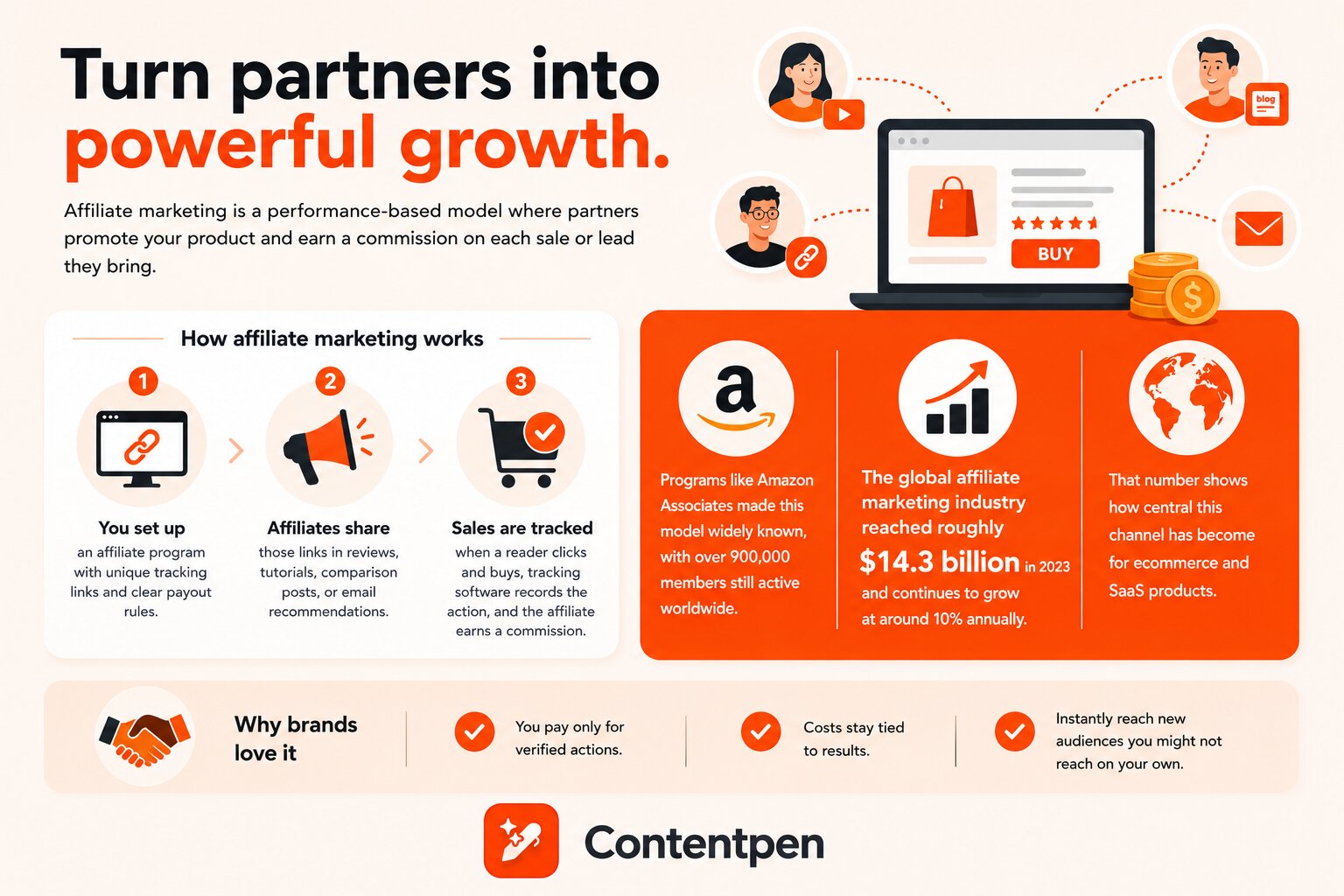
    Affiliate marketing explained in detail.

    Among different types of digital marketing, affiliate marketing stands out because costs stay tied to results. The basic flow is straightforward:

    1. You set up an affiliate program with unique tracking links and clear payout rules.
    2. Affiliates share those links in reviews, tutorials, comparison posts, or email recommendations.
    3. When a reader clicks and buys, tracking software records the action, and the affiliate earns a percentage or flat fee.

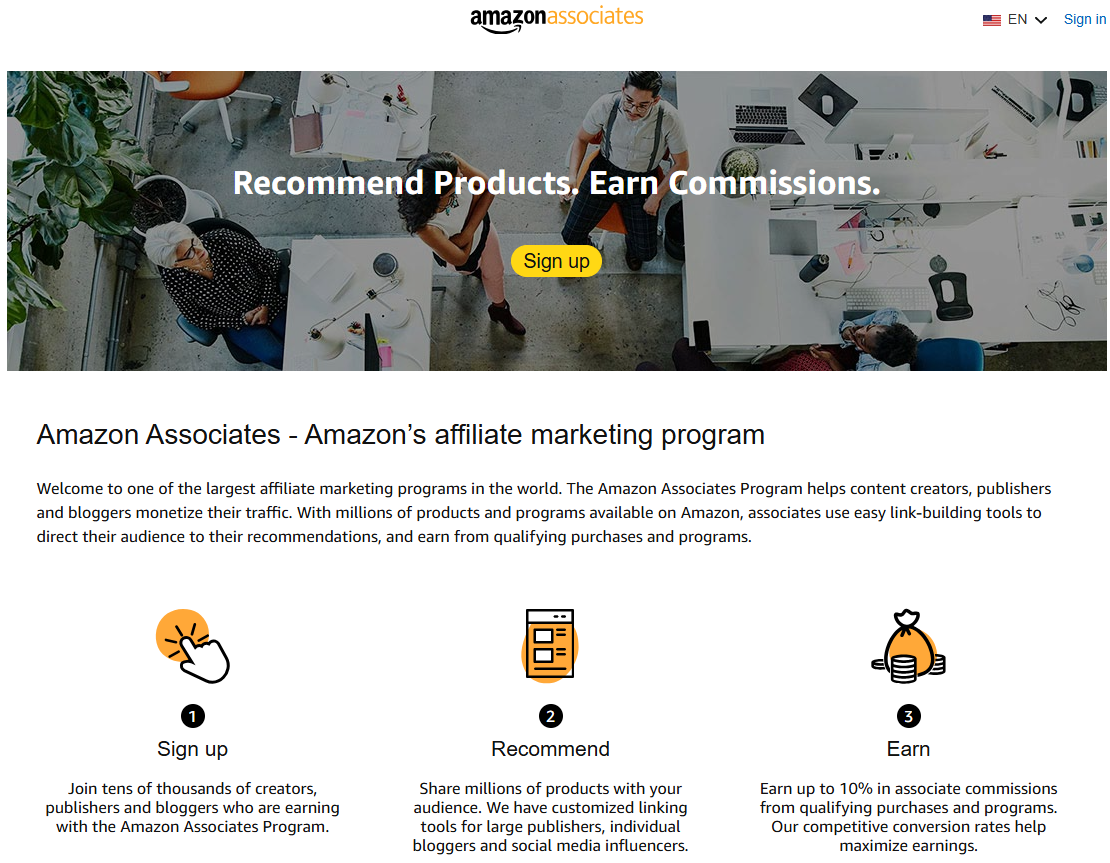
    Programs like Amazon Associates made this model widely known, with over 900,000 members still active worldwide.

    According to Influencer Marketing Hub, the global affiliate marketing industry reached roughly $14.3 billion in 2023 and continues to grow at around 10% annually. That number shows how central this channel has become for ecommerce and SaaS products. 

    For a brand, the appeal is clear. You pay only for verified actions, and you instantly reach audiences you might not reach through your own channels.

    With that said, the risks are real as well. Some affiliate partners may push low-quality tactics such as fake clicks or misleading claims, which can hurt trust in your brand. 

    Conversely, some affiliate programs may also not cooperate well enough with their partners, performing shady marketing tactics with no clear plan.

    But if you’re looking to run a sound affiliate campaign with transparent terms and conditions, check out Contentpen’s affiliate program. You get a 30% recurring commission for every subscriber you bring in, with a 60-day cookie window, during which every referral counts.
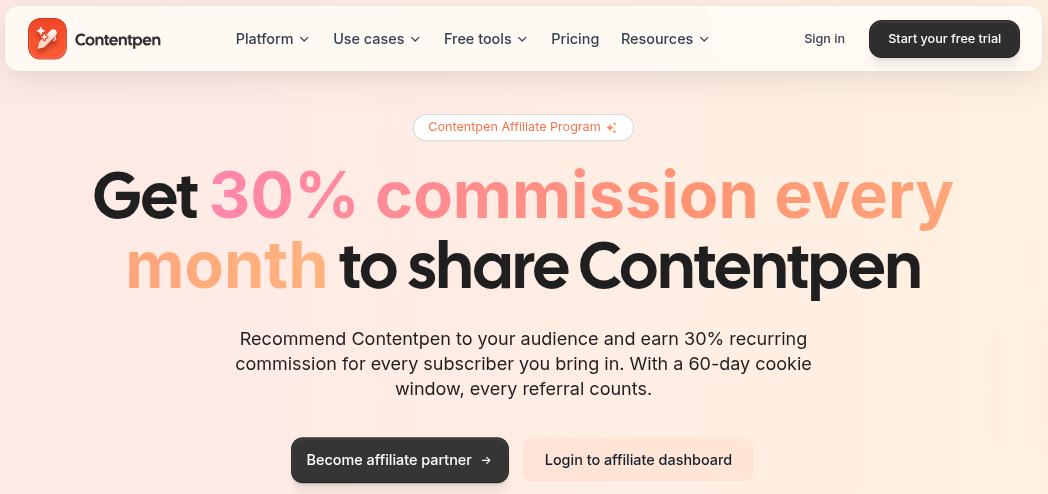
    Contentpen's affiliate program landing page.

    Besides a solid affiliate program, you also need a good link tracking tool, such as the one from Replug

    Replug link tracking tool.

    This will help you avoid any disputes down the line, either from the affiliate partner or from the program provider themself.

    7. Influencer marketing

    Influencer marketing means working with people who have already built a following on TikTok, Instagram, YouTube, podcasts, or through blogs. Instead of buying ad space from a platform, you are paying for access to the trust that person has with their community. 

    Influencer marketing sits close to affiliate marketing, yet the focus is more on content and story rather than on pure link tracking.

    Influencers come in different sizes, and bigger is not always better. Many brands now favor micro and nano creators over celebrity-style accounts. 

    Micro influencers with niche audiences often see engagement rates of 3–5%, compared to under 1% for mega influencers with millions of followers. 

    But again, this depends on your brand’s current strategy, goal, and standing in the market.

    If you are already a highly-successful company who are just looking to bring mass awareness, then mega influencers are not a bad consideration.

    To simplify influencer tiers, check out this table below for your help:

    Influencer tierTypical follower rangeBest use case
    MegaOver 1 millionMass awareness for broad consumer brands
    Macro100k to 1 millionLarge yet focused campaigns in a field
    Micro10k to 100kTargeted offers in specific niches
    NanoUnder 10kLocal or tight community launches

    Compared with other types of digital marketing funnels, influencer marketing often feels more like a partnership. You agree on goals and conditions, then let the creator speak in their own style about your product so that the promotion feels natural without being pushy. 

    However, there are also some risks with influencers. You may get partnership and collaboration requests from individuals with fake followers, a poor fit for your brand, or the chance that the influencer later faces public issues. 

    Therefore, it is important for you as a brand or agency to run proper background checks and carefully curate a list of influencers that work the best for your business.

    8. Video marketing

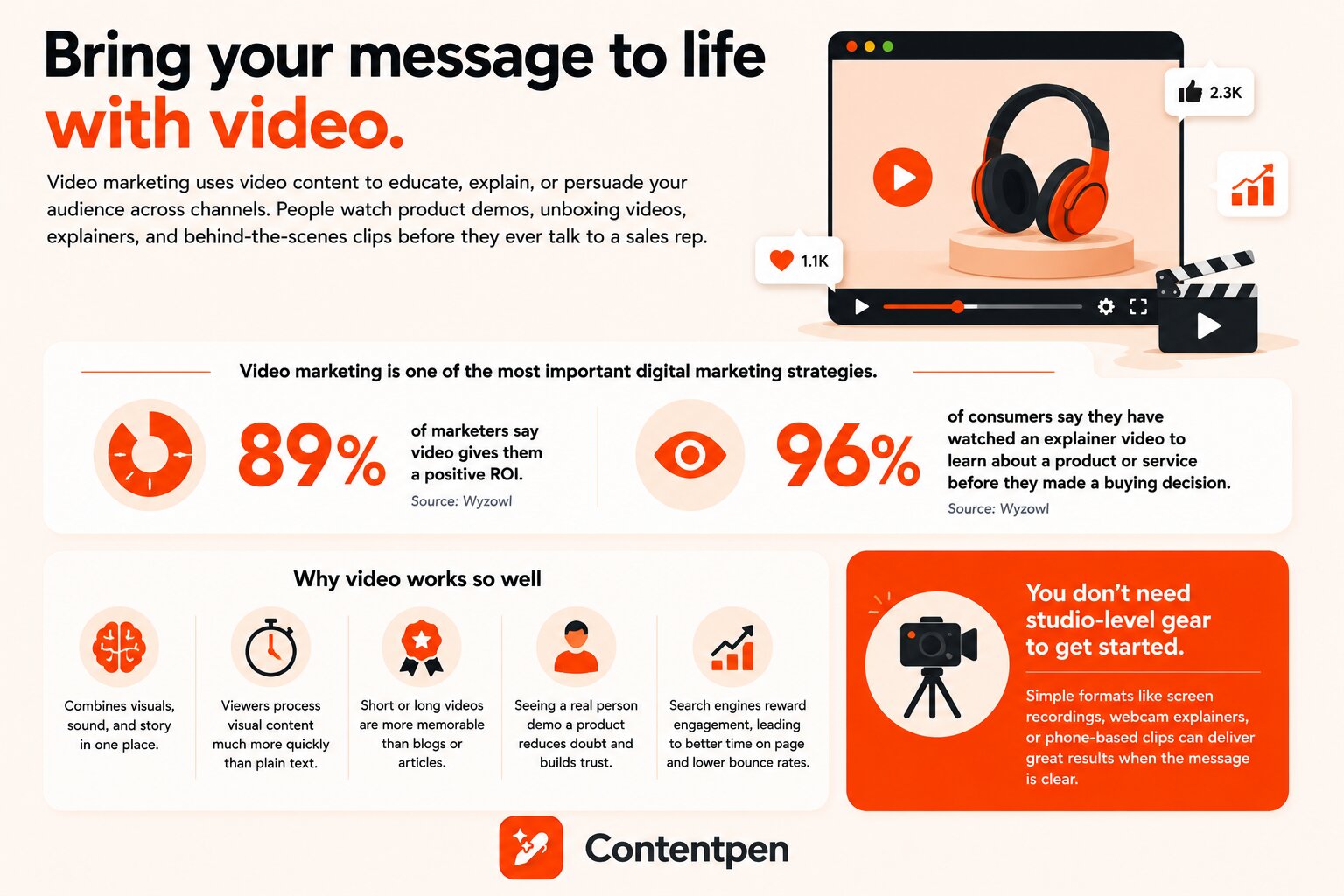
    Video marketing uses video content to educate, explain, or persuade your audience across channels. People watch product demos, unboxing videos, explainers, and behind-the-scenes clips before they ever talk to a sales rep. 

    Video marketing is now one of the most important forms of digital marketing because users believe in the motto “seeing is believing”. People see before they make a decision, and numbers prove it all.
    Video marketing as a digital marketing channel - Contentpen.ai.

    According to Wyzowl, 89% of marketers say video gives them a positive ROI. Also, 96% of consumers say they have watched an explainer video to learn about a product or service before they made a buying decision.

    Video works so well because it combines visuals, sound, and story in one place. Viewers process visual content much more quickly than plain text. Short-form or long videos are also much more memorable to the audience than blogs or articles.

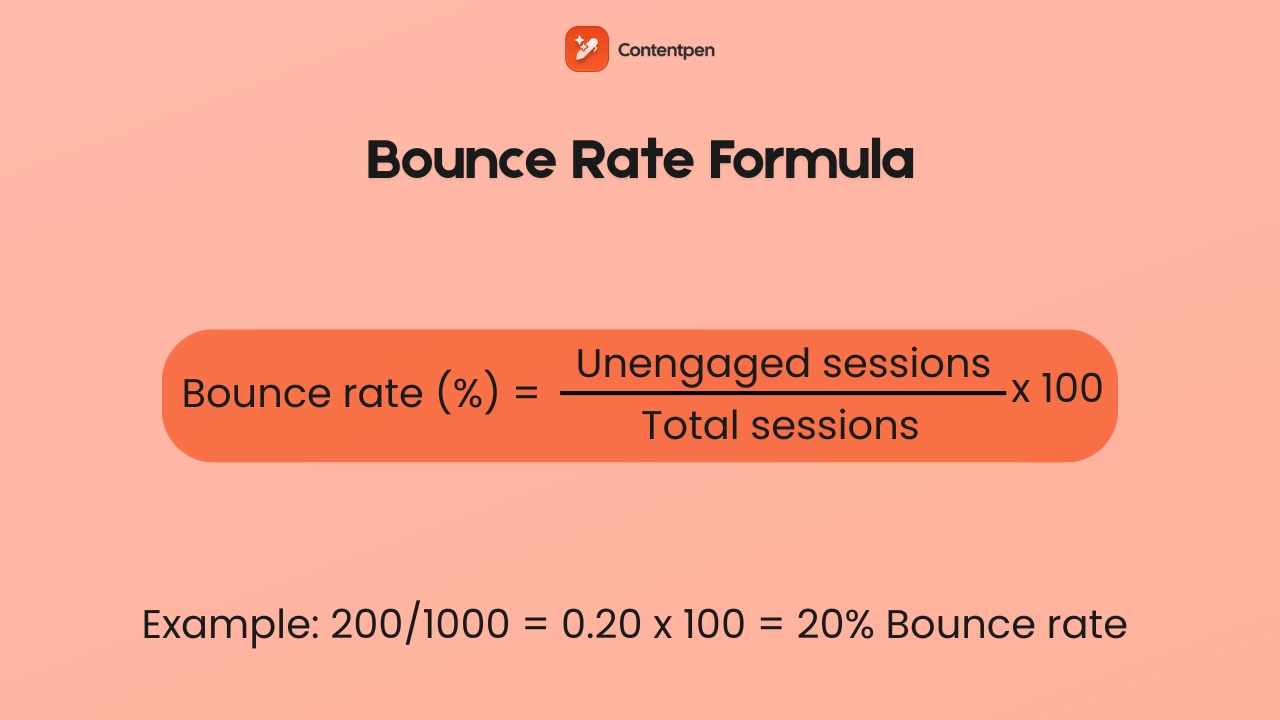
    Seeing a real person demo a product also reduces doubt, since people can picture how it fits into their own life. Search engines notice this behavior, and pages with useful video explainers often see better time on page and lower bounce rates.

    But here’s a thing that most brands don’t understand. You do not need studio-level gear to start video marketing

    Simple formats like screen recordings, webcam explainers, or phone-based clips can also perform very well when the message is clear. 

    One strong video can turn into multiple assets, such as shorter cuts for social media, thumbnails for email campaigns, and embeds inside blog posts created in Contentpen. That reuse makes video one of the most flexible types of digital marketing right now in 2026.

    9. Mobile marketing

    Mobile marketing focuses on reaching people through smartphones and tablets, where they now spend a large part of their day. 
    The significance of mobile marketing - Contentpen.ai.

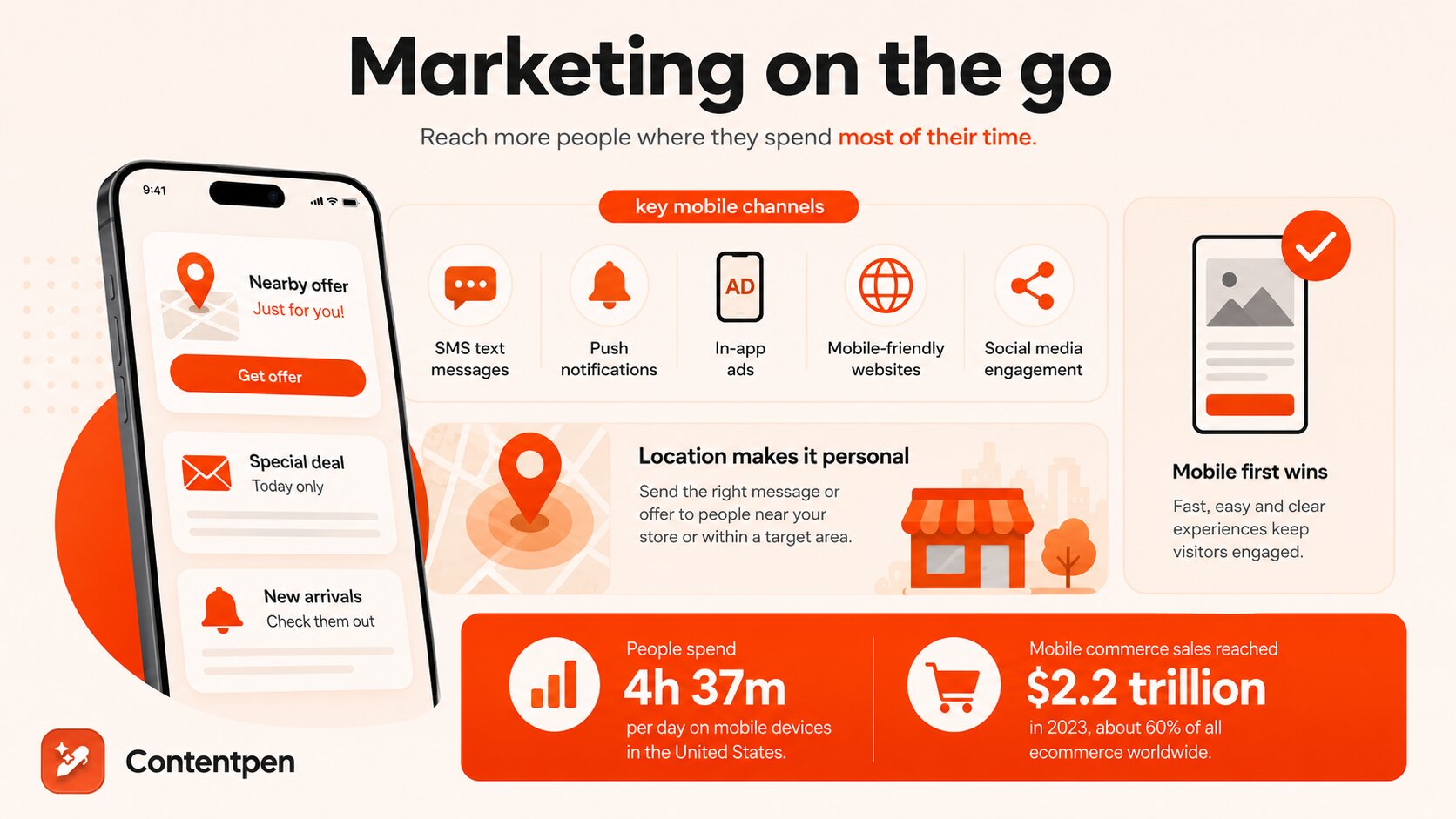
    It links many other types of digital marketing, since search, social media, email, and video all run through mobile screens. In 2026, American adults spend an average of 4 hours and 37 minutes per day on mobile devices, and that time keeps increasing.

    Key mobile channels include:

    • SMS text messages
    • Push notifications from apps
    • In‑app ads
    • Mobile-friendly websites or landing pages

    Social platforms are mostly mobile-first, which means your images, captions, and calls to action must look right on a small screen. 

    If your site loads slowly or displays badly on phones, visitors leave fast and rarely return. Google has made mobile-friendliness a clear, direct factor in search rankings for several years.

    Mobile marketing also sits at the heart of ecommerce. Global mobile commerce sales reached $2.2 trillion in 2023, representing approximately 60% of all ecommerce transactions worldwide. 

    When your checkout, forms, and menus work smoothly on mobile, you remove a major barrier to buying. Payment options like Apple Pay and Google Pay also help ease the purchasing process further.

    One standout feature of mobile marketing is geo-targeting. Location-aware, channel-specific messaging dramatically improves audience reach and response rates. 

    You can send offers or ads only to people near your store or within a certain area. That helps local shops and restaurants focus spend on nearby customers who can act fast, instead of burning their budget away on users who won’t.

    10. Marketing analytics

    Marketing analytics is the skill and practice of collecting, reading, and acting on data from all your digital channels. It is not a separate ad channel like search or social, yet it holds the mix together. 

    Without analytics, you are guessing which types of digital marketing channels pay off and which quietly waste money. 

    According to McKinsey, data-driven organizations are 23 times more likely to acquire customers and 6 times more likely to retain them than companies that do not prioritize analytics.

    Analytics tools track what happens when someone sees your content or ad. They also help capture behavioral data that enables content marketers to make faster, more accurate campaign decisions. 

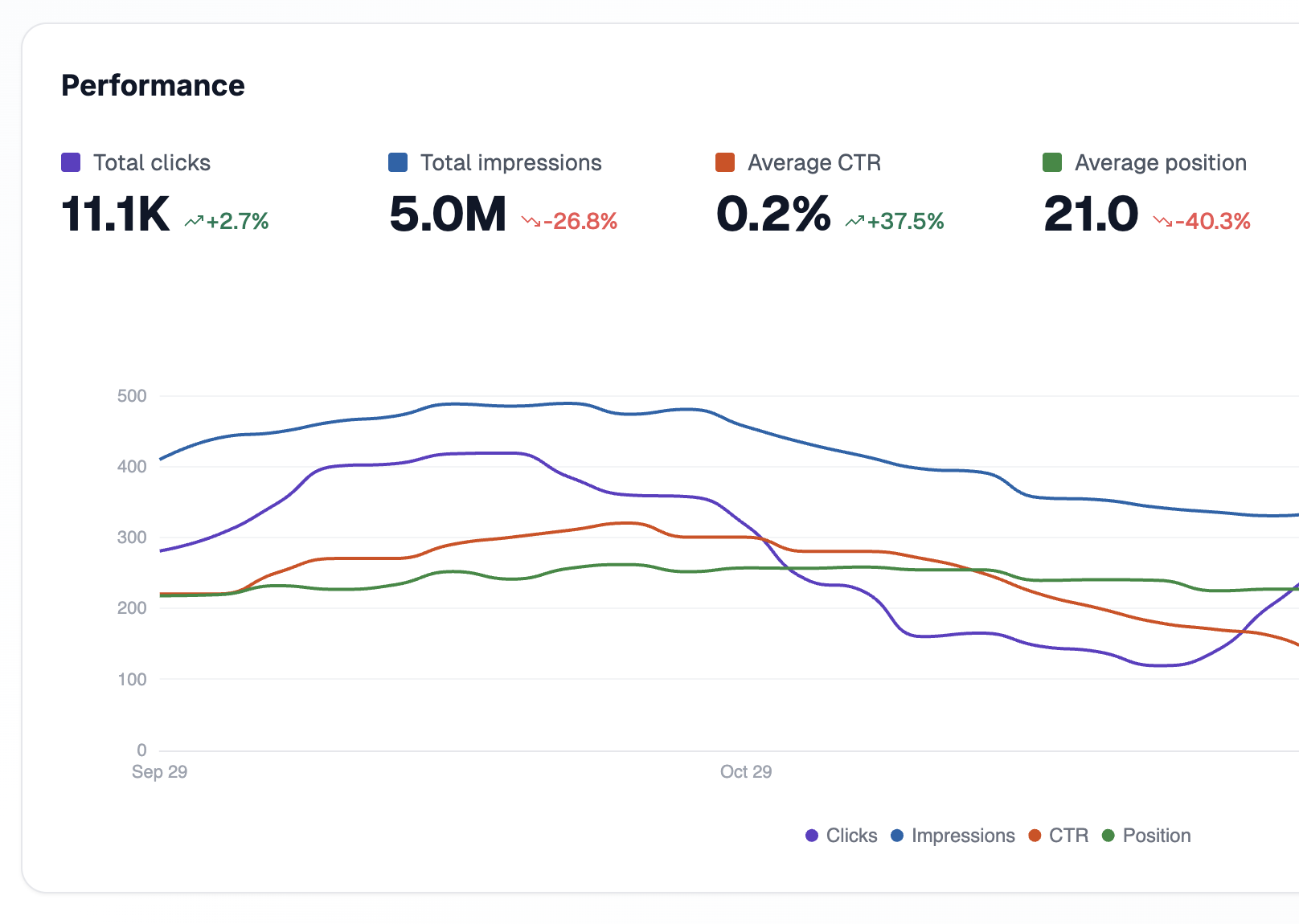
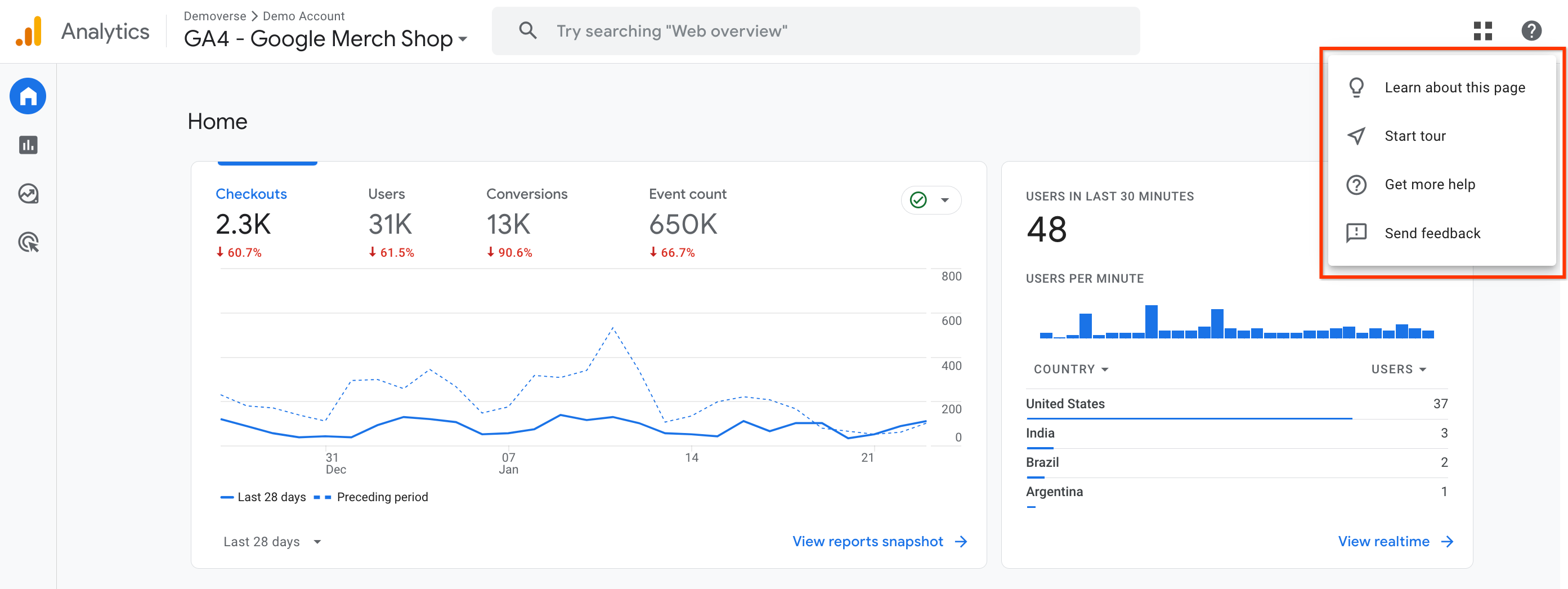
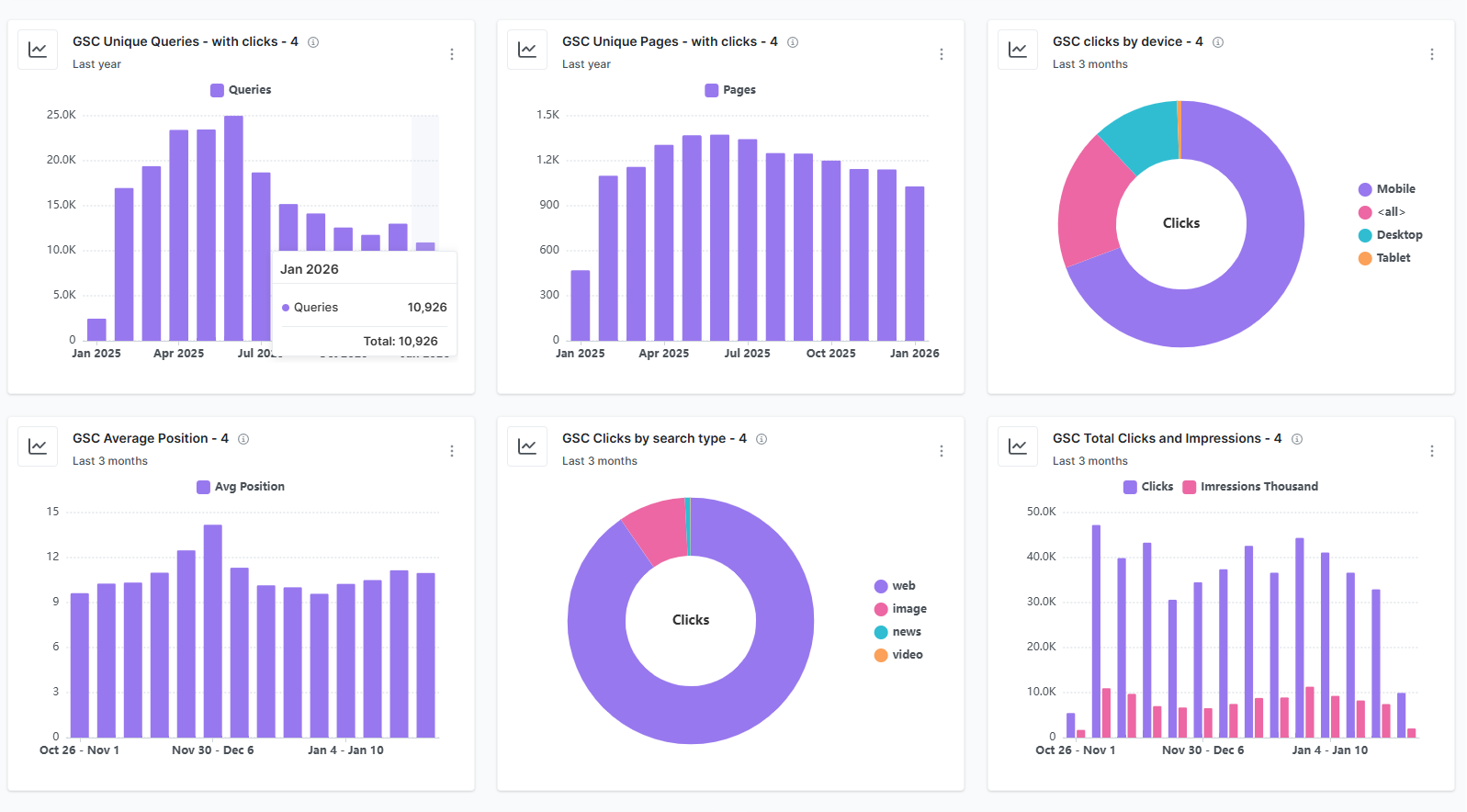
    With Google Analytics, you can see traffic sources, clicks, page views, impressions, and conversions in detail. 

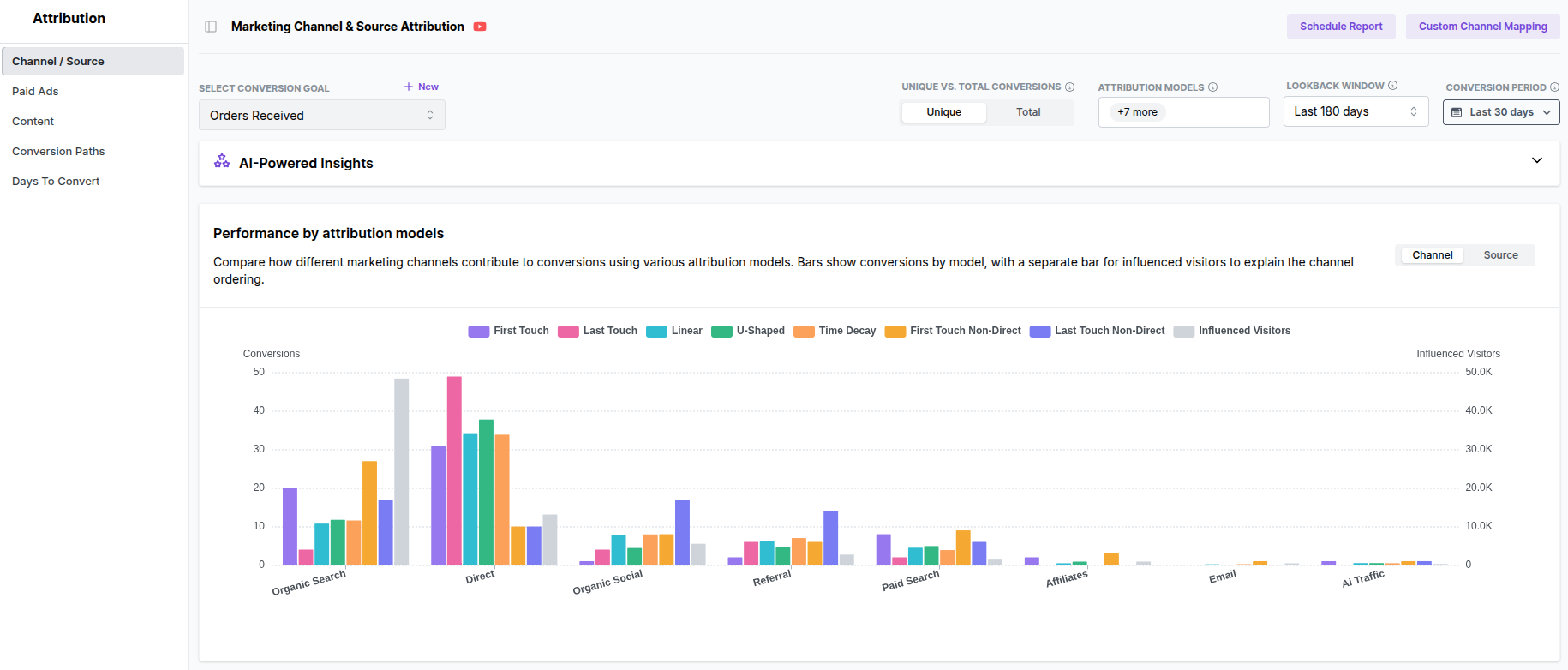
    But marketing analytics is just one side of the picture. Attribution is what fills the gaps in between.

    In simpler words, attribution is the process of connecting the dots between different channels to understand exactly which customer touchpoints contributed to a sale.

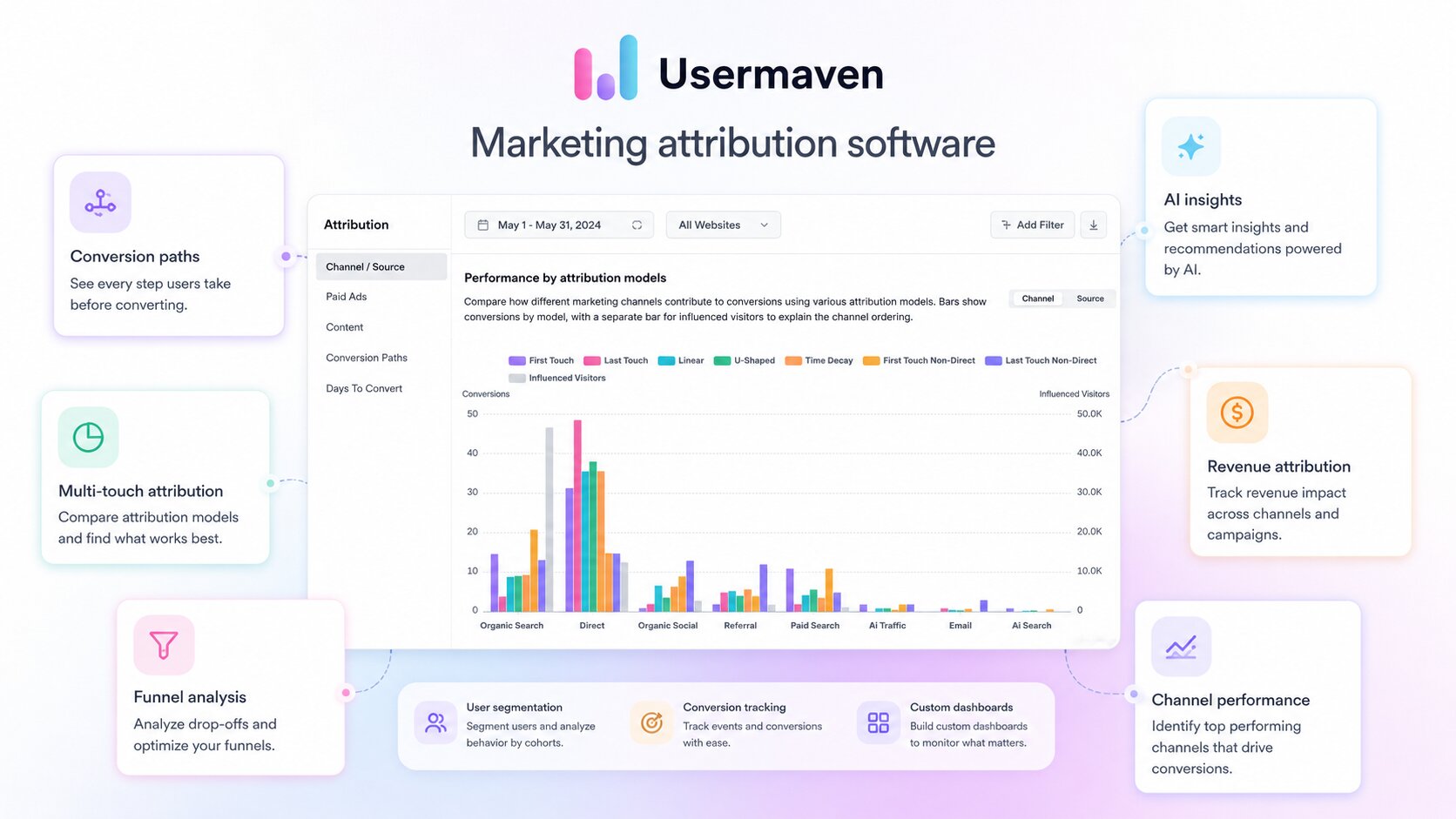
    For marketing attribution, one of the tools that you can use is Usermaven. It helps you see the entire user journey, allowing you to identify and work on drop-off points to boost conversions.
    Usermaven - marketing attribution software.

    For content-heavy programs, analytics also tells you which articles, keywords, and formats work best. When you create blogs with Contentpen and connect them to tracking, you can spot posts that bring steady visitors and expand on those topics. 

    Understand what’s working, and why with real-time analytics

    Track performance and make smarter content decisions with clear insights.

    View Analytics Dashboard
    AI SEO Interface

    In the big picture, analytics turns your collection of digital marketing channels into a system you can tune, instead of a pile of unproven tactics.

    Which type of digital marketing is best for your business?

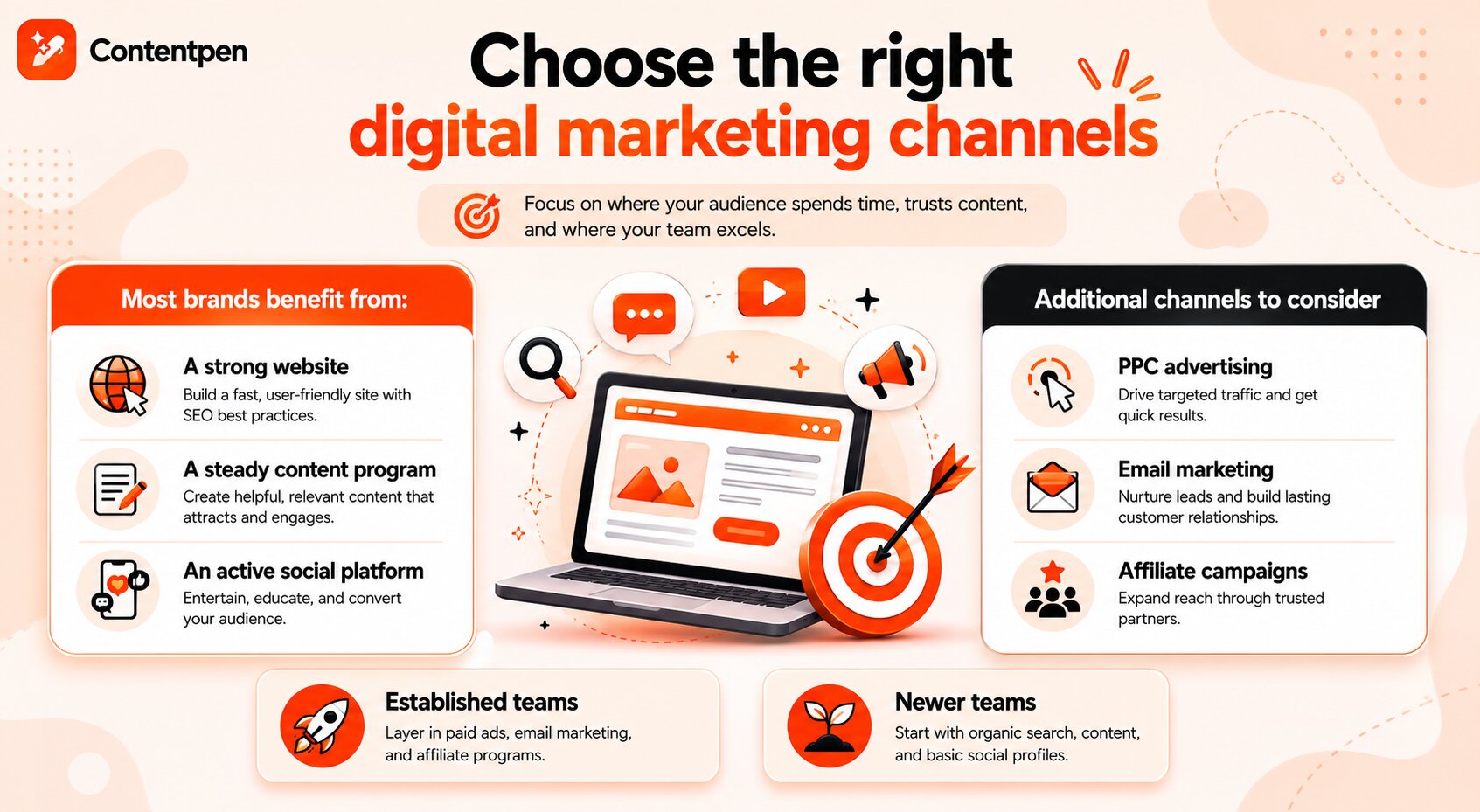
    There is unfortunately no clear-cut answer for this. The right type of digital marketing for your business depends on your goals, budget, audience, and time constraints.

    What we’ve found through our time helping brands is that in most cases, a focused combination of 2 – 3 channels often outperforms any single one. However, you must explore your own digital marketing mix yourself. 

    Why? Because the right mix for a cash-strapped startup will differ from an investor-funded SaaS company or a local service shop. 

    Therefore, instead of asking ‘which digital marketing channel is best overall’, first define your main goal or the next 6-12 months. Ask ‘what do you see yourself doing more in the future?’

    Go through the table below to help you out on your journey to start digital marketing as a beginner:

    Primary goalGood starting focusNotes
    AwarenessContent, SEO, social, videoBuilds search presence and brand recall over time
    Leads nowPPC, paid social, landing pagesPair with email follow-up and content marketing
    Online salesSEO, PPC, email, mobile marketingStrong product pages and checkout are key
    RetentionEmail, SMS, content marketingTeach, support, and reward existing customers

    Most businesses end up mixing several types of digital marketing as they grow. The key is to start narrow, measure carefully, and add channels once the first few start working.

    The bottom line on choosing your type of digital marketing mix

    There is no single best type of digital marketing for every business. The right mix depends on who you serve, how fast you need results, and how much money and time you can invest. What works for a global retailer will not match a local bakery or a small B2B marketing agency.

    That said, content marketing and SEO remain two of the highest compounding channels for long-term growth in 2026. They feed search, social, email, and even paid campaigns by giving you strong assets to point to. 

    If content is part of your plan, Contentpen can help you publish SEO friendly, long form articles at a pace that is hard to match manually.

    Write content that’s built to rank, not just read

    Create search-optimized blogs aligned with SEO and GEO signals, so your content performs well across search and AI-driven discovery.

    Try SEO Blogging FREE
    AI SEO Interface

    You can explore your own blog creation workflow with Contentpen and adjust your brand voice and content presets to best suit your needs.

    Frequently asked questions

    How many types of digital marketing should a beginner start with?

    Start with one or two channels that align with your immediate goal and available bandwidth. Most beginners do best with content marketing and SEO as a foundation, then layer in email once they have a growing audience.

    What are the top 7 types of digital marketing?

    If we’re discussing in terms of impact, the top 7 forms of digital marketing are content marketing, SEO, social media, email, PPC, influencer marketing, and marketing analytics. However, this is entirely opinion-based. The exact types that work for you can be different.

    Can small businesses compete with large brands in digital marketing?

    Yes, especially through SEO, content, and social media. Large brands often focus on broad, high-volume keywords and mass-market messaging. Small businesses can outperform them by targeting specific long-tail keywords, serving a tighter audience, and building genuine community engagement that bigger brands struggle to replicate at scale.

    How do I measure whether my type of digital marketing is working?

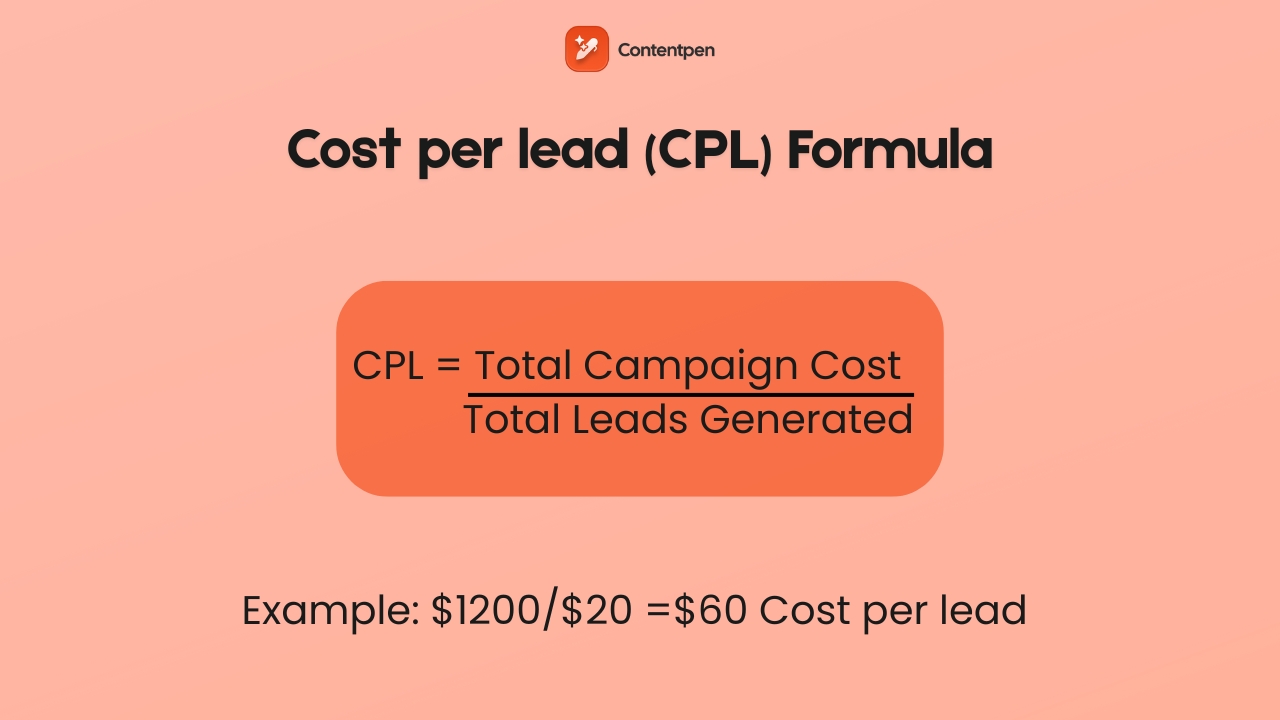
    Define your goal first, then track the metrics tied to it. For awareness, monitor impressions, reach, and organic traffic. For leads, track form fills, cost per lead, and email sign-ups. For sales, measure conversion rate, revenue per channel, and return on ad spend (ROAS).

    Is it possible to do a form of digital marketing with a very small budget?

    Yes. Content marketing, SEO, and organic social media all require just time but no money to get started. Email marketing also has a very low entry cost relative to the return it generates.
  • How to start digital marketing as a beginner in 2026?

    How to start digital marketing as a beginner in 2026?

    If you are wondering how to start digital marketing from scratch in 2026, you are not alone. You have probably searched to get going in this profession and felt confused with conflicting advice from many online gurus.

    That noise creates confusion, wasted time, and sometimes lost money on courses or tools that do not match your goals. That frustration is real.

    In today’s post, we aim to resolve all these problems by providing you with simple definitions and frameworks that you can follow today to get started with digital marketing.

    Along the way, we’ll also see how AI fits in modern marketing workflows, how long learning takes, and quick answers to common beginner questions.

    So, let’s get started.

    What is digital marketing?

    Digital marketing is simply using the internet to promote products, services, or ideas to a target audience. That’s it.

    It includes monitoring and optimizing for Google search results, Instagram ads, LinkedIn posts, YouTube videos, email newsletters, and landing pages.

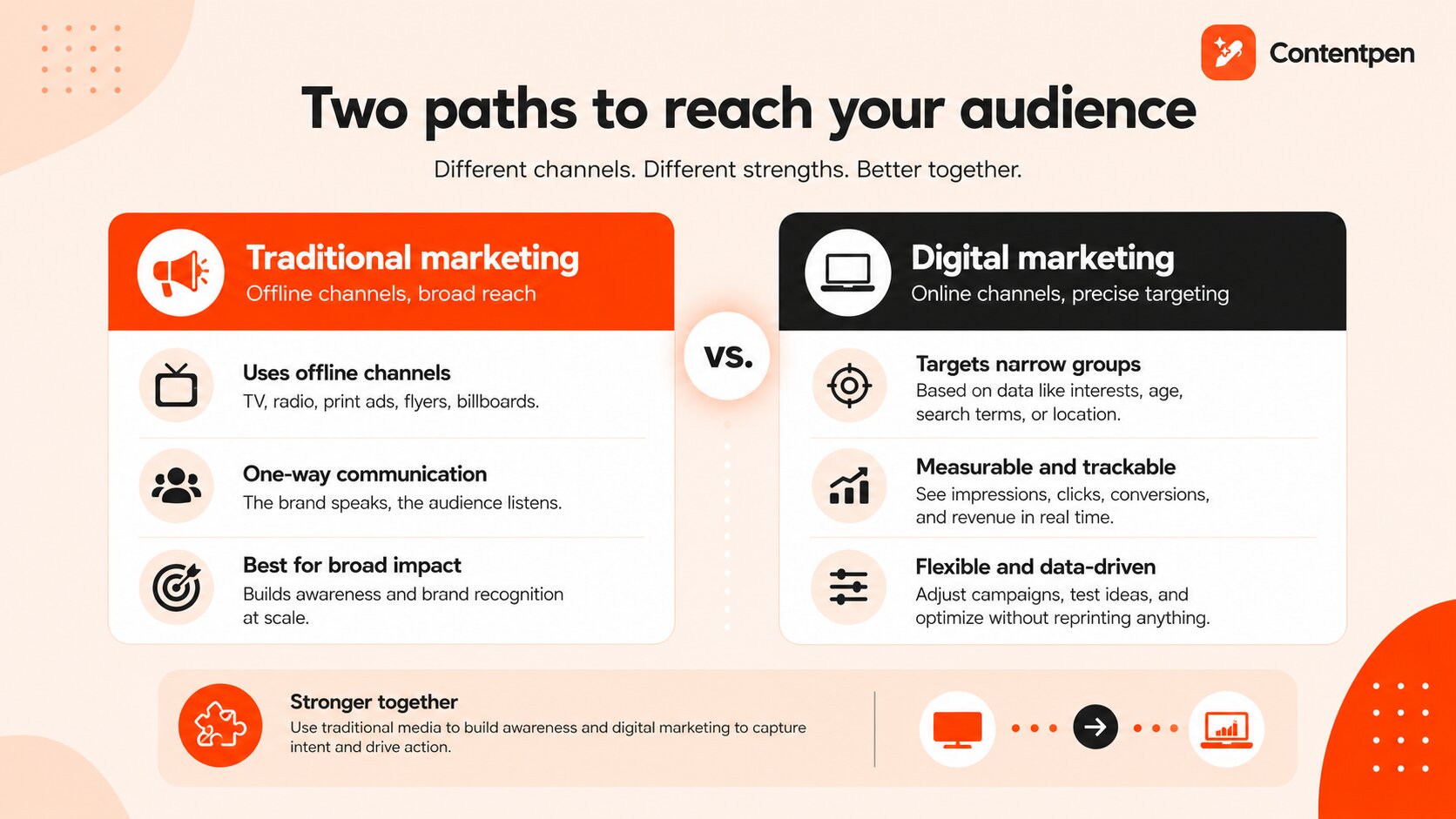
    Compared with billboards, print ads, or direct mail, digital marketing gives you far more control over your audiences and invested resources. You can see exactly who clicked, which campaign brought sales, and what it cost.

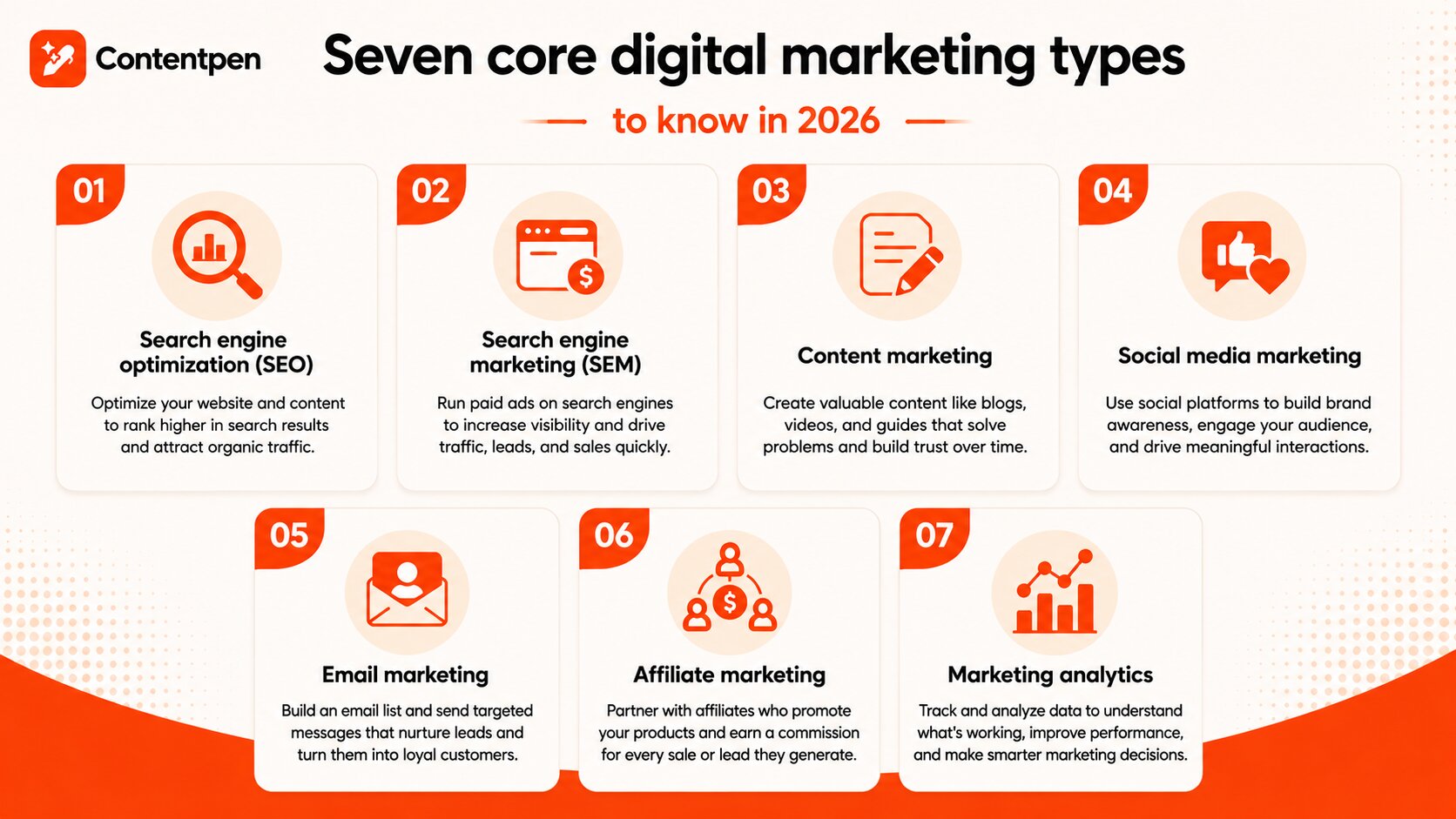
    The 7 types of digital marketing you need to know about in 2026

    7 types of digital marketing you should know of in 2026 - Contentpen.ai.

    Mainly, there are seven core types of digital marketing that you need to get a grip on in 2026.

    #1: Search engine optimization (SEO)

    SEO means adjusting your site and content so Google, Bing, and other search engines show your pages for relevant searches. This means optimizing content for organic keywords, structuring blogs properly, and investing in technical SEO for a solid foundation for ranking.

    Search engine optimization also includes taking care of your off-page signals, investing in link-building, and monitoring your platform with analytics tools for proper content updates.

    If that sounds like a lot, don’t worry! 

    You can use Contentpen for optimizing content for SEO. The AI writer is made specifically for content marketers and freelancers who want the maximum returns from their SEO work with the least effort.

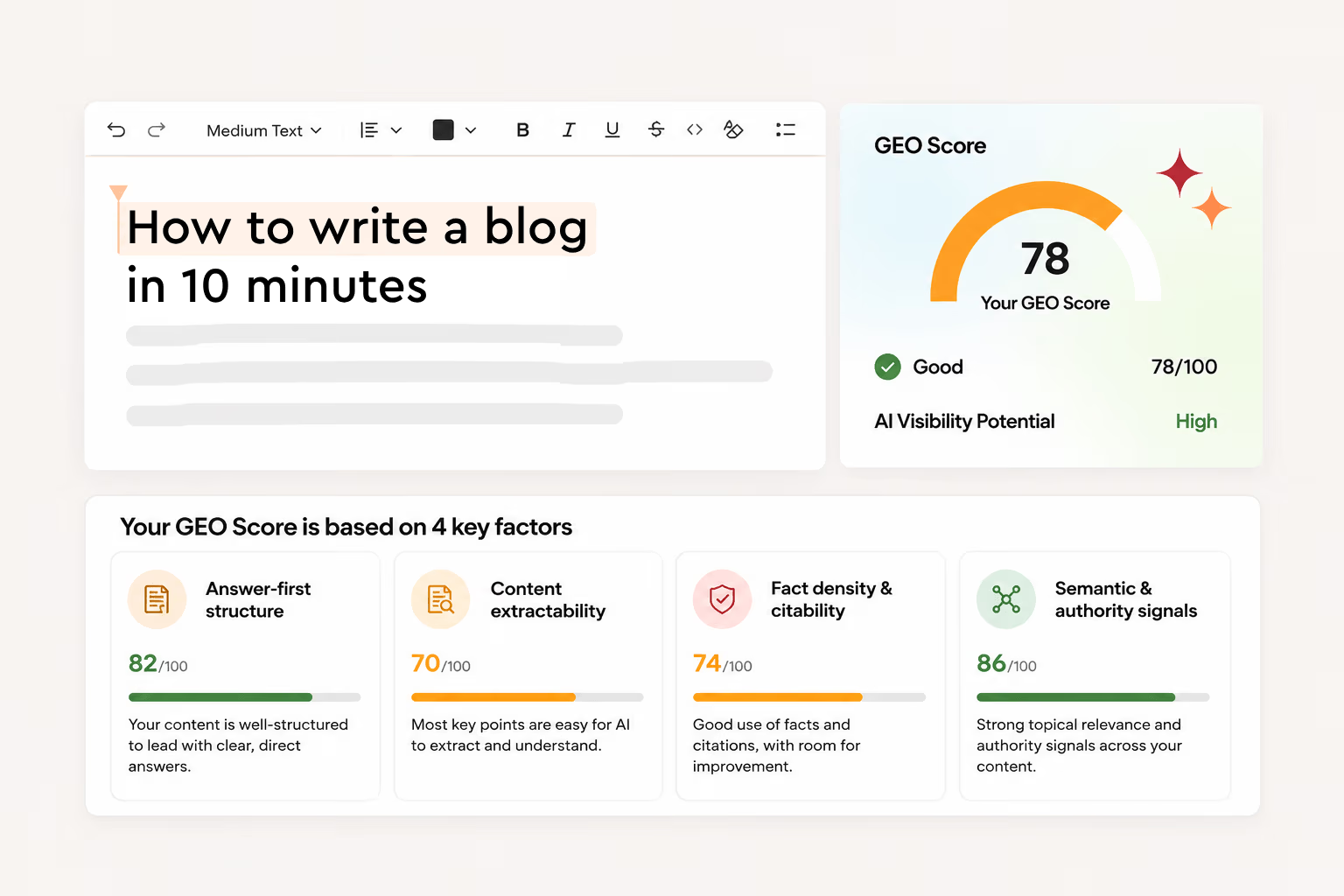
    Our guided content workflows make sure you aren’t stuck at any step of the way. And the latest GEO scoring and AI visibility features make your content ready to perform in 2026. Don’t know about GEO? Let’s discuss it in more detail.

    Generative engine optimization (GEO)

    GEO, AEO, or AI search optimization are all similar terms that you need to know about in 2026. They mean creating your content in a way that it’s easier for the AI answer engines to show your content to the users.

    Since GEO builds on the basics of SEO, you need to first start with the fundamentals of how to do keyword research and maintain the on-page and technical aspects of your site. Then, invest in GEO once you’ve nailed down your SEO basics.

    That said, with Contentpen, you can get to work right away without worrying about either the SEO or GEO aspect of your content. The tool’s outputs and automated interlinking ensure you get cited in AI engines and receive the best SERP results at the same time.

    Get your content cited by AI, not just ranked on Google!

    See your real-time GEO score as you write to make every piece citation-ready.

    Try GEO Scoring
     GEO Scoring

    #2: Search engine marketing (SEM) and pay‑per‑click (PPC)

    SEM, or search engine marketing, is all about paying for digital ads and appearing on users’ screens.

    You can do so by bidding on keywords inside Google Ads, Microsoft Advertising, or Meta Ads if your primary goal is visibility on social media.

    SEM suits people who enjoy numbers, testing, and fast feedback. You can turn campaigns on and off, test messages, and see which keywords actually bring organic traffic, leads, or sales.

    #3: Content marketing

    Content marketing means creating useful articles, guides, videos, podcasts, brochures, or any other types of online content that solve real problems for your audience. It feeds every other channel, because search, social, and email all run on content. 

    Writers and agencies serving B2B or B2C brands often invest heavily in content marketing since it gives them an organic traffic engine that keeps providing returns over time.

    #4: Social media marketing

    Social media marketing uses platforms like Instagram, TikTok, Facebook, LinkedIn, and Pinterest to reach and introduce your brand to the audience. 

    Visual thinkers and community builders often prefer this path as it allows them to appear where their audiences normally are with eye-catching, engaging content.

    As a social media marketer, post carousels, polls, and funny videos to appeal directly to the target audience and make them interested in your offerings through humor, intrigue, and curiosity.

    #5: Email marketing

    Email marketing builds a list of subscribers and sends them helpful, targeted messages. It is one of the strongest sales channels as it provides the most ROI out of all. However, that statement is not always true.

    If your other channels are not as proficient as email, then there is no incentive for the user to take your CTA to heart. They may click the link in your email just to find an unresponsive site or a landing page with copy that is unclear about what happens next.

    So, even though copywriters and strategists who like building long‑term customer relationships enjoy email marketing, you need to know at which stage of your brand-building it will work and when it won’t.

    #6: Affiliate marketing

    Affiliate marketing pays partners a commission when they send you a sale or qualified lead through a tracking link. 

    Brands use networks like ShareASale, CJ Affiliate, and Impact to manage partners and payouts, and link management platforms like Replug.io for creating marketing links. 

    This suits people who already have an audience or those who want to monetize content without handling their own product stock or support.

    #7: Marketing analytics

    SEO analytics or marketing analytics ties everything together. It’s like reading a cheat sheet of what each channel did for you and where you need to focus your efforts next for the maximum reward.

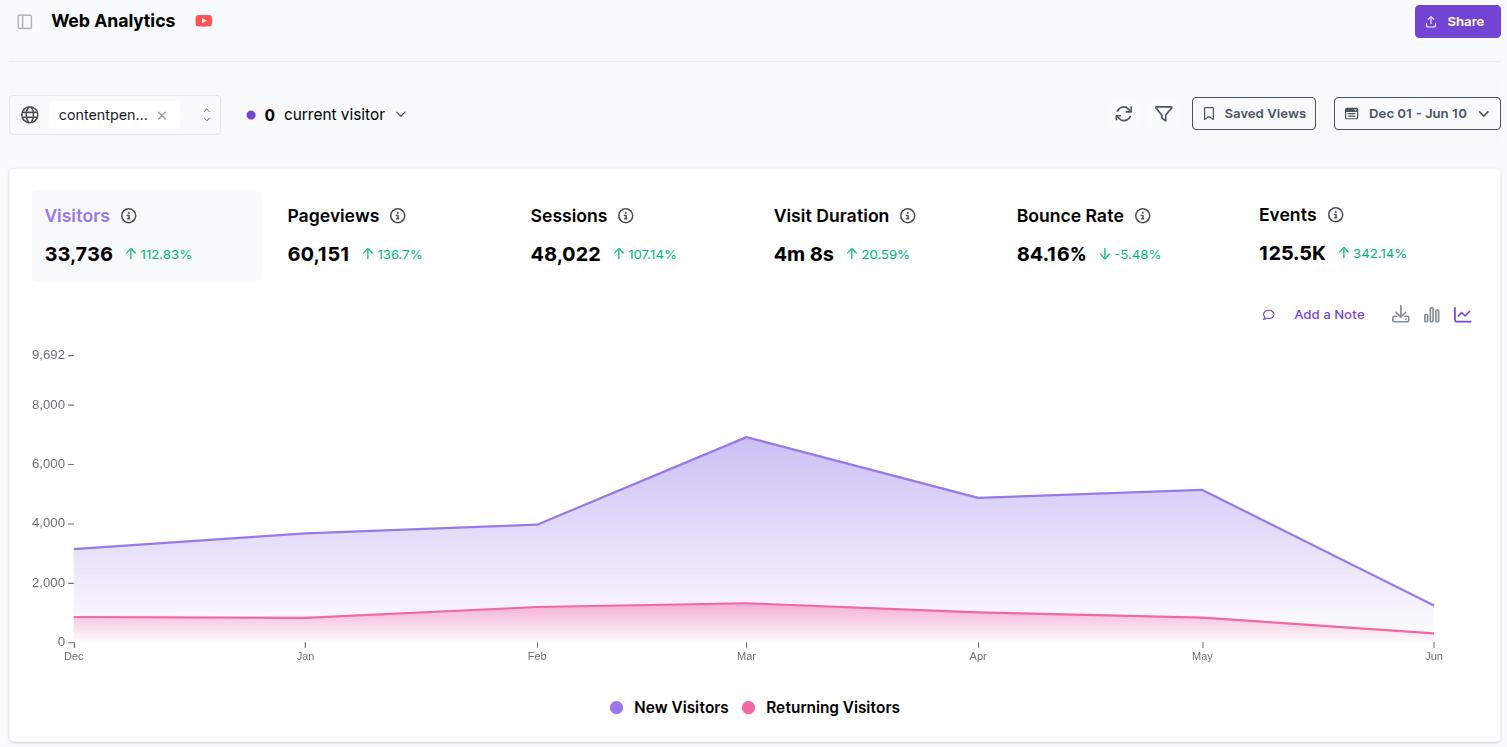
    If you take a look at the screenshot below that we took from Usermaven, you’ll see our overall site performance in the last 6 months.

    Web analytics data for Contentpen in Usermaven showing significant visitor, pageviews, and session growth from December 01 to June 10.

    Sure, the numbers have increased, but these metrics mean nothing if there’s no attribution data to account for.

    In simpler terms, attribution lets you know where your traffic came from and how they reacted when they did arrive at your platform. Did they sign up for a demo or purchase a product? If not, then what touchpoints or customer interactions do you need to improve further?

    Marketing analytics is the playground for performance marketers who like to reduce bounce rates, improve conversions, and make digital products a success for businesses.

    How to start digital marketing: A step-by-step roadmap for beginners

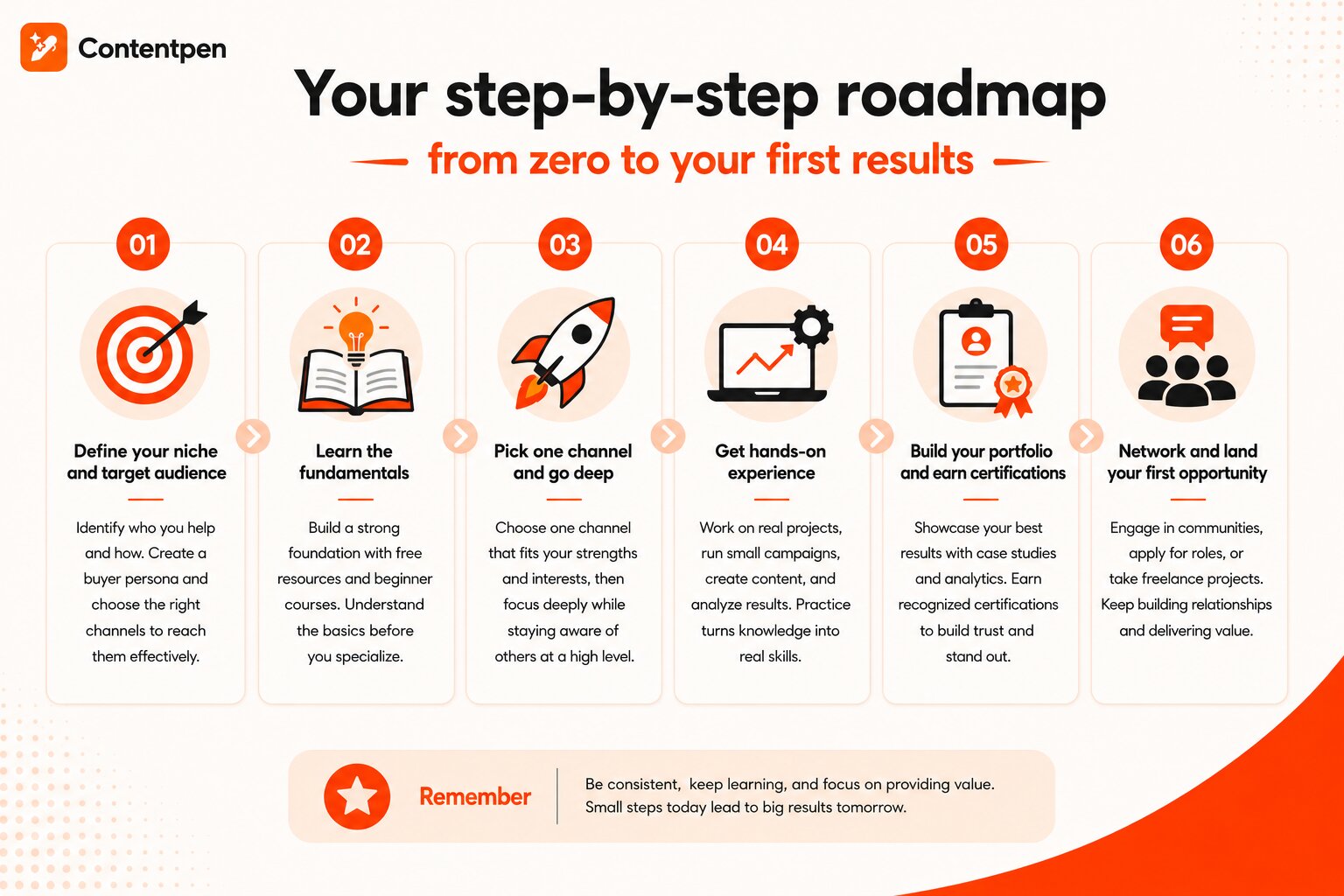
    The 6 steps to start digital marketing in 2026 - Contentpen.ai.

    This roadmap for how to start digital marketing gives you clear, realistic moves from zero to your first results.

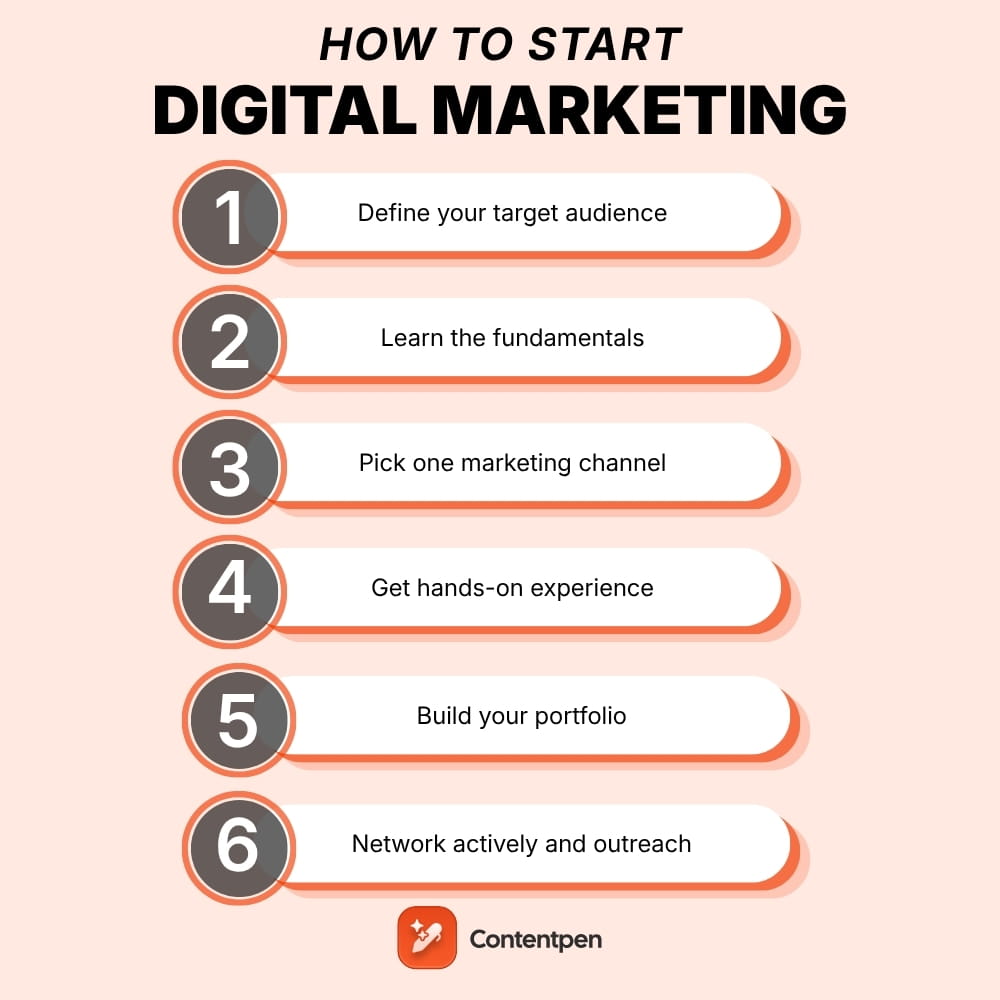
    Think of it as a flexible path. You will define who you help, learn the basics, choose a main channel, practice on real projects, show your work, and then use that proof to land jobs or clients.

    Step 1: Define your niche and target audience

    Defining your niche and target audience is the first real step in how to start digital marketing with focus. If you try to reach “everyone”, your message feels vague and forgettable.

    First, try to think about who you will serve and how. For example, if you are a DTC skincare brand, you might want to lean more toward TikTok and social media marketing since this is where most users will find you.

    But if you are a B2B SaaS company, you cannot just create eye-candy and “GRWM” content borrowing from Instagram or TikTok influencers. 

    In that case, you need a solid pitch for the businesses to be interested in your services or products, or investors who’ll think their money is worth investing in you. Then, you can target them through LinkedIn, email, or SEO, all of which are quite professional methods of outreach.

    When you are done creating a buyer persona in your head, it is time to learn the fundamentals of marketing and jump right in creating your first campaign.

    Step 2: Learn the fundamentals before you specialize

    At this stage, your goal should be to understand digital marketing basics so blog posts, job ads, and course outlines make sense.

    Work through free programs from Google Digital Garage, HubSpot Academy, Meta Blueprint, or Google Skillshop. 

    Then, you can explore beginner digital marketing courses on Coursera or Udemy. Read blogs from Moz, Neil Patel, and Contentpen a few times a week to stay close to recent innovative marketing examples and digital marketing trends.

    After you are done going through all the material you could find online, take a step back and ask yourself the following questions:

    • What is digital marketing?
    • Why is it done?
    • Who is it done for?
    • What are the current ways to market your content online?
    • Which ones are suitable for beginners?

    If you get stuck on any of those questions, we’d recommend going back.

    If reading material or resources is not your thing and you’d like a more visual way to understand things, then we highly recommend watching Adam Erhart’s videos on YouTube.

    He explains digital marketing concepts to beginners in a very engaging manner that instantly catches your attention.

    By the time you feel ready, start with step 3 of our ‘how to start digital marketing’ guide.

    Step 3: Pick one channel and go deep

    After a few weeks of learning, pick one primary channel and commit to it. For many beginners, focusing on one channel is the best way to start digital marketing without burnout.

    Choose:

    • SEO plus content marketing if you enjoy writing and research. 
    • Paid ads and PPC marketing if you like numbers and testing. 
    • Social media if you are drawn to visuals and short‑form content.
    • Email if you like strategy and messaging.

    We would say the toughest channel to master as a digital marketing beginner is email. You don’t have to write much, but whatever you write must land straight into the customer’s mind, which is tough to say the least.

    But hey, this is just a personal opinion. Every brain is wired differently, and don’t let us be the ones to put limitations on your learning. 

    Keep experimenting and growing because this is the step where you can fall and bounce back as many times as you like before mastering one key skill in digital marketing.

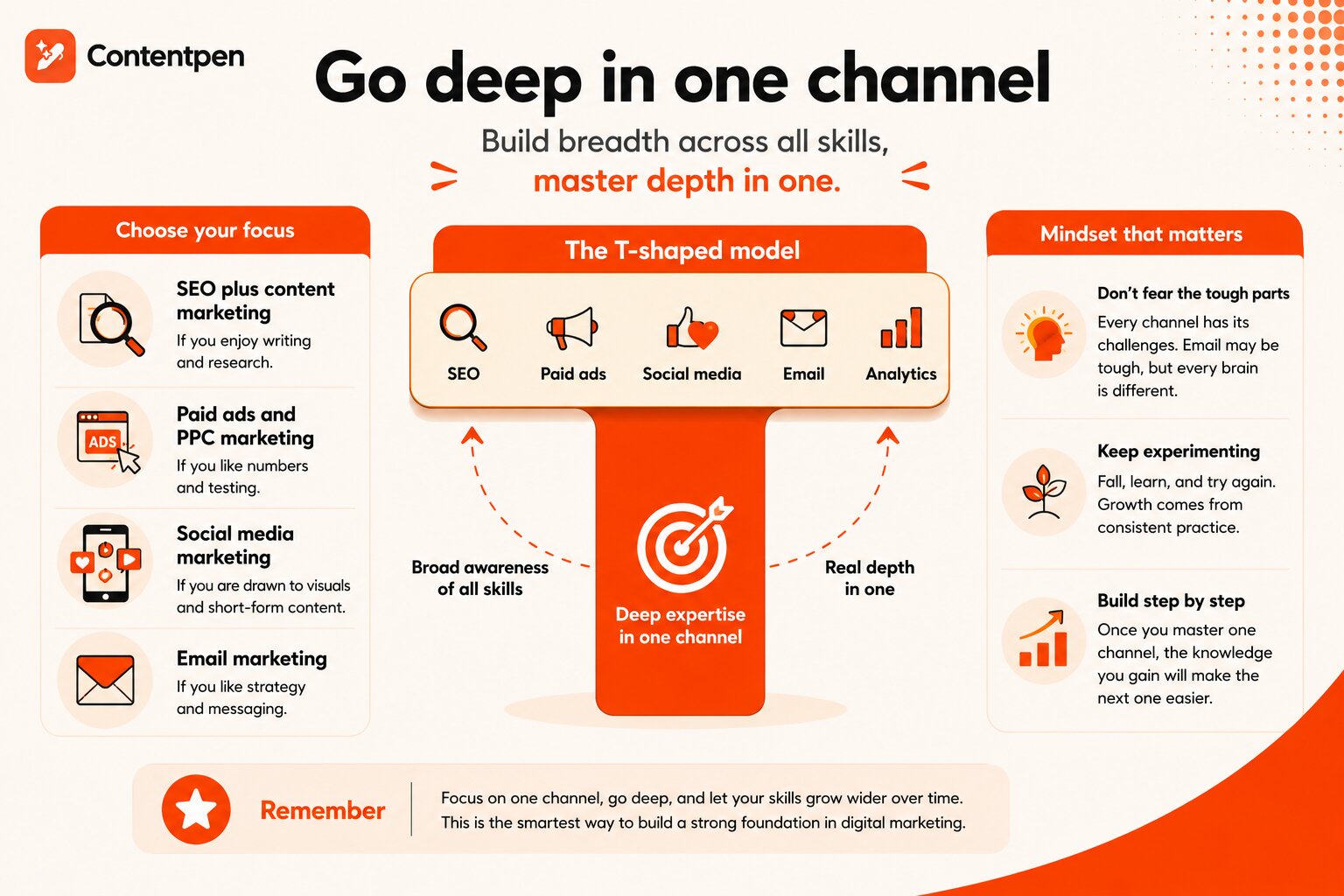
    This follows the T‑shaped model: broad awareness of all skills, real depth in one. 

    T-shaped learning model for digital marketing channels - Contentpen.ai.

    By the time you get a hold of a channel, you’ll be ready with the knowledge of another, and you could bridge all the skills you learned earlier to the next chapter.

    Step 4: Get hands-on experience as fast as possible

    Hands‑on projects turn how to start digital marketing from theory into skills. Watching tutorials helps, but you only build instincts by running real campaigns; even tiny ones count.

    You can:

    • Start a simple blog or newsletter in a niche you like, then apply keyword research and basic on‑page SEO. See if your efforts are working in the right direction. If not, you could consult an expert or use a certified SEO platform and AI writer like Contentpen for help.
    • Create a social account for a theme and test hooks, formats, and posting rhythms. Again, monitoring and checking the basic numbers from Meta dashboards is necessary to know what’s working and what’s not.
    • Run a small $30-50 campaign in Google Ads or Meta Ads Manager so you can see impressions, clicks, and conversions in your own dashboard.
    • Offer free or low‑cost help to a local business or nonprofit in exchange for permission to share results.

    When you create blog content for these projects, Contentpen can guide you through SEO‑friendly outlines, automated links, and formatting so your experiments also build long-term assets.

    Write content that’s built to rank, not just read

    Create search-optimized blogs aligned with SEO and GEO signals, so your content performs well across search and AI-driven discovery.

    Try SEO Blogging FREE
    AI SEO Interface

    Step 5: Build a portfolio and earn certifications

    Proof of results is what turns how to start digital marketing into getting paid for it. Employers and clients want to see what you have done, not only what you studied.

    Collect screenshots, analytics views, and links that show before‑and‑after changes in traffic, leads, or sales. 

    Turn these results into 3 to 5 short case studies on a simple personal site or PDF. Alongside that, add a few respected certifications so people know you understand the digital marketing tools, and not just mention them randomly in a conversation.

    Below are some certificates that you can get for free online:

    CertificationProviderWhat it shows
    Google Ads CertificationGoogle SkillshopYou can set up and manage search and display campaigns.
    Google Analytics CertificationGoogle SkillshopYou can read GA4 reports and track key metrics.
    Content Marketing CertificationHubSpot AcademyYou understand content strategy and blogging.
    Meta Blueprint CertificationMetaYou can run campaigns on Facebook and Instagram.
    SEO Toolkit CertificationSemrush AcademyYou can plan and execute an SEO-driven content strategy.

    Once you are done getting a certificate, make sure to display it on your LinkedIn to help you differentiate as a digital marketer.

    Step 6: Network actively and apply for roles or clients

    Having some hands-on experience and certifications is the best way to get started with digital marketing. Once you have that, try networking with like-minded individuals online and engage in community discussions to enhance your online footprint.

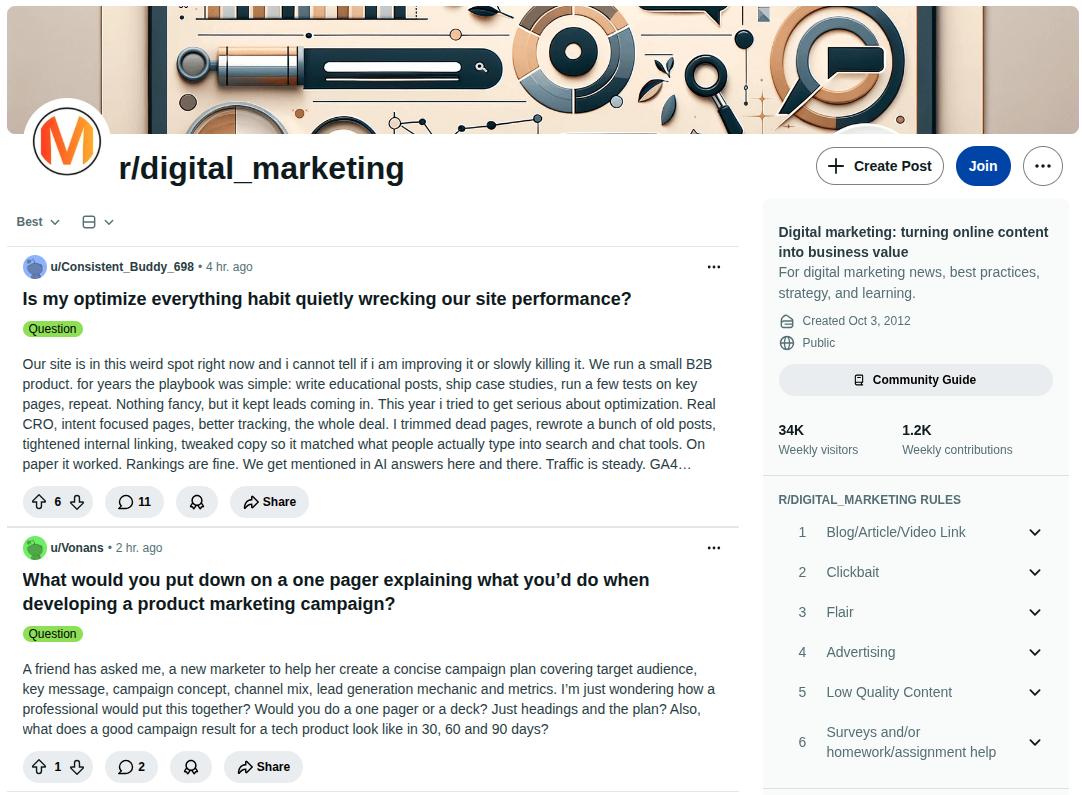
    A good way to do so could be to join online communities such as r/digital_marketing on Reddit, Discord servers, or Facebook groups for peer learning

    Digital marketing thread on Reddit.

    Then, you can also apply for part-time or full-time roles like ‘Digital Marketing Assistant’, ‘Content Marketing Associate’, or ‘Social Media Internee’ in companies.

    If you prefer an independent working style, use platforms such as Upwork and Fiverr to win early freelance projects. Start with basic SEO or social media handling tasks, then later take up large-scale content operations. One step at a time.

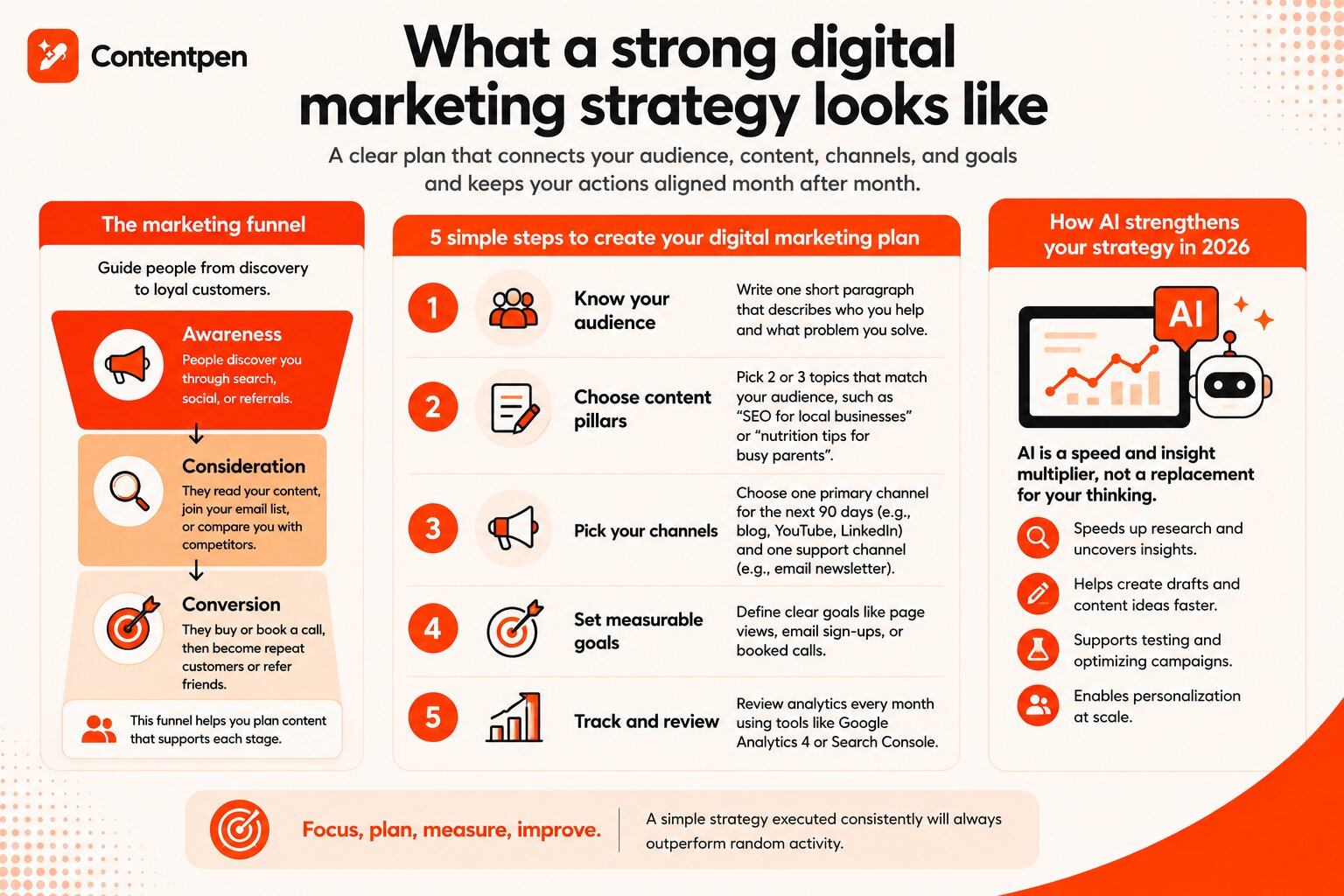
    What does a strong digital marketing strategy actually look like?

    A strong digital marketing strategy is a simple, written plan that links your audience, content, channels, and goals. It shows you not just how to start digital marketing, but how to keep your actions aligned month after month.

    Most effective strategies follow a basic path often called the marketing funnel.

    What a strong digital marketing strategy looks like - Contentpen.ai.

    You start with awareness, where people first discover you through search, social, or referrals. 

    Then comes consideration, where they read your content, join your email list, or compare you with competitors

    Finally, conversion is where they buy or book a call, and then become repeat customers or refer friends. Mostly in B2B marketing, professionals use this funnel style to plan content that supports each stage.

    Here is a simple way to create a digital marketing plan that fits digital marketing steps for beginners:

    • Start with audience clarity. Write one short paragraph that describes who you help and what problem you solve.
    • Choose 2 or 3 content pillars that match that audience, such as “SEO for local service businesses” or “nutrition tips for busy parents”.
    • Pick one primary channel for the next 90 days, such as a blog, YouTube, or LinkedIn, and one support channel, such as an email newsletter.
    • Set measurable goals, like page views, email sign‑ups, or booked calls, and review analytics every month inside tools such as Google Analytics 4 or Search Console.

    How AI fits into your digital marketing strategy in 2026

    AI fits into your digital marketing strategy as a speed and insight multiplier, not a replacement for your thinking. If used well, it helps with research, drafts, testing ideas, and personalizing experiences at scale.

    Tools like ChatGPT, Google Gemini, and Claude can help you brainstorm topics, write first drafts, generate images, and summarize analytics reports. 

    Email platforms such as Klaviyo and Mailchimp use AI to predict which leads are ready to buy, while AI chatbots on websites can handle common questions 24/7. This leaves a lot of room for you to invest in content marketing strategies while AI does the tedious tasks.

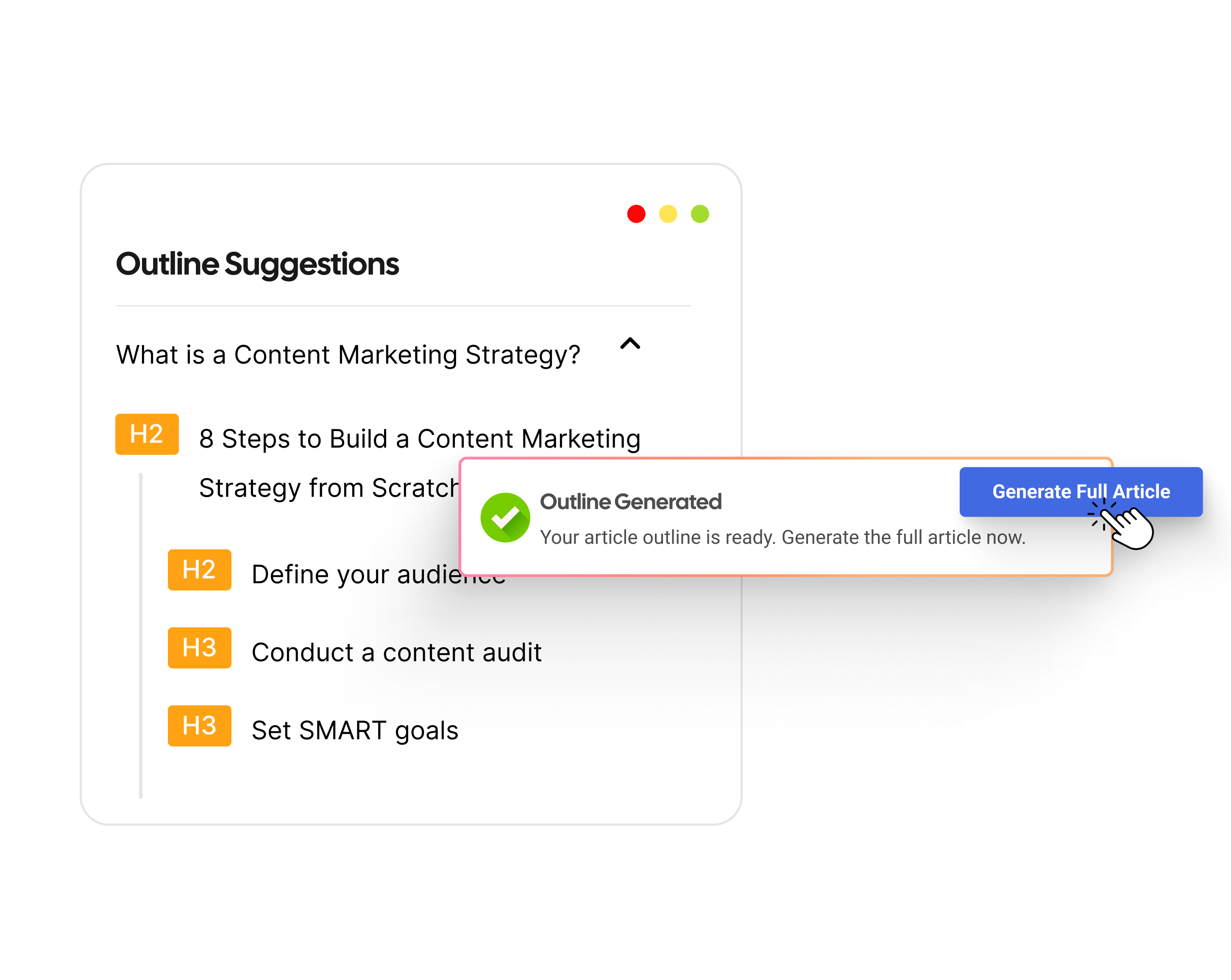
    With tools like Contentpen online, you can easily let the platform write, edit, optimize, and publish blogs and articles that rank on Google and earn AI citations.

    From outline to publish-ready content that fills them

    check

    Structured

    check

    Consistent

    check

    SEO-aligned

    check

    Fast

    Generate Outlines FREE
    AI SEO Interface

    Common digital marketing mistakes beginners make

    Even motivated beginners commit these common errors when getting started in digital marketing. Knowing these in advance saves you weeks of frustration and wasted resources.

    #1: Trying to learn everything at once

    Jumping between SEO, paid ads, social media, and email in the same week creates shallow knowledge across the board, which will do you no good for either of these channels.

    Therefore, the better idea is to pick one channel from Step 3 and stay with it until you get real results. Later, you can expand to other forms of digital marketing, as we discussed earlier.

    #2: Skipping analytics entirely

    Most beginners focus on creating content and forget to measure it. If you are not checking Google Analytics or Search Console at least once a week, you are flying blind and repeating mistakes without knowing it.

    So, it is highly important for you to keep marketing analytics at the forefront of every digital marketing strategy you run.

    #3: Chasing vanity metrics

    Follower counts and likes feel rewarding but rarely translate to actual revenue or results. 

    The better idea here is to track metrics that matter to the business goal. This may include, but is not limited to, organic traffic, email signups, conversion rate, or cost per lead.

    #4: Waiting until everything is perfect

    Beginners often delay publishing a blog or launching a campaign because the content feels unpolished. 

    But here is where most entry-level digital marketers make the mistake of not realizing that imperfect and live beats perfect and invisible every single time. 

    Therefore, it is important to publish, measure, and improve with time instead of waiting for the “perfect moment” to arrive.

    #5: Copying competitors without understanding why

    Seeing a competitor post daily on LinkedIn does not mean daily posting will work for you.

    Thus, it is important to understand the goal behind the action before applying it so your work isn’t just noise. It drives you to meaningful results.

    #6: Ignoring the basics of writing

    Whether you end up in SEO, email, or social media, clear writing is the backbone of all of it. If you rush past this skill early on, every channel you try will underperform.

    Try to get reviews from your peers on your work. Ask them if they clearly understand what you’re conveying. You can also consult any digital marketing professionals in your immediate circle for honest feedback before pursuing different channels.

    How much can you earn in digital marketing?

    Digital marketing is one of the few fields where your earning potential scales directly with how measurable your results are. The more you can point to traffic, leads, or revenue, the more you can charge.

    Here is what the roles typically pay in the US in 2026, according to Glassdoor.

    RoleAverage annual salarySalary range
    Digital marketing associate$55,000$54K–$93K
    Social media specialist$65,000$52K–$86K
    Email marketing specialist$75,000$58K–$99K
    SEO specialist$85,000$65K–$114K
    Digital marketing manager$130,000$97K–$177K
    SEO manager$140,000$108K–$194K
    Senior digital marketing manager$160,000$128K–$217K

    Salaries vary by industry, company size, and location. Remote-first companies now pay close to the same as hub-city roles for senior positions, which has made geography less of a barrier than it used to be.

    Freelancers follow a different curve entirely. Most beginners start at $25–$50 per hour for SEO or social media work, while experienced freelancers with a strong portfolio routinely charge $75–$150 per hour.

    The path matters less than the proof. Build a portfolio first, then negotiate from results when you’ve undeniable proof that you are the best person for the job.

    The bottom line: Your digital marketing path starts with one step

    The clearest path for how to start digital marketing is simple, even if the internet makes it look messy.

    Define a specific audience, learn the fundamentals across channels, pick one main skill, practice on real projects, turn results into a portfolio, and connect with people who can hire or refer you.

    But, most important of all, take your first step. You’ll never learn or grow if you don’t get started.

    You do not need perfect tools or a complex funnel to begin. You only need a clear next action, such as enrolling in one free certification or outlining your first blog post. 

    If content and SEO feel like your thing, then try Contentpen. The tool gives you an end‑to‑end workspace to plan, write, and optimize long‑form articles that can rank and earn links, without deep technical knowledge. 

    Write better blogs in less time, without sacrificing quality.

    Let AI handle structure, clarity, and flow while you stay in control of the message.

    Try AI blog writing
    AI SEO Interface

    Frequently asked questions

    Can I start digital marketing with no experience?

    Yes, you can start digital marketing with zero experience if you are willing to learn and practice. Begin with free courses from Google Digital Garage and HubSpot Academy, then apply what you learn on a simple blog, social page, or small ad campaign.

    Is digital marketing a good career in 2026?

    Yes, digital marketing is still a strong career choice in 2026 for employees, freelancers, and agency owners with salaries up to $177,000 per annum as a digital marketing manager.

    How long does it take to learn digital marketing?

    The basics take a few weeks. Most people feel ready for junior roles or first freelance projects after 3 to 6 months of focused learning and hands-on practice. Real strategic judgment takes one to two years of actual experience.

    How much does it cost to start digital marketing?

    Getting started can cost very little. You can rely on free tools like Google Analytics, Search Console, and entry‑level email platforms, plus low‑cost domains, hosting, and a small starter ad budget.

    What is the easiest digital marketing skill to learn first?

    For many people, content marketing with basic SEO is the easiest first skill. You already know how to explain ideas; just use SEO to align those explanations with what people search.

    How do I start a digital marketing agency from scratch?

    First, build skill in one or two services, such as SEO or paid social, and collect small case studies. Then choose a niche, create a simple website with clear service packages, and use LinkedIn outreach, referrals, and a few freelance platforms to land your first clients.

  • Digital marketing trends 2026: What’s actually working right now

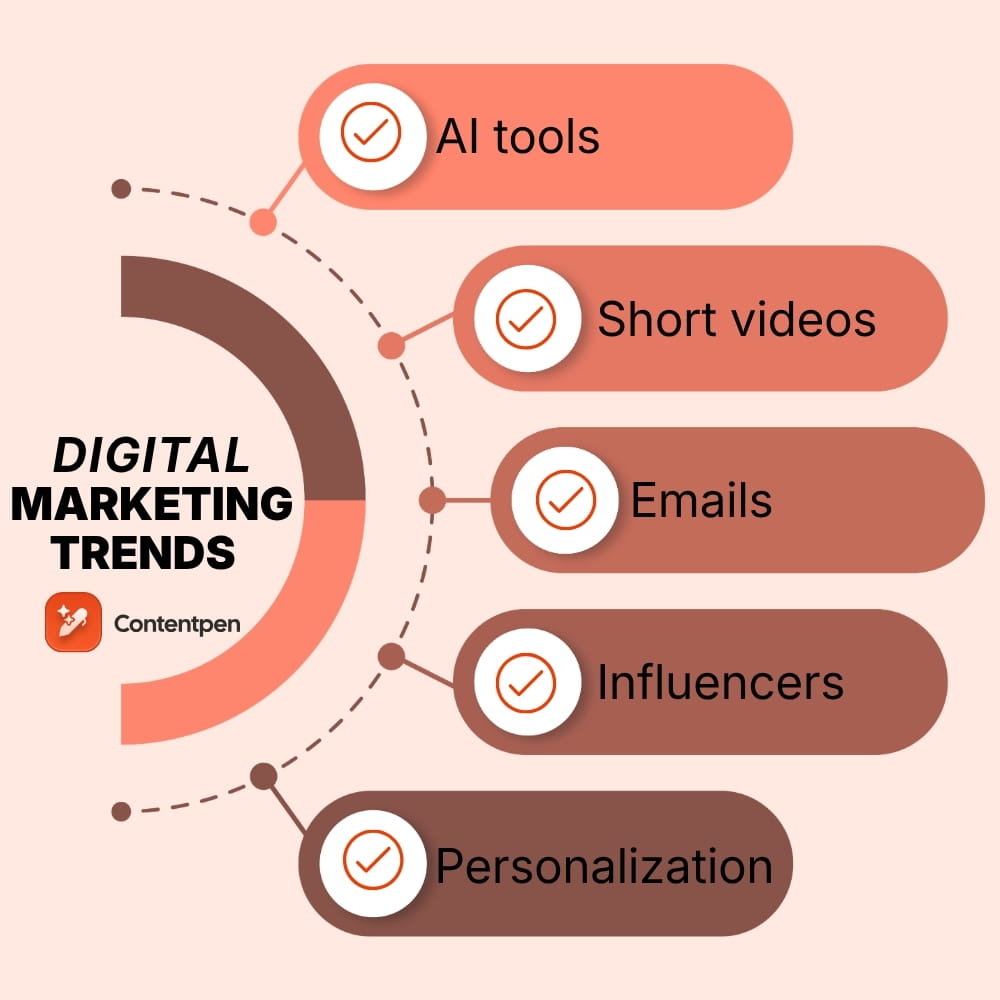
    Digital marketing trends 2026: What’s actually working right now

    There has never been a better time to work in digital marketing. And it has never been this much harder to stand out.

    That tension defines 2026. AI tools are everywhere. Publishing is faster and cheaper than ever. New channels keep emerging. Yet meaningful engagement, the kind that actually earns businesses revenue, feels harder to earn.

    Believe it or not, AI is the solution AND the root cause of all these problems. 

    Since teams usually end up using the same tools, such as ChatGPT, Claude, and others, without expert judgement and positioning clarity, they all end up with similar results. This makes it harder for brands to set themselves apart from others in an otherwise saturated market.

    This guide covers the digital marketing trends 2026 and what strategies work with successful examples. You will also learn to apply those techniques in your daily content workflow to see meaningful results.

    So, without further ado, let’s get started.

    What is driving digital marketing results in 2026?

    For years, early adopters won by getting to tools first. Better ad targeting, smarter automation, more sophisticated analytics. Speed of adoption was the edge.

    However, that era is now over. According to HubSpot’s 2026 State of Marketing Report, 86.4% of marketers now use AI tools, which means access to top-of-the-line technology is universal. 

    But the differentiating factor is now content strategy.

    The brands pulling ahead today are combining AI’s execution speed with something it cannot replicate: a distinct point of view, real expertise, and the judgment to decide what is actually worth building.

    With all the trends below, you’ll see that the real winning edge is how to balance AI + Human aspect of digital marketing. That is where the gains lie.

    1. Brand clarity is the most underleveraged growth lever in 2026

    Most marketing budgets are being partially undermined by unclear positioning.

    A buyer clicks through from an ad or a search result. They land on a homepage. Within a few seconds, they decide whether they are in the right place or not. 

    If the page cannot tell them what you do, who it is for, and why it is different from the others, then the channel that delivered the lead did its job, but the destination did not.

    This problem existed way before the AI boom. But cheap, fast content production has made this gap significantly wider and more visible. 

    Brands without a unique angle or valuable insight are now publishing more content that sounds like everyone else’s content. Therefore, the problem is that content volume without clarity just creates more noise.

    The brands cutting through in 2026 are consistent. Every channel sounds like the same personality. A reader could encounter a post without a logo and still recognize the brand. That does not happen by accident. It happens with careful brand positioning and strategy.

    Jaguar is actually the clearest lesson here, but as a warning about what happens when you lose brand clarity, not a role model.

    In November 2024, the brand unveiled a full rebrand under the tagline “Copy Nothing,” retiring its iconic leaping cat and launching a campaign with zero cars, just fashion models and abstract visuals. Don’t trust us? See for yourself.

    The customer backlash was immediate. By April 2025, Jaguar had sold just 49 vehicles across Europe, down from 1,961 the same month the year before. A 97.5% decline. 

    Bottom line: When a brand cannot answer who it is for, what it stands for, and why someone should choose it, the damage is not theoretical; it’s theatrical.

    How to test where your brand clarity actually stands

    The fastest diagnostic is a five-second test. Show your main landing page to someone who does not know your business. Give them five seconds, then close it. Ask: what does this company sell, who is it for, and why might someone choose it?

    Hesitation or wrong answers tell you more than any analytics dashboard ever could.

    From there, the fix is usually simpler than it seems. Anchor every channel to one clear description of what you do and for whom. Test two or three different value statements in real ads or email subject lines. Let conversion data decide the winners, not internal preference.

    2. Most teams are slowly adapting to GEO

    The way people find answers is changing fast. Generative engine optimization, or GEO, is how marketers respond to that change.

    AI-powered answer engines including ChatGPT, Perplexity, Google’s AI Overviews, and Gemini now resolve a growing share of searches without the user ever clicking through to a website. 

    If your content is not being cited inside those answers, you are invisible to a significant portion of your potential audience, regardless of where you rank in traditional results.

    Where SEO was about ranking, GEO is about being cited. The goal shifts from appearing in a results list to being the source an AI pulls from when it answers a question your buyer is asking.

    Nearly 30% of marketers have already reported a drop in organic search traffic as users turn to AI tools. But traffic arriving from AI citations tends to carry much higher purchase intent. 

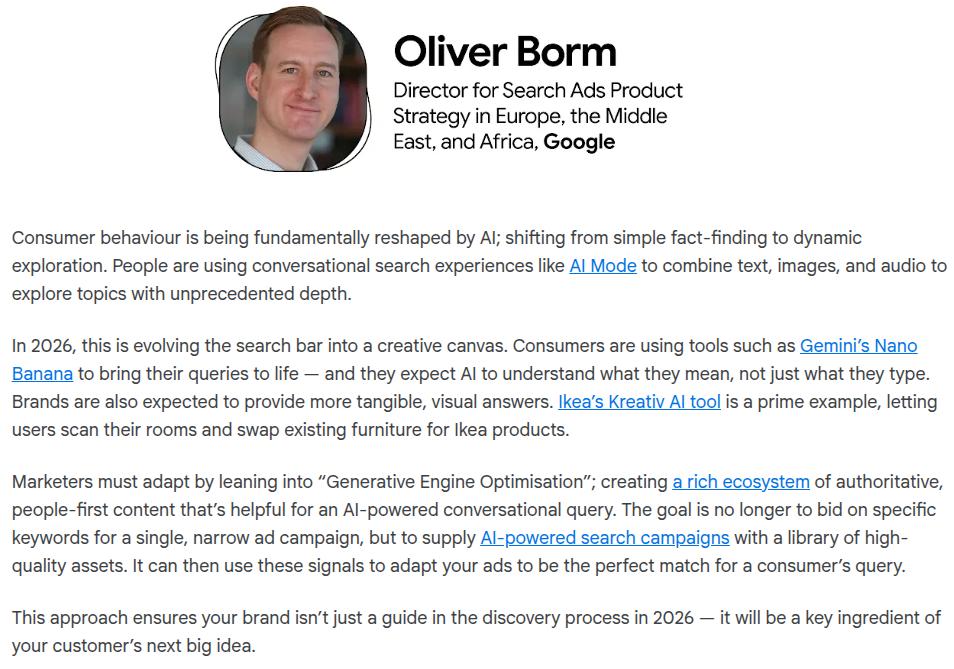
    Oliver Borm from Google also said that “Marketers must adapt by leaning into Generative Engine Optimisation” when asked about digital marketing trends 2026.

    Oliver Borm on digital marketing trends in 2026.

    Putting GEO principles into practice

    One way to validate GEO principles is to apply them consistently to your own content.

    At Contentpen, our publishing workflow uses the same SEO and GEO scoring framework available to our customers. Every article is evaluated for citation readiness, topical coverage, structure, and search visibility before publication.

    Get your content cited by AI, not just ranked on Google!

    See your real-time GEO score as you write to make every piece citation-ready.

    Try GEO Scoring
     GEO Scoring

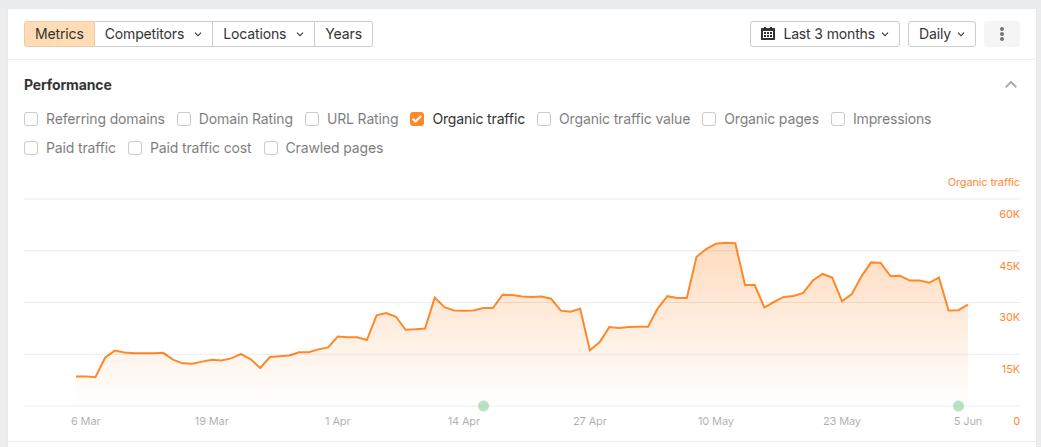
    While no single factor drives growth on its own, consistently applying those principles contributed to our organic traffic increase from 8,000 to 30,000 in the last 3 months. That is a more than 275% increase in traffic!

    Contentpen traffic increase from 8,000 to 30,000 in the last 3 months.

    Bottom line: The investment in GEO is real talk in 2026 for small businesses, agencies, and brand owners looking to maximize their returns.

    3. Short-form video leads on ROI, but the full picture is more interesting

    Short-form video has been called the highest-ROI content format for a couple of years. In 2026, that has not changed.

    Today, YouTube Shorts generates over 200 billion views daily. This opens up a lot of avenues for digital marketers looking to expand their channels beyond traditional SEO.

    But the more interesting development in 2026 is what is happening to long-form video. Long-form video content jumped from 14% to 25% in ROI rankings year over year. That is the biggest gain of any format.

    How do short and long-form content work together?

    Short and long-form content types are not competing against each other. In fact, they both work in harmony to bring great results for businesses.

    Short clips work best as the on-ramp. A quick tip, a founder take, a behind-the-scenes moment introduces your brand to people who have never searched for you. When those people want more, they go to the long video, the detailed blog, or join your webinar.

    FormatWhat it does bestWhere it’s used mostWhat to measure
    Short-formSparks discoveryTikTok, YouTube ShortsWatch time, follows
    Long-formBuilds trust and expertiseYouTube, podcasts, blogsCompletion rate, time on page
    EmailKeeps attention and drives actionNewsletters, sequencesClick-through, replies, revenue

    On the short-form side, lo-fi and brand-authentic video types continue to outperform polished production quality videos, particularly on TikTok. 

    Ryanair is a good example of how to leverage short videos for digital marketing. 

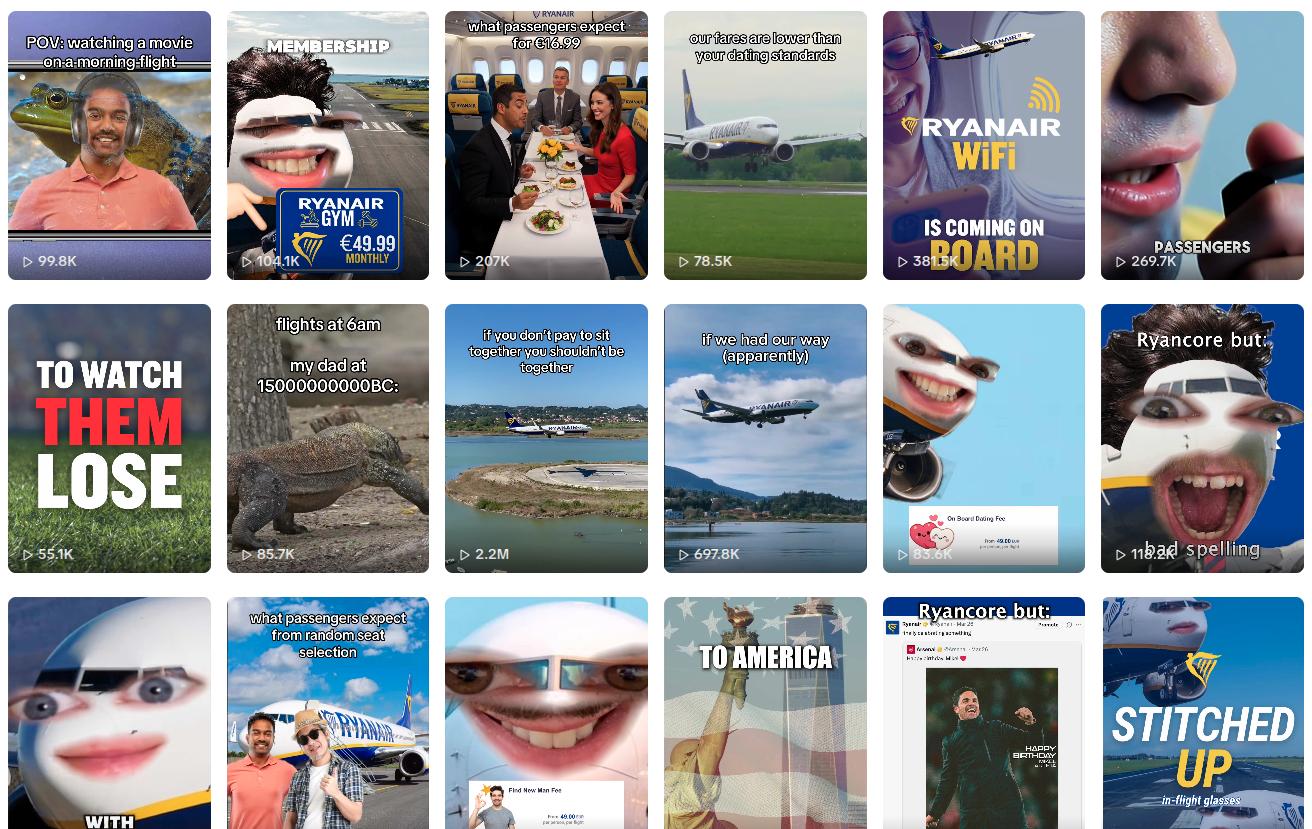
    A budget airline is not an obvious candidate for social media success, yet their TikTok account has grown past 2.8 million followers using nothing but lo-fi green-screen skits, self-deprecating humor, and sarcastic captions like “What passengers expect for €16.99.” 

    Ryanair TikTok account screenshot. Fun and engaging short videos.

    There is no production budget to speak of. The content works because it sounds exactly like a real person who works there, not a brand manager who approved three rounds of legal review. That brand authenticity is what propels Ryanair to be so popular among people right now.

    4. Social commerce has become a large portion of e-commerce

    The idea of someone browsing a social feed, seeing a product, and buying it in the same session used to sound like a prediction. In 2026, it is routine.

    US TikTok Shops grew from 4,450 in 2023 to 475,000 in 2026 and saw the highest conversion rate of any social commerce platform. 

    On the other hand, Instagram, already the most widely used platform among marketers, has evolved its shopping features. You can now have Reels with product tags, which can generate meaningfully higher engagement.

    The broader implication matters for content strategy across the board. When any piece of content can also be a purchase moment, the line between brand-building and direct response dissolves.

    This shift is also reaching B2B digital marketing. A notable share of B2B marketers now count social shopping tools among their top-performing channels, something that would have seemed unlikely just a few years ago.

    5. Influencer marketing is rising in 2026

    The influencer marketing industry went through a long period of correction. Brands chased follower counts as a proxy for reach, and reach as a proxy for results.

    That model has been dismantled by actual performance data.

    According to MARKETING-INTERACTIVE, 60% of marketers plan to increase influencer investment this year. But the allocation is shifting. 

    Mid-tier creators with followings between 100,000 and 499,000 are delivering the strongest results. When brands were asked what criteria they actually use to choose partners, follower count ranked fourth. Content quality, engagement rate, and authenticity all ranked higher.

    That ranking tells you something important. A creator with a smaller, genuinely engaged audience on a specific subject will almost always outperform a celebrity whose audience is broad and passive.

    B2B influencer marketing is gaining traction too. LinkedIn creator partnerships are now used by 20.78% of B2B marketers. A trusted voice in a specific industry carries more weight than a generic brand post, regardless of sector.

    Brands like Ahrefs have seen strong results from building creator presence from within, encouraging employees to post with authority on their areas of expertise. Louise L., content marketer at Ahrefs, posted an Ahrefs use cases showdown on her LinkedIn.

    Louise L. from Ahrefs, having an Ahrefs use cases showdown - post from LinkedIn.

    The credibility benefit is similar to a trusted external voice, with naturally tighter messaging alignment and brand promotion.

    6. Email is still the highest-ROI digital marketing channel

    Email remains one of the highest-ROI channels in digital marketing, and AI has made it more capable.

    The core reason email holds up is that it lives in owned territory. Social algorithms change, search rankings shift, platforms rise and fall, but an email list is a direct relationship with an audience that is unaffected by these quickly changing circumstances.

    In 2026, 81% of B2B marketers rely on emails for lead generation. Because you get a staggering $42 return for every dollar you spend in email marketing, the ROI is undeniably high.

    The shift in 2026 is in how email programs are built. Subject line testing, email scheduling, and behavioral triggers are all controlled by AI platforms like Customer.io or SalesHandy, leaving a lot of time and resources for digital marketers to work on new strategies.

    The gap is not between brands using email and those not using it. It is between brands treating email as a relationship channel and those still blasting the same message to their full list and wondering why engagement is flat.

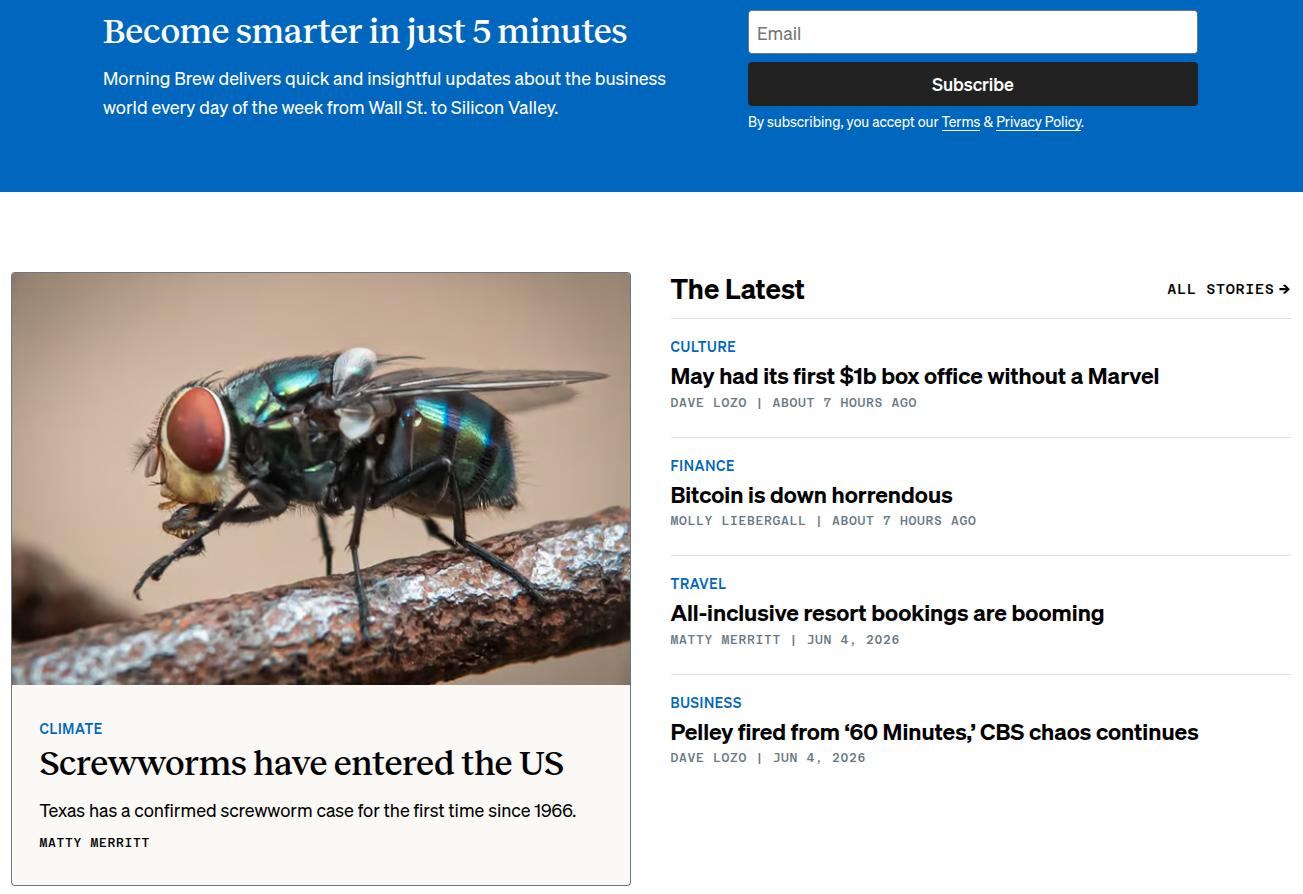
    Morning Brew is the benchmark in email marketing. What started as a dorm-room newsletter in 2015 grew to over 4 million subscribers and now drives the majority of revenue for a media company worth over $70 million

    Morning Brew landing page.

    The formula has never been complicated. A consistent voice, a predictable format readers look forward to, and content that feels like it was written for a person rather than broadcast to a list. 

    Their unique open rate sits at 42% in 2026, roughly double the industry average. The lesson is not about Morning Brew’s scale. It is about creating emails people actually want to read, and that provide you with better outcomes than all the other channels.

    7. Personalization has become the expectation, not the differentiator

    Customers in 2026 expect experiences that feel relevant to them. When they do not get that, the brand damage is real.

    AI has made meaningful personalization achievable at scale. Users get content recommendations based on behavior, email sequences adapt based on engagement signals, and ad targeting models intent before the user explicitly shows it. 

    The practical challenge for most teams is not the capability of providing personalized experiences. It is data quality and the discipline to actually use behavioral signals rather than demographic proxies.

    As AI agents increasingly mediate discovery and purchase decisions on behalf of users, personalization needs to extend beyond human readers. 

    Brands must consider how their content appears to AI systems making recommendations. This is where GEO and personalization intersect, and where digital marketing strategy in 2026 is getting genuinely complex.

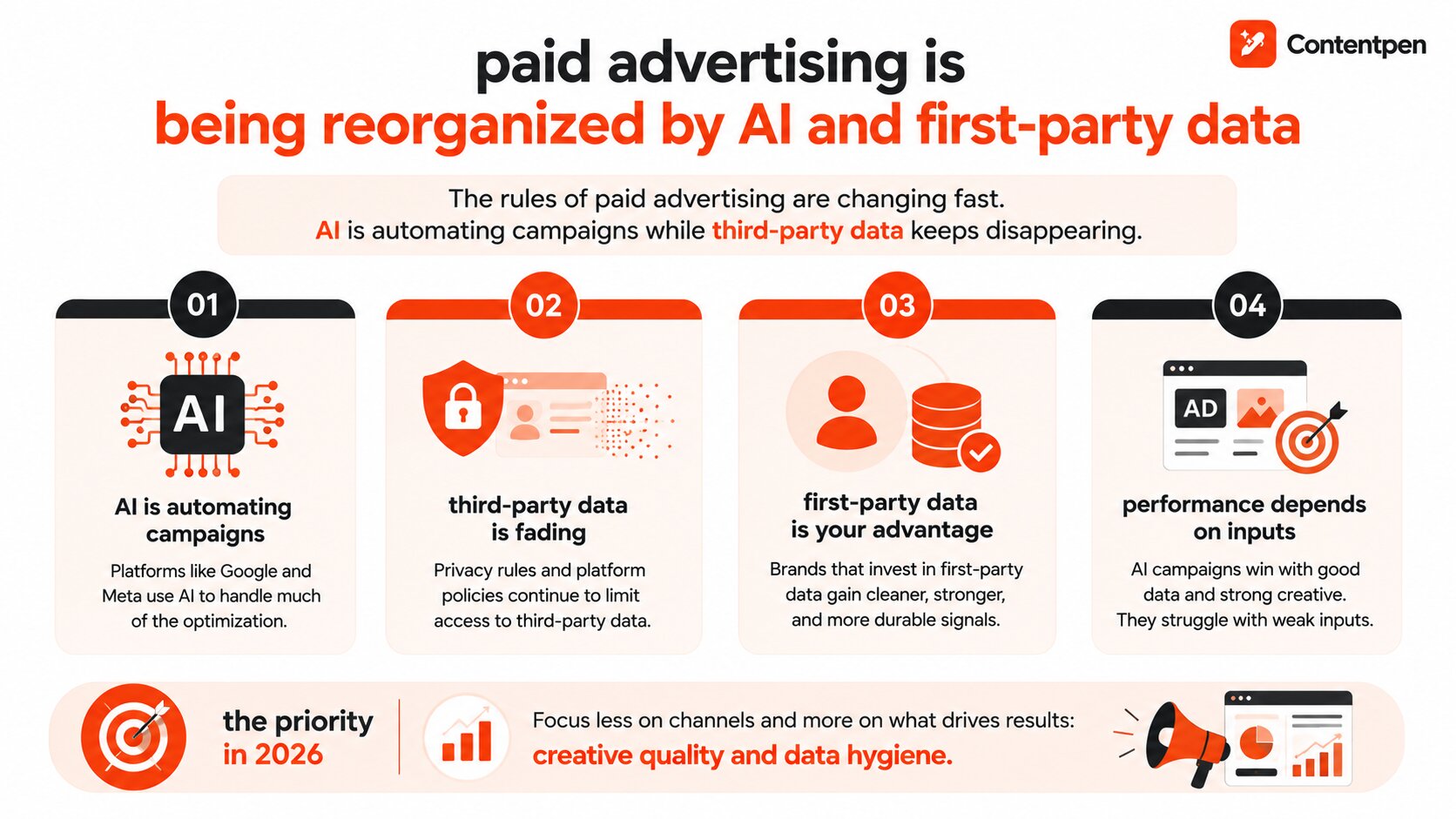
    8. Paid advertising is being reorganized by AI and first-party data

    The mechanics of paid advertising or PPC marketing have changed significantly over the past two years.

    Two forces are driving it simultaneously. First, AI-powered campaign systems from Google and Meta automate much of the optimization work. Second, third-party data continues to erode as privacy regulations and platform policies tighten.

    The emerging trends in paid advertising in 2026.

    For brands that invested in first-party data, this environment is an advantage. Their signals are cleaner and more durable.

    For brands that did not, the adjustment is harder. AI campaigns can optimize well when fed good data and strong creative. However, they perform poorly when the inputs are weak.

    The strategic priority for paid teams in 2026 is less about channel selection and more about creative quality and data hygiene.

    Retail media is also worth understanding for brands selling through retailers. With over 200 retail media networks now operating globally, there is significantly more inventory available within high-intent shopping environments than there was two years ago. 

    Retail media delivers higher engagement than standard digital ads because the context is inherently commercial. The user is already in buying mode, and it is much easier for them to convert.

    9. B2B marketing is borrowing ideas from B2C, and it is working

    The traditional distinction between B2B and B2C marketing has been eroding for years. In 2026, it is largely gone.

    B2B buyers are people. They respond to the same trust signals, entertainment, and peer recommendations as any consumer. 

    The fact that a purchase involves a business context does not make someone immune to content that is genuinely interesting or a brand with a clear personality.

    LinkedIn video growing 36% year over year is one visible signal. B2B marketers adapting their content to be genuinely engaging, not just informative, are finding their audiences respond the same way B2C audiences do.

    The underlying mechanics of B2B remain different: longer sales cycles, more stakeholders, content that needs to satisfy both emotional and rational criteria. 

    But the idea that B2B brands should market in a dry, functional register because their audience is professional has been disproved too many times to keep repeating.

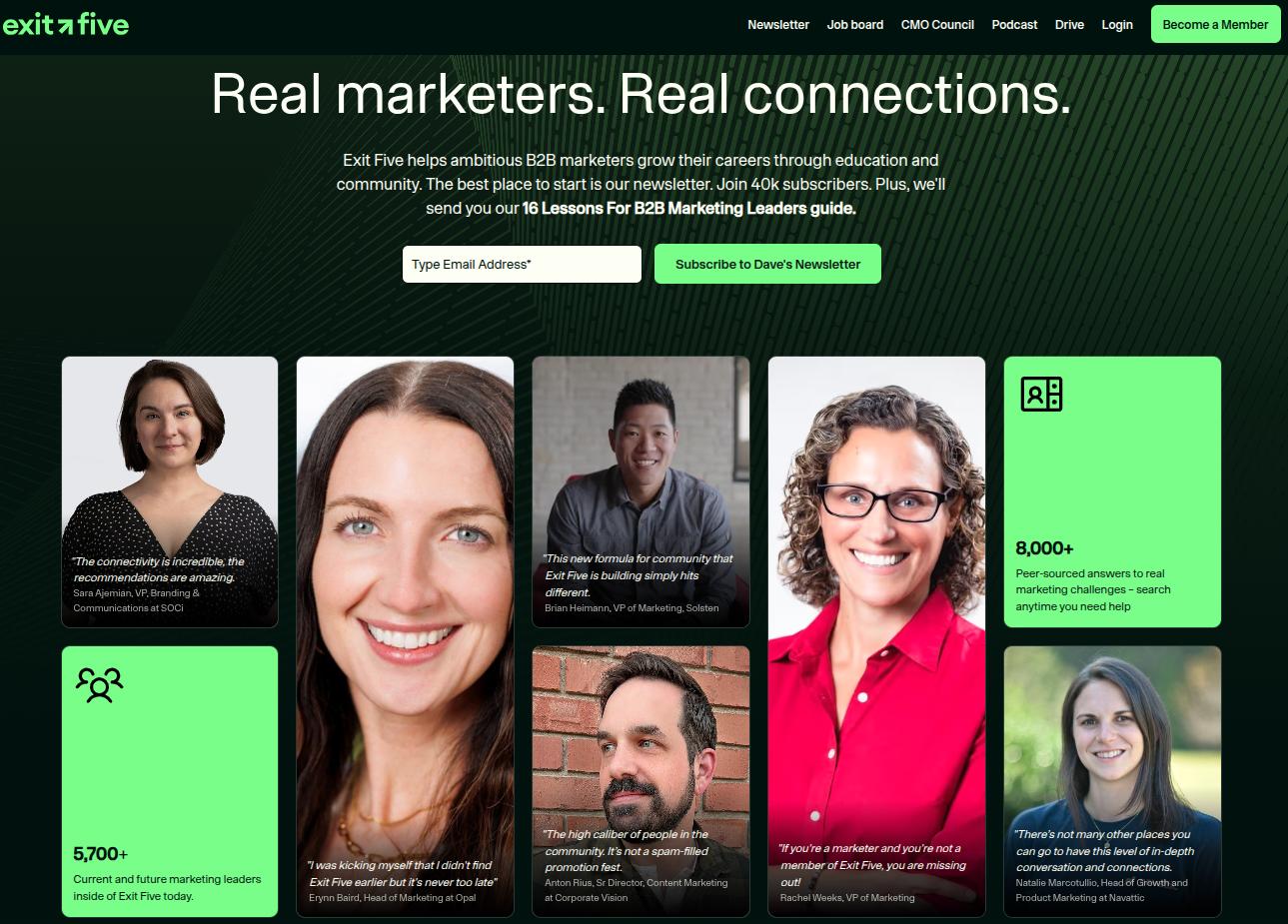
    An example would be Exit Five, Dave Gerhardt’s B2B marketing community. It grew from a solo side project to 40,000 subscribers and is on track to hit $3 million in annual revenue

    Exit Five landing page.

    No paid acquisition. The entire growth engine is content on LinkedIn, a podcast, and word of mouth from members who found genuine value. The community itself is the moat. Competitors cannot replicate it with budget, because what makes it valuable is the specific people inside it.

    10. Fast feedback loops matter more than perfect plans

    The marketing teams consistently outperforming others are not the ones with the most sophisticated annual plans. They are the ones running the tightest iteration cycles.

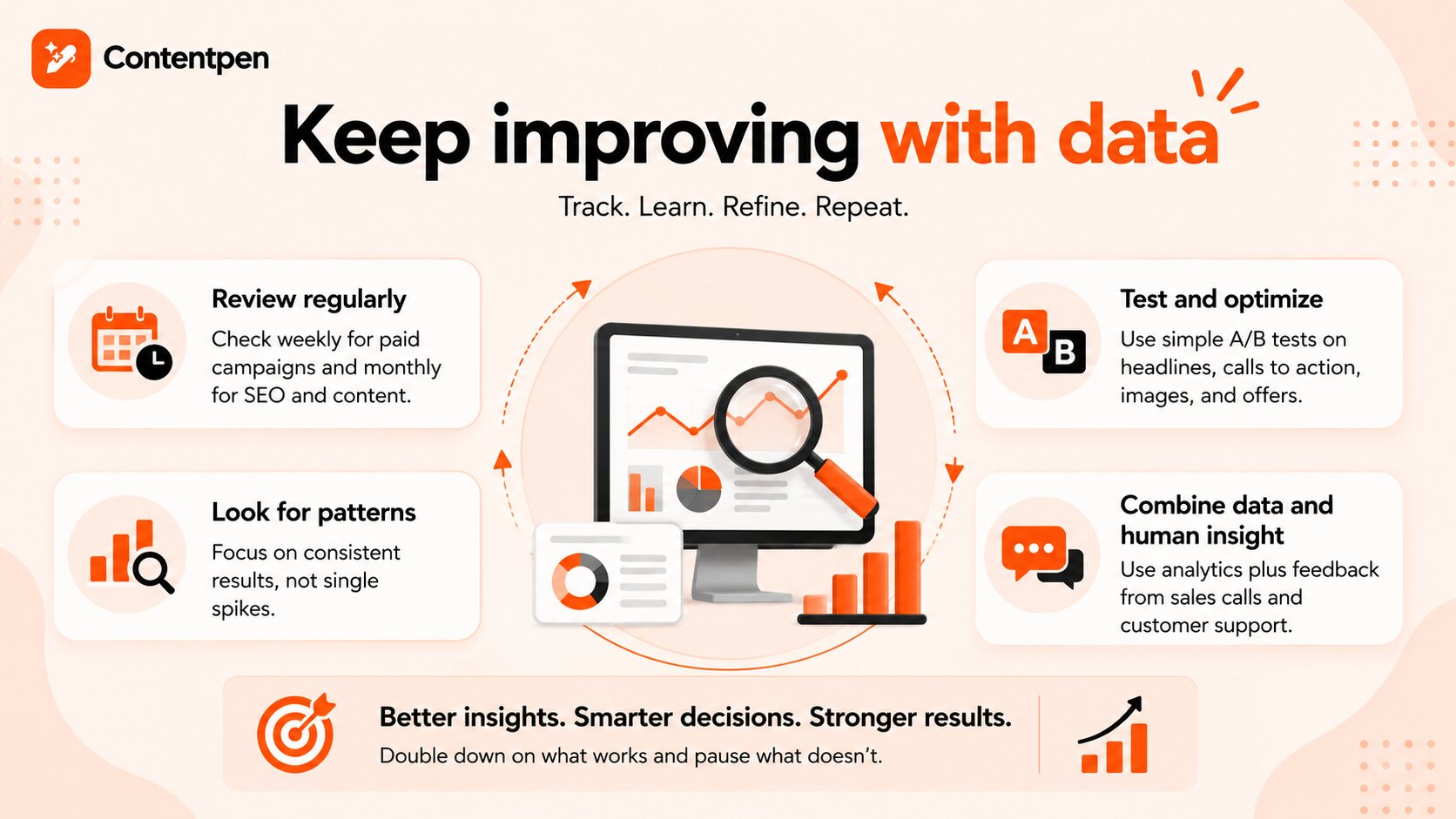
    The pattern looks similar across high-performing teams. Launch something real into the market without over-polishing it first. Gather actual signal from performance analytics and customer responses. Fix what is not working quickly, without waiting for a scheduled review.

    Over a quarter, that compounding of small improvements consistently beats one elaborate strategy that never adapts.

    This requires two things most teams underinvest in. First, shared real-time dashboards that make performance visible to everyone who needs to act on it. Second, clear ownership over who can make which changes without going through layers of approval.

    Today, digital marketers are prioritizing lead quality, conversion rate, ROI, and customer acquisition cost (CAC). The move away from reach and impressions as primary performance metrics tells you everything you need to know about this digital marketing trend.

    Faster feedback loops require measuring things directly connected to revenue, not things that are merely easy to count.

    11. Inclusion and sustainability have become important performance variables

    Inclusion and sustainability used to feel like an obligation separate from strategy. The data has changed that framing.

    Approximately 80% of employees want to work for a company that values diversity, equity, and inclusion (CNBC). Brands treating inclusion as a practice rather than a campaign are growing faster because they are reaching and retaining broader audiences and workforces.

    The same logic applies to sustainability. The brands that have built real credibility here are not the ones with the most aspirational mission statements. They are the ones that set specific, measurable commitments and report progress honestly. 

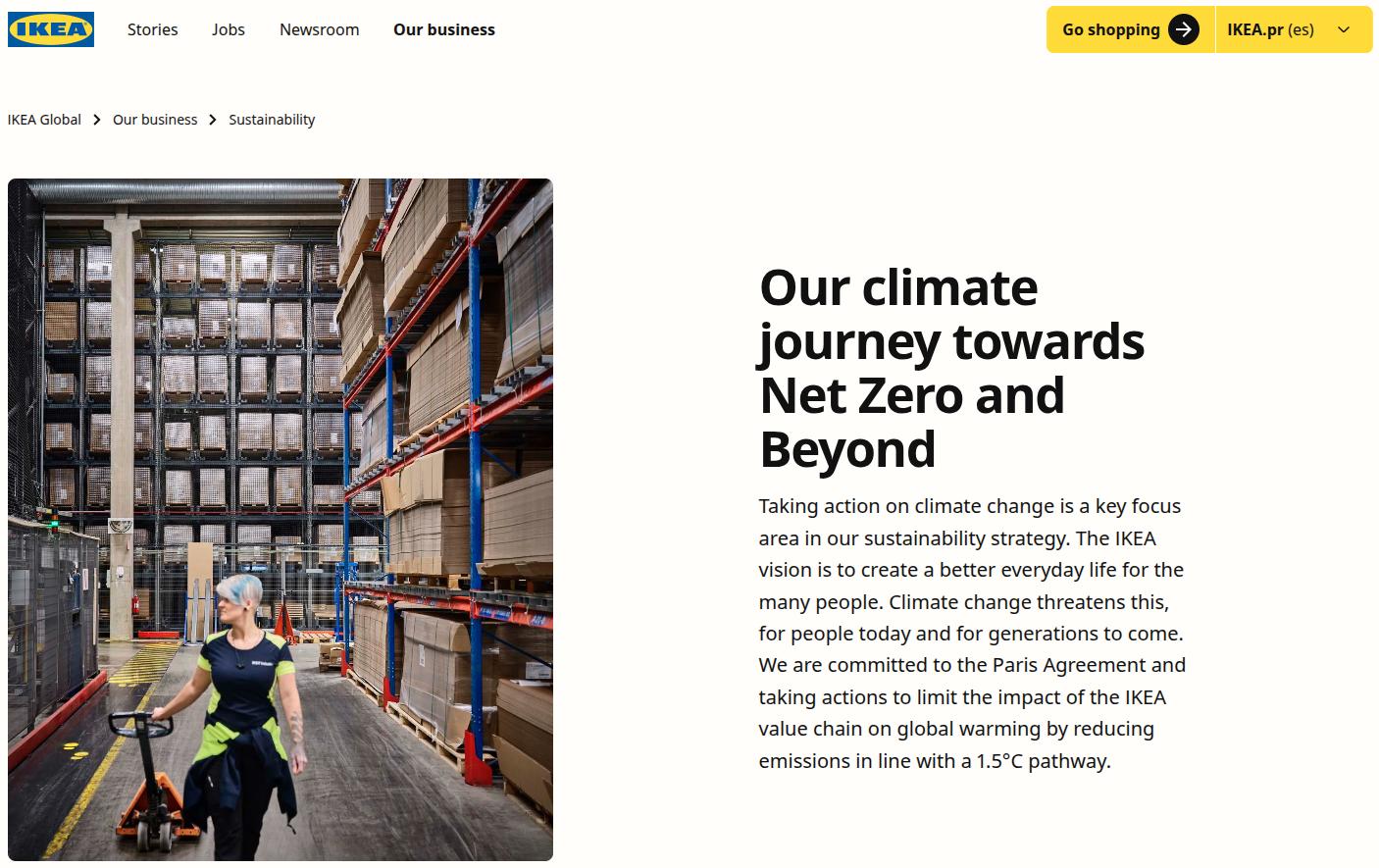
    An example would be IKEA. Rather than publishing vague environmental values, the brand has tied specific numbers to specific timelines: a published Net Zero Transition Plan committing to at least a 50% reduction in absolute greenhouse gas emissions by 2030. 

    IKEA Net Zero initiative.

    The result? Revenue grew over 30% against a 2016 baseline while their climate footprint decreased 24.3% in the same period. That combination is what makes the sustainability positioning credible rather than decorative.

    12. Agentic AI is the trend to understand now

    Most digital marketing trends in this guide are already happening at scale. This one is early, but the trajectory is clear enough that now is the right time to get ahead of it.

    Agentic AI refers to AI systems that do not just answer questions, but also perform other actions for you. The agents browse options, compare alternatives, and in some cases complete purchases on behalf of the user.

    For marketers, this creates a new layer of discoverability to think about. 

    Your brand needs to be findable and interpretable not only by human searchers, but also by AI systems acting on their behalf. That means that you need to make your content structured,  with clear FAQs, well-organized descriptions, and metadata.

    This is where you can get help from Contentpen. Our SEO and GEO scoring ensures that every piece of content you post is AI-friendly, ready to get AI-cited and picked.

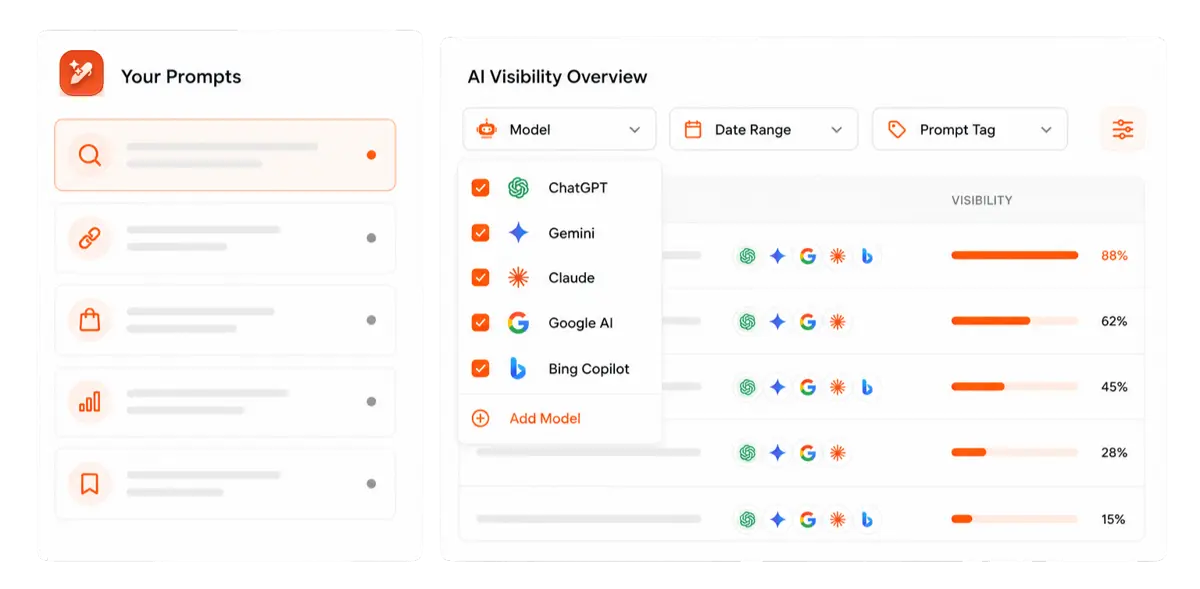
    The AI writer also provides you with AI visibility insights to help you understand which prompts are picking you vs. your competitors.

    Find your brand in AI search

    check

    Track AI citations, share of voice, and brand sentiment

    check

    Find the top sources driving citations

    Try AI Visibility
    AI SEO Interface

    The brands that will benefit most from this shift are the ones already doing GEO well. That means creating structured, authoritative, and machine-readable content that serves both human readers and AI agents well.

    Starting that work now builds an advantage that compounds as agentic AI becomes a larger part of how people navigate purchase decisions.

    Build a successful digital marketing strategy for 2026

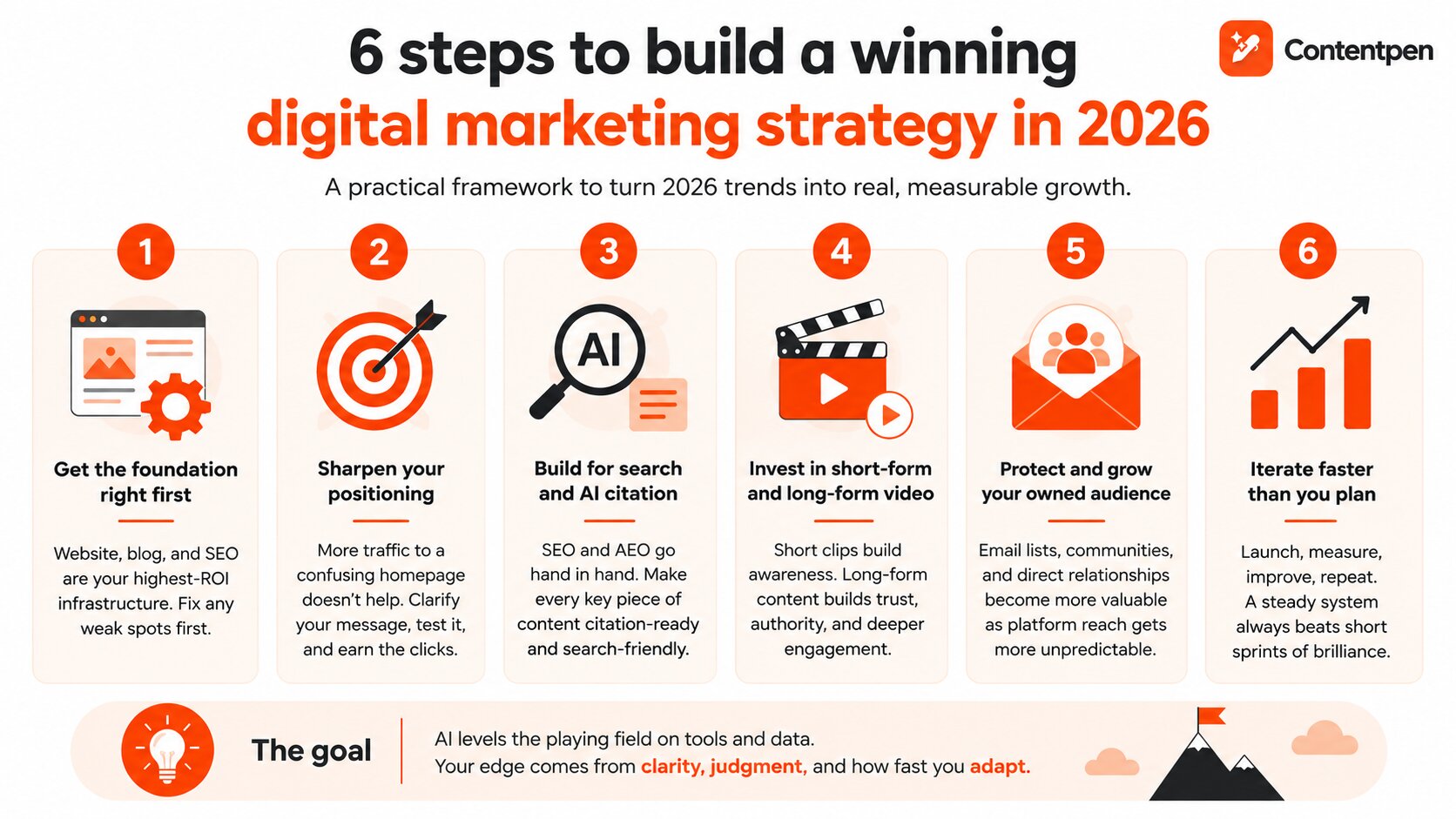
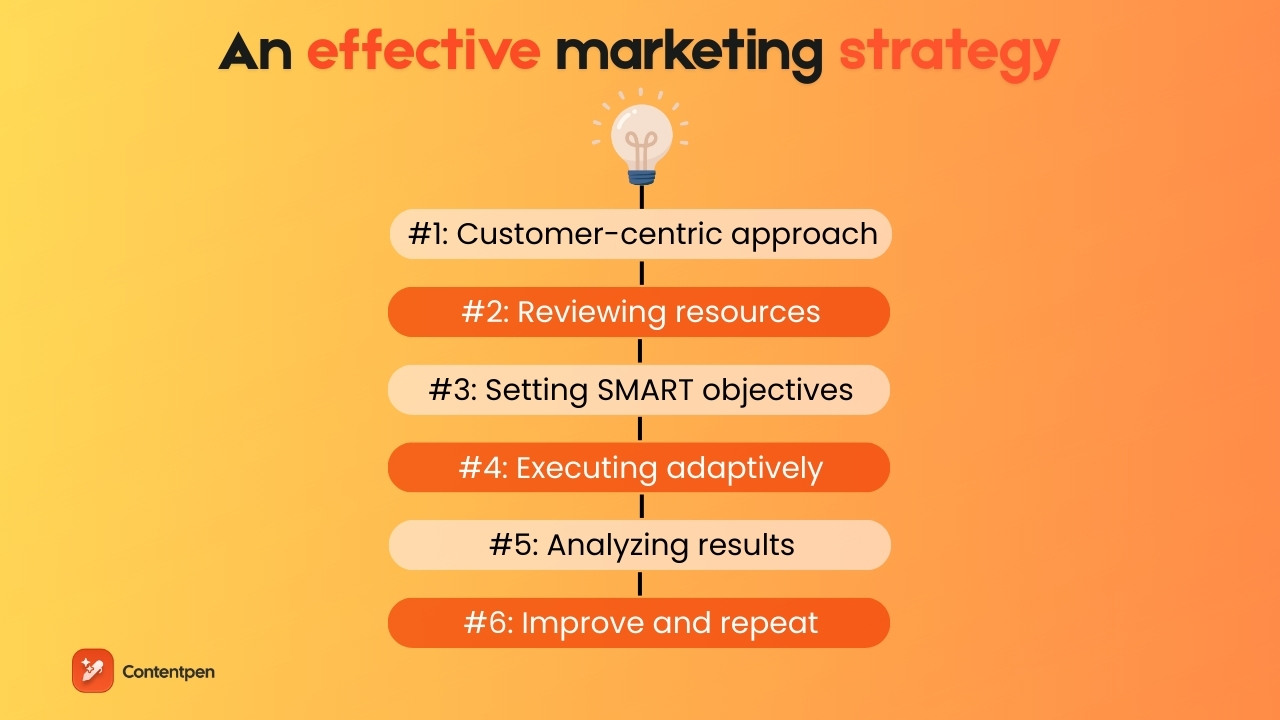
    6 step digital marketing strategy framework to follow in 2026.

    The bottom line across every trend here is the same. AI has made accessibility easier to tools, technologies, and data. This means the ceiling is now determined by human judgment, clarity, and how fast you learn to adapt with AI tools.

    Here’s a practical 6-step framework for putting those findings into action:

    1. Get the foundation right first: Website, blog, and SEO remain the highest-ROI infrastructure for most brands. If that foundation is shaky, fix it before investing heavily in anything else.
    2. Sharpen your positioning before amplifying your reach: More traffic to a confusing homepage does not help. Run the five-second test, fix the message, perform A/B testing, and make sure the destination earns the clicks your channels deliver.
    3. Build for both traditional search and AI citation: SEO and AEO work hand-in-hand, and so should your content. Every important piece of content should be AI citation-ready and perform well in SERPs.
    4. Invest in short-form video, but don’t miss out on long videos: Short clips are good to increase brand awareness, but keep on investing in long-form content alongside.
    5. Protect and grow your owned audience: Email lists, communities, and direct subscriber relationships become more valuable every year as platform reach becomes less predictable.
    6. Iterate faster than you plan: Launch real things, measure what matters, fix what is not working, and repeat. Remember, a steady system beats your competitors more than short sprints of brilliance.

    If you’ve followed all these digital marketing trends 2026 edition and are willing to give our 6-step practical framework a go, then you are surely on the right track to build a successful business.

    Final thoughts

    Digital marketing trends in 2026 are not about any single channel or technology. It is about what happens when the tools become universal, and execution becomes easy.

    The advantage shifts entirely to teams with better judgment, clearer positioning, and the discipline to learn fast.

    GEO or AI search optimization is becoming standard practice, short-form video dominates, social commerce is mainstream, and email audiences are more valuable than ever.

    If you’ve found yourself stuck on where to start for a successful content marketing strategy, try Contentpen. The tool works with your brand voice, automates internal linking, and provides web analytics that connect content activity to real outcomes.

    Write content that’s built to rank, not just read

    Create search-optimized blogs aligned with SEO and GEO signals, so your content performs well across search and AI-driven discovery.

    Try SEO Blogging FREE
    AI SEO Interface

    Frequently asked questions

    What is the most important digital marketing trend in 2026?

    The most consequential shift is the rise of GEO. It is the practice of optimizing content to be cited by AI answer engines like ChatGPT, Perplexity, Google’s AI Overviews, and other AI models. Alongside that, businesses should look to invest in creating short-form videos.

    Is email marketing still worth investing in?

    Yes. Email consistently provides higher returns (up to a 42:1 ratio of returns in some cases). Every dollar spent on emails provides 42 dollars of return, which is why it is still an effective digital marketing channel for 2026.

    How is AI actually changing how marketing teams work?

    The most significant change is not what AI can do. It is what becomes expected because AI can do it. Production speed is no longer a differentiator. The teams getting real value from AI bring stronger inputs based on better brand context, sharper editorial judgment, and clearer strategic direction.

    Are there any other digital marketing trends to follow in 2026?

    Yes. As a brand, look to invest heavily in creative participation, as it has shown great results with Gen-Z audiences. Also, the rise of nostalgic remix means maximizing on selling feelings, not products, just like Nintendo’s commercial, in which Paul Rudd reprised his role from the 90s.

    How do smaller teams compete effectively in 2026?

    By being sharper, not louder. A clear brand point of view, high-quality content built around genuine expertise, and a strong owned audience can consistently outperform larger but vaguer competitors.

  • 20 best digital marketing tools in 2026 (by category)

    20 best digital marketing tools in 2026 (by category)

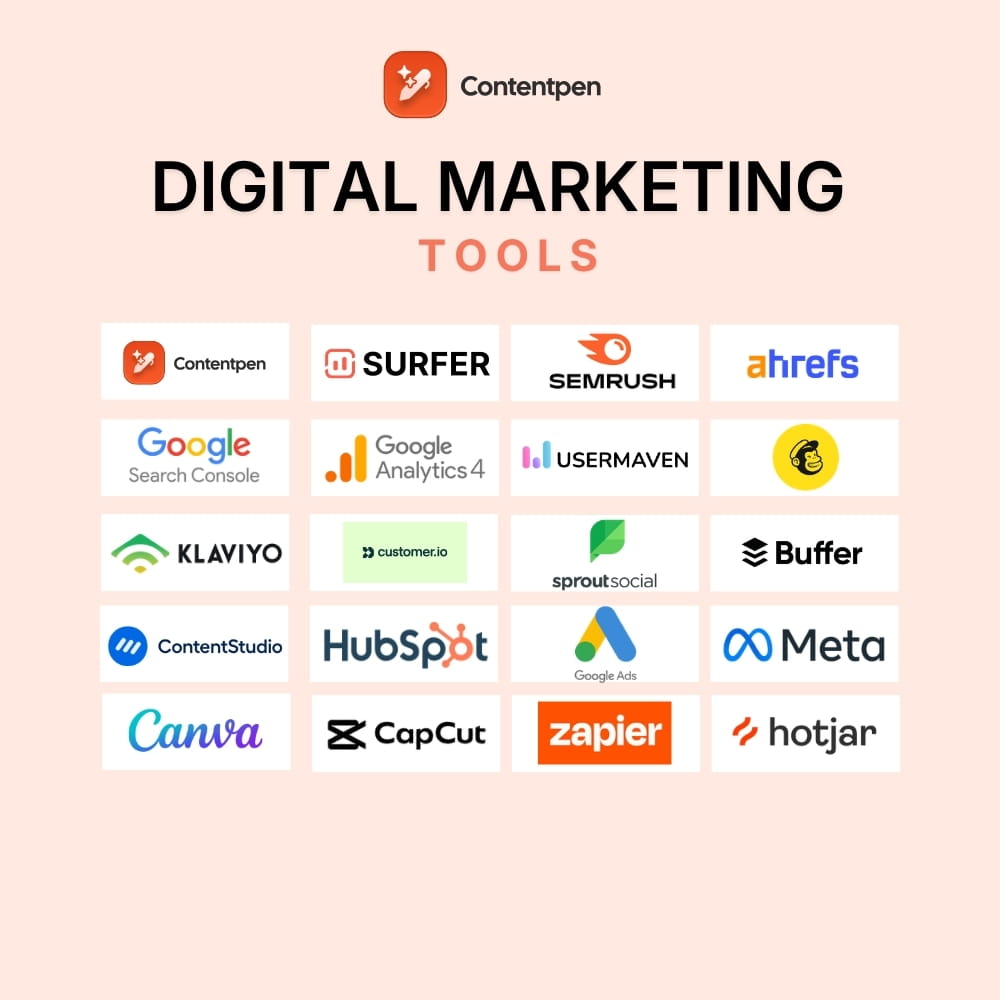
    The best digital marketing tools in 2026 cover 7 core functions: SEO, analytics, content creation, email marketing, social media management, paid advertising, and design. This guide breaks down 20 tools across those categories, with verified pricing details and a simple explanation of what gap each one fills.

    Every business running a digital strategy is essentially running a collection of tools. From search engine optimization and email marketing to social media scheduling and website analytics.

    The right digital marketing tools determine how efficiently your team works and how consistently your brand grows.

    The real challenge is not finding tools. It is not knowing which tools actually earn their spot in your stack, and which ones overlap, bloat, or slow you down.

    In this guide, we will break down the 20 best digital marketing tools that our marketing team at Contentpen has tried and tested in 2026.

    So, let’s get started, shall we?

    Content marketing tools

    Content marketing tools are the foundation of any digital marketing strategy. Without a steady output of search-optimized content, the rest of your stack has nothing to distribute, promote, or measure. These two tools cover the creation and optimization side of that workflow.

    1. Contentpen

    Contentpen for SEO and GEO-ready blogs.

    Contentpen is an AI-powered blog writing platform built specifically for SEO and GEO-purpose tasks. It automates the research, writing, internal linking, and publishing processes. 

    The tool also handles media management, website analytics for post-publishing optimizations, and SEO opportunity detection in one platform.

    Where it fills a gap

    Most content tools either write content or optimize it. Contentpen handles both and goes further by scoring content for AI search visibility alongside traditional search. 

    For brands that need to rank in both Google and AI-generated answers, this dual-scoring approach addresses a gap that standalone SEO writers or keyword tools cannot fill.

    Pros

    Cons

    • You may have to spend some time learning the features
    • The free trial only lasts for 7-days

    Pricing

    • Starter: $39/month
    • Premium: $79/month
    • Agency: $199/month

    2. Surfer SEO

    Surfer SEO landing page.

    Surfer SEO is a content optimization tool that scores your article in real time as you write, based on keyword usage, content structure, heading density, and word count.

    It is designed to help writers optimize content for search without needing a separate SEO manager reviewing every draft. The tool can be added to any content marketing stack, but requires other powerful content creation tools to close the loop.

    Pros

    • Content outlines and NLP-driven keyword suggestions reduce guesswork
    • Integrates with Google Docs, WordPress, and several AI writing tools
    • SERP Analyzer gives side-by-side competitive benchmarking for a given keyword
    • Content Audit tool identifies existing pages that need optimization

    Cons

    • Optimization recommendations are based on correlation, not direct Google ranking signals
    • Pricing can be restrictive for high-volume content teams on lower plans
    • The Content Editor only focuses on text. Structured content like tables or schema markup is not directly addressed

    Pricing

    • Standard: $119/month
    • Pro: $219/month
    • Peace of Mind: $359/month

    SEO tools

    Search engine optimization tools help you research keywords, audit your site’s technical health, track rankings, and analyze what your competitors are doing. Each tool below serves a distinct SEO function.

    3. Semrush

    Semrush competitor analysis dashboard.

    Semrush is an all-in-one SEO and competitor analysis platform used by content teams, SEO specialists, and performance marketers for on-page analysis and off-page tracking.

    Its core strength is the breadth of data it surfaces in one place for keyword research, backlinks, site auditing, rank tracking, competitor benchmarking, and paid search insights. 

    For teams that want a single tool to own SEO research and local search engine optimization without switching between multiple platforms, Semrush is the most complete option available.

    Pros

    • Covers keyword research, site audits, rank tracking, and competitor analysis in one dashboard
    • Content Marketing Toolkit (Guru+) adds topic research and SEO writing assistant features
    • Strong local SEO and PPC data alongside organic SEO tools
    • Semrush Copilot AI assistant is included free across all paid plans

    Cons

    • Significant pricing jump between paid plans ($139.95 to $249.95)
    • Data accuracy for niche or low-volume keywords can vary
    • API access requires the Business plan or above
    • Additional user seats cost extra on every tier

    Pricing

    • Pro: $139.95/month
    • Guru: $249.95/month 
    • Business: $499.95/month 
    • Enterprise: custom pricing
    • Free plan available with limited daily queries

    4. Ahrefs

    Ahrefs main dashboard.

    Ahrefs is an SEO toolset built around one of the largest and most frequently updated backlink indexes in the industry. It is particularly strong for link building, content gap analysis, and understanding why competitors rank where they do. 

    Site Explorer, Keywords Explorer, Content Explorer, and Rank Tracker are its core modules. For teams where link building and backlink monitoring are a daily priority, Ahrefs is the go-to tool because of its index depth and data refresh speed.

    Pros

    • One of the largest and most up-to-date backlink databases available
    • Content Explorer helps identify high-performing content by topic or organic keyword
    • Ahrefs Webmaster Tools (free) gives verified site owners basic backlink and keyword data

    Cons

    • No free trial
    • API access requires the Enterprise plan or a separate subscription
    • PPC data is less comprehensive than Semrush

    Pricing

    • Starter: $29/month
    • Lite: $129/month
    • Standard: $249/month
    • Advanced: $449/month
    • Enterprise: from $1,499/month

    5. Google Search Console

    Google Search Console main tool interface.

    Google Search Console (GSC) is a free digital marketing tool that shows you exactly how your site performs in Google Search.

    It reports on search queries that bring users to your site, click-through rates, average ranking positions, indexing status, and Core Web Vitals. 

    For any brand running an SEO strategy, GSC is non-negotiable because it is the only source of direct, verified data from Google itself.

    Pros

    • Completely free, no usage limits for most website owners
    • The only tool that gives you real Google search query data, not estimates
    • Flags crawl errors, indexing issues, and manual actions directly
    • Integrates natively with Google Analytics 4 for cross-referencing traffic and search data

    Cons

    • Data is limited to your own site, so no competitor analysis available
    • Keyword data is sometimes grouped or sampled for privacy
    • No historical data beyond 16 months
    • Requires verified site ownership to access

    Pricing

    • Free

    Website analytics tools

    Analytics tools help you adjust your digital marketing campaigns by providing you with key performance metrics. These tools are your starting point for monitoring and adjusting your strategies.

    6. Google Analytics 4

    Google Analytics demo image.

    Google Analytics 4 (GA4) is Google’s current web and app analytics platform. It replaced Universal Analytics in 2023 and introduced event-based tracking, cross-device measurement, and predictive metrics. 

    GA4 shows you how users find your site, how they behave once they are there, which pages and campaigns drive conversions, and how audiences move across devices before converting. 

    The digital marketing analytics tool integrates natively with Google Ads, Google Tag Manager, and BigQuery for teams that need to export raw data.

    Pros

    • Free for the vast majority of businesses
    • Event-based model gives granular control over what counts as a conversion
    • Cross-device tracking through Google Signals
    • Looker Studio integration enables custom, shareable dashboards

    Cons

    • Data sampling applies at high traffic volumes in Exploration reports on the free tier
    • No dedicated customer support as issues are handled via community forums

    Pricing

    • GA4 Standard: Free

    7. Usermaven

    Usermaven analytics and attribution tool main interface.

    Usermaven is an AI-powered analytics and attribution platform that combines website analytics, product analytics, and multi-touch marketing attribution in a single tool. 

    It uses first-party, cookieless tracking hosted in the EU, combined with tracking pixels that bypass ad blockers, keeping data GDPR and CCPA compliant from the start.

    Pros

    • Multi-touch attribution with seven models, including paid ads, channels, and content attribution
    • White-labelling available for small businesses and agencies
    • Real-time, accurate data
    • Maven AI surfaces natural-language insights and recommendations

    Cons

    • Growth plan only supports 3 users and 3 workspaces
    • No discounts for monthly plans

    Pricing

    • Growth: $84/month (3 users, 3 workspaces, 5 years of data history)
    • Scale: $199/month (unlimited users, 5 workspaces, 7 years of data history)
    • Enterprise: custom pricing
    • 14-day free trial available

    Email marketing platforms

    Emails are the best form of marketing to generate leads, close customers, and keep existing users in the loop for product updates, new drops, and more. The following tools make this work much easier, so you can focus on digital marketing strategies without getting overwhelmed.

    8. Mailchimp

    Mailchimp website.

    Mailchimp is one of the most widely used email marketing platforms for small and mid-sized businesses. It covers email campaign creation, audience segmentation, basic automation workflows, and landing page building through a drag-and-drop interface. 

    The tool is a practical entry point for teams that want to manage emails without a steep technical learning curve.

    Pros

    • Intuitive drag-and-drop email builder with a large template library
    • Includes landing page builder and basic Facebook/Instagram ad management across all plans
    • A/B testing on subject lines, send times, and content
    • Integrates with most major ecommerce and CRM platforms

    Cons

    • Pricing scales quickly as your contact list size grows
    • Deliverability can be affected by shared IP pool on lower plans

    Pricing

    • Free: up to 250 contacts, 500 sends/month
    • Essentials: from $6.50/month (500 contacts)
    • Standard: from $10/month (500 contacts)
    • Premium: from $175/month (500 contacts)

    9. Klaviyo

    Klaviyo landing page.

    Klaviyo is an email and SMS marketing platform built for ecommerce. It has recently also started offering AI customer agent support, along with marketing analytics. However, all of these features are priced separately.

    The tool pulls data directly from storefront platforms like Shopify and WooCommerce to support behavior-triggered flows. These include abandoned cart sequences, post-purchase follow-ups, win-back campaigns, and product recommendation emails based on purchase history. 

    For D2C or B2C brands and online retailers, Klaviyo’s native ecommerce data integration makes it significantly more targeted than a general-purpose email tool.

    Pros

    • Native integrations with Shopify, WooCommerce, Magento, and BigCommerce
    • Powerful behavioral segmentation based on real purchase and browse data
    • Combined email and SMS campaigns managed in one platform
    • Pre-built ecommerce flow templates for common automation scenarios

    Cons

    • Pricing is contact or profile-based, which can become confusing for a lot of users
    • Less useful for non-ecommerce businesses that lack the purchase data
    • The interface has a steeper learning curve than Mailchimp for non-technical users
    • SMS, AI customer support, and marketing analytics are priced separately, adding to total cost

    Pricing

    • Free: up to 250 active profiles (email only, 500 monthly sends)
    • Email: from $25/month (1000-1500 contacts)
    • Email + SMS: from $80/month (up to 1500 contacts + 2900 SMS)
    • Marketing Analytics: from $100/month (1000-1500 contacts)
    • Customer Agent: from $140/month (200 AI conversations)

    10. Customer.io

    Customer.io landing page.

    Customer.io is a lifecycle messaging platform built for SaaS companies, app developers, and product-led growth teams. 

    It triggers email, SMS, push notifications, and in-app messages based on real behavioral events from your application, not just marketing activity. You define events in your product, and Customer.io sends the right message at that exact moment.

    Pros

    • Visual workflow builder for complex multi-channel automation across email, SMS, push, and in-app
    • Event-based triggers or webhooks, use live application data
    • Parcel, a free email coding tool, is included for teams that hand-code templates
    • Supports HIPAA compliance for healthcare-adjacent SaaS products

    Cons

    • Requires technical setup
    • Not suited for ecommerce or simple newsletter use cases

    Pricing

    • Essentials: from $100/month
    • Premium: from $1,000/month
    • Enterprise: custom pricing

    Social media marketing tools

    Social media marketing and management tools are essential for any business to succeed by today’s standards. This is why you should consider using the following options for your daily workflow.

    11. Sprout Social

    Sprout Social landing page.

    Sprout Social is a social media management platform that consolidates publishing, scheduling, community management, and social analytics across multiple networks in one place. 

    Its Smart Inbox pulls together messages, comments, and mentions from all connected profiles so teams can respond without platform-switching. The Advanced tier adds sentiment analysis, message spike alerts, and AI-assisted replies as well.

    Pros

    • Robust analytics and custom reporting across all major networks
    • Social listening add-on available for brand monitoring and competitor intelligence
    • Supports Instagram, Facebook, X, LinkedIn, TikTok, YouTube, Pinterest, and more
    • Employee Advocacy add-on available for brand content amplification through staff networks

    Cons

    • Per-seat pricing makes it expensive for larger teams
    • No month-to-month billing option as all plans require an annual commitment

    Pricing

    • Essentials: $79/seat/month
    • Standard: $199/seat/month (5 social profiles)
    • Professional: $299/seat/month (unlimited profiles)
    • Advanced: $399/seat/month
    • Enterprise: custom pricing
    • 30-day free trial available

    12. Buffer

    Buffer landing page.

    Buffer is a social media scheduling and publishing tool designed for lean teams and individuals managing multiple social accounts. It supports scheduling posts, creating a content calendar, and reviewing basic post-level analytics across major platforms. 

    Buffer’s straightforward interface is its main selling point. Teams that need reliable scheduling without the complexity of a full social suite can be up and running in minutes.

    Pros

    • Clean, minimal interface with very low learning curve
    • Free plan available for up to 3 channels and 10 scheduled posts per channel
    • Supports Instagram, Facebook, X, LinkedIn, TikTok, Pinterest, YouTube, Mastodon, and Google Business Profile integrations
    • AI writing assistant included to generate post captions
    • Content calendar view makes it easy to review planned posts at a glance

    Cons

    • Analytics are basic with no deep engagement reporting or competitor analysis
    • No social inbox or community management features
    • Not designed for large teams or agencies managing multiple clients

    Pricing

    • Free: up to 3 channels, 10 scheduled posts/channel
    • Essentials: from $6/channel/month
    • Team: from $12/channel/month

    13. ContentStudio

    ContentStudio: an AI-powered social media management platform.

    ContentStudio is a social media management platform that combines content creation, scheduling, and publishing in one place. The tool also offers a social inbox and analytics to guide your social media marketing strategies without guesswork.

    Apart from these features, ContentStudio offers video generation and image-to-video creation capabilities, which allow you to easily create viral short videos, product showcases, and much more.

    Pros

    • AI inbox automation to manage replies on user comments
    • Video clipping makes it easy to make short videos
    • AI writing assistant for captions, hashtags, and short-form content
    • White-label reports and client management
    • Supports Facebook, Instagram, LinkedIn, TikTok, YouTube, Pinterest, X, Google Business Profile, and WordPress integrations

    Cons

    • API has limited integrations
    • Free trial only lasts 7 days

    Pricing

    • Standard: $19/month
    • Advanced: $49/month
    • Agency Unlimited: $99/month

    CRM and lead generation platforms

    Emails and social media marketing can create brand awareness and leads. But how will you manage those leads who are interested in your products? These tools help you take care of that exact problem.

    14. HubSpot

    HubSpot CRM landing page.

    HubSpot is an inbound marketing and CRM platform that brings contact management, email marketing, landing pages, forms, live chat, marketing automation, and sales pipeline tracking into one system. 

    It is particularly useful for B2B teams and growing businesses that need their marketing and sales data to share a single source of truth.

    Pros

    • Visual workflow builder for multi-step lead nurture automation
    • Over 1,500 integrations with third-party tools
    • A/B testing, custom reporting, and lead scoring available
    • Strong onboarding resources and a large user community

    Cons

    • Pricing scales quickly with increasing number of contacts
    • Social media scheduling, SEO tools, and advanced automation are all gated behind the Professional plan

    Pricing

    • Free: basic sales, marketing, service, and content tools
    • Starter: from $10/seat/month
    • Professional: from $1450/month (6 seats, 2,000 contacts)
    • Enterprise: from $4,700/month (8 seats, 10,000 contacts)

    Paid advertising platforms

    Sure, organic traffic is great, but paid traffic becomes a necessity for a lot of brands after they’ve achieved a certain share of voice in their industry. If that sounds like you, pay attention to the paid advertising platforms we’ve covered for 2026 in this list.

    15. Google Ads

    Google Ads landing page.

    Google Ads is the platform for running paid search ads, display ads, YouTube video ads, shopping ads, and app campaigns across Google’s network. 

    It is the largest pay-per-click (PPC) advertising platform in the world and is typically the primary channel for capturing users with active purchase or research intent. 

    For performance marketers, Google Ads delivers the highest intent-based targeting available at scale because ads appear precisely when users are searching for what you offer.

    Pros

    • Unmatched reach across Google Search, YouTube, Gmail, and the Display Network
    • Smart Bidding automatically adjusts bids using machine learning signals in real time
    • Shopping Ads allow product-level advertising directly in search results
    • Detailed keyword, device, location, and audience targeting controls

    Cons

    • Misconfigured campaigns can waste significant budget quickly
    • Data does not automatically sync to other platforms, as integration with analytics tools requires a detailed setup
    • Constant platform changes require ongoing learning to stay up-to-date

    Pricing

    • No platform subscription fee; you pay only for ad spend

    16. Meta Ads Manager

    Meta Ads Manager landing page.

    Meta Ads Manager is the advertising platform for Facebook, Instagram, Messenger, and the Meta Audience Network. It is the leading platform for social advertising and is built around interest-based, behavioral, and demographic targeting rather than keyword intent

    For brands running brand awareness campaigns, prospecting new audiences, or retargeting website visitors, Meta Ads Manager gives access to a massive user base with highly granular segmentation options.

    Pros

    • Detailed audience targeting using demographics, interests, behaviors, and life events
    • Custom Audiences allow retargeting based on your CRM data or website visitors
    • A/B testing and dynamic creative tools built directly into the campaign manager
    • Broad creative format support: static images, video, carousels, stories, and reels

    Cons

    • Attribution accuracy has been significantly impacted by Apple’s App Tracking Transparency (ATT) framework
    • The default 28-day attribution window can overstate reported conversions relative to other platforms
    • Reported performance can be harder to reconcile with actual business results without a third-party attribution tool
    • Ad fatigue can develop quickly on high-frequency campaigns, requiring frequent creative refreshes

    Pricing

    • Pay-per-click or pay-per-impression; no platform subscription fee

    Design and visual content tools

    Successful digital marketing campaigns accompany visuals that make their messaging stand out from others. For that to happen, you need to learn about these important design and visual content tools that you can use for your daily tasks.

    17. Canva

    Canva main interface.

    Canva is a browser-based design platform that lets content marketers, creators, and social media teams produce professional graphics, presentations, video clips, and documents without any prior design experience. 

    Its drag-and-drop interface, a massive pre-built template library, and AI-powered features including background removal and Magic Resize make it the most widely adopted design tool for non-designers in marketing.

    Pros

    • Brand Kit on Pro plan keeps colors, fonts, and logos consistent across all team designs
    • Magic Resize reformats any design for a different platform in seconds
    • Teams plan includes shared brand kits, real-time collaboration, and role permissions

    Cons

    • Free plan is limited in premium assets and AI credits
    • Not a replacement for professional design software for complex illustration or photo editing
    • Content Planner has limited platform support compared to dedicated content schedulers

    Pricing

    • Free: permanent, includes 1.6M+ templates and 5 GB storage
    • Pro: $15/user/month
    • Business: $21/user/month
    • Enterprise: custom pricing
    • Education and nonprofit plans are available free for qualifying users

    18. CapCut

    CapCut landing page.

    CapCut is a video editing platform from ByteDance (the same company that owns TikTok) designed for creating short-form content for TikTok, Instagram Reels, YouTube Shorts, and similar formats. 

    It offers timeline-based video editing, auto-captions, background removal, AI voiceover, text-to-speech, speed ramping, and a large library of templates.

    Pros

    • Free plan includes a full editing toolkit with timeline editing, auto-captions, keyframe animation, chroma key, and basic AI features
    • Templates are pre-sized for all major social platforms
    • Auto-caption generation reduces post-production time for tutorial content
    • Available on mobile (iOS and Android), desktop (Windows and macOS), and browser

    Cons

    • Finding the right animations can be a hassle with no easy search functionality
    • No copyright-free music available for YouTube
    • Video effects are limited in the free plan

    Pricing

    • Free: full basic editing toolkit with watermark on exports
    • Pro: from $9.99/month (AI Magic Studio is an add-on)

    Marketing automation tools

    When teams have to write, visualize, and distribute content, they need marketing automation tools, like the ones we’ve introduced in our digital marketing tool list here. Let’s take a closer look at them for more details.

    19. Zapier

    Zapier automation platform landing page.

    Zapier is a no-code automation platform that connects over 8,000 apps and automates workflows between them without hassle. 

    The tool can route new leads into your CRM, send Slack notifications upon deal closure, sync email subscribers between platforms, or trigger sequences based on events in other apps.

    Pros

    • Multi-step “Zaps” allow complex conditional workflows with branching logic
    • AI automation layer (Zapier AI) enables agents and intelligent workflow orchestration
    • Tables, Forms, and Chatbots are built-in tools that reduce the need for additional standalone products

    Cons

    • Complex workflows can become difficult to maintain over time without documentation
    • Debugging failed Zaps requires some technical support to function

    Pricing

    • Free: 100 tasks/month
    • Professional: from $19.99/month
    • Team: from $69/month
    • Enterprise: custom pricing

    Conversion and UX optimization tools

    Optimizing for user experience is a core part of any digital marketing strategy. UX optimization and conversion tools make it simple to make your efforts fruitful without any guesswork involved.

    20. Hotjar

    Hotjar landing page.

    Hotjar is a behavioral analytics and user feedback platform that reveals how visitors interact with your website through heatmaps, session recordings, and on-site surveys. 

    It shows where users click, how far they scroll, and where they drop off in conversion funnels. Hotjar provides the qualitative evidence for teams working to improve conversion rates or reduce bounce rates.
    Pros

    • Heatmaps (click, scroll, move) visualize user attention and interaction patterns
    • Session recordings let you watch real user journeys and identify friction points
    • On-site polls and survey widgets capture qualitative feedback from actual users

    Cons

    • Session recording storage is limited on lower plans
    • Does not provide traffic source or campaign-level data
    • Heatmap accuracy can be affected by dynamic content or single-page app architectures

    Pricing

    • Free: basic recording capabilities
    • Growth: from $49/month
    • Pro: custom pricing
    • Enterprise: custom pricing

    How to build your digital marketing tool stack

    Most brands struggle with their digital marketing tool stack not because they picked the wrong tools, but because they picked too many. 

    A stack built to solve every possible problem at once becomes expensive to run, difficult to manage, and hard to measure. Therefore, you need a practical approach to build the right digital marketing tool stack for your business.

    #1: Start with your marketing priorities, not the tools

    Before signing up for anything, identify the 2 – 3 channels that drive the most growth for your business right now. 

    If organic search is your primary channel, start with a solid SEO tool and an analytics layer. If you are an ecommerce brand growing through email, then a specialized email platform and a behavioral analytics tool are your first two additions. 

    Your stack should reflect your actual channel mix, not an abstract list of “must-have” tools that do not fulfil any requirements.

    #2: Build around a data layer

    Every stack needs a source of truth for performance data. Google Analytics 4 and Google Search Console together form a free, reliable analytics and search data foundation that all other tools can sit on top of. 

    However, before adding more tools, make sure you can actually measure what each one contributes. If that’s not the case, consider a different set of tools altogether before committing to a particular framework.

    #3: Fill gaps one category at a time

    We have seen a lot of agencies commit the mistake of fixing all problems at once. Don’t do that.

    Instead, work through the categories in which we listed our digital marketing tools in order of priority for your business. Then, resist adding a new category until the previous one is functioning properly. 

    For example, a small local food business may not need email marketing tools for now. They can add them later on when they’re starting to grow into a franchise or looking to expand further in the region.

    A lean, well-integrated stack of 6 – 8 tools consistently outperforms a bloated collection of 15 partially connected ones.

    #4: Watch for functionality overlap

    Several tools in this list have features that overlap with each other. HubSpot includes email marketing, but Klaviyo does it better for ecommerce. On a similar note, Sprout Social includes analytics, but GA4 goes deeper for website behavior. 

    Thus, before renewing or adding a tool, audit whether a tool you already own has made another one redundant. If that’s the case, there’s no point in extending your budget when you don’t need a particular set of functionality.

    #5: Automate the connections

    Once your core tools are in place, use Zapier, n8n, or a similar automation layer to connect them. 

    If you are a content-first brand, you can use our integrated publishing feature to post directly to popular CMS platforms, such as Ghost, Wix, Webflow, WordPress, or Shopify. You can even create social media posts for your blogs through ContentStudio integration.

    Publish content directly to your CMS, without copy-pasting

    Move from draft to live post in a single step. No hassle, no errors!

    Try One-click Publishing
    AI SEO Interface

    The goal is to have data and actions flow automatically between tools without manual effort. This will keep your team focused on strategy rather than administration of how tools will connect and speak to each other.

    Frequently asked questions

    What is the difference between a digital marketing tool and a marketing automation tool? 

    A digital marketing tool supports writing content, running ads, scheduling social posts, or tracking analytics. A marketing automation tool specifically handles the automated execution of repetitive marketing tasks, such as sending triggered emails, routing leads, or syncing data.

    How many digital marketing tools does a typical small business need? 

    Most small businesses operate effectively with 4-6 tools. All you need is a website analytics platform, an SEO tool, an email marketing platform, a social media scheduler, and a design tool. A CRM becomes necessary as lead volume grows.

    Are free digital marketing tools good enough for a growing business? 

    Free tools like Google Analytics 4 and Google Search Console are a reasonable starting point. As traffic, contacts, and team size grow, paid plans from more powerful tools typically become necessary for automation, higher data limits, and advanced data reporting.

    What are the 7 types of digital marketing?

    The 7 types of digital marketing are SEO, content marketing, social media marketing, email marketing, PPC advertising, affiliate marketing, and influencer marketing. Each type serves a different stage of the customer journey, which is why most brands use a combination of several rather than relying on just one.

    What is the 3 3 3 rule in marketing?

    The 3 3 3 rule in marketing is a content guideline that suggests dividing your content output into three equal parts: one-third that promotes your brand or product, one-third that shares useful or educational content, and one-third that engages your audience through conversations, reposts, or community-driven content.

    What is the best digital marketing tool for B2B lead generation? 

    For B2B lead generation, HubSpot is the most commonly recommended starting point because it combines a CRM, landing page builder, email automation, and form capture in one connected platform.

    Can one tool handle all types of digital marketing? 

    No single tool handles all types of digital marketing effectively. All-in-one platforms like HubSpot cover several functions, but they are generalists. Specialist tools like Klaviyo, Ahrefs for backlink analysis, or Hotjar for UX research each go deeper in their category than any all-in-one tool can.

  • What Is Digital Marketing? Meaning, Types, Examples & Strategy (2026)

    What Is Digital Marketing? Meaning, Types, Examples & Strategy (2026)

    Digital marketing is the use of internet-connected channels, including search, social media, email, and content, to reach, engage, and convert target audiences into customers.

    Modern businesses rely on digital marketing to increase traffic and, eventually, revenue.

    Unlike traditional marketing practices, digital marketing uses tools and datasets that provide professionals with actionable insights in real time.

    That said, digital marketing also comes with its own challenges. With ever-growing digital channels, it is difficult to stay on top of the competition and win a niche.

    In this post, we will discuss everything about digital marketing: what it is, types, how it is done, and a repeatable structure you can apply today. By the end, you will be able to quantify your findings and make informed decisions to increase ROI for your platforms.

    So, let’s get started.

    What is digital marketing?

    Digital marketing is the use of electronic devices and digital channels to promote products, services, or brands.

    In simple words, think of digital marketing as putting up a shop sign, but instead of a physical street, your sign appears on Google, Instagram, YouTube, and email inboxes.

    You choose who sees it, when they see it, and you can change it anytime based on what’s working.

    A brief digital marketing history (1990s – today)

    Digital marketing started in the 1990s with early websites and email campaigns. In the 2000s, search engines and social media changed how people found brands and how brands reached people. 

    Now, in 2026, AI, marketing automation, and mobile-first design shape almost every serious digital marketing strategy.

    Also read: What is a webhook and how does it work? Explained.

    Therefore, digital marketing is not a side project today or the job of one team. It runs through product launches, sales outreach, content creation, and customer service.

    Digital marketing vs. traditional marketing

    Traditional marketing uses offline channels such as TV, radio, print ads, flyers, and billboards. These methods are still powerful for broad reach and brand recognition, especially for big consumer brands. The message is usually one-way: the brand speaks, and the audience listens.

    On the contrary, digital marketing focuses on screens and online activity. It targets narrow groups based on clear data, such as search terms, interests, age, or zip code.

    A key difference worth noting between these two types of marketing is measurement.

    Traditional marketing can track some impact through coupon codes or call tracking, but the data is rough.

    On the other hand, digital marketing reports provide detailed numbers on impressions, clicks, conversions, and revenue. You can adjust campaigns in real time, change budgets, and test new ideas without reprinting anything.

    Traditional vs. digital marketing - Contentpen.ai.

    The two methods are not enemies. Many strong brands mix both. A TV spot might build broad awareness, while digital advertising captures people who later search for the brand name. The right mix depends on budget, audience type, and goals.

    Inbound vs. outbound digital marketing

    Before diving into the specific types of digital marketing, it helps to understand the two broad approaches that shape how any strategy is built.

    Inbound marketingOutbound marketing
    Attracts people who are already looking to buyReaches people whether or not they are looking for a product or service
    Examples include SEO, content marketing, and organic socialExamples include PPC ads, display advertising, cold calling, and email
    Lower cost per lead (CPL) over timeFaster results, higher short-term cost
    Builds long-term brand authorityBest for new offers or time-sensitive campaigns

    Most successful brands run both in parallel. Inbound builds the foundation. Outbound accelerates it.

    Types of digital marketing

    Types of digital marketing - Contentpen.ai.

    Think of the main types of digital marketing as tools in a toolbox. No brand needs every single one at once. The right mix can vary depending on your use cases and objectives.

    1. Search engine optimization (SEO)

    Search engine optimization (SEO) in digital marketing is the practice of improving your website and content so that search engines show your pages near the top of results.

    SEO is mainly divided into four main parts:

    • On-page SEO focuses on the words on your pages, the structure of your content, and your use of organic keywords that match how people search.
    • Off-page SEO refers to links and signals from other sites, which help search engines see your site as trustworthy.
    • Technical SEO covers site speed, mobile friendliness, and clean code that help search bots read and index your pages.
    • Local SEO is about appearing for searches in your neighborhood as a service or product-based business.

    In 2026, many customer paths start with a simple search query. That means doing the search engine basics right while also making your content AI search optimized.

    Real-world example:

    Healthline ranks for thousands of medical queries by structuring every article around a specific patient search intent, matching the exact question someone types before anything else.

    Read more: AEO examples worth studying in 2026.

    2. Content marketing

    Content marketing is the practice of creating helpful, relevant content to attract and keep a clear audience. Instead of pushing a hard sell, you answer questions, share how-to guides, and provide stories that build trust. 

    Common formats include blog posts, case studies, eBooks, infographics, newsletters, podcasts, and videos.

    “Content is the atomic particle of all digital marketing.” — Rebecca Lieb.

    Strong content supports almost every other digital marketing channel:

    • Blog posts give search engines something to index.
    • Social media posts often link back to deeper content.
    • Reddit, Quora, Medium, and review platform mentions boost off-page signals and AI citability.
    • Email sequences point to articles, tutorials, or stories, encouraging users to take action.

    The hard part is staying consistent, especially for small teams and agencies. 

    That is where Contentpen helps. It gives you an AI blog creation platform that writes SEO and GEO-focused drafts in your brand voice.

    Besides that, the tool does detailed competitor research and offers one-click publishing to help you boost your productivity.

    Publish content directly to your CMS, without copy-pasting

    Move from draft to live post in a single step. No hassle, no errors!

    Try One-click Publishing
    AI SEO Interface

    This kind of support allows content teams and marketing agencies to boost SERP and AI visibility without much manual effort.

    Real-world example:

    Contentpen grew from 3000 organic traffic to 30,000 in just 3 months (Feb to March, 2026). How? By providing helpful, reliable, people-first content that audiences genuinely love reading and citing.

    If we can do it, you can too. Try Contentpen and see the difference in your ROI from content marketing efforts.

    3. Pay-per-click (PPC) marketing

    Pay-per-click (PPC) in digital marketing is a model where you pay each time someone clicks your ad. These ads usually show above or beside search results, inside social feeds, or on partner websites as part of display advertising.

    In PPC marketing, you choose the keywords or audience you want, write ads, and set bids and budgets accordingly.

    Platforms such as Google Ads, Microsoft Ads, Meta Ads, LinkedIn Ads, and Amazon Ads run auctions to decide which ads appear. For many companies, PPC is the fastest way to test new offers or reach new audiences.

    The main advantage is speed. Unlike SEO, PPC can send traffic to your site in hours or a couple of days.

    That said, the tradeoff is cost. Competitive search terms and narrow audiences can be expensive, so campaigns need to be tested and tuned regularly.

    Real-world example:

    Notion bids on keywords like “best note-taking app.” Anyone considering switching tools sees Notion’s ad first, before any organic result, helping them boost conversions.

    4. Social media marketing

    Social media marketing uses platforms such as Facebook, Instagram, TikTok, LinkedIn, X, and YouTube to build brand awareness, connect with people, and drive traffic or sales. It is much more than posting random updates a few times a week.

    A clear plan covers:

    • Who do you want to reach?
    • What will you talk about and create?
    • How often will you post?
    • How will you respond to comments and messages?

    B2B brands often focus on LinkedIn and YouTube for thought leadership. Consumer brands lean on Instagram, TikTok, and Facebook for visuals, short videos, and community outreach.

    Organic reach on many platforms has declined as more brands compete for attention in a similar space. That means you need either very engaging content, paid promotion, or both to work for you.

    For ecommerce brands running paid social, a Facebook and TikTok ad spy tool takes the guesswork out of paid promotion by showing which competitor ads are actively scaling so you know what creative angles and products are already working before you spend.

    Real-world example:

    Duolingo grew to over 17 million TikTok followers not by promoting its app directly, but by leaning into brand humor and trending formats, making people laugh first and download second.

    Duolingo TikTok following.

    Read more: 30+ recent innovative marketing examples from top brands.

    5. Email marketing

    Email marketing sends targeted messages to people who have opted in to hear from you. It covers newsletters, welcome series, launch campaigns, cart reminders, and post-purchase check-ins.

    Email stands out because you own the audience. Algorithms can change on social platforms, but your email list is under your control. 

    When done well, email remains one of the highest-return channels in digital marketing, often driving repeat sales and higher customer lifetime value.

    Real-world example:

    Spotify’s annual Wrapped campaign is an email-first event that uses personalized listening data to drive millions of opens and organic social shares.

    6. Video marketing

    Video marketing uses video content to explain, teach, or promote. Long-form videos on YouTube work well for tutorials, comparisons, and deep dives.

    On the other hand, short-form clips on TikTok, Instagram Reels, and YouTube Shorts grab quick attention and can spread quickly from user to user.

    Video marketing works well because people process visual content quickly and remember it well. A short demo can show how a product works better than heaps of paragraphs.

    For example, a quick “day in the life” clip can build brand trust much faster than a static image.

    The good news is that modern phones and simple editing tools make video more accessible than ever. You can record, edit, and publish videos on the same device, then embed them in blog posts, email campaigns, and ads. Easy peasy!

    Real-world example:

    Blendtec’s “Will It Blend?” YouTube series turned a blender company into a viral sensation. Short product demo videos, each under two minutes, drove millions of views and measurably increased retail sales.

    Blendtec's 'Will it blend?' video marketing campaign on YouTube.

    7. Affiliate and influencer marketing

    Affiliate marketing pays partners a commission when they send you leads or sales through special links. Influencer marketing pays creators upfront to feature your product in their content.

    Both use third-party voices that already have trust with their audiences. An honest review from a blogger or creator often feels more believable than a brand’s self-promotion.

    Strong programs match partners with your target audience. A B2B software company might work with niche industry blogs. A fashion brand might work with TikTok creators and Instagram accounts that share styling tips.

    Real-world example:

    The New York Times’ Wirecutter publishes independent product reviews that include affiliate links. Readers trust the editorial tone, and every purchase made through those links earns the publication a commission.

    The New York Times' Wirecutter landing page.

    8. Mobile marketing

    Mobile marketing reaches people on phones and tablets. It includes SMS, push notifications from apps, mobile-friendly websites, social feeds, and even QR codes.

    Most web traffic now comes from mobile devices, and many people spend several hours a day on their phones. That makes mobile optimization mandatory, not optional.

    Location-based options also matter. You can send offers to users who are near your store or show local search ads to people within a certain radius, supporting your local SEO efforts.

    Real-world example:

    Starbucks uses its rewards mobile app to collect behavioral data, send personalized push notifications about nearby store offers, and trigger loyalty points that keep customers returning.

    Starbucks' rewards mobile app.

    B2B vs. B2C digital marketing

    Before we dive deep into the differences between B2B and B2C digital marketing, let’s quickly see their details below:

    FactorB2BB2C
    Decision makerMultiple stakeholdersUsually, a single entity
    Sales cycleWeeks to monthsMinutes to days
    Key channelsLinkedIn, webinars, email, SEOInstagram, TikTok, Facebook, influencer marketing
    Content typeCase studies, whitepapers, demosShort videos, reviews, UGC content
    Primary metricLead quality, pipeline valueConversion rate, CAC

    In B2B settings, the decision about a purchase often involves several people. A manager may discover a tool, a finance lead checks the numbers, and executives approve the final contract. This creates longer sales cycles and more careful evaluation.

    B2B digital marketing often leans on detailed content, case studies, webinars, and email nurturing to build trust over time.

    On the contrary, B2C decisions are often quicker and more emotional. A shopper watches a short video, likes how a product looks, reads a few reviews, and buys within minutes.

    B2C digital advertising often uses bold visuals, short copy, and time-sensitive offers to encourage quick action.

    Channel priorities also shift. B2B companies usually invest heavily in LinkedIn, webinars, SEO, content marketing, and email. 

    Meanwhile, B2C brands often focus on Instagram, TikTok, Facebook, display advertising, and influencer campaigns. 

    Metrics change, too. B2B teams care deeply about lead quality and pipeline value, while B2C teams focus on conversion rate and customer acquisition cost.

    How to do digital marketing?

    Doing digital marketing steps - Contentpen.ai

    A clear digital marketing strategy connects what you do every week to the business results you care about. The steps below work for startups, growing e-commerce stores, agencies, and even larger digital marketing companies.

    Step 1: Define clear, measurable goals

    As we’ve covered in the marketing fundamentals blog post, using the SMART framework is the best way to get clear, measurable goals. It dictates setting objectives you can realistically achieve without any time, budget, or scope constraints. 

    A real-life digital marketing example strategy for a company might look like this:

    • “Increase organic website sessions by 40% in 6 months.”
    • “Add 1,000 new email subscribers this quarter.”

    The key is to tie every marketing goal to a clear business outcome. For each goal, pick a small set of numbers you will watch closely, such as:

    • Conversions
    • Sign-ups
    • Demo or consultation bookings

    Putting these in writing helps align teams and makes it easier to check progress.

    Step 2: Identify and understand your target audience

    You cannot speak clearly to everyone

    Spend time defining who you want to reach before you draft campaigns. Build simple buyer personas that include age, role, location, typical problems, goals, and online habits.

    Use multiple research methods instead of guessing. 

    Talk with current customers, run short surveys, study your analytics, and see who interacts with your competitors on social media. 

    Remember that audiences can differ by platform. Your LinkedIn followers may be managers, while your Instagram followers may be individual users.

    The better you understand real people, the easier it is to decide which marketing fundamentals fit and what content to create.

    Step 3: Establish your budget

    Every company has some limits or constraints, and digital marketing works at many budget levels. 

    As a simple rule of thumb, if you are a small business, spend 5-10% of revenue on marketing. Obviously, this figure will change depending on the size and scale of the company.

    Decide how much you can put toward paid media such as PPC and social ads, and how much you will invest in organic channels like SEO, blog content, and email. Remember that content creation tools and staff time are all real costs that you’ll face.

    Step 4: Select your digital marketing channels

    Choosing the right digital marketing channel - Contentpen.ai.

    Now choose where to focus. Base this on where your audience already spends time, which formats they trust, and what your team does well.

    Most brands benefit from:

    • A strong website with SEO best practices implemented
    • A steady content marketing program
    • At least one active social platform to entertain, educate, and convert users

    Established teams might add PPC ads, a structured email program, or affiliate campaigns. Meanwhile, newer teams often start with organic search, content, and basic social profiles.

    Step 5: Optimize for mobile experience

    Since most people browse and buy on phones, a poor mobile experience can quietly kill your digital marketing results. Google also uses mobile versions of pages when deciding rankings, so this affects both search and conversion.

    To optimize your sites for a better mobile experience, test your website, landing pages, and email templates on several phones and tablets. 

    Generally speaking, pages should load in a few seconds, text should be readable without zoom, and forms should be short and easy to fill out with thumbs. 

    Step 6: Implement cross-channel integration

    Digital channels work best when they support each other. For example, you might:

    • Publish an SEO-focused blog post
    • Promote it with social media updates
    • Send it to your email list
    • Run a small PPC campaign to boost traffic

    The post then becomes a core asset that feeds several channels and continues to drive traffic month after month.

    To make this work, keep your brand voice, design, and key messages steady across platforms. Use tools that combine data from ads, email, and website analytics to see the whole picture.

    Step 7: Measure, analyze, and refine continuously

    Improve digital marketing processes with measuring, tracking, and analyzing efforts.

    Digital marketing is an ongoing process of monitoring, analyzing, and refining strategies consistently.

    Therefore, to help your platforms grow steadily, set a regular schedule to review your numbers. Weekly checks work well for paid campaigns, while monthly reviews are fine for SEO and content. Every few months, step back and judge your whole strategy.

    Look for patterns instead of single spikes. Double down on content, audiences, or ads that continue to perform, and pause those that do not. 

    Use simple A/B tests on headlines, calls to action, images, and offers. Let data guide you, but also get feedback from sales calls and customer support. This mix of numbers and real conversations leads to better decisions over time.

    Key performance indicators (KPIs) for digital marketing

    Key performance indicators (KPIs) are metrics that show how your digital marketing efforts are going. They translate actions into numbers that business leaders understand, making important decisions easier.

    Tracking everything can be confusing, so pick a small set of KPIs for each main goal. Below are some common KPIs explained to help you get started.

    Click-through rate (CTR)

    CTR shows the share of people who clicked a link or ad after seeing it. A higher CTR usually means the message and creative match what the audience wants.

    Conversion rate

    Conversion rate tracks the share of visitors who complete a desired action on a page or in a funnel. The action might be a sale, a form fill, a trial sign-up, or a download. This metric shows how well your traffic, offer, and page layout work together.

    Website traffic

    Website traffic measures how many people visit your site in a given time. You can break it down by channel, such as organic search, paid ads, social, email, or direct.

    Studying these sources helps you see which digital marketing channel drives the most visits.

    Cost per lead (CPL)

    This metric shows how much you spend to acquire each new lead. You divide the total cost of a campaign by the number of leads it created.

    Calculating CPL with example - Contentpen.ai

    Comparing CPL across channels helps you move budget toward the most efficient ones.

    Cost per acquisition (CPA)

    CPA is similar to CPL but focuses on acquiring new customers rather than generating leads.

    You divide the total cost of a campaign by the number of new paying customers it produced. Lower CPA with steady or growing revenue is a strong sign of progress.

    Return on investment (ROI)

    ROI compares revenue to spend.

    You subtract marketing cost from revenue and often express the result as a ratio or percent. While harder to track in long customer journeys, ROI is still the number most executives watch.

    Social media engagement rate

    This is the percentage of people who interact with a post out of those who saw it. Actions include likes, comments, shares, saves, and clicks.

    Higher engagement suggests that content speaks to your audience and can lead to better reach over time.

    Bounce rate

    Bounce rate tells you what share of visitors left without taking any action on your page.

    Bounce rate formula - Contentpen.ai.

    A very high bounce rate can mean slow pages, a confusing layout, or mismatched traffic. It is a sign to check content quality and audience targeting.

    Email open and click rates

    This KPI helps you judge the effectiveness of subject lines and messages. Open rate shows how many people opened the message out of those who received it. Click rate shows how many times a link inside the email is clicked.

    Below are all the different types of digital marketing KPIs summarized according to each goal type in the customer journey.

    Goal typePrimary KPIs to watch
    AwarenessWebsite traffic, impressions, social media engagement rate
    Lead generationConversion rate, CTR, CPL, email sign-ups
    Sales and revenueConversion rate, CPA, revenue, ROI

    Tools like Google Analytics, ad platform dashboards, and marketing automation systems make these numbers easier to track.

    Also read: Webhook vs API: Which one should you use?

    Advantages of digital marketing

    Digital marketing gives businesses of all sizes a set of strengths that traditional channels alone cannot match.

    Digital marketing advantages in 2026.

    1. Wider audience reach

    One major advantage is reach. You can show ads or content to people in your own neighborhood or on the other side of the globe from the same dashboard. 

    At the same time, targeting tools let you focus on certain cities, zip codes, or interest groups. This blend of scale and precision is hard to match in offline marketing.

    2. Lower starting costs

    Cost is another key benefit of digital marketing. Running a TV campaign often requires large upfront fees. 

    With digital advertising, you can start small, test offers, and raise budgets as results improve. Organic tactics such as SEO, content marketing, and unpaid social media posting mostly require time and planning rather than large media buys.

    Many content marketing tools and social media management suites, such as ContentStudio, can help you reach audiences at a lower cost and with greater precision.

    3. Real-time data availability

    Digital marketing also stands out for detailed, near-real-time data. 

    You do not have to wait months to see if something worked. You can watch impressions, clicks, and conversions roll in, adjust creative, and compare new versions quickly. 

    This feedback loop supports smarter spending and clearer answers for executives, without involving guesswork.

    4. Personalized marketing efforts

    Personalization is much stronger online. Based on behavior, purchase history, and interests, you can show different products, headlines, or email flows to different segments. 

    People are more likely to act when messages feel relevant to them rather than when they receive generalized messaging that can be hit or miss.

    5. Ongoing contact

    Digital channels also support ongoing contact. Brands can guide people from first touch through research, purchase, and repeat orders with a mix of ads, helpful content, and service messages. 

    Owned channels, such as email lists and blogs, give you direct access to the customers without relying only on ad costs or social media algorithms.

    Digital marketing challenges

    Even with all its strengths, there are many real digital marketing challenges. Knowing them in advance helps you plan better and avoid common traps.

    1. Constant change in algorithms

    One big issue is the constant change in search and social algorithms. A tweak from Google or a social network can raise or lower your reach overnight. 

    You cannot control these updates, but you can reduce risk by focusing on high-quality content, honest engagement, and a mix of channels rather than relying on a single traffic source.

    2. Data privacy concerns

    Data privacy also shapes how marketers work. Laws such as GDPR and CCPA require clear consent, easy opt-outs, and careful storage of personal data. Teams that build privacy-first habits and explain data use in plain language tend to earn more trust and avoid legal problems.

    3. High competition

    Competition is intense. Low entry barriers mean almost any company can start running ads or posting content within hours. Feeds are crowded, inboxes are full, and display advertising appears on many pages. 

    To stand out, brands need clear positioning, real value, and content that goes deeper than shallow keyword stuffing.

    4. Measuring ROI

    Measuring true ROI can be tricky. A person might first see a post on social media, then read three blog posts, sign up for email, and only later click a PPC ad and buy. 

    Giving all credit to the last click misses the role of earlier steps. Therefore, using multi-touch views and looking at the whole path gives a fairer picture of your digital marketing efforts.

    5. Data overload

    Data overload is another common problem. Dashboards provide dozens of numbers, not all of which matter. Teams can feel lost in reports instead of acting. 

    To handle these challenges, many teams turn to smarter tools, such as our AI writer for blogs. It shows clear wins and losses for your pages, along with AI-powered insights you can easily act on without getting lost in busy dashboards or complex interfaces.

    6. Content creation

    AI content creation may be the hardest ongoing task. Effective digital marketing needs a steady stream of articles, videos, ads, emails, and social posts. Many teams struggle to keep up while also handling strategy and reporting. 

    Contentpen helps by taking the heavy lifting out of drafting SEO blog content so that marketers can focus on planning and optimization.

    Write content that’s built to rank, not just read

    Create search-optimized blogs aligned with SEO and GEO signals, so your content performs well across search and AI-driven discovery.

    Try SEO Blogging FREE
    AI SEO Interface

    7. Implicit marketing bias

    Implicit bias adds another challenge in digital marketing. Without care, marketing images, examples, and targeting can favor some groups while leaving out others. This can make parts of your audience feel ignored or offended. 

    To ensure this doesn’t happen, review creative ideas with team members from diverse backgrounds, use inclusive imagery, and check targeting settings. This can reduce the risk of including bias and help the brand feel more open to a wider range of users.

    Future trends in digital marketing for 2026 and beyond

    Rapid shifts in technology and behavior are shaping digital marketing in 2026. Teams that test new ideas early often gain an edge. However, the key is to focus on trends that clearly connect with your audience and goals, without overwhelming them with too many new ideas.

    AI and machine learning are moving from side projects into daily workflows. They assist with content drafting, audience building, bid management, and predictive analytics.

    Voice search continues to grow as smart speakers and assistants like Siri and Alexa become more widespread. People speak to devices in full sentences instead of short keyword phrases. 

    That means pages that answer natural questions, such as “what is a digital marketing strategy for a small business,” in clear language have an advantage.

    Interactive and immersive content is gaining ground. Polls, quizzes, calculators, and augmented reality try-ons often drive more engagement than static posts. These formats invite action rather than passive reading and can provide better data on customer preferences.

    Hyper-personalization is becoming more common. Instead of broad segments, AI can help brands adapt messages to each user in real time. This can make offers feel much more relevant to the audience and encourage buying decisions.

    Short-form video is likely to remain a core format. TikTok shaped this style, and features such as Instagram Reels and YouTube Shorts show that the idea fits almost every platform. Brands that can tell concise, engaging stories in under a minute will reach more people in feeds.

    Staying current means following platform updates, reading trusted marketing blogs, and running small experiments. These efforts may or may not have an immediate impact, but they are an investment for the future.

    Digital marketing careers and required skills

    Digital marketing careers continue to grow as more companies move budgets from offline to online channels. There is room for both deep specialists and broad generalists across industries.

    Digital marketing job roles and salaries

    On the specialist side, roles include SEO analyst, PPC manager, social media manager, email marketer, and content writer. Generalists work as digital marketing managers, content strategists, and heads of growth, coordinating many channels.

    Agencies and in-house teams need people who understand how channels connect and how to explain performance.

    RoleAvg. salary (US)Focus
    Digital Marketing Specialist$72,997Channel management across SEO, email, or social
    Social Media Manager$55,569Platform strategy and community
    Digital Marketing Analyst$83,156Campaign data, KPIs, and performance insights
    Digital Marketing Manager$130,357Cross-channel strategy, team leadership, and budget

    The above salary figures are sourced from Glassdoor. Please note that these figures vary significantly by company size, location, and experience.

    Core skills for digital marketers

    Core skills cut across these roles:

    • Strong writing and clear communication
    • Comfort with data and basic analytics tools
    • Understanding of how search engines, social platforms, and email systems work
    • Ability to plan campaigns and explain results simply

    Familiarity with common tools also helps. These include Google Analytics, Google Ads, Meta Business tools, and email services such as Mailchimp or HubSpot.

    Running basic analytics with SEO tools such as Semrush or Ahrefs, and content management systems such as WordPress also helps. Simple design skills with tools like Canva are helpful too, especially in small teams.

    How to get into digital marketing

    There are many paths into the field. Some people study marketing or communications at college. Others build skills through online courses, a focused digital marketing course, or bootcamps.

    Platforms like Google, HubSpot, Meta, and Coursera all offer free or low-cost certifications that are widely recognized by employers. Building a small portfolio, whether through freelance work, a personal blog, or managing ads for a local business, is often more valuable than any certificate on its own.

    Final thoughts

    Digital marketing has changed how businesses of every size reach and serve customers. Instead of broad, one-way messages, brands can use data, content, and technology to speak to the right people at the right time.

    In this guide, we covered what digital marketing is, how it compares to traditional and online marketing, the main channel types, and how to build a focused plan. You also saw key KPIs, common challenges, and trends that are shaping 2026 and the years ahead.

    Content is the thread that ties most digital channels together, and it is often the toughest part to keep up with. If you want to improve your digital marketing with high-quality, search-ready content at scale, then fill out this Contentpen registration today.

    Frequently asked questions

    What is digital marketing in simple words?

    Digital marketing is promoting products or services using online channels such as search engines, websites, social media, email, and digital ads to attract customers and grow sales.

    What is the most effective digital marketing channel?

    There is no single best channel. SEO, content marketing, email, social media, and paid ads work best when combined based on your audience, goals, and budget.

    How long does it take to see results from digital marketing?

    Results vary by channel. PPC and social ads can show results within days or weeks, while SEO and content marketing usually take 3–6 months to deliver consistent growth.

    Can small businesses succeed with digital marketing?

    Yes. Digital marketing allows small businesses to compete by targeting niche audiences, using cost-effective channels like SEO and content marketing, and scaling budgets based on performance.


    What digital marketing course should I take?

    Google’s Digital Marketing and E-Commerce Professional Certificate on Coursera is a strong starting point. For SEO specifically, Semrush and Ahrefs Academy both offer free, practical training modules.

    How do I start a digital marketing agency?

    To start a digital marketing agency, choose a niche, build skills or certifications in key channels, create a simple website, get your first clients, and use proper tools to grow efficiently.

  • Marketing fundamentals 101: Everything you need to know

    Marketing fundamentals 101: Everything you need to know

    Most marketing fails happen not because of bad ideas, but because teams skip the fundamentals. In 2026, that mistake costs more than ever.

    Marketing isn’t just ads, social posts, and catchy slogans. In reality, it is a system built on research, clear positioning, testing, and continuous improvement.

    While it is true that AI has made the work of digital marketers quite easy, you still need to learn the digital marketing fundamentals to be effective in selling. 

    Establishing the basics of digital marketing can also help you maintain a lasting connection with your audience, which increases long-term returns for your business.

    This post covers the digital marketing essentials and introduces Contentpen as a tool to help with SEO-optimized content to improve outreach and visibility. By the end, you will have a clear, practical view of marketing fundamentals and a simple checklist to plan better campaigns.

    So, let’s get started.

    What is marketing?

    Marketing is the process of identifying, attracting, engaging, and retaining customers by delivering value that meets their needs.

    It is done to:

    • Create brand awareness
    • Drive revenue
    • Generate leads
    • Convert leads to buyers
    • Establish customer loyalty

    Many still think marketing is just paid advertising. However, it is about connecting with your audience’s pain points: understanding the problems they face and providing solutions through your offerings.

    “Marketing is no longer about the stuff that you make, but about the stories you tell.” — Seth Godin

    Digital marketing vs traditional marketing

    Traditional marketing means reaching prospects through offline modes, such as billboards, print ads, and TV commercials.

    Digital marketing focuses on reaching customers through digital channels, such as email, social media, and search engines.

    The marketing mix: Understanding the 7 Ps of marketing

    The 7 Ps of marketing - Contentpen.ai

    The marketing mix is a classic framework that helps beginners and even professionals think through every part of a marketing strategy

    It began as the 4 Ps of marketing, introduced by Professor Jeromy McCarthy in 1960. Now, the new, extended 7 P framework works well with new tools and acts as a checklist for marketing teams and agencies.

    When used well, the 7 Ps of marketing keep campaigns grounded in reality. They force clear answers to basic questions such as what is being offered, who it helps, how people get it, and what the buying experience feels like. 

    When any one of these areas is weak, even the greatest creative ideas and thoughts struggle to perform.

    #1: Product

    Product is the starting point for every plan. It covers what is being sold, what problem it solves, and why someone should care. 

    Strong content marketing fundamentals begin with a deep understanding of the product and not just its features. It focuses on the outcomes it creates for a specific group of people, even if the cost is high.

    #2: Price

    Price sends a signal about quality and positioning. A premium price suggests high value, while a lower price suggests accessibility for the general public and affordability. Keen professionals look at perceived value, competitor pricing, and audience expectations before choosing a pricing model. 

    For example, a B2B tool might use a monthly subscription with tiers, while a consumer product might lean on simple flat pricing with occasional promotions that do not weaken long-term perceived value.

    #3: Place

    Place refers to where and how customers access the offer. That can mean a physical store, a website, a marketplace, or a mix of these. 

    The same product can feel completely different depending on where it appears. A product listed on a polished, fast site with clear copy seems trustworthy, while the same item on a clumsy site feels risky.

    #4: Promotion

    Promotion covers every way a brand communicates with its audience. That includes ads, social posts, blog articles, events, and emails such as welcome sequences and newsletters.

    The key is that all promotional activities should align with the other Ps. If a product is positioned as high-end but promoted with low-effort messages, the signal becomes mixed, and results suffer.

    #5: People

    People include everyone involved in the customer experience. That ranges from sales teams and support reps to account managers and founders who post on social media. 

    One-off conversations, chat replies, and help desk emails all shape how a user “feels” about your brand. Once that feeling is associated, it’s hard to forget.

    #6: Process

    Process describes how the product gets into customers’ hands and what the experience feels like along the way. For an ecommerce shop, this might mean clicking an ad to check out and proceed to delivery. For a service-based business, it could mean onboarding users, providing updates, and promptly reporting to the stakeholders. 

    Clear, simple steps reduce friction and build trust for brands.

    #7: Physical evidence

    Physical evidence is the visible proof that a brand exists and is professional. For digital-first companies, this might be the design of their website, the quality of their content, or the way packaging looks when something arrives. 

    For physically active companies, this means showing up in neighborhoods through local SEO and creating outlets that attract buyers and encourage them to visit and come in. 

    Together, the 7 Ps of marketing shape the full experience a customer remembers and talks about to their inner circle, including friends and family. Over time, these experiences shape your brand image, which can either uplift or haunt you in the future.

    Common types of marketing you should know

    There are many ways to approach marketing, and no single method fits every case. Most effective plans combine several types at once.

    B2C marketing

    Business-to-consumer (B2C) marketing focuses on individuals buying for their own needs. These campaigns often aim for reach and emotional appeal. Messages highlight convenience, fun, status, or comfort, and the buying cycle is usually short. 

    A clothing brand, for example, might rely on visual social posts, simple offers, and influencer partnerships to drive sales.

    B2B marketing

    Business-to-business (B2B) marketing targets organizations instead of individuals. Here, purchases tend to be larger and slower, with multiple people involved in the decision.

    In B2B marketing, messaging leans on logic, return on investment, risk reduction, and long-term support. Channels often include LinkedIn, webinars, case studies, and detailed guides that show expertise.

    A useful way to compare B2C vs B2B marketing would be to look at these aspects:

    AspectB2C MarketingB2B Marketing
    Target audienceIndividual consumersBusinesses and organizations
    Buying motiveEmotion, lifestyle, and personal desireLogic, ROI, performance, and risk reduction
    Purchase valueLower, individual purchases [focus on frequency]Higher, bulk, or contract-based purchases [focus on maximizing value]
    Decision processUsually one personMultiple stakeholders involved
    Sales cycleShort and fastLonger and more complex
    Message styleSimple, emotional, aspirationalDetailed, data-driven, evidence-based
    Primary channelsSocial media, ads, influencers, emailLinkedIn, webinars, case studies, whitepapers
    Content focusEntertainment, brand appeal, quick benefitsExpertise, long-term value, problem-solving
    Relationship focusShort-term conversionsLong-term partnerships and support

    For example, the same software product might be sold directly to consumers as a simple tool and to companies as a productivity gain with numbers to back it up.

    Outbound marketing

    Outbound marketing is the classic push style of marketing. A brand reaches out first through channels like display ads, TV, radio, direct mail, or cold outreach. 

    This approach can help build broad brand awareness and works well when speed is more important than precise audience or market targeting. The thing is that some people find outbound marketing clingy, which is why your message must be clear and concise so that you get the most out of your efforts.

    Inbound marketing

    Inbound marketing is a pull-style marketing approach where you generate leads by attracting people with valuable content and experiences they seek.

    For inbound, you can include blogging, podcasting, video series, and search-friendly resources that answer real questions. Over time, this builds trust and turns strangers into subscribers and repeat customers of your brand.

    In practice, it is not about inbound vs outbound marketing; it is about mixing both methods well for maximum return on investment:

    • Use outbound to reach new audiences quickly.
    • Use inbound to educate, build trust, and nurture those audiences until they are ready to buy.

    Search engine marketing (SEM)

    Search engine marketing (SEM) is the practice of driving website traffic from search engines through paid ads (PPC), organic search engine optimization (SEO), or both.

    SEO includes using the right keywords in the right manner (headings, metadata, body content, anchor text, image alt text) throughout your website. It also includes using a fitting slug or URL for each page and setting up a proper site hierarchy through breadcrumbs and internal linking.

    While organic SEO is slow and steady, PPC (pay-per-click) marketing can deliver immediate results through paid ads. 

    Here’s how both of these look in a real search result:

    PPC vs SEO result comparison

    The results in the red box are sponsored (PPC), so regardless of their SEO, they will appear on top for a particular search query. Meanwhile, organic SEO can be a bit tricky and time-consuming to apply, but it does provide long-lasting results for your business.

    Content marketing

    Content marketing is one of the digital marketing essentials. It uses articles, guides, videos, and other formats to educate and support an audience.

    Content marketing is all about being customer-centric. This means keeping the audience at the heart of the content and addressing their queries as they arise. According to Dr. Jeff Haddox, good content should include storytelling to engage and inform customers appropriately.

    AI-powered platforms such as Contentpen make content marketing much easier by helping teams create SEO-friendly articles and campaign content at scale while maintaining a consistent brand voice.

    Contentpen CTA for blog writing

    Email marketing

    Email marketing connects directly with people who have already shown interest in your offerings in some manner.

    With proper segmentation and personalization, emails can deliver the right message at the right time, such as onboarding tips, product updates, or special offers. 

    Here’s one example of how you do product updates right for better conversions:

    Email marketing example - Contentpen.ai

    Emails encourage users to visit your website and make purchases. It remains a powerful marketing channel, with an estimated 4.73 billion users globally in 2026.

    Social media marketing

    Social media marketing helps brands meet people where they already spend time. These include platforms such as TikTok, Facebook, Instagram, LinkedIn, and others.

    This type of marketing uses both organic posts and paid promotion (for example, Meta Ads) to boost impressions and brand presence.

    Today, you can find many tools for social media marketing to ease your workload; one we recommend is ContentStudio

    ContentStudio main interface - ContentStudio.io

    The tool provides smart scheduling and AI-powered content generation to grow your social channels without much hassle.

    Affiliate marketing

    Affiliate marketing extends reach by paying partners only when they drive traffic or sales. A famous example would be the Amazon affiliate program, which pays partners when a buyer makes a purchase through their link.

    Amazon affiliate program

    When these channels support each other, online marketing fundamentals become much easier to apply in daily work.

    Building an effective marketing strategy: A step-by-step approach

    Effective marketing strategy - Contentpen.ai

    Even strong individual tactics fall flat without a clear plan. Digital marketing strategy turns marketing fundamentals into a structured path that guides teams on what to do first, what to measure, and how to adjust. 

    A good strategy is not a rigid document that never changes. It is a clear starting point that improves through testing and reflection.

    A simple step-based approach helps any professional move from idea to action without getting stuck.

    Step #1: Start with a customer-centric approach

    Start with a customer-focused mindset. Drawing from market research fundamentals, it is important to spend time learning who the audience is, what they care about, and what blocks them from progress. 

    For this purpose, you can use interviews, surveys, support tickets, and social comments to hear real voices from your customers. Turn these insights into short personas that guide messaging and offer design.

    For instance, a fast-food chain specializing in beef burgers may receive customer feedback that the patties are often too thick or difficult to chew. They can address this feedback by making their burgers easier to swallow and by marketing with a tagline like “A juicy, tender burger that melts in your mouth.”

    From this example, we can learn that getting into the customer mindset is important, but delivering the promised value is also equally important.

    Step #2: Review resources and wider environment

    While providing value is essential, building a winning marketing strategy requires honesty about the budget, time, and skills required for the effort.

    You may want to give the most tender burgers out there in the market, but if you don’t have the resources to do so, you can’t – not in the long run anyway.

    Therefore, the goal is to pick battles that a team can realistically win instead of chasing every idea that pops into one’s head.

    To review your current strengths, weaknesses, opportunities, and threats, you need to analyze your business in detail. Apply different techniques, such as the SWOT analysis, to help you out.

    Through a SWOT analysis, you can also see how your competitors are winning, and where you can take the lead, banking on what you do best.

    Step #3: Set clear, measurable objectives

    A winning marketing strategy is less about high aspirations and more about execution. This means to achieve your objectives, you need a system you can always rely on to deliver sustainable results.

    You can consider using the SMART (Specific, Measurable, Attainable, Realistic, Time-bound) framework. This means setting realistic goals you can achieve within a set time limit. 

    The SMART framework - Contentpen.ai

    SMART dictates that rather than setting a goal of “get more leads,” a better approach can be to “add 100 qualified leads from organic search within 6 months.” 

    These kinds of targets make it easier to proceed with your digital marketing strategy and to assess later if a plan worked or not.

    Step #4: Execute while staying ready to adapt

    Once a plan is in motion, new data will appear. Teams should commit to a direction for long enough to see patterns, but not hold onto a plan that clearly fails. This fine line is difficult to tread, but not impossible. 

    A general rule of thumb during this stage is to do the ABCs correctly:

    • Always make sure that the decision you’re making right now is aimed toward opportunity, not just defense.
    • Be ready to shift gears and utilize any help you can get (consultants, peer advice, etc.)
    • Catch underperforming factors or resources and try your best to replace or improve them.

    While each business is unique, using guesswork is no longer an option, especially in 2026. You need data-backed decisions if you want to win the market.

    This is where Contentpen comes in. With its ‘opportunities’ features, the tool helps identify decaying content pages and quick wins to help you move in the right direction with your content marketing strategies.

    Opportunities page - Contentpen.ai

    Since much of the content creation and SEO scoring is handled by the AI agents, you are free to adjust campaigns and not just wrestle with empty pages.

    Step #5: Analyze results in a structured way

    A marketing strategy is not effective if it’s not implemented properly. And that requires analyzing the results or the data in a proper way.

    Start by checking analytics, attribution reports, and feedback. You can also hold regular review meetings to help teams see which channels and messages performed well and which still require more effort. 

    You can also use tools like Usermaven to view real-time analytics, user journeys, and visualize trends for building a better understanding of your data.

    Usermaven interface - Usermaven.com

    Such tools help you make better strategic decisions that pay off in the long run and support sustainable development goals for your business.

    Step #6: Improve and repeat the cycle

    Last but not least, keep improving your strategies and efforts, and make this a repeatable practice.

    If nothing else is working, try A/B testing your content. A simple test, such as changing the subject line or call-to-action button, can reveal what people actually respond to. 

    Over time, this loop keeps marketing strategy fresh and helps counter the natural decline in performance that occurs when a single tactic is used for too long. This mindset keeps strategies flexible while still rooted in clear marketing fundamentals.

    The future of marketing: Adapting to marketing trends and changes

    Marketing does not stand still for long. New channels emerge, audience expectations shift, and economic conditions fluctuate. In this era of hyper-personalization, professionals who hold onto strong marketing fundamentals while staying open to change tend to make better long-term decisions.

    One important area is shifting demographics and culture. Younger generations may care more about social impact, transparency, and authenticity. Older groups might value stability, service, and clear guarantees. 

    Social movements and current events also shape how messages land. Marketers who pay attention to these changes can adjust their tone and topics, so campaigns feel timely rather than tone-deaf.

    Technology is another constant source of change. Artificial intelligence, voice search, short-form video, and augmented reality (AR) are changing how people discover and interact with brands.

    AI tools now support content planning, writing, image generation, and personalization at a scale that manual work cannot match. However, marketers do not need to chase every new tool. Instead, they should understand how these shifts affect their audience and where they can gain an advantage.

    Through all of this, a commitment to continuous learning keeps skills sharp. Reading current marketing fundamentals notes, taking an occasional marketing fundamentals course, and watching what top brands do builds a habit of steady improvement. Over time, this becomes the difference between another casual attempt to win a niche and real success.

    Final thoughts

    Mastering marketing fundamentals is one of the best career investments you can make. These ideas explain why some campaigns feel smooth and effective while others burn time and budget without clear results. 

    With a solid grasp of customer insights, core marketing principles, and channel understanding, it becomes much easier to design content that serves both the audience and the business.

    These fundamentals do not belong only to big brands or specialist teams. They guide everything from a solo creator’s email list to a large agency pitch deck.

    The barrier to entry has never been lower. Books, articles, and courses make learning accessible, while an AI writing assistant online, such as Contentpen, helps turn strategy into consistent content with far less effort.

    Frequently asked questions

    What are the 4 A’s of marketing?

    The 4 As of marketing are acceptability, affordability, accessibility, and awareness. When all four are aligned, customers are more likely to trust your brand, find your product, afford it, and choose it over competitors.

    What are the 5 C’s of marketing fundamentals?

    The five C framework stands for company, customers, competitors, collaborators, and climate. It is a simple way to analyze a situation before planning a marketing strategy across contexts, taking into account legal, social, and economic factors that may affect outcomes.

    What is the 5 1 5 rule in marketing?

    The 5 1 5 rule says that within 5 seconds, someone should understand your product. Within 1 minute, they should be able to extract a clear insight, and within the next 5 minutes, they should be able to make a decision.

    How can I learn marketing fundamentals without a marketing degree?

    With the rapid decentralization of data, understanding fundamental marketing concepts has become easier. Many users learn through self-study and practice rather than a formal degree. Applying ideas to a current job, side project, or small client can also turn theory into skill.

    How long does it take to master marketing fundamentals?

    Learning the basic ideas can happen in a few months of focused reading and practice. That is enough time to understand the main marketing concepts. Deeper mastery takes longer because it depends on running campaigns, reading real numbers, and seeing both wins and losses.

  • Webhook vs API: Which one should you use? (A simple guide)

    Webhook vs API: Which one should you use? (A simple guide)

    An API enables two-way communication between software driven by requests. On the other hand, a webhook is a lightweight API that provides one-way data sharing triggered by events. 

    Together, APIs and webhooks enable applications to share data and form the basis of the Internet as we know it today.

    Since webhooks and APIs work differently, developers and creators must know when to use each.

    With this post, we aim to highlight the key difference between webhooks and APIs. We will also explain how each data transfer method works and when to combine them for maximum benefit.

    So, let’s get to it, shall we?

    What is an API?

    API request-response model - Contentpen.ai

    An API (Application Programming Interface) is a set of rules that lets one app talk to another.

    In simple terms, your app sends a request to an application, the server does some work, and then sends back a response.

    Most web APIs follow a request-response model, also called a pull model. In your app, the client always starts the conversation. It calls an API endpoint (a specific URL), the server receives the call, looks up or updates data, and then returns a reply.

    This pattern supports full CRUD (create, read, update, and delete) behavior for applications.

    For instance, you can:

    • Create a new blog post
    • Read a list of posts
    • Update a customer record
    • Delete an item from a cart

    That two-way interaction makes APIs the base layer for most API integration methods in modern apps.

    APIs usually send data in JSON or XML format. JSON is more common because it is lighter and easier to handle in JavaScript-heavy frontends. 

    Different API communication patterns exist, but for many content and marketing tools, REST (Representational State Transfer) APIs are the standard. 

    REST is just one way to design APIs, and you will see later how REST APIs and webhooks fit into the bigger picture.

    The anatomy of an API call

    To see what happens in an API call, imagine your app wants a user’s profile from a social network. 

    First, it sends a request to a specific endpoint URL, such as https://example.com/api/users/123. That URL points to the exact resource the server should handle.

    Next, the request includes an HTTP method. Common methods are:

    • GET for reading data
    • POST for creating
    • PUT for updating
    • DELETE for removing

    Headers travel with the request. They often hold an API key or token that proves your app is authorized to request this data, along with metadata about the formats or language.

    Sometimes the call includes query parameters in the URL or a body payload with filters and fields. The server checks the credentials, reads or changes the requested resource, and builds a response

    Along with the data, the server adds a status code:

    • 200 – Signals success
    • 404 – Means the resource was not found
    • 500 – Reports a server error

    You can think of this whole flow as filling in a form with exact fields, sending it in, and then reading a stamped result letter that explains what happened.

    Solving content overload - Contentpen.ai

    What is a webhook?

    A webhook is an automated HTTP message that a server sends when a specific event happens. Instead of your app asking for updates, the other system pushes data to you. 

    That is why people often call webhooks a reverse API.

    The core idea behind webhook functionality is the push-based model. Your app sets up a special URL, often called a webhook endpoint, that listens for incoming messages. 

    In the sender app, you paste that URL and choose which events you care about, such as “new lead created” or “payment completed.” From that moment, whenever the event fires, the provider sends an HTTP POST request to your URL with a small JSON payload.

    Webhooks are used for one-way communication. The provider sends the notification, your app receives it, and that is the end of that interaction. 

    A webhook cannot request additional data or update records on the provider. If you need more detail, you often combine the webhook with a follow-up API call.

    From an implementation perspective, webhooks are pretty simple. You:

    1. Set up an HTTP endpoint that accepts POST requests
    2. Parse the JSON
    3. Verify it is valid and trusted
    4. Trigger your own logic

    After you process it, return an HTTP 200 OK to indicate you received the message.

    How webhooks save computing resources

    Imagine an app that checks for new email every 60 seconds through an API. That is 1,440 requests per day. If only 10 actual emails arrive, then 1,430 of those calls do no practical work at all.

    With a webhook, the email server sends a message only when a new email arrives. In this case, you get 10 webhook calls instead of 1,440 API polls. 

    This difference in network traffic, CPU time, and logs can be huge at scale. For large apps, the gap shows up directly on the cloud bill.

    Comparison table: Webhook vs API at a glance

    Now that you understand each method on its own, you can easily compare the webhook vs API difference. Both move data between systems, but they do it in very different styles. That style choice affects performance, cost, and how your workflows behave.

    Here is a quick webhook vs API summary you can scan when you plan your new integration.

    FeatureAPIWebhook
    Communication modelPull request-responsePush event-driven
    Data flowTwo-way bidirectionalOne-way server to client
    InitiatorClient applicationServer-side event
    Real-time updatesNeeds pollingInstant
    Resource efficiencyWastes calls when pollingOnly fires when needed
    Operations supportedFull CRUD for data and actionsEvent notifications
    ComplexityComplex to design and maintainSimpler and lightweight
    Use caseDeep integrations and data queryingReal-time automation flows

    Both integration approaches are not wrong to use. Many intelligent systems mix them. 

    For example, you can let a webhook tell you that something changed, then call the API to pull detailed data or to trigger more actions. That gives you a balanced webhook vs API integration pattern.

    In short:

    • Use an API when you need rich interaction and control over timing
    • Use a webhook when you need real-time signals without noisy traffic

    Real-life examples where APIs excel

    Below are some examples where you should use APIs rather than webhooks for your business use cases or applications.

    Accessing constantly changing data

    Accessing frequently updated data is a classic case for APIs. Think of weather apps that need the latest forecast whenever someone opens the screen. The AccuWeather API does this brilliantly, providing users with up-to-date forecast data.

    Performing complex data operations

    Performing multi-step data operations works best with APIs. An e-commerce backend, like WooCommerce, can use an API to create, update, and delete items in a product catalog. 

    An SEO platform, such as Contentpen, uses APIs so editors can search, filter, and refresh articles inside user dashboards without switching tabs.

    Building deep integrations

    Building deep integrations often requires APIs. Payment gateways connect with banking systems through APIs to process charges, refunds, and payouts. 

    Authentication services check logins, manage sessions, and handle multi-factor prompts through structured API calls. 

    On-demand data retrieval

    On-demand data retrieval fits the request-response style. Search boxes send API calls when users type a query. 

    Reporting tools, like Tabeau AI, call REST APIs when someone wants a fresh analytics view for their dashboards.

    Exposing functionality to many clients

    Exposing functionality to many clients also calls for APIs. Providers such as email senders or messaging services offer public APIs so other apps can hook in. 

    A prime example of this is Contentpen, which provides API integration with powerful CMS platforms such as WordPress, Ghost, Wix, and Webflow.

    Integration menu - Contentpen.ai

    You can also directly integrate with Shopify to publish articles or Google Search Console to analyze search performance.

    The trade-off with APIs is that they take longer to design well and update safely. Changes in your API can affect every client that calls it, so versioning and clear deprecation policies matter a lot.

    When to use a webhook? Scenarios where webhooks win

    Webhooks shine when a state change matters right away, but you do not need constant two-way traffic. For busy content and digital marketing setups, this is where you save effort and money.

    Real-time notifications and alerts

    Real-time notifications and alerts are a perfect job for webhooks. When a payment succeeds during checkout, a webhook can trigger your backend to mark the order as paid within seconds. 

    For example, Slack incoming webhooks let outside tools post messages into channels without hassle.

    Workflow automation

    Workflow automation benefits a lot from webhooks. When someone submits a form on your site, a webhook can tell your CRM to add a new lead. 

    Similarly, when a code hits the main branch in GitHub, a webhook can trigger your CI or CD pipeline to run tests and deploy.

    Cross-platform synchronization

    Cross-platform synchronization works nicely with event-driven updates. A user profile change in one app can trigger a webhook to other apps, keeping the name, email, and other information in sync. 
    Another example of this can be warehouse stock changes. These can trigger webhooks to your storefront, keeping inventory accurate and up to date without manual intervention.

    Event-driven application architecture

    Event-driven application architecture often uses webhooks. Serverless functions such as AWS Lambda or Azure Functions usually respond to webhook-style triggers from external services. 

    Microservices can send HTTP callbacks to each other when their internal state changes. This pattern builds reactive systems in which parts of your app respond to events rather than polling continuously.

    Third-party integration platforms

    Third-party integration platforms rely heavily on webhooks. Tools like Zapier or Make sit in the middle of dozens of SaaS applications.

    When something happens in App A, a webhook tells the platform, which then runs a flow and calls an API in App B. That model makes no-code automation possible without a custom webhook implementation in every small app.

    Webhooks are quick to set up for simple notifications, though you must pay close attention to security and logging.

    Choosing the right integration method: A practical framework

    Choosing between API and webhooks

    Now that we’ve highlighted all the key differences between webhooks and APIs, it is time to discuss a thorough decision framework. This will help you decide which integration method to use for your projects and business applications.

    Step #1: Decide the data updating frequency

    First, decide how often the data changes for your use case. If data updates frequently and users need the latest view when they open a screen, an API makes sense. 

    If data changes only when an event occurs, and you care about speed at that moment, a webhook notification is a better fit.

    Step #2: Determine the direction of data flow

    The second step in developing an integration framework is to determine the direction of data flow.

    When you only need to receive updates, such as “a lead was created” or “an order shipped,” a webhook is enough. 

    But when you need to both read and change data, or run searches and filters, then an API integration is the right choice.

    Step #3: Analyze the required reaction time

    Each application or use case may have different requirements for data reaction time, so choose wisely.

    If your process must fire within seconds of an event, API polling can feel slow and wasteful. In this case, webhooks are better for alerts, tool sync, and many marketing actions. 

    Step #4: Consider the complexity of the integration

    Simple notifications, such as posting a message in or updating a single field, fit nicely in webhook flows. 

    On the other hand, more involved tasks with many filters, joins, and actions require APIs that give you wide control over requests.

    Step #5: Choose who should control action timing

    If users or schedules define actions, then your integration framework should be based on APIs. 

    However, if actions should follow events in other systems without your direct trigger, then webhooks are a better match.

    Webhooks with API: The mixed integration approach

    Today, many mature platforms combine webhooks and APIs to provide a mixed integration framework.

    This approach is better suited to modern-day workflows, where push-pull requests run in parallel to produce clean outputs.

    Let’s take Contentpen as an example, which provides both API and webhook integrations for publishing content. It gives you more control over your content while discouraging polling for simpler tasks.

    Main webhook menu - Contentpen.ai

    In Contentpen, the API integrations let you work directly with the top CMS and SEO tools, while webhooks provide notifications, such as status updates for a blog post.

    Although mixed integrations are standard in many industries, you can still choose only one approach, given the nature and niche of your work.

    Common webhook and API challenges and how to overcome them

    API and webhook setups come with their own set of hurdles, especially as the business scales. Knowing the common traps before they cause problems helps you create integrations that stay stable and easier to run.

    Challenges with API-based systems

    Rate limits are a huge API pain point. Many providers cap the number of calls you can make per minute or per hour to reduce resource waste, but this can affect your business’s functionality.

    To avoid hitting those caps:

    • Cache common responses
    • Queue non-urgent requests
    • Line up API calls so they respect rate limit headers

    Version changes are another problem to handle with APIs.

    When an API introduces new fields, removes old ones, or changes behavior, apps that depend on it can fail. 

    To handle this, you can:

    • Use versioned endpoints
    • Keep backward compatibility as long as possible
    • Watch for deprecation notices from providers
    • Test key flows after each change

    Problems to tackle with webhooks

    Webhooks have their own trouble spots. Your receiving endpoint must remain available, or the messages will fail. 

    In this regard, queue systems and serverless functions can be helpful as they can buffer and process events even during short spikes. 

    Security is another big concern for webhooks. Since endpoints are public URLs, you need to verify that each incoming request is genuinely from the sender. 

    Best practices include:

    • Utilizing HTTPS for all webhook traffic
    • Validating signatures or shared secrets
    • Checking that payloads match the expected format before acting
    • Adding IP allowlists when the provider gives clear address ranges

    Debugging webhooks can feel harder than debugging APIs because you do not see the request as easily. To make this easier:

    • Log incoming headers and payloads
    • Return detailed status codes so you can spot issues
    • Implement tools such as Webhook.site or RequestBin to inspect webhook messages

    In both API and webhook setups, you must add monitoring and alerts, so you know when something fails before your users do.

    Webhook vs. API: The bottom line

    The choice between webhooks and APIs is not a battle between rivals. It is more like choosing between email and text messages. Both send information, but they serve different moments and styles of communication. 

    There is no single correct answer that fits every case. The right pick depends on how fast data needs to flow, who should start the action, and how complex the interaction must be.

    With a clear understanding of webhooks and APIs, you can design integration plans that save developers time, cut infrastructure costs, and keep users happy with faster, more reliable features.

    Frequently asked questions

    Can a webhook replace an API entirely?

    A webhook cannot fully replace an API because it covers only part of the picture. Webhooks send one-way notifications on event triggers, but they cannot handle tasks such as updating profiles or deleting data on the provider.

    What’s the difference between webhooks and WebSockets?

    Both webhooks and WebSockets help with real-time behavior, but they follow very different models. A webhook sends a single HTTP POST when an event fires, while a WebSocket opens a bidirectional channel where the client and server can send messages at any time.

    What’s the difference between API and endpoint?

    An API is the overall interface that defines how two systems communicate. An endpoint is a specific URL within that API that handles a single function or resource.

    Is API always HTTP?

    No. Many modern APIs use HTTP, but they are not limited to it. APIs can also work over protocols like WebSockets, gRPC, SOAP, or even local system calls.

    What are the 4 types of API?

    The four commonly recognized API types are open (public), partner, internal, and composite. These classifications describe who can access the API, not how the API is implemented or transported.

  • What is a webhook and how does it work? Explained

    What is a webhook and how does it work? Explained

    Modern workflows can become redundant and repetitive. The same steps, repeated day after day, can leave you tired and unable to invest your time in crucial tasks.

    This is where webhooks come into the frame.

    Think of them as quiet messengers that move data between tools the moment something happens. No polling, no refresh button, no manual exports.

    In today’s post, you will see webhooks explained step by step, with examples that match real-life scenarios and needs. You will also learn the basic webhook implementation and how to plug them into your own stack without writing code.

    So, let’s begin, shall we?

    The basics of webhooks

    Webhook message flow - Contentpen.ai

    A good starting point for anyone asking ‘what is a webhook’ is this short answer: a webhook is an automated message one app sends to another when a specific event happens

    It delivers data in real time so the receiving tool can respond immediately. This makes webhooks perfect for real-time notifications and lightweight automation between services.

    Let’s take an example of bank alerts to learn more about webhooks. You do not refresh your banking app every minute. You give the bank your phone number once, and it sends a text whenever a charge is made on the card. 

    A webhook behaves the same way for software.

    How webhooks work

    Webhook workflow - Contentpen.ai

    Webhooks use an HTTP callback: one app calls a special URL, and the other app exposes it whenever something important happens.

    Once someone understands what a webhook is, the next step is seeing how webhooks work behind the scenes. The flow is more straightforward than it sounds. 

    One app notices an event, creates a bundle of data about that event, and sends it to a URL in another app. That second app receives the data and takes an action.

    Here is a clear five-step model that applies to almost every webhook integration.

    1. Setup and registration

    Setup and registration begin when the receiving app provides a webhook URL. That URL is like a mailbox that accepts incoming HTTP requests. 

    You paste that URL into the sending app and choose which event should trigger the messages. At that point, the sender knows what to watch for and where to post data.

    2. Event trigger

    The event trigger is the specific action or occurrence in a source application that indicates the other application to send real-time data. 

    For example: A shopper places an order, a contact submits a form, or a user upgrades a subscription plan. The app checks whether this event matches the selection you made during setup. If it does, the webhook flow continues.

    3. Payload generation

    After the trigger, the sender gathers all essential details into a payload. The payload is usually JSON, sometimes XML, or form-encoded key-value pairs. 

    For example: When a sale occurs, the payload might include the order ID, customer name, items, total value, and timestamp of the purchase. 

    A clear structure helps any webhook API or receiving service read the data without much guesswork or effort.

    4. HTTP request

    Once the sender releases the payload, it makes an HTTP POST request to the webhook URL. It places the payload in the request body and may add headers for content type or security. 

    This request is the actual webhook call. 

    It is just a regular HTTP callback under the hood, which keeps the design simple and works with almost any web stack.

    5. Action and response

    Finally, the receiving app listens on that URL and processes each incoming request. 

    It parses the payload, runs through its own logic, and performs an action such as creating a record, sending a message, or updating a status. 

    The receiver then returns an HTTP status code indicating whether the webhook succeeded, completing the data transfer.

    Webhook vs API: Understanding the key differences

    API vs webhook - Contentpen.ai

    Webhooks are types of APIs, but they operate on a different communication model.

    APIs are pull-based, while webhooks are push-based in theory. Both matter. They just handle different parts of the job.

    An API (Application Programming Interface) is a menu of actions one app exposes so another app can request or change data. 

    Webhooks flip that pattern. Instead of constant polling, the server sends data only when an event occurs.

    In practice, most teams use both:

    • A webhook API sends a quick signal that something changed, such as a new charge or signup.
    • Then the receiving app might call the main API to fetch more details or update records.

    To put the webhook vs API talk briefly, use webhooks for instant responses. Use regular API calls for on-demand reads or writes initiated by your own app.

    Common webhook use cases and practical applications

    Webhooks act like glue that holds a tech stack together. They connect tools from separate vendors into smooth flows without heavy custom code.

    For content teams, digital marketing agencies, and small businesses, specific tasks may recur, which can be easily automated with webhooks.

    E-commerce and payment flows

    An online store can send a webhook every time a customer places an order. The webhook can trigger actions in an accounting tool, a shipping platform, and a warehouse app, so invoices, labels, and stock updates happen automatically. 

    Payment providers, such as card processors, can send webhooks for successful charges, failed payments, or refunds, which then control access to digital products in membership tools.

    Furthermore, teams can publish content across platforms using similar webhook-driven automation patterns. Using webhooks keeps data in sync and reduces the risk of errors when batch-processing items.

    Solving content overload - Contentpen.ai

    Marketing and CRM coordination

    When someone fills out a site form, a webhook can push their details into a CRM (customer relationship management) tool right away. 

    The CRM can tag the contact based on the form they used and trigger a nurture sequence within an email platform. 

    Similarly, ad platforms can send leads through webhooks as well, so you do not have to wait for slow exports. With strong webhook integration between lead sources and your database, salespeople can see new prospects in real time.

    Team communication and alerts

    Support tools can fire webhooks when a new ticket is created, a customer replies, or a case is moved to a high-priority queue. 

    These webhooks can post messages in Slack, Microsoft Teams, or other chat tools for instant awareness about the case. 

    Content systems such as WordPress can use webhooks to post in a chat channel when a new post goes live. That makes content launches more visible for editors, SEO specialists, and account managers.

    Development and DevOps automation

    Source code hosts can send webhooks every time someone pushes to a branch or opens a pull request. 

    These events can start CI or CD pipelines in tools like Jenkins or similar platforms. A commit that mentions an issue number can trigger a webhook that moves the ticket to a board, such as Jira. 

    On the same note, when a build fails, a webhook can open an incident task and notify the team, so fixes start right away.

    Content workflow support for teams

    Many content teams use an AI platform such as Contentpen for research and writing, along with a CMS, project tracker, and analytics tools. 

    When a draft moves from review to approved status, a webhook can perform many tasks. It can create a scheduled publish entry in the CMS, log the piece in a tracking sheet, and share a preview link in a team channel.

    After a post goes live, another webhook can refresh caches or ping SEO monitoring tools to check the SEO health of the page continuously.

    This pattern turns a scattered content workflow into a steady, repeatable system that keeps output moving smoothly without any hiccups.

    IT operations and monitoring

    Monitoring services use webhooks when a server exceeds a CPU threshold, a disk fills up, or an uptime check fails. 

    Automated messages via webhooks can quickly start script repairs, create tickets, and notify on-call staff, often within seconds. 

    These webhook examples are only a starting point. You can automate many other tasks according to your business requirements.

    When you chain several webhooks and actions together, you can build powerful multi-step workflows to boost productivity.

    How to set up and implement webhooks

    Today, most modern tools offer a simple, no-code webhook implementation process so that users of all backgrounds can easily automate their tasks.

    One SEO platform helps you set up and implement webhook integrations effortlessly for content automation.

    1. Get the webhook URL from the receiving app

    Start with the tool that should receive data. This might be a CRM, a project manager, or an automation platform. Open its settings and look for webhooks, integrations, API, or notifications. 

    For demonstration purposes, we will use the free Webhook.site platform to create a dummy webhook URL. 

    Copying webhook URL

    Copy this link; this is where other apps will send HTTP or HTTPs callbacks.

    2. Configure the webhook in the sending app

    Now move to the app where the event happens. In the case of our demonstration, this will be Contentpen.

    Main webhook screen - Contentpen.ai

    Next, go to ‘Integrations’ -> ‘Webhooks’. Click on the ‘Add Webhook’ button to create a new data push request.

    Our tool provides no-code webhook integrations, allowing your team to automate content workflows without any manual intervention.

    3. Specify the trigger event

    Once you are done creating a new webhook instance, decide which event should start it. 

    You might choose from event triggers such as ‘form submitted’, ‘payment completed’, or ‘content published’, depending on your needs.

    In this case, we will use the ‘blog generation completed’ and ‘blog generation failed’ as our parameters to approve the webhook data flow.

    Webhook configuration screen - Contentpen.ai

    On this screen, you will name your webhook, paste the endpoint URL (from Webhook.site), and provide a suitable description.

    Some apps, like Contentpen, let you select multiple events for a single webhook, while others may require a separate webhook per event.

    Click on ‘Save Changes’ and move on to the next step of your basic webhook implementation.

    4. Test the integration

    After you set up the output data formats and other settings in the receiving app, test the webhook implementation to ensure the process completes successfully.

    For this purpose, you can place a fake order, submit a test form, or move a draft through a workflow. 

    Then check the receiving app to see whether the new record appears with the correct values.

    In our test case, we opened Webhook.site to see the results of posting a dummy blog on Contentpen.

    Webhook testing result

    From the screenshot, you can see that the webhook is working successfully.

    With this new webhook, we will receive a blog’s data, including the author name, title, and content, whenever it is generated in Contentpen.

    Similarly, if a blog isn’t created, we will receive a message here with all the details of why the process didn’t proceed as expected.

    Testing and debugging webhooks with essential tools

    Even with careful setup, the first webhook call does not always work as planned. That is normal. 

    Debugging webhooks feels less scary once you have a simple process and the right tools. Two of the most helpful tools in this regard are RequestBin and Postman, along with the free built-in logs many apps offer.

    Debugging webhooks with RequestBin

    RequestBin helps you see precisely what a sending app is posting. You create a temporary URL on the website and paste it into the sending app instead of your actual destination.

    Next, you trigger your event, such as a form fill or test sale. When you refresh RequestBin, you will see the full HTTP request, including headers and the payload body.

    This makes it easy to spot missing fields, incorrect formats, or headers that your target app expects.

    Testing webhooks with Postman

    Postman works from the other side of the webhook data chain. You use it to act like the sending app and call your real webhook endpoint by hand. 

    In Postman, you create a POST request, paste your destination webhook URL, and enter a JSON payload that looks like what the source app should send. 

    When you hit send, you can watch the response and confirm that the receiving app processes the request correctly. If any problems persist, then they must be on the sending side, not the receiver.

    Utilizing webhook delivery logs to check webhooks

    In addition to RequestBin and Postman, you can also lean on webhook delivery logs that many platforms include by default. They show a list of recent calls with timestamps, status codes, and error messages. 

    For instance: A delivery log may show a status code of 200, indicating success, while codes in the 400 or 500 range indicate issues. 

    If you see repeated retries or long delays in the log, that can point to timeouts or rate limits. Later, you can fix these issues at either the sending or receiving end.

    Securing your webhooks best practices

    Webhook protection measures

    A webhook URL is a public endpoint, which means anyone who has it can try to send data there. 

    Strong security measures can keep fake or tampered requests from triggering actions in your systems, avoiding unwanted chaos.

    Threats may come in a few ways:

    • An attacker might try to guess your webhook URL and send bogus data that looks real enough to pass.
    • Someone might capture a valid request and replay it later, causing a single event to run twice.
    • Others might flood an endpoint with calls to slow or crash it.

    The good news is that you can reduce these risks with a few layers of defense.

    Always protect data in webhook transit with HTTPS

    A webhook that uses HTTPS keeps payload data encrypted as it traverses networks. This is the reason why our demonstration also used an HTTPS request rather than plain HTTP.

    On top of this, you can use certificates issued by a trusted authority and renew them on time, so calls do not fail due to expired security certificates.
    Verify payload senders with shared secrets and HMAC signatures

    Many webhook providers let you set a secret value known only to the sender and receiver. When the sender posts a payload, it also calculates an HMAC signature based on the payload and the secret.

    The receiver uses the same secret key to compute its own version and compares the two values. If they match, the request is validated, and it is ensured that the body has not been changed in transit.
    Check timestamps to block replay attempts

    A simple time check adds another layer. The sender includes a timestamp that marks when it created the webhook. The receiver compares that time to the current time and rejects any request that looks too old (like older than a few minutes). 

    When you combine the timestamp with an HMAC signature, attackers cannot change the time without breaking the signature.

    Add tokens, IP checks, and stronger options where needed

    Some apps allow static tokens or API keys passed in headers, which the receiver can validate before doing any work. 

    Firewalls or reverse proxies can limit inbound traffic to the list of IP ranges a sender publishes. 
    High security setups can even use mutual TLS, where both sides present certificates and verify each other before any webhook data flows. 
    Stacking these options together creates a deeper defense and makes casual attacks much harder.

    Summing it up

    A webhook is an automated HTTP or HTTPS callback that passes event data from one app to another in real time. 

    Instead of people shuffling data between tools, webhooks move it quickly and reliably, reducing manual effort.

    In this post, we saw how webhooks work, their everyday use cases, and how to set up and implement them in real-life scenarios

    A good next step is to identify one painful task in your current workflow and set up a small webhook integration to immediately boost productivity for your teams.

    Frequently asked questions

    Can I set up webhooks online?

    Yes. Many platforms let you create and manage webhooks entirely through a browser. You can generate webhook URLs, select events, and monitor deliveries without any installation.

    Do I need coding skills to set up webhooks?

    Most people can set up basic webhooks without writing code. Many apps hide webhook integration behind simple forms where you paste a URL, pick an event, and hit save.

    How do webhooks handle errors and failed deliveries?

    Most webhook providers expect receivers to be down sometimes, so they include a retry logic. When a call fails, the sender tries again after a short wait, then waits longer between later attempts.

    Are webhooks free to use?

    Webhooks themselves are free. However, webhook availability depends on the tool you are using. Some platforms include webhooks in free plans, while others restrict them to paid tiers.

    Can webhooks scale for high-volume applications?

    Yes, webhooks scale well when both sides are designed with volume in mind. Since they send data only when events happen, they waste far less capacity than polling endpoints.