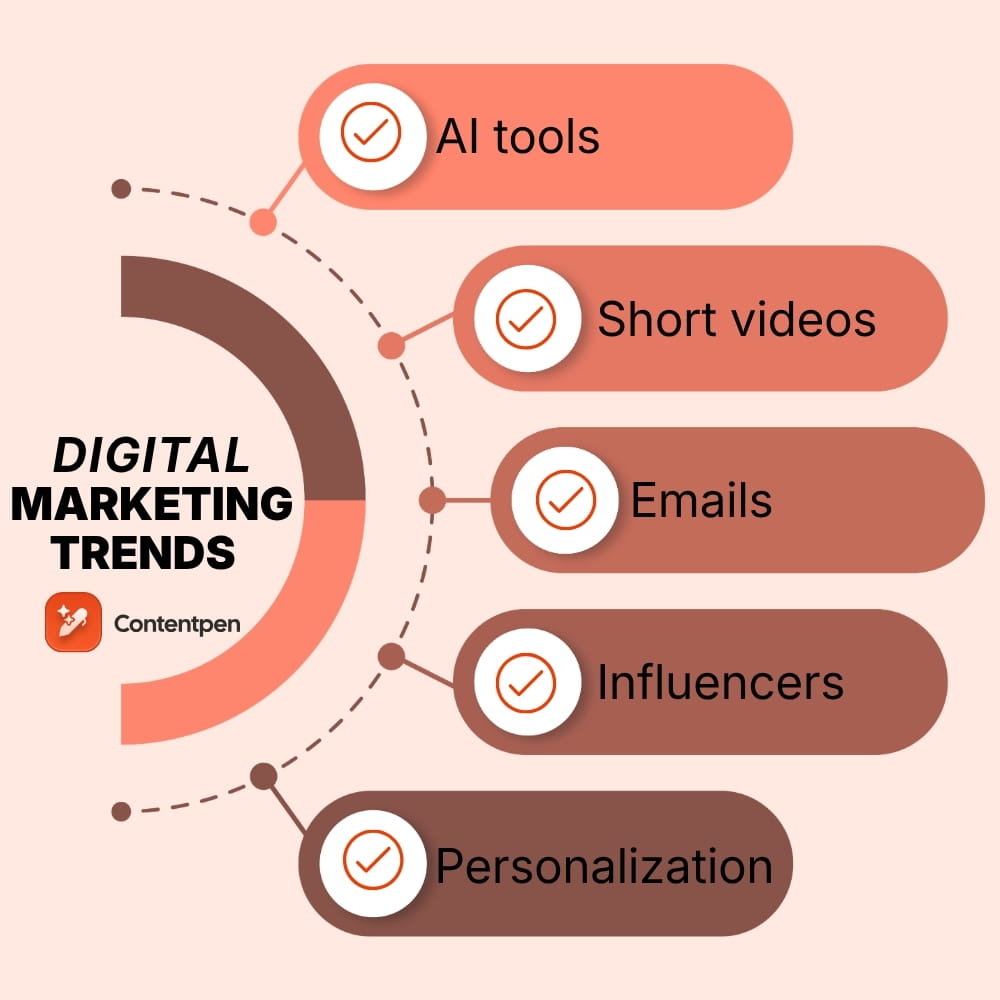
There has never been a better time to work in digital marketing. And it has never been this much harder to stand out.
That tension defines 2026. AI tools are everywhere. Publishing is faster and cheaper than ever. New channels keep emerging. Yet meaningful engagement, the kind that actually earns businesses revenue, feels harder to earn.
Believe it or not, AI is the solution AND the root cause of all these problems.
Since teams usually end up using the same tools, such as ChatGPT, Claude, and others, without expert judgement and positioning clarity, they all end up with similar results. This makes it harder for brands to set themselves apart from others in an otherwise saturated market.
This guide covers the digital marketing trends 2026 and what strategies work, with successful examples. You will also learn to apply those techniques in your daily content workflow to see meaningful results.
So, without further ado, let’s get started.
What is driving digital marketing results in 2026?
For years, early adopters won by getting to digital marketing tools first. Better ad targeting, smarter automation, more sophisticated analytics. Speed of adoption was the edge.
However, that era is now over. According to HubSpot’s 2026 State of Marketing Report, 86.4% of marketers now use AI tools, which means access to top-of-the-line technology is universal.
But the differentiating factor is now content strategy.
The brands pulling ahead today are combining AI’s execution speed with something it cannot replicate: a distinct point of view, real expertise, and the judgment to decide what is actually worth building.
With all the trends below, you’ll see that the real winning edge is how to balance the AI + Human aspect of digital marketing. That is where the gains lie.
1. Brand clarity is the most underleveraged growth lever in 2026
Most marketing budgets are being partially undermined by unclear positioning.
A buyer clicks through from an ad or a search result. They land on a homepage. Within a few seconds, they decide whether they are in the right place or not.
If the page cannot tell them what you do, who it is for, and why it is different from the others, then the channel that delivered the lead did its job, but the destination did not.
This problem existed way before the AI boom. But cheap, fast content production has made this gap significantly wider and more visible.
Brands without a unique angle or valuable insight are now publishing more content that sounds like everyone else’s content. Therefore, the problem is that content volume without clarity just creates more noise.
The brands cutting through in 2026 are consistent. Every channel sounds like the same personality. A reader could encounter a post without a logo and still recognize the brand. That does not happen by accident. It happens with careful brand positioning and strategy.
Jaguar is actually the clearest lesson here, but as a warning about what happens when you lose brand clarity, not a role model.
In November 2024, the brand unveiled a full rebrand under the tagline “Copy Nothing,” retiring its iconic leaping cat and launching a campaign with zero cars, just fashion models and abstract visuals. Don’t trust us? See for yourself.
The customer backlash was immediate. By April 2025, Jaguar had sold just 49 vehicles across Europe, down from 1,961 the same month the year before. A 97.5% decline.
Bottom line: When a brand cannot answer who it is for, what it stands for, and why someone should choose it, the damage is not theoretical; it’s theatrical.
How to test where your brand clarity actually stands
The fastest diagnostic is a five-second test. Show your main landing page to someone who does not know your business. Give them five seconds, then close it. Ask: What does this company sell, who is it for, and why might someone choose it?
Hesitation or wrong answers tell you more than any analytics dashboard ever could.
From there, the fix is usually simpler than it seems. Anchor every channel to one clear description of what you do and for whom. Test two or three different value statements in real ads or email subject lines. Let conversion data decide the winners, not internal preference.
2. Most teams are slowly adapting to GEO
The way people find answers is changing fast. Generative engine optimization, or GEO, is how marketers respond to that change.
AI-powered answer engines including ChatGPT, Perplexity, Google’s AI Overviews, and Gemini now resolve a growing share of searches without the user ever clicking through to a website.
If your content is not being cited inside those answers, you are invisible to a significant portion of your potential audience, regardless of where you rank in traditional results.
Where SEO was about ranking, GEO is about being cited. The goal shifts from appearing in a results list to being the source an AI pulls from when it answers a question your buyer is asking.
Nearly 30% of marketers have already reported a drop in organic search traffic as users turn to AI tools. But traffic arriving from AI citations tends to carry much higher purchase intent.
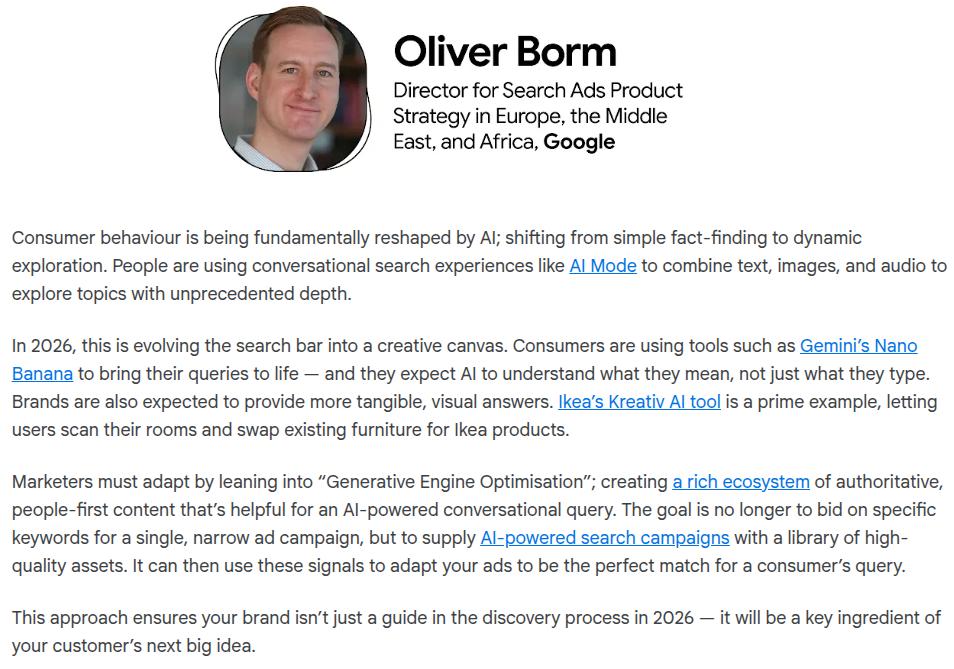
Oliver Borm from Google also said that “Marketers must adapt by leaning into Generative Engine Optimisation” when asked about digital marketing trends in 2026.
Putting GEO principles into practice
One way to validate GEO principles is to apply them consistently to your own content.
At Contentpen, our publishing workflow uses the same SEO and GEO scoring framework available to our customers. Every article is evaluated for citation readiness, topical coverage, structure, and search visibility before publication.

Get your content cited by AI, not just ranked on Google!
See your real-time GEO score as you write to make every piece citation-ready.
Try GEO Scoring →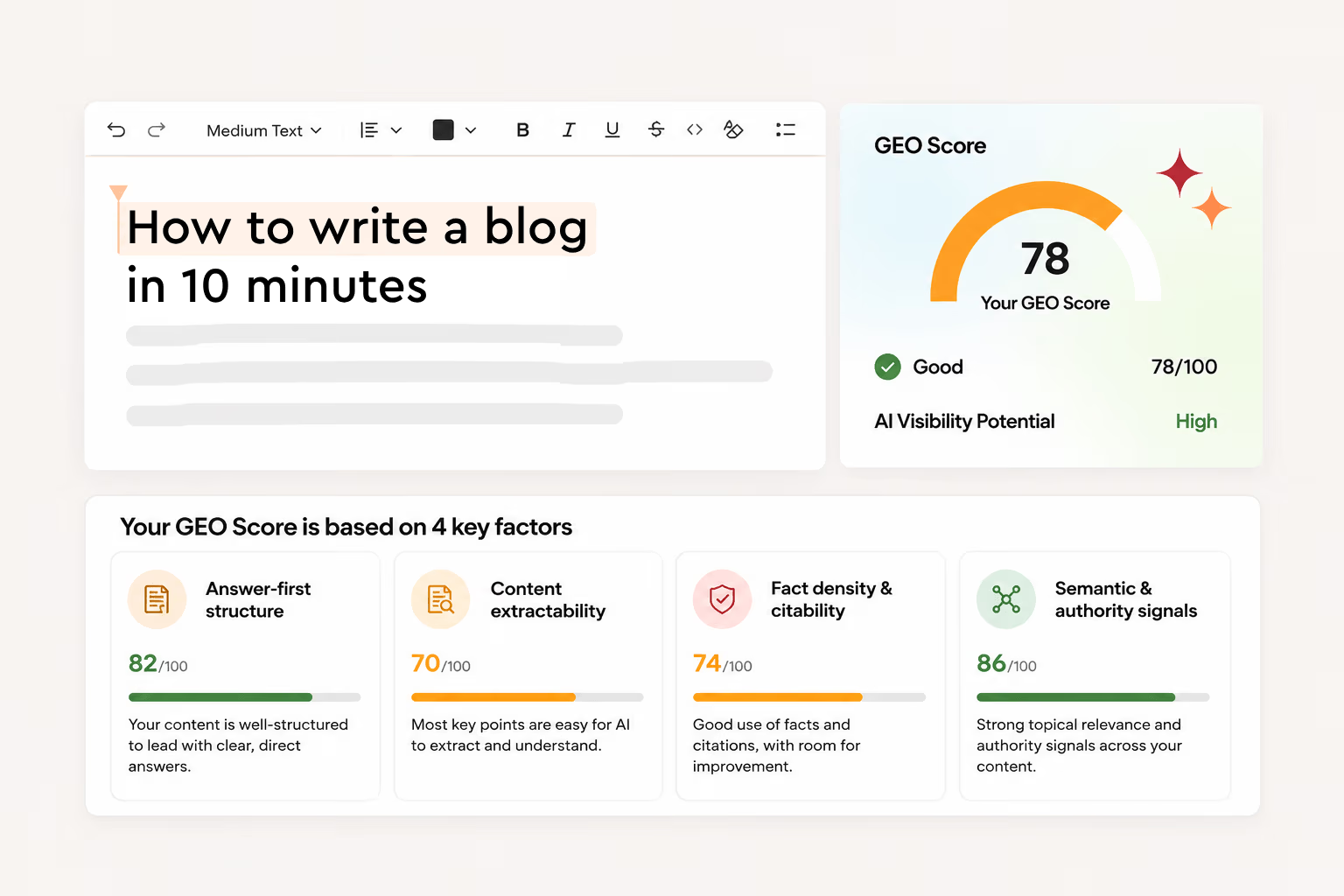
While no single factor drives growth on its own, consistently applying those principles contributed to our organic traffic increase from 8,000 to 30,000 in the last 3 months. That is a more than 275% increase in traffic!
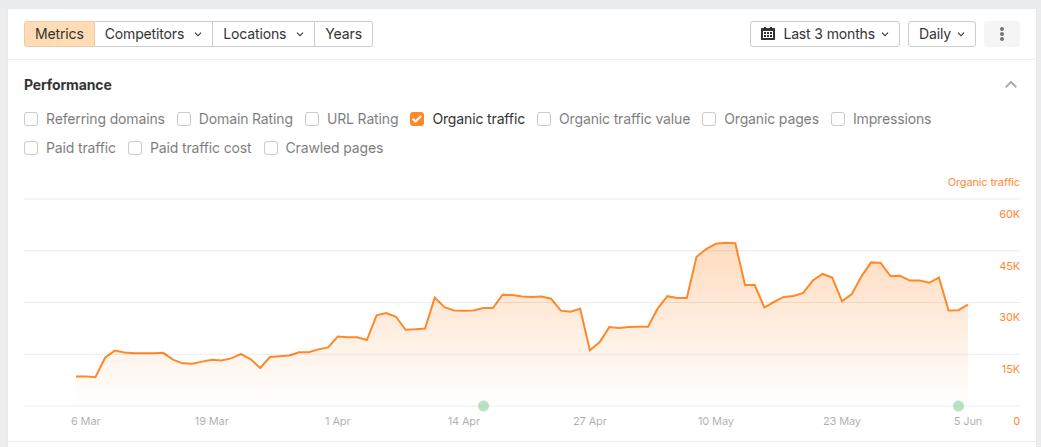
Bottom line: The investment in GEO is real talk in 2026 for small businesses, agencies, and brand owners looking to maximize their returns.
3. Short-form video leads on ROI, but the full picture is more interesting
Short-form video has been called the highest-ROI content format for a couple of years. In 2026, that has not changed.
Today, YouTube Shorts generates over 200 billion views daily. This opens up a lot of avenues for digital marketers looking to expand their channels beyond traditional SEO.
But the more interesting development in 2026 is what is happening to long-form video. Long-form video content jumped from 14% to 25% in ROI rankings year over year. That is the biggest gain of any format.
How do short- and long-form content work together?
Short- and long-form content types are not competing against each other. In fact, they both work in harmony to bring great results for businesses.
Also read: Types of digital marketing in 2026.
Short clips work best as the on-ramp. A quick tip, a founder take, a behind-the-scenes moment introduces your brand to people who have never searched for you. When those people want more, they go to the long video, the detailed blog, or join your webinar.
| Format | What it does best | Where it’s used most | What to measure |
| Short-form | Sparks discovery | TikTok, YouTube Shorts | Watch time, follows |
| Long-form | Builds trust and expertise | YouTube, podcasts, blogs | Completion rate, time on page |
| Keeps attention and drives action | Newsletters, sequences | Click-through, replies, revenue |
On the short-form side, lo-fi and brand-authentic video types continue to outperform polished production-quality videos, particularly on TikTok.
Ryanair is a good example of how to leverage short videos for digital marketing.
A budget airline is not an obvious candidate for social media success, yet its TikTok account has grown past 2.8 million followers using nothing but lo-fi green-screen skits, self-deprecating humor, and sarcastic captions like “What passengers expect for €16.99.”
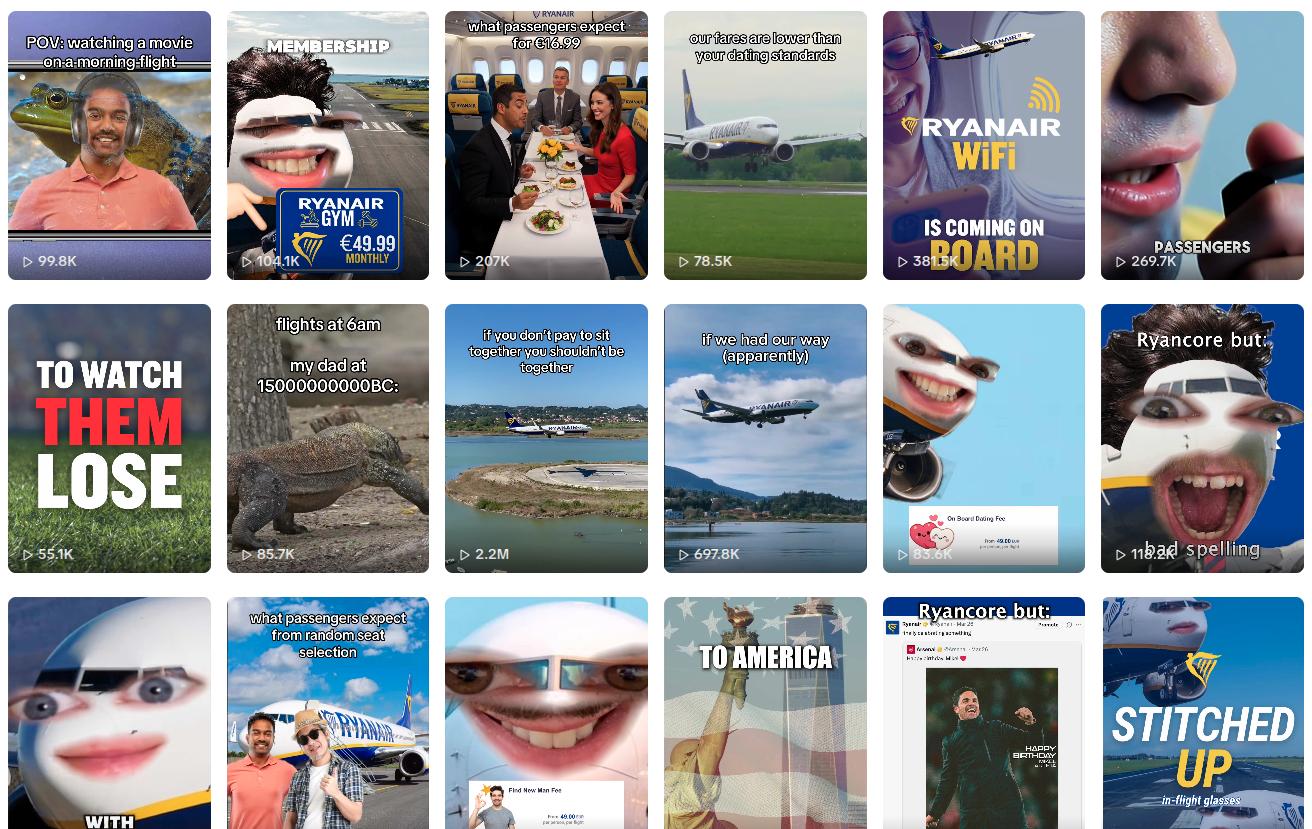
There is no production budget to speak of. The content works because it sounds exactly like a real person who works there, not a brand manager who approved three rounds of legal review. That brand authenticity is what propels Ryanair to be so popular among people right now.
4. Social commerce has become a large portion of e-commerce
The idea of someone browsing a social feed, seeing a product, and buying it in the same session used to sound like a prediction. In 2026, it is routine.
US TikTok Shops grew from 4,450 in 2023 to 475,000 in 2026 and saw the highest conversion rate of any social commerce platform.
On the other hand, Instagram, already the most widely used platform among marketers, has evolved its shopping features. You can now have Reels with product tags, which can generate meaningfully higher engagement.
The broader implication matters for content strategy across the board. When any piece of content can also be a purchase moment, the line between brand-building and direct response dissolves.
This shift is also reaching B2B digital marketing. A notable share of B2B marketers now count social shopping tools among their top-performing channels, something that would have seemed unlikely just a few years ago.
5. Influencer marketing is rising in 2026
The influencer marketing industry went through a long period of correction. Brands chased follower counts as a proxy for reach, and reach as a proxy for results.
That model has been dismantled by actual performance data.
According to MARKETING-INTERACTIVE, 60% of marketers plan to increase influencer investment this year. But the allocation is shifting.
Mid-tier creators with followings between 100,000 and 499,000 are delivering the strongest results. When brands were asked what criteria they actually use to choose partners, follower count ranked fourth. Content quality, engagement rate, and authenticity all ranked higher.
That ranking tells you something important. A creator with a smaller, genuinely engaged audience on a specific subject will almost always outperform a celebrity whose audience is broad and passive.
B2B influencer marketing is gaining traction too. LinkedIn creator partnerships are now used by 20.78% of B2B marketers. A trusted voice in a specific industry carries more weight than a generic brand post, regardless of sector.
Brands like Ahrefs have seen strong results from building creator presence from within, encouraging employees to post with authority on their areas of expertise. Louise L., content marketer at Ahrefs, posted an Ahrefs use cases showdown on her LinkedIn.
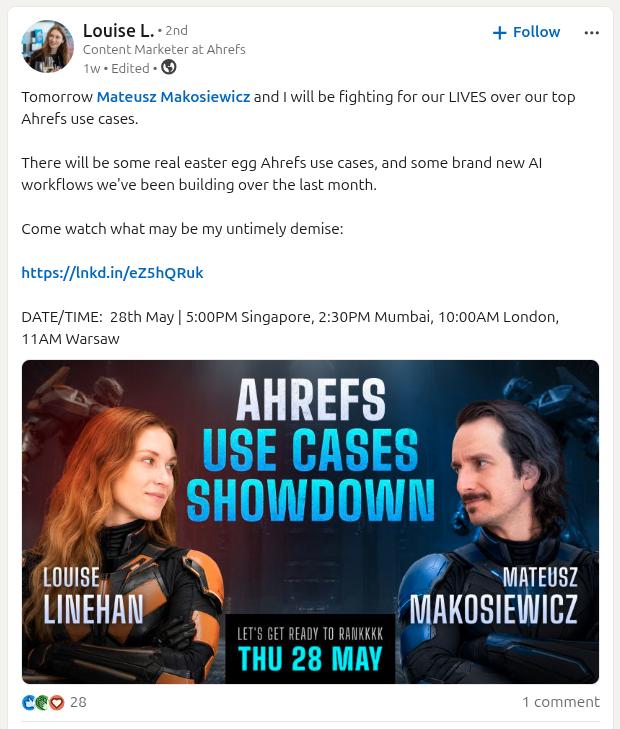
The credibility benefit is similar to that of a trusted external voice, with naturally tighter messaging alignment and brand promotion.
6. Email is still the highest-ROI digital marketing channel
Email remains one of the highest-ROI channels in digital marketing, and AI has made it more capable.
The core reason email holds up is that it lives in owned territory. Social algorithms change, search rankings shift, platforms rise and fall, but an email list is a direct relationship with an audience that is unaffected by these quickly changing circumstances.
In 2026, 81% of B2B marketers rely on emails for lead generation. Because you get a staggering $42 return for every dollar you spend in email marketing, the ROI is undeniably high.
The shift in 2026 is in how email programs are built. Subject line testing, email scheduling, and behavioral triggers are all controlled by AI platforms like Customer.io or SalesHandy, leaving a lot of time and resources for digital marketers to work on new strategies.
The gap is not between brands using email and those not using it. It is between brands treating email as a relationship channel and those still blasting the same message to their full list and wondering why engagement is flat.
Morning Brew is the benchmark in email marketing. What started as a dorm-room newsletter in 2015 grew to over 4 million subscribers and now drives the majority of revenue for a media company worth over $70 million.
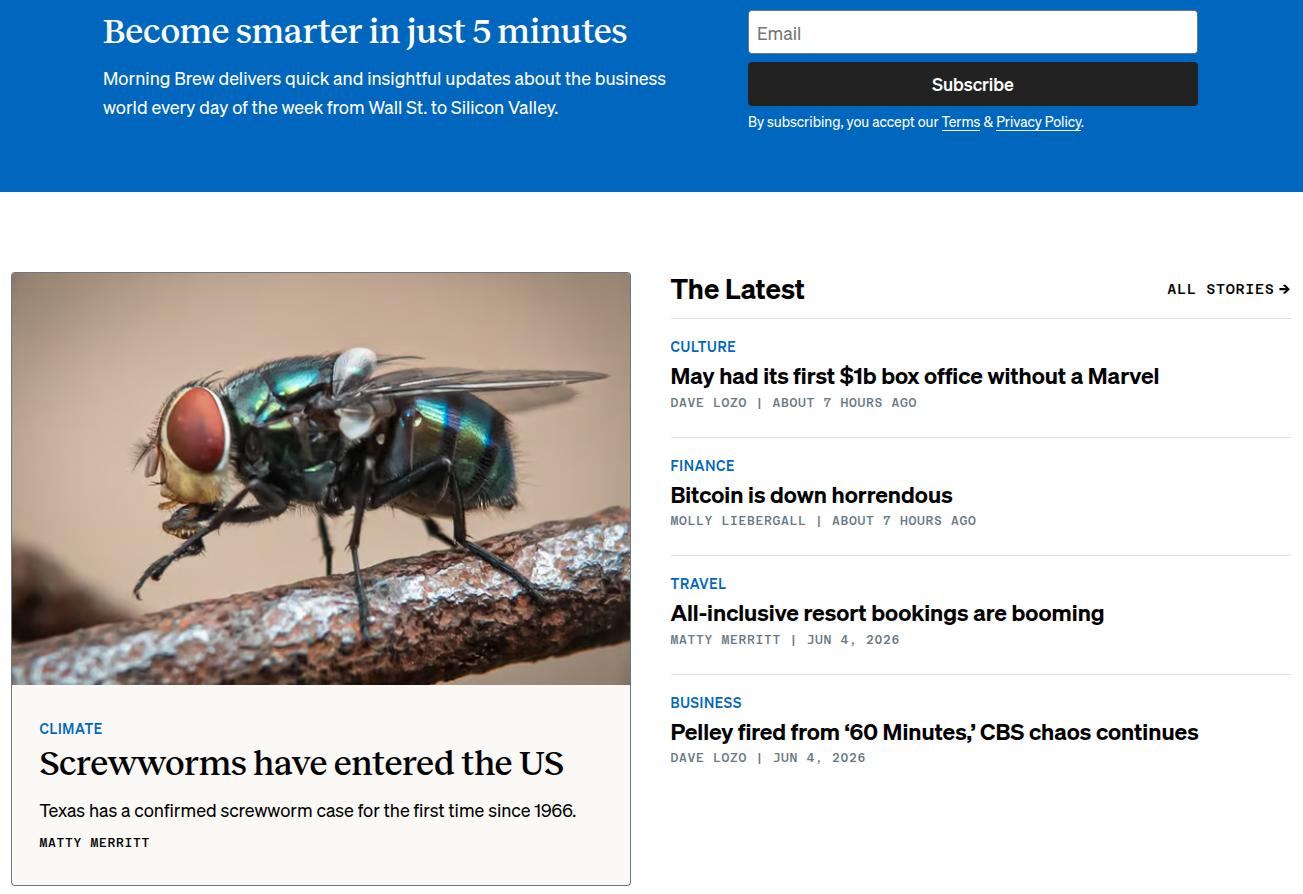
The formula has never been complicated. A consistent voice, a predictable format readers look forward to, and content that feels like it was written for a person rather than broadcast to a list.
Their unique open rate sits at 42% in 2026, roughly double the industry average. The lesson is not about Morning Brew’s scale. It is about creating emails people actually want to read, and that provide you with better outcomes than all the other channels.
7. Personalization has become the expectation, not the differentiator
Customers in 2026 expect experiences that feel relevant to them. When they do not get that, the brand damage is real.
AI has made meaningful personalization achievable at scale. Users get content recommendations based on behavior, email sequences adapt based on engagement signals, and ad targeting models intent before the user explicitly shows it.
The practical challenge for most teams is not the capability of providing personalized experiences. It is data quality and the discipline to actually use behavioral signals rather than demographic proxies.
As AI agents increasingly mediate discovery and purchase decisions on behalf of users, personalization needs to extend beyond human readers.
Brands must consider how their content appears to AI systems making recommendations. This is where GEO and personalization intersect, and where digital marketing strategy in 2026 is getting genuinely complex.
8. Paid advertising is being reorganized by AI and first-party data
The mechanics of paid advertising or PPC marketing have changed significantly over the past two years.
Two forces are driving it simultaneously. First, AI-powered campaign systems from Google and Meta automate much of the optimization work. Second, third-party data continues to erode as privacy regulations and platform policies tighten.
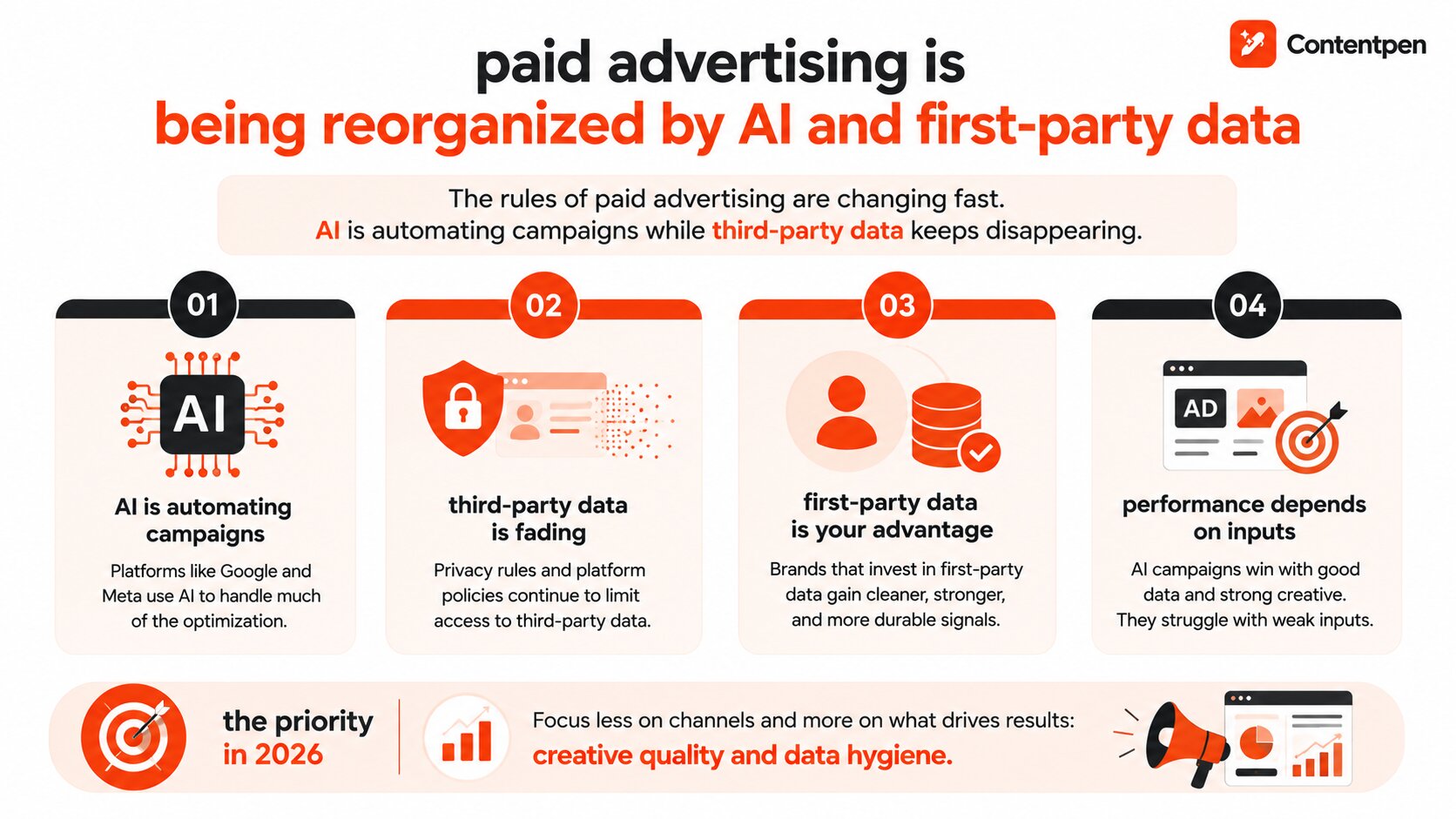
For brands that invested in first-party data, this environment is an advantage. Their signals are cleaner and more durable.
For brands that did not, the adjustment is harder. AI campaigns can optimize well when fed good data and strong creative. However, they perform poorly when the inputs are weak.
The strategic priority for paid teams in 2026 is less about channel selection and more about creative quality and data hygiene.
Retail media is also worth understanding for brands selling through retailers. With over 200 retail media networks now operating globally, there is significantly more inventory available within high-intent shopping environments than there was two years ago.
Retail media delivers higher engagement than standard digital ads because the context is inherently commercial. The user is already in buying mode, and it is much easier for them to convert. To capitalize on this intent, brands need robust retail business intelligence to track conversions and optimize ad spend across retail media networks.
9. B2B marketing is borrowing ideas from B2C, and it is working
The traditional distinction between B2B and B2C marketing has been eroding for years. In 2026, it is largely gone.
B2B buyers are people. They respond to the same trust signals, entertainment, and peer recommendations as any consumer.
The fact that a purchase involves a business context does not make someone immune to content that is genuinely interesting or to a brand with a clear personality.
LinkedIn video growing 36% year over year is one visible signal. B2B marketers adapting their content to be genuinely engaging, not just informative, are finding that their audiences respond the same way B2C audiences do.
The underlying mechanics of B2B remain different: longer sales cycles, more stakeholders, content that needs to satisfy both emotional and rational criteria.
But the idea that B2B brands should market in a dry, functional register because their audience is professional has been disproved too many times to keep repeating.
An example would be Exit Five, Dave Gerhardt’s B2B marketing community. It grew from a solo side project to 40,000 subscribers and is on track to hit $3 million in annual revenue.
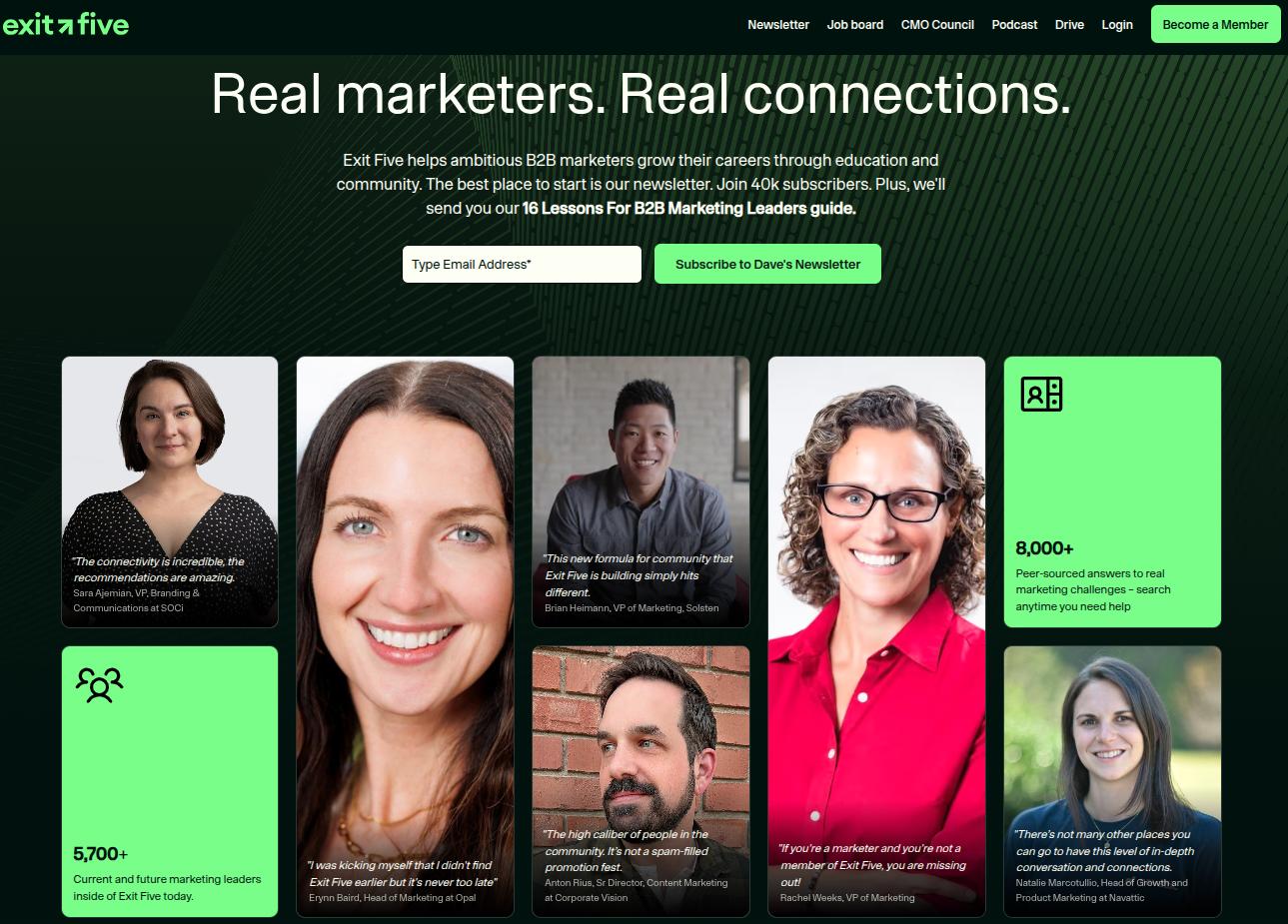
No paid acquisition. The entire growth engine is content on LinkedIn, a podcast, and word of mouth from members who found genuine value. The community itself is the moat. Competitors cannot replicate it with a budget, because what makes it valuable is the specific people inside it.
10. Fast feedback loops matter more than perfect plans
The marketing teams that consistently outperform others are not the ones with the most sophisticated annual plans. They are the ones running the tightest iteration cycles.
The pattern looks similar across high-performing teams. Launch something real into the market without over-polishing it first. Gather actual signals from performance analytics and customer responses. Fix what is not working quickly, without waiting for a scheduled review.
Over a quarter, that compounding of small improvements consistently beats one elaborate strategy that never adapts.
This requires two things most teams underinvest in. First, shared real-time dashboards that make performance visible to everyone who needs to act on it. Second, clear ownership over who can make which changes without going through layers of approval.
Today, digital marketers are prioritizing lead quality, conversion rate, ROI, and customer acquisition cost (CAC). The move away from reach and impressions as primary performance metrics tells you everything you need to know about this digital marketing trend.
Faster feedback loops require measuring things directly connected to revenue, not things that are merely easy to count.
11. Inclusion and sustainability have become important performance variables
Inclusion and sustainability used to feel like an obligation separate from strategy. The data has changed that framing.
Approximately 80% of employees want to work for a company that values diversity, equity, and inclusion (CNBC). Brands treating inclusion as a practice rather than a campaign are growing faster because they are reaching and retaining broader audiences and workforces.
The same logic applies to sustainability. The brands that have built real credibility here are not the ones with the most aspirational mission statements. They are the ones who set specific, measurable commitments and report progress honestly.
An example would be IKEA. Rather than publishing vague environmental values, the brand has tied specific numbers to specific timelines: a published Net Zero Transition Plan committing to at least a 50% reduction in absolute greenhouse gas emissions by 2030.
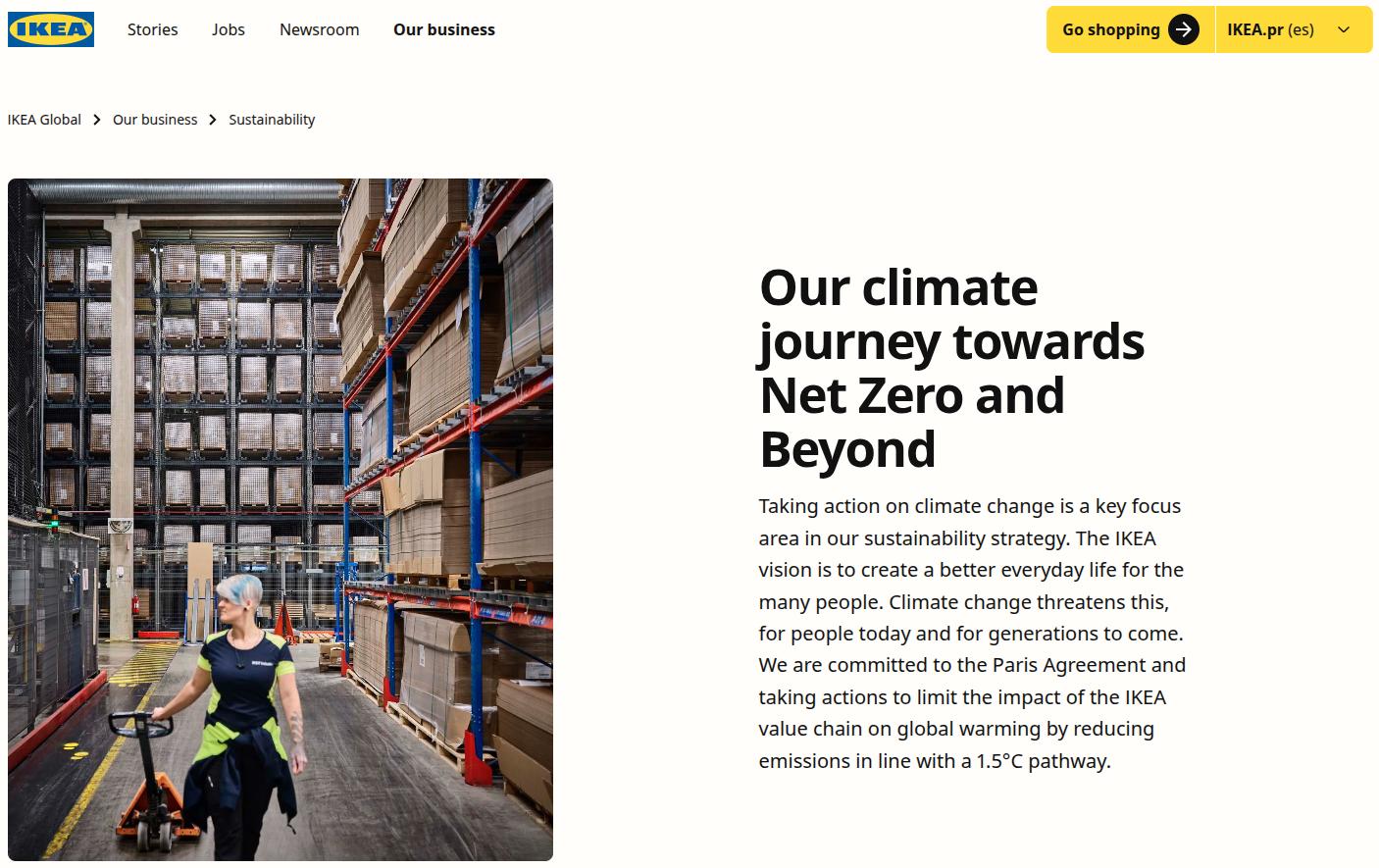
The result? Revenue grew over 30% against a 2016 baseline while their climate footprint decreased 24.3% in the same period. That combination is what makes the sustainability positioning credible rather than decorative.
12. Agentic AI is the trend to understand now
Most digital marketing trends in this guide are already happening at scale. This one is early, but the trajectory is clear enough that now is the right time to get ahead of it.
Agentic AI refers to AI systems that do not just answer questions but also perform other actions for you. The agents browse options, compare alternatives, and in some cases complete purchases on behalf of the user.
For marketers, this creates a new layer of discoverability to think about.
Your brand needs to be findable and interpretable not only by human searchers, but also by AI systems acting on their behalf. That means that you need to make your content structured, with clear FAQs, well-organized descriptions, and metadata.
This is where you can get help from Contentpen. Our SEO and GEO scoring ensures that every piece of content you post is AI-friendly, ready to get AI-cited and picked.
The AI writer also provides you with AI visibility insights to help you understand which prompts are picking you vs. your competitors.
Find your brand in AI search

Track AI citations, share of voice, and brand sentiment
Find the top sources driving citations
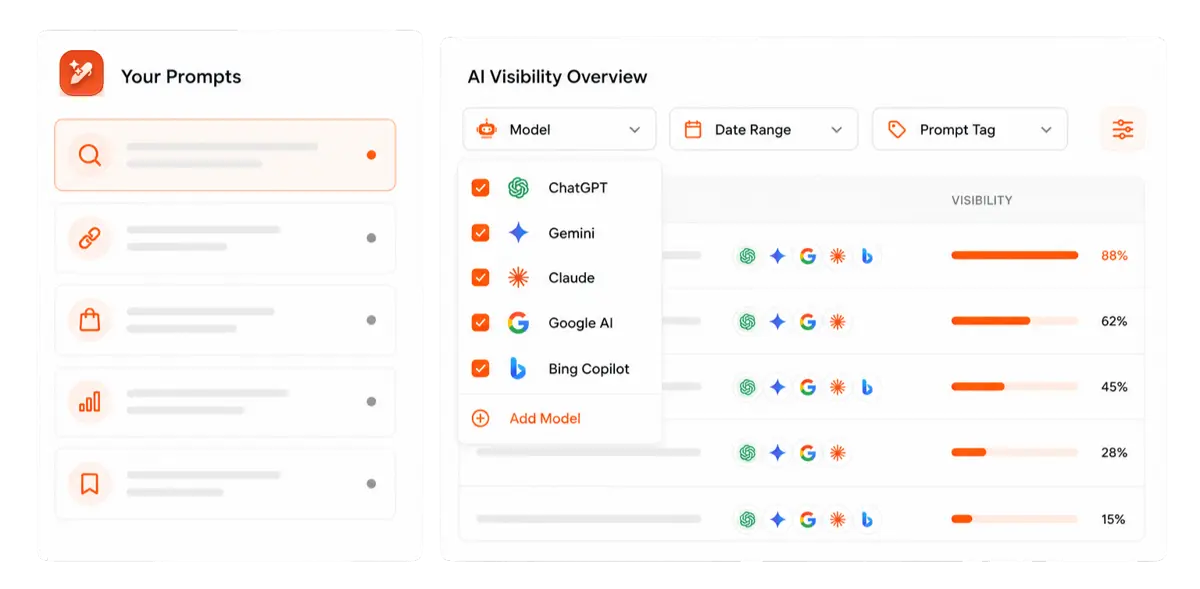
The brands that will benefit most from this shift are the ones already doing GEO well. That means creating structured, authoritative, and machine-readable content that serves both human readers and AI agents well.
Starting that work now builds an advantage that compounds as agentic AI becomes a larger part of how people navigate purchase decisions.
Also read: How to start digital marketing in 2026.
Build a successful digital marketing strategy for 2026
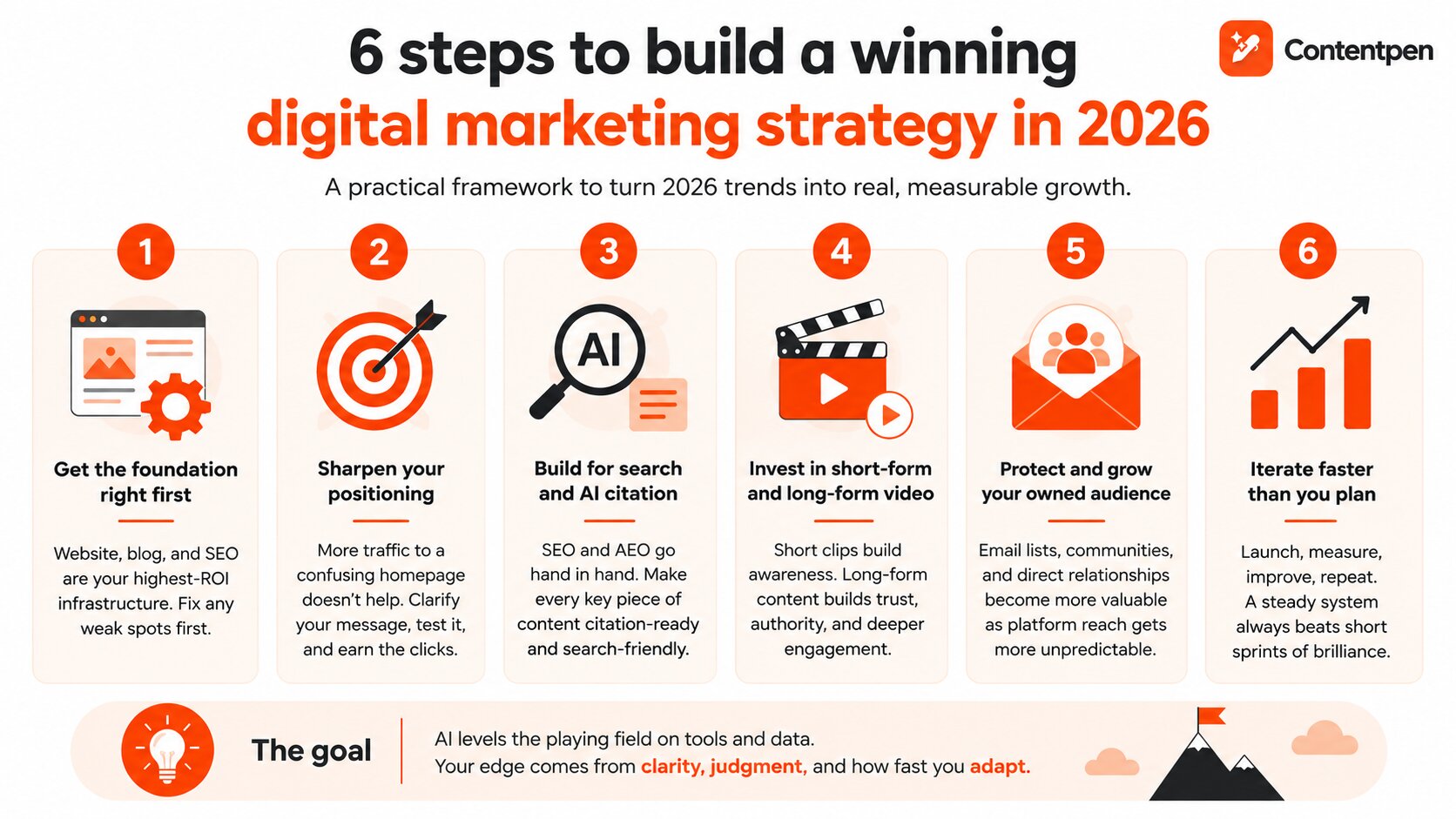
The bottom line across every trend here is the same. AI has made accessibility easier to tools, technologies, and data. This means the ceiling is now determined by human judgment, clarity, and how fast you learn to adapt to AI tools.
Here’s a practical 6-step framework for putting those findings into action:
- Get the foundation right first: Website, blog, and SEO remain the highest-ROI infrastructure for most brands. If that foundation is shaky, fix it before investing heavily in anything else.
- Sharpen your positioning before amplifying your reach: More traffic to a confusing homepage does not help. Run the five-second test, fix the message, perform A/B testing, and make sure the destination earns the clicks your channels deliver.
- Build for both traditional search and AI citation: SEO and AEO work hand-in-hand, and so should your content. Every important piece of content should be AI citation-ready and perform well in SERPs.
- Invest in short-form video, but don’t miss out on long videos: Short clips are good to increase brand awareness, but keep on investing in long-form content alongside.
- Protect and grow your owned audience: Email lists, communities, and direct subscriber relationships become more valuable every year as platform reach becomes less predictable.
- Iterate faster than you plan: Launch real things, measure what matters, fix what is not working, and repeat. Remember, a steady system beats your competitors more than short sprints of brilliance.
If you’ve followed all these digital marketing trends, 2026 edition, and are willing to give our 6-step practical framework a go, then you are surely on the right track to building a successful business.
Final thoughts
Digital marketing trends in 2026 are not about any single channel or technology. It is about what happens when the tools become universal and execution becomes easy.
The advantage shifts entirely to teams with better judgment, clearer positioning, and the discipline to learn fast.
GEO or AI search optimization is becoming standard practice, short-form video dominates, social commerce is mainstream, and email audiences are more valuable than ever.
If you’ve found yourself stuck on where to start for a successful content marketing strategy, try Contentpen. The tool works with your brand voice, automates internal linking, and provides web analytics that connect content activity to real outcomes.
Write content that’s built to rank, not just read
Create search-optimized blogs aligned with SEO and GEO signals, so your content performs well across search and AI-driven discovery.
Try SEO Blogging FREE →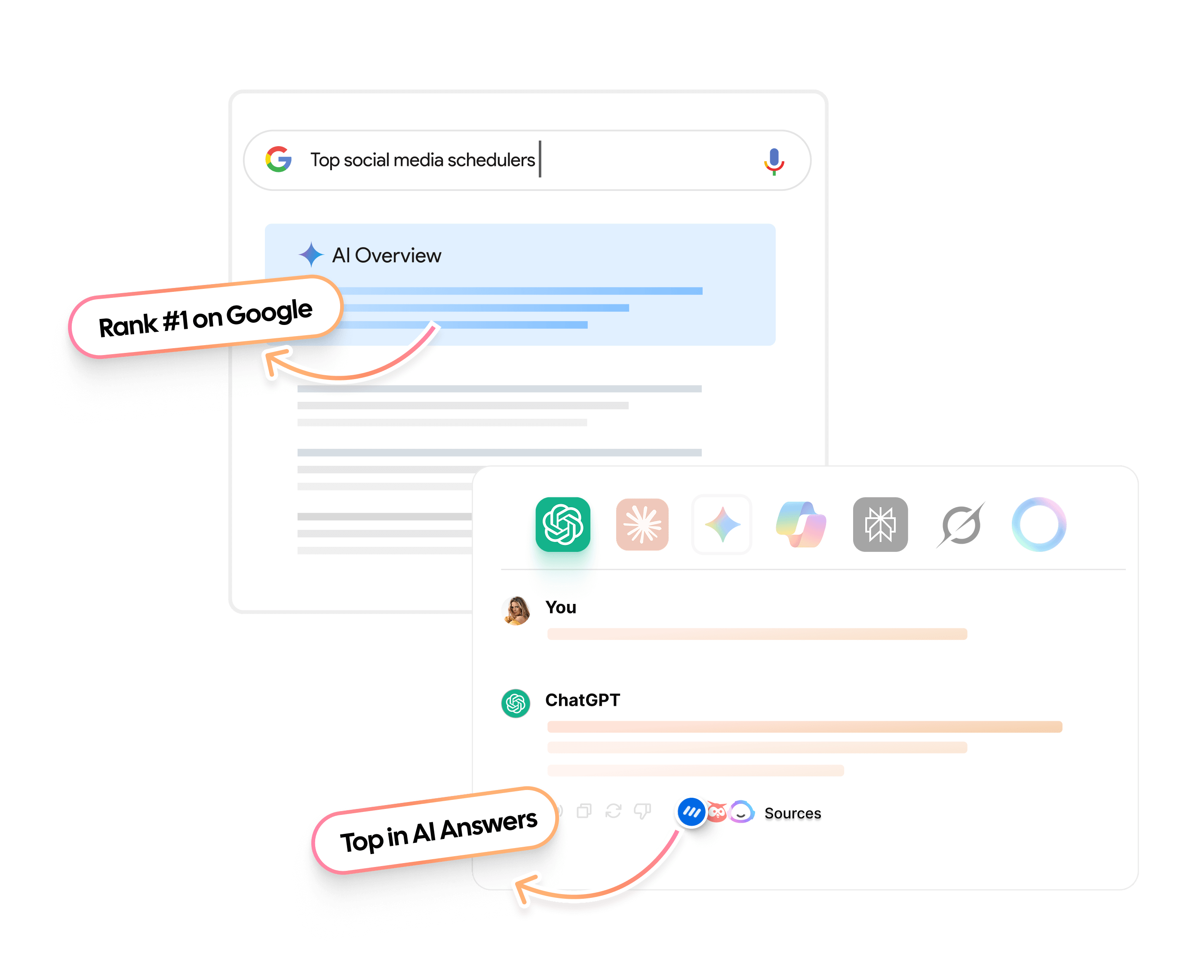
Frequently asked questions
The most consequential shift is the rise of GEO. It is the practice of optimizing content to be cited by AI answer engines like ChatGPT, Perplexity, Google’s AI Overviews, and other AI models. Alongside that, businesses should look to invest in creating short-form videos.
Yes. Email consistently provides higher returns (up to a 42:1 ratio of returns in some cases). Every dollar spent on emails provides 42 dollars of return, which is why it is still an effective digital marketing channel for 2026.
The most significant change is not what AI can do. It is what becomes expected because AI can do it. Production speed is no longer a differentiator. The teams getting real value from AI bring stronger inputs based on better brand context, sharper editorial judgment, and clearer strategic direction.
Yes. As a brand, look to invest heavily in creative participation, as it has shown great results with Gen-Z audiences. Also, the rise of nostalgic remix means maximizing on selling feelings, not products, just like Nintendo’s commercial, in which Paul Rudd reprised his role from the 90s.
By being sharper, not louder. A clear brand point of view, high-quality content built around genuine expertise, and a strong owned audience can consistently outperform larger but vaguer competitors.