Category: Latest blogs

Explore the latest blogs on Contentpen.ai, featuring new insights, tips, and trends across writing, SEO, marketing, and more.

  • Gemini vs ChatGPT: The ultimate comparison for blog writers

    Gemini vs ChatGPT: The ultimate comparison for blog writers

    Google’s Gemini and OpenAI’s ChatGPT are two of the most popular AI tools. But when it comes to choosing between Gemini vs ChatGPT, the choice is not easy for content creators, bloggers, and digital marketers. 

    Both platforms offer advanced features to help you create engaging content, but they approach the task with varying capabilities. ChatGPT has built a massive user base through its conversational fluency and creative output, while Gemini is backed by Google’s vast search and technical infrastructure.

    In this article, we’ll cut through the noise to examine what really matters for writers. We will see which tool produces better content, conducts more effective research, and helps you create blog posts that engage readers and rank well in search results. 

    General overview of ChatGPT’s capabilities
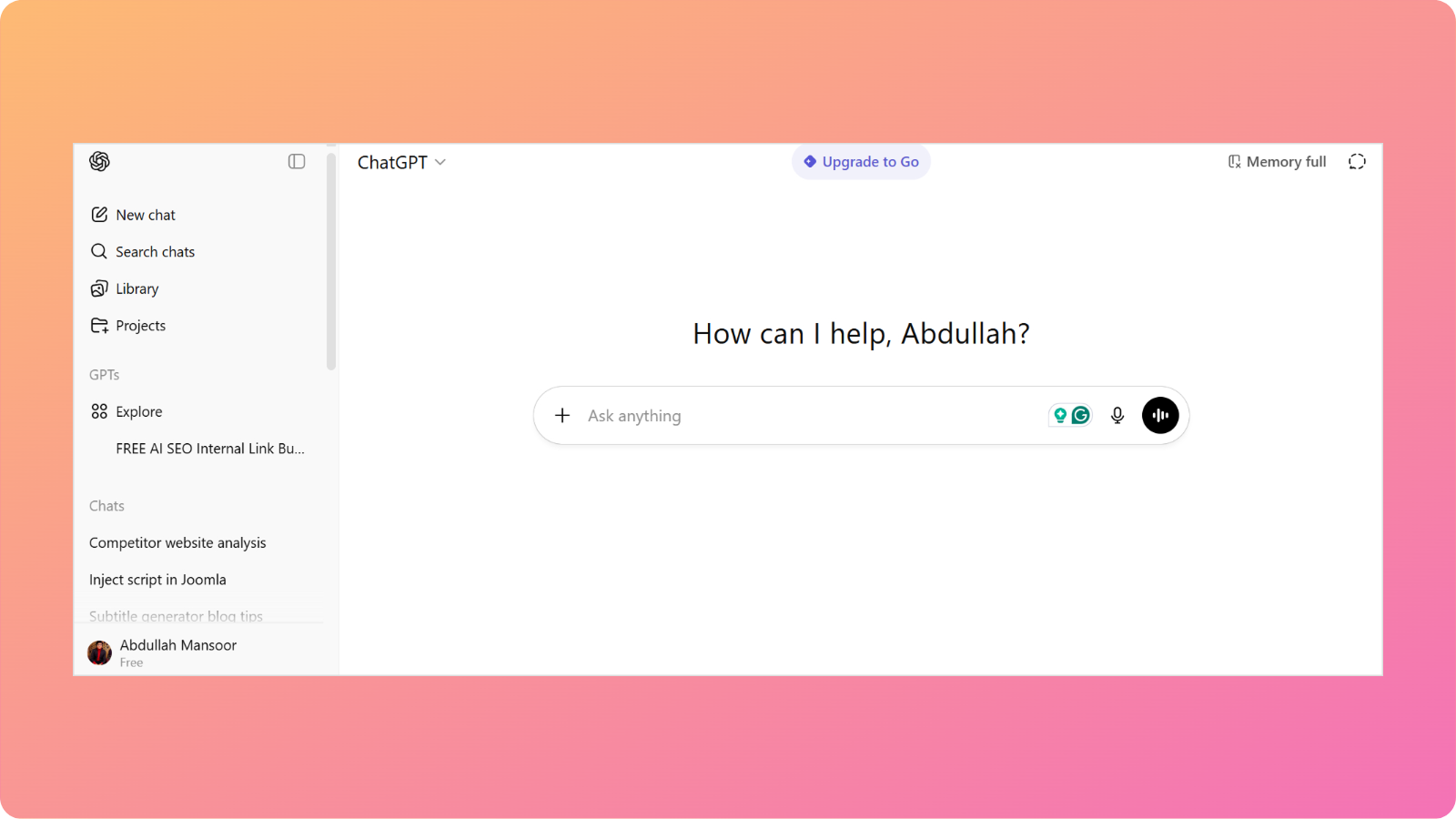
    ChatGPT interface

    ChatGPT has established itself as the leading conversational AI because it feels remarkably human in its interactions. 

    Built on OpenAI’s GPT architecture, it excels at understanding context and maintaining coherent multi-turn conversations. It also adapts its tone to match your needs, whether you’re drafting a technical blog post or a casual article.

    The platform’s writing capabilities extend far beyond simple text generation. ChatGPT has strong creative abilities, crafting compelling narratives, generating metaphors, and varying sentence structure to keep readers engaged. 

    It handles everything from technical documentation to storytelling and media generation with impressive versatility, making it a must-have tool for content creators.

    One of ChatGPT’s standout features is its ability to refine and iterate. 

    You can ask it to make content more concise, restructure arguments, or adjust the tone to align with your brand voice.

    However, ChatGPT’s knowledge is limited by its training data cutoff, though the addition of web search capabilities in newer versions helps bridge this gap. 

    Content creators can make the best use of ChatGPT when they can provide current information or verify facts independently, rather than relying solely on its baseline knowledge.

    General overview of Gemini’s capabilities

    Gemini interface

    Gemini arrives on the scene with the full weight of Google’s technological ecosystem behind it. 

    Unlike ChatGPT, which was developed primarily as a conversational AI, Gemini was designed from the ground up as a multimodal model, meaning it processes and understands text, images, and other data types simultaneously rather than treating them as separate inputs.

    The most significant advantage Gemini brings to content creation is its quick integration with Google’s search infrastructure. 

    When you ask Gemini to research a topic, it doesn’t rely solely on training data, but it actively searches the web. It can cite specific sources, providing a level of factual grounding that’s particularly valuable for blog writers who need accurate, up-to-date information.

    Gemini’s approach to writing tends toward precision and structure. The tool demonstrates strong analytical capabilities, breaking down complex topics into logical frameworks and organizing information hierarchically. 

    Content creators working on informative blog posts, tutorials, or research-heavy articles will find this systematic approach a solid foundation to build on.

    That said, some users find Gemini’s responses can occasionally feel more clinical or algorithmic than ChatGPT’s conversational flow. 

    Comparison Table: Gemini vs ChatGPT at a glance

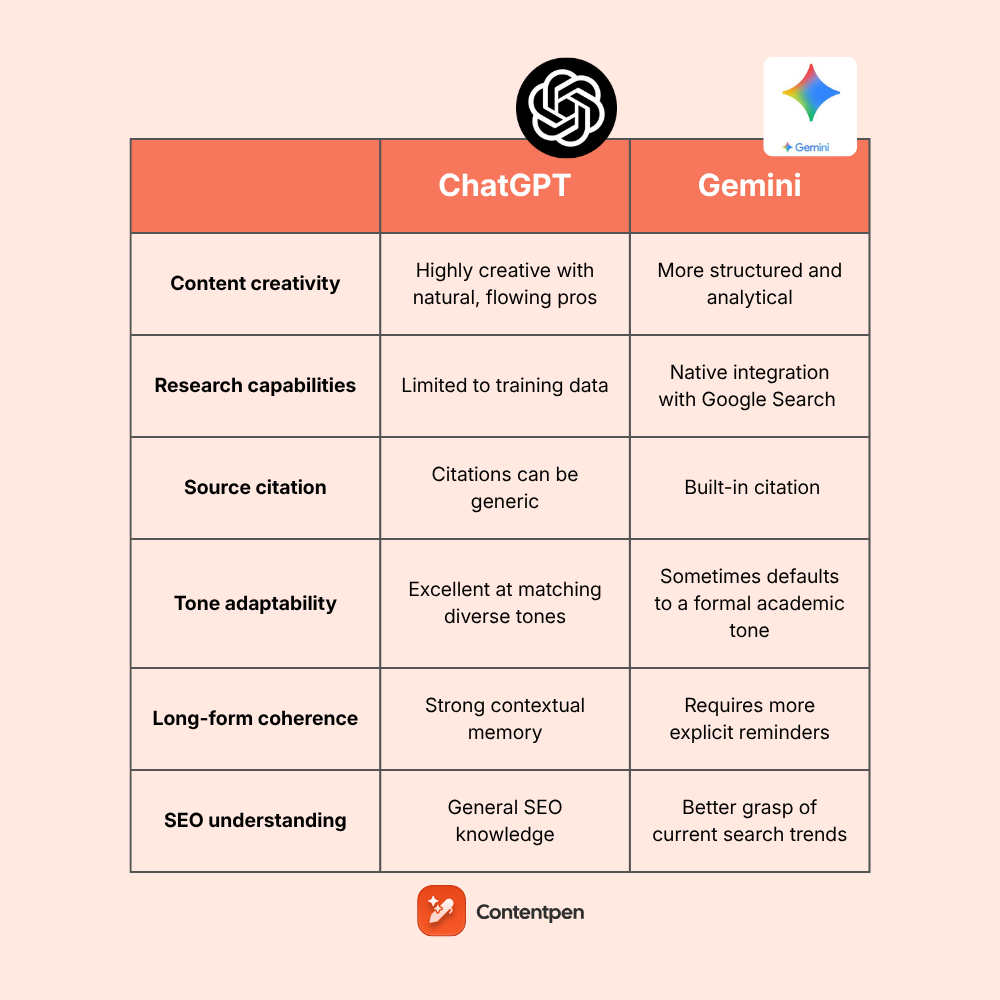
    The following table summarizes the key differences between ChatGPT and Gemini:

    FeatureChatGPTGemini
    Content creativityHighly creative with natural, flowing proseMore structured and analytical in approach
    Research capabilitiesLimited to training dataNative integration with Google Search for real-time information
    Source citationCitations can be genericBuilt-in citation with specific source links
    Tone adaptabilityExcellent at matching diverse tones and stylesGood, but sometimes defaults to a formal academic tone
    Long-form coherenceStrong contextual memory across conversationsSolid but may require more explicit reminders
    SEO understandingGeneral SEO knowledgeBetter grasp of current search trends
    Content depthExcels at explanatory depth with examplesStrong at comprehensive, fact-based depth

    Let’s compare Gemini vs ChatGPT in detail in terms of their core capabilities:

    Gemini vs ChatGPT in research

    Research capabilities are key to creating high-quality content, code, and other projects. This is where the differences between these AI tools become most apparent. 

    ChatGPT relies primarily on its training data, which means its research draws on a vast but static knowledge base. When you ask it to research a topic, it synthesizes information it already “knows” rather than seeking out new sources, except when the web search is enabled. 

    Gemini takes a fundamentally different approach. Its integration with Google Search means it actively retrieves current information from the web, providing citations and links to source material. 

    Verdict

    If we’re strictly talking about blog posts on emerging technologies, recent industry developments, or any time-sensitive topic, Gemini’s research capabilities are far better than ChatGPT’s. 

    Many professional writers find themselves using both Gemini for initial research and fact-checking, and ChatGPT for actually drafting the content.

    Also read: Copilot vs Gemini for content creators.

    Gemini vs ChatGPT in reasoning

    Reasoning ability determines how well an AI can construct logical arguments, identify flaws in reasoning, and build coherent narratives throughout long blog posts.

    This makes it excellent for opinion pieces, persuasive blog posts, and content that requires building a case through accumulated evidence and examples.

    Gemini demonstrates more methodical, step-by-step reasoning, reflecting its Google origins. When presented with complex problems, it tends to break them down into parts, address each systematically, and then synthesize conclusions. 

    This analytical approach works beautifully for how-to guides, technical tutorials, and educational content.

    Verdict

    ChatGPT often feels more natural when you’re exploring ideas and need the AI to make intuitive recommendations. Meanwhile, Gemini excels when you need structured analysis and want the reasoning process to be transparent and verifiable.

    Also read: Copilot vs ChatGPT comparison.

    Gemini vs ChatGPT in content writing

    Content writing involves everything from blog posts to social media captions, and both AI tools bring distinct writing personalities to the task. 

    ChatGPT’s writing style tends toward fluency and readability. Its sentences flow naturally, transitions feel organic, and the overall reading experience resembles human-written content.

    The tool is effective for narrative blog posts, storytelling, and content where engagement depends on maintaining a conversational connection with readers.

    Gemini’s writing is more uniform in quality but less personal by default. Its content tends to be well-structured and information-dense, prioritizing clarity and completeness over stylistic flair.

    For certain types of blog content, particularly informational articles, guides, and reference material, this straightforward approach serves readers well.

    Also read: Perplexity vs ChatGPT.

    Verdict

    ChatGPT typically requires fewer prompts to capture and maintain a brand voice across multiple pieces. Gemini can certainly adapt to style requirements, but you may need to be more explicit and provide examples of the tone you want to achieve repeatedly.
    Solving content overload - Contentpen.ai

    Gemini vs ChatGPT in media generation

    Visuals are the heart of any type of content. These include compelling images or engaging short videos, depending on the type and nature of your work.

    ChatGPT integrates with DALL-E, OpenAI’s image-generation model, allowing you to create custom illustrations, blog header images, and other visual content directly within the same interface.

    Gemini also offers the newly introduced Nano Banana Pro, which can thoroughly analyze your prompts and create high-quality visuals. 

    Verdict

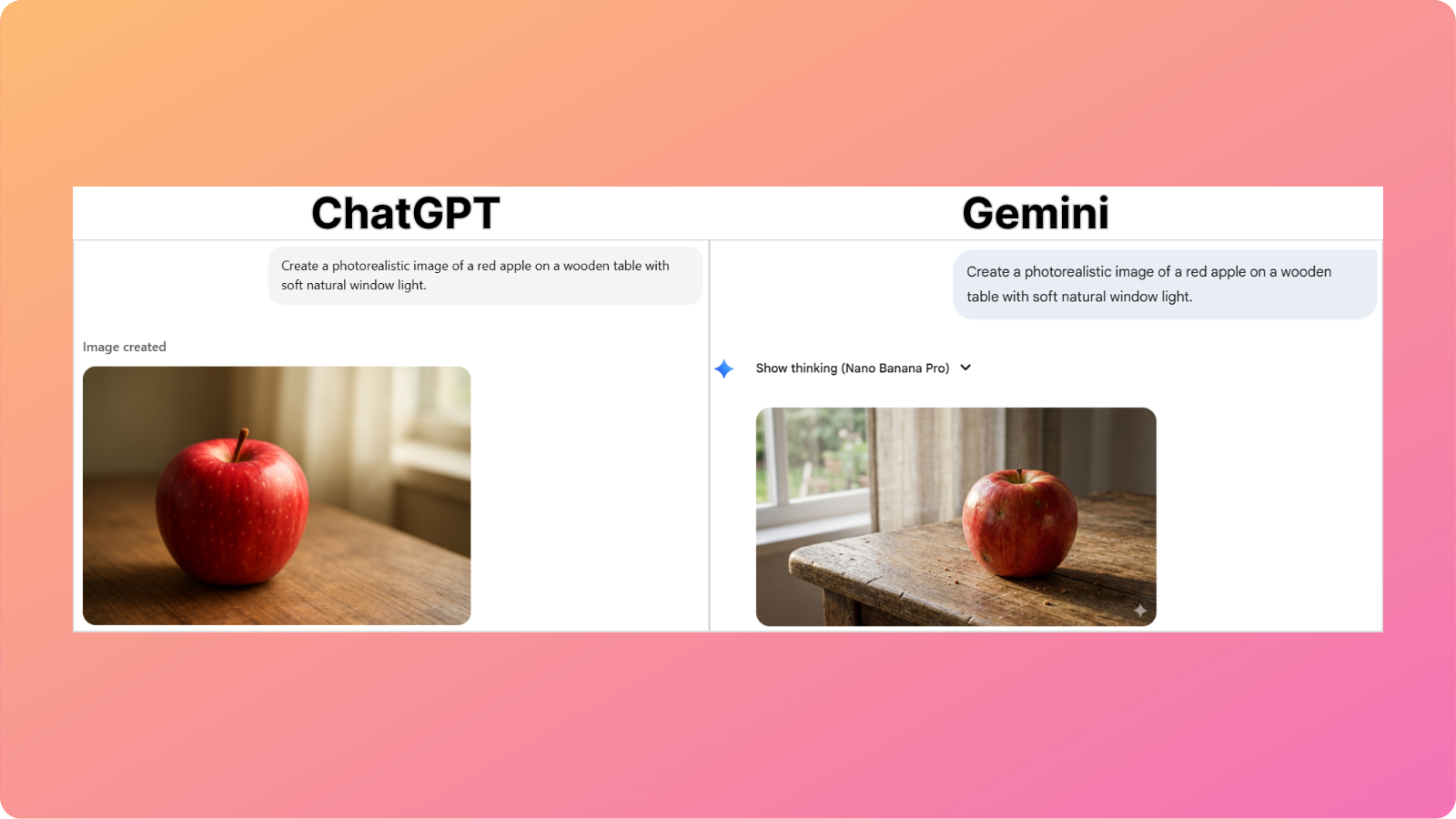
    We tested the image-generation capabilities of both Gemini and ChatGPT using the same prompt. The result is as follows:
    Gemini vs ChatGPT image comparison

    Both tools generated high-quality images as per the prompt. But the image generated by Gemini seems far more realistic than ChatGPT in this instance. 

    Also read: Perplexity vs Gemini: An honest comparison for content writers.

    Gemini vs ChatGPT in SEO understanding

    Search engine optimization remains vital for blog success, and an AI tool’s SEO understanding directly impacts how well it can help you create discoverable content. 

    ChatGPT has general SEO knowledge drawn from its training data, understanding concepts like keyword optimization, meta descriptions, internal linking strategies, and content structure for search engines.

    Gemini’s advantage here stems from its Google heritage and search integration. The tool has a more intuitive understanding of what search engines value because it can reference current search results and trending queries.

    Verdict

    The caveat is that neither tool replaces dedicated SEO writing tools that provide keyword research data, backlink analysis, and technical SEO audits. 

    Both tools are better viewed as content optimization assistants that help you apply SEO principles during the writing process rather than comprehensive SEO platforms.

    Creating a real blog with ChatGPT and Gemini

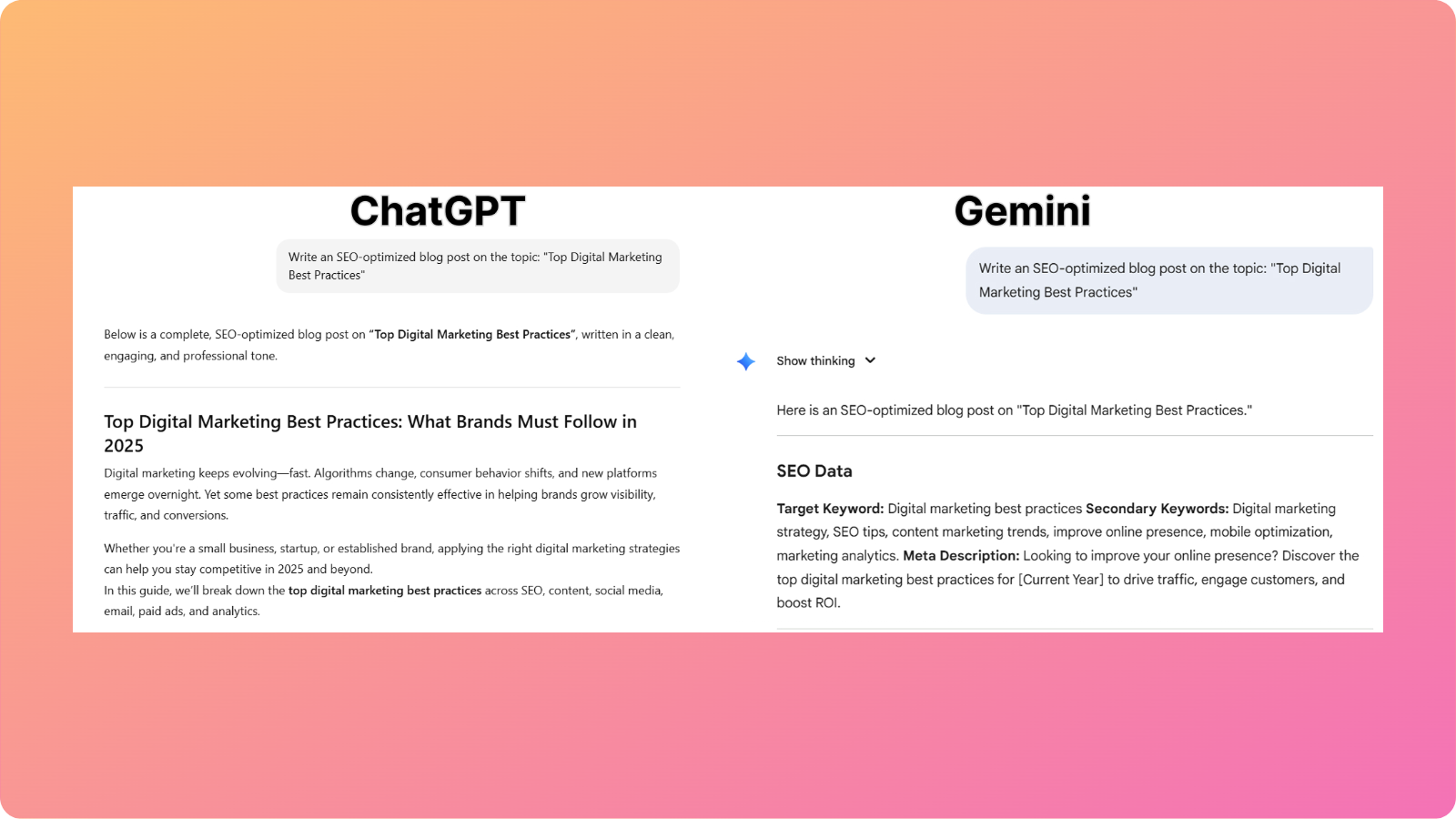
    Theory only gets you so far when evaluating AI writing tools. To understand how ChatGPT and Gemini actually perform for blog writing, we gave both platforms an identical prompt: 

    “Write an SEO-optimized blog post on the topic: Top Digital Marketing Best Practices.”

    The results reveal fundamental differences in how these AI assistants approach content creation.
    Gemini vs ChatGPT blog comparison

    ChatGPT’s approach and output

    ChatGPT immediately structured the post around practical, actionable advice with a clear 2025 timeframe in the title: “Top Digital Marketing Best Practices: What Brands Must Follow in 2025.” 

    The article opened with an engaging hook about the fast-evolving nature of digital marketing, establishing relevance and urgency right away. The content flowed conversationally, using contractions, varied sentence lengths, and direct address to readers. 

    ChatGPT organized the post into ten distinct sections, each covering a specific aspect of digital marketing, from content quality to mobile optimization to analytics. The structure felt intuitive, with each section building logically on the previous one.

    The tool included practical tips for each section, specific examples of content types that perform well, and recommended SEO tools readers could implement immediately.

    However, the piece lacked citations or specific data points to support its claims. When ChatGPT mentioned that “more than 60% of online traffic comes from mobile devices,” it provided no source to prove that statistic.

    Gemini’s approach and output

    Gemini took a markedly different approach, beginning with a structured SEO data section that outlined the target keyword, secondary keywords, and a meta description. This metadata-first approach immediately signaled a more technical, optimization-focused mindset.

    Gemini’s introduction explicitly positioned against common mistakes (“winging it is no longer an option”), establishing the content as corrective guidance for businesses making strategic errors.

    The article organized content into seven core sections rather than ten, suggesting a more distilled approach to the topic. 

    Each section began with a “Why it matters” subsection that provided explicit reasoning before diving into best practices. This structure created a more argumentative, persuasive framework.

    The tool demonstrated more substantial conceptual depth in certain areas. The SEO section didn’t just mention keywords, but it also distinguished between search intent categories (buy, learn, navigate) and emphasized matching content to each. 

    However, Gemini’s prose occasionally felt heavier and less inviting. Sentences like “algorithms favor video content across almost all platforms” conveyed information accurately but lacked the conversational warmth that makes blog content engaging.

    Also read: 12 SEO competitor analysis tools to outsmart your competition.

    User reviews for Gemini and ChatGPT

    Real user experiences often reveal insights that specifications and feature lists can’t capture. According to G2, ChatGPT has a rating of 4.7/5 based on 1,244 reviews, while Gemini has a rating of 4.4/5 based on 324 reviews (as of the time of writing).

    The difference in review volume stems from ChatGPT’s longer market presence and broader adoption.

    ChatGPT pros
    ChatGPT user review

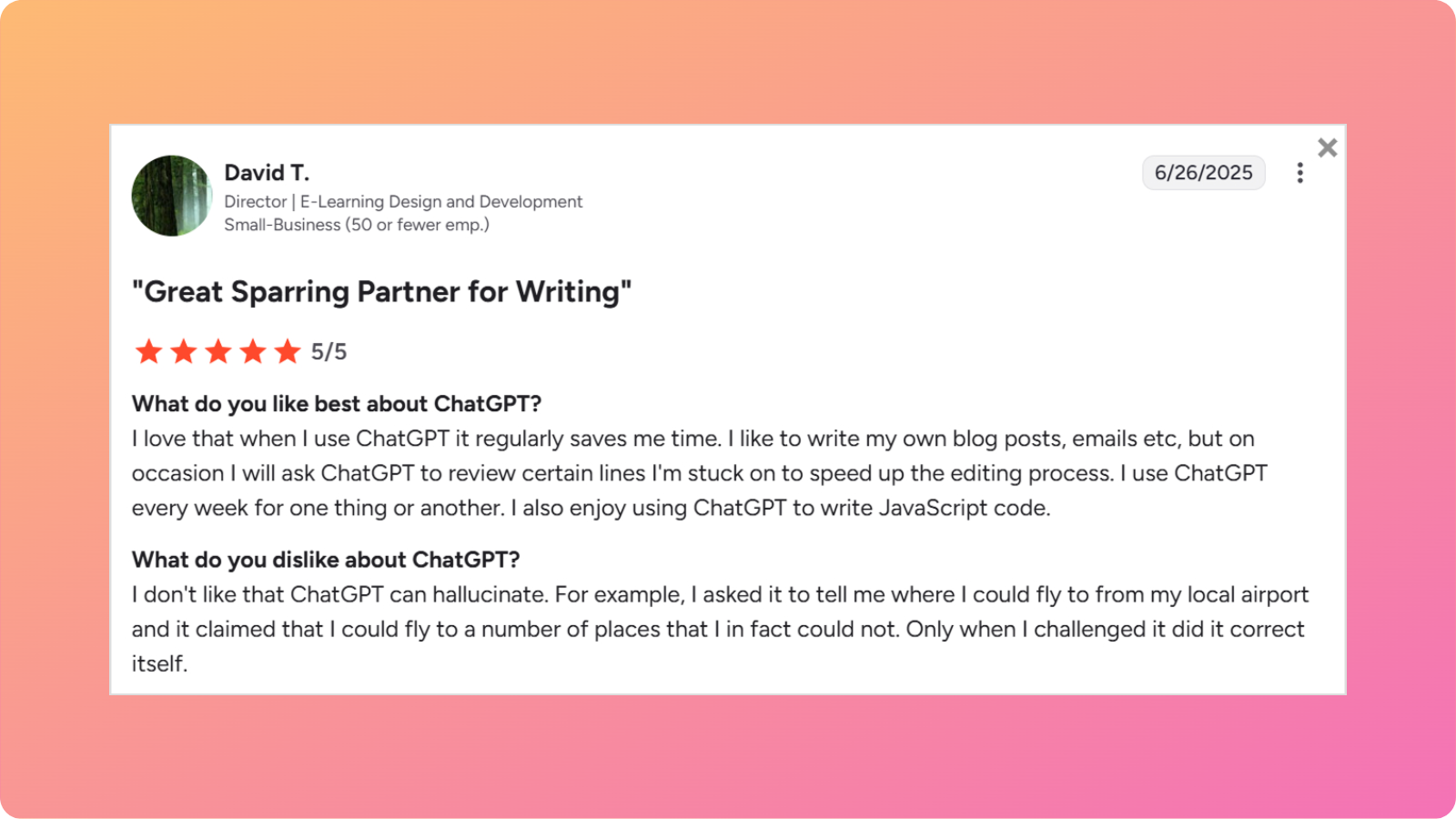
    Users consistently praise ChatGPT as a collaborative writing tool. One user describes it as a “great sparring partner for writing,” noting that it “regularly saves me time” when reviewing blog posts and emails. 

    This collaborative aspect of using ChatGPT to refine specific lines rather than generate everything represents how many professionals actually use the tool.

    ChatGPT cons

    The most common complaint centers on ChatGPT’s tendency to confidently present incorrect information. One user shared an example of when he asked about flight destinations from his local airport, “it claimed that I could fly to several places that I in fact could not. Only when I challenged it did it correct itself.”

    Multiple reviewers emphasize that ChatGPT should NOT be used to replace an actual person.

    Gemini pros
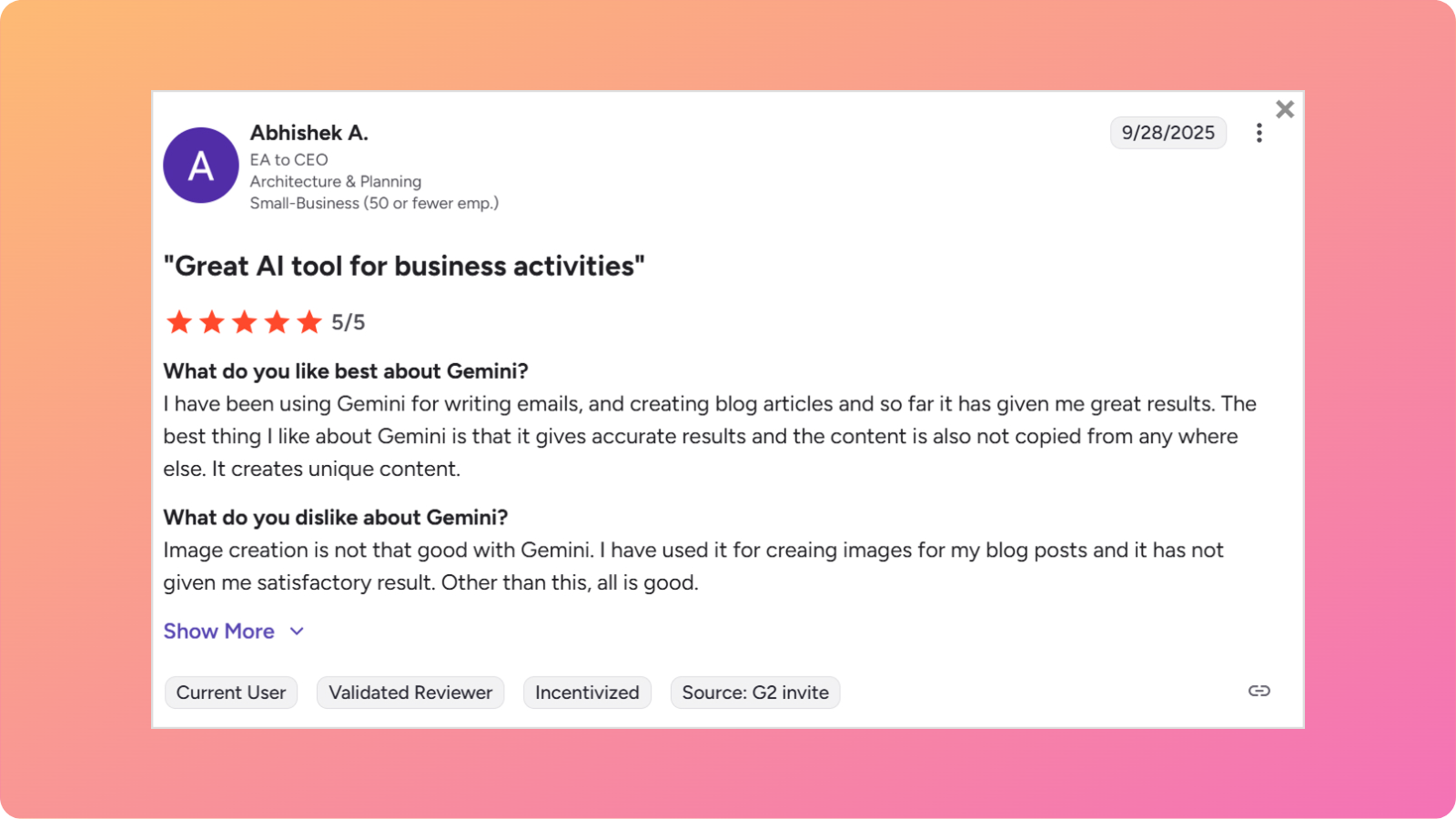
    Gemini user review

    Gemini’s access to current information stands out as its most substantial advantage in user reviews.

    Users who rely on Gemini for emails and blog articles highlight that “it gives accurate results and the content is also not copied from anywhere else. It creates unique content.” For users concerned about plagiarism or duplicate content, this assurance matters significantly.

    Gemini cons

    Many users have identified this problem with Gemini, which tends to struggle with maintaining consistency in conversations. 

    This is a similar problem we encountered in our analysis: you’d have to remind Gemini of the context consistently. Otherwise, it loses all the value in the generated content.

    Overall, the review patterns reveal a clear divide. ChatGPT users appreciate its writing quality and collaborative editing capabilities, but warn about factual accuracy and the need for human oversight. 

    On the other hand, Gemini users value its access to current information and research capabilities but find it lacking for actual content creation, particularly long-form writing.

    Contentpen: A better alternative to Gemini and ChatGPT for blog writing
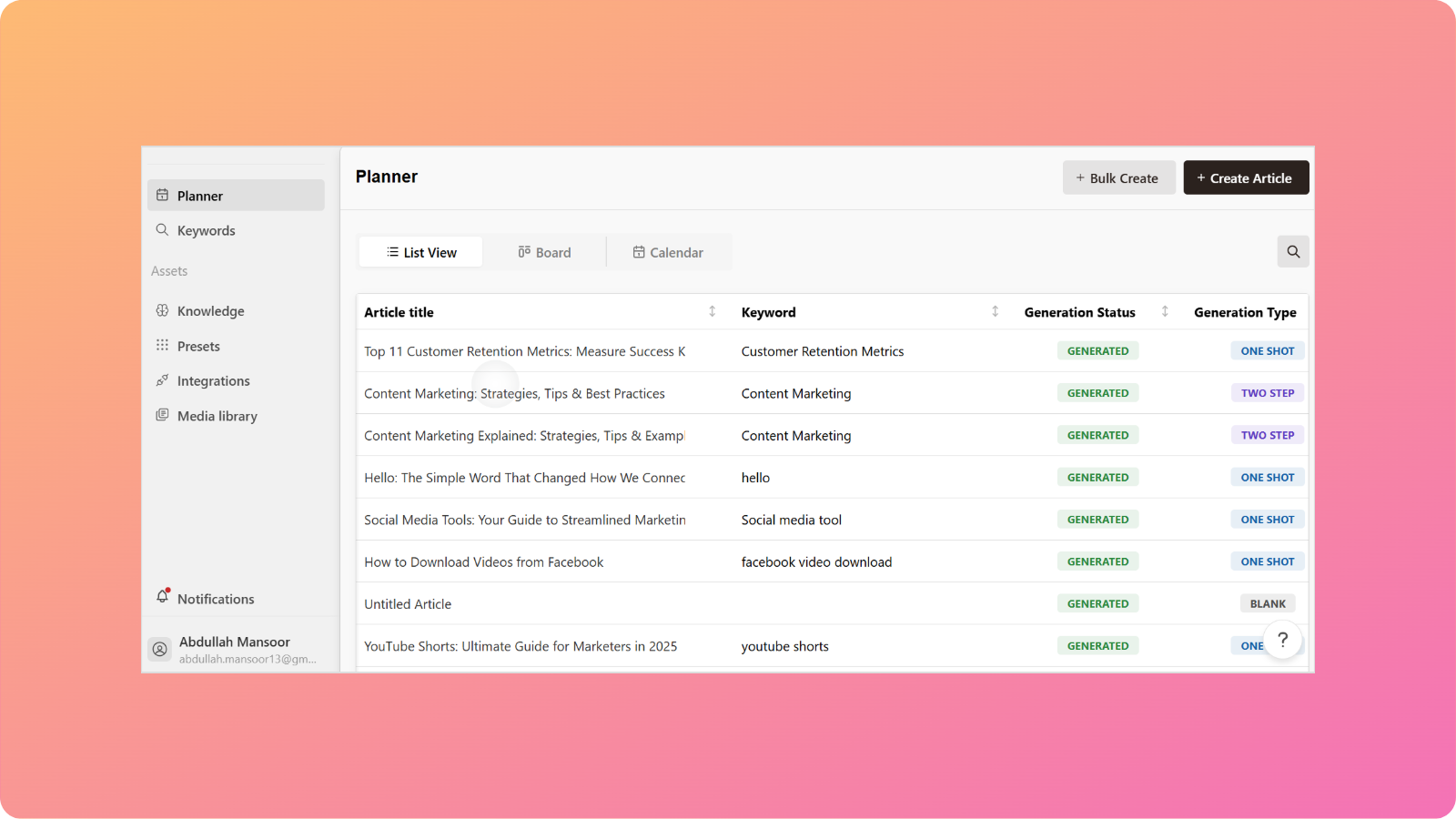
    Main screen interface - Contentpen.ai

    While Gemini and ChatGPT are powerful AI assistants, they were never designed to manage end-to-end blogging workflows.

    This is where Contentpen comes in. It represents a different approach entirely, as it is a specialized platform designed specifically for bloggers and content marketers who need to produce high-quality content at scale.

    Here are the key features of Contentpen that make it a better alternative to both Gemini and ChatGPT for content creation and scheduling.

    • Comprehensive keyword research: The tool uses AI to find the best keywords for your niche and brand, increasing your blog’s chances of ranking on Google and other AI search engines.
    • Pre-planned content calendar: With Contentpen, you can plan months of content automatically, eliminating guesswork and keeping your publishing schedule flowing without manual effort.
    • One-click content publishing: Our AI text generator online lets you publish posts directly to CMS platforms like WordPress, Ghost, Shopify, and Webflow, with complete control over formatting, scheduling, and approvals.
    • Bulk content creation: With this feature, you can generate dozens of SEO and GEO-ready blogs at once, scaling your content production effortlessly without sacrificing quality.
    • Automated SERP analysis: Contentpen analyzes SERP gaps in competitor content and identifies opportunities for your blog to rank and stand out.
    • Consistent brand voice: Contentpen helps you maintain a consistent brand voice, tone, and style. All you have to do is upload your brand guidelines once.
    • Media generation and control: Each blog post includes high-quality images. You can also control all your visuals in a built-in media library, eliminating the need for separate image creation tools or switching tabs.

    Although ChatGPT and Gemini are both great at conducting regular tasks and audits, Contentpen is simply a better choice for complete content automation.

    Final verdict: Which AI is better for blog writing?

    Choosing between Gemini and ChatGPT isn’t about finding a universal winner, but about matching the tool to your specific blogging needs. 

    ChatGPT excels at creative, engaging prose with natural flow, making it ideal for personality-driven blogs and content that prioritizes reader connection. Gemini shines in research-heavy, factual content where current information and citations matter most.

    The smartest approach is to combine both: use Gemini for research and fact-gathering, then ChatGPT to craft engaging narratives. 

    Alternatively, you can try Contentpen for content creation and build an efficient workflow that serves your audience and content goals. 

    Frequently asked questions

    Can Gemini overtake ChatGPT?

    It’s uncertain. ChatGPT currently leads in adoption and user satisfaction for content writing, but Gemini’s Google integration gives it advantages in research.

    Is Gemini more censored than ChatGPT?

    Both platforms have censorship policies and safety measures. However, they do allow the creation of standard business and marketing content without significant restrictions.

    What is the 30% rule in AI?

    The rule suggests that AI should handle 30% of a repetitive task, while humans should perform the remaining 70%, focusing on critical thinking, judgment, and creativity.

    What is the knowledge cutoff for Gemini?

    Gemini 3 Pro is the latest Gemini model, with a knowledge cutoff of January 2025. With web search enabled, Gemini can access the latest information in real time.

    What is the knowledge cutoff for ChatGPT?

    ChatGPT’s knowledge cutoff for the GPT 5.2 model is August 2025. However, with web search capabilities, you can access current information.
  • Perplexity vs ChatGPT: Which AI actually helps you write better blogs?

    Perplexity vs ChatGPT: Which AI actually helps you write better blogs?

    Should you use an AI that writes beautifully but might get facts wrong, or one that nails the research but writes like a Wikipedia entry?

    That’s essentially the Perplexity vs ChatGPT debate in a nutshell.

    ChatGPT is definitely the most popular tool in the AI space. It writes engaging content, adapts to your voice, and can turn a boring topic into something people actually want to read. The catch? It sometimes sounds confident about things that aren’t quite accurate.

    Perplexity took a different route entirely. Instead of trying to be the best writer, it became the best researcher. Every answer comes with receipts in the form of cited sources. It searches the web in real-time and tells you exactly where it found each piece of information.

    So which one should you use for blog writing

    The honest answer is more nuanced than you might expect. This guide breaks down the Perplexity vs ChatGPT comparison from every angle that matters to bloggers and content marketers.

    We’ll look at real writing samples, compare their actual capabilities, user reviews, and show you exactly where each tool shines or falls short.

    General overview of ChatGPT’s capabilities

    ChatGPT, developed by OpenAI, has become synonymous with AI writing assistance. It is built on the GPT (Generative Pre-trained Transformer) architecture and excels at producing human-like text across virtually any topic you can imagine.

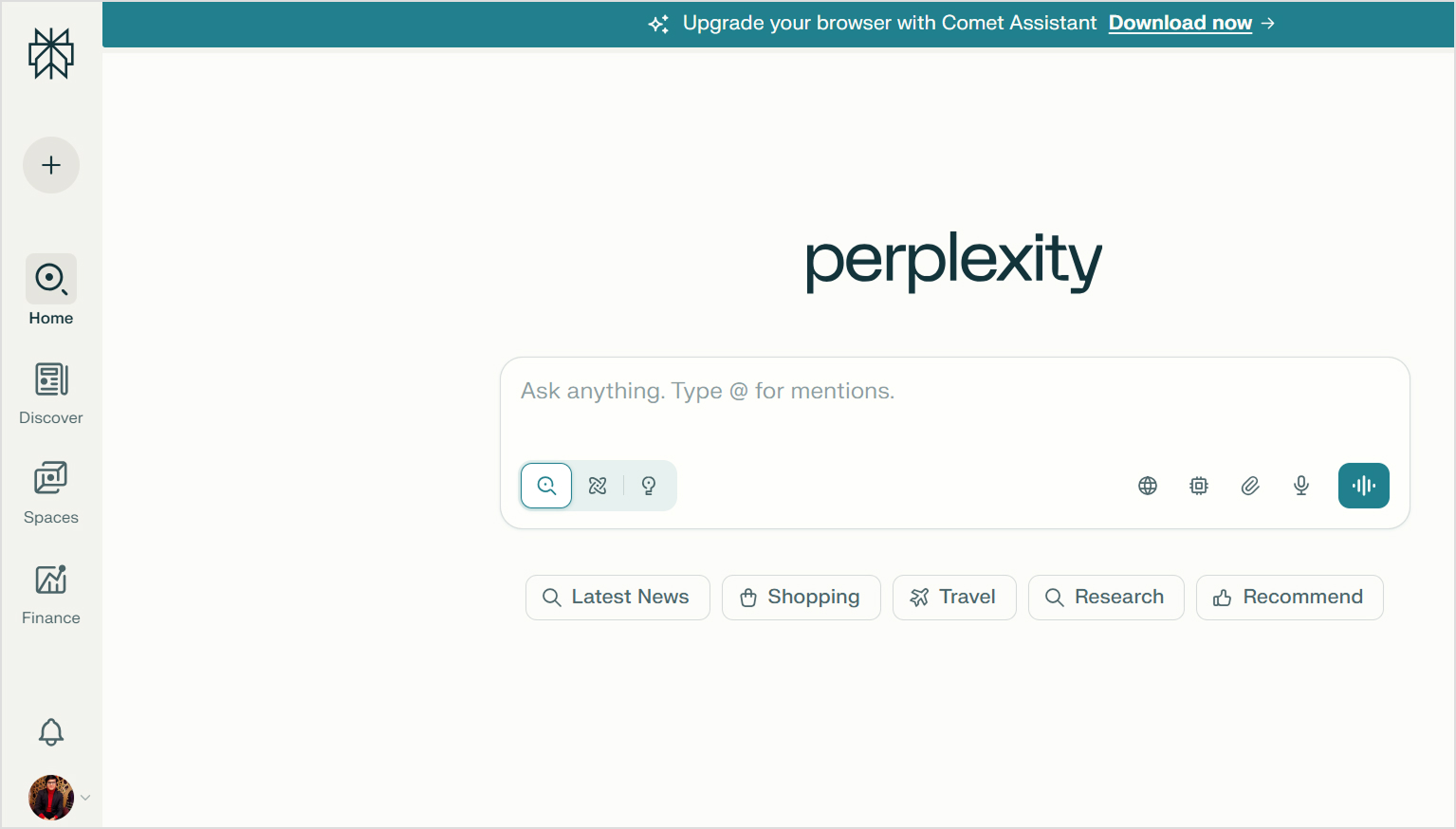
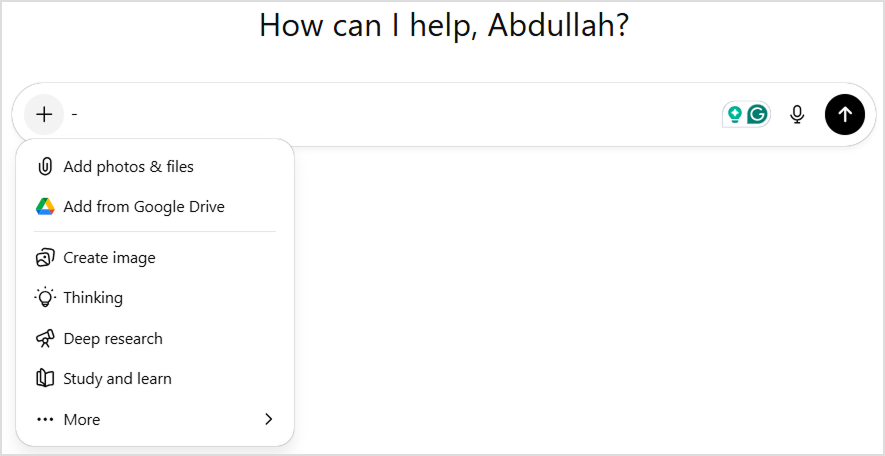
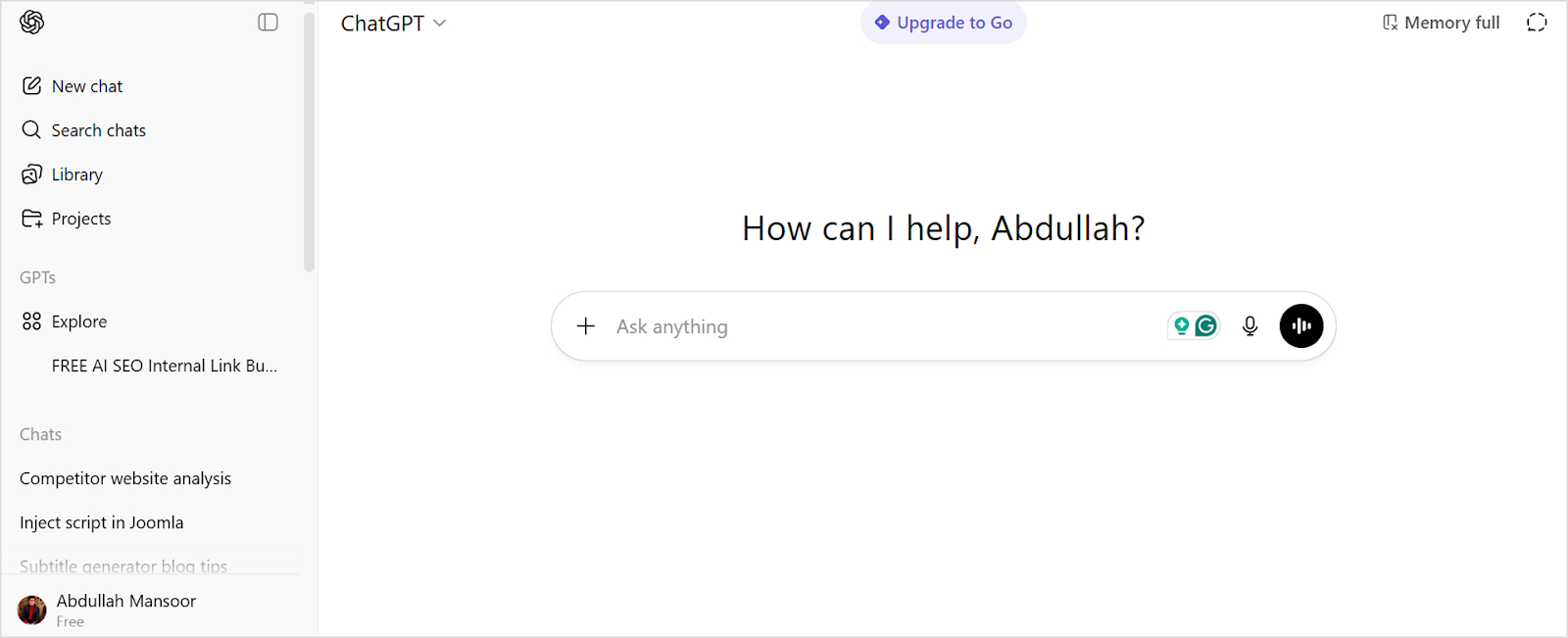
    Chatgpt interface

    ChatGPT offers several compelling advantages to bloggers and content creators:

    • ChatGPT can adapt its style to match your brand voice, whether you need casual blog posts.
    • The tool understands how to incorporate keywords into content without making it sound forced.
    • From outlining entire blog posts to expanding bullet points into full paragraphs, ChatGPT manages the structural elements of writing efficiently. 
    • You can prompt ChatGPT to adjust tone, fix grammar issues, or completely rewrite sections.

    Overall, ChatGPT works best as a versatile writing partner that can produce polished, publication-ready content quickly.

    General overview of Perplexity’s capabilities

    Perplexity takes a different approach to AI assistance. Instead of focusing purely on content creation, it functions as an AI-powered answer engine that searches the web in real-time and provides cited responses.

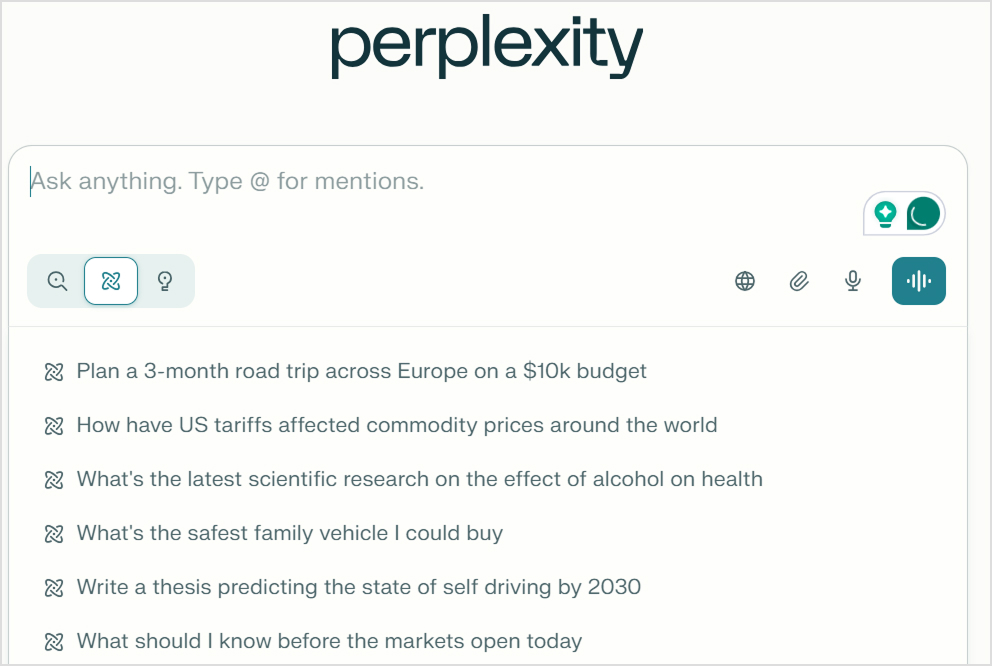
    Perplexity interface

    This fundamental difference shapes how Perplexity serves content creators through these key features:

    • Unlike ChatGPT’s static knowledge base, Perplexity searches current information from across the internet.
    • Every response from Perplexity includes links to the sources it used. This transparency makes fact-checking easier and adds credibility to your research process.
    • Perplexity excels at gathering information from multiple sources and synthesizing it into coherent summaries. 
    • The platform allows conversational follow-ups that refine your research. You can dig deeper into specific aspects without starting new searches from scratch.
    • Perplexity offers specialized search modes (Academic, Writing, Video, etc.) that tailor results to specific content types and quality standards.

    Overall, Perplexity functions as an intelligent research assistant. It is great in situations when you need accurate, current information with verifiable sources rather than creative content generation.

    Also read: Perplexity vs Claude: Which AI is better for blog writing.

    Comparing Perplexity vs ChatGPT

    The comparison of Perplexity vs ChatGPT shows several key differences between them.

    ChatGPT is built for generation, while Perplexity is built for research. However, both can contribute to the blog writing process in different ways.

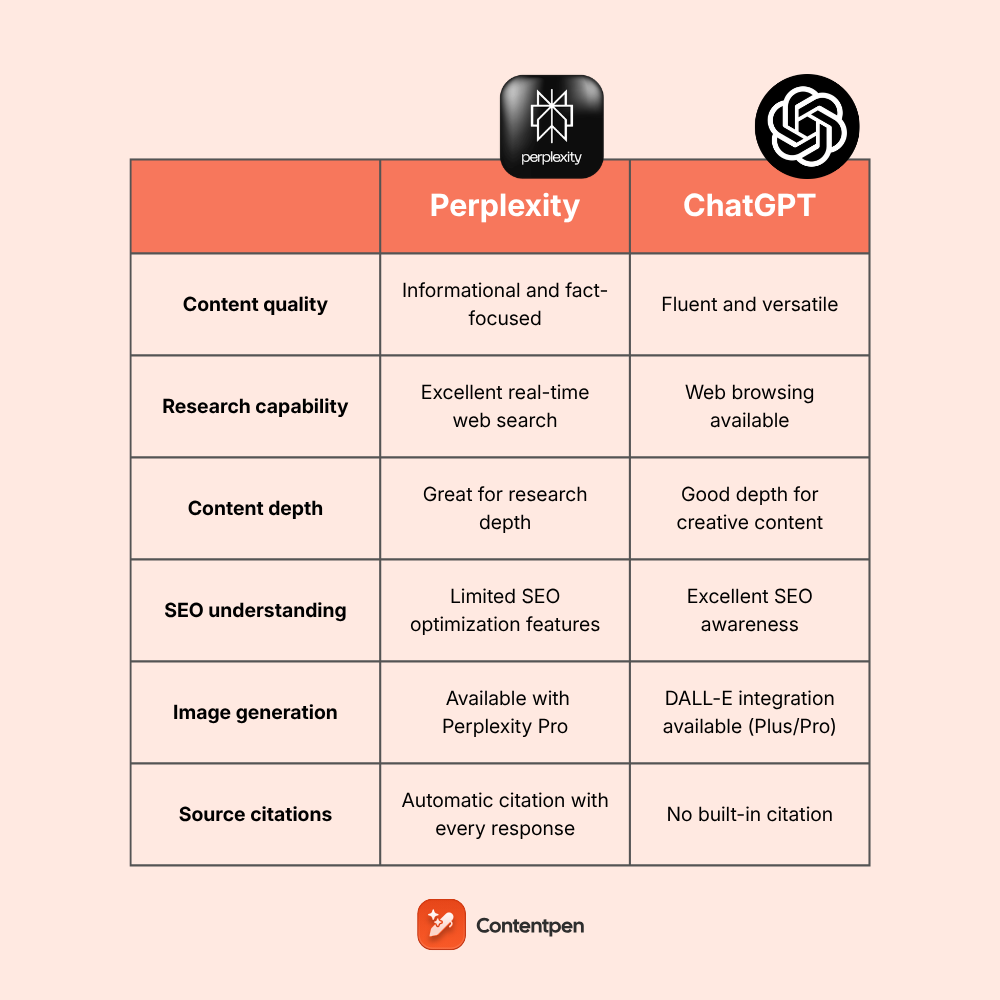
    The following table provides a quick side-by-side comparison of ChatGPT vs Perplexity:

    FeaturePerplexityChatGPT
    Content qualityInformational and fact-focused. Less engaging proseFluent and versatile. Can feel formulaic at times
    Research capabilityExcellent real-time web search with source citationsWeb browsing available (Plus), but less research-focused
    ReasoningStrong analytical synthesis from multiple sourcesExcellent reasoning and logic structuring
    Content depthGreat for research depth, weaker for narrative depthGood depth for creative content, can lose focus in very long pieces
    Tone consistencyNeutral and informational toneHighly adaptable to different tones and styles
    SEO understandingLimited SEO optimization featuresExcellent SEO awareness and keyword integration
    Image generationYes. Perplexity Pro users can generate imagesDALL-E integration available (Plus/Pro)
    Source citationsAutomatic citation with every responseNo built-in citation. Manual fact-checking required
    SpeedFast for research, slower for writingGenerally faster for content generation
    Fact accuracyVery high accuracy with real-time web dataCan provide outdated or incorrect facts without web browsing
    Pricing (Paid plan)Pro: $20/month, Max: $200/monthPlus: $20/month, Pro: $200/month
    Best forResearch, fact-gathering, and current informationCreative writing, blog drafting, brand content, social media

    Let’s examine each comparison point in detail.

    Perplexity vs ChatGPT in research

    Perplexity dominates in research capabilities. Its real-time web search pulls current information from across the internet and presents it with source citations. This makes verifying facts straightforward and ensures your content is based on the latest data.

    Perplexity research

    ChatGPT approaches research differently. It relies primarily on its training data, which has a knowledge cutoff (October 2024 for GPT-5). While ChatGPT also includes web browsing capabilities, it’s not as well integrated as Perplexity’s core search functionality.

    ChatGPT research

    Blog writers often need to reference recent statistics, current events, or emerging trends. Perplexity provides a clear advantage here. The cited sources also help build credibility when you’re writing authoritative content.

    Winner: In terms of Perplexity vs ChatGPT for research, Perplexity is the clear winner. It is best for research-heavy content that requires current information and verifiable sources. ChatGPT works better when you’re writing about established topics (evergreen content) that don’t change frequently.

    Also read: Perplexity vs Gemini 2026 comparison.

    Perplexity vs ChatGPT in reasoning

    Both tools demonstrate strong reasoning capabilities, but they apply them differently.

    ChatGPT excels at structuring logical arguments and creating coherent narratives. It can build persuasive frameworks, organize information hierarchically, and connect ideas in ways that support specific conclusions. This makes it valuable for opinion pieces, thought leadership, and argumentative content.

    Perplexity’s reasoning shines in synthesis. It analyzes information from multiple sources and identifies patterns, contradictions, and consensus views. This analytical approach helps you understand complex topics from multiple perspectives before writing about them.

    Winner: Use ChatGPT when you need to construct arguments or create logical content structures. Choose Perplexity when you need to analyze diverse viewpoints and turn comprehensive research into actionable insights.

    Perplexity vs ChatGPT in content writing

    A lot of you are likely to be reading this article to understand the role of Perplexity vs ChatGPT for writing. The comparison becomes the most distinct in this area.

    ChatGPT is purpose-built for content generation. It creates engaging introductions, develops ideas with appropriate detail, maintains consistent tone throughout long pieces, and produces content that feels conversational and human. The tool adapts to brand voices, handles creative challenges, and delivers polished drafts that need relatively minor editing.

    Perplexity generates content more as a byproduct of its research function. The writing tends to be informational and straightforward, prioritizing accuracy over engagement. While it can produce text, the output often lacks the narrative flow and stylistic polish that make blog content compelling.

    Winner: ChatGPT is the clear winner for actual content writing. Perplexity is better used as a research tool that sets the foundation of your writing instead of generating the content directly.

    Related: Claude vs ChatGPT for blog writing.

    Note: We’ll compare the blog writing results of both Perplexity and ChatGPT in detail later with a real example.

    Perplexity vs ChatGPT in content depth

    Content depth has two dimensions: factual depth and narrative depth.

    Perplexity is best for factual depth. It pulls information from multiple authoritative sources and presents comprehensive overviews of complex topics. The cited sources allow you to dive even deeper into specific aspects that interest you.

    ChatGPT takes the lead for narrative depth. It develops ideas thoroughly, provides relevant examples, and explores implications in ways that create engaging reading experiences. The content feels developed rather than merely informative.

    Winner: Perplexity offers better factual and research depth. ChatGPT delivers better narrative and creative depth.

    Also read: Copilot vs ChatGPT: Which AI wins for blog writing, research, and content depth?

    Perplexity vs ChatGPT in image generation

    Perplexity can generate images using multiple integrated engines (such as FLUX, DALL·E, Seedream, and Gemini). However, the results vary significantly depending on the model selected, and users often report inconsistent quality and a less polished UI experience.

    perplexity image generation

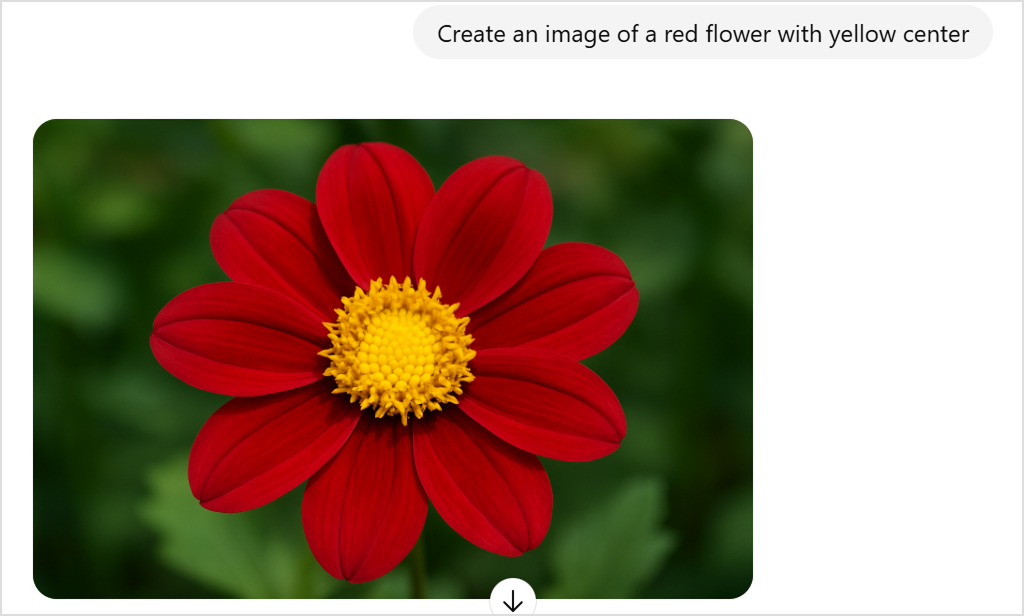
    ChatGPT, on the other hand, offers more stable, high-quality image generation through its multimodal GPT-4o system. It produces more coherent, detailed visuals and provides a smoother prompting, refinement, and regeneration workflow.

    Chatgpt image generation

    Winner: ChatGPT is the better choice for creating high-quality, consistent visual assets directly alongside written content.

    Related: Gemini vs ChatGPT comparison.

    Perplexity vs ChatGPT in SEO understanding

    ChatGPT has a stronger grasp of SEO principles and practical implementation. It understands keyword placement, meta descriptions, header structure, internal linking concepts, and how to balance optimization with readability. The tool can write content that targets specific search intent while maintaining natural language flow.

    Perplexity approaches SEO more indirectly. While it can research SEO best practices and provide information about optimization strategies, it’s not designed to implement these strategies in the content it generates. The platform is more useful for researching keywords and understanding search landscapes than for creating SEO-optimized articles.

    Winner: ChatGPT is significantly better for creating SEO-optimized blog content. Perplexity is useful for SEO research but not for implementation.

    Related: 12 SEO competitor analysis tools in 2026.

    Creating a real blog with ChatGPT and Perplexity

    To provide a practical comparison of Perplexity vs ChatGPT, we’ll create the same blog post using both platforms. This hands-on test reveals how each tool performs in a real content creation scenario.

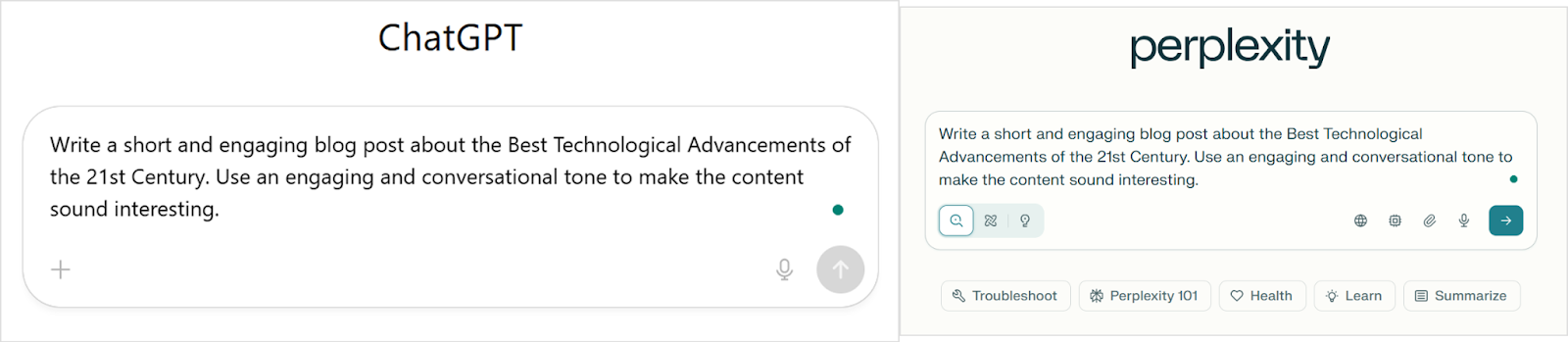
    We’ll use an identical prompt for both tools to ensure a fair comparison:

    “Write a short and engaging blog post about the Best Technological Advancements of the 21st Century. Use an engaging and conversational tone to make the content sound interesting.”

    Cahtgpt vs perplexity

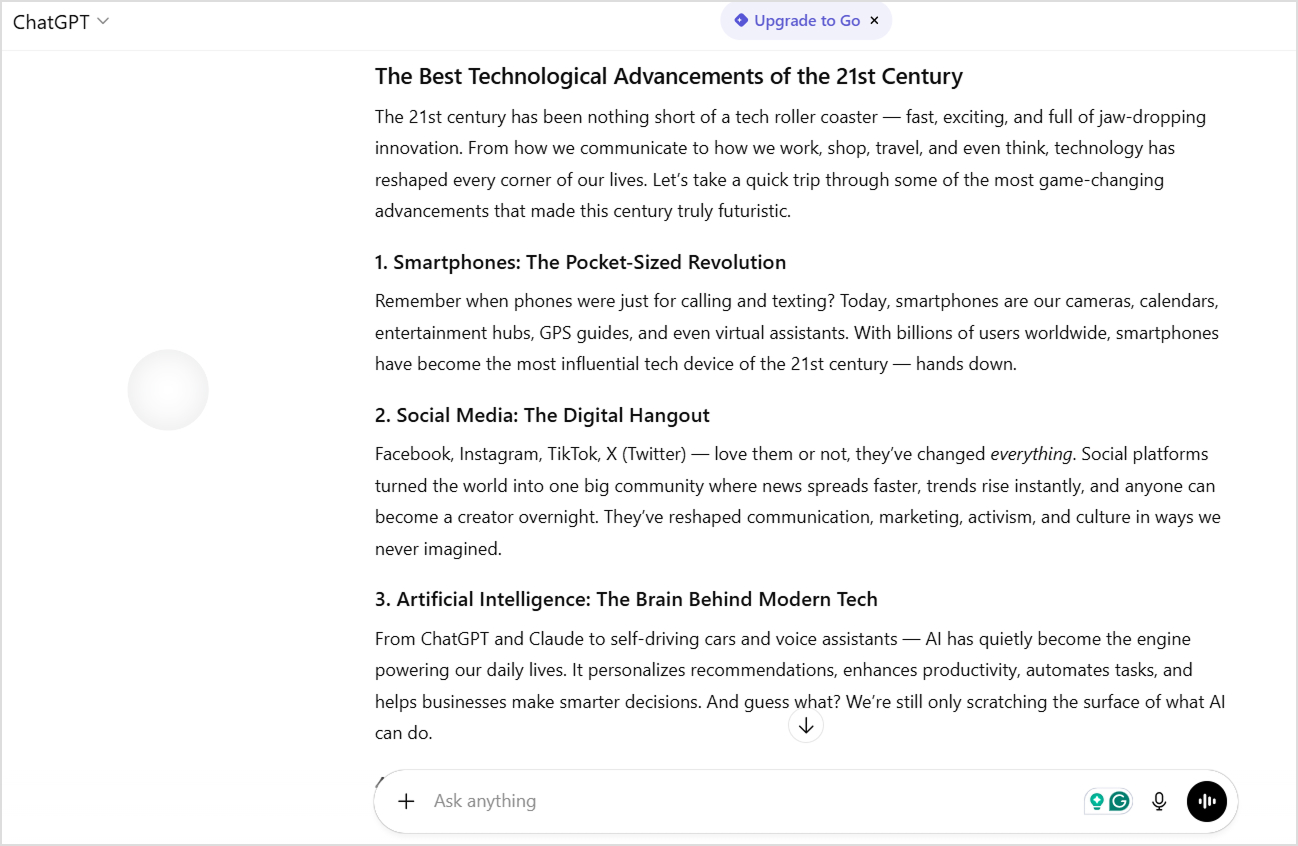
    Analysis of ChatGPT’s writing output

    ChatGPT delivered an energetic, well-organized piece that immediately grabbed attention. The title was straightforward and clear, setting expectations perfectly for what followed.

    Chatgpt article generated

    The introduction opened with vivid imagery: “The 21st century has been nothing short of a tech roller coaster — fast, exciting, and full of jaw-dropping innovation.” This metaphor establishes tone and energy from the first sentence.

    The body used a numbered list format covering ten distinct technological advancements. Each section included a catchy subheading with a descriptive tagline (“Smartphones: The Pocket-Sized Revolution”). 

    The writing maintained consistent energy with phrases like “hands down,” “love them or not,” and “guess what?” that created conversational momentum.

    ChatGPT included rhetorical questions and direct reader engagement throughout. The conclusion tied everything together with forward-looking enthusiasm: “Buckle up — the tech ride is far from over.”

    Also read: The ultimate list of SEO writing tools that actually improve rankings.

    ChatGPT’s strengths for writing

    ChatGPT’s output shows why it’s become the go-to tool for content creators who need publish-ready blog posts.

    • Highly scannable structure. The numbered list format with bold subheadings made it effortless to skim and find specific topics of interest.
    • Consistent conversational energy. Every section maintained the same engaging, enthusiastic tone without dropping into formal or academic language.
    • Comprehensive coverage. Ten different technologies provided breadth that made the piece feel authoritative and complete.
    • Reader engagement techniques. Rhetorical questions, direct address (“Remember when…”), and casual phrases kept readers involved throughout.
    • Strong opening and closing. Both the introduction and conclusion used memorable imagery and calls to action that bookended the content effectively.
    • Natural keyword integration. Terms like “technological advancements” and “21st century” appeared organically without feeling forced.

    ChatGPT’s weaknesses for writing

    Despite its polished appearance, several telltale signs revealed the content’s AI origins.

    • Predictable structure. The numbered list format, while effective, feels like a template used across millions of AI-generated articles.
    • Generic enthusiasm. Phrases like “game-changing,” “nothing short of,” and “jaw-dropping” are AI writing markers that signal machine-generated content.
    • Surface-level explanations. Each technology got a brief treatment without deep insights or unexpected perspectives that would demonstrate genuine expertise.
    • No sources or data. The content made broad claims about impact without statistics, studies, or citations to back them up.
    • Repetitive transitions. Similar sentence structures and transition patterns appeared throughout, creating a rhythmic predictability.
    • Missing a unique voice. The content could belong to any tech blog, lacking a distinctive personality or perspective that builds brand identity.

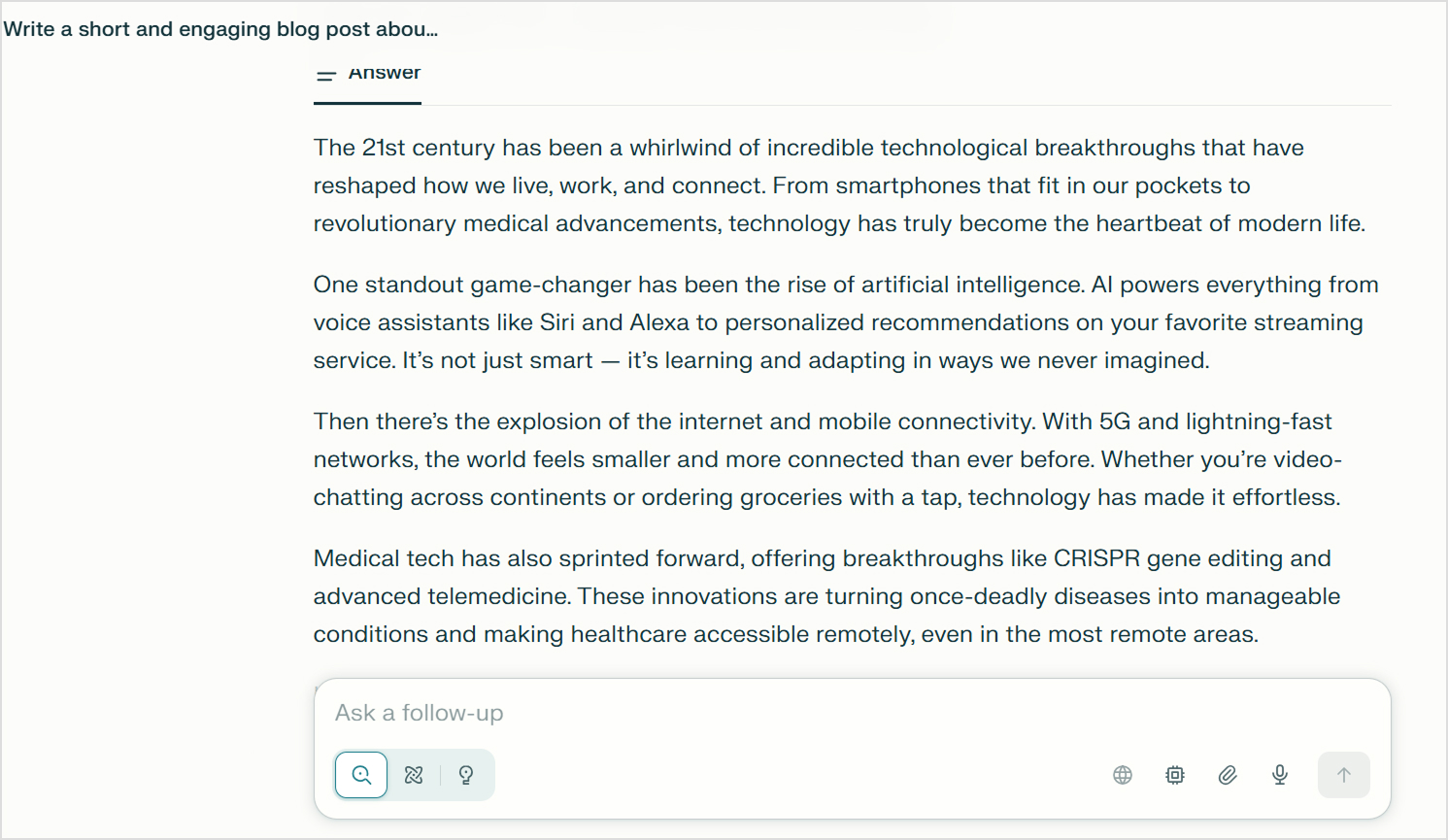
    Analysis of Perplexity’s writing output

    Perplexity took a noticeably more condensed approach to the same prompt. The content focused on five key technologies rather than attempting comprehensive coverage.

    Perplexity article generated

    The introduction used similar engaging language: “The 21st century has been a whirlwind of incredible technological breakthroughs.” However, it moved quickly into substance rather than extending the setup.

    The body organized information by technology, but without numbered formatting. Each paragraph flowed into the next, creating a more essay-like reading experience. The writing included specific examples like “Siri and Alexa” and mentioned concrete technologies like “CRISPR gene editing” and “5G.”

    The conclusion posed a direct question to readers: “What tech advancement has wowed you the most this century?” This engagement technique invited reflection and potential discussion.

    Perplexity’s strengths for writing

    Perplexity brought a more refined approach to the content, even if it fell short on comprehensiveness.

    • More focused coverage. By covering five technologies instead of ten, each got slightly more thoughtful treatment and context.
    • Specific examples and terminology. Mentioning CRISPR, 5G, and telemedicine added technical credibility that generic descriptions lack.
    • Cleaner prose. The writing avoided some of the more obvious AI clichés that ChatGPT included, creating slightly more natural-sounding content.
    • Thematic organization. Technologies were grouped logically (connectivity, AI, medical, energy) rather than just listed.
    • Reader question ending. The concluding question created an opening for engagement that felt less formulaic than ChatGPT’s metaphorical closing.
    • Varied sentence structure. The content mixed short and long sentences more effectively, improving natural reading rhythm.

    Perplexity’s weaknesses in writing

    Where Perplexity typically shines in research, this output revealed unexpected limitations in content generation.

    • Less comprehensive coverage. Only five technologies meant significant omissions like blockchain, wearables, and 3D printing that readers might expect.
    • Shorter overall length. The content felt somewhat abbreviated compared to what the prompt requested, potentially leaving readers wanting more substance.
    • Limited engagement techniques. Fewer conversational hooks and less personality throughout made it feel more informational than entertaining.
    • No citations despite research focus. Surprisingly, Perplexity didn’t include its characteristic source citations even when making factual claims about technologies.
    • Weaker structural hierarchy. Without numbered lists or bold subheadings, the content was less scannable and harder to navigate quickly.
    • Generic opening. The “whirlwind” metaphor in the introduction felt just as template-driven as ChatGPT’s “roller coaster,” showing both tools rely on similar imagery.

    Summary of Perplexity vs ChatGPT for blog writing

    This practical test reinforces the fundamental difference between Perplexity vs ChatGPT for content creation.

    • ChatGPT excelled at creating engaging, structured blog content that readers can easily scan and enjoy. The numbered format, consistent tone, and comprehensive coverage made it feel like a complete, polished blog post ready for publication with minor edits.
    • Perplexity produced more concise, slightly more sophisticated prose with better specificity in examples. The content felt less template-driven in places, though still generic overall.

    Users’ reviews for Perplexity & ChatGPT

    Real user experiences provide important details when evaluating Perplexity vs ChatGPT. These reviews come from verified users on G2 who use these tools daily in their content workflows, research tasks, and creative projects.

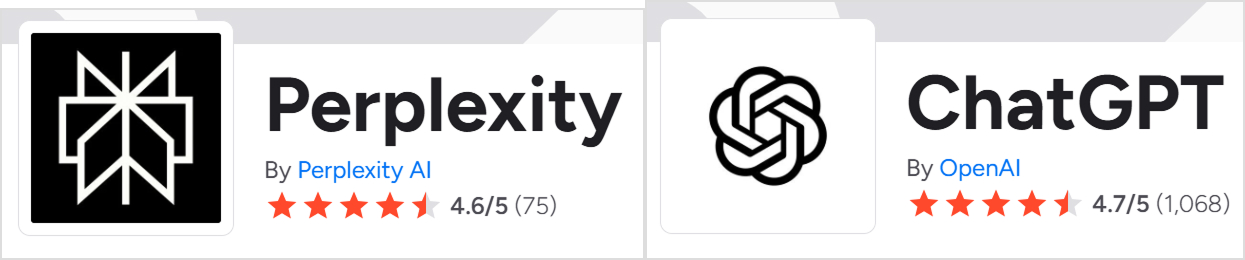
    Overall ratings from G2

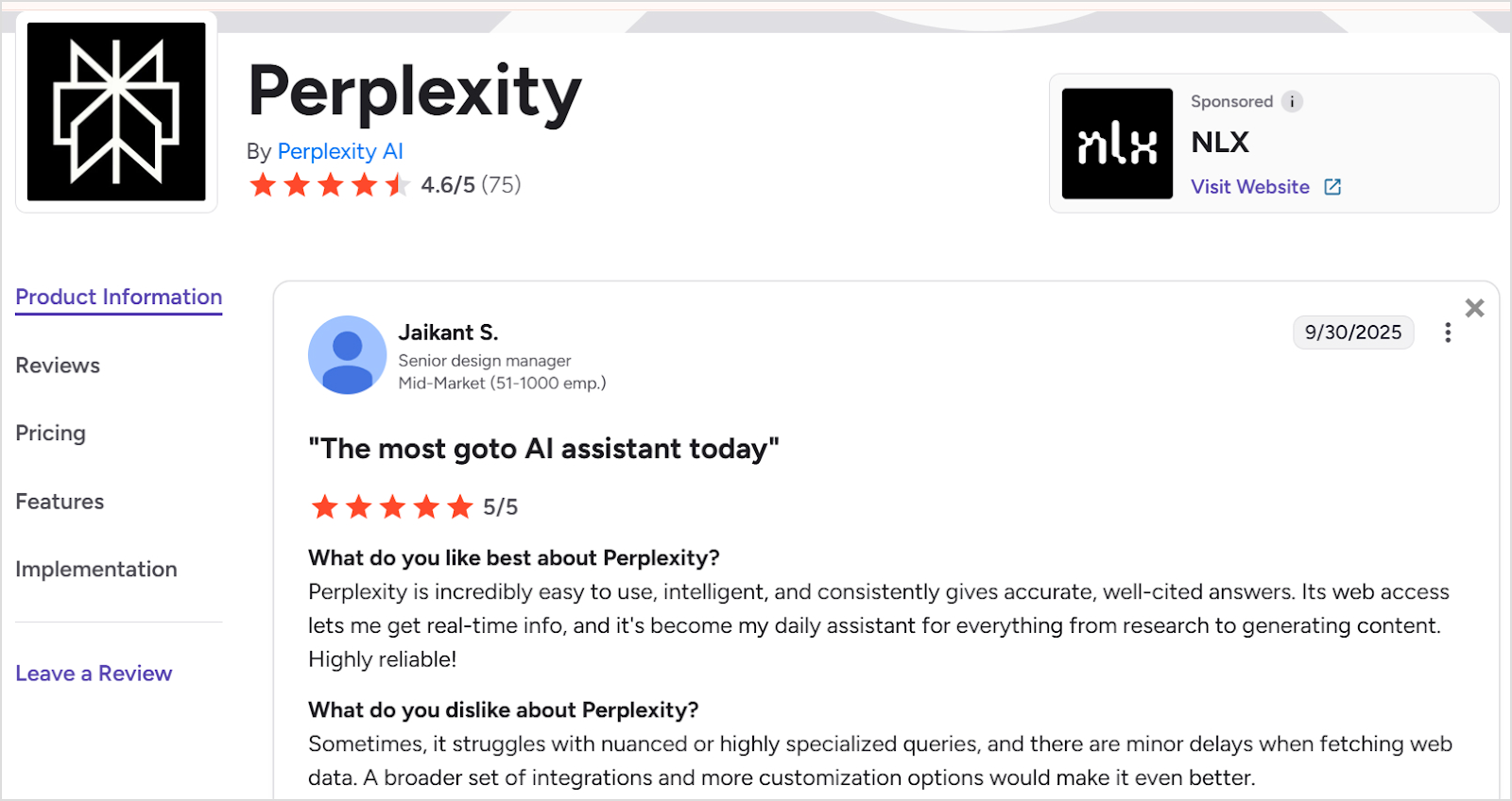
    ChatGPT: 4.7/5 based on 1,068 reviews and Perplexity: 4.6/5 based on 75 reviews

    Both platforms maintain strong ratings, with ChatGPT having significantly more extensive review coverage due to its longer market presence and larger user base. The close ratings suggest both tools deliver substantial value, though they serve different primary purposes.

    Perplexity and chatgpt rating

    What users say about Perplexity

    Perplexity reviews

    Praised for:

    • Accuracy with source citations. Users consistently highlight Perplexity’s reliable, verified answers that come with proper citations. One marketing consultant noted it provides “reliable and verified answers, providing me with enhanced efficiency and time-saving capabilities for diverse tasks like video editing, content writing, and academic processes.”
    • Real-time web access. The ability to fetch current information is a major selling point. A user emphasized that “its web access lets me get real-time info, and it’s become my daily assistant for everything from research to generating content.”
    • Contextual conversation flow. Perplexity maintains context effectively throughout conversations, preventing repetitive mistakes and allowing for deeper exploration of topics without starting over.
    • Easy setup and usability. Multiple reviewers mentioned the smooth onboarding experience with “just a few clicks to get started” and appreciated features like “spaces” that organize research projects.
    • Complex query handling. Users value Perplexity’s “ability to handle complex multi-step tasks swiftly compared to human efforts,” making it particularly useful for in-depth research.

    Common complaints:

    • Inconsistent performance. Some users report that “randomly it will stop understanding basic tasks” and that “language output prompts definitely don’t work right,” requiring frequent verification.
    • Limited language support. The lack of support for certain languages, like Sanskrit, limits their usefulness for some user segments working with specialized linguistic content.
    • Struggles with specialized queries. Users note it “sometimes struggles with nuanced or highly specialized queries” and experiences “minor delays when fetching web data.”
    • Needs more integrations. Several reviewers requested “a broader set of integrations and more customization options” to enhance workflow efficiency.
    • Verification is still required. Despite its citation features, users emphasize that “sometimes you really have to verify everything,” suggesting the citations don’t completely eliminate fact-checking needs.

    What users say about ChatGPT

    Chatgpt reviews

    Praised for:

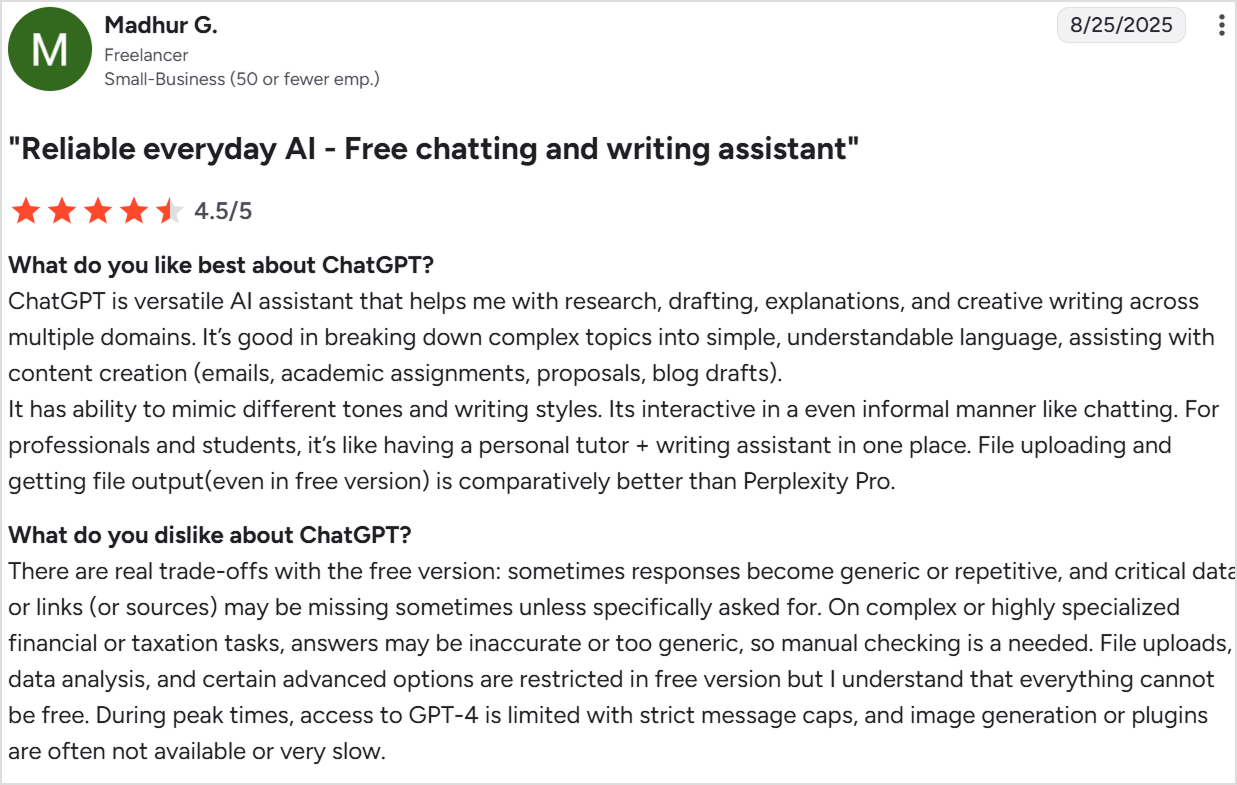
    • Exceptional versatility. Users love ChatGPT’s ability to handle diverse tasks from research to creative writing. One reviewer called it “a versatile AI assistant that helps me with research, drafting, explanations, and creative writing across multiple domains.”
    • Excellent at simplification. ChatGPT excels at “breaking down complex topics into simple, understandable language,” making it valuable for both professionals and students.
    • Tone and style adaptation. The “ability to mimic different tones and writing styles” allows users to match brand voices and adjust content for different audiences effortlessly.
    • Conversational interaction. Users appreciate that it’s “interactive in an even informal manner like chatting,” making the experience feel natural rather than robotic.
    • Time-saving efficiency. Many reviewers mention how ChatGPT “regularly saves me time” by helping with editing, reviewing lines, and speeding up the writing process.
    • Coding assistance. Several users specifically praised its JavaScript and general coding capabilities for development work.
    • File handling capabilities. The ability to upload files and receive file outputs, “even in the free version,” compares favorably to competitors.

    Common complaints:

    • Hallucinations and inaccuracies. The most frequent criticism is that ChatGPT “can hallucinate” and provide confidently incorrect information. One user described asking about flights from their local airport and receiving completely wrong information that was only corrected when challenged.
    • Generic and repetitive responses. Free version users note that “sometimes responses become generic or repetitive” and lack the depth available in paid tiers.
    • Missing sources and citations. Users complain that “critical data or links (or sources) may be missing sometimes unless specifically asked for,” requiring manual verification.
    • Inaccurate on specialized topics. For “complex or highly specialized financial or taxation tasks, answers may be inaccurate or too generic, so manual checking is needed.”
    • Free version limitations. Many features like advanced data analysis, certain file types, and consistent GPT-4 access are restricted, with “strict message caps” during peak times.
    • Slow image generation. Users report that “image generation or plugins are often not available or very slow,” impacting workflow efficiency.

    Overall, the reviews reveal a clear usage pattern when comparing Perplexity vs ChatGPT. Users turn to Perplexity when they need accurate, cited information for research-heavy tasks and real-time data. ChatGPT dominates as a “personal tutor + writing assistant in one place” for users who prioritize content creation, creative writing, and conversational interaction.

    Contentpen – A better alternative to Perplexity & ChatGPT

    While both Perplexity and ChatGPT offer valuable features for content creators, neither was specifically designed to handle the complete blog creation process from start to finish.Perplexity excels at research but falls short in content generation. ChatGPT produces engaging writing but requires manual fact-checking and research. Both leave significant gaps in a comprehensive content workflow that includes keyword research, SEO optimization, publishing, and performance tracking.

    This AI blog writing tool bridges these gaps by functioning as an all-in-one content platform rather than just an AI writing assistant. It’s specifically built for bloggers, marketers, and businesses who need to create, optimize, and scale blog content systematically.

    The following table explains why Contentpen is better than both Perplexity and ChatGPT for blog creation:

    FeaturePerplexityChatGPTContentpen
    AI writing quality⚪ Research-focused, less engaging✅ Creative and versatile✅ SEO-focused, brand-aligned, one-click generation
    Keyword research❌ Manual process❌ Manual process✅ Automatic and intelligent
    Research capability✅ Excellent with citations⚪ Good with web browsing✅ Built-in research integration
    SEO & GEO optimization❌ Minimal⚪ Strong when prompted✅ Advanced, automated optimization
    Publishing❌ Manual export and upload❌ Manual export and upload✅ One-click WordPress publishing
    Images & media❌ No visual generation✅ Limited DALL-E access✅ AI-generated visuals included
    Content calendar❌ None❌ None✅ Auto-created and scheduled
    SEO insights❌ None⚪ Limited via plugins✅ Built-in performance tracking
    Source citations✅ Automatic⚪ Limited with web search✅ Optional citation integration
    Scalability⚪ Moderate research volume⚪ High writing volume✅ Unlimited bulk content automation
    Fact-checking✅ Built-in through citations❌ Fully manual✅ Automated verification options

    With Contentpen, you don’t have to choose between research accuracy and writing quality. It combines the research capabilities that make Perplexity valuable with the content generation strengths that make ChatGPT useful, then adds comprehensive SEO and content publishing features that neither platform offers.

    The platform handles keyword research automatically, generates optimized content that aligns with your brand voice, creates accompanying visuals, and publishes directly to WordPress. This eliminates the fragmented workflow of using multiple tools and manual processes that slow down content production.

    Similarly, teams and businesses scaling content can enjoy Contentpen’s bulk generation capabilities and built-in content calendar, transforming content marketing from a tactical challenge into a strategic advantage.

    Final Verdict – Which is better for blog writing?

    The Perplexity vs ChatGPT comparison ultimately comes down to understanding what each tool was built to do.

    Perplexity is an AI-powered research engine that excels at gathering current information, synthesizing multiple sources, and providing cited facts. On the other hand, ChatGPT is a generative AI assistant optimized for content creation, creative writing, and conversational engagement. 

    Neither tool alone provides the complete solution modern content creators actually need. So, if you’re looking to scale content production systematically rather than piecing together workflows from multiple tools, Contentpen offers a more comprehensive solution. It integrates research, writing, SEO optimization, and publishing into a single platform designed specifically for blog content creation.

    Start your free trial of Contentpen today and experience how streamlined content creation can transform your blogging process.

    Frequently asked questions

    When to use Perplexity vs ChatGPT?

    Use Perplexity when you need to research current information, gather facts from multiple sources, or verify claims with citations. It’s ideal for fact-checking, staying updated on recent developments, and building research foundations for content. 
    Choose ChatGPT when you need to write blog posts, create engaging content, generate creative material, or adapt content to specific brand voices. ChatGPT excels at the actual writing process, while Perplexity excels at the research process.

    Is Perplexity AI better than ChatGPT?

    Not necessarily, as they serve different primary purposes. Perplexity is better for research tasks that require current information, source citations, and fact verification. ChatGPT is better for creative writing, content generation, and producing engaging blog posts.
    The “better” tool depends entirely on whether you need research capabilities or content creation capabilities. For comprehensive blog writing workflows, many creators use both tools together.

    Is Perplexity the most powerful AI?

    Perplexity is not the most powerful AI overall, but it’s one of the most powerful AI research tools available. Its strength lies specifically in real-time web search, source synthesis, and information retrieval with citations. Other AI models like ChatGPT, Claude, or specialized AI systems may be more powerful for tasks like creative writing, coding, image generation, or complex reasoning.

    What is the 30% rule in AI?

    The 30% rule in AI suggests that AI should handle approximately 70% of repetitive, routine, and time-consuming tasks, while humans focus on the remaining 30% that requires creativity, strategic thinking, ethical judgment, and critical decision-making.

    What is the knowledge cutoff for Perplexity?

    Perplexity doesn’t have a traditional knowledge cutoff because it performs real-time web searches for each query. It accesses current information from the internet up to the present moment, which means it can provide information about events happening today.

    What is the knowledge cutoff for ChatGPT?

    ChatGPT’s knowledge cutoff depends on the specific version. GPT-5’s training data extends through October 2024, which means its core knowledge stops at that point. However, users can also enable the web search option to search for and incorporate more current information when needed.