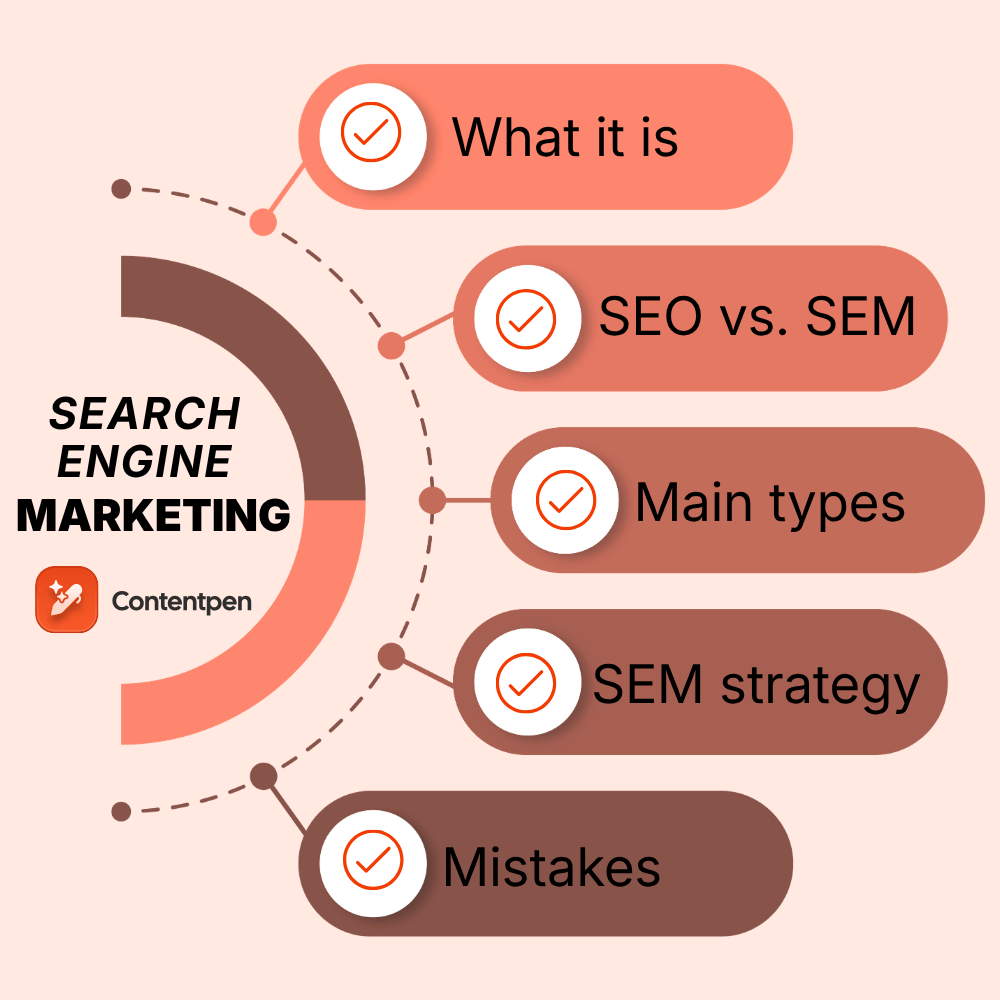
Search engine marketing (SEM) is paid promotion on search engines like Google and Bing that puts your ads in front of people who are already searching for what you sell. It ties what users type into Google to short text ads and charges you when someone clicks (pay-per-click).
This guide walks through what search engine marketing means, how SEM compares to SEO, and how to build a simple strategy without wasting resources.
You will also see practical examples, common mistakes to avoid, and how strong content supports all of your campaigns.
So, let’s get started.
Key takeaways
- SEM means paid advertisements on platforms like Google Ads and Microsoft Advertising. Think of it as showing paid text or shopping ads when someone searches for a matching keyword on Google, Bing, Yahoo, or any other search engine.
- Paid search ads run on pay-per-click pricing, so you pay when a user actually clicks rather than when they only see your ad.
- Search engine optimization and search engine marketing work best together. SEO builds long-term organic visibility, SEM fills short-term gaps, tests new keywords fast, and sends data back into your SEO marketing plans.
- Costs for search ads depend on how many companies bid on the same keyword, where people see the ad, and how strong your account is.
- Strong content gives SEM and SEO something to point at so that clicks can actually turn into leads or sales.
What is search engine marketing?
Search engine marketing is paid promotion that shows your ads on search engine results pages (SERPs) when people type in certain keywords.
In practice, it means using platforms like Google Ads and Microsoft Advertising to show ads, and you pay when someone clicks. Most marketers now use SEM to describe pay-per-click search ads only.
When you run SEM, you pick keywords that match your offer, write short ads, choose a target audience, and set bids. When users search those keywords on Google or Bing, your ad can show at the top or bottom of the results, often above the organic listings.
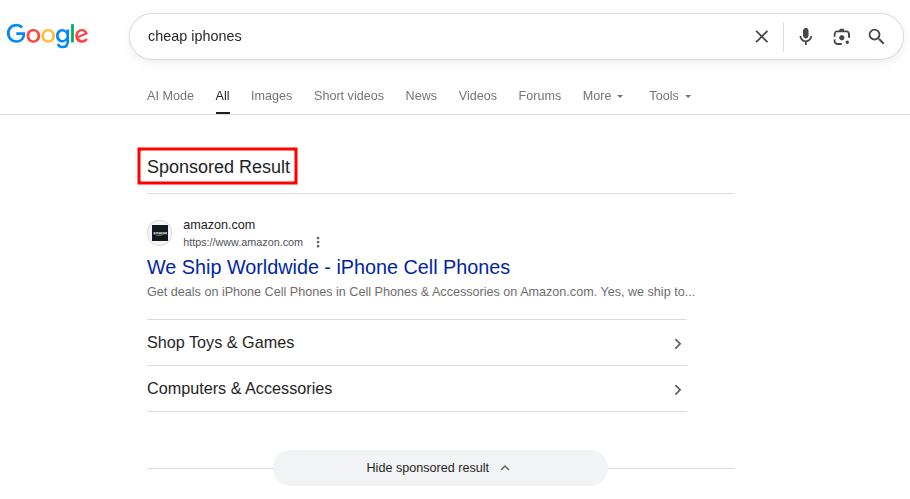
Google calls these placements sponsored results, and they are labeled so users can see they are ads. A large share of clicks still go to those top paid results because they match what people just typed.
While SEO takes months to build, you can launch search ads instantly, reach people with high purchase intent, and collect useful data fast.
Related read: Learn how to do SEO in 2026.
Why search engine marketing matters for your business
Search engine marketing matters for your business because many online searches start with a simple query on Google, Bing, or Yahoo. If your brand does not show up there, a competitor will take that click and possibly that customer.
Paid search lets you claim that shelf space right away, even while your SEO work grows in the background.
High buying intent is another reason why businesses like SEM. Compared to a social media post that interrupts someone scrolling, a user searching on Google is focused and closer to a decision. Seeing your ad might bring them closer to conversion quicker than you’d expect.
How does search engine marketing work?
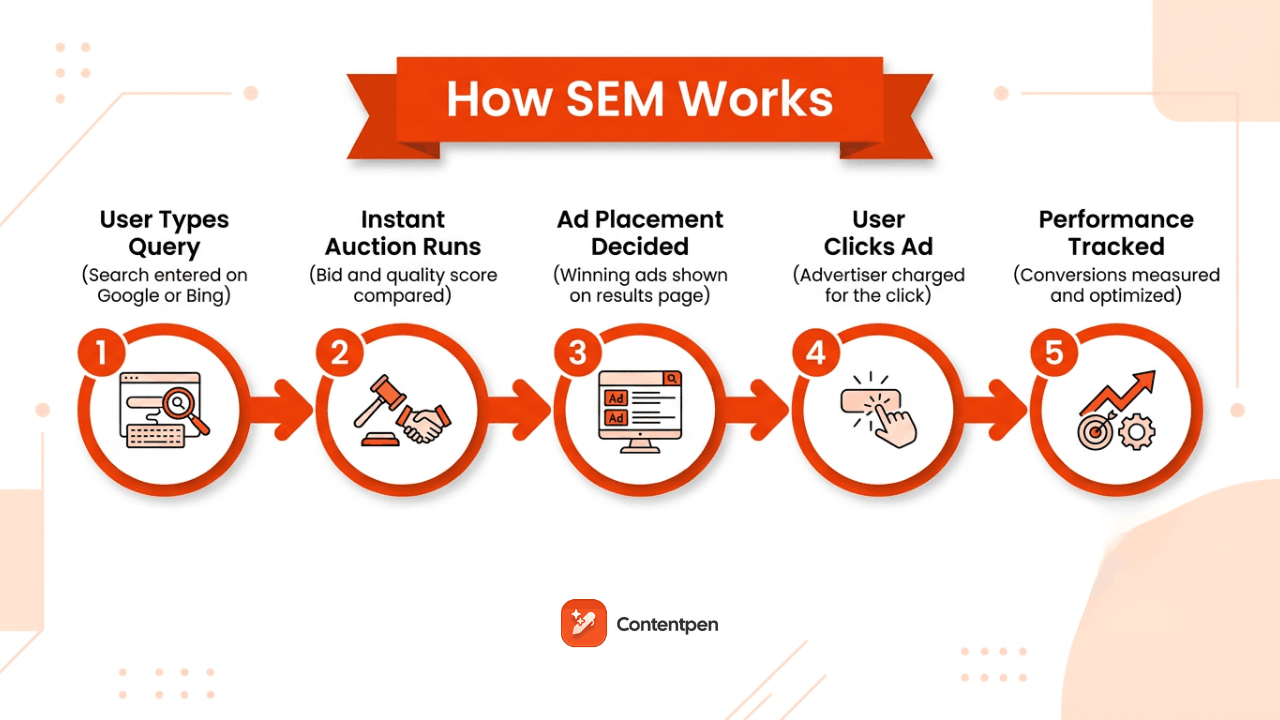
Search engine marketing works through keyword auctions that match your ads to user searches and price clicks based on bids and relevance.
When a user enters a query, Google Ads or Microsoft Advertising scans all active campaigns that target related keywords.
The system runs an instant auction that ranks ads using bid amount and quality score (ad relevance), expected click-through rate, and landing page experience.
Also read: How to calculate CTR?
From a marketer’s view, you start by doing keyword research with tools like Google Keyword Planner, Semrush, or Ahrefs.
You group related phrases into ad groups and write search ads that match the wording people use. Then you set daily budgets and maximum bids for each keyword or ad group so you control spend.
The user experience looks simple, even though the auction is complex behind the scenes.
A searcher types a term like “roof repair Chicago” into Google Search. On the results page, they see several text ads at the top under the ‘Sponsored Results’ labels, then a map pack, then organic listings.
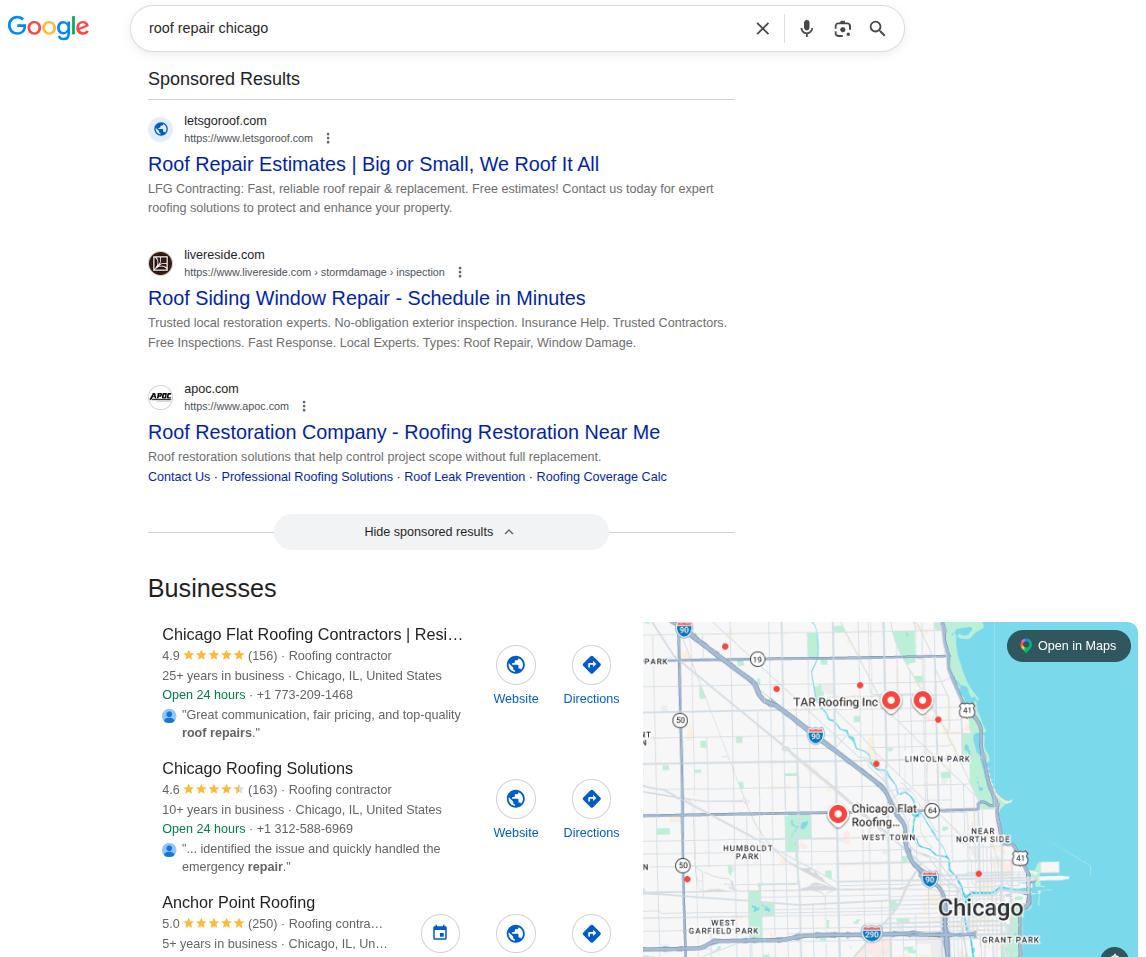
If they click your ad, Google charges you a fee based on the winning auction price and sends the user to your landing page.
You can then measure what happens after that click using Google Analytics, Microsoft Clarity, or built-in conversion tracking inside Google Ads.
You can track leads, purchases, phone calls, and even in-store visits in some cases. Over time, you adjust bids, pause weak keywords, test new ad copy, and improve your SEM campaigns.
Search engine marketing examples in action
Imagine you’re a local marketing agency that might bid on queries similar to “SEO service near me” or “SEO agency near me” to reach nearby clients.
When someone in that city types the phrase into Google, they see a short ad that highlights audits, monthly reporting costs, and a link to book a call. That ad will take the user straight to your landing page that explains packages and adds a simple booking form.
Also read: What is citation SEO?
Similarly, a SaaS company might target phrases like “best project management tool” or “team task tracking software” and send users to a free trial sign-up page from the text ad.
Over time, a well-run Google Ads account can grow paid traffic and increase conversions quickly. The key is that those gains come from many small changes, not one quick trick.
SEM vs SEO: What’s the difference?
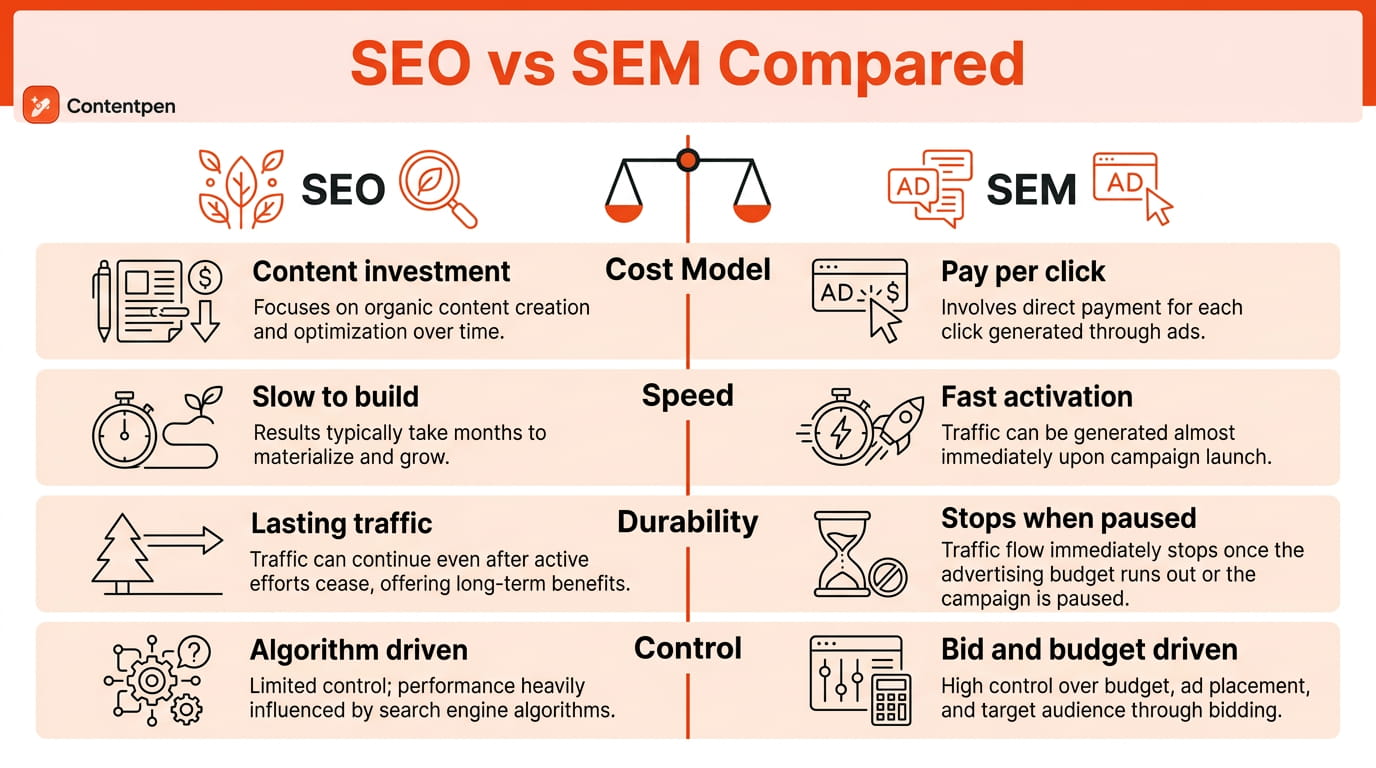
SEM and SEO both try to earn visibility on search engines, but they work in different ways.
SEO, or search engine optimization, focuses on improving your site so it ranks higher in the organic results without direct ad spend. SEM focuses on paid placements where you buy clicks through platforms like Google Ads and Microsoft Advertising.
With SEO, you research keywords, improve site structure, speed, and content, and earn backlinks over time either naturally or through off-page efforts.
Google, Bing, and other search engines then crawl your pages and decide where to place you in the unpaid results. You do not pay when someone clicks, but you invest time and budget into content, technical SEO fixes, and tools.
With SEM, you choose target keywords, write ads, set bids, and pay each time someone clicks. Your placements are labeled as ads and stop showing as soon as you pause the budget.
Besides search engines, you can also place ads on other popular platforms, like Reddit, LinkedIn, and Quora, to boost off-page presence.
Also read: What is Reddit SEO?
Both types of search engine visibility techniques rely on smart keyword work and writing solid content, but they differ in cost model, timeline, and control.
Below are all their differences summed up:
| Aspect | SEO | SEM |
| Cost model | No direct fee per click, but you fund content, technical work, and tools | You pay for each click based on keyword bids and quality score |
| Speed | Slow to build, often months before rankings move for new pages | Fast activation, ads can show within hours of launch |
| Durability | Keeps sending organic traffic once you rank pages | Stops the moment you pause, spend, or hit daily limits |
| Placement | Organic listings in the main results, maps, and rich snippets | Sponsored text or shopping ads labeled as paid results |
| Control | Less control over exact rank and timing, more tied to algorithms | More control through bids, budgets, and precise targeting options |
Smart growth teams do not see this as an SEM vs. SEO rivalry. Instead, they try to incorporate both into their plans.
Organic pages that already rank well can reduce how much you need to bid on certain terms, saving paid budget for new markets or bottom-of-funnel keywords.
How content supports your search engine marketing
Strong content is not separate from SEM. It is what makes your ads work better.
A user who clicks your ad and lands on a thin or generic page tends to bounce fast. That hurts your quality score and raises your cost per click over time. A user who lands on a clear, well-structured page is more likely to stay, trust your offer, and convert.
Content also feeds your organic side. Blog posts, guides, and FAQs can rank for the informational queries your ads are not built to catch, while your paid campaigns cover the high-intent, transactional keywords.
Over time, this lets you shift some budget away from keywords your content already ranks for, which lowers your blended cost per acquisition.
This is also where SEM data becomes useful outside the ad account. The search terms and landing pages that convert well in your campaigns tell you exactly what to write about next and which pages need better on-page optimization to hold that traffic organically.
Contentpen supports this loop directly. It is an AI SEO tool that takes you from topic ideas to ready-to-publish articles, with research, outlining, and SEO and GEO structure built into the workflow.

Write content that’s built to rank, not just read
Create search-optimized blogs aligned with SEO and GEO signals, so your content performs well across search and AI-driven discovery.
Try SEO Blogging FREE →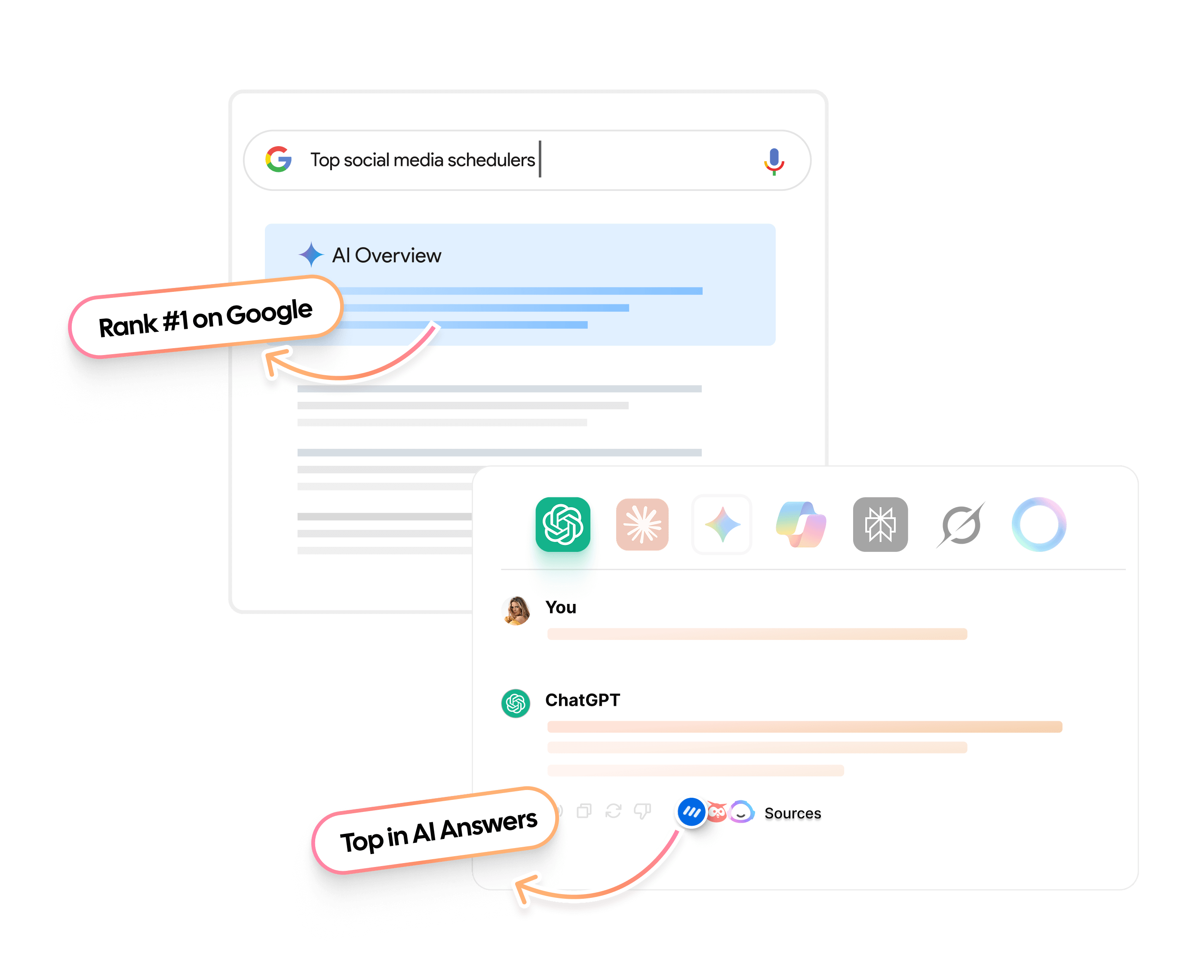
The tool also provides web analytics and SEO opportunities to help you sustain organic positions while your text ads retain paid traffic.
What are the main types of search engine marketing?
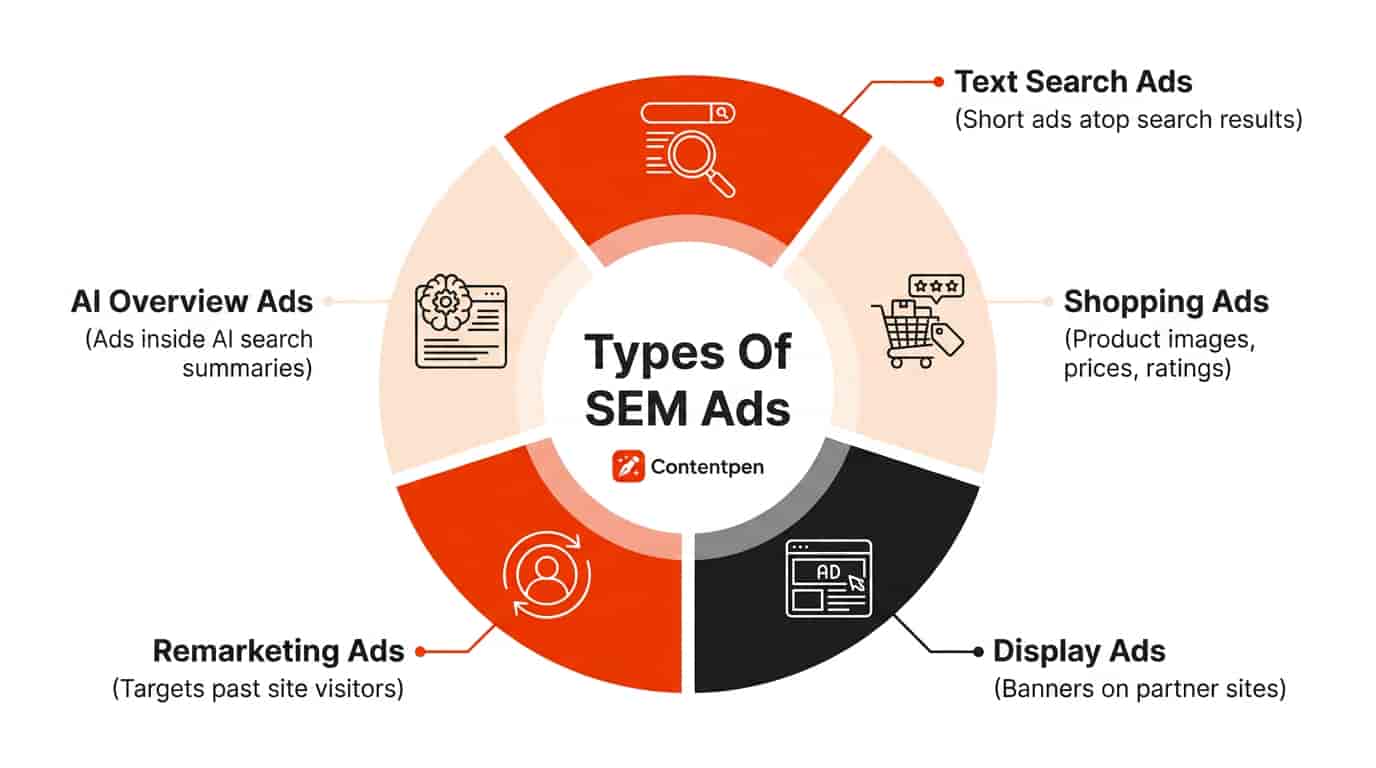
The five main types of search engine marketing include standard text search ads, shopping ads, and contextual placements that extend beyond the results page. All of these connect back to a core PPC model where advertisers pay when a user interacts with the ad.
Text search ads or Responsive Search Ads (RSA) are the most common format. These are the short ads you see at the top of Google and Bing when you search, made up of headlines, descriptions, and a visible URL path to the landing page.
Shopping ads show product images, prices, and ratings pulled from a feed in Google Merchant Center or Microsoft Merchant Center.
Retailers often use these heavily because they give searchers visual clues before the click. This format works well for ecommerce brands that need to show price and design upfront.
Contextual advertising, or display ads, are banners on partner sites that show advertisements to visitors based on the targeted user demographic or behavior.
Search remarketing lets you show ads to people who have already visited your site or used your app. By bidding more on these warm audiences, you can bring back users who browsed but did not convert. This can improve conversion rates and lower blended acquisition costs.
Besides all this, a newer type of ad, called AI Overviews advertisements, is starting to show up in 2026.
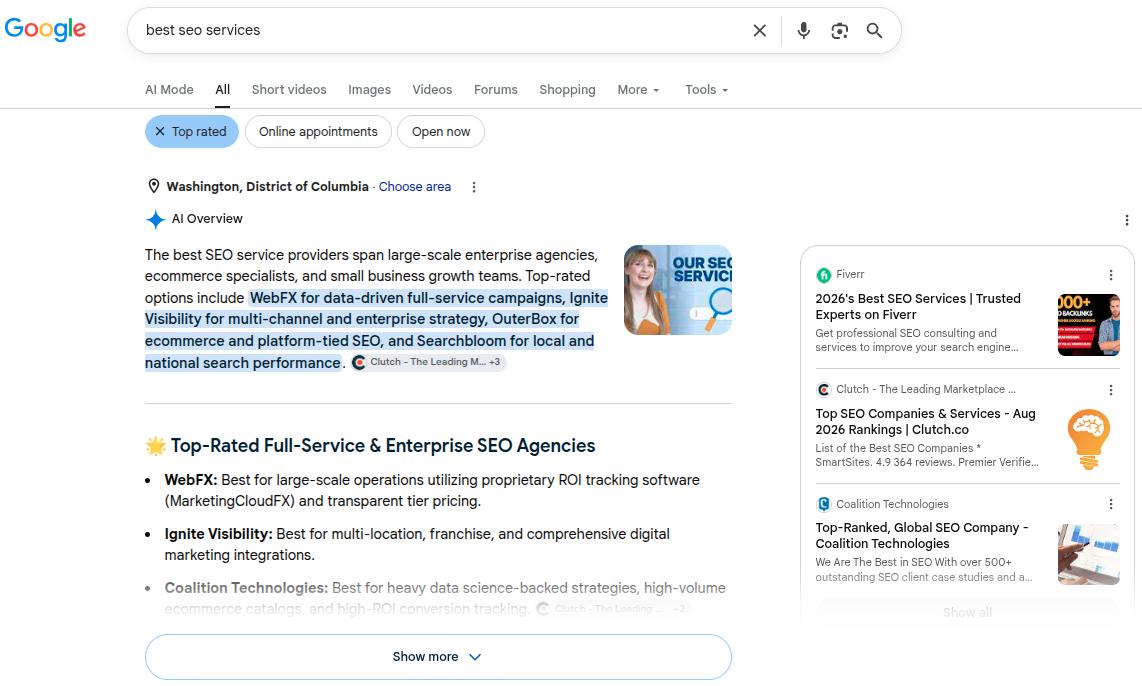
Recent changes mean Search and Shopping ads can appear alongside or within these AI summaries, especially in the US region.
How much does search engine marketing cost?
This depends on your industry, your goals, and how carefully you manage campaigns. There is no standard monthly fee because SEM uses auctions, so your actual cost per click changes based on competition and quality score.
A local bakery might pay under $2 for many clicks, while a national B2B software brand could see CPCs over $20 on trending terms.
In Google Ads and Bing Ads, you usually set a daily budget for each campaign and a maximum bid for each keyword. The platform will try to bring you clicks within those limits, raising and lowering bids during the day based on competition.
If your budget runs out, your ads stop showing until the next day.
Higher ad positions tend to cost more per click but also bring more traffic and often more conversions.
A study by FirstPageSage shows that moving from the second to the top ad position can increase traffic by close to 50% in some industries. That gain is only worth it if your profit per conversion is higher than the extra spend, which is why ROI tracking matters.
To keep SEM profitable, you need to track cost per conversion and compare it to the revenue that conversion brings. This is easier in e-commerce, where you can see revenue in Google Analytics or your shopping platform.
In lead generation, you may use a CRM like HubSpot or Salesforce to connect ad clicks to signed deals.
Factors that affect your SEM budget
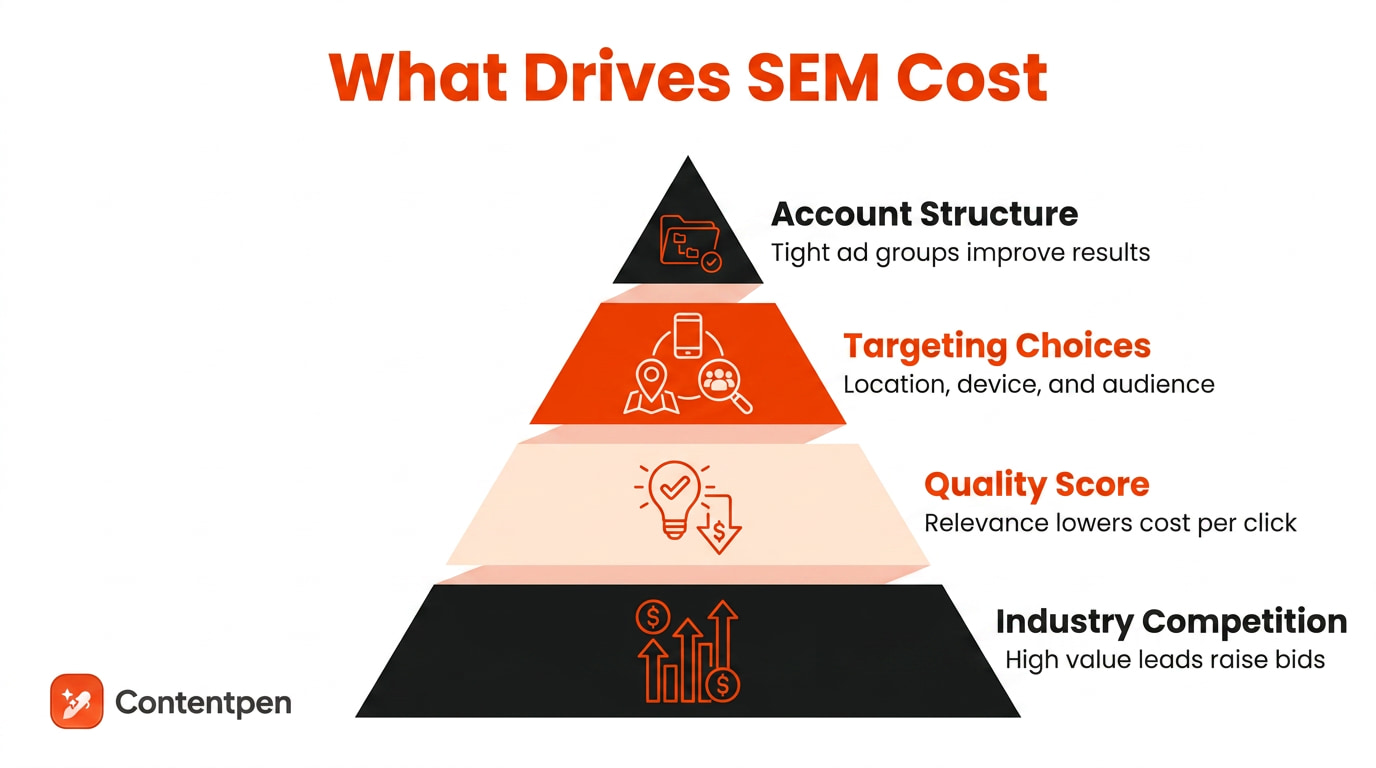
Several main factors push your search engine marketing budget up or down. Learning them early helps you choose a realistic starting spend and avoid shock when you test new keywords.
- Industry and keyword competition have a huge impact because higher-value leads attract more bidders. Legal, insurance, and software often see some of the highest CPCs because a single client can be worth thousands of dollars.
- Quality score and landing page relevance decide how much you pay compared to rivals for the same position. If your ad copy matches the keyword and your landing page gives a strong experience on mobile, Google can reward you with lower CPCs.
- Targeting choices like geography, device type, and audience layers also shape your costs. Narrow location targeting around profitable areas can keep your spend focused on people who can actually buy from you.
- Account structure and campaign settings matter more than many beginners expect. Mixing different types of keywords in a single ad group makes it hard to write relevant ads, which can affect click-through rates. Careful grouping is required for better results.
How do you create a search engine marketing strategy?
You create a search engine marketing strategy by setting clear goals, choosing target keywords, planning budgets, and building ads and pages that work together.
A good plan keeps you from chasing every new feature in Google Ads or suggestion you see online. Instead, it gives you a small, testable starting point that you can grow over time.
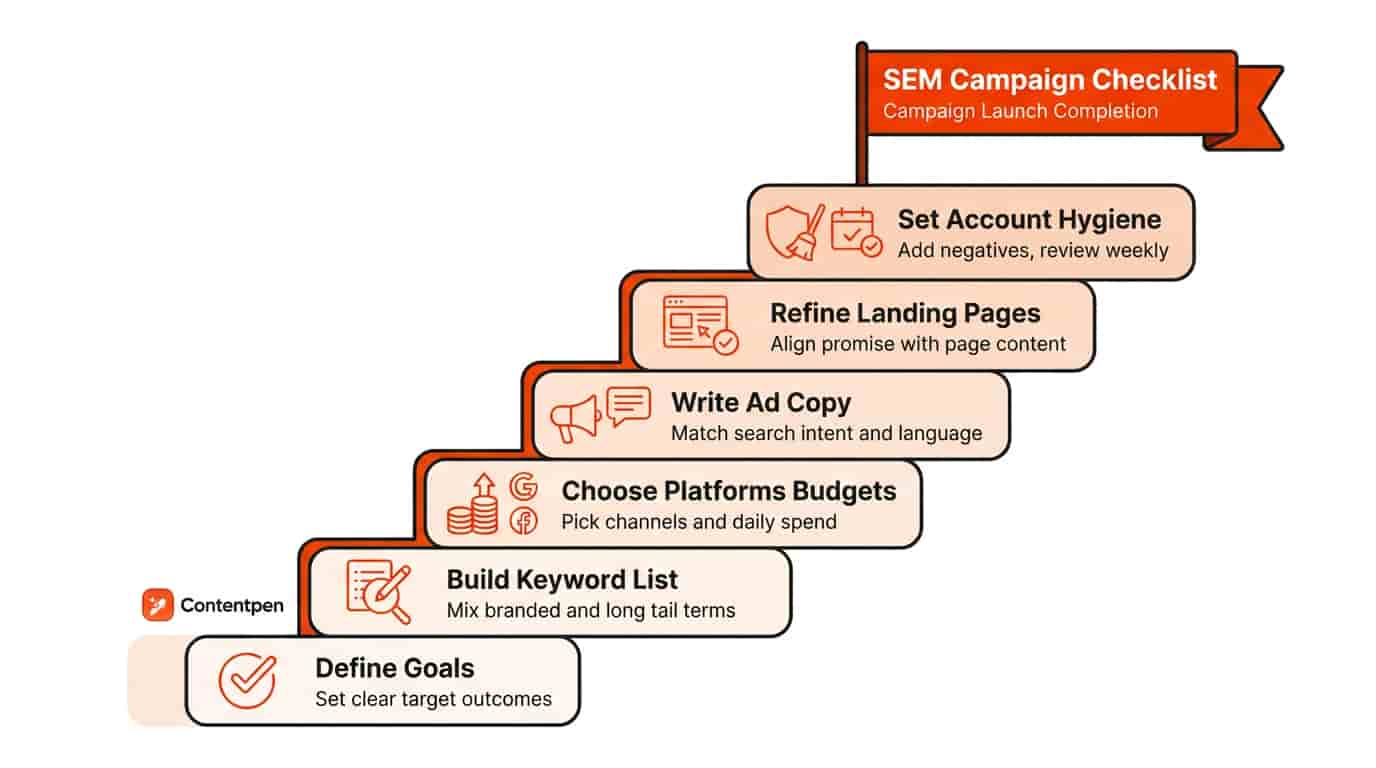
Step #1: Define goals and target audiences
Start by defining who you want your ads to reach and what you want to achieve from your investment.
Depending on the business type, niche, and size, your goals could be to fill forms, get phone calls, increase online transactions, or improve repeat purchases.
For example, a SaaS B2B marketing agency may focus on getting contact form sign-ups, while an e-commerce brand may prioritize visibility for its product listing on a focused keyword.
Write your ad requirements down. Then describe your ideal customer, including their job role, location, and common questions, before you select keywords.
Step #2: Build a starter keyword list
The second step is to build a starter keyword list that mixes branded, non-branded, and long-tail keywords for your offer.
The reason why long-tail phrases perform better is due to their specificity. If you target a query like ‘Buy an iPhone used under $200’ instead of a generic ‘buy an iPhone’, you get:
A. Lower competition and bids for the keyword since not a lot of rivals would target it.
B. Higher-intent customers who aren’t just looking around but are ready to purchase.
For assistance, you can use Google Keyword Planner or Semrush search engine marketing tools to find terms with clear intent and realistic competition.
Then, you should group related keywords into tight ad groups so your ad copy can speak directly to what users search for.
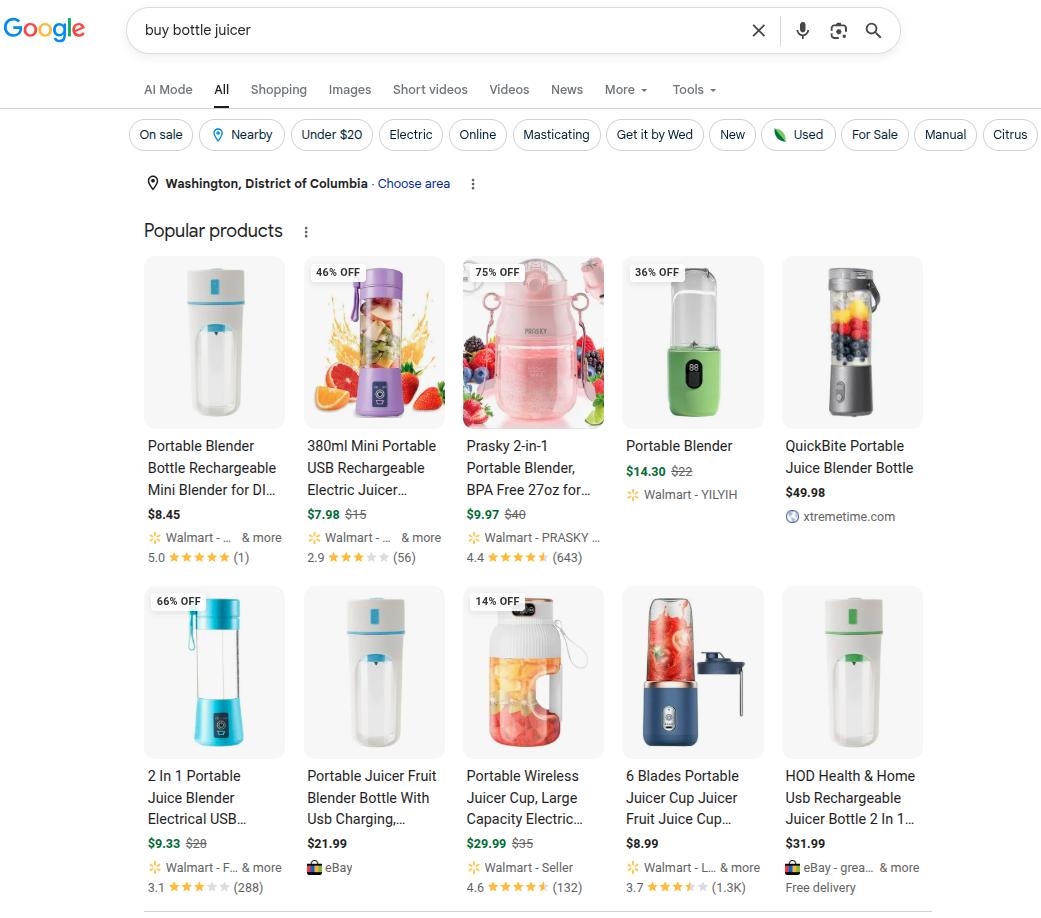
Pro tip: You can also use a simple Google search to identify long-tail keyword variations and ideas. Take our ‘bottle juice’ example into consideration. Notice the semantic phrases recommended by Google in response to the seed phrase.
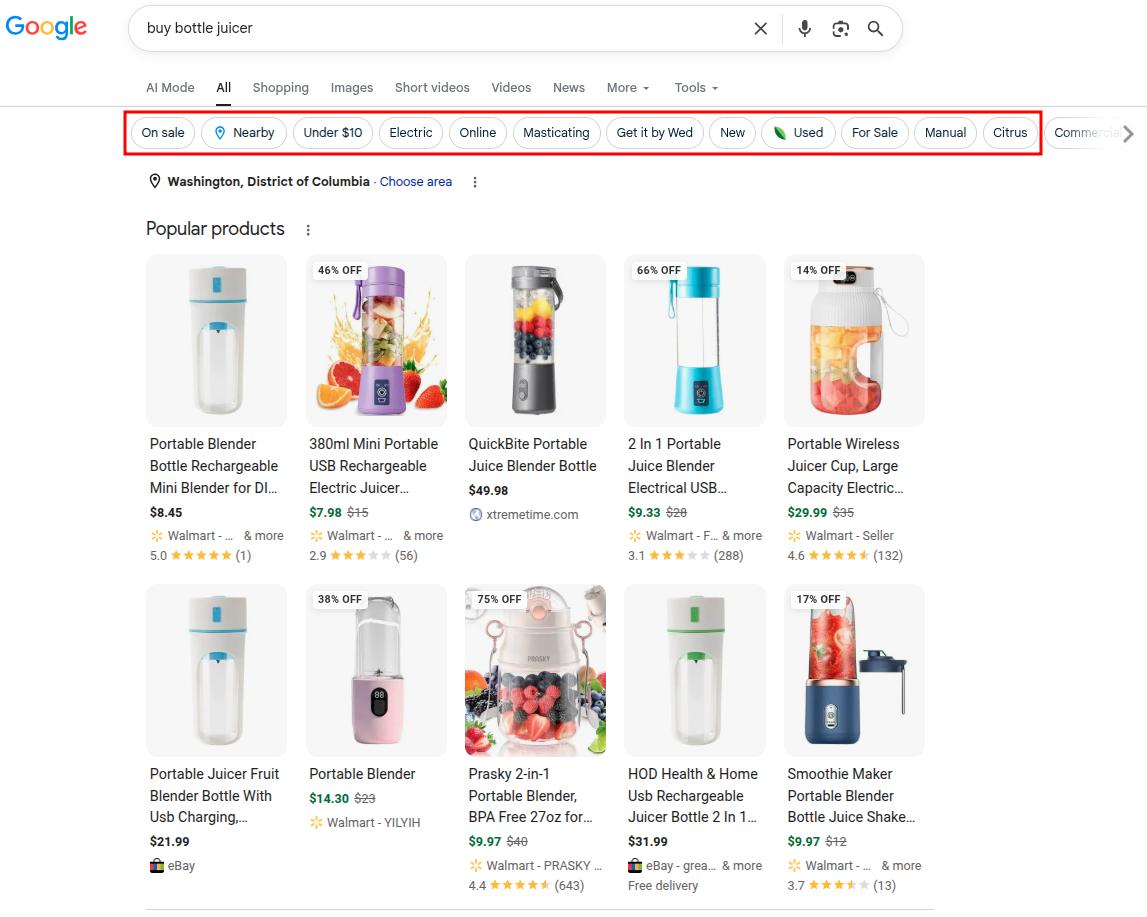
This means you can try to bid on keywords like ‘buy bottle juicer under $10’, ‘buy bottle juicer used’, ‘buy bottle juicer electric’, or any other variation instead of a generic, highly competitive keyword.
Step #3: Choose your platforms and budgets
Once you’ve finalized your keyword list, choose the platforms where you want to run the advertisements.
Choose your platforms and budgets based on where your audience searches the most. Many US businesses start with Google Ads, then add Microsoft Advertising to reach Bing and Yahoo users at a lower average CPC.
Pick modest daily budgets at first so you can gather data without risking overspending in the first week.
Step #4: Write ad copy
Writing ad copy is one of the most crucial steps in building a successful search engine marketing plan.
You need to match what the user is searching for and provide them with a clear call to action (CTA).
A text search ad on Google typically consists of the following components:
- Headline: This is the main seller of the ad, immediately telling the user about your service or product. Headlines are displayed at the top with a typical limit of 30 characters each.
- Description: This is where you get into some more details of your offerings. These typically have a 90-character limit each.
- Landing page: This is the page where users will “land” when they click your ad (more on this in step 5).
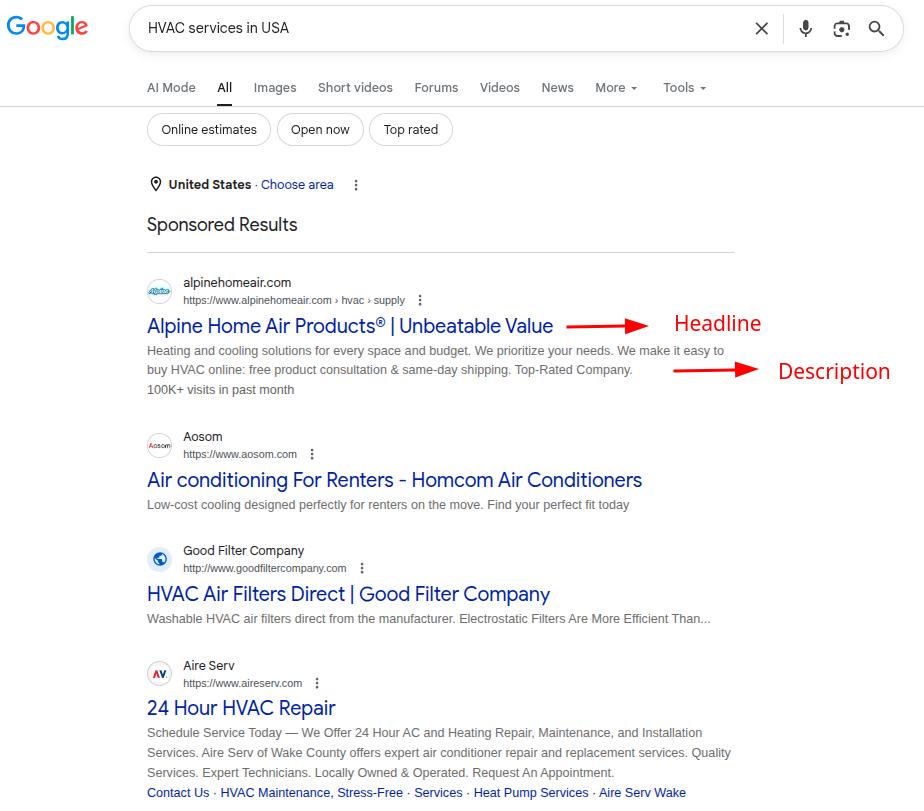
You might see our above example and see that the headline and descriptions as a whole are not under the designated character limits. That is because they are stitched together by Google when displaying the Responsive Search Ad (RSA).
For example, take the first sponsored result into account. The headline “Alpine Home Air Products” is joined together with a vertical pipe “|” to the other headline variation submitted by the business, “Unbeatable Value.” Both of which are under 30 characters (with spaces).
The same is the case with the ad’s description. The sentence from “Heating and cooling solutions” to “We prioritize your needs” is one description, while the other description starts after the period, both of which are under 90 characters.
This is how Google displays RSA in 2026.
To meet all these criteria for ads and capture more clicks, copywriters must be extremely skilled in understanding the audience’s psyche and using it to their own advantage.
Top copywriters tap into trust and urgency cues to trigger FOMO (fear of missing out). Most businesses also use time-sensitive bonuses, such as “25% until Christmas Eve” or something similar, to convince shoppers to make the decision.
Good ad copy also matches the intent of the landing page and briefly tells users what they’ll find on the main page once they click.
Step #5: Build and refine landing pages
Building on your ad copy, the landing pages must be able to quickly deliver the information the users are looking for without any hiccups.
In order to write a good landing page copy, think in terms of what looks prettier and is easier to process for the buyers. This is where writing meets design.
Refining landing pages means:
- Optimizing pages to load fast on mobile
- Making the buy buttons easily accessible and functional (across devices)
- Adding social proof to instill trust
- Ensuring shorter forms and fewer manual steps before purchasing
Finally, to track conversions on your site, use smart SEO analytics and attribution tools like Usermaven to help.
Add the exact landing page button on UM using the “Auto-Captured Events” feature and see what keyword bids actually brought conversions for you.
Once you get the hang of it, try A/B testing different variations of your landing page copy for different markets. See what is working with the help of the tools and proceed with that strategy in the future.
Step #6: Set account hygiene
The last step is to set up proper core account hygiene so your search engine marketing optimization work is easier later.
Start by adding negative keywords for obvious mismatches, choose sensible match types, and separate brand and non-brand terms.
Then, schedule weekly reviews to pause weak ads, adjust bids, and test new ideas to extract the maximum benefit from your SEM strategy without wasting any resources.
What common SEM mistakes should you avoid, and how?
Several common SEM mistakes can drain your budget or hide your best opportunities if you do not watch for them.
#1: Skipping negative keywords
One frequent mistake is skipping negative keywords, which tell Google Ads and Bing Ads which searches you do not want. Without them, your ads may show on loosely related or low-intent searches that never convert, which raises costs and muddies your data.
To solve this, you should review search term reports regularly and add negative keywords to block irrelevant traffic.
For example, if you sell paid courses and see many clicks for “free training,” add that as a negative phrase. Over a few weeks, this clears out waste and shifts budget toward queries that have a real chance to convert.
#2: Sending all traffic to the home page
Another mistake is sending all traffic to the home page instead of building focused landing pages. When ad copy, keywords, and pages do not align, users feel lost and bounce. Google also notices this mismatch and lowers your quality score, forcing you to pay more to stay visible.
A fix is to work toward matching the search intent.
If your ad promotes “24-hour emergency HVAC repair,” the landing page headline should mention that exact service and availability. Strong matches like this can raise click-through rates and quality scores while also helping visitors trust your offer.
#3: Focusing on vanity metrics
A third issue is watching only clicks and impressions instead of downstream results.
It is easy to feel good when a campaign shows high click-through rates, but if few people fill out forms or purchase, something is off.
Contrary to popular belief, often the fix lies in tightening keywords, clarifying offers, or adjusting forms, not in raising bids.
Check quality scores and conversion numbers at least once a week instead of only looking at total spend. When you see low scores, ask whether the keywords are too broad, the ads are off-topic, or the landing page is slow on mobile.
Fixing those root problems usually brings better results than simply adding more budget to a weak campaign.
#4: Failing to perform A/B testing
New advertisers also forget to test different ad creatives and extensions. Running a single ad per group makes it hard to know whether better wording could lift performance or targeting a different keyword.
Simple A/B tests can reveal big gains with minimal risk and must be considered by digital marketers.
Set up structured testing for ads and pages instead of changing everything at once. Rotate two or three ads per group, let them gather enough clicks, then keep the winner and test a new variant. Apply the same habit to landing pages by trying different headlines, offers, or layouts.
The bottom line
Search engine marketing gives you fast, targeted access to people who are already looking for answers, products, or services like yours.
When used well, SEM can bring in leads or sales within days and teach you a lot about how your market searches. If used poorly, it can turn into an expensive guessing game that burns budget without clear return.
The most durable approach is to pair SEM with SEO and strong content so that paid and organic channels work together. SEO builds the long-term base, while SEM fills gaps, supports launches, and offers a testing ground for new messages and offers.
Frequently asked questions
Search engine marketing brings quick visibility, detailed targeting, and clear metrics. However, SEM campaigns need constant monitoring, and the gains from ads can drop drastically once you run out of budget.
It depends on your budget, time, and in-house skills. Google Ads is self-serve, so users with smaller budgets can start in-house and learn through hands-on testing. As your campaigns scale, consider hiring an agency or an external SEM professional to manage your work.
Yes, search engine marketing can work well for small businesses when they keep targeting tight and budgets modest. Local service companies, restaurants, and shops can set radius-based campaigns so only nearby customers see the ads.
You can see traffic and basic results from SEM within hours or days of launching your first campaign. Ads start showing as soon as they pass review and enter eligible auctions.
Yes, several free tools and courses can help you learn SEM from scratch. Google Skillshop offers Google Ads training and certifications at no cost. You can also use the Google Ads demo account to practice building campaigns without spending real money.