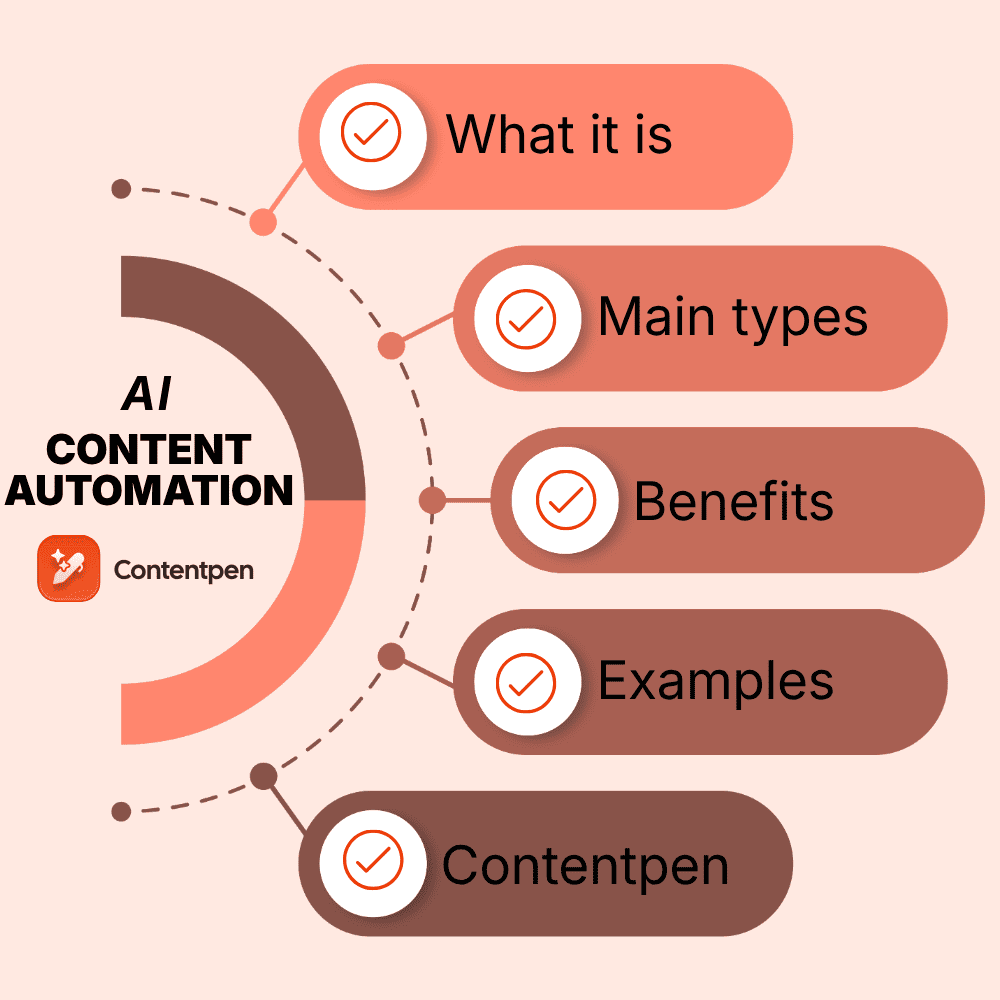
AI content automation is what happens to the actual words, images, and pages your team produces. It’s the layer that takes content from idea to published asset without a person touching every step in between.
This guide covers what AI content automation actually does, the tools worth knowing, real examples, and a simple way to start.
By the end, you’ll see how an AI-powered platform like Contentpen can simplify your content creation efforts with unified keyword research, drafting, and publishing.
Key takeaways
- AI content automation uses AI to handle the repeatable parts of content production. Drafting, optimizing, repurposing, and publishing, while a person still directs and approves the work.
- It’s different from a plain AI writing tool. Automation connects drafting to research, optimization, and publishing into one workflow.
- Common types include blog and article automation, content repurposing, on-page optimization, visual content automation, and publishing automation.
- Free tools exist for testing the idea, but most hit a ceiling once you need consistent quality, brand voice, or publishing at scale.
What is AI content automation?
AI content automation means using machine learning and natural language processing to handle the repeatable parts of producing content. That includes drafting, optimizing, formatting, editing, and publishing, not just the writing itself.
The distinction matters a lot. A tool that writes one blog post when you type a prompt is helpful, but it’s not automation. AI automation connects that drafting step to research, brand voice, SEO checks, and publishing, so the whole chain runs with far less manual handling.
A person still sets the direction and reviews the output. The AI handles the repetitive execution between the brief and the published page.
AI content automation vs. an AI content maker
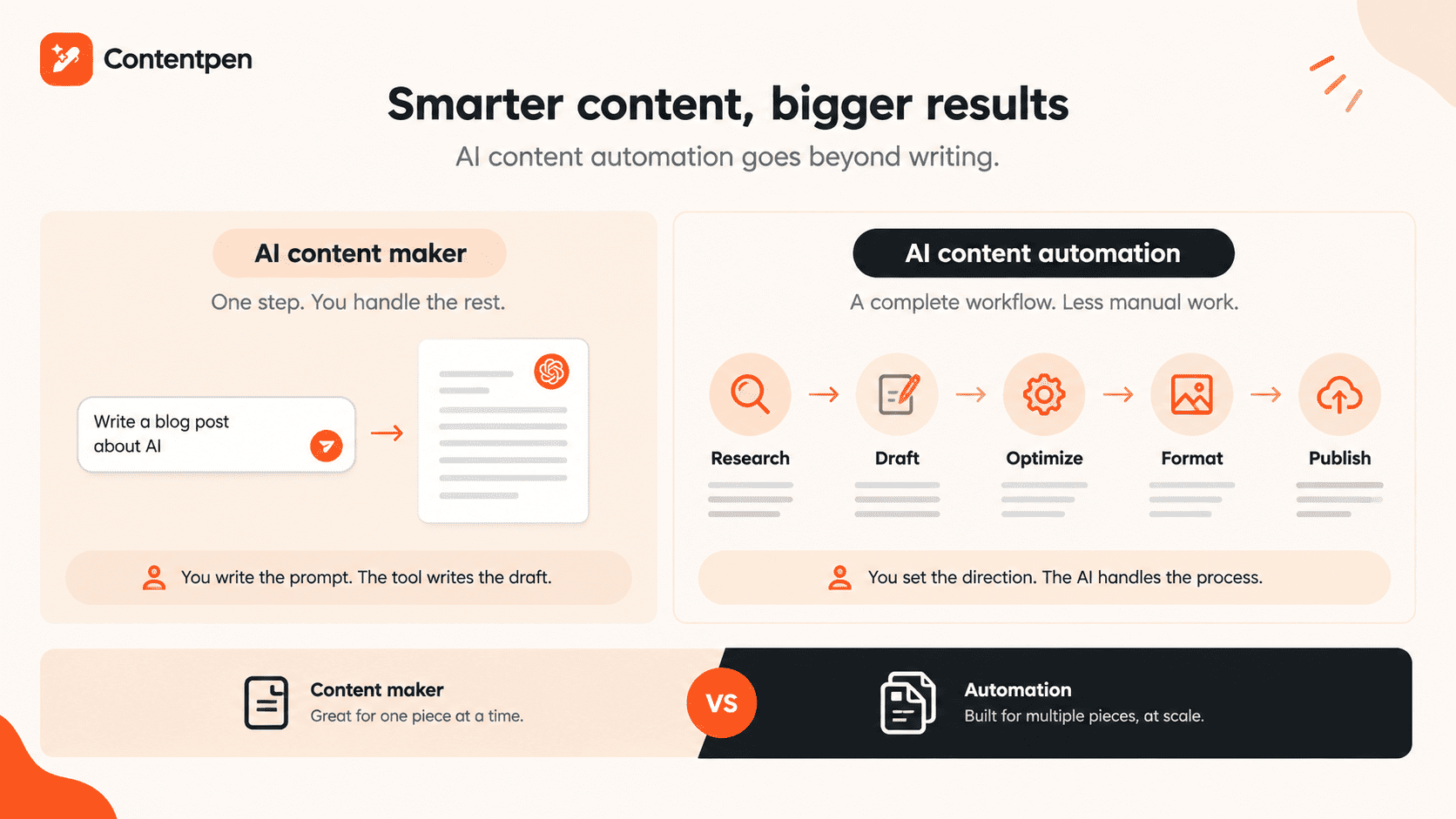
An AI content maker, like a basic prompt-and-generate tool such as ChatGPT, produces text on demand. You type what you want, and the tool writes a draft, but the rest is on you.
AI content automation strings those steps together. A keyword or brief goes in, and a workflow handles research, drafting, optimization, and formatting before a person does a final review and hits publish.
The difference shows up at scale. A content maker helps with one piece at a time. Automation is built for creating multiple pieces at once, without cutting down on quality.
How AI content automation works
Most AI content automation workflows follow a similar pattern, regardless of the platform running them.
- A brief or keyword starts the process. This can be a target keyword, a content brief, or a topic pulled from a content calendar.
- The system researches the topic, pulling from search data, competitor content, or a brand’s existing material to understand what’s already out there and what’s missing.
- A draft gets generated in the brand’s voice, based on the research and any style guidelines fed into the system. The draft runs through optimization checks, things like structure, readability, and basic SEO hygiene, before it ever reaches a person.
- A person reviews and edits the draft, catching anything that sounds off, checking facts, and making the judgment calls a model can’t make on its own.
- Once approved, the content publishes automatically to the CMS, and in more advanced setups, gets repurposed into other formats along the way.
With this general working mechanism in mind, let’s review the types of AI content automation popular in 2026.
Types of AI content automation
Content automation isn’t one tool doing one job. It spans a few distinct use cases, each solving a different bottleneck.
| Type | What it handles | Where it helps most |
| Blog and article automation | Research, drafting, and structuring long-form content | Teams publishing regularly and needing consistent output |
| Content repurposing | Turning one asset into multiple formats | Teams with strong existing content that isn’t being reused |
| On-page optimization | Structure, readability, internal linking, metadata | Teams whose content is written but underperforming in search |
| Visual content automation | Generating or adapting images and graphics to match a piece | Teams without in-house design support |
| Publishing and distribution | Scheduling and posting content across channels | Teams juggling a CMS, social, and email from one piece of content |
Let’s review each of these content automations in more detail.
Blog and article automation
This is the most common entry point in AI content automation. A keyword or brief goes in, and the system handles research, outlining, and drafting before a person edits and approves the piece.
Contentpen follows a similar AI content automation workflow with its SEO autopilot. The tool starts with keyword research for your topics and provides you SEO and GEO-optimized blogs ready to rank on Google and win AI citations.
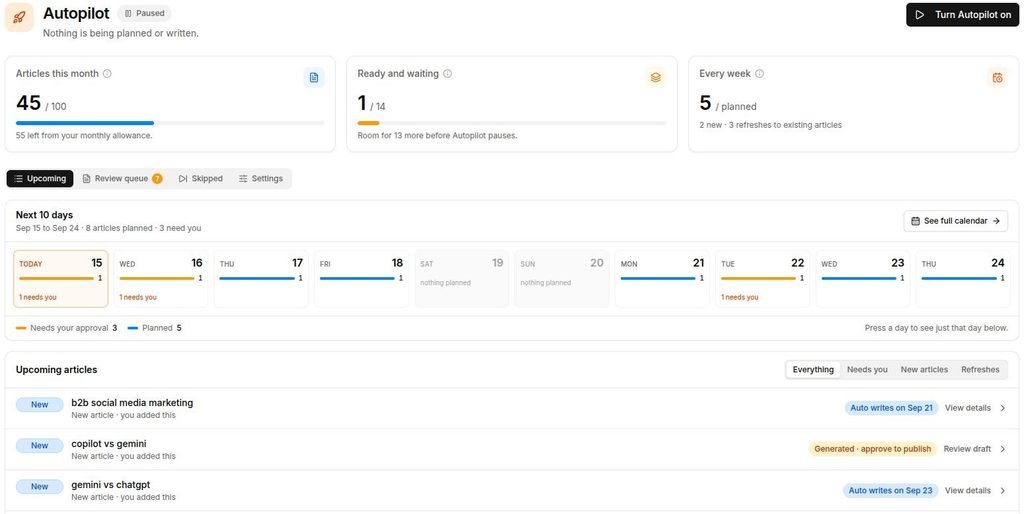
The best part is that you control the flow, whether to get approval before generation for a target keyword, before publishing, or not at all. The AI content automation system ensures you are done with your routine content tasks without the extra manual load.
Content repurposing
One well-performing article usually contains enough material for a handful of other formats. Repurposing automation turns a blog post into social captions, an email summary, or a script, without a person manually rewriting each version.
This works best when the source content is already strong, as repurposing a weak article just multiplies the weak version across more channels.
On-page optimization
Optimization automation checks structure, internal linking, and readability against what’s actually ranking, then flags or fixes gaps before a piece goes live.
Contentpen automates internal and external linking for articles, scanning a draft for relevant contextual placements where they genuinely help a reader.

Improve SEO with automated linking that fills them

Adds context-aware internal and external links automatically
Uses relevant anchor text to improve SEO and content flow

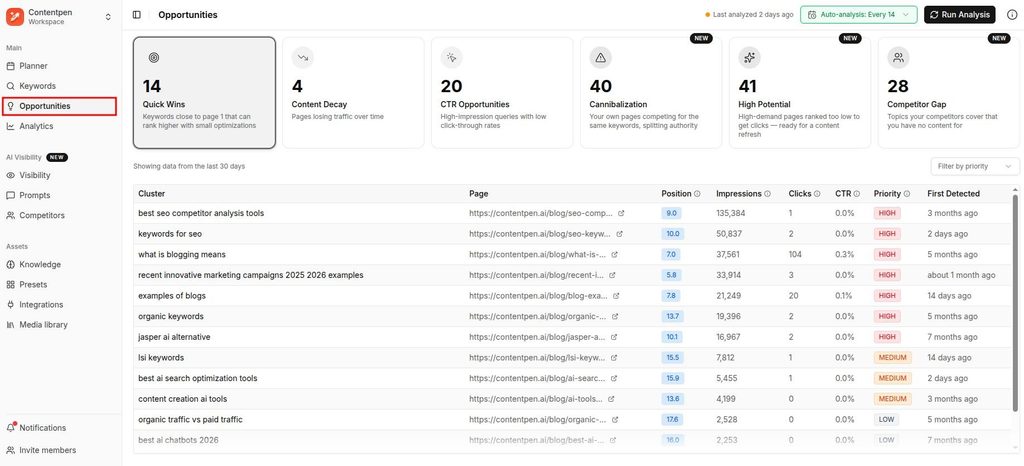
It also performs automated SEO scoring, GEO-checks, and scans your published content to capitalize on ranking opportunities, such as pushing keywords close to page 1 with smaller optimizations.
Visual content automation
Some platforms generate or adapt images to match a piece, pulling in relevant graphics, charts, or featured images without a designer manually sourcing them for every post.
Contentpen helps here by providing branded featured and in-article images created with your brand colors, logo, and style. It also offers a built-in media assistant that allows you to centralize asset organization for AI-generated images without manual effort.
That said, some AI content automation tools may not perform that well when it comes to creating very brand-specific, custom visuals for your platform. Therefore, you’ll need a real designer for such tasks.
Publishing and distribution automation
Once content is approved, publishing automation pushes it live across a CMS, and in more connected setups, adapts and schedules it for social or email at the same time.
Our SEO tool and AEO tool do this by sending your blogs to WordPress, Ghost, Wix, Webflow, Shopify, and EmDash CMS platforms. It also integrates with ContentStudio so you can share your blog updates directly on social media.
Publish content directly to your CMS, without copy-pasting
Move from draft to live post in a single step. No hassle, no errors!
Try One-click Publishing →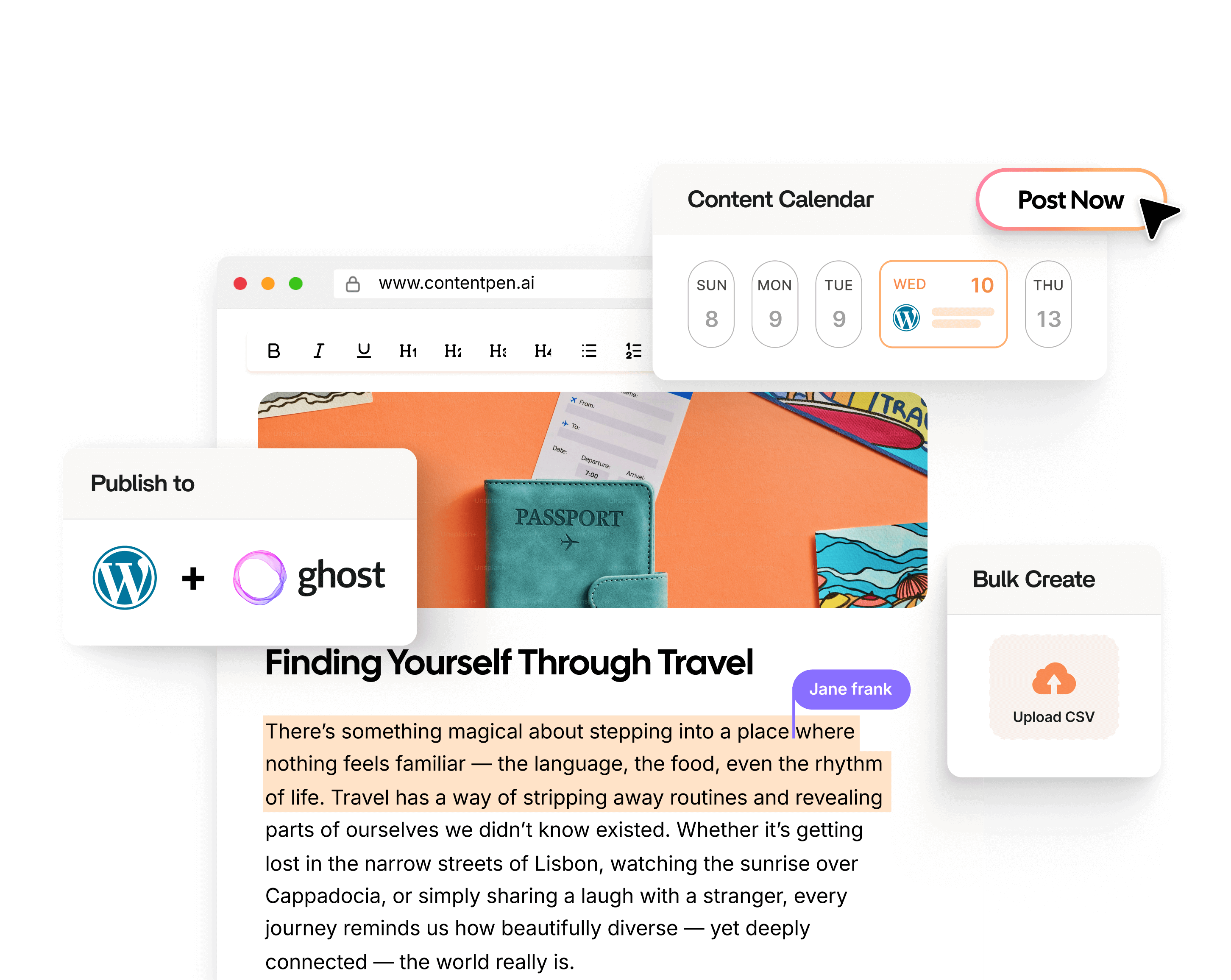
This is where content automation and marketing automation overlap. The line gets blurry once a single piece of content is triggering actions across several channels at once.
Benefits of AI content automation
The appeal goes beyond writing faster. A few benefits show up consistently once a team automates content production properly.
- Consistent output without a bigger team: A small team can maintain a publishing schedule that used to require several more writers.
- Faster time from idea to published page: Research, drafting, and optimization that used to take days can happen in hours, with a person reviewing outputs rather than starting from scratch.
- Brand voice that holds steady at scale: A well-configured system keeps tone and style consistent across dozens of pieces, which gets harder to do manually as volume grows.
- More time for strategy and judgment calls: The repetitive execution moves to the AI layer, freeing people to focus on strategizing and ensuring customer success, not on how to write a piece of content.
With these benefits in mind, let’s take a look at real brands that utilized AI content automation to streamline their workflow and boost productivity.
AI content automation examples from real brands
A couple of documented cases show what this actually looks like at scale.
The Associated Press automated its quarterly earnings stories starting in 2014, working with a company called Automated Insights. By 2018, AP was producing about 4,700 automated earnings stories per quarter, up from roughly 300 written manually.
AP managing editor Lou Ferrara said the shift freed reporters to spend more time on original reporting, and no jobs were cut as a result.
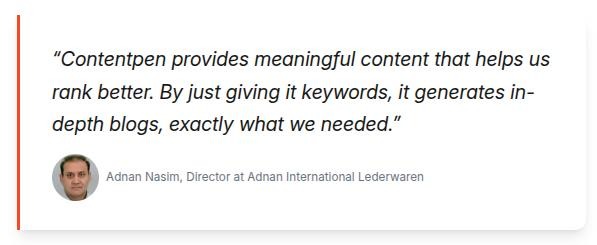
On a similar note, Adnan International Lederwaren used Contentpen’s content automation to save roughly $200 a month and 3 to 8 hours per week on SEO and content tasks.
Both examples point to the same lesson. Automation worked because it handled the repeatable, formulaic part of the job, not the part that needed original judgment.
Best AI content automation tools and software
A few AI content automation platforms are worth knowing, depending on what you’re actually trying to solve.
| Tool | Best for | What it automates | Where it’s limited |
| Contentpen | Full content and SEO/AEO pipeline | Keyword research, drafting, optimization, publishing, GEO scoring, and AI visibility tracking | Built for content, SEO, and GEO, not email or ad automation |
| Jasper | Teams needing brand-consistent copy across many writers | Drafting in a shared brand voice, campaign copy at scale | More of a writing assistant than a full pipeline, still needs separate SEO and publishing tools |
| WRITER | Enterprise teams with strict style and compliance needs | Style guide enforcement, brand voice consistency across larger teams | Built for governance more than speed, can feel heavy for a small team |
Besides these options, you can take a look at some other tools as well, depending on your budget and output expectations:
- Anyword: An AI-powered GTM (go-to-market) platform built for teams looking to generate, score, and optimize performance-driven copy.
- Sudowrite: Built for fiction novelists, authors, and creative brand strategists wanting to automate stories and narratives at scale.
- Surfer SEO: Specializes in on-page SEO automation and surfacing topics that bring in more organic traffic and growth.
Other general-purpose, workflow-based automation platforms include n8n and Zapier. However, they are just used as an intermediate step in content creation, mostly to connect a generation tool to an optimizer or publishing tool.
Important: Before you pick a platform, think about which problem you are trying to solve actively, what your budget is, and how you will migrate to the platform without disrupting current operations.
If possible, opt for free trials or plans offered by the AI content automation tools to try out a basic workflow or campaign before switching completely.
AI content automation software vs AI content creation agency
Let’s put it like this: AI content automation software puts the workflow in your hands. You configure the brand voice, approve the output, and run it yourself, usually at a lower cost than outsourcing content work.
On the other hand, an AI content agency does the same job as a service, using AI tools on the back end but managing the workflow, review, and strategy for you. That costs more, but it suits teams who want the output without building or running the system themselves.
Neither is universally better. A small team with time to configure a tool usually gets more value from software. A team with budget but no bandwidth to manage a workflow usually does better with an agency.
How to make AI-automated content
Follow the steps given below to help you get started with AI content automation.
- Start with your most repeatable content type, usually blog posts or a recurring format like weekly roundups, since these formats give AI the clearest pattern to work from.
- Feed the system your brand voice, past content, and any style guidelines, so drafts start closer to publish-ready instead of needing a full rewrite.
- Run a small batch first, maybe 5-10 pieces, with a person reviewing every single one before it goes live.
- Measure what changed. Check the time it takes each piece to go from brief to published page, and whether quality held up, before scaling to more content types or higher volume.
Write content that’s built to rank, not just read
Create search-optimized blogs aligned with SEO and GEO signals, so your content performs well across search and AI-driven discovery.
Try SEO Blogging FREE →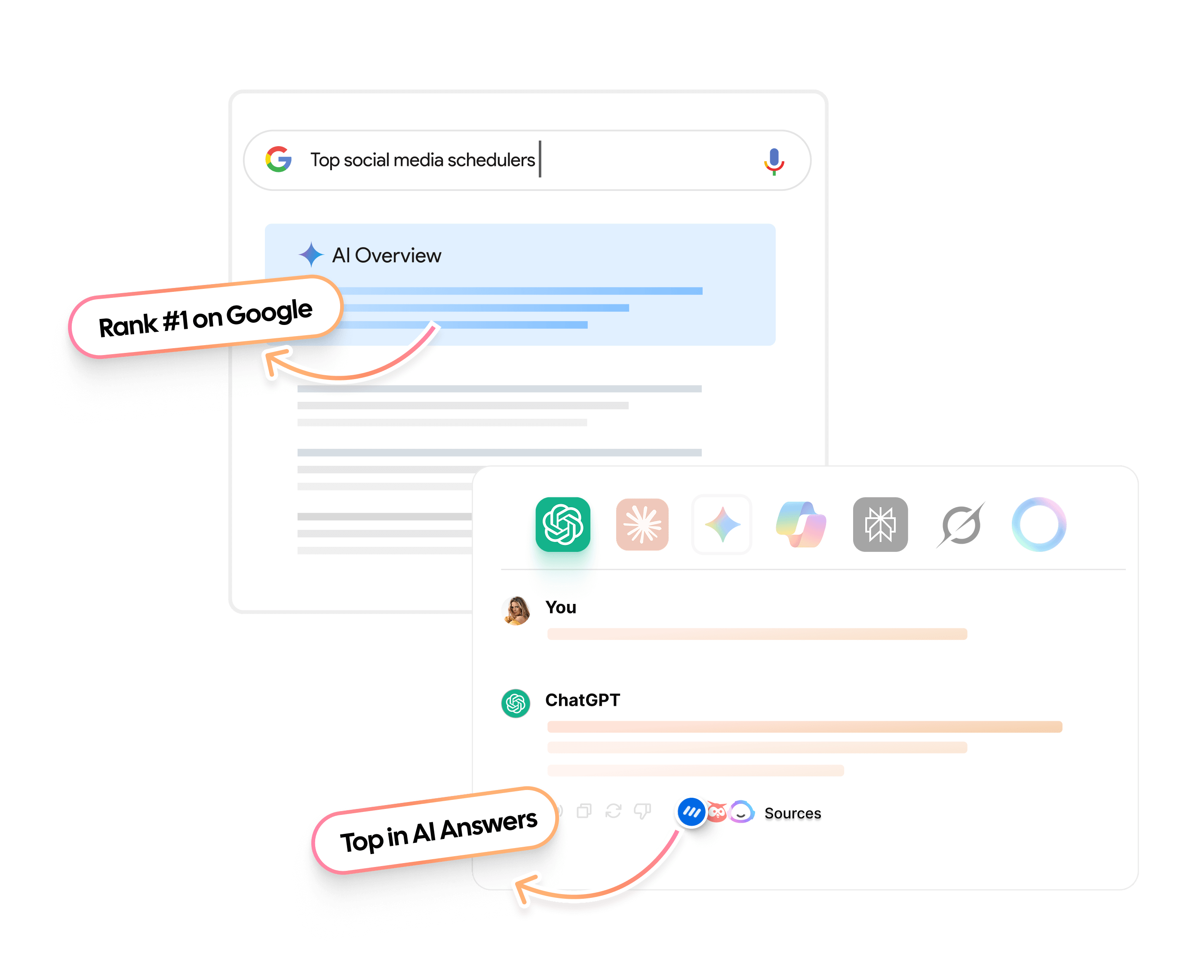
AI content creation jobs and free courses
Artificial intelligence hasn’t eliminated content roles. It has shifted what the job actually involves.
Titles like AI content strategist, content operations manager, and AI editor increasingly show up alongside traditional writing and editing roles.
Today, the most valuable skill isn’t just prompting. It’s also knowing how to brief a system well, judge when output is actually good enough, and catch what a model gets wrong before it publishes.
If you want a free starting point to learn AI content automation skills, start with HubSpot Academy’s AI for Marketers course at no cost.
You can also take other AI content creation courses free of charge on platforms like Coursera and edX, which are mostly offered by Fortune 100 companies and top-ranking universities.
Wrapping up
AI content automation isn’t about replacing writers. It’s about handling the repeatable parts of getting content from idea to published page, so people spend their time on judgment calls instead of repetitive execution.
The teams getting real results start with one content type, set a baseline, and expand once the quality holds up at scale.
If keyword research, drafting, and publishing feel like separate, disconnected steps on your team right now, Contentpen’s SEO Autopilot runs them as one workflow, with approval checkpoints you control the whole way through.
Write better blogs in less time, without sacrificing quality.
Let AI handle structure, clarity, and flow while you stay in control of the message.
Try AI blog writing →
Frequently asked questions
According to Bill Gates, the three fields best positioned to stay human-led are coders and AI specialists, energy experts, and biologists. Content and writing roles aren’t on that list, but they are shifting toward strategy and review rather than disappearing.
By capability: reactive machines, limited memory, theory of mind, and self-aware AI. By function: narrow AI, general AI, and super AI. Nearly every AI content tool available today falls under narrow AI with limited memory.
Yes, for testing. Most platforms offer a free tier or trial, but consistent brand voice, CMS publishing, and higher volume usually require a paid plan.
AI content detector tools are increasingly used by publishers, universities, and some content agencies to assess the likelihood of AI-generated content. However, the tools aren’t perfectly reliable. They can flag human-written text as AI-generated and miss AI text that’s been edited.
Not on its own. Google has stated clearly that it evaluates content on quality, not how it was produced. Thin or unedited AI content underperforms for the same reason thin human content does.