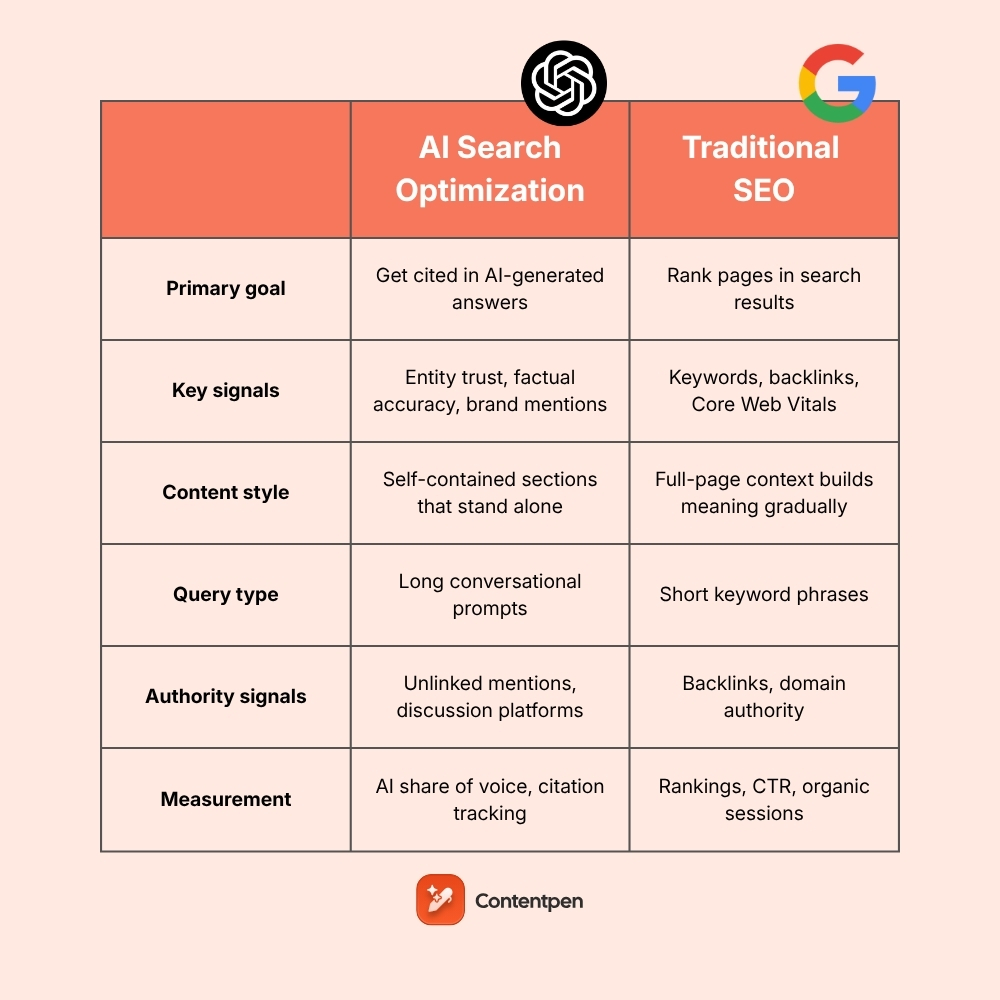
When you think about AI search optimization vs traditional seo, the rules of search suddenly feel less clear. Rankings, clicks, AI answers, zero‑click results — all the things start to blur.
Search algorithms now pull from both classic web indexes and conversational models like ChatGPT, Gemini, and Perplexity. That shift makes old SEO checklists feel incomplete, even if they still matter.
This guide breaks down the difference between AI search optimization and traditional SEO and why you need both in 2026.
You will see how keywords, content structure, links, and metrics change when you move from simple blue links to answer engine optimization and generative engine optimization. By the end, you will know exactly where to adjust your strategy without too much hassle.
So, let’s get started, shall we?
What is AI search optimization, and how is it different from traditional SEO?
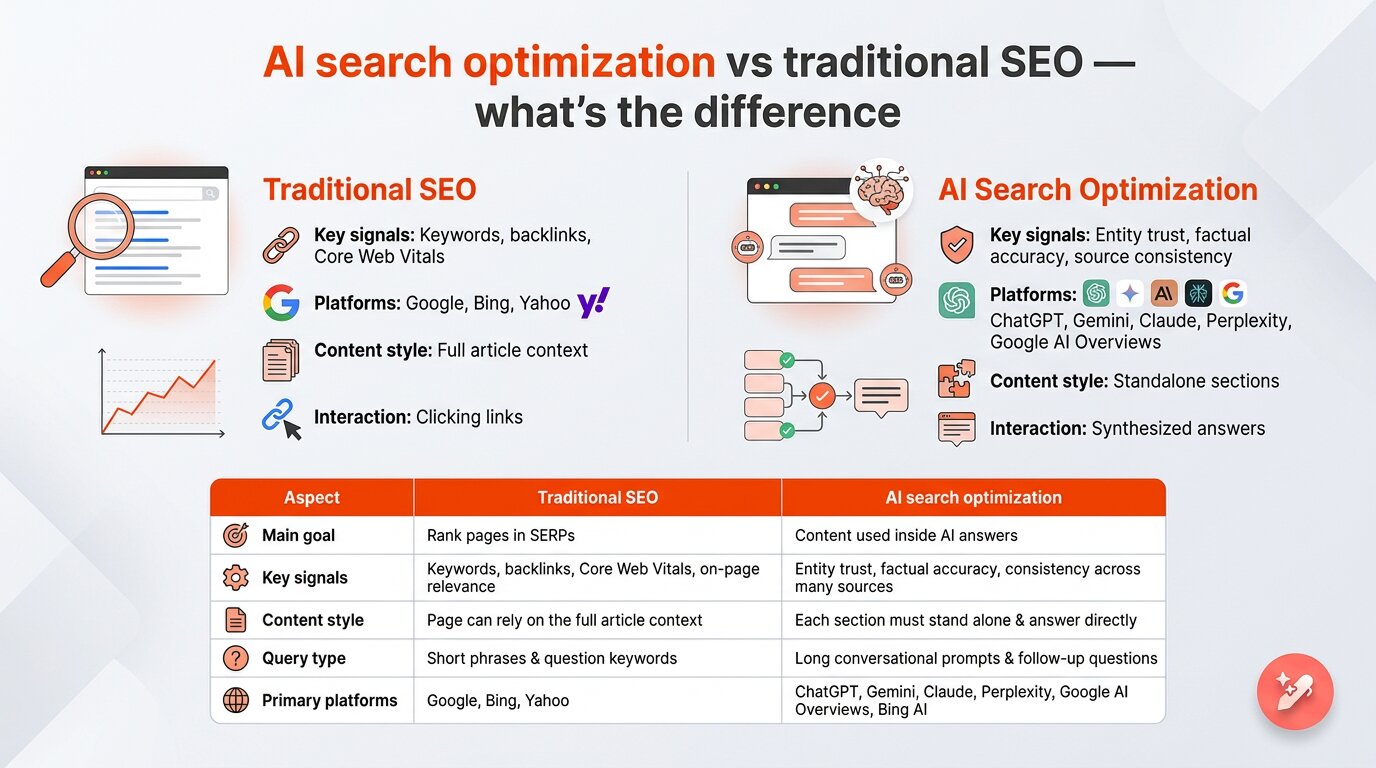
AI search optimization focuses on getting your content used inside AI‑generated answers, while traditional SEO focuses on getting pages ranked in classic search results. Both share the goal of visibility, but they rely on different signals and show up in different places.
Traditional SEO works with search engines like Google and Bing. You improve rankings through keyword targeting, SEO backlinks, technical fixes, and strong page experience, so your pages show up as rich snippets or in Google PAA boxes for a query.
AI search optimization, often called generative engine optimization, focuses on how tools like ChatGPT, Gemini, Claude, Perplexity, Google AI Overviews, and Bing AI summaries pick and quote content. These systems do not just rank pages. They synthesize short answers from multiple trusted sources.
Here is the key: when a user asks an AI assistant something, the model often performs query fan-out. That means it runs many related background searches, looks across several pages, and then builds a complete answer from the best parts. Your content has to stand out here.
At a practical level, that leads to three big differences:
- Where results appear (SERPs vs. chat screens and overviews)
- How users interact (clicking links vs. reading synthesized answers)
- How models reuse your work (quoting short passages vs. sending traffic straight to pages)
For a detailed breakdown between AI search optimization and traditional SEO, check out the table below:
| Aspect | Traditional SEO | AI search optimization |
| Main goal | Rank pages in SERPs for target keywords | Get content used inside AI answers and summaries |
| Key signals | Keywords, backlinks, Core Web Vitals, on‑page relevance | Entity trust, factual accuracy, consistency across many sources |
| Content style | Page can rely on the full article context | Each section must stand alone and answer directly |
| Query type | Short phrases and question keywords | Long conversational prompts and follow‑up questions |
| Primary platforms | Google, Bing, Yahoo | ChatGPT, Gemini, Claude, Perplexity, Google AI Overviews, Bing AI |
Why can’t you choose one method over the other?
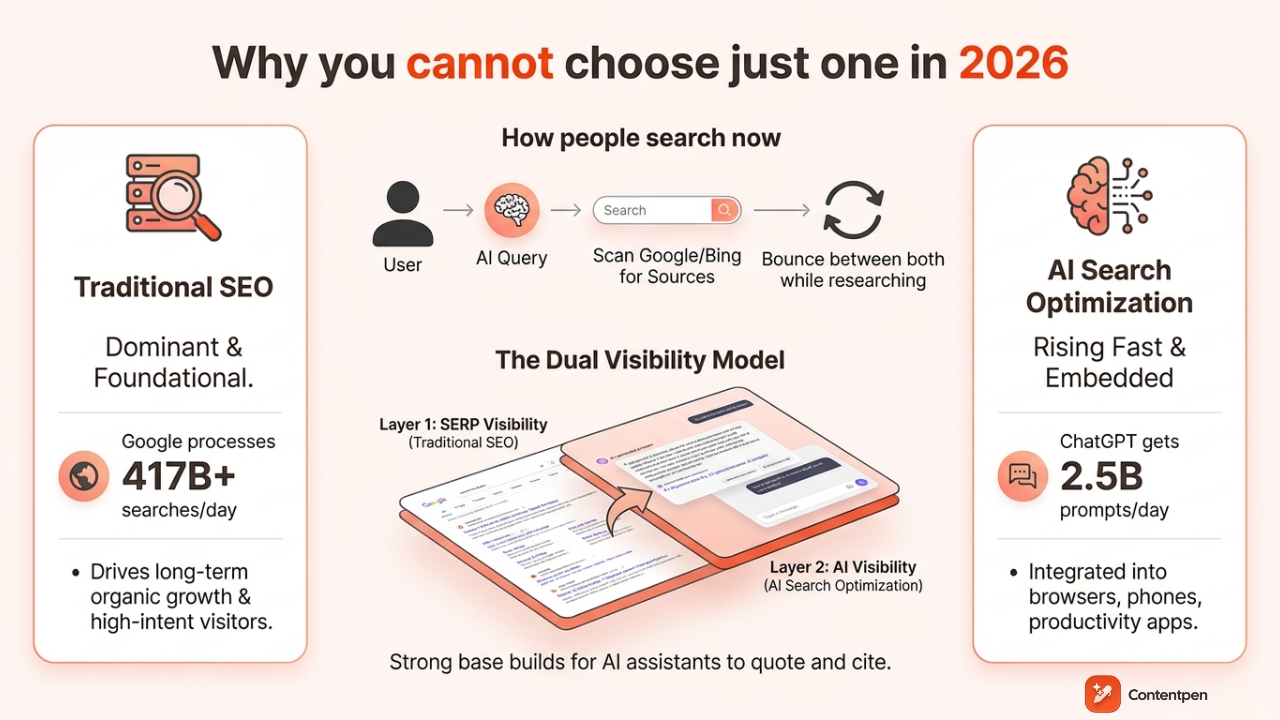
You cannot pick between AI search optimization and traditional SEO in 2026 because your audience uses both at the same time.
Search results now mix classic organic links with AI‑generated overviews, and visibility in only one channel leaves a lot of traffic behind.
Traditional SEO still carries huge weight. Google continues to process more than 417 billion searches per day.
Therefore, organic traffic remains one of the strongest drivers of long‑term growth and of getting high‑intent visitors, especially for small businesses and agencies that cannot outspend big brands on ads.
At the same time, AI search is rising fast. ChatGPT gets 2.5 billion prompts each day. Tools like Gemini, Perplexity, and Bing AI now sit inside browsers, phones, and productivity apps, so users ask them for summaries, comparisons, and buying advice before they ever click a link.
Industry analysis suggests traffic from large language models (LLMs) could surpass classic organic traffic within a few years. That means SEO vs AI search is the wrong framing. Your content has to work for both humans skimming a SERP and models drafting an instant answer.
Also read: How to turn off AI Overviews.
Think about how people search now:
- They start with a quick AI query to understand a topic.
- They scan Google or Bing results when they want sources or to compare options.
- They bounce between AI answers and websites while they research a purchase.
So here is the smarter move for 2026. Use the “Dual Visibility Model”, where your content must perform across two systems at the same time.
Layer 1 → SERP visibility
Layer 2 → AI visibility
Strong traditional SEO keeps your site visible in search engines. AI search optimization then builds on that base, so AI assistants and other generative‑AI SEO features can safely quote and cite you in their responses.
Technical prerequisites before AI optimization make sense
Before you adjust keywords, restructure content, or build off-page citations, there is one thing to check first. Make sure AI crawlers can actually access your site.
This is a step many professional marketers skip, but it matters. If your robots.txt file blocks AI crawlers, all your optimization work will not show up in AI-generated answers because the models cannot read your content.
Here are the two quick checks to run:
#1: Update your robots.txt file
Major AI tools use their own crawlers to index the web. GPTBot (used by ChatGPT), ClaudeBot (used by Claude), and Bingbot (used by Bing AI and Copilot) all respect robots.txt rules. If you have a disallow for these bots, you may be blocking them without realizing it.
To allow specific AI crawlers, add the following to your robots.txt file:
User-agent: GPTBot
Allow: /
User-agent: ClaudeBot
Allow: /
User-agent: Bingbot
Allow: /
You can also use the following code to allow all AI chatbots in your robots.txt file:
User-agent: *
Allow: /
There are also robots.txt file checkers and validators online that you can use to verify AI search indexability and crawlability.
#2: Check your XML sitemap
Make sure your sitemap is up to date and submitted to Google Search Console and Bing Webmaster Tools. AI systems that rely on search indexes use sitemaps to discover new and updated content faster.
Validate your Sitemap using online tools, such as XML-Sitemap, to check whether it’s correctly configured.
Think of this as opening the door before you decorate the room. Once crawlers have access, everything else you do, from structured content to off-page mentions, will actually count.
How AI-driven SEO techniques differ in practice: keywords, content, and links
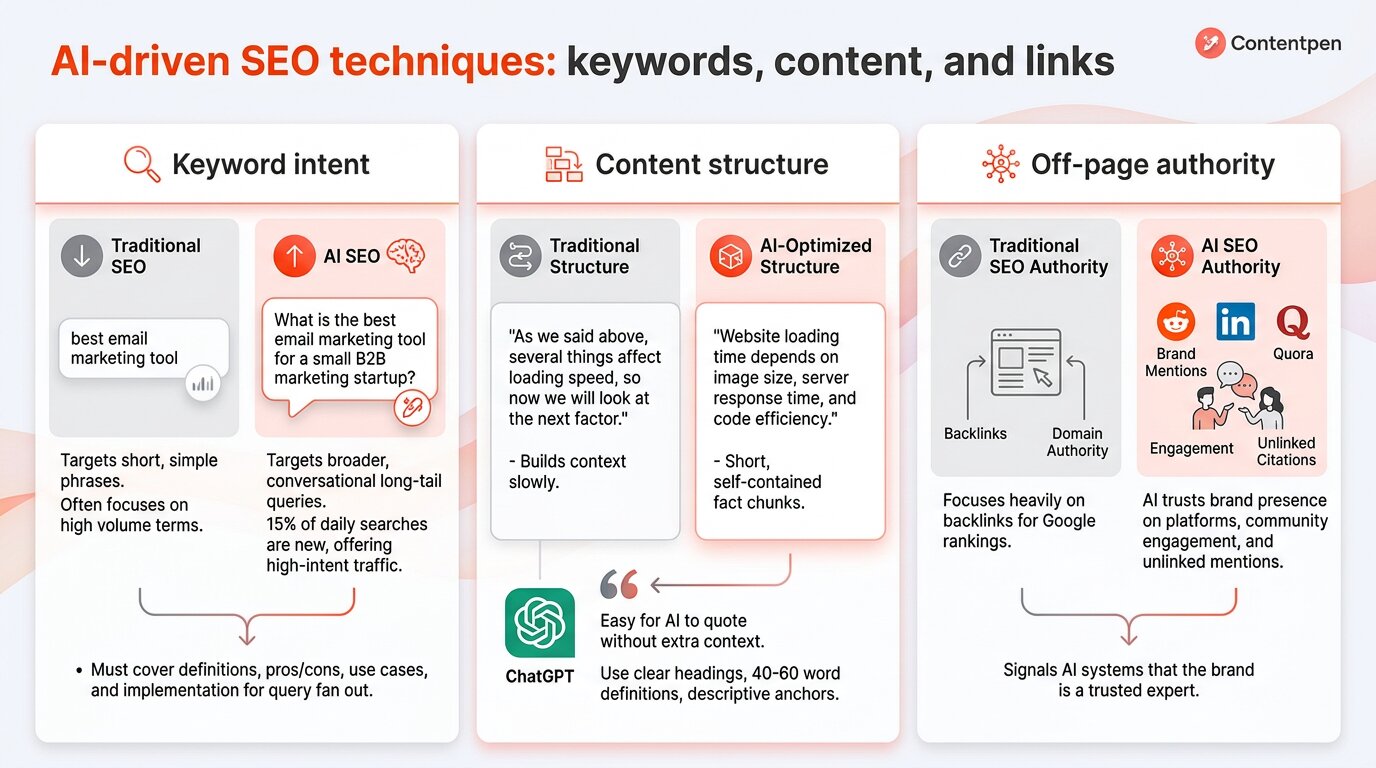
AI‑driven SEO techniques differ from traditional SEO in how you research queries, structure content, and build authority. When you adjust those three parts, you support both SERP rankings and AI answer inclusion.
#1: Keyword intent
First, think about how you research keyword intent. Classic keyword tools push you toward simple phrases. AI search engine optimization calls for something broader, longer, and closer to how people talk to assistants.
Therefore, utilizing long-tail keywords in this regard is a good idea. Many tools will even show low or no search volume for these phrases.
But that is okay, especially when 15% of daily searches are completely new. Meaning, you can capture high-intent traffic with long-tail keywords that are ready to act and convert.
A good example of AI search optimization vs traditional SEO can be the following:
In SEO, you mostly target short phrases, such as “best email marketing tool.” But for AI SEO, you mostly go for longer variants, such as “What is the best email marketing tool for a small B2B marketing startup?”
Because AI uses query expansion, your content must cover the whole topic, including follow‑up angles, rather than one narrow phrase. That usually means addressing:
- Definitions and key concepts
- Pros and cons or trade‑offs
- Use cases for different segments
- Next steps or implementation tips
#2: Content structure
Then comes content structure. Traditional SEO strategies accept sections that build context slowly. AI content optimization works better with short, self‑contained pieces that a large language model can grab without losing meaning.
Compare these two lines. Poor structure says, “As we said above, several things affect loading speed, so now we will look at the next factor.”
Optimized structure says, “Website loading time depends on image size, server response time, and code efficiency.” The second line gives a clean fact chunk that ChatGPT can quote with no extra context needed.
Even though writing like this can be challenging, you can simplify this process significantly using Contentpen. The tool scores your content for SEO and GEO as you write to help you publish citation- and ranking-worthy content.
Get your content cited by AI, not just ranked on Google!
See your real-time GEO score as you write to make every piece citation-ready.
Try GEO Scoring →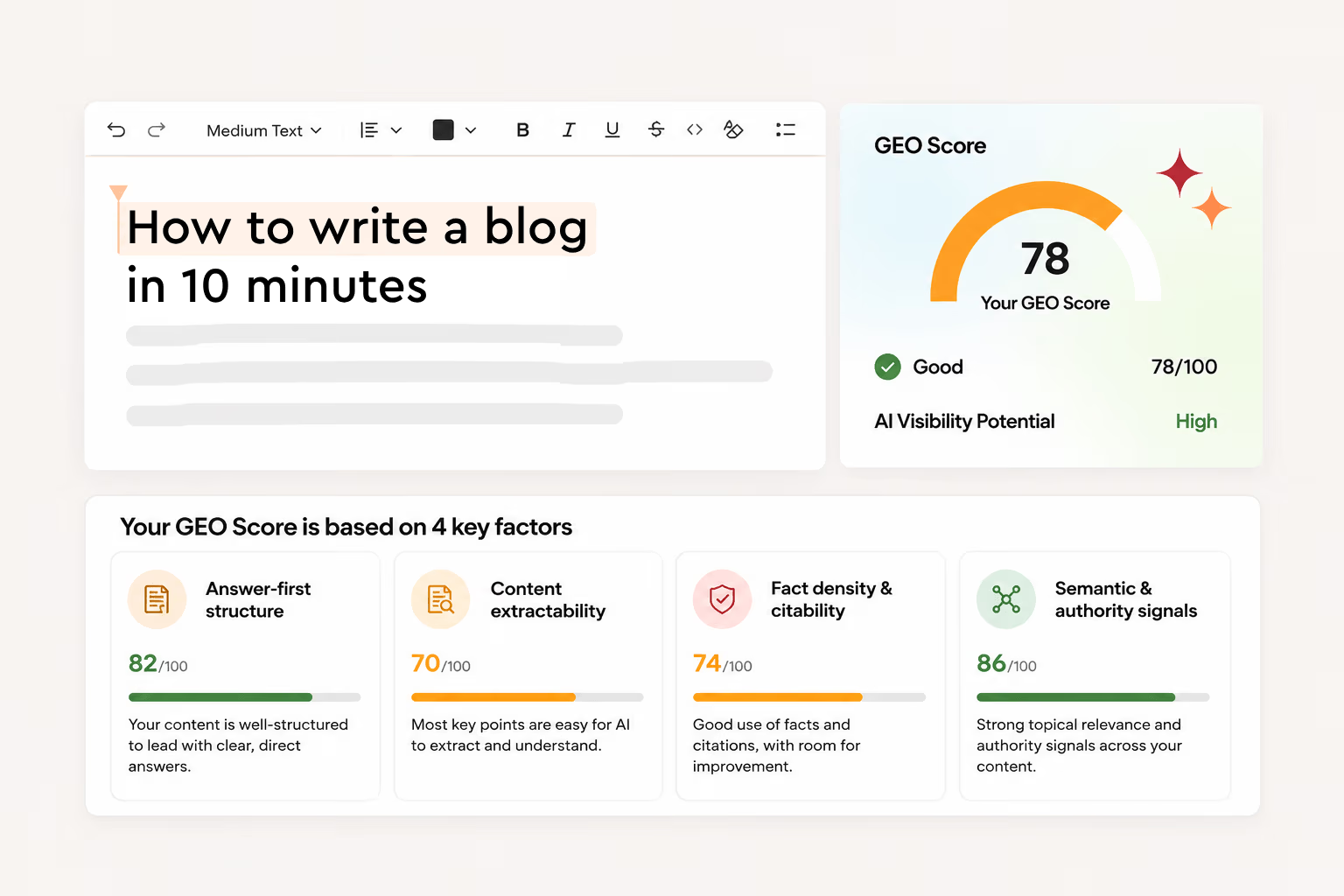
Here is a simple test to check your own content before publishing. Paste any section into ChatGPT and ask, “What does this section say?” If the response loses the core meaning or requires more context, the section fails. Rewrite it until it stands on its own.
This one habit will do more for your AI citation rate than most structural changes combined.
Also, use clear headings, short paragraphs (40- 60-word definitions, then detailed explanations), and descriptive anchor text. This will help both people and AI models to identify the required information quickly.
#3: Off-page authority
Finally, authority looks different for both methods. Backlinks still matter for Google, but AI systems care just as much about how often and where your brand is mentioned off-site.
This includes your brand presence on Reddit, Quora, LinkedIn, and similar platforms where professionals interact. Answering questions in these communities off-page and engaging with individuals can be a great way of signalling to the AI systems that you are trusted as a brand.
Unlinked mentions also help AI trust a brand, even if they do not carry that much weight for traditional SEO.
This is where Contentpen helps. The tool gives you long‑form, in‑depth articles that attract natural backlinks in reviews and forums, which support SEO and GEO efforts at the same time.
Write content that’s built to rank, not just read
Create search-optimized blogs aligned with SEO and GEO signals, so your content performs well across search and AI-driven discovery.
Try SEO Blogging FREE →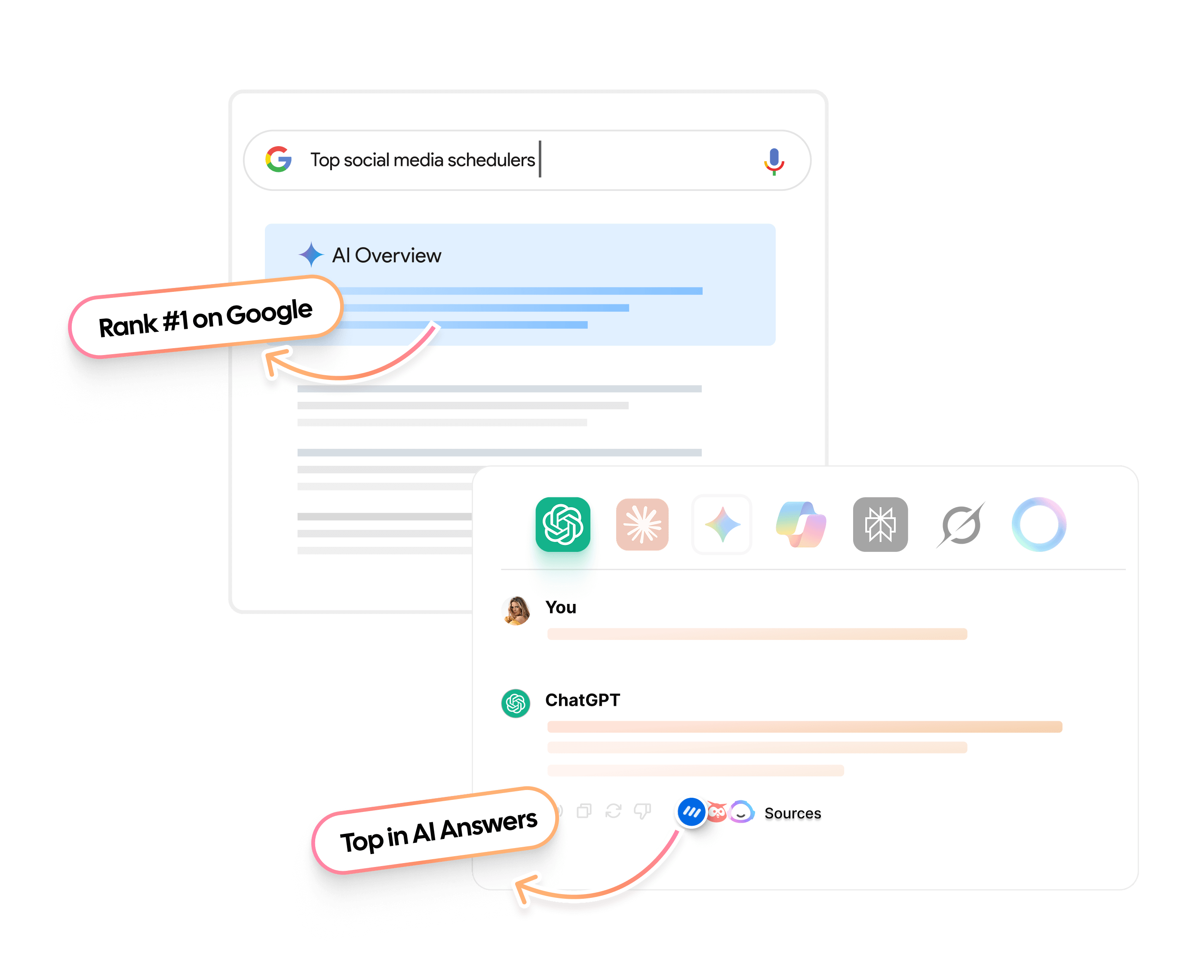
The AI writer also helps you streamline your workflow by enabling seamless publishing directly to top CMS platforms.
How to measure success across both traditional SEO and AI search
Measuring AI SEO vs. traditional SEO success means tracking two sets of metrics in parallel. One set shows how you perform on Google and Bing. The other shows how visible you are inside AI answers across tools like ChatGPT, Gemini, and Claude.
For traditional SEO, your measurement stack stays familiar. You track traffic, rankings, and conversions, then refine pages and links. For AI search optimization, you watch how often assistants mention or cite your brand and how you compare to competitors in those responses.
Here is a simple comparison of metrics for both sides.
| Area | Traditional SEO metrics | AI search visibility metrics |
| Traffic and reach | Organic sessions by page in Google Analytics or Plausible | Count of AI responses that mention your brand name from AI search optimization tools and AI monitoring software |
| Intent and ranking | Keyword positions in Google Search Console, Ahrefs, Semrush, or other SEO tools | Prompts where your brand appears vs prompts where only competitors appear |
| Engagement | Click‑through rate and dwell time on key pages | Sentiment in responses, for example, helpful, neutral, or negative wording about your brand |
| Business impact | Form fills, signups, sales from organic traffic | Assisted conversions from visitors who arrive after using AI tools |
Specialized AI visibility platforms track AI mentions, citations, AI share of voice (AI-SOV), and sentiment across different models. You can then turn missing prompts into a content roadmap by asking, “Which questions in my niche get AI answers, but not from me?”
A platform like Contentpen fits neatly into this measurement loop. You can create targeted articles for gaps you discover, structure them for AI search engines, and support Google AI SEO strategies with strong internal linking and topical depth.
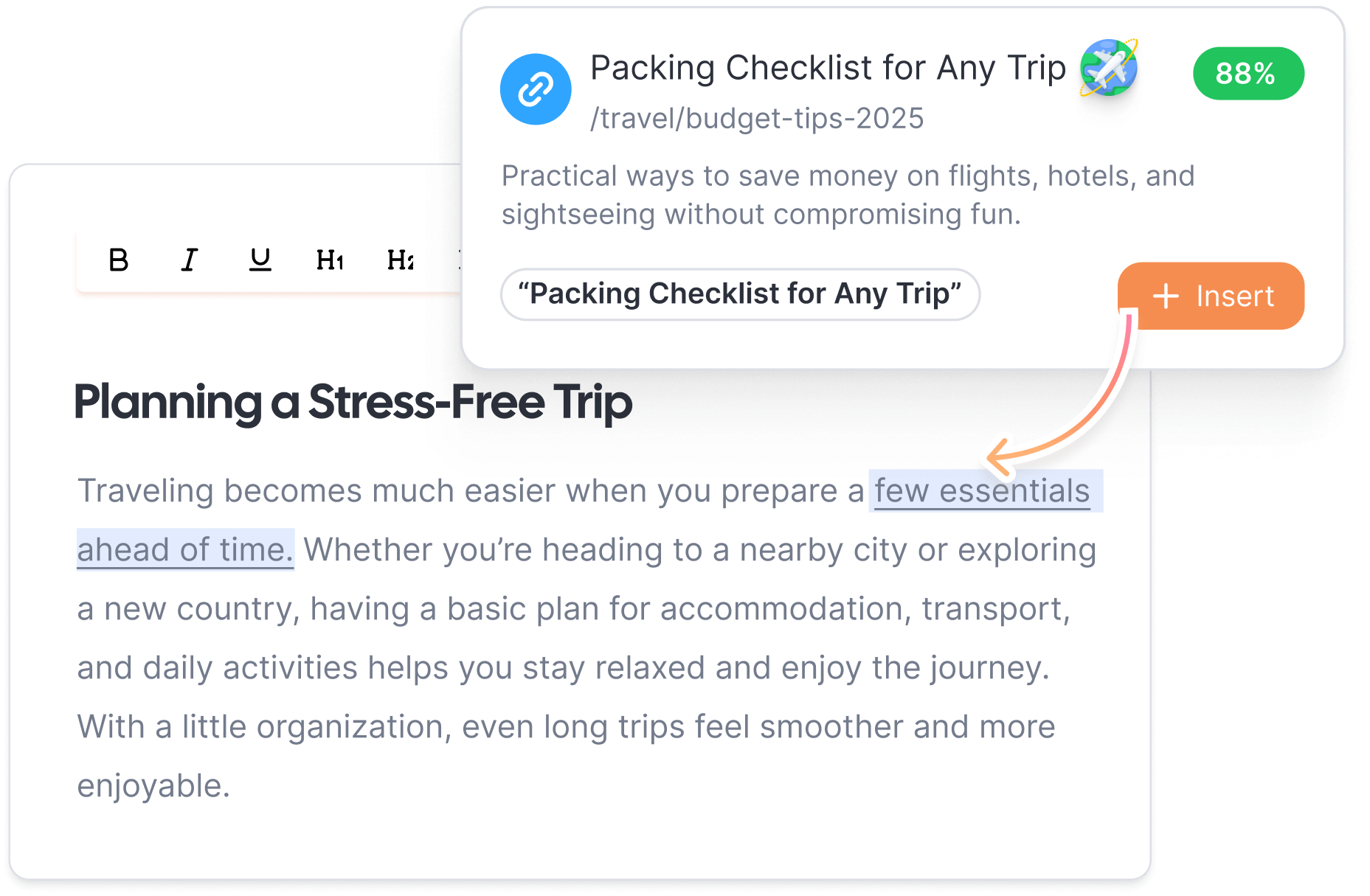
Improve SEO with automated linking that fills them

Adds context-aware internal and external links automatically
Uses relevant anchor text to improve SEO and content flow
Why your AI search wins are invisible in Google Analytics (and what to track instead)
This is something most marketers run into quickly. You do everything right, structure content for AI, build off-page mentions, optimize for conversational queries, and then open Google Analytics and see nothing has changed.
That is because AI-driven discovery does not show up as a clean referral source the way a Google organic click does.
So instead of looking for a single “AI referral” metric, watch these signals instead:
- Branded search volume. Track your brand name in Google Search Console. A steady rise in branded queries often means people are discovering you through AI tools and then searching for you directly.
- Direct traffic growth. A meaningful increase in direct visits, especially on pages you have recently optimized for AI, can indicate AI-assisted discovery.
- Share of voice in AI tools. Use AI visibility tools to run regular prompt audits. Ask the same questions your target audience would ask, then check which sources the model cites. If competitors appear and you do not, that is the gap to close.
- New referring domains. When AI answers cite your content, other writers and bloggers often reference the same pieces. Watch for growth in referring domains to recently published content.
None of these signals is perfect on its own. But together, they build a picture of whether your AI optimization is working, even when Google Analytics stays quiet.
Common myths about AI search replacing traditional SEO
A lot of noise in this space comes from a false either/or framing. It helps to clear up these myths that make people overcorrect in one direction or the other.
Myth 1: AI search will replace Google soon. AI tools are growing fast, but Google still processes billions of searches daily and is actively building AI Overviews directly into its results. The two systems are converging, not competing. Your job is to be present in both.
Myth 2: You only need to optimize for AI if you have a large site. Small and mid-size brands often have an easier time getting cited by AI tools because they can dominate narrow, specific topics more easily than broad authority sites can. Topic depth matters more than domain size here.
Also read: How to perform an AI visibility audit in 2026.
Myth 3: If my content ranks well on Google, it will automatically show up in AI answers. Not necessarily. AI systems prioritize content that is factually consistent, clearly structured, and well-cited across multiple sources. A page that ranks on Google because of strong backlinks alone may not appear in AI summaries if the content itself is thin or hard to extract.
Understanding these myths helps you allocate effort correctly, rather than chasing the wrong signals. Over time, good SEO + GEO practices = sustainable results.
Concluding thoughts
The future of SEO is not AI search optimization vs traditional seo, but a dual visibility model where you rank in search engines and get cited in AI answers at the same time.
Classic ranking work keeps you visible on Google and Bing. AI optimization makes sure large language models quote you when users skip straight to an instant answer.
Strong, accurate content sits at the center of both. Whether you chase traditional SEO or AI search SEO, thin pages with shallow advice will not stand up to AI models that cross‑check many sources before responding.
This is where Contentpen gives you an edge. Contentpen helps you publish clear, long‑form content that fits modern SEO techniques, attracts backlinks, and provides clean content chunks that AI can reuse. That way, your brand stays present in both SERPs and AI summaries.
Frequently asked questions
Traditional SEO is absolutely still relevant in 2026. Classic optimization feeds many of the authority and quality signals AI systems rely on when they decide which sources to quote. The smarter move is to integrate it with AI‑powered search optimization instead of replacing it.
Query fan-out refers to the way an AI assistant breaks a single prompt into many related background lookups. The model pulls data from several pages, compares facts, and then drafts one combined answer. To show up in AI responses, your content has to cover the wider topic, not just one narrow keyword, and present information in clear, self‑contained sections.
Yes, and it is one of the more underused tools in this space. Schema markup, particularly FAQ schema and Article schema with a dateModified field, helps AI systems understand what your content is about and how current it is. The FAQ schema is especially useful because it formats your answers in a way that AI models can extract cleanly without losing context.
Yes, but not in the way backlinks work for traditional SEO. AEO examples show that AI systems do not read social media posts directly or count likes and shares as ranking signals. What they do pick up on is the broader pattern of your brand being discussed in places where real people ask and answer questions, such as Reddit threads, Quora answers, and LinkedIn posts.