Blog

  • How long does it take to write a blog post?

    How long does it take to write a blog post?

    Blogging has changed quite a bit since the advent of AI tools, but some things have never changed. Budding bloggers are still curious about that magic question: “how long does it take to write a blog post?”

    The common answer to this question is that it depends on each blogger’s writing process. It’s not fair to fixate on the duration of blog post writing. Sure, speed is the mark of a professional blogger, but there’s more to this.

    Almost every seasoned blogger goes through multiple stages of blog post creation to complete a worth-reading piece.

    In this post, we’ll explore what the experts say, share some studies, and then break down how long it should take to write a blog post, plus how tools like Contentpen can help speed things up without compromising quality.

    What do studies say about average blog writing time?

    The duration of the blog post writing can be influenced by niche, the blogger’s experience, the subject matter, and the article’s size.

    However, a lot of bloggers still want to get into this rabbit hole. So, let’s take a look at some of the studies about average blog writing time:

    average time to write a blog post

    Nina from SheKnowsSEO ran a poll across different all of these social media channels asking followers about this very question. She found out that 40.3% followers said 5-6 hours and 32.2% followers said 3-4 hours.

    how long does it takes to write a blog post on google

    Neil Patel also shared his statistics about how long it takes to write a blog post that ranks in Google, even in the AI-generated content era. He revealed the average blog writing time from 2015 to 2025. In 2015, it took 2 hours and 10 minutes to write a blog post on average, whereas in 2025, it took 2 hours and 59 minutes to write a blog post.

    These studies tell us that it usually takes 3 to 5 hours to write a blog post, but this can vary depending on different factors.

    How long does it take to write a blog post, and how much time does each stage take?

    Here are the stages involved, from finding the idea to hitting the publish button in your content management system:

    i. Ideation

    Ideation is the earliest stage in the process. It’s the time when you start brainstorming ideas for blog posts. You can draw inspiration from trending topics, frequently asked questions, your personal experiences, or competitor content. A good blog idea should be relevant to your target audience, timely, and capable of delivering value.

    ii. Keyword research

    Several keyword research tools like Ahrefs, Semrush, and Google Keyword Planner help bloggers and SEOs find keywords people are actively searching for. Striking a balance between high search volume and low competition is the way to go.

    iii. Blog outline

    Before starting to write the article, create an outline to organize your thoughts. It’s best to break your topic into main sections using H2, H3, and H4 subheadings. Add bullet points or short notes under each section to stay focused while writing. A clear outline improves the article structure and helps deliver the right message.

    iv. First draft

    The first draft is crucial to writing an impactful piece. Write your first draft based on the blog outline as soon as possible. Focus on getting your ideas down without worrying too much about structure, formatting, and grammar. Use a conversational tone, support your points with examples or data, and aim to keep your readers engaged throughout.

    v. Editing phase

    After finishing the first draft, revise your content for clarity, structure, grammar, and engagement. Remove unnecessary words, improve sentence flow, and ensure smooth transitions between sections. Don’t hesitate to go through several times during the editing phase to refine your message.

    vi. Image creation

    Images make your blog post more engaging and easier to understand. Blog post images include screenshots, infographics, featured images, and other example images that support the message. Try tools like Canva or VistaCreate to design custom images, and don’t forget to optimize image size and file names for SEO.

    vii. Grammar check

    Run your content through grammar checking tools like Grammarly or Quillbot to catch spelling and grammar issues. Also, check for sentence clarity, passive voice, and wordiness. A well-polished blog post builds trust with readers and reflects professionalism. So, don’t rush to hit publish after the editing phase. Instead, take your time to improve the article.

    viii. Formatting

    Formatting is a critical phase in the blog writing process. Format your blog post to enhance readability, attract eyeballs, and improve engagement. Use headings, bullet points, short paragraphs, and bold text for emphasis. Make sure all links work correctly, and the article contains the basic sections, such as the intro, body, and conclusion.

    ix. Publishing/scheduling

    Once everything is perfectly done, it’s time to upload your blog post to your blogging platform and add essential elements like SEO metadata, images, internal links, and external links. After completing this process, you can publish the blog post immediately or schedule it according to your blog content calendar.

    How to write blog posts faster without losing quality?

    Speeding up your content creation process doesn’t have to mean compromising on quality. The key is to use a smart AI-powered writing assistant like Contentpen — a powerful AI blog generator designed to help you generate content, expand on ideas, and overcome writer’s block while maintaining a consistent tone and structure.

    1. Pick your topic and define a clear angle

    Start by narrowing down your topic. Instead of writing about broad subjects like “digital marketing,” choose specific angles such as “how small businesses can use email marketing to boost repeat sales.” A focused topic gives your blog a clear direction, improves reader engagement, and speeds up the writing process.

    2. Set up your content preset in Contentpen

    This is where Contentpen truly sets itself apart. It allows you to create a customized content preset to match your brand voice and style.

    • Tone of voice: Choose from options like clear and helpful, professional and friendly, or confident but concise to keep your tone consistent across every blog post.
    • Target audience: Specify exactly who you’re writing for—be it marketers, SaaS founders, freelancers, or product teams.
    • Formatting preferences: Automate how key ideas are styled—use bold for emphasis, bullet points for easy scanning, and tables or quotes where needed.
    • Article structure: Set your ideal post length and enable optional sections like FAQs, takeaways, or a conclusion to make every post reader-friendly.
    • Linking strategy: Configure how internal and external links are handled to ensure SEO-friendliness and maintain trustworthiness.

    With all these presets in place, Contentpen handles the structure, tone, and formatting while you focus on the actual content.

    3. Write without distractions

    Now that your preset is in place, you can dive straight into writing. Contentpen ensures formatting and style consistency in the background, so you don’t need to switch between writing and editing modes.

    This lets you put all your energy into explaining ideas clearly, building arguments, and adding value. Writers often find that this workflow leads to better writing in less time.

    4. Add visuals seamlessly

    Visuals make blog posts more engaging, but manually handling them can eat up time. With Contentpen:

    • Featured images are automatically sized and placed
    • In-content visuals retain a consistent style
    • Tables are formatted neatly
    • The overall visual hierarchy stays intact

    You simply choose the right images—Contentpen ensures they look great and don’t disrupt your workflow.

    5. Review and schedule with ease

    With structure and formatting already handled, your review can focus purely on content quality. Look over the main takeaways, flow, grammar, and headline effectiveness. Once you’re happy, either publish it right away or schedule it for later.

    Factors that affect the duration of writing a blog post

    Before we discuss the debate about how long it takes to write a blog post, it’s essential to discuss the factors that determine that time.

    1. Time constraints

    Time constraints refer to the hurdles that limit the amount of time available to complete a task. Each individual has different time constraints depending on their day job, working hours, or part-time gigs.

    2. Writer’s block

    Writer’s block is a condition in which writers fail to think and write on the topic they want to write about. It freezes their creative thinking, resulting in frustration and demotivation.

    3. Clarity of thoughts

    Clarity of thoughts means the person is mentally ready to take the challenge head-on. It shows that the person is pretty clear about the pathway and prepared to move forward with confidence.

    4. Mental and physical health

    Both mental and physical health are crucial to the creative writing process and surely impact the duration of writing a blog post.

    5. Workload or multiple jobs

    One of the factors that affects quite a lot of bloggers is the workload or juggling multiple jobs at once. When someone is buried under a lot of work or managing multiple projects, this person might not be able to complete the tasks on time.

    Now, let’s discuss various stages of blog post writing and publishing just to clear the context.

    Conclusion

    Due to time constraints and obligations, bloggers optimize their processes to make the most of their time.

    While it shouldn’t matter how long it takes to write a blog post, it’s important to keep track of the time as we’re on the clock. Therefore, we learned that it takes somewhere between 3 to 6 hours to write a blog post.

    However, make sure that the content is helpful, valuable, and worth sharing. At the end of the day, nobody cares how long it took you to write that blog post. All that matters is what “value” it delivers.

    So, be mindful of that and put out blog posts that make an impact!

    FAQs about blog post writing duration

    How long does it take to write a 1000-word blog post?

    A 1000-word blog post shouldn’t take any longer than 2 hours. However, there are always exceptions to the rule.

    Is a 500-word blog post too short?

    Usually, a 500-word blog post is considered concise unless it completely answers the query and satisfies the readers.  

    How long should SEO blogs be?

    There are no hard and fast rules for the length of SEO blog posts. However, it’s best to write slightly longer yet relevant articles than competitors in the SERP.

    How many words should a blog post be for SEO 2025?

    SEO has changed siginificantly in 2025, and will continue to do so going forward. However, the blog post length should be somewhere between 3,000 to 4,000 words.

  • How to fact-check AI-generated content in 7 steps?

    How to fact-check AI-generated content in 7 steps?

    Artificial intelligence (AI) has shaken the world with its quick adoption across all mainstream fields, such as medicine, education, engineering, agriculture, IT, and technology.

    This has led to the opening of new information portals through AI-generated content. However, fact-checking AI-generated content has been a challenge since its inception.

    Given that AI can mass-produce content within a few seconds, the chances are that the AI content generators might spit out some misleading information.

    So, to cope with these AI-based content creation challenges, marketers, agencies, and publishers must rely on trusted tools like Contentpen. It’s an advanced AI blog writer and content generator that streamlines AI-based content generation for both personal and professional users.

    The best part about Contentpen is that it equips bloggers, SEOs, marketers, and influencers to create and publish high-quality, SEO-optimized articles within no time.

    fact-check AI-generated content

    Why is it important to fact-check AI content?

    AI-powered content is gaining massive popularity, especially among digital marketing circles. The reason being it’s easy-to-create and affordable for everyone, which makes AI content verification and authentication a challenging task. Therefore, AI content fact-checking has never been this important.

    Let’s go through some of the key reasons for fact-checking AI content:

    Risk of spreading misinformation

    Spreading incorrect information generated with AI can be extremely damaging to your brand. Not only does it hurt your brand voice, but it also affects the audience that consumes the content. This is why it’s important to have a check-and-balance on the AI-generated content.

    AI hallucinations

    While AI content generators can give answers or generate pieces that have low content accuracy, an AI tool may generate content that contains completely unverified, incorrect information. This behavior of AI content creation tools is called AI hallucinations.

    Inaccurate explanation of critical subjects

    One of the key reasons why it’s important to have a fact-checking system for AI content in place is that inaccurate information on critically important subjects, such as medicine, health, fitness, finance, and others, could have serious consequences on people’s lives.

    Reputation at stake

    Reputation is hard to make but even harder to maintain. In the digital marketing world, where every individual and brand wants to dominate the space with high-ranking articles, viral TikTok videos, and million-view YouTube videos, reputation is always at stake. So, publishing AI content without fact-checking puts the brand reputation at risk.

    7 steps to fact-check AI-generated text

    Experienced digital marketers and professional bloggers ensure that they fact-check AI-generated content before they hit publish on their blogs. Here are seven steps to take when fact-checking AI-generated content:

    Step 1: Identify the source and context

    The way AI generates text is that it scans the relevant sources and compiles information based on the collection. Therefore, it’s necessary to take a moment to examine where it came from and what purpose it serves. Blindly trusting or sharing AI-generated content can lead to certain issues.

    You must have some idea about the source of AI-generated text to get a clear picture of it. AI-generated outputs can be shaped by prompts, user intent, or platform defaults, so context matters. Make sure the source of the AI content is identified and mentioned.

    Step 2: Cross-verify claims with trusted sources

    One of the essential steps is the cross-verification of the claims. Don’t accept facts at face value. Check key claims against credible sources such as government websites, well-known media outlets, statistics portals, or academic databases.

    This is especially important for data-driven content (that includes statistics, dates, or numbers) or news-based content. When using AI for content creation, supplement it with your manual research process to ensure accuracy.

    For example, Statista is the go-to website for various types of statistics:

    Statista

    Step 3: Analyze citations and references

    It’s easier to get carried away when generating text with AI-powered writing tools. It’s no surprise that AI can sometimes generate fake or misrepresented citations. When it comes to cited sources, they can be fake or unavailable. So, always check whether the cited sources exist, are properly formatted, and genuinely support the statements made.

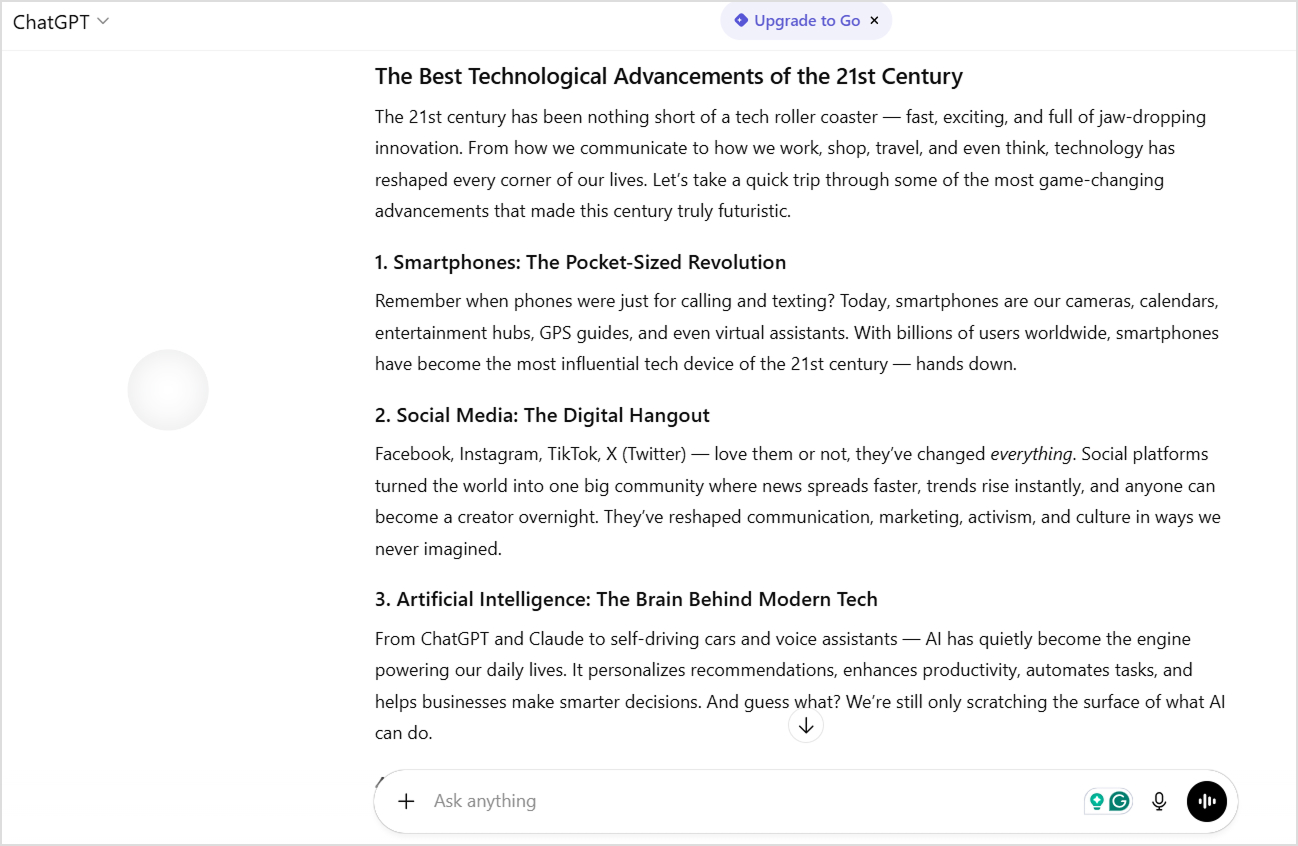
    Sometimes, tools like ChatGPT can create hyperlinks based on the prompt, but the pages it’s linking out to don’t exist. 

    ChatGPT

    To solve this, Contentpen comes equipped with built-in sitemap integration, allowing it to automatically add internal links to your content, if you choose to enable it. You can also take advantage of the external linking feature, which keeps your content accurate and SEO-optimized. 

    sitemap integration for internal linking

    It intelligently suggests relevant links from your own site or trusted external sources, so you’re not just linking for the sake of it, you’re linking with purpose. With Contentpen, you can eliminate broken links, strengthen your site structure, and build reader trust with confidence.

    external linking

    Step 4: Use fact-checking tools and extensions

    One of the important aspects of using AI-generated text is the fact-checking. Publishing AI content without proper examination either manually or using a third-party fact-checking tool can have serious consequences. Nobody wants to put their credibility on the line.

    Google Fact Check Explorer

    Fact-checking tools can make your work faster and more reliable, thanks to tools like Google Fact Check Explorer, Snopes, and others. Moreover, browser extensions such as NewsGuard or Media Bias/Fact Check can also help validate trending topics or controversial claims.

    Step 5: Detect bias or hallucination in AI text

    Most AI tools give a heads-up to the users about the possibility of incorrect information. The reason is that these AI models can “hallucinate”, meaning make up facts or inject bias through overly confident or emotionally charged phrases.

    Users are advised to be alert to statements that sound overly definitive without support or sources. Contentpen helps you clean up these biases and tone issues by refining AI drafts into accurate, neutral, and human-sounding content that fits your editorial standards.

    Contentpen

    Step 6: Review data, stats, and quotes separately

    Since AI writing tools can find references or cite sources in the generated content, there is no guarantee that those citations or references are 100% right.

    AI-generated content may mix accurate information with plausible-sounding but incorrect data. Always double-check statistics, dates, and quoted statements using sources like official reports, press releases, or verified interviews.

    The whole point is that don’t blindly rely on automated writing tools alone. Try to build a habit of confirming details manually, especially when publishing content on data-heavy topics.

    Step 7: Consult subject matter experts (if needed)

    You must have seen a tag saying “medically reviewed by [doctor’s name]” on top of the medical or health-related articles. The purpose is to showcase that a subject matter expert verifies this information.

    Source verficication

    However, this verification shouldn’t be limited to medicinal or health content. If you publish content in legal, scientific, finance, and fitness niches, it’s wise to consult experts before publishing.

    AI can mimic confidence or hallucinate without seeming dodgy, so getting a professional’s input can be the difference between credible and misleading content. Whether you’re refining a blog post or publishing an eBook, combine AI support with real-world insights for high-authority publishing.

    Contentpen

    Conclusion

    The purpose of writing this piece about fact-checking AI-generated content is to ensure that the brand’s reputation isn’t affected by low-quality AI-based content.

    When a brand publishes unverified content or doesn’t support the claims with citations, it starts to affect its credibility.

    Since AI tools can add gibberish or link out to non-existent sources, automated fact-checking seems inevitable, especially for publishers that heavily rely on AI writing tools.

    Here are the key takeaways to apply when fact-checking AI-generated content:

    • The answers AI-powered writing tools generate must make sense to a common person. The advanced AI models can work on in-depth scientific and technical topics to assist users.
    • The real-life implementation of the suggested solutions is important. The solutions AI suggests must be doable in real life and shouldn’t be vague, resulting in ambiguity.
    • Users must adhere to the responsible and fair use policy of the AI writing tools to create valuable and effective content that impacts readers’ lives.
    • Users must not solely rely on the AI tools for answering questions related to health, medicine, food, finance, and other sensitive areas.

    No wonder fact-checking for AI-generated content can be a tedious task unless you have a system in place or a tool that streamlines the whole process.

    Contentpen is a state-of-the-art AI blog writing tool that creates and publishes highly effective, SEO-friendly articles without breaking the bank.

    It’s an advanced AI writer that dives deep into the user’s website to gather brand knowledge. Users can also provide brand assets, such as docs or PDFs, to let the AI agent know everything about the brand.

    It can create an effective blog outline that transforms the blog writing purpose. It offers a research-backed structure and semantic SEO build-up from the very base.

    Contentpen employs multiple AI agents that collaborate and work in coherence. Moreover, it’s able to produce both authoritative and engaging content across different social media channels.

    FAQs about fact-checking AI-generated content

    How to fact-check AI information?

    There are several fact-checking AI information tools available on the market, for instance, Automated Fact-Checker and AI Facts Checking are the two popular ones.

    Does Google fact-check AI content?

    Google seems to be working on its fact-checking AI content tool that might be available sometime in the future. However, there are no confirmations whatsoever.

    Does ChatGPT do its fact-checking?

    ChatGPT doesn’t have its fact-checking system in place as of now, but you never know what they come up with in the future. Users have to rely on third-party tools for this.

  • What is AI generated content?

    What is AI generated content?

    AI-generated content quickly transforms how individuals and businesses create written, visual, and audio material. From blog posts and product descriptions to social media captions and marketing videos, artificial intelligence is now capable of producing content that closely mimics human creativity.

    This shift isn’t just a passing trend it’s becoming an essential tool in modern content strategies, offering speed, efficiency, and scalability like never before. 

    But what exactly is AI-generated content, and how does it work? In this article, we’ll explore the fundamentals of AI-driven content creation, the tools behind it, its benefits and limitations, and how it compares to traditional human-made content.

    Whether you’re a marketer, writer, or curious reader, understanding AI-generated content is key to staying ahead in the evolving digital landscape.

    What is AI-generated content?

    AI-generated content refers to any type of media; text, images, video, or audio created with artificial intelligence. Instead of relying solely on human input, this content is produced using machine learning models that can understand context, patterns, and language structures to generate human-like results.

    For example, a marketer might use an AI writing tool like Contentpen to generate a blog post outline or a complete article based on a short prompt such as “Top 5 social media trends for 2025.” The AI will analyze the prompt, draw from its training data, and produce coherent and relevant content within seconds.

    AI-generated content can range from social media captions and product descriptions to music tracks and digital artwork, making it a powerful resource for creators and businesses looking to scale content production quickly and efficiently.

    Types of AI-generated content

    AI can produce various content formats depending on the purpose and platform. Here are the most common types:

    • Text-based content: Blog posts, articles, social media captions, emails, product descriptions, ad copy.
    • Visual content: AI-generated images, infographics, and designs.
    • Audio content: Voiceovers, podcast scripts, and AI-cloned voices for narration or interactive media.
    • Video content: Scriptwriting, subtitles, and even fully AI-generated video clips or avatars.
    • Interactive content: Chatbot conversations, quizzes, personalized recommendations, and customer support flows.

    Each type uniquely serves in modern marketing and communication, helping creators and teams scale content faster than ever.

    How does AI generate content?

    AspectDescription

    Core technologies

    Uses Natural Language Processing (NLP) and Machine Learning (ML) to understand and generate text.

    Training data

    Trained on vast datasets like books, websites, articles, and more to learn structure, grammar, and tone.

    Language models

    Models like Contentpen predict words and generate coherent content based on the input.

    Visual content creation

    Tools like DALL·E and Midjourney turn text prompts into images using AI-based image generation models.

    Audio and music

    AI can clone voices or compose music by identifying and mimicking patterns in sound data.

    Human vs. AI creation

    Humans use intuition and experience; AI relies on data and algorithms to simulate creativity.

    In short, AI mimics how humans create content but instead of intuition and experience, it relies on data and algorithms.

    Uses of AI-generated content

    AI-generated content is transforming how individuals and businesses create, scale, and manage content. Here are some of the most common and impactful use cases:

    Blog writing & SEO

    AI tools help generate keyword-optimized articles, meta descriptions, and blog outlines—making it easier to maintain content consistency and improve search rankings.

    Social media content

    Platforms like ContentStudio and Contentpen- AI blog writer online use AI to create engaging captions, hashtags, and platform-specific posts, saving time and boosting engagement.

    Email marketing

    AI assists in writing personalized subject lines, email bodies, and product recommendations—improving open and conversion rates.

    E-commerce product descriptions

    Retailers use AI to automatically generate thousands of product descriptions while maintaining tone and structure across listings.

    Customer support & chatbots

    AI powers chatbots, auto-replies, and help center content, offering 24/7 support and reducing the need for manual intervention.

    Video scripts & podcast outlines

    Creators use AI to draft scripts, show notes, and episode summaries for YouTube, TikTok, and podcasts.

    Internal reports & summaries

    AI helps teams generate meeting notes, executive summaries, and status updates quickly and consistently.

    Benefits of using AI for content creation

    AI is reshaping content creation by offering practical advantages that help creators, marketers, and businesses work faster and smarter. Here are the key benefits explained:

    1. Speed and efficiency

    AI can produce content in seconds that might take human hours or even days to create. Whether generating an article outline, writing a product description, or designing a social media post, AI helps streamline repetitive tasks and accelerates content workflows. This allows teams to focus more on strategy and creativity.

    2. Scalability

    One of AI’s biggest advantages is its ability to consistently create a large volume of content. Brands managing multiple platforms or targeting global audiences can use AI to generate variations of content quickly, making it easier to scale campaigns without burning out internal teams.

    3. Cost-effectiveness

    Hiring writers, designers, or video editors for every piece of content can be expensive. AI reduces this burden by automating parts of the process, lowering production costs. While it may not replace human expertise in all areas, it can handle simpler, high-volume tasks at a fraction of the cost.

    4. Multilingual capabilities

    Many AI tools support content generation in multiple languages. This helps businesses reach international audiences without needing a separate translator or writer for each market. AI can localize content while maintaining tone and context, speeding up global content strategies.

    5. Consistency and personalization

    AI can consistently follow brand guidelines, tone, and messaging across all pieces of content. At the same time, it can personalize messages at scale, for example, by creating customized email subject lines or ad copy based on user behavior or preferences.

    When used strategically, AI boosts productivity and enhances brands’ communication with their audiences, making it a valuable asset in today’s content-driven world.

    Popular tools for AI content generation

    With the rise of AI in content creation, a wide range of tools have emerged each offering unique features to help writers, marketers, and businesses scale their efforts. Below are some of the most widely used and trusted AI content generation tools:

    1. Contentpen

    Contentpen is a powerful AI content generation tool designed to help businesses scale their content output efficiently without sacrificing quality or SEO performance. Built for growth-driven teams, it blends speed, creativity, and optimization to simplify content production across the board.

    Key features:

    • Bulk content generation 
    • Automated keyword suggestions 
    • Built-in SEO optimization tools
    • Deep brand voice analysis and integration
    • Built-in content approval workflow
    • Multiple specialized AI agents 
    • Direct WordPress publishing integration

    Pricing:

    • Starter: $27/month
    • Premium: $55/month
    • Agency: $139/month
    Contentpen

    2. ContentStudio’s AI Assistant 

    ContentStudio’s AI Assistant is designed to help marketers, content creators, and businesses generate high-quality, engaging content faster and more efficiently.

    Its customizable writing tones, text enhancement, and a predefined prompt library make the job easy. The AI assists in creating social media captions, generating images, generating text from images, hashtags, and more, all tailored to your brand voice and audience. 

    Best for: Generating and editing short-form social media content and images. 

    3. Canva & Canva Magic Write

    Canva is no longer a simple graphic design tool but an efficient AI-driven content creation platform. Its user-friendly drag-and-drop interface makes designing social media posts, presentations, and videos accessible to everyone without any pro-level design skills.

    Canva Write Magic is an AI writing tool built into Canva that assists in generating short-form content for presentations, social posts, and designs. It pairs well with Canva’s visual editing features.

    Best for: Designers and marketers who want quick, AI-powered copy for visual content.

    Choosing the right AI tool depends on your specific content goals, whether you need fast output, tailored copy, or polished language. Many professionals use a combination of tools to generate, refine, and scale content efficiently.

    AI-Generated content vs human-written content

    As AI becomes more prevalent in content creation, it’s important to understand how it compares to traditional human writing. Each approach has its strengths and weaknesses, and the best results often come from knowing when to use one over the other or how to combine both.

    The table below will provide a quick glance:

    AspectAI-generated contentHuman-written content
    Speed & volumeExtremely fast; can create high volumes of content in secondsSlower, but allows for thoughtful, deliberate writing
    CreativityMimics patterns, limited originality, lacks true ideationHighly creative; draws on unique experiences, emotions, and storytelling
    AccuracyCan generate factual errors; does not verify informationCan research and fact-check for reliable, up-to-date content
    Tone & voiceCan imitate tone styles but may lack brand consistency or nuanceCaptures subtle tone variations and maintains consistent brand voice
    Cost & EfficiencyLow cost, high efficiency for repetitive tasksHigher cost, but with greater attention to detail and quality
    Emotional connectionLacks emotional depth; harder to build authentic audience relationshipsConnects with readers on a deeper, emotional level
    Best used forProduct descriptions, social media posts, drafts, bulk contentStorytelling, opinion pieces, thought leadership, sensitive or in-depth topics

    AI-generated content is a powerful tool for fast, scalable content production, but it can’t fully replace human insight, creativity, and emotional intelligence. The most effective content strategies often combine both, letting AI handle the heavy lifting while humans polish, guide, and elevate the final output.

    Is AI content ethical and legal?

    As AI-generated content becomes more widespread, important ethical and legal questions arise. Understanding these concerns is critical for creators and businesses to use AI responsibly and avoid pitfalls.

    1. Copyright and intellectual property

    One of the most significant legal questions around AI content is ownership. Since AI models learn from vast amounts of existing work, there’s debate over whether AI-generated content infringes on copyright. For example, in 2023, the U.S. Copyright Office clarified that works created entirely by AI without human authorship may not qualify for copyright protection. However, copyright can be claimed if a human edits or guides the AI output.

    Example: OpenAI’s content is governed by usage policies that clarify user ownership of AI-generated content, but creators must ensure that they do not infringe on copyrighted material used in training.

    2. Transparency and disclosure

    Ethical use of AI content often involves disclosing when AI generates or assists content. This transparency builds trust with audiences and avoids misleading readers who might assume all content is human-created.

    Example: The Associated Press openly stated it uses AI to generate earnings reports and weather updates but clarifies when content is AI-assisted to maintain credibility.

    3. Bias and fairness

    AI models can inherit biases from the data they were trained on, leading to discriminatory or unfair content. For example, facial recognition AI and language models have shown biases against minority groups due to unbalanced datasets.

    Example: IBM’s AI Fairness 360 toolkit helps developers detect and mitigate bias in AI models.

    Also read: 9 best ChatGPT alternatives in 2025

    4. Misinformation and accountability

    AI-generated content can unintentionally spread false or misleading information because AI doesn’t verify facts. For example, during the COVID-19 pandemic, some AI-generated content circulated misinformation, highlighting the need for human review.

    Example: Fact-checking organizations like Snopes emphasize the importance of human oversight for AI content.

    5. Job displacement concerns

    The rise of AI in content creation has sparked debates about potential job losses among writers, editors, and creatives. However, AI is also seen as a tool to augment human work rather than replace it entirely.

    Example: The World Economic Forum reports that while AI may displace some jobs, it will also create new roles focused on managing and enhancing AI technology.

    6. Compromised SEO rankings 

    Although AI can help optimize content for search engines, overreliance on it can lead to keyword stuffing or content that lacks true value, both of which can hurt SEO rankings. Additionally, since AI draws from large datasets, there’s a possibility of unintentionally reproducing phrases that are too similar to existing content, raising plagiarism concerns.

    7. Lack of human emotion and creativity

    AI struggles to replicate human nuance, emotional intelligence, and storytelling ability. It can’t truly empathize with readers or deliver content with a unique voice or flair. This can be a disadvantage in content where tone, emotional resonance, or originality is key such as brand campaigns or opinion pieces.

    AI-generated content offers incredible possibilities, but ethical and legal considerations must guide its use. Transparency, accountability, and human involvement are key to ensuring AI supports creativity without compromising trust or integrity. Staying informed about evolving laws and best practices will help users navigate this complex landscape responsibly.

    Contentpen

    Wrapping up: The future of AI in content generation

    AI is not just a trend it’s reshaping how content is ideated, created, distributed, and optimized. As the technology advances, its role in content creation will continue to evolve, moving beyond assistance into true collaboration with human writers.

    In the near future, we can expect AI tools to become more context-aware, better at understanding nuance, and more integrated across creative workflows. Personalized content at scale, real-time language translation, and predictive content strategies will become the norm.

    Also read: What is content automation: Key benefits, tools and tips

    Writers and marketers will work alongside AI as co-creators using it to speed up production, test variations, and unlock deeper insights from data.

    However, human creativity, emotion, and storytelling will remain irreplaceable. The future lies in striking the right balance: letting AI handle repetitive tasks while humans lead with originality, empathy, and ethical judgment.

    In essence, AI won’t replace content creators it will empower them to do more, faster, and smarter.

    FAQs on AI-generated content

    What is AI-generated content?

    AI-generated content refers to text, images, audio, or video created by artificial intelligence tools or algorithms, often trained on large datasets. These tools can produce blog posts, product descriptions, social media content, and more with minimal human input.

    How does AI create content?

    AI uses natural language processing (NLP) and machine learning to understand patterns in data. It analyzes existing content and then generates new material based on prompts or instructions given by the user.

    What types of content can AI generate?

    AI can create a wide range of content, including articles, marketing copy, social media posts, emails, poetry, code, images, and even videos. The quality and accuracy depend on the tool and the input provided.

    Is AI-generated content original?

    Yes, AI-generated content is typically original in the sense that it produces unique outputs based on training data. However, it’s essential to review for accuracy, tone, and potential plagiarism—especially for sensitive or factual content.

    Can AI-generated content replace human writers?

    AI can assist or speed up content creation, but it’s not a full replacement for human creativity, critical thinking, or emotional nuance. The best results often come from combining AI with human editing and oversight.

  • How to refresh an existing article in Contentpen?

    How to refresh an existing article in Contentpen?

    Content doesn’t just need to be created, it needs to stay relevant, accurate, and engaging. That’s why Contentpen’s article refresh feature is a game-changer for bloggers, marketers, and SEO professionals alike.

    Whether you’re updating outdated stats, improving SEO, or giving your piece a modern twist, Contentpen makes refreshing articles quick and simple.

    In this guide, we’ll walk you through step-by-step instructions on how to refresh an existing article in Contentpen.

    Why refresh an existing article?

    Before diving in, let’s quickly understand the value of refreshing content:

    • Boost SEO performance – Google loves fresh content.
    • Update outdated information – Stats, trends, and tools change.
    • Improve readability and structure – Content evolves as user expectations shift.
    • Optimize for conversions – Refresh your CTAs or align with new campaign goals.

    Instead of writing from scratch, Contentpen allows you to breathe new life into existing content with minimal effort.

    Also read: What is content automation: Key benefits, tools and tips

    Step-by-step: How to refresh an existing article in Contentpen

    Step 01: Start from the dashboard

    Log into your Contentpen account. Once you’re inside, you’ll land directly on the main dashboard.

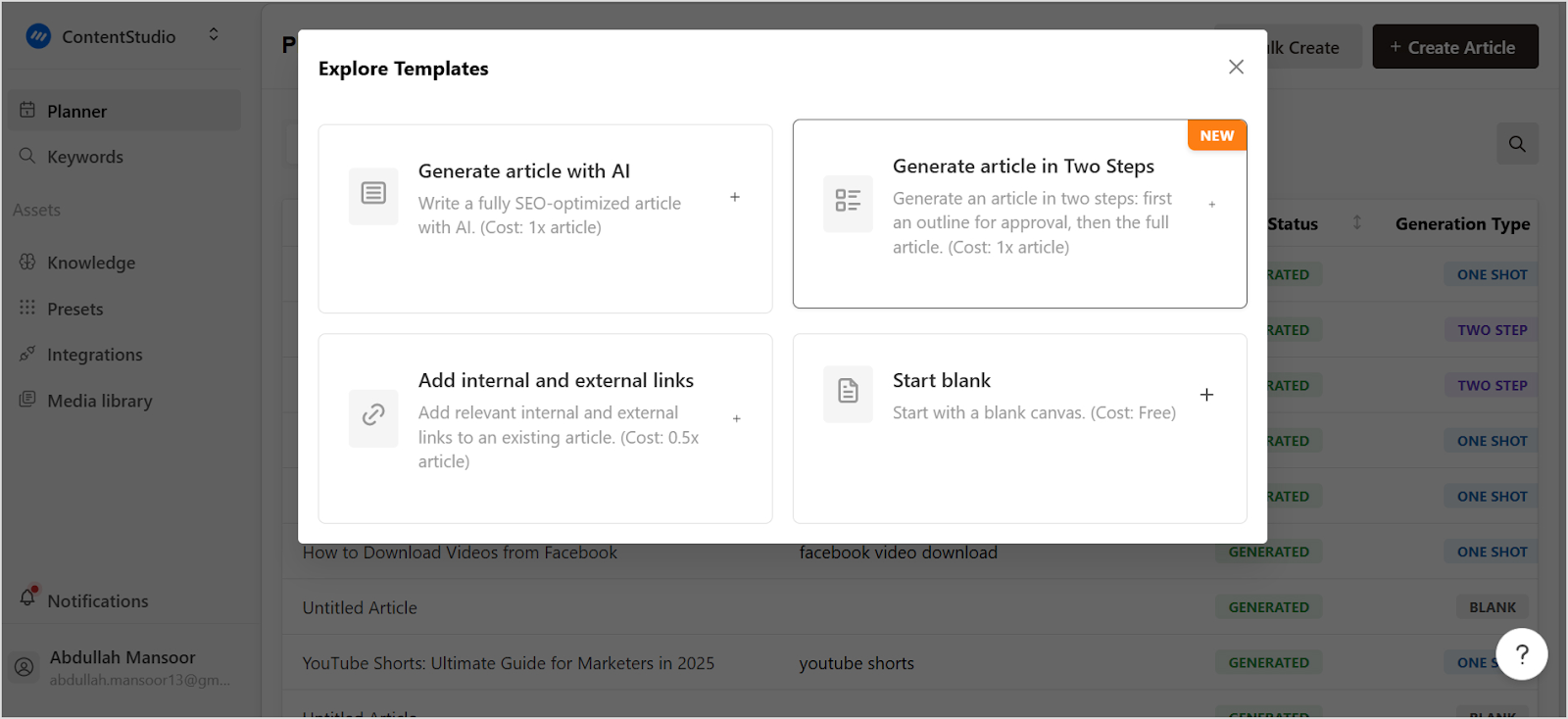
    From here, click the “Create Article” button in the top right corner. A popup will appear with three options. Select “Start Blank.”

    create article with Contentpen
    choose the start blank option

    Step 02: Add your content

    You’ll now have a blank canvas to work with. Here, paste the article you want to refresh.

    paste your content into the blank field

    Important: Analyze the existing content

    Before you start making edits, take a moment to read through the entire article. Ask yourself the following questions:

    • Is the content still relevant?
    • Does it have outdated information?
    • Are there any broken links or outdated statistics?
    • Can you add any new insights, case studies, or recent trends?

    Having a clear picture of what needs updating will guide your editing process.

    Step 03: Click on “Ask AI”

    Once your content is added, it’s time to start the refresh process.

    On the right-hand menu, you’ll see the “Ask AI” option. Click on it, and the Contentpen AI bot will appear.

    Click on Ask AI bot
    Ask AI

    Tip: Use tools like Contentpen’s SEO assistant to check keyword optimization for your title and meta description.

    Step 04: Give instructions to the Contentpen AI bot

    You can give the AI bot specific instructions for what you want to improve. Some example prompts include:

    • “Add internal linking suggestions for related blog posts on our site.”
    • Adjust the tone to fit better a younger audience (20–30 years old).”
    • “Add a FAQ section addressing common reader questions.”

    Or simply say: “Update this content based on the latest data and SEO trends.”

    refresh your article

    Bonus tip: Rewrite specific paragraphs sentences or change the tone for clarity. If a paragraph feels awkward or unclear, Contentpen can help rephrase it more readably.

    The AI can also modify the tone of specific sections to match your brand voice, whether you want it to be more casual, formal, or persuasive.

    Step 05: Enjoy your updated content

    Once the AI processes your request, you’ll receive a refreshed version of your article. Review it, make any necessary manual tweaks, and you’ll be good to go.

    Once you’re happy with the updates, hit the “Publish” button. Contentpen will automatically save and publish the refreshed article. You can also choose to schedule the update for a later time if preferred.

    Contentpen

    How to refresh an already published article?

    Let’s say you want to update a previously published piece. Here’s how to do that:

    1. Log into your Contentpen account – If you haven’t already, sign in.
    2. Navigate to your dashboard – You’ll see a list of all your saved or published articles.
    3. Locate your article – Click the “Edit” button next to the article you want to refresh. This will open the content editor where you can make all necessary updates.

    Other things to check when refreshing an article 

    1. Add internal and external links

    Ensure your article includes valuable internal links to related posts and credible external sources to boost SEO and user engagement.

    1. Update visuals

    Refreshing your article? Don’t forget about the visuals:

    • Replace outdated images with fresh ones
    • Optimize image sizes for better load times
    • Add descriptive alt text for SEO

    Contentpen allows you to easily integrate visuals, infographics, and even video content to enhance engagement.

    1. Check your CTAs

    Make sure your calls-to-action are still relevant to your current goals or campaigns.

    1. Check formatting

    Ensure headings, lists, and spacing look clean and consistent.

    1. Test links and image visibility

    Click through all internal and external links and confirm all visuals load properly.

    Final thoughts

    Refreshing your existing articles in Contentpen – The AI content writer is an effective way to ensure your content remains relevant, valuable, and optimized for both search engines and readers. By following these steps, you can quickly and easily update your content, improve SEO, and maintain a high-quality blog. Make it a regular practice to refresh older articles to keep them competitive and engaging.

    Frequently asked questions

    Can I refresh an article without starting from scratch in Contentpen?

    Yes! Contentpen allows you to paste and edit your existing article directly. You can update content, change tone, improve SEO, and more, without rewriting the whole thing.

    Will Contentpen keep my original formatting during the refresh?

    Contentpen maintains most of your formatting, but it’s always a good idea to review headings, lists, and spacing in the preview before publishing the refreshed version.

    How can I make sure my refreshed content is SEO-friendly?

    Use the built-in SEO assistant in Contentpen to check your keywords, meta tags, and headings. You can also instruct the AI to optimize your article based on the latest SEO trends.

    Can Contentpen help rewrite just certain paragraphs or sentences?

    Absolutely. You can highlight specific sections and ask the AI to rephrase them for clarity, adjust tone, or improve readability—without changing the rest of your content.

  • How to automate internal and external linking using Contentpen

    How to automate internal and external linking using Contentpen

    Effective internal and external linking is essential for SEO, guiding users through your website, and building content authority. Proper links help search engines understand your site structure and direct readers to related content. While manual linking works for smaller sites, it becomes time-consuming and error-prone as your content grows.

    Automation streamlines this process by scanning your site and inserting valuable links without manual effort, saving time and ensuring consistency.

    Wondering how much time manual linking costs you?

    By the end of this guide, you’ll see why automating your linking strategy boosts SEO, improves crawlability, and enhances user engagement. Contentpen makes this process simple and scalable, whether you’re a small business owner, content manager, or SEO specialist.

    Why automate internal and external linking?

    Manual link management quickly becomes overwhelming as your content volume increases. When you handle links on a case-by-case basis, inconsistencies inevitably emerge, with some pages receiving too many links while others remain underlinked or completely disconnected. This uneven approach not only wastes precious time but also creates an imbalanced site structure that confuses both users and search engines.

    Manual linking creates several challenges as your content grows:

    • Time-consuming process that diverts resources from content creation
    • Inconsistent implementation leading to unbalanced site structure
    • Difficulty in maintaining links as content volume increases
    • Higher risk of missed linking opportunities
    • Challenges in identifying the most valuable linking connections

    Automated linking eliminates these challenges by systematically scanning your entire website for linking opportunities and inserting connections based on predefined rules and contextual relevance. Small business owners can maintain a professional site structure without hiring additional staff, while marketing teams can ensure linking consistency across hundreds or thousands of pages with minimal effort.

    Manual linkingAutomated linking with Contentpen
    A slow process that needs constant attention.Saves hours of work through intelligent automation
    Inconsistent implementation across contentEnsures uniform linking strategy site-wide
    Links often added based on convenience rather than strategyStrategic link placement based on relevance and SEO value
    Difficult to scale as content library growsEffortlessly scales with expanding content libraries
    Prone to human error and oversightSystematically identifies all potential linking opportunities
    Requires ongoing manual review to maintainSelf-maintains with minimal oversight required

    How much of your workweek currently goes toward manual link-building and maintenance tasks?

    The benefits extend beyond mere time savings. Automated linking creates a balanced link profile that clearly signals site relevance and authority to search engines, driving improved search visibility and organic traffic.

    It prevents common issues like broken links, orphaned pages, and thin content areas while strengthening your overall site architecture. For websites with extensive content libraries, automation transforms linking from an insurmountable task into a strategic advantage that consistently supports your SEO goals.

    Getting started: Automating linking with Contentpen

    Automating linking with Contentpen is simple and integrates easily into your content workflow:

    Start by logging in to your Contentpen account. From the dashboard you’ll see a feature menu on teh left from there go to Knowledge> Website. 

    You’ll spot the “Add sitemap” and “Find Sitemap” option

    Step 01: Add your sitemap

    Upload your sitemap so Contentpen can understand your website’s internal structure. 

    Add your sitemap

    Step 02: Filter internal links (Optional step)

    Use Contentpen’s filtering options to exclude specific internal links you don’t want inserted. This helps you maintain control over your link strategy by avoiding redundant or low-priority pages.

     Filter internal links
    list of included links

    Step 03: Manage your sitemaps

    Once added, your sitemap(s) will appear with status indicators. You can test URLs or edit/remove entries as needed. Internal linking works based on these sitemaps – no keyword filtering or domain exclusions are needed for this step.

    Manage internal linking

    Step 04: Enable external linking (optional)

    Turn on the external linking toggle if you want Contentpen to automatically insert relevant external links. It will find high-quality articles based on your niche and language preferences.

    Enable external linking

    Pro tip: Specify which domains you want to include or exclude from external links. This keeps your content free from competitor links and ensures only trusted sources are used.

    Step 05: Proceed to next step

    Click Next to move forward and continue setting up the rest of your content optimization.

    The benefits of automated linking for SEO and user experience

    Implementing automated linking delivers substantial advantages for both your site’s search engine performance and visitor experience:

    • Boosted search engine crawlability and indexing
    • Strategic distribution of authority across your site
    • Improved page rankings for key content
    • Enhanced user navigation and engagement
    • Reduced likelihood of orphaned pages
    • Consistent implementation of your linking strategy

    Boosting search engine crawlability and indexing

    Automated internal linking creates clear pathways for search engine bots to discover and index every corner of your website. Pages that might otherwise remain isolated (commonly called “orphan pages”) become seamlessly integrated into your site’s structure through contextually relevant links.

    When search engines can easily navigate your site, they’re more likely to discover, crawl, and index all your valuable content. This comprehensive linking network signals to Google and other search engines that your site is well-organized and thorough – qualities that positively influence your overall rankings.

    Improved crawlability also means that updates and new content get picked up more quickly, keeping your site fresh and relevant in search results. Each automated internal link acts as a signpost, guiding both users and crawlers through your content ecosystem and ensuring that no valuable page gets overlooked or undervalued in search results.

    Distributing authority and improving page rankings

    Internal links distribute authority (sometimes called “link juice”) from high-performing pages to those that need a ranking boost. Automated linking systems ensure this distribution happens strategically and consistently across your entire website.

    By identifying your cornerstone content and automatically linking it to related, less prominent pages, the system helps elevate the overall ranking potential of your site. This balanced flow of authority distribution enhances individual page rankings while supporting a cohesive site-wide SEO strategy that builds on your existing strengths.

    Have you noticed certain pages on your site performing well while others struggle to gain visibility?

    Automation minimizes human error in authority distribution and ensures important pages receive necessary attention at scale. With methodical link placement, every page benefits from the collective strength of your website, leading to noticeable improvements in search engine visibility and performance across your entire content library.

    Enhancing user navigation and engagement

    Well-placed internal links guide readers naturally through your content, directing them to related articles and valuable resources they might otherwise miss. This intuitive navigation encourages visitors to spend more time exploring your site, reducing bounce rates and increasing engagement metrics that search engines value.

    Automated linking ensures every content piece connects logically to related topics, creating a seamless user journey that feels natural rather than forced. As visitors find it easier to locate relevant information, their overall experience improves significantly – they’re more likely to view multiple pages, return for future visits, and perceive your site as an authoritative resource.

    The interconnected environment created through automated linking serves both functional and strategic purposes, making navigation intuitive while simultaneously strengthening your site’s topical authority in the eyes of search engines.

    Contentpen

    Conclusion

    Automating internal and external linking is no longer a luxury – it’s essential for scaling content marketing. As content grows, manual linking becomes unmanageable and inconsistent, hurting SEO and user experience.

    Contentpen is the AI blog writer tool that solves this with intelligent automation, offering sitemap integration, contextual link suggestions, and customizable presets to keep your site structure strategic and user-friendly.

    With Contentpen, you get better crawlability, improved authority flow, and smoother user journeys – without the manual effort.

    It lets you focus on creating valuable content while ensuring every page is meaningfully connected. As search engines prioritize relevance and experience, automated linking gives you a lasting edge.

    Frequently asked questions

    Why is internal linking important for SEO?

    Internal linking helps search engines understand your website structure and distribute link equity across your pages. It also guides users to related content, increasing time on site and improving engagement metrics that support better rankings.

    How does Contentpen automate internal linking?

    Contentpen uses your website’s sitemap to identify related pages and automatically inserts contextually relevant internal links. This ensures comprehensive coverage and consistent implementation across all content without manual effort.

    How does Contentpen choose external links?

    Contentpen scans your content for relevant topics and context, then recommends authoritative external sources that match your content’s theme. It also allows you to block competitor domains to avoid linking to unwanted sources.

    Will automated linking hurt my content’s readability?

    No. Contentpen is designed to preserve the natural reading flow. It places links contextually and intelligently, ensuring that the reader experience remains seamless and engaging.

    How does Contentpen handle existing content?

    Contentpen scans your entire site, including existing pages, and inserts links based on contextual relevance and sitemap structure. This ensures older content also benefits from updated and strategic linking.

    Who should use Contentpen?

    Contentpen is ideal for content marketers, SEO professionals, editors, and website owners who manage growing content libraries and want to scale their linking strategy without sacrificing quality or consistency.

  • How to set up brand knowledge in Contentpen: 06 simple steps

    How to set up brand knowledge in Contentpen: 06 simple steps

    Creating high-quality content consistently is one of the biggest challenges modern brands face, especially when working with multiple writers or relying on AI assistance.

    That’s where the brand knowledge feature in Contentpen comes in. It allows you to define your brand’s identity, voice, target audience, and strategic messaging, all in one place, so every piece of AI-generated content reflects your unique positioning.

    Whether you’re a B2B SaaS company, digital marketing agency, or content manager running multiple campaigns, aligning your content with your brand identity helps build trust, improve conversions, and save time. In this guide, you’ll learn how to build brand knowledge in Contentpen using its four key components: brand voice, website, files, and text snippets.

    Each step ensures the AI writes in your voice, for your audience, with content that supports your marketing and business goals.

    Key takeaways

    • Setting up brand knowledge in Contentpen ensures all AI-generated content aligns with your brand voice, audience, and messaging.
    • The setup involves four key components: Brand Voice, website, files, and text snippets – all managed in one place.
    • Uploading your sitemap and reference files improves content accuracy, consistency, and internal linking.
    • Regular updates to brand knowledge keep your content strategy aligned as your brand evolves.

    What is brand knowledge in Contentpen?

    Brand knowledge in Contentpen – is a foundational feature that trains the AI to understand your brand’s identity, voice, audience, and messaging framework. Instead of starting from scratch every time you generate content, you can preload essential brand information so Contentpen consistently produces accurate, on-brand outputs.

    The brand knowledge setup consists of four integrated components:

    • Brand voice: Define your brand’s tone, unique selling proposition (USP), audience personas, author style, and content themes. This sets the tone and strategic direction for AI writing.
    • Website: Add your sitemap so Contentpen can automatically crawl and understand your site structure. This improves both the accuracy of content references and the quality of internal linking, helping the AI point readers to the right product, feature, or resource pages.
    • Files: Upload internal documents such as brand guidelines, product decks, or past content that reflect your voice and messaging.
    • Text snippets: Create reusable blocks of copy (e.g., product descriptions, taglines, value props) to maintain consistency across assets.

    This central system acts as your brand’s memory inside Contentpen, making it easier to scale content creation while preserving voice, relevance, and messaging clarity.

    Why aligning content with your brand identity matters

    Customers’ interaction with your content shapes how they perceive your brand. If your messaging, tone, or positioning is inconsistent, it creates confusion, weakens trust, and reduces the likelihood of engagement or conversion.

    Aligning content with your brand identity ensures that every blog post, email, landing page, or social caption reflects your unique voice and values, regardless of who is writing or which AI is assisting.

    Here’s why it matters:

    • Consistency builds trust: When your tone, vocabulary, and message stay consistent across channels, it reinforces brand recognition and credibility.
    • Saves editing time: Writers and marketers spend less time reworking AI-generated content because it already sounds “on-brand” from the first draft.
    • Improves content performance: Clear, targeted messaging resonates better with the intended audience, resulting in higher engagement, lower bounce rates, and improved conversions.
    • Supports SEO and internal linking: A clearly defined brand voice and page structure help the AI generate SEO-aligned content with proper internal links, driving more traffic to key pages.

    By configuring brand knowledge in Contentpen, you’re improving content creation and turning it into a strategic asset that accurately and consistently reflects your brand.

    Contentpen

    How to build brand knowledge in Contentpen?

    Setting up brand knowledge in Contentpen is a one-time configuration that enables the AI to fully understand and replicate your brand’s identity. The setup is divided into four core components: Brand Voice, Website, Files, and Text Snippets, all accessible from the knowledge tab in the sidebar.

    Follow these five steps to complete your setup:

    Step 1: Log in or sign up to Contentpen

    To begin, go to Contentpen.ai- AI blog writer and log in to your workspace. If you don’t have an account yet, click ‘Start your free trial’ and create one.

    Once you’re inside, navigate to the Knowledge tab from the left-hand sidebar. This is where you’ll manage all components of your brand knowledge setup.

    Also read: How to set up your Contentpen workspace?

    Step 2: Define your brand voice

    Navigate to Knowledge → Brand Voice.

    Fill out the following fields:

    • About the brand: Describe what your company does, your core offering, and brand values.
    • Ideal customer profile: Identify who your target users are, include roles (e.g., marketing managers, founders), industries, and their key pain points.
    • Unique selling proposition (USP): Clearly explain what sets your product or service apart from competitors.

    Still within the brand voice section:

    • Define your author persona: What kind of character is narrating your brand content? Specify their tone, confidence level, and point of view.
    • Add relevant Target Audience Tags (e.g., growth marketers, SaaS product leads, early-stage founders).
    • Selecting brand voice tags such as “Professional but approachable,” “Clear and straightforward,” or “Helpful and solution-focused.”
    • Listing competitors to help the AI differentiate your tone and messaging.

    Establish content strategy pillars to guide AI-generated content topics. For example:

    • SEO and analytics
    • Content marketing
    • SaaS growth
    • AI in marketing

    These details train the AI to create content that’s relevant, audience-specific, and in line with your brand’s positioning.

    Step 3: Add your website’s sitemap

    Navigate to Knowledge → Website.

    Click Add Sitemap or use the Find Sitemap option for automatic detection. Once added:

    • Review the pages pulled from your sitemap.
    • Use the Exclude Pattern feature to omit irrelevant sections (e.g., /blog/* or /careers).
    • Click Test Sitemap URLs to confirm everything is properly indexed.

    Why it matters: The sitemap enables the AI to reference your actual site content for accuracy and SEO. It also improves internal linking, ensuring generated content links to the right product or service pages.

    Step 5: Upload branded reference files

    Go to Knowledge → Files.

    Upload content-rich documents like:

    • Brand guidelines
    • Product brochures or one-pagers
    • Internal messaging frameworks
    • Tone-of-voice documentation

    Supported formats: PDF, DOCX, DOC, TXT (each under 5MB)

    These files provide the AI with real examples of your brand’s language, structure, and positioning, improving the contextual quality of content generation.

    Step 6: Create reusable text snippets

    Go to Knowledge → Text.

    Click + Add Snippet and input short, reusable pieces of copy such as:

    • Product descriptions
    • Taglines or slogans
    • Boilerplate value props
    • CTA templates

    Snippets are particularly useful for ensuring consistent messaging across blog intros, feature highlights, meta descriptions, or social captions.

    Also read: How to use Contentpen presets to save time and write faster

    Best practices to manage your brand knowledge setup

    Once your brand knowledge is set up in Contentpen, keeping it updated and aligned with your evolving strategy is key to ensuring long-term content quality and consistency. Here are a few best practices to follow:

    1. Update your inputs regularly

    • Refresh your Brand Voice inputs whenever your positioning, messaging, or target audience changes.
    • Add new customer segments or content themes as your business grows or pivots.
    • Keep your author persona aligned with any shifts in tone (e.g., moving from formal to conversational).

    2. Replace outdated content sources

    • Revisit the “Files” section every few months to remove or replace outdated assets.
    • Upload the latest product one-pagers, feature documents, or revised brand guidelines to reflect current messaging.

    3. Expand your text snippet library

    • Add new snippets as you develop fresh CTAs, headlines, or copy frameworks.
    • Monitor frequently reused language in your campaigns and standardize it inside the Text section.

    4. Monitor AI-generated content for alignment

    • Review the tone, vocabulary, and message of AI-generated outputs to ensure they match your expectations.
    • Provide feedback internally or refine Brand Knowledge inputs when outputs don’t align with the brand identity.

    5. Collaborate across teams

    • Work with marketing, product, and leadership teams to capture a complete and accurate brand voice.
    • Centralize feedback from stakeholders and reflect it in the Brand Knowledge configuration.

    Final thoughts: Empower your content strategy with brand knowledge

    Brand Knowledge in Contentpen is more than a configuration panel, it’s the foundation for producing AI-assisted content that actually sounds like your brand. By taking the time to define your tone, clarify your audience, upload key documents, and set strategic messaging pillars, you’re giving the AI everything it needs to write with confidence and clarity.

    Whether you’re generating blog posts, landing page copy, social content, or email campaigns, this setup ensures consistency, saves editing time, and protects your brand’s voice at scale. As your business evolves, updating your Brand Knowledge inputs keeps your content aligned, relevant, and strategically on point.

    If you’re serious about building a brand that resonates across every channel, Brand Knowledge is not just helpful,  it’s essential.

    FAQs about brand knowledge in Contentpen

    What is brand knowledge in Contentpen?

    Brand knowledge is a core feature in Contentpen that allows you to preload your brand’s identity, tone, audience, and messaging strategy. This helps the AI generate consistent, on-brand content across all formats.

    How do I access the brand knowledge feature in Contentpen?

    You can access brand knowledge by clicking on the Knowledge tab in the Contentpen sidebar. From there, you’ll find four sub-sections: Brand Voice, Website, Files, and Text.

    Why should I upload a sitemap to brand knowledge?

    Uploading your sitemap allows Contentpen to reference live website content and improve internal linking. It helps the AI generate more accurate, SEO-aligned content and ensures links point to the most relevant pages.

    Can I use brand knowledge for multiple brands or clients?

    Currently, brand knowledge is designed to align AI output with one brand setup at a time. If you manage content for multiple brands, you’ll need to configure and switch between workspaces manually.

    What kind of files should I upload in the Files section?

    Upload any document that reflects your brand’s voice, tone, and positioning. This includes brand guidelines, product brochures, messaging frameworks, internal training docs, and approved blog samples.

    How do text snippets help with content creation?

    Text snippets are reusable blocks of pre-approved copy, such as taglines, CTAs, product descriptions, and boilerplate messaging. They ensure consistency and save time by giving the AI access to ready-to-use phrases.

    How often should I update my brand knowledge inputs?

    Update your brand knowledge setup whenever there are changes in:
    – Product features
    – Brand messaging
    – Target audience
    – Website structure
    Review it at least quarterly to ensure all data remains current.

  • 10 best WriteSonic alternatives in 2025

    10 best WriteSonic alternatives in 2025

    Creating content at scale is no longer optional; it’s a necessity. AI writing tools have become essential for businesses looking to produce more content quickly without compromising on quality.

    While WriteSonic is a popular choice, it’s not perfect. Its credit-based pricing can get expensive as needs grow, and some users report inconsistent quality with long-form content. Others feel its SEO tools fall short when it comes to ranking performance.

    Fortunately, in 2025, the AI writing landscape has expanded with more innovative, more targeted tools emerging. In this guide, we’ll explore the best WriteSonic alternatives. We’ll compare features, pricing, and use cases to help you find the right fit for your content goals.

    Contentpen

    Comparison table: WriteSonic alternatives at a glance

    ToolKey FeatureLimitation
    ContentpenSpecialized blog content creation with advanced SEO optimization and bulk generation capabilitiesFocused exclusively on blog content rather than diverse content types
    Jasper AIExtensive template library with 50+ options for various content types and Boss Mode for long-form contentSignificantly higher price point compared to other alternatives, making it less accessible for small businesses
    Copy.aiStrong sales copy generation with generous free plan offering 2,000 words monthlyLimited SEO optimization capabilities compared to specialized blog content tools
    RytrExtremely budget-friendly with plans starting at just $9/month and 10,000 free charactersContent sometimes ends abruptly mid-thought and lacks proper conclusions
    SimplifiedAll-in-one platform combining AI writing with design, video, and social media toolsLess sophisticated AI writing capabilities compared to specialized writing tools
    WordtuneSuperior rewriting and content enhancement rather than from-scratch generationNot designed for generating original content, primarily enhances existing text
    Pepper ContentHybrid marketplace connecting with human writers alongside AI assistanceLess efficient for scaled content production compared to fully automated solutions
    ScalenutResearch-driven SEO content creation with competitive analysisRequires more manual input and guidance than more automated alternatives
    AnywordPredictive performance scoring to forecast content effectivenessHigher learning curve to fully utilize advanced predictive features
    Article ForgeFully automated article generation from just a keywordGenerated content often lacks depth and nuance compared to human-guided AI content

    Also explore: Best ChatGPT alternatives

    Why look for WriteSonic alternatives?

    Before diving into the alternatives, it’s important to understand the common pain points that drive users to explore options beyond WriteSonic. 

    1. Cost scalability concerns

    WriteSonic’s credit-based pricing model presents significant challenges for businesses with growing content needs. As content requirements scale up, costs can increase dramatically, often exceeding initial budget projections. Many companies report that what seemed like an affordable solution initially became financially unsustainable as their content strategy expanded.

    The platform’s premium pricing for higher-quality outputs also forces uncomfortable tradeoffs between content quality and budget constraints. Organizations frequently downgrade quality settings to conserve credits, compromising their content standards.

    2. Inconsistent content quality

    The most frequently cited reason for seeking WriteSonic alternatives is inconsistent output quality, particularly for longer-form content. Users report that while the platform can produce acceptable short-form content, quality degrades noticeably as word count increases. This inconsistency manifests in several ways:

    • Repetitive phrasing and circular arguments
    • Factual inaccuracies that require extensive fact-checking
    • Logical disconnects between sections of longer articles
    • Difficulty maintaining a consistent tone throughout a piece
    • Generic perspectives that lack originality or insight

    3. Limited advanced SEO capabilities

    As search algorithms have grown more sophisticated in 2025, WriteSonic’s relatively basic SEO features have fallen behind industry leaders. The platform lacks advanced capabilities for:

    • Comprehensive search intent analysis and alignment
    • Competitive content benchmarking and gap analysis
    • Entity relationship mapping for semantic relevance
    • Content structure optimization beyond basic keyword placement
    • Internal linking strategy implementation

    4. Workflow and collaboration friction

    Modern content production typically involves multiple stakeholders, yet WriteSonic’s collaboration features remain underdeveloped compared to alternatives. Teams report challenges with:

    • Managing approval workflows across multiple stakeholders
    • Tracking content revisions and feedback implementation
    • Coordinating content calendars and publication schedules
    • Maintaining consistent brand voice across team members
    • Integrating with other tools in their marketing technology stack

    5. Limited content strategy support

    WriteSonic functions primarily as a content generation tool rather than a comprehensive content strategy platform. It lacks features for:

    • Content performance analysis and optimization
    • Topic cluster planning and implementation
    • Content refresh and maintenance management
    • Comprehensive content auditing
    • Converting strategic goals into actionable content plans

    As businesses mature in their content marketing approach, these strategic limitations often prompt them to explore alternatives that support more sophisticated content operations.

    10 alternatives to Writesonic that are worth considering

    1. Contentpen

    Contentpen stands head and shoulders above other AI writing tools by specializing in what matters most to businesses: creating high-quality, SEO-optimized blog content that drives measurable traffic and conversions. Unlike general-purpose AI writing tools that try to be everything to everyone, Contentpen was built from the ground up with a singular focus on creating blog articles that rank in search engines and convert visitors into customers.

    Contentpen

    Its specialized approach to content creation makes Contentpen particularly compelling as a WriteSonic alternative. While WriteSonic offers a broad range of features across different content types, Contentpen has mastered the specific challenges of blog content, which typically delivers the highest ROI for content marketing efforts. 

    Key features that make Contentpen standout

    1. Advanced SEO optimization: Contentpen aligns with search intent while strategically placing keywords throughout your content. It analyzes competitors to identify content gaps and optimizes meta details, heading structure, and content depth for higher rankings. The system focuses on semantic relevance, topical authority, and search intent alignment—critical factors in 2025’s search landscape.
    2. Bulk generation capabilities: Create dozens or hundreds of quality blogs simultaneously by uploading a CSV with target keywords. Contentpen generates complete, optimized articles for each entry while maintaining consistent quality across all content, which is ideal for businesses targeting multiple keywords or building content hubs.
    3. Brand voice consistency: Create presets for your brand voice, terminology, and style preferences to ensure consistency across all content. Upload sample content for the AI to analyze and emulate, ensuring seamless integration with your existing library. This offers far superior voice customization compared to WriteSonic.
    4. Intelligent linking: Contentpen uses your sitemap for strategic internal linking based on semantic relevance, not just keywords. It identifies high-authority external links from trusted sources, maintains optimal link density, and ensures natural placement. Thus, saving hours of manual work while enhancing your site’s SEO architecture.
    5. Streamlined approval workflow: Bring teams and clients together with an intuitive approval system. Leave comments on specific sections, suggest edits, and approve changes in real-time—eliminating email confusion and enabling seamless collaboration with complete revision history.
    6. Content refreshing tools: Revitalize existing articles to improve SEO, update outdated information, and add fresh insights without starting over. The platform analyzes content against current search patterns, identifying specific sections needing updates for improved relevance and ranking potential.
    7. Visual content calendar: Plan your content pipeline visually in one place. Schedule creation, review, approval, and publication phases while assigning tasks, setting deadlines, and tracking progress. 
    8. WordPress integration: After planning the content, you can directly publish it onto your website. All you need to do is connect your WordPress with Contentpen.
    9. Automatic image generation: Generate contextually relevant, high-quality images for specific content sections – not just generic fillers. Images are optimized for web performance with proper alt text for accessibility and SEO, offering more sophisticated capabilities than WriteSonic’s basic image generation.

    Read more: How to set up your Contentpen workspace?

    2. Jasper AI

    Jasper AI

    Jasper AI specializes in creative content generation, offering a suite of tools designed specifically for marketing professionals, content creators, and business communicators.

    Key features:

    • Brand voice customization
    • Boss Mode for long-form content creation
    • Team collaboration features
    • Multi-language support
    • Surfer SEO integration
    • Chrome extension and mobile app
    • Jasper Art for image generation

    Limitations:

    • Steep pricing structure that puts advanced features out of reach for small businesses
    • Requires significant prompt engineering skills to achieve consistent quality outputs
    • Interface has a steeper learning curve than simpler alternatives
    • Native SEO capabilities aren’t as robust as specialized tools

    3. Copy.ai

    Copy.ai

    Copy.ai excels at creating conversion-oriented content, with particular strength in sales copy, email sequences, and marketing materials that drive audience action.

    Key features:

    • Generous free plan (2,000 words monthly)
    • 90+ specialized marketing templates
    • Intuitive, user-friendly interface
    • Browser extension integration
    • Support for 25+ languages
    • Content repurposing tools
    • Team collaboration features

    Limitations:

    • Limited SEO optimization capabilities compared to specialized tools
    • Less effective for comprehensive long-form blog content
    • No bulk generation for scaling content production
    • Fewer advanced customization options for enterprise needs
    • Template-based approach can sometimes produce formulaic content

    4. Rytr

    Rytr

    Rytr provides accessible AI writing capabilities at an extremely affordable price point, making it particularly attractive for budget-conscious users and small businesses.

    Key features:

    • Industry-leading affordability (starting at $9/month)
    • Free plan with 10,000 characters monthly
    • 40+ templates for various content types
    • Built-in plagiarism checker
    • Support for 30+ languages
    • Chrome extension for universal writing
    • 20+ customizable tones
    • History and organization features

    Limitations:

    • Output consistency issues with content sometimes ending abruptly
    • Basic SEO capabilities without advanced optimization
    • Limited research integration for factual content
    • No bulk content generation capabilities
    • Basic collaboration features compared to team-focused alternatives
    • Less sophisticated AI models than premium alternatives

    5. Simplified 

    Simplified 

    Simplified offers a comprehensive creative ecosystem that extends beyond AI writing to include design, video, and social media management tools in a unified interface.

    Key features:

    • Integrated AI writer with marketing templates
    • Comprehensive graphic design capabilities
    • Video creation and editing tools
    • Social media planning and scheduling
    • Team collaboration workspace
    • Generous free plan with reasonable limits
    • Extensive template library across content types
    • Brand kit and asset management

    Limitations:

    • Writing AI less sophisticated than specialized tools
    • Basic SEO features without advanced optimization
    • No bulk content generation capabilities
    • Generalist approach compromises depth in specific areas
    • Quality-quantity tradeoff across multiple creative functions
    • Steeper learning curve due to diverse feature set

    6. Wordtune

    Wordtune

    Wordtune takes a different approach by focusing primarily on improving and rewriting existing content rather than generating it from scratch, making it an excellent companion to other writing tools.

    Key features:

    • Advanced rewriting with multiple variations
    • Tone adjustment capabilities
    • Length customization (expand/shorten)
    • Grammar and spelling enhancements
    • Browser extension for universal use
    • Plagiarism detection
    • Simple, intuitive interface
    • Real-time suggestions

    Limitations:

    • Not designed for creating original content from scratch
    • Limited SEO optimization capabilities
    • No content planning or management features
    • More suitable as a complementary tool than complete solution
    • Fewer templates and structured formats than alternatives
    • Limited collaborative features for teams

    7. Pepper Content

    Pepper Content

    Pepper Content combines AI writing assistance with a marketplace of vetted human creators, offering a blend of technological efficiency and human expertise.

    Key features:

    • Network of professional writers and editors
    • AI-assisted content creation tools
    • Quality assurance processes
    • Content optimization capabilities
    • Analytics and performance tracking
    • Comprehensive workflow management
    • Multiple content format support
    • Enterprise-grade security

    Limitations:

    • Less automated than pure AI solutions
    • Higher cost structure for premium human content
    • Longer turnaround times than instant AI generation
    • More complex project management requirements
    • Variable quality depending on assigned creators
    • Less control over content creation process

    8. Scalenut

    Scalenut

    Scalenut focuses on creating content informed by comprehensive research and competitive analysis, positioning itself as a strategic tool for SEO-focused content marketing.

    Key features:

    • Advanced SEO optimization tools
    • Competitive content analysis
    • SERP intelligence integration
    • Keyword clustering capabilities
    • AI content generation templates
    • Automated content briefs
    • Readability analysis
    • Collaboration features

    Limitations:

    • Requires more manual input than fully automated alternatives
    • Steeper learning curve to utilize advanced research features
    • Research-heavy approach can slow content production
    • Interface less intuitive than simpler alternatives
    • Limited template variety compared to broader platforms
    • Higher pricing for advanced SEO features

    9. Anyword

    Anyword

    Anyword differentiates itself with predictive performance scoring that forecasts content effectiveness before publication, helping marketers optimize messaging for maximum impact.

    Key features:

    • AI-driven predictive scoring
    • A/B testing capabilities
    • Integration with popular platforms
    • Conversion optimization focus
    • Customizable content templates
    • Audience targeting features
    • Multi-channel content support
    • Performance analytics dashboard

    Limitations:

    • Predictive accuracy varies across industries and niches
    • Higher learning curve to leverage predictive capabilities
    • Less focus on SEO than ranking-oriented alternatives
    • Limited long-form content capabilities
    • Premium features restricted to higher pricing tiers
    • Requires significant historical data for optimal performance

    10. Article Forge

    Article Forge

    Article Forge takes content automation to the extreme by generating complete articles from minimal input, making it the fastest but least customizable option among WriteSonic alternatives.

    Key features:

    • One-click article generation
    • Basic keyword optimization
    • Support for multiple languages
    • WordPress integration
    • Scheduled content creation
    • Bulk article generation
    • Readability controls

    Limitations:

    • Content often lacks depth and nuance
    • Limited customization options
    • Generic output requires significant editing
    • Basic SEO without advanced optimization
    • No research integration or fact-checking
    • Less suitable for expert-level content
    • Quality significantly below human-guided alternatives

    Ready to transform your content strategy?

    After conducting a comprehensive analysis of the top WriteSonic alternatives available in 2025, Contentpen clearly emerges as the superior choice for businesses serious about creating high-quality, SEO-optimized blog content at scale.

    While each alternative offers distinctive strengths for various use cases, Contentpen’s specialized focus on AI content creation, combined with its advanced SEO capabilities, bulk generation features, and innovative human-in-the-loop approach, makes it the ideal solution for companies looking to drive sustainable traffic and conversions through content marketing.

    Visit Contentpen – The AI blog writer today to learn more about how this leading WriteSonic alternative can help you scale your content efforts while maintaining quality and consistency. Your competitors are already exploring more efficient content creation methods—don’t get left behind in the content revolution.

    Transform your content creation process, elevate your SEO performance, and establish your brand as an authoritative voice in your industry with Contentpen—the ultimate WriteSonic alternative for blog-focused content creation in 2025.

    Frequently asked questions

    Why consider alternatives to WriteSonic in 2025?

    While WriteSonic remains a popular AI writing tool, users have expressed concerns regarding its credit-based pricing model, inconsistent long-form content quality, limited advanced SEO features, and underdeveloped collaboration tools. As content demands grow, many businesses seek alternatives that offer better scalability, more consistent output, and robust SEO capabilities.

    Which WriteSonic alternative is best for SEO-optimized blog content?

    Contentpen is a top choice for businesses focusing on SEO-driven blog content. It offers advanced SEO optimization, bulk content generation, brand voice consistency, intelligent linking, and streamlined approval workflows, which make it particularly effective for scaling high-quality, search-engine-optimized blog posts.

  • 11 best Surfer SEO alternatives in 2025

    11 best Surfer SEO alternatives in 2025

    Surfer SEO has dominated content optimization, but its high price point and feature limitations have many marketers seeking alternatives. These 12 powerful tools offer similar or superior capabilities at often more affordable prices, with some providing unique features Surfer doesn’t offer.

    If you’re looking for AI-driven content creation, more affordable pricing, better workflow integration, or specialized optimization capabilities, this comprehensive guide has you covered. 

    Why people look for Surfer SEO alternatives

    Surfer SEO remains popular for its data-driven content optimization, but users consistently report four key pain points:

    The pricing problem: Hidden costs beyond subscriptions

    The challenge with Surfer isn’t just the base subscription ($99-$219 monthly) – it’s the accumulation of additional costs that impact budgets. The pricing structure includes:

    • Extra charges when exceeding monthly content credit limits 
    • Premium fees for AI-written articles ($9 per article on top of subscription).
    • Additional costs for using advanced features like SERP Analyzer

    The complexity challenge: Technical barriers to workflow

    Surfer’s dashboard presents users with an overwhelming array of data points – NLP scores, content scores, keyword density graphs, SERP feature analysis, and dozens of other metrics. This complexity creates several workflow obstacles:

    • Writers face significant learning curves before effectively using the platform
    • Content creation slows as teams navigate complex optimization recommendations
    • Organizations often need dedicated specialists to interpret Surfer’s data effectively

    The content quality concern: Optimization vs. Readability

    Following Surfer’s recommendations often leads to content prioritizing optimization metrics over reader experience. It creates several issues:

    • Content can become awkwardly structured to accommodate keyword placement requirements
    • Similar content patterns emerge across different topics due to formulaic optimization approaches
    • Over-optimization sometimes triggers search engine quality filters, counteracting ranking efforts
    • User engagement metrics may suffer despite improved technical optimization scores

    The limited AI integration: Expensive add-on vs. Core Feature

    While Surfer eventually added AI writing capabilities, they present significant limitations compared to dedicated alternatives:

    • AI features exist as expensive add-ons ($9 per article) rather than integrated core functionality
    • The writing workflow feels disconnected from the optimization process
    • Output quality typically requires substantial editing for brand voice alignment and factual accuracy
    • The AI capabilities haven’t evolved as rapidly as specialized content creation platforms

    1: Contentpen

    Contentpen

    The newest AI blog writer tool delivers fully optimized articles without the typical AI hallmarks. Contentpen stands apart from Surfer SEO by generating entire blog posts using specialized AI agents rather than just optimizing existing content, making it ideal for scaling content production while maintaining quality. 

    Key advantages over Surfer SEO

    • Creates complete, ready-to-publish blog content rather than just optimizing existing text
    • Utilizes a team of specialized AI agents working together (research agent, copywriting, content reviewer, etc.)
    • Integrates brand knowledge through website analysis and custom knowledge bases
    • Direct publishing to WordPress and other CMS platforms (coming soon)
    • Provides automatic internal and external linking
    • Offers approval workflows for team collaboration 

    Content creation capabilities

    • Complete AI-driven blog post generation that “feels human, ranks higher, and keeps your audience coming back
    • Keyword and title selection with CTR optimization
    • Brand voice integration ensures a consistent tone across all content
    • Automatic SEO optimization built into the content creation process 
    • Produces authoritative content that outranks competitors while maintaining your brand’s unique perspective 

    Interface and user experience

    • Clean, intuitive dashboard focused on content production workflow
    • Simple approval process for team collaboration
    • Status tracking of content through the creation pipeline
    • Modern, user-friendly design requiring minimal onboarding 

    Pricing structure

    Contentpen offers three pricing tiers: Starter ($39/month for 10 articles), Premium ($79/month for 30 articles), and Agency ($199/month for 100 articles). Save 30% with yearly billing.

    Limitations

    • Relatively new to the market with a less established track record
    • Limited integrations compared to more mature platforms
    • WordPress publishing is still in the development phase
    • It may require initial setup time to integrate brand knowledge properly
    • Custom pricing model makes it difficult to compare costs directly with competitors

    Also read: How to create a blog in less than 10 minutes using content presets

    2. Frase

    frase

    Frase delivers Surfer SEO’s optimization power with superior AI writing capabilities at less than half the price. This platform excels at content research, optimization, and AI-assisted writing, offering the closest feature set to Surfer SEO but with more generous content report allowances and better pricing. 

    Key advantages over Surfer SEO

    • Significantly more affordable ($115/month vs. Surfer’s $219/month entry price)
    • Superior content brief creation capabilities with more detailed insights 
    • More generous allowance of content reports per month
    • Better AI writing assistant with contextual understanding 
    • More robust question research features (SERP, People also ask, Quora, Reddit) 

    Content creation capabilities

    • AI-powered writing assistant that generates up to 150 words at a time 
    • 40+ AI copywriting templates for various content types
    • Content brief generator with headings and FAQ suggestions
    • Topic research with competitor content analysis
    • Real-time SEO score based on NLP analysis 
    • Comprehensive brief generator with H2 and H3 heading suggestions 

    Pricing structure

    Frase’s solo plan, which includes unlimited briefs and 30 document optimizations, starts at $45/month.

    Limitations

    • No direct WordPress plugin for seamless integration
    • Limited keyword data compared to dedicated keyword research tools
    • AI writing capacity is capped at 150 words per generation
    • Limited content management features for organizing multiple projects
    • Customer support was reported to be slower than some competitors
    • Can struggle with very technical or niche topics

    3. Clearscope

    Clearscope

    The pioneer in enterprise-grade content optimization delivers unmatched accuracy with premium pricing to match. Clearscope’s clean interface and powerful content grading system make it the tool of choice for large content teams needing precision and ease of use despite its high price point. 

    Key advantages over Surfer SEO

    • More accurate NLP analysis powered by IBM Watson 
    • Cleaner, more intuitive user interface 
    • Superior content grading system (letter grades A+ to F) 
    • More reliable correlation between content score and rankings 
    • Better integration with enterprise content workflows 

    Content creation capabilities

    • Content grading system that correlates strongly with ranking potential 
    • Relevant terms suggestions with importance ratings 
    • Competitor content structure analysis 
    • Readability scoring and optimization
    • Comprehensive keyword data integration 
    • Content history tracking for performance optimization 

    Pricing structure

    Clearscope’s essentials plan begins at $189 monthly and includes limited reports. Professional and enterprise plans are available for $399 monthly and feature custom pricing, respectively.

    Limitations

    • Significantly higher price point than most alternatives
    • A limited number of content reports per plan
    • No free trial unless specifically requested
    • Less comprehensive AI writing capabilities than some competitors
    • A steeper learning curve for maximizing content scores
    • It may be overkill for smaller businesses or individual content creators

    4. MarketMuse

    MarketMuse

    The AI-powered content intelligence platform builds actual topical authority through comprehensive research. Unlike Surfer’s focus on individual content optimization, MarketMuse excels at building topical authority across your site with expansive topic research and clustering capabilities. 

    Key advantages over Surfer SEO

    • Superior topic cluster analysis for building site-wide authority 
    • More comprehensive content inventory and auditing 
    • Better identification of content gaps and opportunities 
    • More sophisticated competitor analysis 
    • Focus on topical authority rather than just keyword optimization

    Content creation capabilities

    • AI-generated content briefs with comprehensive topic coverage 
    • Content scoring based on depth and breadth of topic coverage 
    • Topic research and clustering for content planning 
    • Competitive content analysis 
    • Content inventory and auditing 
    • AI-powered topic suggestions and content plan generation 

    Pricing structure

    MarketMuse offers four pricing tiers: a Free plan for individuals with limited applications, optimized with 100 tracked topics and five briefs; Research with 1000 topics and 10 briefs; and Strategy with 10K topics and 20 monthly briefs for larger teams and agencies.

    Limitations

    • Very high price point compared to most alternatives
    • A steep learning curve requires significant time investment
    • Annual billing only with no monthly payment option
    • Overwhelming interface for beginners
    • Complex data may require SEO expertise to interpret effectively
    • Overkill for businesses focusing on individual content pieces rather than a comprehensive strategy

    Also read: How to write an article using Contentpen?

    5. ContentStudio

    ContentStudio

    The all-in-one social media management platform with an advanced AI Toolkit amplifies your optimized content across channels. While not a direct Surfer SEO alternative for content optimization, ContentStudio excels at content distribution and social media management, helping your optimized content reach a wider audience through its comprehensive AI-powered tools.

    Key advantages over Surfer SEO

    • Comprehensive social media management capabilities
    • Content discovery and curation features
    • Scheduling and automation across multiple platforms
    • AI-driven performance analytics for content distribution
    • Team collaboration for content approval workflows 

    Content creation capabilities

    • AI Toolkit featuring AI caption generator, hashtag generator, and image creator
    • AI writing assistant for both social posts and blog content
    • Content curation tools to find and share industry content
    • Content repurposing tools for cross-platform sharing
    • Post templates and content calendar planning
    • Visual content creation tools 

    Pricing structure

    ContentStudio starts at $19/month for basic features, with Pro ($49/month) and Business ($99/month) plans offering expanded capabilities and savings of up to 34% on annual plans.

    Limitations

    • Limited SEO-specific features for optimizing content
    • Primarily focused on distribution rather than creation
    • The learning curve for managing multiple social platforms

    6. Scalenut

    Scalenut

    The most cost-effective Surfer SEO alternative delivers similar capabilities at a fraction of the price. Scalenut stands out with its affordability while still providing powerful AI writing and SEO optimization features, making it perfect for budget-conscious marketers who don’t want to sacrifice quality. 

    Key advantages over Surfer SEO

    • Much more cost-effective (10-12x more affordable on a like-to-like basis) 
    • Superior topic research and AI article writing capabilities 
    • “Cruise Mode” provides more control in content creation than Surfer’s AI approach 
    • SERP-based clustering offers a more powerful analysis than Surfer’s semantic clustering 
    • Better content auto-optimization with “Fix-it” technology at no extra cost 
    • Analyzes top 30 ranking pieces (versus fewer with Surfer)

    Content creation capabilities

    • AI-powered Cruise Mode generates first drafts that score at least 70 on the SEO score 
    • 40+ AI copywriting templates for various content types (ad copies, social media content, emails) 
    • Comprehensive brief generator with H2 and H3 heading suggestions and FAQs 
    • Content outline creation with writing points 
    • Advanced NLP and machine learning technologies for real-time SEO scoring
    • SEO content editor with keyword suggestions and competitor insights
    • One-click content optimization with “Fix-it” technology 

    Pricing structure

    Scalenut’s essential Plan, which includes five ready-to-rank humanized articles and optimizes and humanizes existing articles monthly, starts at $49/month. It offers free trials and significant discounts on annual plans.

    Limitations

    • A newer platform with a less established track record
    • SEO document limits may be restrictive for high-volume content teams
    • Some users report occasional inconsistencies in AI-generated content
    • Advanced features may require upgrading to higher-tier plans
    • Limited template customization options compared to some competitors
    • Smaller user community for troubleshooting and knowledge sharing

    7. SE Ranking 

    SE Ranking 

    The comprehensive SEO suite includes a powerful content editor at a value price point. SE Ranking offers more than content optimization, providing a complete SEO toolset that includes rank tracking, site auditing, and competitor analysis alongside its Surfer SEO-like content editor.

    Key advantages over Surfer SEO

    • Part of a comprehensive SEO suite (better value if you need other SEO tools) 
    • More extensive keyword data with search volume, keyword difficulty, and competition metrics 
    • Can set recommendations for title, description, and slug (not just body content) 
    • AI Writer includes 11 different writing tones (more customization) 
    • Collaborative features don’t require subscription for invited users
    • Supports multiple languages (English, French, German, Dutch, Italian, Russian, Portuguese, Spanish) 

    Content creation capabilities

    • Proprietary AI-powered algorithm for content generation 
    • AI Writer can produce short and long content pieces on any topic
    • Generates headlines (H1), headings, and subheadings 
    • Can expand a single sentence into a comprehensive paragraph 
    • Creates title tags and meta descriptions optimized for target keywords
    • Drawing up detailed content briefs with word count, keyword, and structure recommendations 
    • Quality score assessment for content 

    Pricing structure

    SE Ranking’s content marketing module starts at $65/month for 15 articles and 25,000 AI writer words, with higher tiers at $119/month and $259/month, offering increased capacity and a 20% discount on annual billing.

    Limitations

    • Entry-level plan limits may be restrictive (15 articles, 3 plagiarism checks)
    • The learning curve when using the full SEO suite features
    • Some users report occasional AI output inconsistencies
    • It may be overwhelming for users who only need content optimization
    • Mobile experience not as robust as desktop interface
    • Additional costs for scaling up article counts and AI word usage

    8. Dashword

    Dashword

    The content optimization platform focuses on quality over keyword stuffing. Dashword takes a more sophisticated approach to content optimization than Surfer SEO, prioritizing readability and user experience alongside SEO factors for more natural, high-quality content. 

    Key advantages over Surfer SEO

    • Simplifies content optimization by showing only relevant, actionable data 
    • Groups keyword variations intelligently (e.g., “trip” and “trips” are treated as the same keyword) 
    • Better content brief generation with a drag-and-drop interface 
    • Focuses on producing quality content rather than just keyword optimization 
    • Interface with less overwhelming data 
    • More advanced readability assessment in addition to SEO scoring 

    Content creation capabilities

    • AI-powered content brief creation 
    • Content optimization with real-time feedback 
    • Keyword research and suggestions based on SERP analysis
    • Competitor content structure analysis
    • FAQ identification and integration 
    • Content scoring from F- to A+ for optimization quality 
    • Meta description generator built-in 
    • Advanced readability scoring beyond basic metrics 

    Pricing structure

    Dashword offers a free trial. Plans start at $99/month for 30 content reports and five user seats, with business plans starting at $349/month and a 20% discount on annual billing.

    Limitations

    • Higher starting price than some alternatives ($99/month)
    • AI writing features only available on the Business plan ($349/month)
    • Limited to 30 content reports on the entry-level plan
    • Lacks some of the advanced AI capabilities of newer platforms
    • No direct WordPress publishing integration
    • Less comprehensive SEO tools beyond content optimization

    9. NeuronWriter

    NeuronWriter

    NeuronWriter is a budget-friendly, multilingual content optimization powerhouse. Its support for over 170 languages and affordable pricing stands out, making it an excellent choice for international businesses or content creators working across multiple language markets. 

    Key advantages over Surfer SEO

    • Significantly more affordable starting at $23/month (vs. Surfer’s $89/month)
    • Supports over 170 languages (compared to Surfer’s 11 languages)
    • Includes AI writing capabilities in base plan (Surfer charges extra)
    • More user-friendly interface for beginners 
    • Better pricing tiers for scaling content needs
    • Occasional lifetime deals through AppSumo 

    Content creation capabilities

    • Advanced AI writing assistant powered by GPT models
    • NLP-driven content optimization with real-time scoring
    • Competitor SERP analysis of top-ranking pages
    • Content ideas generation based on competitor research
    • Support for over 170 languages
    • AI-generated content outlines and draft creation
    • Content brief development with heading suggestions 

    Pricing structure

    NeuronWriter starts at just $23/month for the Bronze Plan, with Silver ($45/month) and Gold ($69/month) plans for expanded features and significant discounts on annual plans.

    Limitations

    • Limited content management features compared to more robust platforms
    • Some users report occasional inconsistencies in language support quality
    • Smaller user community and support resources
    • Basic reporting capabilities compared to enterprise alternatives
    • Less robust team collaboration features
    • Limited integration options with other marketing tools

    10. Topic

    Topic

    The specialized content brief creation platform saves hours of research time. The topic focuses exclusively on creating comprehensive content briefs in record time, making it the go-to tool for agencies and content teams that need to streamline their brief creation process. 

    Key advantages over Surfer SEO

    • Specialized in content brief creation rather than trying to be an all-in-one tool
    • More comprehensive briefing capabilities 
    • Faster brief creation process (reportedly 10 minutes vs. an hour)
    • Better organization of brief elements for writers
    • More writer-friendly output format
    • Focus on content strategy rather than just optimization

    Content creation capabilities

    • Analyzes top 30 Google results for any keyword
    • Content brief generator with headings, questions, and keywords
    • Outline builder with AI-assisted content ideas
    • Content grader to evaluate draft quality
    • Explicitly designed for accelerating the content creation process
    • Easy-to-use interface focused on content brief creation
    • Comprehensive SERP research integration 

    Pricing structure

    Topic’s starter plan begins at $99/month for 10 content briefs, with plus ($199/month) and premium ($299/month) plans offering increased capacity and annual discounts.

    Limitations

    • Limited functionality beyond content brief creation
    • No content editor for actual writing/optimization
    • Relatively high price point for specialized functionality
    • Limited to 10 content briefs on entry-level plan
    • No free trial (only demonstrations)
    • Lacks comprehensive SEO features found in all-in-one alternatives

    Also Read: 9 best ChatGPT alternatives in 2025

    11. WriterZen

    WriterZen

    The end-to-end content creation platform with superior keyword research capabilities. WriterZen excels at discovering valuable keyword opportunities and organizing them into effective content plans, making it ideal for content marketers who want to own the entire creation process from keyword to publication.

    Key advantages over Surfer SEO

    • Superior keyword research with a unique “Golden Filter” feature
    • More comprehensive keyword clustering and planning capabilities
    • End-to-end support from topic discovery to content creation
    • Better organization of content creation workflow
    • More intuitive topic discovery tools
    • Integrated plagiarism checking 

    Content creation capabilities

    • Topic discovery tool for generating content ideas
    • Keyword explorer powered by Google’s database
    • Keyword clustering and planning capabilities
    • Content creator with NLP optimization
    • Plagiarism checker to ensure content originality
    • Built-in AI writing assistance
    • Golden filter feature for finding valuable keywords

    Interface and User experience

    • Well-organized dashboard for complete content workflow
    • Intuitive keyword research interface
    • Clear visualization of keyword relationships
    • Simple content optimization scoring
    • Easy-to-understand recommendations
    • Logical workflow progression from research to writing
    • Modern, clean design throughout the platform

    Pricing structure

    WriterZen’s keyword research plan starts at $75/month, with All-In-One plans at $150/month (Basic) and $225/month (Advanced), plus occasional lifetime deals through AppSumo.

    Limitations

    • The higher price point for a complete package of features
    • The steeper learning curve for maximizing keyword research capabilities
    • Limited AI writing capabilities compared to dedicated AI writing tools
    • Some users report occasional data discrepancies in keyword metrics
    • Less intuitive content editor than some alternatives
    • More focused on research than actual content creation

    Conclusion

    The Surfer SEO alternatives landscape offers diverse options for every content need and budget.

    For those seeking the most comprehensive solution, Contentpen delivers complete blog content creation with built-in optimization. Budget-conscious marketers will find exceptional value in Frase and NeuronWriter, while enterprise teams might prefer the established accuracy of Clearscope or MarketMuse.

    All in all, the best choice depends on your specific needs and your focus on content creation, optimization, distribution, or analytics.

  • How to use Contentpen presets to save time and write faster

    How to use Contentpen presets to save time and write faster

    If you’re writing blog posts regularly, you already know how much effort goes into just getting started. You open a doc, figure out what structure to use, decide on tone, try to remember what formatting you used last time, then copy links from your last article or dig through your sitemap to do internal linking manually.

    It’s tedious. It’s inconsistent. And it eats up more time than the actual writing.

    Now imagine you could skip all of that with one click.

    That’s what presets in Contentpen are for. They help you save your ideal article setup, including voice, structure, formatting, and linking, so you never have to start from scratch again.

    Whether you’re blogging manually or already using the AI blog writer online Contentpen, this guide will show you how presets cut hours from your workflow, keep your content consistent, and help you publish faster with less friction.

    Key Takeaways

    • Presets eliminate repetitive work by saving your preferred content settings, including tone, formatting, structure, and linking, in one reusable template.
    • Manual blogging is time-consuming, error-prone, and inconsistent. Presets help streamline your workflow and maintain brand standards.
    • Contentpen lets you create multiple presets, so you can tailor your setup for different content types, audiences, and campaign goals.
    • Using presets saves hours each week, making it easier to scale high-quality content production without sacrificing speed or consistency.

    What are presets in Contentpen?

    Presets are reusable content blueprints that let you predefine exactly how your articles should be written and structured inside Contentpen.

    Think of them as your saved writing formula. Instead of selecting the same tone, adjusting formatting, picking section types, or setting up internal links every time, you define it once and apply it instantly to any new article.

    Each preset can include:

    • Tone of voice and audience
    • Preferred formatting (bold, quotes, tables, heading styles)
    • Article structure, length, and optional sections (FAQs, takeaways, etc.)
    • Intro style (custom, emotional, statistical, etc.)
    • Internal linking rules using your sitemap
    • External linking preferences (include or exclude specific domains)

    Once set, you or your team can apply a preset with a single click, so every blog starts with your exact preferences already in place.

    Why presets matter (especially if you’re blogging manually)

    If you’re still doing everything by hand, writing in Docs, formatting manually, and trying to keep every post consistent, you’re spending hours on tasks that can be automated.

    Presets eliminate that friction. They turn your best practices into repeatable systems.

    Here’s why they’re worth using, no matter how you currently blog:

    • Save time: Stop redoing the same setup for every article.
    • Ensure consistency: Every article follows the same tone, structure, and standards, whether you or a team member writes it.
    • Scale without stress: As your content volume grows, presets make it easy to maintain quality at speed.
    • Reduce manual errors: Never forget a formatting rule, section type, or linking guideline again.
    • Reclaim your creative energy: With the busywork handled, you can focus on what actually matters, the content.

    If you’re already using Contentpen, presets are the fastest way to unlock serious workflow gains. And if you’re blogging manually today, this is the feature that makes switching worth it.

    How to use Contentpen presets: 7 simple steps

    Setting up your first preset in Contentpen is simple, and once it’s done, you’ll never have to manually configure your content setup again. Follow these easy steps to create a preset that fits your writing style, structure, and content goals.

    1. Sign in or create your account

    To get started, log in to your Contentpen account. If you’re new, sign up and start your free trial – and enjoy a 30% discount on annual plans while it lasts.

    Presets are available to all users and can be created as soon as you access your workspace.

    2. Navigate to the Presets section

    In the left-hand sidebar, go to Assets → Presets. If you haven’t created any presets, you’ll see a message inviting you to start.

    Click Create New Preset to begin setting yours up.

    how-to-use-contentpen-presets

    3. Set your article style

    In this step, you’ll define how your content should sound, the tone, audience, and point of view. These settings help ensure that every article reflects your brand voice and connects with the right readers.

    • Tone of voice: Choose from predefined options like professional, conversational, formal, authoritative, educational, casual, etc. 
    • Target audience: Select the type of reader you’re writing for, such as marketers, founders, agency owners, startups, enterprises, etc.
    • Point of view: Choose first person (I/we), second person (you), third person (they/it), or let Contentpen decide automatically.
    Choose formatting preferences

    4. Choose formatting preferences

    Next, decide how your content should appear visually. These formatting rules help standardize your content and reduce post-editing work.

    Toggle on or off the following elements:

    • Bold: Automatically bold key phrases for emphasis
    • Italic: Subtly highlight certain ideas
    • Quotes: Include callouts or tips
    • Tables: Display structured data clearly
    • Lists: Use bullet points or numbers where needed

    You can also choose your heading capitalization: Title Case or sentence case.

    how-to-use-contentpen-presets

    5. Define article structure

    Now, outline how your articles should be built, from length to sections and intro hooks.

    Article size: Select from:

    • Small (3–5 headings)
    • Medium (5–8 headings)
    • Large (8–12 main sections)
    • Very Large (12–15 sections)

    Intro hook (optional): Choose how your articles should begin. Options include:

    • Custom
    • Question
    • Statistic
    • Quote
    • Anecdote
    • Emotional opener

    Optional sections: Enable or disable these:

    • Key Takeaways (summary at the top)
    • Conclusion
    • FAQs

    Media options: Choose whether to include:

    • 1 featured image
    • 3 – 4 in-article images

    This ensures every article is pre-structured the way you want, without needing to reformat later.

    Set up internal and external linking

    6. Set up internal and external linking

    Good linking boosts SEO and keeps readers engaged. Here’s how you can automate it inside your preset:

    Internal linking:

    • Website URL: Enter your main site – Contentpen will auto-detect your sitemap. Or,
    • Add Sitemap: Manually paste your sitemap URL if needed.
    • Filter/Exclude Paths: Include only blog pages (e.g., /blog/*) and exclude non-content paths (e.g., /admin/).
    • Enable auto-knowledge linking: Let Contentpen pull internal links directly from your sitemap into articles.

    Also read: How to add a sitemap in Contentpen?

    External linking:

    • Auto-linking toggle: Automatically add outbound links to trusted sources in your niche.
    • Included domains: Whitelist reliable sources you’d like linked in articles.
    • Excluded domains: Prevent links to competitors or irrelevant sites.
    how-to-use-contentpen-presets

    7. Save your preset

    Once everything is configured, click Save Preset.

    It will now appear in your Presets list and can be instantly applied to any future article, so your content creation starts with all the right settings, every time.

    Why use Contentpen for content creation?

    Contentpen isn’t just another AI writing tool, it’s built for content marketers and teams who care about speed, structure, and quality at scale.

    Unlike traditional writing tools that give you a blank page and generic output, Contentpen is designed to help you plan, structure, and publish better content faster. With features like:

    • Smart article presets: Save and apply your favorite writing configurations in one click
    • Content types for every goal: From how-to guides to SEO listicles, choose from multiple blog styles
    • Built-in linking and formatting: Automate internal/external links, bolding, quotes, and layout styles
    • Visual-ready content: Add featured and in-article images without using design tools
    • Collaborative workspace: Perfect for agencies, marketing teams, and solo creators scaling their output

    If you’re still spending hours formatting articles, aligning tone, or manually linking pages, Contentpen simplifies all of it in minutes. It’s built to help you do less busywork and publish content that performs.
    Bottom line: How to use presets in Contentpen

    Presets in Contentpen aren’t just a convenience, they’re a content creation advantage. By eliminating repetitive setup tasks, ensuring brand consistency, and speeding up your workflow, presets help you publish more high-quality content in less time.

    Whether you’re a solo creator looking to streamline your process or a content team aiming for scale, presets take the guesswork out of every new article, so you can write with focus and publish with confidence.

    FAQs about using presets in Contentpen

    What exactly does a Contentpen preset include?

    A preset includes all your preferred writing configurations, such as tone of voice, target audience, formatting style, article structure, intro type, internal linking rules, and external link preferences. Once saved, it can be applied to any future article in one click.


    Can I create multiple presets for different content types?

    Yes, you can create as many presets as you need. For example, one for SEO how-to guides, another for founder blogs, and a separate one for product announcements, each with its own tone, length, and structure.

    Can I edit or update a preset after I’ve created it?

    Yes, you can go back to any saved preset, make changes, and update it to match your evolving content needs. You can also duplicate a preset to create a variation without starting over.

    Do I need to use a preset every time I create an article?

    No, using a preset is optional. If you prefer to customize settings manually for a specific post, you can skip the preset and configure everything on the spot. Presets are there to speed things up when you need them.

    How do presets help with brand consistency?

    Presets standardize tone, structure, and formatting across every article, so whether you’re writing solo or with a team, your content always looks and sounds on-brand.

    Is using presets better than writing manually in Google Docs or a CMS?

    Yes, significantly. Manual workflows often involve repeating setup steps, copying old formats, and manually linking. Contentpen presets eliminate that repetition, reduce human error, and streamline your writing process, so you can focus on creating content, not configuring it.

  • How to rewrite a paragraph using AI?

    How to rewrite a paragraph using AI?

    Rewriting content is a super important part of the writing process, it helps you fine-tune your tone, make things easier to understand, and keep your readers hooked.    

    But doing it manually can be time-consuming and often overwhelming, especially when you’re short on time or creativity. That’s where AI tools come in handy.

    AI-powered writing assistants help you rewrite paragraphs quickly while maintaining the original meaning. 

    One such easy-to-use tool is Contentpen,

    An ultimate AI blog generator that combines deep research with your brand’s voice to craft high-impact, SEO-optimized articles that outperform your competition.

    Let’s walk through how you can use Contentpen to rewrite a paragraph in just a few clicks.

    Step 01: Access your dashboard

    • Go to your Contentpen dashboard and click on “Create Article”
    • Choose the “Start blank” option to begin a new article from scratch.
    start blank

    Step 02: Add your content

    • You’ll be redirected to the editor window, where you can paste or write your content.
    add content you wnat to rewrite

    Step 03: Select the paragraph

    • Highlight the paragraph you want to rewrite. Once selected, a small “Ask AI to edit or rephrase” bar will appear above it.
    Ask AI

    Step 04: Choose the rephrase option

    • Click on the bar and select “Rephrase text” from the available options, such as “Improve writing,” “Make longer,” “Simplify,” or “Change tone.”
    rephrase text
    • Press Enter, and the AI will rewrite the selected paragraph.
    replace text

    Step 05: Apply the new version

    You can click “Replace section” to update the original or choose to add it below the existing paragraph, whichever suits your workflow.

    rephrased text

    Also read: How to write an article using Contentpen?

    Conclusion

    Rewriting pragraphs doesn’t have to be time-consuming. With Contentpen’s AI-powered editor, you can enhance your writing instantly. Whether you’re editing for clarity, tone, or variety, the rephrase tool helps you polish your content with just a few clicks.

    Frequently asked questions

    Can Contentpen rewrite entire articles or just paragraphs?

    Yes, Contentpen can help you rewrite entire articles or specific paragraphs, highlight the text you want to improve, and let the AI handle the rest.

    Does the rewrite tool change the meaning of my content?

    No, the tool is designed to maintain the original intent while improving wording, tone, and clarity.

    Can I choose different tones when rewriting a paragraph?

    Absolutely! Alongside the rephrase option, you can select different tones like formal, casual, or persuasive to match your content’s purpose.

    Is Contentpen beginner-friendly?

    Yes, the interface is intuitive and easy to use, even if you’ve never worked with AI writing tools before.