Staring at a blank page when you need blog examples for students is usually not a lack of ideas.
The real problem is picking a clear purpose, structure, and audience so the post does not feel like another random diary entry.
The best blog examples for students fall into five clear types: personal and reflective blogs, academic or course blogs, portfolio and career blogs, niche subject blogs, and university-hosted student blogs.
This guide breaks down what makes each one work. You’ll also get 120+ title ideas, six copy-and-paste templates, a platform comparison, and a step-by-step plan so you can publish your first post this week.
So, if you want your next blog post to feel clear and useful, not vague and messy, keep reading.
Key takeaways
- Pick your blog type first: personal, academic, portfolio, niche, or university-hosted.
- Choose the post’s job before its topic: reflect, help, document, explain, argue, or prove.
- Use the 120+ blog title examples as ready-made starting points, swapping in your own major, city, or campus.
- Keep your first post short enough to actually finish, and let the title decide the length.
- Run every draft through the SEO checklist, and in the early months, judge yourself on consistency, not view counts.
- Use a template or a tool like Contentpen to speed up the draft, but keep the lived detail and voice yours.
What makes a good student blog post?
A good student blog post feels focused, specific, and easy to skim on a phone. Strong posts speak to one clear reader and leave that person with a simple next step.
Most weak sample blog writing for students fails on focus. The writer tries to talk to all students at once, jumps between topics, and never lands on one clear lesson.
Better posts do five things well:
- They start with one job, such as helping a first-year student handle finals.
- They picture one reader, such as an anxious high school senior.
- They use concrete details instead of vague claims, like naming the exact library floor or app they use.
- They use headings and short paragraphs so a tired classmate can scan between lectures.
- They end with a takeaway, such as a checklist or a question to reflect on.
The 5 types of student blogs (pick yours first)
Before you look at blog examples, decide which kind of blog you are building. Most students skip this step, which is why their blog feels blurry.
There are five main types.
1. Personal and reflective blogs
These document your journey: first semester, changing majors, burnout, homesickness, growth.
They are the easiest to start because the only research you need is your own honest experience. The University of London and Bournemouth student blogs live mostly here.
2. Academic and course blogs
Sometimes a professor sets these as graded assignments, and sometimes you start one to think publicly about your field.
They lean on process notes, reading responses, and lab or seminar reflections.
3. Portfolio and career blogs
Built to prove skill. Each post is a case study, a project write-up, or an internship reflection.
This is the type recruiters and admissions readers care about most, because it shows what you can do, not just what you think.
4. Niche or subject-expert blogs
You pick one narrow lane, for example, organic chemistry study methods, indie game design, or campus food on a budget, and become the student people search for on that topic.
Niche blogs rank fastest because they are specific.
5. University-hosted student blogs
Many schools host a student blog and invite current students to contribute.
You get an instant audience and credibility without building your own site. If your university runs one, it is often the smartest place to start.
How to choose:
- If you want reach and low setup, contribute to a university-hosted blog.
- If you want a career asset you control, start a portfolio blog.
- If you just want to build the writing habit, start a personal or niche blog.

Write better blogs in less time, without sacrificing quality.
Let AI handle structure, clarity, and flow while you stay in control of the message.
Try AI blog writing →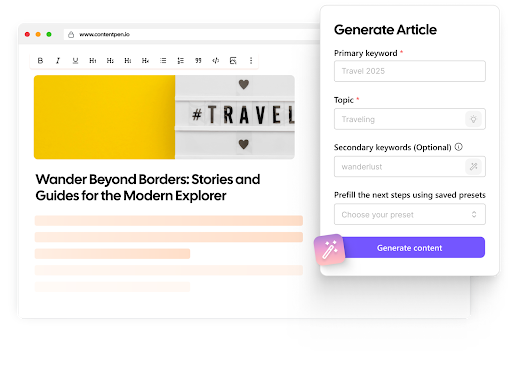
Six types of student blog posts (and when to use each)
Before you pick a topic, pick the purpose of what you want to achieve with the blog. In total, there are six different types of student blog posts you can write.
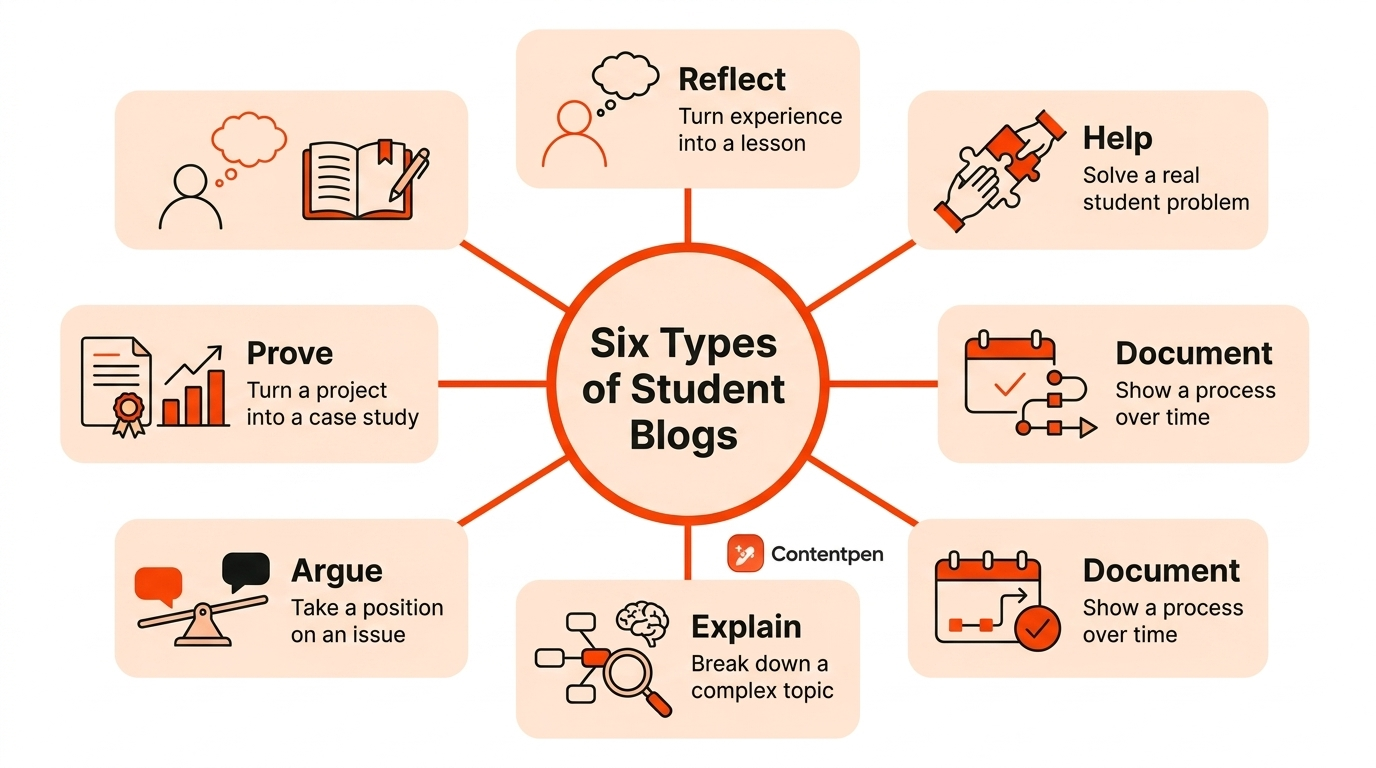
- Reflect turns experience into a lesson. It fits first-semester stories, burnout tales, and posts where a failure or surprise changed how you think.
- Help solves a real problem another student faces, such as building a study plan, budgeting, or moving to a new city.
- Document shows a process over time, for example, a day in the life, a study abroad semester, or a capstone project log.
- Explain breaks a complex topic into plain language, such as a lab method, a theory in psychology, or how a data set was built.
- Argue takes a position on a campus issue, policy, or trend and backs it up with reasons and counterpoints.
- Prove turns a project into a case study that shows your skills and growth. It is ideal for portfolios and student blog post samples linked in resumes.
First, pick the purpose, then write the title. Most students do the opposite, which is why their posts feel unfocused.
Real blog examples for students from top universities
These are current, live blogs, not theory. For each one, note the specific move you can copy.
University of London student blog
Students from around the world share study experiences, cultural adjustment, and life alongside their degrees.
Steal this: Your lived experience is already an angle. You do not need expert status to write something worth reading.
View here: University of London student blog.
Bournemouth “a day in the life” student blog
Posts like “a day in my life on Talbot Campus” work because they stay concrete: one day, one campus, one emotional shift.
Steal this: A narrow scope makes a better post than a broad one.
Duke Fuqua MQM student blog
Posts such as “surviving and thriving: tips for international students” turn a genuine pain point plus first-hand experience into a useful guide.
Steal this: Turn your hardest adjustment into practical advice for the next person.
Princeton undergraduate student blog
Posts range from “48 hours in Princeton, NJ” to “from Pokemon passion to thesis.”
Steal this: Make a local guide specific enough to actually follow, and show how a personal interest can connect to serious academic work.
Northwestern research student blog
Research reflections that still feel human explain what the work was, why it mattered, and how it changed the writer.
Steal this: Explain both the project and your own growth inside it.
View here: Northwestern research student blog.
Stanford Lifestyle Medicine student blog
Students publish evidence-backed explainers, not just personal updates.
Steal this: Students can absolutely write research-driven pieces when they translate complex ideas clearly.
View here: Stanford Lifestyle Medicine student blog.
Anderson University “my top study tips”
The Anderson University blog gives simple, experience-based advice that works because it was actually tested.
Steal this: Do not overcomplicate a useful post.
International and everyday examples worth studying
The examples above skew toward the US and UK, so widen your reference set on purpose.
Look at student union blogs at your own institution, Medium tags like “student life,” student write-ups on Dev.to and Hashnode for tech, and study-abroad diaries hosted by exchange programs.
These show the same principle in a lower-pressure setting: one honest voice, one clear scope.
Steal this: You do not need a famous school to write a great post. A clear voice and a narrow scope work anywhere.
From outline to publish-ready content that fills them
Structured
Consistent
SEO-aligned
Fast
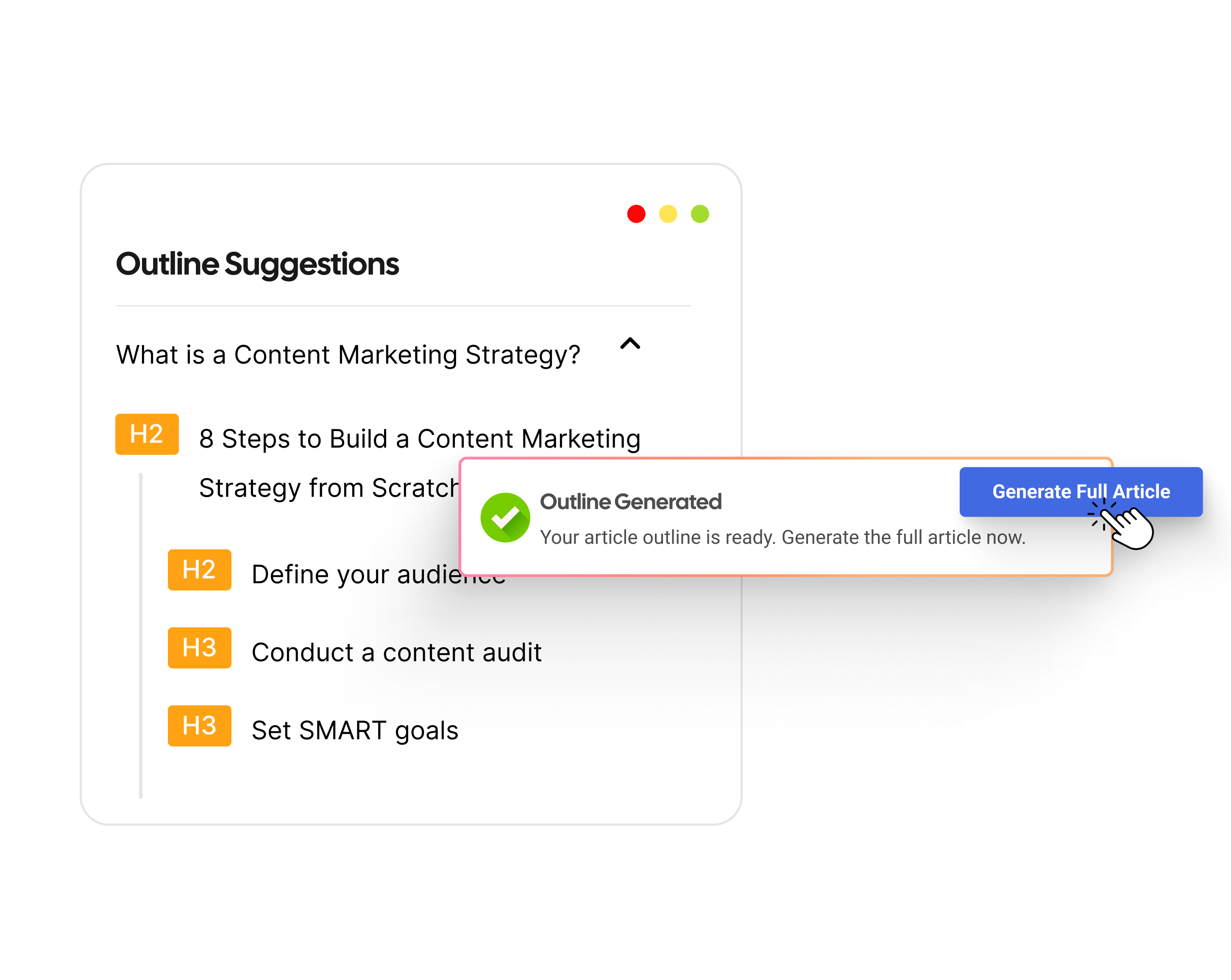
Complete blog post examples for students generated with Contentpen
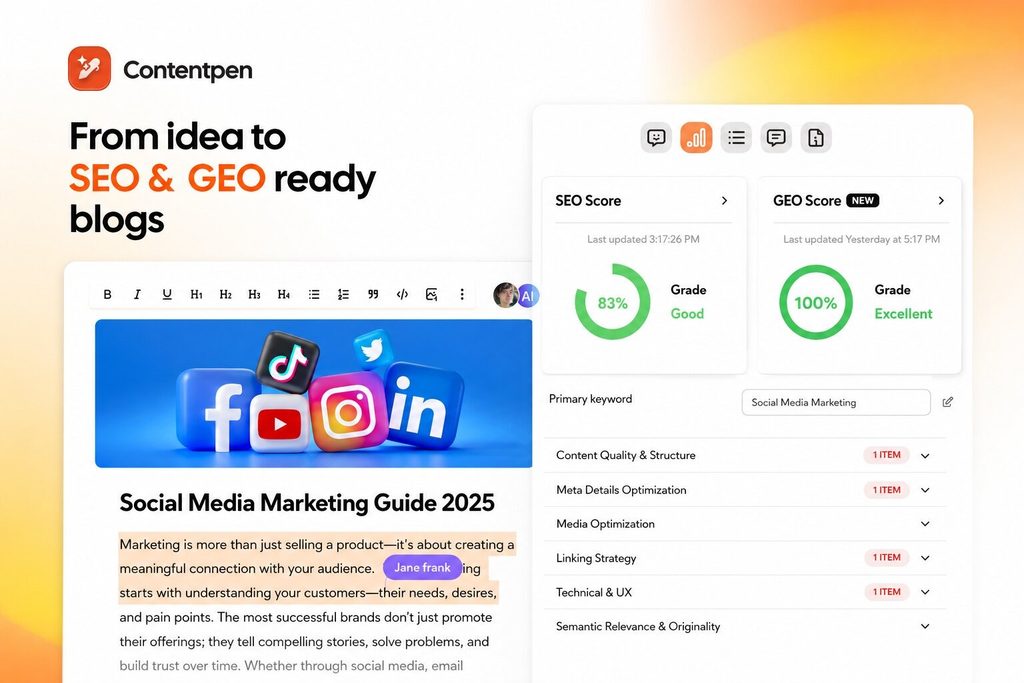
Here are real blog examples for students across a range of niches generated using Contentpen. Find the one closest to your field and note the move that makes it work.
Travel blog examples for students
- How I Traveled Through Three Countries on a Student Budget
- How a Semester Abroad Turned Me Into a Slow Traveler
Also read: 30+ best travel blog examples in 2026.
Food blog examples for students
Personal blog examples for students
Short blog examples for students
Music blog examples for students
- What Learning an Instrument Taught Me About Discipline
- How to Start Music With Zero Experience Today
Business blog examples for students
Blog examples for students grade 6
120+ student blog post ideas and title examples
Use these as exact titles or swap in your major, city, campus, or year. They are grouped so you can jump to your situation.
Settling in and finding your feet
- The three things that made my first month feel less overwhelming
- My move-in day checklist, and the stuff I actually forgot
- How I turned a random dorm floor into a group of friends
- The first campus tradition I did not understand, and now love
- What commuting to university taught me about time
- How I stopped comparing my start to everyone else’s highlight reel
- My honest week-one diary as a transfer student
- The unexpected place on campus that became my second home
- How I found my people in a course of 400 strangers
- What I would pack differently if I started over
Study systems that actually stick
- The revision timetable I finally kept for a whole term
- How I turned messy lecture notes into revision cards in 20 minutes
- My phone-in-another-room rule and what it did to my focus
- Active recall versus rereading: my two-week experiment
- How I plan a 3,000-word essay before writing a single line
- The reading trick that got me through a 40-page paper
- How I use past papers to predict exam questions
- My low-effort system for never missing a deadline again
- What group study actually does for me, and when it backfires
- How I revise a subject I secretly find boring
Deadlines, exams, and pressure
- The night before a final: my honest routine
- How I recovered after bombing my first midterm
- What deadline week looks like when three collide
- My anti-panic plan for walking into an exam hall
- How I stopped procrastinating with one 10-minute rule
- The feedback that stung, and how it changed my writing
- How I handle a module I am close to failing
- What resitting a paper taught me about myself
- How I built a calmer relationship with grades
- The excuses I used to make, and what replaced them
Life in halls and around campus
- Living with strangers: the house rules that saved us
- How I split chores and bills without any awkward conversations
- My favorite cheap night out, and the free ones I like more
- The society I joined on a whim that changed my degree
- How I dealt with a noisy flatmate without a fight
- My honest take on freshers week as an introvert
- The campus jobs worth having, ranked by a student who tried them
- How I built a routine when no one was checking on me
- What I learned volunteering on campus for a term
- The small kindnesses that made a huge campus feel smaller
Choosing, changing, and surviving your major
- Why I switched majors halfway through, and what it cost me
- How I picked a degree when I liked five subjects
- A day in the life of a [your major] student, hour by hour
- The module everyone dreads, and how I got through it
- What my degree is actually like versus what the prospectus promised
- Skills my course teaches that are not on the syllabus
- How I chose my dissertation topic without overthinking it
- The optional class that turned out to matter most
- What I would tell someone deciding between [major A] and [major B]
- How I explain my niche degree at family dinners
Explain your field in plain language
- What my subject really means, minus the jargon
- A five-minute guide to [core concept in your field]
- The one idea from my course that changed how I see the world
- What people get wrong about studying [your subject]
- How [your field] shows up in everyday life
- A beginner’s map of [your discipline] for the curious
- The most misunderstood term in my subject, explained
- Why [a boring-sounding topic] is secretly fascinating
- What a typical assignment in my course actually involves
- How I would teach my hardest module to a 12-year-old
Research, curiosity, and thinking out loud
- What I found when I actually read the sources behind a headline
- My first taste of real research, and how messy it was
- The question my course could not answer, so I looked myself
- What shadowing a PhD student taught me about academia
- How I turned a seminar debate into a blog post
- The paper that quietly changed my mind this year
- What I learned presenting my work to people who disagreed
- A student’s honest guide to reading a scientific study
- How I fact-checked a claim everyone in my class believed
- Why I started writing about my field for non-experts
Building career proof as a student
- How I landed an internship with almost no experience
- Turning a class assignment into a portfolio piece: a walkthrough
- What went into my first proper CV, and what I cut
- The cold email that got me a reply, broken down
- How I documented a project so recruiters could follow it
- My first interview: the questions that caught me off guard
- What a mentor told me that changed my job search
- How I built a simple portfolio site in a weekend
- The freelance gig that taught me more than a module
- What I wish I had started building in first year
Money, food, and student life admin
- How I run my week on a tight student budget
- Five meals I cook on repeat that cost almost nothing
- The subscriptions I cancelled and never missed
- How I track spending without an intimidating spreadsheet
- My honest breakdown of where my student loan actually goes
- The student discounts I use that most people forget
- How I meal-prep on a Sunday in under an hour
- What I learned the first time I ran out of money mid-term
- My system for keeping receipts, deadlines, and emails from piling up
- How I saved for a trip while studying full time
Energy, health, and staying steady
- What burnout felt like before I had a word for it
- The small morning habit that steadies my whole day
- How I built a sleep routine that survived exam season
- My honest experience of homesickness, and what helped
- What I do on the days I cannot face the library
- How I stay active when my week is packed
- The line between pushing myself and running on empty
- How I asked for support when I finally needed it
- Why rest stopped feeling like laziness to me
- What helped my anxiety more than any productivity hack
Creative life and side projects
- The hobby I refused to give up during term
- How I started [drawing, coding, filming, writing] with no experience
- The side project that taught me more than my degree
- My favorite corners of campus for reading and drawing
- How I keep making things when I am busy and tired
- The playlist that got me through revision, and its story
- What running a small student account taught me about consistency
- The book that reshaped how I think this year
- How I turned a random interest into a real skill
- Why I make things nobody asked me to make
Digital life, tools, and AI
- The apps that actually earned a place on my phone
- How I use AI for coursework, and the lines I will not cross
- My distraction-free study setup, tested over a term
- How I cleaned up my online presence before job hunting
- The free tools I would recommend to any new student
- What I learned building a study system in Notion
- How I back up my work so a dead laptop cannot ruin a term
- The browser habits that quietly wreck my focus
- My honest review of the tools my university pushes on us
- How I decide when a tool is helping or just busywork
Studying abroad and life across borders
- My first month studying in a country I had never visited
- What no one tells you about being an international student
- How I made a new city feel like home in one semester
- The culture shock moments that still make me laugh
- How I handled study abroad on a small budget
- What I packed for a year abroad, and what was pointless
- The friendships that formed fastest far from home
- How I stayed connected to home without living online
- What studying abroad changed about how I see my own country
- My honest advice for anyone nervous about going alone
Create rank worthy content at scale
Faster
Consistent
SEO-ready
Efficient
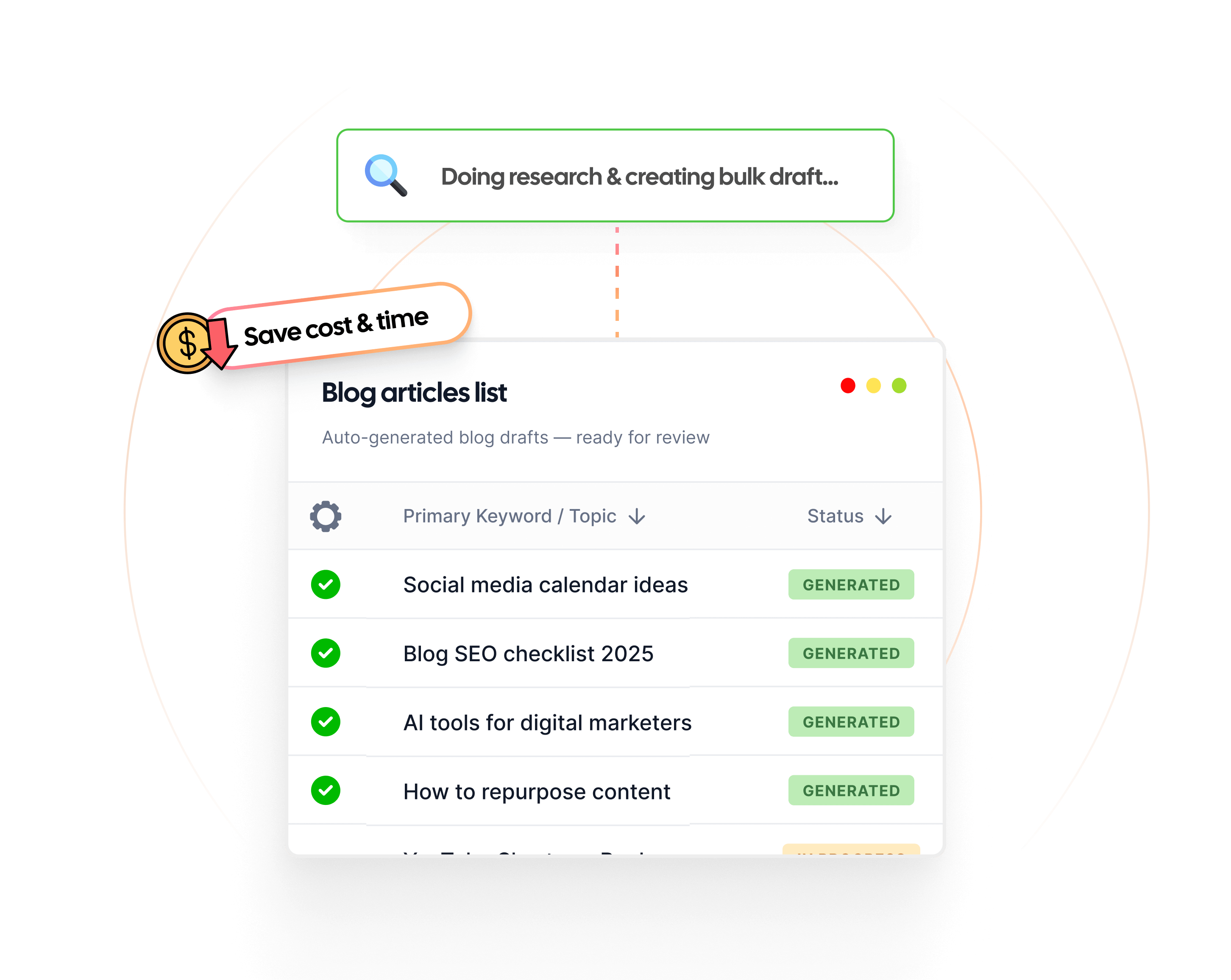
Steps to turn any of these titles into a finished blog using Contentpen
If you have picked a title from the lists and want a structured, search-ready first draft in minutes rather than hours, an AI blog writer like Contentpen is built for exactly this.
It is less a “type a prompt, get a paragraph” tool and more an end-to-end workflow that researches, drafts, optimizes, and publishes.
Here is how you would turn one of the titles above into a finished post.
Step # 1. Set up your workspace and voice
Add your blog and, if you have any brand or tone notes, upload them so the drafts come out sounding like you rather than like a generic tool.
This one step is what stops the output from reading as bland, and you can train it on your style over time.
Step # 2. Drop in your chosen title or keyword
Take a title such as “how I revised for my first exam block without all-nighters” and feed it in.
Contentpen suggests a primary keyword plus supporting secondary keywords tied to what people actually search, so your post is aimed at a real query from the start.
Also read: Exploring 20 types of keywords in 2026.
Step # 3. Let it scan the competition
Before drafting, the platform runs a SERP and competitor gap analysis.
This shows you what the currently ranking posts cover and where the openings are.
This is the same “cover everything they do, then add more” logic that helps a page outrank, done for you in a couple of minutes.
Step #4. Pick how much control you want
You can generate the full blog in one click, take a two-step route where you approve the outline before it writes, or start from a blank document and write alongside the AI.
Step #5. Let it optimize, then you review and finalize
Each draft is scored for SEO and for AI-search visibility (so it can surface in tools like ChatGPT and Perplexity, not just Google).
The tool adds relevant internal and external links automatically to help you finish your blog quickly.
There is also a built-in plagiarism check, which matters given everything said earlier in this guide about originality.
Step #6. Publish and track
When it is ready, you can push it straight to WordPress in one click and then watch how it performs, refreshing it later as it climbs or stalls.
Just sign up on Contentpen, try it for free, and begin generating optimized blogs with AI like never before.
Also read: 25+ best E-commerce blog examples to learn from.
Six copy-and-paste blog templates for students
Here is a quick view of the six core templates you can turn into student blog writing guides, worksheets, or internal briefs.
Pick the one that matches your post’s job, fill in the blanks, and you will have a first draft in under an hour.
| Template name | Title formula | Best use case | Quick structure |
| Personal story | What Experience Taught Me About Bigger Lesson | Reflection on a turning point or mistake | Start with one vivid moment, describe what you expected, describe what happened, explain how your thinking changed, end with advice for the reader |
| How-to guide | How to Specific Goal as a Student | Study tips, campus survival, money, productivity | Name the problem, say who this guide is for, outline clear steps in order, warn about common mistakes, finish with a short checklist |
| Day in the life | A Day in the Life of Role or Major Student | Campus life, study abroad, timetable examples | Set expectations, walk through morning, classes, and evening, mention surprises, close with three takeaways for someone considering the same path |
| Research explainer | What Concept or Debate Actually Means in Plain English | Major specific content, lab work, senior thesis | Name the confusing term, explain it simply, give one concrete example, say why it matters, clear up a common myth, finish with the key point |
| Opinion or commentary | Why Policy, Trend, or Habit Needs to Change | Campus issues, education trends, field debates | State your claim, give context, share at least two reasons, mention the strongest counterpoint, suggest a better approach, end with a clear stance |
| Portfolio or case study | How I Built Project and What I Learned | Design work, coding projects, research, client work | Describe the project and goal, explain limits like time or tools, show your process step by step, share the final result, list what worked and what you would change, list skills used |
1: Personal story (the Reflect job)
- Title formula: What [experience] taught me about [bigger lesson].
- Structure: Open with one concrete moment, explain what you expected, show what actually happened, explain what changed in your thinking, then pull out the lesson for the reader.
2: How-to guide (the Help job)
- Title formula: How to [specific goal] as a student.
- Structure: Name the problem, say who it is for, walk through the steps in order, add common mistakes, then end with a quick checklist.
3: Day in the life (the Document job)
- Title formula: A day in the life of a [major, role, or year] student.
- Structure: Set expectations, morning routine, classes or work, afternoon challenges, evening reset, what surprised you, then three takeaways for someone considering the same path.
4: Research explainer (the Explain job)
- Title formula: What [concept or debate] actually means, in plain English.
- Structure: State the confusing term, explain it simply, give one concrete example, explain why it matters, clear up one misunderstanding, then end with the big takeaway.
5: Opinion or commentary (the Argue job)
- Title formula: Why [policy, trend, or habit] needs to change.
- Structure: State your claim, give context, present two reasons, address the strongest counterargument, propose a better path, then end with a clear takeaway.
6: Portfolio or case study (the Prove job)
- Title formula: How I built [project], and what I learned.
- Structure: Describe the project and goal, explain the constraints, walk through your process, show the result, share what worked, share what you would improve, then list the skills you used.
Also read: 23 best product blog examples to inspire your own.
How to format and length-check a student blog post
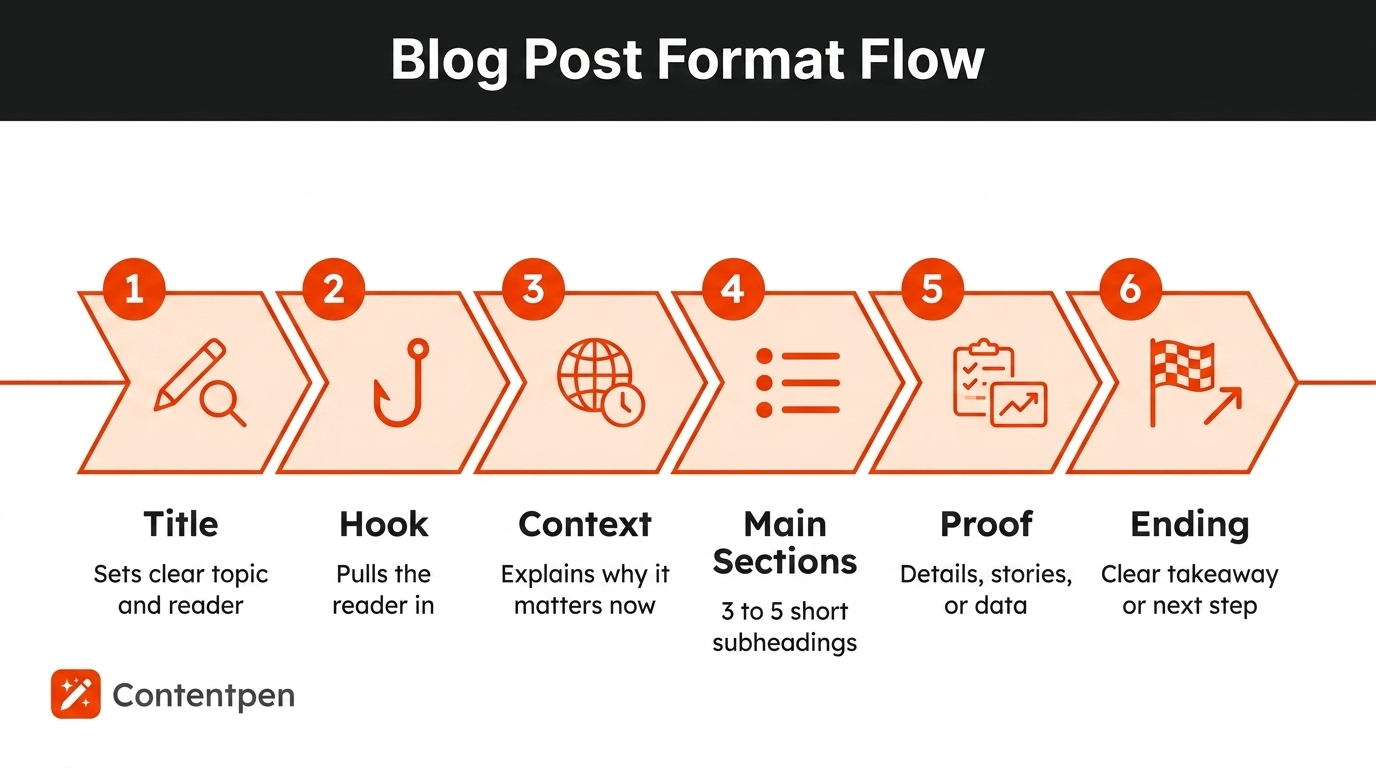
A simple, repeatable format helps every example of a blog post for students feel clear, even when the topic is complex. Most strong posts follow the same six-step flow.
| Step | What it does | Simple tip |
| Title | Sets a clear topic and reader | Use words your reader would type in search |
| Hook | Pulls the reader into the post | Start with one scene, question, or problem |
| Context | Explains why the topic matters now | Link it to a class, deadline, or goal |
| Main sections | Organizes the idea into chunks | Use 3 to 5 short subheadings |
| Proof | Makes the post feel real | Add numbers, routines, or mini stories |
| Ending | Gives a clear takeaway | Suggest one action or question |
To make this format practical, you can:
- Turn the table into a checklist they tick off before publishing.
- Ask peer reviewers to comment on each step, not just grammar.
- Store a filled-in sample template in your course or content wiki as a reference.
How long should a student blog post be?
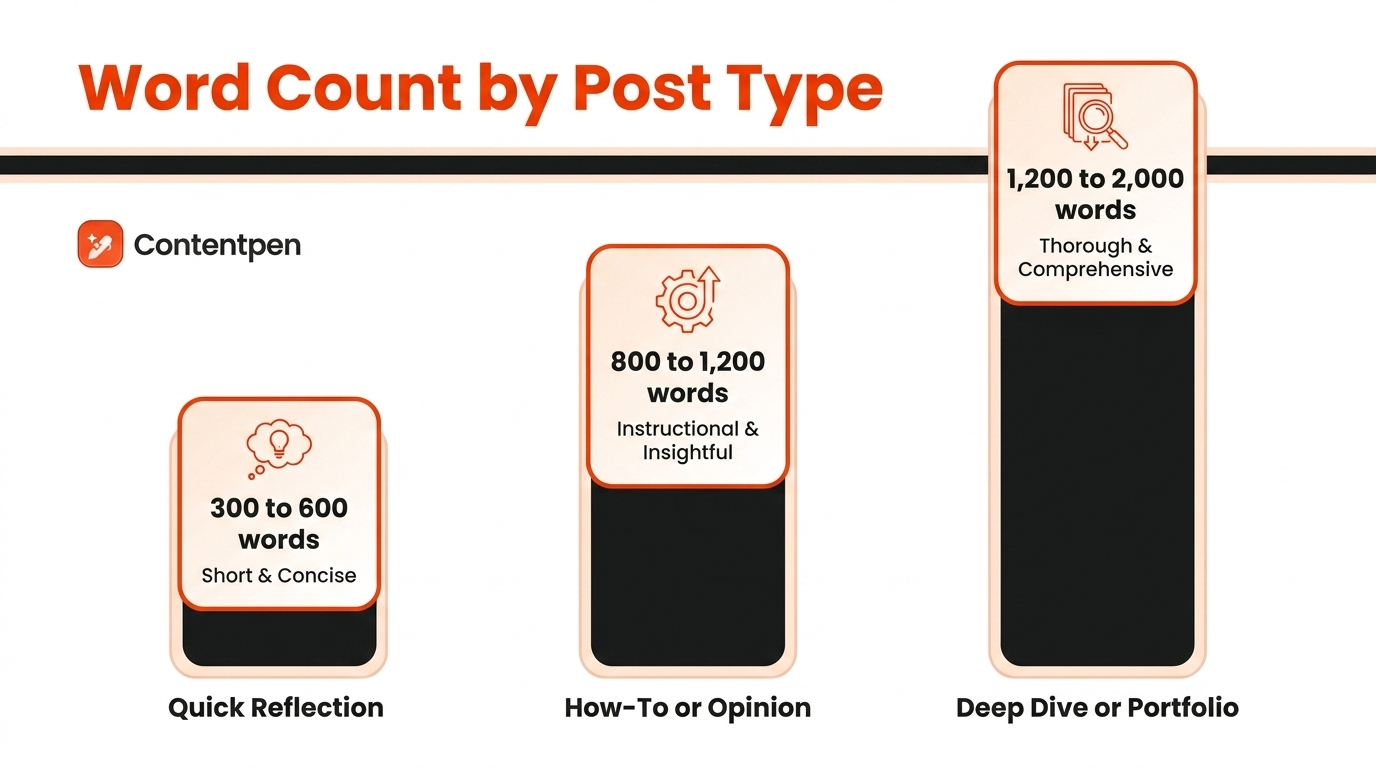
The answer depends on the job of the post. Use these ranges when you plan or assign student blog templates.
| Post type | Word count range | When to use |
| Quick reflection or update | 300 to 600 words | Small personal stories, campus snapshots, or class prompts |
| How-to or opinion piece | 800 to 1,200 words | Study guides, advice posts, or commentary on an issue |
| Deep dive or portfolio case study | 1,200 to 2,000 words | Research explainers, project write-ups, or internship recaps |
For your very first post, resist the urge to write an epic. A tight, finished piece you can complete in one or two sittings will always beat an ambitious draft that sits half-written for a month.
Match the length to what the title honestly requires, then stop.
A student blogging SEO checklist
If you want your posts to be found, not just published, run each one through this checklist before you hit publish.
- Target one keyword phrase. Pick something specific like “organic chemistry study tips,” not “study tips.”
- Put the keyword in the title, the first 100 words, and one H2. Naturally, not stuffed.
- Answer the search intent fast. Give the direct answer near the top, then expand.
- Use descriptive subheadings. They help readers skim and help search engines understand structure.
- Write a meta description under 155 characters that includes your keyword and a reason to click.
- Add internal and external links. Link to your other posts and to credible sources.
- Use descriptive image file names and alt text.
- Aim for a readable URL slug that contains the keyword, for example /organic-chemistry-study-tips.
- Answer follow-up questions a reader would have, which also helps you rank for related searches.
Specificity is your advantage. “Study tips” is too broad for a new blog to rank, but “how to study for organic chemistry without losing your mind” targets a real query real students search.
Best platforms for a student blog compared
The platform matters less than actually publishing, but the right fit removes friction. Here is a quick comparison.
| Platform | Best for | Cost | Notes |
| WordPress.com | All-round blogging | Free tier, paid upgrades | Huge ecosystem, skills transfer later |
| Medium | Writing with a built-in audience | Free | Easy to start, less control over design and SEO |
| Substack | Newsletter-style blogs | Free | Great if you want email subscribers |
| Notion (public pages) | Simple, fast, no setup | Free | Minimal design control, quick to publish |
| Hashnode or Dev.to | Tech and coding students | Free | Developer audience, good for portfolios |
| Webflow or Carrd | Portfolio and career sites | Free tier, paid upgrades | More design control, better for a personal brand |
| University-hosted blog | Instant audience and credibility | Free | Check whether your school invites contributors |
If you are unsure, start on a free platform, build the habit, and migrate later once you know what kind of blog you want.
Summing it up
The students whose blogs get read are rarely the best writers. They are the ones who made a few clear decisions before typing: who this is for, what job the post does, and what the reader should walk away with.
Everything in this guide exists to help you make those decisions faster and publish instead of endlessly planning.
So pick one post type and one title from the lists above. Draft it with a template or generate a first draft with Contentpen. Then layer in the specific, slightly imperfect detail that only you can add.
Publish that one post this week and then make it a routine.
Happy blogging!
Frequently asked questions
Yes, and arguably more than before. Blogs remain one of the few channels you fully own, unlike a social feed that can change its rules overnight.
Keep the first version tiny. Pick a free platform such as WordPress.com, Medium, or a public Notion page, choose one clear topic or reader, and write a single honest post rather than building a whole site first.
WordPress is by far the most widely used blogging platform. It powers a large share of all websites and blogs online, from personal sites to major publications. It is popular because it works for beginners and advanced users alike.
Yes, a student blog can support internships and grad school applications by serving as proof of work. Posts that explain projects, share research in plain language, or document long-term efforts help reviewers see your skills.
No, you do not need your own website to begin. Free platforms such as WordPress.com or Blogger work well for a first round of student blog post samples. You can move to a custom domain later.
It depends on your goal and comfort level. For career-facing blogs that link to resumes or LinkedIn, a real name helps people remember and find you. For more personal or experimental writing, a pseudonym can protect privacy.
There is no fixed posting schedule you must follow. Once a week can work if you have time, but one solid post each month is better than several rushed ones.
Yes, AI tools can support your blog, but they should not replace your own voice. They are helpful for brainstorming topics, building outlines, and checking grammar. Specific stories, campus details, and honest opinions still need to come from you.