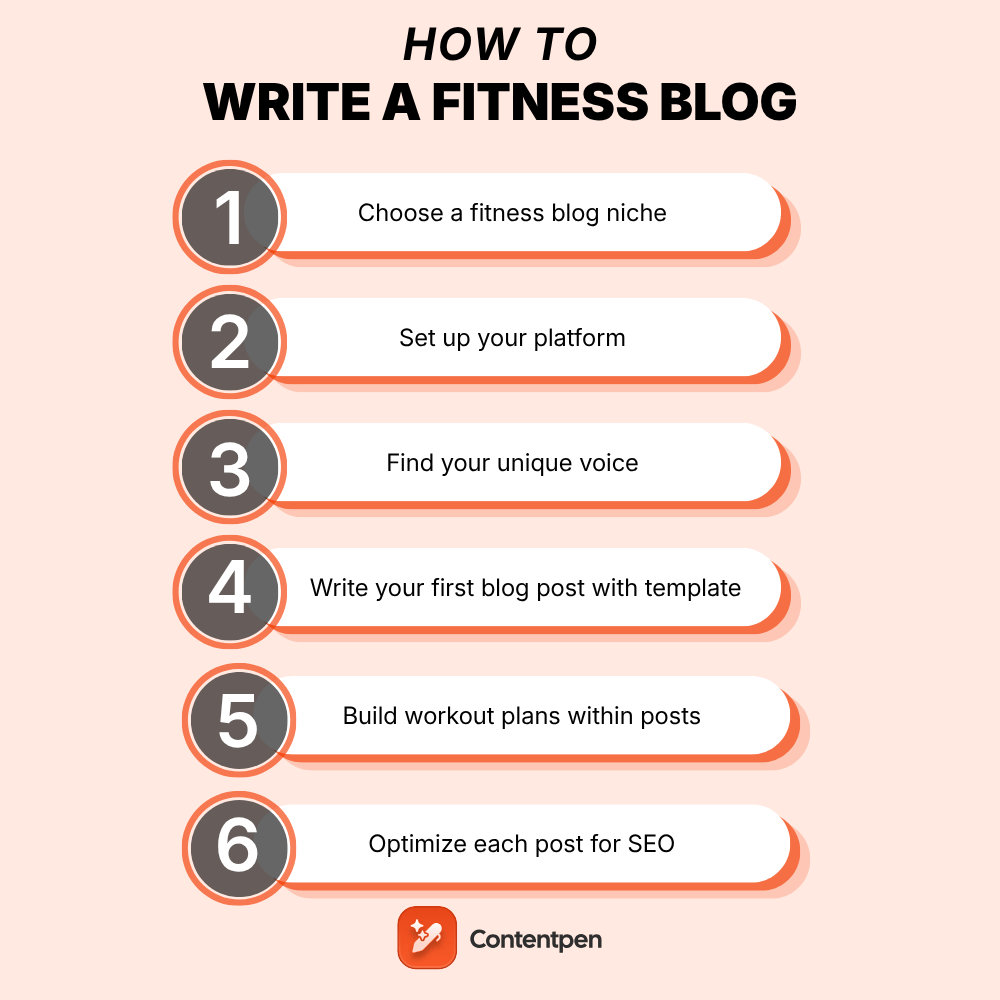
Starting a fitness blog feels overwhelming when you don’t know which step comes first: the niche, the platform, or the content itself. Even if the steps are figured out, you may not know how to write a fitness blog from scratch, which is a problem that a lot of people suffer from.
In today’s post, we’ll learn how to write a fitness blog in 6 easy steps. Whether you’re a personal trainer, a content marketer, or a small gym owner, you’ll walk away with a repeatable process instead of a vague to-do list.
Along the way, we’ll point out where tools like Contentpen can speed up the planning and drafting process.
So, let’s get into the details, shall we?
Key takeaways
- Pick a specific fitness niche before you write your first post, since a focused topic builds a loyal readership faster than covering everything, all at once.
- Set up a simple, reliable blogging platform with SSL, clean permalinks, and an SEO plugin from day one.
- Write clear, well-structured posts with headings, actionable steps, and credible sources so readers trust your advice.
- Optimize every post for search engines with keyword research, meta descriptions, and alt text as you publish, not after.
- Use AI tools like Contentpen to speed up outlining, drafting, and keyword research so you can publish consistently.
What is a fitness blog?
A fitness blog is where you can share your diet, training programs, equipment reviews, and much more with your audience. It is a marketing channel that you own, allowing you to write whatever you want, however you want, if it doesn’t breach search engine policies.
Why should you have a fitness blog?
As a personal trainer, gym enthusiast, and coach, you should definitely have your own fitness blog. Here’s why:
- It’s a long-term marketing strategy: Blogs are ideal for long-term marketing of courses, books, or selling affiliate links because your content sits on the Internet forever. It keeps gaining visitors over time if written and updated regularly.
- It’s free ad estate: Nobody likes display advertisements, but they are a quick way to earn some healthy bucks from your blogs, especially if you rank higher in search and AI results.
- It’s ideal to capture high-paying clients: Most celebrities and high-profile individuals look for pieces of knowledge that provide them with something fresh and unique. If you are the one to do so, chances are you can land some high-paying consultations.
- It’s the best way to reach out and help people: How many people do you teach per day? Maybe a couple hundred in your area, if we’re stretching it. With blogging, you will be able to help everyone, worldwide, thanks to the power of the Internet.
Blogs give you the ideal platform to establish yourself as an authority in your industry. If you keep publishing high-quality, consistent content, over time your blogs rank in search engines and even in AI Overviews, which further improves your chances of landing clients.
How do you choose a fitness blog niche and topics?
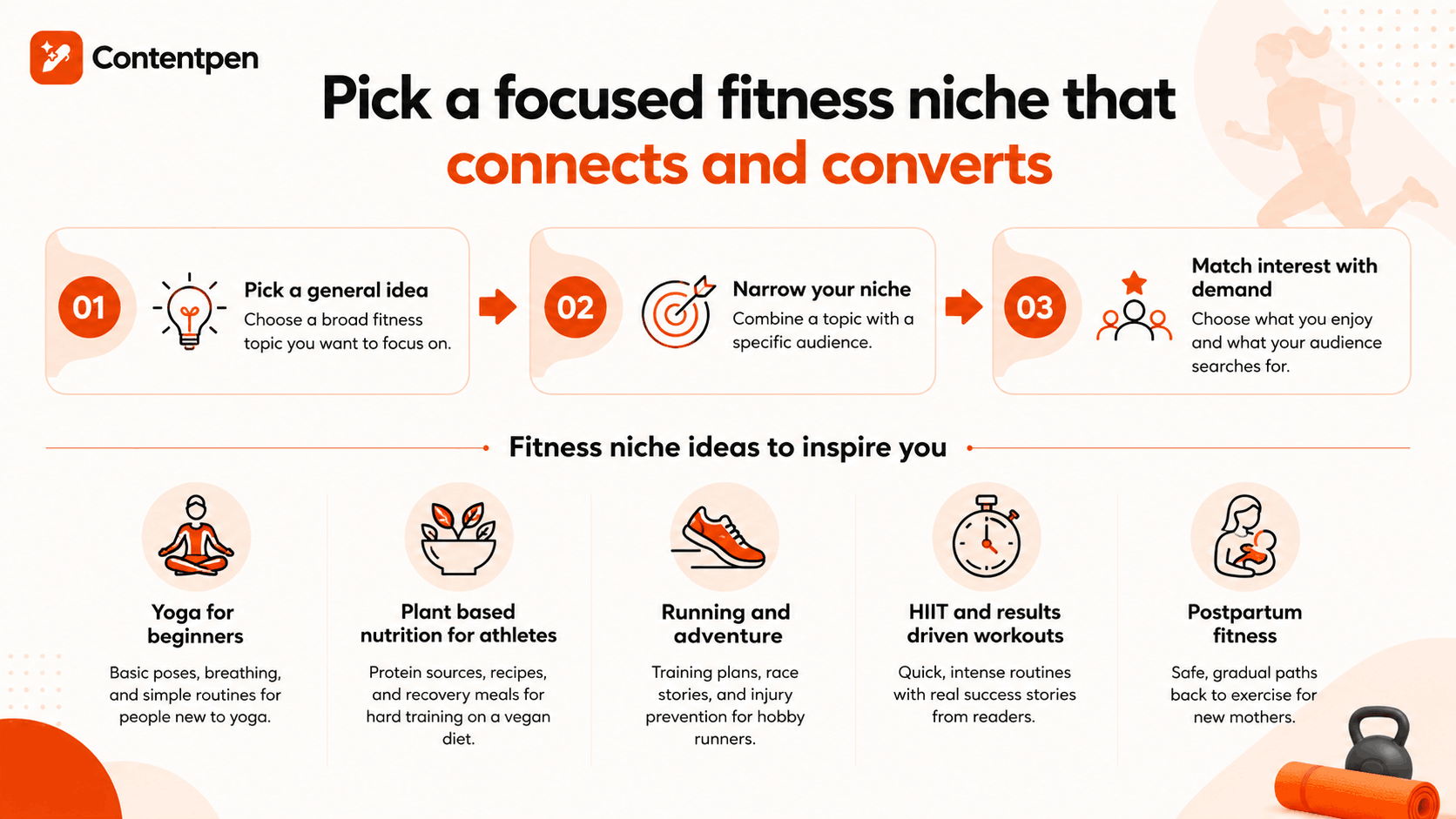
Choosing a focused niche is the first step of starting to write a fitness blog. This step helps you narrow down your target audience and gives your readers a reason to remember you.
If you are trying to write about strength training, yoga, nutrition, and gear reviews all at once, you can end up producing content that feels thin and forgettable.
For starters, pick a general idea that you want your blog to be focused on. For example, ‘Home workouts for people without gym access’ or ‘Gym equipment and gear reviews.’
Then, you can narrow the niche further by combining a topic with an audience, which tends to perform better because it speaks to a specific reader’s exact situation.
- Yoga for complete beginners, covering basic poses, breathing, and simple routines for people who’ve never stepped on a mat.
- Plant-based diets for athletes, focused on protein sources, recipes, and recovery meals for people training hard on a vegan diet.
- Running adventure content that mixes training plans, race stories, and injury prevention tips for hobby runners.
- HIIT-focused blogs built around quick, intense workout routines paired with real success stories from readers.
- Postpartum fitness guidance aimed at new mothers who need safe, gradual paths back to exercise.
When you’re deciding on your niche, weigh your own experience and interest against what your audience actually searches for. Because whatever you write must be authentic so that you build trust with your audience.
Best fitness blog topics to start with
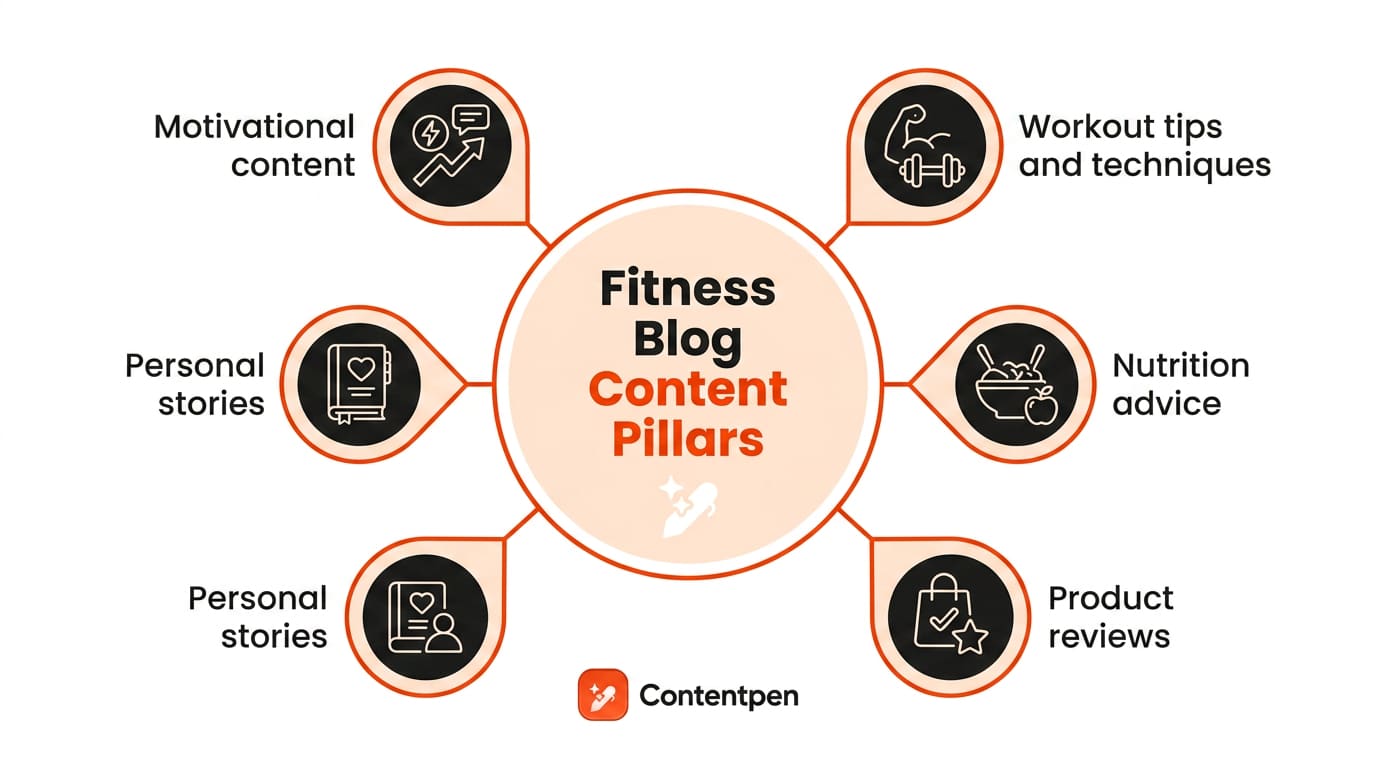
A handful of content pillars can carry your first few months of posts without you running out of ideas.
Workout tips and techniques, nutrition advice, product reviews, personal stories, and motivational content each give you a steady stream of angles to write from.
These pillars work because they map to the real questions readers type into search engines when they’re stuck on a fitness goal.
You can also specialize by activity, such as yoga, HIIT, or running, or by audience segment, such as beginners, seniors, or postpartum readers.
Picking two or three pillars and rotating between them keeps your content calendar full while still feeling focused rather than scattered.
How do you start writing a fitness blog step by step?
Starting a fitness blog step by step means setting up a platform, choosing a name, and then writing your first post using a repeatable structure you can reuse for future articles.
#1: Set up your platform, domain, and blog name
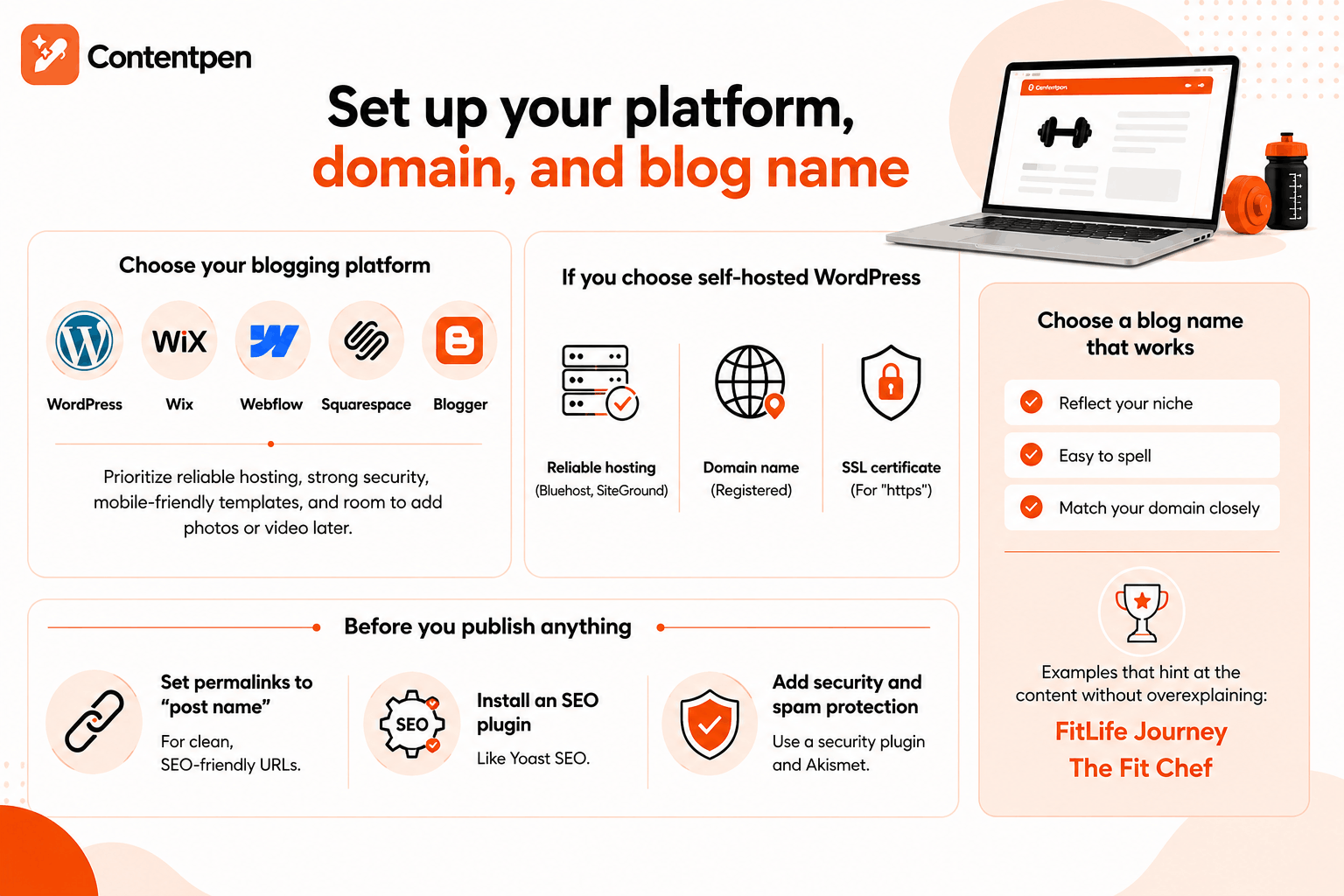
Similar to our blog ‘How to write a travel blog’, the first thing you do is choose your blogging platform.
Today, there are multiple options to choose from:
- WordPress
- Wix
- Webflow
- Squarespace
- Blogger
When comparing platforms, prioritize reliable hosting, strong security, mobile-friendly templates, and room to add photos or video later.
If you go with self-hosted WordPress, you’ll need separate hosting from a provider like Bluehost or SiteGround, plus a registered domain name and an SSL certificate for the secure “https” prefix.
Your blog’s name should reflect your niche, stay easy to spell, and match your domain closely.
Names like FitLife Journey or The Fit Chef show how a name can hint at the content inside without overexplaining it.
Once your domain is live, set your permalinks to the “post name” structure for clean URLs, and install a basic SEO plugin, like Yoast SEO, plus a security plugin and a spam blocker, like Akismet, before you publish anything.
#2: Find your unique voice to communicate online
Blogging requires you to have a voice so fresh and unique that people are attracted to what you have to offer.
To make this simple, picture how you talk to your clients in real-time. Your advice varies from person to person, doesn’t it?
For example, a 60-year-old grandma with knee pain will be recommended a different set of exercises and tips as compared to a 24-year-old young man trying to compete in their first triathlon.
Now, when you write your fitness blog, you need to channel that same energy, words, definitions, or examples that you use to motivate your students in your blog.
This will help you find your voice online, allowing you to stand out from others and gain more followers with ease.
#3: Write your first blog post using a simple template
A repeatable post template removes the guesswork every time you sit down to write.
A typical fitness blog should look something like this:
- Write down your blog post title (should include your primary keyword), preferably between 140-160 characters with spaces.
- Add a key takeaway section at the top to encourage AI-first formatting and improve content citability.
- Start with a hook in the introduction that can contain your personal story, a lift gone wrong, or any example. Keep it light, around 100-150 words
- Break the body into 3-5 subheadings, answering questions people might have for the topic.
- Cite credible sources and data where needed, and include internal links pointing to your other posts to improve time on site.
- Close with a short summary and a call to action (CTA), such as downloading the workout guide, following on Instagram, etc.
Aim for at least 1,000 words per post, since longer, thorough content tends to perform better in search results and gives readers more reason to stay on the page.
Break up text-dense sections with images, a short video, or a bulleted list, so the post stays skimmable. Do this every 200-300 words.
You can check out this “how-to write a fitness blog template” generated from Contentpen to help you understand the details better.
How do you write a workout plan or program for readers or clients?
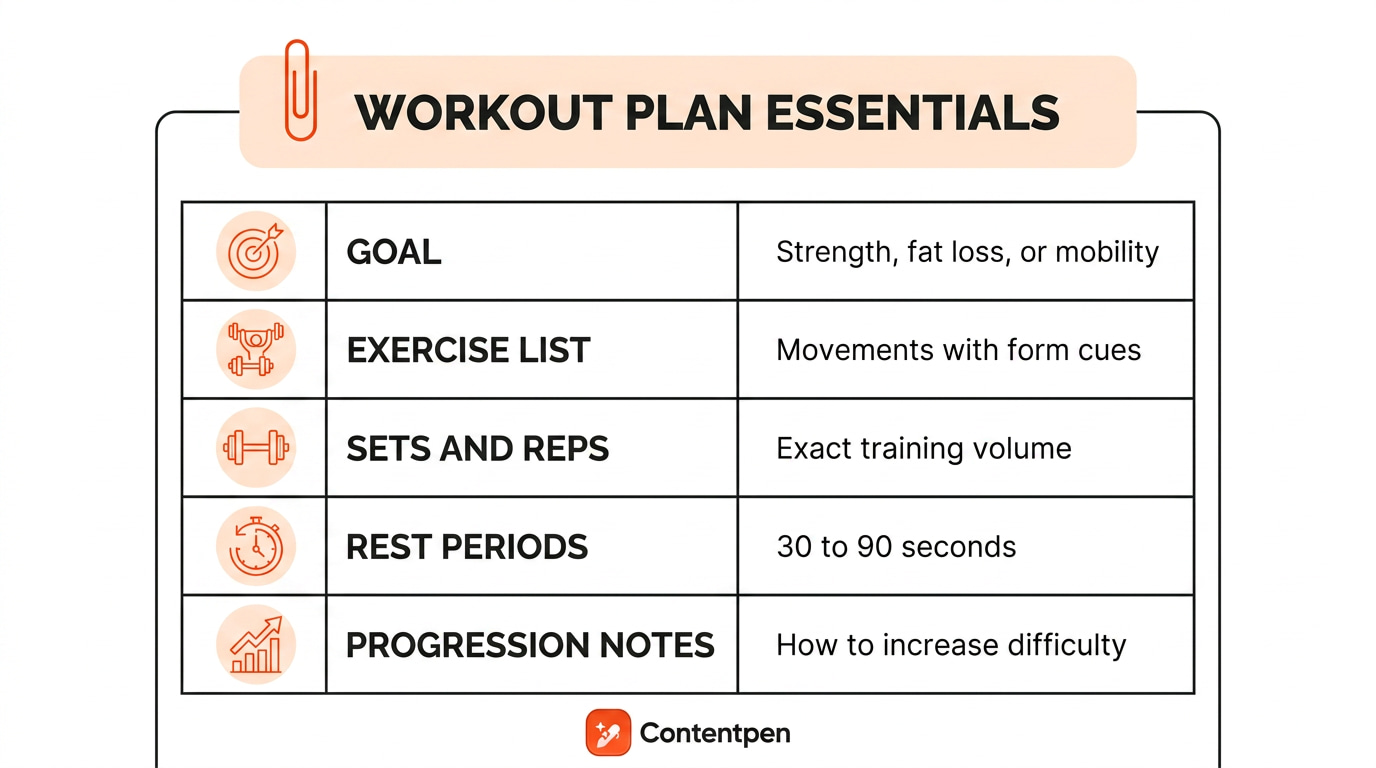
A workout plan lays out the exercises, sets, reps, and rest periods a reader needs to follow a routine safely and see results over time, and reporting these details clearly matters.
Whether you’re writing for blog readers or a specific coaching client, the structure stays similar, though a client program usually adds personal goals and progression notes based on that person’s fitness level.
| Field | What to include |
| Goal | The specific outcome, such as building strength, losing fat, or improving mobility |
| Exercise list | Each movement in order, with a brief form cue for beginners |
| Sets and reps | The exact volume, such as three sets of 12 reps |
| Rest periods | Time between sets, typically 30 to 90 seconds depending on intensity |
| Progression notes | How to increase difficulty over the following weeks |
Using a table or numbered list like this makes your workout content far easier to follow than a paragraph of instructions. Always add modifications for different skill levels, since a beginner and an advanced reader following the same post need different starting points.
How do you optimize and promote a fitness blog for growth?
Optimizing and promoting a fitness blog means combining basic SEO work with active outreach across social media, email, and other blogs so real readers actually find your content.
Publishing alone rarely builds an audience, since search engines and readers both need signals that your blog is active, trustworthy, and worth returning to.
SEO basics every fitness blogger should know
Search engine optimization, often shortened to SEO, is the practice of shaping your content so search engines can understand and rank it for relevant queries.
For fitness blogs specifically, that starts with keyword research to find out what your audience actually types into Google, followed by naturally working those terms into your titles, headers, and body text.
- Write a clear meta description for every post, since this short snippet directly affects whether someone clicks your result over a competitor’s.
- Add descriptive alt text to every image, which helps both accessibility and search visibility since search engines can’t see images directly.
- Keep your site mobile-friendly and fast-loading, since slow pages lose visitors and rank lower in search results.
- Aim to publish on a consistent schedule so users know when to expect your content and follow you.
Contentpen’s keyword research and answer-first structuring can speed this process up considerably.

Automated keyword research
Work on keywords worth writing for
Get search terms with real ranking potential, not just high volume.
Try Keyword Research for FREE →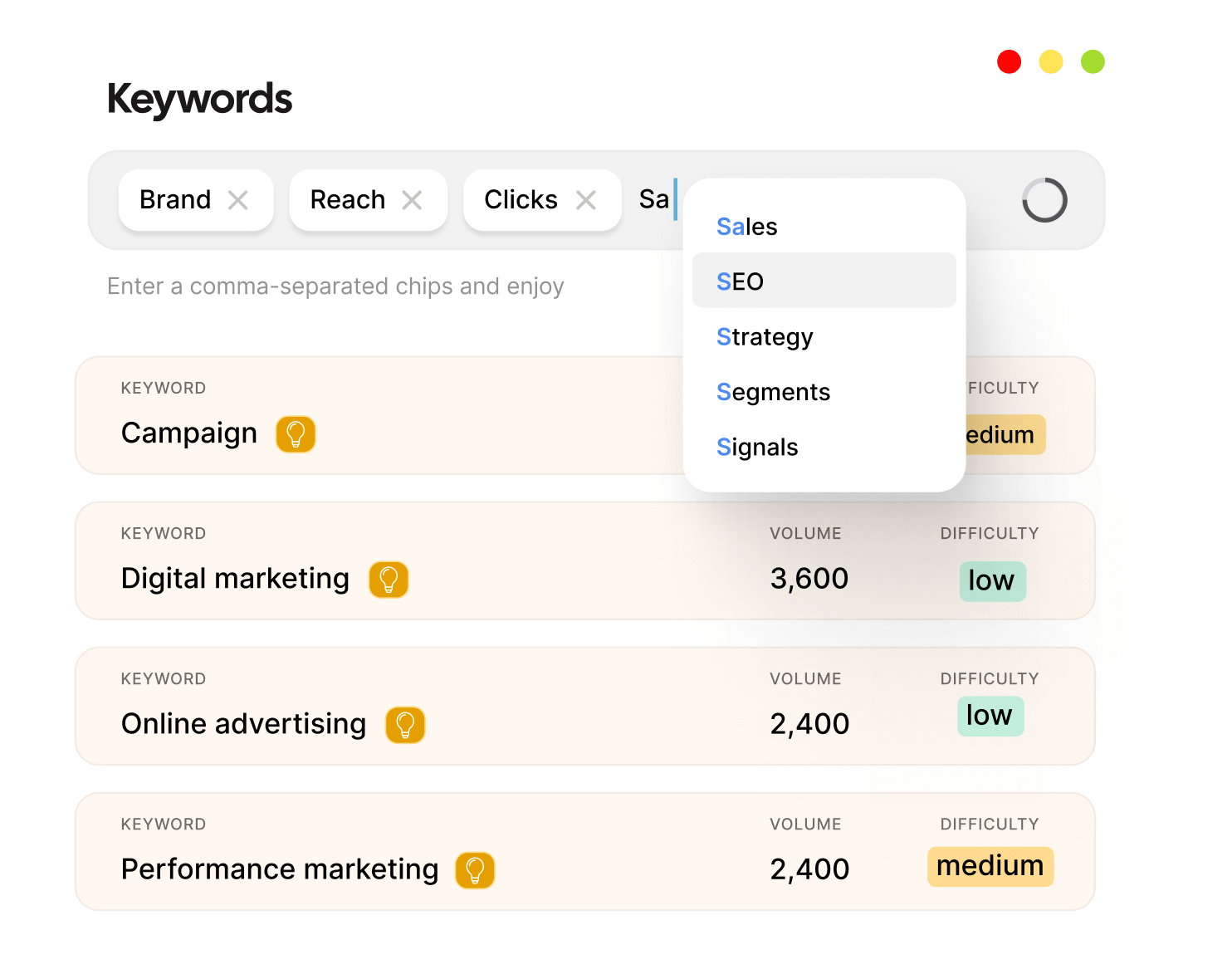
The AI blog writer helps you build an SEO- and GEO-ready draft around real search intent within minutes. Automated content creation saves you time to add the stories, examples, and details that only you’d know, making writing fitness blogs an efficient process.
Promotion channels that drive traffic
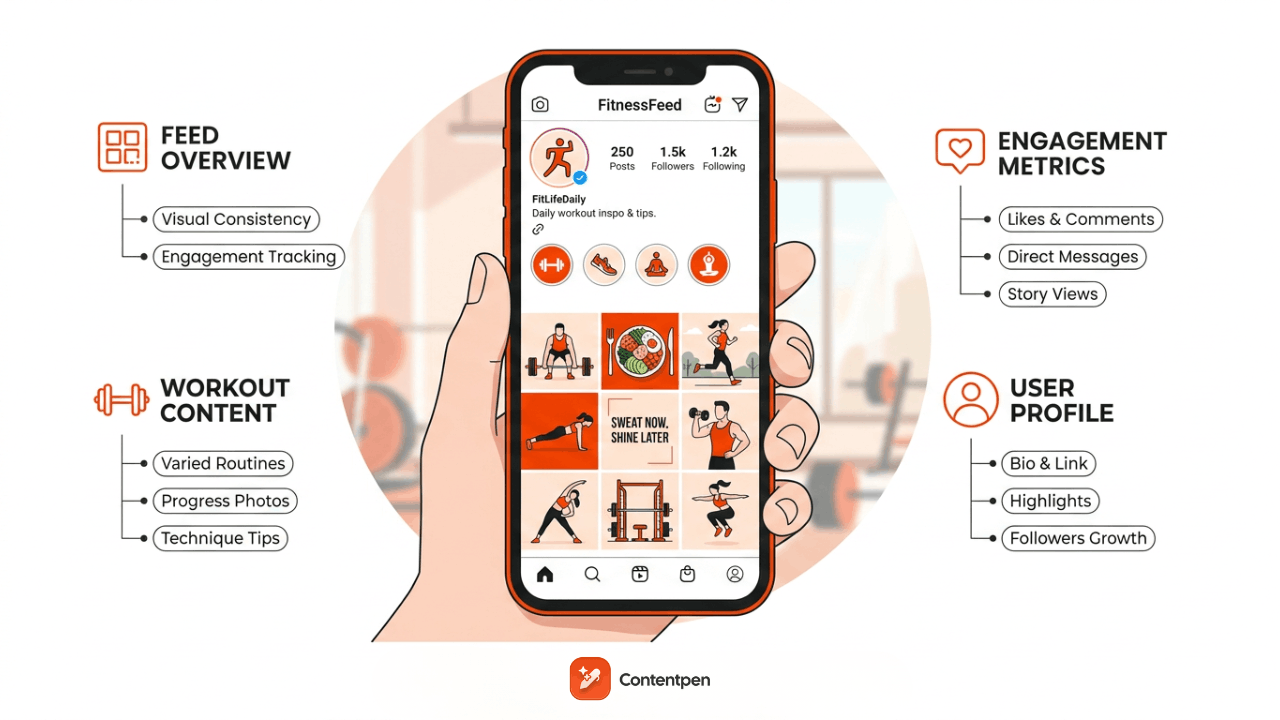
Promotion is the ongoing work of getting your content in front of new readers after you hit publish.
Social platforms like Instagram, Facebook, and Pinterest work especially well for fitness content because they’re highly visual and engaging.
Emails also deserve a place in your promotion mix, since a subscriber list gives you a direct line to readers that doesn’t depend on any platform’s algorithm.
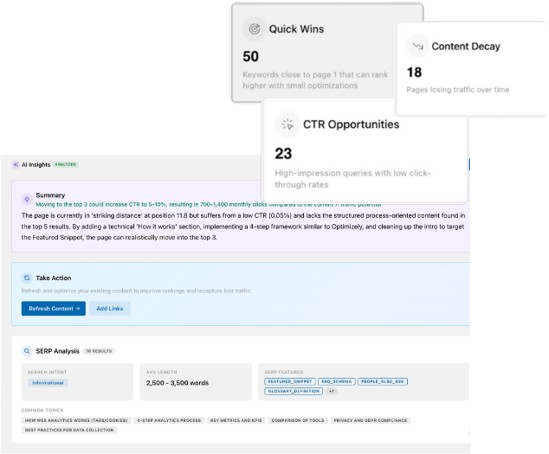
Pair all this with regular analytics tracking through Google Analytics to see which blog posts perform best and which need a workaround. Then, use smart SEO opportunities from Contentpen to update your content directly with a click, without leaving the interface.
Turn existing content into growth opportunities

Identify pages losing traffic or CTR
Find quick wins to improve clicks and rankings
Lastly, don’t skip community engagement, since replying to comments and running the occasional poll or Q&A turns casual visitors into loyal readers.
Can you make money from a fitness blog, and what challenges should you expect?
Yes, fitness blogs can generate real income, most commonly through a combination of affiliate marketing, display ads, and paid offerings like courses or coaching rather than a one-off revenue source.
Building income from your fitness blog will take time. Eventually, after 6-12 months of consistent work, when your blog starts getting steady organic traffic and reach, other content creators may also want to collaborate with you, opening yet another earning opportunity.
Ways to monetize a fitness blog
Affiliate marketing lets you earn a commission by linking to fitness gear, supplements, or apps through programs like Amazon Associates.
Display advertising through networks like Google AdSense adds a passive income layer once your traffic grows, while subscriptions, online courses, and one-on-one coaching let you sell your expertise directly.
Other ways to earn from your blog include:
- Sponsored content, where a fitness brand pays for a review or a branded challenge featured on your blog.
- Digital products like eBooks or workout guides that you create once and sell repeatedly.
- Crowdfunding or reader donations from a loyal audience who values your ongoing content.
Whichever methods you choose, always disclose affiliate links clearly, since FTC guidelines require this whenever you might earn a commission from a reader’s purchase.
Common challenges and how to overcome them
Building credibility without a formal certification is probably the biggest hurdle new fitness bloggers face.
Standing out in a crowded market and keeping content fresh as trends shift add further pressure. Therefore, citing credible sources and being upfront about your experience level goes a long way toward earning trust.
Finding a fitness mentor or gym mentor through a local gym, a certification program, or an online coaching community can also fill in knowledge gaps and keep you accountable as you grow.
Many established bloggers still consult registered dietitians or certified trainers before publishing anything technical, and that habit is worth adopting early.
Wrapping up
Learning how to write a fitness blog really comes down to four habits: Picking a focused niche, publishing consistently, writing content people can actually act on, and promoting it once it’s live.
None of these steps require a certification or a big budget, just a clear plan and the discipline to follow it post after post.
Start small. Write one solid post this week using the template above, then build your content calendar from there.
Tools like Contentpen can take some of the heavy lifting out of outlining, drafting, and optimizing each post.
Write content that’s built to rank, not just read
Create search-optimized blogs aligned with SEO and GEO signals, so your content performs well across search and AI-driven discovery.
Try SEO Blogging FREE →
So, you can spend more time on the parts only you can bring, such as your voice, your experience, and your genuine interest in helping others.
Frequently Asked Questions
The 3-3-3 rule generally refers to doing three exercises, for three sets each, three times a week, a simple structure often used for beginner routines. It’s a popular beginner-friendly blog topic because it’s easy to explain and follow.
Look for mentors at local gyms, through certification programs, or within online coaching communities on Facebook. Networking through fitness blogs and social media also connects you with experienced trainers willing to share guidance and fitness-related knowledge.
A consistent weekly schedule works better than sporadic posting, since it signals activity to both readers and search engines. Quality still matters more than frequency, so don’t sacrifice depth just to hit a deadline.
Use a content calendar to plan topics weeks in advance or consider an AI tool like Contentpen to plan, draft, and schedule posts from one workspace. This keeps your publishing rhythm steady without constant manual effort.