Wondering how to write a travel blog when you have never published a single post before? Let’s learn that today so that it doesn’t halt your first steps.
The short answer is that you pick a simple platform, write about a trip you have already taken, and publish before it feels perfect. Most beginners get stuck because travel blogging advice online contradicts itself.
One site tells you to buy expensive camera gear, another insists you niche down immediately, and a third says you need a flawless website before writing a word. That noise creates analysis paralysis instead of actual writing.
This guide cuts through all of that and shows you how to write a travel blog step by step. Starting with what you genuinely need before you publish, how to structure a post, and how AI tools such as Contentpen can speed up your research and drafting.
Let’s start with the groundwork.
Key takeaways
- Starting your blogging journey early beats waiting for a perfect setup, since search engines need months to trust new content anyway.
- Self-hosted WordPress remains the most flexible platform for long-term growth and future monetization.
- Strong posts pair personal storytelling with practical, structured value like costs, logistics, and itineraries.
- Search and AI engines both reward clear structure, real experience, and answer-first writing.
- Tools like Contentpen can speed up research, drafting, and formatting so you spend more time on the story.
What do you need before you start a travel blog?
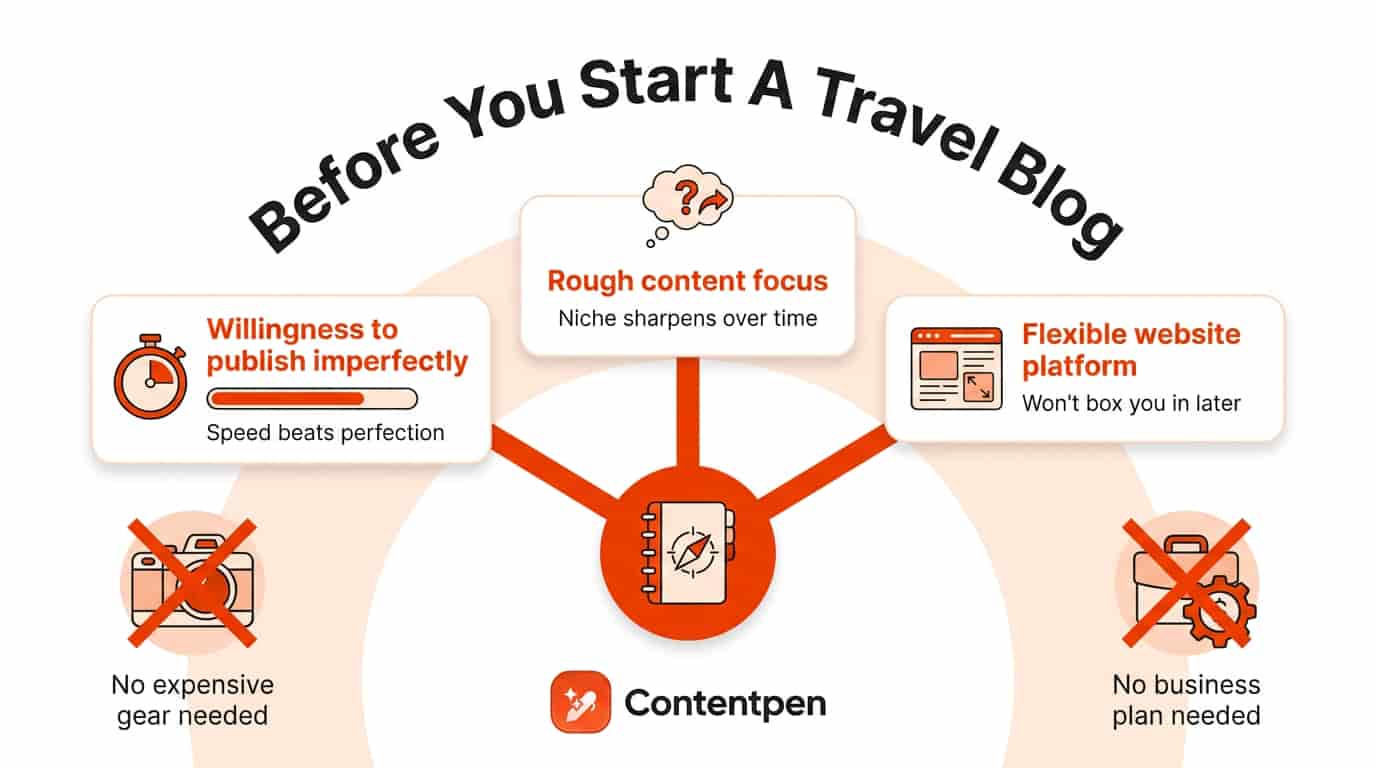
Knowing how to write a travel blog starts with three basics:
- A rough focus for your content
- A website platform that will not box you in later
- A willingness to publish before everything feels ready.
You do not need a business plan, a bag full of camera gear, or a professionally designed logo to get going.
A notebook of trip ideas, your mobile phone camera, and a working hosting account cover the essentials for week one. Your niche, your voice, and even your visual style tend to sharpen naturally once you have a few months of published posts behind you.
Why picking a niche makes writing easier
A niche gives every future post a clear filter, so you are not staring at a blank page wondering what to cover next. The same rule applies in other niches, as our fitness blog guide shows.
A family travel blog naturally leads toward posts about kid-friendly hotels and packing lists, while a single-country guide points you toward regional itineraries and visa logistics.
Budget backpacking and higher-end travel are two more common lanes, and each shapes tone and topic choices almost automatically.
Most bloggers do not lock in a niche on day one anyway. It tends to surface after several months of publishing broadly and noticing which posts readers respond to most.
How to create a travel blog for free (or cheap)
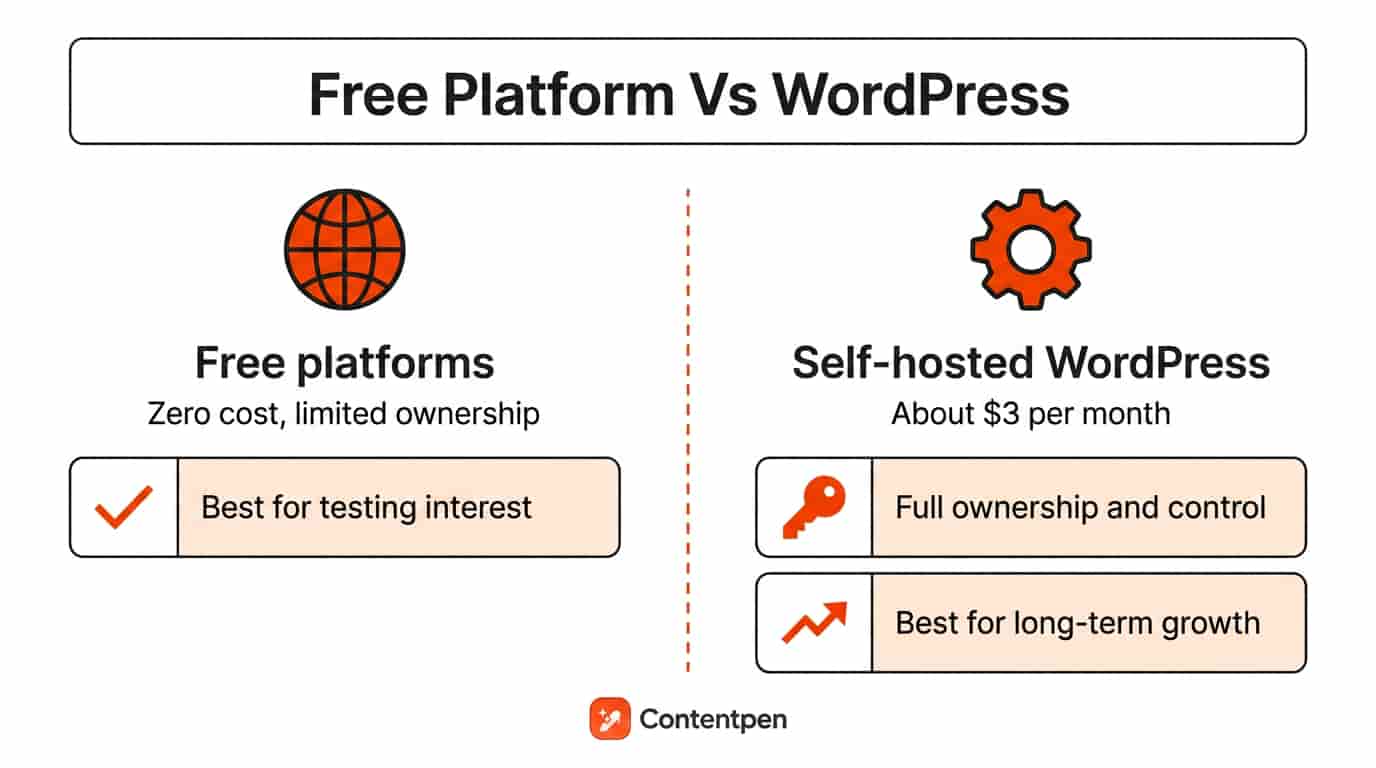
Creating a travel blog for free usually means a platform like Blogger or Medium, but these options limit your ownership and block most real monetization down the road.
Self-hosted WordPress costs $4 a month for hosting (annual plan, as of writing this blog), and it gives you full control over design, plugins, and future income streams.
Setting it up takes roughly 10 to 15 minutes:
- Buy a hosting plan from a reliable provider, such as Bluehost, which also provides you with a free domain (your blog name).
- Use the one-click WordPress installer inside your account dashboard.
- Pick a free theme to start with. You can pick paid ones later through Elegant Themes or any other provider you like.
- Switch your permalinks to the post name format for clean, readable URLs. Such as our travel blog examples post with the link ‘https://Contentpen.ai/blog/travel-blog-examples’.
Why is naming your travel blog an important step?
Whichever route you choose, the domain name you register matters more than the platform itself, since that is what builds authority as your blog matures.
Try to pick something your content can’t grow out of. For instance, if we choose a travel blog name “Exploring Asia”, your readers might naturally feel awry once you start exploring continents other than Asia.
Similarly, doing something like “Wandering [X]”, “Nomadic [Y]” is also not a good idea since a lot of people have already done it, and honestly, the names have started to feel repetitive. The last thing you want is to get confused with another travelling blogger.
So choose something personal, unique, easy-to-share, and classy. Most traveloggers start their blogs with their names, which is fine as well. Others, such as Never Ending Footsteps, choose a generic but timeless name that they can use perfectly to represent their future travels.
How do you structure a travel blog post that people actually read?
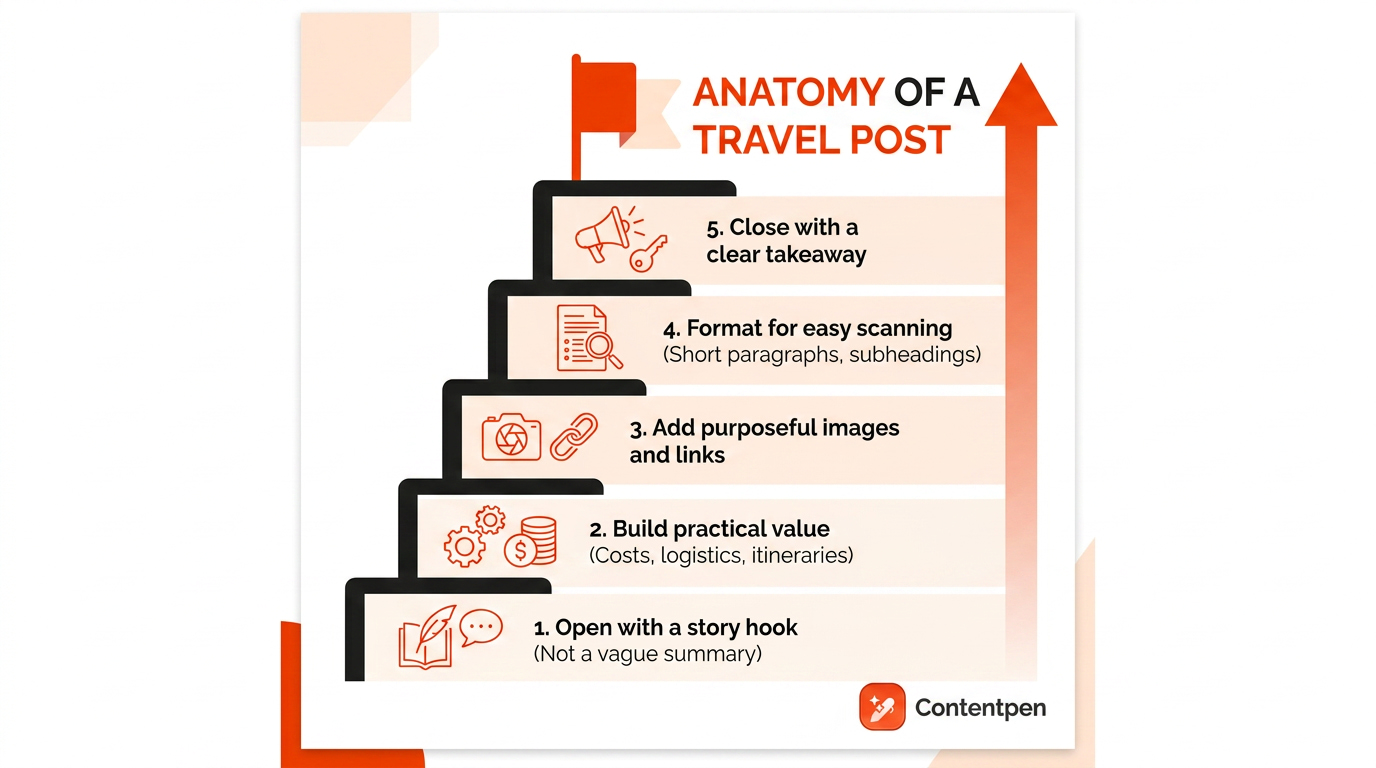
A travel blog post that people actually read follows a repeatable structure.
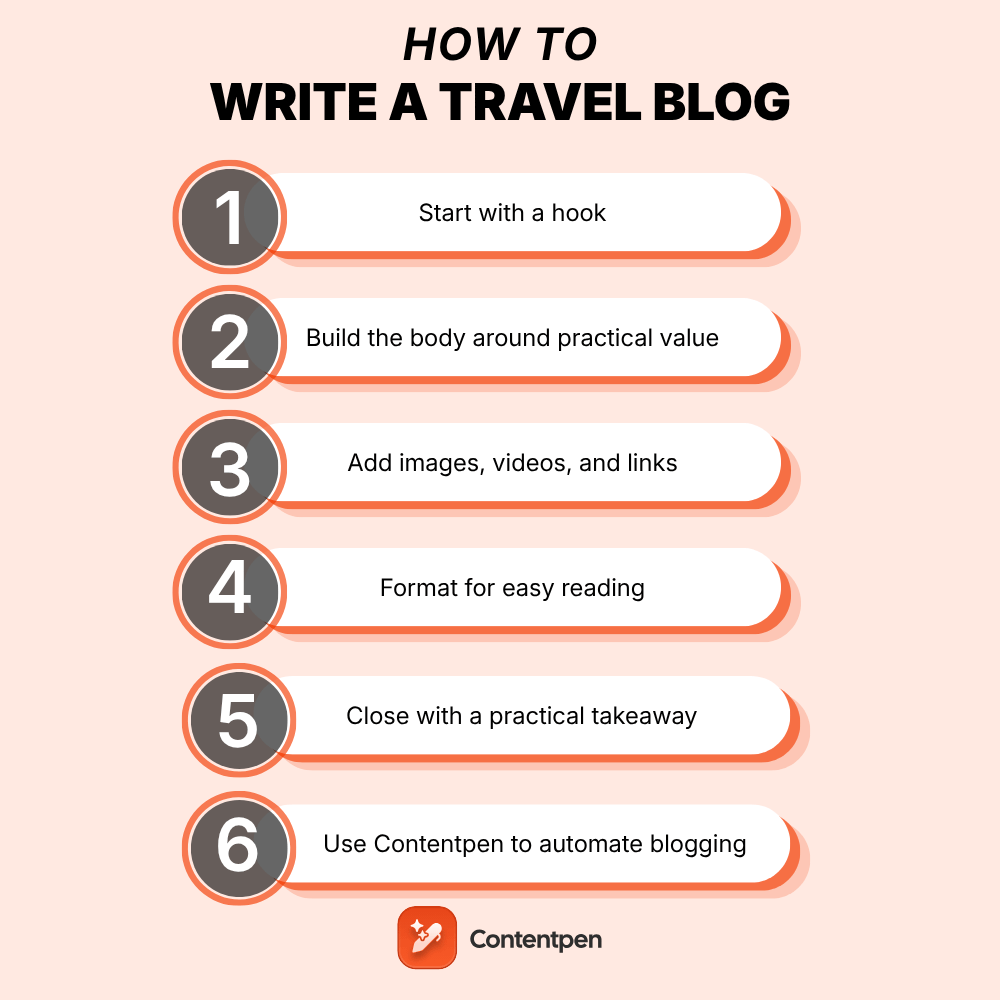
#1: Start with a story or a hook, not a summary
Open with a specific moment, like the exact instant you realized you had boarded the wrong train, instead of a vague line about how amazing travel is.
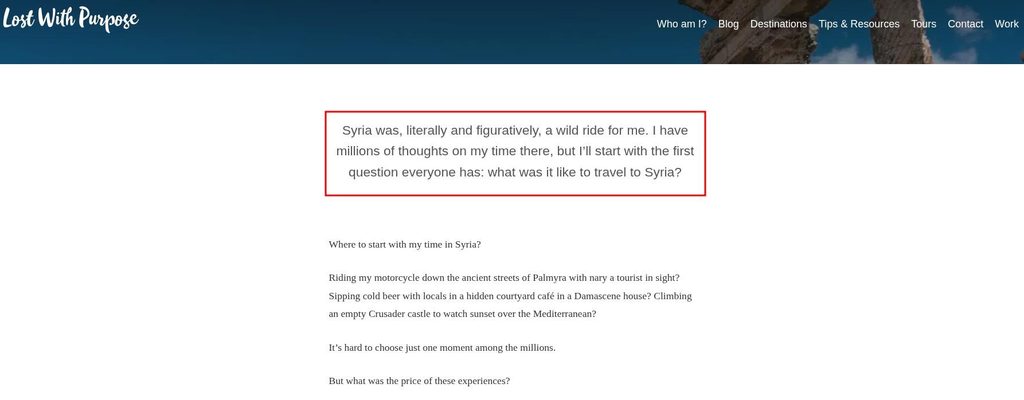
Let’s take a look at how Lost With Purpose, another famous travel blogger, started to write their post for their Syria journey. They started with their personal experience to immediately hook the reader into reading the rest of the post.
Readers and AI search tools both respond better to specifics than to general enthusiasm. Try to answer the reader’s core question within the first few sentences too before getting into more details.
#2: Build the body around practical value
Once you have hooked readers, give them what they came for: Itineraries, cost breakdowns, or step-by-step transportation instructions organized under clear subheadings.
Write these details while you are actually traveling, using notes or photos captured in the moment, since logistics fade fast from memory.
A draft written on the train home is almost always more accurate than one pieced together weeks later.
#3: Add images, videos, and links with purpose
Original photos taken specifically for the post do more for reader trust than any stock image ever will. Once again we’ll mention that you don’t need a fancy gadget setup to achieve this; your 5-year-old iPhone is enough if you know your photography basics enough.
Next, add internal links pointing to related posts on your own site, plus a few external links to authoritative sources, such as an official tourism board page.
As a travel blogger, you should also look to register with brands for their affiliate programs to earn a bit of extra cash cushioning your travels.
If you have footage, even a short embedded video gives skimmers a reason to stay on the page longer. You can redirect your blog traffic to your YouTube, TikTok, or other video platforms through these embeds.
#4: Format for easy reading
Formatting a blog post is the best way to encourage readers to spend more time on your site, and search engines take notice of that. Your content eventually gets recommended, which means more visitors to sell your digital products to, earn through affiliate links, or display ads.
Try to break up text every two or three sentences with a subheading, video, or photo. Highlighting key phrases helps skimmers catch the main point of a paragraph without reading every word.
You can also create short bullet lists when stating multiple items, for example, things to pack for a 3-day getaway trip to Bali. Such small elements help your site more than you realize.
#5: Close with a clear takeaway or next step
End by restating the answer to the question your post opened with, in a sentence or two. Then point readers toward a related post, or invite a specific question in the comments, so the visit does not end the moment they finish reading.
You can also leave with any other CTA (Call-to-action) you want, for instance, asking the readers to follow your Instagram, or any channel you want to grow.
How can AI tools speed up writing your travel blog?
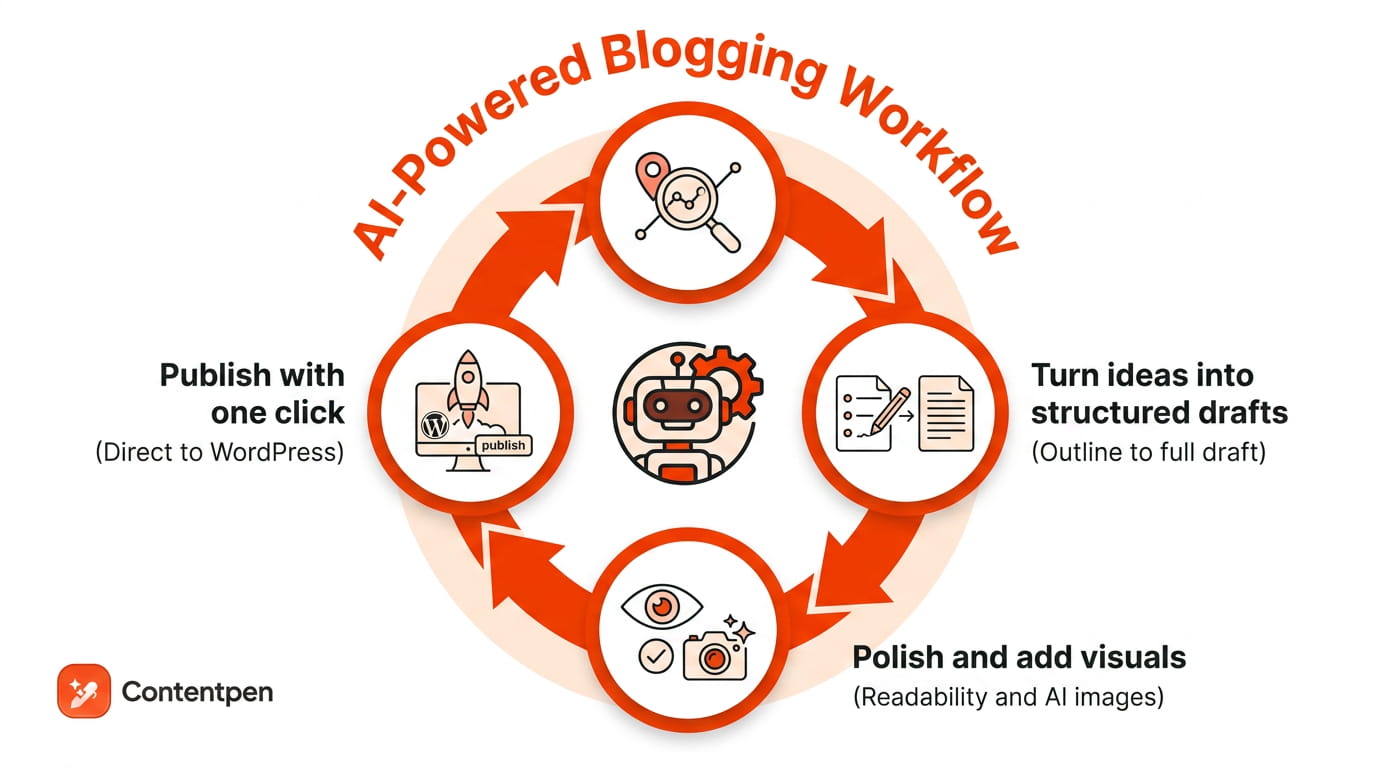
AI tools change how you write a travel blog by handling repetitive early stages, like keyword research and outlining. They allow you more time to spend on storytelling, drama, and examples only you can add, making the entire process of writing a travel blog highly efficient.
Take Contentpen, for instance. It is an all-in-one AI blogging platform that is built around exactly this workflow for creators who want to publish consistently without burning out their creative fuel.
Automate SEO writing tasks
Instead of guessing what to cover or staring at a blank document, you move from a rough topic to a structured, search-ready draft in far less time. You can edit the details as you wish in the editor, along with tuning your SEO and GEO score with the tool.
Take a look at this example generated from Contentpen for the topic “How I balanced studying and travelling abroad.”
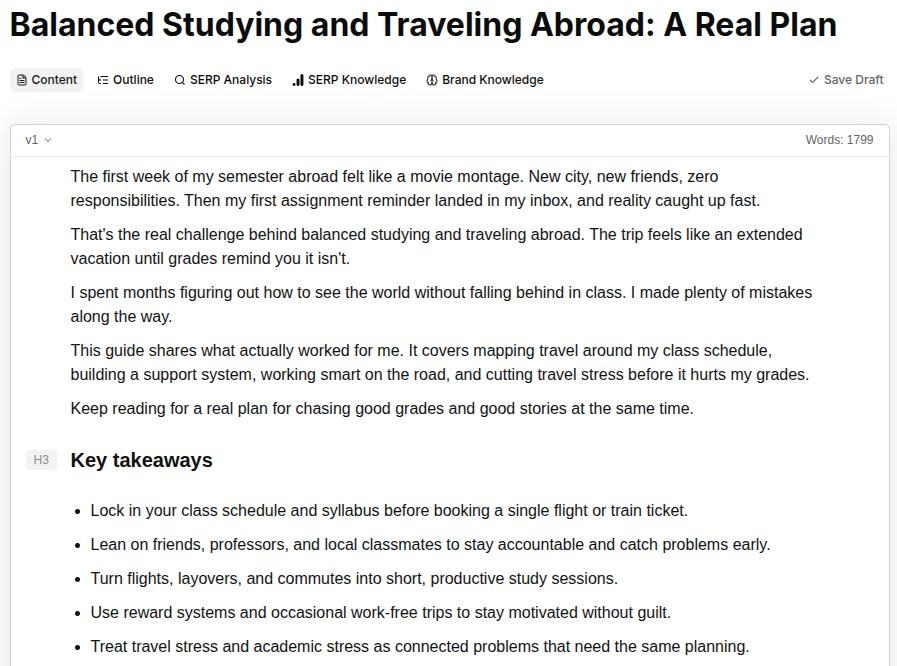
Believe it or not, this is all AI. Yes!
AI blog writers have become crazy accurate during the past few years, and Contentpen is the frontrunner. Not just because it’s our product, but because it does generate amazing results for its users.
We could point you to our testimonials from different niches, including travel, real estate, tech, retail, and others. But the best way to know is to give the tool a go. Try the 7-day free trial now for yourself and see the difference between manual and AI-assisted blogging.
Sure, you may need to do some edits yourself, but the time these tools save is significant.
Polish, add visuals, and publish without extra tools
Beyond drafting, Contentpen also includes the built-in ‘Ask AI’ editor to help you change tone, shorten, expand, or rewrite a particular paragraph entirely.
Smart AI image generation helps you create your travel destination pictures in whatever style you want, polish existing details, or use as an inspiration to draw something unique.
A built-in content calendar helps you plan posts around upcoming trips, with one-click WordPress publishing that removes the copy-paste step entirely.
In short, quality content does not have to take hours once tools like Contentpen handle research, drafting, and formatting in a single workspace.
Can travel bloggers make money?
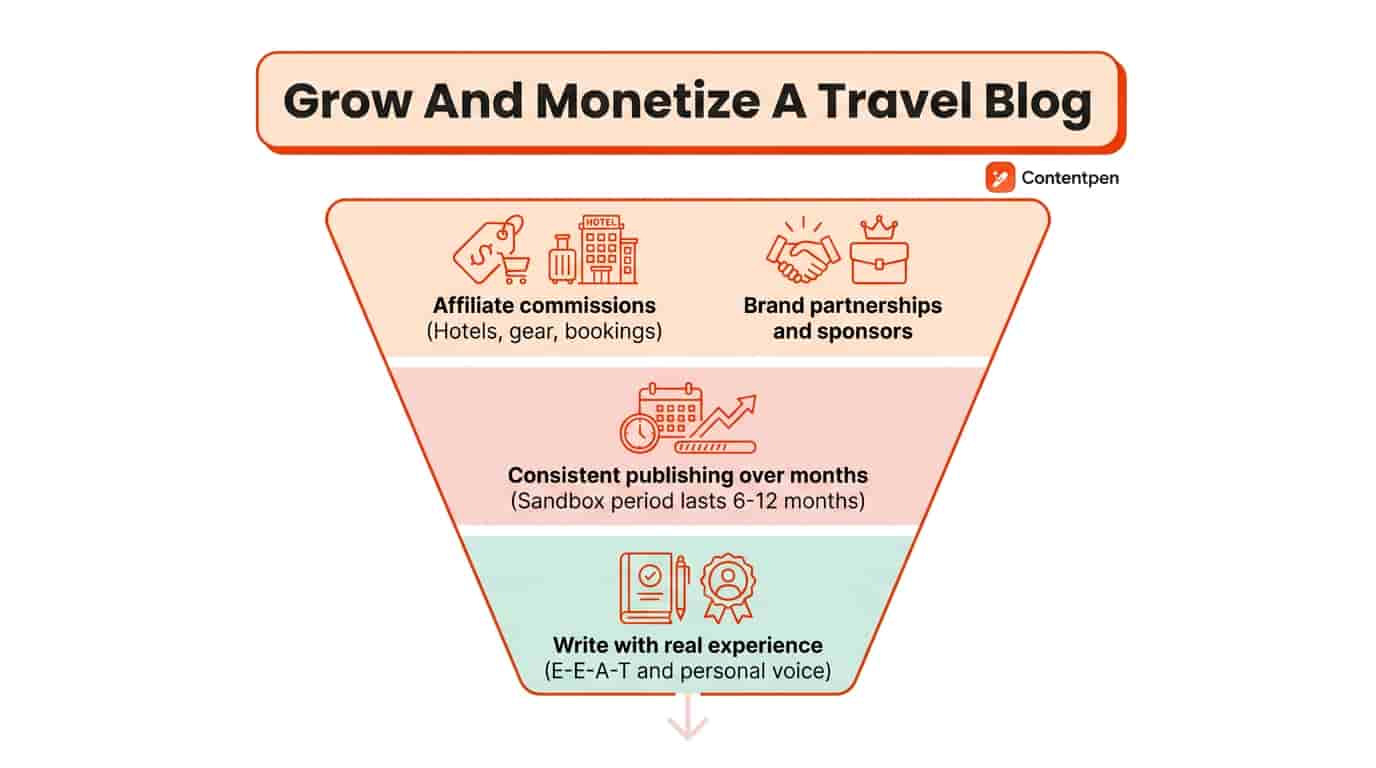
Yes, they do. Travel bloggers can make money, mainly through affiliate commissions, brand partnerships, and sponsored content. However, it typically takes months or years of steady publishing before income becomes meaningful.
Growth depends less on a single viral post and more on consistent output, genuinely useful content, and patience while search engines learn to trust your site.
Brand partnerships and affiliate programs for travel bloggers
Affiliate marketing is the most common starting point for new travel bloggers, and it works like this:
- You earn a small commission when a reader books a hotel, rents a car, or buys travel gear through your tracked link.
- It is realistic, but usually a slow build rather than a quick income stream, so only recommend products you have genuinely used yourself.
- Adding affiliate links early, even with modest traffic, means you are ready to earn once traffic grows.
If finding affiliate programs seems like a hassle, you can join specific digital partnership platforms like Travelpayouts to make this process a bit easier.
Once you have an approved Travelpayouts account, try to join travel-associated affiliate programs, such as:
- Booking.com
- GetYourGuide
- Busbud
- RentalCars.com
- Viator
- Trainline
The idea is to recommend the hotel you check-in, the restaurant you ate in, and the products/services you used during your travels. If readers tried to take the same itinerary as you and weren’t satisfied, they’ll lose trust, and you’ll lose repeat business. Simple as that.
Being a consistent poster and building authority over time
New websites sit in a kind of probationary period, sometimes called a sandbox, where search engines watch a site for months before ranking it meaningfully.
Most blogs see very little traffic for 6 to 12 months regardless of writing quality, so domain authority simply needs time to build up.
The idea here is to keep going and posting content on a consistent schedule. Do what you love doing, even if your options look bleak.
There will be a light at the end of the tunnel if you don’t give up. Sure, this does sound a bit cliché, but data from Productive Blogging shows that most bloggers don’t see more than $100/month on average from their blogs in the first three years!
Auditing posts that are leaking money
Besides the patience required to grow a travel blog, you also need your analytical hat and revisit your older posts that don’t perform on Google or AI engines.
Look for all performance figures in Google Analytics or inside Contentpen analytics to stay in the same writing workflow without interruptions.
Tie the numbers down to your goals. For instance, if we want more organic traffic and time on page, we might rehash a post with better secondary keyword coverage and internal linking with our recent, most engaging posts.
Read more: How to do keyword research for SEO (step-by-step guide).
Contentpen’s SEO opportunities dashboard works closely with analytics and uses built-in AI to analyze and provide you with suggestions to uplift blog performance. You can apply these fixes with a click, saving a lot of effort in the process.

Turn existing content into growth opportunities

Identify pages losing traffic or CTR
Find quick wins to improve clicks and rankings
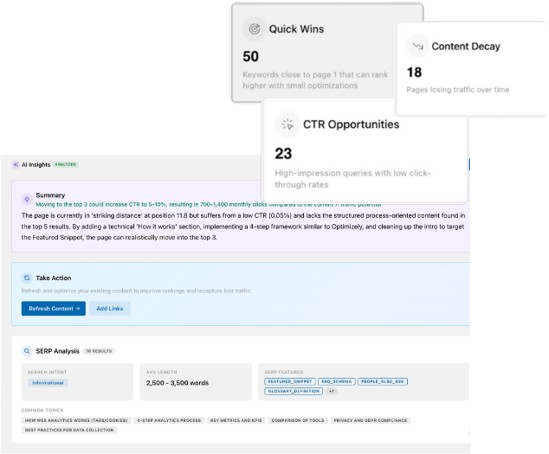
Chasing new content is required, but not always the answer behind a travel blog that isn’t earning well. Sometimes, small adjustments to even the meta title, description, or alt text of images could alter different results with existing content.
Writing with the E-E-A-T framework in mind
Last, but not least, you need to write with the E-E-A-T framework in mind.
E-E-A-T stands for Experience, Expertise, Authoritativeness, and Trustworthiness, a framework Google uses to judge content quality.
In plain terms, it means writing from real, firsthand travel experience rather than recycled advice you skimmed elsewhere.
Posts structured with clear answers and honest detail tend to perform much better in traditional search results. Such content is also increasingly referenced by AI search tools like ChatGPT and Gemini, driving more users to your platform.
The takeaway
Learning how to write a travel blog is not about finding one perfect platform or waiting until your photography looks professional.
It comes down to publishing consistently, structuring posts so they deliver real value, and letting your own voice do the differentiating work that generic content never can.
Start with whatever trip you have already taken, pick a simple platform like self-hosted WordPress, and give each post the structure readers and search engines both respond to well.
If you want to move faster from idea to published post, a tool like Contentpen can handle the research, outlining, and formatting side of things for your convenience. Publish the first post today, then adjust everything else as you learn what works.
Frequently asked questions
Starting for free usually means using platforms like Medium, but they limit ownership. A better low-cost route is self-hosted WordPress, which runs around $4 a month for hosting and gives you full control over content, design, and future income streams.
Start with a trip you have already taken and write it the way you would tell a friend, focusing on specific moments rather than general impressions. If you are nervous about committing to your own site, try guest posting on a smaller, established travel blog first. It builds a portfolio and confidence without the pressure of managing a website.
A family travel blog does not need to be public or monetized, so a simple platform works fine, even a private WordPress site or a shared photo page with captions. Organize posts by trip or year, focus on stories and photos over technical setup, and keep the tone personal.
Pitch freelance articles to travel publications and websites once you have a few strong writing samples ready to share. Brand partnerships and sponsored content become realistic after you have built an audience online.